‘Foreign Bodies’: New fifteen-part Radio 4 series on European crime fiction begins 22 October 2012

This major new series showcases the best of European crime fiction and will be an absolute treasure trove for fans of international crime. Entitled ‘Foreign Bodies: A History Of Modern Europe Through Literary Detectives’, and presented by Front Row’s Mark Lawson, it will air on Radio 4 over three weeks, at 1.45pm from Monday 22 October to Friday 9 November (accessible here). In addition, we’ll be treated to dramatizations of Sjöwall and Wahlöö’s Swedish Martin Beck novels (1965-75), and Swiss crime writer Friedrich Dürrenmatt’s The Judge and His Hangman (1950). What riches.

Many thanks to @_alisongray for alerting me to the following BBC press release:

“BBC Radio 4 begins a fascinating season of programmes this month featuring a 15-part examination by Mark Lawson of European crime fiction.

In ‘Foreign Bodies: A History Of Modern Europe Through Literary Detectives’, Lawson investigates the tensions and trends of Europe since the Second World War by focusing on some of the celebrated investigators from European fiction, and their creators.

The series accompanies dramatizations of all the Martin Beck novels, starring actor Stephen Mackintosh in the title role. Written by Maj Sjöwall and Per Wahlöö the novels are widely acknowledged as some of the most important and influential crime fiction ever written. The authors paved the way for subsequent generations of crime writers to illustrate society and its most dysfunctional elements through crime and criminal investigations, future fallible heroes – Kurt Wallander and John Rebus to name but two – making the best fist they can of their own lives, whilst trying to tackle the violence and crime around them.

Gwyneth Williams, Controller BBC Radio 4, said: “This Autumn we explore the mood and mores of European cities in the company of eccentric detectives. And what better way to take a Radio 4 journey through Europe than to travel with the likes of Martin Beck, Inspector Rogas, Pepe Carvalho, Kemal Kayankaya.

The first of the Turkish-German Kemal Kayankaya series (1994)

“And at the heart of the series we bring you a complete dramatization of the little-known but hugely respected Martin Beck books by Maj Sjöwall and Per Wahlöö – all ten of them. These are the stories that inspired the Scandinavian explosion of crime writing we have seen in recent years and are referenced by many eminent writers such as Ian Rankin. Stephen Mackintosh plays Martin Beck and he is sure to hook you in.”

In crime fiction, everyday details become crucial clues: the way people dress and speak, the cars they drive, the jobs they have, the meals they eat. And the motivations of the criminals often turn on guilty secrets: how wealth was created, who slept with who, or a character’s role during the war. The intricate story of a place and a time is often explained in more detail in detective novels than in more literary fiction or newspapers, both of which can take contemporary information for granted.

In ‘Foreign Bodies’, Mark Lawson focuses on some of the most celebrated investigators – everyone from popular modern protagonists including Henning Mankell’s Kurt Wallander; Jo Nesbø’s Harry Hole; and Andrea Camilleri’s Inspector Montalbano; through to Ian Rankin’s Inspector Rebus; Lynda La Plante’s DCI Jane Tennison; and Sjöwall and Wahlöö’s Martin Beck; back to a Belgian created by an Englishwoman and a French cop created by a Belgian – Agatha Christie’s Hercule Poirot and Georges Simenon’s Jules Maigret.

Through the framework of cases investigated by these fictional European police heroes and heroines, ‘Foreign Bodies’ pursues the shadows of the Second World War and the Cold War, conflicts between the politics of the left and right, the rise of nationalist sentiments and the pressures caused by economic crises and migration. Among the writers helping Lawson with his inquiries into their characters are: Jo Nesbø, Andrea Camilleri, PD James, Henning Mankell, Liza Marklund, Ian Rankin and Lynda La Plante.

The ten Martin Beck detective novels featuring Detective Inspector Martin Beck and his colleagues in the National Police Homicide Department in Stockholm will air in two parts. The dramatizations of the first five novels will start on October 27th, 2012 with the second five airing in Spring 2013. The radio dramas are written by Katie Hims and Jennifer Howarth, and directed by Mary Peate and Sara Davies.

Accompanying the dramas and Mark’s series, Radio 4 Extra will broadcast a reading, in five parts, of The Judge and His Hangman in October. Originally published as a novella in 1950 by Swiss writer Friedrich Dürrenmatt, it explores the themes of guilt and responsibility following the Second World War, and shows protagonist Inspector Bärlach finding his own solution to bringing a career criminal to justice.”

The Killing 3 is on its way!

Here in the UK there’s been a notable surge in media activity on Forbrydelsen / The Killing 3 over the last couple of weeks.

The series has just started broadcasting in Denmark, where 1.6 million viewers tuned in for the first episode – pretty impressive given the country’s modest 5.5 million population. While there’s been no formal confirmation from BBC4, several sources have given Saturday 17 November as the start date here, with 10 episodes airing in pairs over five weeks.

The makers have stated that this series, in which Lund and the team investigate the murder of a sailor and dodgy dealings in the financial world, will be the final one (sob).

New jumper for The Killing 3! Courtesty of DR TV

Recent links and news

A general, spoiler-free review of the first two episodes of series 3 by Vicky Frost of The Guardian.

A Guardian fashion review of Sarah Lund’s new jumper.

DR TV 35-second trailer for Forbrydelsen III on YouTube.

5 November sees the release of The Killing Original Soundtrack by Frans Bak, featuring music from all three series. There’s a nice piece about the album here. You can sample some of the music via Bak’s SoundCloud page.

15 November sees the publication of The Killing Handbook (‘if you’ve ever wondered who cut the CCTV wire outside Lund’s flat in series 1, why Morten went so far to protect Troels, where you can start your walking tour of Copenhagen from woods to warehouses and the County Hall, or even how you can knit your own Lund jumper – this is the book for you’).

17 November: The Killing 3 begins. Sofa booked. Can’t wait.

#26 / Mons Kallentoft, Midwinter Sacrifice

Mons Kallentoft, Midwinter Sacrifice, translated from the Swedish by Neil Smith (London: Hodder and Stoughton, 2012 [2007]). An impressive debut and the first in a series featuring talented police investigator Malin Fors  4 stars

Opening line: Love and death are neighbours.

I tend to have an allergic reaction to any cover trumpeting that there’s a new Larsson or Nesbo in town, as nine times out of ten such claims are overblown. However, in the case of the debut novel Midwinter Sacrifice, author Mons Kallentoft shows that he can hold his own in such company at least, with a well-written, page-turner of a narrative, and an impressively-realised female detective.  

Set in the city of Linköping in southern Sweden, where the author was raised, the novel makes good use of a ferociously icy nordic winter and the landscapes of the region – dark forests and frozen plains – to create a lyrical, chilling backdrop for the opening crime: the murder and ritual hanging of a local man, who for much of his life was a social outsider. Malin Fors, a gifted police investigator who struggles to balance a demanding job with her role as a single parent following the break-up of her relationship, is called to the crime scene one cold February morning. Together with her partner Zeke, she begins to piece together the events that led to the murder, in a first-class police procedural that repeatedly makes you want to read on (just one more chapter, honest…).

The elements of this crime novel that I particularly liked were: Malin’s nuanced portrayal as a thirty-something woman dealing with the lifelong consequences of her teenage pregnancy; the thematisation of parenting, and the relationships between parents and children (whether infants, teenagers or adults); the depiction of the rest of the police team; the innovative use of the murder victim’s voice in parts of the narrative (difficult to pull off, but effectively done); and a surprise reference to Douglas Adams’ Life, the Universe and Everything (stylish).

The only aspect of the novel that jarred slightly for me was its ending, which was a little too melodramatic for my taste. However, I’m keen to follow Malin on her next case, in the series’ second novel, Summertime Death, which has also recently appeared in translation. The third novel, Autumn Killing, is out in September, revealing a nice use of seasons to structure the series: spring next, I presume…

You can read an extract from Midwinter Sacrifice here.

Mrs. Peabody awards Midwinter Sacrifice a highly more-ish 4 stars.

Creative Commons License

.

This, that and the other…

This … is an interview with Jo Nesbo by James Kidd, which appeared in The Independent over the weekend. Topics covered include Anders Breivik, Nesbo’s father and the publication of the old/new Harry Hole novel The Bat. The interview was carried out following Nesbo’s sell-out appearance at the Theakstons / Harrogate Crime Writing Festival in July.

That is another interview by Kidd (and now I’m really jealous) of Henning Mankell, on the publication of his novel The Shadow Girls (originally published in Sweden in 2001). While not crime fiction, the social critique that’s found in Swedish crime writing in general and Mankell’s works in particular is very much evident in this work.

The other … is a provocative piece by American mystery editor Otto Penzler in Publishers Weekly, entitled ‘Why the Best Mysteries are Written in English’. A number of arguments are put forward by Penzler (albeit not always with total clarity) to justify this grand assertion, and a lively set of responses have now accrued in the comments section, which make for an entertaining read.

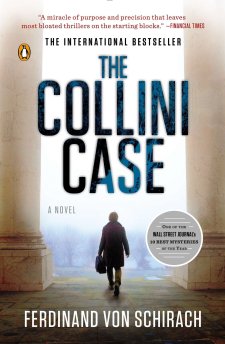
Ferdinand von Schirach’s The Collini Case, tr. Anthea Bell (Germany)

Following a lovely summer break, Mrs. P. kicks off with a review of Ferdinand von Schirach’s The Collini Case, translated from the German by Anthea Bell (London: Penguin/Michael Joseph, 2012 [2011]). It’s an effectively written courtroom drama that asks some big legal and ethical questions.

Opening line: Later, they would all of them remember it: the floor waiter, the two elderly ladies in the lift, the married couple in the fourth-floor corridor.

Ferdinand von Schirach is an eminent defence lawyer based in Berlin. He first came to prominence as a writer in 2009 with the short story collection Verbrechen (Crime), which drew heavily on the real-life cases he’d encountered during his career. It was an instant hit, spending 54 weeks at the top of the German bestseller lists, as well as critically acclaimed (the winner of the 2010 Kleist prize). A second short story collection entitled Guilt was also extremely successful, which was followed by the publication of The Collini Case, his first full-length crime novel, in 2011.

The focus on criminality, justice and the law is as evident in The Collini Case as it was in the author’s earlier works. It’s 2001 Berlin, and young barrister Caspar Leinen is assigned to defend an Italian national, Fabrizio Collini, the perpetrator in an apparently open-and-shut murder case at the famous Adlon Hotel. Only after accepting the brief does Leinen realise that he knew the victim, retired industrialist Hans Meyer: the latter was the grandfather of a close school-friend, who had been kind to Leinen in his youth. While considering whether or not he should continue to represent Collini, Leinen is faced with another problem: the accused refuses to reveal his motive for the crime. How then is Leinen to defend his client when the case comes to court? Leinen’s personal difficulties in representing Meyer’s murderer and his efforts to figure out a viable defence become the key concerns of the unfolding narrative.

Von Schirach is a skilled author who knows how to write an effective page-turner. But by far the most interesting aspect of this novel for me was the legal discussion portrayed in the courtroom section of the novel. And here I find myself in a rather difficult position, as talking about this aspect of the narrative would inevitably mean breaching Mrs. P.’s spoiler rule. So I will have to content myself by saying that the discussion of genuine points of law and their impact on a genuine set of cases since the end of the 1960s was fascinating, and is not something that I’ve seen addressed this way in a German crime novel before. 

The wider impact of the novel has also been quite extraordinary. The legal points it highlights have been raised by German MPs in the Bundestag, with a Ministry of Justice commission established in 2012 to examine the larger issues raised about legislative processes in the 1960s. It’s extremely rare for a crime novel to have such an influence in the ‘real world’, and this sets it apart from others that have tackled the same subject in a very special way.

I would second Maxine’s advice over at Petrona to read the novel before seeking out further information about the author and his work. But once you’re through, you might be interested in the following:

A Spiegel piece by von Schirach in English, in which he talks a bit about his unusual family background (thanks to Maxine for this link).

An interview with the author in German in the newspaper Die Zeit, which includes discussion about the judicial issue at the heart of the trial (contains spoilers!).

This Guardian article also draws on the interview in Die Zeit (contains spoilers!).

The comments on this post may also inadvertently hint at the novel’s content…

UPDATES

May 2013: The Collini Case has been shortlisted for the Crime Writers’ Association International Dagger Award.

And one last note: There’s extensive discussion of Bernhard Schlink’s The Reader in the comments below, which also has a courtroom section, as well as reference to Schlink’s crime novels (the ‘Selb’ series). In my capacity as an academic, I’ve written two articles on Schlink’s work, with links as follows… The first is a comparative analysis of the crime novel Selbs Justiz (which opens the ‘Selb’ series) and The Reader in the journal German Life and Letters (2006). The second looks at the controversies created in critical circles by The Reader, both in Germany and in the English-speaking world (German Monitor, 2013). It’s nearly twenty years since The Reader was published, and critical reaction to the novel and the film continues to be extremely polarised.

Creative Commons License

Mrs. Peabody puts her feet up … with a good book

This blog will take a break for the month of August – during which time Mrs. P. hopes to enjoy the company of her family (most likely in a fair bit of British rain) and some tranquil reading in a seaside setting, together with 150,000 gannets.

Mrs. P’s summer reading, currently gathered in an unsteady pile by the side of the suitcase, looks something like this:

Sofi Oksanen’s Purge (Atlantic 2011 [2008] – Finnish/Estonian]

John le Carré’s The Secret Pilgrim (Penguin 2011 [1991] – the final Smiley novel)

Giorgio Scerbanenco’s A Private Venus (Hersilia Press 2012 [1966] – Italian noir)

Jason Webster’s A Death in Valencia (Chatto & Windus 2012 – British/Spanish)

Reginald Hill’s On Beulah Height (Harper 2009 [1998] – British)

Perfect combination… (copyright Lizzy Siddall)

and finally a rogue book that isn’t crime (gasp):

Jeanette Winterson’s Why Be Happy When You Could be Normal (Vintage 2012).

The Kindle’s also coming along, in case that lot’s not quite enough!

Wishing you all lots of lovely summer reading, hopefully with a bit of sunshine thrown in…

Tantalising glimpse of The Killing 3

The Danish broadcaster DR has released a mini-trailer for the third and apparently final series of Forbrydelsen, in which Sarah and the team investigate the death of a young sailor and dodgy dealings in the financial world.

Click here to view. No Danish required! [Update Sept 2012: link now leads through to DK Forbrydelsen website but the trailer is no longer available.]

There’s no word as yet about when the series will make it to BBC4. Still a little while, I would guess … Can’t wait!

Theakston File 3: Camilla Läckberg interview with Mrs. P. (Part 2) on The Hidden Child

Part 2: In which Camilla Läckberg (CL) and Mrs. Peabody (MP) discuss the author’s fifth novel, The Hidden Child – its origins, its impact, its depiction of wartime Sweden and Norway – as well as the the process of historical research, and why Swedish crime writers are still drawn to the subject of the Second World War.

I was particularly keen to discuss this novel with the author, because it forms part of the corpus for my academic research on Nazi-themed crime novels (crime novels that engage with the Nazi period or its post-war legacies).

SPOILER ALERT: If you’ve not yet read The Hidden Child, you might wish to come back to this interview at a later point, as it gives away major details about the plot. 

MP: Can I come on to The Hidden Child, in which you explore the legacy of the wartime past?

CL: They’re starting to film it in August for the cinema. I think it’s going to be great.

MP: I can imagine – it has lots of ingredients that would work very well. So what was it that drew you to the topic, because quite a few Swedish writers and Scandinavian writers do go back to look at the legacy of that past.

CL: Well, it actually started with an email from a reader, who thanked me for the books, and then said, ‘Did you know that there were lots of exciting activities going on in the area [around Fjällbacka, the coastal village north of Göteborg where the novels are set] during the Second World War? And I was like, ‘no, I never heard about that’. So I started doing some research and I found out about the smuggling, and the boats going back and forth [between Sweden and Nazi-occupied Norway], people fleeing over the border… And I thought ‘Wow!’, and the ideas started coming. Also, when I’d started writing about Elsy [Erica’s mother], who was already dead in the first book, I only knew that she had been cold with her daughters, but I didn’t know why. After four books, I still didn’t have a clue why. But when I started researching and started working on the idea of ‘the hidden child’, it literally dropped in my lap – Elsy’s whole story. It was one of those magical moments you have as a writer, when it’s like someone is telling you … I suddenly knew everything about  what had happened to her; why she was the way she was. That was fantastic. So that book is very special to me for that reason, because I was basically ‘told’ Erica’s mother’s story.

MP: And it’s a very moving book, I think, as well.

CL:  I had another very moving moment when it came to that book, actually. A year after it had come out in Sweden, I was doing a photo shoot for a cover, and there was this make-up artist, a woman who was around forty, forty-five. When we were alone for a few minutes, she asked me ‘How did you do your research into the Norwegian resistance and the people at Grini [Nazi concentration camp in Norway that held a number of political prisoners]? Did you know anyone who was there?’ No I didn’t; I researched through books and accounts that were on the internet by people who were there, but I hadn’t met one. And then she told me that her mother was from Norway: she had been part of the Norwegian resistance during World War Two, had fled from Norway, ended up in Sweden, and had never talked about her experiences with her children. But when she had read The Hidden Child, she got the children together and said, ‘read this, this is my story’. And then she talked about it: she was 19 when she was in the resistance and was put in Grini …. That was a special moment, because you guess so much. When you’ve done your research you have to guess a lot and fill in the blanks from your own fantasy. Sometimes you get it right, sometimes you probably don’t, but those moments when you understand ‘I got that right’ – that’s fantastic.

MP: Can I ask you about the depiction of the main characters and their relation to the conflict? Because I think that you do something very interesting there – there’s a sort of twist.

CL: Hmmm. What do I do?!

MP: Well, you have a murder victim, who is supposedly a Norwegian resistance fighter, who then turns out to have a very different background – his father was an SS-officer and he also served in Grini. And the murderer is the Swedish resistance fighter, who was a prisoner in the camp. So it seems to me that there’s something complex going on there in terms of how you’re looking at the categories of ‘perpetrator’ and ‘victim’…

CL: It’s all about playing with the ‘good’ and ‘bad’; who’s ‘good’ and who’s ‘bad’? If you do good your whole life, can that compensate for then doing something bad once in your life? And on the other hand, if you’ve done a lot of bad things, can you compensate by leaving them behind, or do you have to carry them with you? Can you turn over a new leaf? I love playing with those things. And also when it comes to murderers, I think it’s so much more interesting when good people do bad things, than when bad people do bad things. What can trigger a basically good person to do something bad? And that’s so much the case in that book – he [the murderer] has lived his whole life doing good things… But that’s also a question: for whom did he do those things? Was it for his own ego or was it out of true conviction? You can always play with those things as well.

MP: It seemed to me that there was a real complexity about the position of the victim and the perpetrator / the murderer and the victim. There’s a trading of places and what you end up with is very much a grey on grey [CL: yes], rather than a black and white morality [CL: yes], which leaves some questions in the mind of the reader… Were you looking for that complexity?

CL: Yes, hmmm, it’s the same thing again [see CL’s comments in part 1 about the inclusion of ‘issues’ in her crime novels]. I don’t think about it when I write it. I just … go along and tell the story. It’s only afterwards that I can see the patterns. It’s like when I wrote The Stonecutter: I wrote the whole book, and when I read the manuscript through to start editing, I was like ‘oh my goodness, there’s a theme in here that I didn’t know was here’ – about what makes a good mother and motherhood. I don’t realise those things while I write. But I guess it’s part of the structure for the book. It’s like scaffolding and I don’t see the scaffolding until I take a few steps back and look at the whole.

Original Swedish cover/title (translates as The German Child)

MP: When you were writing about this controversial past in The Hidden Child  – one that still has resonance in the present – were you ever anxious? You’re obviously portraying something that is quite delicate. Was there a particular kind of caution when dealing with that subject matter, or did you just dive in?

CL: Just dove in, I think. I don’t think there’s anything that I write about that I’m afraid of approaching. The only thing I’m afraid of writing is sex scenes. That’s mainly because I picture my mother and my mother-in-law reading the books and their imagination running wild, so I can’t bring myself to do it! But that’s the only thing that I’m afraid of writing.

MP: It seems like another key theme in that novel was one of trauma: Elsy’s trauma and then the way that trauma has knock-on effects and is communicated down a generation…

CL: I think that theme is in all my books, and especially the eighth one, The Angel Maker. Do you know what an ‘angel maker’ is? It was a Swedish term common in Norway and Denmark as well, that described women in the late 1800s and early 1900s…. If you had a child out of wedlock, and you couldn’t take care of it, you could pay a woman a lump sum to take the baby, and what happened sometimes was that the women thought, ‘OK, I’ve got the money and this baby is only going to cost me from this point on…’. So there are a few court cases where women were found to have killed eight or ten babies. I start the story with a woman who is an ‘angel maker’ being arrested and they discover bodies buried in the ground in the basement. And that then follows as a dark cloud over her daughter, over her grand-daughter and the next generation after that. I love that theme; it recurs in my books.

MP: You’re always very concerned about the human implications of acts, whether of criminal acts or…

CL:  It’s all about the characters for me. It’s the characters that make the crime plot, not the other way around. I don’t form the crime plot and then add the characters. I have a murderer and a motive and then I make the characters start doing things and that creates the plot.

MP: You mentioned some of the research that you undertook for The Hidden Child. Did you look at historical studies?

CL: I borrowed books about the Second World War in the area, because that’s what I was interested in. And then of course I always have to do research depending on where the story takes me. The story took me to Grini, and then it took me on the trains to the concentration camps in Germany, so then I had to do research about the camps and ended up with the ‘white buses’ going to Sweden [programme set up in 1945 by the Swedish Red Cross and Danish government to transport concentration camp inmates from Nazi-controlled areas to Sweden]. So I had to do more and more. I don’t do this amount of research, then I’m done and I write the book. I start at one end and then I discover that ‘I don’t know anything about the part I’m going to write now – I’m going to do some research’. So it’s a continuous process all through the book.

MP: When you’re dealing with that kind of historical event, is historical authenticity important?

CL: Well, I’m not a historian, so I will never get it absolutely right. If I were to get it absolutely right I’d spend five years doing research for every book… And then I’d probably write a thesis instead which would be really boring, compared to a crime novel [ironic laughter from Mrs. P, who once spent five years writing a boring thesis]. I mean I do think that I get it pretty right, but I can’t say that I’ve got all the details right.

MP: But again you were talking earlier about scaffolding in terms of plot; there’s historical scaffolding as well that you can make sure…

CL: I make some markers, and I drop some details, and I let the reader fill in the blanks. I don’t have to describe every detail of what a person was wearing in the 1800s. I can mention a few details; I can mention a dinner; but I don’t have to describe that in the 1800s they were eating this and this and this. But I also happen to have a father-in-law who’s a historian, so I always give him the manuscript and say, ‘please come back to me when you’ve read it and we can discuss the details’. So he always has a lot of good input.

MP: That’s very handy.

CL: Yes, I know! A police officer husband and a historian father-in-law: that’s two for the price of one. If only my mother-in-law had been a forensics expert. That would have been perfect!

MP: One last question… I’m really interested that there are lots of Scandinavian writers who are still bringing in the legacy of the Second World War into their crime novels. Is that legacy still a point of public discussion in Sweden? For example, that there were Swedish nationals who went to fight for the Germans.

CL: It’s brought up once in a while and the fact that we were not neutral is now established. We don’t pretend that we were neutral any more. And also I think there are several reasons why it keeps coming back: it’s a very fascinating war, and it’s also visually a very striking war – for example, the swastika symbol. So it’s easy to picture it. And it was so big in every way. I think that intrigues us as crime writers, because it’s the epitome of human evil. I mean, it’s evil. And also I think it’s still up for debate because of the fact that we now have – and I think it’s a disgrace – a nationalist party in Sweden as part of the government [the Sverigedemokraterna or Sweden Democrats].  And I’m so embarrassed that people actually voted for them. I’m horrified that we’re starting to forget. History repeats itself.

21 July 2012 in the Library, Old Swan Hotel, Harrogate.

Extra links:

Part 1 of this interview

Camilla Läckberg’s website

Jo Nesbo interview with Mark Lawson in which he discusses his family’s wartime past and its impact on the Harry Hole novel The Redbreast

Creative Commons License

.

Theakston File 2: Camilla Läckberg interview with Mrs. Peabody (Part 1)

Part 1: In which Camilla Läckberg (CL) and Mrs. Peabody (MP) discuss reasons for writing crime fiction, the flexibility of the genre, secrets from the past, bad guys getting their comeuppance, fusing the domestic with the grisly, and favourite authors.
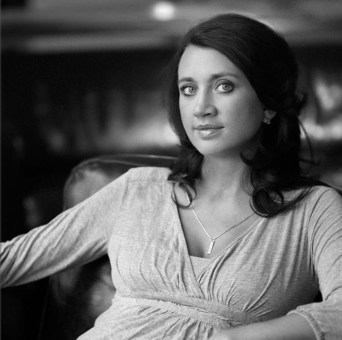
Camilla Läckberg (copyright of the author)

MP: So if it’s alright with you, I’ll start by asking some general questions. What was it that drew you to crime fiction in particular?

CL: I never even thought about writing anything else. I’ve always been in love with crime fiction ever since I was little, so if I was ever going to write, it was going to be crime fiction.

MP: So you had a history of reading crime fiction?

CL: Oh yes. It started when I was seven with finding Death on the Nile on my father’s bookshelf. I absolutely fell in love with the Agatha Christie books, so I read all those, and I continued on, reading both crime fiction for youth, like the Enid Blyton books, but also more adult crime fiction.

MP: And was it mainly British and American crime fiction?

CL: Mainly British; some American writers as well, but mainly British. I always loved the British school of crime writing … And I’m not only saying that because I’m here!

MP: No, no, understood! Do you think that the crime genre offers you particular opportunities as a writer? I mean I’m coming at the question in a slightly different way, but what is it about the genre that attracted you – not as a fan, but as a writer?

CL: Well, I’m going to steal a quote from a Swedish colleague of mine, Håkan Nesser [author of the Van Veeteran and the Barbarotti crime series]. He once said that a murder is such a wonderful hook to hang a story on – because you have this natural element of drama in the whodunit question, but then you can add everything else that there is in other kinds of literature: you can add love, and everyday life, and humour, and sex … You can add anything. So in my world, crime fiction has more, because you can add all that in as well, and have a very exciting drama going on.

MP: So it’s formula fiction, but you’re saying that there is a flexibility as well…

CL: Yes, that’s why we [authors] all have different styles; we approach the task of writing crime fiction in different ways. I mean, we’re not much alike in the way that we tell our stories.

MP: Yes, that’s true – there’s lots of variety. One thing I’ve noticed is that many of your novels unearth a long-hidden secret from the past. Was that always an important theme for you, or was that something that simply developed as the series went on? I think there are four or five of your novels where you see this…

CL: Yes, actually it’s in all the novels. I did it that way in the first story, and then I did it again in the second and the third, and by that time I started realising that ‘oh! there’s a pattern here’. I probably like to tell a story this way, and when I myself try to analyse why, I think it’s because to me, even if you look at real crime, it’s really difficult to understand it and to explain it just by looking at the present. You always have to go back, to look at the person who did it, and how his or her life was. How was the upbringing, how was the childhood, the parents? Maybe you have to go back to the grandparents or even further back to understand the sequence of events that led up to the moment where someone was capable of doing that. And that’s why I tell my stories this way, because I want to explain the motive and the murderer and what happens. And in doing that I have to go back in time. But it varies how far back I need to go.

MP: Yes, and sometimes you’re going back and then bringing in a historical element as well…

CL: Yes.

MP: … which is interesting. Is there a ‘return of the repressed’ idea in there as well? The idea that there might be a secret in the past that people have been silent about…

CL: I think secrets are more common than we think. Most people have secrets. They’re big or they’re small or they’re in-between, but most people have secrets. There are things we don’t tell our husbands or wives or parents or children or friends or that we don’t tell at work. We keep secrets. And sometimes that’s OK and works out, but sometimes that has consequences. A small secret can turn into a big one…

The first novel in the series

MP: And is justice another theme that you’re interested in? I mean the way that you’re describing it, you’re very, very interested in the ‘why’, in the motivation, in looking at the psychology that leads up to the crime. Is justice a concern as well – what happens afterwards?

CL: Yes, I don’t like it when the bad guy gets away. I think there should be a punishment. I’m a bit Greek that way with the whole revenge thing. I do like a happy ending, which in crime fiction is that the killer is caught and punished. I don’t like having endings where the killer gets away. That doesn’t sit well with me.

MP: So there needs to be a proper closure at the end of the novel?

CL: Yes. I can still get annoyed with real life cases when you know that the bad guy … like the OJ Simpson case. That really annoys me. It disturbs the hell out of me. I don’t like that in my books either.

MP: Can I ask you a little about your main protagonists Erica and Patrik? I think that’s such a clever pairing, because they give you so much flexibility – having Patrik as a formal police investigator alongside Erica, who has a connection to crime through her writing, but is a kind of amateur sleuth. Did she come first or did you plan the two of them together?

CL: No, the thing was that I didn’t want to write a police novel, because I thought there are so many crime books with police investigations, so I wanted to do something different. And then I thought, I want to have a woman as a heroine, and I thought about what kind of job she could have so she could go around investigating murders. And a lot of jobs were already taken or I didn’t know anything about them, so an author came as a natural idea; that’s how I created her. But when I started writing about her, I quickly discovered that it’s pretty darn hard to write about someone not connected to the police, to police investigations, so I thought, hmmm, I need to create some kind of police officer here. And then a love interest was the kind of obvious thing to think of. So from the beginning – I love it now – but from the beginning it was a little bit with regret that I … that I thought I have to include police officers as well. But I love it now. I love my police officers and I love Erica and Patrik, so I’m happy it turned out that way … but it wasn’t meant to be from the beginning.

MP: No, but you’ve created something unusual there…

CL: I’ve included so much of their everyday life, which was taking a risk, because I didn’t know if people would like to hear about the little things happening in their life, which are big things – getting married, having children – but it’s not unusual drama; it’s drama we all have.

MP: And that was actually my next question. They are depicted as a very ordinary couple; they have universal problems of how to deal with childcare, of how Erica can keep her career on track, and you tackle the difficult subject of postnatal depression.

CL: Which I had myself, so that’s why I wrote about it.

MP: So did you want to incorporate that to raise awareness?

CL: The funny thing is that, no, I never….. I wish I could say, oh, I want to write about this cause or want to change society or want to make people aware of something, but I really don’t – it’s a side-effect. I’m happy when it happens, but I can’t write my books with an agenda. I tell a story, and as a side-effect my own experiences, my own political views and things like that will absolutely appear in the books, but it’s not my agenda. My agenda is to tell a good story and to entertain the reader. Everything else comes as a side-effect, actually.

MP: But at the same time, I was very struck when I first read your work… Um, a lot of women, a lot of female readers will connect with that experience…

CL: And I love when that happens – I love that. I still have mothers coming up to me on the street and saying, thank God I read your book when I had my baby, because I thought I was the only one who felt like this. I love that, but it’s not my agenda. What I do is write about things that are important to me, and that I’ve experienced, that have really had an impact on me, and of course those will also be things that are meaningful to other people, since I’m not unique, whatever my mother tells me! And because I write so much better when I write about things that I’ve experienced, or that upset me or concern me … That’s why I don’t write about global terrorism or spies. Of course I think it’s horrible when there are terrorist acts, but what gets me going is husbands beating their wives, or children not being taken care of – that’s the thing that’s closest to my heart and that’s what I write about.

MP: I understand. One thing I found interesting as well when I first read your books was the strong presence of ‘the domestic’ on the one hand, through Erica and Patrik’s home life, but then, some very explicit descriptions of corpses on the other [laughter] – there is a contrast between those two elements in the books that’s quite striking. And I felt that you were doing something new there…

CL: I think that is the exact success factor of the books: the relationship between Erica and Patrik, and the fact that it’s a mix between the ordinary drama of everyday life and the extraordinary drama of a crime investigation. I think it’s that contrast. And it’s also the contrast between, on the one hand, a scene with a corpse or a very dark scene with a mother grieving her child, and then on the next page it’s Melberg being stupid, and you can laugh a little bit, so it’s all about throwing the reader between different emotions.

MP: And in some ways you might think there’s a risk in doing that as a writer, because those elements are so contrasting, but it really works…

CL: I didn’t sit down and plan to write this kind of crime fiction. I just started writing something the way I would have liked to read it. I write books for one reader and that’s me. I’m very selfish that way. I just write the kind of book I would have loved to read, according to my taste, and it so happens that there are other people who have the same taste. And it was something quite new … It had to do a little bit with the Elizabeth George books. I think I probably got a little inspired there, because I’ve always loved Elizabeth George books. She’s got great crime plots, but the reason why I kept reading them was to see what would happen to Lord Lynley and Lady Helen. So I wanted a strong story about people that you wanted to follow through the books.

MP: Are there any Swedish authors who’ve influenced you or have your main influences come from outside Scandinavia?

CL: It’s difficult for me to say who’s influenced me or not, because I’ve read so … I mean I was such a book nerd when I was growing up and I still am, and 80% of my reading is crime fiction, so I’ve just always read tons and tons and tons of crime fiction, and I’ve probably picked up little pieces here and there from everybody. So it’s hard for me to say specific authors that I’ve been inspired by.

MP: Or are there any that you particularly like at the moment?

CL: Well of the Swedish ones, yes, I’ve got a few favourites: Åsa Larsson for example [author of the Rebecka Martinsson series], and Mari Jungstedt [author of the Knutas / Berg series]. I like Håkan Nesser – he’s fantastic, especially the Barbarotti books. I’m not that keen on Mankell. I loved the first books but then I got a little bit tired of Wallander always being tired and depressed. But I think my number one favourite is probably Åsa Larsson. I think she’s a fantastic writer.

21 July 2012 in the Library, Old Swan Hotel, Harrogate.

Extra links:

Camilla Läckberg’s top 10 Swedish crime recommendations.

Camilla Läckberg’s website

Sarah at Crimepieces also had a very interesting interview with Camilla at Harrogate.

Creative Commons License

.

Theakston File 1: Jo Nesbø, interviewed by Mark Lawson

Mark Lawson’s interview with highly-acclaimed, best-selling Norwegian crime writer Jo Nesbø, creator of the Harry Hole series, was the last event of the Theakstons Crime Writing Festival 2012. Tickets had sold out well in advance and the venue was packed. Mark Lawson, introducing his guest, told us that a Nesbø novel is sold somewhere in the world every 23 seconds.

The following is not designed to be an exhaustive account, but focuses on parts of the interview that stood out for me as particularly interesting.

The interview took place on the first anniversary of the Oslo and Utoya massacres, and Nesbø spoke with eloquence and sensitivity about the impact that these have had on Norway.

Nesbø’s plan when he began writing was a straightforward one: ‘I thought I would come up with a simple story and write it’. It took him all of five weeks. However, when prospective publishers asked how long the novel had taken to complete, he would say over a year.

One reason why the Hole series was published out of sequence in the UK was because the first two novels were set outside Norway. Publishers felt that it would be too confusing to market a novel by a Norwegian author that was set in Australia [as is the case with the first Hole novel Flaggermusmannen – first published in 1997 and due to be published as The Bat by Harvill Secker in October. The title has been adjusted to avoid confusion with the ‘other’ Batman…]. So The Redbreast [the third novel] was the first of the series to be published here.

The character of Harry Hole was not fully developed until The Redbreast: ‘Then I knew who he was’.                                                                                                                                          

There was a fascinating description by Nesbø of how his own family history had shaped the The Redbreast.

When Nesbø was 15, his father had sat him down for a talk. Afterwards ‘I understood why my family was preoccupied with the Second World War’. While his mother and her family had been part of the resistance movement during Nazi occupation [Germany invaded Norway in 1940], his 19-year-old father had volunteered to fight with the Germans on the Eastern Front. When the war ended, he was sentenced to a couple of years in prison for his role in the war.

Nesbø at first found this revelation ‘incomprehensible’, but his father encouraged him to discuss the issue and to ask him any questions that he wanted, and they grew closer as a result.

The Redbreast seeks to understand how a young man like Nesbø’s father came to take the political path he did. On his father: ‘He was a 19-year-old trying to understand the world and what was going on. He was raised in the States and comes back to a Europe that’s almost bankrupt. Germany and Russia are the two strong nations and there is a feeling that you have to choose between them. And so my father made his choice’.

Nesbø wrestled with the fact that his father had been declared a traitor after the war, but his father was OK with the fact that he had been formally punished: ‘Two years in prison was fair for being as wrong as I was’.

Thus: ‘The Redbreast to a large extent is my father’s book’. It’s a story of World War Two and how the individuals involved ‘reflect on their choices’. The characters who serve under the Germans in the novel ‘all have different motives for doing what they’re doing’.

On Norway’s engagement with the past in the post-war period:  After World War Two, Norway wanted to see itself as a nation that fought the Germans, with a strong resistance movement. While there was some resistance, Nesbø felt that ‘it was a bit of a shame for Norway that we didn’t do more to fight the Germans’. Most people didn’t do anything. Only now are young historians rewriting the story. A grey, complex area.

[Note: There’s a BBC World Bookclub programme on The Redbreast in which Nesbø also discusses his complex family background and its relation to the novel – you can listen to it here (55 minutes duration).]

Jo Nesbø

On the influence of Swedish crime writers Maj Sjöwall and Per Wahlöö: all Scandi writers are influenced by them, even if they don’t know it because they’ve been influenced by writers already influenced by them! They are the godparents of Scandi crime.

It was never Nesbø’s agenda to focus on political issues but ‘it’s impossible to write without being political in some ways, simply because as a writer you ‘edit’ the world you see around you’.

[Lawson also alluded to the fact that Radio 4 will be dramatising all 10 of the Martin Beck series as part of a broader focus on European Detectives – see this BBC article for further details].

Film adaptation: the favourite to play Hole in the adaptation of The Snowman, directed by Michael Scorsese, is Leonardo DiCaprio. There is apparently a website where you can bet on who will get the role, and Nesbø himself is a long-shot for the part. He is keeping his distance from the script-writing process.

On Harry Hole’s fate: ‘There will be an end, and there will be no resurrection’ [audible ‘ooooooh’ from the audience].

A droll moment: after we had been told of Nesbø’s talents as a musician, journalist, stockbroker and writer, an author sitting next to me leaned over and whispered incredulously, ‘Is there anything this man cannot do?!’.

Karen has also posted a good write-up of the event at Euro Crime.

UPDATE: James Kidd’s interview with Nesbø, which he carried out at Harrogate, has recently been published in The Independent.