Apocalyptic crime fiction from America and Finland

I’ve just finished reading Finnish crime author Antti Tuomainen’s The Healer, which was a gripping and quietly powerful read.

Set in an unspecified future where climate change is causing profound damage and mass migration to the safe haven of the north, the narrative follows the search of poet Tapani Lehtinen for his journalist wife Johanna. She has vanished, apparently without trace, while reporting on a series of murders by the self-styled ‘Healer’, an activist targeting those he deems responsible for the environmental catastrophe. Part crime, part love-story and part dystopian fiction, this is an unusual novel that will hopefully be followed by a sequel. I particularly enjoyed its measured pacing and stylistic precision, which in keeping with its narrator has a distinctly poetic feel – beautifully translated by Lola Rogers. It won the Clue Award for Best Finnish Crime Novel in 2011, and has just been published in paperback by Vintage. It’s also one of the submissions for the 2014 Petrona Award.  

Along with other reviewers such as Bernadette and Sarah, The Healer reminded me of Ben Winters’ excellent pre-apocalyptic crime novels, The Last Policeman and Countdown City, which are set in the States prior to an asteroid strike. The three novels explore similar, fascinating questions. What happens to social structures, but particularly to law and order when society begins to collapse? Why bother to investigate crimes or fight for justice (or write poetry) when everyone’s going to die anyway? And how do individuals respond when making moral choices in extreme circumstances? While all of this sounds pretty depressing, there is also a hopefulness to these narratives, which as Bernadette notes in her review of The Healer, makes them curiously uplifting reads.

I have to confess that I’m getting quite fond of apocalyptic crime. Here are the ones I’ve read recently (all good) and another I found while nosing around on the web. There do seem to have been quite a few published in the last couple of years, which suggests that they could be the product of a global zeitgeist. Reading The Healer while extreme weather hit UK shores and the US experienced a severe cold snap certainly added to my appreciation of the climate change theme.

Ioanna Bourazopoulou, What Lot’s Wife Saw (Greece / Black and White Publishing, 2013)

Quinn Fleming, DMQZ (USA / ebook, 2013 – still to read)

Hugh Howey, Wool (USA / Century, 2013)

Antti Tuomainen, The Healer (Finland / Harvill and Secker, 2013)

Ben H. Winters, The Last Policeman (USA / Quirk, 2012)

Ben H. Winters, Countdown City (USA / Quirk, 2013)

Reminder: The Bridge 2 and Hinterland air this Saturday 4 January

A quick reminder that this Saturday is a bumper one for crime fans, with the start of not just one but two cracking crime series on the BBC.

On BBC Four from 21.00 to 23.00, we have the first two episodes of The Bridge 2, the Danish-Swedish co-production that attracted considerable praise in the UK when the first series aired in 2012. You’ll find further details about Bron/Broen 2 over at The Radio Times website – and here’s a bit of what they have to say about it:

>> In a thrilling opening sequence, a cargo vessel wanders from a shipping lane to head directly for the gigantic Øresund Bridge linking Denmark and Sweden. Despite frantic radio pleas from the coastguard, there is no word from the ship as it crashes into the structure that spans a mass of chilly, lonely water. Yes, The Bridge is back. After nearly two years in “real time” and precisely 13 months in fictional time, the cult Scandi thriller’s brilliant cop partnership of Saga Noren and Martin Rohde returns. <<

An amusing clip of Saga and Martin’s reunion is available on the BBC4 website here – isn’t it great to see them together again?

And lest you’ve forgotten, here’s the wonderful title sequence, featuring the song ‘Hollow Talk’, by The Choir of Young Believers. Marvellous stuff.

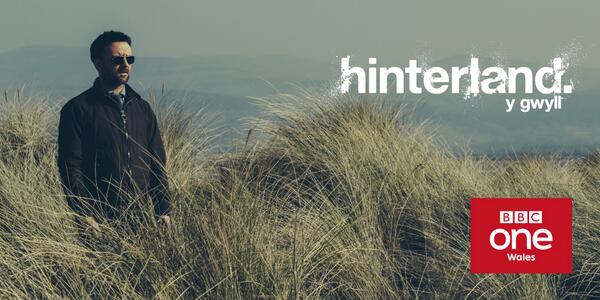
Meanwhile, over on BBC One Wales from 21.30 to 23.05, we see the start of the gripping Welsh crime drama Hinterland, which aired a little while back in a Welsh-language version and will now be shown again in a bilingual version. I am SO pleased that both English and Welsh feature (the latter with subtitles), as this accurately reflects life in Wales, where you hear speakers hopping from one language to the other all the time.

This is what the BBC has to say on the decision to film in both languages (full press release available here):

>> The special adaptation of the drama for BBC One Wales will feature dialogue in both English and Welsh – the first time both languages have played a prominent role in a drama series broadcast by the BBC. The Welsh-language elements of the programme will have on-screen subtitles.

Starring Richard Harrington, Hinterland has already attracted critical acclaim for its brooding portrayal of police life in west Wales. The Guardian said “fans of washed-out noir are going to love this for its slow, confident pacing, attention to detail and Harrington’s engrossing performance.”

The new series follows a commitment made by BBC Cymru Wales Director, Rhodri Talfan Davies, at the Celtic Media Festival in April to better reflect Welsh language life and culture on BBC One Wales. At the time, he said: “I think we have to spend more time finding bridges that can connect different audiences to cultures, view-points and experiences they might not normally encounter. On BBC One Wales I want us to think creatively about how we allow Welsh language voices and experiences to be heard and experienced a little more.” <<

For my take on the Scandi-influenced, Welsh-language original Y Gwyll, including a spoiler-free review of the first episode, see here. Further details are available in The Radio Times.

The eagle-eyed among you will have spotted that these two programmes clash… Set those recorders now – neither should be missed!

Out with the old, in with the new. Happy 2014!

HAPPY NEW YEAR!

I always love those quiet days between Christmas and New Year. They’re the perfect time for reading, and – for the bloggers among us – provide a great chance to tie up loose ends and plan ahead.

Some loose ends now neatly tied up in a bow:

  • I took part in two reading challenges last year, the 2013 Global Reading Challenge and the 2013 Translation Challenge. I completed both, and enjoyed the global challenge in particular, as it made me reflect on the geographical distribution of my reading (somewhat biased towards Europe and the US). You can see which books I read for the challenges here.
  • I’ve managed to finish my two Christmas reads, which complemented one other very well. Patricio Pron’s My Father’s Ghost is Climbing in the Rain is a literary memoir exploring a father-son relationship and the legacy of Argentina’s military dictatorship. It’s an interesting read, but took a little while to get going (it would probably benefit from a second reading, as the significance of earlier sections becomes clearer in the light of later ones). While not a crime novel, criminality is a key theme and the genre is frequently referenced, albeit in slightly contradictory ways. For example, the narrator comments: ‘I understood for the first time that the children of young Argentines in the 1970s were going to have to solve our parents’ pasts, like detectives, and that what we were going to find out was going to seem like a mystery novel we wished we’d never bought’ (p.152). But then a little later it’s suggested that exploring ‘social crime […] through the artifice of a detective novel’ is inadequate, because ‘the resolution of most detective stories is condescending, no matter how ruthless the plotting, so that the reader, once the loose ends are tied up and the guilty finally punished, can return to the real world with the conviction that crimes get solved and remain locked between the covers of a book, and that the world outside the book is guided by the same principles of justice as the tale told inside and should not be questioned’ (p.153). Of course that’s not always the case: lots of contemporary crime authors have pushed the boundaries of the genre to explore the absence of justice for state crimes. I wonder if Pron has read Ernesto Mallo’s outstanding 2006 crime novel Needle in a Haystack (see my review here), which examines the same historical period? It’s precisely the lack of a resolution/punishment for the crimes committed by the junta that gives the narrative its power.

  • My other Christmas novel was Jan Costin Wagner’s Light in a Dark House (Harvill Secker 2013), the fourth in the German/Finnish Kimmo Joentaa series, which was an excellent read. Even though each installment is made up of quite similar elements, the quality of the characterisation and narrative construction is such that they never appear formulaic. The starting points in Light in a Dark House are the disappearance of Kimmo’s secretive on-off lover, and the murder of a nameless, comatose woman in a hospital. Intriguingly, the only clue left by the murderer is ‘lacrimal fluid’, or tears.
  • And the connections between the two? The legacies of past violence, unresolved traumas, and the damaging effects of silence. These issues are presented quite differently in each, which makes them an interesting pair to read together.

Looking ahead:

  • Santa was kind enough to bring me a number of crime novels, including Gillian Flynn’s Sharp Objects (Phoenix 2007), Eduardo Sacheri’s The Secret in their Eyes (Other Press 2005/2011) and John le Carré’s A Delicate Truth (Viking 2013). I’m going to make the Sacheri my first crime novel of 2014, as I enjoyed the Oscar-winning film adaptation of 2010, and am keen to read the original novel. That’ll keep me going on my Argentinian reading path as well for now.
  • As a 2014 Petrona judge, I need to pick up the pace of my reading. Thus far I’ve read 20 of the submissions, which means I have rather a lot to go. (This is by way of a confession to Karen, Barry and Sarah, but I will get cracking now, promise…once I’ve read the Sacheri, that is).
  • More generally, 2014 is going to be different compared to other years, as I’m on research leave for a semester from the end of January *happy face*. More on my plans for that interlude another time…

Wishing you all a great start to the year and many hours of good reading!

Merry Christmas! Frohe Weihnachten!

So we’re about to head off on our seasonal travels. My brother is cooking the big Christmas dinner this year, while the rest of us chill out on the sofa. What a hero.

I’m packing a couple of novels to read over the Christmas break. The first is Jan Costin Wagner’s Light in a Dark House, the fourth in the German/Finnish Kimmo Joentaa series, and a submission for the 2014 Petrona Award (a list of all the eligible novels can be seen over at Euro Crime). The other is Argentinian writer Patricio Pron’s literary memoir, My Father’s Ghost is Climbing in the Rain, in which the author/detective investigates his family’s past. I’ve been saving both of these up, and look forward to reading them with a late-night glass of wine. How about you? What literary treats do you have lined up?

Wishing you all a very Merry Christmas and Happy Holidays!

Here are Gonzo, Rizzo the Rat, Kermit the Frog, Pepe the King Prawn, Miss Piggy and Fozzy Bear singing ‘It’s the Most Wonderful Time of the Year’. Enjoy! Viel Spaß!

The ultimate Christmas gift: an international crime novel!

For what could be finer than giving or receiving a crime novel set in foreign climes? Especially handy for those whose families are driving them bonkers by Boxing Day: just channel those murderous desires into crime fiction!

Here are some present ideas, which happen to be ten of my favourites from this year, ranging from police procedurals and detective fiction to historical and hybrid crime. Some I’ve reviewed (just click on the link), others I haven’t (so many books, so little time). All are undoubtedly available from your local, friendly, independent bookseller!

Ioanna Bourazopoulou, What Lot’s Wife Saw, translated from Greek by Yannis Panas (Black and White Publishing, 2013 [2007]). Winner of the 2008 Athens Prize for Literature, this is a dazzling, hybrid crime novel that takes readers on an extraordinary journey of the imagination. Set in the future after a devastating tsunami, its reluctant investigator is Phileas Book, who works for The Times compiling Epistlewords, a three-dimensional crosswordA brilliant, freewheeling narrative for those who like puzzles and substantial reads. Full review here.

Gillian Flynn, Dark Places (Weidenfeld & Nicolson, 2009). For my money, Flynn is one of the most original and daring crime writers out there, but her novels have polarized readers, so handle with care! Dark Places tells the story of a family massacre and its aftermath from the perspective of survivor Libby Day and other family members. It’s by turns harrowing, moving, blackly humorous and redemptive. My favourite of Flynn’s novels so far. Full review here.

Eugenio Fuentes, At Close Quarters, translated from Spanish by Martin Schifino (Euro Crime/Arcadia, 2009 [2007]). Captain Olmedo, a high-ranking army colonel, is found dead at his home. The authorities say it’s suicide, but daughter Marina has her doubts and hires P.I. Ricardo Cupido to investigate. This is the first novel I’ve read by Fuentes (the 5th in the series), and I was impressed both by its depth of characterisation and by its illumination of different political attitudes/mindsets in Spain.

The original Spanish cover for At Close Quarters

Arnaldur Indriðason’s Strange Shores, translated from Icelandic by Victoria Cribb (Harvill Secker, 2013). The ninth in the Reykjavik series and by all accounts the last (*sob*). Detective Erlendur returns to his childhood home to face the trauma that shaped his life – the disappearance of his little brother in a snowstorm. While there, he investigates another disappearance, of a young woman in 1942. A thoroughly engrossing novel with a powerful ending. But make sure the other eight have been read first! Full review here.

M.J. McGrath, White Heat and The Boy in the Snow (Mantle 2011/2012). These are the first two novels in the Edie Kiglatuk series, set in the chilly realm of the Arctic. Edie is a wonderful protagonist, and through her investigations we gain a tremendous insight into life in the frozen north – not least its cuisine. There are maps at the front of each novel, which provide a new perspective on a world in which Alaska is ‘down south’. Absorbing and entertaining reads.

Derek B. Miller, Norwegian by Night (Faber and Faber, 2013). I adored this book and haven’t met anybody who didn’t love it. It stars (and that really is the correct term) Sheldon Horowitz, a recently-widowed Jewish-American octogenarian living in Oslo with granddaughter Rhea, who makes a crucial decision after witnessing an appalling crime. An absolute joy from start to finish. Full review here.

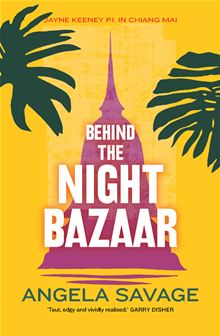
Angela Savage, Behind the Night Bazaar (Text Publishing, 2006). The first in the Jayne Keeney series by Australian author Savage, this novel was shortlisted for the Ned Kelly Best First Book Award in 2007. Jayne is a highly engaging private investigator based in Bangkok, whose investigations offer readers an escape to sunnier climes, and provide a vivid and insightful portrait of Thailand. Full review here.

Simon Urban, Plan D, translated from German by Katy Derbyshire (Harvill Secker, 2013). It’s 2011 and the Berlin Wall is still standing. Welcome to the alternative world of Plan D, in which the reunification of Germany never happened, and fifty-six year-old East German Volkspolizei captain Martin Wegener is about to embark on the strangest investigation of his career. An admirably bonkers alternative history that will appeal to those with an interest in 20th-century Europe and the Cold War. Full review here. A handy GDR glossary is available too.

Ben H. Winters, The Last Policeman and Countdown City (Quirk Books 2012/13). The first and second of a trilogy set in an America of the near future. Asteroid Maia is on a collision course with earth, and with just six months to impact, society is beginning to disintegrate. Why, given that they’ll all be dead soon anyway, does Detective Henry Palace of the Concord Police Department bother to investigate a suspicious suicide? Because that’s the kind of dogged guy he is… Sharp, funny and brilliantly observed.

Daniel Woodrell, Winter’s Bone (Sceptre, 2007). When sixteen-year-old Ree Dolly’s father disappears, she needs to find him again quickly to prevent the loss of her family home. Set in the Orzark Mountains of Missouri during an unforgiving winter, in a closed community that has its own laws, this is a tough but beautifully-written novel. Ree is a memorable protagonist, who reminded me a little of Mattie Ross in Charles Portis’ True Grit.

Winter’s Bone was turned into an acclaimed film starring Jennifer Lawrence

BBC4 announces new international crime acquisitions

BBC Four has announced three new foreign-language drama series: Crimes Of Passion, a Swedish crime series set in the 1950s, Hostages, an Israeli thriller series, and 1864, a Danish historical drama series (the latter starring a certain Sidse Babett Knudsen – further information available here).

The BBC4 press release gives the following details about the two crime acquisitions:

>> Crimes Of Passion (6 x 90-minute episodes)

With love, sex, intrigue, betrayal, secrets, lies – and murder – Crimes Of Passion is based on the popular crime novels of author Maria Lang. Set in the 1950s in the magically beautiful region of Bergslagen, Sweden, these entertaining whodunnits follow amateur sleuth Puck Ekstedt and fiancé Einar Bure, along with police superintendent Christer Wijk, in their quest to reveal the murderous intent beneath the seemingly idyllic surroundings – where the killer is always one of the community. [You can see a clip here. Shades of Agatha Christie and Midsomer Murders?]

Made by Pampas Produktion AB, Crimes Of Passion is executive produced by Johan Mardell, produced by Reneé Axö and directed by Birger Larsen, Christian Eklöw, Christopher Panov, Molly Hartleb and Peter Schildt.

Hostages (10 x 60-minute episodes)

Hostages is an intense psychological crime-thriller about a renowned surgeon who has been asked to perform a routine operation on the president of Israel. The night before the procedure, her family is taken hostage and she is ordered to sabotage the operation and kill the president – or her family will die. Her battle to save both her family and the president takes us on a journey in which everyone is fighting for survival. [Ooh, this looks good – see the trailer here. A rare and welcome chance to hear some Hebrew too. The American remake  – because of course it had to be remade in English – has just aired on CBS with Toni Collette in the leading role].

Hostages

Cast of the Israeli series Bnei Aruba / Hostages

Hostages is created by Rotem Shamir and Omri Givon and produced by Haim Sharir. Avi Armoza of Armoza Formats says: “We are proud to represent the first-ever Israeli series to air on the BBC, and believe that the BBC is the perfect home for this highly acclaimed drama.”

UPDATE: The first two episodes of Hostages aired on BBC4 on Saturday 21, 2015. There was lots of positive buzz on Twitter afterwards, and having caught up with the opener myself now, I can see why. This is a high quality TV drama, which sets up its ingenious premise in a very effective way – it’s gripping from start to finish, with complex characterisation and a nice twist at the end (the first of many, I’m sure). I also love that the hot-shot surgeon at the heart of it all is a women. Altogether, the series looks very promising indeed.

It’s the first time I’ve watched any Israeli crime drama or, by extension, heard any Hebrew for a sustained length of time. It’s an interesting experience, not least because (for a little while) we see a representation of an affluent, everyday life in Israel that’s at odds with what’s normally reported in the news. In my very limited experience of reading contemporary Israeli crime, the Israel-Palestine conflict is not something that tends to be addressed directly. I discuss this a little in my review of D. A. Mishani’s The Missing File, whose focus is very much on the minutiae of a murder committed in the small Israeli city of Holon. The more overtly political framework of The Hostages provides increased scope for an engagement with larger political issues, but I wonder if it will. Palestine, at least, may be too sensitive and divisive an issue to touch. I’ll be watching with great interest to see where the plot goes… 


#44 / Angela Savage, Behind the Night Bazaar

Angela Savage, Behind the Night Bazaar (ebook: Melbourne, Text Publishing, 2006)         4 stars

Opening line: The sluggish Bangkok traffic forced Jayne Keeney to slow to a crawl at Siam Square.

Behind the Night Bazaar is the first novel in the Jayne Keeney series by Australian author Angela Savage, and was shortlisted for the Ned Kelly Best First Book Award in 2007. It’s one I’ve been meaning to read for ages and am glad I finally have, as it’s an excellent debut that vividly evokes its Thai setting. As a bonus, it’s distracted me from the cold of the British winter and triggered some happy back-packing memories from my youth.

Jayne Keeney is an Australian private investigator based in Bangkok, who is pulled into a murder investigation when visiting her good friend Didier, an HIV-outreach worker in Chiang Mai. Certain that the authorities are guilty of a cover-up, Jayne sets out to expose the truth behind the case and to right some wrongs.

Among the many things I liked about this crime novel were the depiction of Jayne as an independent woman and highly capable investigator who speaks flawless Thai (being bilingual is an essential asset for her work); the inspiration Jayne takes from crime classics such as Sherlock Holmes and Miss Marple during her investigation (even as the narrative draws on the conventions of hard-boiled crime); the wonderful evocation of place and the insights we’re given into Thai culture (oh the food!); and last but not least, the guest appearance of a diva academic…(I promise we’re not all like that).

The author also explores larger social issues, such as HIV and the sex trade (drawing on her own time in Bangkok as head of the Australian Red Cross HIV/AIDS sub-regional programme), and I was impressed by the way that these were integrated into the main narrative. Savage takes care to avoid stereotyping, providing a nuanced examination of difficult issues, such as why women might opt to become sex-workers. Notable too, are the rounded depictions of the villains in the novel, which show us the flawed logic they employ to justify their crimes.

In sum, The Night Bazaar is a highly impressive opener, and I’m very much looking forward to the next novel in the series, The Half Child.

Angela has an author/crime blog that’s a great read, and has recently posted her crime picks of the year over at Pulp Curry – including the rather intriguing Australian/Icelandic novel Burial Rites.

Creative Commons License

.

Jakob Arjouni event / A trip to Swansea Library / Maigret

News of an event tomorrow night that will be of particular interest to those in London:

No Exit Press, together with Pancreatic Cancer UK, is hosting an event at Daunts Books (112-114 Holland Park Avenue, London, W11 4UA) on Tuesday 26th November, 18:30-21:00, to celebrate the life of German author Jakob Arjouni (1964-2013) and to raise funds for research into pancreatic cancer (http://www.pancreaticcancer.org.uk/). Barry Forshaw will be hosting and there’ll be German food and drink available. Entry is free.

The event will also launch Arjouni’s fifth and final Kayankaya novel, Brother Kemal. Regular readers of this blog will know that I’m particularly fond of the first in the series, Happy Birthday Turk!, which was an absolutely ground-breaking German crime novel back in the 1980s – see my earlier post here. I can also thoroughly recommend Brother Kemal, which provides a wonderful conclusion to the Kayankaya series.

In other news, I’ve been down to my local library to stock up on some crime fiction! I’m particularly blessed that Swansea Central Library is on my doorstep, which has an impressive range of crime fiction, including lashings of international crime. I came away with a satisfying selection including the first Arabic detective novel in English translation (Abdelilah Hamdouchi’s The Final Bet), some Spanish crime (Eugenio Fuentes’ At Close Quarters) and M.J.McGrath’s second Arctic novel, The Boy in the Snow. I’ve now read the first two, which were both excellent in their own ways, and am looking forward to meeting Edie Kiglatuk again soon.

Aside from the quality of these novels, it’s been a relief to read some crime that doesn’t open with the gruesome murder of a young woman. All too many of the novels sent to me by publishers begin with blurbs such as the following: ‘the body of a young woman is found carved up and buried in a forest glade’ / ‘a young woman is discovered in her apartment bound and gagged, the victim of an extraordinarily brutal attack’ / ‘a young woman has been brutally killed, her body abandoned in a car boot as a warning to others’ / ‘a young girl has been brutally murdered, her body arranged in bed with her hands over her eyes’. And so on… There does seem to be a depressing pattern here of an opening set piece featuring a young, sadistically brutalised female, and I’m getting pretty fed up with the gratuitousness of it all. I think a few more trips to the library are in order soon.

And finally… I’ve set up a new Maigret tab on the main menu of the site, where I’ll post mini-reviews of Simenon’s 75 Maigret novels as they are reissued by Penguin once a month. The idea is to build up a nice record / resource over time, and to track interesting developments in the series. It’s a (very) long-term reading challenge, which you are most welcome to join – either for the whole or for part of the way.

Arnaldur Indriðason’s Strange Shores / Iceland Noir

So I’ve finally read Arnaldur Indriðason’s Strange Shores (Harvill Secker), possibly the last novel in the Inspector Erlendur series, in which our favourite Icelandic detective heads back to his abandoned childhood home to face the trauma that has shaped his life – the disappearance of his little brother Bergur in a snowstorm when he was eight years old. While there, Erlendur also starts to dig into another unresolved story: that of Matthildur, a young wife who set off across the frozen fjords one day in 1942 and was never heard of again. The two cases are entwined throughout this absorbing narrative, and cuminate in a powerful and and thoroughly moving ending.

What a fine series this is: while consistently delivering satisfying police procedurals, Indriðason has provided his readers with wonderfully realised investigative figures, and with an insightful portrait of a rapidly changing Iceland (and all the good and bad such transformation entails). He also very effectively explores profound themes such as grief and loss. On re-reading my earlier review of The Draining Lake I found I had written that Indriðason’s sensitive treatment of ‘the missing’ – and of the impact of losing someone without knowing their final fate – lifted the novel above many others in the genre. The same remains true of Strange Shores.

If you’d like to know more about the novel, I recommend heading over to Raven Crime Reads, where you’ll find an excellent review. But if you’ve not yet read all the others in the series, it might be best to do so first…

Those with Erlendur withdrawal symptoms will be glad to know that Indriðason has written a prequel set in 1974 entitled Reykjavikurnaetur (Reykjavik Nights), which was published in Iceland last year. Hopefully it will be translated into English soon. Indriðason’s latest novel is called Skuggasund (Shadow Channel), and won this year’s Spanish RBA crime fiction prize. Many thanks to Quentin Bates, author of the marvellous Gunna crime series, for passing on this cheering information.

And speaking of Arnaldur and Quentin… This week sees a very special event taking place in Reykjavik for the first time – the crime convention ICELAND NOIR – which both writers will be attending, as well as a host of other Icelandic, Scandi and British authors. It looks like it’s going to be an absolutely fantastic few days, and I am deeply, deeply jealous of all who will be there. Please tweet and blog LOTS so we can take part vicariously.

Iceland Noir Poster

New MURDER anthology / Making an impact…with kittens

Exciting news! Margot Kinberg at Confessions of a Mystery Novelist has just announced the publication of a new crime anthology.

In a Word: Murder is a tribute to the late Maxine Clarke, crime blogger extraordinaire, and features stories set in the worlds of writing, editing, reviewing and blogging. Treats include the murder of a true-crime magazine editor, a life-or-death short story competition and a deadly literary festival. Deliciously wicked stuff!

in-a-word-murder-cover

Go on…you know you want to…!

Proceeds will go to the Princess Alice Hospice and can be purchased here. I’ve already got my copy and am keen to get reading.

There’s also been a bit of excitement here at Mrs. Peabody Investigates. As many of you know, I’m an academic by trade, and have used the blog to discuss my research on crime fiction, and to promote debate about this very rich literary genre. As a result of the blog’s success, it’s become a university ‘impact case study’, exploring the reach and significance of academic work in the public realm. Remember that survey that I asked you to fill out a little while back? The one with the kittens? That was me trying to find out how much the blog had benefited you as blog users, in terms of widening or changing your reading habits, or making you think more deeply about crime fiction. And the response, from 188 of you, was truly fantastic.

So the excitement today is that Mrs. Peabody Investigates features in The Guardian newspaper in an article about impact. It’s a discussion piece, but might be of interest in terms of seeing how Mrs P fits into my academic life. Please note the bit where I say that ‘making research more accessible to the public also helps to enrich it, by bringing in new voices’. Those voices are yours, and have most definitely had a beneficial impact on my own research. I learn a huge amount from you all the time, which creates a very virtuous circle indeed.

Time for a celebratory kitten!