#38 / Simon Urban, Plan D

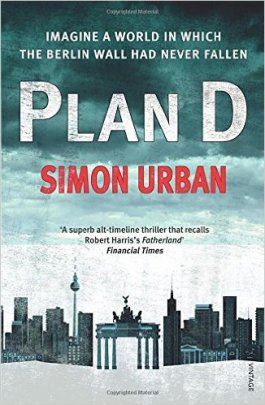
Simon Urban, Plan D (German original published by Schoeffling, 2011; English translation by Katy Derbyshire for Harvill Secker, 2013)  4 stars
plan-d

Opening line: Wegener undid the flies of his cords, pulled out his p*nis with two fingers and relaxed.

It’s 2011 and the Berlin Wall is still standing. Welcome to the alternative world of Plan D, by German writer Simon Urban, in which the 1990 reunification of Germany never took place, East and West Germany remain uneasy neighbours, and fifty-six year-old East German Volkspolizei (People’s Police) captain Martin Wegener is about to embark on the strangest investigation of his career.

Called to a crime scene on the outskirts of East Berlin, Wegener finds an elderly man hanging from a pipeline that exports gas from Russia across the German-German border. It looks like a murder with political dimensions, making the case ultra-sensitive for all concerned, and to top it all, suave West German police detective Richard Brendel is attached to the investigative team, to help resolve the case ahead of some important East-West talks. That’s when the fun really begins.

The first duty of any alternative history is to feel credible, and Plan D very successfully evokes a jaded East Germany that is now over six decades old and teetering on the edge of bankruptcy. The novel shows how the East German dictatorship and its relationship with West Germany might plausibly have evolved in modern political contexts, and also stresses the bleakness of everyday East German life, with the activities of the Stasi (the East German security police) continuing to cast a lengthy shadow. In this dystopian world, there’s room neither for Ostalgie – the nostalgia for life in East Germany that arguably marks films such as Goodbye Lenin! (2003) and Sonnenallee (1999)nor for the soft-hearted Stasi operative of Das Leben der Anderen (The Lives of Others, 2006). Instead, we’re shown the stifling confinement of the dictatorship and the impossibility of total trust between individuals, with Wegener taking on the role of the ‘distrustful detective’ forced to embark on a journey into the heart of darkness. More broadly, the novel draws on historican Eric Hobsbawn’s vision of the 20th century as an age of ideological extremes, with the former Nazi Reichsbank now housing the state’s SED Central Committee (which it really did), and the depiction of Wegener’s former colleague Früchtl as a former-Nazi-turned-Communist-policeman who disappeared in shady circumstances in 2010.

The striking design of Plan D’s German cover

The novel combines hard-boiled, noir humour (shades of Philip Kerr’s detective Bernie Gunther) and an exuberant, satirical writing style with elements of the grotesque (a nod to German writers such as Günter Grass and Edgar Hilsenrath). Hats off to translator Katy Derbyshire for communicating the original style with such flair. Urban also acknowledges the American writer Michael Chabon at the end of the book, and I’m guessing that The Yiddish Policeman’s Union was a particular influence, as its crime narrative is also set in an alternative post-war era. Surprisingly, however, there’s no mention of Robert Harris’s 1992 Fatherland, the gold-standard alternative history in which Hitler’s Germany is shown to have won the Second World War. In common with Fatherland, Plan D opens with the murder of an elderly man with a political past, prompting the investigator to search for a deeper truth, which in turn leads to major revelations about the state. For me, the influence of the former is very clear – and is a welcome one. (For info, an article in which I examine Fatherland in detail has just been published in the journal Comparative Literature Studies – more on that soon.)

There was only one aspect of Plan D that left me feeling uncomfortable, and that was the highly s*xualised depiction of the character Karolina. I’ve come to the conclusion that this is meant to be understood symbolically, but the jury’s still out a little for me. The novel is also extremely long. I’m not sure whether this is actually a drawback: while the manuscript might have benefited from a little trim, for this reader the 500 plus pages whizzed by.

Overall, I loved Plan D. For me, a significant portion of reading pleasure came from my prior knowledge of East Germany, which helped me to understand the novel’s in-jokes and biting satire in a way that those unfamiliar with the history of East and West Germany might not. So that everyone can join in the fun and appreciate the genuine wit and clever-ness of the novel, I’m taking the unusual step of publishing a companion post – a GDR glossary for Plan D. The theme tune to the ‘East German James Bond’ TV series is particularly worth a listen. Viel Spass! Enjoy!

My thanks to Harvill Secker for providing a review copy. The novel is published in all formats on 20th June.

Mrs. Peabody awards Plan D an ambitious, absorbing and entertaining 4 stars.

Creative Commons License

.

Dispatches from Bristol: CrimeFest 2013

I’ve just returned from four days in sunny Bristol at CrimeFest 2013, which was a grand adventure from start to finish. It’s impossible to do justice to the richness of the event in one post, but here’s a glimpse of some of the panels and highlights. I’ll also build a list of links to other CrimeFest reports at the end of this post.

I attended a number of mainly international panels (see below), but could have done with cloning myself to get to a few more. Those on Twitter can search for the hashtag #crimefest13 for my live tweets and those of other delegates.

Death Overseas: Valerio Varesi (Italy), Yrsa Sigurdardottir (Iceland), K.O. Dahl (Norway), Thomas Enger (Norway), Stav Sherez moderating. Showcase of international crime writing from three countries.

Native and Outsider: Different Perspectives I: Pierre Lemaitre (France), M.J. McGrath (UK/Arctic), Adrian Magson (UK/France), Dana Stabenow (Arctic), Jake Kerridge moderating. Exploring the advantages/disadvantages of writing crime set in Norway and the Arctic from an ‘insider’ or ‘outsider’ perspective.

Native and Outsider: Different Perspectives II: Roberto Costantini (Italy), David Hewson (UK/Italy/Sweden), Thomas Enger (Norway), Derek B. Miller (U.S./Norway), Barry Forshaw moderating. As above, but with a focus on Italy and Norway.

The Tourist Board

The Tourist Board Never Said Anything About This! Quentin Bates (Iceland), Stanley Trollip (Botswana), Xavier-Marie Bonnot (France), Jeffrey Siger (Greece), Martin Edwards moderating. The sensitivities of depicting positive and negative elements of a particular national setting or identity.

Cold War: An Infiltrating Chill: Tom Harper, John Lawton, Aly Monroe, William Ryan, Martin Walker moderating. A wide-ranging discussion of the Cold War and crime fiction set before, during and aft…actually, it seems that it’s not over yet.

Fresh Blood: Debut Authors: Alex Blackmore, J.C. Martin, Fergus McNeill, Tom Vowler, Rhian Davies moderating. Exciting new crime authors discussing their work.

How Does (English) Crime Translate? Ann Cleeves (author), Charlotte Werner (Swedish publisher), Erik de Vries (translator), Daniel Hahn of the British Centre for Literary Translation moderating. The mechanics of selecting crime for or from other national markets, and the processes involved in translation.

The Translation panel

Interesting observations from the panels and beyond

A number of writers view crime novels as a ‘social novel’ engaged in an exploration or critique of society, or of pressing social issues (Dahl, Varesi, Trollip, Stabenow). In contrast, Enger says he has no political or social agenda: telling a good story is the thing.

Settings are often viewed by writers as characters in their own right (Bonnot, Stabenow, McGrath, Trollip). Cities are sometimes better for depicting isolation than the countryside (Dahl). Marseilles is more Italian than French (Bonnot).

Some authors need to write in the place where their novels are set (McNeill/Bristol). Others feel that they write better elsewhere, because they can ‘see better from a distance’ (Miller/Oslo).

Lemaitre thinks it’s perfectly possible for a British ‘outsider’ to depict a France that is more ‘real’ than his own.

Icelandic crime writers face a challenge in terms of reflecting reality, as there’s an average of one murder a year in Iceland (Sigurdardottir). By contrast, the Arctic has the same per capita murder rate as South Africa or Mexico (McGrath).

A number of authors are engaged in explorations of historical legacies, such as World War II or the Algerian War (Magson, Varenne, Hewson, Ridpath). 60 years is nothing in terms of dealing with the legacy of the past (Costantini, citing Italy as an example).

Britain was not occupied during World War II (with the notable exception of the Channel Islands) and therefore didn’t experience the war in the same way as other countries such as France or Norway (Hewson).

Crime authors who write on twentieth century history have a variety of motivations: a desire to understand the previous generation and its role in making our world (Monroe on the Cold War); the challenge of writing about a society in which truth and justice are flexible concepts (Ryan on Stalin’s Russia).

British Cold War spies were often not uncovered due to the class system and upper-class loyalties: a public school boy who is a member of a posh club has perfect cover (Monroe). All on Cold War panel agreed that the Cold War is not over (citing the current situation in Syria).

Swedish cover of Blue Lightning

Crime fiction provides the biggest market for literary translation in the UK (Hahn). Speed is the key element when translating, especially in Europe where readers may otherwise buy the English original (de Vries). It’s a struggle to introduce translated authors in Sweden due to the dominance of Scandi crime, but it helps if their novels are set in the Shetlands… (Werner).

Describing violence is less interesting than exploring a character’s reaction to violence (James Oswald).

Buzz

There was lots of buzz about Pierre Lemaitre’s Alex, and this blogger did her very best to spread the word about Derek B. Miller’s exceptional debut novel Norwegian by Night. James Oswald’s Natural Causes was also frequently mentioned both as a must-read and a significant self-publishing success story. The series has been picked up by Penguin, whose advance the author rather unusually spent on buying a tractor for his farm.

Highlights

Seeing Barry Forshaw present the inaugural Petrona Award for Best Scandinavian Crime Novel of the Year, set up in memory of Maxine Clarke. The very deserving winner was Liza Marklund with Last Will, translated by Neil Smith (Corgi/Transworld 2012). Barry also won the prestigious HRF Keating Award for his editorship of British Crime Writing: An Encyclopaedia. Congratulations!

The Petrona Award, now on its way to Liza Marklund in Sweden

Hearing the International Dagger shortlist being announced, which includes German crime writer Ferdinand von Schirach’s The Collini Case. Full details are available over at Euro Crime.

Attending the Sherlock panel, which featured Mark Gatiss, Stephen Moffat and Sue Virtue in fine form. We learned and laughed a lot.

Eating lunch in a graveyard. Bristol Cathedral is a stone’s throw from the CrimeFest hotel, and features a lovely little cafe and landscaped garden/graveyard, where you can enjoy a peaceful cuppa.

Attending the second meeting of the Icelandic Chapter of the Crime Writers’ Association. I’m not quite sure how I ended up there, but it was very convivial and the Icelandic chocolates (Noi Sirius Konfekt) were delicious. Many thanks to Ragnar Jonasson and Quentin Bates for their hospitality!

l to r: Ann Cleeves, Ragnar Jonasson, Susan Moody, Barry Forshaw, Michael Ridpath, Quentin Bates (Icelandic chocolates on the table and empty seat reserved for Yrsa Sigurdardottir).

Last but not least, meeting old friends, making new ones, and seeing the faces behind the Twitter avatars of a number of writers and bloggers for the first time… It was all hugely enjoyable, and I’m already looking forward to next year.

CrimeFest blog-links

Crimepieces – CrimeFest Day 1CrimeFest Part 2

Detectives Beyond Borders – CrimeFest 1, CrimeFest 2, CrimeFest 3, CrimeFest 4

Do You Write Under Your Own Name – CrimeFest 2013 – Part 1, Part 2, Part 3

Graskeggur (aka author Quentin Bates) – CrimeFest Report: All Over Bar the Tweeting

Mystery Fanfare – CrimeFest 2013 Award Winners (all except The Petrona)

Sherlockology – Highlights from CrimeFest – Creating Sherlock

Vicky Newham – My Experience of CrimeFest 2013

For tweets on the event, see the hashtag #crimefest13

CrimeFest 2013 and the inaugural Petrona Award

This time next week CrimeFest 2013 will be in full swing. There’s a mouth-watering programme with lots of international writers as well as British writers whose works are set on international shores.

They include: Quentin Bates (Iceland), Xavier-Marie Bonnot (France), Roberto Costantini (Italy), K.O. Dahl (Norway), Jeffrey Deaver (USA), Thomas Enger (Norway), Ragnar Jonasson (Iceland), Pierre Lemaître (France), Adrian Magson (UK/France), M J McGrath (UK/Arctic), Derek B. Miller (Norway), Barbara Nadel (UK/Turkey), William Ryan (UK/ Russia), Jeffrey Siger (US/ Greece), Yrsa Sigurðardóttir (Iceland), Dana Stabenow (USA/ Alaska), Valerio Varesi (Italy), Robert Wilson (Spain/Portugal/Africa), Anne Zouroudi (UK/Greece). A full list of writers with further details is available here.

The winner of the first Petrona Award for Best Scandinavian Crime Novel of the Year will also be announced at the CrimeFest Gala dinner on Saturday night. I have my posh frock at the ready and am looking forward to the occasion very much.

The award was set up in memory of Maxine Clarke, who blogged as Petrona and was an expert in Scandinavian crime fiction. The 2013 shortlist, compiled on the basis of Maxine’s reviews, is as follows:

enger428586_287692644633128_120240158045045_704808_1282709077_n517CY6O6qWL51Bigz1qx7L._BO2,204,203,200_PIsitb-sticker-arrow-click,TopRight,35,-76_AA300_SH20_OU02_

PIERCED by Thomas Enger, tr. Charlotte Barslund (Faber and Faber)

BLACK SKIES by Arnaldur Indridason, tr. Victoria Cribb (Harvill Secker)

LAST WILL by Liza Marklund, tr. Neil Smith (Corgi)

ANOTHER TIME, ANOTHER LIFE by Leif GW Persson tr. Paul Norlen (Doubleday)

Synopses of the novels with extracts from Maxine’s reviews can be found at the wonderful ‘Petrona Remembered’ blog. Karen Meek has also set up two polls over at ‘Eurocrime’: ‘which novel do you want to win the Petrona Award 2013′ and ‘which novel do you think will win the Petrona Award 2013′. The polls are open until 29 May.

I’ll be tweeting from CrimeFest using the following hashtags: #CrimeFest and #CrimeFest2013. The only difficulty now is deciding which of the panels to attend – they all look so good…

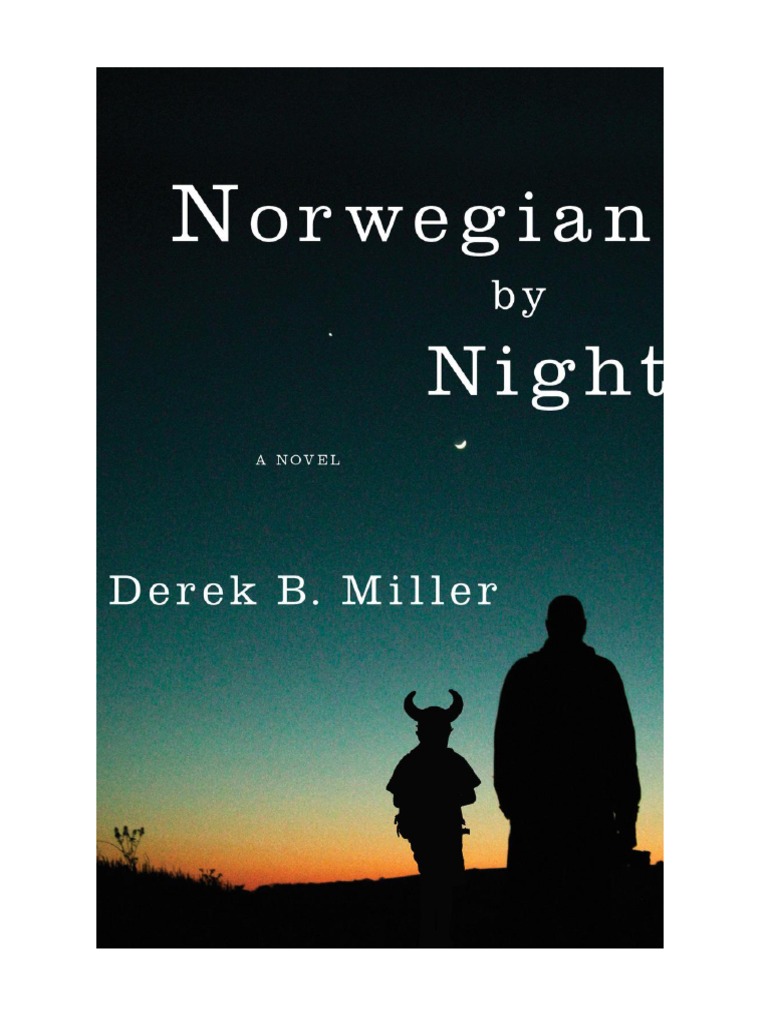
#37 / Derek B. Miller, Norwegian by Night

Derek B. Miller, Norwegian by Night (ebook; London: Faber and Faber, 2013). 5 stars

Opening line: It is summer and luminous. 

I’m very excited about this book. Promoted as ‘a literary novel, a police thriller, and the funniest book about war crimes and dementia you are likely to read anytime soon’ (true), it’s also one of the best and most original novels you’ll ever read.

The star of the novel and its central protagonist is Sheldon Horowitz, a recently-widowed Jewish-American octogenarian and former Marine with possible dementia, who has been transplanted by granddaughter Rhea from New York to Oslo, so that she and her husband Lars can take care of him in his dotage. A few weeks after his arrival, following sounds of a violent argument in the flat above, Sheldon is faced with a life-changing choice: whether or not to open his door to help a mother and son in physical danger. His decision to do so, strongly influenced by the memory of the Holocaust, sets off a chain of events which have major repercussions for himself and those around him.

I loved this novel’s distinctive Jewish-New York voice and its brilliant characterisation of Sheldon, an old man trying to right past wrongs and protect a six-year-old boy from harm by drawing on the memory of his soldier’s training from half a lifetime ago. The narrative has the free-wheeling brilliance and humour characteristic of the best Jewish-American writing and is, quite simply, a joy to read (Miller’s work fits perfectly with others like The Yiddish Policeman’s Union by Michael Chabon and Everything is Illuminated by Jonathan Safran Foer). The following excerpt is typical:

Sheldon catches his breath and stands up again. He walks over beside Paul and says, “Right, now we start walking backward. If we’re lucky, we’ll go backward in time, before yesterday and the day before. Before you were born, all the way back to at least 1952 […] We could stop for lunch in 1977. I knew an excellent sandwich shop in 1977.”

The novel also explores an extraordinary number of larger subjects and themes, such as: fatherhood, parental regret and loss; aging, memory and dementia; Jewishness, identity, the desire to belong, masculinity and war; the German Occupation of Norway during World War Two, the Holocaust, the Korean War, the Vietnam War, the Balkan Wars; war crimes and justice; and, last but not least, criminality and policing in a global era. While hugely ambitious in tackling such a wide range of issues, the author – somehow – manages to integrate them successfully, along with three generations of Horowitz family history, into a thrilling plot.

Written by an American author based in Oslo, this is also very much a book about Norway and its relation to the world. Sheldon and Rhea’s outsider perspectives  – like the author’s own – provide the opportunity for wry comparative analyses of American and Norwegian cultural traits. Meanwhile, Police Chief Inspector Sigrid Ødegård (another warm and wonderfully-realised character), allows the narrative to reflect on the globalisation of organised crime and the opportunities afforded to criminal networks through the softening of Europe’s borders. Norway is depicted as unprepared for the speed of these developments, with criticism levelled at its liberals (‘expounding limitless tolerance’) and conservatives (‘racist or xenophobic’), as well the failure of both sides to hold positions properly ‘grounded in evidence’. Here we see the author’s own background in international relations shining through: in a 2012 interview on the ‘Bite the Book’ blog, Miller describes how he has worked ‘designing “evidence-based” approaches to peace and security programming for almost a decade at The United Nations Institute for Disarmament Research’. The whole interview is well worth a read.

Norwegian by Night is by turns a hilariously funny, heart-breakingly sad and genuinely suspenseful novel that makes you care deeply about its characters – not least the irascible Sheldon. On finishing it, I immediately wanted to read it again –  along with a stack of other books it called to mind (by Kurt Vonnegut, John Irving and Michael Chabon, to name but three). You can’t ask for more than that.

With thanks to Raven Crime Reads for alerting me to this novel. You can read Raven’s excellent review here (which contains slightly more details of the plot than included above). There’s also an earlier Mrs P. post on Jewish detectives here.

Mrs. Peabody awards Norwegian by Night an utterly brilliant 5 stars

Creative Commons License

.

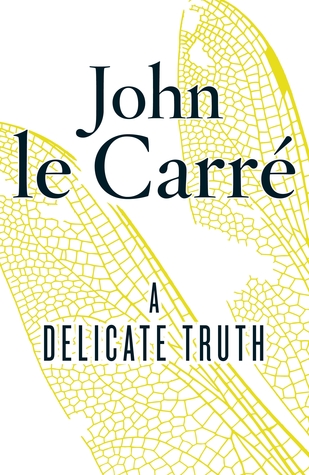
BBC Radio 4’s Book at Bedtime from Monday 13 May: John le Carré’s A Delicate Truth

Hot on the heels of the publication of John le Carré’s A Delicate Truth comes an adaptation of the novel for BBC Radio 4’s wonderful ‘Book at Bedtime’ slot.

The first of ten episodes, wittily titled ‘Between A Rock And A Hard Place’, will be broadcast on Monday 13 May, from 10.45 to 11.00pm (GMT). The narrator is Damian Lewis, famous (amongst other things) for his Emmy-winning role as Nicholas Brody in the American hit series Homeland.

Here’s the publicity blurb accompanying the adaptation from the BBC:

>> Damian Lewis begins John le Carré’s gripping, brand-new novel about a good man who must choose between his conscience and his duty to the Service.

An undercover counter-operation in the British colony of Gibraltar [the eponymous Rock]; a middle-ranking man from the Foreign Office serving as ‘eyes on’ and reporting to an ambitious Minister; the aim to capture a jihadist arms-buyer: the success, assured.

But back in the UK a junior officer has his doubts and commits an unthinkable act. Three years on, he will find himself facing an impossible choice. In a journey that will take him from Cornwall to Wales via murky secrets in the depths of Whitehall, Toby Bell will try to find out the truth about the night on the Rock and bring it the attention and justice it deserves.<<

The novel is abridged by Sally Marmion and produced by Di Speirs for the BBC.

#36 / Wendy James, The Mistake

Wendy James, The Mistake (Penguin / Michael Joseph ebook, 2012). An outstanding portrait of a family in crisis and the repercussions of past mistakes  4.5 stars

Opening line: If, before all this happened, before her – before their – unravelling, she had been asked how her life was, she’d have said that life was good.

The Mistake is Australian author Wendy James’ fourth novel. Like her first, Out of the Silence, which won the Ned Kelly Award for ‘Best First Crime Novel’ and was shortlisted for the Dobbie women’s writing award, it’s a hybrid narrative aimed at a diverse reading audience (doesn’t that cover remind you of something by Jodi Picoult?). While not a conventional crime novel, it raises profound questions about legal and moral boundaries, and the media’s role in pre-judging those it deems to be guilty of transgressing social and cultural norms.

Jodie Garrow is a middle-class wife and mother living in the affluent New South Wales town of Arding. She has the requisite lawyer husband, two children and a dog, and is a respected figure in the local community. However, when daughter Hannah breaks a leg on a school trip to Sydney, Jodie’s carefully ordered existence begins to fall apart. The hospital Hannah is taken to is the same one where Jodie secretly gave birth to a daughter many years before, and when a nurse from that time recognises her, a damaging piece of information comes to light: there is no record of baby Elsa Mary having been given up for adoption as Jodie claims. In the absence of legal proof, the baby may have to be classified as a ‘missing person’ by the police, with suspicion of foul play falling on Jodie as the last documented person to see her alive.

While the question of what happened to the baby looms large, the exploration of the fallout from Jodie’s ‘mistake’ (whatever that turns out to be) is central to this rich, multi-layered narrative. The novel can be read simultaneously as a portrait of a complicated woman, of a family in crisis, of a possible crime, and of the vilification of ‘bad mothers’ by the press. The ‘bad mother’, in this context, is a woman who fails to show the requisite ‘maternal’ qualities or emotion to convince the public that she is innocent of wrong-doing (as in, to a greater or lesser degree, the examples of Lindy Chamberlain, Sally Clark and Kate McCann). We are shown in brilliantly-drawn detail the destruction of an individual’s reputation, and the social consequences for the entire family of the doubts raised about Elsa Mary’s fate.

What stood out for me in particular was the novel’s excellent characterisation, which allows a nuanced picture of Jodie’s identity and her relationships with others to emerge. There’s also a superb analysis of how Jodie is shaped by class, which helps to illuminate her response to her unplanned pregnancy at the age of nineteen. Fittingly for a novel that is critical of a rush to judgement, no absolute moral position is taken. It thereby success-fully avoids stereotyping and knee-jerk reactions, focusing instead on the very individual circumstances that lie behind the case.

I read The Mistake in almost one sitting, and can therefore happily testify to its properties as a page-turner. The plotting and pace are excellent (although there is one ‘lead’ that would surely have been followed up sooner), and its ending will stay with me for a long time to come.

My thanks to Angela Savage for encouraging me to read this novel following an earlier post on crime novels that critique the media (Leif G.W. Persson’s Linda, Gillian Flynn’s Gone Girl and Yvonne Erskine’s The Brotherhood). You can read Angela’s own review of The Mistake here as well as Bernadette’s review at ‘Fair Dinkum Crime’ here.

Mrs. Peabody awards The Mistake a thought-provoking and utterly gripping 4.5 stars

Creative Commons License

.

In praise of John le Carré

Today, 25th April, sees the publication of John le Carré’s new espionage novel, A Delicate Truth, which has already garnered excellent reviews (see for example Mark Lawson in The Guardian). Set in 2008 and 2011, it explores shady Whitehall operations against the background of the Bush-Blair era and the ‘war on terror’, and is being viewed as a stunning return to form.

del

In the run-up to publication, le Carré has also been marking the 50th anniversary of The Spy Who Came in from the Cold (1963). In a piece for The Guardian on 13. April, he explores the personal and historical contexts in which this ground-breaking novel was written, and the frustration he experienced at being ‘branded as the spy turned writer’; the author of ‘anti-Bond’ novels that critics erroneously insisted on regarding as spying handbooks.

Given all the above, it seems like an apt moment to try to sum up what makes le Carré such a wonderful and important writer. Here is my personal appreciation, in random top 10 form:

One of the many covers for The Spy – showing the barbed wire that divided East and West in front of the Brandenburg Gate in Berlin

I love John le Carré’s works because…

1. …the author and his creation George Smiley are linguists.                                   Le Carré studied German literature for a year at the University of Bern, and graduated with first-class honours in modern languages from Oxford. Most of his spies are linguists, and the most famous of them all, George Smiley, studied Baroque German literature and was destined for academia until the British Secret Service came knocking (in the shape of the brilliantly named ‘Overseas Committee for Academic Research’). The profession of intelligence officer offers Smiley ‘what he had once loved best in life: academic excursions into the mystery of human behaviour, disciplined by the practical application of his own deductions’ (Call for the Dead, Penguin 2010, p. 2). And languages still really matter. Smiley’s ability to speak fluent German plays a vital role in Smiley’s People when he gathers intelligence in Hamburg, the city where he spent part of his boyhood, as well as a number of years ‘in the lonely terror of the spy’ during the Second World War. Le Carré says of him that ‘Germany was his second nature, even his second soul […] He could put on her language like a uniform and speak with its boldness’ (Sceptre 2011, pp. 252-3). This author’s world, then, is overwhelmingly multilingual, multicultural and international. Monoglot Brits need not apply…

2. …they so effectively evoke Germany during the Cold War. The frequent use of a German setting was practically inevitable given le Carré’s education, his membership of the British Foreign Service in West Germany (as Second Secretary in the British Embassy in Bonn and Political Consul in Hamburg, which provided cover for his MI6 activities), and the timing of his stay between 1959 and 1964 at the height of the Cold War. Berlin was the frontline of the ideological battle between the Eastern and Western blocs, and le Carré says in an afterword to The Spy Who Came in from the Cold that ‘it was the Berlin Wall that got me going, of course’ (Penguin 2010, p. 255). Le Carré’s first novel, Call for the Dead, was published in 1961, the year the Wall went up, and, along with a number of his other novels, is partially set in East/West Germany (see list below). The most memorable for me are The Spy Who Came in from the Cold (1963) and Smiley’s People (1979), both of which feature dénouements involving Berlin border crossings and evoke the Cold War tensions of that time and place perfectly.

3. …as someone who teaches in this area, I appreciate le Carré’s sophisticated understanding of 20th-century German and European history. This is evident in his recent Guardian piece, where he references the complexities of Allied intelligence operations in Cold War West Berlin, including the pragmatic but unethical protection of former Nazis, because they were viewed as valuable in the fight against communism. The difficult legacy of National Socialism in post-war Germany is most closely examined in his 1968 novel A Small Town in Germany (and forms part of the corpus for my own research on crime that engages with the Nazi period).

4. …as someone who reads and researches lots of historical fiction, I admire le Carré’s ability to communicate complex histories to a mass readership in intelligent and entertaining espionage novels. This isn’t something that many authors can do well; le Carré is one of the best.

5. …their narratives reveal a deep engagement with moral questions. A fascination with the themes of loyalty and betrayal – in relation to both individuals and ideologies/states – is particularly visible in the Cold War ‘Karla Trilogy’ (Tinker Tailor Soldier Spy 1974; The Honourable Schoolboy 1977; Smiley’s People 1979), which in turn forms part of the eight-novel Smiley collection. What’s had the greatest impact on me as a reader, though, is the critique of how the intelligence services (on either side of the ideological divide) are willing to sacrifice the individual for the ‘greater good’, and the recognition of the immorality of this act. Le Carré’s third and fourth novels – The Spy Who Came in from the Cold (1963) and The Looking Glass War (1965) – are extremely powerful in this respect, as they recount the tragic tales of those who become pawns in larger political chess games. Incidentally, I’ll bet my maximum bet of 10p that the figure of Avery in the latter novel most accurately embodies the professional and moral disillusionment that led Carré to leave the Service. The central question for this author was and continues to be: ‘how far can we go in the rightful defence of our western values, without abandoning them on the way?’ (see Guardian piece).

6. …their characters are fantastically drawn. Aside from the masterpiece of Smiley, the dumpy, middle-aged, unassuming, sharp-as-a-tack intelligence genius, who could forget Control, Connie Sachs, Toby Esterhase, Peter Guillam, Ricky Tarr, Jerry Westerby, Bill Haydon and Jim Prideaux? All are so beautifully depicted that you feel they are living, breathing people.

Kathy Burke as Connie Sachs in Tinker Tailor Soldier Spy (2011)

7. …you won’t find more perceptive writing anywhere. In German one would say that le Carré is ‘wach’: he is awake. He really SEES the world around him and has a deep understanding of how its political and power structures work, and how individuals get tangled up in them.

8. …they have given us wonderful TV and film adaptations, featuring great actors such as Alec Guinness and Richard Burton (whose diaries happen to rest at my own institution, Swansea University). See here for my film review of the 2011 adaptation of Tinker Tailor Soldier Spy with Gary Oldman.

Alec Guinness as Smiley, retrieving a clue in Smiley’s People (1982)
The man sees everything….

9. …they are so often top-quality. One of my own later favourites is 2001’s The Constant Gardener – a brilliant exploration of pharmaceutical corruption for commercial gain in the developing world. And now, at the age of 81, it looks like he’s done it again with A Delicate Truth. Mark Lawson, in his review, writes that ‘le Carré has a strong claim to be the most influential living British writer’ and that he ‘is back at full power with a book that draws on a career’s worth of literary skill and international analysis’. ‘No other writer has charted – pitilessly for politicians but thrillingly for readers – the public and secret histories of his times, from the second world war to the ‘war on terror’.

10. Last but not least, le Carré is a true friend of languages, and has been extremely generous in using his influence to promote language learning in the UK – for which I as a German studies lecturer am deeply grateful. He was deservedly awarded the Goethe Medal in 2011 for ‘outstanding service for the German language and international cultural dialogue’.

All of which leads me to say how much I’m looking forward to reading A Delicate Truth. Further information about the novel is available at le Carré’s website (including an audio excerpt and the first chapter). The novel begins with a quote from Oscar Wilde: ‘If one tells the truth, one is sure, sooner or later, to be found out’. Something every spook needs to remember…

Le Carré novels that reference the German-speaking world/history

Call for the Dead (Smiley’s German links; Nazi past; East Germany)

The Spy Who Came in From the Cold (Nazi past; divided Berlin; East Germany)

The Looking Glass War (East and West Germany)

A Small Town in Germany (Nazi past; Bonn, West Germany)

Smiley’s People (Hamburg, West Germany; Bern, Switzerland; divided Berlin)

The Perfect Spy (German at Oxford; Vienna and Berlin)

The Secret Pilgrim (diverse, including East Berlin, Hamburg, Munich, Zurich)

Absolute Friends (West Germany, East Germany)

A Most Wanted Man (Hamburg, Germany)

Our Kind of Traitor (Switzerland).

Nominations, shortlists and stacks of crime

A few tasty tidbits as we (finally) make it to the weekend.

1. Spotted on It’s a Crime! (Or a Mystery): the BAFTA TV nominations are out, and the International category includes two series with strong elements of crime – The Bridge and Homeland. They make up half of the nominations (listed below).

The one I want to win…

The Bridge – Hans Rosenfeldt, Charlotte Sieling, Anders Landstrom, Bo Ehrhardt (Filmlance, Nimbus, ZDF Enterprises/BBC Four)
Game of Thrones – David Benioff, D.B Weiss, Carolyn Strauss, Frank Doelger (HBO/Sky Atlantic)
Girls – Lena Dunham, Jennie Konner, Judd Apatow (HBO/Sky Atlantic)
Homeland – Production Team – (20th Century Fox/Channel 4)

The full list with all categories is available here (thank you, Rhian!).

2. The Independent foreign fiction prize 2013 shortlist has been announced, and contains one of the crime narratives I highlighted in an earlier post – Gerbrand Bakker’s The Detour (translated from the Dutch by David Colmer / Harvill Secker).

Publisher description: A Dutch woman rents a remote farm in rural Wales after confessing to an affair with one of her students. In Amsterdam, her stunned husband forms a strange partnership with a detective who agrees to help him trace her. They board the ferry to Hull on Christmas Eve. Back on the farm, a young man out walking with his dog injures himself and stays the night, then ends up staying longer. Yet something is deeply wrong. Does he know what he is getting himself into? And what will happen when her husband and the policeman arrive? The Detour is a deeply moving new novel, shot through with longing and the quiet tragedy of everyday lives.

It all sounds rather existential. I’m intrigued! Here’s the full shortlist, which might need further exploration as well.

3. Petrona Award for Best Scandinavian Crime Novel of the Year

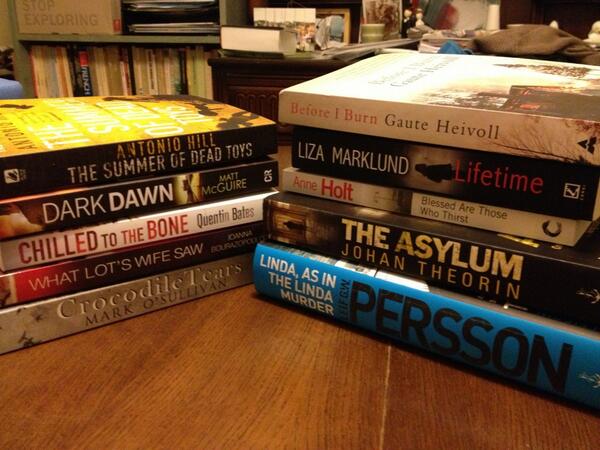
I’m getting very excited as crime novels for the 2014 Petrona begin to arrive. Having been away from the university for a while over Easter, I returned to a veritable mountain of packages, and felt like proverbial kid in a sweet shop as I opened them all up.

Embedded image permalink

Petronas on the right; other goodies to the left

The winner of the first Petrona Award will be announced at CrimeFest in Bristol (30. May to 2. June). I’ve just booked my ticket and hotel and am looking forward to it all greatly, not least because this will be my first ever visit to the convention. The programme looks very inviting. Perhaps see you there?

#35 / Jason Webster, A Death in Valencia

Jason Webster, A Death in Valencia (London: Chatto and Windus, 2012). The second in the Max Cámara series provides some much needed summer warmth and a genuine insight into modern-day Spain  4 stars

Opening line: The green-and-white Guardia Civil patrol boat looked out of place so close to the shoreline. 

Fed up of our seemingly never-ending British winter, I found myself reaching for Jason Webster’s A Death in Valencia, set during a sweltering summer in Spain’s third largest city (and home to one of its most famous traditional dishes, paella). Being transported to the land of sun, sea and sangria proved to be an excellent move.

A Death in Valencia opens with the body of Pep Roures, a well-known paella chef, being recovered by Chief Inspector Max Cámara from the sea. The subsequent murder investigation is set against the background of a number of challenging events: the town hall’s commercially-motivated demolition of El Cabanyal, an old fishing quarter by the sea; the sudden collapse of an apartment block; the kidnapping of the director of an abortion clinic, and the visit of the Pope. Cámara, too, is going through a tough time, with the emotional fallout from Or the Bull Kills You (the first in the series) leading him to act rather unwisely on occasion, in spite of his grandfather Hilario’s sound counsel.

While the plot takes a little time to ignite, the novel builds to a satisfying conclusion, not least due to its rich depictions of Valencia and contemporary Spanish society. Readers learn about regional details such as the all-important rating system for paella, as well as larger issues, such as the fundamentally divided nature of Spanish society: conservatives with ‘traditional’ values rooted in the church on the one hand, and those who celebrate regional diversity and change on the other. The Valencian setting is also vividly evoked, especially the old El Cabanyal quarter (which really is under threat – see www.cabanyal.com).

Source: http://www.deverdaddigital.com/pagArticle.php?idA=9749

El Cabanyal

If you’re a Max Cámara fan, or are interested in this series, you might like to read Mrs. Peabody’s interview with Jason Webster, recorded at the 2012 Harrogate Crime Writing Festival and available here. Areas explored include the legacy of the Spanish Civil War, the role of Spanish proverbs, and the influence of the author Vázquez Montalbán.

Mrs. Peabody awards A Death in Valencia a highly enjoyable 4 stars and looks forward to meeting Max Cámara again soon. 

Creative Commons License

.

Arne Dahl’s The Blinded Man airs this Saturday (6 April) on BBC4

As I reported in a recent post on forthcoming international crime drama, the TV adaptation of Arne Dahl’s ‘Intercrime’ series is about to hit our screens, airing this Saturday on BBC4 between 9.00 and 10.30pm. We begin with a two-parter of The Blinded Man (first published in the U.S. as Misterioso), with the same pattern being repeated for another four Intercrime novels (ten episodes in total).

I’ll be very interested to see how the adaptation is handled. The storyline seems to be fundamentally the same as in the novel, but the Head of the A-Unit, Jan-Olov Hultin, has morphed into Jenny Hultin (pictured in the burgundy jacket below).

Image for Arne Dahl

Image courtesy of BBC4

The BBC4 synopsis of Episode 1 reads as follows (light spoilers): High-flying financiers are being murdered and it’s beginning to appear like the work of a serial killer. CID inspector Jenny Hultin puts together a team of top detectives to crack the case before there are more deaths and a national panic. One of the team, Paul Hjelm, is saved from a disciplinary hearing for shooting a hostage taker when he said he was unarmed. Together with his new colleagues he finds himself working 24 hours a day to find the killer quickly. They are the ‘A Unit’ and their pursuit of the Fat Cat Killer will expose tensions within the newly-formed group and put some of them in fear of their lives.

Further links

Radio Times interview: ‘Arne Dahl on the success of Nordic Noir and taking tips from Prime Suspect’.

Full details of the 10 Intercrime novels on Arne Dahl’s website (and lots more besides).

A review of The Blinded Man / Misterioso at Petrona.

An earlier Mrs. P. post on Arne Dahl and his novel Chinese Whispers (the first in Dahl’s ‘Europol’ series).

An advance review at Crime Time Preview (should you wish to sneak a peek).