Dispatches from Bristol: CrimeFest 2013

I’ve just returned from four days in sunny Bristol at CrimeFest 2013, which was a grand adventure from start to finish. It’s impossible to do justice to the richness of the event in one post, but here’s a glimpse of some of the panels and highlights. I’ll also build a list of links to other CrimeFest reports at the end of this post.

I attended a number of mainly international panels (see below), but could have done with cloning myself to get to a few more. Those on Twitter can search for the hashtag #crimefest13 for my live tweets and those of other delegates.

Death Overseas: Valerio Varesi (Italy), Yrsa Sigurdardottir (Iceland), K.O. Dahl (Norway), Thomas Enger (Norway), Stav Sherez moderating. Showcase of international crime writing from three countries.

Native and Outsider: Different Perspectives I: Pierre Lemaitre (France), M.J. McGrath (UK/Arctic), Adrian Magson (UK/France), Dana Stabenow (Arctic), Jake Kerridge moderating. Exploring the advantages/disadvantages of writing crime set in Norway and the Arctic from an ‘insider’ or ‘outsider’ perspective.

Native and Outsider: Different Perspectives II: Roberto Costantini (Italy), David Hewson (UK/Italy/Sweden), Thomas Enger (Norway), Derek B. Miller (U.S./Norway), Barry Forshaw moderating. As above, but with a focus on Italy and Norway.

The Tourist Board

The Tourist Board Never Said Anything About This! Quentin Bates (Iceland), Stanley Trollip (Botswana), Xavier-Marie Bonnot (France), Jeffrey Siger (Greece), Martin Edwards moderating. The sensitivities of depicting positive and negative elements of a particular national setting or identity.

Cold War: An Infiltrating Chill: Tom Harper, John Lawton, Aly Monroe, William Ryan, Martin Walker moderating. A wide-ranging discussion of the Cold War and crime fiction set before, during and aft…actually, it seems that it’s not over yet.

Fresh Blood: Debut Authors: Alex Blackmore, J.C. Martin, Fergus McNeill, Tom Vowler, Rhian Davies moderating. Exciting new crime authors discussing their work.

How Does (English) Crime Translate? Ann Cleeves (author), Charlotte Werner (Swedish publisher), Erik de Vries (translator), Daniel Hahn of the British Centre for Literary Translation moderating. The mechanics of selecting crime for or from other national markets, and the processes involved in translation.

The Translation panel

Interesting observations from the panels and beyond

A number of writers view crime novels as a ‘social novel’ engaged in an exploration or critique of society, or of pressing social issues (Dahl, Varesi, Trollip, Stabenow). In contrast, Enger says he has no political or social agenda: telling a good story is the thing.

Settings are often viewed by writers as characters in their own right (Bonnot, Stabenow, McGrath, Trollip). Cities are sometimes better for depicting isolation than the countryside (Dahl). Marseilles is more Italian than French (Bonnot).

Some authors need to write in the place where their novels are set (McNeill/Bristol). Others feel that they write better elsewhere, because they can ‘see better from a distance’ (Miller/Oslo).

Lemaitre thinks it’s perfectly possible for a British ‘outsider’ to depict a France that is more ‘real’ than his own.

Icelandic crime writers face a challenge in terms of reflecting reality, as there’s an average of one murder a year in Iceland (Sigurdardottir). By contrast, the Arctic has the same per capita murder rate as South Africa or Mexico (McGrath).

A number of authors are engaged in explorations of historical legacies, such as World War II or the Algerian War (Magson, Varenne, Hewson, Ridpath). 60 years is nothing in terms of dealing with the legacy of the past (Costantini, citing Italy as an example).

Britain was not occupied during World War II (with the notable exception of the Channel Islands) and therefore didn’t experience the war in the same way as other countries such as France or Norway (Hewson).

Crime authors who write on twentieth century history have a variety of motivations: a desire to understand the previous generation and its role in making our world (Monroe on the Cold War); the challenge of writing about a society in which truth and justice are flexible concepts (Ryan on Stalin’s Russia).

British Cold War spies were often not uncovered due to the class system and upper-class loyalties: a public school boy who is a member of a posh club has perfect cover (Monroe). All on Cold War panel agreed that the Cold War is not over (citing the current situation in Syria).

Swedish cover of Blue Lightning

Crime fiction provides the biggest market for literary translation in the UK (Hahn). Speed is the key element when translating, especially in Europe where readers may otherwise buy the English original (de Vries). It’s a struggle to introduce translated authors in Sweden due to the dominance of Scandi crime, but it helps if their novels are set in the Shetlands… (Werner).

Describing violence is less interesting than exploring a character’s reaction to violence (James Oswald).

Buzz

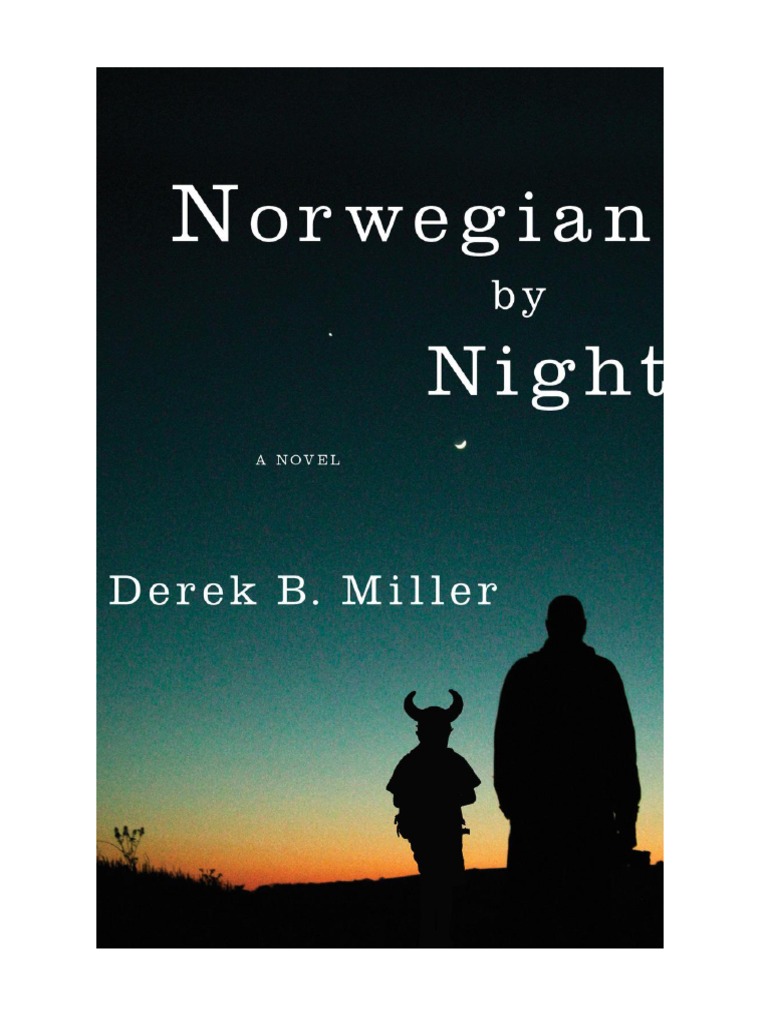
There was lots of buzz about Pierre Lemaitre’s Alex, and this blogger did her very best to spread the word about Derek B. Miller’s exceptional debut novel Norwegian by Night. James Oswald’s Natural Causes was also frequently mentioned both as a must-read and a significant self-publishing success story. The series has been picked up by Penguin, whose advance the author rather unusually spent on buying a tractor for his farm.

Highlights

Seeing Barry Forshaw present the inaugural Petrona Award for Best Scandinavian Crime Novel of the Year, set up in memory of Maxine Clarke. The very deserving winner was Liza Marklund with Last Will, translated by Neil Smith (Corgi/Transworld 2012). Barry also won the prestigious HRF Keating Award for his editorship of British Crime Writing: An Encyclopaedia. Congratulations!

The Petrona Award, now on its way to Liza Marklund in Sweden

Hearing the International Dagger shortlist being announced, which includes German crime writer Ferdinand von Schirach’s The Collini Case. Full details are available over at Euro Crime.

Attending the Sherlock panel, which featured Mark Gatiss, Stephen Moffat and Sue Virtue in fine form. We learned and laughed a lot.

Eating lunch in a graveyard. Bristol Cathedral is a stone’s throw from the CrimeFest hotel, and features a lovely little cafe and landscaped garden/graveyard, where you can enjoy a peaceful cuppa.

Attending the second meeting of the Icelandic Chapter of the Crime Writers’ Association. I’m not quite sure how I ended up there, but it was very convivial and the Icelandic chocolates (Noi Sirius Konfekt) were delicious. Many thanks to Ragnar Jonasson and Quentin Bates for their hospitality!

l to r: Ann Cleeves, Ragnar Jonasson, Susan Moody, Barry Forshaw, Michael Ridpath, Quentin Bates (Icelandic chocolates on the table and empty seat reserved for Yrsa Sigurdardottir).

Last but not least, meeting old friends, making new ones, and seeing the faces behind the Twitter avatars of a number of writers and bloggers for the first time… It was all hugely enjoyable, and I’m already looking forward to next year.

CrimeFest blog-links

Crimepieces – CrimeFest Day 1CrimeFest Part 2

Detectives Beyond Borders – CrimeFest 1, CrimeFest 2, CrimeFest 3, CrimeFest 4

Do You Write Under Your Own Name – CrimeFest 2013 – Part 1, Part 2, Part 3

Graskeggur (aka author Quentin Bates) – CrimeFest Report: All Over Bar the Tweeting

Mystery Fanfare – CrimeFest 2013 Award Winners (all except The Petrona)

Sherlockology – Highlights from CrimeFest – Creating Sherlock

Vicky Newham – My Experience of CrimeFest 2013

For tweets on the event, see the hashtag #crimefest13

CrimeFest 2013 and the inaugural Petrona Award

This time next week CrimeFest 2013 will be in full swing. There’s a mouth-watering programme with lots of international writers as well as British writers whose works are set on international shores.

They include: Quentin Bates (Iceland), Xavier-Marie Bonnot (France), Roberto Costantini (Italy), K.O. Dahl (Norway), Jeffrey Deaver (USA), Thomas Enger (Norway), Ragnar Jonasson (Iceland), Pierre Lemaître (France), Adrian Magson (UK/France), M J McGrath (UK/Arctic), Derek B. Miller (Norway), Barbara Nadel (UK/Turkey), William Ryan (UK/ Russia), Jeffrey Siger (US/ Greece), Yrsa Sigurðardóttir (Iceland), Dana Stabenow (USA/ Alaska), Valerio Varesi (Italy), Robert Wilson (Spain/Portugal/Africa), Anne Zouroudi (UK/Greece). A full list of writers with further details is available here.

The winner of the first Petrona Award for Best Scandinavian Crime Novel of the Year will also be announced at the CrimeFest Gala dinner on Saturday night. I have my posh frock at the ready and am looking forward to the occasion very much.

The award was set up in memory of Maxine Clarke, who blogged as Petrona and was an expert in Scandinavian crime fiction. The 2013 shortlist, compiled on the basis of Maxine’s reviews, is as follows:

enger428586_287692644633128_120240158045045_704808_1282709077_n517CY6O6qWL51Bigz1qx7L._BO2,204,203,200_PIsitb-sticker-arrow-click,TopRight,35,-76_AA300_SH20_OU02_

PIERCED by Thomas Enger, tr. Charlotte Barslund (Faber and Faber)

BLACK SKIES by Arnaldur Indridason, tr. Victoria Cribb (Harvill Secker)

LAST WILL by Liza Marklund, tr. Neil Smith (Corgi)

ANOTHER TIME, ANOTHER LIFE by Leif GW Persson tr. Paul Norlen (Doubleday)

Synopses of the novels with extracts from Maxine’s reviews can be found at the wonderful ‘Petrona Remembered’ blog. Karen Meek has also set up two polls over at ‘Eurocrime’: ‘which novel do you want to win the Petrona Award 2013′ and ‘which novel do you think will win the Petrona Award 2013′. The polls are open until 29 May.

I’ll be tweeting from CrimeFest using the following hashtags: #CrimeFest and #CrimeFest2013. The only difficulty now is deciding which of the panels to attend – they all look so good…

#37 / Derek B. Miller, Norwegian by Night

Derek B. Miller, Norwegian by Night (ebook; London: Faber and Faber, 2013). 5 stars

Opening line: It is summer and luminous. 

I’m very excited about this book. Promoted as ‘a literary novel, a police thriller, and the funniest book about war crimes and dementia you are likely to read anytime soon’ (true), it’s also one of the best and most original novels you’ll ever read.

The star of the novel and its central protagonist is Sheldon Horowitz, a recently-widowed Jewish-American octogenarian and former Marine with possible dementia, who has been transplanted by granddaughter Rhea from New York to Oslo, so that she and her husband Lars can take care of him in his dotage. A few weeks after his arrival, following sounds of a violent argument in the flat above, Sheldon is faced with a life-changing choice: whether or not to open his door to help a mother and son in physical danger. His decision to do so, strongly influenced by the memory of the Holocaust, sets off a chain of events which have major repercussions for himself and those around him.

I loved this novel’s distinctive Jewish-New York voice and its brilliant characterisation of Sheldon, an old man trying to right past wrongs and protect a six-year-old boy from harm by drawing on the memory of his soldier’s training from half a lifetime ago. The narrative has the free-wheeling brilliance and humour characteristic of the best Jewish-American writing and is, quite simply, a joy to read (Miller’s work fits perfectly with others like The Yiddish Policeman’s Union by Michael Chabon and Everything is Illuminated by Jonathan Safran Foer). The following excerpt is typical:

Sheldon catches his breath and stands up again. He walks over beside Paul and says, “Right, now we start walking backward. If we’re lucky, we’ll go backward in time, before yesterday and the day before. Before you were born, all the way back to at least 1952 […] We could stop for lunch in 1977. I knew an excellent sandwich shop in 1977.”

The novel also explores an extraordinary number of larger subjects and themes, such as: fatherhood, parental regret and loss; aging, memory and dementia; Jewishness, identity, the desire to belong, masculinity and war; the German Occupation of Norway during World War Two, the Holocaust, the Korean War, the Vietnam War, the Balkan Wars; war crimes and justice; and, last but not least, criminality and policing in a global era. While hugely ambitious in tackling such a wide range of issues, the author – somehow – manages to integrate them successfully, along with three generations of Horowitz family history, into a thrilling plot.

Written by an American author based in Oslo, this is also very much a book about Norway and its relation to the world. Sheldon and Rhea’s outsider perspectives  – like the author’s own – provide the opportunity for wry comparative analyses of American and Norwegian cultural traits. Meanwhile, Police Chief Inspector Sigrid Ødegård (another warm and wonderfully-realised character), allows the narrative to reflect on the globalisation of organised crime and the opportunities afforded to criminal networks through the softening of Europe’s borders. Norway is depicted as unprepared for the speed of these developments, with criticism levelled at its liberals (‘expounding limitless tolerance’) and conservatives (‘racist or xenophobic’), as well the failure of both sides to hold positions properly ‘grounded in evidence’. Here we see the author’s own background in international relations shining through: in a 2012 interview on the ‘Bite the Book’ blog, Miller describes how he has worked ‘designing “evidence-based” approaches to peace and security programming for almost a decade at The United Nations Institute for Disarmament Research’. The whole interview is well worth a read.

Norwegian by Night is by turns a hilariously funny, heart-breakingly sad and genuinely suspenseful novel that makes you care deeply about its characters – not least the irascible Sheldon. On finishing it, I immediately wanted to read it again –  along with a stack of other books it called to mind (by Kurt Vonnegut, John Irving and Michael Chabon, to name but three). You can’t ask for more than that.

With thanks to Raven Crime Reads for alerting me to this novel. You can read Raven’s excellent review here (which contains slightly more details of the plot than included above). There’s also an earlier Mrs P. post on Jewish detectives here.

Mrs. Peabody awards Norwegian by Night an utterly brilliant 5 stars

Creative Commons License

.

In praise of John le Carré

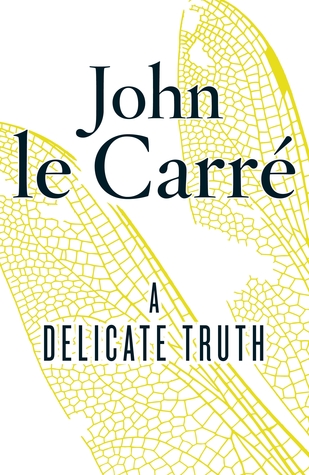
Today, 25th April, sees the publication of John le Carré’s new espionage novel, A Delicate Truth, which has already garnered excellent reviews (see for example Mark Lawson in The Guardian). Set in 2008 and 2011, it explores shady Whitehall operations against the background of the Bush-Blair era and the ‘war on terror’, and is being viewed as a stunning return to form.

del

In the run-up to publication, le Carré has also been marking the 50th anniversary of The Spy Who Came in from the Cold (1963). In a piece for The Guardian on 13. April, he explores the personal and historical contexts in which this ground-breaking novel was written, and the frustration he experienced at being ‘branded as the spy turned writer’; the author of ‘anti-Bond’ novels that critics erroneously insisted on regarding as spying handbooks.

Given all the above, it seems like an apt moment to try to sum up what makes le Carré such a wonderful and important writer. Here is my personal appreciation, in random top 10 form:

One of the many covers for The Spy – showing the barbed wire that divided East and West in front of the Brandenburg Gate in Berlin

I love John le Carré’s works because…

1. …the author and his creation George Smiley are linguists.                                   Le Carré studied German literature for a year at the University of Bern, and graduated with first-class honours in modern languages from Oxford. Most of his spies are linguists, and the most famous of them all, George Smiley, studied Baroque German literature and was destined for academia until the British Secret Service came knocking (in the shape of the brilliantly named ‘Overseas Committee for Academic Research’). The profession of intelligence officer offers Smiley ‘what he had once loved best in life: academic excursions into the mystery of human behaviour, disciplined by the practical application of his own deductions’ (Call for the Dead, Penguin 2010, p. 2). And languages still really matter. Smiley’s ability to speak fluent German plays a vital role in Smiley’s People when he gathers intelligence in Hamburg, the city where he spent part of his boyhood, as well as a number of years ‘in the lonely terror of the spy’ during the Second World War. Le Carré says of him that ‘Germany was his second nature, even his second soul […] He could put on her language like a uniform and speak with its boldness’ (Sceptre 2011, pp. 252-3). This author’s world, then, is overwhelmingly multilingual, multicultural and international. Monoglot Brits need not apply…

2. …they so effectively evoke Germany during the Cold War. The frequent use of a German setting was practically inevitable given le Carré’s education, his membership of the British Foreign Service in West Germany (as Second Secretary in the British Embassy in Bonn and Political Consul in Hamburg, which provided cover for his MI6 activities), and the timing of his stay between 1959 and 1964 at the height of the Cold War. Berlin was the frontline of the ideological battle between the Eastern and Western blocs, and le Carré says in an afterword to The Spy Who Came in from the Cold that ‘it was the Berlin Wall that got me going, of course’ (Penguin 2010, p. 255). Le Carré’s first novel, Call for the Dead, was published in 1961, the year the Wall went up, and, along with a number of his other novels, is partially set in East/West Germany (see list below). The most memorable for me are The Spy Who Came in from the Cold (1963) and Smiley’s People (1979), both of which feature dénouements involving Berlin border crossings and evoke the Cold War tensions of that time and place perfectly.

3. …as someone who teaches in this area, I appreciate le Carré’s sophisticated understanding of 20th-century German and European history. This is evident in his recent Guardian piece, where he references the complexities of Allied intelligence operations in Cold War West Berlin, including the pragmatic but unethical protection of former Nazis, because they were viewed as valuable in the fight against communism. The difficult legacy of National Socialism in post-war Germany is most closely examined in his 1968 novel A Small Town in Germany (and forms part of the corpus for my own research on crime that engages with the Nazi period).

4. …as someone who reads and researches lots of historical fiction, I admire le Carré’s ability to communicate complex histories to a mass readership in intelligent and entertaining espionage novels. This isn’t something that many authors can do well; le Carré is one of the best.

5. …their narratives reveal a deep engagement with moral questions. A fascination with the themes of loyalty and betrayal – in relation to both individuals and ideologies/states – is particularly visible in the Cold War ‘Karla Trilogy’ (Tinker Tailor Soldier Spy 1974; The Honourable Schoolboy 1977; Smiley’s People 1979), which in turn forms part of the eight-novel Smiley collection. What’s had the greatest impact on me as a reader, though, is the critique of how the intelligence services (on either side of the ideological divide) are willing to sacrifice the individual for the ‘greater good’, and the recognition of the immorality of this act. Le Carré’s third and fourth novels – The Spy Who Came in from the Cold (1963) and The Looking Glass War (1965) – are extremely powerful in this respect, as they recount the tragic tales of those who become pawns in larger political chess games. Incidentally, I’ll bet my maximum bet of 10p that the figure of Avery in the latter novel most accurately embodies the professional and moral disillusionment that led Carré to leave the Service. The central question for this author was and continues to be: ‘how far can we go in the rightful defence of our western values, without abandoning them on the way?’ (see Guardian piece).

6. …their characters are fantastically drawn. Aside from the masterpiece of Smiley, the dumpy, middle-aged, unassuming, sharp-as-a-tack intelligence genius, who could forget Control, Connie Sachs, Toby Esterhase, Peter Guillam, Ricky Tarr, Jerry Westerby, Bill Haydon and Jim Prideaux? All are so beautifully depicted that you feel they are living, breathing people.

Kathy Burke as Connie Sachs in Tinker Tailor Soldier Spy (2011)

7. …you won’t find more perceptive writing anywhere. In German one would say that le Carré is ‘wach’: he is awake. He really SEES the world around him and has a deep understanding of how its political and power structures work, and how individuals get tangled up in them.

8. …they have given us wonderful TV and film adaptations, featuring great actors such as Alec Guinness and Richard Burton (whose diaries happen to rest at my own institution, Swansea University). See here for my film review of the 2011 adaptation of Tinker Tailor Soldier Spy with Gary Oldman.

Alec Guinness as Smiley, retrieving a clue in Smiley’s People (1982)
The man sees everything….

9. …they are so often top-quality. One of my own later favourites is 2001’s The Constant Gardener – a brilliant exploration of pharmaceutical corruption for commercial gain in the developing world. And now, at the age of 81, it looks like he’s done it again with A Delicate Truth. Mark Lawson, in his review, writes that ‘le Carré has a strong claim to be the most influential living British writer’ and that he ‘is back at full power with a book that draws on a career’s worth of literary skill and international analysis’. ‘No other writer has charted – pitilessly for politicians but thrillingly for readers – the public and secret histories of his times, from the second world war to the ‘war on terror’.

10. Last but not least, le Carré is a true friend of languages, and has been extremely generous in using his influence to promote language learning in the UK – for which I as a German studies lecturer am deeply grateful. He was deservedly awarded the Goethe Medal in 2011 for ‘outstanding service for the German language and international cultural dialogue’.

All of which leads me to say how much I’m looking forward to reading A Delicate Truth. Further information about the novel is available at le Carré’s website (including an audio excerpt and the first chapter). The novel begins with a quote from Oscar Wilde: ‘If one tells the truth, one is sure, sooner or later, to be found out’. Something every spook needs to remember…

Le Carré novels that reference the German-speaking world/history

Call for the Dead (Smiley’s German links; Nazi past; East Germany)

The Spy Who Came in From the Cold (Nazi past; divided Berlin; East Germany)

The Looking Glass War (East and West Germany)

A Small Town in Germany (Nazi past; Bonn, West Germany)

Smiley’s People (Hamburg, West Germany; Bern, Switzerland; divided Berlin)

The Perfect Spy (German at Oxford; Vienna and Berlin)

The Secret Pilgrim (diverse, including East Berlin, Hamburg, Munich, Zurich)

Absolute Friends (West Germany, East Germany)

A Most Wanted Man (Hamburg, Germany)

Our Kind of Traitor (Switzerland).

Leif G.W. Persson’s Linda, As in the Linda Murder

Leif G.W. Persson, Linda, As in the Linda Murder (Linda – som i Lindamordet), trans. from the Swedish by Neil Smith (London: Doubleday, 2013 [2005]). 5 stars

linda

Opening line: It was a neighbour who found Linda, and, all things considered, that was far better than her mother finding her. 

The dedication at the front of Linda, As in the Linda Murder reads ‘for Maj Sjöwall and Per Wahlöö – who did it better than almost anyone’. In this newly-translated novel, first published in 2005, author Leif Persson undoubtedly pays homage to the godparents of the Swedish police-procedural, and in particular to the first in Sjöwall and Wahlöö’s Martin Beck series, Roseanna, published exactly 40 years prior to Linda in 1965. Consider the following:

  • both novels are named after a young female murder victim
  • both open with the discovery of the victim’s body, on 4 July and 8 July respectively
  • both are set outside Stockholm in smaller Swedish cities (Motala and Växjö)
  • both depict the police investigation in exhaustive detail
  • both critique misogynist attitudes in Swedish society and foreground the female victim

However, the lead investigator in Linda, tasked with solving the murder of 20-year-old trainee police officer Linda Wallin one hot summer night, is no Martin Beck. Meet Detective Superintendent Evert Bäckström, also known as ‘that fat little bastard from National Crime’, whose egotistical, sexist, racist, homophobic, vain and supremely-blinkered mind we are invited to see in all its dubious glory. Bäckström is a darkly comic tour-de-force, a monstrous creation who cares solely about his financial interests, maintaining a steady supply of drink, and the welfare of his pet goldfish Egon. His character is used to shine a spotlight on a less-than-heroic side of Swedish policing: while he is busy impeding the progress of the investigation, capable detectives such as Jan Lewin are forced to work around his prejudices and incompetence as best they can.

Thus, while paying tribute to Sjöwall and Wahlöö, Persson stamps his own style on the Swedish police procedural, imbuing it with a highly satirical edge. Other aspects of Roseanna, such the critique of the press’s prurient interest in female murder victims, are also extended further in Linda.

In the context of Persson’s own work, Linda forms a departure from his first two hugely ambitious novels, Between Summer’s Longing and Winter’s End and Another Time, Another Life, which are set against the much larger political and historical backdrop of post-war Sweden and the Cold War. In Linda, the focus is kept deliberately local, with the exploration of the consequences of just one crime, and strongly drawn characters such as detectives Jan Lewin and Anna Holt, as well as the murderer and the victim’s mother. Hats off also to translator Neil Smith, who captures Persson’s dry, satirical tone perfectly.

In sum, Linda is a rich and satisfying read from an author who’s now one of my absolute favourites.

*****

A useful further note from Neil Smith on Persson’s novels – poached with Sarah’s kind permission from the comments of the excellent Crimepieces Linda review  and with a couple of additions from me in square brackets:

Neil says >> As so often happens, Leif’s books are being published in a slightly different order in translation to their original Swedish publication.

The three books Between Summer’s Longing and Winter’s End (Sw. 2002, tr. 2011), Another Time, Another Life (Sw. 2003, tr. 2012), and Free Falling, as if in a Dream (Sw. 2007, tr. 2014), together make up a trilogy entitled ‘the Decline of the Welfare State’.

One of the main characters from that trilogy, Lars Martin Johansson, takes the lead in a later novel, The Dying Detective (Sw. 2010, as yet untranslated) [and appears a bit in Linda as well].

Evert Bäckström [who appears as a secondary character in the ‘Welfare State’ trilogy] is the focus of a further series of books, of which Linda, As in the Linda Murder (Sw. 2005) is the first. He Who Kills the Dragon (Sw. 2008), due to be published in English in October 2013, is the second in the series, and will be followed by Pinocchio’s Nose (not yet published in Sweden). <<

Mrs. Peabody awards Linda, As in the Linda Murder, a wonderfully rich and satisfying 5 stars

With thanks to Transworld for sending me an advance copy of this book.

Creative Commons License

.

International crime drama news from BBC4: Dahl, De Luca, Young Montalbano, The Bridge 2 and more!

I’ve just seen the following on a BBC4 press release and couldn’t resist reporting IMMEDIATELY.

>> BBC Four has announced two exciting additions to an outstanding new year of international drama and film on the Channel: Swedish crime series Arne Dahl and Italian series Inspector Da Luca.

Arne Dahl (a pseudonym of award-winning author Jan Arnald) is based on five of Dahl’s novels, beginning with The Blinded Man. The series revolves around a tight-knit team of elite specialists who investigate the dark side of Swedish society. It is produced by Filmlance International and written by Rolf Börjlind and Cecilia Börjlind.

Inspector De Luca is made by Ager 3/Rai Radiotelevisione Italiana. A four-part crime series based on the novels by Carlo Lucarelli, it is set in and around Bologna during the tumultuous years of Mussolini’s dictatorship. Inspector De Luca is an investigator whose brutal honesty and uncompromising character may help him solve cases, but combined with his love of women, they also conspire to get him in trouble…

Other crime drama and film highlights in 2013 include:

Young Montalbano. Set in the early 1990s and starring Michele Riondino in the title role, Young Montalbano gives an insight into the private life and early crime-fighting career of the idiosyncratic Sicilian detective. This prequel series, also written by Andrea Camilleri, was recently shown to critical acclaim in Italy. (See here for details of the start date of this series.)

The Bridge, Series 2. A rusty old coaster en route in the Öresund sound suddenly veers off course and rams the concrete foundations laid out to protect the Öresund Bridge. The ship is empty – or so it is believed until five people are found chained, cold and exhausted below deck. The unknown victims, of whom three are Swedish and two Danish, are brought to a hospital in Malmö. Without hesitation, Saga Norén (Sofia Helin) from Malmö CID contacts her Danish colleague, Martin Rhode (Kim Bodnia) and their new investigation begins.

Inspector Montalbano. The popular Sicilian detective makes a welcome return in four brand new episodes.

The King Of Devil’s Island. Based on a true story, The King of Devil’s Island tells the unsettling tale of a group of young delinquents banished to the remote prison of Bastøy in Norway. Under the guise of rehabilitation the boys suffer a gruelling daily regime at the hands of their wardens until the arrival of new boys Erling and Ivar spark a chain of events that ultimately ignite rebellion.

Point Blank. In this action-packed French thriller, Samuel Pierret is a nurse who saves the life of a criminal whose gang then take Samuel’s pregnant wife hostage to force him to help their boss escape. A race through the subways and streets of Paris ensues. As the body count rises, Samuel must evade the cops and the criminal underground to rescue his wife <<

I’m so excited I can hardly breathe. Though I’m not sure how to break the news to my family that the telly will be off-limits for most Saturday nights this year.

For the full press release see here (contains info about series 3 of BORGEN as well). There’s also a very atmospheric trailer of all the international drama coming up.

Enjoy!

#32 / Fred Vargas, An Uncertain Place

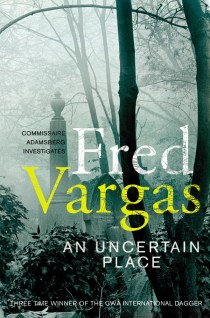
Fred Vargas, An Uncertain Place, translated from the French by Sian Reynolds (London: Vintage, 2012 [2008]). A rather gruesome outing for Commissaire Adamsberg and his team  3.5 stars

Opening line: Commissaire Adamsberg knew how to iron shirts.

Fred Vargas is one of my favourite crime writers, but I always regard her novels as something of a guilty pleasure. By rights, I shouldn’t really like them, as I tend to favour crime novels that engage with history, politics or society (such as Dominique Manotti’s Affairs of State), and which feature grounded, rational policemen (I’m a sensible type at heart). Not novels involving a hunt for a werewolf (Seeking Whom He May Devour), or a Commissaire who wanders aimlessly around Paris using intuition to solve his crimes.

And yet the Adamsberg novels have afforded me more reading pleasure than almost any other crime series I’ve read. This has a great deal to do with the quality of the writing – there’s a reason why Vargas has won the CWA International Dagger three times – and the way in which she uses her medieval historian’s knowledge to take the roman policier in a pleasingly original direction. Add in a large dash of quirky gallic – her police team are eccentrically and extravagently ‘French’ – et voilà, you have a classy, distinctive crime series on your hands that’s mighty hard to resist.

Those who’ve loved previous Adamsberg novels are not likely to be disappointed by An Uncertain Place, as all the usual ingredients are present and correct. For British readers and Anglophiles, there’s also the bonus of an initial stop in London, which includes a splendidly gothic discovery at the entrance of Highgate Cemetery.

So why have I given An Uncertain Place only 3.5 stars?

For me, this crime novel went slightly too far in two respects:

1. It features a truly gruesome murder and crime-scene description. An explanation of the murderer’s rationale and methods are supplied further on in the narrative, but I still found the enormous amount of detail too much to stomach (not helped by the fact that I read the worst bit over lunch).

2. Vargas is usually very skilled at suggesting that other-worldly forces are at work while maintaining a plausible crime narrative in a ‘realistic’ French setting. As in previous novels, the tension between those in the police team who work intuitively and those who rely on logic is thematised (Adamsberg and his disciples are the ‘cloud shovellers’, while Retancourt leads the ‘rational positivist movement’). But Vargas jumps in a clear direction at the end of the narrative, and it was one that left me rather cross. So – with a little sigh – 3.5 it is.

An Uncertain Place was my January read for the 2013 Translation Challenge.

Mrs. Peabody awards An Uncertain Place an enjoyable but slightly infuriating 3.5 stars.

Creative Commons License

.

Saturday smörgåsbord: Richard III, Petrona Remembered and Spiral 4

This week has seen lots of interesting crime news – a veritable smörgåsbord of delights.

The confirmation that the bones found under a Leicester car park are indeed those of King Richard III, has resulted in some knock-on coverage for Scottish crime writer Josephine Tey’s The Daughter of Time. This 1951 classic tops the Crime Writers’ Association list of 100 best crime novels, and shows Inspector Grant ‘re-open’ the case of ‘the princes in the Tower’ whilst laid up in hospital with a broken leg. Can he really prove that Richard is not the callous murderer that history paints him to be…?

An interesting article in the Canadian Globe and Mail explores the value of the novel’s critique of history, and its assertion that many historical narratives are falsely constructed for political ends. Nikolai Krementsov, professor of the history of science and technology at the University of Toronto, gives it to his students to illustrate the difference between primary and secondary sources, and says ‘I know no book that gives such as clear account of what history is and what its function is in society … It should be mandatory reading for historians, investigative journalists and policemen’.

He also points out that Tey is writing at the beginning of the Cold War, a time of enormous political transition when lots of inconvenient wartime facts were in the process of being forgotten. ‘In that atmosphere, she wrote a definitive account, not of Richard III, but of how history can be manipulated’.

This week saw the birth of a new crime fiction blog, Petrona Remembered,  which has been set up in memory of the wonderful crime blogger Maxine Clarke.

The team behind the site aims ‘to develop a resource for current and future fans of the genre and we want you to help us. We’re asking writers, bloggers, readers, translators and anyone else who loves a crime or mystery novel to send us a submission about that book. It can be a review, a pitch, a love letter, a poem or, a video. Or something else entirely. Each week we’ll post a new submission and, over time, this site will become a jumping off point to a world of much-loved crime fiction’.

I personally like the idea of a crime haiku :). Submissions great and small are welcome, and you can find out more here.

A new annual award, The Petrona, for the best Scandinavian crime novel, is also being established. Maxine was particularly partial to some top-notch Scandi crime, so this feels very fitting.

Last but not least, for those of you suffering withdrawal symptoms from Borgen, help is on the way in the form of Spiral series 4. Parisian Captain Laure Berthaud and her colleagues are back as of tonight for 12 gritty episodes, taking over the BBC4 Saturday evening ‘international slot’ from 9.00pm until 11.00pm.

Further information and a clip from the first episode can be found here.

Jakob Arjouni 1964-2013

Some very sad news. German crime writer, playwright and author Jakob Arjouni has died of cancer at the age of 48.

Jakob Arjouni: Mit "Happy Birthday, Türke!" zum ganz großen Erfolg

Photo courtesy of Diogenes

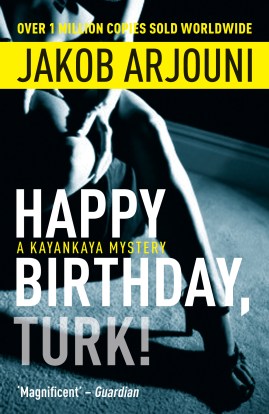
Arjouni’s groundbreaking crime series featured the irrepressible Turkish-German P.I. Kemal Kayankaya. The first novel in the series, Happy Birthday, Türke (1986), was written when he was just nineteen. The third, Ein Mann, ein Mord / One Man, One Murder (1991), won the Deutscher Krimi Preis (German Crime Fiction Prize) in 1992. The fifth and final installment, Bruder Kemal / Brother Kemal, was published just last year.

Kayankaya was recently selected as one of Mark Lawson’s fifteen ‘literary detectives’ for the Radio 4 ‘Foreign Bodies’ series. Arjouni was interviewed in Berlin for the programme and spoke at length about his creation and the issues tackled in the books.

With thanks to Lauren for passing on this news.

Links:

‘Jakob Arjouni Dies’, Booktrade Info

Legendärer Krimi-Autor: Jakob Arjouni ist tot – Spiegel online (German)

‘Jakob Arjouni’s Turkish-German Kayankaya series’ – Mrs. Peabody post, Nov. 2012

The Kayankaya series in translation – No Exit Press

List of all Arjouni’s works – Diogenes Press (German)

Jakob Arjouni’s Turkish-German Kayankaya series

I was delighted to hear that Jakob Arjouni’s Turkish-German investigator Kemal Kayankaya was going to feature on the Radio 4 ‘Foreign Bodies’ series, and to contribute a bit to the episode in question, as it gave me an excellent chance to re-read the Kayankaya novels and to get my hands on the latest instalment, Brother Kemal, published in Germany just this year.

In order of appearance, they are:

  1. Happy Birthday, Türke / Happy Birthday Turk (1985)
  2. Mehr Bier / More Beer (1987)
  3. Ein Mann, ein Mord / One Man, One Murder (1991)
  4. Kismet / Kismet (2001)
  5. Bruder Kemal / Brother Kemal (2012)

Blue Night 4 Arjouni

The first time I came across Kayankaya was in 1988, in the ‘foreign literature’ section of Borders on Oxford Street in London. The novel was Happy Birthday, Turk, which had been published in Germany in 1985, and had become a surprise critical and commercial hit. It was written by debut author Jakob Arjouni at the tender age of just nineteen.

It’s hard to overestimate how ground-breaking the figure of the Turkish-German P.I. Kemal Kayankaya was in the West Germany of the 1980s, when public attitudes towards the migrant workers who had helped to rebuild post-war Germany were deteriorating (‘job done, now please go home’). Asking German readers to identify with the likeable, wise-cracking, football-and-pickled-herring-loving Kayankaya directly challenged the dominant stereotype of ‘the Turk’ as a kebab-shop owner, rubbish collector or criminal who was poorly integrated into society and spoke only broken German. Kayankaya, the child of a Turkish migrant worker, is depicted as highly articulate, confident in his professional abilities, and – exceptionally for the time – as the holder of a West German passport, courtesy of his adoption by a German couple after his parents’ death. His characterisation thus deliberately up-ends the average German reader’s perception of what a Turkish person living in Germany ‘is like’, and confronts essentialist notions of German national identity. A Turkish-born person with a German passport? A Turkish-German citizen? Really?

Kayankaya’s early investigations, which fuse parts of the American hard-boiled tradition with the German Sozio-Krimi (sociological crime novel) of the 1970s, are used to expose the corruption of the state and to reveal the racism at the heart of West German society – the lingering legacy of National Socialism. The tables are thus deftly turned by Arjouni: the focus is on German criminal activity, and the crimes of Turks and other minorities are shown in the larger context of the unequal power-relations that exist within the state (for example, a ‘bad’ Turk is shown having been blackmailed into dealing drugs by corrupt police officers who threaten him with deportation should he not comply).

DVD cover of the film adaptation of Happy Birthday Turk (1991)

There’s also plenty of wise-cracking, acerbic humour. In fact, wit and sarcasm are shown to be key weapons when dealing with the tedious, casual racism the P.I. encounters as he goes about his daily business in Frankfurt.

Thus we are treated to the following classic exchanges:

  • German woman to Kayankaya: ‘You speak really good German!’
  • Kayankaya to German woman: ‘Thanks (long pause). You too’.

And…

  • German bureaucrat to Kayankaya: ‘Name?’
  • Kayankaya: ‘Kayankaya’.
  • German bureaucrat: ‘Spelling?’
  • Kayankaya: ‘Pretty good. Though I do have a little trouble with those foreign words’.

The Kayankaya novels are not necessarily perfect, but Kemal Kayankaya remains a ground-breaking investigative figure in the history of European crime fiction. A thoroughly original creation, he is used to raise some genuinely troubling questions about dominant social attitudes towards minorities. Many of the points the novels raise about social exclusion and about the uneven distribution of justice within society remain as pertinent today as in the 1980s.

Later novels in the series, as the ‘Foreign Bodies’ episode shows, engage with the seismic changes in Europe following the collapse of communism in 1989/90, and, most recently, with the tensions caused by Islamic fundamentalism (Brother Kemal).

You can listen to the ‘Foreign Bodies’ episode about Kemal Kayankaya, which features an interview with the author Jakob Arjouni, on BBC Radio iPlayer.

Image for PI Kemal Kayankaya