
The winner of the 2014 Novel Prize for Literature was announced yesterday. He is French writer Patrick Modiano, who appears to be extremely well known at home, but less so internationally, although some of his works have been translated into English down the years, and have won acclaim in Germany for their engagement with the wartime past.

Patrick Modiano
I’ve not read any of Modiano’s works, but am keen to do so for two reasons. Firstly, he’s of Jewish-Italian, Belgian and French extraction, and much of his writing focuses on the German Occupation of France (1940-44) and the themes of history, memory, identity and guilt.
Secondly, he’s the author of an intriguing, off-beat crime novel, entitled Rue des Boutiques Obscures (the street of shadowy shops), which was published in 1978 and received the Prix Goncourt, France’s premier literary prize, the same year.

The novel was translated into English by Daniel Weissbort, published by Jonathan Cape in 1980, and republished by Verba Mundi in 2004. Here’s the blurb from the back cover of the latter:
>> In this strange, elegant novel, Patrick Modiano portrays a man in pursuit of the identity he lost in the murky days of the Paris Occupation, the black hole of French memory.
For ten years, Guy Roland has lived without a past. His current life and name were given to him by his recently retired boss, Hutte, who welcomed him, a one-time client, into his detective agency. Guy makes full use of Hutte’s files – directories, yearbooks, and papers of all kinds going back half a century – but his leads are few. Could he really be the person in that photograph, a young man remembered by some as a South American attaché? Or was he someone else, perhaps the disappeared scion of a prominent local family? He interviews strangers and is tantalized by half-clues until, at last, he grasps a thread that leads him through the maze of his own repressed experience.
On one level Missing Person is a detective thriller, a 1950s film-noir mix of smoky cafés, illegal passports and insubstantial figures crossing bridges in the fog. On another level, it is also a haunting meditation on the nature of the self. Modiano’s sparce, hypnotic prose, superbly translated by Daniel Weissbort, draws his readers into the intoxication of a rare literary experience. <<
An amnesiac detective investigating his own identity and past in a post-war Parisian setting. Mmmmm, yes please!

See also: ‘Nobel Prize winner Patrick Modiano hailed as modern Marcel Proust’, The Guardian, Thursday 9 October.
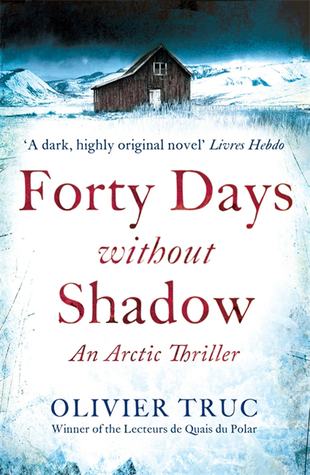


 Jørn Lier Horst’s The Hunting Dogs (trans. by Anne Bruce, Sandstone Press, 2014) comes to us already garlanded with prizes – it won the 2012 Riverton/Golden Revolver Prize and the 2013 Scandinavian Glass Key. I’m not remotely surprised, as this eighth novel in the William Wisting series (the third to be published in English) is one of the best Scandinavian crime novels I’ve read. Much has been made of Horst’s extensive policing experience, but for me, it’s the fantastic writing, plotting and characterisation that stand out in this novel, which sees Wisting suspended due to irregularities in a past case. Forced to re-investigate the murder of Cecilia Linde from the outside, he is helped by journalist daughter Line to uncover the truth. A top-notch summer read.
 American author Alice Sebold’s The Lovely Bones was published in 2002, but it’s one that I go back to every now and then, because it’s such an original crime novel. Set in the summer of 1973, it’s narrated by Susie Salmon, who’s murdered by a neighbour at the age of fourteen and witnesses the aftermath of the crime from her ‘heaven’. You’d be forgiven for thinking this all sounds horribly mawkish, but the concept is brilliantly pulled off for the most part, and offers a sensitive portrayal of the effects of a murder on the family and friends of the victim. Be warned: when I first read the novel one summer holiday I found it *highly* addictive. It was subsequently made into a film by Peter Jackson (2009), which received mixed reviews.



 Mrs. Peabody Investigates