Ragnar Jónasson’s Nightblind: 360° translation special

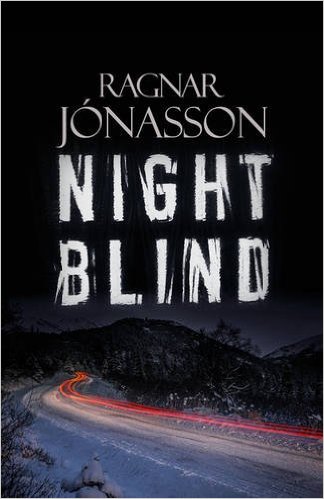
Nightblind

Nightblind is the second novel in the ‘Dark Iceland’ series to be translated into English by Orenda Books. Set in the fishing village of Siglufjörður high in the north of Iceland, it traces Ari Thór Arason’s investigation into the shooting of a fellow policeman outside a deserted house late one night. A gripping police procedural with excellent characterisation and a vivid sense of place, it’s a truly absorbing read (I sat down intending to sample the first three chapters and was rooted to the sofa for hours). Like all of Orenda’s novels, it’s beautifully produced, and includes a couple of maps, which is always a bonus.

Translating Ragnar Jónasson’s ‘Dark Iceland’ series

Today, as part of Nightblind’s Orenda blog tour, Mrs. Peabody is delighted to bring you a 360° translation special, which provides some fascinating (and hilarious) insights into Dark Iceland‘s journey from Icelandic to English.

Three individuals play a vital role: author Ragnar (who has himself translated a number of Agatha Christie novels into Icelandic), translator Quentin Bates (also the author of the ‘Gunnhildur‘ Icelandic crime series), and Orenda Books publisher Karen Sullivan, armed with her mighty red pen. Without their dedication, energy and hard work, we wouldn’t have the pleasure of reading this series in English. Here, in their own words, is what the process involves…

Jokes, idioms and swearing (Quentin)

Nightblind 2

Translator Quentin Bates

It was something of a jump to translating crime fiction after the stuff I had been used to. News and technical material doesn’t leave a great deal of elbow room for interpretation; what’s required is precision, not anything fancy. Fiction is very different, not least because it’s a long text to work on rather than a handful of pages, so a book means you can become absorbed in it long before reaching the end.

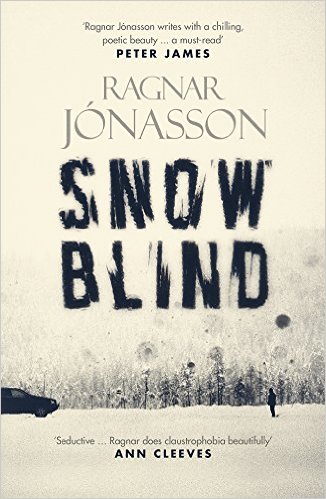
The fun, challenging part of the shift to translating fiction, working on Snowblind, Nightblind and now Blackout, is precisely the stuff that doesn’t occur in bare-bones technical material. It’s the idioms and jokes, as these are the things that are often untranslatable, plus there are odd words in every language that don’t have a direct equivalent in English, or maybe not even in any other language. Oh, and there’s the swearing as well.

Frequently things can’t be translated faithfully. Especially with jokes, this leaves the translator with the dilemma of translating the jokes exactly and remaining faithful to the original text, or departing from it to go out on a limb with something different and retaining the author’s meaning rather than the author’s words.

Sometimes that’s not an option. In Snowblind there’s a nursery rhyme that contains an element of a play on words, playing on the name of one of the characters. That time I had to go down the faithful route, as there’s no comparable rhyme in English and in any case, trying to link it to that character’s name would have been stretching things too far for comfort. A more or less direct translation of Ugla sat á kvisti seemed to be the best way.
Nightblind 7

Then there’s the swearing… Icelandic and English cursing are so different that you have to go back to bare metal. Everyday Icelandic swearing is largely blasphemous, while in English it tends to be biological. Icelandic has no real equivalent of the F-word or the C-word in English, nothing that carries the same one-syllable punch. That’s not to say you can’t be properly offensive in Icelandic, because you can, but it’s more of a roundabout route and not something that’s dropped with such careless abandon as we do in Britain.

If you were to translate an Icelandic curse directly into English, it would sound ridiculous, just as if some English epithets were to be translated directly into Icelandic. It just doesn’t work. Instead, go back to the character. Ask yourself what word would a vicious thug in his thirties choose in English – that means the F-word, no question, while a senior police officer in late middle age would go for something milder.
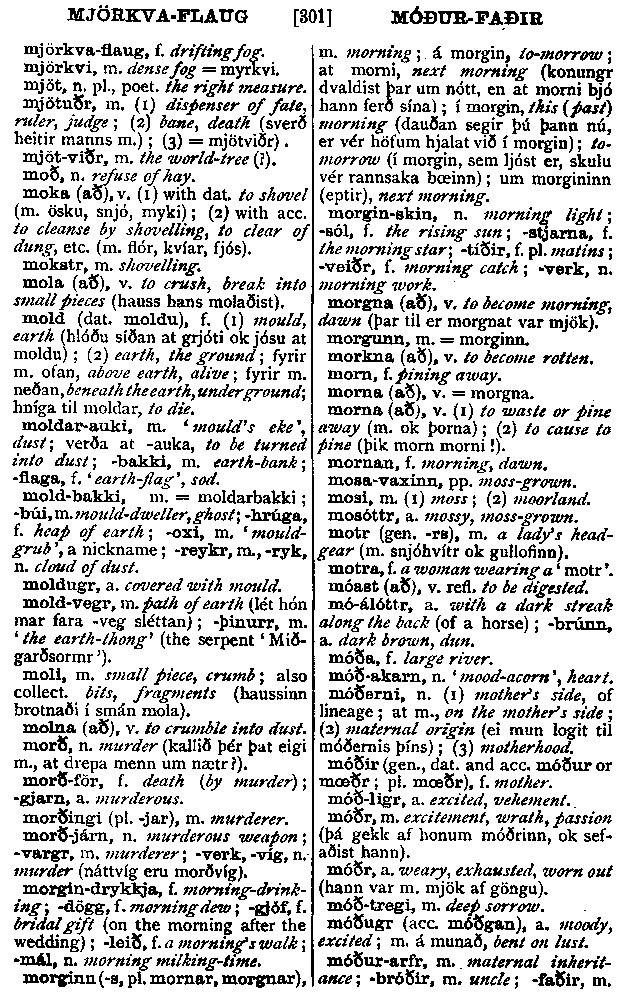
Old Icelandic

10 points for spotting the Old Icelandic for ‘murder’… (http://www.ling.upenn.edu/~kurisuto/germanic/oi_zoega_about.html)

Also there’s punctuation that’s surprisingly different. Icelandic fiction tends to use short sentences that don’t render well into English. The result can be staccato, almost childish sometimes, so sentences often need to be rolled together. A full stop in English is just that, while an Icelandic full stop is a more elastic beast and it’s up to the translator to keep the full stops and sharp-ended sentences where they work with the story, or decide if that particular full stop should become a comma or a rare semi-colon.

All the same, a translator shouldn’t give in to the temptation to improve the author’s work – that’s an editor’s job. Once the translator has finished, the editor can get to work with a hammer and chisel if he or she feels so inclined.

All this is a delicate task, and a good translation should do justice to a good book. An inspired translation (and I can think of a few) can make a good book into something special, just as a poor or hurried translation can ruin a decent book. All this has to be done without crossing a line into editor territory, and the line shifts and changes all the time.
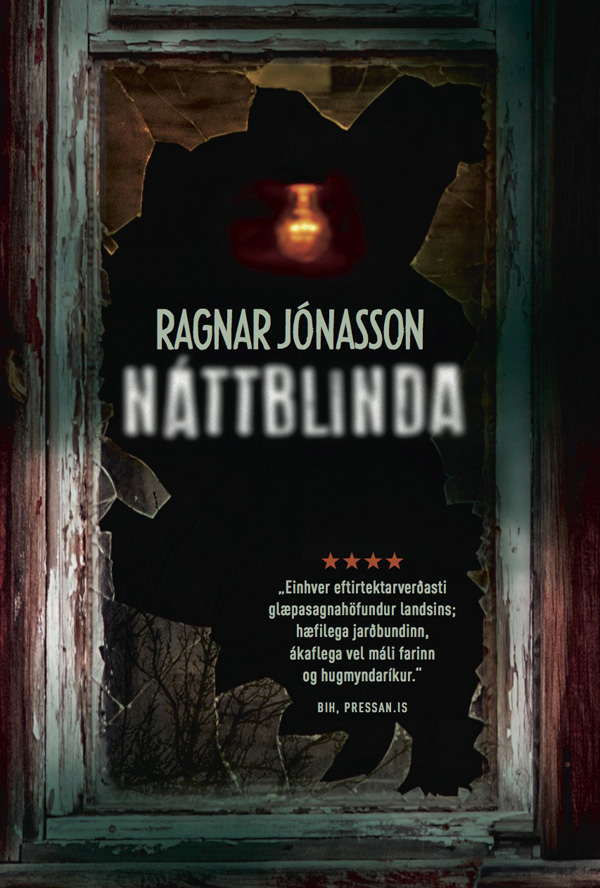
nattblinda_kapa_01

The original Icelandic cover of Nightblind

There’s a play on words in Ragnar’s next book, Blackout. A translator into another language simply left that particular slab of dialogue out, so I know he’s interested to see how I’m going to deal with it. I’m not going to reveal it here, but it needed a bit of thought before the solution popped up. Like the best ideas, it came to me while I was doing something completely different.

Translation isn’t a process that takes place only when your fingers are hovering over the keyboard. It’s great exercise for the grey matter, sometimes as good as the most fiendish crossword.

Letting go… (Ragnar)
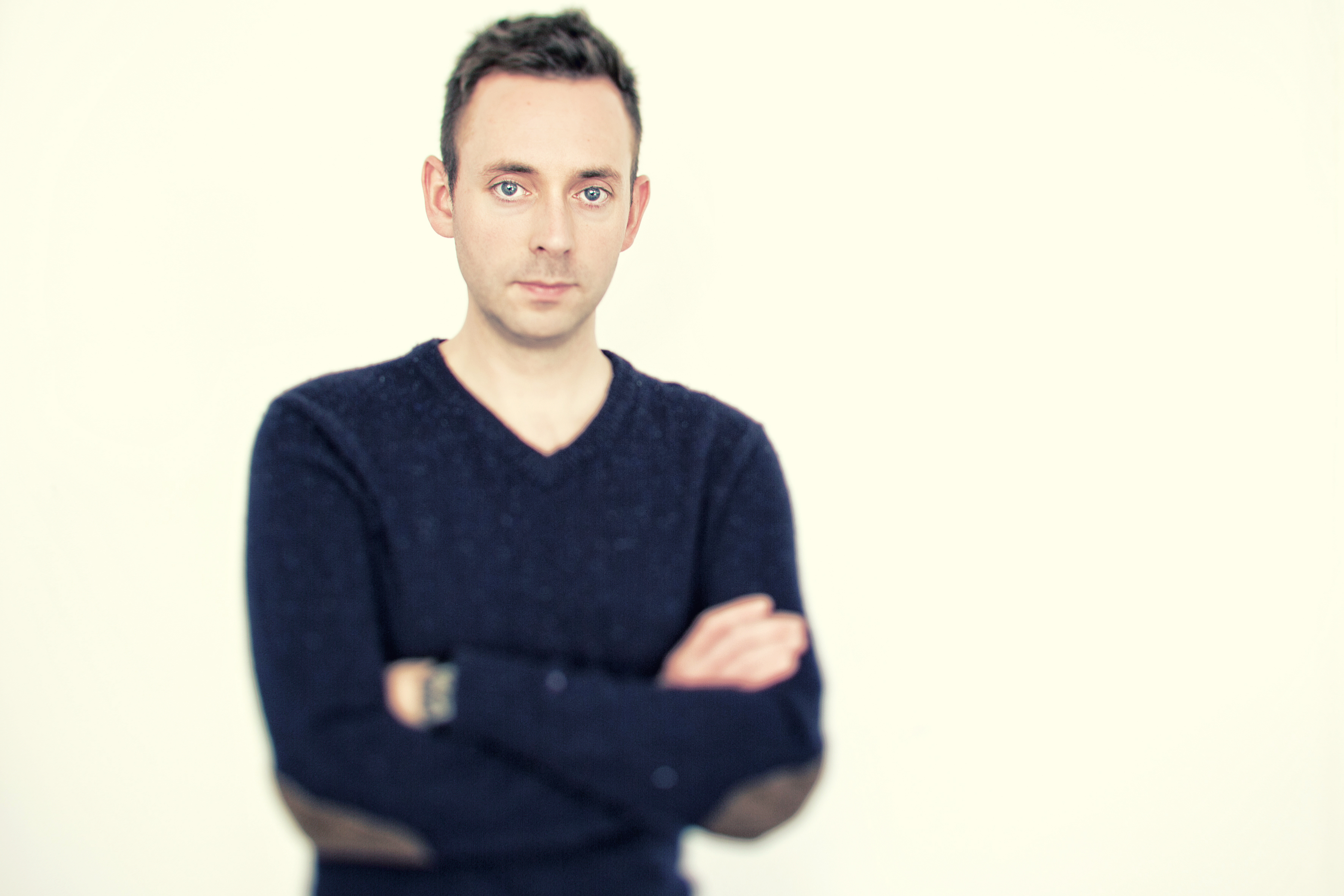
Author Ragnar Jónasson

I had the great opportunity to translate fourteen Agatha Christie books into Icelandic during my student years, and into my early law career, before embarking on a writing career. As a fan of Christie, this was something I thoroughly enjoyed doing, although there were of course challenges along the way. My approach to translating Christie was to use a fairly ‘ancient’ vocabulary, some words that would have been used by my grandparents rather than by my generation, to give the books the classic mystery feel of something set in a bygone era. In some cases there were of course also difficulties relating to the English language, especially when Christie had hidden a clue in a word, so to speak. One book that I really wanted to translate was Lord Edgware Dies, but without giving anything away, that particular book contains a clue that is very hard, or almost impossible, to translate into another language. It took me years to gather the courage to tackle it, having tried to obtain copies of the book in other languages to compare how, for example, Scandinavian translators had solved the problem. In the end I did translate the book, even though the clue didn’t have quite the same impact in the translated version.

Snowflake

Having had this experience of translating, I have to admit that I may have been slightly too eager to help Quentin along the way with the translation of Snowblind! When he sent me the first chapters for review, I sat down very conscientiously and compared it almost word for word with the Icelandic version and sent him a very red mark-up, telling him that he missed a ‘snowflake’ here, or a ‘tree’ there … After that I didn’t hear from him in a couple of weeks, so I sort of realised that I had to give him much more leeway in terms of finding the right words in English, even though in some cases the translation would not be word for word perfect.  In other words, I had to let go of the book and give Quentin a chance to adapt it to the English language, with his unique skills – and since then I haven’t looked back!

Enter the red pen! (Karen)
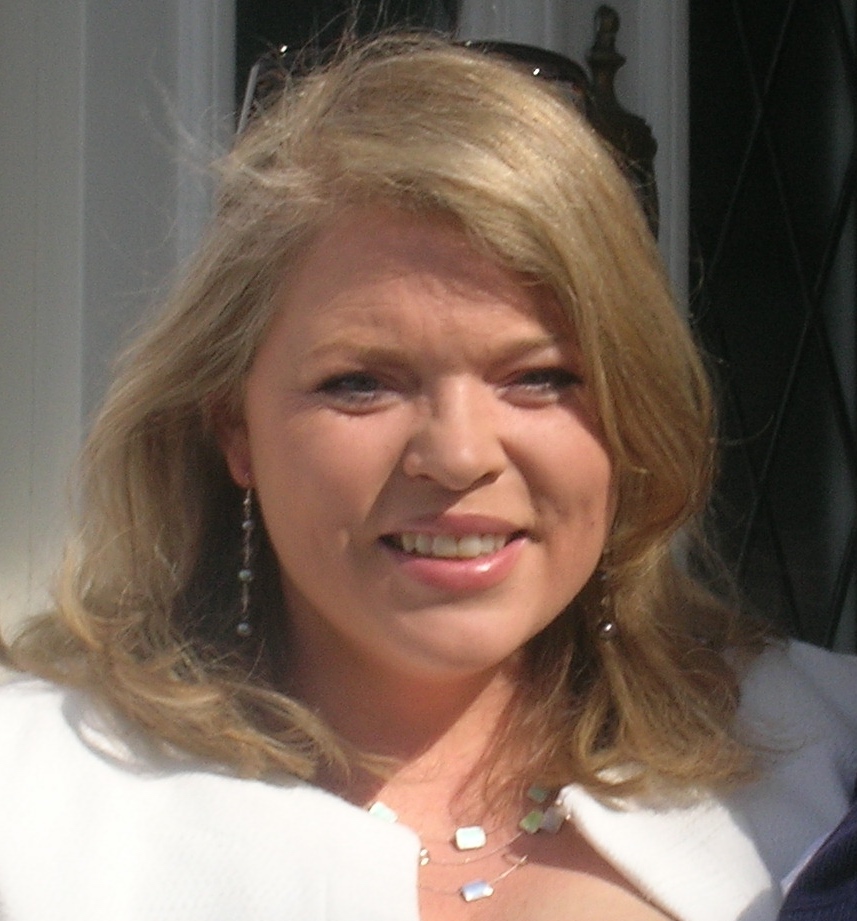
Nightblind 5

Publisher Karen Sullivan

I have massive respect for translators, and try not get involved in the actual process. The last thing they need is an editor peering over their shoulder and making suggestions. For some of my international books, we get early samples to create ‘samplers’ for booksellers and the press, and to tempt readers. I edit these as standalones, and if there are bits that concern me about the tone/voice or the vocabulary chosen, I keep it to myself. All translators get to the end and then go back and hone, polish, rethink. I like to see that final product, and that’s when I get my pen out!

To my mind, even the most successful books can use some editing, and all of my authors have been completely brilliant about revisiting books that they have usually written years ago. I’m aware that readers of international fiction often appreciate being transported to another country, to get a taste of the people, the geography, the culture, the subtle nuances that make a place and its inhabitants unique. So for that reason, I often ask authors to add more. Describe the snow, describe the sea, describe how one character dresses for the cold. What are they eating when they sit down for lunch? Put yourself in the position of a reader who has never been to your country, and give them atmosphere. Obviously authors write first for their own market, and it would not occur to them to include this type of details, nor would it be necessary. I think, however, that it brings a book alive in a way that might not otherwise be possible.
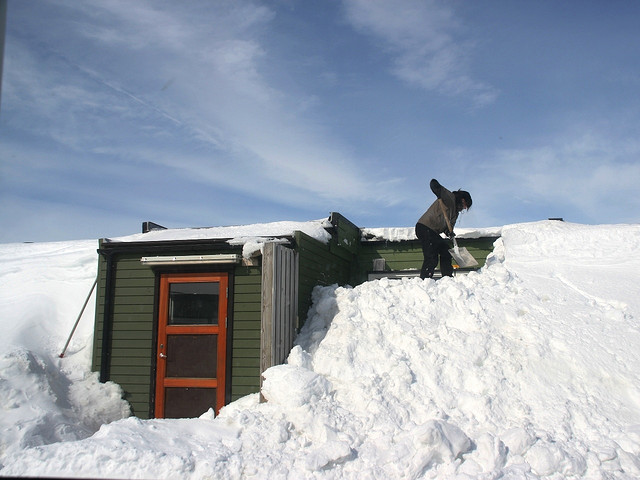
2416827726_2be78f3702_z

Some Icelandic snow. Image courtesy of Málfríður Guðmundsdóttir via Flickr/Creative Commons.

Even the structure can be toyed with. In Nightblind, the letter that peppers the book, building tension and adding another strand to the plot, was originally at the end. All very Agatha Christie and pat, but breaking it up and moving it around was, I think, better for the overall structure of the book, and a good way to create another set of ‘clues’ to keep the reader guessing. We made some tweaks to the ending, too, and built up the characterisation in places. In Snowblind, we added more depth to the relationship between Kirsten and Ari Thor. The goal is to create a ‘perfect’ book, and with wonderful, willing translator and author on board, it’s absolutely possible.

I generally send back an edited document, with hundreds of queries and tweaks. I too ponder whether a character would use a particular phrase, and by the end of Snowblind I was desperately frustrated that the English language had so few words for snow. Snow, snow, snow! I got creative and made lots descriptive changes to prevent readers from glazing over! The edits go to Quentin first, as he can often answer the majority of queries, and then it hits Ragnar, who gets the first chance to read his book in English. He will add additional material, where required (as he says, Karen, you have an unhealthy interest in Icelandic weather!), adjust anything that does seem right to him (Ragnar’s English is great, so he has no trouble here), and make suggestions of his own. It’s one great big fantastic conversation, with input from everyone, that leads to the final product. It’s a process that I love, and the honour of publishing a fantastic international book, introducing a new author from another country to English readers, is just magnificent!

Thank you to Quentin, Ragnar and Karen!
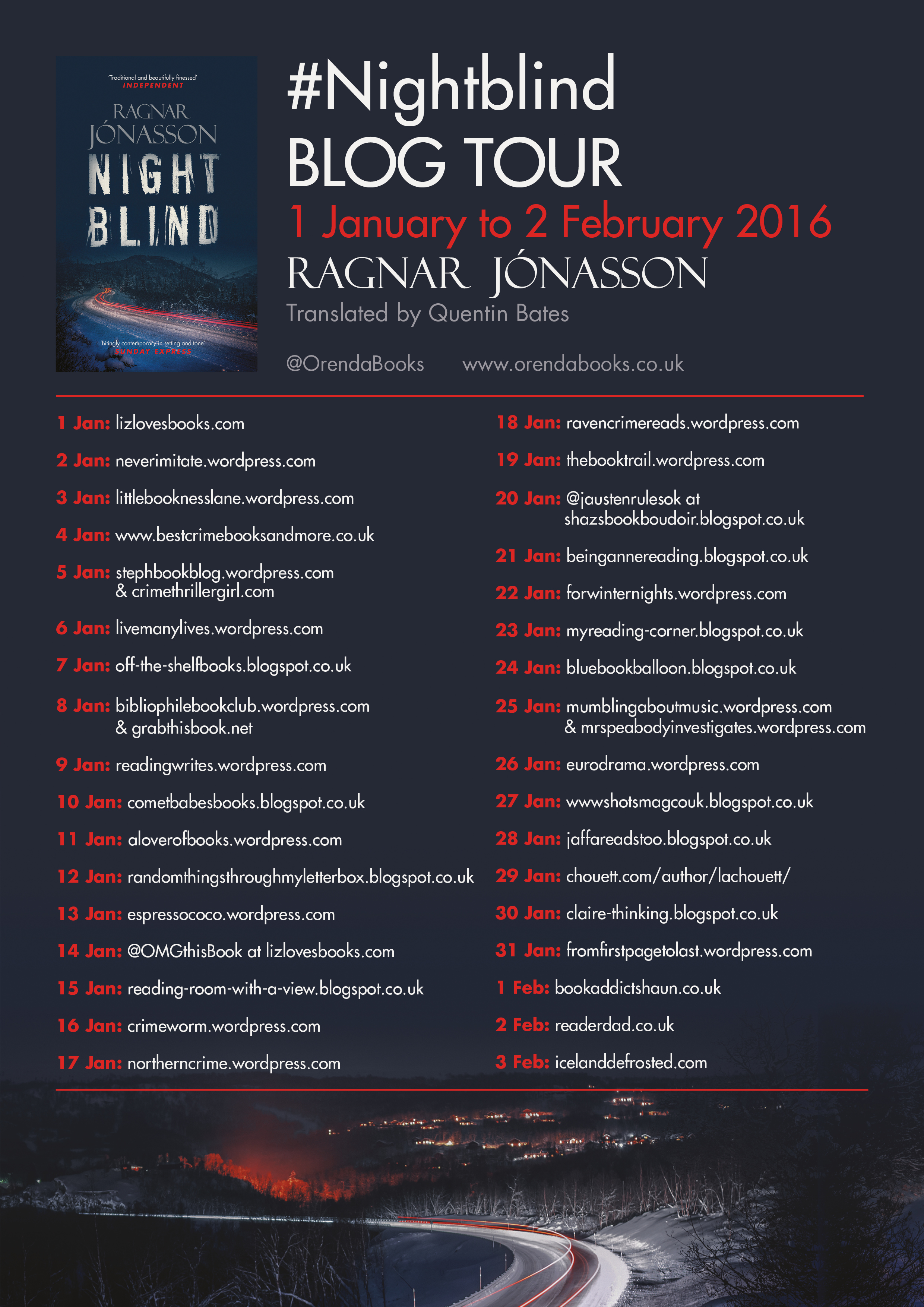
Nightblind Blog tour

American, Icelandic and Swedish gems: Paretsky, Indriđason and Nesser

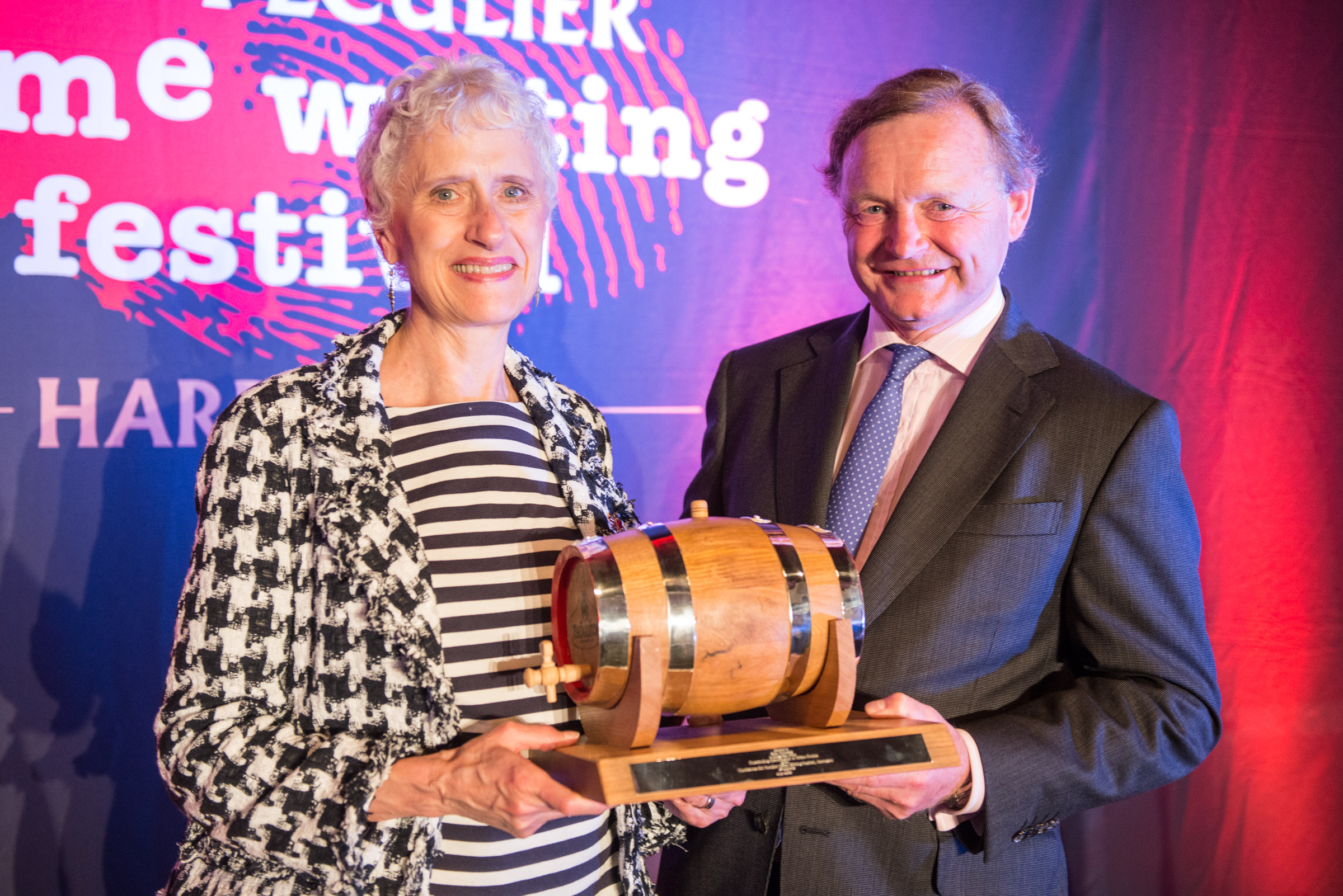
The Theakstons Old Peculier Crime Writing Festival is in full swing up in Harrogate. Top news so far: Sarah Hilary has won the Theakstons Crime Novel of the Year Award for her debut, Someone Else’s Skin, a tremendous achievement for a debut writer, and Sara Paretsky (below), creator of the ground-breaking ‘VI Warshawski’ series, was presented with the Theakstons Outstanding Contribution to Crime Fiction Award.

aaaa sara pFn-TopCrme2015-Awards-05

In her acceptance speech, Sara said: ‘When I created VI Warshawski, she created a few seismic shock-waves for being a female detective with gumption. I’m proud of that, and today it’s amazing to be recognised for that legacy and to see so many female characters in the genre who are more than a vamp or victim’. Hear hear! There are sixteen Warshawski novels to date, starting with 1982’s Indemnity Only. If you haven’t met VI yet, now’s a great time to start. She’s one of the many great female investigators on this blog’s ‘strong women in crime’ list.

The Theakstons programme also features Swedish author Håkan Nesser (on the ‘Strange Lands’ panel) and Icelandic author Arnaldur Indriđason in conversation with Barry Forshaw on Sunday. Regular readers of this blog will have gathered that I’m a fan of both these writers – in fact my first ever review was of Indriđason’s The Draining Lake, which won the CWA Gold Dagger and is partially set in East Germany. I also reviewed Nesser’s The Weeping Girl, part of the ‘Van Veeteren’ series, but featuring Ewa Moreno as investigator, back in 2013. It’s interesting to see the comparisons I made between Nesser and Indriđason’s work in that post – there do appear to be very real affinities between these authors’ approaches to writing crime fiction.

aaa draining

If like me you can’t make Harrogate, but are within reach of London, then there’s a rare chance to see Nesser and Indriđason together this coming Monday, 20th July, at Foyles Bookshop with Barry Forshaw. Here’s the Foyles description of the event:

>> Bestselling authors Arnaldur Indriđason and Hakan Nesser have enthralled millions of readers with their award-winning detective series. On Monday we welcome these two titans of Nordic Noir for an evening discussing their latest work, and a life in crime.

aaa nesser

Messrs Nesser and Indriđason

Recipient of the Nordic Glass Key, the CWA Gold Dagger and the RBA International Prize for Crime Writing, Icelandic heavyweight Indriđason has delighted fans with his long-running ‘Detective Erlendur’ series. Having recently concluded the narrative in Strange Shores, the author has since taken us right back to the beginning with Rekjavik Nights and the brand-new Oblivion, unpacking the early cases of then newly-promoted detective Erlendur.

Splitting his time between his native Sweden and London, Håkan Nesser has been leading readers in ever-decreasing circles for over twenty-five years. Famed for his Inspectors Van Veeteren and Barbarotti series, Nesser has been awarded both Sweden’s Best First Crime Novel and Best Crime Novel Awards, as well as being the only person to have won the Danish Rosenkrantzprisen twice. Now, in his latest novel The Living and the Dead in Winsford, Nesser takes us to the desolate Exmoor landscape as a couple, beleaguered by past secrets, find their rural getaway is not quite the sanctuary they had anticipated. <<

I’ll be making the pilgrimage from Swansea to London on Monday. Perhaps see you there? Full details of the event are available here.

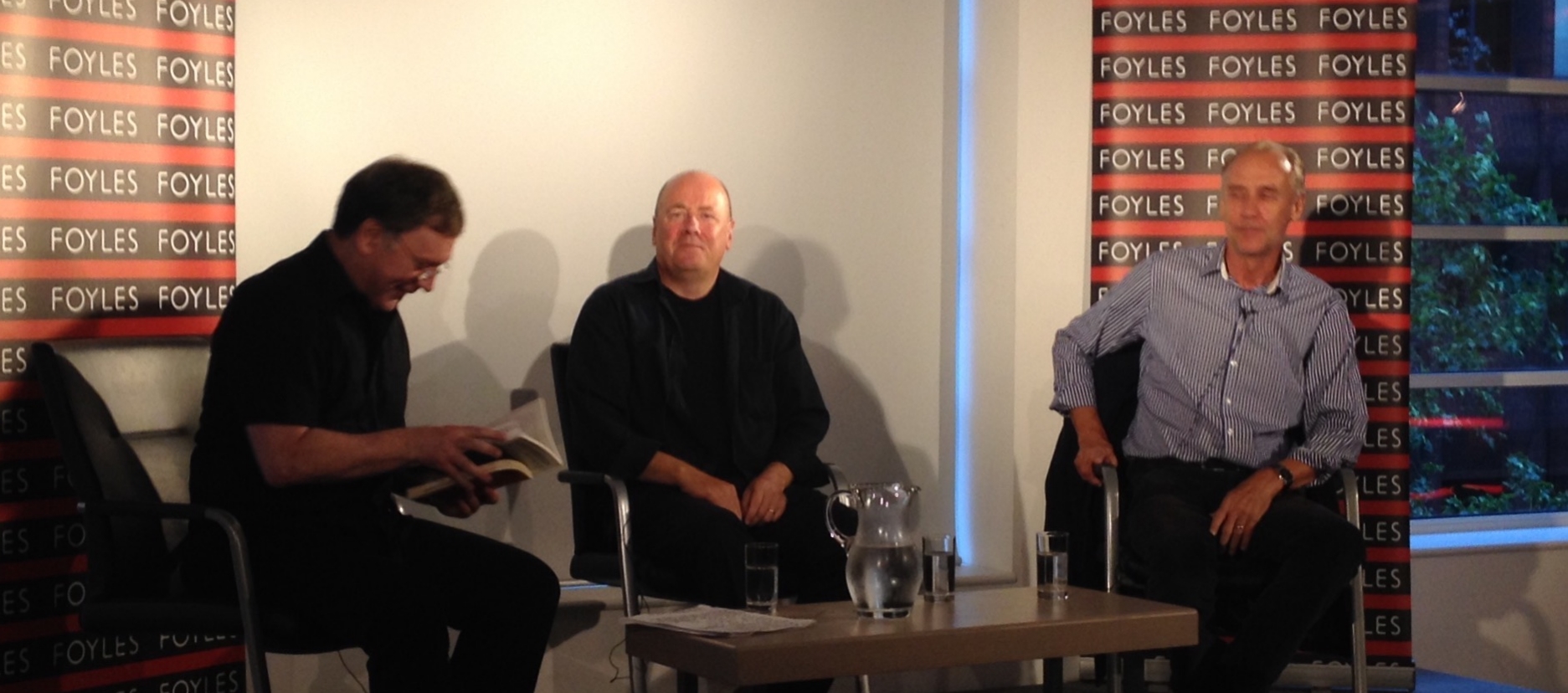
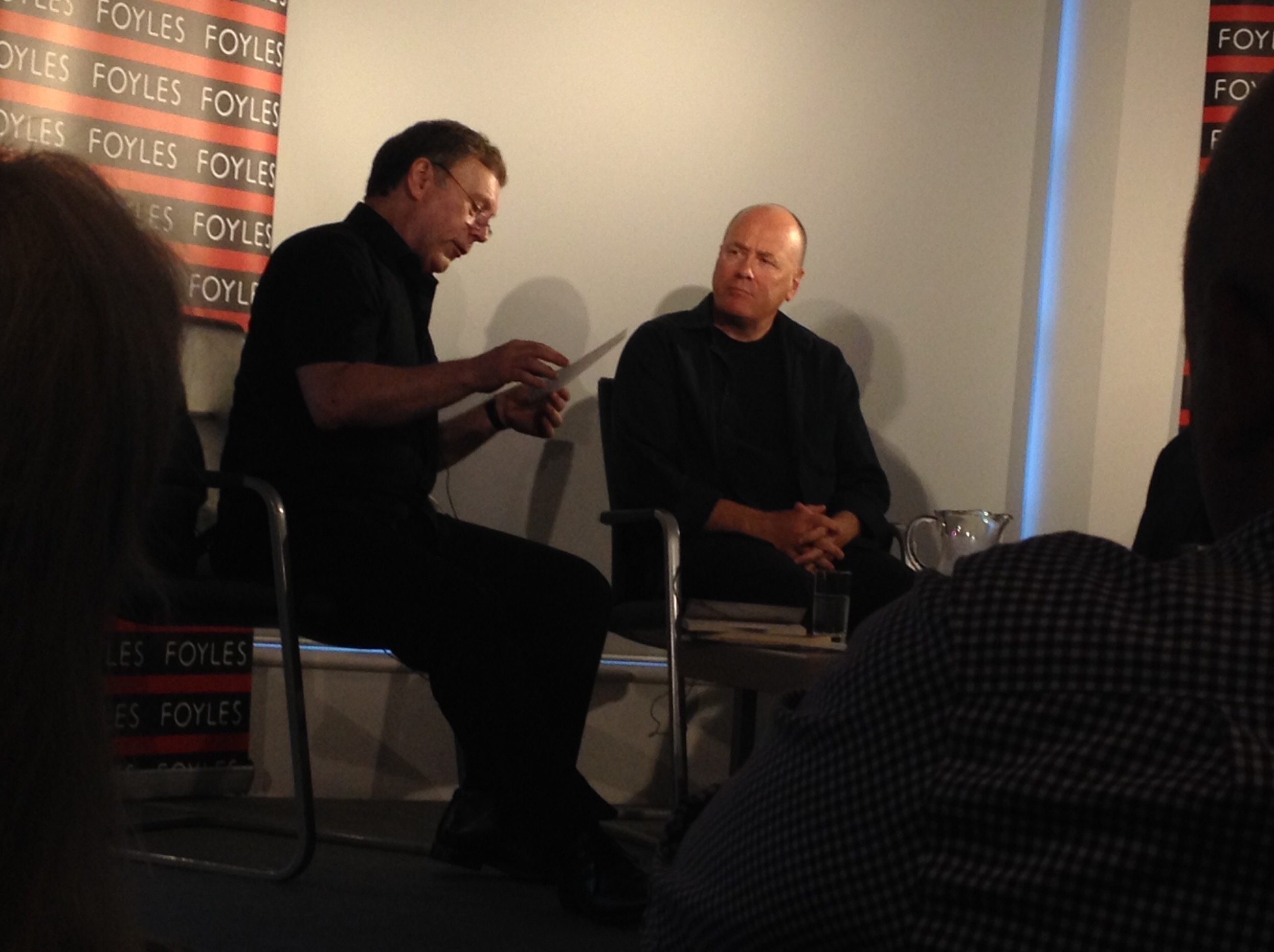
Update: well it was a great evening all round. Here are a couple of pictures:

19756225419_34dafb00cf_o

19942921255_3042d97467_o

For an excellent write-up of the discussion, see Euro Crime’s blog post ‘Nordic Night at Foyles‘.

There’s also a marvellous interview with Arnaldur over at Crime Fiction Lover.

CrimeFest 2015: The Petrona, CWA International Dagger and EuroNoir

I can’t believe it’s already a week since the end of CrimeFest 2015. Time for my second post on this marvellous event, and some key highlights:

The Petrona Award: Yrsa Sigurðardóttir’s The Silence of the Sea, translated by Victoria Cribb, won the 2015 Petrona Award for the best Scandinavian crime novel of the year in translation. The award was presented by CrimeFest’s guest of honour Maj Sjöwall, which was very special for all concerned.

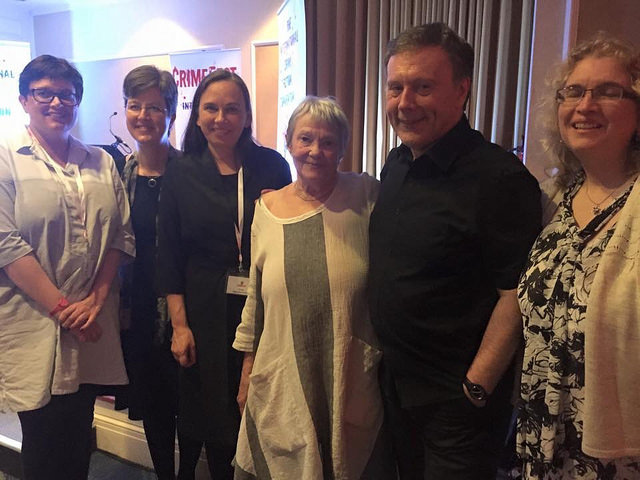
Petrona group

The Petrona judging team with Yrsa and Maj (centre). Photo: Andy Lawrence

The Petrona shortlist this year was wonderfully strong, with novels by Kati Hiekkapelto (Finland), Jørn Lier Horst (Norway), Arnaldur Indriðason (Iceland), Hans Olav Lahlum (Norway) and Leif G W Persson (Sweden). Fuller information about the shortlisted novels is available here and further details can also be found at the Petrona Award website.

The CWA’s 2015 International Dagger shortlist was announced at CrimeFest on the Friday night. The six shortlisted novels are:

  • Lief G.W. Persson, Falling Freely, as in a Dream (trans. Paul Norlen/Transworld/ SWEDEN)
  • Pierre LeMaitre, Camille (trans. Frank Wynne/Maclehose Press/FRANCE)
  • Deon Meyer, Cobra (trans. K.L.Seegers/Hodder and Stoughton/SOUTH AFRICA)
  • Karim Miské, Arab Jazz (trans. Sam Gordon/MacLehose Press/FRANCE)
  • Dolores Redondo, The Invisible Garden (trans. Isabelle Kaufeler/HarperCollins/ SPAIN)
  • Andreas Norman, Into a Raging Blaze (trans. Ian Giles/Quercus/SWEDEN)

Further details can be found on the CWA website, with the award being presented at the end of June. I’ve read a grand total of two, so need to do some catching up.

Euro Noir

Euro Noir panel with Barry Forshaw, Roberto Costantini, Gunnar Staalesen, Michael Ridpath and Jørn Lier Horst

Two CrimeFest panels I particularly enjoyed were the Nordic Noir and Euro Noir panels, moderated by Quentin Bates and Barry Forshaw respectively, and featuring Kati Hiekkapelto (Finland), Gunnar Staalesen (Norway), Clare Carson (UK/Orkney), Craig Robertson (UK/Faroes), Roberto Costantini (Italy), Michael Ridpath (UK/Iceland) and Jørn Lier Horst (Norway). Interesting observations abounded:

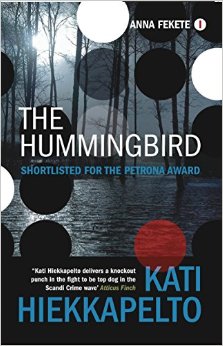
HummingbirdHiekkapelto’s The Hummingbird is set in fictional, northern Finnish town. It shows a darker side of Finland: alcoholism, loneliness and some poverty. She tries to write about Finland with the eyes of an outsider, like her investigator Anna Fekete, and sees Finland as being not very welcoming of immigrants. She’s rare in choosing to write about migration issues.

Staalesen describes the Norwegian town of Bergen as very film noir – it rains 250 days a year and so is an excellent setting for crime (the latest in his famous ‘Varg Veum’ P.I. series, We Shall Inherit the Wind, is about to be published by Orenda Press). For him, crime fiction is a way of telling stories about society and how we live our lives today. In contrast to many other countries, the status of crime fiction in Norway is high: it’s viewed as respectable literature due to its quality and its use as a form of social critique (e.g. Karin Fossum).

In her novel Orkney Twilight, Carson writes about Orkney from memories of childhood, which is apt because novel is about memory. Carson’s father was an undercover cop, and she’s drawn on the experience of being a young woman figuring out her father’s secret life. Orkney is a mysterious place with continuous light in summer; Carsen weaves Norse mythology throughout the narrative, which fits with the idea of undercover police/spies as master storytellers. She feels folklore is a way of talking about things that can’t be solved in life and that crime fiction is a modern version of that form, in that it gets to grips with unresolvable issues like death.

Ironically, given amount of murders committed in Nordic novels, Scandinavia and the Faroe Islands are probably safest places in world. There were no murders in Faroes for 26 years … until Robertson started writing his novel The Last Refuge. He feels a bit guilty about that.

Horst

Lier Horst used to get up at 5am every day to write while still working as a policeman. You have to set goal and put in the work – ‘it’s a hard job’. His first novel was based on a real murder. He saw the crime scene on the first day of his job and it stayed with him (the murderer was never caught). Writing about murders has ‘taught me a little about death, but a lot about life’, especially people’s emotions.

Barry Forshaw has coined the term ‘Scandi Brit’ for Brits like Michael Ridpath and Quentin Bates who set their novels in northern climes. Ridpath says it’s a challenge to write about other countries, but invigorating one. He regularly consults Icelanders on points of accuracy, which is a big help.

Cost

Costantini uses his engineering background to construct his plots. His acclaimed ‘Commissario Balistreri’ trilogy explores thirty years of Italian history from the 1960s to the 1990s, as well as developments in the Middle East. (I have bought the first and am looking forward to reading it.) He created a policeman with a compromised right-wing past as a deliberate challenge to readers.

There was praise for translators and their huge contribution to international crime fiction. Staalesen and Lier Horst are grateful to have the services of top translators Don Bartlett and Anne Bruce. Both are excellent, managing the most difficult of tasks like translating humour effectively.

Other highlights during CrimeFest included seeing Ragnar Jónasson hit the top of the Kindle bestseller list with his debut novel Snowblind late on Saturday night, chatting to authors like William Ryan and remembering how much good crime fiction I still need to read (e.g. the rest of his Captain Korolev series), and meeting friends old and new, like the lovely Elena Avanzas (@ms_adler, who blogs at Murder, she read), Maura and Karen from the Swansea Sleuths bookgroup, and Anya Lipska, who’s part of the newly formed and utterly marvellous Killer Women organisation. So much murderous creativity in one place and time! Roll on next year.

The 2015 Petrona Award shortlist is revealed!

Six high-quality crime novels from Finland, Iceland, Norway and Sweden have made the shortlist of the 2015 Petrona Award for the Best Scandinavian Crime Novel of the Year, which is announced today.

  • THE HUMMINGBIRD by Kati Hiekkapelto tr. David Hackston                         (Arcadia Books; Finland)
  • THE HUNTING DOGS by Jørn Lier Horst tr. Anne Bruce                              (Sandstone Press; Norway)
  • REYKJAVIK NIGHTS by Arnaldur Indriðason tr. Victoria Cribb                        (Harvill Secker; Iceland)
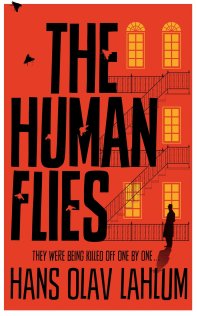
  • THE HUMAN FLIES by Hans Olav Lahlum tr. Kari Dickson                               (Mantle; Norway)
  • FALLING FREELY, AS IF IN A DREAM by Leif G W Persson tr. Paul Norlen (Doubleday; Sweden)
  • THE SILENCE OF THE SEA by Yrsa Sigurðardóttir tr. Victoria Cribb             (Hodder & Stoughton; Iceland)

The winning title will be announced at CrimeFest, held in Bristol 14-17 May 2015. The award will be presented by – and we are so very excited about this! – the Godmother of modern Scandinavian crime fiction, Maj Sjöwall, co-author with Per Wahlöö of the influential ‘Martin Beck’ series.

Maj Sjöwall 01.jpg

The wonderful Maj Sjöwall. Photo by Dr. Jost Hindersmann via Wikimedia Commons

Here are the judges’ comments on the shortlist:

THE HUMMINGBIRD: Kati Hiekkapelto’s accomplished debut introduces young police investigator Anna Fekete, whose family fled to Finland during the Yugoslavian wars. Paired with an intolerant colleague, she must solve a complex set of murders and the suspicious disappearance of a young Kurdish girl. Engrossing and confidently written, THE HUMMINGBIRD is a police procedural that explores contemporary themes in a nuanced and thought-provoking way.

THE HUNTING DOGS: The third of the William Wisting series to appear in English sees Chief Inspector Wisting suspended from duty when evidence from an old murder case is found to have been falsified. Hounded by the media, Wisting must now work under cover to solve the case and clear his name, with the help of journalist daughter Line. Expertly constructed and beautifully written, this police procedural showcases the talents of one of the most accomplished authors of contemporary Nordic Noir.

The Hunting Dogs by Jorn Lier Horst

REYKJAVIK NIGHTS: A prequel to the series featuring detective Erlendur Sveinsson, REYKJAVIK NIGHTS gives a snapshot of 1970s Iceland, with traditional culture making way for American influences. Young police officer Erlendur takes on the ‘cold’ case of a dead vagrant, identifying with a man’s traumatic past. Indriðason’s legions of fans will be delighted to see the gestation of the mature Erlendur; the novel is also the perfect starting point for new readers of the series.

THE HUMAN FLIES: Hans Olav Lahlum successfully uses elements from Golden Age detective stories to provide a 1960s locked-room mystery that avoids feeling like a pastiche of the genre. The writing is crisp and the story intricately plotted. With a small cast of suspects, the reader delights in following the investigations of Lahlum’s ambitious detective Kolbjørn Kristiansen, who relies on the intellectual rigour of infirm teenager Patricia Borchmann.

The Human Flies

FALLING FREELY, AS IF IN A DREAM: It’s 2007 and the chair of the National Bureau of Criminal Investigation, Lars Martin Johansson, has reopened the investigation into the murder of Swedish Prime Minister Olaf Palme. But can he and his dedicated team really solve this baffling case? The final part of  Persson’s ‘The Story of a Crime’ trilogy presents the broadest national perspective using a variety of different techniques – from detailed, gritty police narrative to cool documentary perspective – to create a novel that is both idiosyncratic and highly compelling.

Falling Freely, As If In A Dream: (The Story of a Crime 3), Leif G W Persson

THE SILENCE OF THE SEA: Yrsa Sigurðardóttir has said ‘I really love making people’s flesh creep!’, and she is the supreme practitioner when it comes to drawing on the heritage of Icelandic literature, and channelling ancient folk tales and ghost stories into a vision of modern Icelandic society. In SILENCE OF THE SEA, an empty yacht crashes into Reykjavik’s harbour wall: its Icelandic crew and passengers have vanished. Thóra Gudmundsdóttir investigates this puzzling and deeply unsettling case, in a narrative that skilfully orchestrates fear and tension in the reader.

As was the case last year, the standard of submissions was extremely high, with plenty of top-quality crime novels jostling for the shortlist. That the quality of the novels shone through in English is of course due in large measure to the skills of the six translators. They are often the forgotten heroes of international crime, without whom we would not have access to these marvellous texts.

Thanks to fellow judges Barry Forshaw and Sarah Ward for a thoroughly enjoyable shortlisting, and of course to Karen Meek – none of it would have happened without her hard work behind the scenes.

So did we get it right? Are there others that you’d like to have seen on the shortlist? And who do you think the winner will be? 

2015 Petrona Award judges

A happy Petrona team after the shortlisting. Clockwise from back row left: Sarah Ward, Barry Forshaw, Karen Meek and Mrs Peabody/Kat Hall

Further information can be found on the Petrona Award website

An album of Petrona pictures is also available at the Swansea University Flickr page.

January 2015: some crime drama treats

Here we all are in a shiny new year. Wishing you and yours a very happy 2015!

There are a number of wonderful crime dramas heading our way in January. Here’s a quick round up of four goodies…

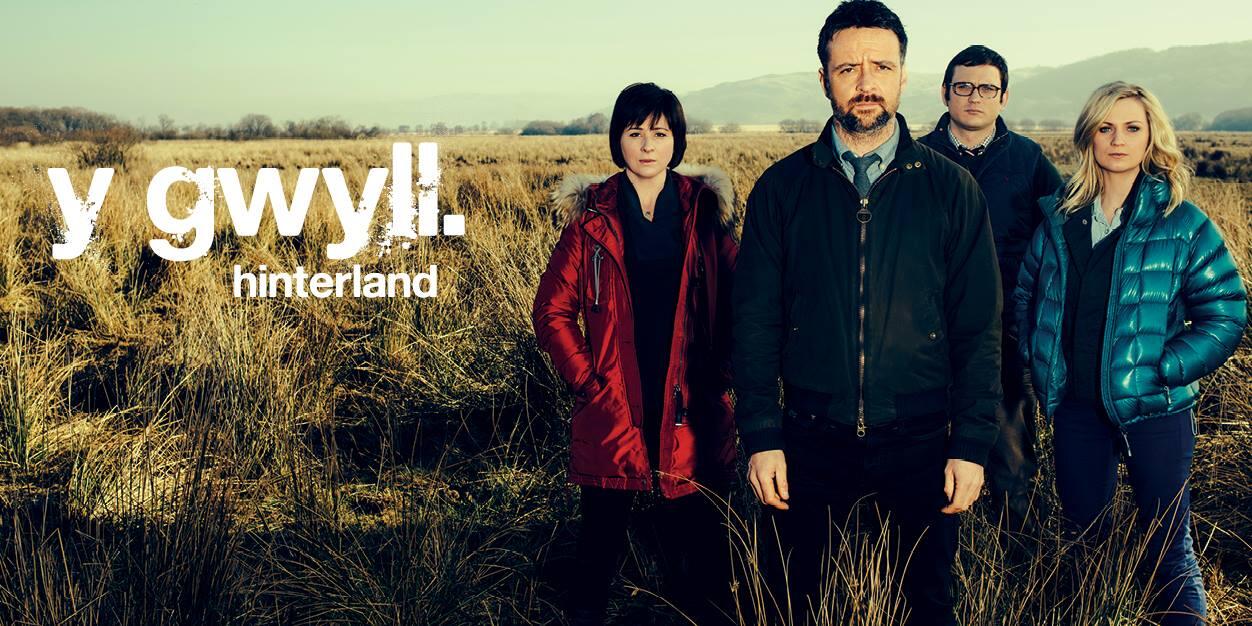
Y Gwyll / Hinterland, S4C, 9pm on Thursday 1 January 

Today sees a special, one-off episode for fans of this bilingual, Welsh-English crime drama. Here’s the S4C description >> Troubled hero DCI Mathias returns to the front-line in this brand new episode. Faced with a suspected arson attack, Mathias is drawn into a community riven by old feuds and bitter jealousies. A story of heartbreak and loss, but for Tom Mathias, will it offer a new beginning? <<

Head over to the S4C website for further information (in English), a trailer and details of how to activate subtitles. If you don’t have access to S4C, don’t worry – you’ll be able to access it later via S4C Clic online (the Welsh equivalent of iPlayer). The episode will no doubt also appear on BBC1 in due course. An earlier Mrs. Peabody post on Y Gwyll is available here, and a new series follows later in 2015.

Fortitude, Sky Atlantic, 9pm on Thursday 29 January

There’s an increasing amount of buzz about this series in the press. Drawing on Scandi Noir traditions, it features a stellar international cast (Stanley Tucci, Michael Gambon, Sofie Gråbøl, Christopher Eccleston), is set in a mining community in the Arctic Circle and was filmed in Iceland. From where I’m standing, that’s an impossible combination to resist.

Sky’s description is as follows: >> Fortitude is a place like nowhere else. Although surrounded by the savage beauty of the Arctic landscape, it is one of the safest towns on earth. There has never been a violent crime here. Until now. In such a close-knit community a murder touches everyone and the unsettling, mysterious horror of this crime threatens the future of the town itself.

The local Chief of Police, Sheriff Dan Anderssen (Dormer), has to investigate alongside DCI Morton (Tucci), the detective who has flown into Fortitude so fast that questions are being asked about how much he knew, and when. As these two cops try to make sense of the killing, each finds compelling reasons to mistrust and suspect the other. <<

Further details are available here and there’s a preview clip too…

Broadchurch, ITV, Monday 5 January

Alec Hardy (David Tennant) and Ellie Miller (Olivia Coleman) return for the second series of this crime drama set on the Dorset coast. I absolutely loved the first series and am intrigued to see where the storyline goes after the explosive revelations of the final episode.

Spiral, BBC4, 9pm on Saturday 10 January (12 episodes)

The fifth season of this gritty French crime drama will be a welcome addition to BBC4’s international crime slot on Saturday evenings. I’ll resist providing a description of the first episode in case there are some who’ve not yet seen the end of season 4 (that includes me), but if you’re interested in knowing more, you can head over to the BBC4 website.

Crime Time Preview has a useful round up of further crime dramas (British and international) that are scheduled for 2015. It looks to be a promising year.

Wishing you all a fabulous start to 2015. My January’s going to be a bonkers one, trying to juggle a number of different publishing and academic commitments, so I may be posting a little less than usual this month. It’s all good though – and I look forward to reporting on a completed project soon 🙂

Merry Christmas! Mrs Peabody’s festive round-up

I’m behind on my Christmas preparations this year, which means that this festive round-up is a little later than usual. On the plus side, it may help a few of you out of a last-minute present conundrum, or lead you to a nice, independent bookshop because it’s too late for online orders. You might also be moved to buy yourself a little gift. Go on, you deserve it.

The following are just some of my favourite crime novels of the year. All, in my view, would make a delightful escape from the mayhem of Christmas or family, especially when curled up on the sofa with a nice glass of wine.

Anne Holt and Berit Reiss-Anderson, The Lion’s Mouth (NORWAY: trans. by Anne Bruce, Corvus, 2014). Anne Holt is often described as the queen of Norwegian crime, and has drawn expertly on her own career in the police, law and government in the creation of the ‘Hanne Wilhelmsen’ police series (she was even Norwegian Minister of Justice for a while). This fourth installment in the series, originally published in 1997, explores the suspicious death of the Norwegian Prime Minister, who is found dead in her office just six months following election. A fusion of locked-room mystery, Borgen and police procedural, it’s a quietly satisfying read that’s held up well.

Arnaldur Indridason, Reykjavik Nights (ICELAND: trans. by Victoria Cribb, Harvill Secker, 2014). This prequel to the ‘Murder in Reykjavik’ series is a wonderfully absorbing read, which traces the start of Erlendur’s journey from young policeman to detective as he investigates the death of a homeless man and the disappearance of a woman. Set in 1974, the year Iceland celebrated 1100 years of settlement, we are also shown how a traumatic childhood event begins to shape Erlendur’s personal life and investigative career. The novel is a great read for those who are new to the series and for long-established Erlendur fans alike.

Hannah Kent, Burial Rites (AUSTRALIA/ICELAND: Picador, 2013). This impressive debut novel by a young Australian author is not for those looking for ‘cosy’ Christmas crime. Kent spent some time in Iceland as an exchange student and describes the book as her ‘dark love letter’ to the country: set in northern Iceland in 1829, it explores the case of Agnes Magnúsdóttir, the last Icelandic woman to be executed for murder. The figure of ‘the murderess’ tells us a lot about the gender, class and power relations of the time, and the picture the author paints of every-day, rural Icelandic life is fascinating. The story, setting and their links to the Icelandic sagas stayed with me long after reading it.

Lahlum

Hans Olav Lahlum’s The Human Flies (NORWAY: trans. by Kari Dickson, Mantle, 2014, [2010]) sounds like a horror film that’s best avoided after a large meal. However, it turns out to be something quite different: a well-constructed and witty homage to the classic crime fiction of Agatha Christie, set in 1968 Oslo, which has some interesting historical depth. Featuring ambitious young police detective Kolbjørn Kristiansen on his first big case – the murder of a former resistance fighter – readers are treated to an apartment building of intriguing suspects and a page-turning investigation, as well as the considerable intellect of Kristiansen’s wheelchair-bound partner Patricia.

Laura Lippman, After I’m Gone (USA: Faber and Faber, 2014). Ignore the rather daft cover. After I’m Gone is a literary crime novel that dissects a murder case by means of a rich narrative with some wonderful characterisation (the latter is one of Lippman’s great strengths). Told on a number of different time levels, it traces the stories of five women left behind when white-collar criminal Felix Brewer disappears in July 1976 – his wife Bambi Gottschalk, his three daughters, and his mistress Julie – as well as the investigation into Julie’s murder by detective Sandy Sanchez in the present. An engrossing, quality read.

Anya Lipska, Death Can’t take a Joke (UK/POLAND: The Friday Project, 2014). This is the second in the ‘Kiszka and Kershaw’ series, featuring Polish ‘fixer’ Janusz Kiszka and London police detective Natalie Kershaw. While I enjoyed Lipska’s first novel, Where the Devil Can’t Go, the second is where the series really gets into its stride: the duo’s investigation into two deaths, including one of Kiszka’s closest friends, is a tightly constructed page-turner with an engaging, blackly comic tone. The novel also features one of the best first chapters I’ve read this year… For a more in-depth exploration, head over to Margot Kinberg’s marvellous Confessions of a Mystery Novelist blog.

Marco Malvaldi, Game for Five and Three Card Monte. 1 and 2 of the ‘Bar Lume Trilogy’ (ITALY: Europa Editions/World Noir 2013/14). These light-hearted crime novels feature amateur detective Massimo Viviani, the maverick owner of Bar Lume, investigating mysterious deaths in Pineta in Northern Italy. Massimo is ably assisted in his work by four cantankerous, octogenarian barflies, including his own extremely opinionated grandfather. Witty, entertaining and stylishly packaged.

Eduardo Sacheri, The Secret in Their Eyes (ARGENTINA: trans. by John Cullen, Other Press, 2011 [2005]). I was given this novel last Christmas and it became one of my first and favourite reads of the year. Benjamin Miguel Chaparro, a newly retired Deputy Clerk in Buenos Aires, begins to write a novel about a case that has haunted him since 1968 – the murder of a young wife, Liliana Colotto, in her own home one summer’s morning. Oscillating between the past and the present, and spanning twenty-five years of Argentine history, the narrative tells the story of the murder and its repercussions for those left behind: husband Ricardo Morales, investigator Benjamin, and the murderer himself. The 2010 film adaptation was also a cracker. A full review is available here.

Olivier Truc, Forty Days without Shadow (FRANCE/LAPLAND: trans. by Louise Rogers LaLaurie, Trapdoor, 2014). This novel uses its criminal investigation as a means of exploring the history, culture and climate of Lapland. It also features the reindeer police! The novel opens with Sámi-Norwegian reindeer policeman Klemet Nango and partner Nina Nansen investigating the theft of a priceless Sámi drum from a museum. Shortly afterwards, Sámi herder Mattis is found dead, and ‘Patrol P9′ finds itself grappling with two crimes that could well be interlinked. A gripping novel that shines a spotlight on a fascinating part of the world. A full review is available here.

If the crime lover in your life is into TV drama, then my two top picks are as follows:

The Australian series The Code, which aired on BBC4 a few weeks ago and I reviewed enthusiastically here. This six-part political thriller opens with the mysterious death of Aboriginal teenager Sheyna Smith in Lindara, a remote New South Wales township. The circumstances of her death are hushed up, so when Ned Banks (a journalist for an internet newspaper) and his brother Jesse (an internet hacker on the autistic spectrum) start to investigate, you just know there’s going to be trouble. An utterly gripping, intelligent drama.

British police drama Happy Valley, a hard-hitting, six-part series that traces the fall-out from a kidnapping in the West Yorkshire valleys, while exploring its protagonists’ complex personal lives. Sarah Lancashire gives an absolutely outstanding performance as policewoman Catherine Cawood, together with an excellent supporting cast. Be warned that there is some very graphic (though in my view not gratuitous) violence. I think that 18 would be a more accurate rating than the 15 on the box. An addictive and top quality crime series.

And my own indulgence this Christmas? That would be the American drama True Detective, which I’m very much looking forward to watching. Have you indulged yourself as well? Do share if so!

Wishing all the readers of this blog a very happy and relaxing Christmas.

See you all in 2015!

German Zimtsternchen (little cinnamon star).    Quite addictive.

Iceland Noir 2014: volcanoes, glaciers and crime

Having been extremely jealous of everyone at Iceland Noir last year, it was brilliant to make it this November, not least because Reykjavik has been on my wishlist of places to visit for a long, long time. The event was held at Nordic House, and was expertly organised by author Quentin Bates and the rest of the Icelandic Noir team, who put together a great programme over two days. Quite a few bloggers have already posted reports (see list below), so I’m going to focus on the panels/discussions that particularly interested me and say a little about my first impressions of Iceland … with plenty of photos!

IMG_4654

Nordic Perspectives panel – and yes, it was early in the morning…

Nordic Perspectives. This panel featured David Hewson (UK), Hans Olav Lahlum (Norway), Lilja Sigurðardóttir (Iceland) and Michael Ridpath (UK), with Jake Kerridge moderating. It was interesting to see how these authors positioned themselves or their countries’ crime output in relation to ‘nordic crime’. Sigurðardóttir felt that Icelandic crime had affinities to Scandinavian crime through its focus on the complexity of the criminal (citing the work of Norwegian author Karin Fossum as an example). However Lahlum saw himself as a historical crime writer rather than a Nordic crime writer, while Ridpath’s Icelandic-American investigator is an insider-outsider figure who negotiates different cultural traditions.

This panel also included discussion of historical crime fiction and adaptation. Lahlum told us that Norwegian crime fiction often engages with historical events, especially the Second World War (as evidenced in his novel The Human Flies). Hewson discussed his adaptation of the Danish TV crime drama The Killing, which involved adding contextualising historical detail. For example, the beginning and end of The Killing II are set in Ryvangen Memorial Park, which was the site of partisan executions by the Nazis and points to the core theme of the series – the long-term impact of war on society. Hewson provided extra information about the memorial, as British readers would not be aware of its significance (interesting; now on my TBR pile).

IMG_4658 2

‘Translating crime across cultures’ panel

The ‘translating crime fiction across cultures’ panel featured Viktor Arnar Ingólfsson (Iceland), Mari Hannah (UK), Bogdan Hrib (Romania) and Vidar Sundstøl (Norway), with academic Jacky Collins moderating. I left this panel wanting to read Sundstøl’s Minnesota Trilogy: the first installment, The Land of Dreams, won the prestigious Riverton Prize in 2008, and its exploration of Norwegian-American history and culture sounds right up my street. It was also interesting to hear Hrib discussing Romanian crime novels and his ongoing mission to see them more widely translated into English: there are currently just three, published by Profusion Press, which I’m now curious to read. Mari Hannah tantalised us by revealing that she’s written a novel partly set in Norway (a break from the Kate Daniels series, which we were reassured is also continuing). Icelandic author Ingólfsson currently has one novel translated into English – The Flatley Enigmawith others translated into German, which appears to be quite a common route for Icelandic writers (those Germans do love their nordic Krimis!).

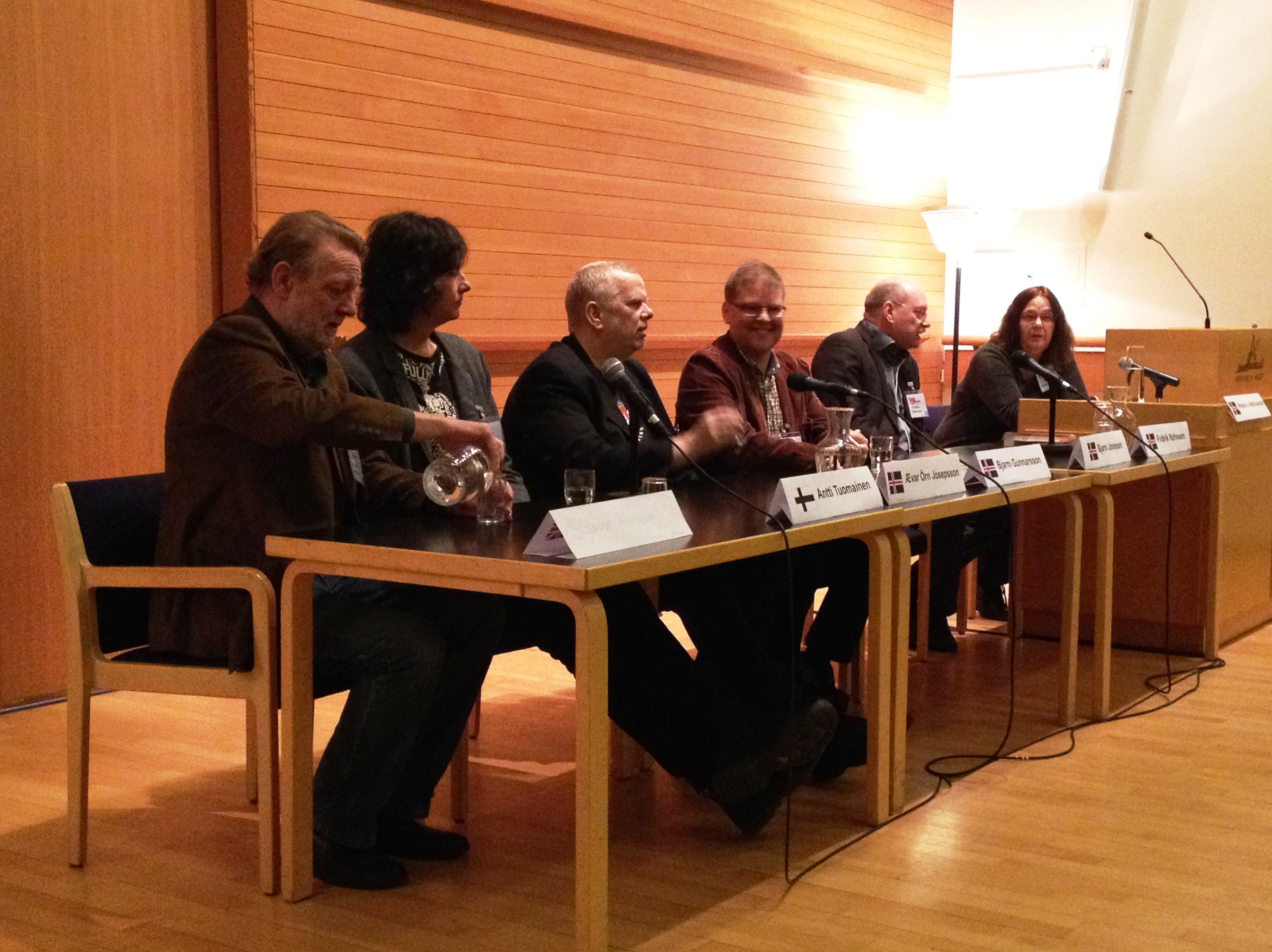
A companion panel on the Saturday celebrated the inaugural Icepick Award for best crime novel translated into Icelandic, with Antii Tuomainen (Finnish author of The Healer) and Icelandic translators Ævar Örn Jósepsson, Bjarni Gunnarsson, Bjarni Jónsson and Sigadur Karlsson (Magnea Matthiasdóttir moderating).

IMG_4733

Icepick Award panel – a sea of translators!

The panel gave a fascinating insight into the dialogue between writers and translators about linguistic and cultural issues during the process of translation, although Gunnarsson also illustrated the important role of technology today: when translating Nesbo, he used Google Earth to take a closer look at Oslo, a city he’s never visited but now feels he knows well. Tuomainnen made lifelong friends in the translation community with his heartfelt appreciation for the work of the translator; he also specifically thanked Sigurdur Karlsson for translating his work and for bringing it to the attention of Icelandic publishers in the first place, thereby highlighting the influential role translators play in identifying promising new work. The Icepick was awarded on the Saturday evening at the Iceland Noir dinner (for further details, see my previous post).

IMG_4686 2

The ‘settings’ panel

Tuomainnen popped up again on the settings panel with Ragnar Jónasson (Iceland), Johan Theorin (Sweden) and Vidar Sundstøl (Norway), moderated by Jacky Collins. The settings discussed included urban Finland, a village in northern Iceland, an isolated Swedish island and the American Midwest. In each case, the novel’s location plays a crucial role – sometimes even becoming a character in its own right – and is used to create unease or suspense (Theorin’s Öland novels), a sense of remoteness and isolation (Jonasson’s Dark Iceland series), or to explore themes such as migration (Sundstol’s Minnesota Trilogy) and climate change (Tuomainen’s The Healer).

IMG_4735 2

The ‘supernatural in crime fiction’ panel – a suitably shaky shot from the back…

One of my favourite panels was on supernatural crime, featuring James Oswald (Scotland), Johan Theorin (Sweden), Alexandra Sokoloff (US) and Michael Sears (South Africa) in discussion with Jake Kerridge. It was fascinating to hear the varying reasons why crime authors use supernatural elements in their work: as a means of exploring the clash between the rational and irrational (Oswald), illustrating evil (Sokoloff), exploring cultural beliefs (Sears) or taking genre in new direction (Theorin). Hearing the panelists talk about the extra dimensions the supernatural can add to a crime narrative reminded me why I like hybrid crime fiction so much: there’s a creativity at work here that pushes the boundaries of the genre and – when it works – can produce fantastic results. Sokoloff rather intriguingly described a magpie approach when writing – she has blended Jewish lore and witch-y elements into her novels to create particular effects. And it struck me that at least two other writers at the conference – Tuomainen and Icelandic author Yrsa Sigurðardóttir – also write hybrid crime fiction (drawing on traditions of apocalyptic literature and horror). The days when crime publishers were reluctant to publish this type of fusion fiction thankfully appear to be over.

Other blog posts, articles and tweetery on Iceland Noir 2014:

  • Crime Fiction Lover – lots of coverage including the debut authors’ panel, featuring blogger and Petrona judge Sarah Ward, whose novel In Bitter Chill (Faber and Faber 2015) I’m greatly looking forward to reading
  • Crimepieces – Sarah Ward with three posts
  • The Reykjavik Grapevine on the author reading held at Solon on Thursday evening
  • Miriam Owen live-tweeted Iceland Noir via @NordicNoirBuzz

Do also check out the site for next year’s rather wonderful-looking Shetland Noir (Iceland Noir will be back in 2016).

I’m going to finish up with a few Reykjavik/Iceland photos to show those of you who haven’t yet visited what a great place this is!

1. An Eymundsson bookshop in Reyjkavik. This capital, which is around the size of my hometown Swansea, with a population of around 200,000, has at least five massive bookshops. Iceland is a nation of book lovers with a deep appreciation of culture (probably instilled by long winter nights and the reading aloud of Icelandic sagas). Fittingly, Reykjavik is a UNESCO City of Literature.

IMG_4852

Booktastic Reykjavik

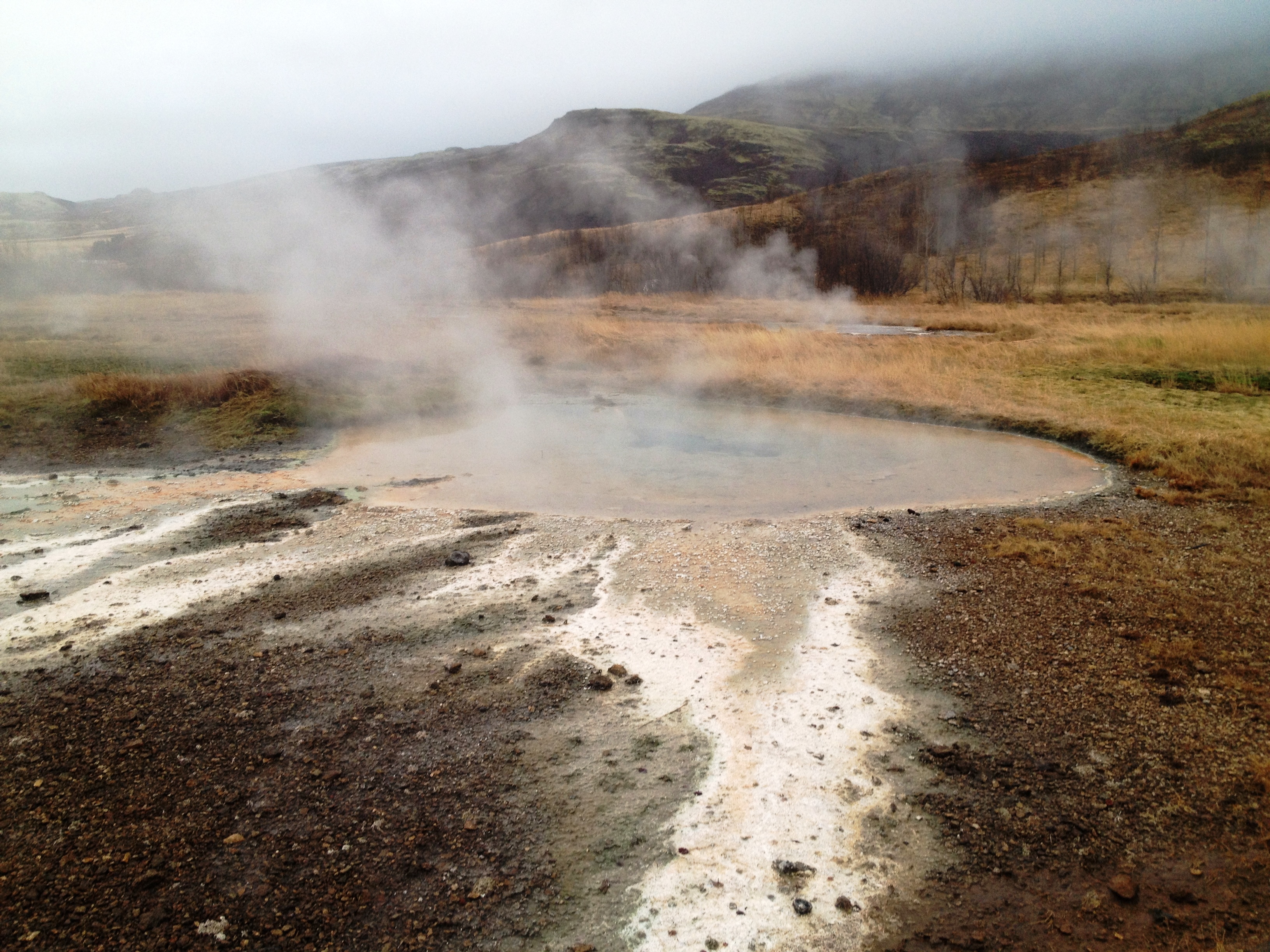
2. The bubbling, steaming landscape of Haukadalur. Wandering around on a crust of earth just above plentiful geothermal activity, with geysers going off at regular intervals, instils an added appreciation of our volatile, ever-changing planet. In a land not heavy on natural resources, Icelanders have made the most of their free geothermal energy to heat their homes, create outdoor thermal pools, grow tomatoes, process aluminium, keep their streets de-iced, and so on… Ingenious and admirable.

IMG_4787

The land of fire and ice – a geothermal landscape here, but glaciers are not far away

3. Reykjavik is charming. Here are a few random photos.

IMG_4887

Hallgrímskirkja, which looks a lot like a space rocket, guarded by the statue of Leifur Eiriksson

IMG_4907

View over Reykjavik from the top of the Hallgrímskirkja – on the day the sun came out

IMG_4921

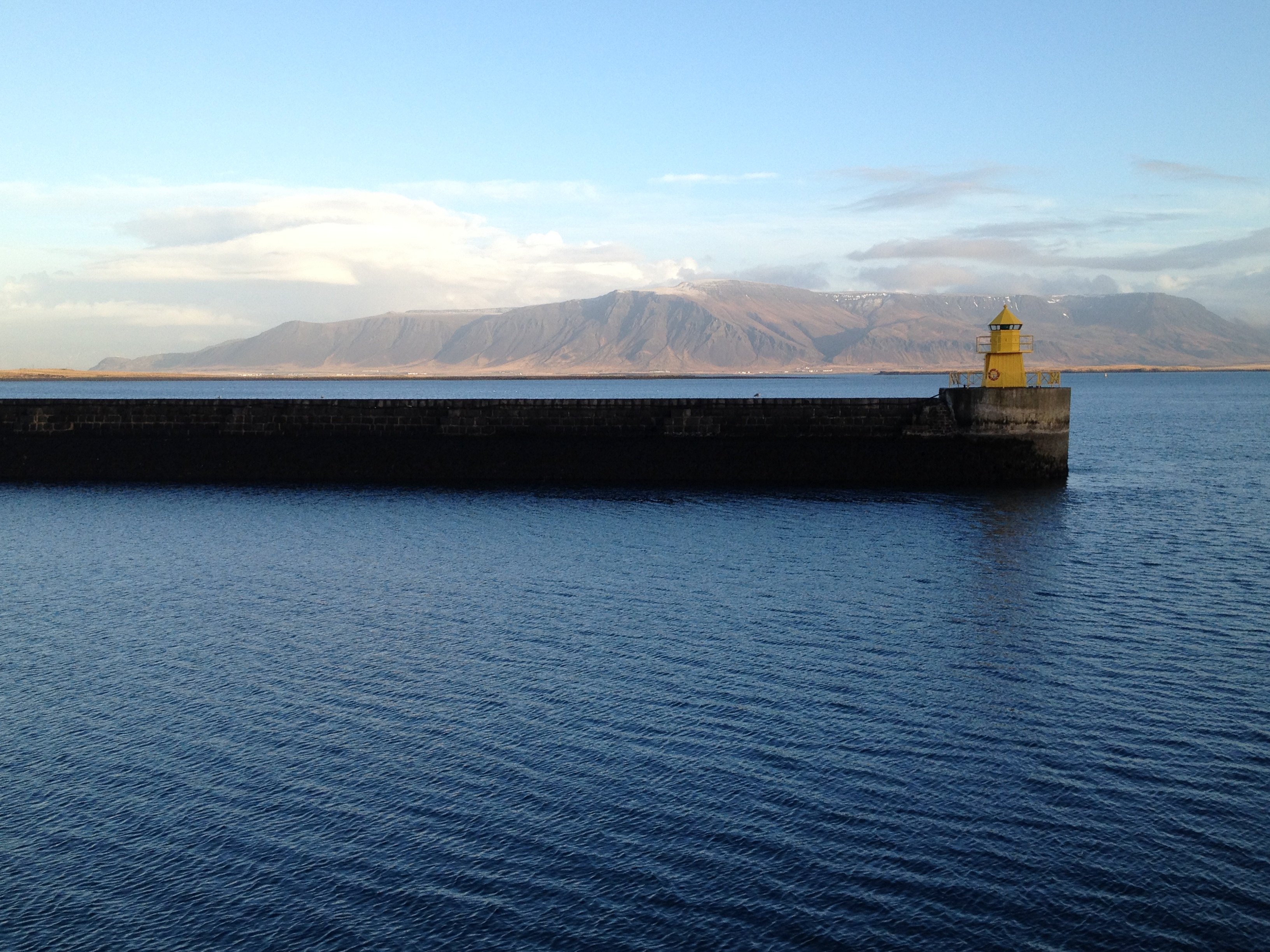
Reykjavik Harbour, looking out to Faxafloi Bay and the mountains beyond

4. There’s a lot of Icelandic wool. Which gets turned into gorgeous mittens to feed my newly discovered mitten addiction.

IMG_5031

Takk fyrir Icelandic sheep!

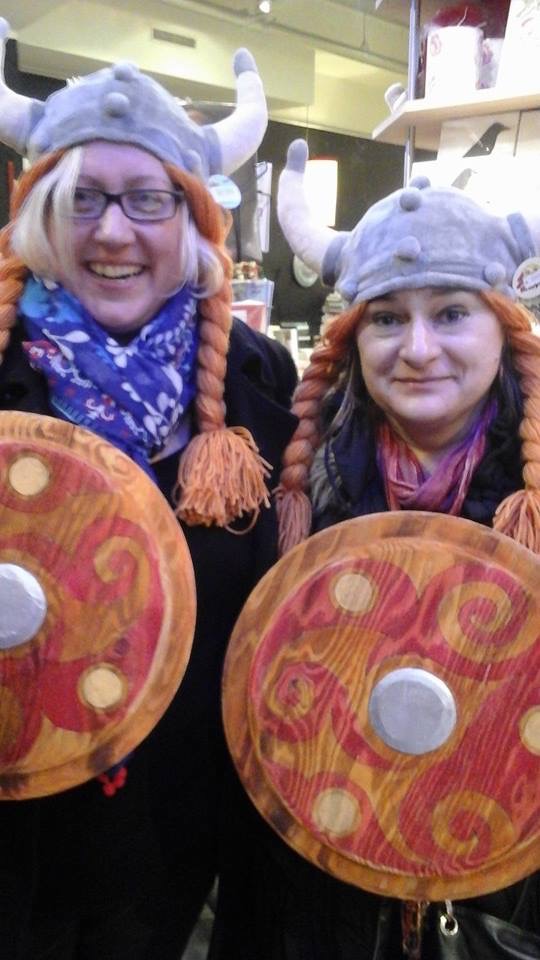
5. Friendly Vikings. I think this is my favourite Iceland Noir photo.

IMG_4946

Miriam and Ewa – awesomely stylish Vikings

Huge thanks to the Iceland Noir organisers for making the event such a wonderful success!

Iceland Noir 2014 and BBC1’s The Fall

I’ll be heading to Reykjavik next week for Iceland Noir 2014. To say I’m a little excited is something of an understatement.

As this poster shows, Iceland Noir 2014 features the crème de la crème of Icelandic and international crime writers. There’s an exciting programme running over two days, with lovely extras such as Reykjavik crime walks, jazz-infused crime readings and the announcement of the Icepick Award (shortlist available here). With luck we’ll also have some northern lights swirling above. I’m very much looking forward to meeting old friends and new, and to uncovering lots of fabulous new crime fiction. There may be some tweeting too…

My reading on the plane out will be Ragnar Jónasson’s novel Snjóblinda (Snowblind, 2010), the first in his ‘Dark Iceland’ series.

Here’s a brief description: >> Winter in a small, isolated fishing town in the northernmost part of Iceland, only accessible via a small mountain tunnel. A young woman is found lying in the snow, bleeding and unconscious. An old writer falls to his death in the local theatre. A young police officer, new in town, must distinguish between truth and lies, while uncovering hidden crimes of the past, in a community where he can trust no-one, before the constant snowstorms and the twenty four hour darkness push him over the edge. << I’ll be tucking into the German translation, but am pleased to hear that the novel will be published in English translation by Orenda Press in 2015.

Online chatter has alerted me to the start of the second series of BBC1’s The Fall, which features Gillian Anderson as police superintendent Stella Gibson on the trail of Belfast serial killer Paul Spector. I’ve not seen any of this crime drama as yet. The Northern Ireland setting and the female lead have definitely piqued my interest, but the focus on the serial killer, and his depiction as mild-mannered family man by day and murderer of women by night, has rather put me off, as has the view of critics such as Rachel Cooke. My neighbour Ernie (who’s not at all keen on the serial-killer angle either) considers it a well-made drama with depth, so now I’m in two minds again. Have any of you watched it? Would you recommend viewing it or not?

It’s Scandi time! Mankell’s An Event in Autumn, Indridason’s Reykjavic Nights and BBC4’s Crimes of Passion

This week, I’ve shared my evenings with two of my favourite Scandi authors, Henning Mankell (Sweden) and Arnaldur Indridason (Iceland).

A *beautiful* cover, don’t you think?

Henning Mankell’s An Event in Autumn (trans. by Laurie Thompson/Harvill Secker, 2014) was originally written for a Dutch crime event and adapted for an episode of Kenneth Branagh’s Wallander in 2012. This beautifully packaged work is now published for the first time in English, and in terms of its chronology, is set just before the last novel in the series, The Troubled Man.

The book is described as a novella by the publisher and in accordance with that genre, is a little shorter than a novel. I can’t help wondering if Mankell’s title pays homage to Goethe’s view of the novella as focusing on ‘eine sich ereignete unerhörte Begebenheit’ (literally ‘an unheard of event that has taken place’ or more idiomatically ‘an unprecedented event’). Murder does fit that definition very nicely indeed.

The narrative opens in October 2002. Wallander is about to make an offer on a house when he discovers something dodgy in the garden: a long-ago crime has literally been unearthed and the policeman, with the help of daughter Linda, feels compelled to investigate, in a typically nuanced and engrossing tale. My favourite line: ‘It struck Wallander that nothing could make him as depressed as the sight of old spectacles no one wanted any more’ (p. 51).

Any hopes that more Wallander novels might be forthcoming are dashed in a little afterward by Mankell, so fans of the series had better savour this last work. However, there is an added bonus in the form of an essay by the author entitled ‘How it started, how it finished, and what happened in between’. Lots of lovely insights for the melancholy Ystad detective’s fans.

An Event in Autumn is published by Harvill Secker on 4. September 2014. With thanks to the publisher for sending me a review copy.

As if that wasn’t enough, I then received a copy of Arnaldur Indridason’s Reykjavik Nights in the post (trans. by Victoria Cribb/Harvill Secker, 2014). I’d been hugely looking forward to this prequel to the ‘Murder in Reykjavik’ series and was barely able to put it down: it’s a wonderfully absorbing read that traces Erlendur’s journey from young policeman to detective as he investigates the death of a homeless man and the disappearance of a young woman. Set in 1974, the year Iceland celebrated 1100 years of settlement, we are given new insights into Erlendur’s character and how a traumatic childhood event will shape both his personal life and investigative career.

As was the case with Mankell’s The PyramidReykjavic Nights is a great introduction for new readers to the series. Alternatively, for those of us who have already had the pleasure, it provides a valuable context in which to place the ‘later’ works. Mr. Indridason, if you’re reading this, please do feel free to add some more… Takk fyrir!

Reykjavic Nights is published by Harvill Secker on 18. September 2014. With thanks to the publisher for sending me a review copy. If you’re interested in Icelandic crime, then Iceland Noir, which takes place in Reykjavik from 20-23 November 2014, is also worth checking out.

And finally, some important BBC4 Saturday evening crime news. Today, 30th August 2014, sees the start of a new six-part Swedish series based on the 1950s novels of Maria Lang (the pseudonym of Dagmar Lange, a well known and prodigious crime author). The first episode of Crimes of Passion, entitled ‘Death of a Loved One’ airs at 9.00pm. The BBC4 summary is as follows:

>> Puck Ekstedt is invited by her university tutor to celebrate midsummer at his summer house on a secluded island, together with a group of friends including Einar Bure. Puck and Einar (Eje for short) are secretly courting and he is the reason she accepts the invitation. The summer nights are seductively beautiful until Puck finds one of the female guests murdered. Einar contacts his best friend Christer Wijk, a police inspector, to investigate. In the meantime, they are trapped on the island – and someone among them is a killer. <<

The series has been described as Mad Men meets The Killing. This sounds a bit too good to be true, but I will reserve judgement until this evening. You can see a short clip from the first episode on the BBC4 website.

CrimeFest 2014 / International Dagger / Petrona Award

I’m just back from CrimeFest in Bristol and am floating on a fluffy cloud of contentment after three days of great panels, excellent company and awards bling. Here are some highlights (more will follow).

14220603424_216ca657d0

Euro Noir panel (left to right): Barry Forshaw, Lars Kepler (Alexander Ahndoril and Alexandra Coelho Ahndoril), Jørn Lier Horst, Paul Johnston, Dominique Manotti and Ros Schwarz

The Euro Noir panel on Saturday was probably my favourite of the weekend. In a wide-ranging discussion, the authors explored the nineteenth-century origins of European crime fiction during the rise of capitalism (Dominique Manotti), the role of the translator as the voice of the foreign author (Ros Schwarz), the use of Euro Noir to probe the uses and misuses of power (Paul Johnston, Manotti, Jørn Lier Horst), crime writing and journalism (Manotti), the influence of Maj Sjöwall and Per Wahlöö (the Lars Keplers), the low status of crime writing in France (Manotti), the influence of crime dramas such as The Wire on crime fiction (Johnston), and, prompted by an audience question, the relative lack of black European crime writers and protagonists.

What I liked in particular was Manotti’s unapologetic view that crime writing should be used to ‘tell the truth’ about political and social issues – ‘otherwise what’s the point?’. This contrasted with lots of British authors during the weekend, who, when asked about the place of ‘issues’ in their work, took the more or less default position that entertainment came first and the serious stuff second (because the latter ‘puts readers off’). Johnston wondered whether the UK is more conservative when it comes to writing socio-political crime than other European nations, and that’s got me wondering too (although obvious exceptions spring to mind like David Peace’s excellent Red Riding/ Yorkshire Noir quartet. I’m sure there are also others).

Manotti is a crime-writing star in her native France, and if you haven’t yet read her work I would thoroughly recommend it. You can read my review of Affairs of State here.

The panel coincided with the launch of Barry Forshaw’s new book Euro Noir, which provides an excellent road-map to European crime fiction and lots of great reading suggestions, even for those who have already read quite a bit. With my Germanic hat on, I can say that the section on ‘murder in the German-speaking territories’ is impressive – the man really has done his homework.

German crime fiction was predicted to be one of the next big things by the Euro Noir panel. And lo, the shortlist for the CWA International Dagger, announced at CrimeFest on Friday, features a German novel, Simon Urban’s Plan D. Here’s the full list, with further details on the CWA website.

Arnaldur IndridasonStrange Shores, tr. Victoria Cribb (Iceland)
Pierre LemaitreIrene, tr. Frank Wynne (France)
Arturo Perez-ReverteThe Siege, tr. Frank Wynne (Spain)
Olivier TrucForty Days without Shadow, tr. Louise Rogers LaLaurie (French author, but set in Lapland)
Simon UrbanPlan D, tr. Katy Derbyshire (Germany)
Fred VargasDog Will Have His Day, tr. Siân Reynolds (France)

Last, but most definitely not least, the 2014 Petrona Award for the Best Scandinavian Crime Novel  of the Year was awarded on Saturday to Leif G.W. Persson’s Linda, as in the Linda Murder, translated by Neil Smith. 

In his acceptance speech, read out by Barry Forshaw on his behalf, Leif said:

My character Superintendent Evert Bäckström is actually not a nice person. He embodies pretty much every human prejudice – and then some – and he does so proudly and wholeheartedly. He feels that he is not only God’s gift to humanity but also the object of every woman’s secret fantasies. I myself, am a fully normal person – but there is a joy that he brings me when I tell the story of his life and times.

Now he and I have received an award. A very fine English award, which makes me especially happy as a large part of my family lives in England. There is one person with whom I most profoundly want to share this honour and that is my excellent translator Neil Smith who has succeeded in making this Swede, with his spiritual and physical roots in the Stone Age, at least intelligible for an educated Anglo-Saxon public. Thank you!

Shortlisted authors Yrsa Sigurðardóttir and Jørn Lier Horst attended the CrimeFest Gala dinner and were highly commended for their crime novels. It was a brilliant field and we judges had a very tough choice to make!

One of my favourite photos from the weekend: Sarah Ward (Petrona judge) with shortlisted author Jørn Lier Horst – in traditional Norwegian dress.