Berlinale 2015 showcases international crime dramas and thrillers from Germany, Israel, Denmark, Sweden and Italy

The 2015 Berlinale – one of the world’s top international film festivals – closes today in Berlin. As ever, a host of wonderful films have been shown during the packed ten-day programme, with the Iranian film Taxi, directed by dissident filmmaker Jafar Panahi, awarded the coveted Golden Bear.

While reading coverage of the festival, I was interested to see that some international TV dramas were premiered as part of the programme, and that a number of these had a pronounced crime/thriller/spying dimension. Alessandra Stanley’s excellent article in the New York Times provides a good overview, and also discusses how such series are beginning to be picked up in the States (and not always to be remade in English either), which is a very good sign.

Here are a few of the series in question:

Deutschland 83. There’s quite a lot of buzz about this spying drama in Germany and beyond, and it has now also been picked up by an American network (in the original German!). The central protagonist is East German border guard Martin Rauch, who is sent across the border as an undercover agent by the Stasi (the East German secret police); his task is to pose as an aid to a West German general working with NATO. Stanley describes the series as ‘an ingenious, counter-intuitive look at the Cold War’ and a recent Guardian article sees it as indicative of rising interest in the divided Germany of 1949 to 1990.

Deutschland 83

Shkufim (False Flag). According to Stanley, this Israeli political drama was inspired by the assassination of a Hamas leader in Dubai in 2010. That scenario has been reworked for the series, which shows five Israeli citizens waking up one day to find they are prime suspects in the kidnapping of a Iranian official in Moscow. The drama is produced by Tender Productions, which also has links with Homeland (which was itself based on the Israeli series Hatufim).

The five suspects in False Flag

Follow the Money is a Danish crime thriller series by DR Drama (the makers of The Killing and Borgen) due to air later this year. It focuses on corruption in big business, with a lovely twist: the business in question is a wind-power company called Energreen, with supposedly impeccable ecological and moral credentials. Insider dealings and dodgy deaths indicate that all is not as it should be.

Follow the Money. Photo credit Christian Geisnæs

1992 is an Italian drama that was picked up in Berlin by the UK, according to Stanley (though no specific channel is named). This time, the corruption of political life by big business is the focus: the drama explores the Italian bribery scandals of the 1990s, and the attempts of Milan magistrate Antonio Di Pietro to clean up politics through Operation Clean Hands (Mani Pulite).

Italian crime series 1992

Last but not least, Blå ögon (Blue Eyes) is a Swedish-German crime series that explores racism, discrimination and immigration issues. Stanley describes it as having an anti-racist message, but also wanting to ‘upend expectations’ by giving characters on all sides of the debate a voice. One of the murder victims is a female, right-wing politician, who is assassinated while out in public.

STV’s Blue Eyes

Stanley ends her piece by noting that none of these series feature the disappearance or death of a child, as seen in earlier crime series such as The Killing and Broadchurch. Or to put this another way: these dramas are moving from highly personal cases whose investigations focus on the family and small communities, to cases that address larger historical, political and social issues. Interesting times. As ever, I’m hoping that a good number will make it on to our UK and US screens.

Iceland Noir 2014: volcanoes, glaciers and crime

Having been extremely jealous of everyone at Iceland Noir last year, it was brilliant to make it this November, not least because Reykjavik has been on my wishlist of places to visit for a long, long time. The event was held at Nordic House, and was expertly organised by author Quentin Bates and the rest of the Icelandic Noir team, who put together a great programme over two days. Quite a few bloggers have already posted reports (see list below), so I’m going to focus on the panels/discussions that particularly interested me and say a little about my first impressions of Iceland … with plenty of photos!
IMG_4654

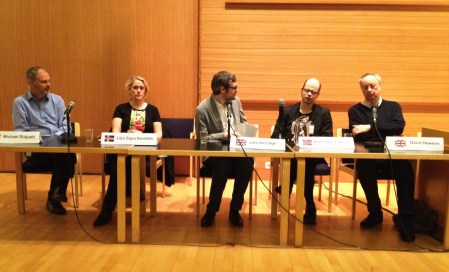
Nordic Perspectives panel – and yes, it was early in the morning…

Nordic Perspectives. This panel featured David Hewson (UK), Hans Olav Lahlum (Norway), Lilja Sigurðardóttir (Iceland) and Michael Ridpath (UK), with Jake Kerridge moderating. It was interesting to see how these authors positioned themselves or their countries’ crime output in relation to ‘nordic crime’. Sigurðardóttir felt that Icelandic crime had affinities to Scandinavian crime through its focus on the complexity of the criminal (citing the work of Norwegian author Karin Fossum as an example). However Lahlum saw himself as a historical crime writer rather than a Nordic crime writer, while Ridpath’s Icelandic-American investigator is an insider-outsider figure who negotiates different cultural traditions.

This panel also included discussion of historical crime fiction and adaptation. Lahlum told us that Norwegian crime fiction often engages with historical events, especially the Second World War (as evidenced in his novel The Human Flies). Hewson discussed his adaptation of the Danish TV crime drama The Killing, which involved adding contextualising historical detail. For example, the beginning and end of The Killing II are set in Ryvangen Memorial Park, which was the site of partisan executions by the Nazis and points to the core theme of the series – the long-term impact of war on society. Hewson provided extra information about the memorial, as British readers would not be aware of its significance (interesting; now on my TBR pile).
IMG_4658 2

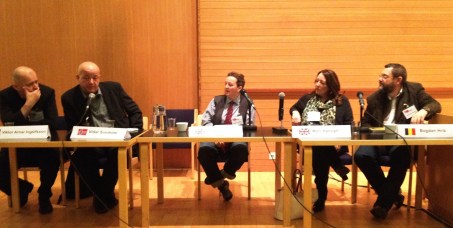
‘Translating crime across cultures’ panel

The ‘translating crime fiction across cultures’ panel featured Viktor Arnar Ingólfsson (Iceland), Mari Hannah (UK), Bogdan Hrib (Romania) and Vidar Sundstøl (Norway), with academic Jacky Collins moderating. I left this panel wanting to read Sundstøl’s Minnesota Trilogy: the first installment, The Land of Dreams, won the prestigious Riverton Prize in 2008, and its exploration of Norwegian-American history and culture sounds right up my street. It was also interesting to hear Hrib discussing Romanian crime novels and his ongoing mission to see them more widely translated into English: there are currently just three, published by Profusion Press, which I’m now curious to read. Mari Hannah tantalised us by revealing that she’s written a novel partly set in Norway (a break from the Kate Daniels series, which we were reassured is also continuing). Icelandic author Ingólfsson currently has one novel translated into English – The Flatley Enigmawith others translated into German, which appears to be quite a common route for Icelandic writers (those Germans do love their nordic Krimis!).

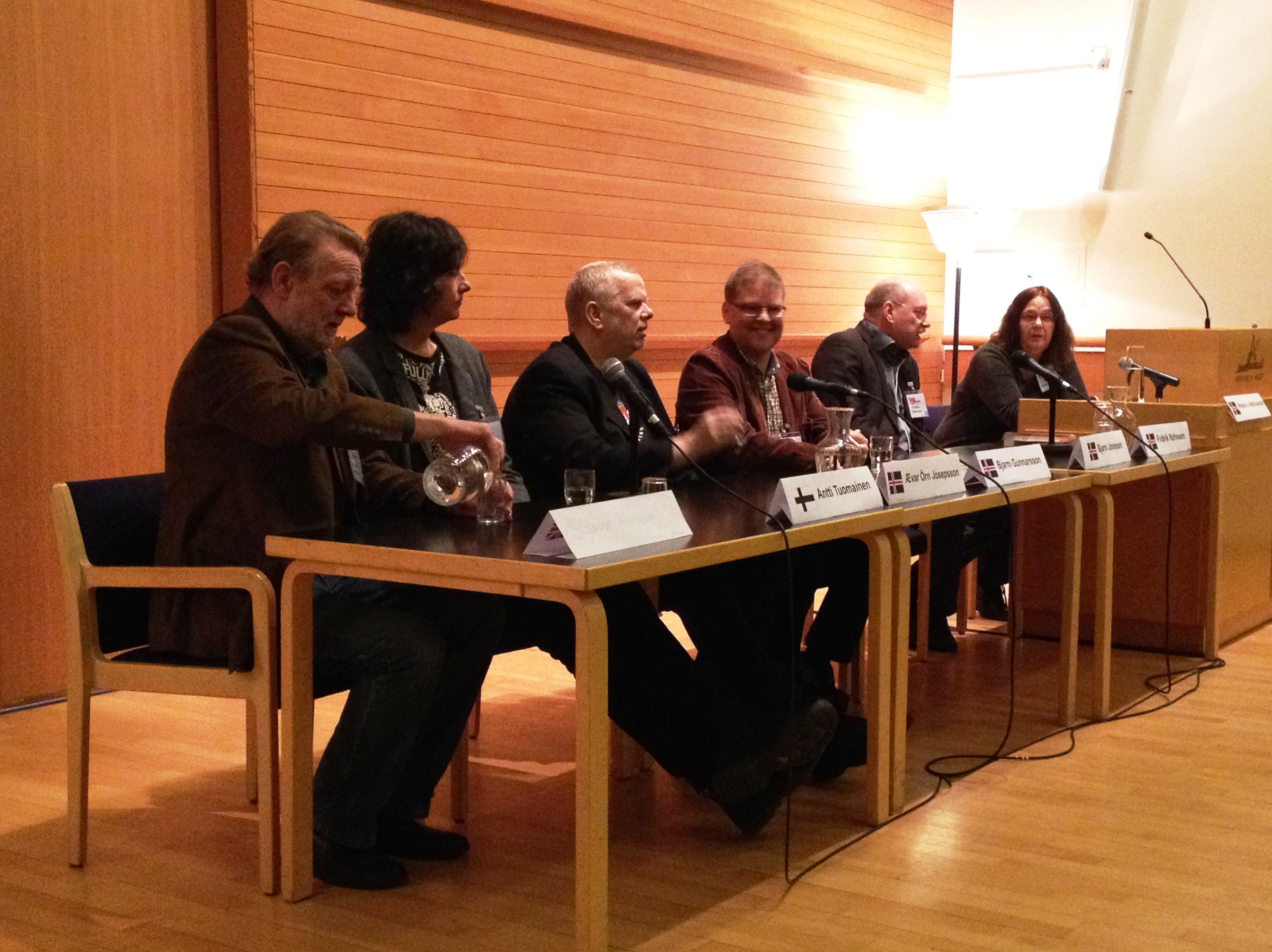
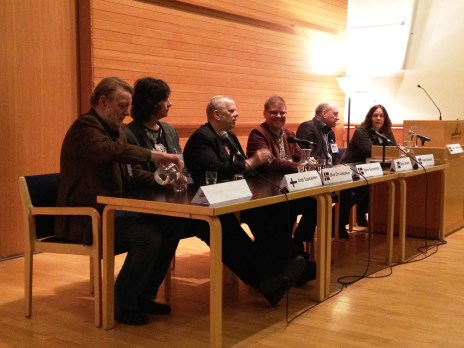
A companion panel on the Saturday celebrated the inaugural Icepick Award for best crime novel translated into Icelandic, with Antii Tuomainen (Finnish author of The Healer) and Icelandic translators Ævar Örn Jósepsson, Bjarni Gunnarsson, Bjarni Jónsson and Sigadur Karlsson (Magnea Matthiasdóttir moderating).
IMG_4733

Icepick Award panel – a sea of translators!

The panel gave a fascinating insight into the dialogue between writers and translators about linguistic and cultural issues during the process of translation, although Gunnarsson also illustrated the important role of technology today: when translating Nesbo, he used Google Earth to take a closer look at Oslo, a city he’s never visited but now feels he knows well. Tuomainnen made lifelong friends in the translation community with his heartfelt appreciation for the work of the translator; he also specifically thanked Sigurdur Karlsson for translating his work and for bringing it to the attention of Icelandic publishers in the first place, thereby highlighting the influential role translators play in identifying promising new work. The Icepick was awarded on the Saturday evening at the Iceland Noir dinner (for further details, see my previous post).

IMG_4686 2

The ‘settings’ panel

Tuomainnen popped up again on the settings panel with Ragnar Jónasson (Iceland), Johan Theorin (Sweden) and Vidar Sundstøl (Norway), moderated by Jacky Collins. The settings discussed included urban Finland, a village in northern Iceland, an isolated Swedish island and the American Midwest. In each case, the novel’s location plays a crucial role – sometimes even becoming a character in its own right – and is used to create unease or suspense (Theorin’s Öland novels), a sense of remoteness and isolation (Jonasson’s Dark Iceland series), or to explore themes such as migration (Sundstol’s Minnesota Trilogy) and climate change (Tuomainen’s The Healer).

IMG_4735 2

The ‘supernatural in crime fiction’ panel – a suitably shaky shot from the back…

One of my favourite panels was on supernatural crime, featuring James Oswald (Scotland), Johan Theorin (Sweden), Alexandra Sokoloff (US) and Michael Sears (South Africa) in discussion with Jake Kerridge. It was fascinating to hear the varying reasons why crime authors use supernatural elements in their work: as a means of exploring the clash between the rational and irrational (Oswald), illustrating evil (Sokoloff), exploring cultural beliefs (Sears) or taking genre in new direction (Theorin). Hearing the panelists talk about the extra dimensions the supernatural can add to a crime narrative reminded me why I like hybrid crime fiction so much: there’s a creativity at work here that pushes the boundaries of the genre and – when it works – can produce fantastic results. Sokoloff rather intriguingly described a magpie approach when writing – she has blended Jewish lore and witch-y elements into her novels to create particular effects. And it struck me that at least two other writers at the conference – Tuomainen and Icelandic author Yrsa Sigurðardóttir – also write hybrid crime fiction (drawing on traditions of apocalyptic literature and horror). The days when crime publishers were reluctant to publish this type of fusion fiction thankfully appear to be over.

Other blog posts, articles and tweetery on Iceland Noir 2014:

  • Crime Fiction Lover – lots of coverage including the debut authors’ panel, featuring blogger and Petrona judge Sarah Ward, whose novel In Bitter Chill (Faber and Faber 2015) I’m greatly looking forward to reading
  • Crimepieces – Sarah Ward with three posts
  • The Reykjavik Grapevine on the author reading held at Solon on Thursday evening
  • Miriam Owen live-tweeted Iceland Noir via @NordicNoirBuzz

Do also check out the site for next year’s rather wonderful-looking Shetland Noir (Iceland Noir will be back in 2016).

I’m going to finish up with a few Reykjavik/Iceland photos to show those of you who haven’t yet visited what a great place this is!

1. An Eymundsson bookshop in Reyjkavik. This capital, which is around the size of my hometown Swansea, with a population of around 200,000, has at least five massive bookshops. Iceland is a nation of book lovers with a deep appreciation of culture (probably instilled by long winter nights and the reading aloud of Icelandic sagas). Fittingly, Reykjavik is a UNESCO City of Literature.

IMG_4852

Booktastic Reykjavik

2. The bubbling, steaming landscape of Haukadalur. Wandering around on a crust of earth just above plentiful geothermal activity, with geysers going off at regular intervals, instils an added appreciation of our volatile, ever-changing planet. In a land not heavy on natural resources, Icelanders have made the most of their free geothermal energy to heat their homes, create outdoor thermal pools, grow tomatoes, process aluminium, keep their streets de-iced, and so on… Ingenious and admirable.

IMG_4787

The land of fire and ice – a geothermal landscape here, but glaciers are not far away

3. Reykjavik is charming. Here are a few random photos.
IMG_4887

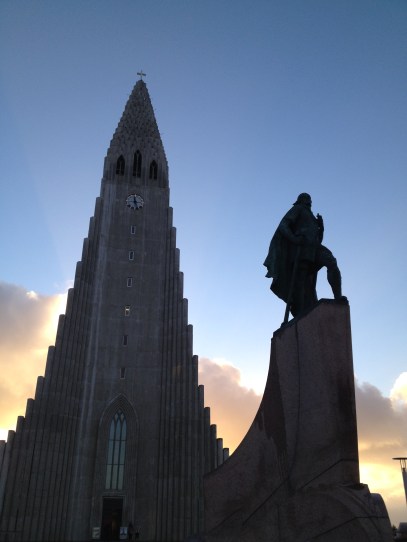
Hallgrímskirkja, which looks a lot like a space rocket, guarded by the statue of Leifur Eiriksson

IMG_4907

View over Reykjavik from the top of the Hallgrímskirkja – on the day the sun came out

IMG_4921

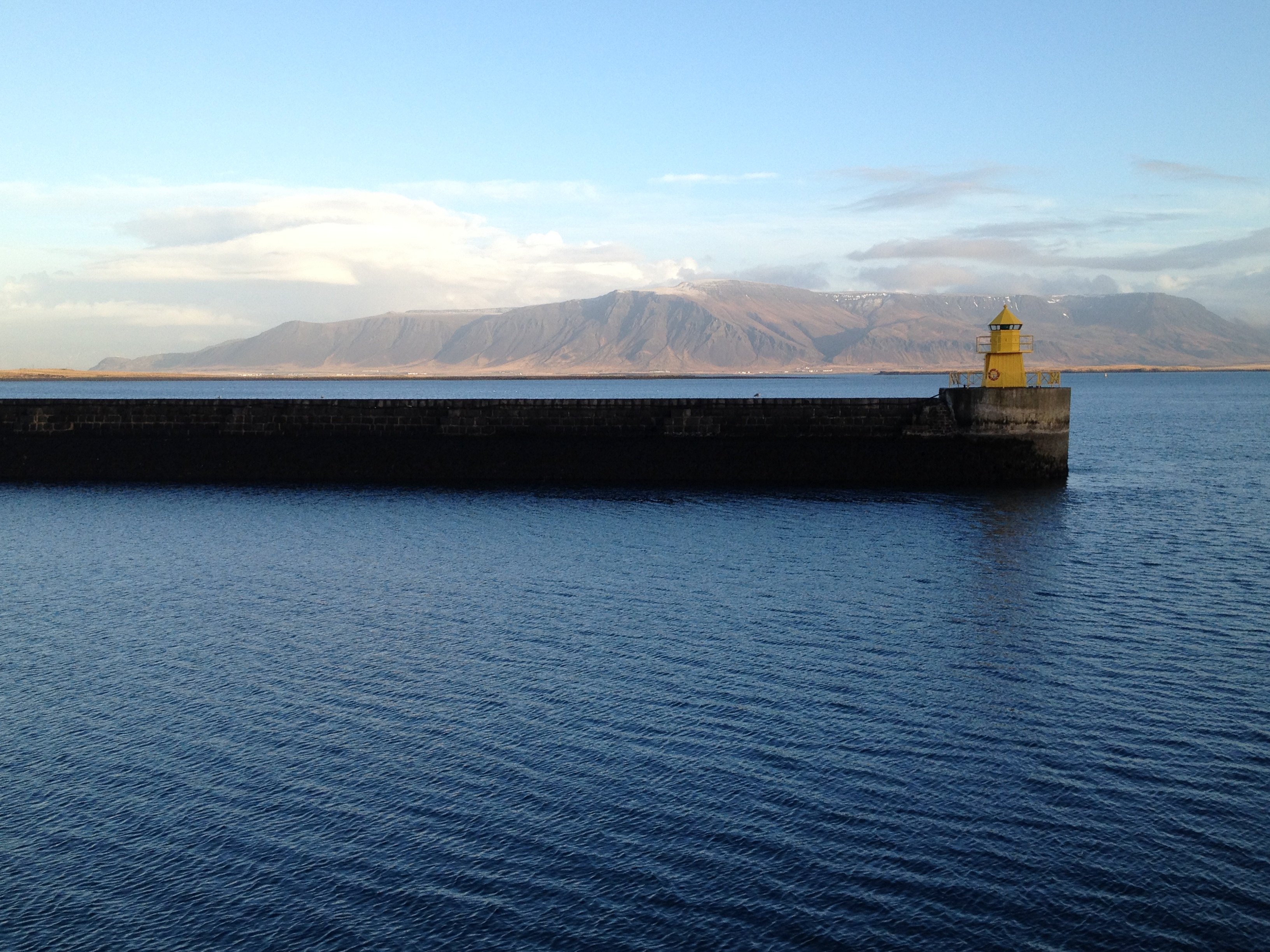
Reykjavik Harbour, looking out to Faxafloi Bay and the mountains beyond

4. There’s a lot of Icelandic wool. Which gets turned into gorgeous mittens to feed my newly discovered mitten addiction.

IMG_5031

Takk fyrir Icelandic sheep!

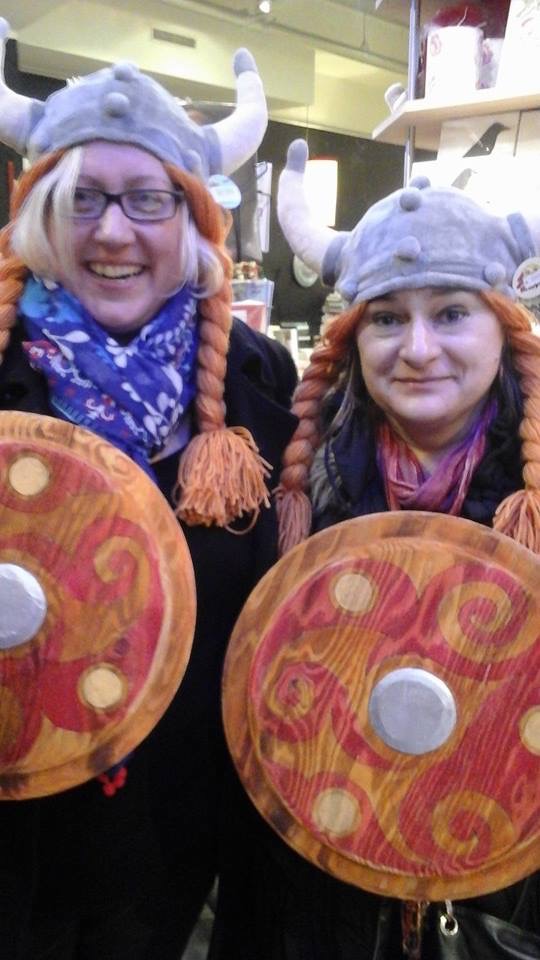
5. Friendly Vikings. I think this is my favourite Iceland Noir photo.

IMG_4946

Miriam and Ewa – awesomely stylish Vikings

Huge thanks to the Iceland Noir organisers for making the event such a wonderful success!

25 years on: the fall of the Berlin Wall and the ‘deutsch-deutscher Krimi’

On a wall in my study hangs a Falk map of Berlin, on which the Berlin Wall is marked with a subtle rosy line. It’s the map I used on my year abroad in Germany, in the tumultuous year of 1989. In the space of six months I visited West and East Berlin (via Checkpoint Charlie), stayed with an East German family in Karl Marx Stadt (relatives of my German boyfriend), and then, rather disbelievingly, watched the Wall fall on TV with my great-aunt (who had seen it go up in 1961) before heading back to Berlin, this time to climb through a freshly created hole in the Wall and ponder the craziness of history while standing in the former no-man’s land.

This image of the Berlin Wall was taken in 1986 by Thierry Noir and corresponds with my memories of it in 1989

9th November 2014 marks the 25th anniversary of the remarkable day that East Germany collapsed without a single shot being fired. It’s being commemorated with a programme of events in Berlin, culminating in a Lichtgrenze (Border of Light), which sees 12 kilometers of the Wall’s former route lit with 8000 helium lights as an act of remembrance and as ‘a symbol of hope for a world without walls’. This is what it’ll look like at night:

Embedded image permalink

Lichtgrenze installation, 7-9 November (http://www.bauderfilm.de/lichtgrenze/)

Of course, one of the myriad ways in which the legacy of the East German past is still being explored is via crime fiction. Here are some examples of recent Krimis that engage with the so-called ‘deutsch-deutscher’ (German-German) question. (Unfortunately only the first one is in English translation at the moment, but hopefully the summaries below will give non-German speakers a flavour of what’s out there. And who knows, perhaps some publishers might be tempted?)

Simon Urban, Plan D (Schoeffling, 2011; Harvill Secker translation, 2013). This gutsy alternative history imagines a 2011 world in which the Berlin Wall did not fall. A blackly humorous satire, it follows the misadventures of Volkspolizei (People’s Police) investigator Martin Wegener, while giving readers an insight into life in East Germany and its historical contexts. I reviewed it favourably in 2013, and posted an East German glossary that explains some of the key events and terms in the novel.

Christa Bernuth’s Innere Sicherheit (Inner Security; Piper, 2006) is set in the East Germany of the early 1980s, before reunification seemed likely. GDR police investigator Martin Beck (a nod to Sjöwall/Wahlöö?) looks into a fatal case of Republikflucht (‘flight from the republic’) that’s not all it seems. Why has the victim been shot with a bullet used by the West? And what are her links to the West German terrorism of the 1970s? There’s an extract available (in German) on the author’s website.

Uwe Klausner, Stasi-Konzern (Stasi Business; Gmeiner, 2014). Retired police chief Tom Sydow is strolling through a West Berlin park on 9. October 1964 when shots ring out. A man has been murdered, but perpetrator and corpse quickly disappear. Sydow discovers the victim was meeting a Stasi officer and is pulled into a case that leads to the top of the East German secret police. This is the sixth installment in the historical ‘Sydow’ series. The fifth, Kennedy-Syndrom, is set in August 1961, just as the Berlin Wall goes up.

Oliver G. Wachlin, Wunderland (Wonderland; Emons, 2008). This humorous ‘Berlin-Krimi’ takes place as the Wall is falling in 1989. West German police investigator Hans Dieter Knoop views a corpse by a lake who’s wearing ice-skates … even though the water’s not yet frozen. He sets about solving this puzzle in the midst of the historical jubilation around him, and receives some unexpected visitors from the East. The second in the series, Tortenschlacht (Death by Cake), plays in 1990, shortly before German reunification.

Jay Monika Walther, Goldbroiler oder die Beschreibung einer Schlacht (Roast Chicken or the Chronicle of a Slaughter; Orange Cursor, 2009). Set shortly after the fall of the Berlin Wall in Warnemünde, this novel shows former East German citizens floundering economically in the new order. The villains are former Nazis from the west, who co-opt eastern neo-Nazis, former Stasi members and disgruntled former GDR citizens into activities such as extortion, smuggling and importing women as sex workers from eastern Europe. A bleak view of the reunited Germany.

As this small selection shows, there’s a huge amount of diversity in crime novels that engage with the East German past – in terms of the historical moment they examine (from 1961 to 1990), the perspectives they adopt (investigators from East and West), the themes they pick up (political repression, corruption, the impact on ordinary people of major social and political changes), and the style in which they are written (satirical, thriller, comic). They link to other legacies of the German past (National Socialism, left-wing terrorism) and sometimes form part of larger historical series attempting to process twentieth-century German history (Klausner’s ‘Sydow’ novels). All of them form part of a wider boom in German-language historical crime fiction, which was triggered by 1989 and the renewed interest in Germany’s ‘double past’ of fascism and communism – Eric Hobsbawm’s ‘age of extremes’ writ large. I’ve just finished a chapter on this subject for the University of Wales Crime Fiction in German volume, which has been very illuminating to write. A final point: only one of the authors above actually had lived experience of East Germany – Oliver Wachlin, who was born in the GDR in 1966. The latter is obviously not a prerequisite for writing crime about the GDR, but I find it interesting nonetheless.

The famous image of the East German Trabi busting through the Berlin Wall

Here are a few extra links to articles and websites about the former East Germany and the fall of the Berlin Wall. Coverage has been excellent:

A brilliant collection of video clips from rbb (Rundfunk Berlin-Brandenburg) that chronicle the history of the Berlin Wall and its fall. They can be viewed in German or in English.

Before and after shots of the Berlin Wall and the city from The Guardian. Click on the old image and the modern one appears – quite uncanny!

Great piece on the fall of the Berlin Wall by Timothy Garton Ash, a historian who was also an eye witness – some great images too.

An interesting piece by Philip Oltermann, on how some positive aspects of GDR society (from football to gender equality to education) are only now being properly acknowledged.

Over at Kafka’s Mouse, PD Smith has a great post on the changes to urban Berlin in the wake of reunification, with before and after images.

The British Museum currently has a major exhibition on exploring German history through a variety of objects. It’s called Germany – Memories of a Nation, and runs until January 2015. There’s a companion Radio 4 series: you can listen to an episode on the two Germanies here – the object in question is a wet-suit that was used in an escape attempt from the East in 1987.

The Pistorius trial, Peter Murphy’s A Matter for the Jury (2014) and Fritz Lang’s M (1931)

The international media is full of the news that South African athlete Oscar Pistorius has been found guilty of the culpable homicide of Reeva Steenkamp.

Without for an instant forgetting that real people rather than fictional characters are involved in this case, it’s been fascinating watching the trial unfold, and seeing how judge Thokozile Masipa has evaluated the arguments presented by the prosecution and defence, and key points of South African law – such as the distinctions between murder (planned/intending to kill), common-law murder (intending to kill, or knowing that your actions might kill, but without malice aforethought) and culpable homicide (not intending to kill, but guilty of negligent action; akin to the British concept of manslaughter). There’s now of course lots of debate about whether those distinctions have been applied correctly.

Interesting too, is that South African crime writers have been asked for their views on the case in press coverage from South Africa to the UK, Germany and the US, thereby taking up the role of social commentators. Two interesting pieces are Margie Orford’s on ‘the imaginary black stranger at the heart of the defence’ and Deon Meyer’s on how our fascination with the case is linked to our fear of death and a need to see justice done. Both are well worth a read. (I’ve just seen another excellent piece by Orford here: a reaction to the verdict in the larger contexts of male violence and South Africa’s macho culture.)

As is often the way, the extensive discussion of the Pistorius trial has intersected with two other crime narratives currently on my radar, both of which draw on real cases and feature trials. I’ve just finished reading Peter Murphy’s A Matter for the Jury (No Exit Press, 2014), an excellent courtroom drama that explores a murder trial in the era of capital punishment (which was abolished in Britain in 1965, a year after the narrative takes place).

Based loosely on the James Hanratty case, the novel is illuminating in three key respects: it shows the tremendous pressure defence barristers were under when their client faced the death penalty; it shows how evidence has to be marshalled into a convincing narrative for the jury, who deliver the final verdict in court (a contrast here to the Pistorius case, which in accordance with South African practice had no jury); and it shows the sometimes contradictory and inadequate nature of the law (for example, murder ‘in furtherance of theft’ is deemed a capital offence, whereas murder and rape is not). Like all the best crime novels, A Matter for the Jury raises difficult legal and moral questions that are not easily resolved: it’s a rich and absorbing read.

A classic crime film, freshly re-released, has also been in the papers: Fritz Lang’s 1931 Expressionist masterpiece Meine Stadt sucht einen Mörder (M – A City Searches for a Murderer), whose child killer, played by Peter Lorre, is modelled on the real figure of Peter Kürten.

I’m delighted to see this film back in the spotlight. Brilliantly made, it contains a fascinating depiction of a trial set up by Berlin’s network of criminals, who capture ‘M’ ahead of the police. This kangaroo court features criminal boss Schränker in the role of ‘judge’, who promptly prejudices proceedings by declaring that child murderers should forfeit any legal rights due to the nature of their crimes. The argument of the lone ‘defence lawyer’ – that M cannot control his actions due to a psychiatric disorder and needs treatment by doctors – is rejected by the criminals, who are only prevented from lynching the accused by the arrival of the police.

Critic Horst Lange* convincingly argues that this scene functions as a warning allegory about the rise of National Socialism: Schränker is shown wearing a Gestapo-like leather coat, using Nazi terminology, and sweeping aside legal conventions in order to secure the result that he wants. At the same time, the film leaves the question of appropriate justice open at the end of the film, closing with a shot of the grieving mothers whose loss can never be made good. If you’ve not yet had the chance, I highly recommend a viewing: it’s an extraordinary film that’s visually stunning and remains extremely thought-provoking. It’s rightly been given a 5 star rating by Peter Bradshaw in The Guardian.

* Horst Lange, ‘Nazis vs. the Rule of Law: Allegory and Narrative Structure in Fritz Lang’s M’, Monatshefte 101/2 (2009), 170–85.

CrimeFest 2014 / International Dagger / Petrona Award

I’m just back from CrimeFest in Bristol and am floating on a fluffy cloud of contentment after three days of great panels, excellent company and awards bling. Here are some highlights (more will follow).

14220603424_216ca657d0

Euro Noir panel (left to right): Barry Forshaw, Lars Kepler (Alexander Ahndoril and Alexandra Coelho Ahndoril), Jørn Lier Horst, Paul Johnston, Dominique Manotti and Ros Schwarz

The Euro Noir panel on Saturday was probably my favourite of the weekend. In a wide-ranging discussion, the authors explored the nineteenth-century origins of European crime fiction during the rise of capitalism (Dominique Manotti), the role of the translator as the voice of the foreign author (Ros Schwarz), the use of Euro Noir to probe the uses and misuses of power (Paul Johnston, Manotti, Jørn Lier Horst), crime writing and journalism (Manotti), the influence of Maj Sjöwall and Per Wahlöö (the Lars Keplers), the low status of crime writing in France (Manotti), the influence of crime dramas such as The Wire on crime fiction (Johnston), and, prompted by an audience question, the relative lack of black European crime writers and protagonists.

What I liked in particular was Manotti’s unapologetic view that crime writing should be used to ‘tell the truth’ about political and social issues – ‘otherwise what’s the point?’. This contrasted with lots of British authors during the weekend, who, when asked about the place of ‘issues’ in their work, took the more or less default position that entertainment came first and the serious stuff second (because the latter ‘puts readers off’). Johnston wondered whether the UK is more conservative when it comes to writing socio-political crime than other European nations, and that’s got me wondering too (although obvious exceptions spring to mind like David Peace’s excellent Red Riding/ Yorkshire Noir quartet. I’m sure there are also others).

Manotti is a crime-writing star in her native France, and if you haven’t yet read her work I would thoroughly recommend it. You can read my review of Affairs of State here.

The panel coincided with the launch of Barry Forshaw’s new book Euro Noir, which provides an excellent road-map to European crime fiction and lots of great reading suggestions, even for those who have already read quite a bit. With my Germanic hat on, I can say that the section on ‘murder in the German-speaking territories’ is impressive – the man really has done his homework.

German crime fiction was predicted to be one of the next big things by the Euro Noir panel. And lo, the shortlist for the CWA International Dagger, announced at CrimeFest on Friday, features a German novel, Simon Urban’s Plan D. Here’s the full list, with further details on the CWA website.

Arnaldur IndridasonStrange Shores, tr. Victoria Cribb (Iceland)
Pierre LemaitreIrene, tr. Frank Wynne (France)
Arturo Perez-ReverteThe Siege, tr. Frank Wynne (Spain)
Olivier TrucForty Days without Shadow, tr. Louise Rogers LaLaurie (French author, but set in Lapland)
Simon UrbanPlan D, tr. Katy Derbyshire (Germany)
Fred VargasDog Will Have His Day, tr. Siân Reynolds (France)

Last, but most definitely not least, the 2014 Petrona Award for the Best Scandinavian Crime Novel  of the Year was awarded on Saturday to Leif G.W. Persson’s Linda, as in the Linda Murder, translated by Neil Smith. 

In his acceptance speech, read out by Barry Forshaw on his behalf, Leif said:

My character Superintendent Evert Bäckström is actually not a nice person. He embodies pretty much every human prejudice – and then some – and he does so proudly and wholeheartedly. He feels that he is not only God’s gift to humanity but also the object of every woman’s secret fantasies. I myself, am a fully normal person – but there is a joy that he brings me when I tell the story of his life and times.

Now he and I have received an award. A very fine English award, which makes me especially happy as a large part of my family lives in England. There is one person with whom I most profoundly want to share this honour and that is my excellent translator Neil Smith who has succeeded in making this Swede, with his spiritual and physical roots in the Stone Age, at least intelligible for an educated Anglo-Saxon public. Thank you!

Shortlisted authors Yrsa Sigurðardóttir and Jørn Lier Horst attended the CrimeFest Gala dinner and were highly commended for their crime novels. It was a brilliant field and we judges had a very tough choice to make!

One of my favourite photos from the weekend: Sarah Ward (Petrona judge) with shortlisted author Jørn Lier Horst – in traditional Norwegian dress.


Spring crime reading: World Noir series

Spring has sprung here in Wales, and we’ve already had a few sunny days to reacquaint ourselves with the pleasures of reading outside in the garden, park, or by the sea. Bliss.

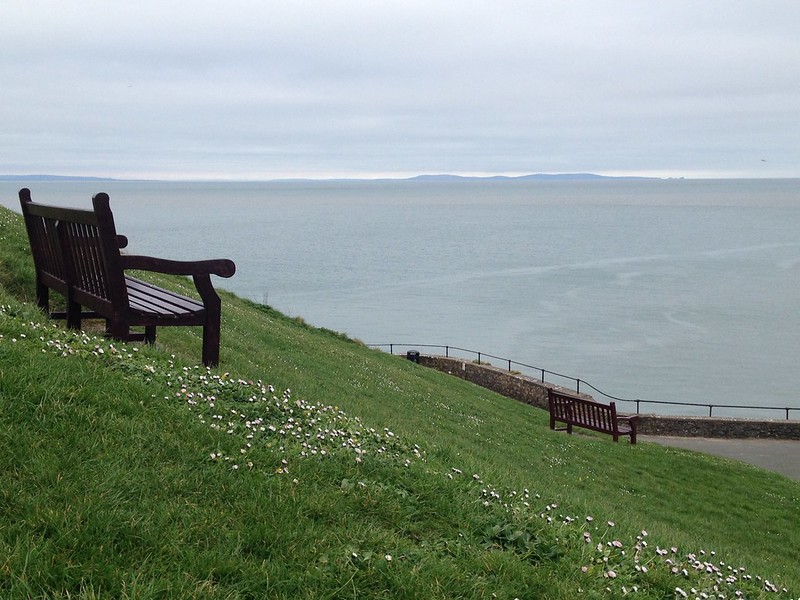
Left: one of my favourite reading benches in Tenby, Wales.

I’ve been getting on well with my research (more on that later), and in my spare time have been catching up with new releases in the ‘World Noir’ series from Europa Editions in New York. There are around 20 titles available from all around the globe (see below), of which I’ve now sampled three from France: Jean-Claude Izzo’s Total Chaos (translated by Howard Curtis, originally published 1995); Philippe Georget’s Summertime, All the Cats are Bored (translated by Steven Randell, first published 2009), and Jean-Denis Bruet-Ferreol’s (aka Mallock) The Cemetery of Swallows (Steven Randell again, first published 2012).

Image courtesy of World Noir / Europa Editions

Izzo’s Total Chaos – ‘This first installment in the legendary ‘Marseilles Trilogy’ sees Fabio Montale turning his back on a police force marred by corruption and racism and taking the fight against the mafia into his own hands’. Beautifully written, it’s also the story of three boyhood friends – Ugo, Manu and Fabio – and the pursuit of justice in a tough, imperfect world. The novel has a very masculine feel, with women relegated to the role of victim, mother figure or prostitute-with-heart-of-gold, but I can forgive this, because it’s so very good, especially in its exploration of the migrant experience. I’m keen to get my hands on the other two now.

Georget’s Summertime – ‘It’s the middle of a long, hot summer on the French shore and the town is full of tourists. Out of the blue a young Dutch woman is brutally murdered and another disappears without a trace. Gilles Sebag finds himself thrust into the middle of a diabolical game. If he intends to salvage anything he will have to forget his suspicions of his wife’s unfaithfulness, ignore his heart murmur, and get over his existential angst’. Like Total Chaos, this novel quickly immerses the reader in its Mediterranean setting, while drawing the reader into a complex and compelling police investigation. See Bernadette’s excellent review over at Reactions to Reading

Mallock’s The Cemetery of Swallows: ‘One day, Manuel Gemoni travels to the other end of the world to kill an old man. Manuel can only explain his bizarre actions by saying “I killed him because he had killed me.” Unable to comprehend why an ordinary family man would go to such lengths to murder a man he didn’t know, Police Commissioner Amédée Mallock decides to investigate. In order to save Manuel, Mallock must traverse the harsh tropical jungles of the Dominican Republic and the snow-covered streets of Paris’. I’ve just started this one, and am enjoying the intriguing nature of the case, the characterization of the investigator and the Dominican setting. There is a hint – just a tiny, subtle hint – of Vargas, but with the quirkiness dialed down. 

In sum: this is a quality series, showcasing the best of classic and contemporary noir, and we are promised another three to four titles each season. It could be time to hide the credit card, especially as the novels are so beautifully presented.

Thanks to Europa Editions for sending me these review copies from the World Noir series

German crime research update: I’ve had a fascinating time looking at crime fiction under National Socialism. To my surprise, there was lots produced between 1933 and 1945, and it wasn’t greatly censored until 1939, when authors were instructed to produce crime novels featuring policeman as heroes of the state. However, only a few overtly referenced Nazi ideology, which suggests that crime fiction was viewed more as a benign form of popular entertainment than as a tool for indoctrination. The research carried out by Carsten Würmann has been invaluable for getting an insight into this period.

I’ve also been delving into the Soziokrimi (social crime novel) or ‘new German crime novel’, which emerged in the late 1960s, and was influenced by both the student movement and Swedish writers Sjöwall and Wahlöö. There are some very interesting texts that explore the social causes of crime and the negative impact of capitalism on society. While some are quite earnest, others use humour to get their message across: Horst Bosetzky’s 1972 Einer von uns beiden (One of the Two of Us), depicts a blackly comic battle of wits between a smug, middle-class professor and the working-class student trying to blackmail him. The 1974 film adaptation was quite successful, and can be seen in German on YouTube here. Jürgen Prochnow, the actor playing Ziegenhals, went on to star in 1981’s Das Boot. 


The German Fernsehkrimi … and a lovely milestone

I’m a couple of weeks into my research leave, and am thoroughly enjoying sinking my teeth into German crime. 5000 words are in the bag, mostly on the Fernsehkrimi (TV crime series) for the Crime Fiction in German volume, which has involved watching episodes from series such as Der Kommissar (The Inspector; a very traditional West German police series), Polizeiruf 110 (Police – Dial 110; a relatively progressive East German series that featured the first female German investigator, Lieutenant Vera Arndt, a working mother, in 1971), and of course, the iconic Tatort (Crime Scene).

Vera Arndt (played by Sigrid Göhler) in the East German series Polizeiruf 110

Tatort has been running for over 40 years and is a national institution. It’s a really interesting series, due to its distinctive regional focus (there are over 20 versions set in various cities and regions – the model for CSI, perhaps), and its strong engagement with social issues, such as right-wing extremism, the effects of reunification, and sex trafficking from the east.

In 2008, it was the first German crime series to feature a leading Turkish-German investigator, the Hamburg undercover cop Cenk Batu (played by Mehmet Kurtuluş). His depiction was hailed as ‘ein Quantensprung’ (a quantum leap) in terms of overturning ethnic stereotypes, and I’d argue is indebted in a many ways to a literary predecessor, Jakob Arjouni’s urban private eye Kemal Kayankaya. The first Batu episode, ‘Auf der Sonnenseite’ (‘On the Sunny Side’) is currently on YouTube. It’s in German, but for those who don’t speak the language, even five-minutes will give a sense of Batu’s ground-breaking characterisation and the episode’s high-quality production – aside from the endearingly naff original opening sequence, that is. Around 4 minutes and 40 seconds in, which shows Batu coming off-duty after a stressful job, is a good place to start.

Mehmet Kurtuluş with the famous Tatort logo

And the milestone? Well! Mrs. Peabody Investigates has just reached 250,000 hits. While the most important thing has always been the interaction between Mrs. Pea and the blog’s readers, there’s a certain roundness to that figure that’s rather pleasing. Thanks so much for visiting!

Please do not adjust your sets

In a change to my normal academic routine, I’m embarking on research leave for a whole, glorious semester. The chance for this kind of leave comes around every three to four years, and is really invaluable, as it provides time to build up some proper momentum – in my case for writing up research on German and international crime fiction.

I’ll be focusing on two key projects. The first is a book, Detecting the Past: Representations of National Socialism and its Legacy in Transnational Crime Fiction. As the title suggests, it will explore how crime writers have depicted the Nazi period and its post-war legacy since 1945, exploring themes such as criminality, morality, justice, memory and guilt in larger historical, political and social contexts. One key area of interest is how ‘Nazi-themed crime fiction’ reflects the work of historians on the period. A recent example is David Thomas’ Ostland (Quercus, 2013), which draws on perpetrator studies by historians such as Christopher R. Browning to create a portrait of an ‘ordinary man’, police detective Georg Heuser, who comes to play an active part in the Holocaust. A compelling ‘psychological thriller’, the novel is also a sobering depiction of the mechanics of the Holocaust, and of the attempts to bring perpetrators to justice in the 1960s. It’s an excellent example of how history and the findings of historians can be made accessible to a wider public by harnessing the conventions and popularity of the crime genre. Incidentally, details of the 150 primary texts I’m working on can be found here – a number of which have been discussed on this blog over the past two years.

European Crime Fictions: Scandinavian Crime Fiction

My second project is to finish editing Crime Fiction in German, a volume of essays for the University of Wales Press, which will act as an introduction to the subject for an English-language audience. As well as exploring the development of crime fiction in Germany, Austria and Switzerland from the nineteenth century onwards, the volume examines German-language crime from a number of different angles: the crime fiction of the former GDR; regional crime fiction; women’s crime fiction, historical crime fiction; Turkish-German crime fiction; and the enduring popularity of TV series such as Tatort (Crime Scene). It’s the first time this kind of comprehensive overview will have been published in English, which is very exciting. The volume will join others in UWP’s European Crime Fiction series, such as French Crime Fiction (2009), Scandinavian Crime Fiction (2011) and Italian Crime Fiction (2011).

Focusing my energies on academic writing means that I’ll be blogging a little less than I usually do over the next few months. But I’ll still be popping up with recommendations now and then, so please do not adjust your sets! And normal service will most definitely be resumed…

Out with the old, in with the new. Happy 2014!

HAPPY NEW YEAR!

I always love those quiet days between Christmas and New Year. They’re the perfect time for reading, and – for the bloggers among us – provide a great chance to tie up loose ends and plan ahead.

Some loose ends now neatly tied up in a bow:

  • I took part in two reading challenges last year, the 2013 Global Reading Challenge and the 2013 Translation Challenge. I completed both, and enjoyed the global challenge in particular, as it made me reflect on the geographical distribution of my reading (somewhat biased towards Europe and the US). You can see which books I read for the challenges here.
  • I’ve managed to finish my two Christmas reads, which complemented one other very well. Patricio Pron’s My Father’s Ghost is Climbing in the Rain is a literary memoir exploring a father-son relationship and the legacy of Argentina’s military dictatorship. It’s an interesting read, but took a little while to get going (it would probably benefit from a second reading, as the significance of earlier sections becomes clearer in the light of later ones). While not a crime novel, criminality is a key theme and the genre is frequently referenced, albeit in slightly contradictory ways. For example, the narrator comments: ‘I understood for the first time that the children of young Argentines in the 1970s were going to have to solve our parents’ pasts, like detectives, and that what we were going to find out was going to seem like a mystery novel we wished we’d never bought’ (p.152). But then a little later it’s suggested that exploring ‘social crime […] through the artifice of a detective novel’ is inadequate, because ‘the resolution of most detective stories is condescending, no matter how ruthless the plotting, so that the reader, once the loose ends are tied up and the guilty finally punished, can return to the real world with the conviction that crimes get solved and remain locked between the covers of a book, and that the world outside the book is guided by the same principles of justice as the tale told inside and should not be questioned’ (p.153). Of course that’s not always the case: lots of contemporary crime authors have pushed the boundaries of the genre to explore the absence of justice for state crimes. I wonder if Pron has read Ernesto Mallo’s outstanding 2006 crime novel Needle in a Haystack (see my review here), which examines the same historical period? It’s precisely the lack of a resolution/punishment for the crimes committed by the junta that gives the narrative its power.

  • My other Christmas novel was Jan Costin Wagner’s Light in a Dark House (Harvill Secker 2013), the fourth in the German/Finnish Kimmo Joentaa series, which was an excellent read. Even though each installment is made up of quite similar elements, the quality of the characterisation and narrative construction is such that they never appear formulaic. The starting points in Light in a Dark House are the disappearance of Kimmo’s secretive on-off lover, and the murder of a nameless, comatose woman in a hospital. Intriguingly, the only clue left by the murderer is ‘lacrimal fluid’, or tears.
  • And the connections between the two? The legacies of past violence, unresolved traumas, and the damaging effects of silence. These issues are presented quite differently in each, which makes them an interesting pair to read together.

Looking ahead:

  • Santa was kind enough to bring me a number of crime novels, including Gillian Flynn’s Sharp Objects (Phoenix 2007), Eduardo Sacheri’s The Secret in their Eyes (Other Press 2005/2011) and John le Carré’s A Delicate Truth (Viking 2013). I’m going to make the Sacheri my first crime novel of 2014, as I enjoyed the Oscar-winning film adaptation of 2010, and am keen to read the original novel. That’ll keep me going on my Argentinian reading path as well for now.
  • As a 2014 Petrona judge, I need to pick up the pace of my reading. Thus far I’ve read 20 of the submissions, which means I have rather a lot to go. (This is by way of a confession to Karen, Barry and Sarah, but I will get cracking now, promise…once I’ve read the Sacheri, that is).
  • More generally, 2014 is going to be different compared to other years, as I’m on research leave for a semester from the end of January *happy face*. More on my plans for that interlude another time…

Wishing you all a great start to the year and many hours of good reading!

Merry Christmas! Frohe Weihnachten!

So we’re about to head off on our seasonal travels. My brother is cooking the big Christmas dinner this year, while the rest of us chill out on the sofa. What a hero.

I’m packing a couple of novels to read over the Christmas break. The first is Jan Costin Wagner’s Light in a Dark House, the fourth in the German/Finnish Kimmo Joentaa series, and a submission for the 2014 Petrona Award (a list of all the eligible novels can be seen over at Euro Crime). The other is Argentinian writer Patricio Pron’s literary memoir, My Father’s Ghost is Climbing in the Rain, in which the author/detective investigates his family’s past. I’ve been saving both of these up, and look forward to reading them with a late-night glass of wine. How about you? What literary treats do you have lined up?

Wishing you all a very Merry Christmas and Happy Holidays!

Here are Gonzo, Rizzo the Rat, Kermit the Frog, Pepe the King Prawn, Miss Piggy and Fozzy Bear singing ‘It’s the Most Wonderful Time of the Year’. Enjoy! Viel Spaß!