Crime news: Gustawsson, Nesbo, Bier, Macrae Burnet and Eurocrime

A round-up of some recent news from the world of crime:

Orenda Books has signed Block 46, a debut thriller by French, London-based author Johana Gustawsson, which will be translated by Maxim Jakubowski.

nightblind-4

Karen Sullivan, publisher of Orenda Books, says: “Block 46 is an exceptional debut – a gritty yet nuanced thriller that swings between London and Sweden, before picking up a second narrative strand that takes place in a concentration camp in 1944 Germany. An unforgettable triumvirate of protagonists include Emily, a British profiler, Alexis, a French true crime writer, and maverick Inspector Bergstrom in Sweden. Beautifully written, with a sweeping narrative, evocative settings and a heart-thumping pace, this marks the beginning of a fabulous series and writing career for Johana, and ticks every box on the growing Orenda list.”

More info from The Bookseller here.

the-thirst

Harry’s back! Jo Nesbo’s hard-boiled Oslo detective Harry Hole will return in his latest novel, THE THIRST, to be published by Harvill Secker in May 2017.

THE THIRST continues the story of POLICE, Harry Hole’s last outing in 2013, which saw the maverick cop protecting those closest to him from a killer wreaking revenge on the police. THE THIRST sees Harry drawn back to the Oslo police force when a serial killer begins targeting Tinder daters… It’s the 11th instalment in Jo Nesbo’s bestselling crime fiction series, which have sold over 30 million copies worldwide and are published in 50 languages.

Jo Nesbo says: I was always coming back to Harry; he’s my soul mate. But it’s a dark soul, so it is – as always – both a thrill and a chilling, emotionally exhausting experience. But Harry and the story make it worth the sleepless nights.’

the-night-manager-director-susanne-bier-1200x707

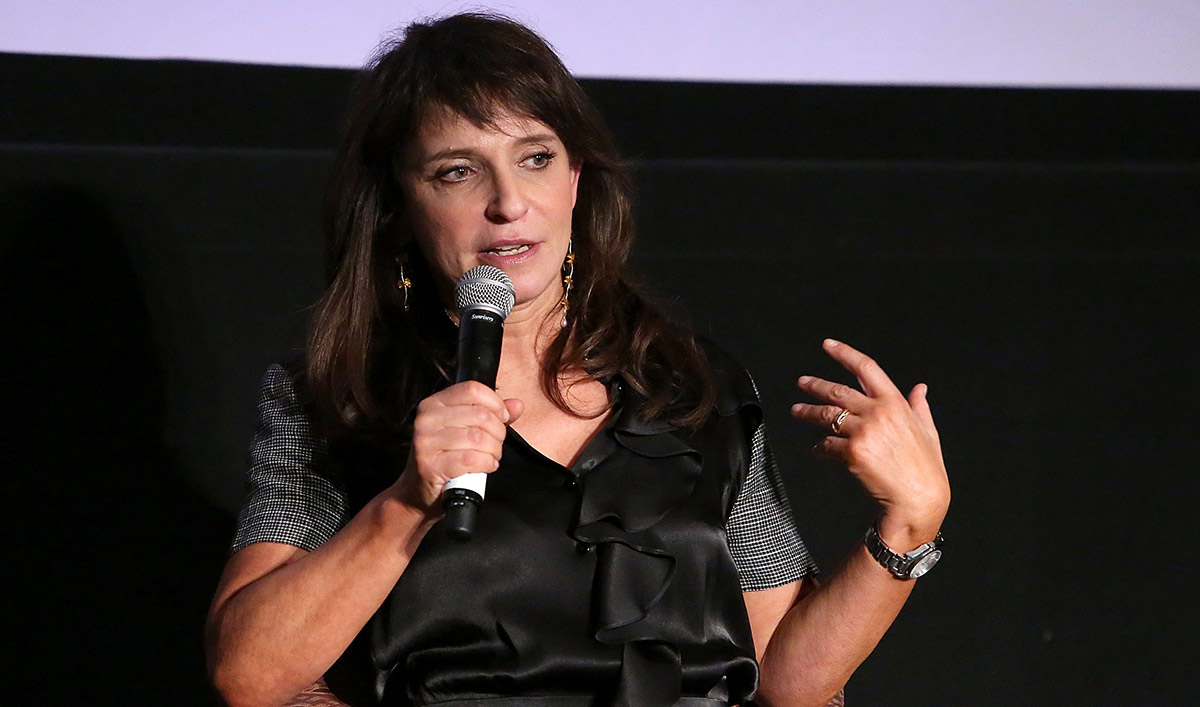
Director Susanne Bier

Danish director Susanne Bier has won an Emmy – Outstanding Directing for a Limited Series’ – for her work on the TV adaptation of John le Carré’s The Night Manager. She commented on BBC Breakfast: “This is such a traditional men’s world, and I hope the fact a woman director has won this prestigious prize is going to mean that more non-conventional series and movies are going to be directed by women.”

There’s a good interview with Susanne about her work on The Night Manager here.

his-bloody-project

His Bloody Project, by Scottish writer Graeme Macrae Burnet, has been shortlisted for the Man Booker PrizeIt’s wonderful news for the author, the independent publisher Saraband, and fans of crime fiction in general – the more crime fiction we see on those ‘big’ literary prize shortlists the better!

The novel focuses on a triple murder in a crofting community in 1860s Scotland. Here’s the blurb from Saraband

“The year is 1869. A brutal triple murder in a remote community in the Scottish Highlands leads to the arrest of a young man by the name of Roderick Macrae.

A memoir written by the accused makes it clear that he is guilty, but it falls to the country’s finest legal and psychiatric minds to uncover what drove him to commit such merciless acts of violence. Was he mad? Only the persuasive powers of his advocate stand between Macrae and the gallows.

Graeme Macrae Burnet tells an irresistible and original story about the provisional nature of truth, even when the facts seem clear. His Bloody Project is a mesmerising literary thriller set in an unforgiving landscape where the exercise of power is arbitrary.”

And lastly…I’ve updated my list of 35 European crime novels with publisher and translator information. Quite a few of you have been tucking into this list, which is great to see. Needless to say, I’ll keep flying the flag for Eurocrime and Europe in future.

Euro 1

Sums up Brexit perfectly

CrimeFest 2015: The Petrona, CWA International Dagger and EuroNoir

I can’t believe it’s already a week since the end of CrimeFest 2015. Time for my second post on this marvellous event, and some key highlights:

The Petrona Award: Yrsa Sigurðardóttir’s The Silence of the Sea, translated by Victoria Cribb, won the 2015 Petrona Award for the best Scandinavian crime novel of the year in translation. The award was presented by CrimeFest’s guest of honour Maj Sjöwall, which was very special for all concerned.

Petrona group

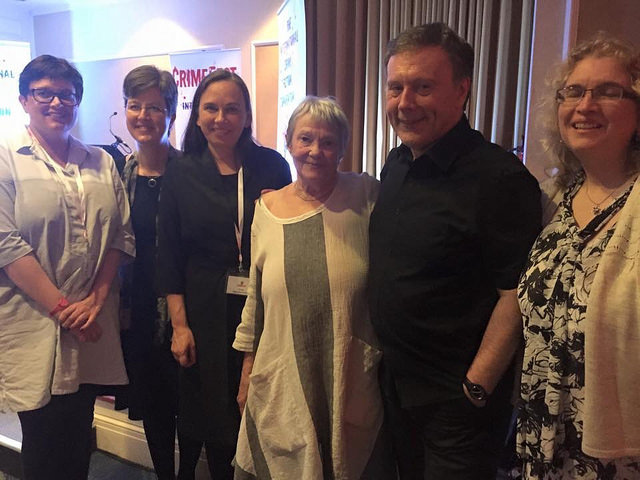
The Petrona judging team with Yrsa and Maj (centre). Photo: Andy Lawrence

The Petrona shortlist this year was wonderfully strong, with novels by Kati Hiekkapelto (Finland), Jørn Lier Horst (Norway), Arnaldur Indriðason (Iceland), Hans Olav Lahlum (Norway) and Leif G W Persson (Sweden). Fuller information about the shortlisted novels is available here and further details can also be found at the Petrona Award website.

The CWA’s 2015 International Dagger shortlist was announced at CrimeFest on the Friday night. The six shortlisted novels are:

  • Lief G.W. Persson, Falling Freely, as in a Dream (trans. Paul Norlen/Transworld/ SWEDEN)
  • Pierre LeMaitre, Camille (trans. Frank Wynne/Maclehose Press/FRANCE)
  • Deon Meyer, Cobra (trans. K.L.Seegers/Hodder and Stoughton/SOUTH AFRICA)
  • Karim Miské, Arab Jazz (trans. Sam Gordon/MacLehose Press/FRANCE)
  • Dolores Redondo, The Invisible Garden (trans. Isabelle Kaufeler/HarperCollins/ SPAIN)
  • Andreas Norman, Into a Raging Blaze (trans. Ian Giles/Quercus/SWEDEN)

Further details can be found on the CWA website, with the award being presented at the end of June. I’ve read a grand total of two, so need to do some catching up.

Euro Noir

Euro Noir panel with Barry Forshaw, Roberto Costantini, Gunnar Staalesen, Michael Ridpath and Jørn Lier Horst

Two CrimeFest panels I particularly enjoyed were the Nordic Noir and Euro Noir panels, moderated by Quentin Bates and Barry Forshaw respectively, and featuring Kati Hiekkapelto (Finland), Gunnar Staalesen (Norway), Clare Carson (UK/Orkney), Craig Robertson (UK/Faroes), Roberto Costantini (Italy), Michael Ridpath (UK/Iceland) and Jørn Lier Horst (Norway). Interesting observations abounded:

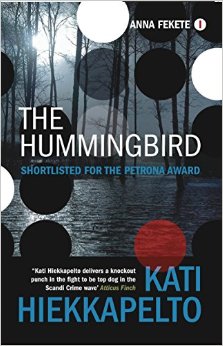
HummingbirdHiekkapelto’s The Hummingbird is set in fictional, northern Finnish town. It shows a darker side of Finland: alcoholism, loneliness and some poverty. She tries to write about Finland with the eyes of an outsider, like her investigator Anna Fekete, and sees Finland as being not very welcoming of immigrants. She’s rare in choosing to write about migration issues.

Staalesen describes the Norwegian town of Bergen as very film noir – it rains 250 days a year and so is an excellent setting for crime (the latest in his famous ‘Varg Veum’ P.I. series, We Shall Inherit the Wind, is about to be published by Orenda Press). For him, crime fiction is a way of telling stories about society and how we live our lives today. In contrast to many other countries, the status of crime fiction in Norway is high: it’s viewed as respectable literature due to its quality and its use as a form of social critique (e.g. Karin Fossum).

In her novel Orkney Twilight, Carson writes about Orkney from memories of childhood, which is apt because novel is about memory. Carson’s father was an undercover cop, and she’s drawn on the experience of being a young woman figuring out her father’s secret life. Orkney is a mysterious place with continuous light in summer; Carsen weaves Norse mythology throughout the narrative, which fits with the idea of undercover police/spies as master storytellers. She feels folklore is a way of talking about things that can’t be solved in life and that crime fiction is a modern version of that form, in that it gets to grips with unresolvable issues like death.

Ironically, given amount of murders committed in Nordic novels, Scandinavia and the Faroe Islands are probably safest places in world. There were no murders in Faroes for 26 years … until Robertson started writing his novel The Last Refuge. He feels a bit guilty about that.

Horst

Lier Horst used to get up at 5am every day to write while still working as a policeman. You have to set goal and put in the work – ‘it’s a hard job’. His first novel was based on a real murder. He saw the crime scene on the first day of his job and it stayed with him (the murderer was never caught). Writing about murders has ‘taught me a little about death, but a lot about life’, especially people’s emotions.

Barry Forshaw has coined the term ‘Scandi Brit’ for Brits like Michael Ridpath and Quentin Bates who set their novels in northern climes. Ridpath says it’s a challenge to write about other countries, but invigorating one. He regularly consults Icelanders on points of accuracy, which is a big help.

Cost

Costantini uses his engineering background to construct his plots. His acclaimed ‘Commissario Balistreri’ trilogy explores thirty years of Italian history from the 1960s to the 1990s, as well as developments in the Middle East. (I have bought the first and am looking forward to reading it.) He created a policeman with a compromised right-wing past as a deliberate challenge to readers.

There was praise for translators and their huge contribution to international crime fiction. Staalesen and Lier Horst are grateful to have the services of top translators Don Bartlett and Anne Bruce. Both are excellent, managing the most difficult of tasks like translating humour effectively.

Other highlights during CrimeFest included seeing Ragnar Jónasson hit the top of the Kindle bestseller list with his debut novel Snowblind late on Saturday night, chatting to authors like William Ryan and remembering how much good crime fiction I still need to read (e.g. the rest of his Captain Korolev series), and meeting friends old and new, like the lovely Elena Avanzas (@ms_adler, who blogs at Murder, she read), Maura and Karen from the Swansea Sleuths bookgroup, and Anya Lipska, who’s part of the newly formed and utterly marvellous Killer Women organisation. So much murderous creativity in one place and time! Roll on next year.

Stieg Larsson sequel, crime versus thrillers, Easter bunnies

Big news this week: the sequel to Stieg Larsson’s acclaimed ‘Millennium Trilogy’ is well on its way. The cover and English title – The Girl in the Spider’s Web – were revealed by MacLehose Press on Monday, although its contents will remain firmly under wraps until publication on 27 August. Here’s what we know: the sequel is ‘based on Larsson’s universe and characters’, is written by Swedish writer David Lagercrantz; will be published in Sweden by Norstedts; is titled Det som inte dödar oss  (That Which Doesn’t Kill Us) and is currently being translated into 38 languages.


Like many, I have rather mixed feelings about the publication of the new novel. On the one hand, I thought the trilogy had a pretty perfect resolution and am not sure it could be bettered. On the other, I loved Lisbeth Salander and am keen to see how her story develops. I don’t envy Lagercranz the task of taking on such a weighty literary legacy – it must be hugely difficult to find a voice and narrative that are faithful to the original, but more than pure mimicry. I’m keeping my fingers crossed that he’s found a way through. For more information, see this Guardian article by Alison Flood.

There was another interesting article in The Guardian yesterday by Val McDermid, entitled ‘Why crime fiction is left-wing and thrillers are right-wing’ (thanks to Vicky Newham for flagging this up on Facebook).

In it McDermid argues (with help from Ian Rankin) that ‘the current preoccupations of the crime novel, the roman noir, the Krimi lean to the left. It’s critical of the status quo, sometimes overtly, sometimes more subtly. It often gives a voice to characters who are not comfortably established in the world – immigrants, sex workers, the poor, the old. The dispossessed and the people who don’t vote. The thriller, on the other hand, tends towards the conservative, probably because the threat implicit in the thriller is the world turned upside down, the idea of being stripped of what matters to you. And as Bob Dylan reminds us, “When you ain’t got nothing, you got nothing to lose.”’

That got me thinking hard about whether these political distinctions hold up more widely. While I can think of plenty of examples to support McDermid’s argument – especially in the context of European crime – I can also think of a number of exceptions. Golden Age crime fiction is often thought of as being ‘conservative in style, setting, characterisation, subject matter and socio-political views’, with a dubious social order in relation to class, gender and race being restored at the end of the narrative (quote from Lee Horsley’s excellent chapter on ‘Classic Detective Fiction’ in Twentieth Century Crime Fiction, OUP, pp. 12-65, p. 39). Hard-boiled crime fiction features private investigators not known for their tolerance or diplomatic skills. They may well be critical of the status quo, but are often shown delivering violent, eye-for-an-eye justice rather than handing criminals over to the law so they can be properly put on trial. There’s an interesting discussion on these points in an article by Arlene Teraoka, which explores the lack of a private eye tradition in German crime fiction – arguably due to the P.I.’s fascistic tendencies – and the post-war preference for paternalistic police inspectors who guarantee a democratic social order (who also have their conservative sides…).

Equally, two exceptions in relation to thrillers spring to mind. John le Carré’s works are highly critical of the power wielded by governments and shady secret services, and repeatedly highlight the price vulnerable individuals pay in these larger political games (e.g. The Spy who Came in from the Cold, The Looking Glass War, A Most Wanted Man). I also read a very good Swedish thriller in the course of my Petrona judging duties that raises big moral questions about the conduct of national intelligence agencies in wartime – Joakim Zander’s The Swimmer.

In sum, different crime genres/subgenres are flexible enough to be employed for liberal or conservative political ends, and elements of both can even co-exist alongside one another in individual texts. But I’ll be bearing McDermid’s assertions in mind as I read on, to see if her distinctions hold up as current trends.

Update: Over on findingtimetowrite, Marina Sofia also muses on Val McDermid’s article and gives a wonderful overview of the Quais du Polar, at which Val’s comments were originally made. The post gives a summary of various crime writers’ views about writing on politics from the event; these provide a very nice counterpoint to this post – showing how crime fiction is used by many writers as a progressive means of critiquing and exploring the power structures of their societies.

Wishing you all a very happy Easter break filled with fluffy bunnies, chocolate and lots of crime fiction!

January 2015: some crime drama treats

Here we all are in a shiny new year. Wishing you and yours a very happy 2015!

There are a number of wonderful crime dramas heading our way in January. Here’s a quick round up of four goodies…

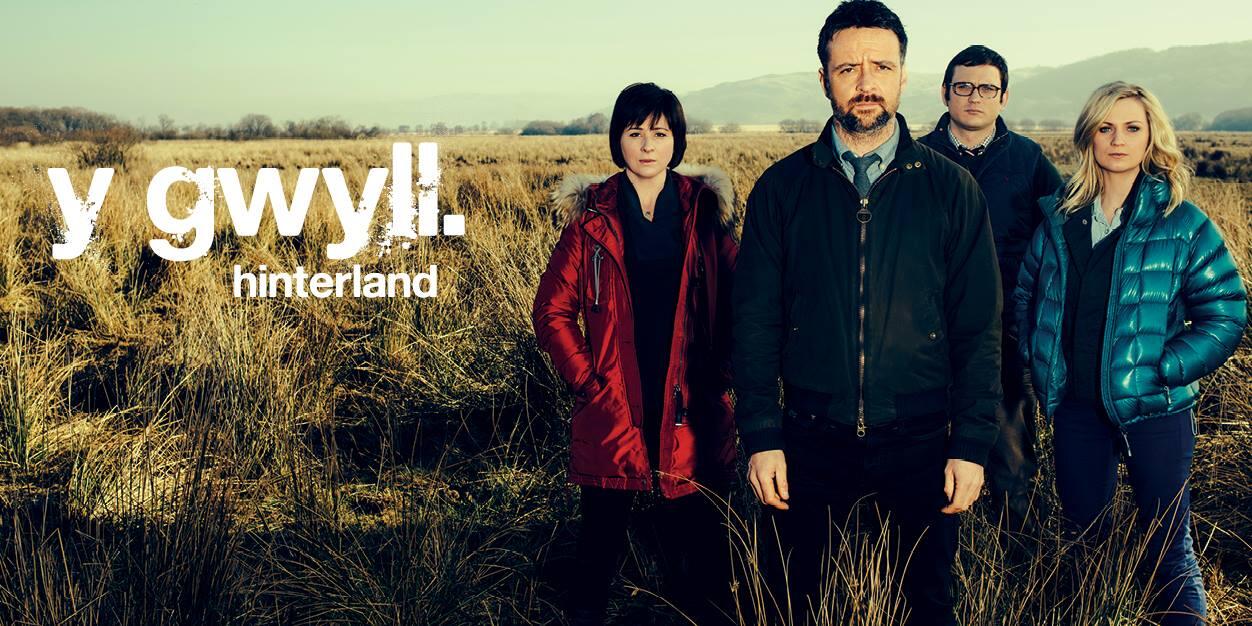
Y Gwyll / Hinterland, S4C, 9pm on Thursday 1 January 

Today sees a special, one-off episode for fans of this bilingual, Welsh-English crime drama. Here’s the S4C description >> Troubled hero DCI Mathias returns to the front-line in this brand new episode. Faced with a suspected arson attack, Mathias is drawn into a community riven by old feuds and bitter jealousies. A story of heartbreak and loss, but for Tom Mathias, will it offer a new beginning? <<

Head over to the S4C website for further information (in English), a trailer and details of how to activate subtitles. If you don’t have access to S4C, don’t worry – you’ll be able to access it later via S4C Clic online (the Welsh equivalent of iPlayer). The episode will no doubt also appear on BBC1 in due course. An earlier Mrs. Peabody post on Y Gwyll is available here, and a new series follows later in 2015.

Fortitude, Sky Atlantic, 9pm on Thursday 29 January

There’s an increasing amount of buzz about this series in the press. Drawing on Scandi Noir traditions, it features a stellar international cast (Stanley Tucci, Michael Gambon, Sofie Gråbøl, Christopher Eccleston), is set in a mining community in the Arctic Circle and was filmed in Iceland. From where I’m standing, that’s an impossible combination to resist.

Sky’s description is as follows: >> Fortitude is a place like nowhere else. Although surrounded by the savage beauty of the Arctic landscape, it is one of the safest towns on earth. There has never been a violent crime here. Until now. In such a close-knit community a murder touches everyone and the unsettling, mysterious horror of this crime threatens the future of the town itself.

The local Chief of Police, Sheriff Dan Anderssen (Dormer), has to investigate alongside DCI Morton (Tucci), the detective who has flown into Fortitude so fast that questions are being asked about how much he knew, and when. As these two cops try to make sense of the killing, each finds compelling reasons to mistrust and suspect the other. <<

Further details are available here and there’s a preview clip too…

Broadchurch, ITV, Monday 5 January

Alec Hardy (David Tennant) and Ellie Miller (Olivia Coleman) return for the second series of this crime drama set on the Dorset coast. I absolutely loved the first series and am intrigued to see where the storyline goes after the explosive revelations of the final episode.

Spiral, BBC4, 9pm on Saturday 10 January (12 episodes)

The fifth season of this gritty French crime drama will be a welcome addition to BBC4’s international crime slot on Saturday evenings. I’ll resist providing a description of the first episode in case there are some who’ve not yet seen the end of season 4 (that includes me), but if you’re interested in knowing more, you can head over to the BBC4 website.

Crime Time Preview has a useful round up of further crime dramas (British and international) that are scheduled for 2015. It looks to be a promising year.

Wishing you all a fabulous start to 2015. My January’s going to be a bonkers one, trying to juggle a number of different publishing and academic commitments, so I may be posting a little less than usual this month. It’s all good though – and I look forward to reporting on a completed project soon 🙂

Merry Christmas! Mrs Peabody’s festive round-up

I’m behind on my Christmas preparations this year, which means that this festive round-up is a little later than usual. On the plus side, it may help a few of you out of a last-minute present conundrum, or lead you to a nice, independent bookshop because it’s too late for online orders. You might also be moved to buy yourself a little gift. Go on, you deserve it.

The following are just some of my favourite crime novels of the year. All, in my view, would make a delightful escape from the mayhem of Christmas or family, especially when curled up on the sofa with a nice glass of wine.

Anne Holt and Berit Reiss-Anderson, The Lion’s Mouth (NORWAY: trans. by Anne Bruce, Corvus, 2014). Anne Holt is often described as the queen of Norwegian crime, and has drawn expertly on her own career in the police, law and government in the creation of the ‘Hanne Wilhelmsen’ police series (she was even Norwegian Minister of Justice for a while). This fourth installment in the series, originally published in 1997, explores the suspicious death of the Norwegian Prime Minister, who is found dead in her office just six months following election. A fusion of locked-room mystery, Borgen and police procedural, it’s a quietly satisfying read that’s held up well.

Arnaldur Indridason, Reykjavik Nights (ICELAND: trans. by Victoria Cribb, Harvill Secker, 2014). This prequel to the ‘Murder in Reykjavik’ series is a wonderfully absorbing read, which traces the start of Erlendur’s journey from young policeman to detective as he investigates the death of a homeless man and the disappearance of a woman. Set in 1974, the year Iceland celebrated 1100 years of settlement, we are also shown how a traumatic childhood event begins to shape Erlendur’s personal life and investigative career. The novel is a great read for those who are new to the series and for long-established Erlendur fans alike.

Hannah Kent, Burial Rites (AUSTRALIA/ICELAND: Picador, 2013). This impressive debut novel by a young Australian author is not for those looking for ‘cosy’ Christmas crime. Kent spent some time in Iceland as an exchange student and describes the book as her ‘dark love letter’ to the country: set in northern Iceland in 1829, it explores the case of Agnes Magnúsdóttir, the last Icelandic woman to be executed for murder. The figure of ‘the murderess’ tells us a lot about the gender, class and power relations of the time, and the picture the author paints of every-day, rural Icelandic life is fascinating. The story, setting and their links to the Icelandic sagas stayed with me long after reading it.
Lahlum

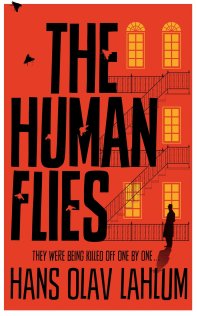
Hans Olav Lahlum’s The Human Flies (NORWAY: trans. by Kari Dickson, Mantle, 2014, [2010]) sounds like a horror film that’s best avoided after a large meal. However, it turns out to be something quite different: a well-constructed and witty homage to the classic crime fiction of Agatha Christie, set in 1968 Oslo, which has some interesting historical depth. Featuring ambitious young police detective Kolbjørn Kristiansen on his first big case – the murder of a former resistance fighter – readers are treated to an apartment building of intriguing suspects and a page-turning investigation, as well as the considerable intellect of Kristiansen’s wheelchair-bound partner Patricia.

Laura Lippman, After I’m Gone (USA: Faber and Faber, 2014). Ignore the rather daft cover. After I’m Gone is a literary crime novel that dissects a murder case by means of a rich narrative with some wonderful characterisation (the latter is one of Lippman’s great strengths). Told on a number of different time levels, it traces the stories of five women left behind when white-collar criminal Felix Brewer disappears in July 1976 – his wife Bambi Gottschalk, his three daughters, and his mistress Julie – as well as the investigation into Julie’s murder by detective Sandy Sanchez in the present. An engrossing, quality read.

Anya Lipska, Death Can’t take a Joke (UK/POLAND: The Friday Project, 2014). This is the second in the ‘Kiszka and Kershaw’ series, featuring Polish ‘fixer’ Janusz Kiszka and London police detective Natalie Kershaw. While I enjoyed Lipska’s first novel, Where the Devil Can’t Go, the second is where the series really gets into its stride: the duo’s investigation into two deaths, including one of Kiszka’s closest friends, is a tightly constructed page-turner with an engaging, blackly comic tone. The novel also features one of the best first chapters I’ve read this year… For a more in-depth exploration, head over to Margot Kinberg’s marvellous Confessions of a Mystery Novelist blog.

Marco Malvaldi, Game for Five and Three Card Monte. 1 and 2 of the ‘Bar Lume Trilogy’ (ITALY: Europa Editions/World Noir 2013/14). These light-hearted crime novels feature amateur detective Massimo Viviani, the maverick owner of Bar Lume, investigating mysterious deaths in Pineta in Northern Italy. Massimo is ably assisted in his work by four cantankerous, octogenarian barflies, including his own extremely opinionated grandfather. Witty, entertaining and stylishly packaged.

Eduardo Sacheri, The Secret in Their Eyes (ARGENTINA: trans. by John Cullen, Other Press, 2011 [2005]). I was given this novel last Christmas and it became one of my first and favourite reads of the year. Benjamin Miguel Chaparro, a newly retired Deputy Clerk in Buenos Aires, begins to write a novel about a case that has haunted him since 1968 – the murder of a young wife, Liliana Colotto, in her own home one summer’s morning. Oscillating between the past and the present, and spanning twenty-five years of Argentine history, the narrative tells the story of the murder and its repercussions for those left behind: husband Ricardo Morales, investigator Benjamin, and the murderer himself. The 2010 film adaptation was also a cracker. A full review is available here.

Olivier Truc, Forty Days without Shadow (FRANCE/LAPLAND: trans. by Louise Rogers LaLaurie, Trapdoor, 2014). This novel uses its criminal investigation as a means of exploring the history, culture and climate of Lapland. It also features the reindeer police! The novel opens with Sámi-Norwegian reindeer policeman Klemet Nango and partner Nina Nansen investigating the theft of a priceless Sámi drum from a museum. Shortly afterwards, Sámi herder Mattis is found dead, and ‘Patrol P9′ finds itself grappling with two crimes that could well be interlinked. A gripping novel that shines a spotlight on a fascinating part of the world. A full review is available here.

If the crime lover in your life is into TV drama, then my two top picks are as follows:

The Australian series The Code, which aired on BBC4 a few weeks ago and I reviewed enthusiastically here. This six-part political thriller opens with the mysterious death of Aboriginal teenager Sheyna Smith in Lindara, a remote New South Wales township. The circumstances of her death are hushed up, so when Ned Banks (a journalist for an internet newspaper) and his brother Jesse (an internet hacker on the autistic spectrum) start to investigate, you just know there’s going to be trouble. An utterly gripping, intelligent drama.

British police drama Happy Valley, a hard-hitting, six-part series that traces the fall-out from a kidnapping in the West Yorkshire valleys, while exploring its protagonists’ complex personal lives. Sarah Lancashire gives an absolutely outstanding performance as policewoman Catherine Cawood, together with an excellent supporting cast. Be warned that there is some very graphic (though in my view not gratuitous) violence. I think that 18 would be a more accurate rating than the 15 on the box. An addictive and top quality crime series.

And my own indulgence this Christmas? That would be the American drama True Detective, which I’m very much looking forward to watching. Have you indulged yourself as well? Do share if so!

Wishing all the readers of this blog a very happy and relaxing Christmas.

See you all in 2015!

German Zimtsternchen (little cinnamon star).    Quite addictive.

Iceland Noir: Winner of first Icepick Award announced!

Hot off the presses from Iceland Noir! The winner of the inaugural Icepick Award, given to the best crime novel translated into Icelandic in 2014, is…

 IcepickSmall

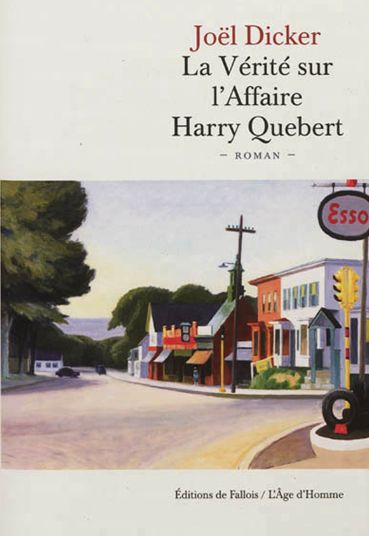
… Swiss author Joël Dicker’s La Vérité sur l’affaire Harry Quebert [The Truth About the Harry Quebert Affair], translated from the French by Friðrik Rafnsson.

harry_quebert

This novel is a publishing phenomenon – here’s the blurb from Penguin, which has certainly made me want to read the book:

>> The Truth About the Harry Quebert Affair is a fast-paced, tightly plotted, cinematic literary thriller, and an ingenious book within a book, by a dazzling young writer.

August 30, 1975: the day fifteen-year-old Nola Kellergan is glimpsed fleeing through the woods, never to be heard from again; the day Somerset, New Hampshire, lost its innocence. Thirty-three years later, Marcus Goldman, a successful young novelist, visits Somerset to see his mentor, Harry Quebert, one of the country’s most respected writers, and to find a cure for his writer’s block as his publisher’s deadline looms. But Marcus’s plans are violently upended when Harry is suddenly and sensationally implicated in the cold-case murder of Nola Kellergan—with whom he admits he had an affair. As the national media convicts Harry, Marcus launches his own investigation, following a trail of clues through his mentor’s books, the backwoods and isolated beaches of New Hampshire, and the hidden history of Somerset’s citizens and the man they hold most dear. To save Harry, his own writing career, and eventually even himself, Marcus must answer three questions, all of which are mysteriously connected: Who killed Nola Kellergan? What happened one misty morning in Somerset in the summer of 1975? And how do you write a book to save someone’s life?<<

The Icepick Award is judged both on the quality of the original work and its translation, acknowledging the vital role of the translator in allowing crime fiction to travel beyond national and linguistic boundaries to the ever grateful reader. The process of translating (which of course involves not just linguistic but detailed cultural knowledge) is often invisible, so it’s very welcome to see it being celebrated by the award.

The shortlist for the 2014 Icepick Award, with novels from America, Finland, Norway, Switzerland and Sweden, was as follows:

Joël Dicker, La Vérité sur l’affaire Harry Quebert [The Truth About the Harry Quebert Affair] – Icelandic translation from French: Friðrik Rafnsson

Gillian Flynn, Gone Girl – Icelandic translation from English: Bjarni Jónsson

Jo Nesbø, Panserhjerte [The Leopard] – Icelandic translation from Norwegian: Bjarni Gunnarsson

Håkan NesserMänniska utan hund [Man Without Dog] – Icelandic translation from Swedish: Ævar Örn Jósepsson Antti Tuomainen, Veljeni vartija [My Brother’s Keeper] – Icelandic translation from Finnish: Sigurður Karlsson The award is founded by the Reykjavik Crime Festival Iceland Noir, The Icelandic Association of Translators and Interpreters and The Icelandic Crime Writing Association. 

The 2014 Nobel Prize for Literature goes to Patrick Modiano (who’s a bit of a crime writer)

The winner of the 2014 Novel Prize for Literature was announced yesterday. He is French writer Patrick Modiano, who appears to be extremely well known at home, but less so internationally, although some of his works have been translated into English down the years, and have won acclaim in Germany for their engagement with the wartime past.

Patrick Modiano

I’ve not read any of Modiano’s works, but am keen to do so for two reasons. Firstly, he’s of Jewish-Italian, Belgian and French extraction, and much of his writing focuses on the German Occupation of France (1940-44) and the themes of history, memory, identity and guilt.

Secondly, he’s the author of an intriguing, off-beat crime novel, entitled Rue des Boutiques Obscures (the street of shadowy shops), which was published in 1978 and received the Prix Goncourt, France’s premier literary prize, the same year.

The novel was translated into English by Daniel Weissbort, published by Jonathan Cape in 1980, and republished by Verba Mundi in 2004. Here’s the blurb from the back cover of the latter:

>> In this strange, elegant novel, Patrick Modiano portrays a man in pursuit of the identity he lost in the murky days of the Paris Occupation, the black hole of French memory.

For ten years, Guy Roland has lived without a past. His current life and name were given to him by his recently retired boss, Hutte, who welcomed him, a one-time client, into his detective agency. Guy makes full use of Hutte’s files – directories, yearbooks, and papers of all kinds going back half a century – but his leads are few. Could he really be the person in that photograph, a young man remembered by some as a South American attaché? Or was he someone else, perhaps the disappeared scion of a prominent local family? He interviews strangers and is tantalized by half-clues until, at last, he grasps a thread that leads him through the maze of his own repressed experience.

On one level Missing Person is a detective thriller, a 1950s film-noir mix of smoky cafés, illegal passports and insubstantial figures crossing bridges in the fog. On another level, it is also a haunting meditation on the nature of the self. Modiano’s sparce, hypnotic prose, superbly translated by Daniel Weissbort, draws his readers into the intoxication of a rare literary experience. <<

An amnesiac detective investigating his own identity and past in a post-war Parisian setting. Mmmmm, yes please!

See also: ‘Nobel Prize winner Patrick Modiano hailed as modern Marcel Proust’The Guardian, Thursday 9 October.

Crime in the summertime

I’m still busy writing, editing and researching, but am allowing myself the odd foray into international crime fiction as the summer sun works its magic. Here are some gems:

Happiness Is Easy

Happiness is Easy (published 17 July 2014 by Doubleday) is the second novel by Brazilian author Edney Silvestre. Its story is deceptively simple – the kidnapping of the wrong child from a rich man’s chauffeur-driven car – but is told with elegant brilliance, moving from past to present in such a way that we gain in-depth portraits of the characters involved while following the fall-out from the crime. Silvestre, who’s also a journalist, uses the genre to critique the corruption of Brazilian politics, the gulf between rich and poor, and the booming kidnap ‘industry’. It’s a bleak read in places, although not without hope. Nick Caistor does a great job translating from Brazilian Portuguese, and I’m now keen to read more from the country hosting the Football World Cup.

Jørn Lier Horst’s The Hunting Dogs (trans. by Anne Bruce, Sandstone Press, 2014) comes to us already garlanded with prizes – it won the 2012 Riverton/Golden Revolver Prize and the 2013 Scandinavian Glass Key. I’m not remotely surprised, as this eighth novel in the William Wisting series (the third to be published in English) is one of the best Scandinavian crime novels I’ve read. Much has been made of Horst’s extensive policing experience, but for me, it’s the fantastic writing, plotting and characterisation that stand out in this novel, which sees Wisting suspended due to irregularities in a past case. Forced to re-investigate the murder of Cecilia Linde from the outside, he is helped by journalist daughter Line to uncover the truth. A top-notch summer read.

American author Alice Sebold’s The Lovely Bones was published in 2002, but it’s one that I go back to every now and then, because it’s such an original crime novel. Set in the summer of 1973, it’s narrated by Susie Salmon, who’s murdered by a neighbour at the age of fourteen and witnesses the aftermath of the crime from her ‘heaven’. You’d be forgiven for thinking this all sounds horribly mawkish, but the concept is brilliantly pulled off for the most part, and offers a sensitive portrayal of the effects of a murder on the family and friends of the victim. Be warned: when I first read the novel one summer holiday I found it *highly* addictive. It was subsequently made into a film by Peter Jackson (2009), which received mixed reviews.

Meanwhile, on the research front…

I’m about to start a 1968 crime novel by French-Jewish writer Romain Gary, entitled The Dance of Genghis Cohn. I came across it by chance when reading a piece on German film* and was immediately intrigued. It tells the story of a post-war murder investigation led by a Bavarian police chief (so far, so conventional), who is haunted by a Jewish comedian he murdered while an SS officer under National Socialism. Quite a starting point, isn’t it? Blackly humorous, it’s also an uncompromising critique of post-war West Germany’s reluctance to engage with the Nazi past. Intriguingly, it was adapted for television by the BBC in 1994 (starring Anthony Sher and Robert Lindsay) – something to follow up after reading the book.

*Frank Stern, ‘Film in the 1950s: Passing Images of Guilt and Responsibility’, in Hanna Schissler (ed.), The Miracle Years: A Cultural History of West Germany 1949-1968, (Princeton University Press, 2001), pp. 266-80.

CrimeFest 2014 / International Dagger / Petrona Award

I’m just back from CrimeFest in Bristol and am floating on a fluffy cloud of contentment after three days of great panels, excellent company and awards bling. Here are some highlights (more will follow).

14220603424_216ca657d0

Euro Noir panel (left to right): Barry Forshaw, Lars Kepler (Alexander Ahndoril and Alexandra Coelho Ahndoril), Jørn Lier Horst, Paul Johnston, Dominique Manotti and Ros Schwarz

The Euro Noir panel on Saturday was probably my favourite of the weekend. In a wide-ranging discussion, the authors explored the nineteenth-century origins of European crime fiction during the rise of capitalism (Dominique Manotti), the role of the translator as the voice of the foreign author (Ros Schwarz), the use of Euro Noir to probe the uses and misuses of power (Paul Johnston, Manotti, Jørn Lier Horst), crime writing and journalism (Manotti), the influence of Maj Sjöwall and Per Wahlöö (the Lars Keplers), the low status of crime writing in France (Manotti), the influence of crime dramas such as The Wire on crime fiction (Johnston), and, prompted by an audience question, the relative lack of black European crime writers and protagonists.

What I liked in particular was Manotti’s unapologetic view that crime writing should be used to ‘tell the truth’ about political and social issues – ‘otherwise what’s the point?’. This contrasted with lots of British authors during the weekend, who, when asked about the place of ‘issues’ in their work, took the more or less default position that entertainment came first and the serious stuff second (because the latter ‘puts readers off’). Johnston wondered whether the UK is more conservative when it comes to writing socio-political crime than other European nations, and that’s got me wondering too (although obvious exceptions spring to mind like David Peace’s excellent Red Riding/ Yorkshire Noir quartet. I’m sure there are also others).

Manotti is a crime-writing star in her native France, and if you haven’t yet read her work I would thoroughly recommend it. You can read my review of Affairs of State here.

The panel coincided with the launch of Barry Forshaw’s new book Euro Noir, which provides an excellent road-map to European crime fiction and lots of great reading suggestions, even for those who have already read quite a bit. With my Germanic hat on, I can say that the section on ‘murder in the German-speaking territories’ is impressive – the man really has done his homework.

German crime fiction was predicted to be one of the next big things by the Euro Noir panel. And lo, the shortlist for the CWA International Dagger, announced at CrimeFest on Friday, features a German novel, Simon Urban’s Plan D. Here’s the full list, with further details on the CWA website.

Arnaldur IndridasonStrange Shores, tr. Victoria Cribb (Iceland)
Pierre LemaitreIrene, tr. Frank Wynne (France)
Arturo Perez-ReverteThe Siege, tr. Frank Wynne (Spain)
Olivier TrucForty Days without Shadow, tr. Louise Rogers LaLaurie (French author, but set in Lapland)
Simon UrbanPlan D, tr. Katy Derbyshire (Germany)
Fred VargasDog Will Have His Day, tr. Siân Reynolds (France)

Last, but most definitely not least, the 2014 Petrona Award for the Best Scandinavian Crime Novel  of the Year was awarded on Saturday to Leif G.W. Persson’s Linda, as in the Linda Murder, translated by Neil Smith. 

In his acceptance speech, read out by Barry Forshaw on his behalf, Leif said:

My character Superintendent Evert Bäckström is actually not a nice person. He embodies pretty much every human prejudice – and then some – and he does so proudly and wholeheartedly. He feels that he is not only God’s gift to humanity but also the object of every woman’s secret fantasies. I myself, am a fully normal person – but there is a joy that he brings me when I tell the story of his life and times.

Now he and I have received an award. A very fine English award, which makes me especially happy as a large part of my family lives in England. There is one person with whom I most profoundly want to share this honour and that is my excellent translator Neil Smith who has succeeded in making this Swede, with his spiritual and physical roots in the Stone Age, at least intelligible for an educated Anglo-Saxon public. Thank you!

Shortlisted authors Yrsa Sigurðardóttir and Jørn Lier Horst attended the CrimeFest Gala dinner and were highly commended for their crime novels. It was a brilliant field and we judges had a very tough choice to make!

One of my favourite photos from the weekend: Sarah Ward (Petrona judge) with shortlisted author Jørn Lier Horst – in traditional Norwegian dress.


Spring crime reading: World Noir series

Spring has sprung here in Wales, and we’ve already had a few sunny days to reacquaint ourselves with the pleasures of reading outside in the garden, park, or by the sea. Bliss.

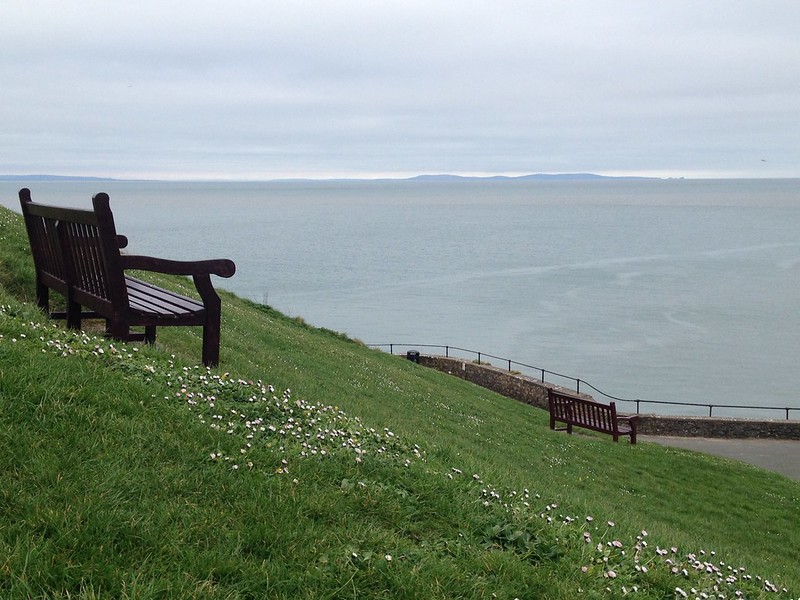
Left: one of my favourite reading benches in Tenby, Wales.

I’ve been getting on well with my research (more on that later), and in my spare time have been catching up with new releases in the ‘World Noir’ series from Europa Editions in New York. There are around 20 titles available from all around the globe (see below), of which I’ve now sampled three from France: Jean-Claude Izzo’s Total Chaos (translated by Howard Curtis, originally published 1995); Philippe Georget’s Summertime, All the Cats are Bored (translated by Steven Randell, first published 2009), and Jean-Denis Bruet-Ferreol’s (aka Mallock) The Cemetery of Swallows (Steven Randell again, first published 2012).

Image courtesy of World Noir / Europa Editions

Izzo’s Total Chaos – ‘This first installment in the legendary ‘Marseilles Trilogy’ sees Fabio Montale turning his back on a police force marred by corruption and racism and taking the fight against the mafia into his own hands’. Beautifully written, it’s also the story of three boyhood friends – Ugo, Manu and Fabio – and the pursuit of justice in a tough, imperfect world. The novel has a very masculine feel, with women relegated to the role of victim, mother figure or prostitute-with-heart-of-gold, but I can forgive this, because it’s so very good, especially in its exploration of the migrant experience. I’m keen to get my hands on the other two now.

Georget’s Summertime – ‘It’s the middle of a long, hot summer on the French shore and the town is full of tourists. Out of the blue a young Dutch woman is brutally murdered and another disappears without a trace. Gilles Sebag finds himself thrust into the middle of a diabolical game. If he intends to salvage anything he will have to forget his suspicions of his wife’s unfaithfulness, ignore his heart murmur, and get over his existential angst’. Like Total Chaos, this novel quickly immerses the reader in its Mediterranean setting, while drawing the reader into a complex and compelling police investigation. See Bernadette’s excellent review over at Reactions to Reading

Mallock’s The Cemetery of Swallows: ‘One day, Manuel Gemoni travels to the other end of the world to kill an old man. Manuel can only explain his bizarre actions by saying “I killed him because he had killed me.” Unable to comprehend why an ordinary family man would go to such lengths to murder a man he didn’t know, Police Commissioner Amédée Mallock decides to investigate. In order to save Manuel, Mallock must traverse the harsh tropical jungles of the Dominican Republic and the snow-covered streets of Paris’. I’ve just started this one, and am enjoying the intriguing nature of the case, the characterization of the investigator and the Dominican setting. There is a hint – just a tiny, subtle hint – of Vargas, but with the quirkiness dialed down. 

In sum: this is a quality series, showcasing the best of classic and contemporary noir, and we are promised another three to four titles each season. It could be time to hide the credit card, especially as the novels are so beautifully presented.

Thanks to Europa Editions for sending me these review copies from the World Noir series

German crime research update: I’ve had a fascinating time looking at crime fiction under National Socialism. To my surprise, there was lots produced between 1933 and 1945, and it wasn’t greatly censored until 1939, when authors were instructed to produce crime novels featuring policeman as heroes of the state. However, only a few overtly referenced Nazi ideology, which suggests that crime fiction was viewed more as a benign form of popular entertainment than as a tool for indoctrination. The research carried out by Carsten Würmann has been invaluable for getting an insight into this period.

I’ve also been delving into the Soziokrimi (social crime novel) or ‘new German crime novel’, which emerged in the late 1960s, and was influenced by both the student movement and Swedish writers Sjöwall and Wahlöö. There are some very interesting texts that explore the social causes of crime and the negative impact of capitalism on society. While some are quite earnest, others use humour to get their message across: Horst Bosetzky’s 1972 Einer von uns beiden (One of the Two of Us), depicts a blackly comic battle of wits between a smug, middle-class professor and the working-class student trying to blackmail him. The 1974 film adaptation was quite successful, and can be seen in German on YouTube here. Jürgen Prochnow, the actor playing Ziegenhals, went on to star in 1981’s Das Boot.