This ‘read exactly what you want to read’ thing is working out really well. Three crackers for you this week:

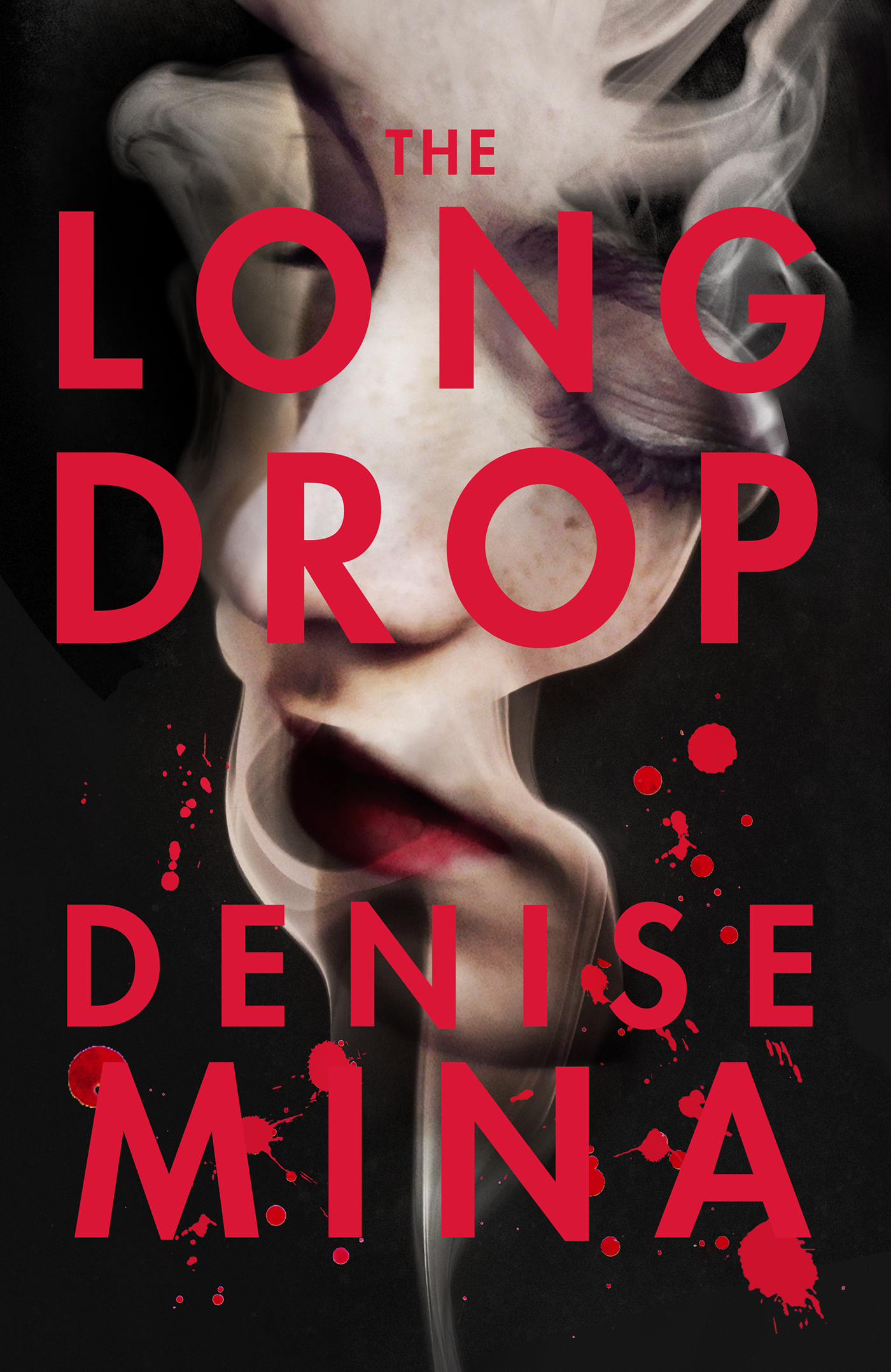
Denise Mina, The Long Drop (Harvill Secker, 2017)
First lines: He knows too much to be an honest man but says he wants to help. He says he can get the gun for them.
I’ve loved everything I’ve read by the supremely talented Scottish writer Denise Mina, and The Long Drop is no exception. Based on the true case of rapist and murderer Peter Manuel, it’s a highly original re-telling of the circumstances leading up to his trial and judicial reckoning, set in a grimy, rough 1950s Glasgow.
Often these kinds of literary/true crime hybrids will focus on ‘why and how’ a criminal came to carry out his or her crimes (see for example my recent review of Carrère’s The Adversary). Such approaches are often fascinating, but what makes The Long Drop stand out is the originality of its storytelling, which expertly weaves together two contrasting narrative strands. The first shows a long night of drinking by Manuel and businessman William Watt in various Glasgow bars and establishments. Watt is the husband, father and brother-in-law of three of Manuel’s murder victims, and meets Manuel in the hope of gaining a crucial piece of evidence. It’s a cat-and-mouse game with some genuine surprises, which also takes us on a tour of the ‘old’ Glasgow before the slum clearances and remaking of the city centre (you can trace their wanderings on the map on the inside cover). The second narrative strand explores Manuel’s trial and the public/media interest in the case. It’s equally fascinating, not least due to Manuel’s misguided decision to dispense with his legal representation and do the job himself.
I found the entire book unexpectedly gripping, and the quality of the writing and characterisation are sublime. Mina doesn’t shy away from describing Manuel’s horrific crimes, but her approach is never salacious, and she provides razor-sharp dissections of masculinity and class along the way. Highly recommended.
You can read an extract from the beginning of The Long Drop over at DeadGoodBooks.

Steph Broadribb, Deep Down Dead (Orenda Books, 2017)
First line: I open my eyes and the first things I see are the cuffs.
I’ve never been much good at dealing with Mild Peril. Even watching kids’ films like Finding Nemo, in which a small fish lurches from one mildly threatening situation to another, required the steadying hand of my small son. For that reason, I don’t tend to read thrillers packed with Major Peril. Every now and then, however, I’ll be tempted to throw caution to the wind, as was the case with Steph Broadribb’s Deep Down Dead. I’d heard Steph read an extract from the novel at Newcastle Noir, and liked the sound of her sassy heroine, Florida bounty hunter Lori Anderson, very much.
Deep Down Dead is a genuinely accomplished debut novel. Steph is a UK author, but convincingly pulls off a Stateside setting and dialogue, and famously shadowed a real bounty hunter as part of her research, in order to learn the trade first-hand. I love the character of Lori, a thirty-something single mother, whose need to pay off her nine-year-old daughter’s medical bills leads her to take the job of collecting a wanted man in West Virginia. Except the man turns out to be J.T., her old flame and mentor, and the lack of a babysitter means she has to take daughter Dakota along – into a less than child-friendly environment. Trouble quickly ensues. The dialogue is snappy, the action high-octane, and Lori’s dual identity as bounty hunter and parent makes her the ultimate multi-tasking mom – and a very likeable one at that. A wonderfully entertaining summer read.

John le Carré’s The Pigeon Tunnel. Stories from my Life (Viking, 2016)
First line: There is scarcely a book of mine that didn’t have The Pigeon Tunnel at some time or another as its working title.
I count myself as one of John le Carré’s biggest fans (see my appreciation here), so reading his memoir The Pigeon Tunnel was a treat of the highest order. The author has a reputation for being a brilliant raconteur, and the reading the book’s 38 chapters felt a bit like being at a dinner where the great man is holding court.
There are fascinating takes on key moments of Cold War history (West German Chancellor Adenauer’s failure to remove former high-ranking Nazis from post-war political structures; Russia before and after the collapse of Communism), wonderful anecdotes about actors and directors (Alec Guinness, Richard Burton, Sydney Pollack, Stanley Kubrick), stories about the people who inspired his characters (such as Yvette Pierpaoli, who became Tess in The Constant Gardener), and the extensive research trips for novels such as The Little Drummer Girl (resulting in a dance with Yasser Arafat). And of course, there are insights into the complex, murky world of spying, and in particular the Kim Philby case – the British intelligence officer who was unmasked as a Russian spy in 1963. The stories are by turns illuminating, moving and hilarious – I found myself laughing out loud a great deal, which wasn’t something I’d expected at all. If you’re a fan of le Carré, the memoirs really are a must-read.
I’m now keen to re-read some of le Carré’s novels, and to tuck into Adam Sisman’s biography of the author, which is waiting patiently for me on a shelf.
You can read an extract from The Pigeon Tunnel here, involving Alec Guinness, former Chief of the Secret Service Maurice Oldfield, and some authorial guilt. Other extracts are available from The Guardian here, both from The Pigeon Tunnel and the author’s novels (beautifully read by a cast of famous actors).



































 Mrs. Peabody Investigates