Merry Christmas! Nadolig Llawen!

Wishing you a very Merry Christmas, or, as we say here in Wales, Nadolig Llawen.

To add to your festive cheer, here are some peerless Muppet chickens singing ‘Joy to the World’. Their impressive harmonies are guaranteed to raise a smile.

Here’s to family and friends – present and absent, near and far…

All best wishes, Mrs. P.

Tribute to Maxine Clarke / Petrona

This morning I heard the very sad news that Maxine Clarke, who blogged as Petrona, has passed away.

Rhian Davies and Margot Kinberg have both written wonderful tributes to Maxine, and I’d like to add a few words of my own.

Maxine was a prolific crime fiction reviewer, and one of the very, very best, setting a gold-standard in crime blogging. Her posts were knowledgeable, perceptive and thoughtful, and, more often than not, made you want to rush out and buy a book. Her blog, Petrona, is one of the ‘core’ crime blogs I always recommend to others. It’s descriptive subtitle is pure Maxine: ‘Mainly about reading with an accent on intelligent crime fiction from around the world’.

As well as holding Maxine in extremely high regard as a blogger, I valued and admired the contribution she made through her encouragement and support of others. I am struck, when reading tributes and comments on Twitter, by how many rookie bloggers Maxine welcomed into the crime-blogging community and quietly nurtured: I am one of those who will always be grateful for the kindness and encouragement that she showed me in my early blogging days. No review ever went by without a comment from Maxine (often within minutes of it being posted!), and those comments were generous, thoughtful ones that helped you to reflect further on the book in question. In short, Maxine was a great teacher, the kind that you always wanted to do your best for and who made you glow when you received her praise.

I never met Maxine in person, but will miss her friendship enormously. My thoughts are with her family and friends at this very sad time.

Friday snippets: ‘Death of the remake?’ and ‘Once upon a Time in Anatolia’

FRIDAY SNIPPET 1

An article by Charles Gant in today’s Guardian asks ‘Is the Hollywood remake dead?’. In it he explores why some English-language remakes (most notably of the Swedish film The Girl with the Dragon Tattoo) are not fairing as well as expected at the box office, and highlights the increased success of foreign-language films in recent years. Gant quotes Marianne Gray, a producer with Yellow Bird Films, who feels ‘everything is getting more global, and audiences are more accepting of subtitles’, but goes on to argue that there’s a bigger factor at play here as well. Put simply, ‘films are succeeding because of their foreignness, not in spite of it’; their unique selling point is authenticity, with audiences keen to sample ‘authentic originals’ rather than commercially-driven copies.

Good marketing tactics don’t hurt either, of course. The Norwegian adaptation of Jo Nesbo’s Headhunters opens in cinemas this Good Friday, a release date that proved highly profitable for Tomas Alfredson’s Swedish film Let the Right One In back in 2009.

The article raises some other interesting questions, such as why English-language remakes are considered necessary in the first place, and is well worth a read.

FRIDAY SNIPPET 2

Critics seem to be unanimous in their praise of Nuri Bilge Ceylan’s Once Upon a Time in Anatolia (Bir zamanlar Anadolu’da): ‘a carefully controlled masterpiece’  (French / Observer); ‘completely gripping…an astonishing crime procedural’ (Quinn / Independent); ‘murder mysteries rarely run so deep’ (Calhoun / Time Out). It also won the Grand Prize at the 2011 Cannes Film Festival.

The more I read about this film, the more I want to see it, and the more frustrated I become at its apparently limited distribution in the UK. I’d love to see it in on the big screen in the cinema, but may have to wait for the DVD *sigh*

Here, in any case, is a tantalising synopsis from the Cinema Guild film website:

‘In the dead of night, a group of men – among them a police commissioner, a prosecutor, a doctor and a murder suspect – drive through the Anatolian countryside, the serpentine roads and rolling hills lit only by the headlights of their cars. They are searching for a corpse, the victim of a brutal murder. The suspect, who claims he was drunk, can’t remember where he buried the body. As night wears on, details about the murder emerge and the investigators’ own secrets come to light. In the Anatolian steppes nothing is what it seems; and when the body is found, the real questions begin’.

Read Anthony Quinn’s 5 star review of the film in The Independent here (no major spoilers).

Edinburgh City Libraries: map of international crime fiction

Courtesy of a retweet by @eurocrime, I happened to see a link to a lovely resource provided by Edinburgh City Libraries via their blog Tales of One City. It’s an interactive map of international crime fiction, entitled, in a stroke of undoubted genius, ‘Around the World in 80 D.I.s’.

Clicking on the map in the post takes you through to a Google-powered world map with 80 book covers sprinkled across it. You can either click on the book of your choice to find out more about it, or browse by country/city and sleuth in the column on the left-hand side. Aside from the usual Scandinavian suspects, novels from less obvious countries are featured such as Laos, Mongolia, Algeria, Greece and Kenya (at least, these are less familiar to me). And it’s great to see that they’ve included some classics as well, like Friedrich Glauser’s Swiss ‘Studer’ novels, written in the 1930s, along with more contemporary writers such as French author Fred Vargas.

Diane Wei Liang's The Eye of Jade: set in Beijing and one of the crime novels featured on the map.

What a wonderful initiative, and a fine example of the kind of contribution our libraries can make in opening up the world of literature to everyone … for free.

14 March 2012  Thanks very much to Maxine for pointing me in the direction of another international crime map, this time from Bitter Lemon Press. Another wonderful resource, and one that readers are invited to add to with further suggestions, providing a whole extra level of interactivity!

Meme me up, Scotty! Autopsy overload!

 Plz doan mak me read no moar autopsy scenez

After catching the bug from Rhian over at It’s a Crime! (or a Mystery…), here’s the first in an occasional series entitled Meme me up, Scotty! The idea is to create a meme that captures, in the purest possible form, a reading moment or reaction on my part.

As you might guess from this lovingly-crafted meme, I’m currently somewhat frustrated by the volume of autopsy scenes I’m made to sit through as a crime reader. I’ve just read three novels in a row that feature long and lavishly-detailed autopsies, and am now a reluctant expert in the grisly protocols involved. However, I have yet to feel that these, or any of the other autopsy scenes I’ve read, contribute significantly to the crime narrative. This may just be a question of taste – there’s certainly an element of subjective judgement involved – but I still can’t help wondering why authors feel they are necessary.

Some theories (from the serious to the silly)

  • They’re just part of the formula for police procedurals, so in they go
  • They show I’ve done my research and am an expert on the detail of policework
  • They mean you can’t mistake my novel for a cosy: it’s gritty and real
  • They confront readers with the reality of violence/crime
  • They confront readers with their own mortality (an existential statement, if you will)
  • The grumpy-yet-erudite pathologist is a winning character 
  • I’ve been told by my publisher that autopsy scenes sell really well
  • We crime authors have a secret autopsy contest: the most gruesome example wins a bottle of Chateau Lafite Rothschild.  

I’d be very interested to hear some reader and author views on this topic.  Do autopsies enhance crime narratives and if so how? Or could we do without them?

I created my meme at the wonderful Cheezburger.com and availed myself of the magnificent lolcat translator. I feel an addiction coming on.

Update: See also the excellent post on the rise of the serial killer (with graph!) over at the Past Offences blog (thanks for the kind mention, Rich.)

Three Oscar nominations for Tinker Tailor Soldier Spy

Last September I wrote a glowing review of Tomas Alfredson’s Swedish-style adaptation of John le Carré’s Tinker Tailor Soldier Spy. So I was delighted to see that the film has picked up three Oscar nominations.

Actor in a Leading Role: Gary Oldman (Smiley)

Music (original score): Alberto Iglesias

Writing (adapted screenplay): Bridget O’Connor and Peter Straughan

On hearing the news of his nomination in Berlin – the former heart of the Cold War depicted in the film – Gary Oldman declared himself to be ‘in shock’.

While this is a first nomination for Oldman, it’s the third for Iglesias, a Basque composer who has written film soundtracks for The Constant Gardener, The Kite Runner and All About My Motheramongst others. You can listen to a clip of his brooding, jazz-tinged score on the film’s webpage

The writing nomination is a highly poignant one, as Bridget O’Connor died last year at the age of 49 following a battle with cancer. Her husband, Peter Straughan, gave his reaction to the nomination here.

The 2012 Oscars will take place on Sunday 26 February.

Have yourself a merry little Christmas…

Mrs. P. hopes you have a very lovely Christmas and that Santa brings you all the crime novels your heart desires.

Have you been good?! I’m sure you have.

In that case, here’s a sublime version of ‘Have Yourself a Merry Little Christmas’, complete with Hammond organ, from She and Him. Enjoy.

The Kindle and the criminally inclined

I recently treated myself to a shiny new Kindle – half gleefully and half guiltily due to the size of the initial outlay (although with the added justification of helping to keep the beleagured British economy afloat). While not completely convinced of the merits of owning one, I felt it was the right time to give an e-reader a go, especially as previous generations of Kindle buyers have so considerately helped to iron out the early technological and design flaws. 

I’ve had the Kindle for a week now, and am gradually learning to appreciate its benefits. As a crime reader, I consume a huge amount of books, and one big plus is that the Kindle will help keep my bookshelves from collapsing in the too-near future. I’m also finding reading on it a pleasant and user-friendly experience (especially as one can customise the appearance of the type to suit one’s aging eyes). But best of all, I’ve been able to widen the scope of my reading through opportunistic scavenging for bargain crime. Gems have come my way through the Kindle Daily Deal, while others are simply waiting to be found in the course of browsing. There’s some very good stuff out there that costs very little, and because they’re so reasonably priced, I’m willing to take a flyer on novels I might not otherwise try – which is no doubt the idea. In any case, it’s having the effect of allowing me to broaden my horizons and to fill in the gaps for good authors I’ve missed to date. So far I’ve snapped up low cost (or even free) crime from the US, Norway, Iceland and the UK, and now have a nice range of different types of novels stored on the Kindle to suit different types of crime-reading mood.  

One of my bargains...

That’s not to say that I’ll ever give up the wondrous paper book. I’ll continue to buy crime in indie and charity bookshops, as I’ll always love the feel of a book in my hand, especially when having a nice hot bath at the end of a long working day. That’s one advantage the Kindle will never have – and that’s quite OK by me.

Sisters in Crime Book Bloggers Challenge / Ingrid Noll

Over at Barbara Fister’s blog, you can find details of the Sisters in Crime Book Bloggers Challenge, which celebrates 25 years of Sisters in Crime and the wealth of quality crime fiction written by women. 

I’m embarking on the Easy challenge: write a blog post about a work of crime fiction by a woman author; list five more women authors who you recommend.

My choice is The Pharmacist (Die Apothekerin), by one of Germany’s most successful and respected crime novelists, Ingrid Noll.

Ingrid Noll is in now her seventies, and only started writing seriously in her mid-fifties, after her three children had left home. The delayed start to her career as an author -perhaps not too unusual for a woman of her generation – gives all of us late developers hope and is one of the reasons I’ve selected her for this challenge.

I’ve also chosen Noll because (as she herself says), her novels are predominantly concerned with the lives of ordinary women, and how they set about achieving their goals within the constraints of a patriarchal, bourgeois society … by fair means or foul. She’s the writer of darkly humorous and highly original crime novels, often compared to those of Patricia Highsmith, which offer an entertainingly twisted vision of female empowerment – part of the German subgenre known as the Täterinnenkrimi (female perpetrator crime novel). At the same time her depictions of relationships avoid gender stereotyping: both her male and female characters are complex and interestingly flawed, which allows you to sympathise with them and despair of them all at the same time.

Poster for the 1997 film adaptation of Die Apothekerin/The Pharmacist

The Pharmacist, first published in 1994, is narrated in the first person by Hella Moormann. She is the pharmacist of the title, currently a hospital patient, who during the dull evening hours relates her life-story to Rosemarie Hirte, a mousy woman who keeps falling asleep in the next-door bed. We hear how Hella’s penchant for shady characters and co-dependency leads her into a relationship with the younger, amoral Levin, and how before long, she is drawn into a series of dubious, not to mention criminal events. The big question is: just how passive is Hella? Is she a victim of her machiavellian boyfriend? Or is she actually much more in control of the situation than she would care to admit? And just how wise is she to tell her story to the seemingly innocent Frau Hirte, whose snores may not be all they seem?

Delicious stuff!

The Pharmacist, trans. from the German by Ian Mitchell (London: HarperCollins, 1999).

Five other women crime writers I would recommend:

Josephine Tay, author of The Daughter of Time – another ‘hospital mystery’ (UK)

Maj Sjowall, co-author of the Martin Beck series (Sweden)

Fred Vargas, author of the Adamsberg series (France)

Dominique Manotti, author of Affairs of State and a very different writer to Vargas (France)

P.D. James, the grand Dame of British crime writing (UK)

BBC4 – home of top quality international crime drama – threatened with cuts

The UK media yesterday reported that the BBC, driven by the need to find 20% in financial savings, was planning a range of cuts across its channels.

BBC4 – home of top quality international crime drama such as The Killing, Wallander and Spiral – not to mention a raft of other excellent documentary and drama programmes, is one of the channels in the firing line for the biggest cuts.

The threat to BBC4 has prompted indignant protests on Twitter and the setting up of a petition calling on BBC executives to rethink their short-sighted plans. If you would like to add your signature to the petition you can do so here. There’s also the option of making your views known via a comment.

Those of us here in the UK are of course TV licence payers, and contribute directly to the funding of the BBC. It follows that our views should be taken into consideration when the BBC is planning its programming strategy. This particular licence payer doesn’t watch a huge amount of TV, but what I do watch is more often than not on BBC4. It’s a top channel and should be given the BBC’s full support.

If any BBC execs should happen to stumble on this page: please do take a look at the many, many comments on this blog praising BBC4 and its output.

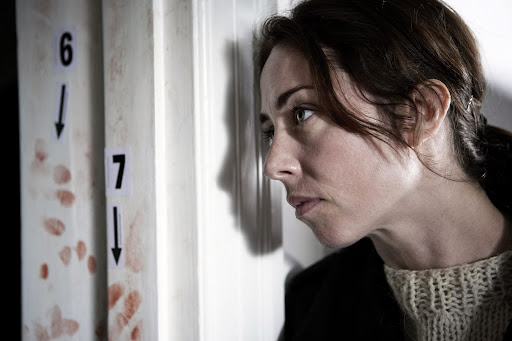
The Killing: one of the many examples of BBC4’s excellent programming