Love and Friendship: Eduardo Sacheri’s The Secret in Their Eyes, tr. John Cullen (Argentina)

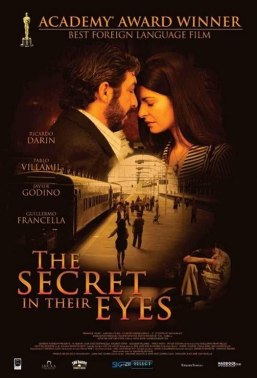
Eduardo Sacheri, The Secret in Their Eyes, tr. from the Spanish by John Cullen,(Other Press, 2011 [2005])

First line: Benjamin Miguel Chaparro stops short and decides he’s not going.

I don’t often re-read crime novels. This is largely because crime is so plot-driven: once you know the ‘solution’, you’ve got less reason to return. But naturally there are exceptions – crime novels which tell their story in such a way that you’re drawn to them repeatedly, perhaps because you love the company of the characters or the setting, or because the book tells you something new each time you read it.

Eduardo Sacheri’s The Secret in Their Eyes is one such novel. I’ve read it three times now and I’m sure there’ll be a fourth. It’s been on my mind lately because it celebrates love and friendship in adversity, and so feels timely in spite of its setting – Argentina in the second half of the twentieth century.

Benjamin Chaparro is freshly retired from his position as Deputy Clerk of an investigative court in Buenos Aires. Now a man of leisure, he decides to write a book about a case that’s haunted him since 1968 – the murder of a young woman, Liliana Colotto, at home one summer’s day. Oscillating between the past and the present, and spanning twenty-five years, the narrative tells the story of the murder and its repercussions for those left behind: grieving husband Ricardo Morales, investigator Benjamin – and the murderer.

While undoubtedly crime fiction, The Secret in Their Eyes is also a historical novel, exploring the time before, during and after Argentina’s Guerra Sucia or Dirty War (1976-1983). This period saw a state-sponsored campaign of violence against ‘politically subversive’ citizens, resulting in the ‘disappearance’ of 10,000 to 30,000 Argentinians. Both of the novel’s strands – the criminal and the historical – focus on the nature of justice and on the impact of a justice that is delayed or denied.

But the novel is also a love story – that of a husband and wife (Ricardo and Liliana), and of long-time co-workers (Benjamin and his boss, Irene) – as well as the moving chronicle of a friendship (Benjamin and his colleague Sandoval). Beautifully written, with complex and often endearing characters, the novel is a rich, satisfying read – a multilayered narrative of genuine humanity and warmth.

I first read The Secret in Their Eyes after seeing Juan José Campanella’s film adaptation, El secreto de sus ojos, which won the 2010 Oscar for Best Foreign Language Film. What a fabulous adaptation this is, especially in its use of the visual to bring out key themes: close-ups of eyes and gazes, for example, and the symbolism of the colour red – look out in particular for Irene’s roses. The acting is superb, and the wittiness of the script really captures the dynamics of Benjamin, Irene and Sandoval’s relationships.

But there are also some modifications to the plot: Irene is much more present in the film than in the novel (which I liked), and there were a couple of other changes towards the end designed to provide some extra drama (which I wasn’t so keen on). However, the latter certainly aren’t deal-breakers. It’s rare that a novel and film adaptation complement each other so well, and I hearily recommend both.

Don’t bother with the later Hollywood adaptation starring Julia Roberts et al. It got a 39% rating on Rotten Tomatoes – ’nuff said.

Meet the Gang: Anna North’s Outlawed (USA)

Anna North, Outlawed, Weidenfeld & Nicolson 2021 (USA)

First line: In the year of our Lord 1894, I became an outlaw.

Anna North’s Outlawed treats us to a beautifully realised alternative America of 1894, where seventeen-year-old Ada lives with her sisters and midwife mum, Evelyn, in the Dakota town of Fairchild.

The town’s name is a clue to the novel’s subject: around 60 years earlier, the Great Flu swept through the land, decimating the population and creating what is effectively a religious cult of the child. Grief, trauma and the need to reproduce has made fertility and child-bearing an obsessive social focus, and young wives are watched like hawks in their first year of marriage to see if they can successfully conceive. If they can’t, they risk being deemed ‘barren’, and possibly, if things go badly, being branded a witch — with deadly consequences.

When Ada finds herself in this tightest of spots, her mother is able to get her to safety. But one thing leads to another, and soon she’s on the run with the intriguing Hole in the Wall Gang, whose charismatic leader, the Kid, has a utopian dream that’s going to need the heist of all heists to finance it.

So what we have here is a feminist Western that’s a rollicking read (bombs made of horse dung!), but that also explores complex themes: the social fallout of a pandemic; how ignorance and fear leads to catastrophic scapegoating; the paths taken by individuals who are criminalised through no fault of their own; the alternative communities and alliances that such individuals forge; the resilience and collective action that may occasionally win the day.

The characters – from Ada and Evelyn to the Kid, Texas, Elzy, Lark and Amity the Dappled Grey Mare – are plucky, complicated and engaging, and the descriptions of the American Wild West – all searing red rock and herds of buffalo – are sumptuous.

But it’s Ada who is the standout star. Her intelligence and determination to follow her own path reminded me of other spirited female narrators undergoing rites of passage, such as Mattie in Charles Portis’ True Grit and Ree in Daniel Woodrell’s Winter’s Bone. There are, of course, also shades of Margaret Atwood’s dystopian Handmaid’s Tale (but things thankfully never get quite as grim as they do in Gilead). Outlawed is a splendidly enjoyable and thought-provoking read.

In other news: I’ve now set up a Pinterest HQ for Mrs. Peabody Investigates, where I’ll pin reviews as they go live. This will hopefully give you all another, more visual way of dipping into or returning to reviews over the year. We’ll see how it goes! Feedback very welcome 🙂

Homage to Sidney Poitier: In the Heat of the Night (1967)

The actor Sidney Poitier, who appeared in a number of groundbreaking films in the course of his long and illustrious career, has died at the age of 94.

The news made me revisit Norman Jewison’s 1967 crime drama In the Heat of the Night – both to watch the great man in action and to marvel that a film dealing so overtly with racism could have been made in 1967, let alone received the Oscar for Best Picture that year. It’s an extraordinary and enduring achievement, and feels freshly relevant in the context of America’s current divisions.

Do avoid watching the dreadful MGM trailer, which fuses all the shouty bits together in rather a crass way. The film is capable of significantly more nuance, as the outstanding scene below shows…

Here we see Virgil Tibbs (Poitier) – guilty of nothing more than waiting for a train to Philadelphia – being brought to the sheriff’s office in the town of Sparta, Mississippi on suspicion of having killed a businessman. Why? Because he’s black and has money in his wallet, which strikes the white arresting officer as a category error. The push-and-pull of Tibbs’ relationship with racist Chief Gillespie (Rod Steiger), who quickly realises he’ll need the black man’s expertise to solve the murder, is immediately on display. The two deliver a masterclass in acting to the fortunate audience.

The film is an adaptation of John Dudley Ball’s 1965 crime novel In the Heat of the Night, which won the 1966 Edgar Award for best debut by an American author and was the first in a series featuring homicide detective Virgil Tibbs. Ball worked for a while as a deputy in the Los Angeles County Sheriff’s Office and clearly drew on this experience when writing the novel, which rings true both in terms of police procedure and law enforcement working culture.

The plot of the novel differs from the film in some respects: Tibbs is from California rather than Philadelphia, the murder victim is an Italian-American conductor organising a music festival in the town, and there’s a storyline involving policeman Sam Wood which doesn’t completely make it into the film. But lots of the film dialogue is taken directly from the novel, such as bits of the exchange between Tibbs and Gillespie in the scene above, and the iconic line ‘They call me Mr. Tibbs’.

The novel also does something extremely valuable: it gives us access to the minds of Gillespie, Wood and the other townsfolk, so that we can observe the workings of racist thought processes up close – along with the strategies Tibbs employs to overcome the many obstacles placed in his path.

In the Heat of the Night does fall down in one key respect: its depictions of gender and class are often stereotyped. But the novel is still very much worth reading and is widely available, most recently in the handsome 50th anniversary Penguin Modern Classics edition.

I’ll leave you with Ray Charles singing the soulful, gospel-inflected ‘In the Heat of the Night’ (Quincy Jones/Marilyn & Alan Bergman), which plays during the opening credits of the film. Thank you, Mr. Poitier.

Sound of the 70s: Silvia Moreno-Garcia’s Velvet was the Night (Mexico)

Silvia Moreno-Garcia, Velvet was the Night, Jo Fletcher Books 2021

First line: He didn’t like beating people.

Mexican-Canadian writer Silvia Moreno-Garcia is one of those ridiculously talented authors who can turn her hand to any genre. She’s probably best known for her novel Mexican Gothic (it does what it says on the tin), but describes her latest novel as ‘noir/pulp fiction’, albeit with an unusual historical twist.

Velvet was the Night is set in 1970s Mexico during the ‘Guerra sucia’ or Dirty War, which saw the right-wing government abduct, imprison and often murder those viewed as a threat to its ideology and power – especially left-wing students and working-class activists. Audaciously, one of the novel’s main characters is a member of Los Halcones – the Hawks – a shadowy group of heavies trained by the government (with the covert backing of the CIA) to disrupt student demos and worse. The codename of the young man in question is El Elvis, after his musical idol, and it is through his eyes that we observe both the internal workings of the group and the psychology of an individual who’s got himself into a serious fix.

Velvet‘s other key figure is Maite Jaramillo, a secretary terrified of spinsterhood, who escapes the everyday grind and turbulent politics around her through a love of music and Secret Romance magazines. She also harbours a grubby secret of her own: she likes to steal small items from her neighbours’ apartments while pet-sitting for them. It’s when beautiful, bohemian student Leonora disappears –  and thus fails to reclaim her cat – that Maite’s humdrum world gets turned upside down.

Along with the characterisation, a key strength of Velvet was the Night is its tightly plotted narrative. Its ending feels satisfying and complete, but could also serve as an intriguing beginning to a whole other story. Another very nice touch is the playlist at the back of the novel, which showcases the songs woven into the text – a clever nod to the subversive status of certain kinds of music in 1970s Mexico. You can find it on Spotify here.

True crime tidbit: many who work in the world of publishing, like my good self, have been following a bizarre, long-running case involving fake identities and a phishing scam whose aim was getting hold of valuable manuscripts prior to publication. News comes this morning that the FBI has made an arrest… Innocent until proven guilty, of course, but it’s quite a breakthrough in what’s an absolutely fascinating case for bookish types – not least in relation to the question of motivation. It’ll make a great podcast.

Let it snow! Mrs. Peabody’s 2021 Xmas crime recommendations

Here are Mrs. Peabody’s 2021 Christmas crime recommendations! 

Treat others! Treat yourself!

Please support local booksellers while keeping yourself and others safe.

Belinda Bauer, Exit (Black Swan, 2021 – UK)

First line: The key was under the mat.

I adore pretty much everything Belinda Bauer has written – she seems capable of turning her hand to almost any kind of crime – and Exit is no exception. Mild-mannered pensioner Felix Pink is an ‘Exiteer’, one of a group of volunteers who keep the ill and infirm company when they decide they’ve had enough of life. But one day an assignment goes horribly wrong, and Felix finds himself needing to stay one step ahead of the police while frantically trying to work out what is going on. Exit tackles weighty issues of life and death with humanity, compassion and a lot of laughs. I’m not sure how Bauer pulls it off, but she emphatically does, and I don’t know anyone who hasn’t loved this impeccably constructed crime novel (including those who claim not to like crime).
Jane Harper, The Survivors (Little, Brown, 2020 – Tasmania)

First line: Kieran hoped the numbness would set in soon.

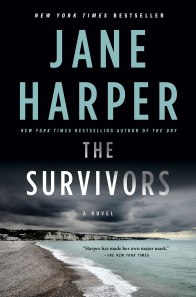
Two things drew me to this crime novel: its top-notch author and its setting – a little town on Tasmania’s wild coastline. Kieran Elliott is on a rare visit to Evelyn Bay where he grew up. His mother Verity is struggling to look after his father, who has dementia, and the absence of his dead brother Finn looms large both within the family and his wider circle of friends. When Bronte, a young artist working at a cafe, is found dead on the beach, unresolved questions from the past resurface, not least the disappearance of schoolgirl Gabby during the same big storm that claimed Finn’s life. The Survivors is a crime novel that delivers on a number of levels: superb characterization, an absorbing and gripping plot, and a sensitive examination of grief.
Jess Kidd, Things in Jars (Canongate, 2019 – England/Ireland)

First line: The raven levels off into a glide, flight feathers fanned.

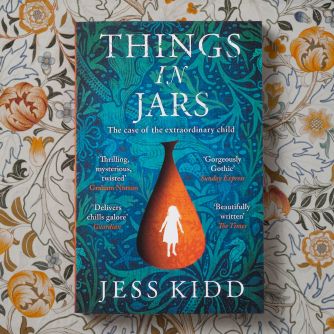
Jess Kidd is one of the most original crime authors writing today, both in terms of her subject matter and her rich writing style. Things in Jars is her first ‘proper’ historical crime novel, set in and near London between 1841 and 1863. It features a number of formidable women, chief among them Bridie Devine, ‘the finest female detective of her age’, who begins investigating the kidnapping of a highly unusual child. Oh, and she can see ghosts – specifically, a heavily tattooed boxer (a ‘circus to the eye’) called Ruby Doyle, who claims to have known Bridie in life, and keeps her company through the ups and downs of the case. Filled to the brim with the eccentric, the otherworldly and the gothic, Things in Jars explores female oppression, survival, and how, with the help of allies, women can carve out a space for themselves in a hostile world.
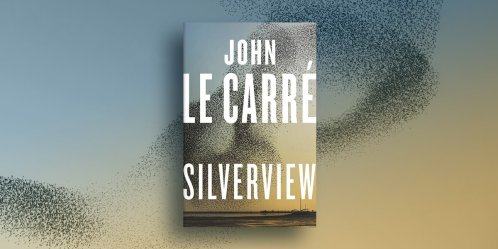
John le Carré, Silverview (Penguin, 2021 – UK)

First line: At ten o’clock of a rainswept morning in London’s West End, a young woman in a baggy anorak, a woollen scarf pulled around her head, strode resolutely into the storm that was roaring down South Audley Street.

For le Carré fans, this is a poignant read – a final novel from the master of the spy genre. In many ways, this is a classic le Carré tale – a forensic deconstruction of one story among the many making up the intelligence world, and a scathing examination of the moral vacuum at the heart of foreign policy. We see events through the eyes of Julian Lawndsley, who has moved to a small seaside town in East Anglia to run a bookshop, and Stewart Proctor, senior intelligence troubleshooter, who gets word of a security breach in the very same spot. At the heart of it all: a mysterious Polish émigré living in ‘Silverview’, a grand manor house. It was a pleasure to be back in le Carré’s world and to spend time with his richly drawn characters. Happily, as with Agent Running in the Field, there are redemptive elements that temper the bleaker aspects of the novel.

Abir Mukherjee, Death in the East (Harvill Secker, 2020 – UK/India)

First line: I’d left Calcutta with a grim resolve, a suitcase full of kerdu gourd, and, in case of emergencies, a bullet-sized ball of opium resin hidden between the folds of my clothes. 

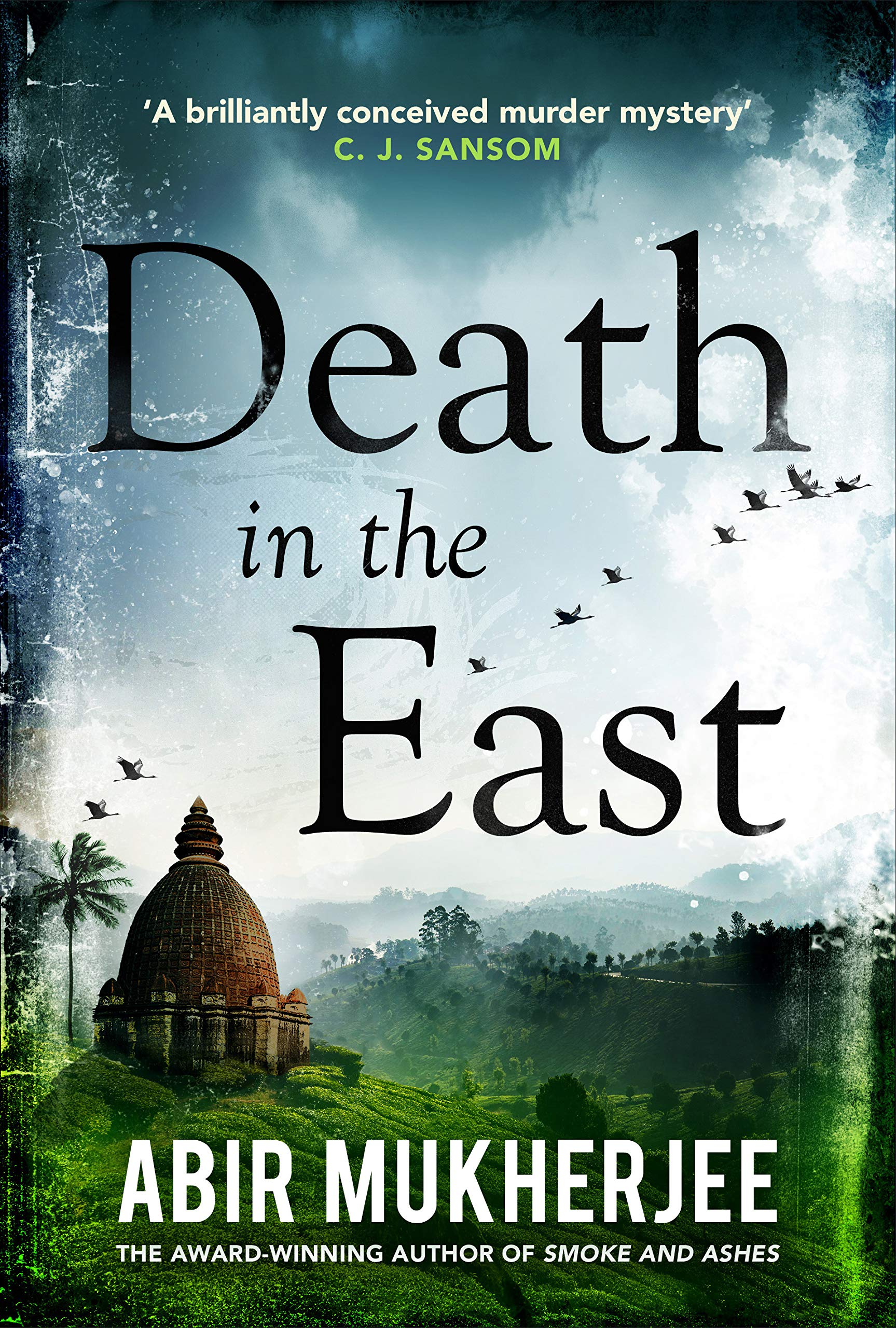
This is the fourth in Mukherjee’s ‘Wyndham and Banerjee’ series, and I think it’s my favourite so far: a rich historical crime novel that offers not just one, but several discrete murder mysteries, including two intriguing locked-room cases. The novel switches between 1922 Assam, where Captain Sam Wyndham is trying to conquer his opium addiction, and 1905 London, during the early days of his policing career. The link: a villain whose reappearance in Assam threatens Wyndham’s life. This is a beautifully plotted crime novel that offers atmospheric depictions of Assam on the one hand and London’s Jewish East End on the other. Gripping, entertaining, and with a nice line in Chandleresque humour, it also shows us the changing face of India – Sergeant Banerjee’s welcome appearance near the end of the novel marks an important shift in the relations between the two.

Hansjörg Schneider, Silver Pebbles, tr. from the German by Mike Mitchell (Bitter Lemon Press, January 2022 – Switzerland)

First line: The Frankfurt-Basel Intercity — a sleek, streamlined train — was crossing the Upper-Rhine plain.

Schneider’s Silver Pebbles was originally published in 1993, but feels remarkably fresh today. The first in the acclaimed ‘Inspector Peter Hunkeler’ series, it introduces us to the jaded Basel police detective and treats us to a wonderfully absorbing case. When Lebanese smuggler Guy Kayat flushes some diamonds down a station toilet to evade the police, he sets off a chain of bizarre events. The diamonds are found by Erdogan, a sewage worker called to clear a blockage, who thinks his dream of opening a hotel back in Turkey is about to come true. But of course, things get complicated… A very human tale, told in a way that reminded me of Sjöwall and Wahlöö’s ‘Martin Beck’ series – a matter-of-fact style leavened with genuine warmth and a dry sense of humour. Erika Waldis, Erdogan’s long-suffering girlfriend, is the slow-burning star of the show.
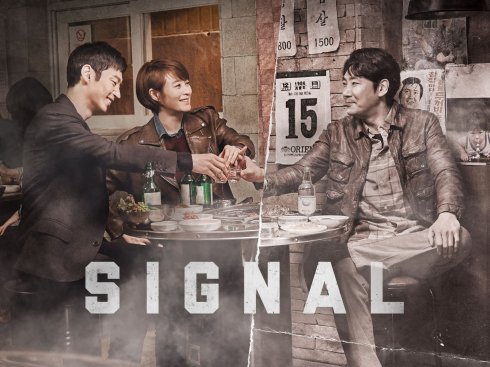
Signal, by Kim Eun-hee, dir. by Kim Won-seok (Netflix – South Korea)

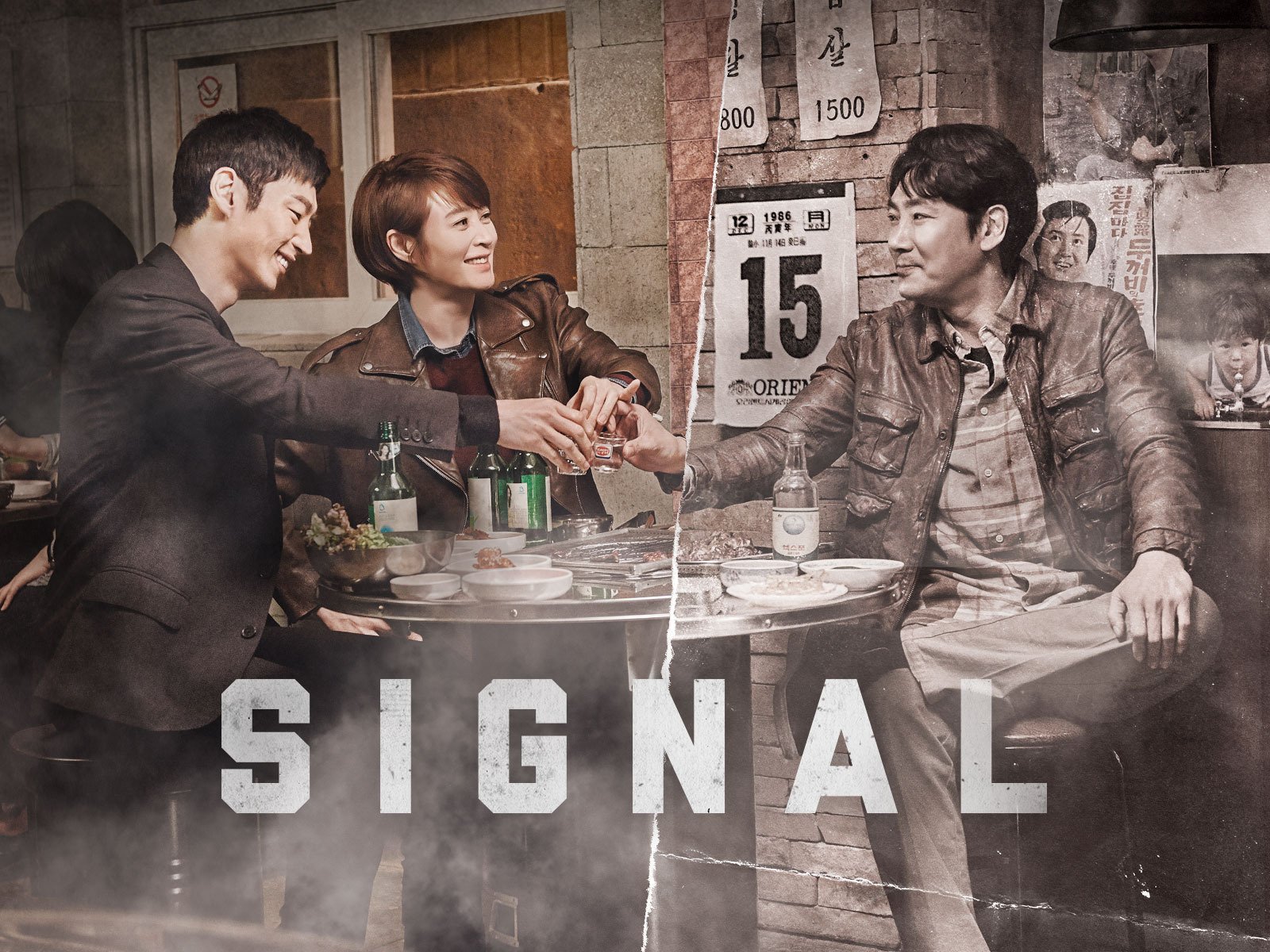
This 2016 South Korean crime drama – with shades of Life on Mars – has stolen my heart. I’m about half way through and love the way it’s developing the ambitious idea of a criminal profiler in 2015 who’s able to talk to a police detective in 1989 via a chunky old walkie-talkie. As well as working on cold cases together, the mystery of the police detective’s own disappearance in 2000 increasingly moves centre stage. Unbeknownst to profiler Park Hae-young, his boss Detective Cha Soo-hyun is also searching for Detective Lee Jae-han – he was her mentor when she was a rookie back in 1989. Along with the police-procedural elements and occasional slapstick humour, it’s Signal‘s wonderfully human characterization that stands out for me.

And here’s a trio on my own Christmas wishlist.

Mick Herron’s Dolphin Junction, a collection of short stories featuring, among others, Jackson Lamb, and Zoë Boehm & Joe Silvermann (the stars of his ‘Slough House’ and ‘Oxford’ series respectively). Expect brilliant storytelling and acerbic wit.

Katie Kitamura’s Intimacies, about an interpreter whose duties involve interpreting for a potential war criminal at the International Court in Hague.

David Heska Wanbli Weiden’s Winter Counts, a much-lauded debut that takes a hard-hitting, nuanced look at life on South Dakota’s Rosebud Indian Reservation.

********

There are some big changes coming to Mrs. Peabody Investigates in 2022: keep your eyes peeled for those!

Until then, wishing you all a very Merry Christmas!

John le Carré (1931-2020) — an appreciation

I’m so very saddened by the death of John le Carré – a brilliant, insightful and humane writer, whose ability to capture the personal and political complexities of our time was second to none.

John le Carré

Below is a slightly edited post I first wrote eight years ago – my homage to this great writer and his works. I never met le Carré, but we did briefly have contact once, when he rode to the rescue of my beleaguered languages department after it was threatened with redundancies in 2010. He gave his help immediately and with a generosity that none of us have forgotten. During that period, he signed off a note to me with the words “All fine. Please feel free”. It sits framed on my mantlepiece, where I can look at it fondly: I reckon it’s a pretty good principle to live your life by.

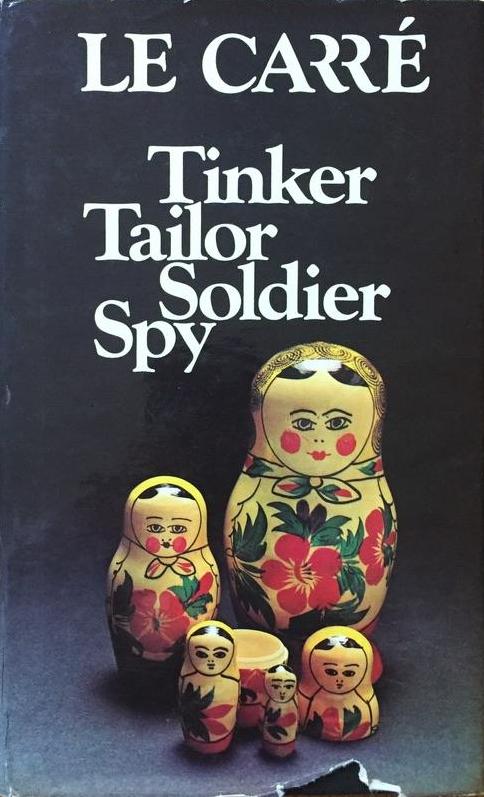
I found out later from Adam Sisman’s biography that we had both lived, at different times, in the same small town in our youth. I have happy memories of watching the TV series of Tinker Tailor Soldier Spy with my dad back then – we adored Alec Guinness as Smiley, and that incredibly haunting Russian doll title sequence.

Here’s my personal appreciation of John le Carré and his works, which is shaped by our mutual love of Germany and its culture. Do you have a favourite le Carré work? Please let me know if so in the comments below.

1. I love that the author and his creation George Smiley are outward-looking linguists. Le Carré studied German literature for a year at the University of Bern, and graduated with first-class honours in modern languages from Oxford. Most of his spies are linguists, and the most famous of them all, George Smiley, studied Baroque German literature and was destined for academia until the British Secret Service came knocking — in the shape of the brilliantly named ‘Overseas Committee for Academic Research’. The profession of intelligence officer gives Smiley ‘what he had once loved best in life: academic excursions into the mystery of human behaviour, disciplined by the practical application of his own deductions’ (Call for the Dead). And languages still really matter. Smiley’s ability to speak fluent German plays a vital role in Smiley’s People when he gathers intelligence in Hamburg, the city where he spent part of his boyhood, as well as a number of years ‘in the lonely terror of the spy’ during the Second World War. Le Carré says of him in an afterword that ‘Germany was his second nature, even his second soul […] He could put on her language like a uniform and speak with its boldness’. This author’s world, then, is overwhelmingly multilingual, multicultural and international.

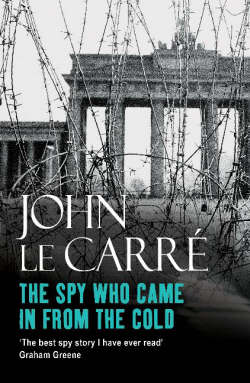
2. Many of le Carré’s novels brilliantly evoke Germany during the Cold War. The frequent use of a German setting was practically inevitable given le Carré’s studies, his membership of the British Foreign Service in West Germany (as Second Secretary in the British Embassy in Bonn and Political Consul in Hamburg, which provided cover for his MI6 activities), and the timing of his stay between 1959 and 1964 at the height of the Cold War. Berlin was the frontline of the ideological battle between the Eastern and Western blocs, and le Carré says in an afterword to The Spy Who Came in from the Cold that ‘it was the Berlin Wall that got me going, of course’. Le Carré’s first novel, Call for the Dead, was published in 1961, the year the Wall went up, and, along with a number of his other novels, is partially set in East/West Germany (see list below). The most memorable for me are The Spy Who Came in from the Cold (1963) and Smiley’s People (1979), both of which feature dénouements involving Berlin border crossings and evoke the Cold War tensions of that time and place perfectly.

3. I admire le Carré’s sophisticated understanding of 20th-century German and European history. This is evident in his Guardian piece marking the 50th anniversary of The Spy Who Came in from the Cold, where he references the complexities of Allied intelligence operations in West Berlin, including the pragmatic but unethical protection of former Nazis, because they were viewed as valuable in the fight against communism. The difficult legacy of National Socialism in post-war Germany is most closely examined in his 1968 novel A Small Town in Germany.

4. I love le Carré’s ability to communicate complex histories to a mass readership in the form of intelligent and entertaining espionage novels. This isn’t something that many authors can do well; le Carré is one of the best.

5. All of le Carré’s novels reveal a deep engagement with moral questions — A fascination with the themes of loyalty and betrayal – in relation to both individuals and ideologies/states – is particularly visible in the Cold War ‘Karla Trilogy’ (Tinker Tailor Soldier Spy 1974; The Honourable Schoolboy 1977; Smiley’s People 1979), which in turn forms part of the eight-novel Smiley collection. What’s always had the greatest impact on me as a reader, though, is the critique of how the intelligence services (on either side of the ideological divide) are willing to sacrifice the individual for the ‘greater good’, and the recognition of the immorality of this act. Le Carré’s third and fourth novels – The Spy Who Came in from the Cold (1963) and The Looking Glass War (1965) – are extremely powerful in this respect, as they recount the tragic tales of those who become pawns in larger political chess games. Incidentally, I reckon the figure of Avery in the latter most accurately embodies the professional and moral disillusionment that led Carré to leave the Service. The central question for this author was and continues to be: ‘how far can we go in the rightful defence of our western values, without abandoning them on the way?’ (see Guardian piece).

6. — and their characters are fantastically drawn. Aside from the masterpiece of Smiley — the dumpy, middle-aged, unassuming, sharp-as-a-tack intelligence genius — who could forget Control, Connie Sachs, Toby Esterhase, Peter Guillam, Ricky Tarr, Jerry Westerby, Bill Haydon and Jim Prideaux? All are so beautifully depicted that you feel they are living, breathing people.

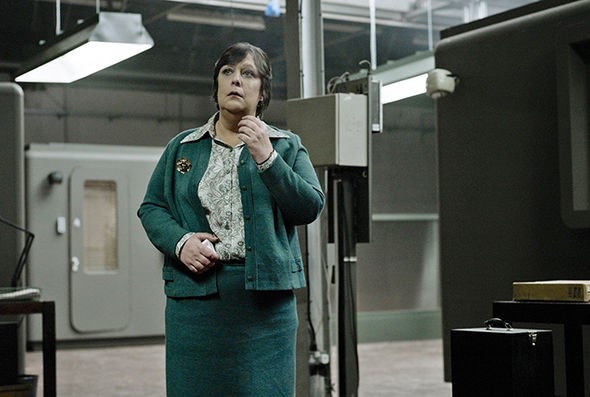
Kathy Burke as Connie Sachs in Tinker Tailor Soldier Spy (2011)

7. You won’t find more perceptive writing anywhere. In German one would say that le Carré is ‘wach’: he is awake. He really SEES the world around him and has a deep understanding of how its political and power structures work, and how individuals get tangled up in them.

8. Le Carré’s works have given us wonderful TV and film adaptations, starring great actors such as Alec Guinness, Richard Burton, Rachel Weisz and Gary Oldman. My favourites are probably still the two Guinness ‘Smiley’ TV series, but I do have a soft spot for the Tinker Tailor film, which was very stylishly done and featured a stellar cast including Kathy Burke, Benedict Cumberbatch and Colin Firth.

Alec Guinness as Smiley, retrieving a clue in Smiley’s People (1982) The man sees everything….

9. The quality of le Carré’s work is consistently outstanding — the plotting, the characterisation and the settings are all sublime. One of my own later favourites is 2001’s The Constant Gardener – a brilliant exploration of pharmaceutical corruption in the developing world. In his review of 2013’s A Delicate Truth, Mark Lawson wrote that ‘no other writer has charted – pitilessly for politicians but thrillingly for readers – the public and secret histories of his times, from the second world war to the war on terror’. The sheer range of his writing is breathtaking — and it was all impeccably researched.

10. Last but not least, le Carré was a true friend of languages, and was extremely generous in using his influence to promote language learning in the UK. He was deservedly awarded the Goethe Medal in 2011 for ‘outstanding service for the German language and international cultural dialogue’.

I’ll be raising a glass of posh red to his memory tonight.

Here’s a list of Le Carré novels that reference the German-speaking world/history:

  • Call for the Dead (Smiley’s German links; Nazi past; East Germany)
  • The Spy Who Came in From the Cold (Nazi past; divided Berlin; East Germany)
  • The Looking Glass War (East and West Germany)
  • A Small Town in Germany (Nazi past; Bonn, West Germany)
  • Smiley’s People (Hamburg, West Germany; Bern, Switzerland; divided Berlin)
  • The Perfect Spy (German at Oxford; Vienna and Berlin)
  • The Secret Pilgrim (diverse, including East Berlin, Hamburg, Munich, Zurich)
  • Absolute Friends (West Germany, East Germany)
  • A Most Wanted Man (Hamburg, Germany)
  • Our Kind of Traitor (Switzerland).

Arnaldur Indriðason’s The Shadow Killer: exclusive extract and giveaway!

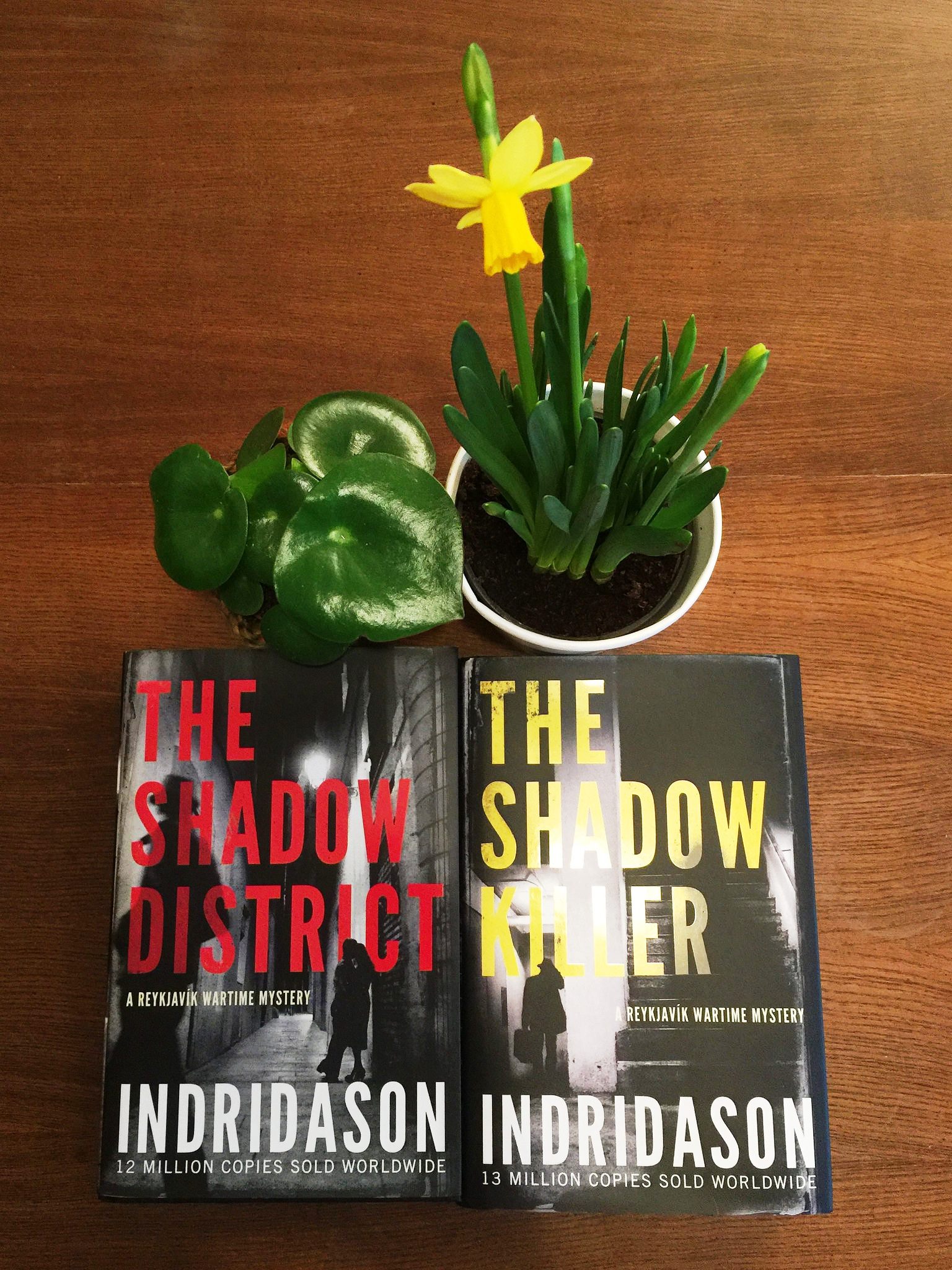
I’m delighted to feature an exclusive extract from Arnaldur Indriðason’s The Shadow Killer on the blog today. Plus: to celebrate the publication of the novel, the good people at Harvill Secker have donated two copies to give away to UK readers! All you need to do is answer one simple question (see the bottom of the post for details).

Indriðason is one of my very favourite crime writers. He’s best known for the excellent long-running ‘Detective Erlendur’ series featuring Erlendur and his colleagues Elinborg and Sigurdur Oli (see Crime Fiction Lover’s wonderful guide here).

Happily, the author has now embarked on an absorbing new ‘Reykjavík wartime’ series, set in Iceland during the Second World War, a time that brought a huge number of changes to its little capital city, not least due to the presence of the British and American armies. As well as treating readers to an intriguing investigation, The Shadow Killer also provides some fascinating insights into the dramatic social changes in Iceland at the time.

Place: Reykjavíc

Time: August 1941

Detectives: Flóvent (Reykjavic’s only detective) and Thorson (an Icelandic-Canadian military policeman)

Case: A travelling salesman is found murdered in a basement flat, killed by a bullet from a Colt 45. Could a member of the Allied Occupation forces be involved?

View of Reykjavik (taken a few years ago during Iceland Noir)

EXTRACT from The Shadow Killer, translated by Victoria Cribb (Harvill Secker, 2018), pp. 50-52 (reproduced with kind permission of the publisher).

US counter-intelligence had been given temporary quarters in one wing of the old Leper Hospital on Laugarnes Point. They shared it with their British colleagues who had requisitioned the hospital building shortly after the occupation. The few remaining patients had been sent to a sanatorium in Kópavogur, the settlement to the south of Reykjavík.

Although the United States was officially still neutral, within a few months American troops were scheduled to relieve the British garrison and take over responsibility for the defence of Iceland. First to arrive had been the Marine Corps and 5th Defense Battalion on 7 July with their anti-aircraft units, followed by the first land army contingent on 6 August, and more reinforcements were expected any day now to swell their ranks – thousands of armed men who had never even heard of Iceland before, let alone known where to find it on a map. In no time at all Reykjavík had become a seething mass of British troops preparing to withdraw, reinforcements from America, incomers from the Icelandic countryside – seeking a better life in the suddenly prosperous city – and the citizens of Reykjavík themselves, young and old, who had yet to come to terms with the transformation their town had undergone in the last year.

As Thorson drove up to the imposing edifice of the old Leper Hospital on the northern side of Laugarnes, he found himself thinking about prejudice and ostracism, thoughts which were no strangers to him. Naturally the location was no coincidence: the patients had been segregated, kept at a safe distance from the town, or rather, more importantly, the townspeople had been kept at a safe distance from them. A second hospital, the Kleppur Asylum, stood down by the sea a little to the east, even further removed from the town. The Leper Hospital was the most impressive wooden building in the country. It consisted of two floors and an attic, with rows of windows the length of the building and two gables projecting from the front, one at each end. As he admired it, Thorson thought about all the disruption the military occupation had brought to this sparsely populated island and its simple society. On a calm spring day in 1940, the war had come knocking on Reykjavík’s door, and transformed the lives of its inhabitants. Thorson, together with a handful of other Canadian volunteers, had been among the first to come ashore with the British invasion force, as a private in the Second Royal Marine Battalion. They had marched under arms to the country’s main government offices and witnessed first- hand the look of bewilderment on the faces of the townspeople, who must have feared that life in Iceland would never be the same again.

Thorson’s thoughts returned to the task in hand. Analysis of the cyanide capsule found in Felix Lunden’s flat had confirmed his suspicions: it was a so-called suicide pill, manufactured in Germany. If the user bit down on the capsule, or ampoule, the potassium cyanide it contained would theoretically kill him in a matter of seconds, though in practice it could take as long as fifteen minutes, causing indescribable suffering. It was the first time a capsule of this kind had turned up in Reykjavík, and the intelligence officer was demanding to know how it had come into the hands of the Icelandic police. He was a major, fiftyish, aggressive and gruff, with a pockmarked face and a black glove on one hand. It looked to Thorson as though he was missing two fingers. His name was Major Graham and he had served in the US Military Intelligence Division for many years. With him was his opposite number from British intelligence, who had been consulting the records for any mention of Rudolf Lunden in the period immediately after the invasion. He was somewhat younger than Major Graham and disfigured by a burn that extended from his neck up one side of his face, leaving only a stump of an ear. He had transferred to intelligence after sustaining serious injuries when his plane came down. His name was Ballantine – like the whisky, he said as he introduced himself, adding that he was no relation. The smile that accompanied this remark was more like a grimace. Thorson got the impression that the joke had grown
rather stale.

‘Why would an Icelander be carrying a suicide pill?’ asked
Major Graham. ‘Hidden in a suitcase, you said?’

Sailing out of Reykjavik harbour

THE SHADOW KILLER GIVEAWAY!

We have two copies of The Shadow Killer to give away (UK readers only on this occasion…)

Just pick the correct answer to the question below and pop it in a comment below. The draw will close at midnight on Monday 19th March; I’ll contact you directly if you’re one of the lucky winners!

Question: What’s the name of the dour Icelandic murder detective in Arnaldur Indriðason’s first series?

A) Gylfi Þór Sigurðsson

B) Katrín Jakobsdóttir

C) Erlendur Sveinsson

D) Halldór Kiljan Laxness

E) Yrsa Sigurðardóttir

🙂

The 2017 Crime Writers’ Association Daggers – a golden year!

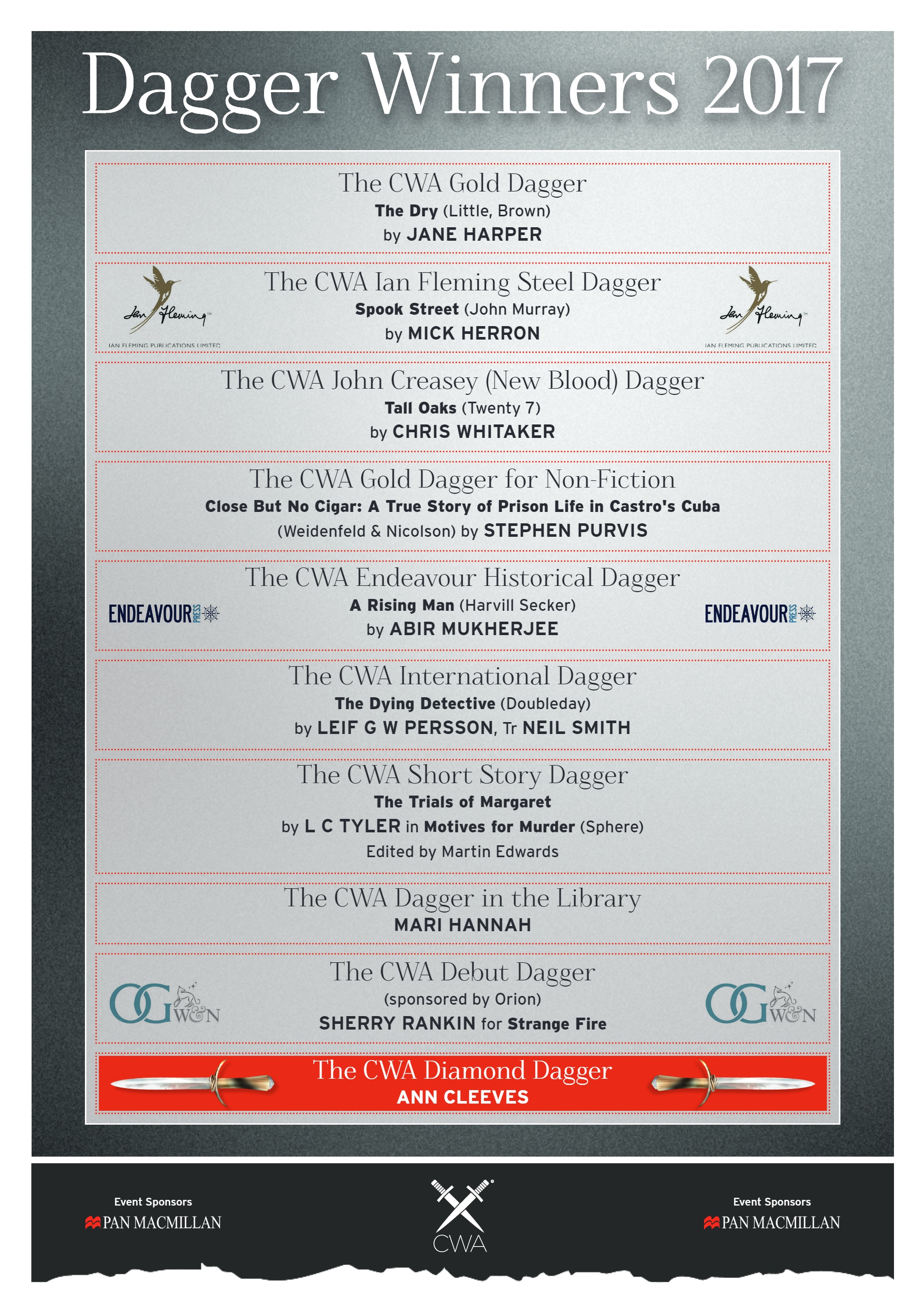
It’s one of the biggest crime events of the year. And 2017 has been a particularly golden year for the CWA Daggers, with a number of awards going to outstanding and pleasingly varied works.

No less than three CWA winners – set in Australia, India and Sweden – have been championed on Mrs. Peabody Investigates:

Huge congratulations also to Ann Cleeves and Mari Hannah on their richly deserved awards!

If you’re looking for new crime reads or present ideas, then I would thoroughly recommend having a browse on the individual Dagger webpages, each of which lists the winning, shortlisted and longlisted titles. Here’s a link to the Historical Dagger page so you can see – it’s quite a treasure trove. Links to the other Daggers are on the left-hand side.

CrimeFest 2017: Krimi panel, Petrona Award, American Noir, and Icelandic Queens of Crime

As ever, CrimeFest in Bristol was a four day extravaganza of goodness. Here are a few highlights.

First ever Krimi panel at CrimeFest

The four German authors on the Krimi panel – Mario Giordano, Merle Kröger, Volker Kutscher and Melanie Raabe – had never met before, but you’d never have known given the lovely dynamic between them. Each brought a very different kind of crime novel to the event, which made for fascinating and varied discussion.

Clockwise from top left: Mrs P, Melanie, Volker; Jens Boyer (Goethe-Institut London), Mrs P, Mario, Merle, Melanie, Volker; Jess (Mantle), Volker, Melanie, Mario, Merle, Mrs P; Merle and Mario.

Mario is the author of a comic crime novel with a serious edge – Auntie Poldi and the Sicilian Lions – which shows a recently widowed Aunt Poldi arriving in Sicily with the intention of drinking herself to death. Instead, she promptly becomes involved in a murder case and meets a handsome Sicilian police detective… Merle’s novel Collision is perhaps best described as a maritime thriller, and shows four vessels – a cruise liner, a refugee dingy, an Irish freighter and a Spanish rescue ship – crossing paths in the middle of the Mediterranean. Inspired by a short film shot by a cruise ship passenger, it has serious points to make about the refugee crisis and the negative effects of capitalism.

Volker writes historical crime novels – six in the ‘Gereon Rath’ or ‘Babylon Berlin’ series to date – which are set in Weimar Berlin and investigate (in part) the ways the Nazis came to power. The first novel is currently being adapted as a sixteen-part TV series by ARD/Sky, directed by Tom Tykwer, and will air this autumn. And Melanie presented her clever psychological thriller The Trap, which has done incredibly well for a debut, and is in the process of being made into a film by TriStar pictures. It features an intriguing protagonist – traumatised writer Linda Conrads – and explores the themes of grief, loss, isolation, madness and justice.

Erich the Bavarian duck was in attendance

Audience questions led to discussion of how the German authors work with their translators – Imogen Taylor, Niall Sellar, John Brownjohn, and Rachel Hildebrandt/Alexandra Roesch – and there was lavish praise for the very skilled work that they do. The authors also recommended some of their favourite Krimi writers, including Doris Gercke (‘Bella Block’ series, set in Hamburg), Jan Costin Wagner (‘Kimmo Joentaa’ series, set in Finland), Bernhard Aichner (Woman of the Dead, set in Austria) and Simone Buchholz (Blue Night, currently being translated by Rachel Ward for Orenda Books, set in Hamburg).

Thanks once again to our sponsors for making this very special event happen!

2017 Petrona Award

Saturday night at CrimeFest is always a special occasion for the Petrona team, as it’s when we announce the winner of the Petrona Award. This year the award went to Norwegian author Gunnar Staalesen for his crime novel Where Roses Never Die, translated by Don Bartlett and published by Orenda Books.

Here’s what we said about Where Roses Never Die when we announced the shortlist: ‘Grieving private detective Varg Veum is pushed to his limits when he takes on a cold case involving the disappearance of a small girl in 1977. As the legal expiry date for the crime draws near, Veum’s investigation uncovers intriguing suburban secrets. In what may well be the most accomplished novel in a remarkable series, the author continues to work in a traditional US-style genre, but with abrasive Scandi-crime social commentary very much in evidence.’

Both Gunnar and Don Bartlett were at CrimeFest to accept and enjoy the award, and Gunnar paid touching tribute to his ‘perfect translator’ in his acceptance speech. Congratulations must also go to the other shortlisted authors for their wonderful crime novels – gems one and all. Sincere thanks as well to our Petrona Award sponsor, David Hicks, for his generous support.

From left: Gunnar accepting the Petrona Award, flanked by Sarah Ward, Barry Forshaw, Jorn Lier Horst (last year’s winner) and Adrian Muller; Barry, Gunnar, Karen Sullivan of Orenda Books, Don Bartlett, Sarah Ward, Mrs P; Gunnar with Ewa Sherman

Other highlights for me included the American Noir panel, with C.J. Box (‘Joe Pickett’ series) and Bill Beverly (whose exceptional debut Dodgers has raked in prize after prize), and the Icelandic Queens of Crime panel, featuring Jónína Leósdóttir, Solveig Pálsdóttir, Lilja Sigurðardóttir and Yrsa Sigurðardóttir. All four talked very eloquently about their work and Iceland, and also made me want to invite them to a riotous and extremely fun dinner party.

A big thank you to the CrimeFest organisers for another cracker of a year.

Clockwise from top left: Mario Giordano; Barry Forshaw with the American Noir panellists; tea with Ewa and Jacky; Barry moderating the Icelandic Queens of Crime; last but not least – Ragnar Jonasson, Melanie Raabe and Hugh Fraser after their ‘Misfits and Miscreants’ panel.

International delights at Newcastle Noir (plus my top three picks)

Crime fiction with plenty of laughter and cake: my first visit to Newcastle Noir at the beautiful Lit & Phil was a hugely enjoyable experience. This Geordie crime festival has been running just three years, but featured an impressive programme of 14 panels over two days (and that’s not counting the fringe events). All credit to organisers Dr. Jacky Collins (Northumbria University) and Kay Easson (The Lit & Phil) for creating such a vibrant and wonderfully friendly event.

Given the relatively modest size of the festival, I was struck by the high proportion of international writers who were there – thanks in no small part to Karen Sullivan at Orenda Books, who had ten authors with her, one of whom had flown in all the way from Australia. In order of appearance:

  • Lilja Sigurðardóttir (Iceland)
  • David Swatling (US/Netherlands)
  • Kjell Ola Dahl (Norway)
  • Thomas Enger (Norway)
  • Nina von Staffeldt (Denmark)
  • Antti Tuomainen (Finland)
  • Cay Rademacher (Germany/France)
  • Wulf Dorn (Germany)
  • Erik Axl Sund (aka Jerker Eriksson/Hakan Axlander Sundquist, Sweden)
  • Johana Gustawsson (France)
  • Camilla Grebe (Sweden)
  • Paul Hardisty (Canada/Australia)

And then there were a number of British crime authors who set their works in foreign climes: Steph Broadribb (‘Lori Anderson’ series, Florida), David Young (‘Karin Müller’ series, East Germany), William Ryan (‘Korolev’ series, 1930s Russia; The Constant Soldier, 1944 Germany), Luke McCallin (‘Reinhardt’ series, WWII Sarajevo and post-war Berlin), and Quentin Bates (‘Gunna’ series, Iceland).

The Newcastle Noir bookshop had a distinctly international flavour

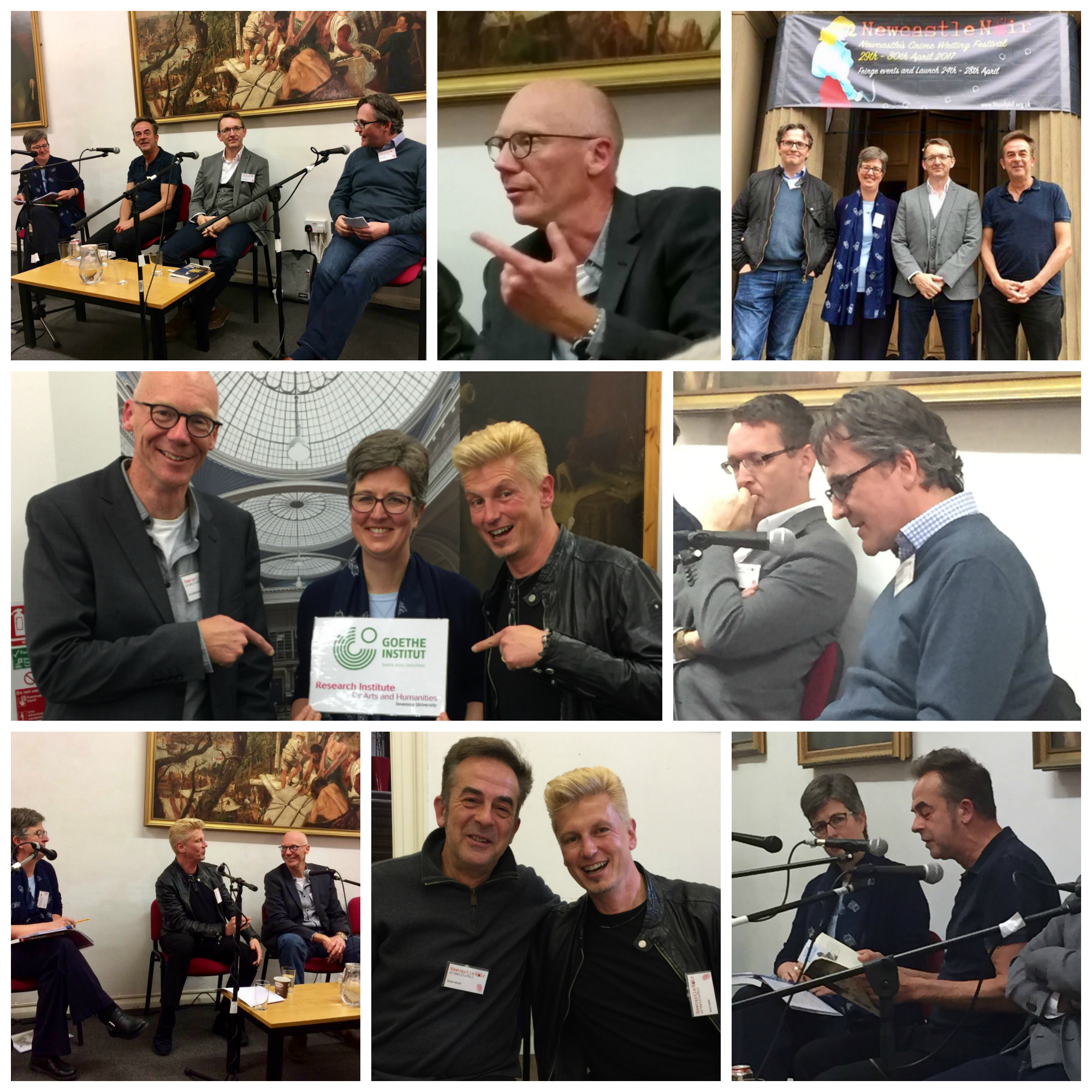
A major highlight for me was chairing two ‘German’ panels: ‘German Historical Crime’ with Luke McCallin, William Ryan and David Young, and ‘German Noir’ with Wulf Dorn and Cay Rademacher. All the authors gave fascinating, thoughtful and eloquent answers to questions about writing historical crime fiction/psychological thrillers, their settings (1930s Russia; World War II Sarajevo and Germany; post-war Hamburg and Berlin; 1970s East Germany; present-day Germany), and the research they undertook while writing their works. Lizzy Siddal has posted a marvellous write up of the two panels over at Lizzy’s Literary Life – do take a look! And for further details of the authors and their works, see my post from last week.

From top left by row: the ‘German Historical Fiction’ panel; Cay Rademacher answers a question; GHF panel group photo; Cay, Mrs P and Wulf Dorn thank the Goethe-Institut London for its support; William Ryan reads from The Constant Soldier while Luke McCallin listens; the ‘German Noir’ panel; David Young and Wulf fostering Anglo-German relations; David reads from Stasi Wolf.

Here are my top three international crime fiction picks from Newcastle Noir – all by authors who are new to me:

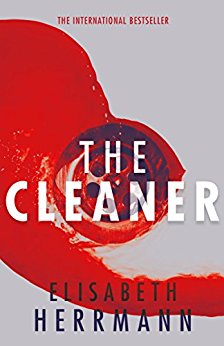
Elisabeth Herrmann’s The Cleaner (translated by Bradley Schmidt; Manilla 2017). Elisabeth was the one who got away: she was due to appear on the ‘German Noir’ panel (replacing Sascha Arango), but was unable to make it due to problems with her flight. My consolation was reading The Cleaner, an extremely accomplished novel that features an outstanding protagonist, Judith Kepler. Judith works for a company that specialises in cleaning crime scenes, and comes across a clue to a mystery in her own East German childhood when she cleans a flat following a particularly nasty murder. A hybrid detective novel, historical crime novel and thriller, The Cleaner is a gripping and highly engaging read.

Luke McCallin’s The Man from Berlin (No Exit Press, 2014). I hadn’t read any of Luke’s work before being asked to chair the ‘German Historical Fiction’ panel, and was extremely impressed by The Man in Berlin, the first in the ‘Gregor Reinhardt’ series. Aside from the vast amount of historical research that’s gone into the novel, I particularly liked the unusual setting for a WWII series – Sarajevo of 1943. The city is beautifully evoked, and the complex politics of the time are deftly incorporated into the narrative (which is no mean feat). The novel sees conflicted military intelligence officer Reinhardt investigating the politically charged murder of a Yugoslav film star and a German military colleague.

Paul E. Hardisty, Reconciliation for the Dead (Orenda Books, 2017). Paul was on the ‘Action Thriller’ panel and is the author of the ‘Claymore Straker’ novels. While this is the third in the series, it can be read first, because it tells Straker’s origin story, focusing on his formative years as a soldier in the South African Army in the early 1980s. That narrative is framed by Straker’s return to Africa in 1996 to testify at the South African Truth and Reconciliation Commission. I hadn’t intended to buy this book, but after hearing Paul speak it became a must-read. I was particularly struck by the author’s willingness to present the novel as a serious attempt to get to the terrible truths of South African apartheid, and to depict them in as realistic and hard-hitting a way as possible. I’m two thirds of the way through the novel now, and can tell that it’s going to stay with me for a long time.

To finish off, here are some photos of beautiful Newcastle, the Lit & Phil, and some criminally minded friends. Looking forward to Newcastle Noir 2018 already…

With thanks to Susan at The Book Trail, Vic Watson at ElementaryVWatson, Ewa Sherman and other attendees for the use of some of these photos.