Spring crime reading: World Noir series

Spring has sprung here in Wales, and we’ve already had a few sunny days to reacquaint ourselves with the pleasures of reading outside in the garden, park, or by the sea. Bliss.

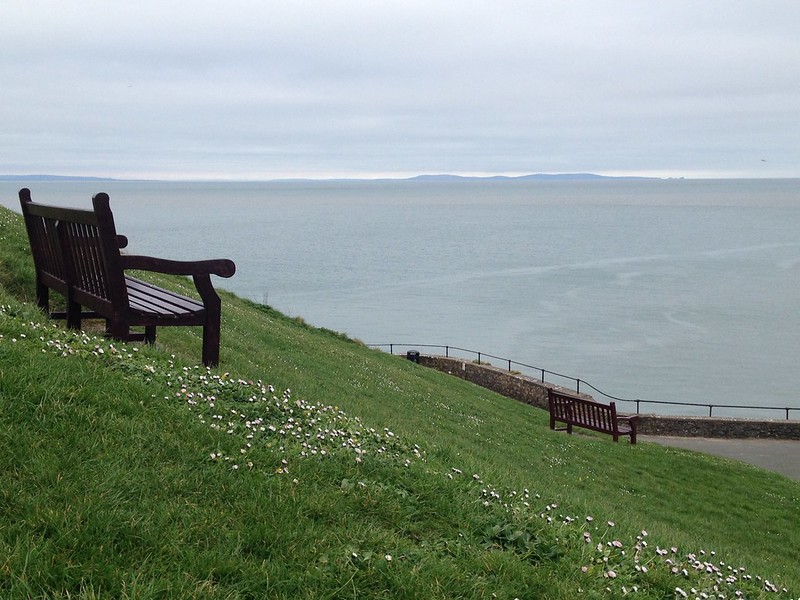
Left: one of my favourite reading benches in Tenby, Wales.

I’ve been getting on well with my research (more on that later), and in my spare time have been catching up with new releases in the ‘World Noir’ series from Europa Editions in New York. There are around 20 titles available from all around the globe (see below), of which I’ve now sampled three from France: Jean-Claude Izzo’s Total Chaos (translated by Howard Curtis, originally published 1995); Philippe Georget’s Summertime, All the Cats are Bored (translated by Steven Randell, first published 2009), and Jean-Denis Bruet-Ferreol’s (aka Mallock) The Cemetery of Swallows (Steven Randell again, first published 2012).

Image courtesy of World Noir / Europa Editions

Izzo’s Total Chaos – ‘This first installment in the legendary ‘Marseilles Trilogy’ sees Fabio Montale turning his back on a police force marred by corruption and racism and taking the fight against the mafia into his own hands’. Beautifully written, it’s also the story of three boyhood friends – Ugo, Manu and Fabio – and the pursuit of justice in a tough, imperfect world. The novel has a very masculine feel, with women relegated to the role of victim, mother figure or prostitute-with-heart-of-gold, but I can forgive this, because it’s so very good, especially in its exploration of the migrant experience. I’m keen to get my hands on the other two now.

Georget’s Summertime – ‘It’s the middle of a long, hot summer on the French shore and the town is full of tourists. Out of the blue a young Dutch woman is brutally murdered and another disappears without a trace. Gilles Sebag finds himself thrust into the middle of a diabolical game. If he intends to salvage anything he will have to forget his suspicions of his wife’s unfaithfulness, ignore his heart murmur, and get over his existential angst’. Like Total Chaos, this novel quickly immerses the reader in its Mediterranean setting, while drawing the reader into a complex and compelling police investigation. See Bernadette’s excellent review over at Reactions to Reading

Mallock’s The Cemetery of Swallows: ‘One day, Manuel Gemoni travels to the other end of the world to kill an old man. Manuel can only explain his bizarre actions by saying “I killed him because he had killed me.” Unable to comprehend why an ordinary family man would go to such lengths to murder a man he didn’t know, Police Commissioner Amédée Mallock decides to investigate. In order to save Manuel, Mallock must traverse the harsh tropical jungles of the Dominican Republic and the snow-covered streets of Paris’. I’ve just started this one, and am enjoying the intriguing nature of the case, the characterization of the investigator and the Dominican setting. There is a hint – just a tiny, subtle hint – of Vargas, but with the quirkiness dialed down. 

In sum: this is a quality series, showcasing the best of classic and contemporary noir, and we are promised another three to four titles each season. It could be time to hide the credit card, especially as the novels are so beautifully presented.

Thanks to Europa Editions for sending me these review copies from the World Noir series

German crime research update: I’ve had a fascinating time looking at crime fiction under National Socialism. To my surprise, there was lots produced between 1933 and 1945, and it wasn’t greatly censored until 1939, when authors were instructed to produce crime novels featuring policeman as heroes of the state. However, only a few overtly referenced Nazi ideology, which suggests that crime fiction was viewed more as a benign form of popular entertainment than as a tool for indoctrination. The research carried out by Carsten Würmann has been invaluable for getting an insight into this period.

I’ve also been delving into the Soziokrimi (social crime novel) or ‘new German crime novel’, which emerged in the late 1960s, and was influenced by both the student movement and Swedish writers Sjöwall and Wahlöö. There are some very interesting texts that explore the social causes of crime and the negative impact of capitalism on society. While some are quite earnest, others use humour to get their message across: Horst Bosetzky’s 1972 Einer von uns beiden (One of the Two of Us), depicts a blackly comic battle of wits between a smug, middle-class professor and the working-class student trying to blackmail him. The 1974 film adaptation was quite successful, and can be seen in German on YouTube here. Jürgen Prochnow, the actor playing Ziegenhals, went on to star in 1981’s Das Boot. 


The ultimate Christmas gift: an international crime novel!

For what could be finer than giving or receiving a crime novel set in foreign climes? Especially handy for those whose families are driving them bonkers by Boxing Day: just channel those murderous desires into crime fiction!

Here are some present ideas, which happen to be ten of my favourites from this year, ranging from police procedurals and detective fiction to historical and hybrid crime. Some I’ve reviewed (just click on the link), others I haven’t (so many books, so little time). All are undoubtedly available from your local, friendly, independent bookseller!

Ioanna Bourazopoulou, What Lot’s Wife Saw, translated from Greek by Yannis Panas (Black and White Publishing, 2013 [2007]). Winner of the 2008 Athens Prize for Literature, this is a dazzling, hybrid crime novel that takes readers on an extraordinary journey of the imagination. Set in the future after a devastating tsunami, its reluctant investigator is Phileas Book, who works for The Times compiling Epistlewords, a three-dimensional crosswordA brilliant, freewheeling narrative for those who like puzzles and substantial reads. Full review here.

Gillian Flynn, Dark Places (Weidenfeld & Nicolson, 2009). For my money, Flynn is one of the most original and daring crime writers out there, but her novels have polarized readers, so handle with care! Dark Places tells the story of a family massacre and its aftermath from the perspective of survivor Libby Day and other family members. It’s by turns harrowing, moving, blackly humorous and redemptive. My favourite of Flynn’s novels so far. Full review here.

Eugenio Fuentes, At Close Quarters, translated from Spanish by Martin Schifino (Euro Crime/Arcadia, 2009 [2007]). Captain Olmedo, a high-ranking army colonel, is found dead at his home. The authorities say it’s suicide, but daughter Marina has her doubts and hires P.I. Ricardo Cupido to investigate. This is the first novel I’ve read by Fuentes (the 5th in the series), and I was impressed both by its depth of characterisation and by its illumination of different political attitudes/mindsets in Spain.

The original Spanish cover for At Close Quarters

Arnaldur Indriðason’s Strange Shores, translated from Icelandic by Victoria Cribb (Harvill Secker, 2013). The ninth in the Reykjavik series and by all accounts the last (*sob*). Detective Erlendur returns to his childhood home to face the trauma that shaped his life – the disappearance of his little brother in a snowstorm. While there, he investigates another disappearance, of a young woman in 1942. A thoroughly engrossing novel with a powerful ending. But make sure the other eight have been read first! Full review here.

M.J. McGrath, White Heat and The Boy in the Snow (Mantle 2011/2012). These are the first two novels in the Edie Kiglatuk series, set in the chilly realm of the Arctic. Edie is a wonderful protagonist, and through her investigations we gain a tremendous insight into life in the frozen north – not least its cuisine. There are maps at the front of each novel, which provide a new perspective on a world in which Alaska is ‘down south’. Absorbing and entertaining reads.

Derek B. Miller, Norwegian by Night (Faber and Faber, 2013). I adored this book and haven’t met anybody who didn’t love it. It stars (and that really is the correct term) Sheldon Horowitz, a recently-widowed Jewish-American octogenarian living in Oslo with granddaughter Rhea, who makes a crucial decision after witnessing an appalling crime. An absolute joy from start to finish. Full review here.

Angela Savage, Behind the Night Bazaar (Text Publishing, 2006). The first in the Jayne Keeney series by Australian author Savage, this novel was shortlisted for the Ned Kelly Best First Book Award in 2007. Jayne is a highly engaging private investigator based in Bangkok, whose investigations offer readers an escape to sunnier climes, and provide a vivid and insightful portrait of Thailand. Full review here.

Simon Urban, Plan D, translated from German by Katy Derbyshire (Harvill Secker, 2013). It’s 2011 and the Berlin Wall is still standing. Welcome to the alternative world of Plan D, in which the reunification of Germany never happened, and fifty-six year-old East German Volkspolizei captain Martin Wegener is about to embark on the strangest investigation of his career. An admirably bonkers alternative history that will appeal to those with an interest in 20th-century Europe and the Cold War. Full review here. A handy GDR glossary is available too.

Ben H. Winters, The Last Policeman and Countdown City (Quirk Books 2012/13). The first and second of a trilogy set in an America of the near future. Asteroid Maia is on a collision course with earth, and with just six months to impact, society is beginning to disintegrate. Why, given that they’ll all be dead soon anyway, does Detective Henry Palace of the Concord Police Department bother to investigate a suspicious suicide? Because that’s the kind of dogged guy he is… Sharp, funny and brilliantly observed.

Daniel Woodrell, Winter’s Bone (Sceptre, 2007). When sixteen-year-old Ree Dolly’s father disappears, she needs to find him again quickly to prevent the loss of her family home. Set in the Orzark Mountains of Missouri during an unforgiving winter, in a closed community that has its own laws, this is a tough but beautifully-written novel. Ree is a memorable protagonist, who reminded me a little of Mattie Ross in Charles Portis’ True Grit.

Winter’s Bone was turned into an acclaimed film starring Jennifer Lawrence

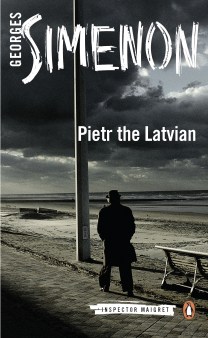
The very first Inspector Maigret novel: Pietr the Latvian

A little while ago, I reported that Penguin were publishing all 75 of Georges Simenon’s Inspector Maigret novels – in their original order and with new translations – at the rate of one a month, starting in November with Pietr the Latvian. Their press release states that this is ‘part of Penguin Classics long-term project to bring Simenon’s writing to a British audience’ – a laudable aim given his output of over 400 novels and short stories, and his status as a literary giant in Europe.

Penguin kindly sent me a copy of Pietr the Latvian, beautifully translated by David Bellos, which I very much enjoyed reading over a rainy weekend. Originally published in 1930, the novel felt a little old-fashioned in some respects, but remarkably modern in another:

  • There were moments when I had to take a deep breath due to the novel’s negative depiction of Jewish characters and its essentialist approach to issues such as race. Anti-Semitism and biological determinism were common in the 1930s, and might not have stood out for readers of the time, but of course they do now. And the fact that the book was published in the same decade that National Socialism took hold in Germany is a sobering one. I did find that there was somewhat more nuance towards the end of the novel, so I’ll be interested to see how these elements are handled later in the series…
  • But one very pleasant surprise was the highly European feel of the novel. Right at the beginning, Pietr the Latvian is identified as a major criminal being tracked by the ICPC or International Criminal Police Commission, based in Vienna, which ‘oversees the struggle against organised crime in Europe, with a particular responsibility for liaison between the various national police forces on the Continent’ (p.1). Sounds a lot like more modern organisations such as Interpol or Europol, doesn’t it? And in the course of the first four pages, Maigret is shown reading telegrams from Krakow, Bremen, the Netherlands, Brussels and Copenhagen, moving effortlessly between languages as he checks the progress of Pietr across Europe to his own juristiction of Paris.

Up until now, I’ve associated this kind of ‘Eurocrime’ feel with novels written after the collapse of communism in 1989, such as Henning Mankell’s The Dogs of Riga and Arne Dahl’s more recent Opcop/Europol series, which thematise the rise of organised crime across European borders, and the need for coordinated pan-European policing. But now I can see that these constitute just one phase of the ‘European crime novel’, and a late-ish one at that. Simenon’s Maigret debut was already on the case in 1930, and that means others from that time and beyond are likely to address similar themes. I’m already looking forward to finding them for the Euro strand of my research: as always, suggestions gratefully received!

The second Maigret novel, The Late Monsieur Gallet, will be out in December. I can already feel a little prickle of addiction, which is no doubt exactly what the good people at Penguin intend… The book covers, by the way, are by Harry Gruyeart, a Magnum photographer. This is undoubtedly going to be a gorgeous-looking series.

New! Anglo-French drama The Tunnel / Penguin Classics Simenon series

Continuing with last week’s French theme, two bits of news about Anglo-French (or Belgian French-language) collaborations:

1. New crime drama The Tunnel, inspired by the Swedish-Danish Bron/Broen (The Bridge), premieres on Sky Atlantic tomorrow,  Wednesday 16th October, at 9pm.

The Tunnel images - Stephen Clemence

Introducing Elise and Karl…

Here’s the series blurb from the channel’s website:

>> The Tunnel is a gripping new thriller from the makers of Broadchurch, set against the backdrop of Europe in crisis.

When a prominent French politician is found dead at the mid point of the Channel Tunnel, on the border between the UK and France, detectives Karl Roebuck (Stephen Dillane) and Elise Wassermann (Clémence Poésy) are sent to investigate on behalf of their respective countries. The case takes a surreal turn when a shocking discovery is made at the crime scene, forcing the French and British police into an uneasy partnership.

As the serial killer uses ever more elaborate and ingenious methods to highlight the moral bankruptcy of modern society, Karl and Elise are drawn deeper into his increasingly personal agenda. <<

The 10-part series boasts an Anglo-French writing team, and is ‘the result of an entente cordiale with France’s CANAL+’. You can watch the first five minutes on the Sky Atlantic website here. Having had a peek, I think they’ve caught the tone of the original very well – gritty and atmospheric, but with a sharp sense of humour – and it looks like the dynamic between the Saga-like French cop and her rather more dour British counterpart is going to be good.

As I don’t happen to have access to the channel in question, I will be relying on UK viewers for some reviews…

2. Starting in November, Penguin Classics will be publishing all 75 of acclaimed Belgian writer Georges Simenon’s Inspector Maigret novels. They will appear in shiny new translations at the rate of one per month, with Pietr the Latvian first off the presses.

I’ve not read nearly enough Simenon, and have always felt a little guilty about this lack given the breadth of his work and its influence (his novels have been translated into over 50 languages and adapted into more than 90 films).

And how to resist writing like this (courtesy of a little booklet Penguin sent me)?

‘It was a ridiculous situation. The inspector knew there wasn’t one chance in ten that his surveillance would be of any use.

Yet he stuck it out – just because of a vague feeling that didn’t even deserve to be called an intuition. In fact it was a pet theory of his that he’d never worked out in full and remained vague in his mind… What he sought, what he waited and watched out for, was the crack in the wall. In other words, the instant when the human being comes out from behind the opponent.’

#43 / Pascal Garnier, Moon in a Dead Eye

Pascal Garnier, Moon in a Dead Eye, translated from the French by Emily Boyce (London: Gallic Books, 2013 [2009])  4 stars

Love this design: a seriously stylish series.

Opening line: Martial compared the photo on the cover of the brochure with the view from the window.

Pascal Garnier, who died in 2010, was a prolific French author who worked in a number of genres, including crime. Gallic Books have thus far published four of his works in translation, with more due in 2014.

To date, I’ve sampled two of Garnier’s novels – or more accurately novellas of modest length – and have very much enjoyed the sharp observational powers deployed in each. Moon in a Dead Eye is set in a posh French retirement village: a gated community whose inhabitants are attracted by its 24/7 security and the promise that they will be protected from nasty ‘foreign’ elements. But perhaps Martial, Odette, Maxime, Marlene and Lea should be worrying less about the threat from without than the threat from within? To all those fantasising about a retirement in the South of France, I can only say: be careful what you wish for…

In common with Garnier’s earlier novel A26, which I would also highly recommend, Moon in a Dead Eye digs beneath the apparent respectability of provincial life to reveal the violence lurking beneath. This violence is often male, erupting from unexpected sources following a series of interlinked events. Although the stories they tell are undeniably bleak, both books are leavened with a biting satirical humour (reminiscent of Patricia Highsmith or the German author Ingrid Noll), and are beautifully and precisely written.

I’m looking forward to reading the other two (superbly titled) Garnier novels already available – The Panda Theory and How’s the Pain? Together with A26 and The Moon in a Dead Eye, they’ll make a stylishly grim quartet on my bookshelf.

Mrs. Peabody awards Moon in a Dead Eye a beautifully-observed and rather wicked 4 stars.

With thanks to Gallic Books for sending me an advance copy of this book.

Creative Commons License

 
.

Crime Scene: European crime fiction guides

I was having a stroll around the Crime Time website the other day, and ended up in an excellent section called Crime Scene, which profiles crime fiction on a country by country basis.

At the moment there are four Crime Scene guides – for France, Italy, The Netherlands and Switzerland (the latter includes info on Germany too) – and more will be added in future. They can be viewed online or downloaded as a PDF, and provide a really useful overview of the respective countries’ crime scenes.

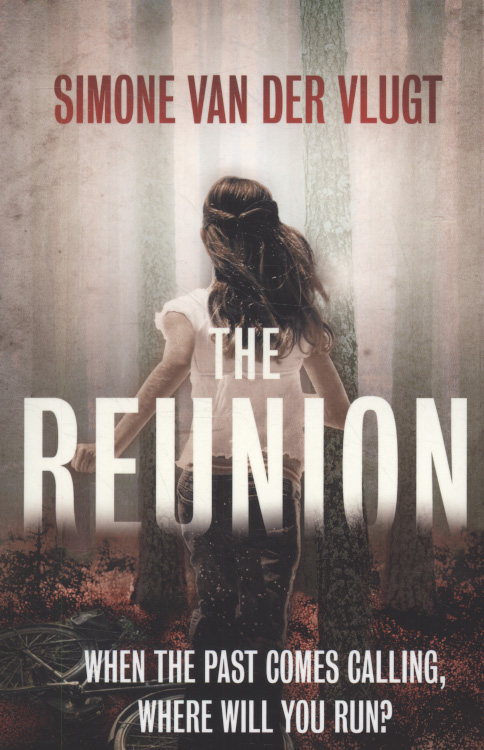
Simone van der Vlugt is one of the writers featured in The Netherlands guide

Each is written by an expert on the crime of the country in question, but all look at similar areas, under the guidance of series editor Bob Cornwell:

– a history of the country’s crime fiction

– recent publishing trends

– notable writers (often by category, e.g. police procedural, historical crime fiction)

– major crime prizes

– key publishers

– key suppliers, festivals and websites

– key reference works

I’m extremely impressed with these guides, which pack a lot of information into a relatively small space. Produced in conjunction with the International Association of Crime Writers, they provide a great resource for beginners and more advanced crime readers alike, and I look forward to seeing more in due course.

#41 / Håkan Nesser, The Weeping Girl

Håkan Nesser, The Weeping Girl [Ewa Morenos Fall], translated from the Swedish by Laurie Thompson (London, Mantle 2013 [2000])  4 stars

Hmmm. Didn’t like this cover: at odds with the description of ‘the weeping girl’ in the book

Opening lineWinnie Maas died because she changed her mind. 

The Weeping Girl is the eighth in Håkan Nesser’s Inspector van Veeteren series, although its lead investigator is actually his very capable protégé Ewa Moreno, as signalled by its original title, Ewa Morenos fall (Ewa Moreno’s Case). I have to say that I much prefer the Swedish title: placing an emphasis on the figure of the policewoman rather than the ‘weeping girl’ who triggers the investigation feels right, as the novel offers a 360 degree portrait of Ewa’s professional life and personal circumstances. In this respect, it also reminded me of Indridason’s 1998 Icelandic crime novel Outrage, in which Elinborg takes centre stage.

Cover of the French translation, which retains the original title’s focus on the lead investigator

I’ve been a fan of Nesser’s work since reading Borkmann’s Point many moons ago (published in the UK in 2006). I remember loving the characterisation, the clever narrative construction, the gentle satirical humour, and the way the novel was situated in a generic European context, with people and place names that sound Dutch, German, Spanish or Polish. Six novels down the line, The Weeping Girl has maintained the very high standard of that earlier work (no mean feat this far into a series).

The novel uses a classic Golden Age trope: the detective pulled unexpectedly into an investigation while on holiday (e.g. Miss Marple, Lord Peter Wimsey, Harriet Vane). Ewa is drawn into not just one but three investigations while staying in Port Hagen near Lejnice, the most prominent being the disappearance of a young woman, Mikaela, who has just discovered that her father – former school-teacher Arnold Maager – was convicted of murdering a teenager 16 years ago. Plotwise one could argue that there’s nothing especially new on offer here, but oh my, it’s extremely well done. Nesser balances the descriptions of the personal and professional aspects of Ewa’s life perfectly, provides us with a range of well-drawn and interesting characters (such as Lejnice police chief Vrommel), and combines the various narrative strands in such a way that makes you want to keep reading, but without ever feeling overloaded. All in all it’s a hugely enjoyable, quality read, and I’m now keen to catch up with the earlier novels in the series that I’ve missed.

A quick aside: the focus on team members other than the dominant investigator (such as van Veeteran or Erlendur) is a welcome development for the police procedural as far as I’m concerned, especially as it often places very interesting female investigators in the spotlight. It’s one I’ve only really just noticed, but must have been going since at least 1998 when Nesser published Münsters fall (Münsters Case)… Can anyone think of earlier examples?

Mrs. Peabody awards The Weeping Girl an expertly crafted and absorbing 4 stars

With thanks to Mantle for sending me a copy of this book (Petrona Award submission).

Creative Commons License

.

French thriller Point Blank on BBC4 – Saturday 31 August

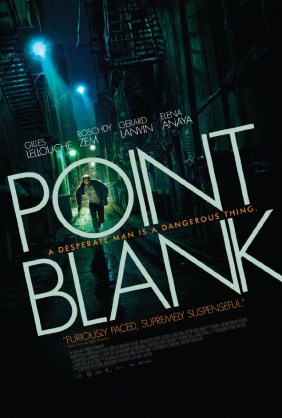
French crime thriller Point Blank airs tomorrow, Saturday 31 August, in the 9.00pm international crime slot on BBC4. This one has had a number of favourable reviews (Empire gave it 4 stars), and looks to be 80 minutes packed full of heart-stopping action and suspense.

You can see a trailer for the film on the Radio Times website (although I’m not usually a fan of hostage/countdown scenarios, I have to admit it does look very good).

The Radio Times synopsis reads as follows: ‘Violent strangers threaten to kill the pregnant wife of Paris hospital employee Samuel Pierret unless he smuggles out an injured patient in this blisteringly exciting crime thriller from director Fred Cavayé (Anything For Her). Rugged Gilles Lellouche is perfect as the Hitchcockian “Wrong Place, Wrong Time, Wrong Man” whose life spirals out of control as he is drawn into a web of police corruption and murder in high places.’

And … here’s a lovely bit of news: Sergio over at the fabulous Tipping My Fedora blog has nominated Mrs. Peabody Investigates for a WordPress Family Award.

I’m touched and honoured – thank you, Sergio! – as the award celebrates what I most value about blogging: the global ‘family networks’ that our interactions in the virtual world create. I have to say, in spite of our rather bloody-thirsty interests as crime fans, that the crime blogging community is a particularly warm, welcoming and friendly one!

The idea with this award is that recipients nominate another 10 other WordPress blogs. But given that I’d nominate lots of the same blogs as Sergio and my fellow nominees (could get very confusing), I’ll just point you to the blogroll on the right of this page, which will lead you to all kinds of criminal delights. Enjoy!

#40 / Ioanna Bourazopoulou, What Lot’s Wife Saw (first review of Greek crime!)

What Lots Wife Saw

Ioanna Bourazopoulou, What Lot’s Wife Saw, translated from the Greek by Yannis Panas (Edinburgh: Black and White Publishing, 2013 [2007])  4.5 stars

Opening line: Perhaps reality is but a mass delusion, thought Phileas Book, watching the waves of the Mediterranean Sea breaking against the concrete quays of Paris.

Well! I was hoping for something a bit different when I opened this book, and it certainly didn’t disappoint. Winner of the 2008 Athens Prize for Literature, What Lot’s Wife Saw is a dazzling, hybrid crime novel that takes readers on an extraordinary journey of the imagination.

The novel is set in the future, twenty-five years after The Overflow, a tsunami that destroyed large portions of southern Europe, and whose cause was the eruption of a highly addictive violet salt through the Dead Sea Rift. The harvesting of this valuable commodity at a remote ‘Colony’ is now controlled by the mysterious Consortium of Seventy-Five, but when the operation is placed in jeopardy following the suspicious death of the Colony’s Governor, an expert is asked to help investigate.

And this is where things get really interesting. The expert is Phileas Book, who works for The Times newspaper compiling Epistlewords, a new kind of three-dimensional crossword shaped like a Greek meandros or key pattern, which uses fragments of letters (and the ways in which their ‘soundhues’ interact with one another) as clues. For this reason, Book is asked to inspect six letters from inhabitants of the Colony who were close to the Governor, in the hope that he will be able to ‘detect’ the truth of what happened. Along with Book, we are given access to the letters, and invited to take up the role of investigators, by comparing and contrasting the accounts of these rather dubious individuals, and trying to sift the truth from what may well be a tissue of lies. The six letter-writers are Bernard Bateau, Presiding Judge; Andrew Drake, Captain of the Guards; Montague Montenegro, Orthodox Priest; Charles Siccouane, the Governor’s Private Secretary; Niccolo Fabrizio, Surgeon General; and Regina Bera, the Governor’s wife. All have secrets that they would rather not share…

What I’ve said so far doesn’t even come close to conveying the richness of the narrative, which manages – don’t ask me how – to combine a re-imagining of the biblical tale of Sodom and Gomorrah with a critique of multinationals and totalitarianism. From a literary perspective, the novel feels like a slightly bonkers mash up of Thomas Pynchon (think the tour de force that is Gravity’s Rainbow), Agatha Christie (won’t say which one) and The Usual Suspects (super-stylish narrative construction). Really.

If you’re looking for an easy read, then put this book to one side for now. But if you’re in the mood for a challenging, vividly imagined and highly original crime novel with plenty of chutzpah and heart, then this one could be for you. A compelling read that’s perhaps a little too long in the middle, but is redeemed by a bravura ending, What Lot’s Wife Saw will stay in my mind for a while to come.

Mrs. Peabody awards What Lot’s Wife Saw a staggeringly inventive 4.5 stars

With thanks to Black and White Publishing for sending me an advance copy of this book.

Creative Commons License

.

GDR Glossary for Simon Urban’s Plan D

Here’s an East/West German glossary that might come in handy when reading Simon Urban’s alternative history Plan D. Just dip in as and when you fancy (no plot spoilers…).

This glossary is a companion to my review of Plan D, available here.

plan-d
*

The German Democratic Republic (die Deutsche Demokratische Republik) was a communist state, also known as East Germany, which existed for just over forty years between 1949 and 1990, and formed part of the Eastern Bloc during the Cold War. In Plan D, set in 2011, the GDR still exists. The novel presents us with an alternative history of the past two decades and shows us an East Germany that is now sixty-two years old.

Reunification (die Wiedervereinigung): the process by which East and West Germany became a single German state in 1990 following the collapse of the GDR in 1989. In Plan D, reunification never took place. Instead, the novel’s characters refer to ‘Wieder-belebung’ or ‘Revitalisation’, a moment of political rebirth around 1990 that set the GDR on a modernised course – the ‘Neuausrichtung’ or ‘New Direction’.

The Berlin Wall (die Berliner Mauer) was erected by East Germany in 1961 to stop its citizens, especially young skilled labourers, leaving for democratic, capitalist West Germany. It was termed an ‘antifaschistische Schutzmauer’ (anti-fascist protective wall) by the authorities to convince East Germans that the state was trying to stop fascists from getting in, rather than East Germans from getting out. In reality, the Berlin Wall fell on 9. November 1989, but in the 2011 of Plan D it still stands and is referred to as an ‘anti-capitalist protective wall’.

This cross-section shows that the Berlin Wall was eventually made up of a series of fortifications on the East German side. East Berlin is on the far right (1) and West Berlin is on the far left (13). Anyone trying to escape to the west ran a high risk of being caught in the ‘Todesstreifen’ (death strip) in the middle.

Republikflucht or ‘flight from the republic’ was made a criminal offence by the East German state in 1957 to halt the exodus of its citizens. Those caught were likely to receive a prison sentence and have limited future prospects in GDR society. Travel permits were tightly controlled.

Die Volkspolizei or ‘VoPo’ was the East German People’s Police, which had close links with the Stasi. In Plan D, Martin Wegener holds the rank of Hauptmann or captain in the Köpenick criminal police department (which appears to be a nod to the famous figure ‘der Hauptmann von Köpenick’ and his battles with kafkaesque bureaucracy; a production of Zuckmayer’s famous play recently ran at the National Theatre in London).

The Stasi (Ministerium für Staatssicherheit / Ministry for State Security) or state security service (Staatssicherheitsdienst) had its headquarters in Normannenstrasse in Berlin (now a museum). Established in 1950, the Stasi’s remit was to stamp out internal opposition to the state, and it specialised in forcing compliance through a range of psychological techniques. Alongside its own operatives, many ordinary citizens were pressurised/bribed/blackmailed into becoming so-called IMs (‘inoffizielle Mitarbeiter’ or ‘unoffical colleagues’), reporting on work colleagues, neighbours, family and friends. Today, around 111 kilometres of Stasi files are held in official archives, and can be accessed by the public. In Plan D, the activities of the ‘old’ Stasi were officially curbed as part of the reforms carried out during ‘Revitalisation’.

Wolf Biermann’s ballad ‘The Stasi is my Eckermann’ (‘Die Stasi ist mein Eckermann’). The songwriter Wolf Biermann, one of the GDR’s most famous political dissidents, was the subject of extensive Stasi surveillance and was stripped of his GDR citizenship in 1976 while on tour in West Germany. The ballad, written in 1974, is referred to by Martin in Plan D. Its first two verses translate as follows (listen to the original here):

biermann

Wolf Biermann in concert in 1976

I feel a common humanity / With the poor Stasi dogs / Required to sit through snow and downpours of rain / Tediously listening to me through the / Microphone they have installed / Which catches every sound / Songs, jokes and soft curses / Sitting on the toilet and in the kitchen. / Brothers from state security – you alone / Know all my troubles.

You alone can attest / How my whole human effort / Is committed with passionate tenderness / And zest to Our Great Cause. / Words which otherwise would be lost / Are captured firmly on your tapes / And – I’m sure of it – now and again / You sing my songs in bed. / I sing my gratitude to you / Stasi is my Ecker- / Stasi is my Ecker- / Stasi is my Eckermann.

[Johann Peter Eckermann was a poet whose self-appointed task was to record the words of the famous German author Johann Wolfgang Goethe for posterity].

The Invisible Cross-hairs (Das unsichtbare Visier), whose groovy theme tune features as a mobile ringtone in Plan D, was an East German TV series that ran from 1973 to 1979, produced in conjunction with the Ministry for State Security. The central protagonist is Werner Bredebusch, a Stasi agent operating abroad under the alias of Achim Detjen – East Germany’s own James Bond! Ironically, the actor playing Bredebusch, Armin Mueller-Stahl, got into hot water with the state when he spoke out in support of Wolf Biermann in 1976.

Socialist Unity Party (Sozialistische Einheitspartei or SED): the only political party that mattered in the GDR, which shaped all aspects of political and social policy according to communist principles … and the wishes of the Soviet Union. It is still the dominant political party in Plan D.

The Palace of the Republic (der Palast der Republik) was the seat of the East German Volkskammer or People’s Chamber – the heart of GDR government – and doubled as a cultural centre. It was built in the 1970s, on the site of the historic Stadtschloss or Berlin City Palace, which was badly damaged in the Second World War and was demolished by the East German authorities in 1950. Following the Palace of the Republic’s own demolition in 2008 due to high levels of asbestos, a reconstruction of the Berlin City Palace has begun (criticised by some as a deliberate attempt to erase the GDR past). In Plan D, the Palace of the Republic has survived and remains a potent symbol of the GDR state. The national emblem is visible in the picture below: a hammer and compass surrounded by a garland of rye (to represent the workers, intelligensia and farmers respectively).

The Trabant (‘Trabi’) and Wartburg were GDR makes of car (see foreground of image above), for which waiting lists of over a decade were not uncommon. They are still around in Plan D, along with a new model, the Phobus, which runs on rapeseed oil.

Walter Ulbricht was General Secretary of the SED from 1950 to 1971 and Chairman of the State Council (effectively GDR head of state) from 1960 to 1963.

Erich Honecker was General Secretary of the SED from 1971 to 1989 and Chairman of the State Council from 1976 to 1989. His wife Margot was also an influential political figure. In the German original of Plan D, the character of the former head of state is named Erich Honecker. In the English translation, the character of the former head of state is named Heinrich Stangier.

Honecker and top brass at the 1971 SED Party Conference. Marx, Engels and Lenin look moodily into the distance.

Egon Krenz was the last GDR head of state for three months in 1989. In the German original of Plan D, the character of the current head of state is named Egon Krenz. In the English translation, the character of the current head of state is named Hans-Walter Moss.

Erich Mielke was head of the Stasi between 1959 and 1989. Otto Schily was German Federal Minister of the Interior from 1998-2005. In the German original of Plan D, Erich Mielke’s role as head of the Stasi is taken over in 1989 by a character named Otto Schily. In the English translation, Erich Mielke’s role is taken over by a character named Uwe Speckmann.

Oskar Lafontaine was the West German Social Democratic Party (SPD) candidate for Chancellor in the historic German federal elections of 1990. His opponent, CDU politician Helmut Kohl, triumphed and became the first Chancellor of the reunited Germany. In Plan D, Oskar Lafontaine is the name of the left-leaning Chancellor of West Germany in 2011.

With exquisite humour, the novel is dedicated to Günter Schabowski, the SED spokes-man who inadvertantly triggered the ‘early’ fall of the Berlin Wall when answering a press conference question on 9 November 1989.

GDR brands mentioned in the novel include Florena Deodorant, KARO Cigarettes, Goldkrone Schnaps, Club Cola and Nautik soap. Delikat was a chain of state-owned ‘luxury’ shops for East Germans; Intershop was a chain of state-owned shops that targeted foreigners in order to encourage a flow of hard currency (primarily the West German Deutschmark) into East Germany.

Solyanka is a spicy-sour soup, originating from Russia, that was a staple of GDR cuisine. Pictures and recipe (in German) available here.

Aktuelle Kamera was the official East German TV news programme, which delivered the government’s worldview to GDR citizens every evening (watch a clip, with a *gripping* report of Honecker’s state visit to Finland at 2.18 minutes). Der Spiegel was a West German (now German) news magazine, known for its political and investigative journalism.    

Further reading

Mary Fulbrook, History of Germany 1918-2000: The Divided Nation, 3rd edition (Blackwell, 2008). Fulbrook is a highly respected historian who has written a number of excellent books on twentieth-century Germany.

Mary Fulbrook, The People’s State: East German Society from Hitler to Honecker (Yale University Press, 2008)

Frederick Taylor, The Berlin Wall: 13. August 1961 – 9. November 1989 (Bloomsbury 2009). Political, historical and social history of the Berlin Wall and the divided Berlin.

Anna Funder, Stasiland: Stories from Behind the Berlin Wall (Granta 2011 [2003]). Gripping exploration of the role of the Stasi in the GDR and the impact of its activities on ordinary people.    

Jana Hensel, After the Wall: Confessions from an East German Childhood (Public Affairs 2008). A thoughtful memoir of childhood and adolescence; original German title Zonenkinder (Rowohlt 2002).