CrimeFest 2016 highlights: Holt, Piñeiro, le Carré, Krimis and The Petrona Award

CrimeFest 2016 took place last week in Bristol, UK. It featured a succession of fabulous panels and, as ever, provided a wonderful opportunity to catch up with other criminally minded readers, as well as the great and the good of the publishing world. Here are my highlights.CFhighreslogo-2016

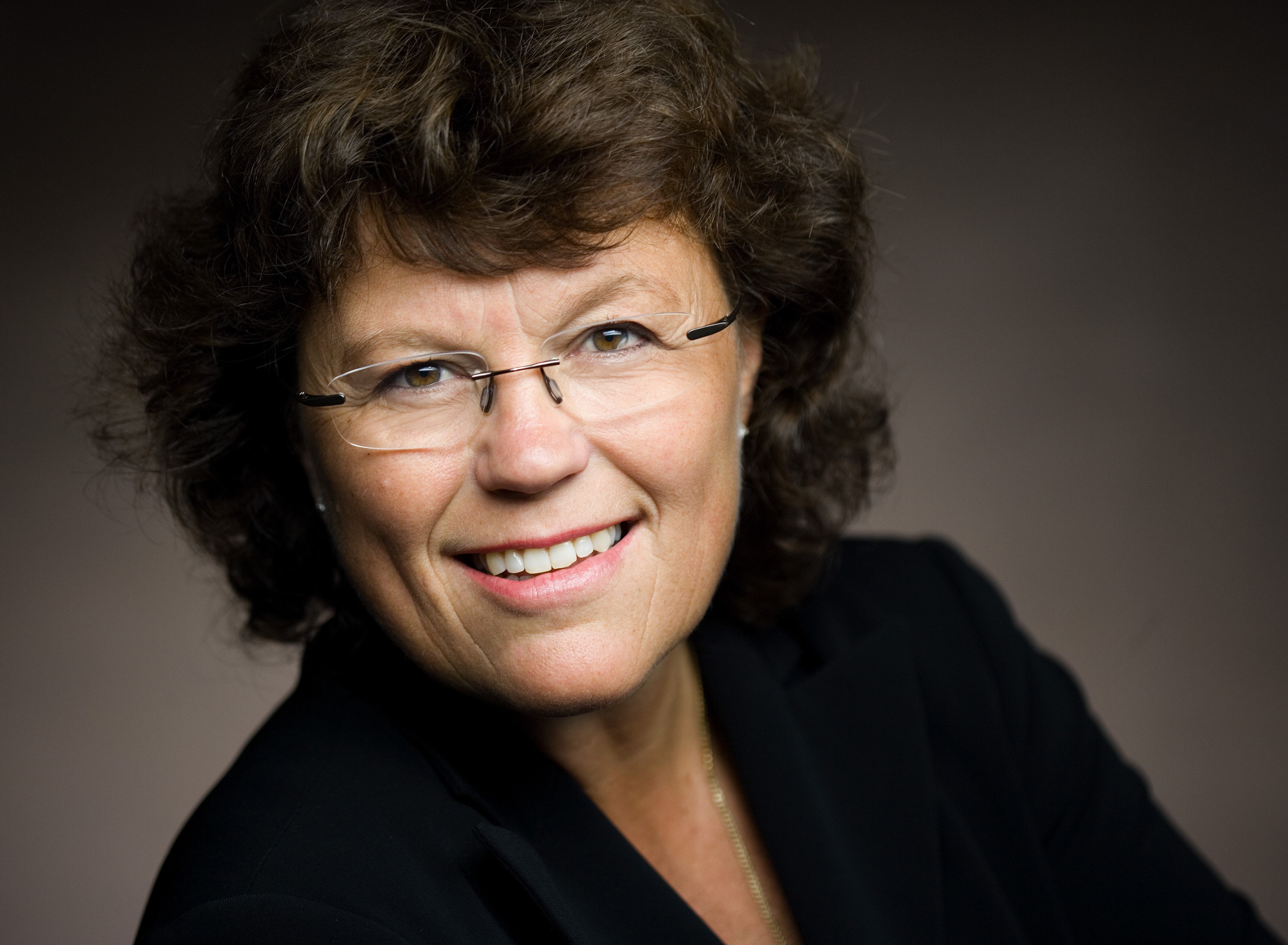
Anne Holt is one of Norway’s best-known crime writers and the creator of the Hanne Wilhelmsen series. She very rarely appears at crime conventions, so it was something of a coup to have lured her to Bristol as a featured guest author.
Holt-Anne-credit-Jo-Michael

Norwegian author Anne Holt

Barry Forshaw’s interview with Holt on Sunday was fascinating and wide-ranging.

  • Holt worked in journalism, as a news anchor, as a lawyer, and briefly as Minister of Justice for Norway. Then, at the age of 40, she moved away from a workaholic lifestyle and started to write. Her first novel was Blind Goddess (1993) and she’s never looked back.
  • Hanne Wilhelmsen was the first lesbian investigative lead in Norwegian crime fiction. Hanne is a complex figure. Due to her upbringing and family background, she’s very private and prefers not to reveal herself to others. In this respect, she’s very different to Holt – a conscious decision in order to make the character more challenging to write.
  • Holt has deep love of British crime, especially Agatha Christie. Her novels are still recruiting readers, for which we should be thankful. The eighth Wilhelmsen novel, 1222, is a homage to the golden age of crime (critics in Norway panned it – she’s not sure why- but it did well in other countries).
  • Holt is friends with Jo Nesbo and has discussed the subject of violence with him. She feels that violence should not be directly described in crime novels unless necessary. She rarely does so (one exception), preferring to focus on the effects of violence instead.
  • Holt says how crime novels do in Germany is a barometer for publishers in relation to British & European markets.
  • Holt on the EU referendum: the EU is an instrument for peace and trade, and it would be a tragedy if Britain were to leave. It could be the beginning of end for the EU.
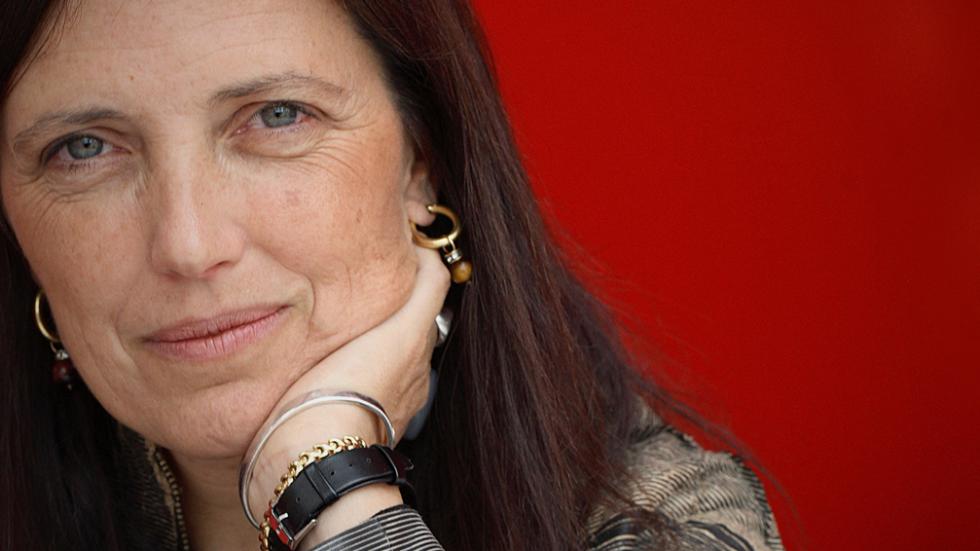
claudia_pineiro_1

Argentinian author Claudia Piñeiro

I was also very excited to see Claudia Piñeiro at CrimeFest (and indeed in the UK) for the first time. Piñeiro is an Argentine crime-writing superstar whose work has been translated into numerous languages, but she’s not known here nearly as well as she should be. Bitter Lemon Press has published four of her novels in translation so far, including Betty Boo, which is set in a gated community in Buenos Aires and explores the nature of modern journalism (review pending). Piñeiro is an incredibly versatile writer, whose depictions of Argentine society are astute, insightful and sardonic – I really hope to see more of her work in English in the future.

le-carre-bio

Adam Sisman, John le Carré’s official biographer, was also at CrimeFest, in a packed session with broadcaster and writer James Naughtie. Sisman spoke very eloquently about the benefits and challenges of writing on a ‘living subject’. For example, one of le Carré’s conditions was that he should be the first to see the manuscript, and he promptly emailed Sisman 22 pages of notes. At one point he told Sisman ‘it’s very strange to have you here poking around my mind’.

  • Sisman rightly emphasised le Carré’s position at the top of the writing game from the early 60s to the present day.
  • He also noted that le Carré’s political arc was unusual – from establishment to left-wing anger. While studying at Oxford University in the 1950s he spied on other students for MI5, something that troubles him now.
  • The spying terms le Carré uses in his novels are often made up, but have been adopted by spying agencies. One CIA agent told Sisman that le Carré is ‘part of our DNA’.
  • The author has a wonderful ear for dialogue/mimicry, and often rehearses characters’ conversations out loud when on walks.
  • He’s always enthusiastic about the future, about new projects such as The Night Manager, and does not live in the past.

Mrs Pea was also in action, presenting the Crime Fiction in German volume to a delightful audience in one of the ‘In the Spotlight’ sessions. David Young, author of Stasi Child, kindly acted as Draw Meister. Rather impressively, we managed to give away twelve Krimis and two copies of the volume in twenty minutes. Thanks again to the Goethe Institut, Swansea University, the University of Wales Press, Bitter Lemon Press, Penguin, Michael Joseph and Vintage for their support.

Krimi Spotlight collage

Clockwise from top left: David Young (Draw Meister) with Mrs Peabody; a beautifully attentive audience; the Krimi Giveaway winners; the last copy of the volume in the bookshop…

And on Saturday night, the winner of the 2016 Petrona Award was announced: Norwegian writer Jørn Lier Horst for his novel The Caveman (see my interview with the author here). Bob Davidson of Sandstone Press accepted the award on Jørn’s behalf from Yrsa Sigurðardóttir, the 2015 Petrona winner. You can see the transcript of Jørn’s acceptance speech (which was rather lovely) on the Petrona website, along with details of the shortlisted titles. As ever, I’m very proud to be a judge for this excellent award, set up in memory of Maxine Clarke.
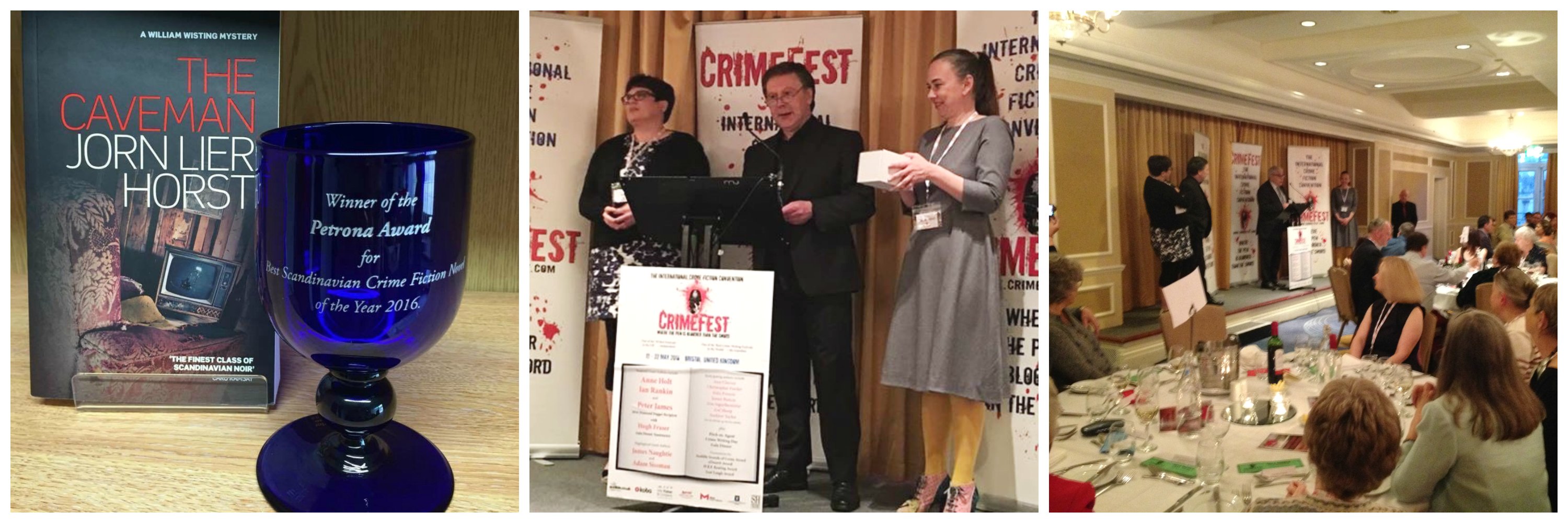
Petrona collage

From left: the winning novel and the Petrona trophy (photo Sandstone Press); Sarah Ward and Barry Forshaw announcing the award with Yrsa Sigurðardóttir (photo by Ali Karim); Bob Davidson accepting the award on Jørn’s behalf.

photo-by-andy_26585418893_o

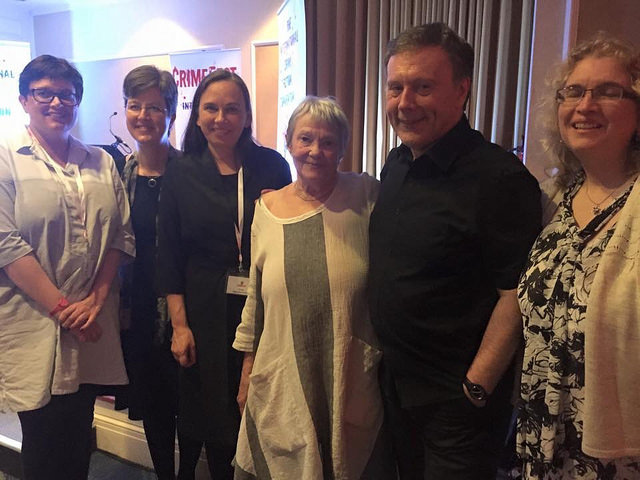
The Petrona Award judges with Anne Holt (photo by Andy Lawrence)

I feel like I’ve only scratched the surface of CrimeFest16 in this post. For example, Ian Rankin, another one of the featured guest authors, gave a wonderful interview and treated the audience to an extract of his next Rebus book. Hopefully other bloggers will cover some different events/panels.

And…the CWA International Dagger longlist was also announced. I’ll leave you with the list of nominees below. Please note that two German novels have made the cut (Arango and Rademacher). I’ve also got my eye on Six Four, a Japanese crime novel highly praised by David Peace. Disappointed by the lack of women authors, though.

Title Author Translated by Publisher
The Truth and Other Lies Sascha Arango Imogen Taylor Simon & Schuster
The Great Swindle Pierre Lemaître Frank Wynne MacLehose Press
Icarus Deon Meyer K L Seegers Hodder & Stoughton
The Sword of Justice Leif G.W. Persson Neil Smith Doubleday
The Murderer in Ruins Cay Rademacher Peter Millar Arcadia
The Father Anton Svensson Elizabeth Clark Wessel Sphere
The Voices Beyond Johan Theorin Marlaine Delargy Transworld
Six Four Hideo Yokoyama Jonathan Lloyd-Davis Quercus

Many thanks to the CrimeFest16 organisers for a wonderful four days!
European Literature Festival – Kutscher & Raabe – CrimeFest is on its way!

There’s lots of highly criminal activity in the UK over the next couple of weeks.

Here are a few highlights.

ELF-promotional-image

The European Literature Festival is currently under way, with a packed programme including a very special evening at the British Library on Friday 13 May – tomorrow! ‘Criminal Worlds: Detective Fiction in Europe‘ features three wonderful crime writers – Peter James (UK), Kati Hiekkapelto (Finland; shortlisted for the Petrona Award) and Volker Kutscher (Germany), and is chaired by the marvellous Barry Forshaw. They will be ‘casting their forensic eye on the celebrated and lesser-known investigators of European fiction’. 

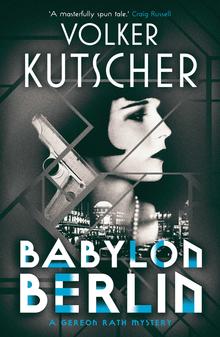
Babylon Berlin

Volker Kutscher pops up again at the Goethe Institut London on Monday 16 May to talk about Babylon Berlin, the first in his ‘Gereon Rath’ series, which is published in English by Sandstone Press on 19 May. This bestselling series has sold over a million copies worldwide to date. Its five novels follow the fortunes of Berlin Detective Inspector Rath as he navigates the turbulent political waters of Weimar Berlin, and are both gripping and rich in historical detail. Together with translator Niall Sellar and Robert Davidson of Sandstone Press, Volker will discuss his books, the translation process, and the reception of German crime fiction in Great Britain (further info available here).

AND you can hear Volker talking about Babylon Berlin tonight at 10.00pm on BBC Radio 3’s ‘Free Thinking’ programme, together with the celebrated director Tom Tykwer (of Lola Rennt fame), who is adapting the crime series for television. As this Variety article explains, two eight-episode seasons are in the pipeline, scheduled for international release in 2017.

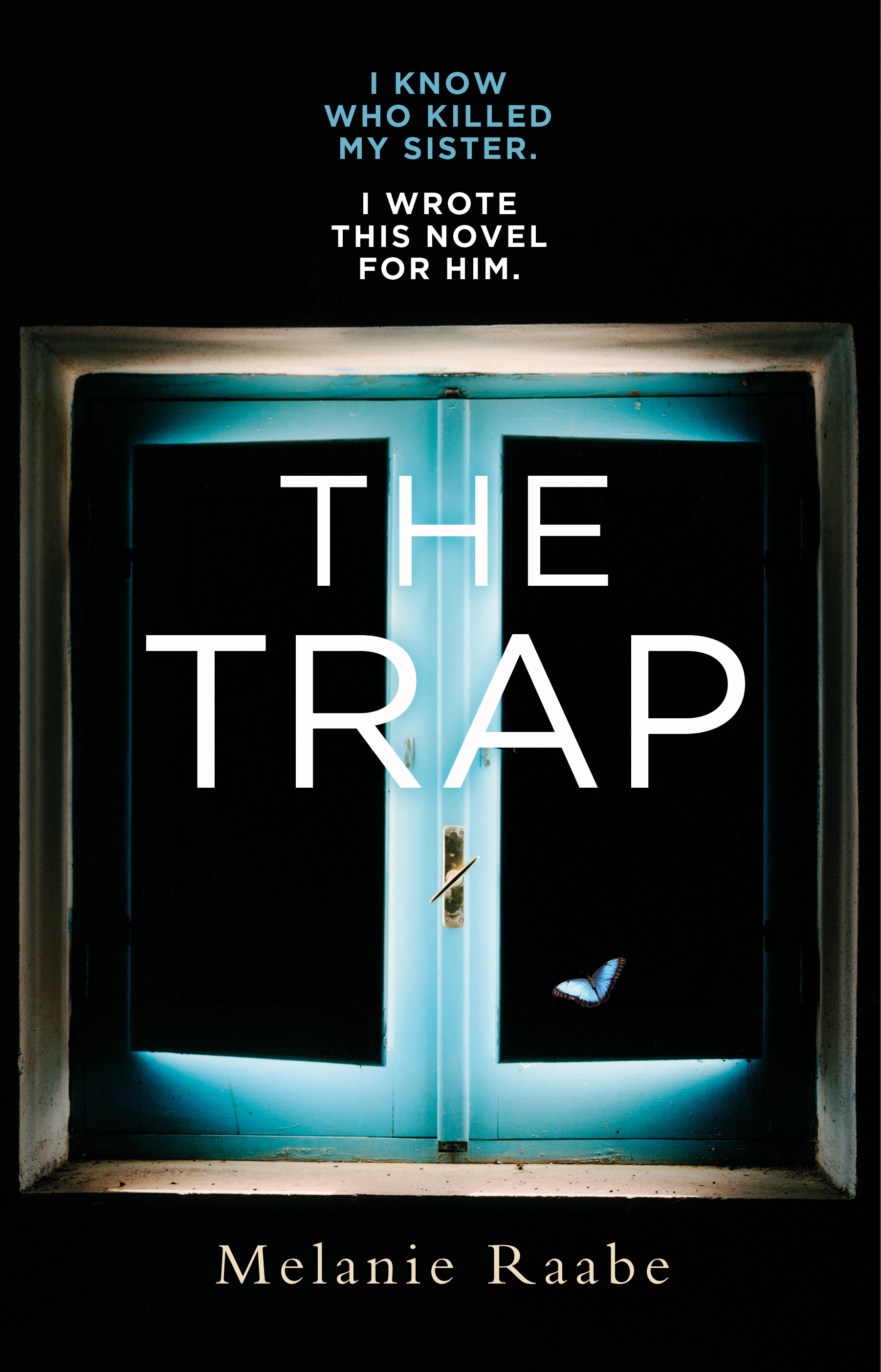
Trap

Another interesting German author is published in English for the first time next week. Melanie Raabe grew up in the former East Germany and has worked as a journalist, magazine editor and playwright. The Trap, published by Mantle/Pan Macmillan, is her first novel and won the Stuttgarter Krimipreis (Stuttgart Crime Prize) for best crime debut. It has a wonderfully intriguing premise: reclusive best-selling writer Linda Conrads is convinced that a journalist she sees on TV is her sister Anna’s killer. She decides to set a trap: after writing a novel about the murder of a woman whose killer is never caught, she offers the journalist an exclusive interview… I’ve read the first couple of chapters and am already hooked.

CFhighreslogo-2016

CrimeFest takes place next week *excited face*. I’m hugely looking forward to attending and seeing a host of wonderful authors in action, including Anne Holt (Norway), Ian Rankin (Scotland), Claudia Piñeiro (Argentina) and Adam Sisman (biographer of John le Carre). And of course the Petrona Award winner will be announced at the gala dinner on Saturday evening :-).

The full CrimeFest programme is available here.

CFIG launch book collage

Mrs. Peabody will also be in action at CrimeFest, with an ‘In the Spotlight’ session on all things Krimi (Friday 20 May at 11.20). There will be a giveaway of ten German-language crime novels, courtesy of the Goethe Institut London, Bitter Lemon Press, Penguin, Michael Joseph and Vintage. Two copies of the Crime Fiction in German volume will also be up for grabs thanks to the Goethe Institut and the University of Wales Press.

And a little reminder: you can download a completely FREE chapter from Crime Fiction in German here!

25352091871_34555eb9c9_o

Yes! Erich the Bavarian duck will be at CrimeFest!

New Year goodies: The Young Montalbano (BBC4) and Deutschland 83 (Channel 4/Walter Presents)

Happy New Year, everyone! I hope you’ve had a wonderful festive season and are heading into 2016 with a spring in your step.

2016-happy-new-year

We kick off the year with two fabulous series from Italy and Germany – the second season of The Young Montalbano on BBC4 and spy drama Deutschland 83 on Channel 4. The latter also marks the launch of the new on-demand service Walter Presents, which looks like a must for fans of international crime.

The new six-part series of The Young Montalbano begins on Saturday 2nd January at 9.00pm, with the episode ‘The Man who Followed Funerals’. Montalbano investigates the brutal murder of Pasqualino Cutufa’, a Vigata inhabitant who made a habit of showing up at people’s funerals to mourn their deaths. Livia has also come to stay, but is acting rather strangely…

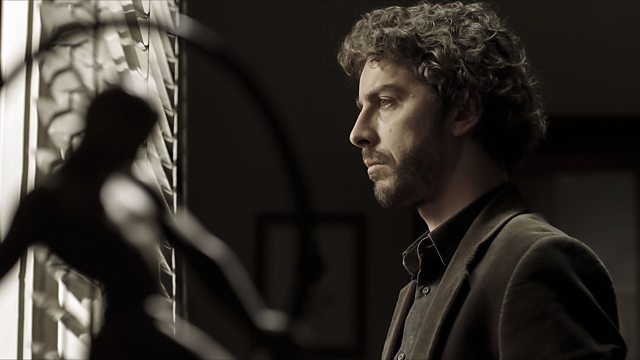
Montalbano S2

Young Montalbano (Michele Riondino) looking rather pensive

I thoroughly enjoyed the first series of The Young Montalbano, which did a stylish job of depicting the Italian policeman’s early years in 1990s Vigata, when he still had an unruly mop of hair. If you’re looking to escape from a wet and windy Blighty to sunnier shores, then this one could be for you. I blogged some background to the first series in this 2013 post. And here’s a link to Olivia Sellerio singing ‘Vuci mia cantannu vai’, which closed the series 1 episodes. Divine!

deutschland-83

The eight-part spy thriller Deutschland 83 (Germany 83) begins on Channel 4 on Sunday 3rd January at 9pm (in German with English subtitles). I can’t tell you how much I’m looking forward to seeing some quality German drama on our screens.

Here’s an overview from Channel 4:

‘It’s 1983. The Cold War is heating up. Russian SS20 Missiles in East Germany are pointed West, while American Pershing II Missiles in West Germany will soon be pointing East. Against this perilous political backdrop, DEUTSCHLAND 83, a gripping coming-of-age story and a suspenseful, fast-paced thriller, follows Martin Rauch (Jonas Nay), a 24-year-old East German, who is sent to the West as an undercover spy for the Stasi. Hiding in plain sight in the West German army, he must gather NATO military secrets while trying to resist the pleasures that the West has to offer. Everything is new to him, nothing is quite what it seems and everyone he encounters is harbouring secrets.

Stylish, fast-paced and utterly gripping, the series, created by German-American husband and wife team Anna and Joerg Winger, reveals the experiences of Germans from both sides of the Berlin Wall during a pivotal period of Cold War tensions.

The series was the first German-language drama ever to air in the US, proving a hit on Sundance TV channel this summer where it has was hailed as “engrossing” (Time Magazine), “slick” (The Hollywood Reporter) and “fresh and enjoyable” (The New York Times).’

Here’s the Sundance trailer of Deutschland 83 to give you a taster – with a storming 80s soundtrack:

The series premieres on the same day as Walter Presents, a new, FREE digital service showcasing ‘the best in world drama’ and available exclusively on All 4. The creation of this service testifies to the progress British TV has made in relation to foreign-language drama in recent years. Subtitled films/dramas, once the preserve of indie cinemas and international film nuts, are now positively mainstream, which is splendid. Judging by the website, there will be lots of international crime goodies available on Walter Presents, including the marvellous ‘Cenk Batu’ episodes from the German series Tatort. This Independent article has further details about the line up.

WP LOGO

CrimeFest 2015: The Petrona, CWA International Dagger and EuroNoir

I can’t believe it’s already a week since the end of CrimeFest 2015. Time for my second post on this marvellous event, and some key highlights:

The Petrona Award: Yrsa Sigurðardóttir’s The Silence of the Sea, translated by Victoria Cribb, won the 2015 Petrona Award for the best Scandinavian crime novel of the year in translation. The award was presented by CrimeFest’s guest of honour Maj Sjöwall, which was very special for all concerned.

Petrona group

The Petrona judging team with Yrsa and Maj (centre). Photo: Andy Lawrence

The Petrona shortlist this year was wonderfully strong, with novels by Kati Hiekkapelto (Finland), Jørn Lier Horst (Norway), Arnaldur Indriðason (Iceland), Hans Olav Lahlum (Norway) and Leif G W Persson (Sweden). Fuller information about the shortlisted novels is available here and further details can also be found at the Petrona Award website.

The CWA’s 2015 International Dagger shortlist was announced at CrimeFest on the Friday night. The six shortlisted novels are:

  • Lief G.W. Persson, Falling Freely, as in a Dream (trans. Paul Norlen/Transworld/ SWEDEN)
  • Pierre LeMaitre, Camille (trans. Frank Wynne/Maclehose Press/FRANCE)
  • Deon Meyer, Cobra (trans. K.L.Seegers/Hodder and Stoughton/SOUTH AFRICA)
  • Karim Miské, Arab Jazz (trans. Sam Gordon/MacLehose Press/FRANCE)
  • Dolores Redondo, The Invisible Garden (trans. Isabelle Kaufeler/HarperCollins/ SPAIN)
  • Andreas Norman, Into a Raging Blaze (trans. Ian Giles/Quercus/SWEDEN)

Further details can be found on the CWA website, with the award being presented at the end of June. I’ve read a grand total of two, so need to do some catching up.

Euro Noir

Euro Noir panel with Barry Forshaw, Roberto Costantini, Gunnar Staalesen, Michael Ridpath and Jørn Lier Horst

Two CrimeFest panels I particularly enjoyed were the Nordic Noir and Euro Noir panels, moderated by Quentin Bates and Barry Forshaw respectively, and featuring Kati Hiekkapelto (Finland), Gunnar Staalesen (Norway), Clare Carson (UK/Orkney), Craig Robertson (UK/Faroes), Roberto Costantini (Italy), Michael Ridpath (UK/Iceland) and Jørn Lier Horst (Norway). Interesting observations abounded:

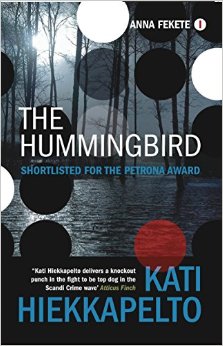
HummingbirdHiekkapelto’s The Hummingbird is set in fictional, northern Finnish town. It shows a darker side of Finland: alcoholism, loneliness and some poverty. She tries to write about Finland with the eyes of an outsider, like her investigator Anna Fekete, and sees Finland as being not very welcoming of immigrants. She’s rare in choosing to write about migration issues.

Staalesen describes the Norwegian town of Bergen as very film noir – it rains 250 days a year and so is an excellent setting for crime (the latest in his famous ‘Varg Veum’ P.I. series, We Shall Inherit the Wind, is about to be published by Orenda Press). For him, crime fiction is a way of telling stories about society and how we live our lives today. In contrast to many other countries, the status of crime fiction in Norway is high: it’s viewed as respectable literature due to its quality and its use as a form of social critique (e.g. Karin Fossum).

In her novel Orkney Twilight, Carson writes about Orkney from memories of childhood, which is apt because novel is about memory. Carson’s father was an undercover cop, and she’s drawn on the experience of being a young woman figuring out her father’s secret life. Orkney is a mysterious place with continuous light in summer; Carsen weaves Norse mythology throughout the narrative, which fits with the idea of undercover police/spies as master storytellers. She feels folklore is a way of talking about things that can’t be solved in life and that crime fiction is a modern version of that form, in that it gets to grips with unresolvable issues like death.

Ironically, given amount of murders committed in Nordic novels, Scandinavia and the Faroe Islands are probably safest places in world. There were no murders in Faroes for 26 years … until Robertson started writing his novel The Last Refuge. He feels a bit guilty about that.

Horst

Lier Horst used to get up at 5am every day to write while still working as a policeman. You have to set goal and put in the work – ‘it’s a hard job’. His first novel was based on a real murder. He saw the crime scene on the first day of his job and it stayed with him (the murderer was never caught). Writing about murders has ‘taught me a little about death, but a lot about life’, especially people’s emotions.

Barry Forshaw has coined the term ‘Scandi Brit’ for Brits like Michael Ridpath and Quentin Bates who set their novels in northern climes. Ridpath says it’s a challenge to write about other countries, but invigorating one. He regularly consults Icelanders on points of accuracy, which is a big help.

Cost

Costantini uses his engineering background to construct his plots. His acclaimed ‘Commissario Balistreri’ trilogy explores thirty years of Italian history from the 1960s to the 1990s, as well as developments in the Middle East. (I have bought the first and am looking forward to reading it.) He created a policeman with a compromised right-wing past as a deliberate challenge to readers.

There was praise for translators and their huge contribution to international crime fiction. Staalesen and Lier Horst are grateful to have the services of top translators Don Bartlett and Anne Bruce. Both are excellent, managing the most difficult of tasks like translating humour effectively.

Other highlights during CrimeFest included seeing Ragnar Jónasson hit the top of the Kindle bestseller list with his debut novel Snowblind late on Saturday night, chatting to authors like William Ryan and remembering how much good crime fiction I still need to read (e.g. the rest of his Captain Korolev series), and meeting friends old and new, like the lovely Elena Avanzas (@ms_adler, who blogs at Murder, she read), Maura and Karen from the Swansea Sleuths bookgroup, and Anya Lipska, who’s part of the newly formed and utterly marvellous Killer Women organisation. So much murderous creativity in one place and time! Roll on next year.

Bernhard Jaumann’s Afrika-Krimis and European crime drama The Team

It’s been a little while since I last posted, because I’m on a final push with the Crime Fiction in German volume. I’m nearly there – the entire draft’s been printed out and just needs some final checks before it goes off to the University of Wales Press. I’m obviously biased, but think it looks rather splendid.

16271683479_b5659f34a0_k (1)

One bonus in the final phase of editing has been finding out more about the Afrika-Krimi – German-language crime fiction set in Africa – courtesy of a chapter by Julia Augart, who’s based at the University of Namibia. Namibia was a German colony between 1884 and 1915, and one novel she discusses is Bernhard Jaumann’s Steinland (Stoneland, 2012), which explores that post-colonial legacy in the context of current land reform policies. I hoovered up the novel while I was editing the chapter, and it was a fascinating read. While that one’s not translated yet, Jaumann’s 2010 novel The Hour of the Jackal is out in English (John Beaufoy Publishing): like Steinland, it features the excellent detective inspector Clemencia Garises.

Although things have been a bit hectic, I’ve managed to keep up with Broadchurch on ITV. The general reaction to this second series has been disappointment, as it’s definitely not lived up to the quality of the first. But I’m still watching, as (eye-raising legal daftness aside) I love the Hardy and Miller dynamic, and Olivia Coleman’s acting in particular. By contrast, Spiral series 5 (the one I’m not watching…) has been getting strong reviews.

Some very interesting news in – thanks to Jacky Collins – about a European crime drama called The Team, which is currently in production. Based on the work of Interpol, the drama will follow a European team as it investigates three murders, in Antwerp, Berlin and Copenhagen, and will switch between Dutch, German and Danish as the location of the action changes. It’s a product of the EBU (European Broadcasting Organisation), and is funded via the EU and eight of its member states.

The Team: Jasmine Gerat (Germany) Lars Mikkelsen (Denmark) and Veerie Baetens (Belgium)

The Team: Jasmine Gerat (Germany) Lars Mikkelsen (Denmark) and Veerie Baetens (Belgium). Photo: The Telegraph/EBU

And look who’s in it! I think the whole thing is a stroke of genius on the part of the EBU: the concept of a European Union is undergoing something of a battering at the moment, not least in the UK. What better way to persuade audiences of the positive benefits of European cooperation than a top-notch crime drama? Other ‘Eurocrime’ novels and series have existed before (such as Arne Dahl’s ‘Intercrime’ series), but as far as I’m aware, this is the first time that one has been instigated and funded via the EU itself. I love the deliberately multicultural and multilingual approach the makers are taking, and hope it does really well.

You can find out more about The Team here. It’s being shown in Denmark, Germany, Austria, Switzerland, Sweden and Belgium later this month. Let’s hope it makes its way here very soon.

The 2014 Nobel Prize for Literature goes to Patrick Modiano (who’s a bit of a crime writer)

The winner of the 2014 Novel Prize for Literature was announced yesterday. He is French writer Patrick Modiano, who appears to be extremely well known at home, but less so internationally, although some of his works have been translated into English down the years, and have won acclaim in Germany for their engagement with the wartime past.

Patrick Modiano

I’ve not read any of Modiano’s works, but am keen to do so for two reasons. Firstly, he’s of Jewish-Italian, Belgian and French extraction, and much of his writing focuses on the German Occupation of France (1940-44) and the themes of history, memory, identity and guilt.

Secondly, he’s the author of an intriguing, off-beat crime novel, entitled Rue des Boutiques Obscures (the street of shadowy shops), which was published in 1978 and received the Prix Goncourt, France’s premier literary prize, the same year.

The novel was translated into English by Daniel Weissbort, published by Jonathan Cape in 1980, and republished by Verba Mundi in 2004. Here’s the blurb from the back cover of the latter:

>> In this strange, elegant novel, Patrick Modiano portrays a man in pursuit of the identity he lost in the murky days of the Paris Occupation, the black hole of French memory.

For ten years, Guy Roland has lived without a past. His current life and name were given to him by his recently retired boss, Hutte, who welcomed him, a one-time client, into his detective agency. Guy makes full use of Hutte’s files – directories, yearbooks, and papers of all kinds going back half a century – but his leads are few. Could he really be the person in that photograph, a young man remembered by some as a South American attaché? Or was he someone else, perhaps the disappeared scion of a prominent local family? He interviews strangers and is tantalized by half-clues until, at last, he grasps a thread that leads him through the maze of his own repressed experience.

On one level Missing Person is a detective thriller, a 1950s film-noir mix of smoky cafés, illegal passports and insubstantial figures crossing bridges in the fog. On another level, it is also a haunting meditation on the nature of the self. Modiano’s sparce, hypnotic prose, superbly translated by Daniel Weissbort, draws his readers into the intoxication of a rare literary experience. <<

An amnesiac detective investigating his own identity and past in a post-war Parisian setting. Mmmmm, yes please!

See also: ‘Nobel Prize winner Patrick Modiano hailed as modern Marcel Proust’The Guardian, Thursday 9 October.

Dutch Delights

We recently spent ten days in The Netherlands and thoroughly enjoyed our stay in Amsterdam and Rotterdam, two very different cities united by their easy-going feel and superb transport systems. Pedestrians, bikes and trams are given just as high a status as cars, and the result is a thoroughly civilized and less polluted urban experience. That and regular portions of apple pie with whipped cream made for a very pleasant trip.

IMG_3915

Classic ‘sit up and beg’ bikes in Amsterdam, which work best on the flat!

While there, I read Herman Koch‘s bestseller The Dinner (Het Diner), which was published in 2009 and has been translated into over twenty languages. It was an interesting reading experience, as the image it presented of Dutch society felt totally at odds with the tolerant and relaxed society I was seeing around me.

The Dinner (trans. by Sam Garrett, Atlantic Books, 2012) depicts the events of one evening, interspersed with flashbacks, during which brothers Paul and Serge Lohman and their wives Claire and Babette meet for a posh dinner in Amsterdam. While seemingly two affluent and civilized couples enjoying gourmet food, the truth is somewhat different: the purpose of their meeting is to discuss how to deal with their teenage sons, who recently committed a shocking crime. No one yet knows the identity of the culprits, and so the question is how to proceed. Needless to say, there is some disagreement among the four, which ends up casting the Dutch middle classes in a rather unfavourable light.

Like the novellas of French author Pascal GarnierThe Dinner reveals the savagery lurking beneath the civilized exterior of polite society, its capacity for violence when threatened, and its willingness to sacrifice others in order to protect its own.  While a targeted critique of Dutch society, the novel also raises plenty of questions about class, parenting, family relations, moral choices, the individual’s capacity for violence, the nature vs nurture debate, and the fragility of liberal values. It’s a compelling and unsettling read.

A Dutch film adaptation of The Dinner appeared in 2013, and Cate Blanchett is set to make her directorial debut with an English-language adaptation soon.

Reading Koch’s work has whetted my appetite for more Dutch crime fiction. In particular, I’ve got my eyes on Harry Mulisch’s The Assault (1985), a hybrid crime novel that explores the repercussions of a resistance assassination in occupied Holland in 1945. (Mulisch is one of The Netherland’s best-known writers and died aged 83 in 2010 – see his obituary here). An excellent CrimeTime overview of Dutch crime fiction has also given me some useful pointers – ‘Crime Scene: The Netherlands’.

IMG_3700

The aforementioned Dutch apple pie, with plenty of cinnamon.

Crime in the summertime

I’m still busy writing, editing and researching, but am allowing myself the odd foray into international crime fiction as the summer sun works its magic. Here are some gems:

Happiness Is Easy

Happiness is Easy (published 17 July 2014 by Doubleday) is the second novel by Brazilian author Edney Silvestre. Its story is deceptively simple – the kidnapping of the wrong child from a rich man’s chauffeur-driven car – but is told with elegant brilliance, moving from past to present in such a way that we gain in-depth portraits of the characters involved while following the fall-out from the crime. Silvestre, who’s also a journalist, uses the genre to critique the corruption of Brazilian politics, the gulf between rich and poor, and the booming kidnap ‘industry’. It’s a bleak read in places, although not without hope. Nick Caistor does a great job translating from Brazilian Portuguese, and I’m now keen to read more from the country hosting the Football World Cup.

Jørn Lier Horst’s The Hunting Dogs (trans. by Anne Bruce, Sandstone Press, 2014) comes to us already garlanded with prizes – it won the 2012 Riverton/Golden Revolver Prize and the 2013 Scandinavian Glass Key. I’m not remotely surprised, as this eighth novel in the William Wisting series (the third to be published in English) is one of the best Scandinavian crime novels I’ve read. Much has been made of Horst’s extensive policing experience, but for me, it’s the fantastic writing, plotting and characterisation that stand out in this novel, which sees Wisting suspended due to irregularities in a past case. Forced to re-investigate the murder of Cecilia Linde from the outside, he is helped by journalist daughter Line to uncover the truth. A top-notch summer read.

American author Alice Sebold’s The Lovely Bones was published in 2002, but it’s one that I go back to every now and then, because it’s such an original crime novel. Set in the summer of 1973, it’s narrated by Susie Salmon, who’s murdered by a neighbour at the age of fourteen and witnesses the aftermath of the crime from her ‘heaven’. You’d be forgiven for thinking this all sounds horribly mawkish, but the concept is brilliantly pulled off for the most part, and offers a sensitive portrayal of the effects of a murder on the family and friends of the victim. Be warned: when I first read the novel one summer holiday I found it *highly* addictive. It was subsequently made into a film by Peter Jackson (2009), which received mixed reviews.

Meanwhile, on the research front…

I’m about to start a 1968 crime novel by French-Jewish writer Romain Gary, entitled The Dance of Genghis Cohn. I came across it by chance when reading a piece on German film* and was immediately intrigued. It tells the story of a post-war murder investigation led by a Bavarian police chief (so far, so conventional), who is haunted by a Jewish comedian he murdered while an SS officer under National Socialism. Quite a starting point, isn’t it? Blackly humorous, it’s also an uncompromising critique of post-war West Germany’s reluctance to engage with the Nazi past. Intriguingly, it was adapted for television by the BBC in 1994 (starring Anthony Sher and Robert Lindsay) – something to follow up after reading the book.

*Frank Stern, ‘Film in the 1950s: Passing Images of Guilt and Responsibility’, in Hanna Schissler (ed.), The Miracle Years: A Cultural History of West Germany 1949-1968, (Princeton University Press, 2001), pp. 266-80.

CrimeFest 2014 / International Dagger / Petrona Award

I’m just back from CrimeFest in Bristol and am floating on a fluffy cloud of contentment after three days of great panels, excellent company and awards bling. Here are some highlights (more will follow).

14220603424_216ca657d0

Euro Noir panel (left to right): Barry Forshaw, Lars Kepler (Alexander Ahndoril and Alexandra Coelho Ahndoril), Jørn Lier Horst, Paul Johnston, Dominique Manotti and Ros Schwarz

The Euro Noir panel on Saturday was probably my favourite of the weekend. In a wide-ranging discussion, the authors explored the nineteenth-century origins of European crime fiction during the rise of capitalism (Dominique Manotti), the role of the translator as the voice of the foreign author (Ros Schwarz), the use of Euro Noir to probe the uses and misuses of power (Paul Johnston, Manotti, Jørn Lier Horst), crime writing and journalism (Manotti), the influence of Maj Sjöwall and Per Wahlöö (the Lars Keplers), the low status of crime writing in France (Manotti), the influence of crime dramas such as The Wire on crime fiction (Johnston), and, prompted by an audience question, the relative lack of black European crime writers and protagonists.

What I liked in particular was Manotti’s unapologetic view that crime writing should be used to ‘tell the truth’ about political and social issues – ‘otherwise what’s the point?’. This contrasted with lots of British authors during the weekend, who, when asked about the place of ‘issues’ in their work, took the more or less default position that entertainment came first and the serious stuff second (because the latter ‘puts readers off’). Johnston wondered whether the UK is more conservative when it comes to writing socio-political crime than other European nations, and that’s got me wondering too (although obvious exceptions spring to mind like David Peace’s excellent Red Riding/ Yorkshire Noir quartet. I’m sure there are also others).

Manotti is a crime-writing star in her native France, and if you haven’t yet read her work I would thoroughly recommend it. You can read my review of Affairs of State here.

The panel coincided with the launch of Barry Forshaw’s new book Euro Noir, which provides an excellent road-map to European crime fiction and lots of great reading suggestions, even for those who have already read quite a bit. With my Germanic hat on, I can say that the section on ‘murder in the German-speaking territories’ is impressive – the man really has done his homework.

German crime fiction was predicted to be one of the next big things by the Euro Noir panel. And lo, the shortlist for the CWA International Dagger, announced at CrimeFest on Friday, features a German novel, Simon Urban’s Plan D. Here’s the full list, with further details on the CWA website.

Arnaldur IndridasonStrange Shores, tr. Victoria Cribb (Iceland)
Pierre LemaitreIrene, tr. Frank Wynne (France)
Arturo Perez-ReverteThe Siege, tr. Frank Wynne (Spain)
Olivier TrucForty Days without Shadow, tr. Louise Rogers LaLaurie (French author, but set in Lapland)
Simon UrbanPlan D, tr. Katy Derbyshire (Germany)
Fred VargasDog Will Have His Day, tr. Siân Reynolds (France)

Last, but most definitely not least, the 2014 Petrona Award for the Best Scandinavian Crime Novel  of the Year was awarded on Saturday to Leif G.W. Persson’s Linda, as in the Linda Murder, translated by Neil Smith. 

In his acceptance speech, read out by Barry Forshaw on his behalf, Leif said:

My character Superintendent Evert Bäckström is actually not a nice person. He embodies pretty much every human prejudice – and then some – and he does so proudly and wholeheartedly. He feels that he is not only God’s gift to humanity but also the object of every woman’s secret fantasies. I myself, am a fully normal person – but there is a joy that he brings me when I tell the story of his life and times.

Now he and I have received an award. A very fine English award, which makes me especially happy as a large part of my family lives in England. There is one person with whom I most profoundly want to share this honour and that is my excellent translator Neil Smith who has succeeded in making this Swede, with his spiritual and physical roots in the Stone Age, at least intelligible for an educated Anglo-Saxon public. Thank you!

Shortlisted authors Yrsa Sigurðardóttir and Jørn Lier Horst attended the CrimeFest Gala dinner and were highly commended for their crime novels. It was a brilliant field and we judges had a very tough choice to make!

One of my favourite photos from the weekend: Sarah Ward (Petrona judge) with shortlisted author Jørn Lier Horst – in traditional Norwegian dress.


The Grand Budapest Hotel

We’ve just seen American director Wes Anderson’s The Grand Budapest Hotel, which was a sumptuous viewing experience and will definitely be on my 2014 list of top films.

Mr. Peabody thought the film was ‘a love letter to Europe’, which is an excellent summation. Handily for this blog, it’s also a wonderful crime caper, triggered by the murder of a fantastically wealthy 84-year-old aristocrat (‘she was dynamite in the sack, by the way’), who’s played with panache by Tilda Swinton.

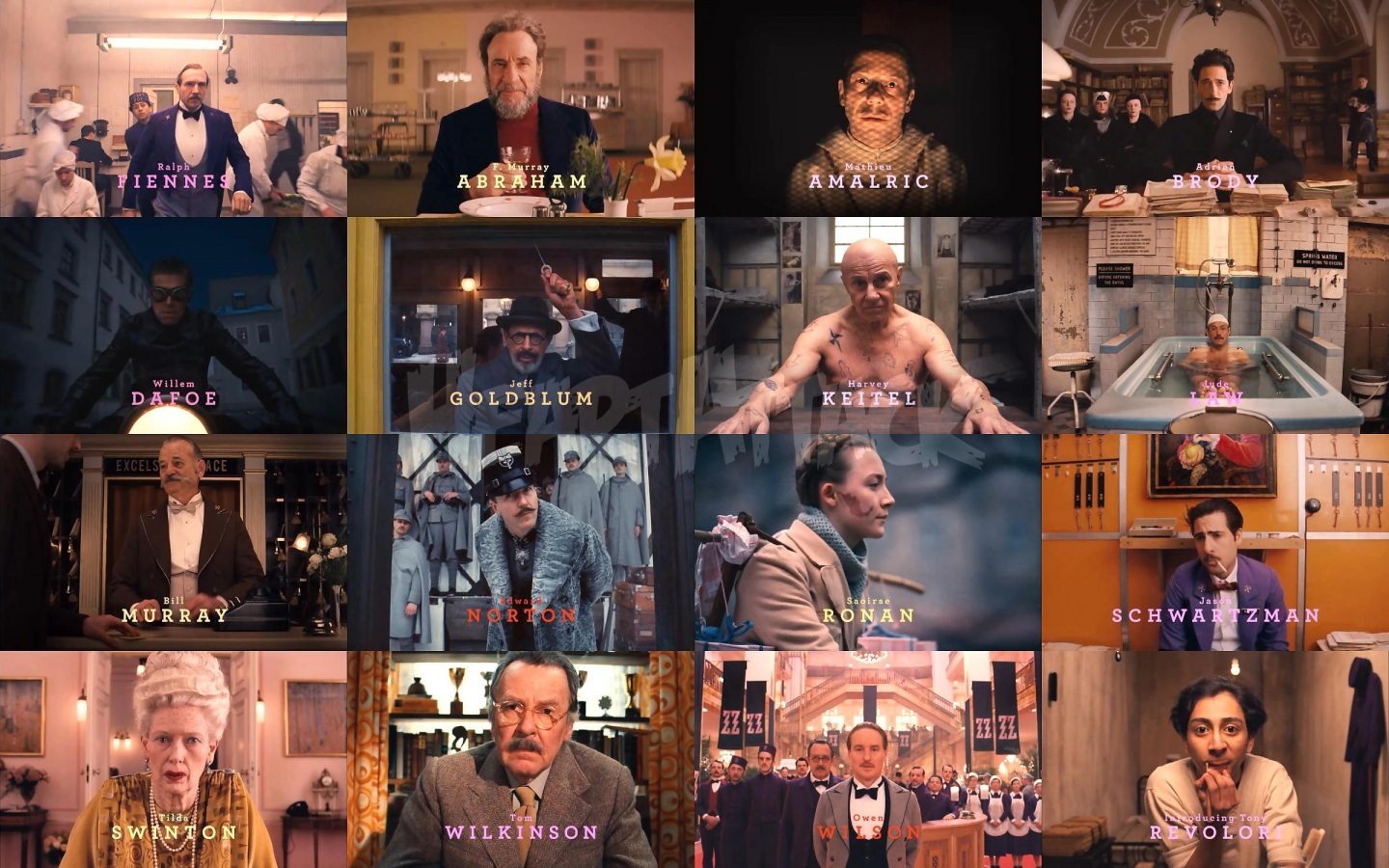
There are so many things to love about this film: it’s expertly constructed on four different time levels – the present day, 1985, 1968 and 1932 – which fit snugly inside one another like Russian dolls; it celebrates friendship, loyalty, love, kindness, courtesy, tolerance, multiculturalism and cosmopolitan ‘old’ Europe before the darkness of fascism and then communism falls; the characterisation is marvellous, especially of concierge M. Gustave (Ralph Fiennes) and bellboy Zero Moustafa (Tony Revolori/F. Murray Abraham); it shows the importance of writers as chroniclers of memories and history, and the power of literature down the generations; it’s quirky, funny, and profoundly moving; it features a wonderful ensemble cast and is a visual feast from start to finish.

Two extra tidbits. It was filmed largely in Berlin, in and around the famous Babelsberg Studios, and premiered at the Berlin Film Festival, where it won the Silver Bear Grand Jury Prize. It’s loosely inspired by the life and works of Austrian-Jewish writer Stefan Zweig (see a marvellous interview with Anderson discussing this aspect of the film).

Wes Anderson is at the top of his game and has delivered an assured, masterfully crafted work of genius. There. Now go see it if you haven’t already! The official trailer is here.

The-Grand-Budapest-Hotel-Wes-Anderson-01-personnages