Jingle bells! Mrs. Peabody’s 2025 Christmas crime list

Mrs. Peabody’s 2025 Christmas list features the perfect gift for every crime lover in your life — including yourself!

Eight novels set in America, England, Norway, Scotland, Croatia and the former Yugoslavia, with a dash of China, Sweden and Ukraine. Please support indie publishers and local booksellers!
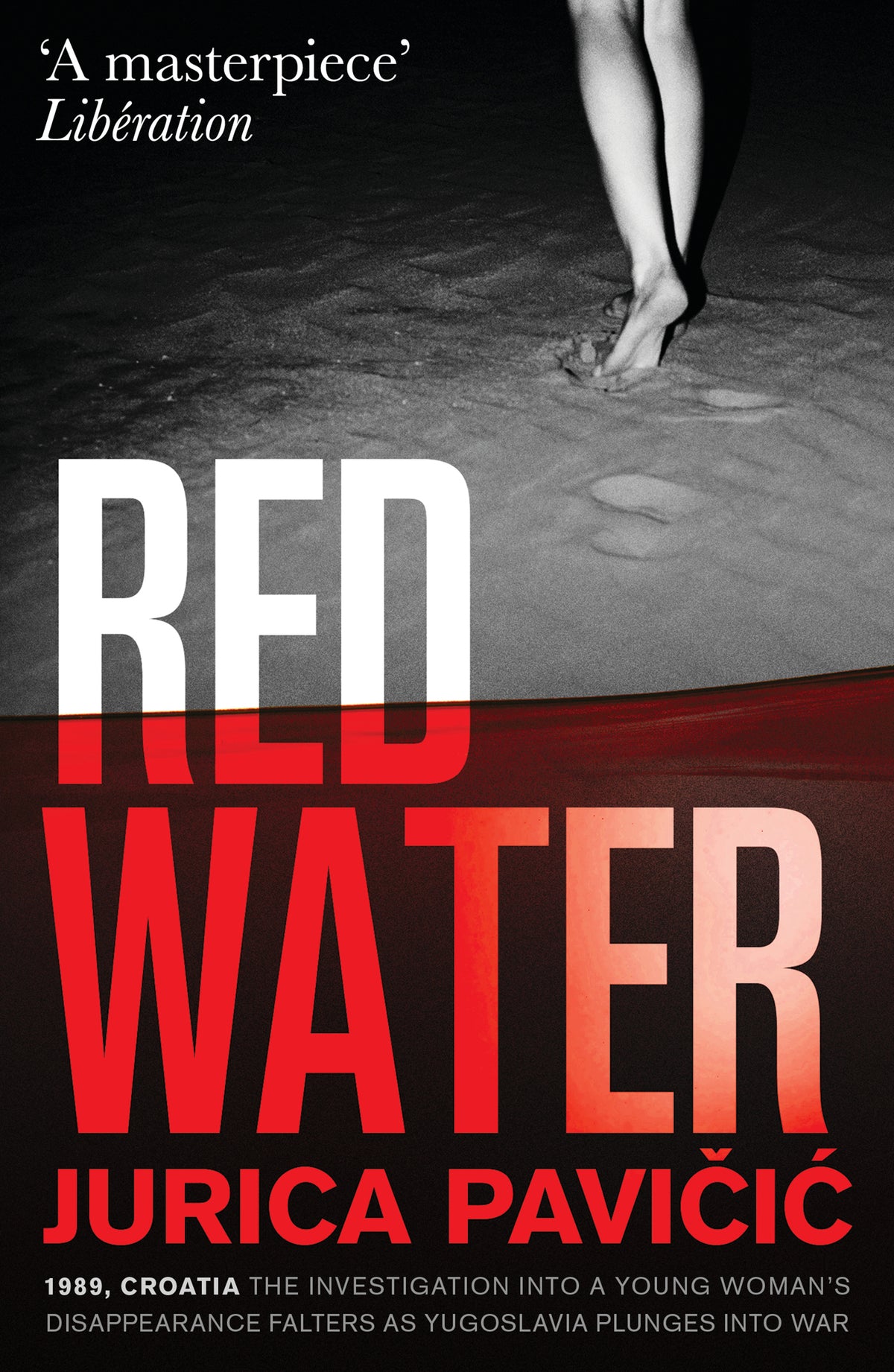
Red Water

Jurica Pavičić, Red Water, translated by Matt Robinson, Bitter Lemon Press 2025

Red Water is for lovers of international and historical crime fiction. Set in Croatia, the novel explores the fallout from a teenager’s disappearance over three long decades. Silva vanishes in September 1989, leaving her family confounded, not least because the police investigation reveals some unexpected sides to the seventeen-year-old’s life. Then comes the fall of communism and the Yugoslav Wars that will tear communities apart. It’s only once the conflict ends that the family has any chance of getting the answers they need.

This gripping and emotionally intelligent mystery shows the toll on the loved ones of those who disappear, while offering a nuanced history of Yugoslavia’s collapse and the remaking of Croatia. First-class stuff.

Laila Lalami, The Dream Hotel, Bloomsbury 2025

Set in a future not far from now, The Dream Hotel is a speculative mystery that highlights the dangers of the technologies that supposedly serve us. Dr Sara Hussein is returning from a conference when she’s detained at Customs and Immigration, because she’s been deemed at risk of committing murder following data analysis of her dreams. Little did she know, when blithely agreeing to the terms of a sleep-saving device after the birth of her twins, that her dreams would be harvested and used against her. Now she’s being held at a SAFE-X facility that turns a profit from its detainees’ labour and is loath to let them go. It’s been 291 days — will Sara ever make it back to her family?

The Dream Hotel will make you think twice about ticking those innocent-looking ‘terms and conditions’ boxes, and illuminates the intersections of law enforcement and capitalism in uncompromising ways. The subject is highly relevant given the current situation in the States, where ICE is busy outsourcing raids on immigrant communities. A fantastic read from an author at the top of her game.

Elly Griffiths, The Postscript Murders and The Last Word, Quercus 2020 and 2024 

Time for some cosy crime! I absolutely loved this duo of bookish crime novels by Elly Griffiths. In The Postscript Murders, DS Harbinder Kaur sees no reason to suspect foul play when 90-year-old Peggy Smith is found dead at home. But Peggy’s carer Natalka isn’t so sure: Peggy thought she was being followed and did she really have the heart condition that apparently killed her? Together with Edwin, Peggy’s elderly neighbour, and Benedict, a former monk who serves coffee on the Shoreham seafront, Natalka sets about solving the mystery of Peggy’s death. And it turns out that their friend had a rather special skill. Then, in The Last Word, the trio investigate the demise of local romance author Melody Chambers.

Both novels are great reads — witty and entertaining, but with plenty of emotional depth. The three investigative characters bounce off one another nicely, and Natalka’s Ukrainian dynamism complements Edwin and Benny’s more cautious British approach. Crime fiction with lots of heart.

Jørn Lier Horst, The Lake, translated by Anne Bruce, Penguin 2025 

The latest William Wisting police procedural is a brilliant addition to the series. It’s high summer and Lake Farris is drying out for the first time in years. As the waters recede on opposite sides of the lake, there are disturbing discoveries relating to two cold cases: the remains of a young motorcyclist who went missing eight years ago, and the belongings of a girl who disappeared four years later. Wisting and his team, with fresh input from a Swedish detective, begin to reinvestigate.

This crime novel goes to some quite dark places, but is never salacious or gratuitous in tone. Wisting represents the very best of policing: he is methodical, dogged, and dedicated to securing justice for his victims. His methods have also moved with the times, so we’re given fascinating insights into the latest technologies used to secure vital breakthroughs.

R. F. Kuang, Yellowface, HarperCollins 2024

Rebecca Kuang is an incredibly exciting writer, with the talent and courage to pull off ideas that many other authors could not. In Yellowface, obscure writer June Hayward witnesses the death of her friend and rival Athena Liu in a freak accident. In the interval between dialling 911 and the arrival of the emergency services, June steals the book manuscript lying on the dead woman’s desk, and later revises and passes it off as her own. Finally, ‘June Song’ has the fame and critical adulation she’s always dreamed of and seems to have no problem justifying her actions to herself. But someone may be about to expose her. How can June save herself from being cancelled and losing her precious career?

Yellowface is a razor-sharp dissection of the publishing industry and the crazily competitive world that aspiring writers have to navigate. Just how far are they (or any of us) willing to go to make it? Clever and witty, and a genuinely insightful look at the publishing process.
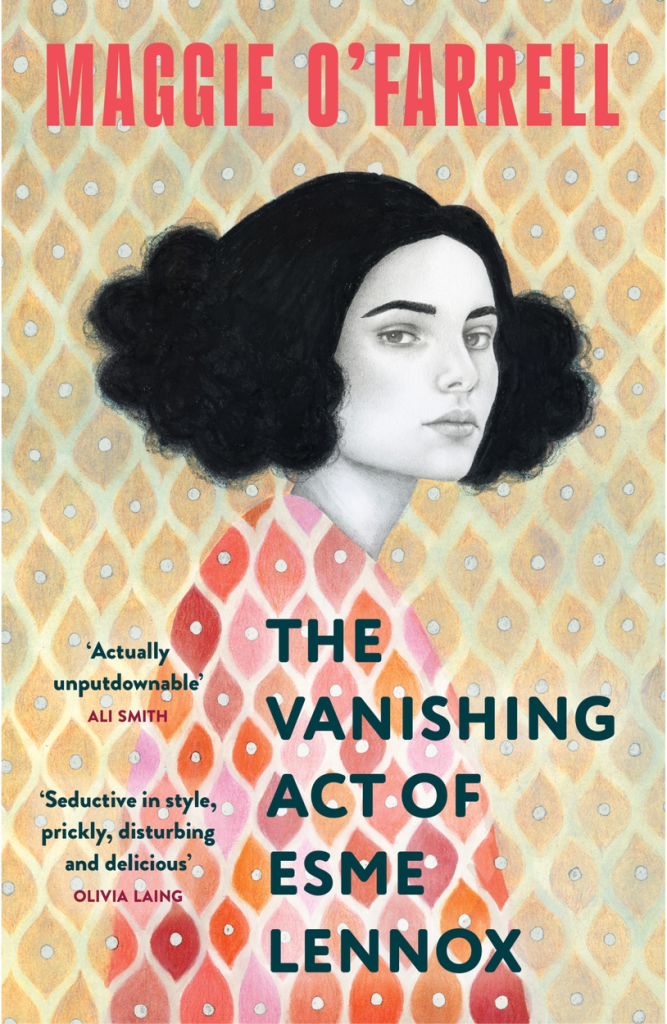
Maggie O’Farrell, The Vanishing Act of Esme Lennox, Hachette 2009

Top-notch literary crime. Iris Lockhart gets a letter telling her that her great-aunt Esme Lennox is about to be released from an Edinburgh psychiatric unit. Iris has never heard of Esme, and her grandmother Kitty, who is slipping into dementia, seems unable or unwilling to help. But what could Esme have done to deserve a lifetime in an institution? And why the complete silence about her within the family?

This is by far the oldest novel on my list, but I read it this year and was simply blown away. I counted at least four major crimes within its pages, and the astonishing thing is that none of them — even in combination — could be said to be remotely unique. On finishing it I felt quite shaken, because it really isn’t that long since ‘transgressive’ women could be so easily ‘put away’. Sobering and sad, but incredibly good — and Esme herself is unforgettable. O’Farrell is a truly fantastic writer.

Jess Kidd, Murder at Gulls Nest, Faber 2025

Murder at Gulls Nest is the first in Jess Kidd’s ‘Nora Breen Investigates’ series and is set in the 1950s seaside town of Gore-on-Sea, a place of boarding houses, terrible food, and recuperation after long years of war. Nora was once Sister Agnes of Christ at the High Dallow Carmelite Monastery, but when former nun Frieda goes missing, Nora feels compelled to find her and takes a room at the Gulls Nest boarding house where the woman last lived. Here, Nora meets the ragtag assortment of Frieda’s fellow lodgers, and starts using her curiosity and sharp intelligence to get to the bottom of the mystery. When one of the lodgers is found dead, Nora knows that something is seriously amiss. Kidd’s use of language is sublime, and the loyal and resourceful Nora Breen is a delight. Cosy, but with an uncompromising edge.

Wishing you all a lovely, relaxing and bookish Christmas!

Spring smörgåsbord! Swiss, Korean, British, Spanish & American crime fiction

Spring is springing here in Wales, with pink blossom, white garlic, and bluebells emerging into the warmth. It does the soul good to be out in the garden and parks, or down on the beach.

I’ve been enjoying an eclectic range of crime fiction recently, including some longer, more ambitious reads.

Hunkeler's Secret

Hansjörg Schneider, Hunkeler’s Secret (Switzerland), tr. by Astrid Freuler, Bitter Lemon Press 2025

First line: Peter Hunkeler, former inspector with the Basel City criminal investigation department, now retired, woke up and didn’t know where he was.

I reckon Hunkeler’s Secret, the latest in the ‘Inspector Hunkeler’ series, is my favourite thus far. While in hospital recovering from an operation, Hunkeler finds himself sharing a room with Stephan Fankhauser, the gravely ill former head of the Basel Volksbank. One morning, Hunkeler wakes to the news that Fankhauser died in the night. But was it a natural death? Or did a groggy Hunkeler witness something untoward being done to his fellow patient in the wee small hours? After his discharge from hospital, the retired police inspector starts to investigate in his dogged, somewhat grumpy way. There’s also a new family relationship to explore, a wayward goat, and lots of good food.

One aspect of the ‘Hunkeler’ series I particularly like is its geographical setting. There’s the Swiss city of Basel on the one hand, where Hunkeler spent his working life and has a flat, and rural Alsace on the other, where he owns a little house. You get a real sense of the proximity of Switzerland, France and Germany to one another, with characters continually criss-crossing borders and speaking Swiss-German, Alsatian (an Alemannic dialect) and French. I love that Astrid Freuler integrates nuggets of the original languages into her excellent English translation, which gives readers an enhanced sense of the multiculturalism of the area. The region also has a complex territorial history, which plays a role in the resolution of this knotty Hunkeler case.

Jess Kidd, Murder at Gulls Nest (1950s England), Faber 2025

First line: The woman climbs the hill, a favourable wind behind her.

Murder at Gulls Nest is the first in Jess Kidd’s new ‘Nora Breen Investigates’ series, and is set in the 1950s seaside town of Gore-on-Sea, a place of boarding houses, terrible food, and recalibration after long years of war.

For thirty years, Nora was Sister Agnes of Christ, a dutiful nun at the High Dallow Carmelite Monastery. But when former nun Frieda goes missing, Nora feels compelled to find her, and takes a room at the Gulls Nest boarding house, where the young woman was last based. Here, Nora meets the ragtag assortment of Frieda’s fellow lodgers, and starts using her curiosity and sharp intelligence to get to the bottom of the mystery. When one of the lodgers is found dead, Nora knows that something is seriously amiss.

Readers of this blog will know that I’m a big fan of Jess Kidd’s work, especially her brilliant novel HimselfMurder at Gulls Nest is written in a slightly softer, slightly cosier style, but retains plenty of bite. As ever, Kidd’s use of language is sublime, and I’m looking forward to meeting the resourceful, irrepressible Nora Breen again in future.

Mirinae Lee, 8 Lives of a Century-Old Trickster (North Korea and South Korea), Virago 2023

First line: The idea came to me while I was going through my divorce.

When Grandma Mook tells the obituarist at the Golden Sunset retirement home the story of her life — which spans a century of Korea’s history — there’s a suspicion that the old lady is just a fantasist. But: what if Mook Miran is telling the truth and she’s a trickster of the highest order? What if she genuinely was a murderer, terrorist, identity thief and spy?

A major theme of this novel is survival. Mook Miran’s eight lives, which we’re told in non-chronological order, illuminate the terrible hardships women faced in Japanese-ruled Korea (1910-1945) and later in North Korea, and pose the question of what it takes to survive such incredibly adverse circumstances. Part of the answer lies in the figure of the trickster, who survives and advances through nimble thinking and resolute action — even if the latter is viewed as a crime and comes at a price. Sparky, resilient and whip-smart, Mook Miran is a character you won’t easily forget, and the portrait she paints of Korea’s history is disturbing and fascinating in equal measure.

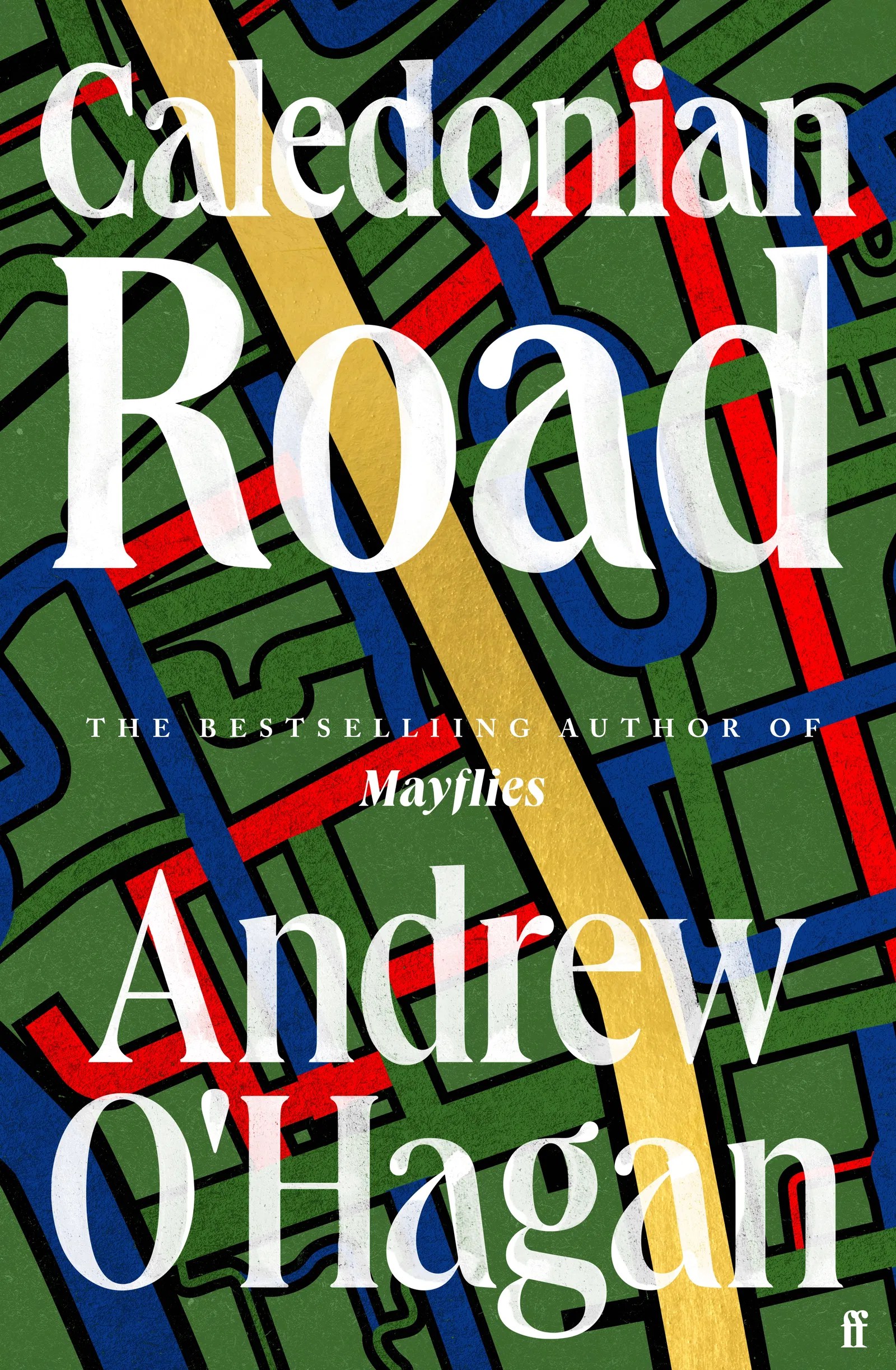
Andrew O’Hagan, Caledonian Road, Faber 2024

First line: Tall and sharp at fifty-two, Campbell Flynn was a tinderbox in a Savile Row suit, a man who believed his childhood was so far behind him that all its threats had vanished.

Caledonian Road, or ‘the Cally’, runs for a mile and a half through the London Borough of Islington. Like many roads in London, it takes you from economically deprived areas to obscenely wealthy ones in what feels like the blink of an eye.

Andrew O’Hagan harnesses the reality of this social divide in his powerful state-of-the-nation novel by creating an illuminating chain of connections: from Milo Mangasha, a tech-savvy student from a Cally council estate, and his uni professor Campbell Flynn, who lives in a posh townhouse with his aristo-therapist wife further up the road, to Sir William Byre, Flynn’s public school pal who’s up to his neck in dodgy deals, and Russian oligarch Aleksandr Bykov and son Yuri, who runs a very modern criminal enterprise and socialises with Campbell’s children. And that’s just a fraction of the cast!

Strap in for 600 pages of brilliant storytelling featuring utterly believable characters and razor-sharp social dissection. In particular, the novel holds up a mirror to the hypocrisies of well-heeled Londoners, and the establishment’s willingness to turn a blind eye to corruption and outright criminality. But it’s not without sympathy for its beleaguered central character, Flynn, whose spectacular mid-life crisis may offer a redemption of sorts, and has much to tell us about the perils of becoming alienated from your true self.

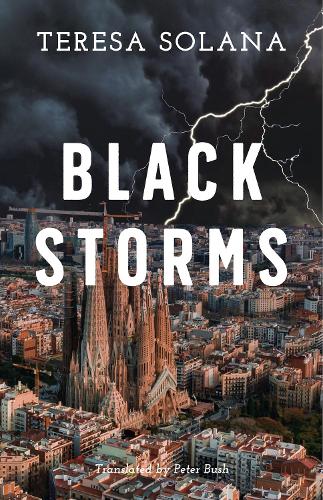
Teresa Solana, Black Storms (Spain), tr. by Peter Bush, Corylus Press 2024

First line: The man who was about to commit murder left home at six thirty, after telling his girlfriend Mary he’d business to see to and checking his car keys were in his pocket.

Whenever I read Teresa Solana’s work, I always come away with an appreciation of her highly distinctive voice, which blends a wry humour with steely social satire. Above all, there’s a wonderful energy to her writing, which seems to feed off the verve of Barcelona, the city where many of her crime stories are set. Her long-time translator, Peter Bush, captures all of these elements with aplomb in his English translations.

Black Storms introduces us to Norma Forester, Deputy Inspector of the Catalan police, who is tasked with solving the murder of an elderly professor at the University of Barcelona. No one can quite understand why a terminally ill man should be targeted in this way, but Norma’s experience and expertise gradually uncover the truth.

Equal attention is paid to Norma’s eccentric family, and they are great fun to hang out with. Norma is the granddaughter of an English member of the National Brigades, and the women of the family, all named after opera heroines, are a force of nature. I particularly like the way Solana shows Norma’s efforts to balance her family life and work, which the latter does in a messy, imperfect, but loving way.

The Residence, Shondaland / Netflix 2025

Last but not least, a very fun Netflix crime series: The Residence, which stars Uzo Aduba as Cordelia Cupp, a consultant with the Metropolitan Police Department of the District of Columbia, and Randall Park as Edwin Park, an FBI Special Agent. They are called to the White House after a murder is committed during a state dinner for the Australian prime minister, and tasked with figuring out which of the 157 suspects is the murderer — including the fictional president and his husband.

Aduba is excellent as the bird-watching, unerringly brilliant sleuth. It’s really her show, backed by a superb ensemble cast, and the whole thing has a Sherlock-Holmes-by-way-of-Wes-Anderson vibe. It also throws a light on the lives of the permanent staff at the White House, who of course stay in place while presidents come and go. Very sharp, very witty and very entertaining.

Up to snow good! Mrs. Peabody’s top crime of 2024

Here is Mrs. Peabody’s top crime list for 2024 — featuring some of my very best reads from the last 12 months (though not necessarily published this year). The books are set in America, Australia, Finland, France, Italy, Japan, Malaysia, Norway, and Spain. 

Perfect gifts for the festive season! Treat others! Treat yourself! Support indie publishers and local booksellers!

Antti Tuomainen, The Burning Stones, tr. from the Finnish by David Hackston (Orenda Books 2024, 271 pp.)

Setting: Rural Finland

First lines: Aaaaahhhhhhh. The steam spread over his skin like a hot, damp blanket, and flowed evenly and satisfyingly across his whole body.

Set in Puhtijärvi, a Finnish village nestled between a forest and a lake, The Burning Stones pays homage to the key role of the sauna in the nation’s wellbeing… whilst also cheerfully turning it into a crime scene.

When Ilmo Räty is found dead in the ashes of his sauna, the rest of his colleagues at Steam Devil, a leading sauna stove manufacturer, fall under suspicion. This is especially problematic for top saleswoman Anni Korpinen, as one of the police investigators holds an elk-related grudge against her family and the murderer seems to be doing their best to frame her. So: not only must Anni deal with her own mid-life crisis, she must also turn detective and ID the murderer before it’s too late. Hilarious and heart-warming in equal measure, The Burning Stones illuminates the rituals of the sauna and the delights of rural Finland. As ever, translator David Hackston does a fantastic job of conveying Antti Tuomainen’s distinctive dark humour and his eye for the idiosyncratic detail of everyday life. A delight. 

Tan Twan Eng, The House of Doors, Canongate 2023

Setting: Penang and Kuala Lumpur, 1910 (now modern-day Malaysia)

First lines: A story, like a bird of the mountain, can carry a name beyond the clouds, beyond even time itself. Willie Maugham said that to me, many years ago.

Tan Twan Eng’s The House of Doors is a wonderfully absorbing and multi-layered historical novel. It imagines how the final tale of W. Somerset Maugham’s 1926 Casuarina Tree — ‘The Letter’, based on the real Ethel Proudlock murder case — might have come about, while the author visits his old friend Robert Hamlyn. Told from the perspectives of Willie and Lesley, Robert’s wife, the novel brilliantly evokes Penang and Kuala Lumpur in the 1910s and 1920s.  See the full review here.

Antoine Laurain, French Windows, tr. from the French by Louise Rogers Lalaurie (Gallic Books 2024, 174 pp.)

Setting: Paris, France.

First lines: In the middle of the unevenly cobbled courtyard stands a tall tree. No one has ever quite determined its species; some people in the building see a wild cherry, others see an oak, though it has never produced an acorn.

Analyst Doctor Faber has a new patient with an unusual problem. Nathalia Guitry is a photographer who finds herself unable to take photos. The reason, we soon discover, is that she accidentally photographed a murder, leaving her understandably traumatised. As a way into therapy, Doctor Faber suggests Nathalia writes about the people she observes from her apartment window. Going up floor by floor, she pens detailed portraits of her neighbours, all of whom are intriguing in their own right. But how much of what she writes is true? And what will the story of the fifth floor reveal?

A Parisian Rear Window that offers insights into therapy, along with lashings of acerbic humour and Gallic charm, French Windows is the perfect stocking filler. Hats off to Louise Rogers Lalaurie for gifting us such a sparkling translation of this novel.

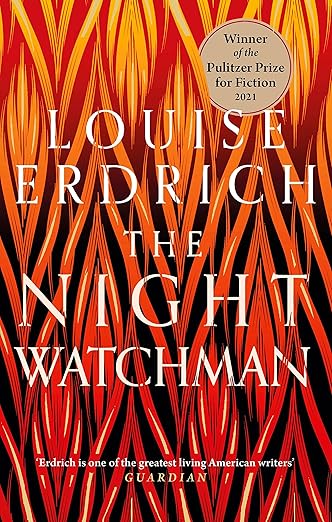
Louise Erdrich, The Night Watchman, Corsair 2021, 464 pp.

Setting: Turtle Mountain Reservation, North Dakota, 1953

First lines: Thomas Wazhashk removed his thermos from his armpit and set it on the steel desk alongside his scuffed briefcase. His work jacket went on the chair, his lunch box on the cold windowsill.

Louise Erdrich, one of my favourite writers, brings the 1950s community of the Turtle Mountain Reservation to life in this highly absorbing, polyphonic novel.

The Night Watchman‘s two main strands each have a criminal dimension. Patrice ‘Pixie’ Paranteau is a young woman whose work at the reservation’s factory allows her to provide for her mother and siblings. But her sister Vera recently vanished after moving to Minnesota, and Pixie now urgently needs to find her and her baby. At the same time, factory night watchman and Chippewa Council member Thomas Wazhashk is becoming seriously concerned about Resolution 108, which is due to go before Congress before too long. Styled as an ’emancipation’ bill, 108 threatens to abolish the official status of tribes as a means of appropriating yet more Native American land and rights — a wave of state-sanctioned violence that Thomas must somehow try to counter. 

The Night Watchman is at times very hard-hitting, but portrays the Turtle Mountain community with humour and warmth. While never sentimental, it shows the power of determination and grass-roots organisation (the character of Thomas is based on the author’s own grandfather), and the resilience and resourcefulness of women like Pixie. The novel won the 2021 Pulitzer Prize for Fiction. Highly recommended!

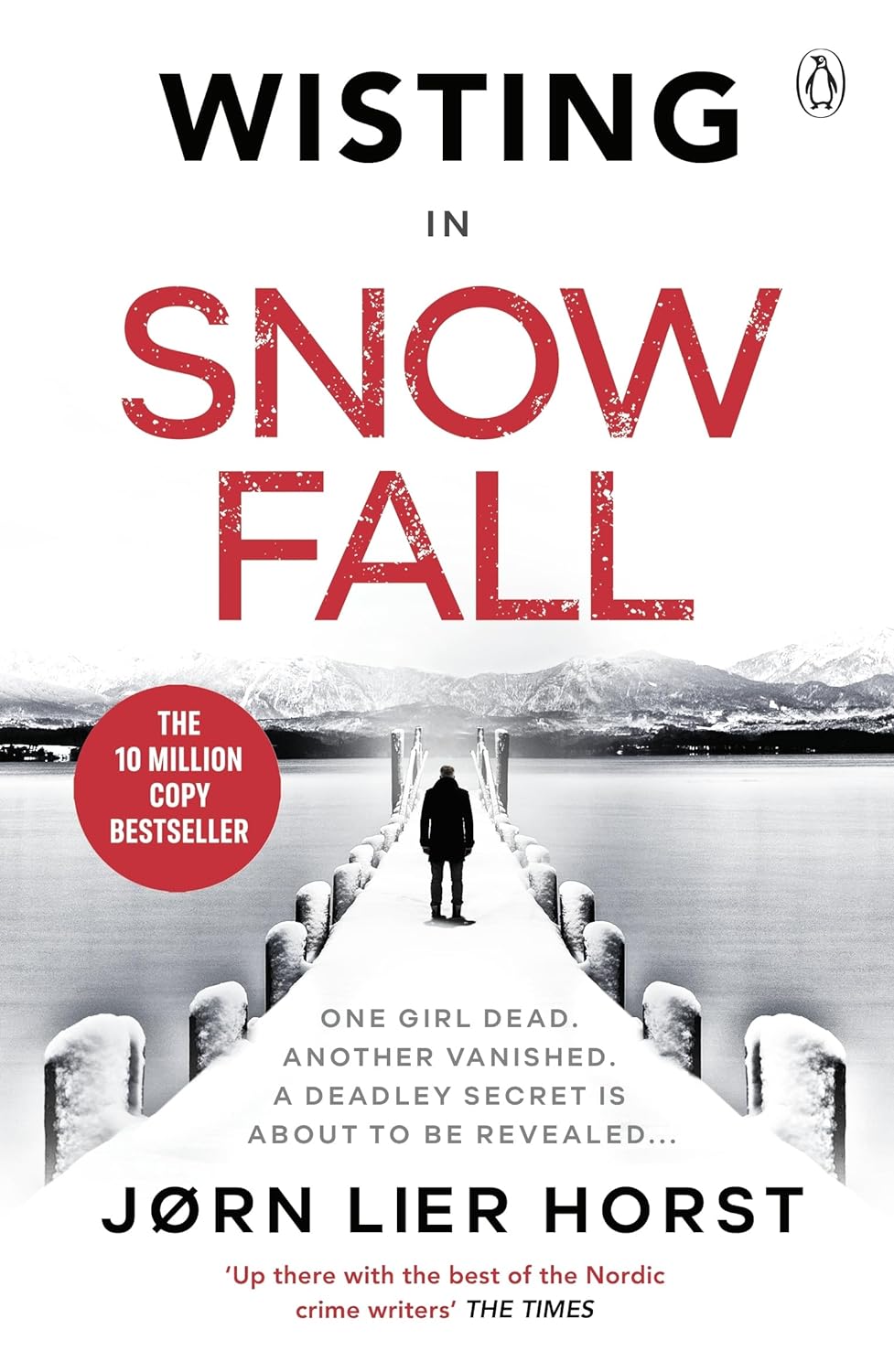
Jørn Lier Horst, Snow Fall, tr. from the Norwegian by Anne Bruce (Penguin 2024, 432 pp.)

Setting: Norway and Spain

First line: The email appeared on his screen at 15.37 on Friday 8 December.

As regular readers of this blog will know, I’m a huge fan of Jørn Lier Horst’s ‘William Wisting’ novels — consistently thoughtful and intelligent police procedurals that use their crime narratives to illuminate various facets of modern society.

Snow Fall sees Wisting being asked to investigate the disappearance of Norwegian woman Astri Arctander — a member of an online crime forum looking into the recent murder of backpacker Ruby Thompson in the town of Palamós in Catalonia. Wisting’s investigation takes him from Norway to Spain, and includes navigating a relationship between himself as a police representative and the modern-day online detectives, whose information is gathered outside of the law but may nevertheless be useful. By the way, the handle of one of the online sleuths is intriguing: a certain ‘Mrs Peabody’ who seems to know her crime fiction! The author has not yet confirmed or denied the inspiration for this character…

Snow Fall is an absorbing police procedural by a writer at the height of his powers, brought to us in style by Lier Horst’s long-standing translator, Anne Bruce. Quality holiday reading!

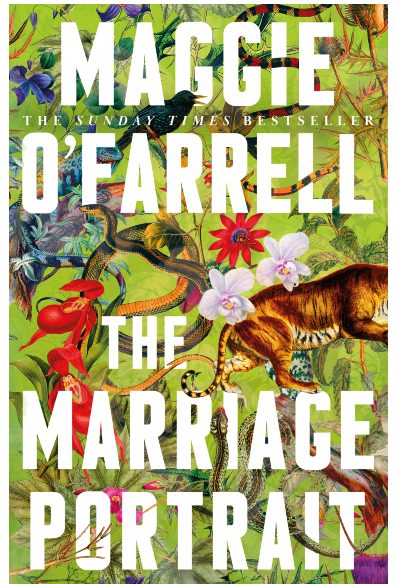
Maggie O’Farrell, The Marriage Portrait, Tinder Press 2022, 438 pp.

Setting: Sixteenth-century Italy

First line: Lucrezia is taking her seat at the long dining table, which is polished to a watery gleam and spread with dishes, inverted cups, a woven circlet of fir.

Maggie O’Farrell’s The Marriage Portrait was one of my star reads of the year. The author takes her inspiration from a snippet from history — the mysteriously brief life of Lucrezia di Cosimo de’ Medici (1545-1561) — and Robert Browning’s 1842 poem ‘My Last Duchess’, which suggests that Lucrezia was murdered by her husband, the Duke of Ferrara. The resulting novel is an outstanding example of literary crime — ingenious but with plenty of heart. Read my full review here.

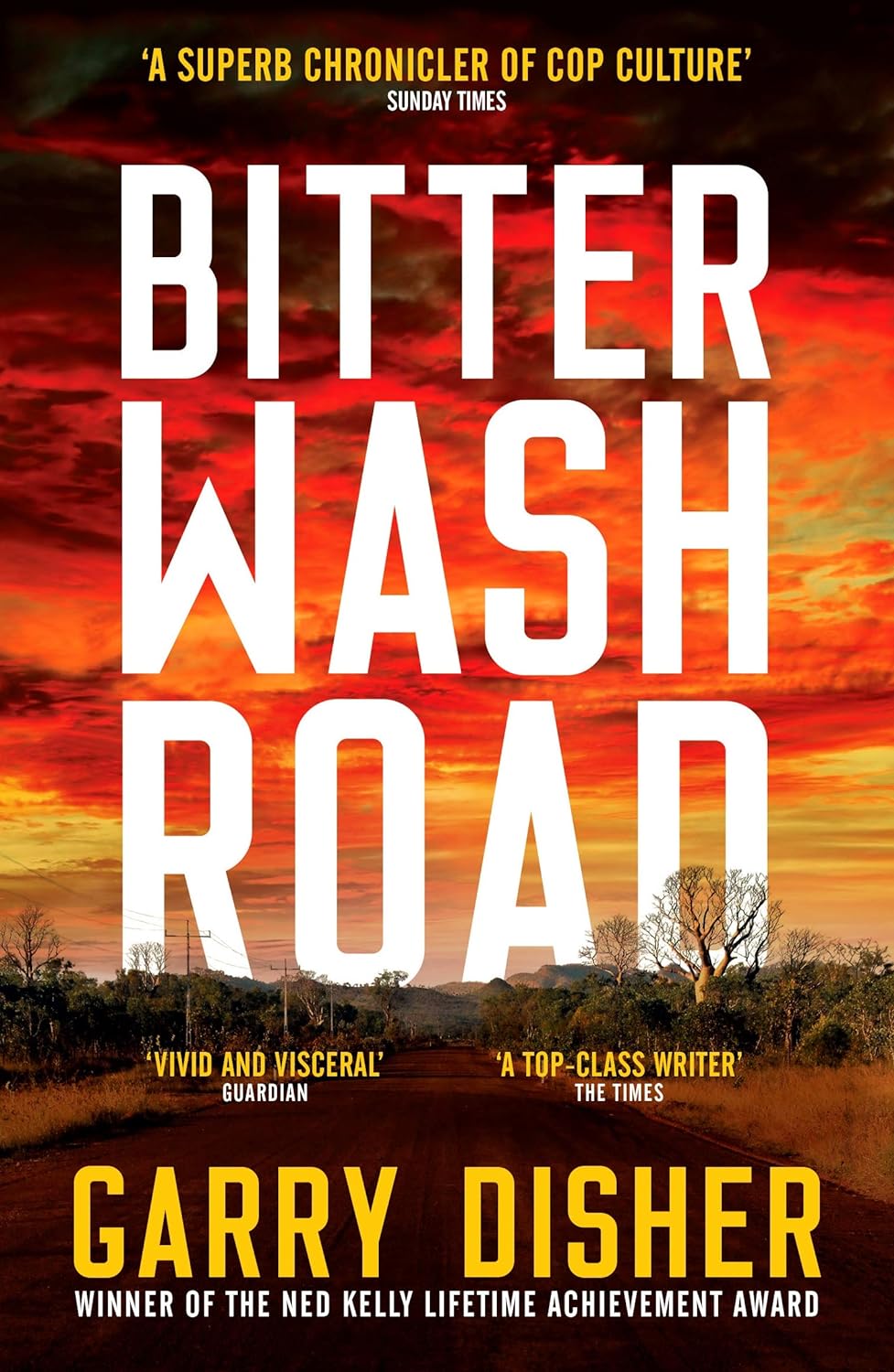
Garry Disher, Bitter Wash Road, Viper 2020, 416 pp.

Setting: Rural South Australia

First line: On a Monday morning in September, three weeks into the job, the new cop at Tiverton took a call from his sergeant: shots fired on Bitter Wash Road.

Bitter Wash Road is the first in Garry Disher’s ‘Constable Hirsch’ series. Paul ‘Hirsch’ Hirschhausen has recently found himself exiled from the city to a one-man cop shop in ‘wheat and wool country, three hours north of Adelaide’ — punishment for having dared to be a whistle-blower during a previous case. In Tiverton, the metropolitan cop must quickly adapt to rural policing — which is not always as quiet as one might think — and deal with the hostility of his new boss, the distinctly unenlightened Sergeant Kropp. Oh, and there’s likely to be a whole lot of extra fallout from Hirsch’s past too. 

This is an outstanding novel with great characterisation and a thrilling plot from the three-time winner of the prestigious Ned Kelly Award for Best Novel. I have the next in the series, Peace, lined up as one of my holiday reads.  

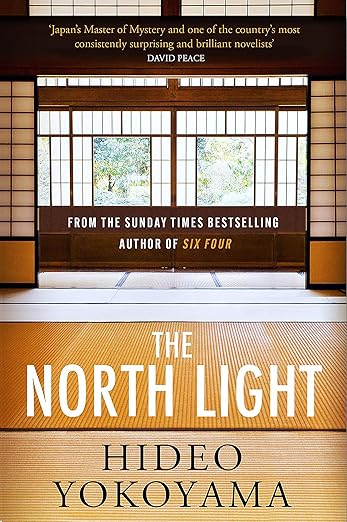
Hideo Yokoyama, The North Light, tr. from the Japanese by Louise Heal Kawai (RiverRun 2023, 408 pp.)  

Setting: Tokyo, Osaka and around Mount Asama, Japan

First line: In Osaka it had been raining since early morning.

The North Light is probably best described as a mystery and a meditation on middle age. Minoru Aose is a divorced architect who fell on hard times after Japan’s economic bubble burst in the 1990s. Although he now works for a small, reputable architectural firm, he seems to be largely out of touch with his feelings and unclear about what he wants from life.

Aose’s biggest achievement to date is the Yoshino house, a prizewinning residence near Mount Asama. His brief was to design a house that he himself would want to live in, and it is built to showcase the north light he loves. The chance discovery that the house is empty and the Yoshino family has vanished unsettles him greatly: he is both worried for the family and fearful that they hated the house. We accompany Aose as he unravels this mystery, a journey that reveals facets of his unusual childhood; the work of (real) German architect Bruno Taut, who fled Germany for Japan during the Nazi era; Japanese work culture; and the interplay of Japanese nature and architecture. Quietly gripping and beautifully translated by Louise Heal Kawai, this novel subverts the crime genre in extremely interesting ways.

Wishing you all a very Merry Christmas / Hanukkah / Happy Holidays!

In an unusually glamorous fashion, I’m just about to hop on a plane, so will catch up with your comments in a couple of days 🙂

From Napoli to Nottinghamshire: Italian crime novel The Bastards of Pizzofalcone & BBC crime drama Sherwood

Maurizio de Giovanni, The Bastards of Pizzofalcone, tr. from the Italian by Antony Shugaar (Europa Editions 2015) 

First line: Giuseppe Lojacono was sitting in the squad car, in the passenger seat, back straight, hands motionless on his thighs.

It’s been a while since I read some Italian crime fiction, so Maurizio de Giovanni’s The Bastards of Pizzofalcone was a perfect fit: the first in a series about a ragtag group of police officers who are thrown together after being transferred to the troubled Pizzofalcone police precinct in Naples.

The precinct’s former, corrupt officers have been packed off in disgrace, so it’s up to the new guys to rescue its reputation. There’s Giuseppe Lojacono, a Sicilian with fine investigative instincts and a chequered past; Marco Aragona, a suntanned rich kid who acts like he’s a film star; Ottavia Calabrese, a computer genius with an oppressive home life, Francesco Romano, a terse chap with anger management issues; Giorgio Pisanelli, an old-timer obsessed with a set of suicides he thinks are murders; Allesandra Di Nardo, a firearms whizz stifled by her family’s conformity, and the ever steady Commissario Luigi Palma, better known as Gigi. Together, they are the Bastards of Pizzofalcone.

The novel is billed as ‘noir’, but I’m not sure that’s totally accurate. The emphasis is very much on character and on the mechanics of investigating various cases: the murder of a wealthy notary’s wife, a suspected kidnapping, the alleged suicides. The acknowledgements reveal that the author is a fan of Ed McBain, and I think that offers us a great way to see this novel – as the first in a modern, Neapolitan ’87th Precinct’ series. There’s also a TV adaptation – here’s a nice introductory snippet with subtitles…

Chain of evidence: from Napoli to Nottinghamshire

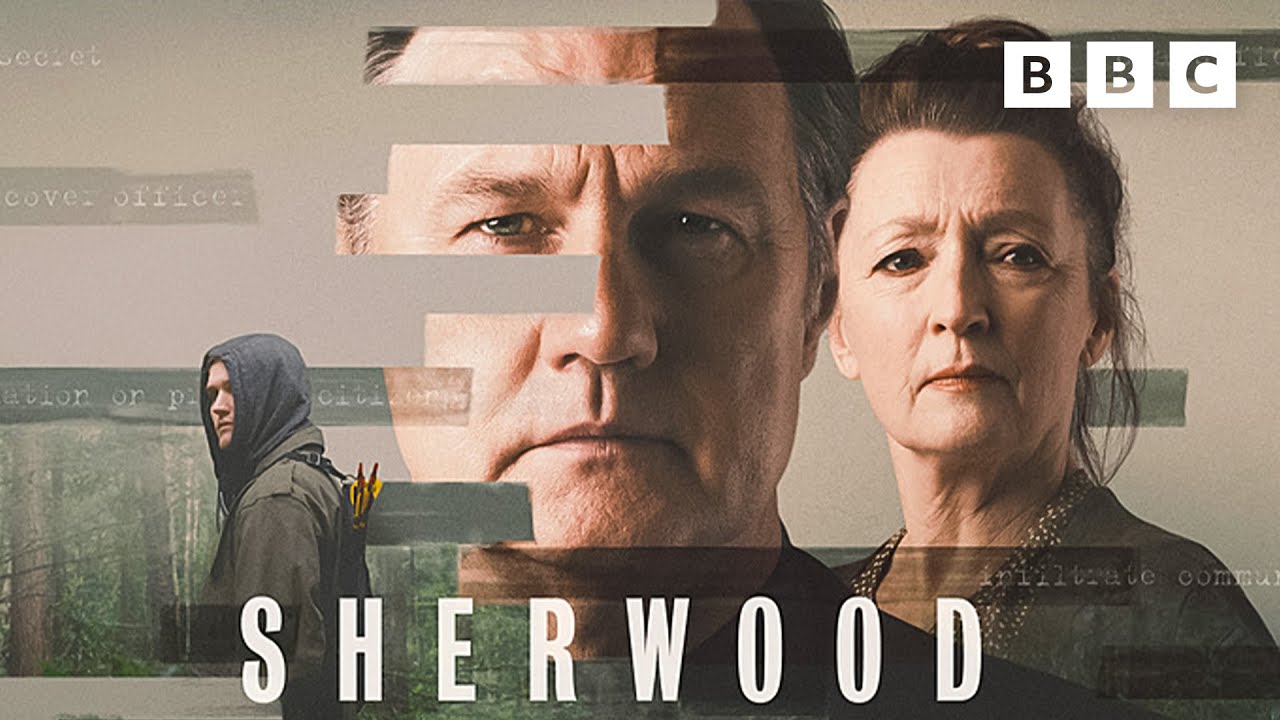
Reading The Bastards of Pizzofalcone made me think about other Italian crime novels I’ve loved. This led me to my earlier post on Roberto Costantini’s The Deliverance of Evil (Quercus), which is the first in a trilogy. The post contains an extensive list of crime trilogies and quartets, such as David Peace’s astonishing ‘Red Riding Quartet’ (Serpent’s Tail), set in Yorkshire. Peace also wrote a novel called GB84 about the 1984 miners’ strikes. And that brings us to the BBC crime drama Sherwood, set in Nottinghamshire around 2014, in a community fractured by the strikes thirty years before…

This six-part series has just concluded, and I can highly recommend it for its wonderfully rich storylines, its historical and social insights, and its absolutely stellar cast, including David Morrissey, Robert Glenister and Lesley Manville. Writer James Graham grew up in the area, and fuses a genuine case (the murder of a man with a crossbow) with the history of the miners’ strikes and the ‘spycops’ scandals (an early example of how seeding discord into a community can ‘divide and conquer’ it for decades). It’s fast-paced, hard-hitting, twisty, and genuinely moving at times. Loved it.

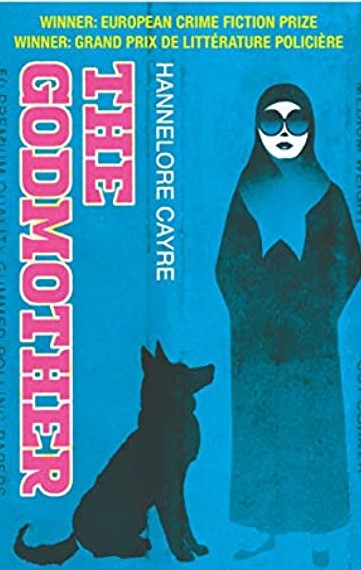
When translators go rogue: Hannelore Cayre’s The Godmother, tr. Stephanie Smee (France)

Hannelore Cayre, The Godmother, tr. from the French by Stephanie Smee, Old Street Publishing 2020

Opening line: My parents were crooks, with a visceral love of money.

I re-read this smart, blackly comic French crime novel while holidaying in Weston-super-Mare — a setting about as far removed from Paris as Jupiter (think chips on the beach, donkey rides etc.) And I’ve found myself thinking increasingly about the central figure of ‘The Godmother’ over the last few days, probably due to the news coverage of this Sunday’s French elections.

Meet Madame Patience Portefeux, a respectable 53-year-old French-Arabic translator and interpreter whom life has dealt a series of blows. After years of freelancing and struggling to pay her mother’s care home fees, she realises that all she can expect is a poverty-stricken, pension-less old age. When fate hands her the opportunity to get rich, thanks to her work translating police phone-taps of drug gang conversations, she takes it, fashioning a new identity for herself as The Godmother, drug dealer extraordinaire.

Patience relates her story with wit and verve – all credit to Stephanie Smee here for her assured and sparky translation. And it really is a hugely funny, outrageous tale featuring an eccentric cast of characters, such as DNA the ex-drug-detection-dog. But reading the novel for a second time, I definitely appreciated its satirical dimensions more. The author has some serious things to say about middle-aged women who endlessly prop up their offspring and parents, the financial traps that poorly paid freelancers can fall into, and the way in which French racism and the collapse of the ‘social contract’ (work-hard-and-you’ll-be-rewarded) can lead individuals to a life of crime.

The latter applies to her own parents – Patience is the daughter of a French-Tunisian father and Austrian-Jewish mother – as well as to young men from immigrant communities in the banlieues outside Paris. And it’s notable that this outwardly respectable and very ‘French’ woman is careful not to reveal her own complex heritage to others: it’s vital that she’s perceived as someone who belongs, not a ‘vulgar foreigner or outsider’ — unless she’s posing as a Moroccan drug dealer, that is….

The Godmother won the 2019 European Crime Fiction Prize, the 2019 Grand Prix de Littérature Policière, and the 2020 CWA Crime Fiction in Translation Dagger Award. It was recently made into a warmly received film entitled La daronne / Mama Weed (2020/2021), starring none other than the fabulous Isabelle Huppert.

Gallic charm: Sébastien Japrisot’s The Sleeping Car Murders, tr. Francis Price (France)

Sébastien Japrisot, The Sleeping Car Murders, tr. from the French by Francis Price, Gallic Books 2020 [1962]

First lines: This is the way it began. The train was coming in from Marseille.

If you need to tiptoe away from the world and its troubles, why not head to the Gare de Lyon in Paris on an October morning in the 1960s. There, a guard checking a newly arrived sleeper from the South of France has just discovered a corpse in Berth 222: a woman last seen alive that morning by those who shared her sleeping compartment, but who is now very definitely and mysteriously deceased.

Enter Inspector Antoine Pierre Grazziano — or Grazzi — from police HQ at the Quai des Orfèvres. He and his team begin to investigate Georgette Thomas’s murder by tracking down the occupants of the other six berths, but soon find themselves stretched to the limit as the body count starts to rise.

There really is a lot to like about this inventive police procedural. Grazzi, the rather weary, harassed lead detective, is a sympathetic and quietly tenacious figure. The characterization throughout the novel – from the train guard to the other passengers to the perpetrator – is a rich delight. The style is sparky and wry, and there are some cracking plot twists, particularly towards the end.

Author Sébastien Japrisot (1931–2003) is the pseudonym of Jean-Baptiste Rossi (spot the anagram), who was a prolific crime writer, screenwriter and director. In 1965, The Sleeping Car Murders was turned into the film Compartiment tueurs, starring Yves Montand and Simone Signoret; it was also the first film directed by Costa-Gavras. Here’s a brilliantly mad trailer.

I’m looking forward to reading more by this author – somewhere on the dial between Georges Simenon and Pascal Garnier?!

Crime leads: Walter Presents + V&Q books + 2022 crime fiction in translation

Introducing Mrs Peabody’s ‘crime leads’: an occasional feature rounding up the best of international crime fiction news.

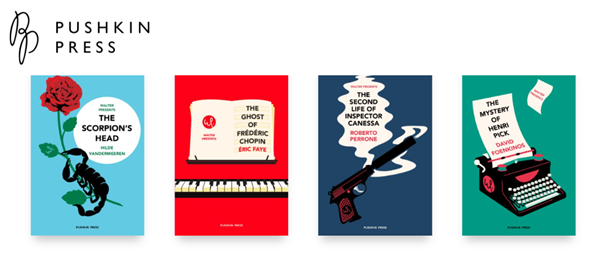
I’m not sure how many crime fans realise that Walter Presents which made its name by bringing a curated selection of TV dramas to our screens — has forged a partnership with Pushkin Press. I certainly hadn’t…

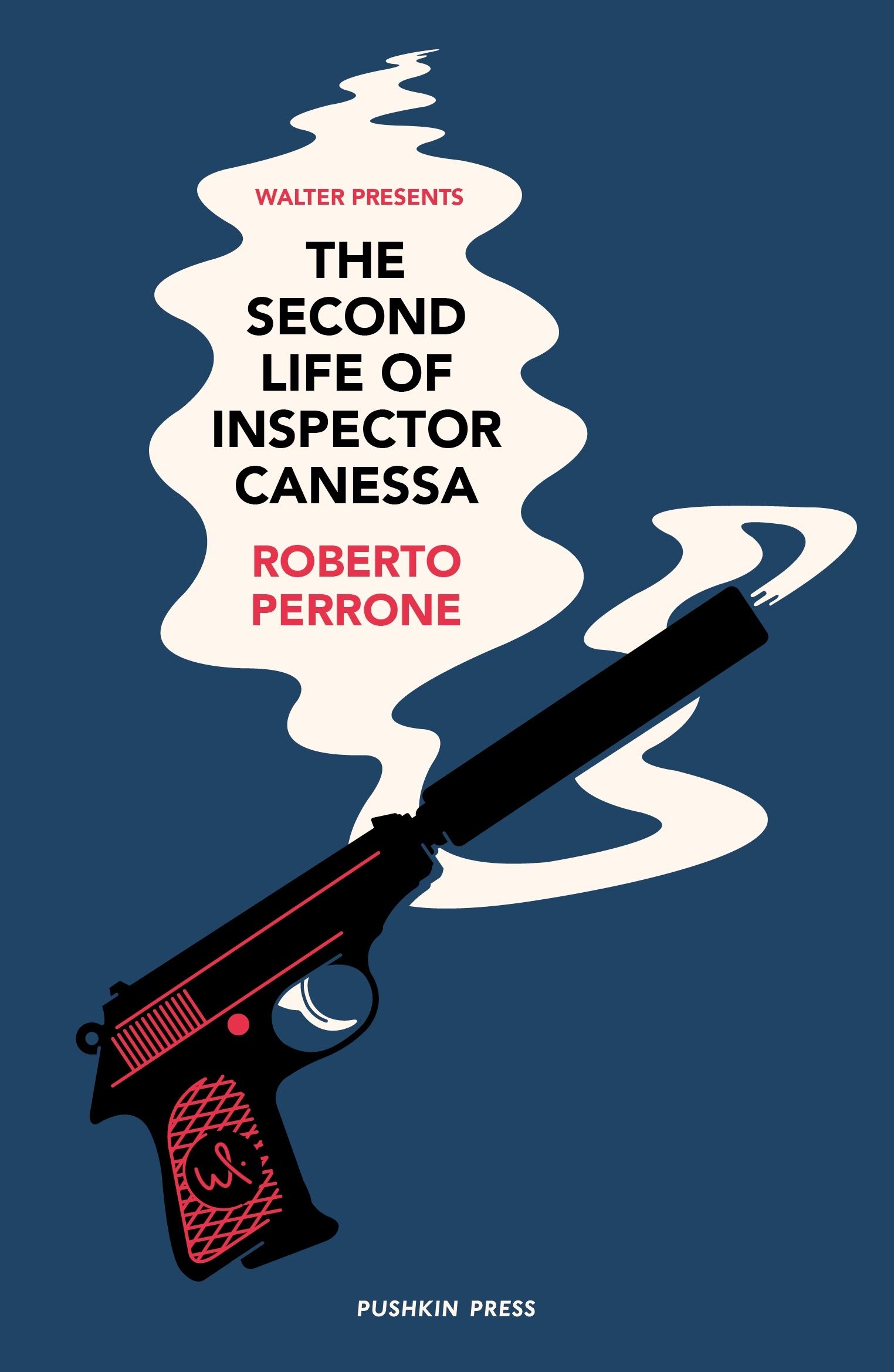
At the moment there are four crime novels in the ‘Walter Presents’ series, by Flemish, French and Italian authors, and if they’re anything as good as the crime dramas dear Walter picks out (such as the superlative Deutschland ’83) then we’re in for a major treat. The one that’s particularly caught my eye is Roberto Perroni’s The Second Life of Inspector Canessa, with this lovely noir cover.

Here’s the blurb: “Annibale Canessa was a legend: the most notorious cop during Italy’s brutal Years of Lead, he hunted down terrorist suspects with unmatched ferocity. But then the fighting stopped, and suddenly Canessa was a soldier without a war.

30 years later and he’s settled into a life of calm by the sea – until some shattering news pulls him back in. His estranged brother has been found dead; lying beside him, the body of an ex-terrorist, a man Canessa himself caught.”

The Bookseller reports that V&Q Books — headed by translator-publisher Katy Derbyshire — has bought the rights to Sally McGrane’s thriller Odessa at Dawn. The book follows ex-CIA man Max Rushmore on a trip to Odessa that veers badly off course… His journey leads him to dubious businessmen, corrupt officials, catacomb dwellers, scientists, pastry-chefs, poets, archivists, cops – and killers. Described as a ‘surreal contemporary spin on the classic spy novel’ that pays tribute to past Odessa residents like Babel, Gogol, Pushkin and Chekhov, it’s also an ode to the city itself. Sounds mighty intriguing – and highly topical given the current situation in Ukraine.

As it happens, I’m just reading a comic novel/mystery caper from the eclectic V&Q list: Isabel Bogdan’s The Peacock, deftly translated from the German by Annie Rutherford. It’s set a long way from Odessa – in the Scottish Highlands no less – and features a hilarious ensemble cast including the eponymous, rather cross peacock. Think Monarch of the Glen sprinkled with P. G. Wodehouse and Hamish Macbeth – a wonderful balm if you’re feeling a bit frazzled with the world.

And finally, if you’re one of those crime buffs who likes to look ahead and possibly even compile spreadsheets of your reading for the year, then here are two very useful lists:

Fiction from Afar: ‘Unmissable Crime Fiction in Translation due in 2022’

Euro Crime: ‘Releases in 2022’

Because we obviously don’t have enough crime novels already 🙂

John le Carré (1931-2020) — an appreciation

I’m so very saddened by the death of John le Carré – a brilliant, insightful and humane writer, whose ability to capture the personal and political complexities of our time was second to none.

John le Carré

Below is a slightly edited post I first wrote eight years ago – my homage to this great writer and his works. I never met le Carré, but we did briefly have contact once, when he rode to the rescue of my beleaguered languages department after it was threatened with redundancies in 2010. He gave his help immediately and with a generosity that none of us have forgotten. During that period, he signed off a note to me with the words “All fine. Please feel free”. It sits framed on my mantlepiece, where I can look at it fondly: I reckon it’s a pretty good principle to live your life by.

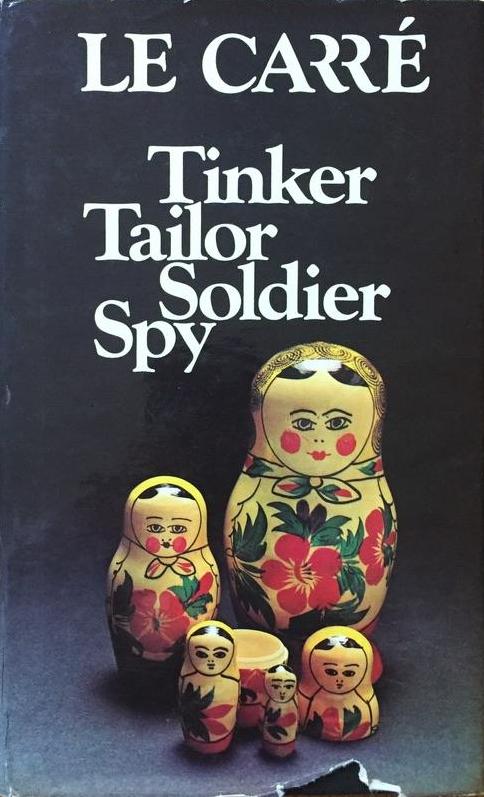
I found out later from Adam Sisman’s biography that we had both lived, at different times, in the same small town in our youth. I have happy memories of watching the TV series of Tinker Tailor Soldier Spy with my dad back then – we adored Alec Guinness as Smiley, and that incredibly haunting Russian doll title sequence.

Here’s my personal appreciation of John le Carré and his works, which is shaped by our mutual love of Germany and its culture. Do you have a favourite le Carré work? Please let me know if so in the comments below.

1. I love that the author and his creation George Smiley are outward-looking linguists. Le Carré studied German literature for a year at the University of Bern, and graduated with first-class honours in modern languages from Oxford. Most of his spies are linguists, and the most famous of them all, George Smiley, studied Baroque German literature and was destined for academia until the British Secret Service came knocking — in the shape of the brilliantly named ‘Overseas Committee for Academic Research’. The profession of intelligence officer gives Smiley ‘what he had once loved best in life: academic excursions into the mystery of human behaviour, disciplined by the practical application of his own deductions’ (Call for the Dead). And languages still really matter. Smiley’s ability to speak fluent German plays a vital role in Smiley’s People when he gathers intelligence in Hamburg, the city where he spent part of his boyhood, as well as a number of years ‘in the lonely terror of the spy’ during the Second World War. Le Carré says of him in an afterword that ‘Germany was his second nature, even his second soul […] He could put on her language like a uniform and speak with its boldness’. This author’s world, then, is overwhelmingly multilingual, multicultural and international.

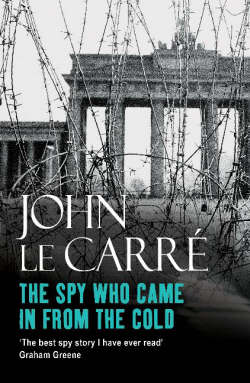
2. Many of le Carré’s novels brilliantly evoke Germany during the Cold War. The frequent use of a German setting was practically inevitable given le Carré’s studies, his membership of the British Foreign Service in West Germany (as Second Secretary in the British Embassy in Bonn and Political Consul in Hamburg, which provided cover for his MI6 activities), and the timing of his stay between 1959 and 1964 at the height of the Cold War. Berlin was the frontline of the ideological battle between the Eastern and Western blocs, and le Carré says in an afterword to The Spy Who Came in from the Cold that ‘it was the Berlin Wall that got me going, of course’. Le Carré’s first novel, Call for the Dead, was published in 1961, the year the Wall went up, and, along with a number of his other novels, is partially set in East/West Germany (see list below). The most memorable for me are The Spy Who Came in from the Cold (1963) and Smiley’s People (1979), both of which feature dénouements involving Berlin border crossings and evoke the Cold War tensions of that time and place perfectly.

3. I admire le Carré’s sophisticated understanding of 20th-century German and European history. This is evident in his Guardian piece marking the 50th anniversary of The Spy Who Came in from the Cold, where he references the complexities of Allied intelligence operations in West Berlin, including the pragmatic but unethical protection of former Nazis, because they were viewed as valuable in the fight against communism. The difficult legacy of National Socialism in post-war Germany is most closely examined in his 1968 novel A Small Town in Germany.

4. I love le Carré’s ability to communicate complex histories to a mass readership in the form of intelligent and entertaining espionage novels. This isn’t something that many authors can do well; le Carré is one of the best.

5. All of le Carré’s novels reveal a deep engagement with moral questions — A fascination with the themes of loyalty and betrayal – in relation to both individuals and ideologies/states – is particularly visible in the Cold War ‘Karla Trilogy’ (Tinker Tailor Soldier Spy 1974; The Honourable Schoolboy 1977; Smiley’s People 1979), which in turn forms part of the eight-novel Smiley collection. What’s always had the greatest impact on me as a reader, though, is the critique of how the intelligence services (on either side of the ideological divide) are willing to sacrifice the individual for the ‘greater good’, and the recognition of the immorality of this act. Le Carré’s third and fourth novels – The Spy Who Came in from the Cold (1963) and The Looking Glass War (1965) – are extremely powerful in this respect, as they recount the tragic tales of those who become pawns in larger political chess games. Incidentally, I reckon the figure of Avery in the latter most accurately embodies the professional and moral disillusionment that led Carré to leave the Service. The central question for this author was and continues to be: ‘how far can we go in the rightful defence of our western values, without abandoning them on the way?’ (see Guardian piece).

6. — and their characters are fantastically drawn. Aside from the masterpiece of Smiley — the dumpy, middle-aged, unassuming, sharp-as-a-tack intelligence genius — who could forget Control, Connie Sachs, Toby Esterhase, Peter Guillam, Ricky Tarr, Jerry Westerby, Bill Haydon and Jim Prideaux? All are so beautifully depicted that you feel they are living, breathing people.

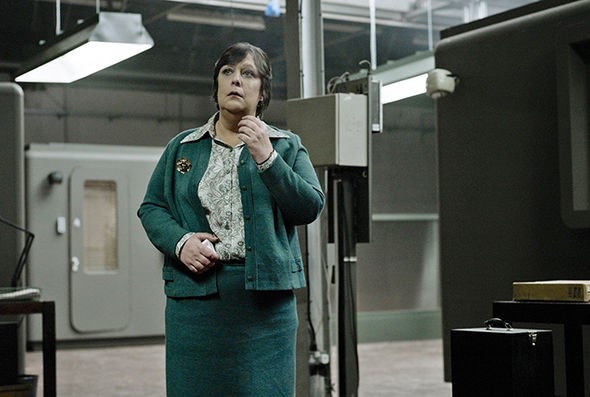
Kathy Burke as Connie Sachs in Tinker Tailor Soldier Spy (2011)

7. You won’t find more perceptive writing anywhere. In German one would say that le Carré is ‘wach’: he is awake. He really SEES the world around him and has a deep understanding of how its political and power structures work, and how individuals get tangled up in them.

8. Le Carré’s works have given us wonderful TV and film adaptations, starring great actors such as Alec Guinness, Richard Burton, Rachel Weisz and Gary Oldman. My favourites are probably still the two Guinness ‘Smiley’ TV series, but I do have a soft spot for the Tinker Tailor film, which was very stylishly done and featured a stellar cast including Kathy Burke, Benedict Cumberbatch and Colin Firth.

Alec Guinness as Smiley, retrieving a clue in Smiley’s People (1982) The man sees everything….

9. The quality of le Carré’s work is consistently outstanding — the plotting, the characterisation and the settings are all sublime. One of my own later favourites is 2001’s The Constant Gardener – a brilliant exploration of pharmaceutical corruption in the developing world. In his review of 2013’s A Delicate Truth, Mark Lawson wrote that ‘no other writer has charted – pitilessly for politicians but thrillingly for readers – the public and secret histories of his times, from the second world war to the war on terror’. The sheer range of his writing is breathtaking — and it was all impeccably researched.

10. Last but not least, le Carré was a true friend of languages, and was extremely generous in using his influence to promote language learning in the UK. He was deservedly awarded the Goethe Medal in 2011 for ‘outstanding service for the German language and international cultural dialogue’.

I’ll be raising a glass of posh red to his memory tonight.

Here’s a list of Le Carré novels that reference the German-speaking world/history:

  • Call for the Dead (Smiley’s German links; Nazi past; East Germany)
  • The Spy Who Came in From the Cold (Nazi past; divided Berlin; East Germany)
  • The Looking Glass War (East and West Germany)
  • A Small Town in Germany (Nazi past; Bonn, West Germany)
  • Smiley’s People (Hamburg, West Germany; Bern, Switzerland; divided Berlin)
  • The Perfect Spy (German at Oxford; Vienna and Berlin)
  • The Secret Pilgrim (diverse, including East Berlin, Hamburg, Munich, Zurich)
  • Absolute Friends (West Germany, East Germany)
  • A Most Wanted Man (Hamburg, Germany)
  • Our Kind of Traitor (Switzerland).

Jingle Bells! Mrs. Peabody’s 2020 Christmas crime recommendations

Well, it’s been quite a year. My ‘crime time’ has been severely dented by all the upheaval, but here are some of my reading and viewing gems.

Treat others! Treat yourself!

And if you’re in the UK, please consider using https://uk.bookshop.org/, which is a brilliant way to support local booksellers while keeping yourself and others safe.

Mrs. Peabody’s 2020 Christmas crime recommendations!

Knives Out, directed by Rian Johnson, 2019 (USA)

Wealthy mystery novelist Harlan Thrombey celebrates his 85th birthday at his mansion surrounded by his loving family. The next morning he is found dead; his throat has been cut. Enter the police and investigator Benoit Blanc, who begin to discover clues…and some unsavoury secrets within the family.

My son recommended this film to me with the words ‘you’ll love this’ and he was absolutely right. Knives Out is huge fun from start to finish, as well as a razor sharp commentary on race and class in the USA. Cuban-Spanish actress Ana de Armas is fantastic as Marta Cabrera, Harlan’s beleaguered carer, who finds herself placed in a very tricky situation. And the all-star cast — including Daniel Craig, Chris Evans, Jamie Lee Curtis, Toni Collette, Don Johnson and Christopher Plummer — have a high old time hamming their way through this clever take on the Golden Age country house mystery. Perfect Christmas viewing for those who like their crime martinis both shaken and stirred.

Hannelore Cayre, The Godmother, tr. Samantha Smee, Pushkin Press 2019 (France)

Opening line: My parents were crooks, with a visceral love of money.

This prize-winning novel was recommended to me by crime writer Angela Savage a while ago, and it’s a cracker. As a translator myself, I was hugely tickled by the idea of a police interpreter inadvertently falling into a life of crime. And Madame Patience Portefeux, a 53-year-old widow with some tough times behind her, relates her story with wit, verve and plenty of caustic insight into French society. There’s an excellent review of the novel by RoughJustice over at Crime Fiction Lover (minor spoilers) – a very entertaining festive read! Winner of the 2020 CWA Crime Fiction in Translation Dagger.

Shirley Jackson, We Have Always Lived in the Castle, Penguin 2009 [1962] (USA)

Opening line: My name is Mary Katherine Blackwood.

This cult Gothic (crime) novel was one of those ‘how-have-I-never-read-this-before’ books. Mary Katherine — or Merricat — lives a largely isolated life in the Blackwood home with her sister Constance and Uncle Julian. Early on, she nonchalantly tells us that ‘everyone else in my family is dead’. The rest of the novel teases out the unfortunate story of the deceased Blackwoods, and relates a series of events in the present that will have a decisive impact on the family’s future.

I was instantly hooked by Merricat’s highly original voice and the novel’s creepy Gothic atmosphere. It also has some interesting things to say about suffocating patriarchy, sisterly sacrifice and social exclusion. We Have Always Lived in the Castle is a genuinely unsettling delight and I’m sure I’ll be rereading it a number of times.

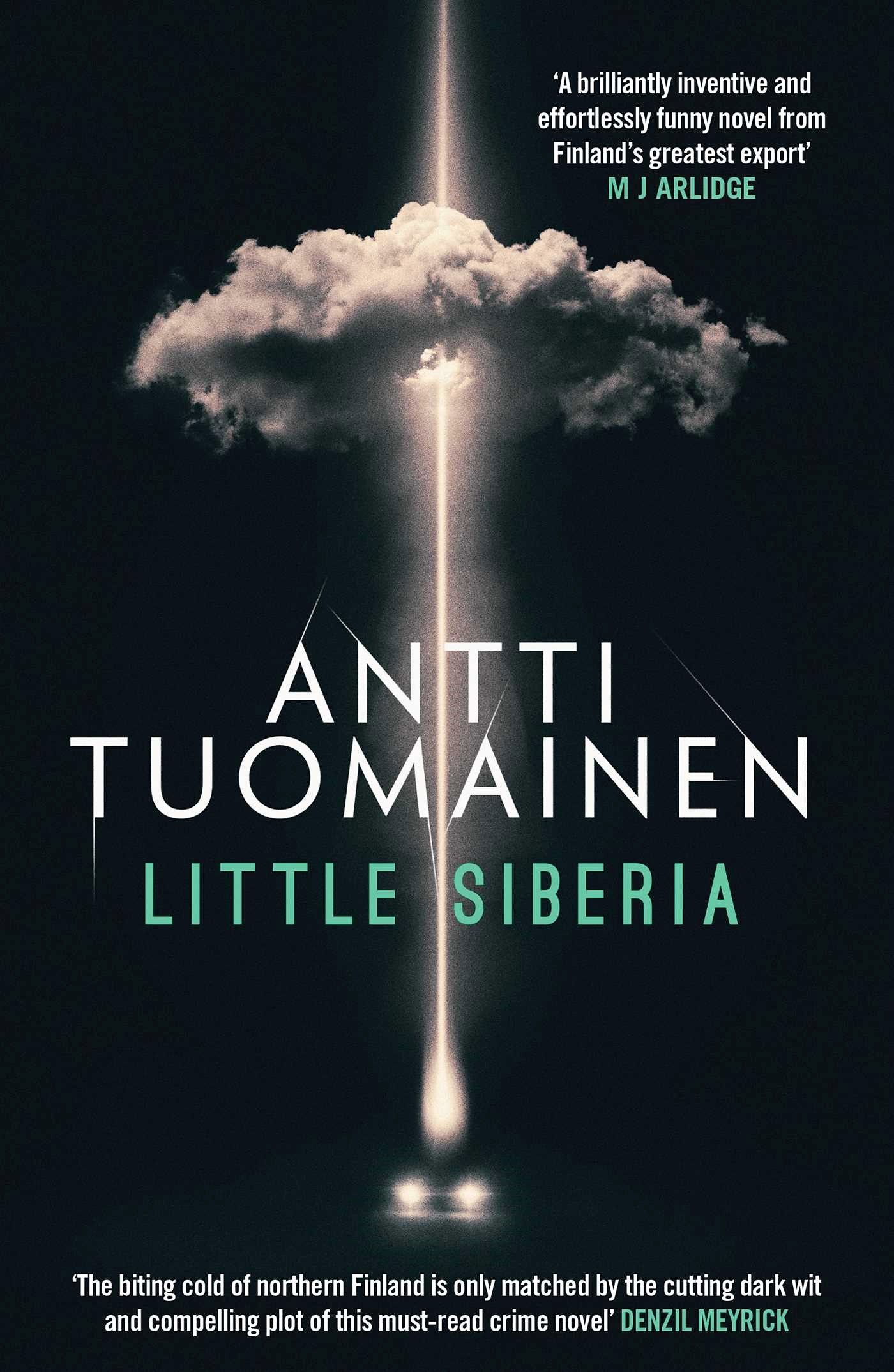
Antti Tuomainen, Little Siberia, tr. David Hackston, Orenda Books (Finland)

Opening line: ‘And how do you know what happens then?’

Our 2020 Petrona Award winner, by one of crime fiction’s most inventive and versatile writers – what’s not to like?!

Little Siberia, set in an icy northern Finland, opens with a bang when a meteorite unexpectedly lands on a speeding car. Transferred to the local museum for safe keeping, the valuable object is guarded from thieves by local priest Joel, who is grappling with both a marital crisis and a crisis of faith. Absurdist black humour is expertly combined with a warm, perceptive exploration of what it means to be human. A celebration of resilience, fortitude and simply muddling through, this is a novel for our times.

Giri/Haji, BBC 2020 (Japan/UK; now on Netflix)

Giri/Haji [Duty/Shame] is billed as a ‘soulful thriller set in Tokyo and London, exploring the butterfly effect of a single murder across two cities — a dark, witty, and daring examination of morality and redemption’. And that’s pretty much spot on.

I was addicted from the first episode, which sees frazzled Japanese police detective Kenzo Mori (Takehiro Hira) sent to London to find his wayward brother and stop a Yakuza war. The characterization of the main players is fantastic – including Kelly MacDonald as Detective Sarah Weitzmann and Will Sharpe as Rodney, a rent boy whose dad is from Kyoto and whose mum is from Peckham… There’s also some beautifully inventive use of film techniques and genres, including a number of sequences that draw on manga. I can’t find this on DVD, and it’s gone from iPlayer, but it *is* on UK Netflix. Sneak off from Christmas duties, pour yourself a glass of sherry, and get stuck in.

And finally… Ragnar Jonasson’s ‘Hulda’ or ‘Hidden Iceland’ trilogy (Penguin), which is told in reverse, with each novel set prior to the last (when Hulda is aged 64, 50 and 40).

The first novel, The Darkness (tr. Victoria Cribb) introduces us to taciturn Reykjavik Detective Inspector Hulda Hermannsdóttir. She’s about to be shoved into retirement, but is grudgingly offered the chance to look into one last cold case before she goes – that of Elena, a young Russian woman whose body was found on the Icelandic coast. This is an intriguing, multilayered novel, whose true power only becomes evident right at the end. Jónasson dares to follow through in a way that few crime writers do, and the final result is very thought-provoking indeed. The second in the series is just as powerful, and I’m looking forward to reading the third. I have a theory about how things will go. Let’s see if I’m right!

Happy reading, stay safe, and wishing you all a wonderful and very merry Christmas!

46 European crime novels #LeaveALightOn

Back in June 2016 I posted a list of 35 European crime novels I loved. Here’s a slightly updated version with 46 European crime novels.

I’ve included some British crime novels, because at the time of posting – and until 11.00pm on 31 January 2020 – the UK is still officially part of the EU.

It may take a while, but I firmly believe we will rejoin one day.

#LeaveALightOn

Euro 4

Jakob Arjouni, Happy Birthday, Turk! (trans. from German by Anselm Hollo, Melville House 2011 [1987])

Belinda Bauer, Rubbernecker (Wales, UK; Black Swan 2014)

Pieke Biermann, Violetta (trans. from German by Ines Rieder and Jill Hannum, Serpent’s Tail 1996 [1991])

Ioanna Bourazopoulou, What Lot’s Wife Saw (trans. from Greek by Yiannis Panas, Black & White Publishing 2013 [2007])

Jan Costin Wagner, Silence (Germany/Finland; trans. from German by Anthea Bell, Harvill Secker 2010 [2007])

Didier Daeninckx, Murder in Memoriam (trans. from French by Liz Heron, Serpent’s Tail 1991 [1984]; republished by Melville House in 2012)

Euro 2

Friedrich Dürrenmatt, The Pledge (Swiss; trans. from German by Joel Agee, University of Chicago Press 2006 [1958])

Umberto Eco, The Name of the Rose (trans. from Italian by William Weaver, Vintage 2004 [1980])

Hans Fallada, Alone in Berlin (trans. from German by Michael Hofmann, Penguin 2009 [1947])

Eugenio Fuentes, At Close Quarters (trans. from Spanish by Martin Schifino, Arcadia 2009 [2007])

Friedrich Glauser, In Matto’s Realm (Swiss; trans. from German by Mike Mitchell, Bitter Lemon Press 2006 [1936])

Euro 6

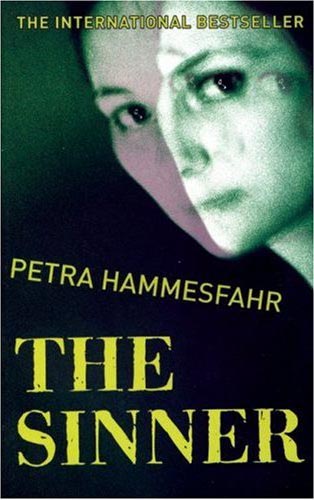
Petra Hammesfahr, The Sinner (trans. from German by John Brownjohn, Bitter Lemon Press 2007 [1999])

Kati Hiekkapelto, The Defenceless (trans. from Finnish by David Hackston, Orenda Books 2015 [2014])

Paulus Hochgatterer, The Sweetness of Life (Austria; trans. from German by Jamie Bulloch, MacLehose 2012 [2006])

Peter Høeg, Miss Smilla’s Feeling for Snow (trans. from Danish by Felicity David, Vintage 2014 [1992])

Francis Iles, Before the Fact (UK; Arcturus 2011 [1932])

Jean-Claude Izzo, Total Chaos (trans. from French by Howard Curtis, Europa Editions 2005 [1995])

Euro 1

Jess Kidd, Himself (Ireland; Canongate 2017)

Hans Hellmut Kirst, The Night of the Generals (trans. from German by J. Maxwell Brownjohn, Cassell 2002 [1962])

Elisabeth Herrmann, The Cleaner (trans. from German by Bradley Schmidt, Manilla 2017)

Stieg Larsson, The Girl with the Dragon Tattoo (trans. from Swedish by Reg Keeland, MacLehose Press 2008 [2005])

John le Carré, Tinker Tailor Soldier Spy (UK; Sceptre 2011 [1974])

Carlo Lucarelli, Carte Blanche (trans. from Italian by Michael Reynolds, Europa Editions 2006 [1990])

Henning Mankell, The Dogs of Riga (trans. from Swedish by Laurie Taylor, Vintage 2012 [1992])

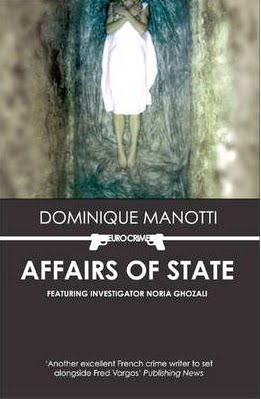
Dominique Manotti, Affairs of State (trans. from French by Ros Schwarz and Amanda Hopkinson, Arcadia Books 2009 [2001])

Euro 5

Manuel Vázquez Montalbán, Buenos Aires Quintet (trans. from Spanish by Nick Calstor, Serpent’s Tail 2005)

Denise Mina, Garnethill (Scotland, UK; Orion 2014)

Harry Mulisch, The Assault (trans. from Dutch by Clare Nicolas White, Random House 1985 [1982])

Håkan Nesser, Bjorkman’s Point (trans. from Swedish by Laurie Thompson, Pan 2007 [1994])

Ingrid Noll, The Pharmacist (trans. from German by Ian Mitchell, HarperCollins 1999 [1994])

David Peace, 1974 (UK; Serpent’s Tail 1999 – the first in the ‘Red Riding’ quartet)

Lief G.W. Persson, Linda, as in the Linda Murder (trans. from Swedish by Neil Smith, Vintage 2013)

Malin Persson Giolito, Quicksand (trans. from Swedish by Rachel Willson-Broyles, Simon & Schuster 2017)

Dolores Redondo, The Invisible Guardian (trans. from Spanish by Isabelle Kaufeler, HarperCollins 2015 [2013])

Adam Roberts, The Real-Town Murders (UK; Gollancz 2017)

Georges Simenon, Pietr the Latvian (Belgium, trans from French by David Bellos, Penguin 2013 [1930])

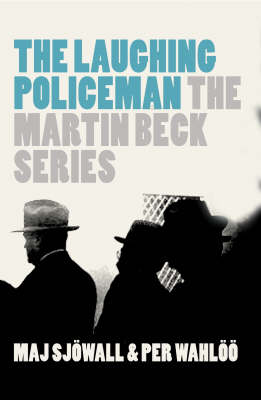
Maj Sjöwall and Per Wahlöö, The Laughing Policeman (trans. from Swedish by Alan Blair, Harper Perennial 2007 [1968])

Euro 3

Josef Skvorecky, The Mournful Demeanour of Lieutenant Boruvka (trans. from Czech by Rosemary Kavan, Kaca Polackova, and George Theiner, Norton 1991 [1966])

Teresa Solana, The First Prehistoric Serial Killer and Other Stories (trans. from the Catalan by Peter Bush (Bitter Lemon Press 2018)

Lesley Thomson, The Detective’s Daughter (UK; Head of Zeus 2013)

Olga Tokarczuk, Drive Your Plow Over the Bones of the Dead (tr. from Polish by Antonia Lloyd-Jones, Fitzcarraldo Editions 2018)

Olivier Truc, Forty Days without Shadow (set in Lapland; trans. from French by Louise Rogers LaLaurie, Trapdoor 2014)

Antti Tuomainen, The Man Who Died (trans. from Finnish by David Hackston, Orenda Books 2017)

Simon Urban, Plan D (trans. from German by Katy Derbyshire, Harvill Secker 2013 [2011])

Fred Vargas, Have Mercy on us All (trans. from French by David Bellos, Vintage 2004 [2001])

Louise Welsh, A Lovely Way to Burn (UK; John Murray 2014)

#LeaveALightOn