#49 K.T. Medina, White Crocodile (UK/Cambodia)

K.T. Medina, White Crocodile (Faber & Faber, 2014). An impressive debut that explores the dangerous world of landmine clearance in Cambodia 4 stars

white-crocodile-jacket

Opening line: Tian was woken by a noise.

This powerful debut novel draws on K.T. Medina’s experience of working as a consultant for mine-clearance agencies in Cambodia. Its lead protagonist, Tess Hardy, arrives in the country following the suspicious death of her ex-husband while defusing a mine. The disappearance of several local women and mounting fear of the ‘White Crocodile’ myth soon confirm that there’s a clear and present danger – one that Tess must handle carefully if she wishes to survive.

There are several aspects of this novel that I really like. The first is its depiction of mine-clearance expert Tess, who faces complex personal and professional challenges throughout the narrative. The second is the insight into life in Battambang Province in north-west Cambodia, a highly fertile rice-producing region, but one ravaged by political conflict and the infamous Khmer Rouge regime, which have left the countryside studded with lethal mines. The novel also shows how UN peace keeping forces and aid agencies can sometimes worsen the situation of countries they’re supposed to be helping – for example by bringing HIV into local communities.

Two slight reservations: there was perhaps one plot-strand too many near the end of the novel, and a surfeit of scenes told from the perspective of terrified victims-to-be. But White Crocodile remains a highly impressive debut and is very much worth reading for its depiction of Cambodia, and for its nuanced and honest exploration of a number of important issues.

You can read a sobering essay by Jay Tindall called ‘Cambodia: Land Mine Nation’ here – http://jaytindall.asia/land-mine-nation/ – and about the work of the remarkable Halo Trust in Cambodia here – https://www.halotrust.org/where-we-work/south-asia/cambodia/.

Cambodian landmine sign

Photograph: Jay Tindall

Women in Translation Month: Claudia Piñeiro’s A Crack in the Wall (Argentina)

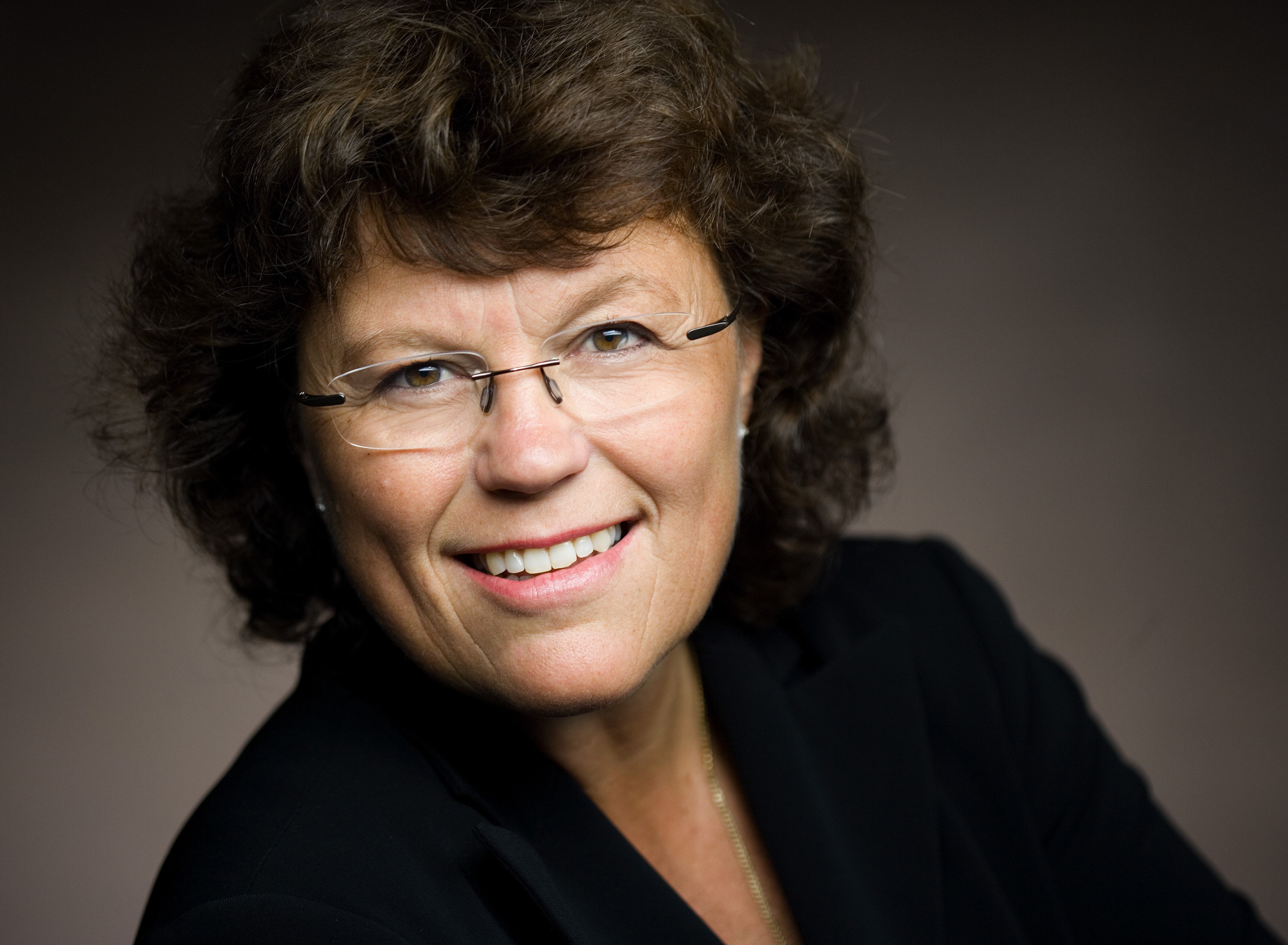
August is Women in Translation Month. To celebrate, here’s a bit about Claudia Piñeiro, a giant of South American crime fiction, who was in the UK earlier this summer and appeared at CrimeFest 2016.

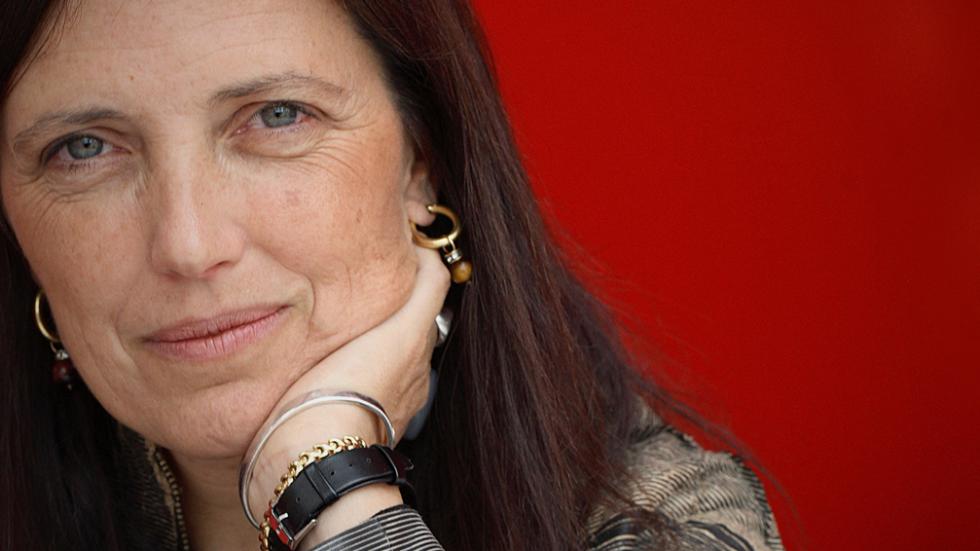
claudia_pineiro_1

Claudia Piñeiro

Piñeiro is a prestigious journalist and best-selling crime author in her home country of Argentina. Bitter Lemon Press has published four of her novels in English thus far – All Yours, Thursday Night Widows, A Crack in the Wall and Betty Boo. I’ve read the latter two, which are both excellent, but very different from one another in subject-matter and tone – showcasing Piñeiro’s authorial versatility. This is a writer of tremendous range, who’s a keen observer of the world around her, and is particularly good at depicting the highs and lows of middle-age (!).

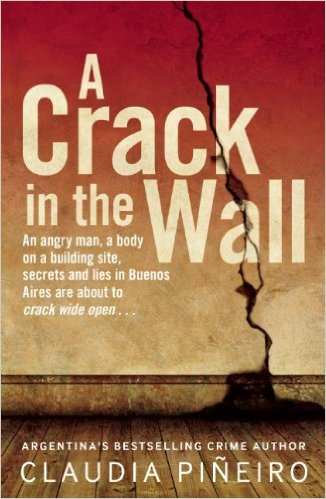
Crack in the Wall

A Crack in the Wall (2013 [2009]), expertly translated from Spanish by Miranda France, is a beautifully written crime novel that doubles as a study of troubled masculinity. It’s told from the perspective of architect Pablo Simó, who’s in the grip of a classic mid-life crisis: his marriage is stale, his teenage daughter is being difficult, and he’s reached a professional dead-end designing soulless office buildings. As if that wasn’t enough, he’s plagued by memories of his involvement in a crime, which began innocuously with a complaint about a crack in a wall.

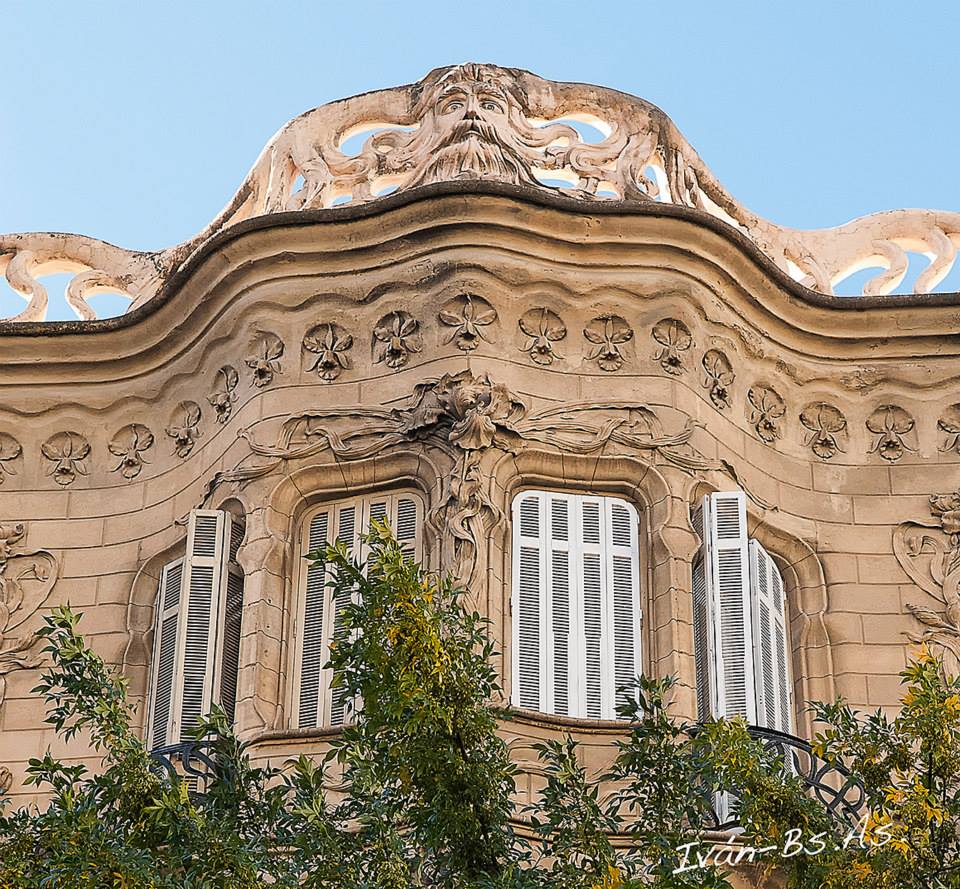
Piñeiro offers us a wry look at Simó’s inner life (when you start calculating how many thousands of days you’ve been married, you know you’re in trouble) – one that doubles as a thoughtful critique of capitalism. An aspect of the novel I particularly liked was that it surprised me: I thought I knew exactly where the story was heading, but the last quarter of the narrative took a stylish turn that led to a rather unexpected conclusion. Architecture buffs are also bound to enjoy a tour of some of Buenos Aires’ Art Nouveau treasures in the novel’s middle section.

You can read an extract from A Crack in the Wall courtesy of Bitter Lemon Press here.

There’s also a great interview with Claudia from 2025 here: https://buenosairesherald.com/culture-ideas/claudia-pineiro-on-her-recent-book-activism-and-why-she-has-no-patience-for-milei-apologists

There’s more info about ‘Women in Translation Month’ and its aims over at the Biblibio blog. For those of you on Twitter, the hashtag is #WITMonth. Happy reading!

Barter Books and Ed McBain’s 87th Precinct series

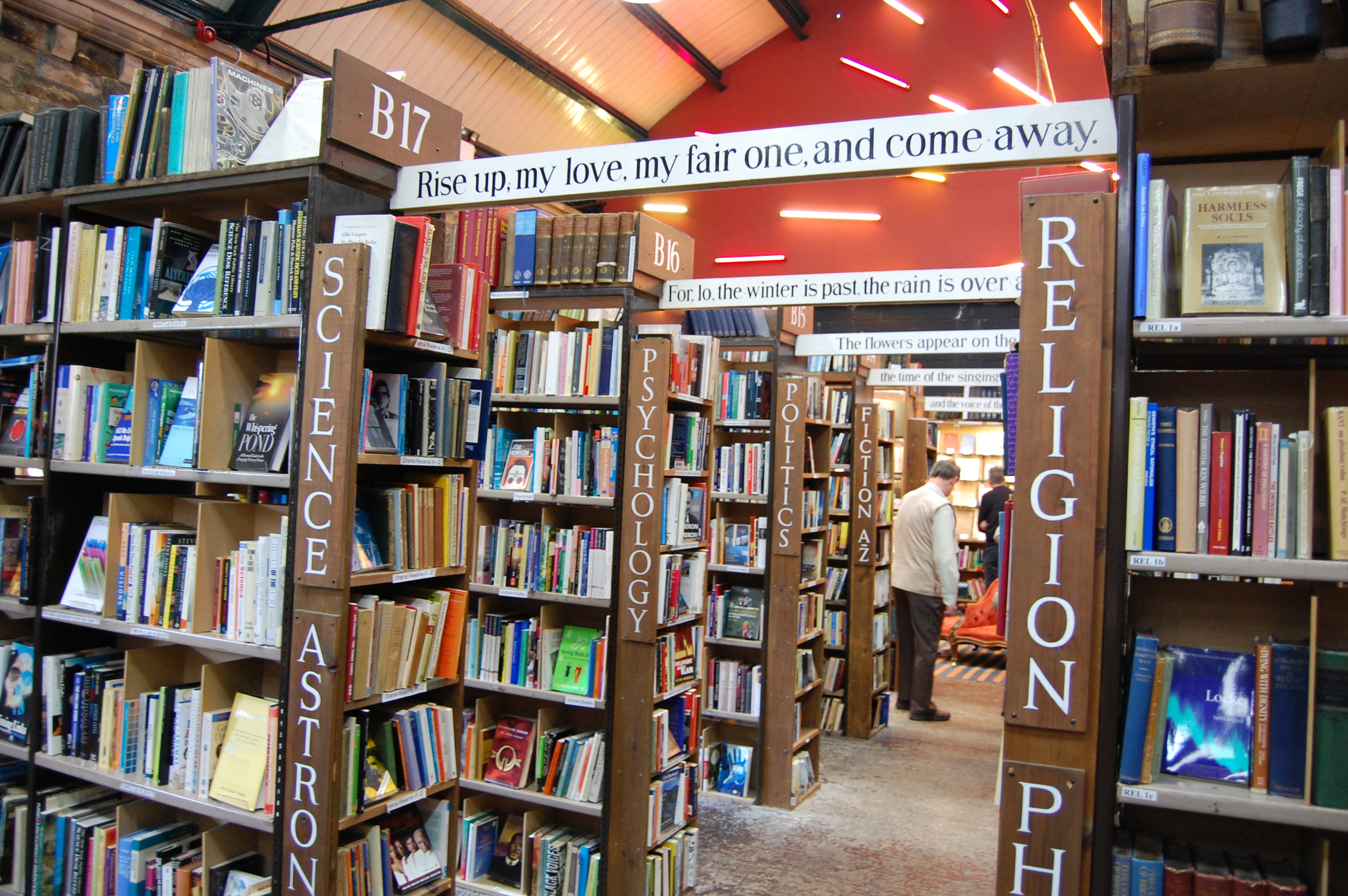
While on holiday we visited an incredible second-hand bookshop in Alnwick, Northumberland, called Barter Books. My friend Harriet had recommended it to me, and I’m so glad she did, as it’s the closest to book heaven I’ve been in years.

Barter Books was set up in 1991 by Mary and Stuart Manley and is housed in Alnwick’s lovely former railway station. It’s a vast, but beautifully personalised space, with hand-painted signs, murals, inspirational quotes and a model railway running on a track above the bookshelves. There are plenty of comfy places to sink down and read, as well as a lovely cafe in the old station buffet. It’s also where the ‘Keep Calm and Carry On’ phenomenon began.

It’s so good to see places like this thriving. Food for the soul! Here are a few photos I took surreptitiously while wandering around (it was a lot busier than it looks, as I didn’t want readers to feel they were being papped):

DSC_1294

DSC_1293

DSC_1296

DSC_1300

DSC_1301

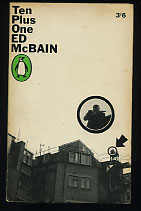
A happy find was an entire section of vintage Penguin crime, including some novels from Ed McBain’s hugely influential ’87th Precinct’ series. I have a real soft spot for these 50+ police procedurals, which were written between 1956 and 2005, and feature a characterful group of detectives solving crimes in Isola (loosely based on Manhatten in New York). I purchased two – Like Love (1962), in which the team suspects a suicide pact is not all it seems, and Ten Plus One (1963), which focuses on a series of sniper murders.

mcbaintenpb

The novels are wonderfully detailed police procedurals, and well ahead of their time in depicting an ethnically diverse set of detectives operating in an often racist society. American-Italian police detective Steve Carella is frequently shown using his Italian language skills when carrying out investigations and is regularly partnered with American-Jewish detective Meyer Meyer. The novels also contain brilliant, hard-hitting subplots or vignettes – such as the fallout from a young woman’s suicide or the brutal police treatment of an innocent suspect.

In a complete change of scene, I’m off to Berlin with Peabody Jnr tomorrow. We’re looking forward to tracking down some film locations, paying homage to Bowie, and visiting some great independent crime bookshops (well me not him…). Bis bald!

Summer musings on Walters (UK), Hykänen (Finland), and the visibility of women in crime fiction awards

After a busy few months, I’m looking forward to 1. writing up reviews of some excellent crime novels and 2. getting down to some quality summer reading.

A fairly random start: two very different novels I’ve recently enjoyed, and some musings on the visibility of women on crime fiction award longlists/shortlists.

Minette Walters

Minette Walters, Disordered Minds (Pan Macmillan 2003). I picked up this plump psychological crime novel at Oxfam Books, and it turned out to be a perfect summer read. Two amateur detectives – Jonathan Hughes, a social anthropologist with a chip on his shoulder, and George Gardener, a middle-aged local councillor, find themselves drawn into investigating a contested old case, the murder of Grace Jeffries in 1970. Her grandson Harold was convicted of the crime, but new evidence suggests that the original investigation may have been botched.

I’ve not read anything by Walters before – a bit of an omission on my part – and am now keen to read more. Her approach to dissecting criminality reminded me of PD James and Ruth Rendell, particularly in its focus on British attitudes to race and class. A satisfying read with some lovely characterisation and interesting socio-political commentary (it’s set against the backdrop of the Iraq war in 2003), but with a slightly over-convoluted ending.

Nykanen

Harri Nykänen, Behind God’s Back, trans. from Finnish by Kristian London (Bitter Lemon Press, 2015 [2009]). This novel is the second in the ‘Ariel Kafka’ series (I reviewed the first here back in 2012). Aside from its Finnish setting, the most distinctive aspect of this series is its lead investigator, who is one of only two Jewish policemen in Helsinki. He views the world with a typically wry Jewish humour and allows readers to gain an insight into Helsinki’s small Jewish community, with which he has a slightly strained relationship as he’s not exactly a ‘model Jewish citizen’ – non-observant and stubbornly single.

The novel opens with the murder of a Jewish businessman. Kafka is tasked with figuring out whether the murder is racially motivated, a business deal gone wrong, or something altogether more complex… As was the case with the first novel, the plot got a bit complicated towards the end, but I thoroughly enjoyed Kafka’s irreverent, blokey company, and was very happy to go along for the ride. A superior police procedural.

And so to the subject of crime fiction longlists and shortlists.

Gold

My last post included the CWA International Dagger longlist, which I was disappointed to see included no works by women authors. Here it is again:

Title Author Translated by Publisher
The Truth and Other Lies Sascha Arango Imogen Taylor Simon & Schuster
The Great Swindle Pierre Lemaître Frank Wynne MacLehose Press
Icarus Deon Meyer K L Seegers Hodder & Stoughton
The Sword of Justice Leif G.W. Persson Neil Smith Doubleday
The Murderer in Ruins Cay Rademacher Peter Millar Arcadia
The Father Anton Svensson Elizabeth Clark Wessel Sphere
The Voices Beyond Johan Theorin Marlaine Delargy Transworld
Six Four Hideo Yokoyama Jonathan Lloyd-Davis Quercus

I started thinking about how this all-male longlist might have come about. Here are some possibilities, some of which are valid, some not. The answer probably comprises a few of these factors in combination.

  • No works by women authors were submitted for the award. Not the case: the list of novels submitted for this year’s International Dagger is available at http://cwadaggers.co.uk/cwa-international-dagger/. It shows that there were 45 works submitted, of which 13 were authored or co-authored by a woman. If my maths is right, that’s nearly 30%.
  • Fewer works by women were submitted, so the chances of these reaching the longlist were accordingly smaller. That’s definitely the case, given the 70% (male), 30% (female) split. And this kind of ratio seems to be typical. Translator Katy Derbyshire, writing in The Guardian, recently identified a twofold negative trend in relation to international fiction. Firstly, fewer women authors are published in their home markets; secondly, fewer still are selected by English-language publishers for translation. This means that works by international women authors in English are ‘a minority in a minority’. Their chances of winning prestigious literary prizes are thus pretty low.
  • However, even given those factors, the law of averages would still suggest 2 or 3 works by women could have made the International Dagger longlist. There were certainly some strong contenders on the submission list, such as Karin Fossum’s The Drowned Boy (Harvill Secker), Kati Hiekkapelto’s The Defenceless (Orenda) and Claudia Pinero’s Betty Boo (Bitter Lemon Press). Why didn’t they make the cut?
  • At this point we have to acknowledge that judging is a subjective process involving a number of factors and evaluations. So it may simply be coincidence that the longlist ended up being male-dominated (their novels happened to be the best this time round). Equally, however, there may be unconscious biases that drew the judges towards that particular set of novels. These *may* include a gender bias, but could also include others, such as a preference for a particular type of crime fiction (psychological, police procedural, thriller, whatever), or for crime set in a particular country (Sweden, Japan, South Africa)…

A swift look at some other recent longlists/shortlists shows the following: 

  • The 2016 CWA Goldsboro Gold Dagger features three women authors on its longlist of eight (37%).
  • The 2016 Ngaio Marsh Award for Best Crime Novel (announced today!) features three women authors on its longlist of nine (33%).
  • The 2016 Petrona Award (for which I’m a judge) featured two women authors on its shortlist of six (33%). Our submission list had a worse male/female ratio to the International Dagger this year – 8 works by women authors on a submission list of 42 (19%).
  • The 2016 Man Booker International featured two female authors on its shortlist of six (33%). It was won by Han Kang – a woman author – for The Vegetarian.
  • A significant exception is the 2016 Theakstons Old Peculier Crime Novel of the Year, which features eleven women authors on its longlist of eighteen (61%). This award has also been won by women for the last four years (Denise Mina twice, Belinda Bauer and Sarah Hilary).

Makes you think, doesn’t it?

All the above has made me scrutinise my own reading practices and biases (not always a comfortable process). I’m keeping a list to check my own reading/gender ratio, which I know some other bloggers do as well. It’ll be interesting to compare notes.

Some thought-provoking articles on and around the subject

Katy Derbyshire, ‘Translated fiction by women must stop being a minority in a minority’, The Guardian, 10 March 2016

Hannah Ellis Peterson, ‘Male writers continue to dominate literary criticism, Vida study finds’, The Guardian, 7 April 2015 (particularly interesting contribution by Rob Spillman on tackling systemic problems)

VIDA, ‘The 2015 VIDA Count’, 30 March 2016. VIDA (Women in Literary Arts) is a US-based organisation that scrutinizes the representation of women in the sector (looking at interesting stats like the proportion of women reviewers on magazines).

the-reader-young-woman-reading-a-book-1876.jpg!Large

Renoir’s The Reader

CrimeFest 2016 highlights: Holt, Piñeiro, le Carré, Krimis and The Petrona Award

CrimeFest 2016 took place last week in Bristol, UK. It featured a succession of fabulous panels and, as ever, provided a wonderful opportunity to catch up with other criminally minded readers, as well as the great and the good of the publishing world. Here are my highlights.CFhighreslogo-2016

Anne Holt is one of Norway’s best-known crime writers and the creator of the Hanne Wilhelmsen series. She very rarely appears at crime conventions, so it was something of a coup to have lured her to Bristol as a featured guest author.

Holt-Anne-credit-Jo-Michael

Norwegian author Anne Holt

Barry Forshaw’s interview with Holt on Sunday was fascinating and wide-ranging.

  • Holt worked in journalism, as a news anchor, as a lawyer, and briefly as Minister of Justice for Norway. Then, at the age of 40, she moved away from a workaholic lifestyle and started to write. Her first novel was Blind Goddess (1993) and she’s never looked back.
  • Hanne Wilhelmsen was the first lesbian investigative lead in Norwegian crime fiction. Hanne is a complex figure. Due to her upbringing and family background, she’s very private and prefers not to reveal herself to others. In this respect, she’s very different to Holt – a conscious decision in order to make the character more challenging to write.
  • Holt has deep love of British crime, especially Agatha Christie. Her novels are still recruiting readers, for which we should be thankful. The eighth Wilhelmsen novel, 1222, is a homage to the golden age of crime (critics in Norway panned it – she’s not sure why- but it did well in other countries).
  • Holt is friends with Jo Nesbo and has discussed the subject of violence with him. She feels that violence should not be directly described in crime novels unless necessary. She rarely does so (one exception), preferring to focus on the effects of violence instead.
  • Holt says how crime novels do in Germany is a barometer for publishers in relation to British & European markets.
  • Holt on the EU referendum: the EU is an instrument for peace and trade, and it would be a tragedy if Britain were to leave. It could be the beginning of end for the EU.
claudia_pineiro_1

Argentinian author Claudia Piñeiro

I was also very excited to see Claudia Piñeiro at CrimeFest (and indeed in the UK) for the first time. Piñeiro is an Argentine crime-writing superstar whose work has been translated into numerous languages, but she’s not known here nearly as well as she should be. Bitter Lemon Press has published four of her novels in translation so far, including Betty Boo, which is set in a gated community in Buenos Aires and explores the nature of modern journalism (review pending). Piñeiro is an incredibly versatile writer, whose depictions of Argentine society are astute, insightful and sardonic – I really hope to see more of her work in English in the future.

le-carre-bio

Adam Sisman, John le Carré’s official biographer, was also at CrimeFest, in a packed session with broadcaster and writer James Naughtie. Sisman spoke very eloquently about the benefits and challenges of writing on a ‘living subject’. For example, one of le Carré’s conditions was that he should be the first to see the manuscript, and he promptly emailed Sisman 22 pages of notes. At one point he told Sisman ‘it’s very strange to have you here poking around my mind’.

  • Sisman rightly emphasised le Carré’s position at the top of the writing game from the early 60s to the present day.
  • He also noted that le Carré’s political arc was unusual – from establishment to left-wing anger. While studying at Oxford University in the 1950s he spied on other students for MI5, something that troubles him now.
  • The spying terms le Carré uses in his novels are often made up, but have been adopted by spying agencies. One CIA agent told Sisman that le Carré is ‘part of our DNA’.
  • The author has a wonderful ear for dialogue/mimicry, and often rehearses characters’ conversations out loud when on walks.
  • He’s always enthusiastic about the future, about new projects such as The Night Manager, and does not live in the past.

Mrs Pea was also in action, presenting the Crime Fiction in German volume to a delightful audience in one of the ‘In the Spotlight’ sessions. David Young, author of Stasi Child, kindly acted as Draw Meister. Rather impressively, we managed to give away twelve Krimis and two copies of the volume in twenty minutes. Thanks again to the Goethe Institut, Swansea University, the University of Wales Press, Bitter Lemon Press, Penguin, Michael Joseph and Vintage for their support.

Krimi Spotlight collage

Clockwise from top left: David Young (Draw Meister) with Mrs Peabody; a beautifully attentive audience; the Krimi Giveaway winners; the last copy of the volume in the bookshop…

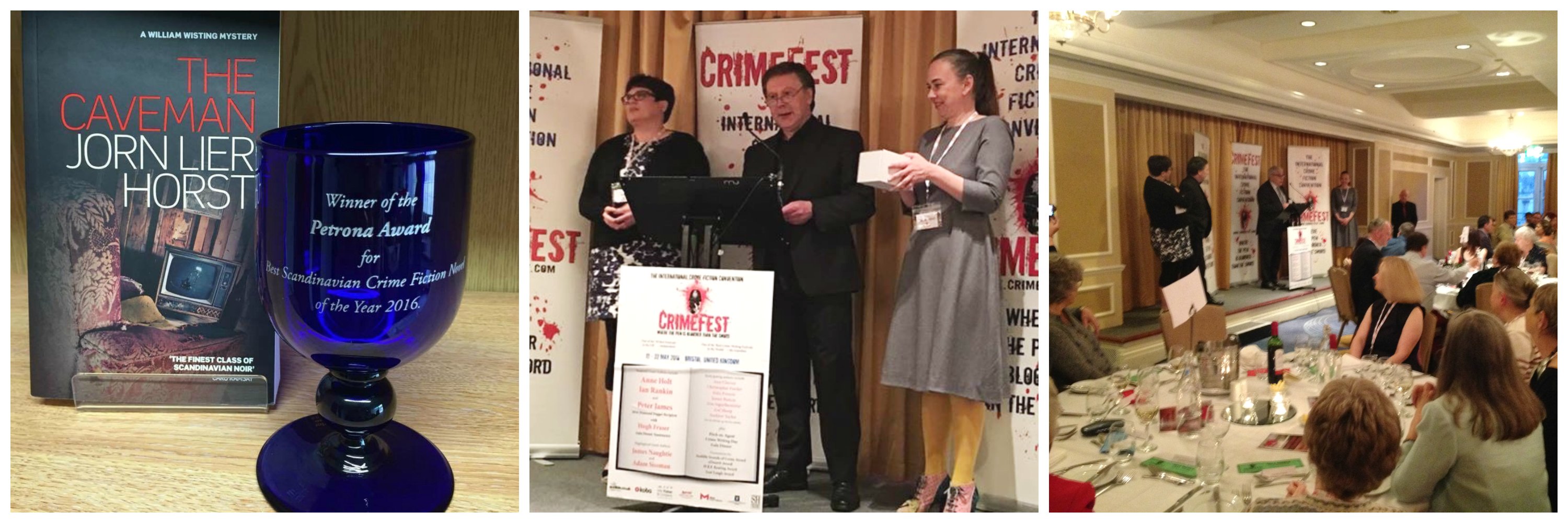
And on Saturday night, the winner of the 2016 Petrona Award was announced: Norwegian writer Jørn Lier Horst for his novel The Caveman (see my interview with the author here). Bob Davidson of Sandstone Press accepted the award on Jørn’s behalf from Yrsa Sigurðardóttir, the 2015 Petrona winner. You can see the transcript of Jørn’s acceptance speech (which was rather lovely) on the Petrona website, along with details of the shortlisted titles. As ever, I’m very proud to be a judge for this excellent award, set up in memory of Maxine Clarke.

Petrona collage

From left: the winning novel and the Petrona trophy (photo Sandstone Press); Sarah Ward and Barry Forshaw announcing the award with Yrsa Sigurðardóttir (photo by Ali Karim); Bob Davidson accepting the award on Jørn’s behalf.

photo-by-andy_26585418893_o

The Petrona Award judges with Anne Holt (photo by Andy Lawrence)

I feel like I’ve only scratched the surface of CrimeFest16 in this post. For example, Ian Rankin, another one of the featured guest authors, gave a wonderful interview and treated the audience to an extract of his next Rebus book. Hopefully other bloggers will cover some different events/panels.

And…the CWA International Dagger longlist was also announced. I’ll leave you with the list of nominees below. Please note that two German novels have made the cut (Arango and Rademacher). I’ve also got my eye on Six Four, a Japanese crime novel highly praised by David Peace. Disappointed by the lack of women authors, though.

Title Author Translated by Publisher
The Truth and Other Lies Sascha Arango Imogen Taylor Simon & Schuster
The Great Swindle Pierre Lemaître Frank Wynne MacLehose Press
Icarus Deon Meyer K L Seegers Hodder & Stoughton
The Sword of Justice Leif G.W. Persson Neil Smith Doubleday
The Murderer in Ruins Cay Rademacher Peter Millar Arcadia
The Father Anton Svensson Elizabeth Clark Wessel Sphere
The Voices Beyond Johan Theorin Marlaine Delargy Transworld
Six Four Hideo Yokoyama Jonathan Lloyd-Davis Quercus

Many thanks to the CrimeFest16 organisers for a wonderful four days!

European Literature Festival – Kutscher & Raabe – CrimeFest is on its way!

There’s lots of highly criminal activity in the UK over the next couple of weeks.

Here are a few highlights.

ELF-promotional-image

The European Literature Festival is currently under way, with a packed programme including a very special evening at the British Library on Friday 13 May – tomorrow! ‘Criminal Worlds: Detective Fiction in Europe‘ features three wonderful crime writers – Peter James (UK), Kati Hiekkapelto (Finland; shortlisted for the Petrona Award) and Volker Kutscher (Germany), and is chaired by the marvellous Barry Forshaw. They will be ‘casting their forensic eye on the celebrated and lesser-known investigators of European fiction’. 

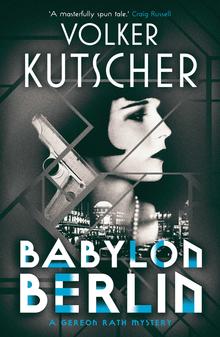
Babylon Berlin

Volker Kutscher pops up again at the Goethe Institut London on Monday 16 May to talk about Babylon Berlin, the first in his ‘Gereon Rath’ series, which is published in English by Sandstone Press on 19 May. This bestselling series has sold over a million copies worldwide to date. Its five novels follow the fortunes of Berlin Detective Inspector Rath as he navigates the turbulent political waters of Weimar Berlin, and are both gripping and rich in historical detail. Together with translator Niall Sellar and Robert Davidson of Sandstone Press, Volker will discuss his books, the translation process, and the reception of German crime fiction in Great Britain (further info available here).

AND you can hear Volker talking about Babylon Berlin tonight at 10.00pm on BBC Radio 3’s ‘Free Thinking’ programme, together with the celebrated director Tom Tykwer (of Lola Rennt fame), who is adapting the crime series for television. As this Variety article explains, two eight-episode seasons are in the pipeline, scheduled for international release in 2017.

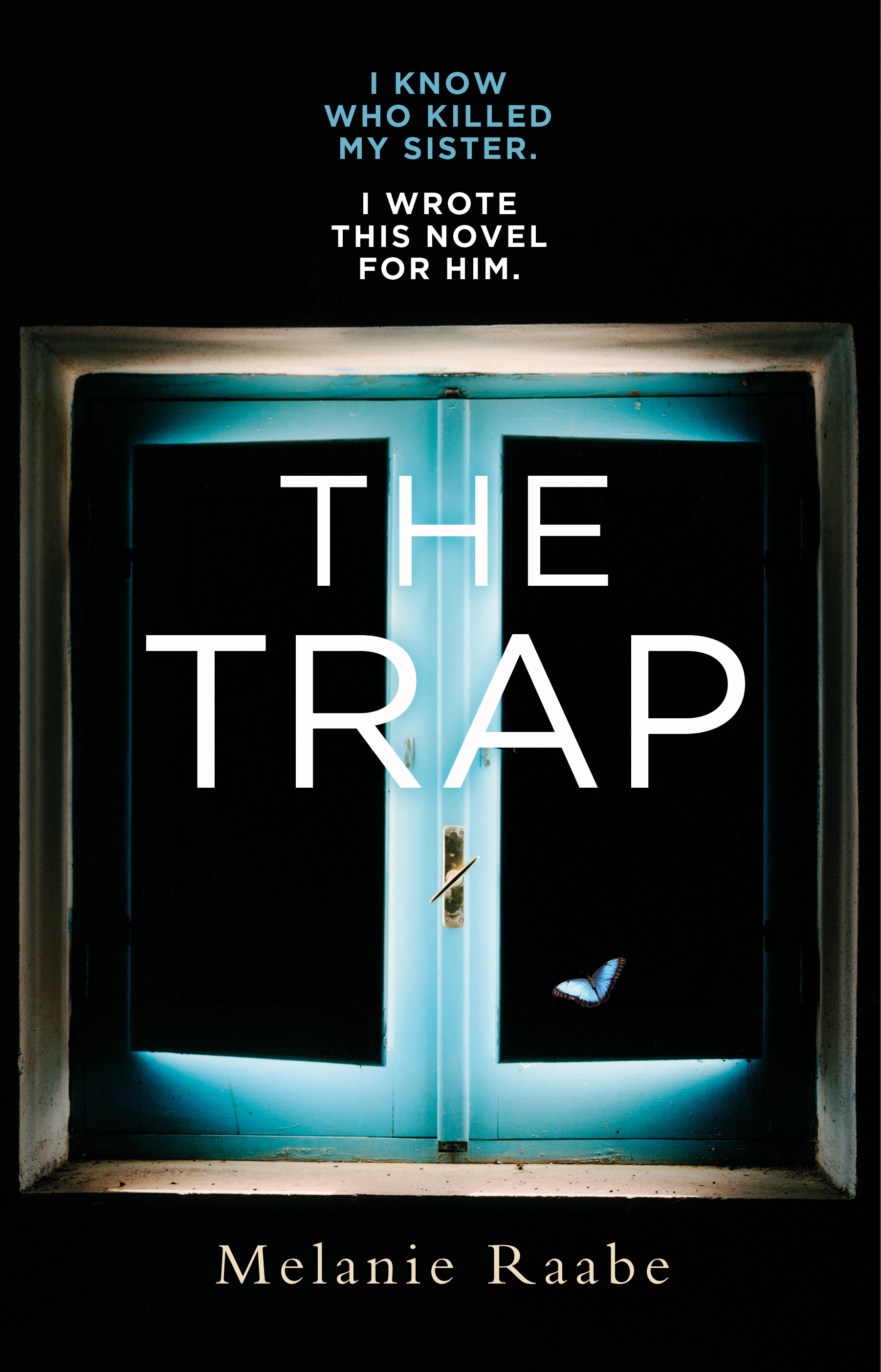
Trap

Another interesting German author is published in English for the first time next week. Melanie Raabe grew up in the former East Germany and has worked as a journalist, magazine editor and playwright. The Trap, published by Mantle/Pan Macmillan, is her first novel and won the Stuttgarter Krimipreis (Stuttgart Crime Prize) for best crime debut. It has a wonderfully intriguing premise: reclusive best-selling writer Linda Conrads is convinced that a journalist she sees on TV is her sister Anna’s killer. She decides to set a trap: after writing a novel about the murder of a woman whose killer is never caught, she offers the journalist an exclusive interview… I’ve read the first couple of chapters and am already hooked.

CFhighreslogo-2016

CrimeFest takes place next week *excited face*. I’m hugely looking forward to attending and seeing a host of wonderful authors in action, including Anne Holt (Norway), Ian Rankin (Scotland), Claudia Piñeiro (Argentina) and Adam Sisman (biographer of John le Carre). And of course the Petrona Award winner will be announced at the gala dinner on Saturday evening :-).

The full CrimeFest programme is available here.

CFIG launch book collage

Mrs. Peabody will also be in action at CrimeFest, with an ‘In the Spotlight’ session on all things Krimi (Friday 20 May at 11.20). There will be a giveaway of ten German-language crime novels, courtesy of the Goethe Institut London, Bitter Lemon Press, Penguin, Michael Joseph and Vintage. Two copies of the Crime Fiction in German volume will also be up for grabs thanks to the Goethe Institut and the University of Wales Press.

And a little reminder: you can download a completely FREE chapter from Crime Fiction in German here!

25352091871_34555eb9c9_o

Yes! Erich the Bavarian duck will be at CrimeFest!

Author interview with Abir Mukherjee about Calcutta crime novel A Rising Man

Wishing a very happy publication day to Abir Mukherjee! Abir is the winner of the 2014 ‘Telegraph Harvill Secker Crime Writing’ competition. A Rising Man, his highly accomplished debut crime novel, is set in Calcutta in 1919 and marks the start of the ‘Captain Wyndham’ series. He joins me below for a fascinating interview about the novel, his historical research, and the writers who inspire him.

A RISING MAN

Opening lines: ‘At least he was well dressed. Black tie, tux, the works. If you’re going to get yourself killed, you may as well look your best.’

Cover text: Captain Sam Wyndham, former Scotland Yard Detective, is a new arrival to Calcutta. Desperately seeking a fresh start after his experiences during the Great War, Wyndham has been recruited to head up a new post in the police force. But with barely a moment to acclimatise to his new life, Wyndham is caught up in a murder investigation that will take him into the dark underbelly of the British Raj.

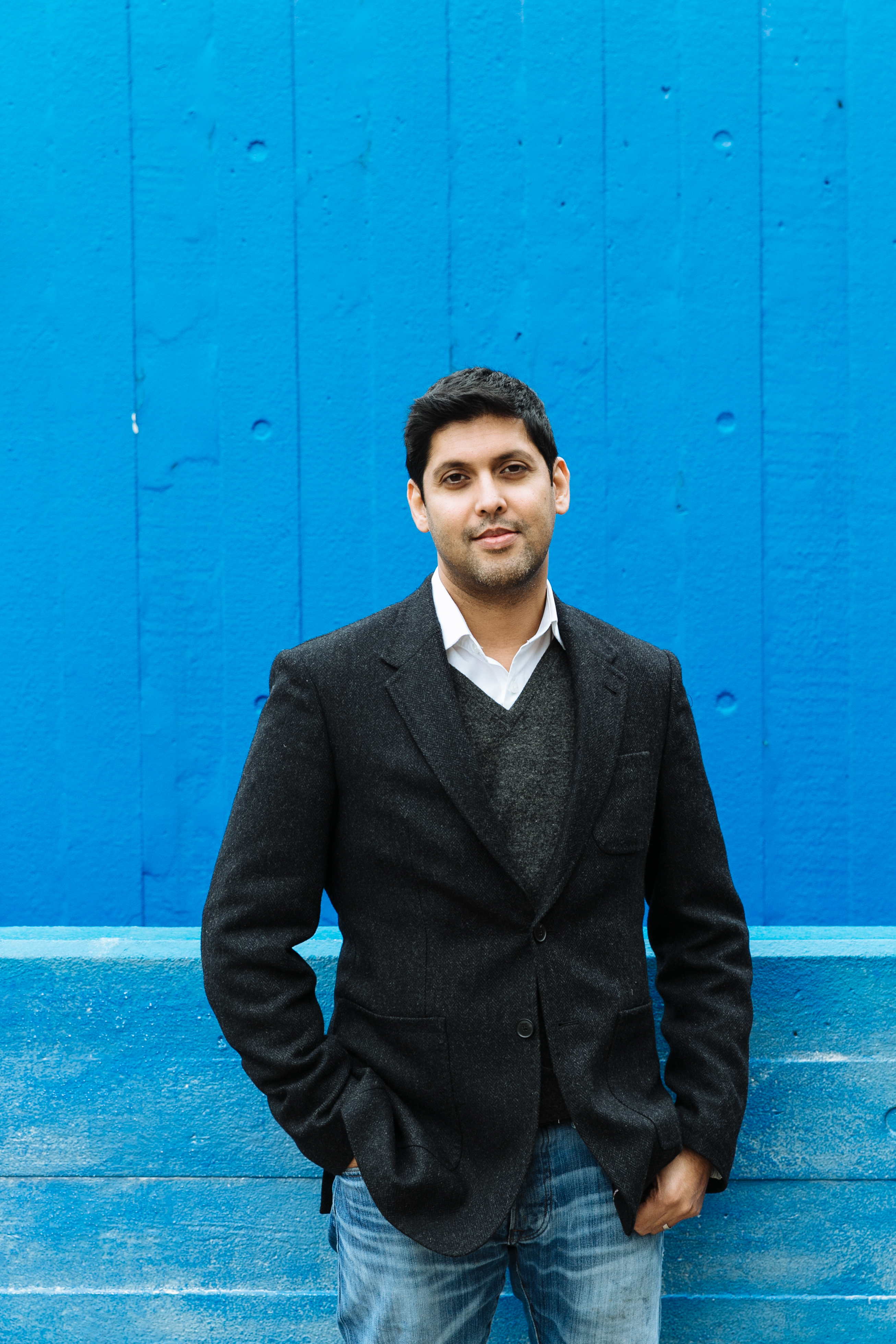
Abir Mukherjee c. Nick Tucker MAIN PHOTO

Abir Mukherjee (photo by Nick Tucker)

Mrs. Peabody: Abir, thanks very much for joining me. A Rising Man is set in the India of 1919, just after the end of the First World War. Why did you choose that particular historical moment for the start of your series?

Abir: My parents came to Britain as immigrants from India in the sixties, and my life has always been shaped by both cultures. As such I’ve always been interested in the period of British Rule in India. I think that period in history has contributed so much to modern India and to modern Britain, but it’s a period that’s been largely forgotten or mischaracterised, either romanticised or brushed under the carpet.

I’ve always been rather surprised by this and wanted to look at it from the point of view of an outsider who’s new to it all. One of the things that’s always fascinated me is that, in an era when totalitarian regimes were rampant in Europe, regularly murdering anyone who showed any dissent, in India, this largely peaceful freedom struggle was playing out between Indians and their British overlords. At the time, there was no parallel to this anywhere in the world, and I think it says a lot about the people of both nations that such a struggle could be played out in an comparatively civilised way.

Huntley and Palmer Raj

A thoroughly British depiction of the Indian Raj

Abir: I also wanted to explore the effect of empire on both the rulers and the ruled. In particular I wanted to understand what happens when a democratic nation subjugates another, both in terms of the impact on the subjugated peoples, but just as importantly, on the psyche of the people doing the oppressing. I think the moral and psychological pressures placed on those tasked with administering the colonial system were immense and in something that’s been relatively unexamined.

I wanted to write a series exploring the relationships between these two different, but in many ways very similar cultures, but from the viewpoint of someone new to it all and 1919 just felt like the right place to start. To me, it was the start of the modern age. The Great War had just ended, it had destroyed a lot of the old certainties and left a lot of people disillusioned and no longer willing to simply accept what they were told by their betters. Sam, the protagonist, is a product of that time and I think he is one of the first modern men.

Calcutta map

Kolkata/Calcutta lies in the east of India on the Bay of Bengal

Mrs. Peabody: How did you go about recreating the Calcutta of the time? What kind of research did you carry out?

Abir: In the period that the book is set, Calcutta was still the premier city in Asia and was as glamorous and exotic a location as anywhere in the world. At the same time, it was a city undergoing immense change and was the centre of the freedom movement, a hotbed of agitation against British rule. It seemed the natural choice for the series I wanted to write. Of course, it helped that my parents are both from Calcutta and I’d spent a quite a bit of time there over the years. I even speak the language, though with a Scottish accent.

In terms of recreating the Calcutta of the period, it’s amazing how much of that history is still around in the Calcutta (or Kolkata) of today. Calcuttans have a great sense of the history of their city, possibly because the city was at its zenith during that period, and so many people were more than willing to answer the many questions I had.

During one visit, I was lucky enough to be granted access to the Calcutta Police Museum where a lot of the police documents from the period are on exhibit. That was fascinating as the Kolkata Police today has a rather ambivalent view of its own history during that time. In terms of research though, most of that was done sitting at home in front of the computer and trawling the internet.

Mrs. Peabody: Tell us a bit about your leading investigator, Captain Sam Wyndham, and the perspective he offers us of India.

Abir: Sam’s a rather strange fish. He’s an ex-Scotland Yard detective who’s basically spent his whole life struggling against the tide. Life’s not exactly been kind to him. He gets packed off to boarding school at a young age and some of his best years were spent sitting in a trench in France getting shot at by Germans. He survives the war, though only to find that his wife has died in the influenza epidemic of 1918. Scarred by his wartime experiences and burdened by survivor’s guilt, he comes to India mainly because he has no better alternative.

At the point in his life where he arrives in Calcutta, he’s a pretty jaded soul with a bit of an alcohol and chemical dependency, though he’d tell you he used them for medicinal purposes. He’s been disillusioned by the war and I think he’s more open to seeing India with his own eyes than swallowing everything he’s told. He’s happy to point out hypocrisy where he sees it, whether it be from the whites or the natives.

Mrs Peabody: The novel does a wonderful job of dissecting the political, racial and social tensions of life under the British Raj. Do you think that crime fiction offers particular opportunities in this respect?

Abir: Definitely. I think most authors have something to say beyond the telling of a good story and I think crime fiction is a wonderful vehicle for exploring deeper societal issues, because it allows you to look at all of society from the top to the bottom.

As Ian Rankin said in an interview earlier this year, “the crime novel is a good way of raising this stuff because … a detective has an access all areas pass to the entire city, to its riches and deprivations.”

In terms of India in 1919, as a white policeman, Sam has is exposed to all sections of Calcutta society, from the politicians and businessmen right down to the rickshaw-wallahs and brothel keepers. He’s part of the whole fabric, but at the same time separate from it and able to see it objectively.

Kolkata flower market

Kolkata flower market. Image Courtesy of Parasarathi Mukherjee, Walks in Kolkata

Mrs Peabody: Which authors/works have inspired you as a writer?

Abir: There are so many.

There are the books which have left the greatest impression on me and which I’ve read quite a few times. At the top of that list would come George Orwell’s Nineteen Eighty-Four. I’ve always been drawn to dystopian views of the future and this is, in my opinion, the finest dystopian novel. I’ve read this book more times than I can remember and it’s a joy every time. The characterization of Winston and Julia’s relationship, set against the backdrop of this all-powerful totalitarian society is just fantastic.

Lahiri

Abir: Other works that have left an impression include Jhumpa Lahiri’s The Namesake, a story about the travails of a Bengali couple who immigrate from Calcutta to Boston and raise a family. My wife first introduced me to this book and I was just bowled over by it. The writing is sublime and I could relate to it in a way I haven’t to many other books.

Then there are others which are pretty special, like Vikram Seth’s An Equal Music, a tale of love lost set in the world of string quartets, Kafka’s The Trial – the only book I’ve read that made me feel claustrophobic, and Hemingway’s For Whom the Bell Tolls with its amazing use of language.

In terms of crime and thrillers, there are a number of authors whose work I look out for and will buy as soon as it hits the shelf. Top of this list has to be Ian Rankin – I’m a huge Rebus fan, but also love the standalone novels too. Then there’s Philip Kerr, Martin Cruz Smith and Robert Harris, all three of whom produce novels shot through with wit and an intelligence, something which I love.

Finally, and in a special category, there’s William McIlvanney, whose Glasgow Detective, Laidlaw is a fantastic creation. I think McIlvanney was a true genius. I wish I’d had the chance to meet him.

Mrs P: Many thanks, Abir!

A Rising Man is published by Harvill Secker on 5 May 2016 (priced £12.99) 

The 2016 Petrona Award shortlist is revealed!

It’s time for a very special announcement…

16708355988_c8f8eb3944_o

Crime novels from Finland, Norway and Sweden have been shortlisted for the 2016 Petrona Award for the Best Scandinavian Crime Novel of the Year. They are:
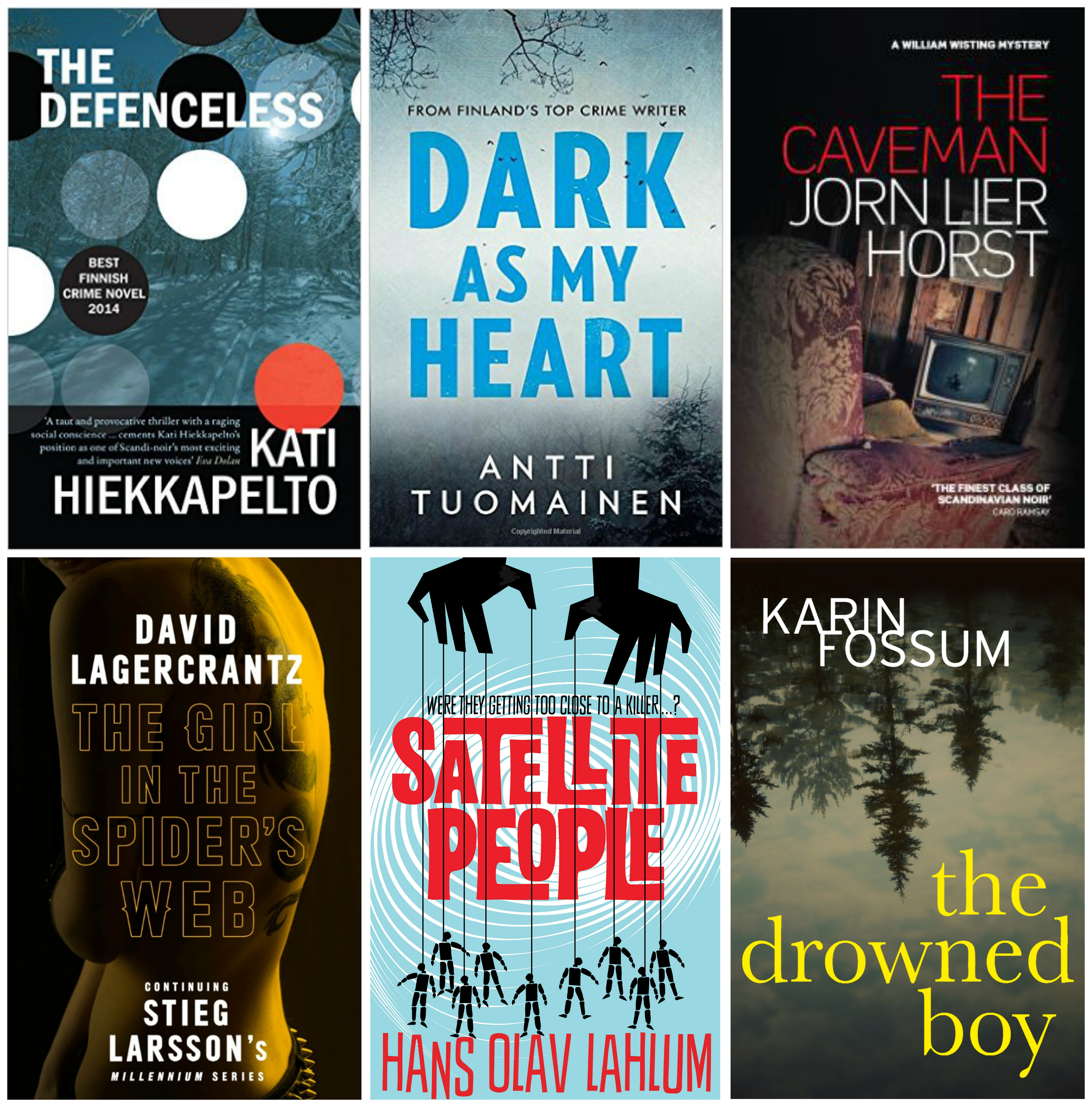
  • The Drowned Boy by Karin Fossum tr. Kari Dickson (Harvill Secker; Norway)
  • The Defenceless by Kati Hiekkapelto tr. David Hackston (Orenda Books; Finland)
  • The Caveman by Jorn Lier Horst tr. Anne Bruce (Sandstone Press; Norway)
  • The Girl in the Spider’s Web by David Lagercrantz tr. George Goulding (MacLehose Press; Sweden)
  • Satellite People by Hans Olav Lahlum tr. Kari Dickson (Mantle/Pan Macmillan; Norway)
  • Dark as My Heart by Antti Tuomainen tr. Lola Rogers (Harvill Secker; Finland)

The award is open to crime fiction in translation, either written by a Scandinavian author or set in Scandinavia and published in the UK in the previous calendar year. The winner will be announced at CrimeFest in Bristol on Saturday 21 May.

Petrona PicMonkey Collage

Here are the Petrona judges’ comments on the shortlist:

THE DROWNED BOY by Karin Fossum tr. Kari Dickson (Harvill Secker; Norway). Fossum’s spare prose and straightforward narrative belie the complexity at the heart of this novel. After the drowning of a young child with Down’s Syndrome, Chief Inspector Sejer must ask himself if one of the parents could have been involved. The nature of grief is explored, along with the experience of parenting children with learning difficulties. There’s a timeless feel to the writing and a sense of justice slowly coming to pass.

THE DEFENCELESS by Kati Hiekkapelto tr. David Hackston (Orenda Books; Finland). The second in Hiekkapelto’s ‘Anna Fekete’ series is an assured police procedural rooted in the tradition of the Nordic social crime novel. Its exploration of immigrant experiences is nuanced and timely, and is woven into an absorbing mystery involving an elderly man’s death and the escalating activities of an international gang.  A mature work by a writer who is unafraid to take on challenging  topics.

THE CAVEMAN by Jorn Lier Horst tr. Anne Bruce (Sandstone Press; Norway). Horst’s The Caveman begins with the discovery of a four-month-old corpse just down the road from William Wisting’s home. Troubled by his neighbour’s lonely death in an apparently uncaring society, the Chief Inspector embarks on one of the most disturbing cases of his career. Beautifully written, this crime novel is a gripping read that draws on the author’s own experiences to provide genuine insights into police procedure and investigation.

IMG_0019

Snowy Scandinavian landscape. Credit: sk-photographed.blogspot.co.uk

THE GIRL IN THE SPIDER’S WEB by David Lagercrantz tr. George Goulding (MacLehose Press; Sweden). The late Stieg Larsson created the groundbreaking, two-fingers-to-society, bisexual anti-heroine Lisbeth Salander. When Larsson’s publishers commissioned a fourth book, they turned to David Lagercrantz, whose The Girl in the Spider’s Web often reads uncannily like Larsson’s own text. His real achievement is the subtle development of Salander’s character; she remains (in Lagercrantz’s hands) the most enigmatic and fascinating anti-heroine in fiction.

SATELLITE PEOPLE by Hans Olav Lahlum tr. Kari Dickson (Mantle/Pan Macmillan; Norway). An accomplished homage to Agatha Christie, Satellite People adds a Nordic twist to classic crime fiction tropes. References to Christie novels abound, but Lahlum uses a Golden Age narrative structure to explore Norway’s wartime past, as Inspector Kristiansen and Patricia investigate a former Resistance fighter’s death. Excellent characterisation, a tight plot and a growing sense of menace keep the reader guessing until the denouement.

DARK AS MY HEART by Antti Tuomainen tr. Lola Rogers (Harvill Secker; Finland). Tuomainen’s powerful and involving literary crime novel has a mesmerising central concept: thirty-year-old Aleksi is sure he knows who was behind his mother’s disappearance two decades ago, but can he prove it? And to what extent does his quest for justice mask an increasingly unhealthy obsession with the past? Rarely has atmosphere in a Nordic Noir novel been conjured so evocatively.

With grateful thanks to each of the translators for their skill and expertise in bringing us these outstanding examples of Scandinavian crime fiction.

16708355988_c8f8eb3944_o

The Petrona Award judges are:

Barry Forshaw – Writer and journalist specialising in crime fiction and film; author of four books covering Scandinavian crime fiction: NORDIC NOIR, DEATH IN A COLD CLIMATE, EURO NOIR and the first biography of Stieg Larsson.
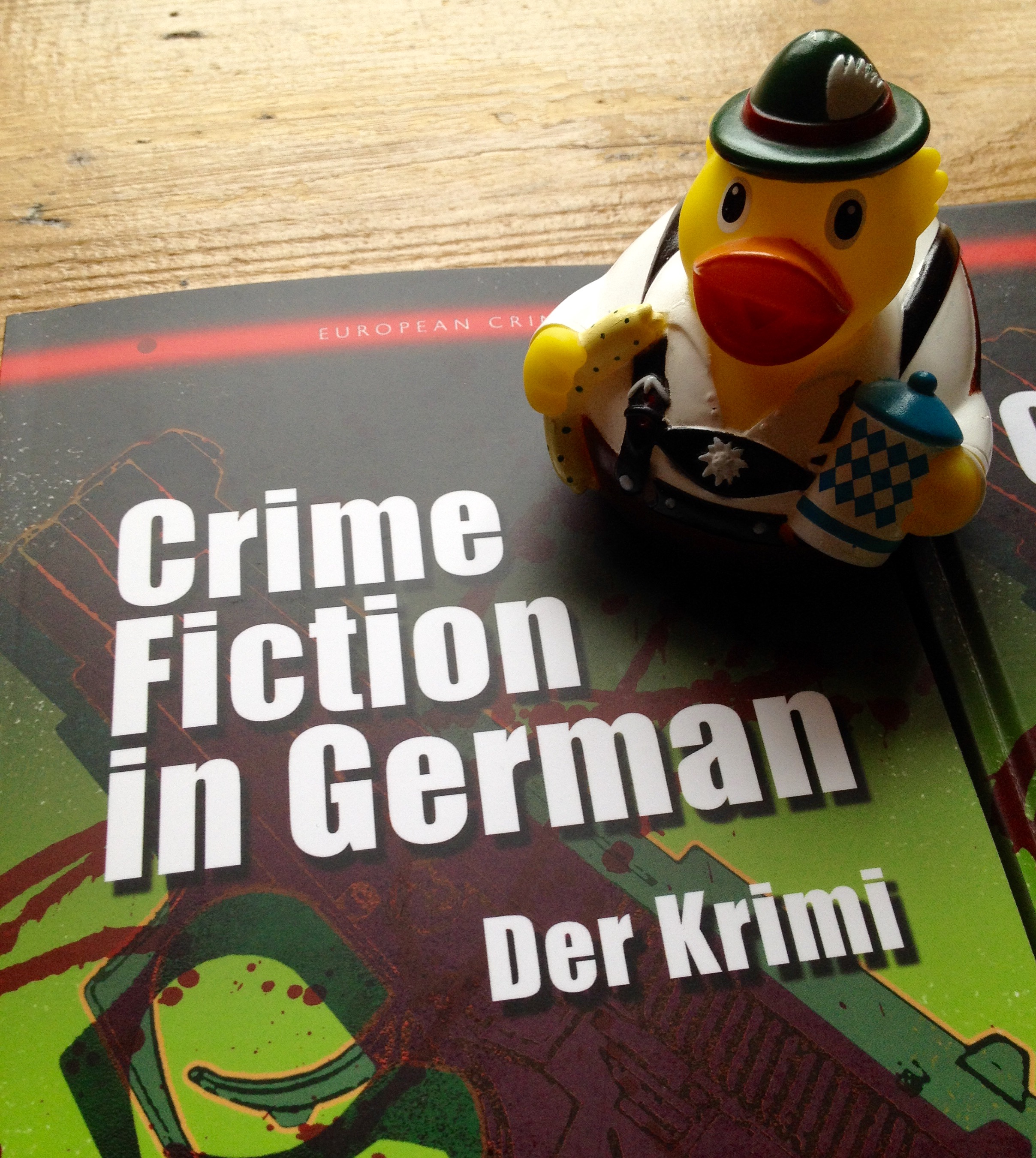
Kat Hall – Associate Professor of German at Swansea University; editor of CRIME FICTION IN GERMAN: DER KRIMI for University of Wales Press; international crime fiction reviewer/blogger at MRS. PEABODY INVESTIGATES.

Sarah Ward – Crime novelist, author of IN BITTER CHILL (Faber and Faber), and crime fiction blogger at CRIMEPIECES.

The award is administered by the marvellous Karen Meek of EURO CRIME.

See also the Petrona Award website.

‘Crime Fiction in German’ book launch and giant Krimi giveaway

The book launch for Crime Fiction in German takes place on Thursday 14th April in Swansea, Wales. To celebrate this event, we’re having a giant Krimi giveaway.

25077429349_dcccfbfa56_o

Erich is very excited about the book launch

The giveaway includes two copies of Crime Fiction in German (University of Wales Press, 2016), which is the first volume in English to provide a comprehensive overview of German-language crime fiction from its origins in the early 19th century to the present day. *You can download a free chapter from the volume here*

We’re also giving away a wonderful selection of the Krimis featured in the volume, thereby showcasing the best of German-language crime in translation:

CFIG launch book collage

A selection from the giant Krimi giveaway

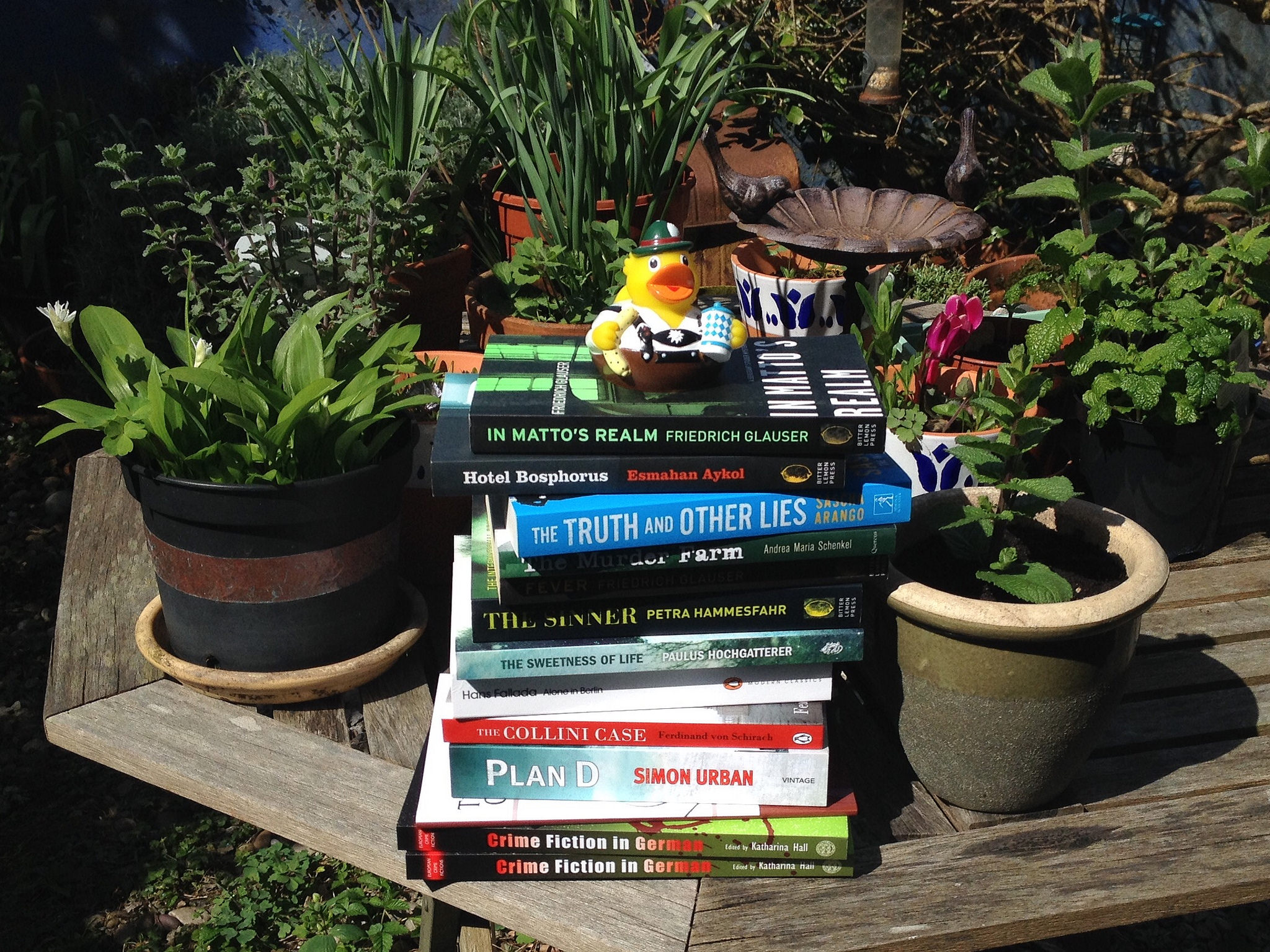
Sascha Arango, The Truth and Other Lies (Simon and Schuster, trans Imogen Taylor). A darkly humorous tale following the fortunes of the outrageous Henry Hayden. A modern-day homage to Patricia Highsmith by one of the screenwriters for the renowned TV crime series Tatort (Crime Scene).

Friedrich Glauser, In Matto’s Realm (Bitter Lemon Press, trans Mike Mitchell). Originally published in 1936, In Matto’s Realm is the second in the groundbreaking ‘Sergeant Studer’ series. Studer is shown investigating the escape of a murderer from a psychiatric institution, a setting that holds a dark mirror up to Swiss society.

Hans Fallada, Alone in Berlin (Penguin, trans Michael Hofman). An extraordinary literary crime novel written in 1946, based on the genuine case of Elise and Otto Hampel, who were executed on charges of treason during the Nazi regime. Recently made into a film starring Emma Thompson, Brendan Gleeson and Daniel Brühl.

Auguste Groner, The Case of the Golden Bullet (Amazon, unknown trans). Groner was a pioneer of Austrian and women’s crime fiction, and created the first German-language police detective series. Joseph Müller investigates in this opening novella, originally published in 1892.

Petra Hammesfahr, The Sinner (Bitter Lemon Press, trans John Brownjohn). A gripping psychological thriller and Frauenkrimi, which excavates the reasons for an explosion of violence by young mother Cora Bender one sunny summer afternoon.

Paulus Hochgatterer, The Sweetness of Life (MacLehose, trans Jamie Bulloch). In this Austrian crime novel, Detective Ludwig Kovacs and psychiatrist Raffael Horn work on a murder case in which the only witness is a girl too traumatised to speak. Winner of the 2009 European Literature Prize.

Andrea Maria Schenkel, The Murder Farm (Quercus, trans Anthea Bell). A former resident returns to a village following a family massacre, and begins to piece together events via interviews with assorted villagers. A spare, chilling tale set in rural 1950s Germany. Winner of the German Crime Prize.

Ferdinand von Schirach, The Collini Case (Michael Joseph/Penguin, trans Anthea Bell). Barrister Caspar Leinen takes on a seemingly impossible case: his client, Fabrizio Collini, admits the murder of a rich German industrialist, but refuses to say why he committed the crime. A gripping courtroom drama that interrogates notions of justice.

Simon Urban, Plan D (Vintage, trans Katy Derbyshire). An ambitious novel that blends police procedural, detective novel and alternative history genres. Set in a 2011 in which the Berlin Wall still stands, it explores East-West tensions as the GDR teeters on brink of bankruptcy. A biting social satire.

25352091871_34555eb9c9_o

TO ENTER the giveaway and win one of the books above, write your name in the comment section along with the answer to this question –> What is the popular term for ‘crime novel’ in German?

A. Schwarzwaldkuchen

B. Krimi

C. Bratwurst

You can be anywhere in the world to enter – from Tenby or Tokyo to Tasmania. The closing date for entries is Sunday 17th April. THIS GIVEAWAY IS NOW CLOSED! See below for the winners!

26547055201_8d7ed5b9e1_k

There was a fantastic response the Great Krimi Giveaway, with nearly 100 entries from all over the world – and amazingly everyone got the answer right ;-). Thanks to everyone who took part. The twelve lucky winners are listed below. Congratulations!

Winners – please email me your postal address and I will send your book out to you (mrspeabody68 at yahoo.co.uk). 

THE WINNERS ARE……..:

  • John Grant (realthog) – Arango’s The Truth and Other Lies
  • Roberta Marshall – Aykol’s Hotel Bosphorus
  • Bill Selnes – Glauser’s In Matto’s Realm
  • Lucy Dalton – Glauser’s Fever
  • Annegret Harms – Fallada’s Alone in Berlin
  • Sebastian Raggio – Groner’s The Case of the Golden Bullet and Schenkel’s The Murder Farm (two for one because the Groner is short!)
  • Robert J (Robie) – Hammesfahr’s The Sinner
  • Bett Mac – Hochgatterer’s The Sweetness of Life
  • Beatriz Simonetti – von Schirach’s The Collini Case
  • Ankush Saikia – Urban’s Plan D
  • Georgie Kelley – Crime Fiction in German volume
  • Sarah Pybus – Crime Fiction in German volume
26519944262_ed91b23fb2_k

The faithful Krimi bag, from which the draw was made, with the pile of freshly won prizes

Mrs. Peabody gratefully acknowledges the generous support of the sponsors below, who have made this Krimi giveaway possible.

CFIG sponsors 1

CFIG sponsors 2

RIAH title high res

#48 Mette Ivie Harrison, The Bishop’s Wife (USA)

Mette Ivie Harrison, The Bishop’s Wife (Soho Crime, 2014). Set in Utah, this crime novel provides a fascinating insight into Mormon everyday life and its religious beliefs. 4 starsHarrison

Opening line: Mormon bishop’s wife isn’t an official calling.

Some happy book browsing in Foyles led me to a rather unusual American crime novel a few months back. Mette Ivie Harrison’s 2014 novel The Bishop’s Wife is set in present-day Utah, whose capital Salt Lake City is also the centre of Mormonism (The Church of Jesus Christ of Latter Day Saints). The novel’s primary investigator, as the title indicates, is the wife of a Mormon bishop: Linda Wallheim lives in the city of Draper, and leads a busy life looking after her family and supporting parishioners. When neighbour Jared Helm arrives at the bishop’s house in a distressed state early one morning, claiming that his wife Carrie has left him, Linda is drawn into a complex case that she suspects may involve domestic abuse…or even murder.

Undoubtedly, one of the most satisfying aspects of this novel is the insider view it offers of everyday life in a Mormon community. The novel explores key Mormon beliefs (such as the importance of family members being ‘sealed’ to one another so that they can be united for eternity), the way Mormon children are raised and educated, and the importance of community service. At the same time, the novel acknowledges that aspects of the church are open to criticism, such the obstacles it places in the path of those who wish to leave. It’s also very open in its consideration of the highly gendered roles Mormonism assigns to men and women, and the possible abuses of power that its traditional patriarchal structures invite.

family_ring_around_the_rosie

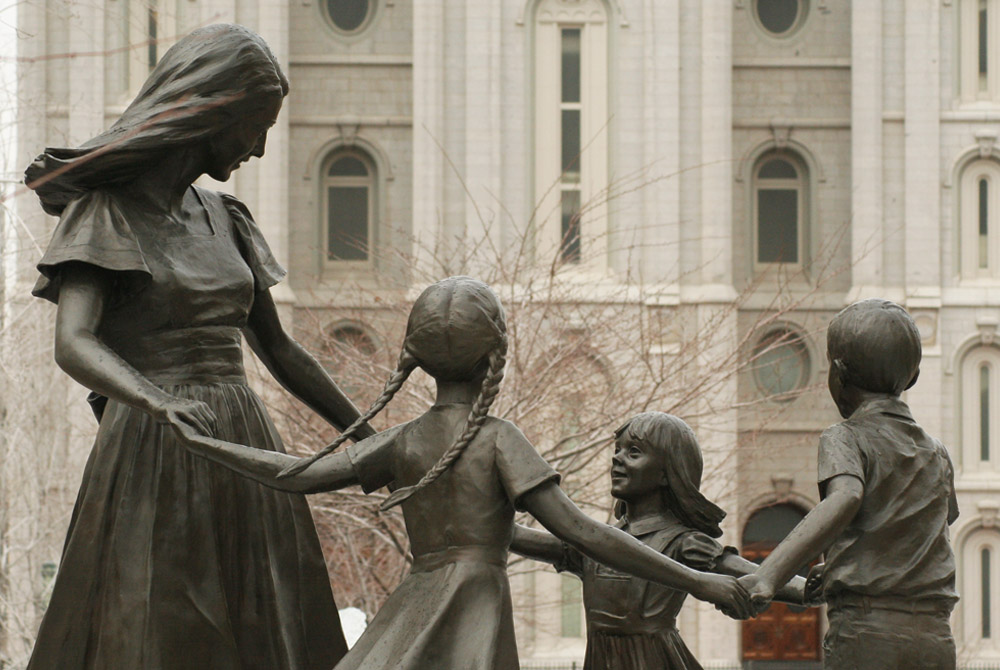
Statue celebrating the role of the mother in front of the Salt Lake Mormon Temple in Salt Lake City

Linda herself is a very appealing figure. She is a strong, devout woman, who thinks critically about the Mormon community and her place in it as a wife, mother and individual, rather than simply accepting the status quo. She falls into the role of amateur detective by chance, and, while guilty of some misjudgments and mistakes, has a moral compass that’s true. She reminds me a bit of Faye Kellerman’s feisty investigator Rina Decker, whose cases are typically linked to the life of her Jewish community and allow their author to explore modern Jewish life.

The Bishop’s Wife is the first in a series of mysteries featuring Linda Wallheim, and I’m keen to read more (the second, His Right Hand, has just appeared).  If you like fast-paced crime novels, then this kind of novel is probably not for you, but if you prefer crime fiction that makes space to explore complex religious, social and moral issues, then The Bishop’s Wife is an absorbing and fascinating read.

Author Mette Ivie Harrison is a member of the Mormon church and lives with her husband and five children in Utah. She also blogs for the Huffington Post on religious issues and has written a number of interesting posts (for example about the accusation that the LDS church is a cult). She holds a PhD in German literature from Princeton (ausgezeichnet!).