CrimeFest 2013 and the inaugural Petrona Award

This time next week CrimeFest 2013 will be in full swing. There’s a mouth-watering programme with lots of international writers as well as British writers whose works are set on international shores.

They include: Quentin Bates (Iceland), Xavier-Marie Bonnot (France), Roberto Costantini (Italy), K.O. Dahl (Norway), Jeffrey Deaver (USA), Thomas Enger (Norway), Ragnar Jonasson (Iceland), Pierre Lemaître (France), Adrian Magson (UK/France), M J McGrath (UK/Arctic), Derek B. Miller (Norway), Barbara Nadel (UK/Turkey), William Ryan (UK/ Russia), Jeffrey Siger (US/ Greece), Yrsa Sigurðardóttir (Iceland), Dana Stabenow (USA/ Alaska), Valerio Varesi (Italy), Robert Wilson (Spain/Portugal/Africa), Anne Zouroudi (UK/Greece). A full list of writers with further details is available here.

The winner of the first Petrona Award for Best Scandinavian Crime Novel of the Year will also be announced at the CrimeFest Gala dinner on Saturday night. I have my posh frock at the ready and am looking forward to the occasion very much.

The award was set up in memory of Maxine Clarke, who blogged as Petrona and was an expert in Scandinavian crime fiction. The 2013 shortlist, compiled on the basis of Maxine’s reviews, is as follows:

enger428586_287692644633128_120240158045045_704808_1282709077_n517CY6O6qWL51Bigz1qx7L._BO2,204,203,200_PIsitb-sticker-arrow-click,TopRight,35,-76_AA300_SH20_OU02_

PIERCED by Thomas Enger, tr. Charlotte Barslund (Faber and Faber)

BLACK SKIES by Arnaldur Indridason, tr. Victoria Cribb (Harvill Secker)

LAST WILL by Liza Marklund, tr. Neil Smith (Corgi)

ANOTHER TIME, ANOTHER LIFE by Leif GW Persson tr. Paul Norlen (Doubleday)

Synopses of the novels with extracts from Maxine’s reviews can be found at the wonderful ‘Petrona Remembered’ blog. Karen Meek has also set up two polls over at ‘Eurocrime’: ‘which novel do you want to win the Petrona Award 2013′ and ‘which novel do you think will win the Petrona Award 2013′. The polls are open until 29 May.

I’ll be tweeting from CrimeFest using the following hashtags: #CrimeFest and #CrimeFest2013. The only difficulty now is deciding which of the panels to attend – they all look so good…

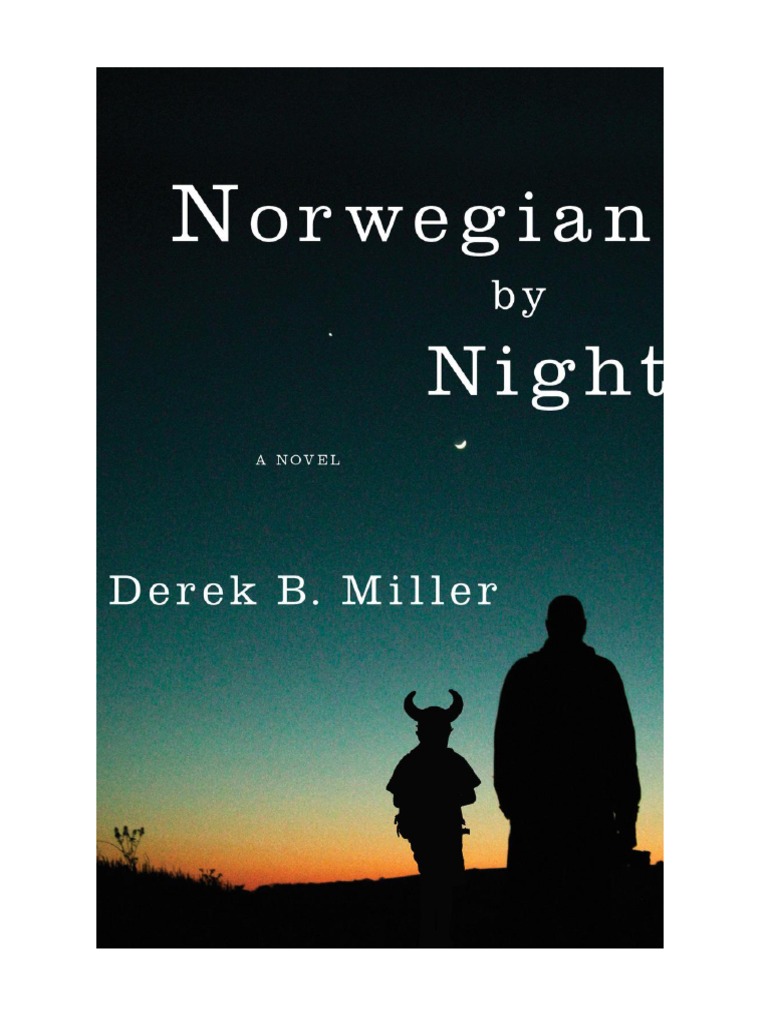
#37 / Derek B. Miller, Norwegian by Night

Derek B. Miller, Norwegian by Night (ebook; London: Faber and Faber, 2013). 5 stars

Opening line: It is summer and luminous. 

I’m very excited about this book. Promoted as ‘a literary novel, a police thriller, and the funniest book about war crimes and dementia you are likely to read anytime soon’ (true), it’s also one of the best and most original novels you’ll ever read.

The star of the novel and its central protagonist is Sheldon Horowitz, a recently-widowed Jewish-American octogenarian and former Marine with possible dementia, who has been transplanted by granddaughter Rhea from New York to Oslo, so that she and her husband Lars can take care of him in his dotage. A few weeks after his arrival, following sounds of a violent argument in the flat above, Sheldon is faced with a life-changing choice: whether or not to open his door to help a mother and son in physical danger. His decision to do so, strongly influenced by the memory of the Holocaust, sets off a chain of events which have major repercussions for himself and those around him.

I loved this novel’s distinctive Jewish-New York voice and its brilliant characterisation of Sheldon, an old man trying to right past wrongs and protect a six-year-old boy from harm by drawing on the memory of his soldier’s training from half a lifetime ago. The narrative has the free-wheeling brilliance and humour characteristic of the best Jewish-American writing and is, quite simply, a joy to read (Miller’s work fits perfectly with others like The Yiddish Policeman’s Union by Michael Chabon and Everything is Illuminated by Jonathan Safran Foer). The following excerpt is typical:

Sheldon catches his breath and stands up again. He walks over beside Paul and says, “Right, now we start walking backward. If we’re lucky, we’ll go backward in time, before yesterday and the day before. Before you were born, all the way back to at least 1952 […] We could stop for lunch in 1977. I knew an excellent sandwich shop in 1977.”

The novel also explores an extraordinary number of larger subjects and themes, such as: fatherhood, parental regret and loss; aging, memory and dementia; Jewishness, identity, the desire to belong, masculinity and war; the German Occupation of Norway during World War Two, the Holocaust, the Korean War, the Vietnam War, the Balkan Wars; war crimes and justice; and, last but not least, criminality and policing in a global era. While hugely ambitious in tackling such a wide range of issues, the author – somehow – manages to integrate them successfully, along with three generations of Horowitz family history, into a thrilling plot.

Written by an American author based in Oslo, this is also very much a book about Norway and its relation to the world. Sheldon and Rhea’s outsider perspectives  – like the author’s own – provide the opportunity for wry comparative analyses of American and Norwegian cultural traits. Meanwhile, Police Chief Inspector Sigrid Ødegård (another warm and wonderfully-realised character), allows the narrative to reflect on the globalisation of organised crime and the opportunities afforded to criminal networks through the softening of Europe’s borders. Norway is depicted as unprepared for the speed of these developments, with criticism levelled at its liberals (‘expounding limitless tolerance’) and conservatives (‘racist or xenophobic’), as well the failure of both sides to hold positions properly ‘grounded in evidence’. Here we see the author’s own background in international relations shining through: in a 2012 interview on the ‘Bite the Book’ blog, Miller describes how he has worked ‘designing “evidence-based” approaches to peace and security programming for almost a decade at The United Nations Institute for Disarmament Research’. The whole interview is well worth a read.

Norwegian by Night is by turns a hilariously funny, heart-breakingly sad and genuinely suspenseful novel that makes you care deeply about its characters – not least the irascible Sheldon. On finishing it, I immediately wanted to read it again –  along with a stack of other books it called to mind (by Kurt Vonnegut, John Irving and Michael Chabon, to name but three). You can’t ask for more than that.

With thanks to Raven Crime Reads for alerting me to this novel. You can read Raven’s excellent review here (which contains slightly more details of the plot than included above). There’s also an earlier Mrs P. post on Jewish detectives here.

Mrs. Peabody awards Norwegian by Night an utterly brilliant 5 stars

Creative Commons License

.

International crime drama news from BBC4: Dahl, De Luca, Young Montalbano, The Bridge 2 and more!

I’ve just seen the following on a BBC4 press release and couldn’t resist reporting IMMEDIATELY.

>> BBC Four has announced two exciting additions to an outstanding new year of international drama and film on the Channel: Swedish crime series Arne Dahl and Italian series Inspector Da Luca.

Arne Dahl (a pseudonym of award-winning author Jan Arnald) is based on five of Dahl’s novels, beginning with The Blinded Man. The series revolves around a tight-knit team of elite specialists who investigate the dark side of Swedish society. It is produced by Filmlance International and written by Rolf Börjlind and Cecilia Börjlind.

Inspector De Luca is made by Ager 3/Rai Radiotelevisione Italiana. A four-part crime series based on the novels by Carlo Lucarelli, it is set in and around Bologna during the tumultuous years of Mussolini’s dictatorship. Inspector De Luca is an investigator whose brutal honesty and uncompromising character may help him solve cases, but combined with his love of women, they also conspire to get him in trouble…

Other crime drama and film highlights in 2013 include:

Young Montalbano. Set in the early 1990s and starring Michele Riondino in the title role, Young Montalbano gives an insight into the private life and early crime-fighting career of the idiosyncratic Sicilian detective. This prequel series, also written by Andrea Camilleri, was recently shown to critical acclaim in Italy. (See here for details of the start date of this series.)

The Bridge, Series 2. A rusty old coaster en route in the Öresund sound suddenly veers off course and rams the concrete foundations laid out to protect the Öresund Bridge. The ship is empty – or so it is believed until five people are found chained, cold and exhausted below deck. The unknown victims, of whom three are Swedish and two Danish, are brought to a hospital in Malmö. Without hesitation, Saga Norén (Sofia Helin) from Malmö CID contacts her Danish colleague, Martin Rhode (Kim Bodnia) and their new investigation begins.

Inspector Montalbano. The popular Sicilian detective makes a welcome return in four brand new episodes.

The King Of Devil’s Island. Based on a true story, The King of Devil’s Island tells the unsettling tale of a group of young delinquents banished to the remote prison of Bastøy in Norway. Under the guise of rehabilitation the boys suffer a gruelling daily regime at the hands of their wardens until the arrival of new boys Erling and Ivar spark a chain of events that ultimately ignite rebellion.

Point Blank. In this action-packed French thriller, Samuel Pierret is a nurse who saves the life of a criminal whose gang then take Samuel’s pregnant wife hostage to force him to help their boss escape. A race through the subways and streets of Paris ensues. As the body count rises, Samuel must evade the cops and the criminal underground to rescue his wife <<

I’m so excited I can hardly breathe. Though I’m not sure how to break the news to my family that the telly will be off-limits for most Saturday nights this year.

For the full press release see here (contains info about series 3 of BORGEN as well). There’s also a very atmospheric trailer of all the international drama coming up.

Enjoy!

The Petrona award for best Scandinavian crime novel

The crime blogosphere has been abuzz with news of the freshly established Petrona Award for Best Scandinavian Crime Novel of the Year.

Set up in memory of Maxine Clarke, who blogged as Petrona and was an expert in Scandinavian crime fiction, the award will be presented for the first time at the UK CrimeFest convention this coming May.

The 2013 shortlist has been compiled on the basis of Maxine’s own reviews:

PIERCED by Thomas Enger, tr. Charlotte Barslund (Faber and Faber)
BLACK SKIES by Arnaldur Indridason, tr. Victoria Cribb (Harvill Secker)
LAST WILL by Liza Marklund, tr. Neil Smith (Corgi)
ANOTHER TIME, ANOTHER LIFE by Leif GW Persson tr. Paul Norlen (Doubleday)

enger428586_287692644633128_120240158045045_704808_1282709077_n517CY6O6qWL51Bigz1qx7L._BO2,204,203,200_PIsitb-sticker-arrow-click,TopRight,35,-76_AA300_SH20_OU02_

Submissions are also now being invited for the 2014 award, which will be judged by crime critic Barry Forshaw, Sarah Ward of Crimepieces, and your very own Mrs. P. It’s an honour to have been asked, and I look forward to some lively discussions with my fellow judges! Karen Meek from Eurocrime will be keeping us all in line.

The rules governing eligibility are available on the Petrona Remembered blog. You can also read Petrona’s excellent review of Indridason’s Voices there – fittingly, it’s the inaugural post on the site, and will be followed by more from a variety of contributors.

For a Bookseller piece on the award, see here.

Depictions of violence and women in crime fiction (with list of STRONG WOMEN IN CRIME)

A few days ago an extremely interesting discussion kicked off in the ‘about’ section of this blog on depictions of violence and women in crime fiction. I’m taking the slightly unusual step of reproducing the thread here (in a lightly edited form), as it would other-wise remain largely invisible. It closes with a fabulously affirmative list of ‘strong women in crime’, sourced via Twitter and the blog.

With thanks to the participants in the discussion – Susan, Cassandra, Maxine and Bernadette – and to everyone who put forward their favourites for the list!

The discussion began with a comment about Sjöwall and Wahlöö’s Roseanna (1965).

Susan Wright: I recently discovered your blog thanks to Mark Lawson’s ‘Foreign Bodies’ series on Radio 4. I’m enjoying your reviews and I agree with many of your opinions, especially about the cliched representations of women in some crime fiction. Like you I thought Varesi’s River of Shadows was wonderfully atmospheric but marred by the sex scenes. I’m now reading the first Martin Beck novel; having been told it was a Marxist critique and had a left-wing perspective, I was surprised by the prurient description of the victim, particularly the interview of her boyfriend by the US cop which goes into graphic detail about her sex life. I know this was written before 70s feminism, but I was disappointed all the same. It seems cliches about women and female sexuality are not limited to Italian male crime authors.
Mrs P: What you’ve said about Roseanna, the first Martin Beck novel, has really got me thinking. It’s a little while since I read it, but I understood the role of those sexual details in a slightly different way. I saw them as providing the reader with a portrait of Roseanna as a very independent, sexually-liberated person, and instead of indulging in the stereotypes one might find in literature of the time (that her sexuality was what ‘got her into trouble’), the authors give her full victim status. Beck, for example, never wavers in his quest to bring her murderer to justice. So in that respect the novel is arguably groundbreaking.

But I take your point, and think I may need to read the novel again, so that I can see that interview with the American cop in the context of the whole narrative!

Susan Wright: I agree it is a groundbreaking novel and the authors wanted to show Roseanna (and themselves) as modern and sexually liberated, but I found some of their approach quite disturbing, almost voyeuristic, although I suppose all fiction is voyeurism to some extent! As well as the American cop scene, at one point Beck asks a colleague to write a detailed description of the corpse which I also found a little prurient. I cannot ever recall reading a crime novel which described a male victim in that way. I’m only half way through the book but it is striking how few women there are and how marginal they seem, though I suppose this reflects how different women’s roles were in the 60s – so far there are no female police. I like Beck’s compassion, not just for Roseanna but for the woman Karin who worked on the cruise boat and has fled a violent man.

Cassandra Clark (author): I am disturbed by what Susan Wright says as it resonates so closely with my own feelings about the kind of obsessively detailed descriptions of violence against women in some crime novels. I don’t think it’s good enough to say it takes place in the 1960s so it’s OK. The same prurience is rarely directed towards male murderees. Maybe we should ask ourselves why not? I suppose until it is (though heaven protect us against what that will mean for our humanity) there will be no equality between men and women. This is just a thought. I have to deal with this problem every time I write because my series is set in the fourteenth century when things were a bit rough – and women had even less say than now.

Mrs. P: Depictions of violence against women in crime fiction (especially sadistic sexual violence) have bothered me as long as I’ve been reading in the genre, and I would agree with you that this is a topic that should be acknowledged and properly discussed. Every now and then I consider writing a blog post on the subject and then get cold feet, because in many ways it’s such a minefield. In any case – a few thoughts in response to your comment:

Time of publication: I agree that misogyny should not be excused if it appears in a book written in the 1960s, but it does provide at least a partial explanation that helps us understand its presence.

Authorial intent: some authors like Val McDermid have been criticised for writing eye-watering depictions of violence against women (usually by serial killers). I’ve heard McDermid argue that her intent is to highlight the shocking realities of misogyny and violence against women in our society, which are often ignored. However, the risk that a reader might get some kind of perverse kick out of those depictions remains, as the author can never completely steer the interpretation of his or her writing. Her later books have apparently toned down this element.

The same problem could be said to exist in relation to David Peace’s ‘Red Riding’ quartet (1974, 1977, 1980 and 1983), which explore the Ripper killings in some detail, and which I greatly admire. (This is where things get complicated for me – why do I view some depictions of violence against women as justifiable and some not? I need to think about this in more detail, but think it has to do with the purpose of those depictions / what the inclusion of those depictions achieves in the larger context of the narrative.)

Misogyny sells? One really depressing thought for me is that publishers / film studios are actively on the lookout for explicit depictions of violence against women (whether in crime fiction or other genres such as horror), because they know that these will sell. What that says about us as a society is pretty bleak.

Equality: funnily enough, I happen to be reading An Uncertain Place by the French crime novelist Fred Vargas at the moment, which features an unbelievably brutal murder of a man, with some pretty prurient features! Still undoubtedly an exception to the rule, and I agree with you that this isn’t the kind of equality for which we should aim!

There was a bit of a media storm in 2009, when Jessica Mann, an author and critic, declared that she was no longer willing to review some books due to their misogynist content. (Her original statement can be accessed here). Val McDermid then wrote a response (she felt that female authors were being unfairly targeted for criticism).

I’d be very interested to hear in a little more detail how you deal with all of these complexities as a writer yourself…

Maxine (Petrona blog): I am allergic to crime novels depicting violence (torture, serial killer, mentally unstable kidnappers, etc.) against women, children and other victims and I am afraid that the genre seems to be increasingly popular. I have failed to finish several “raved about” books on these grounds, and failed even to start others, e.g. Stuart MacBride’s latest whose plot blurb is horribly off-putting.

That having been said, I do not think the criticism of Roseanna by Sjowall/Wahloo is fair. I think this is a serious book, not prurient, and I feel that Beck’s sympathy for the victim drives him on to solve a crime that others would long since have forgotten. I think the S/W novels are as far from some of the poorly written, sensationalist rubbish that is written these days as it is possible to be!

Mrs. P: I feel the same way about Roseanna, but to be fair this was an impression gained from a partial reading of the book (am keen to see what Susan thinks on completion!).

Thanks also for the link (via Friendfeed) to the blog-post you wrote on the Mann discussion. Some extra links there that might be of interest to others…

bernadetteinoz (Reactions to Reading blog): This is a perennial topic and one I suspect will be with us for several generations yet. I do my best to avoid books in which the violence against women feels particularly prurient but, like you Mrs P, I might not always appear consistent as I do tend to take intent into account and, of course, it is usual that I have to infer intent from things outside the book in question (e.g. the author’s previous work). Somewhat perversely I absolutely do not think that we should be censoring our publications based on the fact that some perverted sicko somewhere might get some enjoyment or, heaven forbid, some ideas, from what he (and it will almost definitely be a he) reads. That way madness (and totalitarian dictatorships lie).

I think I do disagree with one point made earlier in this discussion, well half-disagree anyway. I think the reason we don’t see nearly as many graphic descriptions of torture and sexually motivated violence occurring to men in crime fiction is that the genre is after all in some ways a reflection of real life and that kind of violence does not happen as much to men in real life as it does to women. However, the kind of violence that men are often subject to – being shot or dying in violent person-to-person fighting – is depicted quite a lot. George Pelecanos’ books are full of it as are the books of many other authors I’m sure – but I can’t name heaps of them because I tend to avoid them just as I do the books in which violence against women for the sake of it appears to be a central point to the book’s existence.

Mrs P: I absolutely agree with you about the censorship issue, although one thing I’m interested in is the ‘self-censorship’ angle, by which I mean authors who may change their approach to depicting violence in a series, due to audience reactions or because they feel that they went a step too far in their early work. I’ve heard David Peace say (at a reading in Belfast a couple of years ago) that he would have written parts of his ‘Red Riding’ quartet differently today, particularly the detailed depictions of what was done to the female child victims in the novel. He saw this shift as being partly due to his own development as a writer; he now felt elements of those depictions were gratuitous. I’d be very interested to hear if other authors have modified their depictions of violence as their writing careers progressed (in either direction, in relation to either gender, and if so why).

‘Gendered’ types of violence as a reflection of real life: this is a really good point, and I think what Val McDermid was arguing when defending depictions of violence against women in her own books (as I heard her do at a Harrogate panel in 2006). I was barely able to read portions of The Last Temptation , but I could at least see what she was trying to achieve. It did put me off reading her works for a while though. George Pelecanos: another author I greatly admire, whose novel The Big Blowdown is on my list of all-time crime greats. His depictions of violence seem to me to be carefully contextualised in larger narratives of ethnic and class tensions, and work for that reason in my view.

Maxine: Agree with you both on the censorship aspects, and Bernadette makes a good point about the “macho” violence which is more commonly the way it is done to males in crime fiction, than the type of nastiness done to the weak (women, children). Reminds me of the way some comedians on TV are said to target the disabled.

Val McDermid seems to have toned down her torture-style books over the past few years, so she herself may be an example. Probably to do with appealing to a wider, non-crime-reading audience.

It is nice to me that some of the very best-selling and top (my view!) crime authors don’t depict unnecessary violence while still being hard-hitting, e.g. M. Connelly, D. Meyer, I. Rankin, R. Rendell, L. Marklund. I also like authors like Peter Temple who address tough issues such as abuse of children (in care homes), young women, etc. – making the topics harrowing and not airbrushing, but still not dwelling on them in unnecessarily “revelling in it” ways. Connelly, Marklund etc. do quite a bit of this, too.

Mrs P: I very much agree with your last paragraph, Maxine: a huge amount depends on the quality of the writer, and the skill with which he or she situates depictions of violence in the context of larger issues. That’s when the crime novel reaches its full potential as a vehicle for critiquing society, and highlighting crimes and injustices perpetrated within it.

Cassandra Clark: I do agree that context is important, but when people say it’s ok if well written this is to put aesthetics above ethics. Something to discuss there, I feel. I also question one of the contributors’ remarks about violence being mostly done to women and therefore it’s a true picture of society. (Novelists are not journalists.) I haven’t checked the statistics but I would imagine most murders are a result of street violence between young men. It’s the criticism of unbalance, also levelled at crime novels set in Iceland or Sweden – more corpses than inhabitants! – leading one to imagine the crime rate in these places is ten times higher than that in Chicago, tipping the balance towards blatant untruth and undermining the argument that they provide a true picture of society. What gets me down is the constant dwelling on women as victims. Yes, we know about misogyny but what do we know about how to fight back? If detailed descriptions of the nasty things people can do to other people is considered necessary to tell a good story then I want to see a few winning women in this literary-engendered battle. In fact, come to think of it, that’s how I deal with it in my own writing. Hildegard fights back. I hope she always will.

bernadetteinoz: I’ll respond to this as I was the one who made the original claim and I do think it stands up. If women are going to be subject to violence it is most likely to be domestic violence or sexual assault by someone she knows (and by knows I mean everything from is ‘married to’ to ‘has met briefly’) – that’s what the health stats say anyway (which I know about from my day job) – I think crime fiction reflects this, though of course it takes things to extremes (often for no good reason, sometimes to make a perfectly valid point) – of course there is also a whole load of serial killer fiction in which mostly women are tortured and whatnot, but most of these are cashing in on a trope that I think had its origins in something far less flashy and probably a lot more realistic (e.g. the guy meets girl and when she says no he decides she meant yes and rapes her scenario). That certainly appears to be what the early books depicting quite graphic violence from authors like Patricia Cornwell were doing (I think Cornwell lost track of this early theme, but that’s another story).

That said I think there is a whole load of crime fiction that does not treat women as victims – there are loads of strong female characters who fight the good fight either due to some trauma in their own past or their viewing of the realities of what has happened to other people they know. Certainly most of the crime fiction I read these days does not cast women as the perennial victim. But I rarely read any of the mainstream crime/thriller/ slasher stuff in which people are making things out of human skin or collecting women’s body parts or any of that kind of nonsense.

Cassandra Clark: Yes, I think I was generalising about mainstream i.e. best-seller paperbacks. What about a list of strong women novels then?

Mrs. P: Great idea – and a lovely way to wrap up this discussion.

Update, 5 December: Margot Kinberg has written a very thoughtful blog post over at Confessions of a Mystery Novelist about some of the more difficult questions raised in this discussion (such as why graphic depictions of violence sell). It’s well worth a read.

Update, 9 February: Thanks to author J.J. Marsh for alerting me to her excellent discussion with author Frances di Plino entitled ‘Feminists and crime fiction – an odd couple?’.

STRONG WOMEN IN CRIME

  • Lena Adams (Karin Slaughter’s Grant County series, USA)
  • Adelia Aguilar (Ariana Franklin, ‘Mistress of the Art of Death’ series, UK)
  • Jo Beckett (Meg Gardiner’s Jo Beckett series, USA)
  • Annika Bengtzon (Liza Marklund’s Bengtzon series, Sweden)
  • Tempe Brennan (Kathy Reichs’ Tempe Brennan series, USA)
  • Siobhan Clarke (Ian Rankin’s Rebus novels, UK)
  • Jenny Cooper (M. R. Hall’s Jenny Cooper series, UK)
  • Dr. Anya Crichton (Kathryn Fox’s Anya Crichton series, Australia)
  • DCI Kate Daniels (Mari Hannah’s Kate Daniels series, UK)
  • Evan Delaney (Meg Gardiner’s Delaney series, USA)
  • Marie Donovan (Alex Walter’s Marie Donovan series, UK)
  • Detective Elinborg (Arnadur Indridason, Outrage, Iceland)
  • Bell Elkins (Julia Keller, A Killing in the Hills, USA)
  • Erica Falck (Camilla Läckberg’s Fjällbacka series, Sweden)
  • Amanda Fitton / Campion (Margery Allingham, Campion series, UK)
  • Charlie Fox (Zoë Sharp’s Charlie Fox series, UK)
  • Ruth Galloway (Elly Griffiths’ Ruth Galloway series, UK)
  • Bina Gelbfish (Michael Chabon, The Yiddish Policeman’s Union, USA)
  • Noria Ghozali (Dominique Manotti, Affairs of State, France)
  • Gunnhildur ‘Gunna’ Gísladóttir (Quentin Bates’ Gísladóttir series, UK; set in Iceland)
  • Thóra Gudmundsdóttir (Yrsa Sigurðardóttir’s Thóra series, Iceland)
  • Mumtaz Hakim (Barbara Nadel’s Hakim and Arnold series, UK
  • Dr. Clare Hart (Margie Orford’s Clare Hart series, South Africa)
  • Barbara Havers (Elizabeth George’s Inspector Lynley series, USA; set in UK)
  • Hildegard of Meaux (Cassandra Clark’s Hildegard of Meaux series, UK)
  • Irene Huss (Helene Tursten’s Huss series, Sweden)
  • Smilla Jaspersen (Peter Hoeg’s Miss Smilla’s Feeling for Snow, Denmark)
  • Lena Jones (Betty Webb’s Lena Jones series, USA)
  • Carol Jordan (Val McDermid’s Tony Hill series, UK).
  • Jayne Keeney (Angela Savage’s Keeney series, Australia)
  • Nhu ‘Ned’ Kelly (P.M. Newton, The Old School, Australia)
  • Detective Constable Maeve Kerrigan (Jane Casey’s Maeve Kerrigan series, UK)
  • Edie Kiglatuk (M.J. McGrath, White Heat, UK; set in the Arctic)
  • Sal Kilkenny (Cath Staincliffe’s Sal Kilkenny series, UK)
  • Simone Kirsch (Leigh Redhead’s Kirsch series, Australia)
  • Anni Koskinen (Barbara Fister’s Anni Koskinen series, USA)
  • Aimée Leduc (Cara Black’s Aimée Leduc series, USA; set in Paris)
  • DCI Janine Lewis (Blue Murder, UK; TV series created by Cath Staincliffe)
  • Karin Lietze (Pieke Biermann, Violetta, Germany)
  • Dr. Sara Linton (Karin Slaughter’s Grant County series, USA)
  • Sarah Lund (The Killing, Denmark; TV)
  • Rory Mackenzie (Meg Gardiner, Ransom River, USA)
  • Kathleen Mallory (Carol O’Connell’s Mallory series, USA)
  • Ella Marconi (Katherine Howell’s Marconi series, Australia)
  • Miss Marple (Agatha Christie’s Miss Marple series, UK)
  • Rebecka Martinsson (Åsa Larsson’s Martinsson series, Sweden)
  • Sharon McCone (Marcia Muller’s Sharon McCone series, USA)
  • Anna-Maria Mella (Åsa Larsson’s Martinsson series, Sweden)
  • Kinsey Millhone (Sue Grafton’s Kinsey Millhone series, USA)
  • Alex Morrow (Denise Mina’s Morrow series, UK)
  • DS Rachel Narey (Craig Robertson, Cold Grave, UK)
  • Saga Norén (The Bridge; Denmark and Sweden; TV)
  • Maureen O’Donnell (Denise Mina’s Garnethill trilogy, UK)
  • Anna Pigeon (Nevada Barr’s Anna Pigeon series, USA)
  • Stephanie Plum (Janet Evanovich’s Stephanie Plum series, USA)
  • Annie Raft (Kerstin Ekman, Blackwater, Sweden)
  • Agatha Raisin (M.C. Beaton’s Agatha Raisin series, UK)
  • Annie Raymond (Penny Grubb’s Annie Raymond series, UK)
  • Detective Inspector Louise Rick (Sara Blaedel’s Louise Rick series, Denmark)
  • Jane Rizzoli and Maura Isles (Tess Gerritsen’s Rizzoli and Isles series, USA)
  • Mattie Ross (Charles Portis, True Grit, USA)
  • DS Geraldine Steel (Leigh Russell’s Geraldine Steel series, UK)
  • Kay Scarpetta (Patricia Cornwell’s Scarpetta series, USA)
  • DC Janet Scott and DC Rachel Bailey (Scott and Bailey, UK; TV)
  • Lisbeth Salander (Stieg Larsson’s Millennium Trilogy, Sweden)
  • Jill Shadow (T. J. Cooke, Kiss and Tell, UK)
  • Vera Stanhope (Ann Cleeves’ Vera Stanhope series, UK)
  • Clarice Starling (Thomas Harris, The Silence of the Lambs, USA)
  • D.I. Roberta Steel (Stuart McBride’s Logan McRae series, UK)
  • Emily Tempest (Adrian Hyland’s Emily Tempest series, Australia)
  • Jane Tennison (Prime Suspect, UK; TV)
  • Elsie Thirkettle (L.C. Tyler’s Elsie and Ethelred series, UK)
  • Baroness Ida ‘Jack’ Troutbeck (Ruth Dudley Edwards’ Troutbeck series, UK)
  • Harriet Vane (Dorothy L. Sayers’ Lord Peter Wimsey and Harriet Vane series, UK)
  • V.I. Warshawski (Sara Paretsky’s Warshawski series, USA)
  • Merrily Watkins (Phil Rickman’s Merrily Watkins series, UK)
  • Hanne Wilhelmsen (Anne Holt’s Hanne Wilhelmsen series, Norway)

This, that and the other…

This … is an interview with Jo Nesbo by James Kidd, which appeared in The Independent over the weekend. Topics covered include Anders Breivik, Nesbo’s father and the publication of the old/new Harry Hole novel The Bat. The interview was carried out following Nesbo’s sell-out appearance at the Theakstons / Harrogate Crime Writing Festival in July.

That is another interview by Kidd (and now I’m really jealous) of Henning Mankell, on the publication of his novel The Shadow Girls (originally published in Sweden in 2001). While not crime fiction, the social critique that’s found in Swedish crime writing in general and Mankell’s works in particular is very much evident in this work.

The other … is a provocative piece by American mystery editor Otto Penzler in Publishers Weekly, entitled ‘Why the Best Mysteries are Written in English’. A number of arguments are put forward by Penzler (albeit not always with total clarity) to justify this grand assertion, and a lively set of responses have now accrued in the comments section, which make for an entertaining read.

Theakston File 1: Jo Nesbø, interviewed by Mark Lawson

Mark Lawson’s interview with highly-acclaimed, best-selling Norwegian crime writer Jo Nesbø, creator of the Harry Hole series, was the last event of the Theakstons Crime Writing Festival 2012. Tickets had sold out well in advance and the venue was packed. Mark Lawson, introducing his guest, told us that a Nesbø novel is sold somewhere in the world every 23 seconds.

The following is not designed to be an exhaustive account, but focuses on parts of the interview that stood out for me as particularly interesting.

The interview took place on the first anniversary of the Oslo and Utoya massacres, and Nesbø spoke with eloquence and sensitivity about the impact that these have had on Norway.

Nesbø’s plan when he began writing was a straightforward one: ‘I thought I would come up with a simple story and write it’. It took him all of five weeks. However, when prospective publishers asked how long the novel had taken to complete, he would say over a year.

One reason why the Hole series was published out of sequence in the UK was because the first two novels were set outside Norway. Publishers felt that it would be too confusing to market a novel by a Norwegian author that was set in Australia [as is the case with the first Hole novel Flaggermusmannen – first published in 1997 and due to be published as The Bat by Harvill Secker in October. The title has been adjusted to avoid confusion with the ‘other’ Batman…]. So The Redbreast [the third novel] was the first of the series to be published here.

The character of Harry Hole was not fully developed until The Redbreast: ‘Then I knew who he was’.                                                                                                                                          

There was a fascinating description by Nesbø of how his own family history had shaped the The Redbreast.

When Nesbø was 15, his father had sat him down for a talk. Afterwards ‘I understood why my family was preoccupied with the Second World War’. While his mother and her family had been part of the resistance movement during Nazi occupation [Germany invaded Norway in 1940], his 19-year-old father had volunteered to fight with the Germans on the Eastern Front. When the war ended, he was sentenced to a couple of years in prison for his role in the war.

Nesbø at first found this revelation ‘incomprehensible’, but his father encouraged him to discuss the issue and to ask him any questions that he wanted, and they grew closer as a result.

The Redbreast seeks to understand how a young man like Nesbø’s father came to take the political path he did. On his father: ‘He was a 19-year-old trying to understand the world and what was going on. He was raised in the States and comes back to a Europe that’s almost bankrupt. Germany and Russia are the two strong nations and there is a feeling that you have to choose between them. And so my father made his choice’.

Nesbø wrestled with the fact that his father had been declared a traitor after the war, but his father was OK with the fact that he had been formally punished: ‘Two years in prison was fair for being as wrong as I was’.

Thus: ‘The Redbreast to a large extent is my father’s book’. It’s a story of World War Two and how the individuals involved ‘reflect on their choices’. The characters who serve under the Germans in the novel ‘all have different motives for doing what they’re doing’.

On Norway’s engagement with the past in the post-war period:  After World War Two, Norway wanted to see itself as a nation that fought the Germans, with a strong resistance movement. While there was some resistance, Nesbø felt that ‘it was a bit of a shame for Norway that we didn’t do more to fight the Germans’. Most people didn’t do anything. Only now are young historians rewriting the story. A grey, complex area.

[Note: There’s a BBC World Bookclub programme on The Redbreast in which Nesbø also discusses his complex family background and its relation to the novel – you can listen to it here (55 minutes duration).]

Jo Nesbø

On the influence of Swedish crime writers Maj Sjöwall and Per Wahlöö: all Scandi writers are influenced by them, even if they don’t know it because they’ve been influenced by writers already influenced by them! They are the godparents of Scandi crime.

It was never Nesbø’s agenda to focus on political issues but ‘it’s impossible to write without being political in some ways, simply because as a writer you ‘edit’ the world you see around you’.

[Lawson also alluded to the fact that Radio 4 will be dramatising all 10 of the Martin Beck series as part of a broader focus on European Detectives – see this BBC article for further details].

Film adaptation: the favourite to play Hole in the adaptation of The Snowman, directed by Michael Scorsese, is Leonardo DiCaprio. There is apparently a website where you can bet on who will get the role, and Nesbø himself is a long-shot for the part. He is keeping his distance from the script-writing process.

On Harry Hole’s fate: ‘There will be an end, and there will be no resurrection’ [audible ‘ooooooh’ from the audience].

A droll moment: after we had been told of Nesbø’s talents as a musician, journalist, stockbroker and writer, an author sitting next to me leaned over and whispered incredulously, ‘Is there anything this man cannot do?!’.

Karen has also posted a good write-up of the event at Euro Crime.

UPDATE: James Kidd’s interview with Nesbø, which he carried out at Harrogate, has recently been published in The Independent.

The Theakston Files

I’m just back from four days at the Theakstons Old Peculier Crime Writing Festival, which, as ever, was a wonderful mixture of interviews, panel discussions and a crime-writing knees-up.

Our first evening was very special: we saw Colin Dexter, creator of the Inspector Morse series, honoured with the Outstanding Contribution to Crime Fiction award, and ‘tartan noir’ writer Denise Mina win the Crime Novel of the Year Award for her ‘hugely atmospheric and haunting book’, The End of the Wasp Season.   

Scene of the crime: the ‘chalk outline’ and ‘blood splatter’ that greeted us on arrival at Harrogate Station

As ever, there were a bewildering number of fascinating and (in some cases controversial) sessions to attend over the following three days. Karen from Euro Crime was spotted quietly tapping away on her laptop in the audience, and her notes on a variety of events, including ‘America’s Got Talent’, ‘Writing for Your Life’, ‘Drawing the Line’, ‘Crime in Another Dimension’, and the John Connolly interview are available here. Many thanks, Karen!

This lucky blogger was given the chance to interview four outstanding crime writers –Arne Dahl (Sweden), Camilla Läckberg (Sweden), Stuart Neville (Northern Ireland) and Jason Webster (UK/Spain) – and also had interesting chats with authors Liza Marklund (Sweden), Margie Orford (South Africa) and Antonio Hill (Spain). Norwegian publishing sensation Jo Nesbø‘s wide-ranging discussion with Mark Lawson completed a very satisfying festival that showcased the best of international crime fiction.    

I’ll shortly be posting a series of ‘Theakston Files’ (a nod there to one of my favourite TV detectives), with interview transcripts and notes from the Nesbø session. Hope you enjoy!

Theakstons Old Peculier Crime Writing Festival 2012

I’ll be setting off early tomorrow morning to the lovely spa-town of Harrogate for the Theakstons Old Peculier Crime Writing Festival (19 – 22 July).

The programme is packed with all sorts of wonders, but I’ll be focusing in particular on the wealth of international crime writing talent taking part, including British writers who set their works beyond the UK.

These include the following (and many, many more…)

Harlan Coben (America)

Arne Dahl (Sweden)

Antonio Hill (Spain)

Ryan David Jahn (America)

Camilla Läckberg (Sweden)

Laura Lippman (America)

Liza Marklund (Sweden)

Deon Meyer (South Africa)

Stuart Neville (Northern Ireland)

Margie Orford (South Africa)

Jo Nesbø (Norway)

Jason Webster (England / Spain)

For those of you keen to hear news from the festival as it unfolds, I’ll be tweeting as @Mrs_Pea68, using the hashtag #TOPcrime2012

If you’re at the festival, perhaps see you in Betty’s or at the bar!

Jo Nesbø – upcoming film adaptations

A recent issue of Film3Sixty magazine carries an interesting feature on two upcoming film adaptations of Norwegian crime author Jo Nesbø’s work.

These follow the phenomenal success of 2011’s Headhunters, adapted from Nesbø’s standalone novel of 2008, which was memorably described by Philip French of The Observer as moving ‘with the speed of a demented lemming heading for the cliff-edge of a fjord’.

Oslo-based director Magnus Martens has completed production on Jackpot (based on a Nesbø storyline), which is due for release on 10. August 2012. Martens says in the Film3Sixty piece that his adaptation channels the black comedy of the Coen brothers and films such as Fargo (a comparison I’ve heard from some viewers of Headhunters as well).

And acclaimed American director Martin Scorsese is adapting The Snowman, the seventh in the Harry Hole series, first published in 2007. This will be the first English-language adaptation of one of Nesbø’s books and is being made in conjunction with the British production company Working Title Films.

Nesbø will be appearing at the Theakstons Crime Writing Festival in Harrogate on 22 July (very exciting).

For a recent New York Times article on Nesbø, see here.