James Gandolfini of The Sopranos

What sad news today: the actor James Gandolfini has died while in Italy attending a film festival. He was 51.

Gandolfini was best known for his role as troubled Mafia boss Tony Soprano in HBO’s epic The Sopranos. This groundbreaking series ran for six seasons (86 episodes) between 1999 and 2007, and won a clutch of awards, including three Outstanding Lead Actor Emmys for Gandolfini (with cigar, bottom right). It was recently voted the best-written TV show of all time by the Writers Guild of America.

I vividly remember watching the first episode of The Sopranos. Within seconds, I’d been hooked by the incredible opening sequence, which sees Tony Soprano driving home to New Jersey accompanied by the thumping bass and harmonica of Alabama 3‘s ‘Woke up this Morning’. And then the magnificent premise: a brutal mob boss who has panic attacks and is in therapy; who struggles to balance his activities as the head of a criminal organisation with a demanding home life; who has mixed feelings, to say the least, about his domineering mother Livia. Just brilliant.

The Sopranos bristled with fine acting (Edie Falco’s Carmela is a particular favourite), and is in many ways an ensemble piece. But Gandolfini’s central performance as Tony Soprano was undoubtedly crucial to the success of the series, and remains an outstanding portrait of a conflicted criminal and anti-hero.

If you haven’t yet seen The Sopranos, there’s never been a better time to start.

Further links

James Gandolfini: Master Soprano, dies of suspected heart-attack in Italy, The Guardian

James Gandolfini: Sopranos Superstar, The Guardian (obituary)

James Gandolfini is dead at 51: A Complex Mob Boss in The Sopranos, New York Times

James Gandolfini (1961-2013): As a Made Man, He Made TV Great, Time Entertainment

James Gandolfini’s Life in Pictures, The Guardian

HBO Sopranos website

The 101 Best-Written TV Shows: The Sopranos tops WGA list, HuffPost TV

The Guardian’s Top 50 Television Dramas of All Time (Sopranos at No. 1)

CrimeFest 2013 and the inaugural Petrona Award

This time next week CrimeFest 2013 will be in full swing. There’s a mouth-watering programme with lots of international writers as well as British writers whose works are set on international shores.

They include: Quentin Bates (Iceland), Xavier-Marie Bonnot (France), Roberto Costantini (Italy), K.O. Dahl (Norway), Jeffrey Deaver (USA), Thomas Enger (Norway), Ragnar Jonasson (Iceland), Pierre Lemaître (France), Adrian Magson (UK/France), M J McGrath (UK/Arctic), Derek B. Miller (Norway), Barbara Nadel (UK/Turkey), William Ryan (UK/ Russia), Jeffrey Siger (US/ Greece), Yrsa Sigurðardóttir (Iceland), Dana Stabenow (USA/ Alaska), Valerio Varesi (Italy), Robert Wilson (Spain/Portugal/Africa), Anne Zouroudi (UK/Greece). A full list of writers with further details is available here.

The winner of the first Petrona Award for Best Scandinavian Crime Novel of the Year will also be announced at the CrimeFest Gala dinner on Saturday night. I have my posh frock at the ready and am looking forward to the occasion very much.

The award was set up in memory of Maxine Clarke, who blogged as Petrona and was an expert in Scandinavian crime fiction. The 2013 shortlist, compiled on the basis of Maxine’s reviews, is as follows:

enger428586_287692644633128_120240158045045_704808_1282709077_n517CY6O6qWL51Bigz1qx7L._BO2,204,203,200_PIsitb-sticker-arrow-click,TopRight,35,-76_AA300_SH20_OU02_

PIERCED by Thomas Enger, tr. Charlotte Barslund (Faber and Faber)

BLACK SKIES by Arnaldur Indridason, tr. Victoria Cribb (Harvill Secker)

LAST WILL by Liza Marklund, tr. Neil Smith (Corgi)

ANOTHER TIME, ANOTHER LIFE by Leif GW Persson tr. Paul Norlen (Doubleday)

Synopses of the novels with extracts from Maxine’s reviews can be found at the wonderful ‘Petrona Remembered’ blog. Karen Meek has also set up two polls over at ‘Eurocrime’: ‘which novel do you want to win the Petrona Award 2013′ and ‘which novel do you think will win the Petrona Award 2013′. The polls are open until 29 May.

I’ll be tweeting from CrimeFest using the following hashtags: #CrimeFest and #CrimeFest2013. The only difficulty now is deciding which of the panels to attend – they all look so good…

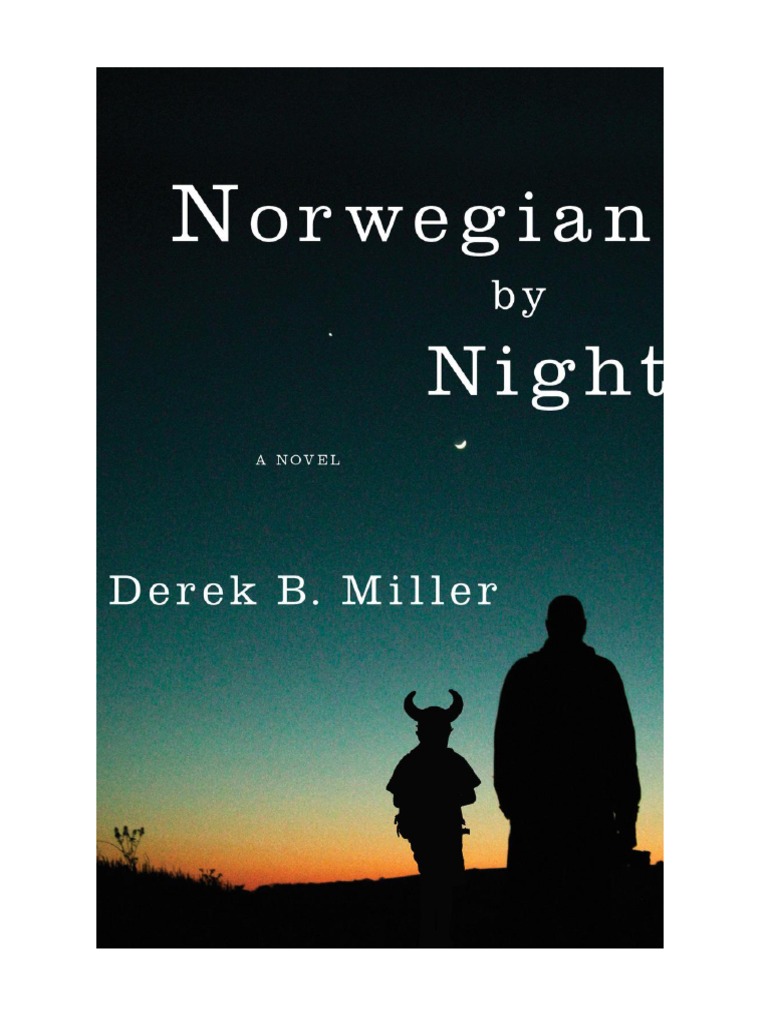
#37 / Derek B. Miller, Norwegian by Night

Derek B. Miller, Norwegian by Night (ebook; London: Faber and Faber, 2013). 5 stars

Opening line: It is summer and luminous. 

I’m very excited about this book. Promoted as ‘a literary novel, a police thriller, and the funniest book about war crimes and dementia you are likely to read anytime soon’ (true), it’s also one of the best and most original novels you’ll ever read.

The star of the novel and its central protagonist is Sheldon Horowitz, a recently-widowed Jewish-American octogenarian and former Marine with possible dementia, who has been transplanted by granddaughter Rhea from New York to Oslo, so that she and her husband Lars can take care of him in his dotage. A few weeks after his arrival, following sounds of a violent argument in the flat above, Sheldon is faced with a life-changing choice: whether or not to open his door to help a mother and son in physical danger. His decision to do so, strongly influenced by the memory of the Holocaust, sets off a chain of events which have major repercussions for himself and those around him.

I loved this novel’s distinctive Jewish-New York voice and its brilliant characterisation of Sheldon, an old man trying to right past wrongs and protect a six-year-old boy from harm by drawing on the memory of his soldier’s training from half a lifetime ago. The narrative has the free-wheeling brilliance and humour characteristic of the best Jewish-American writing and is, quite simply, a joy to read (Miller’s work fits perfectly with others like The Yiddish Policeman’s Union by Michael Chabon and Everything is Illuminated by Jonathan Safran Foer). The following excerpt is typical:

Sheldon catches his breath and stands up again. He walks over beside Paul and says, “Right, now we start walking backward. If we’re lucky, we’ll go backward in time, before yesterday and the day before. Before you were born, all the way back to at least 1952 […] We could stop for lunch in 1977. I knew an excellent sandwich shop in 1977.”

The novel also explores an extraordinary number of larger subjects and themes, such as: fatherhood, parental regret and loss; aging, memory and dementia; Jewishness, identity, the desire to belong, masculinity and war; the German Occupation of Norway during World War Two, the Holocaust, the Korean War, the Vietnam War, the Balkan Wars; war crimes and justice; and, last but not least, criminality and policing in a global era. While hugely ambitious in tackling such a wide range of issues, the author – somehow – manages to integrate them successfully, along with three generations of Horowitz family history, into a thrilling plot.

Written by an American author based in Oslo, this is also very much a book about Norway and its relation to the world. Sheldon and Rhea’s outsider perspectives  – like the author’s own – provide the opportunity for wry comparative analyses of American and Norwegian cultural traits. Meanwhile, Police Chief Inspector Sigrid Ødegård (another warm and wonderfully-realised character), allows the narrative to reflect on the globalisation of organised crime and the opportunities afforded to criminal networks through the softening of Europe’s borders. Norway is depicted as unprepared for the speed of these developments, with criticism levelled at its liberals (‘expounding limitless tolerance’) and conservatives (‘racist or xenophobic’), as well the failure of both sides to hold positions properly ‘grounded in evidence’. Here we see the author’s own background in international relations shining through: in a 2012 interview on the ‘Bite the Book’ blog, Miller describes how he has worked ‘designing “evidence-based” approaches to peace and security programming for almost a decade at The United Nations Institute for Disarmament Research’. The whole interview is well worth a read.

Norwegian by Night is by turns a hilariously funny, heart-breakingly sad and genuinely suspenseful novel that makes you care deeply about its characters – not least the irascible Sheldon. On finishing it, I immediately wanted to read it again –  along with a stack of other books it called to mind (by Kurt Vonnegut, John Irving and Michael Chabon, to name but three). You can’t ask for more than that.

With thanks to Raven Crime Reads for alerting me to this novel. You can read Raven’s excellent review here (which contains slightly more details of the plot than included above). There’s also an earlier Mrs P. post on Jewish detectives here.

Mrs. Peabody awards Norwegian by Night an utterly brilliant 5 stars

Creative Commons License

.

Nominations, shortlists and stacks of crime

A few tasty tidbits as we (finally) make it to the weekend.

1. Spotted on It’s a Crime! (Or a Mystery): the BAFTA TV nominations are out, and the International category includes two series with strong elements of crime – The Bridge and Homeland. They make up half of the nominations (listed below).

The one I want to win…

The Bridge – Hans Rosenfeldt, Charlotte Sieling, Anders Landstrom, Bo Ehrhardt (Filmlance, Nimbus, ZDF Enterprises/BBC Four)
Game of Thrones – David Benioff, D.B Weiss, Carolyn Strauss, Frank Doelger (HBO/Sky Atlantic)
Girls – Lena Dunham, Jennie Konner, Judd Apatow (HBO/Sky Atlantic)
Homeland – Production Team – (20th Century Fox/Channel 4)

The full list with all categories is available here (thank you, Rhian!).

2. The Independent foreign fiction prize 2013 shortlist has been announced, and contains one of the crime narratives I highlighted in an earlier post – Gerbrand Bakker’s The Detour (translated from the Dutch by David Colmer / Harvill Secker).

Publisher description: A Dutch woman rents a remote farm in rural Wales after confessing to an affair with one of her students. In Amsterdam, her stunned husband forms a strange partnership with a detective who agrees to help him trace her. They board the ferry to Hull on Christmas Eve. Back on the farm, a young man out walking with his dog injures himself and stays the night, then ends up staying longer. Yet something is deeply wrong. Does he know what he is getting himself into? And what will happen when her husband and the policeman arrive? The Detour is a deeply moving new novel, shot through with longing and the quiet tragedy of everyday lives.

It all sounds rather existential. I’m intrigued! Here’s the full shortlist, which might need further exploration as well.

3. Petrona Award for Best Scandinavian Crime Novel of the Year

I’m getting very excited as crime novels for the 2014 Petrona begin to arrive. Having been away from the university for a while over Easter, I returned to a veritable mountain of packages, and felt like proverbial kid in a sweet shop as I opened them all up.

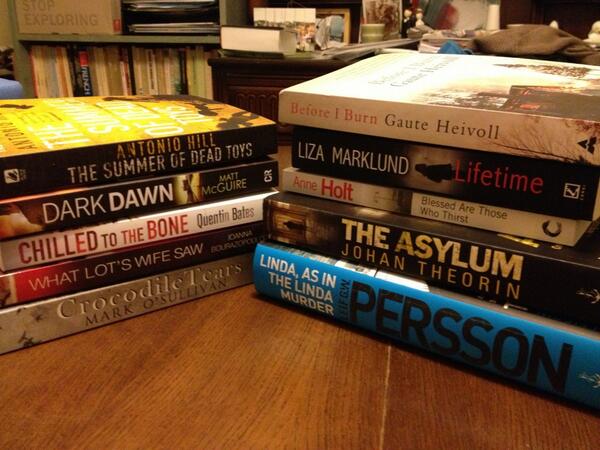
Embedded image permalink

Petronas on the right; other goodies to the left

The winner of the first Petrona Award will be announced at CrimeFest in Bristol (30. May to 2. June). I’ve just booked my ticket and hotel and am looking forward to it all greatly, not least because this will be my first ever visit to the convention. The programme looks very inviting. Perhaps see you there?

The press on trial: crime fiction and the media

One of my favourite things when reading crime fiction is the random emergence of a theme that links successive books. I experienced this recently with three quite diverse novels from Sweden, America and Australia, all of which focused heavily on the role of the media. None were too flattering of journalists and their trade, using the crime narrative to put the press ‘on trial’.

Leif G.W. Persson’s Linda, as in the Linda Murder (2005), is a recently translated Swedish police procedural that investigates the killing of Linda Wallin, a trainee police-woman at Vaxjo Police Academy. The novel is particularly scathing of the media’s sensationalist depictions of female murder victims, which are designed to generate sales: ‘From trainee police officer Linda Wallin, 20. To the Linda murder […] The Kajsa murder, the Petra murder, the Jenny murder… They had quite simply been transformed from women of flesh and blood into media messages’. This transformation is especially resonant in its original Swedish context, where the victim’s first name forms part of a compound noun that reduces her life to no more than its violent end – in this case, the Lindamordet [‘the Lindamurder’]. In contrast, the narrative notes drily, ‘men’s names were never used as prefixes to the word ‘murder”.

Gillan Flynn’s 2011 novel Gone Girl, a darkly humorous dissection of a marriage gone sour, critiques the media’s damaging influence when reporting criminal cases. Husband Nick Dunne, dealing with the press in the aftermath of his wife’s disappearance, soon discovers how fickle journalists can be: he’s styled as an anxious, bereft husband one minute, and as a sinister-looking potential murderer the next. Before long, he’s forced to hire a savvy lawyer who specialises in manipulating media narratives in his clients’ favour. The truth becomes largely superfluous: expensive lawyers and public opinion appear to count more than any meaningful judicial process (one can’t help thinking of the media circus that was the OJ Simpson case, and of the more recent Pistorius case).

Yvonne Erskine’s 2011 novel The Brotherhood is a 360 degree examination of the events leading up to and following a Tasmanian policeman’s murder. The police are shown having to manage press reactions to the killing from the minute the news gets out, a time-consuming and politically sensitive job, as the main suspect has Aboriginal heritage. We’re also introduced to amoral journalist Tim Roberts, who writes up a potentially damaging story knowing that he might jeopardise the case. Investigative journalism is portrayed here as seedy and self-interested, with no positive contribution to make to society.

Three crime novels obviously don’t make a trend, but I’d be interested to know if there are others that are similarly critical of the media. Of course, some crime novels contain more sympathetic depictions of the press: Stieg Larsson’s Mikael Blomkvist and Liza Marklund’s Annika Bengtzon are two examples of journalists who are given leading investigative roles within crime narratives, and who are depicted as thoughtful practitioners of their trade.

If you think of more, let me know – I’ll compile a list if we gather enough!

Update 3 May 2013: The Guardian has just run a profile of Gillian Flynn (interesting discussion on misogyny and female villains amongst other things, including the press angle). My review on Wendy James’ The Mistake (as recommended by Angela Savage in the comments below), can be read here.

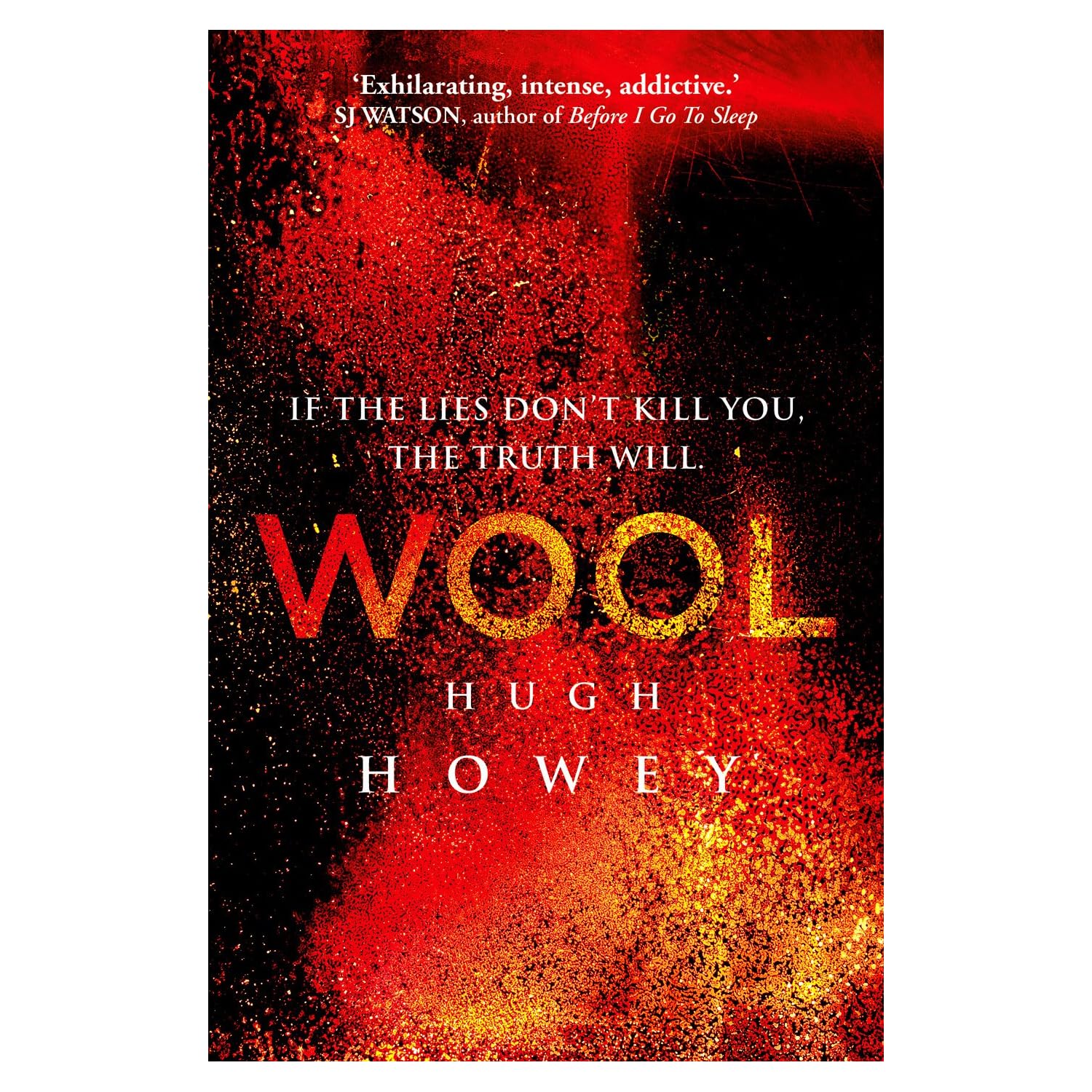
Welcome to the silo: Hugh Howey’s Wool

Hugh Howey, Wool (Books 1-5), Century 2013

Opening line: The children were playing while Holston climbed to his death.

Hugh Howey’s Wool is a self-publishing success story that began in 2011 with a standalone on the Kindle Direct Publishing platform. When it took off, ‘quite by accident and all on its own’, Howey added another four interlocking stories, which were gathered in a Wool omnibus and published in hardback earlier this year. The film rights have also been sold. It’s basically every indie author’s dream come true.

Wool transports us to the world of ‘the silo’ – the home of humankind in an apparently ravaged, post-apocalyptic future. The silo is a self-contained community divided into different sectors (such as IT, mechanical, nursery, food farms) that are spread over more than a hundred floors connected by a single, DNA-like spiral staircase. This enclosed world is described in minute detail, down to the sherpa-like silo porters who carry communications and supplies up and down the well-trodden stairs. The only glimpse of the desolate outside world is ‘up top’, on screens that become increasingly grimy until ‘a cleaning’ takes place…

So far, so sci-fi. But what makes Wool really take off for me are the elements of crime fiction woven into the narrative. Firstly, in line with standard crime conventions, there are a number of murders – some obvious and some more subtle – which are investigated with varying degrees of success by characters in the five ‘books’. Secondly, and in common with many other crime novels, there is an exploration of the rules and regulations governing society, and the ways in which crimes are dealt with by the law enforcement system. Except here, of course, we are dealing with the extremely unusual closed community of the silo, which shapes conceptions of criminality and punishment in entirely unprecedented ways.

Royalty Free Spacescape Images | Depositphotos

The biggest crime in the silo – ‘the great offence’ – is ‘expressing any desire to leave’. As soon an individual utters the words ‘I want to go outside’, the law is broken, resulting in a literal expulsion from the community. Once outside, wearing only a protective suit against the toxic elements, he or she is ‘put to cleaning’ – wiping the sensors that give the silo’s inhabitants their view of outside. And all diligently obey this command, although it is initially not clear to us why.

The first book starts with Sheriff Holston – the key figure entrusted with maintaining law and order within the silo – requesting to go outside. And this opening is typical of Wool, which is filled with wonderful plot ideas and scenarios. For why would anyone wish to leave the safety of the silo for the hostile environment outside, let alone the sheriff, who has himself overseen past cleanings, and should know exactly what fate awaits him?

While occasionally a little rough around the edges in terms of its writing and credibility, Wool is a compelling read – a fabulous page-turner that brings a possible future vividly to life, and grapples with big issues such as the rights of the individual, freedom of information, and the power exerted by the state over its citizens. The five interlinked stories detail the lives of several individuals – men and women, young and old – with the standout character of Jules or Juliette quickly becoming my personal favourite.

If you like the idea of a fusion of sci-fi and crime – and a rollicking good story – this is one for you. The energy and freshness of the narrative would undoubtedly also serve it well in the young-adult fiction market, which is where Howey first made his mark.

#31 / Gillian Flynn, Gone Girl

Gillian Flynn, Gone Girl (London: Phoenix, 2012). A wickedly entertaining portrait of a marriage gone horribly wrong  4.5 stars

Opening line: When I think of my wife, I always think of her head.

I’d heard from lots of people that this off-beat American crime novel was good, but no one warned me how ridiculously fun it would be. From start to finish, Gone Girl was an absolute, wicked joy, and had me applauding its bravura characterisation and plot.

On the morning of their fifth wedding anniversary, Amy Elliott Dunne goes missing in North Carthage, Missouri, leaving the police sniffing suspiciously around husband Nick. The events up leading up to and including that day are narrated by husband and wife in alternating chapters, and provide the reader with two highly distinctive perspectives. Soon we’re having to ask ourselves a series of bracing questions: What exactly is the nature of the crime that’s been committed? Who, if anyone, is the perpetrator? Who, if anyone, is the victim? Who is trustworthy? Who is not? And trying to work out the answers makes for a hugely enjoyable and addictive read.

In addition, the novel provides us with a wonderfully dark portrait of a marriage gone sour; a meditation on the way couples act out idealised identities, and a dissection of the stories they tell to fashion reality for their own ends. This is fundamentally a novel about gender and power, and it doesn’t pull any punches (some great fodder for discussion here). There’s also a wonderfully scathing critique of the media’s relentless pursuit of a story, regardless of the truth or judicial process.

All of this might have ended up a bleak, rather depressing read, were it not for the seam of wickedly dark humour that runs throughout the book. Think Danny DeVito’s 1989 The War of the Roses, crossed with Fay Weldon’s 1984 The Life and Loves of a She Devil, with a dash of Patricia Highsmith’s 1955 The Talented Mr. Ripley thrown in. And as for plotting, no one’s done a mid-narrative twist better since Sarah Walters’ 2002 The Fingersmith

20th Century Fox have acquired the property rights to the novel, with Reece Witherspoon set to produce, and David ‘The Girl with the Dragon Tattoo’ Fincher reportedly in talks to direct the film adaptation. It could be very, very good.

Mrs. Peabody awards Gone Girl a deliciously clever and satisfying 4.5 stars.

UPDATE 3 October 2014: The film of Gone Girl, directed by David Fincher and starring Rosamund Pike and Ben Affleck is out now. Guardian film supremo Peter Bradshaw has given it 4 stars: read his review here.

Creative Commons License

.

What’s your first crime novel of 2013?

For some reason, I always take particular care when choosing my first crime novel of the new year. I like it to be a good one, and one that’s perhaps a little different to crime novels that I’ve read recently. This year I opted for a classic that I’ve been meaning to read for the longest time and was lucky enough to find under the Christmas tree: Patricia Highsmith’s The Talented Mr. Ripley. Originally published in 1955, it’s still brilliant and chilling in equal measure.

Just for fun, I asked some crime aficionados on Twitter for their first crime novel of the year. Please do feel free to add your own below in the comments. It’ll be interesting to see what kinds of patterns emerge, if any.

I’m off now for my annual adventure on the outdoor ice-rink at the Winter Wonderland. I’ll report back on my bumps and bruises a little later…

Mrs. Peabody’s 2012 review

It’s been a busy year for Mrs. Peabody Investigates, with reviews of international crime fiction from Denmark, Finland, Germany, Italy, Northern Ireland, South Africa, Sweden, Switzerland and the USA. There were also a number of lively discussions on subjects including autopsy scenes; violence and women; Jewish detective figures; national image; strong female protagonists, and the crime writer as social commentator. Many thanks to everyone who joined in with their expertise and views! Last but not least, interviewing crime writers at the Harrogate Crime Writing Festival and contributing to Mark Lawson’s ‘Foreign Bodies’ series on Radio 4 were definite highlights.

So to finish off the year, here’s a random round-up of the best – and worst – of Mrs Peabody’s 2012 (with thanks to apuffofjack for the idea).

Most Satisfying Read: Tom Franklin’s Crooked Letter, Crooked Letter (2010), a gripping examination of the repercussions of a murder, set in the American Deep South of the 1970s, 1980s, and the present day.

Most Disappointing Read: Jussi Adler-Olsen’s Disgrace.Wooden characterisation was the real villain of this crime novel, but I’m still hoping for better from the next in the Department Q series.

Best Historical Crime Novel: Tie between Malla Nunn’s A Beautiful Place to Die (2010), which provides a fascinating insight into apartheid South Africa in the 1950s, and Stuart Neville’s The Twelve (2010) – hard-hitting Belfast noir exploring the legacy of The Troubles.

Crime Novel that Lingered Longest in the Mind: Jim Thompson’s The Killer Inside Me (1952), which presents a chilling, but surprisingly nuanced portrait of murderer Lou Ford.

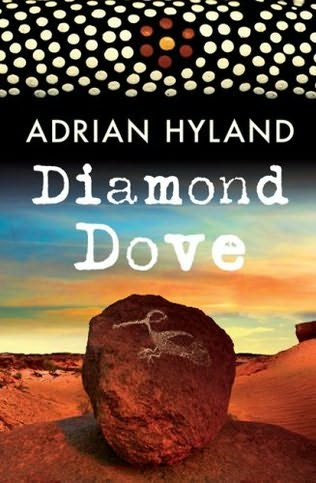
Best Female Detective: Tie between Edie Kiglatuk from M.J. McGrath’s White Heat (2011) and Emily Tempest from Adrian Hyland’s Diamond Dove (2006) (reviews pending). In many ways, these characters are twins: feisty, tough women who have complex insider / outsider roles in marginalised indiginous communities (the Inuit of the Arctic Circle and the Aboriginal people of the Australian outback).

Best Male Detective: Finnish-Jewish police inspector Ariel Kafka in Harri Nykänen’s Nights of Awe (2010): a highly original and witty investigator, whom I look forward to meeting again (albeit with a slightly less convoluted plot).  

Best Discovery: Leif G.W. Persson is well-known in his native country as a top criminologist and crime writer, but his razor-sharp dissections of Swedish society have only started to be translated relatively recently. I’ve just finished Another Time, Another Life (2012), which was a gem, and am keen to read more.

Last Policeman

Most Original Premise: Ben Winters’ The Last Policeman (2012) is a ‘pre-apocalypse police procedural’, in which Detective Hank Palace investigates a suspicious suicide six months before asteroid 2011GV1 is due to hit the earth. The first in a trilogy (review pending).

Best Re-read: Jakob Arjouni’s Turkish-German Kemal Kayankaya series (1985-2012). A ground-breaking detective who uses intelligence and wit to make his way in a largely racist society. The first in the series, Happy Birthday, Turk (1985), remains a cracker.

Best Use of Humour: Leif G.W. Persson uses satirical humour to great effect as he lifts the lid on the workings of Swedish society. Look out for the pathologist nicknamed ‘Esprit de Corpse’ in Another Time, Another Life.

Best crime TV series: The Killing III, in which Sarah Lund strode forth for the last time (still in denial that it’s over *sob*).

Best crime film: Tie between Romanzo Criminale (dir. Michele Placido, 2006), which traces the rise and fall of an Italian street gang, and Once Upon a Time in Anatolia (dir. Nuri Bilge Ceylan, 2011), which plays out over a dream-like night of a police investigation (reviews to follow).

Most Anticipated Reads for 2013: Stuart Neville’s Ratlines (2013), set in a 1960s Ireland whose government is keen to play down its links with former Nazis, and Y.A. Erskine’s The Brotherhood (2011), a much-praised depiction of police corruption and betrayal set in Tasmania.

All best wishes for a healthy and happy New Year, filled with lots of  wonderful crime fiction.

In Cold Blood: CultureCritic Guest Guide to Wintry Crime Fiction

The good people over at CultureCritic recently invited me to contribute a piece to their fabulous blog. The result is a guest guide to ‘wintry’ crime and the role of chilly settings in five of my favourite novels.

  • Jan Costin Wagner, The Winter of the Lions (German author; Finnish setting; 2011)
  • Leif G. W. Persson, Between Summer’s Longing and Winter’s End (Swedish author; Swedish setting; 2010)
  • A.D. Miller, Snowdrops (British author / Russian setting / 2011)
  • Julia Keller, A Killing in the Hills (US author / Appalachian mountain setting / 2012)
  • MJ McGrath, White Heat (UK author; Arctic Circle setting; 2011)

Many thanks to CultureCritic for the invitation; it was fun to do!

If you’re not yet familiar with the CultureCritic blog, do pop over: you’ll find all the latest on film, music, books, exhibitions, theatre, opera, dance and more…. It’s a regular smörgåsbord of cultural delights.