New Bitter Lemon signings, The Edgars and CrimeFest

Here’s a round up of some interesting crime fiction news and events.

Joshua Farrington of The Bookseller reports that >>Bitter Lemon Press has signed a series of deals for female crime writers from around the world, with the books set to lead the publisher’s schedule in the second half of the year.

Publisher and co-founder Laurence Colchester has acquired titles from Brazil’s Patrica Melo, Turkey’s Esmahan Aykol and Argentina’s Claudia Piñeiro.

Melo’s The Body Snatcher is the story of a drug deal gone wrong, with police corruption and blackmail. Melo’s previous novels Lost World, The Killer, In Praise of Lies and Inferno were published in English by Bloomsbury. The Body Snatchers, which will be published in July, is translated by Clifford E. Landers.

Divorce Turkish Style by Esmahan Aykol will be published in September. It is the third in a murder mystery series featuring crime bookshop owner and accidental investigator Kati Hirschel. The previous two books, Hotel Bosphorous and Baksheesh were also published by Bitter Lemon Press, translated by Ruth Whitehouse.

Piñeiro’s Betty Boo is set in Buenos Aires, and sees a sensitive woman trying to save her career and personal life while caught up in a criminal conspiracy. Piñeiro’s previous titles, translated by Miranda France, were also published by Bitter Lemon Press. Betty Boo will be published in January 2016.

Colchester said: “We are very proud to bring these three women crime writers from Brazil, Turkey and Argentina to English speaking readers. It is part of our mission as an independent press to introduce new voices from abroad and here, in the autumn season of 2015, are three of the most successful women writing in the crime genre today.”<<

Over in the States, the annual Edgar Awards have taken place. A full list of the nominees and winners is available here. The focus is on English-language crime, and a number of titles have already migrated to my groaning TBR pile, such as Ben Winter’s World of Trouble, which is the final installment in The Last Policeman series (see my discussion of his earlier work here).

The winner in the best novel category was Stephen King’s Mr. Mercedes, which I’m currently half way through and enjoying very much (although I will never look at a hamburger in the same way again).

Last but not least, the international crime fiction convention CrimeFest takes place in Bristol next week, with a sterling programme you can see in full here. I’m very much looking forward to attending, not least because this year’s special guest is Swedish crime writer Maj Sjöwall, co-author of the seminal Martin Beck series, and she will be helping us to present the 2015 Petrona Award for Best Scandinavian Crime Novel of the Year.

I have been enjoying all the online speculation about the Petrona shortlist. The judges have now made their choice…! But will you agree?!

Merry Christmas! Mrs Peabody’s festive round-up

I’m behind on my Christmas preparations this year, which means that this festive round-up is a little later than usual. On the plus side, it may help a few of you out of a last-minute present conundrum, or lead you to a nice, independent bookshop because it’s too late for online orders. You might also be moved to buy yourself a little gift. Go on, you deserve it.

The following are just some of my favourite crime novels of the year. All, in my view, would make a delightful escape from the mayhem of Christmas or family, especially when curled up on the sofa with a nice glass of wine.

Anne Holt and Berit Reiss-Anderson, The Lion’s Mouth (NORWAY: trans. by Anne Bruce, Corvus, 2014). Anne Holt is often described as the queen of Norwegian crime, and has drawn expertly on her own career in the police, law and government in the creation of the ‘Hanne Wilhelmsen’ police series (she was even Norwegian Minister of Justice for a while). This fourth installment in the series, originally published in 1997, explores the suspicious death of the Norwegian Prime Minister, who is found dead in her office just six months following election. A fusion of locked-room mystery, Borgen and police procedural, it’s a quietly satisfying read that’s held up well.

Arnaldur Indridason, Reykjavik Nights (ICELAND: trans. by Victoria Cribb, Harvill Secker, 2014). This prequel to the ‘Murder in Reykjavik’ series is a wonderfully absorbing read, which traces the start of Erlendur’s journey from young policeman to detective as he investigates the death of a homeless man and the disappearance of a woman. Set in 1974, the year Iceland celebrated 1100 years of settlement, we are also shown how a traumatic childhood event begins to shape Erlendur’s personal life and investigative career. The novel is a great read for those who are new to the series and for long-established Erlendur fans alike.

Hannah Kent, Burial Rites (AUSTRALIA/ICELAND: Picador, 2013). This impressive debut novel by a young Australian author is not for those looking for ‘cosy’ Christmas crime. Kent spent some time in Iceland as an exchange student and describes the book as her ‘dark love letter’ to the country: set in northern Iceland in 1829, it explores the case of Agnes Magnúsdóttir, the last Icelandic woman to be executed for murder. The figure of ‘the murderess’ tells us a lot about the gender, class and power relations of the time, and the picture the author paints of every-day, rural Icelandic life is fascinating. The story, setting and their links to the Icelandic sagas stayed with me long after reading it.
Lahlum

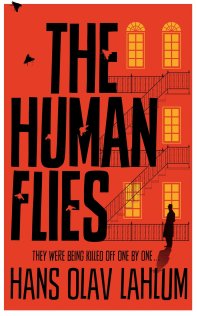
Hans Olav Lahlum’s The Human Flies (NORWAY: trans. by Kari Dickson, Mantle, 2014, [2010]) sounds like a horror film that’s best avoided after a large meal. However, it turns out to be something quite different: a well-constructed and witty homage to the classic crime fiction of Agatha Christie, set in 1968 Oslo, which has some interesting historical depth. Featuring ambitious young police detective Kolbjørn Kristiansen on his first big case – the murder of a former resistance fighter – readers are treated to an apartment building of intriguing suspects and a page-turning investigation, as well as the considerable intellect of Kristiansen’s wheelchair-bound partner Patricia.

Laura Lippman, After I’m Gone (USA: Faber and Faber, 2014). Ignore the rather daft cover. After I’m Gone is a literary crime novel that dissects a murder case by means of a rich narrative with some wonderful characterisation (the latter is one of Lippman’s great strengths). Told on a number of different time levels, it traces the stories of five women left behind when white-collar criminal Felix Brewer disappears in July 1976 – his wife Bambi Gottschalk, his three daughters, and his mistress Julie – as well as the investigation into Julie’s murder by detective Sandy Sanchez in the present. An engrossing, quality read.

Anya Lipska, Death Can’t take a Joke (UK/POLAND: The Friday Project, 2014). This is the second in the ‘Kiszka and Kershaw’ series, featuring Polish ‘fixer’ Janusz Kiszka and London police detective Natalie Kershaw. While I enjoyed Lipska’s first novel, Where the Devil Can’t Go, the second is where the series really gets into its stride: the duo’s investigation into two deaths, including one of Kiszka’s closest friends, is a tightly constructed page-turner with an engaging, blackly comic tone. The novel also features one of the best first chapters I’ve read this year… For a more in-depth exploration, head over to Margot Kinberg’s marvellous Confessions of a Mystery Novelist blog.

Marco Malvaldi, Game for Five and Three Card Monte. 1 and 2 of the ‘Bar Lume Trilogy’ (ITALY: Europa Editions/World Noir 2013/14). These light-hearted crime novels feature amateur detective Massimo Viviani, the maverick owner of Bar Lume, investigating mysterious deaths in Pineta in Northern Italy. Massimo is ably assisted in his work by four cantankerous, octogenarian barflies, including his own extremely opinionated grandfather. Witty, entertaining and stylishly packaged.

Eduardo Sacheri, The Secret in Their Eyes (ARGENTINA: trans. by John Cullen, Other Press, 2011 [2005]). I was given this novel last Christmas and it became one of my first and favourite reads of the year. Benjamin Miguel Chaparro, a newly retired Deputy Clerk in Buenos Aires, begins to write a novel about a case that has haunted him since 1968 – the murder of a young wife, Liliana Colotto, in her own home one summer’s morning. Oscillating between the past and the present, and spanning twenty-five years of Argentine history, the narrative tells the story of the murder and its repercussions for those left behind: husband Ricardo Morales, investigator Benjamin, and the murderer himself. The 2010 film adaptation was also a cracker. A full review is available here.

Olivier Truc, Forty Days without Shadow (FRANCE/LAPLAND: trans. by Louise Rogers LaLaurie, Trapdoor, 2014). This novel uses its criminal investigation as a means of exploring the history, culture and climate of Lapland. It also features the reindeer police! The novel opens with Sámi-Norwegian reindeer policeman Klemet Nango and partner Nina Nansen investigating the theft of a priceless Sámi drum from a museum. Shortly afterwards, Sámi herder Mattis is found dead, and ‘Patrol P9′ finds itself grappling with two crimes that could well be interlinked. A gripping novel that shines a spotlight on a fascinating part of the world. A full review is available here.

If the crime lover in your life is into TV drama, then my two top picks are as follows:

The Australian series The Code, which aired on BBC4 a few weeks ago and I reviewed enthusiastically here. This six-part political thriller opens with the mysterious death of Aboriginal teenager Sheyna Smith in Lindara, a remote New South Wales township. The circumstances of her death are hushed up, so when Ned Banks (a journalist for an internet newspaper) and his brother Jesse (an internet hacker on the autistic spectrum) start to investigate, you just know there’s going to be trouble. An utterly gripping, intelligent drama.

British police drama Happy Valley, a hard-hitting, six-part series that traces the fall-out from a kidnapping in the West Yorkshire valleys, while exploring its protagonists’ complex personal lives. Sarah Lancashire gives an absolutely outstanding performance as policewoman Catherine Cawood, together with an excellent supporting cast. Be warned that there is some very graphic (though in my view not gratuitous) violence. I think that 18 would be a more accurate rating than the 15 on the box. An addictive and top quality crime series.

And my own indulgence this Christmas? That would be the American drama True Detective, which I’m very much looking forward to watching. Have you indulged yourself as well? Do share if so!

Wishing all the readers of this blog a very happy and relaxing Christmas.

See you all in 2015!

German Zimtsternchen (little cinnamon star).    Quite addictive.

Iceland Noir 2014: volcanoes, glaciers and crime

Having been extremely jealous of everyone at Iceland Noir last year, it was brilliant to make it this November, not least because Reykjavik has been on my wishlist of places to visit for a long, long time. The event was held at Nordic House, and was expertly organised by author Quentin Bates and the rest of the Icelandic Noir team, who put together a great programme over two days. Quite a few bloggers have already posted reports (see list below), so I’m going to focus on the panels/discussions that particularly interested me and say a little about my first impressions of Iceland … with plenty of photos!

IMG_4654

Nordic Perspectives panel – and yes, it was early in the morning…

Nordic Perspectives. This panel featured David Hewson (UK), Hans Olav Lahlum (Norway), Lilja Sigurðardóttir (Iceland) and Michael Ridpath (UK), with Jake Kerridge moderating. It was interesting to see how these authors positioned themselves or their countries’ crime output in relation to ‘nordic crime’. Sigurðardóttir felt that Icelandic crime had affinities to Scandinavian crime through its focus on the complexity of the criminal (citing the work of Norwegian author Karin Fossum as an example). However Lahlum saw himself as a historical crime writer rather than a Nordic crime writer, while Ridpath’s Icelandic-American investigator is an insider-outsider figure who negotiates different cultural traditions.

This panel also included discussion of historical crime fiction and adaptation. Lahlum told us that Norwegian crime fiction often engages with historical events, especially the Second World War (as evidenced in his novel The Human Flies). Hewson discussed his adaptation of the Danish TV crime drama The Killing, which involved adding contextualising historical detail. For example, the beginning and end of The Killing II are set in Ryvangen Memorial Park, which was the site of partisan executions by the Nazis and points to the core theme of the series – the long-term impact of war on society. Hewson provided extra information about the memorial, as British readers would not be aware of its significance (interesting; now on my TBR pile).

IMG_4658 2

‘Translating crime across cultures’ panel

The ‘translating crime fiction across cultures’ panel featured Viktor Arnar Ingólfsson (Iceland), Mari Hannah (UK), Bogdan Hrib (Romania) and Vidar Sundstøl (Norway), with academic Jacky Collins moderating. I left this panel wanting to read Sundstøl’s Minnesota Trilogy: the first installment, The Land of Dreams, won the prestigious Riverton Prize in 2008, and its exploration of Norwegian-American history and culture sounds right up my street. It was also interesting to hear Hrib discussing Romanian crime novels and his ongoing mission to see them more widely translated into English: there are currently just three, published by Profusion Press, which I’m now curious to read. Mari Hannah tantalised us by revealing that she’s written a novel partly set in Norway (a break from the Kate Daniels series, which we were reassured is also continuing). Icelandic author Ingólfsson currently has one novel translated into English – The Flatley Enigmawith others translated into German, which appears to be quite a common route for Icelandic writers (those Germans do love their nordic Krimis!).

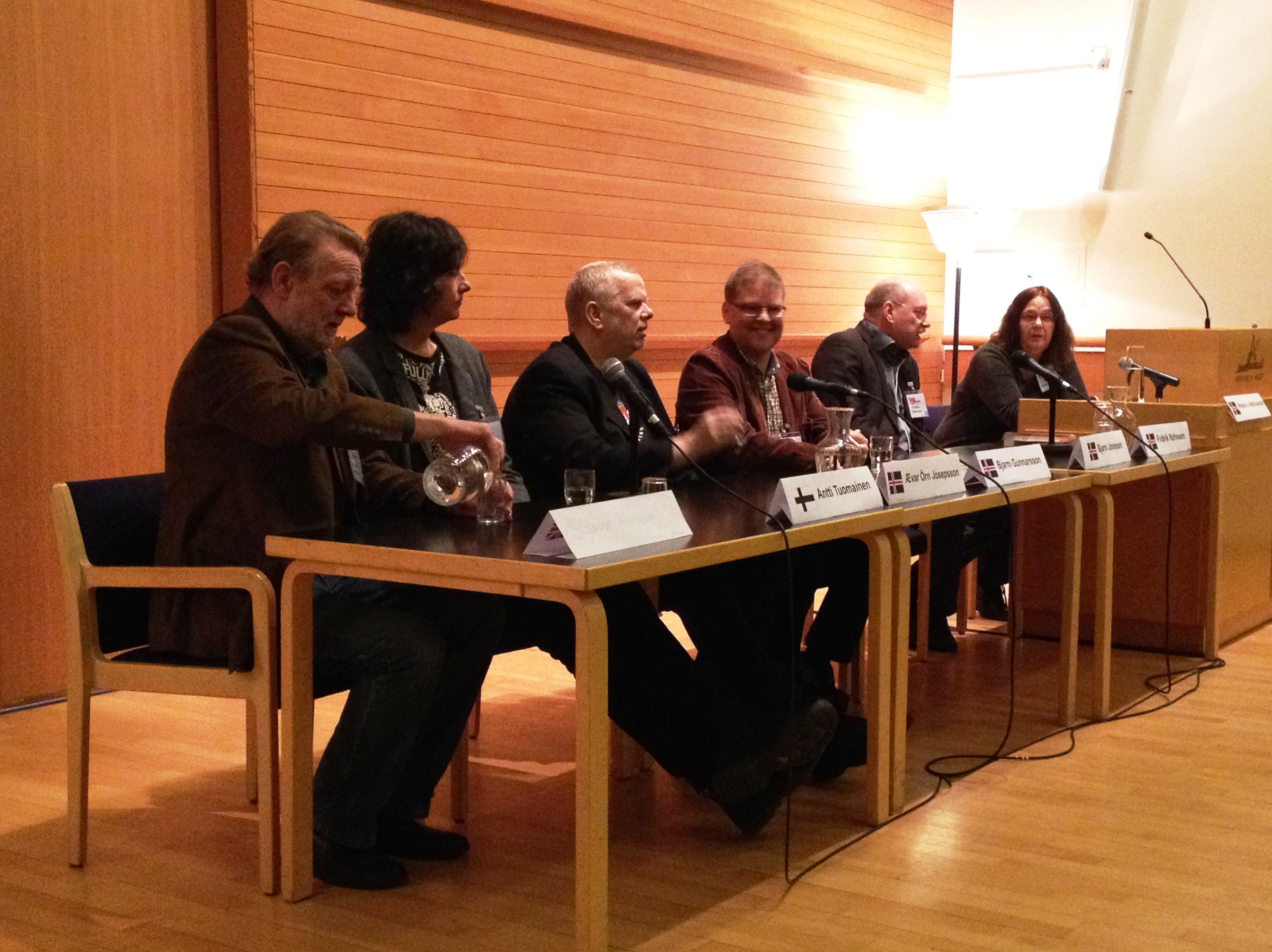
A companion panel on the Saturday celebrated the inaugural Icepick Award for best crime novel translated into Icelandic, with Antii Tuomainen (Finnish author of The Healer) and Icelandic translators Ævar Örn Jósepsson, Bjarni Gunnarsson, Bjarni Jónsson and Sigadur Karlsson (Magnea Matthiasdóttir moderating).

IMG_4733

Icepick Award panel – a sea of translators!

The panel gave a fascinating insight into the dialogue between writers and translators about linguistic and cultural issues during the process of translation, although Gunnarsson also illustrated the important role of technology today: when translating Nesbo, he used Google Earth to take a closer look at Oslo, a city he’s never visited but now feels he knows well. Tuomainnen made lifelong friends in the translation community with his heartfelt appreciation for the work of the translator; he also specifically thanked Sigurdur Karlsson for translating his work and for bringing it to the attention of Icelandic publishers in the first place, thereby highlighting the influential role translators play in identifying promising new work. The Icepick was awarded on the Saturday evening at the Iceland Noir dinner (for further details, see my previous post).

IMG_4686 2

The ‘settings’ panel

Tuomainnen popped up again on the settings panel with Ragnar Jónasson (Iceland), Johan Theorin (Sweden) and Vidar Sundstøl (Norway), moderated by Jacky Collins. The settings discussed included urban Finland, a village in northern Iceland, an isolated Swedish island and the American Midwest. In each case, the novel’s location plays a crucial role – sometimes even becoming a character in its own right – and is used to create unease or suspense (Theorin’s Öland novels), a sense of remoteness and isolation (Jonasson’s Dark Iceland series), or to explore themes such as migration (Sundstol’s Minnesota Trilogy) and climate change (Tuomainen’s The Healer).

IMG_4735 2

The ‘supernatural in crime fiction’ panel – a suitably shaky shot from the back…

One of my favourite panels was on supernatural crime, featuring James Oswald (Scotland), Johan Theorin (Sweden), Alexandra Sokoloff (US) and Michael Sears (South Africa) in discussion with Jake Kerridge. It was fascinating to hear the varying reasons why crime authors use supernatural elements in their work: as a means of exploring the clash between the rational and irrational (Oswald), illustrating evil (Sokoloff), exploring cultural beliefs (Sears) or taking genre in new direction (Theorin). Hearing the panelists talk about the extra dimensions the supernatural can add to a crime narrative reminded me why I like hybrid crime fiction so much: there’s a creativity at work here that pushes the boundaries of the genre and – when it works – can produce fantastic results. Sokoloff rather intriguingly described a magpie approach when writing – she has blended Jewish lore and witch-y elements into her novels to create particular effects. And it struck me that at least two other writers at the conference – Tuomainen and Icelandic author Yrsa Sigurðardóttir – also write hybrid crime fiction (drawing on traditions of apocalyptic literature and horror). The days when crime publishers were reluctant to publish this type of fusion fiction thankfully appear to be over.

Other blog posts, articles and tweetery on Iceland Noir 2014:

  • Crime Fiction Lover – lots of coverage including the debut authors’ panel, featuring blogger and Petrona judge Sarah Ward, whose novel In Bitter Chill (Faber and Faber 2015) I’m greatly looking forward to reading
  • Crimepieces – Sarah Ward with three posts
  • The Reykjavik Grapevine on the author reading held at Solon on Thursday evening
  • Miriam Owen live-tweeted Iceland Noir via @NordicNoirBuzz

Do also check out the site for next year’s rather wonderful-looking Shetland Noir (Iceland Noir will be back in 2016).

I’m going to finish up with a few Reykjavik/Iceland photos to show those of you who haven’t yet visited what a great place this is!

1. An Eymundsson bookshop in Reyjkavik. This capital, which is around the size of my hometown Swansea, with a population of around 200,000, has at least five massive bookshops. Iceland is a nation of book lovers with a deep appreciation of culture (probably instilled by long winter nights and the reading aloud of Icelandic sagas). Fittingly, Reykjavik is a UNESCO City of Literature.

IMG_4852

Booktastic Reykjavik

2. The bubbling, steaming landscape of Haukadalur. Wandering around on a crust of earth just above plentiful geothermal activity, with geysers going off at regular intervals, instils an added appreciation of our volatile, ever-changing planet. In a land not heavy on natural resources, Icelanders have made the most of their free geothermal energy to heat their homes, create outdoor thermal pools, grow tomatoes, process aluminium, keep their streets de-iced, and so on… Ingenious and admirable.

IMG_4787

The land of fire and ice – a geothermal landscape here, but glaciers are not far away

3. Reykjavik is charming. Here are a few random photos.

IMG_4887

Hallgrímskirkja, which looks a lot like a space rocket, guarded by the statue of Leifur Eiriksson

IMG_4907

View over Reykjavik from the top of the Hallgrímskirkja – on the day the sun came out

IMG_4921

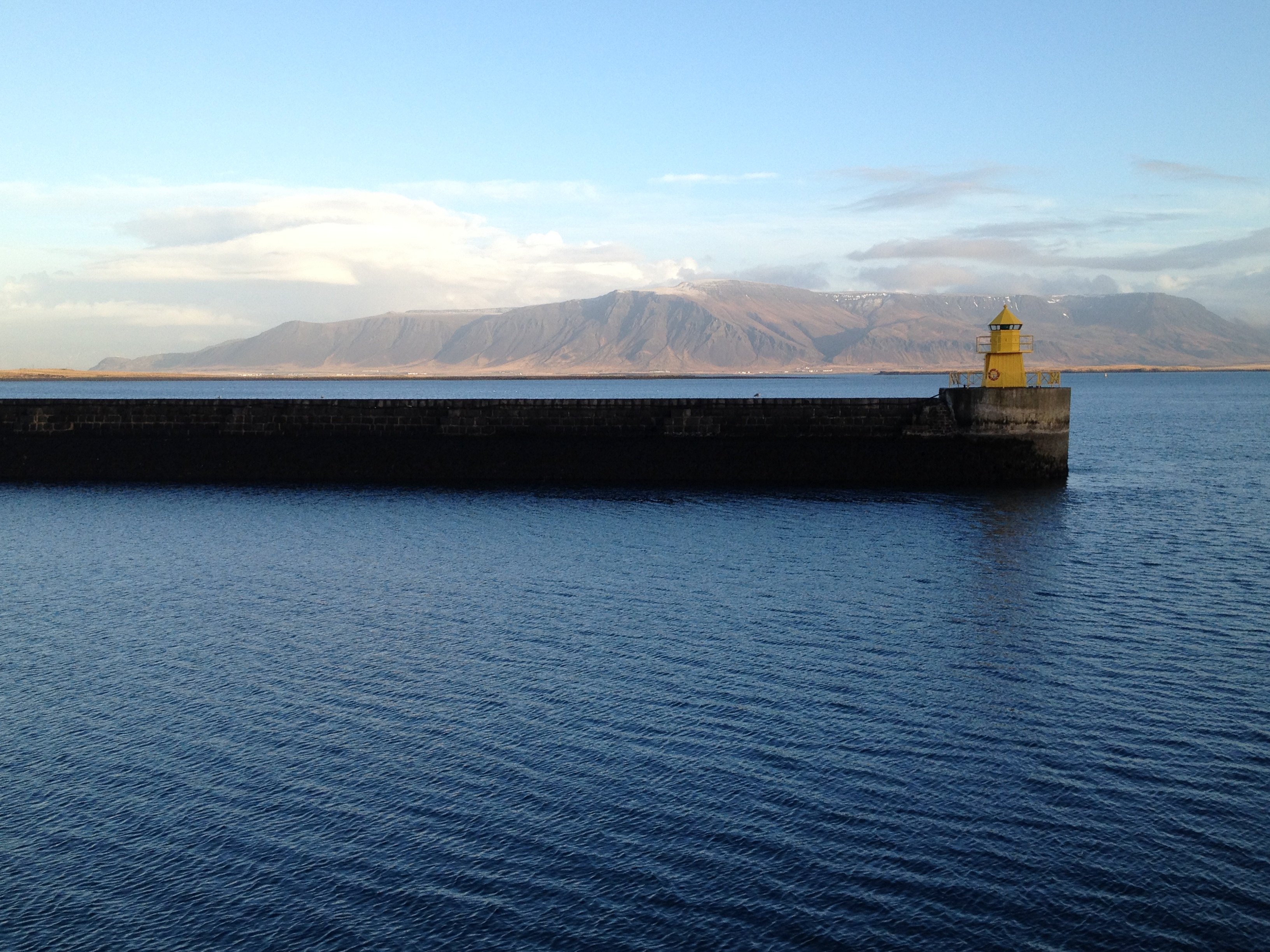
Reykjavik Harbour, looking out to Faxafloi Bay and the mountains beyond

4. There’s a lot of Icelandic wool. Which gets turned into gorgeous mittens to feed my newly discovered mitten addiction.

IMG_5031

Takk fyrir Icelandic sheep!

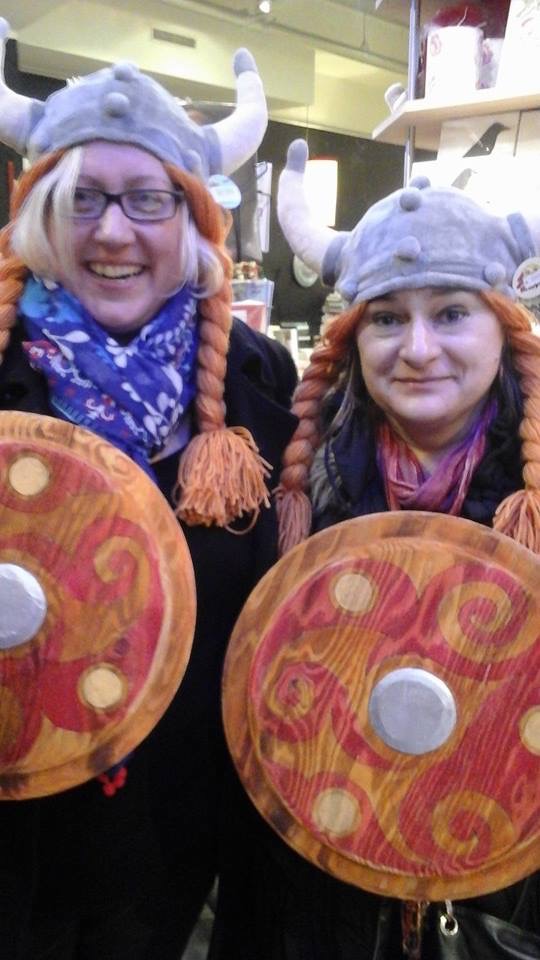
5. Friendly Vikings. I think this is my favourite Iceland Noir photo.

IMG_4946

Miriam and Ewa – awesomely stylish Vikings

Huge thanks to the Iceland Noir organisers for making the event such a wonderful success!

Iceland Noir: Winner of first Icepick Award announced!

Hot off the presses from Iceland Noir! The winner of the inaugural Icepick Award, given to the best crime novel translated into Icelandic in 2014, is…

 IcepickSmall

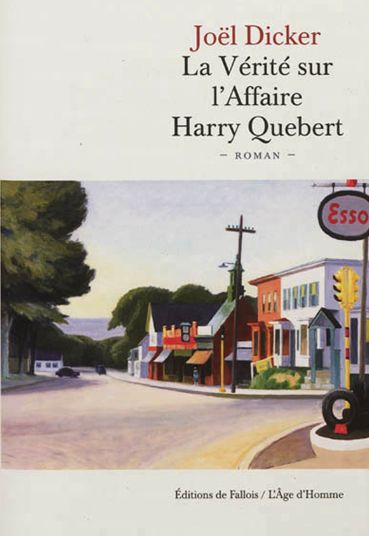
… Swiss author Joël Dicker’s La Vérité sur l’affaire Harry Quebert [The Truth About the Harry Quebert Affair], translated from the French by Friðrik Rafnsson.

harry_quebert

This novel is a publishing phenomenon – here’s the blurb from Penguin, which has certainly made me want to read the book:

>> The Truth About the Harry Quebert Affair is a fast-paced, tightly plotted, cinematic literary thriller, and an ingenious book within a book, by a dazzling young writer.

August 30, 1975: the day fifteen-year-old Nola Kellergan is glimpsed fleeing through the woods, never to be heard from again; the day Somerset, New Hampshire, lost its innocence. Thirty-three years later, Marcus Goldman, a successful young novelist, visits Somerset to see his mentor, Harry Quebert, one of the country’s most respected writers, and to find a cure for his writer’s block as his publisher’s deadline looms. But Marcus’s plans are violently upended when Harry is suddenly and sensationally implicated in the cold-case murder of Nola Kellergan—with whom he admits he had an affair. As the national media convicts Harry, Marcus launches his own investigation, following a trail of clues through his mentor’s books, the backwoods and isolated beaches of New Hampshire, and the hidden history of Somerset’s citizens and the man they hold most dear. To save Harry, his own writing career, and eventually even himself, Marcus must answer three questions, all of which are mysteriously connected: Who killed Nola Kellergan? What happened one misty morning in Somerset in the summer of 1975? And how do you write a book to save someone’s life?<<

The Icepick Award is judged both on the quality of the original work and its translation, acknowledging the vital role of the translator in allowing crime fiction to travel beyond national and linguistic boundaries to the ever grateful reader. The process of translating (which of course involves not just linguistic but detailed cultural knowledge) is often invisible, so it’s very welcome to see it being celebrated by the award.

The shortlist for the 2014 Icepick Award, with novels from America, Finland, Norway, Switzerland and Sweden, was as follows:

Joël Dicker, La Vérité sur l’affaire Harry Quebert [The Truth About the Harry Quebert Affair] – Icelandic translation from French: Friðrik Rafnsson

Gillian Flynn, Gone Girl – Icelandic translation from English: Bjarni Jónsson

Jo Nesbø, Panserhjerte [The Leopard] – Icelandic translation from Norwegian: Bjarni Gunnarsson

Håkan NesserMänniska utan hund [Man Without Dog] – Icelandic translation from Swedish: Ævar Örn Jósepsson Antti Tuomainen, Veljeni vartija [My Brother’s Keeper] – Icelandic translation from Finnish: Sigurður Karlsson The award is founded by the Reykjavik Crime Festival Iceland Noir, The Icelandic Association of Translators and Interpreters and The Icelandic Crime Writing Association. 

Crime in the summertime

I’m still busy writing, editing and researching, but am allowing myself the odd foray into international crime fiction as the summer sun works its magic. Here are some gems:

Happiness Is Easy

Happiness is Easy (published 17 July 2014 by Doubleday) is the second novel by Brazilian author Edney Silvestre. Its story is deceptively simple – the kidnapping of the wrong child from a rich man’s chauffeur-driven car – but is told with elegant brilliance, moving from past to present in such a way that we gain in-depth portraits of the characters involved while following the fall-out from the crime. Silvestre, who’s also a journalist, uses the genre to critique the corruption of Brazilian politics, the gulf between rich and poor, and the booming kidnap ‘industry’. It’s a bleak read in places, although not without hope. Nick Caistor does a great job translating from Brazilian Portuguese, and I’m now keen to read more from the country hosting the Football World Cup.

Jørn Lier Horst’s The Hunting Dogs (trans. by Anne Bruce, Sandstone Press, 2014) comes to us already garlanded with prizes – it won the 2012 Riverton/Golden Revolver Prize and the 2013 Scandinavian Glass Key. I’m not remotely surprised, as this eighth novel in the William Wisting series (the third to be published in English) is one of the best Scandinavian crime novels I’ve read. Much has been made of Horst’s extensive policing experience, but for me, it’s the fantastic writing, plotting and characterisation that stand out in this novel, which sees Wisting suspended due to irregularities in a past case. Forced to re-investigate the murder of Cecilia Linde from the outside, he is helped by journalist daughter Line to uncover the truth. A top-notch summer read.

American author Alice Sebold’s The Lovely Bones was published in 2002, but it’s one that I go back to every now and then, because it’s such an original crime novel. Set in the summer of 1973, it’s narrated by Susie Salmon, who’s murdered by a neighbour at the age of fourteen and witnesses the aftermath of the crime from her ‘heaven’. You’d be forgiven for thinking this all sounds horribly mawkish, but the concept is brilliantly pulled off for the most part, and offers a sensitive portrayal of the effects of a murder on the family and friends of the victim. Be warned: when I first read the novel one summer holiday I found it *highly* addictive. It was subsequently made into a film by Peter Jackson (2009), which received mixed reviews.

Meanwhile, on the research front…

I’m about to start a 1968 crime novel by French-Jewish writer Romain Gary, entitled The Dance of Genghis Cohn. I came across it by chance when reading a piece on German film* and was immediately intrigued. It tells the story of a post-war murder investigation led by a Bavarian police chief (so far, so conventional), who is haunted by a Jewish comedian he murdered while an SS officer under National Socialism. Quite a starting point, isn’t it? Blackly humorous, it’s also an uncompromising critique of post-war West Germany’s reluctance to engage with the Nazi past. Intriguingly, it was adapted for television by the BBC in 1994 (starring Anthony Sher and Robert Lindsay) – something to follow up after reading the book.

*Frank Stern, ‘Film in the 1950s: Passing Images of Guilt and Responsibility’, in Hanna Schissler (ed.), The Miracle Years: A Cultural History of West Germany 1949-1968, (Princeton University Press, 2001), pp. 266-80.

The Grand Budapest Hotel

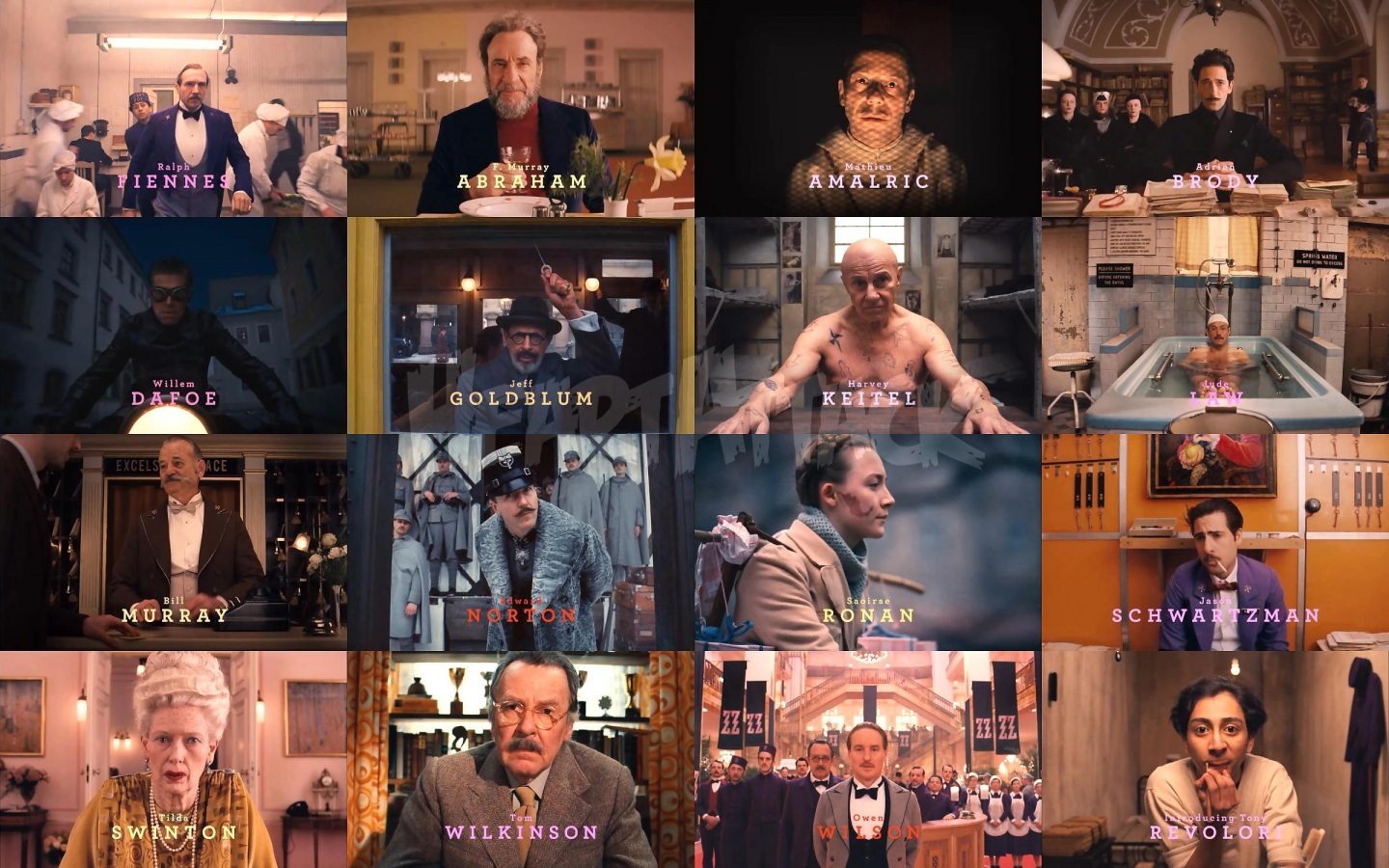
We’ve just seen American director Wes Anderson’s The Grand Budapest Hotel, which was a sumptuous viewing experience and will definitely be on my 2014 list of top films.

Mr. Peabody thought the film was ‘a love letter to Europe’, which is an excellent summation. Handily for this blog, it’s also a wonderful crime caper, triggered by the murder of a fantastically wealthy 84-year-old aristocrat (‘she was dynamite in the sack, by the way’), who’s played with panache by Tilda Swinton.

There are so many things to love about this film: it’s expertly constructed on four different time levels – the present day, 1985, 1968 and 1932 – which fit snugly inside one another like Russian dolls; it celebrates friendship, loyalty, love, kindness, courtesy, tolerance, multiculturalism and cosmopolitan ‘old’ Europe before the darkness of fascism and then communism falls; the characterisation is marvellous, especially of concierge M. Gustave (Ralph Fiennes) and bellboy Zero Moustafa (Tony Revolori/F. Murray Abraham); it shows the importance of writers as chroniclers of memories and history, and the power of literature down the generations; it’s quirky, funny, and profoundly moving; it features a wonderful ensemble cast and is a visual feast from start to finish.

Two extra tidbits. It was filmed largely in Berlin, in and around the famous Babelsberg Studios, and premiered at the Berlin Film Festival, where it won the Silver Bear Grand Jury Prize. It’s loosely inspired by the life and works of Austrian-Jewish writer Stefan Zweig (see a marvellous interview with Anderson discussing this aspect of the film).

Wes Anderson is at the top of his game and has delivered an assured, masterfully crafted work of genius. There. Now go see it if you haven’t already! The official trailer is here.

The-Grand-Budapest-Hotel-Wes-Anderson-01-personnages


Apocalyptic crime fiction from America and Finland

I’ve just finished reading Finnish crime author Antti Tuomainen’s The Healer, which was a gripping and quietly powerful read.

Set in an unspecified future where climate change is causing profound damage and mass migration to the safe haven of the north, the narrative follows the search of poet Tapani Lehtinen for his journalist wife Johanna. She has vanished, apparently without trace, while reporting on a series of murders by the self-styled ‘Healer’, an activist targeting those he deems responsible for the environmental catastrophe. Part crime, part love-story and part dystopian fiction, this is an unusual novel that will hopefully be followed by a sequel. I particularly enjoyed its measured pacing and stylistic precision, which in keeping with its narrator has a distinctly poetic feel – beautifully translated by Lola Rogers. It won the Clue Award for Best Finnish Crime Novel in 2011, and has just been published in paperback by Vintage. It’s also one of the submissions for the 2014 Petrona Award.  

Along with other reviewers such as Bernadette and Sarah, The Healer reminded me of Ben Winters’ excellent pre-apocalyptic crime novels, The Last Policeman and Countdown City, which are set in the States prior to an asteroid strike. The three novels explore similar, fascinating questions. What happens to social structures, but particularly to law and order when society begins to collapse? Why bother to investigate crimes or fight for justice (or write poetry) when everyone’s going to die anyway? And how do individuals respond when making moral choices in extreme circumstances? While all of this sounds pretty depressing, there is also a hopefulness to these narratives, which as Bernadette notes in her review of The Healer, makes them curiously uplifting reads.

I have to confess that I’m getting quite fond of apocalyptic crime. Here are the ones I’ve read recently (all good) and another I found while nosing around on the web. There do seem to have been quite a few published in the last couple of years, which suggests that they could be the product of a global zeitgeist. Reading The Healer while extreme weather hit UK shores and the US experienced a severe cold snap certainly added to my appreciation of the climate change theme.

Ioanna Bourazopoulou, What Lot’s Wife Saw (Greece / Black and White Publishing, 2013)

Quinn Fleming, DMQZ (USA / ebook, 2013 – still to read)

Hugh Howey, Wool (USA / Century, 2013)

Antti Tuomainen, The Healer (Finland / Harvill and Secker, 2013)

Ben H. Winters, The Last Policeman (USA / Quirk, 2012)

Ben H. Winters, Countdown City (USA / Quirk, 2013)

Out with the old, in with the new. Happy 2014!

HAPPY NEW YEAR!

I always love those quiet days between Christmas and New Year. They’re the perfect time for reading, and – for the bloggers among us – provide a great chance to tie up loose ends and plan ahead.

Some loose ends now neatly tied up in a bow:

  • I took part in two reading challenges last year, the 2013 Global Reading Challenge and the 2013 Translation Challenge. I completed both, and enjoyed the global challenge in particular, as it made me reflect on the geographical distribution of my reading (somewhat biased towards Europe and the US). You can see which books I read for the challenges here.
  • I’ve managed to finish my two Christmas reads, which complemented one other very well. Patricio Pron’s My Father’s Ghost is Climbing in the Rain is a literary memoir exploring a father-son relationship and the legacy of Argentina’s military dictatorship. It’s an interesting read, but took a little while to get going (it would probably benefit from a second reading, as the significance of earlier sections becomes clearer in the light of later ones). While not a crime novel, criminality is a key theme and the genre is frequently referenced, albeit in slightly contradictory ways. For example, the narrator comments: ‘I understood for the first time that the children of young Argentines in the 1970s were going to have to solve our parents’ pasts, like detectives, and that what we were going to find out was going to seem like a mystery novel we wished we’d never bought’ (p.152). But then a little later it’s suggested that exploring ‘social crime […] through the artifice of a detective novel’ is inadequate, because ‘the resolution of most detective stories is condescending, no matter how ruthless the plotting, so that the reader, once the loose ends are tied up and the guilty finally punished, can return to the real world with the conviction that crimes get solved and remain locked between the covers of a book, and that the world outside the book is guided by the same principles of justice as the tale told inside and should not be questioned’ (p.153). Of course that’s not always the case: lots of contemporary crime authors have pushed the boundaries of the genre to explore the absence of justice for state crimes. I wonder if Pron has read Ernesto Mallo’s outstanding 2006 crime novel Needle in a Haystack (see my review here), which examines the same historical period? It’s precisely the lack of a resolution/punishment for the crimes committed by the junta that gives the narrative its power.

  • My other Christmas novel was Jan Costin Wagner’s Light in a Dark House (Harvill Secker 2013), the fourth in the German/Finnish Kimmo Joentaa series, which was an excellent read. Even though each installment is made up of quite similar elements, the quality of the characterisation and narrative construction is such that they never appear formulaic. The starting points in Light in a Dark House are the disappearance of Kimmo’s secretive on-off lover, and the murder of a nameless, comatose woman in a hospital. Intriguingly, the only clue left by the murderer is ‘lacrimal fluid’, or tears.
  • And the connections between the two? The legacies of past violence, unresolved traumas, and the damaging effects of silence. These issues are presented quite differently in each, which makes them an interesting pair to read together.

Looking ahead:

  • Santa was kind enough to bring me a number of crime novels, including Gillian Flynn’s Sharp Objects (Phoenix 2007), Eduardo Sacheri’s The Secret in their Eyes (Other Press 2005/2011) and John le Carré’s A Delicate Truth (Viking 2013). I’m going to make the Sacheri my first crime novel of 2014, as I enjoyed the Oscar-winning film adaptation of 2010, and am keen to read the original novel. That’ll keep me going on my Argentinian reading path as well for now.
  • As a 2014 Petrona judge, I need to pick up the pace of my reading. Thus far I’ve read 20 of the submissions, which means I have rather a lot to go. (This is by way of a confession to Karen, Barry and Sarah, but I will get cracking now, promise…once I’ve read the Sacheri, that is).
  • More generally, 2014 is going to be different compared to other years, as I’m on research leave for a semester from the end of January *happy face*. More on my plans for that interlude another time…

Wishing you all a great start to the year and many hours of good reading!

The ultimate Christmas gift: an international crime novel!

For what could be finer than giving or receiving a crime novel set in foreign climes? Especially handy for those whose families are driving them bonkers by Boxing Day: just channel those murderous desires into crime fiction!

Here are some present ideas, which happen to be ten of my favourites from this year, ranging from police procedurals and detective fiction to historical and hybrid crime. Some I’ve reviewed (just click on the link), others I haven’t (so many books, so little time). All are undoubtedly available from your local, friendly, independent bookseller!

Ioanna Bourazopoulou, What Lot’s Wife Saw, translated from Greek by Yannis Panas (Black and White Publishing, 2013 [2007]). Winner of the 2008 Athens Prize for Literature, this is a dazzling, hybrid crime novel that takes readers on an extraordinary journey of the imagination. Set in the future after a devastating tsunami, its reluctant investigator is Phileas Book, who works for The Times compiling Epistlewords, a three-dimensional crosswordA brilliant, freewheeling narrative for those who like puzzles and substantial reads. Full review here.

Gillian Flynn, Dark Places (Weidenfeld & Nicolson, 2009). For my money, Flynn is one of the most original and daring crime writers out there, but her novels have polarized readers, so handle with care! Dark Places tells the story of a family massacre and its aftermath from the perspective of survivor Libby Day and other family members. It’s by turns harrowing, moving, blackly humorous and redemptive. My favourite of Flynn’s novels so far. Full review here.

Eugenio Fuentes, At Close Quarters, translated from Spanish by Martin Schifino (Euro Crime/Arcadia, 2009 [2007]). Captain Olmedo, a high-ranking army colonel, is found dead at his home. The authorities say it’s suicide, but daughter Marina has her doubts and hires P.I. Ricardo Cupido to investigate. This is the first novel I’ve read by Fuentes (the 5th in the series), and I was impressed both by its depth of characterisation and by its illumination of different political attitudes/mindsets in Spain.

The original Spanish cover for At Close Quarters

Arnaldur Indriðason’s Strange Shores, translated from Icelandic by Victoria Cribb (Harvill Secker, 2013). The ninth in the Reykjavik series and by all accounts the last (*sob*). Detective Erlendur returns to his childhood home to face the trauma that shaped his life – the disappearance of his little brother in a snowstorm. While there, he investigates another disappearance, of a young woman in 1942. A thoroughly engrossing novel with a powerful ending. But make sure the other eight have been read first! Full review here.

M.J. McGrath, White Heat and The Boy in the Snow (Mantle 2011/2012). These are the first two novels in the Edie Kiglatuk series, set in the chilly realm of the Arctic. Edie is a wonderful protagonist, and through her investigations we gain a tremendous insight into life in the frozen north – not least its cuisine. There are maps at the front of each novel, which provide a new perspective on a world in which Alaska is ‘down south’. Absorbing and entertaining reads.

Derek B. Miller, Norwegian by Night (Faber and Faber, 2013). I adored this book and haven’t met anybody who didn’t love it. It stars (and that really is the correct term) Sheldon Horowitz, a recently-widowed Jewish-American octogenarian living in Oslo with granddaughter Rhea, who makes a crucial decision after witnessing an appalling crime. An absolute joy from start to finish. Full review here.

Angela Savage, Behind the Night Bazaar (Text Publishing, 2006). The first in the Jayne Keeney series by Australian author Savage, this novel was shortlisted for the Ned Kelly Best First Book Award in 2007. Jayne is a highly engaging private investigator based in Bangkok, whose investigations offer readers an escape to sunnier climes, and provide a vivid and insightful portrait of Thailand. Full review here.

Simon Urban, Plan D, translated from German by Katy Derbyshire (Harvill Secker, 2013). It’s 2011 and the Berlin Wall is still standing. Welcome to the alternative world of Plan D, in which the reunification of Germany never happened, and fifty-six year-old East German Volkspolizei captain Martin Wegener is about to embark on the strangest investigation of his career. An admirably bonkers alternative history that will appeal to those with an interest in 20th-century Europe and the Cold War. Full review here. A handy GDR glossary is available too.

Ben H. Winters, The Last Policeman and Countdown City (Quirk Books 2012/13). The first and second of a trilogy set in an America of the near future. Asteroid Maia is on a collision course with earth, and with just six months to impact, society is beginning to disintegrate. Why, given that they’ll all be dead soon anyway, does Detective Henry Palace of the Concord Police Department bother to investigate a suspicious suicide? Because that’s the kind of dogged guy he is… Sharp, funny and brilliantly observed.

Daniel Woodrell, Winter’s Bone (Sceptre, 2007). When sixteen-year-old Ree Dolly’s father disappears, she needs to find him again quickly to prevent the loss of her family home. Set in the Orzark Mountains of Missouri during an unforgiving winter, in a closed community that has its own laws, this is a tough but beautifully-written novel. Ree is a memorable protagonist, who reminded me a little of Mattie Ross in Charles Portis’ True Grit.

Winter’s Bone was turned into an acclaimed film starring Jennifer Lawrence

#42 / Gillian Flynn, Dark Places

Gillian Flynn, Dark Places (ebook; London: Weidenfeld & Nicolson, 2009) 4.5 stars

Opening line: I have a meanness in me, real as an organ.

I’m working my backwards through Gillian Flynn’s works after reading the incredible Gone Girl (see review here). Dark Places is the author’s second novel, and confirms my impression that she’s one of the most talented and original voices in crime today. Her novels are not necessarily perfect, but they’re extremely well written and have a narrative energy that makes them a red-hot reading experience. In the case of Dark Places, Flynn also takes on a very difficult subject and does so in a way that is both sensitive and groundbreaking. There is an authorial bravery at work here that I very much admire.

The principal narrator of Dark Places is thirty-one year old Libby Day, who in 1985, at the age of seven, survived a night-time massacre at the family farm that left her mother Patty and sisters Michelle and Debby dead. Her brother Ben, a teenager at the time, was convicted of the killings and sentenced to life imprisonment. Twenty-four years on, Libby is living alone, and has used up most of the $300,000 fund set up in her name after the murders. Petulant about the public’s dwindling interest in her, she resembles a former child film-star who can’t comprehend why the offers have dried up. So when she gets a call from a young man called Lyle, offering her money to appear as a ‘special guest’ at his none too subtly named ‘Kill Club’, she agrees to go. There she encounters a group of obsessives who have pored over every detail of the murders, and who are convinced that Ben is the victim of a miscarriage of justice. They offer her more money to talk to others close to the case – effectively positioning her as an investigator into her own family’s murders – and she accepts, partly for the cash and partly due to her own desire for closure. Her often darkly humorous account of events in the present is interspersed with sombre flashbacks to the day of the murders, narrated from the point of view of her mother Patty and brother Ben.

One of the key strengths of this novel for me was its characterisation. Libby, the sole survivor of the massacre, is clearly not depicted as a traditional tragic victim. She is spiky, surly, obsessed with money, and appears to have alienated everyone around her. But at the same time, hers is the voice that is the most moving in the novel, because through her, Flynn vividly realises the themes of grief, trauma and loss. Patty and Ben are also brilliantly portrayed: the thirty-two-year-old single mom trying to look after four children and keep the family farm going during a recession, and the troubled teenager struggling with the transition into manhood. All three characters give a sobering insight into the long-term effects of grinding poverty. Class is a big theme and is deftly handled.

There are some graphic descriptions of violence in the novel that readers may find upsetting. However, my own feeling is that Flynn uses these descriptions to convey the reality of the massacre as a violent and traumatic event, rather than with gratuitous intent. Crucially, we are told the physical details of what happened early in the novel, thus avoiding an excessive build up of readerly curiosity or their use as part of the narrative pay-off. There were perhaps just a few small details at the end of the novel that didn’t ring entirely true to me – a dash too much rural noir – but these don’t obscure the novel’s genuine strengths. Libby and Patty’s voices have stayed with me in particular.

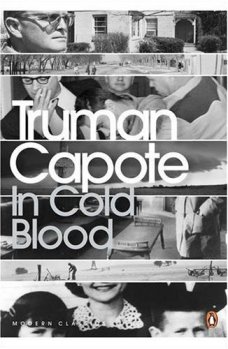
In terms of larger literary influences, Dark Places surely reaches back to In Cold Blood, Truman Capote’s seminal 1966 account of the massacre of a farming family in Kansas (Libby tells us firmly that her farm is near Kansas City, Missouri rather than Kansas City, Kansas, which I read as a neat in-joke that both acknowledges Capote’s influence and asserts an authorial distance from him). I’m also reminded of Andrea Maria Schenkel’s novel The Murder Farm (see my review here), which is very different in style and length, but is another successful literary re-imagining of this kind of case.

By coincidence, an article by Sarah Weinman recently appeared in Book Beast entitled ‘The Original Gone Girls: Dorothy Salisbury Davis and Other Forgotten Pioneers of Crime Fiction’. It focuses on earlier contributions to the psychological thriller by women writers and is well worth checking out.

Mrs. Peabody awards Dark Places an accomplished and memorable 4.5 stars

Creative Commons License

.