CrimeFest 2013 and the inaugural Petrona Award

This time next week CrimeFest 2013 will be in full swing. There’s a mouth-watering programme with lots of international writers as well as British writers whose works are set on international shores.

They include: Quentin Bates (Iceland), Xavier-Marie Bonnot (France), Roberto Costantini (Italy), K.O. Dahl (Norway), Jeffrey Deaver (USA), Thomas Enger (Norway), Ragnar Jonasson (Iceland), Pierre Lemaître (France), Adrian Magson (UK/France), M J McGrath (UK/Arctic), Derek B. Miller (Norway), Barbara Nadel (UK/Turkey), William Ryan (UK/ Russia), Jeffrey Siger (US/ Greece), Yrsa Sigurðardóttir (Iceland), Dana Stabenow (USA/ Alaska), Valerio Varesi (Italy), Robert Wilson (Spain/Portugal/Africa), Anne Zouroudi (UK/Greece). A full list of writers with further details is available here.

The winner of the first Petrona Award for Best Scandinavian Crime Novel of the Year will also be announced at the CrimeFest Gala dinner on Saturday night. I have my posh frock at the ready and am looking forward to the occasion very much.

The award was set up in memory of Maxine Clarke, who blogged as Petrona and was an expert in Scandinavian crime fiction. The 2013 shortlist, compiled on the basis of Maxine’s reviews, is as follows:

enger428586_287692644633128_120240158045045_704808_1282709077_n517CY6O6qWL51Bigz1qx7L._BO2,204,203,200_PIsitb-sticker-arrow-click,TopRight,35,-76_AA300_SH20_OU02_

PIERCED by Thomas Enger, tr. Charlotte Barslund (Faber and Faber)

BLACK SKIES by Arnaldur Indridason, tr. Victoria Cribb (Harvill Secker)

LAST WILL by Liza Marklund, tr. Neil Smith (Corgi)

ANOTHER TIME, ANOTHER LIFE by Leif GW Persson tr. Paul Norlen (Doubleday)

Synopses of the novels with extracts from Maxine’s reviews can be found at the wonderful ‘Petrona Remembered’ blog. Karen Meek has also set up two polls over at ‘Eurocrime’: ‘which novel do you want to win the Petrona Award 2013′ and ‘which novel do you think will win the Petrona Award 2013′. The polls are open until 29 May.

I’ll be tweeting from CrimeFest using the following hashtags: #CrimeFest and #CrimeFest2013. The only difficulty now is deciding which of the panels to attend – they all look so good…

#37 / Derek B. Miller, Norwegian by Night

Derek B. Miller, Norwegian by Night (ebook; London: Faber and Faber, 2013). 5 stars
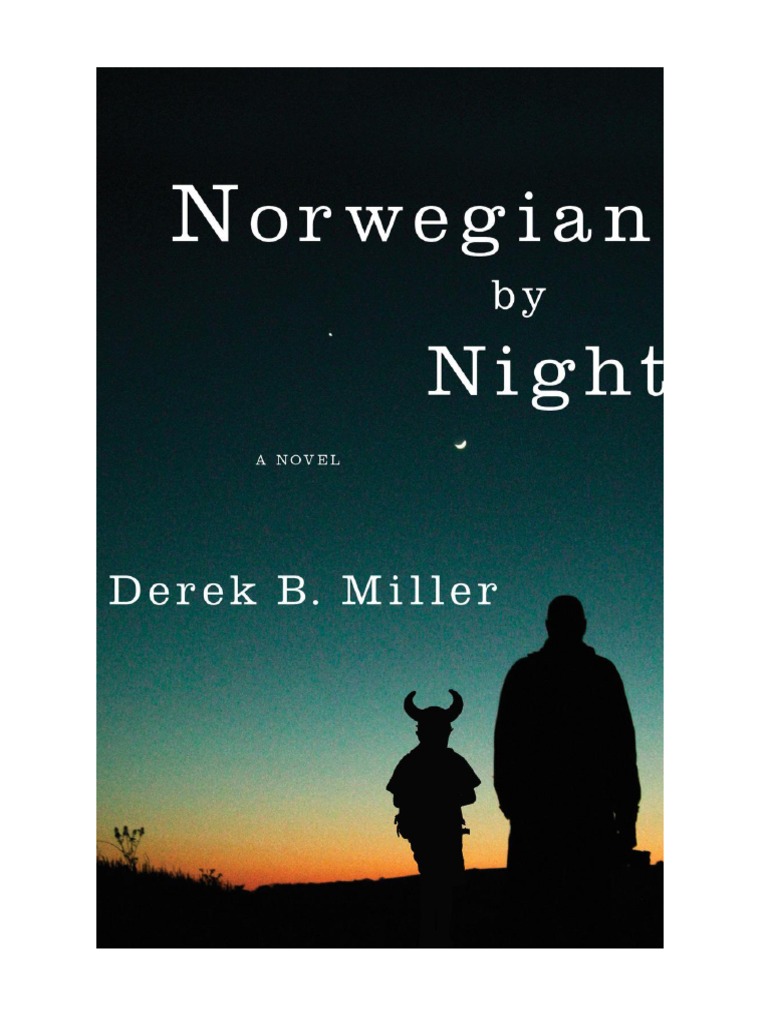
Opening line: It is summer and luminous. 

I’m very excited about this book. Promoted as ‘a literary novel, a police thriller, and the funniest book about war crimes and dementia you are likely to read anytime soon’ (true), it’s also one of the best and most original novels you’ll ever read.

The star of the novel and its central protagonist is Sheldon Horowitz, a recently-widowed Jewish-American octogenarian and former Marine with possible dementia, who has been transplanted by granddaughter Rhea from New York to Oslo, so that she and her husband Lars can take care of him in his dotage. A few weeks after his arrival, following sounds of a violent argument in the flat above, Sheldon is faced with a life-changing choice: whether or not to open his door to help a mother and son in physical danger. His decision to do so, strongly influenced by the memory of the Holocaust, sets off a chain of events which have major repercussions for himself and those around him.

I loved this novel’s distinctive Jewish-New York voice and its brilliant characterisation of Sheldon, an old man trying to right past wrongs and protect a six-year-old boy from harm by drawing on the memory of his soldier’s training from half a lifetime ago. The narrative has the free-wheeling brilliance and humour characteristic of the best Jewish-American writing and is, quite simply, a joy to read (Miller’s work fits perfectly with others like The Yiddish Policeman’s Union by Michael Chabon and Everything is Illuminated by Jonathan Safran Foer). The following excerpt is typical:

Sheldon catches his breath and stands up again. He walks over beside Paul and says, “Right, now we start walking backward. If we’re lucky, we’ll go backward in time, before yesterday and the day before. Before you were born, all the way back to at least 1952 […] We could stop for lunch in 1977. I knew an excellent sandwich shop in 1977.”

The novel also explores an extraordinary number of larger subjects and themes, such as: fatherhood, parental regret and loss; aging, memory and dementia; Jewishness, identity, the desire to belong, masculinity and war; the German Occupation of Norway during World War Two, the Holocaust, the Korean War, the Vietnam War, the Balkan Wars; war crimes and justice; and, last but not least, criminality and policing in a global era. While hugely ambitious in tackling such a wide range of issues, the author – somehow – manages to integrate them successfully, along with three generations of Horowitz family history, into a thrilling plot.

Written by an American author based in Oslo, this is also very much a book about Norway and its relation to the world. Sheldon and Rhea’s outsider perspectives  – like the author’s own – provide the opportunity for wry comparative analyses of American and Norwegian cultural traits. Meanwhile, Police Chief Inspector Sigrid Ødegård (another warm and wonderfully-realised character), allows the narrative to reflect on the globalisation of organised crime and the opportunities afforded to criminal networks through the softening of Europe’s borders. Norway is depicted as unprepared for the speed of these developments, with criticism levelled at its liberals (‘expounding limitless tolerance’) and conservatives (‘racist or xenophobic’), as well the failure of both sides to hold positions properly ‘grounded in evidence’. Here we see the author’s own background in international relations shining through: in a 2012 interview on the ‘Bite the Book’ blog, Miller describes how he has worked ‘designing “evidence-based” approaches to peace and security programming for almost a decade at The United Nations Institute for Disarmament Research’. The whole interview is well worth a read.

Norwegian by Night is by turns a hilariously funny, heart-breakingly sad and genuinely suspenseful novel that makes you care deeply about its characters – not least the irascible Sheldon. On finishing it, I immediately wanted to read it again –  along with a stack of other books it called to mind (by Kurt Vonnegut, John Irving and Michael Chabon, to name but three). You can’t ask for more than that.

With thanks to Raven Crime Reads for alerting me to this novel. You can read Raven’s excellent review here (which contains slightly more details of the plot than included above). There’s also an earlier Mrs P. post on Jewish detectives here.

Mrs. Peabody awards Norwegian by Night an utterly brilliant 5 stars

Creative Commons License

.

BBC Radio 4’s Book at Bedtime from Monday 13 May: John le Carré’s A Delicate Truth

Hot on the heels of the publication of John le Carré’s A Delicate Truth comes an adaptation of the novel for BBC Radio 4’s wonderful ‘Book at Bedtime’ slot.

The first of ten episodes, wittily titled ‘Between A Rock And A Hard Place’, will be broadcast on Monday 13 May, from 10.45 to 11.00pm (GMT). The narrator is Damian Lewis, famous (amongst other things) for his Emmy-winning role as Nicholas Brody in the American hit series Homeland.

Here’s the publicity blurb accompanying the adaptation from the BBC:

>> Damian Lewis begins John le Carré’s gripping, brand-new novel about a good man who must choose between his conscience and his duty to the Service.

An undercover counter-operation in the British colony of Gibraltar [the eponymous Rock]; a middle-ranking man from the Foreign Office serving as ‘eyes on’ and reporting to an ambitious Minister; the aim to capture a jihadist arms-buyer: the success, assured.

But back in the UK a junior officer has his doubts and commits an unthinkable act. Three years on, he will find himself facing an impossible choice. In a journey that will take him from Cornwall to Wales via murky secrets in the depths of Whitehall, Toby Bell will try to find out the truth about the night on the Rock and bring it the attention and justice it deserves.<<

The novel is abridged by Sally Marmion and produced by Di Speirs for the BBC.

#36 / Wendy James, The Mistake

Wendy James, The Mistake (Penguin / Michael Joseph ebook, 2012). An outstanding portrait of a family in crisis and the repercussions of past mistakes  4.5 stars

Opening line: If, before all this happened, before her – before their – unravelling, she had been asked how her life was, she’d have said that life was good.

The Mistake is Australian author Wendy James’ fourth novel. Like her first, Out of the Silence, which won the Ned Kelly Award for ‘Best First Crime Novel’ and was shortlisted for the Dobbie women’s writing award, it’s a hybrid narrative aimed at a diverse reading audience (doesn’t that cover remind you of something by Jodi Picoult?). While not a conventional crime novel, it raises profound questions about legal and moral boundaries, and the media’s role in pre-judging those it deems to be guilty of transgressing social and cultural norms.

Jodie Garrow is a middle-class wife and mother living in the affluent New South Wales town of Arding. She has the requisite lawyer husband, two children and a dog, and is a respected figure in the local community. However, when daughter Hannah breaks a leg on a school trip to Sydney, Jodie’s carefully ordered existence begins to fall apart. The hospital Hannah is taken to is the same one where Jodie secretly gave birth to a daughter many years before, and when a nurse from that time recognises her, a damaging piece of information comes to light: there is no record of baby Elsa Mary having been given up for adoption as Jodie claims. In the absence of legal proof, the baby may have to be classified as a ‘missing person’ by the police, with suspicion of foul play falling on Jodie as the last documented person to see her alive.

While the question of what happened to the baby looms large, the exploration of the fallout from Jodie’s ‘mistake’ (whatever that turns out to be) is central to this rich, multi-layered narrative. The novel can be read simultaneously as a portrait of a complicated woman, of a family in crisis, of a possible crime, and of the vilification of ‘bad mothers’ by the press. The ‘bad mother’, in this context, is a woman who fails to show the requisite ‘maternal’ qualities or emotion to convince the public that she is innocent of wrong-doing (as in, to a greater or lesser degree, the examples of Lindy Chamberlain, Sally Clark and Kate McCann). We are shown in brilliantly-drawn detail the destruction of an individual’s reputation, and the social consequences for the entire family of the doubts raised about Elsa Mary’s fate.

What stood out for me in particular was the novel’s excellent characterisation, which allows a nuanced picture of Jodie’s identity and her relationships with others to emerge. There’s also a superb analysis of how Jodie is shaped by class, which helps to illuminate her response to her unplanned pregnancy at the age of nineteen. Fittingly for a novel that is critical of a rush to judgement, no absolute moral position is taken. It thereby success-fully avoids stereotyping and knee-jerk reactions, focusing instead on the very individual circumstances that lie behind the case.

I read The Mistake in almost one sitting, and can therefore happily testify to its properties as a page-turner. The plotting and pace are excellent (although there is one ‘lead’ that would surely have been followed up sooner), and its ending will stay with me for a long time to come.

My thanks to Angela Savage for encouraging me to read this novel following an earlier post on crime novels that critique the media (Leif G.W. Persson’s Linda, Gillian Flynn’s Gone Girl and Yvonne Erskine’s The Brotherhood). You can read Angela’s own review of The Mistake here as well as Bernadette’s review at ‘Fair Dinkum Crime’ here.

Mrs. Peabody awards The Mistake a thought-provoking and utterly gripping 4.5 stars

Creative Commons License

.