Kriminally good: NBG Krimi issue, Goethe Institut Krimi panel and David Young’s The Stasi Child

The autumn issue of New Books in German is out – a very special edition that celebrates the best of contemporary German-language crime fiction. In it you can read mouth-watering features, interviews and summaries of the hottest Krimis lining up to be translated into English.

21802651852_c2e309aee2_z

The contents are available online and include: 

A pair of features on British and German-language crime – Barry Forshaw’s ‘A New Golden Age? Contemporary British Crime Fiction’ and my own piece on ‘Quality, Diversity and Untapped Potential: the Contemporary Krimi’. Entertaining mugshots included…

A feature on ‘Killer Thrillers from Austria – an evening with Ursula Poznanski

Interviews with Daniela Rapp (editor at St. Martin’s Press in New York), Alison Hennessey (Senior Editor at Harvill Secker) and Imogen Rose Taylor (translator of Sascha Arango’s The Truth and Other Lies) on bringing international crime fiction to English-language audiences.

You can also browse individual Krimis (spoiler alert!) and take a comprehensive look at UK publishers of crime fiction and thrillers in translation, including Arcadia Books, Bitter Lemon Press, Harvill Secker, Hesperus Press, MacLehose Press, No Exit Press, Sinon & Schuster, Orion, World Noir/Europa Editions, Orenda and Vertigo Pushkin.

And as if all that goodness wasn’t enough, the Goethe-Institut London and New Books in German are hosting a Krimi evening on Tuesday 10th November. Snappily titled ‘In the Library with the Lead Piping’, the event will feature readings and a panel on German and British crime fiction with authors Mechtild Borrmann, Mario Giordano, Michael Ridpath and Louise Welsh.

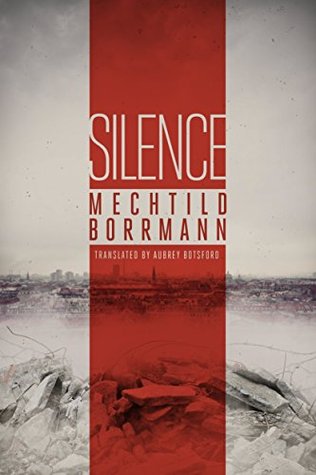
Silence

Mechtild Borrmann is the German author of a number of novels, including the best-selling historical crime novel Wer das Schweigen bricht (Silence), which was the winner of the 2012 Deutscher Krimi Preis (German Crime Fiction Prize).

poldi

Mario Giordano is a German author and screenwriter, who has written for crime series such as Tatort (Crime Scene) and Schimanski. His crime novel Tante Poldi und die sizilianischen Löwen (Aunt Poldi and the Sicilian Lions) was published this year.

s_shadows_of_war_bookMichael Ridpath is the British author of financial thrillers, the Icelandic ‘Fire and Ice’ crime series, and two spy novels, Traitor’s Gate and Shadows of War, which are set in Europe at the beginning of the Second World War.

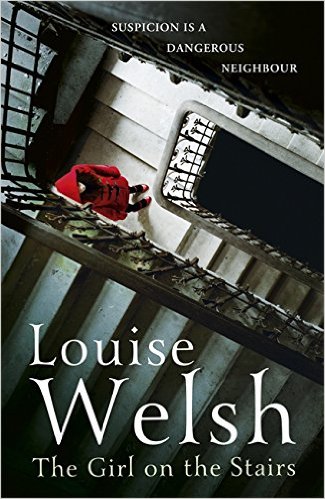
Girl Welsh

Louise Welsh is a Scottish writer who draws on crime fiction, psychological thrillers, apocalypse fiction and the Gothic. Two of her works, The Bullet Trick and The Girl on the Stairsare set in Berlin.

I have the good fortune to be the moderator for the event and am looking forward to it greatly. If you’re in London, do come along! Further details are available here. Entry is free, but booking is essential (simply email info@london.goethe.org).

StasiChild_firstlook_540

And finally… Over the past few days I’ve been reading a preview copy of David Young’s novel Stasi Child, which has the highly original setting of 1975 East Germany, and is proving to be a gripping and hugely absorbing read. It’s published on 1st October by twenty7 and has just been optioned for TV by Euston Films.

Here’s the cover blurb to whet your appetites:

>> When Oberleutnant Karin Müller is called to investigate a teenage girl’s body at the foot of the Wall, she imagines she’s seen it all before. But when she arrives she realises this is a death like no other: it seems the girl was trying to escape – but from the West.

Müller is a member of the People’s Police, but in East Germany her power only stretches so far. The Stasi want her to discover the identity of the girl, but assure her the case is otherwise closed – and strongly discourage her asking questions.

The evidence doesn’t add up, and Müller soon realises the crime scene has been staged. But this is not a regime that tolerates a curious mind, and Müller doesn’t realise that the trail she’s following will lead her dangerously close to home… <<

The novel is the first in a trilogy, and I’m already keen to meet Karin Müller and her team again. If you’re interested in how David came up with his ideas and wrote the novel, then check out his feature over on the twenty7 blog.

Marina Sofia has also just posted a great review of The Stasi Child over at findingtimetowrite.

Stieg Larsson sequel, crime versus thrillers, Easter bunnies

Big news this week: the sequel to Stieg Larsson’s acclaimed ‘Millennium Trilogy’ is well on its way. The cover and English title – The Girl in the Spider’s Web – were revealed by MacLehose Press on Monday, although its contents will remain firmly under wraps until publication on 27 August. Here’s what we know: the sequel is ‘based on Larsson’s universe and characters’, is written by Swedish writer David Lagercrantz; will be published in Sweden by Norstedts; is titled Det som inte dödar oss  (That Which Doesn’t Kill Us) and is currently being translated into 38 languages.


Like many, I have rather mixed feelings about the publication of the new novel. On the one hand, I thought the trilogy had a pretty perfect resolution and am not sure it could be bettered. On the other, I loved Lisbeth Salander and am keen to see how her story develops. I don’t envy Lagercranz the task of taking on such a weighty literary legacy – it must be hugely difficult to find a voice and narrative that are faithful to the original, but more than pure mimicry. I’m keeping my fingers crossed that he’s found a way through. For more information, see this Guardian article by Alison Flood.

There was another interesting article in The Guardian yesterday by Val McDermid, entitled ‘Why crime fiction is left-wing and thrillers are right-wing’ (thanks to Vicky Newham for flagging this up on Facebook).

In it McDermid argues (with help from Ian Rankin) that ‘the current preoccupations of the crime novel, the roman noir, the Krimi lean to the left. It’s critical of the status quo, sometimes overtly, sometimes more subtly. It often gives a voice to characters who are not comfortably established in the world – immigrants, sex workers, the poor, the old. The dispossessed and the people who don’t vote. The thriller, on the other hand, tends towards the conservative, probably because the threat implicit in the thriller is the world turned upside down, the idea of being stripped of what matters to you. And as Bob Dylan reminds us, “When you ain’t got nothing, you got nothing to lose.”’

That got me thinking hard about whether these political distinctions hold up more widely. While I can think of plenty of examples to support McDermid’s argument – especially in the context of European crime – I can also think of a number of exceptions. Golden Age crime fiction is often thought of as being ‘conservative in style, setting, characterisation, subject matter and socio-political views’, with a dubious social order in relation to class, gender and race being restored at the end of the narrative (quote from Lee Horsley’s excellent chapter on ‘Classic Detective Fiction’ in Twentieth Century Crime Fiction, OUP, pp. 12-65, p. 39). Hard-boiled crime fiction features private investigators not known for their tolerance or diplomatic skills. They may well be critical of the status quo, but are often shown delivering violent, eye-for-an-eye justice rather than handing criminals over to the law so they can be properly put on trial. There’s an interesting discussion on these points in an article by Arlene Teraoka, which explores the lack of a private eye tradition in German crime fiction – arguably due to the P.I.’s fascistic tendencies – and the post-war preference for paternalistic police inspectors who guarantee a democratic social order (who also have their conservative sides…).

Equally, two exceptions in relation to thrillers spring to mind. John le Carré’s works are highly critical of the power wielded by governments and shady secret services, and repeatedly highlight the price vulnerable individuals pay in these larger political games (e.g. The Spy who Came in from the Cold, The Looking Glass War, A Most Wanted Man). I also read a very good Swedish thriller in the course of my Petrona judging duties that raises big moral questions about the conduct of national intelligence agencies in wartime – Joakim Zander’s The Swimmer.

In sum, different crime genres/subgenres are flexible enough to be employed for liberal or conservative political ends, and elements of both can even co-exist alongside one another in individual texts. But I’ll be bearing McDermid’s assertions in mind as I read on, to see if her distinctions hold up as current trends.

Update: Over on findingtimetowrite, Marina Sofia also muses on Val McDermid’s article and gives a wonderful overview of the Quais du Polar, at which Val’s comments were originally made. The post gives a summary of various crime writers’ views about writing on politics from the event; these provide a very nice counterpoint to this post – showing how crime fiction is used by many writers as a progressive means of critiquing and exploring the power structures of their societies.

Wishing you all a very happy Easter break filled with fluffy bunnies, chocolate and lots of crime fiction!

The 2014 Nobel Prize for Literature goes to Patrick Modiano (who’s a bit of a crime writer)

The winner of the 2014 Novel Prize for Literature was announced yesterday. He is French writer Patrick Modiano, who appears to be extremely well known at home, but less so internationally, although some of his works have been translated into English down the years, and have won acclaim in Germany for their engagement with the wartime past.

Patrick Modiano

I’ve not read any of Modiano’s works, but am keen to do so for two reasons. Firstly, he’s of Jewish-Italian, Belgian and French extraction, and much of his writing focuses on the German Occupation of France (1940-44) and the themes of history, memory, identity and guilt.

Secondly, he’s the author of an intriguing, off-beat crime novel, entitled Rue des Boutiques Obscures (the street of shadowy shops), which was published in 1978 and received the Prix Goncourt, France’s premier literary prize, the same year.

The novel was translated into English by Daniel Weissbort, published by Jonathan Cape in 1980, and republished by Verba Mundi in 2004. Here’s the blurb from the back cover of the latter:

>> In this strange, elegant novel, Patrick Modiano portrays a man in pursuit of the identity he lost in the murky days of the Paris Occupation, the black hole of French memory.

For ten years, Guy Roland has lived without a past. His current life and name were given to him by his recently retired boss, Hutte, who welcomed him, a one-time client, into his detective agency. Guy makes full use of Hutte’s files – directories, yearbooks, and papers of all kinds going back half a century – but his leads are few. Could he really be the person in that photograph, a young man remembered by some as a South American attaché? Or was he someone else, perhaps the disappeared scion of a prominent local family? He interviews strangers and is tantalized by half-clues until, at last, he grasps a thread that leads him through the maze of his own repressed experience.

On one level Missing Person is a detective thriller, a 1950s film-noir mix of smoky cafés, illegal passports and insubstantial figures crossing bridges in the fog. On another level, it is also a haunting meditation on the nature of the self. Modiano’s sparce, hypnotic prose, superbly translated by Daniel Weissbort, draws his readers into the intoxication of a rare literary experience. <<

An amnesiac detective investigating his own identity and past in a post-war Parisian setting. Mmmmm, yes please!

See also: ‘Nobel Prize winner Patrick Modiano hailed as modern Marcel Proust’The Guardian, Thursday 9 October.

CRIME NOVEL wins Man Booker Prize!

I was working late last night and found myself having a midnight snack in the company of The Guardian newspaper. In the course of browsing, I realised that I’d missed the announcement for the Man Booker Prize, and was interested to see the winner was The Luminaries (Granta) by Eleanor Catton, a New Zealander who is now the youngest winner in the prize’s history (just 28), with its longest ever book (a corking 832 pages).

My eye then fell upon this bit of text: ‘The Luminaries is, at the plot level, a page-turning, suspenseful story about a series of unsolved crimes, written in the manner of a Victorian sensation novel. In January 1866, in the New Zealand town of Hokitika, a Scot called Moody walks into a hotel smoking room to find twelve men ruminating on a series of mysterious events: the disappearance of a rich prospector, the death of a wealthy recluse, the beating to a pulp of a prostitute. All the men are connected to these events and bound to each other’.

On digging around a bit further I discovered the following little details:

  1. Moody has arrived on a ship captained by a suspected murderer.
  2. Moody has legal training: he agrees to listen to the mens’ stories and to become ‘the unraveler’ … or might we say investigator?
  3. The narrative features a tense courtroom drama.

My first thought was: this would be a great book to review on the crime blog. My second thought was: that means A CRIME NOVEL HAS WON THE MAN BOOKER PRIZE!

I then rushed over to the Man Booker Prize webpage, only to find near invisible acknowledgement of Catton’s engagement with crime. While there is passing mention of Wilkie Collins, of mystery and a lawsuit, the idea that the novel incorporates and plays with significant aspects of the crime genre has been written out. The word CRIME does not feature once. Might this be evidence of an in-built Man Booker ‘prestigious literary prize’ prejudice? Its slogan is ‘fiction at its finest’, and it looks suspiciously like they couldn’t bear to elevate crime into that elite category.

The author with slogan…

Contrast the refreshing take of blogger Danylmc over at The Dim-Post, who asserts:

The Luminaries is primarily a very entertaining crime novel … It’s written in the style of a Victorian novel, but I suspect that two of the biggest influences were the golden-age HBO shows Deadwood and The Wire. Deadwood because of the frontier goldrush town setting, and The Wire because Catton is interested in using crime stories to examine how the society she’s writing about really works in terms of power-relationships and influence’.

Hurray! That’s more like it!

I can’t help but think of Ian Rankin here, who for many years has bemoaned the sidelining of crime fiction when it comes to major literary prizes. Well Ian, I think we’re well over half way there now. While The Luminaries can be classified as a historical novel, a Victorian sensation novel, a literary novel, or even a postmodern novel, we can also definitely view it as a crime novel. So I’ll say it again: A CRIME NOVEL HAS WON THE MAN BOOKER, and that’s really something to be celebrated. Now all we have to do is persuade ‘literary’ prize-givers that ‘crime’ is the door to rich and wonderfully innovative narratives, rather than a dirty word to be avoided. We’ve known it all along, and after reading The Luminaries, they really should too.

Update: PM Newton has kindly drawn my attention to a 2010 article in The Guardian entitled ‘Could Miles Franklin turn the Booker Prize to Crime?‘. It appeared just after Peter Temple’s success in winning Australia’s top literary prize, the Miles Franklin Award, with his crime novel Truth. The article provides a nice overview of the crime fiction/literary prize debates, and is worth reading for John Sutherland’s ‘donkey-in-the-Grand-National’ comment alone.

Theakston File 4: Jason Webster interview with Mrs. P.

If you tuned in to the 8th episode of the Radio 4 ‘Foreign Bodies’ series on Wednesday, you’ll have heard crime authors Jason Webster and Antonio Hill in animated discussion with Mark Lawson about Manuel Vázquez Montalbán’s investigator, Pepe Carvalho.

Listening to the episode, I realised now was the time to post my interview with Jason Webster at the 2012 Harrogate Crime Writing Festival. Key areas explored with the author of the ‘Max Cámara’ series, which is set in Valencia, include the legacy of the Spanish Civil War and the influence of Vázquez Montalbán.

Mrs. Peabody (MP): You’re a very versatile author: you started out as a travel writer, examining the history and culture of Spain, before turning your hand to crime fiction. Could you say a little bit about what led you to crime?

Jason Webster (JW): I suppose in some ways writing crime allows me to keep exploring Spain – this massive country that I’m really fascinated by – and has become an extension of the travel books, because the ‘I’ of the narrator in the travel books isn’t a million miles away from a detective: it’s exploration, it’s questioning, it’s looking for clues. And often there was a quest format in my previous books, so my writing has rolled on quite easily from those into crime.

MP: Are you able to take some of the material from those earlier books and incorporate it into your crime novels – say about flamenco or bull-fighting or Spain’s historical past?

JW: Definitely the past – the Spanish Civil War. I draw on that quite heavily for the third Max Cámara book, The Anarchist Detective, which will be coming out next year. So there’s a lot about this dark, dirty legacy of the Civil War – stuff that lots of people in Spain don’t want to talk about. Flamenco a little bit as well. Max likes flamenco so that fits, but it hasn’t played a huge part yet in any of the books.

MP: And do you think the crime genre is particularly suited to tackling subjects like the Spanish Civil War and the legacy of the past?

JW: Yes, absolutely. I mean there’s this largely untold violent history and lots of old wounds which haven’t healed. You have to remember that the families of those who were killed by Franco’s troops couldn’t mourn their dead. Anybody who was on the other side – on Franco’s side – and was killed or wounded – their stories were glorified for years and years. And when Franco died there was this period called ‘the pact of silence’ [pacto de silencio]. During ‘the transition’ [from Franco’s dictatorship to democracy] everybody agreed that you ‘don’t mention the war’… because that’s the only way we’ll get out of the dictatorship and move into democracy. But about eight years ago people started to ask – ‘hang on, what did happen to grandpa?’. So the grandchildren of the people who had suffered during the Civil War were saying, ‘well actually, I want to know’. And that opened up a can of worms, because a whole section of Spanish society – the political right, essentially – just didn’t want to go there. So there are a lot of untold stories, a lot of unhealed wounds, and a legacy of violence.

It’s perfect for writing crime, I think, because there are a lot of secrets … And in a sense there’s a long tradition dating back from the period of ‘the transition’ – just before Franco dies and just afterwards – of great Spanish crime writers like Vázquez Montalbán writing very much from a political point of view. They want to talk about what’s going wrong in Spain, and finally can publish their books once Franco dies, when the dictatorship is over and censorship has come to an end. So that’s very much part of the tradition of Spanish crime writing.

MP: Do you see yourself now as part of that tradition?

JW: In some ways, sure. Vázquez Montalbánwas definitely an inspiration, and the name that I gave Max Cámara…I was thinking of two things, really. I was thinking of Christopher Isherwood and ‘I am a camera’: ‘cámara’ means ‘camera’ in Spanish and it’s a perfectly legitimate surname as well. And this gives us a handle on Max’s character – he observes, he waits, he doesn’t really jump to conclusions. But I was also thinking of Vázquez Montalbán when he was writing under Franco and had been thrown in jail and had to write under a pseudonym – one of the pseudonyms he used was ‘Sixto Cámara’. So there’s a sort of homage to that, to Vázquez Montalbán…

MP: Can I take a tiny detour to your third book, Guerra: Living in the Shadows of the Spanish Civil War. What prompted you to write it?

JW: I was talking to one of the locals near where we live, which is in the middle of nowhere, off the grid. We were just chatting away, when she started telling me some things about the Civil War and took me to a place where she said there was a massacre, in around ’38 – so getting towards the tail end of the war, just as Franco was moving south towards Valencia. And she had seen this happen as a young girl – these bodies being buried. I’d sort of heard about this and it was about the time when it was starting to come out – these mass unmarked graves dotted around the country where people who had died at the hands of the Francoists were just buried… There was no commemorative plaque, there was no gravestone, no one had been allowed to mourn, the dead were buried there for years and years. And you know, death is important in Spain; it’s a culture where you seriously mourn the dead, and so for a whole side of the country not to have been able to mourn their dead… that’s a big deal.

I think a lot of people are just hoping that that generation– anyone who lived through that, anybody who suffered – will just die and then we can all forget about it. But there are quite a lot of people who are trying to recreate the oral history from the time – not let it just slip away. Paul Preston [the historian] and I have met on a number of occasions … and the book that he’s written on the ‘Spanish Holocaust’ is a very interesting one with a very interesting title… He’s deliberately being controversial. And he’s doing that because he’s making a statement about contemporary Spain as much as he is about the past. There are lots of Spaniards who don’t accept what happened. And they say we should just ‘turn the page’. But how are you going to get over the wounds unless you confront the past?

MP: It’s the classic model of the repressed, isn’t it?

JW: Yes, absolutely. Spanish society is still very much divided and this is what forms the backdrop to my second novel, A Death in Valencia. I’m trying to look at these massive divisions that split Spain apart still, eighty years after the Civil War.

MP: You build that history into your crime fiction through the figure of the grandfather, Hilario. He’s somewhat disapproving that his grandson Max chose to join the police.

JW: That deep paradox goes to the heart of who Max is, and I bring this to the fore in the third novel, The Anarchist Detective. Max comes from an anarchist family; he is essentially an anarchist himself, but an anarchist in the broad sense of the word. At the same time he’s an agent of the state, and of state authority, so how does that work? How does he square that circle? In some ways, what I’m doing in the second book, A Death in Valencia, is showing a breakdown in his character, because of this contradiction, whereas in the third book, he kind of resolves that paradox within himself.

MP: Do you think it’s helpful that you speak Spanish? I notice from having read some of A Death in Valencia ­that you include Spanish proverbs [refranes] in their original form, perhaps as a way of communicating with readers who are non-Spanish speakers – imparting the culture and giving us a flavour of the language as well. Is that a deliberate strategy?

JW: I think so. The problem is that it’s hard for me to put myself in the position of not knowing Spanish. Sometimes I’m just writing and there are certain phrases which I just think are so wonderful that I want to put them down in English. The proverbs are there because they are an important part of Max’s character. The Spanish are very, very proud of their proverbs, and it’s one of the things I love about Spain. It’s not Spanish intellectual culture that gets me going in the morning, it’s this intuitive side to the country and to the culture – and I see that in the proverbs. Essentially, there’s a deep wisdom that you feel has been passed on for centuries, by word of mouth – it’s an oral tradition. And I love that, so I did want to get that across in the novels.

MP: What do you think the Spanish would make of your crime novels?

JW: The first one, Or the Bull Kills You, might wind some people up because it’s about bull-fighting, but the second and the third ones don’t deal with so-called Spanish stereotypes, so they might be more acceptable. Basically, don’t talk about anything they term ‘el folklórico’ – flamenco, bull-fighting, all that kind of stuff that the Franco regime tried to promote in the 1950s and 1960s to get tourists to come over. It’s what they consider to be the backward side of their culture and they don’t want to perpetuate the image that that’s all Spain is about. But the Spanish Civil War is a legitimate topic for foreigners to discuss…. It’s complicated!

Interview carried out at the Old Swan Hotel, Harrogate, 20 July 2012

You can still listen to the ‘Foreign Bodies’ episode on Montalbán’s Pepe Carvalho via BBC iPlayer.

#26 / Mons Kallentoft, Midwinter Sacrifice

Mons Kallentoft, Midwinter Sacrifice, translated from the Swedish by Neil Smith (London: Hodder and Stoughton, 2012 [2007]). An impressive debut and the first in a series featuring talented police investigator Malin Fors  4 stars

Opening line: Love and death are neighbours.

I tend to have an allergic reaction to any cover trumpeting that there’s a new Larsson or Nesbo in town, as nine times out of ten such claims are overblown. However, in the case of the debut novel Midwinter Sacrifice, author Mons Kallentoft shows that he can hold his own in such company at least, with a well-written, page-turner of a narrative, and an impressively-realised female detective.  

Set in the city of Linköping in southern Sweden, where the author was raised, the novel makes good use of a ferociously icy nordic winter and the landscapes of the region – dark forests and frozen plains – to create a lyrical, chilling backdrop for the opening crime: the murder and ritual hanging of a local man, who for much of his life was a social outsider. Malin Fors, a gifted police investigator who struggles to balance a demanding job with her role as a single parent following the break-up of her relationship, is called to the crime scene one cold February morning. Together with her partner Zeke, she begins to piece together the events that led to the murder, in a first-class police procedural that repeatedly makes you want to read on (just one more chapter, honest…).

The elements of this crime novel that I particularly liked were: Malin’s nuanced portrayal as a thirty-something woman dealing with the lifelong consequences of her teenage pregnancy; the thematisation of parenting, and the relationships between parents and children (whether infants, teenagers or adults); the depiction of the rest of the police team; the innovative use of the murder victim’s voice in parts of the narrative (difficult to pull off, but effectively done); and a surprise reference to Douglas Adams’ Life, the Universe and Everything (stylish).

The only aspect of the novel that jarred slightly for me was its ending, which was a little too melodramatic for my taste. However, I’m keen to follow Malin on her next case, in the series’ second novel, Summertime Death, which has also recently appeared in translation. The third novel, Autumn Killing, is out in September, revealing a nice use of seasons to structure the series: spring next, I presume…

You can read an extract from Midwinter Sacrifice here.

Mrs. Peabody awards Midwinter Sacrifice a highly more-ish 4 stars.

Creative Commons License

.

#24 / Jim Thompson, The Killer Inside Me

Jim Thompson, The Killer Inside Me (London: Orion, 2006 [1952]). A hard-hitting noir crime novel, whose complex and disturbing portrait of a killer will linger in the mind 5 stars

Opening line: I’d just finished my pie and was having a second cup of coffee when I saw him.

Every now and then, you encounter a crime novel you know you have to read straight away. So it was with Jim Thompson’s classic 1952 American noir The Killer Inside Me, which made it from the Waterstone’s bookshelf to the nice lady at the till and into my eager hands in the space of five minutes.

Lou Ford is Deputy Sheriff of Central City, Texas, population 48,000. While outwardly affable and well-liked, it’s clear from the beginning of his narrative that he’s not all he seems. Lou is suffering from a ‘sickness’, a psychopathic disorder that has lain dormant for a number of years, and his carefully constructed identity as a good-natured and none-too-bright ‘rube’ is designed to render him invisible within mainstream society. When Lou’s ‘sickness’ is reactivated by a chance encounter with prostitute Joyce Lakeland, he’s soon drawn into a series of violent crimes, fuelled by a complex mixture of revenge for past wrongs, his love-hate relationship with a certain ‘type’ of woman, and, increasingly, self-preservation. As suspicions about Lou begin to surface within the community, the novel charts his increasingly desperate attempts to keep control of the unravelling situation and himself.

Thompson creates a powerful first-person narrative that admits the reader into a killer’s highly-disturbed mind, and deftly traces the complexities of its warped logic and self-deceptions. At the same time, the narrative provides a detailed and (for the time) remarkably daring analysis of the origins of Lou’s condition, asserting that nature and nurture have both played a role. The reader is even provided with a clinical diagnosis at the end of the novel, complete with a supporting quote from the work of German psychiatrist Emil Kraepelin, which reiterates this point. While not qualified to judge if the diagnosis offered is medically correct (it may well not be 60 years on), I found the narrative’s refusal to conform to the ‘mad and bad’ model one would expect from 1950s fiction extremely impressive, given the unenlightened attitudes to mental health issues prevalent at the time. One radical suggestion put forward by the novel is that labelling certain types of sexual practice as deviant or shameful won’t help to eliminate them from society, but will cause a severe and damaging backlash instead (the ‘return of the repressed’ writ large). Sexually conservative attitudes and social hypocrisy are figured as a partial cause of Lou’s condition and the behavioural choices he makes in adulthood – an amazingly bold critique to make of small-town America at any point, let alone in the early 1950s.

Thompson deals brilliantly with the challenge of managing the reader’s reactions to the narrator-as-murderer, creating just enough redeeming features to avoid a reductive, one-dimensional portrayal, whilst avoiding the pitfall of generating too much empathy for him or excusing his crimes. It’s an extraordinary authorial feat, one that a lesser writer would not pull off.

The novel was adapted for film in 2010 with Michael Winterbottom directing and Casey Affleck in the main role. It received mixed reviews and generated controversy due to its graphic depiction of violence towards women. I’ve not seen it yet, but can imagine adapting such a book would be hugely tricky, especially when so much of the narrative’s complexity is communicated via Ford’s distinctive first-person voice.

Clearly, The Killer Inside Me will not be everyone’s cup of tea, given its hard-hitting and explicit content. However, if you’re interested in the classics of the genre and haven’t read this novel yet, it could be one for you.

A biography of Jim Thompson is available here.

Mrs. Peabody awards The Killer Inside Me a highly thought-provoking 5 stars.

Creative Commons License

.

#23 / Harri Nykänen, Nights of Awe

Harri Nykänen, Nights of Awe, translated from the Finnish by Kristian London (London: Bitter Lemon Press, 2012 [2004]). The first in a new series featuring Finnish-Jewish police inspector Ariel Kafka 4 stars

Opening line: Men are born, they live, and they die.

Ariel Kafka, a detective in Helsinki’s Violent Crime Unit and one of only two Jewish policemen in Finland, is called to investigate the deaths of two Arabs in the Linnunlaulu area of the city. As the case unfolds over the Days of Awe, the ten days of repentance leading up to Yom Kippur, Kafka is faced with the unwelcome possibility that the crimes have a Jewish dimension, in the shape of Israeli / Mossad involvement.

The main strength of this Finnish crime novel for me was the wonderfully realised and very likeable investigative figure of Ariel Kafka. Nykänan succeeds in creating a rounded first-person narrator with a distinctive Finnish-Jewish voice (surely a first), which draws entertainingly on the wise-cracking archetype of the hard-boiled detective. The following quote illustrates how nicely these elements are blended together:

‘It wasn’t the first time I had been asked this question [You’re Jewish and you’re a cop?]. People seemed to have a strong belief that Jews have some secret, Old Testament-based motive for not joining the police force. In reality there was only one reason: the lousy pay.’ 

Nykänen, a former crime journalist, uses the narrative to explore Kafka’s triple identity as Finn/Jew/cop, and the tensions generated when these different elements come into conflict with one another. We’re also given a strong sense of the Jewish community in Helsinki (there are around 1500 Jews currently living in Finland), and its efforts to uphold Jewish traditions. The novel reminded me a little of the Rabbi Small series in its descriptions of Jewish life and religious debates (such as the question of  whether women should be accepted as part of the minyan – the quorum necessary to allow public worship). There are also interesting reflections on the way that the legacy of the Holocaust has shaped individuals and families, and the difficulties that ‘diasporic’ Jews have taking a position in relation to the politics and actions of the Israeli state.

Intriguingly, as a Jewish Chronicle article by Jenni Frazer reveals, Nykänen is not himself Jewish, but carried out extensive research for the novel, including discussions with Dennis Paderstein, a Finnish-Jewish chief inspector in Helsinki. The author views the Finnish-Jewish community as being ‘very small, but important’, and in many ways the novel is a celebration of its continued existence.

Less successful, perhaps, is the novel’s rather convoluted plot, which lost me in a number of places as the body count rose, although it did make a kind of sense in the end. In spite of this weakness, I would gladly read others in the series. There are apparently three more (Ariel and the Spiderwoman, Behind God’s Back and Holy Ceremony), which have already been translated into German. Hopefully, more English translations will follow soon.

Mrs. Peabody awards Nights of Awe a slightly flawed but highly entertaining 4 stars.

See also my earlier post on an intriguing trio of Jewish detectives.

Creative Commons License

.

#22 Tom Franklin / Crooked Letter, Crooked Letter

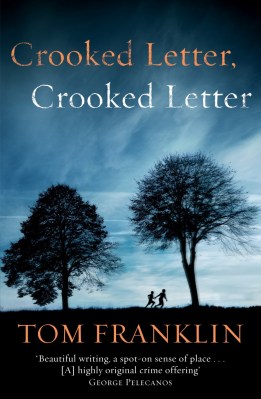
Tom Franklin, Crooked, Letter, Crooked Letter (London: Macmillan, 2011 [2010]). A compelling crime novel that explores the far-reaching legacy of an unsolved crime in America’s Deep South 4.5 stars

Opening line: The Rutherford girl had been missing for eight days when Larry Ott returned home and found a monster waiting in his house.

Crooked Letter, Crooked Letter is a complex, many-layered novel that explores the relationship between an impoverished black boy and awkward white boy in the 1970s, an unsolved crime and the cumulative effect of its poisonous legacy over twenty-five years, and the intricate workings of small-town prejudice.

When Cindy Walker disappears in 1982, suspicion falls on oddball teenager Larry Ott, the last person seen with her at a drive-in movie that fateful night. While nothing is ever proved, the 500 residents of Chabot in Mississippi draw their own conclusions, condemning Larry to a lonely life of almost total social exclusion, waiting for out-of-town customers at the family garage who seldom come. When college student Tina Rutherford goes missing twenty-five years later, negative assumptions are once again swiftly made, placing Larry’s life at risk. It’s up to Silas Jones, who escaped the rural black poverty of Chabot through baseball, but is now back as its sole law enforcement officer, to investigate the truth of what happened to Cindy and Tina. This process is one that will lead him to examine his own uneasy friendship with Larry during their childhood, and to confront the complexities of their unresolved past.

The novel is an extremely well-written and satisfying read, with chapters switching between the present-day investigation and the past, and alternating between Larry’s and Silas’s points of view. Both of these characters are skilfully drawn, as is the setting of Chabot and the steamy landscape of the Deep South (‘he smelled the hot after-rain and listened to the shrieking blue jays, alone at the edge of a wall of woods, miles from anywhere…’). Most impressive, however, is the dissection of the repurcussions that one set of events can have down the years, and the central question the novel poses of how far individuals and communities can make amends for past errors or moral failures.

Of the crime novels I’ve read recently, Crooked Letter forms part of a loose trilogy in my mind with Malla Nunn’s A Beautiful Place to Die (reviewed here) and Peter May’s The Blackhouse (not yet reviewed). Each has a wonderful sense of place (the Deep South, South Africa and the Isle of Lewis respectively) and successfully depicts small but socially complex communities. While Franklin and Nunn’s novels both explore tensions within racially-divided communities, Franklin and May’s novels can be viewed as coming-of-age stories, whose investigators are forced to re-examine pasts they had long packed away. Of the three novels, Crooked Letter is the one I enjoyed most fully: although the other two were fulfilling reads in a number of respects, they were slightly let down in my view by excessively melodramatic endings.

Further information about Tom Franklin (who was born in small town very much like Chabot) is available here. You can also read the first three chapters of the novel here.

Mrs. Peabody awards Crooked Letter, Crooked Letter a highly satisfying 4.5 stars.

Creative Commons License

.

Friedrich Dürrenmatt’s The Pledge (first review of Swiss crime!)

Friedrich Dürrenmatt, The Pledge (Das Verbrechen), tr. from the German by Joel Agee, Pushkin Press 2017 [1958].

 First line: Last March I had to give a lecture in Chur on the art of writing detective stories.

There are very few crime novels that I keep coming back to, but The Pledge is one of them. Written over half a century ago in 1958, it’s one of three crime novels by the renowned Swiss dramatist and writer Friedrich Dürrenmatt (the others are The Judge and his Hangman (1950) and Suspicion (1951)). The Pledge is my favourite of the three, for its fine writing and penetrating critique of the crime genre. Its tantalising subtitle is Requiem auf den Kriminalroman or ‘Requiem for the Crime Novel’.

The Pledge tells the story of Swiss police inspector Matthäi, who just is clearing his desk prior to a secondment in Jordan when a young girl’s murder is called in. After breaking the news to the girl’s parents, Matthäi is asked by the mother to promise ‘on his eternal salvation’ that he will find the murderer, and this, after a brief hesitation, he does: the pledge of the title. Thus begins a long investigation, which eventually tips over into a personal obsession that will threaten Matthäi’s sanity (making him one of the most  sympathetic investigative figures in the genre).

Matthäi’s tale is told to the figure of ‘the author’ by Dr. H, a former chief of police in Zurich, who was also once Matthäi’s boss. Dr. H is prompted to recount the story after attending the author’s talk on writing detective fiction, as a means of highlighting the ‘lies’ peddled by his work:

“What really bothers me about your novels is the storyline, the plot. There the lying just takes over, it’s shameless. You set up your stories logically, like a chess game: here’s the criminal, there’s the victim, here’s an accomplice, there’s a beneficiary. And all the detective needs to know is the rules: he replays the moves of the game, and checkmate, the criminal is caught and justice has triumphed. This fantasy drives me crazy. You can’t come to grips with reality by logic alone. Granted, we police are forced to proceed logically, scientifically; but there is so much interference, so many factors mess up our schemes that success very often amounts to no more than professional luck and pure chance working in our favour. […] But you fellows in the writing game don’t care about that. You don’t try to grapple with a reality that keeps eluding us, you just set up a manageable world. That world may be perfect, but it’s a lie.”

So it’s the disjunction between the controlled fictions produced by ‘the author’ and the frustrating ‘reality’ of Matthäi’s troubled investigation that’s the catalyst for Dr. H’s narrative – a wonderful ‘frame story’ that cheekily critiques the very genre the novel employs and implicitly wags a finger at all crime fiction fans for buying into its fantasy world.

As if all of this wasn’t clever enough, Dürrenmatt manages to have his cake and eat it too, by relating a story that thematises the impossibility of absolute closure and justice, but also provides the reader with a satisfying resolution in line with the expectations of the genre. Although of course, that could just be ‘the author’ meddling with the tale Dr. H told him…

The novel was adapted for film in 2001, directed by Sean Penn and with Jack Nicholson in the lead role.