What next for Mrs. Peabody Investigates?

Happy New Year to you all! I hope you had a relaxing break and managed to squirrel yourself away for some of it with a good crime novel or two.

As is customary at this time of year, I’ve been doing a bit of a stocktake, particularly in relation to this blog. It’s been a sobering experience:

  1. It turns out I wrote a paltry five blog posts in 2021. FIVE! These consisted of one literary obituary, two Petrona Award posts, one set of summer reviews, and Mrs P’s Christmas recommendations. Spot what was missing: any semblance of regular crime reviewing. Hmmm.
  2. I managed to miss the 10th anniversary of Mrs. Peabody Investigates!!! I started blogging in January 2011, but that wonderful milestone just passed me by…

All of which tells me I can’t outrun the laws of time and space.

I won’t bore you with the details – just imagine a classic pandemic brew of extra work and family pressures. However, one thing is clear: something needs to change.

Option 1 is to say ‘it’s been a good run’ and let Mrs. Peabody bow out gracefully.

Option 2 is to say ‘must do better this year’, knowing that the end result is likely to be much the same.

Option 3 is to try a little experiment… And that’s what I’ve decided to do.

You’ll see there’s a jazzy new ‘donate’ button on the main menu bar at the top of the blog.

The idea is this: for those blog readers who can and wish to, there’s the option of donating a little something to help ‘power’ the blog. What this means in practice is that any donations will go towards buying me time to write reviews. Or to put it another way: as a freelancer with finite resources, they’ll allow me to liberate some precious hours to review and post more regularly.

BUT – and this is very important – there will never be any expectation on my part that readers should donate. The blog will always remain accessible and ‘free at the point of delivery’. No paywall for Mrs P! And you have my word that I’ll remain independent. ‘Mrs. Peabody Investigates’ will always review the best international crime fiction, TV and film without fear or favour.

As I say, all of this is an experiment and I’m very relaxed about the outcome. We’ll just see how things go…

So onwards and upwards, starting tomorrow with a review of Kwon Yeo-sun’s Korean crime novel Lemon!

Let it snow! Mrs. Peabody’s 2021 Xmas crime recommendations

Here are Mrs. Peabody’s 2021 Christmas crime recommendations! 

Treat others! Treat yourself!

Please support local booksellers while keeping yourself and others safe.

Belinda Bauer, Exit (Black Swan, 2021 – UK)

First line: The key was under the mat.

I adore pretty much everything Belinda Bauer has written – she seems capable of turning her hand to almost any kind of crime – and Exit is no exception. Mild-mannered pensioner Felix Pink is an ‘Exiteer’, one of a group of volunteers who keep the ill and infirm company when they decide they’ve had enough of life. But one day an assignment goes horribly wrong, and Felix finds himself needing to stay one step ahead of the police while frantically trying to work out what is going on. Exit tackles weighty issues of life and death with humanity, compassion and a lot of laughs. I’m not sure how Bauer pulls it off, but she emphatically does, and I don’t know anyone who hasn’t loved this impeccably constructed crime novel (including those who claim not to like crime).

Jane Harper, The Survivors (Little, Brown, 2020 – Tasmania)

First line: Kieran hoped the numbness would set in soon.

Two things drew me to this crime novel: its top-notch author and its setting – a little town on Tasmania’s wild coastline. Kieran Elliott is on a rare visit to Evelyn Bay where he grew up. His mother Verity is struggling to look after his father, who has dementia, and the absence of his dead brother Finn looms large both within the family and his wider circle of friends. When Bronte, a young artist working at a cafe, is found dead on the beach, unresolved questions from the past resurface, not least the disappearance of schoolgirl Gabby during the same big storm that claimed Finn’s life. The Survivors is a crime novel that delivers on a number of levels: superb characterization, an absorbing and gripping plot, and a sensitive examination of grief.

Jess Kidd, Things in Jars (Canongate, 2019 – England/Ireland)

First line: The raven levels off into a glide, flight feathers fanned.

Jess Kidd is one of the most original crime authors writing today, both in terms of her subject matter and her rich writing style. Things in Jars is her first ‘proper’ historical crime novel, set in and near London between 1841 and 1863. It features a number of formidable women, chief among them Bridie Devine, ‘the finest female detective of her age’, who begins investigating the kidnapping of a highly unusual child. Oh, and she can see ghosts – specifically, a heavily tattooed boxer (a ‘circus to the eye’) called Ruby Doyle, who claims to have known Bridie in life, and keeps her company through the ups and downs of the case. Filled to the brim with the eccentric, the otherworldly and the gothic, Things in Jars explores female oppression, survival, and how, with the help of allies, women can carve out a space for themselves in a hostile world.

John le Carré, Silverview (Penguin, 2021 – UK)

First line: At ten o’clock of a rainswept morning in London’s West End, a young woman in a baggy anorak, a woollen scarf pulled around her head, strode resolutely into the storm that was roaring down South Audley Street.

For le Carré fans, this is a poignant read – a final novel from the master of the spy genre. In many ways, this is a classic le Carré tale – a forensic deconstruction of one story among the many making up the intelligence world, and a scathing examination of the moral vacuum at the heart of foreign policy. We see events through the eyes of Julian Lawndsley, who has moved to a small seaside town in East Anglia to run a bookshop, and Stewart Proctor, senior intelligence troubleshooter, who gets word of a security breach in the very same spot. At the heart of it all: a mysterious Polish émigré living in ‘Silverview’, a grand manor house. It was a pleasure to be back in le Carré’s world and to spend time with his richly drawn characters. Happily, as with Agent Running in the Field, there are redemptive elements that temper the bleaker aspects of the novel.

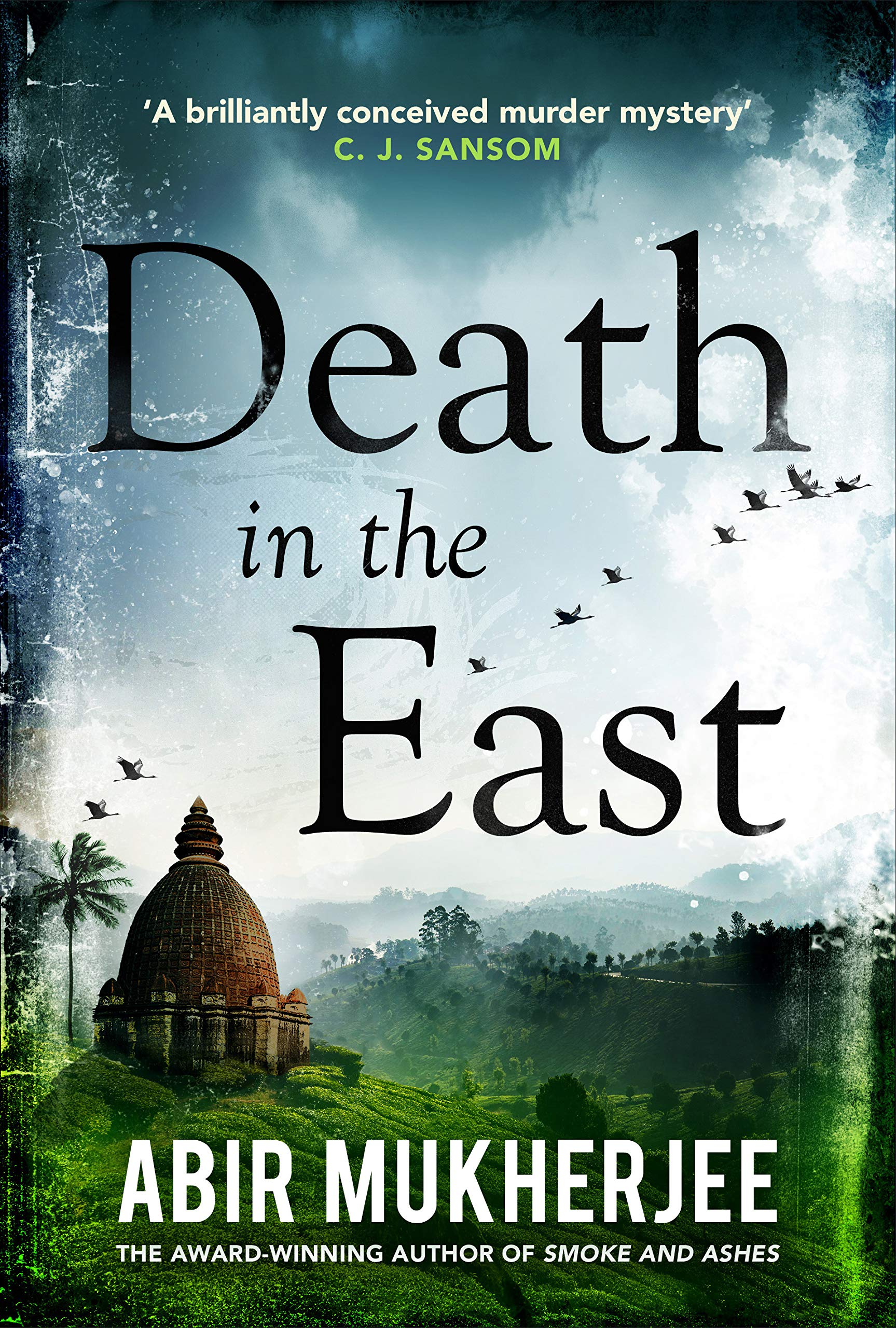
Abir Mukherjee, Death in the East (Harvill Secker, 2020 – UK/India)

First line: I’d left Calcutta with a grim resolve, a suitcase full of kerdu gourd, and, in case of emergencies, a bullet-sized ball of opium resin hidden between the folds of my clothes. 

This is the fourth in Mukherjee’s ‘Wyndham and Banerjee’ series, and I think it’s my favourite so far: a rich historical crime novel that offers not just one, but several discrete murder mysteries, including two intriguing locked-room cases. The novel switches between 1922 Assam, where Captain Sam Wyndham is trying to conquer his opium addiction, and 1905 London, during the early days of his policing career. The link: a villain whose reappearance in Assam threatens Wyndham’s life. This is a beautifully plotted crime novel that offers atmospheric depictions of Assam on the one hand and London’s Jewish East End on the other. Gripping, entertaining, and with a nice line in Chandleresque humour, it also shows us the changing face of India – Sergeant Banerjee’s welcome appearance near the end of the novel marks an important shift in the relations between the two.

Hansjörg Schneider, Silver Pebbles, tr. from the German by Mike Mitchell (Bitter Lemon Press, January 2022 – Switzerland)

First line: The Frankfurt-Basel Intercity — a sleek, streamlined train — was crossing the Upper-Rhine plain.

Schneider’s Silver Pebbles was originally published in 1993, but feels remarkably fresh today. The first in the acclaimed ‘Inspector Peter Hunkeler’ series, it introduces us to the jaded Basel police detective and treats us to a wonderfully absorbing case. When Lebanese smuggler Guy Kayat flushes some diamonds down a station toilet to evade the police, he sets off a chain of bizarre events. The diamonds are found by Erdogan, a sewage worker called to clear a blockage, who thinks his dream of opening a hotel back in Turkey is about to come true. But of course, things get complicated… A very human tale, told in a way that reminded me of Sjöwall and Wahlöö’s ‘Martin Beck’ series – a matter-of-fact style leavened with genuine warmth and a dry sense of humour. Erika Waldis, Erdogan’s long-suffering girlfriend, is the slow-burning star of the show.

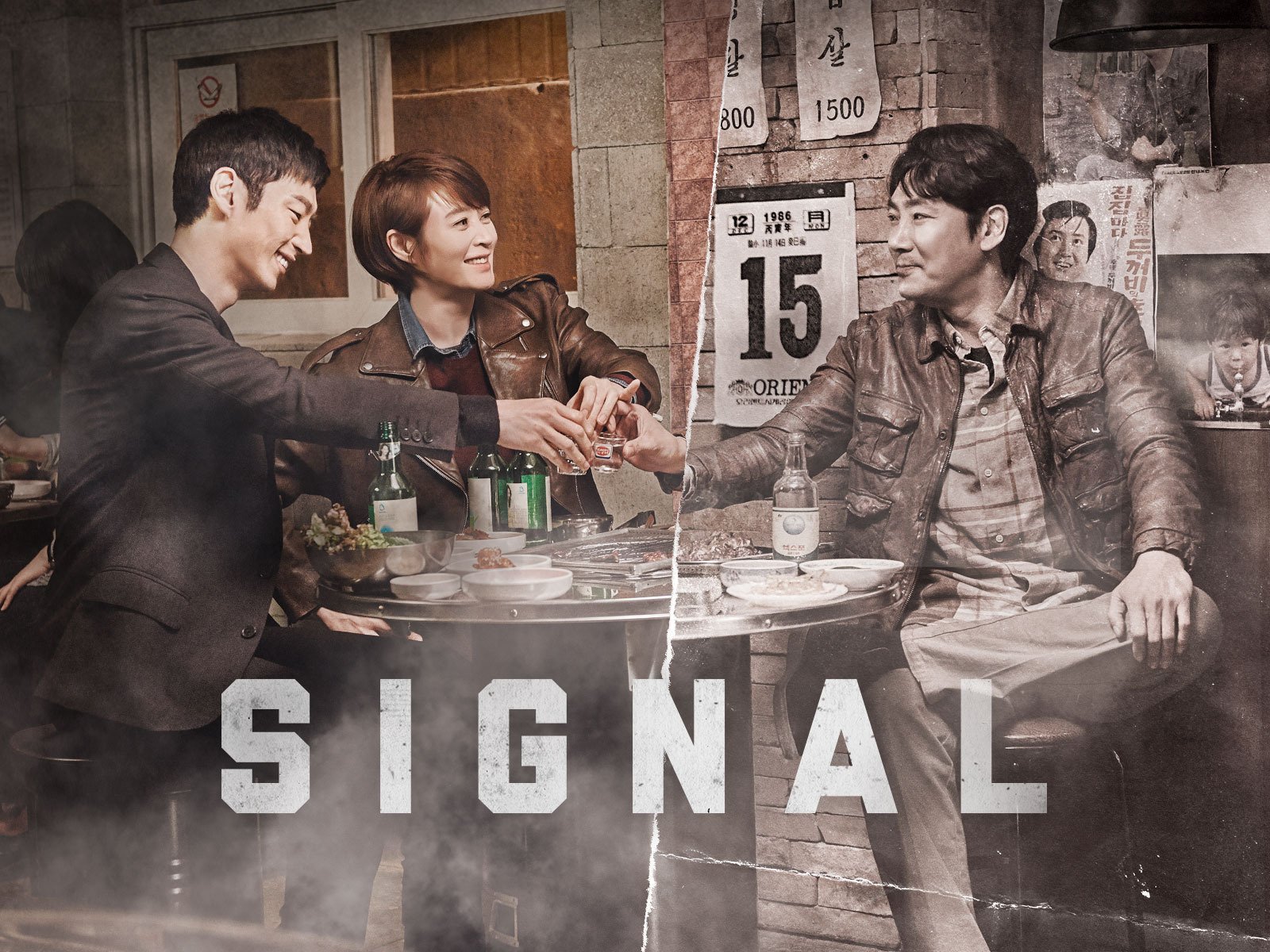
Signal, by Kim Eun-hee, dir. by Kim Won-seok (Netflix – South Korea)

This 2016 South Korean crime drama – with shades of Life on Mars – has stolen my heart. I’m about half way through and love the way it’s developing the ambitious idea of a criminal profiler in 2015 who’s able to talk to a police detective in 1989 via a chunky old walkie-talkie. As well as working on cold cases together, the mystery of the police detective’s own disappearance in 2000 increasingly moves centre stage. Unbeknownst to profiler Park Hae-young, his boss Detective Cha Soo-hyun is also searching for Detective Lee Jae-han – he was her mentor when she was a rookie back in 1989. Along with the police-procedural elements and occasional slapstick humour, it’s Signal‘s wonderfully human characterization that stands out for me.

And here’s a trio on my own Christmas wishlist.

Mick Herron’s Dolphin Junction, a collection of short stories featuring, among others, Jackson Lamb, and Zoë Boehm & Joe Silvermann (the stars of his ‘Slough House’ and ‘Oxford’ series respectively). Expect brilliant storytelling and acerbic wit.

Katie Kitamura’s Intimacies, about an interpreter whose duties involve interpreting for a potential war criminal at the International Court in Hague.

David Heska Wanbli Weiden’s Winter Counts, a much-lauded debut that takes a hard-hitting, nuanced look at life on South Dakota’s Rosebud Indian Reservation.

********

There are some big changes coming to Mrs. Peabody Investigates in 2022: keep your eyes peeled for those!

Until then, wishing you all a very Merry Christmas!

The 2021 Petrona Award Winner!

We’re delighted to announce the winner of the 2021 Petrona Award for the Best Scandinavian Crime Novel of the Year

The winner is….*drumroll*

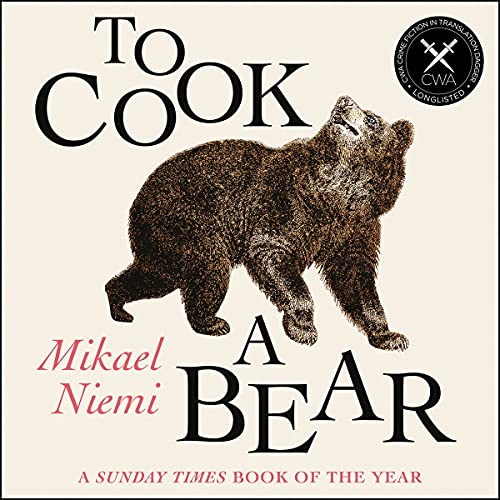
TO COOK A BEAR by Mikael Niemi, translated from the Swedish by Deborah Bragan-Turner and published by MacLehose Press.

It is the first historical crime novel to win the Petrona Award.

Here’s what the judges had to say: The judges adored TO COOK A BEAR, a historical crime novel set in northernmost Sweden in 1852, and were unanimous in our decision to select it as the Petrona Award winner for 2021. We were particularly impressed with the novel’s use of historical detail, its fascinating reimagining of a figure from history, the sense of location and atmosphere, the rumination on religion versus the natural world, and the depiction of early forensics. TO COOK A BEAR’s superb characterisation of the main protagonists Læstadius and Jussi, which is tinged with sadness yet hope, also allows the author to explore the issues of literacy and class with sensitivity and compassion. The beautiful translation by Deborah Bragan-Turner lets the novel shine for English-language readers around the world.

And here are reactions from the winning author, translator and publisher: Mikael Niemi: I am very proud and happy to have received the Petrona Award and would like to thank my editor, Katharina Bielenberg, my translator Deborah Bragan-Turner, and my agency, Hedlund Literary Agency, who have made it possible for this novel to reach British readers. This happy news has brightened the growing winter darkness here in the very north of Scandinavia. I am sending my warmest thanks to all my British readers. Deborah Bragan-TurnerI am absolutely thrilled and very honoured to receive the Petrona Award. It’s a great privilege to be in the company of such accomplished authors and translators on the shortlist. Many congratulations to you all. Thank you to MacLehose Press for your support and editorial advice, and to the panel of judges for your championing of and enthusiasm for Scandinavian fiction in translation. And of course thank you most of all, Mikael Niemi, for bringing the story of Jussi and the pastor to us in TO COOK A BEAR, an inspired novel and a joy to translate. MacLehose Press: We are delighted that Mikael Niemi’s novel has been recognised with the Petrona Award. TO COOK A BEAR is immersive and transporting, historical crime fiction at its best, and it has been thrilling to watch it find its readers in English. Powerfully vivid and lush in its descriptions of Sweden’s very far north, and brilliant on literacy and the power of language, it has been beautifully and imaginatively rendered in Deborah Bragan-Turner’s translation. Congratulations to them both! Huge congratulations to everyone! And heartfelt thanks to our sponsor, David Hicks, for his generous support of the 2021 Petrona Award.

And for all things Petrona, see http://www.petronaaward.co.uk/

The 2021 Petrona shortlist is available here.

2021 Petrona Award – the shortlist is here!

Six outstanding crime novels from Iceland, Norway & Sweden have been shortlisted for the 2021 Petrona Award for the Best Scandinavian Crime Novel of the Year.

The shortlisted titles are:

A NECESSARY DEATH by Anne Holt, tr. Anne Bruce (Corvus; Norway)

DEATH DESERVED by Jørn Lier Horst and Thomas Enger, tr. Anne Bruce (Orenda Books; Norway)

THE SECRET LIFE OF MR. ROOS by Håkan Nesser, tr. Sarah Death (Mantle; Sweden)

TO COOK A BEAR by Mikael Niemi, tr. Deborah Bragan-Turner (MacLehose Press; Sweden)

THE SEVEN DOORS by Agnes Ravatn, tr. Rosie Hedger (Orenda Books; Norway)

GALLOWS ROCK by Yrsa Sigurðardóttir, tr. Victoria Cribb (Hodder & Stoughton; Iceland)

The winner will be announced on Thursday 4 November 2021!

Today, very aptly, is International Translation Day. We are extremely grateful to the five translators whose expertise and skill have allowed readers to access these outstanding examples of Scandinavian crime fiction, and to the publishers who continue to champion and support translated fiction.

The judges’ comments on the shortlisted titles:

A NECESSARY DEATH by Anne Holt, tr. Anne Bruce  

Anne Holt, according to Jo Nesbø, is the ‘godmother of modern Norwegian crime fiction’. Best known for her ‘Hanne Wilhelmsen’ and ‘Vik/Stubø’ series (the inspiration for TV drama Modus), she also served as Norway’s Minister for Justice in the 1990s. A Necessary Death is the second in Holt’s ‘Selma Falck’ series, whose eponymous protagonist is a high-flying lawyer brought low by her gambling addiction. The novel shows Falck resisting an attempt to kill her: on waking in a burning cabin in a remote, sub-zero wilderness, she has to figure out how to survive, while desperately trying to remember how she got there. A pacy, absorbing thriller with a gutsy, complex main character.

DEATH DESERVED by Jørn Lier Horst and Thomas Enger, tr. Anne Bruce 

Death Deserved marks the beginning of an exciting collaboration between two of Norway’s most successful crime authors. Thomas Enger and Jørn Lier Horst are both already well known for their long-running ‘Henning Juul’ ­and ‘William Wisting’ series. Death Deserved, in which a serial killer targets well-known personalities, mines each writer’s area of expertise: the portrayal of detective Alexander Blix draws on Horst’s former career as a policeman, while Enger brings his professional knowledge of the media to the depiction of journalist Emma Ramm. The novel expertly fuses the writers’ individual styles, while showcasing their joint talent for writing credible and engaging characters, and creating a fast-paced, exciting plot.

THE SECRET LIFE OF MR. ROOS by Håkan Nesser, tr. Sarah Death  

Håkan Nesser, one of Sweden’s most popular crime writers, is internationally known for his ‘Van Veeteren’ and ‘Inspector Barbarotti’ series. The Secret Life of Mr. Roos is the third in a quintet featuring Gunnar Barbarotti, a Swedish policeman of Italian descent, who is a complex yet ethically grounded figure. His relatively late appearance in the novel creates space for the portrayal of an unlikely friendship between Mr. Roos, a jaded, middle-aged man who has unexpectedly won the lottery, and Anna, a young, recovering drug addict of Polish origin, who is on the run. Slow-burning literary suspense is leavened with a dry sense of humour, philosophical musings, and compassion for individuals in difficult circumstances.

TO COOK A BEAR by Mikael Niemi, tr. Deborah Bragan-Turner 

Mikael Niemi grew up in the northernmost part of Sweden, and this forms the setting for his historical crime novel To Cook a Bear. It’s 1852: Revivalist preacher Lars Levi Læstadius and Jussi, a young Sami boy he has rescued from destitution, go on long botanical treks that hone their observational skills. When a milkmaid goes missing deep in the forest, the locals suspect a predatory bear, but Læstadius and Jussi find clues using early forensic techniques that point to a far worse killer. Niemi’s eloquent depiction of this unforgiving but beautiful landscape, and the metaphysical musings of Læstadius on art, literature and education truly set this novel apart.

THE SEVEN DOORS by Agnes Ravatn, tr. Rosie Hedger 

Agnes Ravatn’s The Seven Doors has shades of Patricia Highsmith about it: a deliciously dark psychological thriller that lifts the lid on middle-class hypocrisy. When Ingeborg, the daughter of university professor Nina and hospital consultant Mads, insists on viewing a house that her parents rent out, she unwittingly sets off a grim chain of events. Within a few days, tenant Mari Nilson has gone missing, and when Nina starts to investigate her disappearance and past life as a musician, worrying truths begin to emerge. A novel about gender, power and self-deception, expertly spiced with Freud and Bluebeard, The Seven Doors delivers an ending that lingers in the mind.

GALLOWS ROCK by Yrsa Sigurðardóttir, tr. Victoria Cribb 

Gallows Rock is the fourth in Yrsa Sigurðardóttir’s ‘Children’s House’ series, featuring child psychologist Freyja and police detective Huldar as a reluctant investigative duo. Their relationship provides readers with some lighter moments and occasional black humour, along with a frisson of mutual attraction. The novel’s intricate plot focuses on skewed morals and revenge: what begins as a ritualistic murder at an ancient execution site in the lava fields – the Gallows Rock of the title – leads to the unearthing of a case of long-term abuse, whose devastating impact is sensitively explored. The author won the 2015 Petrona Award for The Silence of the Sea.

This year’s Petrona Award shortlist once again sees Norway strongly represented with three novels; Sweden with two and Iceland with one. The crime genres represented include the police procedural, historical crime, psychological crime, literary crime and thriller.

The six novels stand out for their writing, characterisation, plotting, and overall quality. They are original and inventive, often pushing the boundaries of genre conventions, and tackle complex subjects such as class and power, the bonds of friendship, and the failure of society to support the vulnerable.

The Petrona Award judges are:

Jackie Farrant – Crime fiction expert and creator of RAVEN CRIME READS; bookseller for twenty years and a Regional Commercial Manager for a major book chain in the UK.

Dr. Kat Hall – Translator and editor; Honorary Research Associate at Swansea University; international crime fiction reviewer at MRS. PEABODY INVESTIGATES.

Ewa Sherman – Translator and writer; blogger at NORDIC LIGHTHOUSE; regular contributor to CRIME REVIEW; volunteer at crime fiction festivals in Reykjavik, Bristol and Newcastle.

Our award administrator is Karen Meek – owner of the EURO CRIME website; reviewer, former CWA judge for the International Dagger, and Library Assistant.

The Petrona team would like to thank our sponsor, David Hicks, for his continued generous support of the Petrona Award.

The Petrona Award is open to crime fiction in translation, either written by a Scandinavian author or set in Scandinavia, and published in the UK in the previous calendar year. Further information can be found on the Petrona Award website: http://www.petronaaward.co.uk.

Summer smörgåsbord of international crime

Somehow it’s been five months since I last blogged, but thankfully I’ve still found time to read some quality crime – a very welcome oasis amidst the grind of daily life. Here’s a round-up: an eclectic assortment of international crime fiction to suit various reading moods.

Karin Slaughter, Cop Town, Century 2014 (USA)
First line: Dawn broke over Peachtree Street.

This standalone by Karin Slaughter was featured on Margot Kinberg’s excellent crime blog and immediately piqued my interest.

Atlanta, 1974: Kate Murphy’s first day as a policewoman gets off to a rough start when she runs into a wall of sexism at the precinct. On top of that, a policeman has just been killed and tensions are high. Paired with reluctant but street-savvy patrolwoman Maggie Lawson, Kate has to learn the job fast while navigating a highly dangerous case.

Cop Town provided an illuminating and enjoyable glimpse into the everyday life of pioneering policewomen. I couldn’t help but imagine the lead characters as a young Cagney & Lacey – two characters from very different backgrounds who somehow form a great team. The novel is also a good ‘sequel’ to Thomas Mullen’s Darktown, which focuses on the difficulties faced by black policemen in the Atlanta force during the late 1940s.

Håkan Nesser, The Secret Life of Mr Roos, tr. by Sarah Death, Mantle 2020 (Sweden)

First line: The day before everything changed, Ante Valdemar Roos had a vision.

The Secret Life of Mr Roos is the third in Nesser’s ‘Inspector Barbarotti’ series and the most satisfying installment yet.

Middle-aged, unhappily married accountant Valdemar Roos wins the lottery and secretly buys himself a hut in the remote Swedish countryside. Anna Gambowska, a twenty-one-year-old former drug addict fleeing from a domineering partner, is forced to seek refuge there one night. Before long, a crime takes place that will transform both their lives.

This was a wonderfully absorbing 500-page read. The characterisation of the two main protagonists is excellent, as is the story of their relationship, which is told with both compassion and humour. Barbarotti only makes his entrance half-way through the novel, ensuring that Valdemar and Anna remain firmly centre stage and that we genuinely care about their fates. Scandi crime at its best.

Agnes Ravatn, The Seven Doors, tr. by Rosie Hedger, Orenda Books 2021 (Norway)

First line: Berg slinks along the walls, just as the two surveyors did the week before.

The Seven Doors is a deliciously dark psychological thriller that skewers middle-class hypocrisies and the individual’s capacity for self-deception when unpalatable truths threaten a comfortable life.

Ingeborg, the pregnant daughter of university professor Nina and consultant Mads, unwittingly sets off a chain of events when she insists on viewing the house her parents rent out as a prospective new home. Within days, tenant Mari has gone missing, and bit by bit, things spiral out of control. This is a novel about gender, class entitlement and wilful blindness, expertly spiced with some Freud and Bluebeard, and has a cracking ending – I had to re-read it twice for the sheer thrill of it!

Adania Shibli, Minor Detail, tr. from the Arabic by Elisabeth Jaquette, Fitzcarraldo Editions 2020 (Palestine)

First line: Nothing moved except the mirage.

This is a novel to save for when you are feeling emotionally robust. I think it’s one of the most devastating reading experiences I’ve ever had.

Shibli is a Palestinian writer based in Berlin, who uses elements of the crime genre to create a story with two distinct halves. The first is a crime committed in 1949 just after the War of Independence or Nakba: an Israeli officer and his platoon rape, murder and bury a young Palestinian woman in the Negev desert. The second follows a woman from present-day Ramallah who becomes obsessed with this ‘minor detail’ of history, and decides to investigate and memorialise the young woman’s death. However, doing so means travelling to areas that are strictly off-limits to her as a Palestinian, a nerve-wracking journey that subverts any conventional narrative expectations we might have.

The novel was longlisted for the 2021 International Man Booker Prize, and reminded me how crucial translation is for illuminating under-represented viewpoints and for giving a voice to authors who write in less frequently translated languages.

It’s not what you know, it’s what you can prove.

I also recently watched an outstanding Danish crime series –The Investigation (dir. Tobias Lindholm) – which explored the extraordinary Kim Wall murder case.

The way the drama approached its subject matter blew me away. It completely sidelined the attention-seeking murderer – to the point where his name wasn’t even mentioned – and focused instead on the investigative process that convicted him, on the relationship between lead investigator Jens Moller Jensen and Kim’s parents – and crucially on Kim and her journalism. The acting is fantastic throughout (fans of Wallander, The Killing and Borgen will recognise a number of faces), and the details of how the investigation unfolded to the point where they could successfully prosecute are riveting. A grown-up crime drama that makes conventional serial-killer narratives look tired and formulaic.

The series is still available to view on BBC 2 iPlayer.

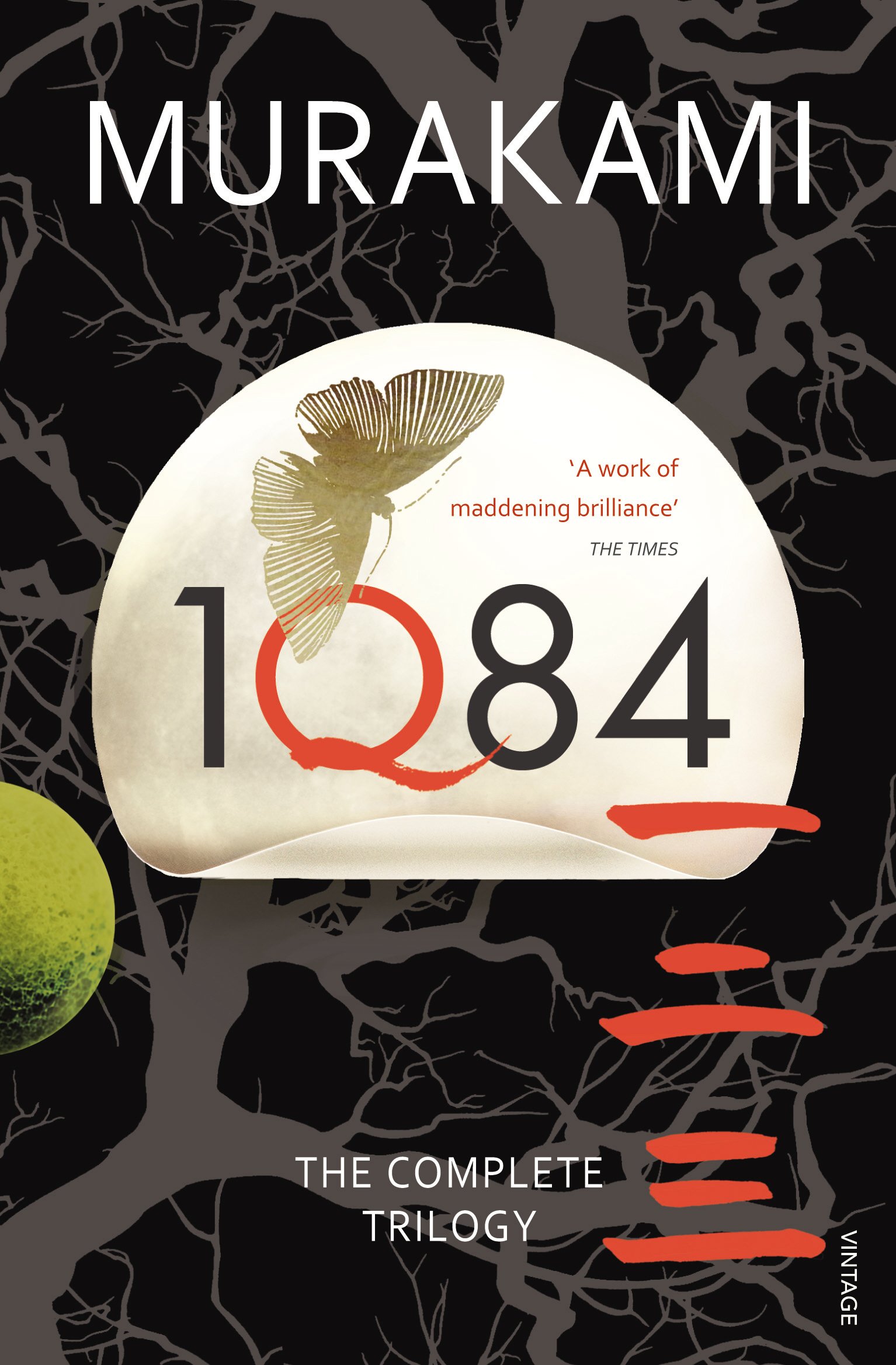
And finally…. I’m currently reading Haruki Murakami’s 1Q84 Trilogy, translated from the Japanese by Jay Rubin and Philip Gabriel. The whole thing comes to a whopping 1318 pages, so should keep me out of mischief for a while.

The reason I include it here is because it turns out to have a strong crime element, as I discovered to my amusement about 50 pages in, when one of the lead characters was revealed not to be a smart young businesswoman after all, but something rather more murderous. You can always rely on the wildly unexpected when you read Murakami. Bananas, but in a very marvellous way.

I hope you’re all keeping well and enjoying some quality crime reading. Do let me know your top reads below. And is anyone watching Mare of Easttown with Kate Winslet? Is it as good as everyone says?!

John le Carré (1931-2020) — an appreciation

I’m so very saddened by the death of John le Carré – a brilliant, insightful and humane writer, whose ability to capture the personal and political complexities of our time was second to none.

John le Carré

Below is a slightly edited post I first wrote eight years ago – my homage to this great writer and his works. I never met le Carré, but we did briefly have contact once, when he rode to the rescue of my beleaguered languages department after it was threatened with redundancies in 2010. He gave his help immediately and with a generosity that none of us have forgotten. During that period, he signed off a note to me with the words “All fine. Please feel free”. It sits framed on my mantlepiece, where I can look at it fondly: I reckon it’s a pretty good principle to live your life by.

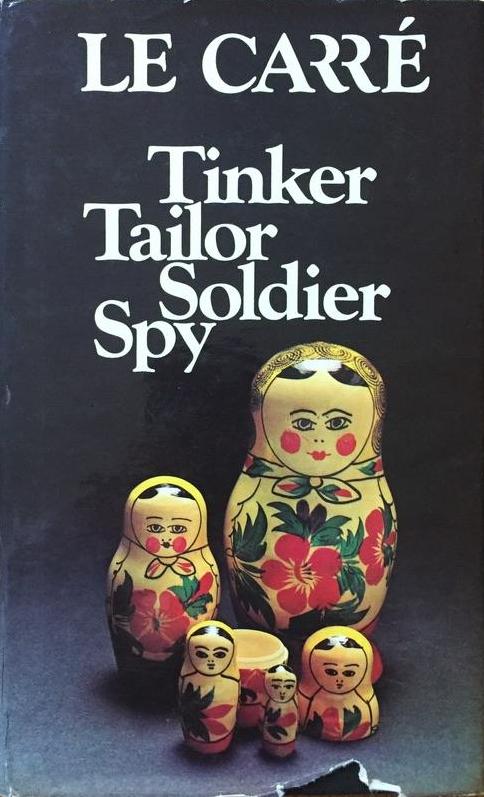
I found out later from Adam Sisman’s biography that we had both lived, at different times, in the same small town in our youth. I have happy memories of watching the TV series of Tinker Tailor Soldier Spy with my dad back then – we adored Alec Guinness as Smiley, and that incredibly haunting Russian doll title sequence.

Here’s my personal appreciation of John le Carré and his works, which is shaped by our mutual love of Germany and its culture. Do you have a favourite le Carré work? Please let me know if so in the comments below.

1. I love that the author and his creation George Smiley are outward-looking linguists. Le Carré studied German literature for a year at the University of Bern, and graduated with first-class honours in modern languages from Oxford. Most of his spies are linguists, and the most famous of them all, George Smiley, studied Baroque German literature and was destined for academia until the British Secret Service came knocking — in the shape of the brilliantly named ‘Overseas Committee for Academic Research’. The profession of intelligence officer gives Smiley ‘what he had once loved best in life: academic excursions into the mystery of human behaviour, disciplined by the practical application of his own deductions’ (Call for the Dead). And languages still really matter. Smiley’s ability to speak fluent German plays a vital role in Smiley’s People when he gathers intelligence in Hamburg, the city where he spent part of his boyhood, as well as a number of years ‘in the lonely terror of the spy’ during the Second World War. Le Carré says of him in an afterword that ‘Germany was his second nature, even his second soul […] He could put on her language like a uniform and speak with its boldness’. This author’s world, then, is overwhelmingly multilingual, multicultural and international.

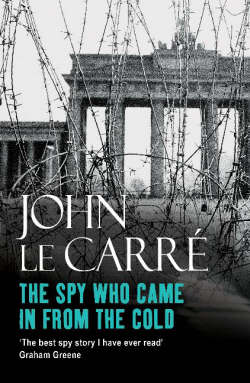
2. Many of le Carré’s novels brilliantly evoke Germany during the Cold War. The frequent use of a German setting was practically inevitable given le Carré’s studies, his membership of the British Foreign Service in West Germany (as Second Secretary in the British Embassy in Bonn and Political Consul in Hamburg, which provided cover for his MI6 activities), and the timing of his stay between 1959 and 1964 at the height of the Cold War. Berlin was the frontline of the ideological battle between the Eastern and Western blocs, and le Carré says in an afterword to The Spy Who Came in from the Cold that ‘it was the Berlin Wall that got me going, of course’. Le Carré’s first novel, Call for the Dead, was published in 1961, the year the Wall went up, and, along with a number of his other novels, is partially set in East/West Germany (see list below). The most memorable for me are The Spy Who Came in from the Cold (1963) and Smiley’s People (1979), both of which feature dénouements involving Berlin border crossings and evoke the Cold War tensions of that time and place perfectly.

3. I admire le Carré’s sophisticated understanding of 20th-century German and European history. This is evident in his Guardian piece marking the 50th anniversary of The Spy Who Came in from the Cold, where he references the complexities of Allied intelligence operations in West Berlin, including the pragmatic but unethical protection of former Nazis, because they were viewed as valuable in the fight against communism. The difficult legacy of National Socialism in post-war Germany is most closely examined in his 1968 novel A Small Town in Germany.

4. I love le Carré’s ability to communicate complex histories to a mass readership in the form of intelligent and entertaining espionage novels. This isn’t something that many authors can do well; le Carré is one of the best.

5. All of le Carré’s novels reveal a deep engagement with moral questions — A fascination with the themes of loyalty and betrayal – in relation to both individuals and ideologies/states – is particularly visible in the Cold War ‘Karla Trilogy’ (Tinker Tailor Soldier Spy 1974; The Honourable Schoolboy 1977; Smiley’s People 1979), which in turn forms part of the eight-novel Smiley collection. What’s always had the greatest impact on me as a reader, though, is the critique of how the intelligence services (on either side of the ideological divide) are willing to sacrifice the individual for the ‘greater good’, and the recognition of the immorality of this act. Le Carré’s third and fourth novels – The Spy Who Came in from the Cold (1963) and The Looking Glass War (1965) – are extremely powerful in this respect, as they recount the tragic tales of those who become pawns in larger political chess games. Incidentally, I reckon the figure of Avery in the latter most accurately embodies the professional and moral disillusionment that led Carré to leave the Service. The central question for this author was and continues to be: ‘how far can we go in the rightful defence of our western values, without abandoning them on the way?’ (see Guardian piece).

6. — and their characters are fantastically drawn. Aside from the masterpiece of Smiley — the dumpy, middle-aged, unassuming, sharp-as-a-tack intelligence genius — who could forget Control, Connie Sachs, Toby Esterhase, Peter Guillam, Ricky Tarr, Jerry Westerby, Bill Haydon and Jim Prideaux? All are so beautifully depicted that you feel they are living, breathing people.

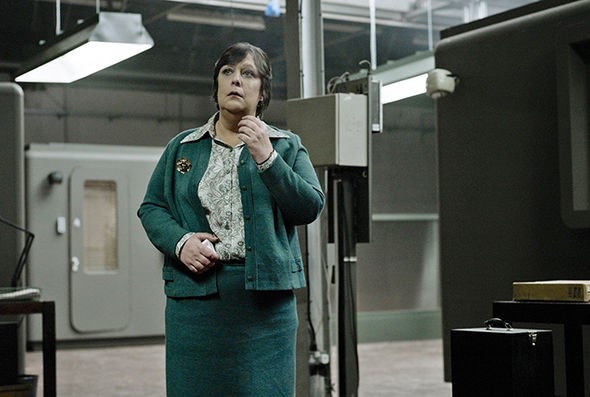
Kathy Burke as Connie Sachs in Tinker Tailor Soldier Spy (2011)

7. You won’t find more perceptive writing anywhere. In German one would say that le Carré is ‘wach’: he is awake. He really SEES the world around him and has a deep understanding of how its political and power structures work, and how individuals get tangled up in them.

8. Le Carré’s works have given us wonderful TV and film adaptations, starring great actors such as Alec Guinness, Richard Burton, Rachel Weisz and Gary Oldman. My favourites are probably still the two Guinness ‘Smiley’ TV series, but I do have a soft spot for the Tinker Tailor film, which was very stylishly done and featured a stellar cast including Kathy Burke, Benedict Cumberbatch and Colin Firth.

Alec Guinness as Smiley, retrieving a clue in Smiley’s People (1982) The man sees everything….

9. The quality of le Carré’s work is consistently outstanding — the plotting, the characterisation and the settings are all sublime. One of my own later favourites is 2001’s The Constant Gardener – a brilliant exploration of pharmaceutical corruption in the developing world. In his review of 2013’s A Delicate Truth, Mark Lawson wrote that ‘no other writer has charted – pitilessly for politicians but thrillingly for readers – the public and secret histories of his times, from the second world war to the war on terror’. The sheer range of his writing is breathtaking — and it was all impeccably researched.

10. Last but not least, le Carré was a true friend of languages, and was extremely generous in using his influence to promote language learning in the UK. He was deservedly awarded the Goethe Medal in 2011 for ‘outstanding service for the German language and international cultural dialogue’.

I’ll be raising a glass of posh red to his memory tonight.

Here’s a list of Le Carré novels that reference the German-speaking world/history:

  • Call for the Dead (Smiley’s German links; Nazi past; East Germany)
  • The Spy Who Came in From the Cold (Nazi past; divided Berlin; East Germany)
  • The Looking Glass War (East and West Germany)
  • A Small Town in Germany (Nazi past; Bonn, West Germany)
  • Smiley’s People (Hamburg, West Germany; Bern, Switzerland; divided Berlin)
  • The Perfect Spy (German at Oxford; Vienna and Berlin)
  • The Secret Pilgrim (diverse, including East Berlin, Hamburg, Munich, Zurich)
  • Absolute Friends (West Germany, East Germany)
  • A Most Wanted Man (Hamburg, Germany)
  • Our Kind of Traitor (Switzerland).

Jingle Bells! Mrs. Peabody’s 2020 Christmas crime recommendations

Well, it’s been quite a year. My ‘crime time’ has been severely dented by all the upheaval, but here are some of my reading and viewing gems.

Treat others! Treat yourself!

And if you’re in the UK, please consider using https://uk.bookshop.org/, which is a brilliant way to support local booksellers while keeping yourself and others safe.

Mrs. Peabody’s 2020 Christmas crime recommendations!

Knives Out, directed by Rian Johnson, 2019 (USA)

Wealthy mystery novelist Harlan Thrombey celebrates his 85th birthday at his mansion surrounded by his loving family. The next morning he is found dead; his throat has been cut. Enter the police and investigator Benoit Blanc, who begin to discover clues…and some unsavoury secrets within the family.

My son recommended this film to me with the words ‘you’ll love this’ and he was absolutely right. Knives Out is huge fun from start to finish, as well as a razor sharp commentary on race and class in the USA. Cuban-Spanish actress Ana de Armas is fantastic as Marta Cabrera, Harlan’s beleaguered carer, who finds herself placed in a very tricky situation. And the all-star cast — including Daniel Craig, Chris Evans, Jamie Lee Curtis, Toni Collette, Don Johnson and Christopher Plummer — have a high old time hamming their way through this clever take on the Golden Age country house mystery. Perfect Christmas viewing for those who like their crime martinis both shaken and stirred.

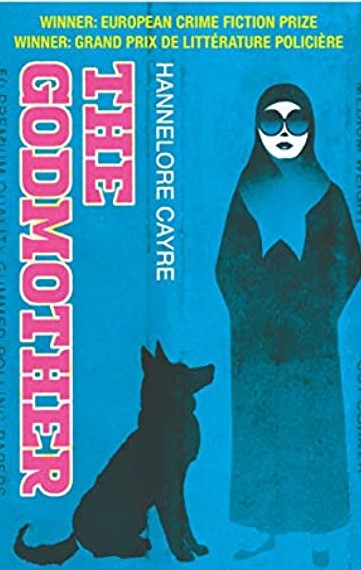
Hannelore Cayre, The Godmother, tr. Samantha Smee, Pushkin Press 2019 (France)

Opening line: My parents were crooks, with a visceral love of money.

This prize-winning novel was recommended to me by crime writer Angela Savage a while ago, and it’s a cracker. As a translator myself, I was hugely tickled by the idea of a police interpreter inadvertently falling into a life of crime. And Madame Patience Portefeux, a 53-year-old widow with some tough times behind her, relates her story with wit, verve and plenty of caustic insight into French society. There’s an excellent review of the novel by RoughJustice over at Crime Fiction Lover (minor spoilers) – a very entertaining festive read! Winner of the 2020 CWA Crime Fiction in Translation Dagger.

Shirley Jackson, We Have Always Lived in the Castle, Penguin 2009 [1962] (USA)

Opening line: My name is Mary Katherine Blackwood.

This cult Gothic (crime) novel was one of those ‘how-have-I-never-read-this-before’ books. Mary Katherine — or Merricat — lives a largely isolated life in the Blackwood home with her sister Constance and Uncle Julian. Early on, she nonchalantly tells us that ‘everyone else in my family is dead’. The rest of the novel teases out the unfortunate story of the deceased Blackwoods, and relates a series of events in the present that will have a decisive impact on the family’s future.

I was instantly hooked by Merricat’s highly original voice and the novel’s creepy Gothic atmosphere. It also has some interesting things to say about suffocating patriarchy, sisterly sacrifice and social exclusion. We Have Always Lived in the Castle is a genuinely unsettling delight and I’m sure I’ll be rereading it a number of times.

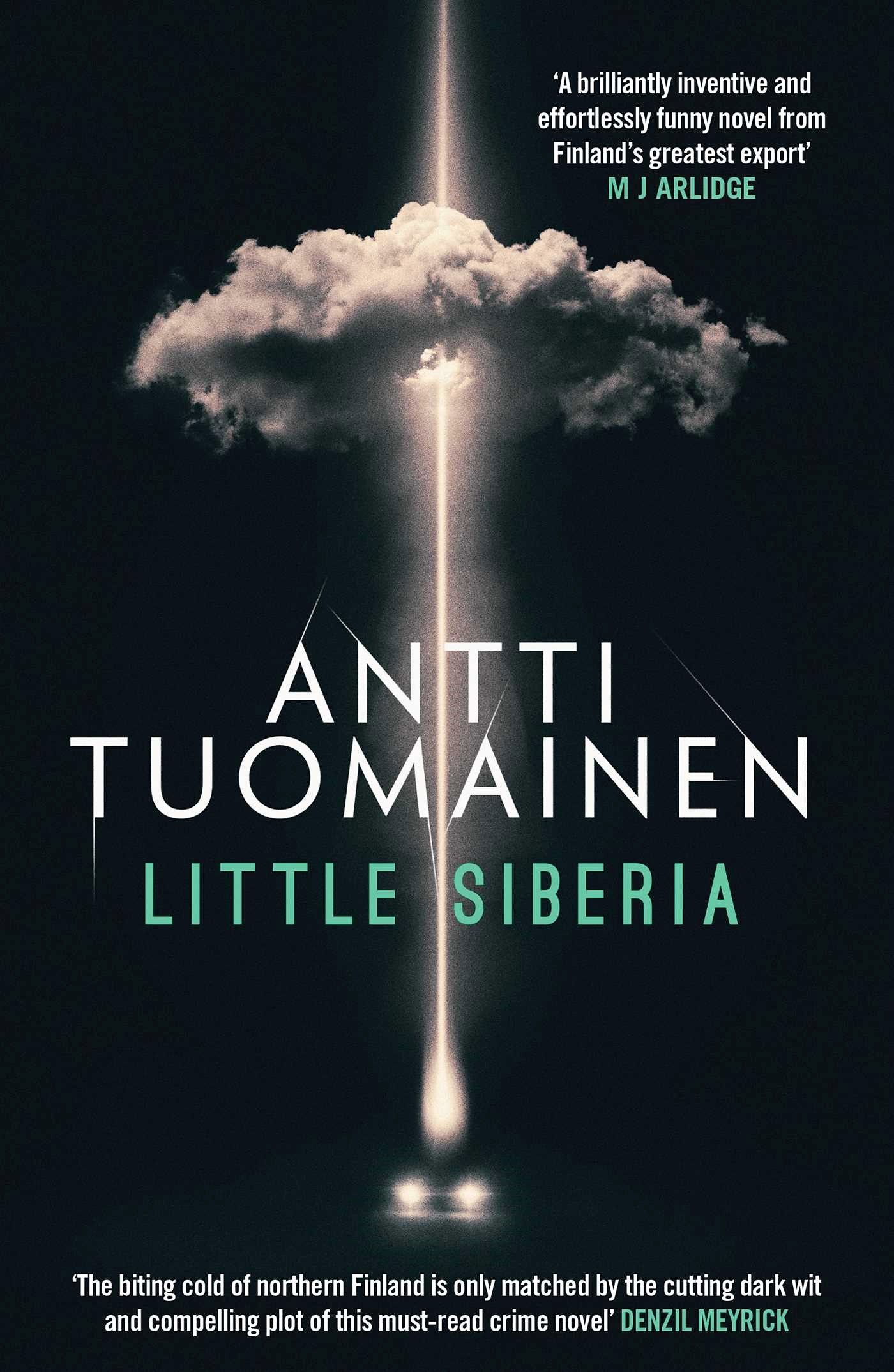
Antti Tuomainen, Little Siberia, tr. David Hackston, Orenda Books (Finland)

Opening line: ‘And how do you know what happens then?’

Our 2020 Petrona Award winner, by one of crime fiction’s most inventive and versatile writers – what’s not to like?!

Little Siberia, set in an icy northern Finland, opens with a bang when a meteorite unexpectedly lands on a speeding car. Transferred to the local museum for safe keeping, the valuable object is guarded from thieves by local priest Joel, who is grappling with both a marital crisis and a crisis of faith. Absurdist black humour is expertly combined with a warm, perceptive exploration of what it means to be human. A celebration of resilience, fortitude and simply muddling through, this is a novel for our times.

Giri/Haji, BBC 2020 (Japan/UK; now on Netflix)

Giri/Haji [Duty/Shame] is billed as a ‘soulful thriller set in Tokyo and London, exploring the butterfly effect of a single murder across two cities — a dark, witty, and daring examination of morality and redemption’. And that’s pretty much spot on.

I was addicted from the first episode, which sees frazzled Japanese police detective Kenzo Mori (Takehiro Hira) sent to London to find his wayward brother and stop a Yakuza war. The characterization of the main players is fantastic – including Kelly MacDonald as Detective Sarah Weitzmann and Will Sharpe as Rodney, a rent boy whose dad is from Kyoto and whose mum is from Peckham… There’s also some beautifully inventive use of film techniques and genres, including a number of sequences that draw on manga. I can’t find this on DVD, and it’s gone from iPlayer, but it *is* on UK Netflix. Sneak off from Christmas duties, pour yourself a glass of sherry, and get stuck in.

And finally… Ragnar Jonasson’s ‘Hulda’ or ‘Hidden Iceland’ trilogy (Penguin), which is told in reverse, with each novel set prior to the last (when Hulda is aged 64, 50 and 40).

The first novel, The Darkness (tr. Victoria Cribb) introduces us to taciturn Reykjavik Detective Inspector Hulda Hermannsdóttir. She’s about to be shoved into retirement, but is grudgingly offered the chance to look into one last cold case before she goes – that of Elena, a young Russian woman whose body was found on the Icelandic coast. This is an intriguing, multilayered novel, whose true power only becomes evident right at the end. Jónasson dares to follow through in a way that few crime writers do, and the final result is very thought-provoking indeed. The second in the series is just as powerful, and I’m looking forward to reading the third. I have a theory about how things will go. Let’s see if I’m right!

Happy reading, stay safe, and wishing you all a wonderful and very merry Christmas!

The winner of the 2020 Petrona Award – a first for Finnish crime!

*Drumroll* The winner of the 2020 Petrona Award for the Best Scandinavian Crime Novel of the Year is:

 LITTLE SIBERIA by Antti Tuomainen, translated from the Finnish by David Hackston and published by Orenda Books

The judges’ statement on LITTLE SIBERIA:

Antti Tuomainen’s LITTLE SIBERIA stood out on the shortlist for all of the judges. From its arresting opening, in which a meteorite unexpectedly lands on a speeding car, to its very human depiction of a pastor grappling with private and theological crises, this is a pitch-perfect comic crime novel with considerable depth and heart.

The first Finnish crime novel to receive the Petrona Award, LITTLE SIBERIA is a particularly fitting winner for 2020 – a year in which life was turned upside down. A celebration of resilience, fortitude and simply muddling through, it is a novel for our times.

David Hackston’s fine translation captures LITTLE SIBERIA’S depictions of an icy northern Finland and its darkly comic tone, skilfully showcasing the writing of one of Scandinavia’s most versatile and original crime authors. LITTLE SIBERIA is published by Orenda Books, one of the UK’s foremost independent publishers, which consistently champions international and translated crime fiction.

View the entire shortlist here.


Comments from the winning author, translator and publisher:

Antti Tuomainen (author):

To make a long story short, I have to make it long first. A few years ago, after publishing five very dark and very noir books, I felt there was an element within me I had to bring into my writing: humour. Before my first darkly funny book The Man Who Died was published I was very nervous. Was I making a big mistake? One of those career choices you read about in artists’ biographies under the chapter title ‘The Fall’? Not that anyone would write about me, as I would be forgotten, found much later in a basement room, alone, perished in the middle of a last ‘humorous’ sentence … Happily, I was wrong, and not for the first time. Which seems to bring us to Little Siberia. It is my eighth book and now the recipient of the prestigious Petrona Award. When I set out to write a darkly comical crime novel with a priest as main character, I knew I was taking a leap – again. Alas, here we are. I want to thank David Hackston and Karen Sullivan, both incomparable and indispensable, as without them all the jury would have had was a book in Finnish with no idea who sent it. I send my warmest thank you to the ladies and gentlemen of the jury. Oh, and that shorter story: after fifteen years of writing and nine books, it seems I’m finally an overnight success.

David Hackston (translator):

I’m extremely honoured to receive the Petrona Award 2020, not least because of the illustrious, formidable company on the shortlist. Many congratulations to all the authors and especially to my fellow translators – my co-conspirators in bringing Nordic writing to English-speaking readers. My thanks to the panel and a huge, heartfelt thank you to Orenda Books, without whom none of this would be possible. Of course, behind every good translation is an excellent original text, and in this respect Antti Tuomainen is the gift that keeps on giving. Kiitos, Antti; thanks for the laughs thus far. Long may it continue.

Karen Sullivan (Orenda Books):

We are honoured and absolutely thrilled by the news that Little Siberia has won this prestigious award – quite possibly the only designated award for Scandinavian crime fiction in English – and it feels fitting that in such a difficult year, Antti’s beautifully written, funny, philosophical and exquisitely plotted thriller has been chosen. Antti has pushed the crime genre in so many exciting directions, and I applaud the judges for making such a bold and perfect choice. It can be no easy feat to translate Finnish and yet David Hackston has once again produced an elegant, pitch-perfect translation, and we are so delighted that his work has been rewarded in this way.

The judges would also like to highly commend THE SILVER ROAD by Stina Jackson, translated from the Swedish by Susan Beard and published by Corvus (Atlantic Books).

Congratulations to all of the winners! And a heartfelt thanks from the Petrona team to our sponsor, David Hicks, for his generous and continued support of the 2020 Petrona Award.

The 2020 Petrona Award shortlist is out!

Just in time for the season of snowflakes and reading under cosy blankets, here’s the 2020 Petrona Award shortlist!

Petrona

Six outstanding crime novels from Finland, Iceland, Norway and Sweden have been shortlisted for the 2020 Petrona Award for the Best Scandinavian Crime Novel of the Year.

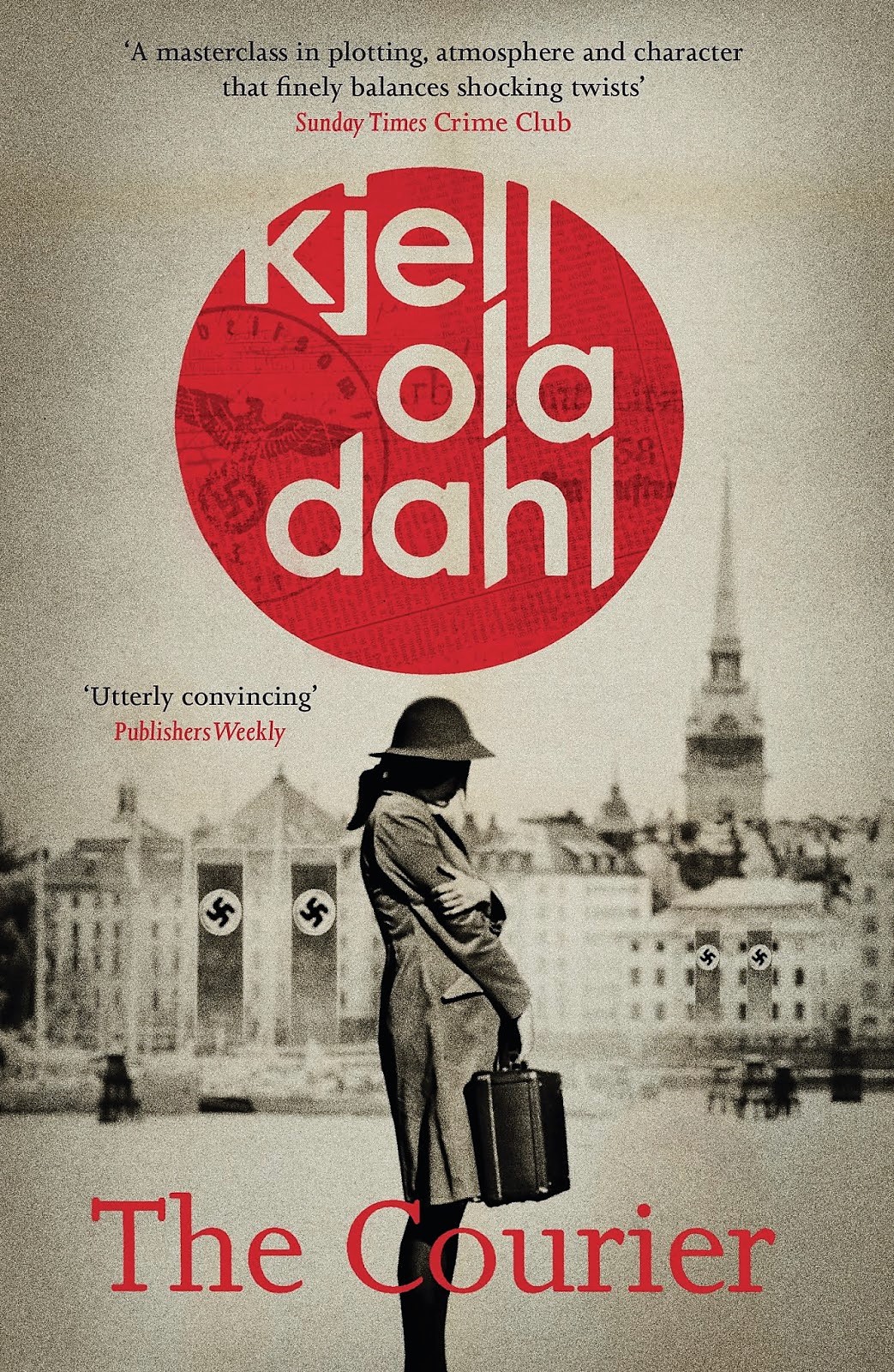
THE COURIER by Kjell Ola Dahl, tr. Don Bartlett (Orenda Books; Norway) 

Kjell Ola Dahl made his debut in 1993, and has since published seventeen novels, most notably those in the ‘Gunnarstranda and Frølich’ police procedural series. In 2000, he won the Riverton Prize for The Last Fix, and the prestigious Brage and Riverton Prizes for The Courier in 2015. In much the same way as Icelandic author Arnaldur Indriðason, Dahl explores the experience of the Second World War by moving away from the linear murder mystery to something far more searching and emotionally driven. The Courier is an intelligent and absorbing standalone that offers a perceptive and highly moving exploration of Scandinavian history. It traverses changing times and cultural norms, and traces the growing self-awareness of a truly memorable female protagonist.

INBORN by Thomas Enger, tr. Kari Dickson (Orenda Books; Norway) 

Thomas Enger worked for many years for Norway’s first online newspaper, Nettavisen, and as an author is best-known for his five novels featuring the journalist-sleuth Henning Juul, one of which – Pierced – was shortlisted for the Petrona Award in 2013. He has also won prizes for his thrillers for young adults. Inborn, his first standalone novel to be translated into English, tells the story of a murder trial from the perspective of the seventeen-year-old defendant, and combines a gripping courtroom drama with a tender and intriguing portrait of Norwegian small-town life, and the secrets bubbling away beneath its surface.

THE CABIN by Jørn Lier Horst, tr. Anne Bruce (Michael Joseph; Norway)

Having previously worked as a police officer, Jørn Lier Horst has established himself as one of the most successful Scandinavian authors of the last twenty years. Horst’s previous ‘William Wisting’ novel, The Katharina Code, won the 2019 Petrona Award for Best Scandinavian Crime Novel, as well as the Nordic Noir Thriller of the Year in 2018. The Cabin sees Chief Inspector Wisting juggling the demands of two testing cases, leading him into the path of an old adversary and plunging him into the criminal underworld. Horst has once again produced an impeccably crafted police procedural with a deft control of pace and tension.

THE SILVER ROAD by Stina Jackson, tr. Susan Beard (Corvus; Sweden)

The Silver Road is Stina Jackson’s highly accomplished debut. It has achieved remarkable success, winning the 2018 Award for Best Swedish Crime Novel, the 2019 Glass Key Award, and the 2019 Swedish Book of the Year Award. Set in northern Sweden, where Jackson herself grew up, the novel explores the aftermath of teenager Lina’s disappearance, and her father Lelle’s quest to find her by driving the length of the Silver Road under the midnight sun. Three years on, young Meja arrives in town: her navigation of adolescence and first-time love will lead her and Lelle’s paths to cross. The Silver Road is a haunting depiction of grief, longing and obsession, with lots of heart and a tremendous sense of place.

THE ABSOLUTION by Yrsa Sigurðardóttir, tr. Victoria Cribb (Hodder & Stoughton; Iceland) 

A full-time civil engineer as well as a prolific writer for both adults and children, Yrsa Sigurðardóttir is one of Iceland’s best-selling and most garlanded crime novelists, and the winner of the 2015 Petrona Award for The Silence of the Sea. The Absolution is the third entry in her ‘Children’s House’ series, and features a very modern killer who targets teenagers with an MO involving Snapchat. This artfully plotted and thought-provoking book continues the series’ focus on the long-lasting impact of childhood trauma, with welcome light relief provided by the mismatched investigators, detective Huldar and child psychologist Freyja.

LITTLE SIBERIA by Antti Tuomainen, tr. David Hackston (Orenda Books; Finland)

Antti Tuomainen is a versatile crime writer, whose works draw on genres as varied as the dystopian thriller and comedy crime caper. His third novel, The Healer, won the Clue Award for Best Finnish Crime Novel in 2011 and he has been shortlisted for the Glass Key, Petrona and Last Laugh Awards, as well as the CWA Crime Fiction in Translation Dagger. Little Siberia, set in an icy northern Finland, opens with a bang when a meteorite unexpectedly lands on a speeding car. Transferred to the local museum for safe keeping, the valuable object is guarded from thieves by local priest Joel, who is grappling with both a marital crisis and a crisis of faith. Absurdist black humour is expertly combined with a warm, perceptive exploration of what it means to be human.

THE WINNER will be announced on Thursday 3 December 2020!

The judges’ comments on the shortlist:

There were 37 entries for the 2020 Petrona Award from six countries (Denmark, Finland, France, Iceland, Norway, Sweden). The novels were translated by 24 translators and submitted by 21 publishers/imprints. There were 13 female and 24 male authors.

This year’s Petrona Award shortlist sees Norway strongly represented with three novels; Finland, Iceland and Sweden each have one. The crime genres represented include the police procedural, historical crime, literary crime, comedy crime and thriller.

The Petrona Award judges selected the shortlist from a rich field. The six novels stand out for their writing, characterisation, plotting, and overall quality. They are original and inventive, often pushing the boundaries of genre conventions, and tackle highly complex subjects such as legacies of the past, mental health issues and the effects of grief. Three of the shortlisted titles explore the subject of criminality from an adolescent perspective.

We are extremely grateful to the six translators whose expertise and skill have allowed readers to access these gems of Scandinavian crime fiction, and to the publishers who continue to champion and support translated fiction.

The Petrona team would like to thank our sponsor, David Hicks, for his continued generous support of the Petrona Award. We would also like to thank Sarah Ward, who has now stood down from the judging panel, for her valuable contributions over many years. We wish her every success with her new Gothic thriller, The Quickening, published under the name Rhiannon Ward. We are delighted to have Jake Kerridge, The Daily Telegraph’s crime fiction critic, join the Petrona team as a guest judge for this year’s Award.

The Petrona Award is open to crime fiction in translation, either written by a Scandinavian author or set in Scandinavia, and published in the UK in the previous calendar year.

The judges

Jackie Farrant – Crime fiction expert and creator of RAVEN CRIME READS; bookseller for eighteen years and a Regional Commercial Manager for a major book chain in the UK.

Kat Hall – Translator and editor; Honorary Research Associate at Swansea University; international crime fiction reviewer at MRS. PEABODY INVESTIGATES.

Jake Kerridge – Journalist and literary critic. He has been the crime fiction reviewer of the Daily Telegraph since 2005 and has judged many crime and thriller prizes.

Award administrator

Karen Meek – owner of the EURO CRIME website, reviewer, former CWA judge for the International Dagger, and Library Assistant.

Quentin Bates’ Cold Malice — Gunna rides again!

I’m delighted to welcome crime author Quentin Bates to the blog. His latest novel, Cold Malice, has just been published — and features one of my all-time favourite investigators, Icelandic police officer Gunnhildur ‘Gunna’ Gísladóttir.

Below, there’s a little about the novel, together with an exclusive extract… I’ve also included part of an interview I did with Quentin a while back, in which he answers questions about writing the character of Gunna and the kind of Iceland he tries to depict.

Cold Malice: Reykjavík detective Gunnhildur Gísladóttir tries not to believe in ghosts. But when Helgi, one of her team, is certain he’s seen a man who was declared dead fifteen years ago, she reluctantly gives him some unofficial leeway to look into it.

Has the not-so-dead man returned from the grave to settle old scores, or has he just decided to take a last look around his old haunts? Even the rumour of his being alive and kicking is enough to spark a storm of fury and revenge, with Gunnhildur and Helgi caught up in the middle of it.

Extract 

>> The sea and the dawn sky melded into an enfolding grey blanket as the boat shoved its way through the chop of the waves. The skipper sat in the wheelhouse chair and gnawed his fingernails, eyes on the screens in front of him. It wasn’t likely, but considering the nature of the bundle nestling under the gunwale where it couldn’t be easily seen, a chance visit right now from the Coast Guard or those busybodies from the fisheries patrol would at best be hard to explain and at worst disastrous. He had no business being here, far outside his usual fishing grounds, and that in itself was suspicious. In fact, he was away from anyone’s fishing grounds, in a patch of the Baltic where the mustard gas and explosives dumped after a couple of wars had ensured that any kind of fishing was out of the question.

He brooded that if he hadn’t had debts, he’d have told them to go and fuck themselves sideways.

Eventually he eased back the throttle and the engine’s rumble died away to a throaty mutter beneath his feet, the boat rocking in the unpredictable Baltic swell. He unzipped the bag, tried not to look at the emaciated face that gazed back at him, its eyes half closed, and hurriedly dropped a couple of yards of chain inside, adding some worn shackles for good measure. He zipped the bag shut and punched holes in it, surprised at how its tough fabric resisted his knife. It was also a surprise how little the bag and its contents weighed as he rolled it over the gunwale and watched it disappear from sight to join the rusting shells and canisters of poison far below.

He shuddered to himself, put the boat back into gear, and felt a surge of relief as he pushed the throttle lever forward as far as it would go. That was a debt paid, one of many, but he wondered how long it would be before another favour he could hardly refuse would be requested. <<

Author Quentin Bates

Mrs P: Quentin, you’re in the unusual position as a British author of having lived in Iceland for many years. How has that experience – together with your ongoing links to the country – shaped your crime writing?

Quentin: I shied away from the idea of using Iceland as a backdrop when I started toying with the idea of fiction. There were a few false starts, until it dawned on me that it would be plain daft not to use all that knowledge, insight and experience, so that’s when Frozen Out [the first in the ‘Gunna’ series] started to take shape. Being familiar with the language gives you a huge advantage in being able to understand the intricacies of Iceland’s internecine politics and much of the subtext to what goes on that an outsider simply wouldn’t be aware of, as well as being able to laugh at all the otherwise incomprehensible jokes.

Mrs P: Which particular aspects of Icelandic society have you been keen to share via your crime writing?

Quentin: Let’s say I prefer to avoid the clichés, the stuff the tourists see. Very little of my work seems to be set in Reykjavík 101, the central district where all the hotels, bars and whatnot are, which is hipster central these days, lots of manbuns and frothy coffee. I’m happier with the outlying parts of the city and the surrounding towns that are so different to what many visitors see. What I really like to try and work in there is the quiet, subtle humour of the older generation of Icelanders that has its roots in a time when Iceland was a very different place. It’s a humour so bone-dry that it’s easy to miss it, and it can fly right over your head if you’re not watching out for it.

Mrs P: Icelandic police series by authors such as Arnaldur Indriðason and Ragnar Jónasson feature male detectives. What made you decide to create a female police officer?

Quentin: I didn’t set out to create a female investigator. She just appeared. Originally Gunnhildur was the sidekick to a fairly dull male main character who just didn’t click. He was so forgettable that I can’t even remember what name I gave that ill-thought out character back in that very first draft of Frozen Out. He was quite quickly jettisoned once it had occurred to me that the sidekick was the more interesting character, and she did demand attention. To my surprise, I didn’t find it especially difficult to write a female character. People seem to like her and say she’s realistic, but I think I’m too close to her to be able to judge.
Mrs P: Tell us a little about the way you depict Officer Gunnhildur in the series.

Quentin: Gunnhildur is a character who is definitely not from Reykjavík, and she was deliberately given roots in a coastal region in the west so she can have something of an outsider’s point of view. That’s why she and Helgi connect so well, as he’s also from a rural background in the north and they share a similar background as immigrants to Reykjavík, while Eiríkur is a city boy with little in common with his two middle-aged (or ancient, as he would see them) colleagues.

With thanks to Quentin Bates! There’s also a great review of Cold Malice over at Raven Crime Reads

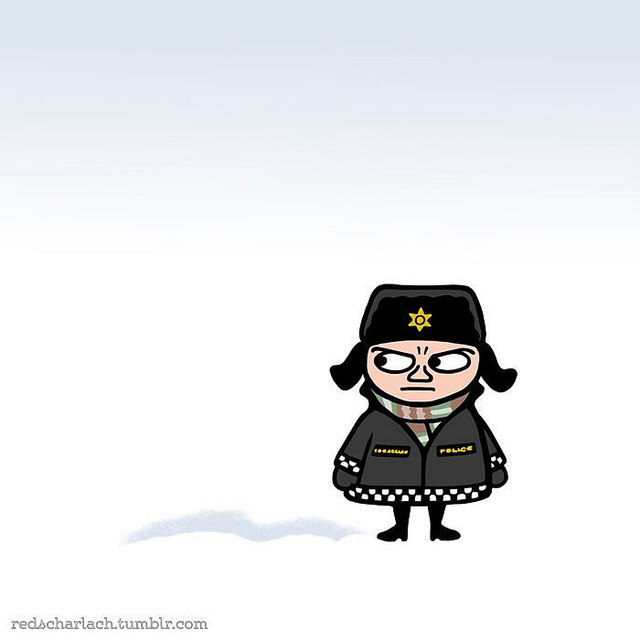
This wonderful drawing by @redscharlach is of Hinrika in Trapped, but she really reminds Mrs P of Gunna as well.