Roberto Costantini’s Italian/Libyan Balistreri Trilogy

I picked up the first novel in Roberto Costantini’s Balistreri TrilogyThe Deliverance of Evil (trans. N. S. Thompson, Quercus, 2014 [2011]), at this year’s CrimeFest after seeing the author on a couple of panels. Costantini was extremely articulate about how his personal links to Tripoli and Rome shaped the trilogy and how his writing style is influenced by his work as an engineer. My interest was also piqued by the description of his main protagonist, Commissario Michele Balistreri, as a morally flawed individual with a complex political past.

Cost

Coming in at just over 600 pages, The Deliverance of Evil is a novel for readers who enjoy complex, multi-layered crime narratives. Framed by Italy’s two Football World Cup victories in 1982 and 2006, it spans twenty-five years of Italian history, but also explores the legacy of Mussolini’s right-wing dictatorship and of the so-called ‘strategy of tension’ – a series of right-wing terrorist attacks in the 1960s and 1970s (possibly encouraged by the military and intelligence services), which were blamed on communists to provoke a political shift to the right. Balistreri, the narrative’s main investigator, acts as a kind of repository for this complex history: as a young man, he was drawn to the ultra right-wing Ordine Nuovo, but when it became involved in terrorist acts, worked undercover for the state in an attempt to stop them. When the narrative opens in 1982, he has supposedly left that past behind him, after being transferred to a quiet police post in Rome.

cover_tu_sei_il_male_web

The original Italian cover

The crime at the heart of the narrative is the murder of Elisa Sordi, a young woman who works for a religious housing organisation. The detective, keen to enjoy the 1982 World Cup final, is distracted during the initial investigation. This and a number of other factors result in the case remaining unsolved until 2006, when another woman is murdered in apparently similar circumstances. Wracked with remorse and guilt for his earlier failures, Balistreri vows to solve both cases and uncover the truth.

The Deliverance of Evil is a hugely absorbing, accomplished piece of work. While the denouement, which resembles an intricate origami creation, had me raising an eyebrow a little at times, the figure of Balistreri, together with the clever construction of the narrative and its dissection of Italian privilege, politics and racism made for a highly gripping read. I’ll definitely be seeking out the second in the trilogy, which moves back in time to the 1960s to explore Balistreri’s troubled past in Libya.

I have a bit of a thing about crime trilogies or quartets. They’re often quite special, which I think is due to two factors. Firstly, they give authors the chance to explore multiple facets of an overarching story in a group of novels, allowing them to create extended and complex literary worlds. Conversely, the limit of having a set number of novels (as opposed to an on-going series), encourages authors to take more risks, especially in terms of the characterisation of their protagonists and the overall denouement. Standalones and trilogies/quartets are thus usually more hard-hitting than a series, not least because they don’t need to safeguard the investigator or main protagonist indefinitely. They also often undertake a wide-ranging social and/or political critique, which I like.

10_peace_quartet

Here are few of my favourite crime trilogies and quartets:

David Peace’s Yorkshire Noir/Red Riding Quartet (1974197719801984), which is set against the backdrop of the Yorkshire Ripper case and provides a brilliant depiction of corrupt policing cultures.

Andrew Taylor’s Roth/Requiem for an Angel Trilogy (The Four Last ThingsThe Judgement of Strangers, The Office of the Dead) which skillfully excavates the history of a female serial killer, beginning in the present day and moving back to the 1970s and the 1950s.

Ben Winter’s Last Policeman Trilogy (The Last Policeman, Countdown City, World of Trouble), set in a superbly realised world on the brink of destruction (I still need to read the final novel, and am looking forward to it very much).
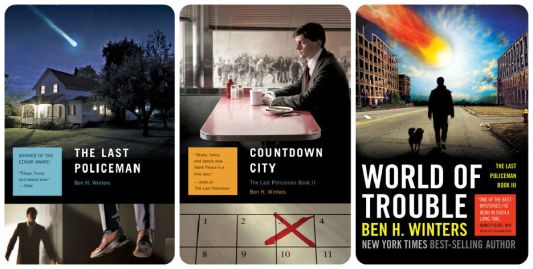
Winter last policeman

Stieg Larsson’s Millennium Trilogy (The Girl with the Dragon Tattoo, The Girl who Played with Fire, The Girl who Kicked the Hornet’s Nest), featuring the remarkable, indefatigable Lisbeth Salander.

Leif G.W. Persson’s Story of a Crime Trilogy (Between Summer’s Longing and Winter’s End, Another Time, Another Life and Free Falling, As in a Dream), which probes the unsolved assassination of Olof Palme in an absorbing and darkly sardonic manner.

Philip Kerr’s Berlin Noir Trilogy (March Violets, The Pale Criminal, A German Requiem), which explores Nazi Germany in 1936 and 1938 and Allied Occupation in 1947 through the eyes of former Berlin policeman Bernie Gunther. The author later extended the trilogy into a series, but the original three novels remain the best in my view.

Perhaps you have others we could add to this list? 

Update: Well, what a brilliant response. Thanks to MarinaSofia, Margot, Rebecca, Bernadette, David, Tracey and Angela for their suggestions (see also their comments and those of others below), and to Barbara, Jose Ignacio and Craig Sisterson via Twitter for trilogies/quartets by women authors. All listed below…

Further great crime fiction trilogies and quartets: 

Lisa Brackman’s China Trilogy (Rock, Paper, Tiger; Dragon Day; Hour of the Rat)

James Ellroy’s L.A. Quartet (The Black Dahlia, The Big Nowhere, L.A. Confidential, White Jazz)

Lyndsay Faye’s New York Trilogy (The Gods of Gotham, Seven for a Secret, The Fatal Flame)

Gordon Ferris’ Glasgow Quartet (The Hanging Shed, Bitter Water, Pilgrim Soul, Gallowglass)

Alan Glynn’s Land Trilogy (Winterland, Bloodland, Graveland – set in Ireland)

Jean-Claude Izzo’s Marseille Trilogy (Total Chaos, Chourmo, Solea)

Peter May’s Lewis Trilogy (The Blackhouse, The Lewis Man, The Chessmen)

William McIllvaney’s Laidlaw Trilogy (Laidlaw, The Papers of Tony Veitch, Walking Wounded – set in Glasgow)

Adrian McKinty’s Troubles Quartet (The Cold Cold Ground, I Hear the Sirens in the Street, In the Morning I’ll Be Gone and Gun Street Girl – set in Ireland)

Denise Mina’s Garnethill Trilogy (Garnethill, Exile, Resolution – set in Glasgow, Scotland)

Denise Mina’s Paddy Meehan Trilogy (The Field of Blood, The Dead Hour, The Final Breath – set in Glasgow, Scotland)

Leonardo Padura’s Havana Quartet (Havana Blue, Havana Gold, Havana Red, Havana Black)

George Pelecanos’ D.C. Quartet (The Big Blowdown, King Suckerman, The Sweet Forever, Shame the Devil)

Dolores Redondo’s Baztan Trilogy. The first, The Invisible Guardian is available in translation and is set in Spain’s Basque country. The other two are entitled Legado en los huesos (Legacy in the Bones) and Ofrenda a la tormenta (Offering to the Storm).

John Williams Cardiff Trilogy (Five Pubs, Two Bars And A Nightclub; Cardiff Dead; The Prince of Wales)

Robert Wilson’s Falcon Quartet (The Blind Man of Seville; The Silent and the Damned; The Hidden Assassins; The Ignorance of Blood – set in Spain)

Berlinale 2015 showcases international crime dramas and thrillers from Germany, Israel, Denmark, Sweden and Italy

The 2015 Berlinale – one of the world’s top international film festivals – closes today in Berlin. As ever, a host of wonderful films have been shown during the packed ten-day programme, with the Iranian film Taxi, directed by dissident filmmaker Jafar Panahi, awarded the coveted Golden Bear.

While reading coverage of the festival, I was interested to see that some international TV dramas were premiered as part of the programme, and that a number of these had a pronounced crime/thriller/spying dimension. Alessandra Stanley’s excellent article in the New York Times provides a good overview, and also discusses how such series are beginning to be picked up in the States (and not always to be remade in English either), which is a very good sign.

Here are a few of the series in question:

Deutschland 83. There’s quite a lot of buzz about this spying drama in Germany and beyond, and it has now also been picked up by an American network (in the original German!). The central protagonist is East German border guard Martin Rauch, who is sent across the border as an undercover agent by the Stasi (the East German secret police); his task is to pose as an aid to a West German general working with NATO. Stanley describes the series as ‘an ingenious, counter-intuitive look at the Cold War’ and a recent Guardian article sees it as indicative of rising interest in the divided Germany of 1949 to 1990.

Deutschland 83

Shkufim (False Flag). According to Stanley, this Israeli political drama was inspired by the assassination of a Hamas leader in Dubai in 2010. That scenario has been reworked for the series, which shows five Israeli citizens waking up one day to find they are prime suspects in the kidnapping of a Iranian official in Moscow. The drama is produced by Tender Productions, which also has links with Homeland (which was itself based on the Israeli series Hatufim).

The five suspects in False Flag

Follow the Money is a Danish crime thriller series by DR Drama (the makers of The Killing and Borgen) due to air later this year. It focuses on corruption in big business, with a lovely twist: the business in question is a wind-power company called Energreen, with supposedly impeccable ecological and moral credentials. Insider dealings and dodgy deaths indicate that all is not as it should be.

Follow the Money. Photo credit Christian Geisnæs

1992 is an Italian drama that was picked up in Berlin by the UK, according to Stanley (though no specific channel is named). This time, the corruption of political life by big business is the focus: the drama explores the Italian bribery scandals of the 1990s, and the attempts of Milan magistrate Antonio Di Pietro to clean up politics through Operation Clean Hands (Mani Pulite).

Italian crime series 1992

Last but not least, Blå ögon (Blue Eyes) is a Swedish-German crime series that explores racism, discrimination and immigration issues. Stanley describes it as having an anti-racist message, but also wanting to ‘upend expectations’ by giving characters on all sides of the debate a voice. One of the murder victims is a female, right-wing politician, who is assassinated while out in public.

STV’s Blue Eyes

Stanley ends her piece by noting that none of these series feature the disappearance or death of a child, as seen in earlier crime series such as The Killing and Broadchurch. Or to put this another way: these dramas are moving from highly personal cases whose investigations focus on the family and small communities, to cases that address larger historical, political and social issues. Interesting times. As ever, I’m hoping that a good number will make it on to our UK and US screens.

Merry Christmas! Mrs Peabody’s festive round-up

I’m behind on my Christmas preparations this year, which means that this festive round-up is a little later than usual. On the plus side, it may help a few of you out of a last-minute present conundrum, or lead you to a nice, independent bookshop because it’s too late for online orders. You might also be moved to buy yourself a little gift. Go on, you deserve it.

The following are just some of my favourite crime novels of the year. All, in my view, would make a delightful escape from the mayhem of Christmas or family, especially when curled up on the sofa with a nice glass of wine.

Anne Holt and Berit Reiss-Anderson, The Lion’s Mouth (NORWAY: trans. by Anne Bruce, Corvus, 2014). Anne Holt is often described as the queen of Norwegian crime, and has drawn expertly on her own career in the police, law and government in the creation of the ‘Hanne Wilhelmsen’ police series (she was even Norwegian Minister of Justice for a while). This fourth installment in the series, originally published in 1997, explores the suspicious death of the Norwegian Prime Minister, who is found dead in her office just six months following election. A fusion of locked-room mystery, Borgen and police procedural, it’s a quietly satisfying read that’s held up well.

Arnaldur Indridason, Reykjavik Nights (ICELAND: trans. by Victoria Cribb, Harvill Secker, 2014). This prequel to the ‘Murder in Reykjavik’ series is a wonderfully absorbing read, which traces the start of Erlendur’s journey from young policeman to detective as he investigates the death of a homeless man and the disappearance of a woman. Set in 1974, the year Iceland celebrated 1100 years of settlement, we are also shown how a traumatic childhood event begins to shape Erlendur’s personal life and investigative career. The novel is a great read for those who are new to the series and for long-established Erlendur fans alike.

Hannah Kent, Burial Rites (AUSTRALIA/ICELAND: Picador, 2013). This impressive debut novel by a young Australian author is not for those looking for ‘cosy’ Christmas crime. Kent spent some time in Iceland as an exchange student and describes the book as her ‘dark love letter’ to the country: set in northern Iceland in 1829, it explores the case of Agnes Magnúsdóttir, the last Icelandic woman to be executed for murder. The figure of ‘the murderess’ tells us a lot about the gender, class and power relations of the time, and the picture the author paints of every-day, rural Icelandic life is fascinating. The story, setting and their links to the Icelandic sagas stayed with me long after reading it.

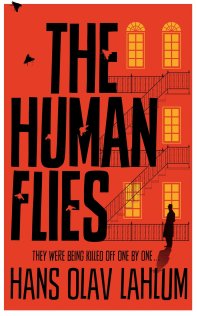
Lahlum

Hans Olav Lahlum’s The Human Flies (NORWAY: trans. by Kari Dickson, Mantle, 2014, [2010]) sounds like a horror film that’s best avoided after a large meal. However, it turns out to be something quite different: a well-constructed and witty homage to the classic crime fiction of Agatha Christie, set in 1968 Oslo, which has some interesting historical depth. Featuring ambitious young police detective Kolbjørn Kristiansen on his first big case – the murder of a former resistance fighter – readers are treated to an apartment building of intriguing suspects and a page-turning investigation, as well as the considerable intellect of Kristiansen’s wheelchair-bound partner Patricia.

Laura Lippman, After I’m Gone (USA: Faber and Faber, 2014). Ignore the rather daft cover. After I’m Gone is a literary crime novel that dissects a murder case by means of a rich narrative with some wonderful characterisation (the latter is one of Lippman’s great strengths). Told on a number of different time levels, it traces the stories of five women left behind when white-collar criminal Felix Brewer disappears in July 1976 – his wife Bambi Gottschalk, his three daughters, and his mistress Julie – as well as the investigation into Julie’s murder by detective Sandy Sanchez in the present. An engrossing, quality read.

Anya Lipska, Death Can’t take a Joke (UK/POLAND: The Friday Project, 2014). This is the second in the ‘Kiszka and Kershaw’ series, featuring Polish ‘fixer’ Janusz Kiszka and London police detective Natalie Kershaw. While I enjoyed Lipska’s first novel, Where the Devil Can’t Go, the second is where the series really gets into its stride: the duo’s investigation into two deaths, including one of Kiszka’s closest friends, is a tightly constructed page-turner with an engaging, blackly comic tone. The novel also features one of the best first chapters I’ve read this year… For a more in-depth exploration, head over to Margot Kinberg’s marvellous Confessions of a Mystery Novelist blog.

Marco Malvaldi, Game for Five and Three Card Monte. 1 and 2 of the ‘Bar Lume Trilogy’ (ITALY: Europa Editions/World Noir 2013/14). These light-hearted crime novels feature amateur detective Massimo Viviani, the maverick owner of Bar Lume, investigating mysterious deaths in Pineta in Northern Italy. Massimo is ably assisted in his work by four cantankerous, octogenarian barflies, including his own extremely opinionated grandfather. Witty, entertaining and stylishly packaged.

Eduardo Sacheri, The Secret in Their Eyes (ARGENTINA: trans. by John Cullen, Other Press, 2011 [2005]). I was given this novel last Christmas and it became one of my first and favourite reads of the year. Benjamin Miguel Chaparro, a newly retired Deputy Clerk in Buenos Aires, begins to write a novel about a case that has haunted him since 1968 – the murder of a young wife, Liliana Colotto, in her own home one summer’s morning. Oscillating between the past and the present, and spanning twenty-five years of Argentine history, the narrative tells the story of the murder and its repercussions for those left behind: husband Ricardo Morales, investigator Benjamin, and the murderer himself. The 2010 film adaptation was also a cracker. A full review is available here.

Olivier Truc, Forty Days without Shadow (FRANCE/LAPLAND: trans. by Louise Rogers LaLaurie, Trapdoor, 2014). This novel uses its criminal investigation as a means of exploring the history, culture and climate of Lapland. It also features the reindeer police! The novel opens with Sámi-Norwegian reindeer policeman Klemet Nango and partner Nina Nansen investigating the theft of a priceless Sámi drum from a museum. Shortly afterwards, Sámi herder Mattis is found dead, and ‘Patrol P9′ finds itself grappling with two crimes that could well be interlinked. A gripping novel that shines a spotlight on a fascinating part of the world. A full review is available here.

If the crime lover in your life is into TV drama, then my two top picks are as follows:

The Australian series The Code, which aired on BBC4 a few weeks ago and I reviewed enthusiastically here. This six-part political thriller opens with the mysterious death of Aboriginal teenager Sheyna Smith in Lindara, a remote New South Wales township. The circumstances of her death are hushed up, so when Ned Banks (a journalist for an internet newspaper) and his brother Jesse (an internet hacker on the autistic spectrum) start to investigate, you just know there’s going to be trouble. An utterly gripping, intelligent drama.

British police drama Happy Valley, a hard-hitting, six-part series that traces the fall-out from a kidnapping in the West Yorkshire valleys, while exploring its protagonists’ complex personal lives. Sarah Lancashire gives an absolutely outstanding performance as policewoman Catherine Cawood, together with an excellent supporting cast. Be warned that there is some very graphic (though in my view not gratuitous) violence. I think that 18 would be a more accurate rating than the 15 on the box. An addictive and top quality crime series.

And my own indulgence this Christmas? That would be the American drama True Detective, which I’m very much looking forward to watching. Have you indulged yourself as well? Do share if so!

Wishing all the readers of this blog a very happy and relaxing Christmas.

See you all in 2015!

German Zimtsternchen (little cinnamon star).    Quite addictive.

Crime Scene: European crime fiction guides

I was having a stroll around the Crime Time website the other day, and ended up in an excellent section called Crime Scene, which profiles crime fiction on a country by country basis.

At the moment there are four Crime Scene guides – for France, Italy, The Netherlands and Switzerland (the latter includes info on Germany too) – and more will be added in future. They can be viewed online or downloaded as a PDF, and provide a really useful overview of the respective countries’ crime scenes.

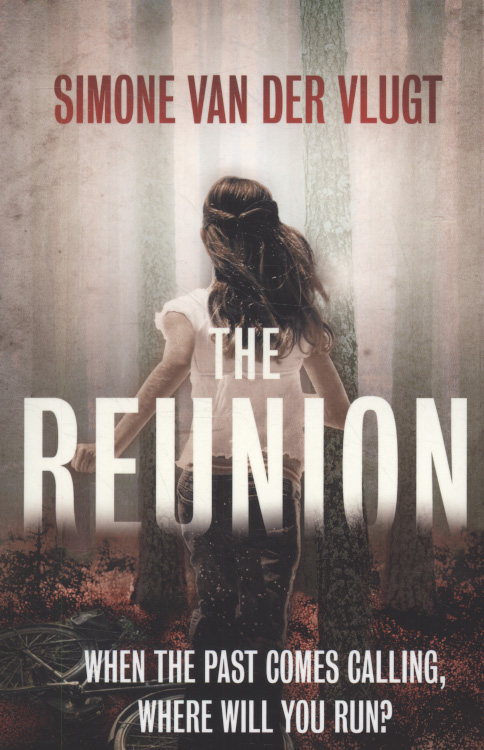
Simone van der Vlugt is one of the writers featured in The Netherlands guide

Each is written by an expert on the crime of the country in question, but all look at similar areas, under the guidance of series editor Bob Cornwell:

– a history of the country’s crime fiction

– recent publishing trends

– notable writers (often by category, e.g. police procedural, historical crime fiction)

– major crime prizes

– key publishers

– key suppliers, festivals and websites

– key reference works

I’m extremely impressed with these guides, which pack a lot of information into a relatively small space. Produced in conjunction with the International Association of Crime Writers, they provide a great resource for beginners and more advanced crime readers alike, and I look forward to seeing more in due course.

The Young Montalbano is on his way…Saturday 7 September 2013 on BBC4

I know many UK viewers have been keen to find out when The Young Montalbano starts on BBC4. The answer is this Saturday, 7 September, from 9.00 to 11.00pm.

[For information about Series 2, airing in January 2016, see here]

The six-part prequel to the much-loved Montalbano TV series is set in the 1990s, with Michele Riondino in the role of the younger detective. In it we will see some of the early cases that forged Montalbano’s investigative skills … and apparently led to the loss of those luscious locks (now you see them, now you don’t).


The Young Montalbano has already successfully aired in Italy (RAI channel), and in the States (MHz network). The blurb to accompany the series on the latter’s webpage reads as follows:

>> Before Detective Salvo Montalbano became the seasoned and mature chief detective we already know, he was just Salvo, new to Vigata and new to being a police chief.  He didn’t always live in that glorious house by the sea, or have Deputy Chief Mimi Augello as a best friend, or Fazio as a loyal assistant. He didn’t always go out with the beautiful Genoese architect, Livia Burlando. Perhaps the only constants have been his unbridled quest for good food and the inability of his overly enthusiastic deputy, Catarella, to pronounce anyone’s name correctly. In this prequel series to Detective Montalbano, watch the genesis of the friendships, the rivalries and the romance as the players arrive to take their places in the beautiful Sicilian town of Vigata. Savour these stories that set the stage for the group’s transformation from rookie cops to the experienced crime-solving ensemble we’ve come to know and love.<<

The Young Montalbano actors with Montalbano author Andrea Camilleri (centre)

The first episode sees Montalbano arrive in Vigata and investigate an attempted murder.  A certain Andrea Camilleri is listed as one of its writers.

Further details are available in The Radio Times online.

VERDICT (avoiding spoilers): Well, I really enjoyed that! I’ve only seen a few episodes from the ‘later’ Montalbano series, and think this relatively limited exposure allowed me to go with the flow of the prequel without having to compare and contrast too much. I know many viewers are highly attached to Luca Zingaretti’s Montalbano, and that it must be quite strange to see someone else in his shoes, but I thought Riondino was very assured in the central role, and that there were some strong performances throughout. The tone also felt true to the later series. A good, confident start and I’ll definitely be watching again. Catch it on iPlayer over the next two weeks if you missed it!

If any of you are wondering who sang the two wonderful theme tunes at the beginning and end of the episode – it was Olivia Sellerio and you can listen to both on YouTube:

Opening track – ‘Curri curri’

Closing track – ‘Vuci mia canntanu vai’ (loved this in particular)

Dispatches from Bristol: CrimeFest 2013

I’ve just returned from four days in sunny Bristol at CrimeFest 2013, which was a grand adventure from start to finish. It’s impossible to do justice to the richness of the event in one post, but here’s a glimpse of some of the panels and highlights. I’ll also build a list of links to other CrimeFest reports at the end of this post.

I attended a number of mainly international panels (see below), but could have done with cloning myself to get to a few more. Those on Twitter can search for the hashtag #crimefest13 for my live tweets and those of other delegates.

Death Overseas: Valerio Varesi (Italy), Yrsa Sigurdardottir (Iceland), K.O. Dahl (Norway), Thomas Enger (Norway), Stav Sherez moderating. Showcase of international crime writing from three countries.

Native and Outsider: Different Perspectives I: Pierre Lemaitre (France), M.J. McGrath (UK/Arctic), Adrian Magson (UK/France), Dana Stabenow (Arctic), Jake Kerridge moderating. Exploring the advantages/disadvantages of writing crime set in Norway and the Arctic from an ‘insider’ or ‘outsider’ perspective.

Native and Outsider: Different Perspectives II: Roberto Costantini (Italy), David Hewson (UK/Italy/Sweden), Thomas Enger (Norway), Derek B. Miller (U.S./Norway), Barry Forshaw moderating. As above, but with a focus on Italy and Norway.

The Tourist Board

The Tourist Board Never Said Anything About This! Quentin Bates (Iceland), Stanley Trollip (Botswana), Xavier-Marie Bonnot (France), Jeffrey Siger (Greece), Martin Edwards moderating. The sensitivities of depicting positive and negative elements of a particular national setting or identity.

Cold War: An Infiltrating Chill: Tom Harper, John Lawton, Aly Monroe, William Ryan, Martin Walker moderating. A wide-ranging discussion of the Cold War and crime fiction set before, during and aft…actually, it seems that it’s not over yet.

Fresh Blood: Debut Authors: Alex Blackmore, J.C. Martin, Fergus McNeill, Tom Vowler, Rhian Davies moderating. Exciting new crime authors discussing their work.

How Does (English) Crime Translate? Ann Cleeves (author), Charlotte Werner (Swedish publisher), Erik de Vries (translator), Daniel Hahn of the British Centre for Literary Translation moderating. The mechanics of selecting crime for or from other national markets, and the processes involved in translation.

The Translation panel

Interesting observations from the panels and beyond

A number of writers view crime novels as a ‘social novel’ engaged in an exploration or critique of society, or of pressing social issues (Dahl, Varesi, Trollip, Stabenow). In contrast, Enger says he has no political or social agenda: telling a good story is the thing.

Settings are often viewed by writers as characters in their own right (Bonnot, Stabenow, McGrath, Trollip). Cities are sometimes better for depicting isolation than the countryside (Dahl). Marseilles is more Italian than French (Bonnot).

Some authors need to write in the place where their novels are set (McNeill/Bristol). Others feel that they write better elsewhere, because they can ‘see better from a distance’ (Miller/Oslo).

Lemaitre thinks it’s perfectly possible for a British ‘outsider’ to depict a France that is more ‘real’ than his own.

Icelandic crime writers face a challenge in terms of reflecting reality, as there’s an average of one murder a year in Iceland (Sigurdardottir). By contrast, the Arctic has the same per capita murder rate as South Africa or Mexico (McGrath).

A number of authors are engaged in explorations of historical legacies, such as World War II or the Algerian War (Magson, Varenne, Hewson, Ridpath). 60 years is nothing in terms of dealing with the legacy of the past (Costantini, citing Italy as an example).

Britain was not occupied during World War II (with the notable exception of the Channel Islands) and therefore didn’t experience the war in the same way as other countries such as France or Norway (Hewson).

Crime authors who write on twentieth century history have a variety of motivations: a desire to understand the previous generation and its role in making our world (Monroe on the Cold War); the challenge of writing about a society in which truth and justice are flexible concepts (Ryan on Stalin’s Russia).

British Cold War spies were often not uncovered due to the class system and upper-class loyalties: a public school boy who is a member of a posh club has perfect cover (Monroe). All on Cold War panel agreed that the Cold War is not over (citing the current situation in Syria).

Swedish cover of Blue Lightning

Crime fiction provides the biggest market for literary translation in the UK (Hahn). Speed is the key element when translating, especially in Europe where readers may otherwise buy the English original (de Vries). It’s a struggle to introduce translated authors in Sweden due to the dominance of Scandi crime, but it helps if their novels are set in the Shetlands… (Werner).

Describing violence is less interesting than exploring a character’s reaction to violence (James Oswald).

Buzz

There was lots of buzz about Pierre Lemaitre’s Alex, and this blogger did her very best to spread the word about Derek B. Miller’s exceptional debut novel Norwegian by Night. James Oswald’s Natural Causes was also frequently mentioned both as a must-read and a significant self-publishing success story. The series has been picked up by Penguin, whose advance the author rather unusually spent on buying a tractor for his farm.

Highlights

Seeing Barry Forshaw present the inaugural Petrona Award for Best Scandinavian Crime Novel of the Year, set up in memory of Maxine Clarke. The very deserving winner was Liza Marklund with Last Will, translated by Neil Smith (Corgi/Transworld 2012). Barry also won the prestigious HRF Keating Award for his editorship of British Crime Writing: An Encyclopaedia. Congratulations!

The Petrona Award, now on its way to Liza Marklund in Sweden

Hearing the International Dagger shortlist being announced, which includes German crime writer Ferdinand von Schirach’s The Collini Case. Full details are available over at Euro Crime.

Attending the Sherlock panel, which featured Mark Gatiss, Stephen Moffat and Sue Virtue in fine form. We learned and laughed a lot.

Eating lunch in a graveyard. Bristol Cathedral is a stone’s throw from the CrimeFest hotel, and features a lovely little cafe and landscaped garden/graveyard, where you can enjoy a peaceful cuppa.

Attending the second meeting of the Icelandic Chapter of the Crime Writers’ Association. I’m not quite sure how I ended up there, but it was very convivial and the Icelandic chocolates (Noi Sirius Konfekt) were delicious. Many thanks to Ragnar Jonasson and Quentin Bates for their hospitality!

l to r: Ann Cleeves, Ragnar Jonasson, Susan Moody, Barry Forshaw, Michael Ridpath, Quentin Bates (Icelandic chocolates on the table and empty seat reserved for Yrsa Sigurdardottir).

Last but not least, meeting old friends, making new ones, and seeing the faces behind the Twitter avatars of a number of writers and bloggers for the first time… It was all hugely enjoyable, and I’m already looking forward to next year.

CrimeFest blog-links

Crimepieces – CrimeFest Day 1CrimeFest Part 2

Detectives Beyond Borders – CrimeFest 1, CrimeFest 2, CrimeFest 3, CrimeFest 4

Do You Write Under Your Own Name – CrimeFest 2013 – Part 1, Part 2, Part 3

Graskeggur (aka author Quentin Bates) – CrimeFest Report: All Over Bar the Tweeting

Mystery Fanfare – CrimeFest 2013 Award Winners (all except The Petrona)

Sherlockology – Highlights from CrimeFest – Creating Sherlock

Vicky Newham – My Experience of CrimeFest 2013

For tweets on the event, see the hashtag #crimefest13

CrimeFest 2013 and the inaugural Petrona Award

This time next week CrimeFest 2013 will be in full swing. There’s a mouth-watering programme with lots of international writers as well as British writers whose works are set on international shores.

They include: Quentin Bates (Iceland), Xavier-Marie Bonnot (France), Roberto Costantini (Italy), K.O. Dahl (Norway), Jeffrey Deaver (USA), Thomas Enger (Norway), Ragnar Jonasson (Iceland), Pierre Lemaître (France), Adrian Magson (UK/France), M J McGrath (UK/Arctic), Derek B. Miller (Norway), Barbara Nadel (UK/Turkey), William Ryan (UK/ Russia), Jeffrey Siger (US/ Greece), Yrsa Sigurðardóttir (Iceland), Dana Stabenow (USA/ Alaska), Valerio Varesi (Italy), Robert Wilson (Spain/Portugal/Africa), Anne Zouroudi (UK/Greece). A full list of writers with further details is available here.

The winner of the first Petrona Award for Best Scandinavian Crime Novel of the Year will also be announced at the CrimeFest Gala dinner on Saturday night. I have my posh frock at the ready and am looking forward to the occasion very much.

The award was set up in memory of Maxine Clarke, who blogged as Petrona and was an expert in Scandinavian crime fiction. The 2013 shortlist, compiled on the basis of Maxine’s reviews, is as follows:

enger428586_287692644633128_120240158045045_704808_1282709077_n517CY6O6qWL51Bigz1qx7L._BO2,204,203,200_PIsitb-sticker-arrow-click,TopRight,35,-76_AA300_SH20_OU02_

PIERCED by Thomas Enger, tr. Charlotte Barslund (Faber and Faber)

BLACK SKIES by Arnaldur Indridason, tr. Victoria Cribb (Harvill Secker)

LAST WILL by Liza Marklund, tr. Neil Smith (Corgi)

ANOTHER TIME, ANOTHER LIFE by Leif GW Persson tr. Paul Norlen (Doubleday)

Synopses of the novels with extracts from Maxine’s reviews can be found at the wonderful ‘Petrona Remembered’ blog. Karen Meek has also set up two polls over at ‘Eurocrime’: ‘which novel do you want to win the Petrona Award 2013′ and ‘which novel do you think will win the Petrona Award 2013′. The polls are open until 29 May.

I’ll be tweeting from CrimeFest using the following hashtags: #CrimeFest and #CrimeFest2013. The only difficulty now is deciding which of the panels to attend – they all look so good…

International crime drama news from BBC4: Dahl, De Luca, Young Montalbano, The Bridge 2 and more!

I’ve just seen the following on a BBC4 press release and couldn’t resist reporting IMMEDIATELY.

>> BBC Four has announced two exciting additions to an outstanding new year of international drama and film on the Channel: Swedish crime series Arne Dahl and Italian series Inspector Da Luca.

Arne Dahl (a pseudonym of award-winning author Jan Arnald) is based on five of Dahl’s novels, beginning with The Blinded Man. The series revolves around a tight-knit team of elite specialists who investigate the dark side of Swedish society. It is produced by Filmlance International and written by Rolf Börjlind and Cecilia Börjlind.

Inspector De Luca is made by Ager 3/Rai Radiotelevisione Italiana. A four-part crime series based on the novels by Carlo Lucarelli, it is set in and around Bologna during the tumultuous years of Mussolini’s dictatorship. Inspector De Luca is an investigator whose brutal honesty and uncompromising character may help him solve cases, but combined with his love of women, they also conspire to get him in trouble…

Other crime drama and film highlights in 2013 include:

Young Montalbano. Set in the early 1990s and starring Michele Riondino in the title role, Young Montalbano gives an insight into the private life and early crime-fighting career of the idiosyncratic Sicilian detective. This prequel series, also written by Andrea Camilleri, was recently shown to critical acclaim in Italy. (See here for details of the start date of this series.)

The Bridge, Series 2. A rusty old coaster en route in the Öresund sound suddenly veers off course and rams the concrete foundations laid out to protect the Öresund Bridge. The ship is empty – or so it is believed until five people are found chained, cold and exhausted below deck. The unknown victims, of whom three are Swedish and two Danish, are brought to a hospital in Malmö. Without hesitation, Saga Norén (Sofia Helin) from Malmö CID contacts her Danish colleague, Martin Rhode (Kim Bodnia) and their new investigation begins.

Inspector Montalbano. The popular Sicilian detective makes a welcome return in four brand new episodes.

The King Of Devil’s Island. Based on a true story, The King of Devil’s Island tells the unsettling tale of a group of young delinquents banished to the remote prison of Bastøy in Norway. Under the guise of rehabilitation the boys suffer a gruelling daily regime at the hands of their wardens until the arrival of new boys Erling and Ivar spark a chain of events that ultimately ignite rebellion.

Point Blank. In this action-packed French thriller, Samuel Pierret is a nurse who saves the life of a criminal whose gang then take Samuel’s pregnant wife hostage to force him to help their boss escape. A race through the subways and streets of Paris ensues. As the body count rises, Samuel must evade the cops and the criminal underground to rescue his wife <<

I’m so excited I can hardly breathe. Though I’m not sure how to break the news to my family that the telly will be off-limits for most Saturday nights this year.

For the full press release see here (contains info about series 3 of BORGEN as well). There’s also a very atmospheric trailer of all the international drama coming up.

Enjoy!

Mrs. Peabody’s 2012 review

It’s been a busy year for Mrs. Peabody Investigates, with reviews of international crime fiction from Denmark, Finland, Germany, Italy, Northern Ireland, South Africa, Sweden, Switzerland and the USA. There were also a number of lively discussions on subjects including autopsy scenes; violence and women; Jewish detective figures; national image; strong female protagonists, and the crime writer as social commentator. Many thanks to everyone who joined in with their expertise and views! Last but not least, interviewing crime writers at the Harrogate Crime Writing Festival and contributing to Mark Lawson’s ‘Foreign Bodies’ series on Radio 4 were definite highlights.

So to finish off the year, here’s a random round-up of the best – and worst – of Mrs Peabody’s 2012 (with thanks to apuffofjack for the idea).

Most Satisfying Read: Tom Franklin’s Crooked Letter, Crooked Letter (2010), a gripping examination of the repercussions of a murder, set in the American Deep South of the 1970s, 1980s, and the present day.

Most Disappointing Read: Jussi Adler-Olsen’s Disgrace.Wooden characterisation was the real villain of this crime novel, but I’m still hoping for better from the next in the Department Q series.

Best Historical Crime Novel: Tie between Malla Nunn’s A Beautiful Place to Die (2010), which provides a fascinating insight into apartheid South Africa in the 1950s, and Stuart Neville’s The Twelve (2010) – hard-hitting Belfast noir exploring the legacy of The Troubles.

Crime Novel that Lingered Longest in the Mind: Jim Thompson’s The Killer Inside Me (1952), which presents a chilling, but surprisingly nuanced portrait of murderer Lou Ford.

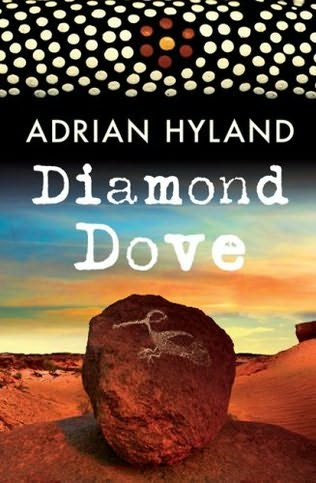
Best Female Detective: Tie between Edie Kiglatuk from M.J. McGrath’s White Heat (2011) and Emily Tempest from Adrian Hyland’s Diamond Dove (2006) (reviews pending). In many ways, these characters are twins: feisty, tough women who have complex insider / outsider roles in marginalised indiginous communities (the Inuit of the Arctic Circle and the Aboriginal people of the Australian outback).

Best Male Detective: Finnish-Jewish police inspector Ariel Kafka in Harri Nykänen’s Nights of Awe (2010): a highly original and witty investigator, whom I look forward to meeting again (albeit with a slightly less convoluted plot).  

Best Discovery: Leif G.W. Persson is well-known in his native country as a top criminologist and crime writer, but his razor-sharp dissections of Swedish society have only started to be translated relatively recently. I’ve just finished Another Time, Another Life (2012), which was a gem, and am keen to read more.

Last Policeman

Most Original Premise: Ben Winters’ The Last Policeman (2012) is a ‘pre-apocalypse police procedural’, in which Detective Hank Palace investigates a suspicious suicide six months before asteroid 2011GV1 is due to hit the earth. The first in a trilogy (review pending).

Best Re-read: Jakob Arjouni’s Turkish-German Kemal Kayankaya series (1985-2012). A ground-breaking detective who uses intelligence and wit to make his way in a largely racist society. The first in the series, Happy Birthday, Turk (1985), remains a cracker.

Best Use of Humour: Leif G.W. Persson uses satirical humour to great effect as he lifts the lid on the workings of Swedish society. Look out for the pathologist nicknamed ‘Esprit de Corpse’ in Another Time, Another Life.

Best crime TV series: The Killing III, in which Sarah Lund strode forth for the last time (still in denial that it’s over *sob*).

Best crime film: Tie between Romanzo Criminale (dir. Michele Placido, 2006), which traces the rise and fall of an Italian street gang, and Once Upon a Time in Anatolia (dir. Nuri Bilge Ceylan, 2011), which plays out over a dream-like night of a police investigation (reviews to follow).

Most Anticipated Reads for 2013: Stuart Neville’s Ratlines (2013), set in a 1960s Ireland whose government is keen to play down its links with former Nazis, and Y.A. Erskine’s The Brotherhood (2011), a much-praised depiction of police corruption and betrayal set in Tasmania.

All best wishes for a healthy and happy New Year, filled with lots of  wonderful crime fiction.

BBC Radio 4’s ‘Foreign Bodies’ episode guide…with a bit of Mrs. Peabody in #2!

Mark Lawson’s ‘Foreign Bodies’ series kicked off yesterday with an exploration of two seminal detectives from Belgium –  Hercule Poirot and Jules Maigret. Val McDermid, Andrea Camilleri, P.D. James, Jakob Arjouni and Camilla Lackberg all joined Mark for a fascinating discussion about these two key investigative figures.

Today it was the turn of Friedrich Dürrenmatt’s Swiss detective Inspector Bärlach, featuring a contribution from your very own Mrs. P… Our discussion took in Dürrenmatt’s links to earlier Swiss crime writer Friedrich Glauser, Dürrenmatt’s exploration of the moral crisis facing Europe following the Holocaust, and his subversion of the detective genre to question the possibility of justice. The crime novels discussed included The Judge and his Hangman (Der Richter und sein Henker, 1950), Suspicion (Der Verdacht, 1951) and The Pledge (Das Verprechen, 1958).

Listings for the first 7 episodes are now up on the ‘Foreign Bodies’ website. They air Monday to Friday on Radio 4 at 13.45, and are then available online. For good measure, there’s an omnibus edition on Friday at 21.00.

Episode 1  Belgium: Hercule Poirot and Jules Maigret (Agatha Christie and Georges Simenon)

Episode 2  Switzerland / Germany: Inspector Bärlach (Friedrich Dürrenmatt)

Image for Inspector Barlach

Episode 3  Czechoslovakia: Lieutenant Boruvka (Josef Skvorecky)

Episode 4  The Netherlands: Commissaris Van Der Valk (Nicolas Freeling)

Episode 5  Sweden: Inspector Martin Beck (Maj Sjöwall and Per Wahlöö)

Episode 6  UK: Commander Dalgliesh / Chief Inspector Wexford (P.D. James and Ruth Rendell)

Episode 7  Sicily: Inspector Rogas (Leonardo Sciascia)

You can also hear Bernard Hepton (who played Toby Esterhase in the BBC adaptation of Tinker Tailor Soldier Spy) begin his sublime Radio 4 reading of Dürrenmatt’s novella The Judge and his Hangman (available until 29 October).

Roseanna, the first of the Martin Beck dramatisations – will air on Radio 4 on Saturday 27 October at 14.30, but if you can’t wait, help yourself to this sneak preview.

Mrs. P’s review of Friedrich Dürrenmatt’s The Pledge is available here.

UPDATE 28 October: Mark Lawson has written an overview article about the ‘Foreign Bodies’ series for The Guardian entitled ‘Crime’s Grand Tour: European Detective Fiction’.