The ultimate Christmas gift: an international crime novel!

For what could be finer than giving or receiving a crime novel set in foreign climes? Especially handy for those whose families are driving them bonkers by Boxing Day: just channel those murderous desires into crime fiction!

Here are some present ideas, which happen to be ten of my favourites from this year, ranging from police procedurals and detective fiction to historical and hybrid crime. Some I’ve reviewed (just click on the link), others I haven’t (so many books, so little time). All are undoubtedly available from your local, friendly, independent bookseller!

Ioanna Bourazopoulou, What Lot’s Wife Saw, translated from Greek by Yannis Panas (Black and White Publishing, 2013 [2007]). Winner of the 2008 Athens Prize for Literature, this is a dazzling, hybrid crime novel that takes readers on an extraordinary journey of the imagination. Set in the future after a devastating tsunami, its reluctant investigator is Phileas Book, who works for The Times compiling Epistlewords, a three-dimensional crosswordA brilliant, freewheeling narrative for those who like puzzles and substantial reads. Full review here.

Gillian Flynn, Dark Places (Weidenfeld & Nicolson, 2009). For my money, Flynn is one of the most original and daring crime writers out there, but her novels have polarized readers, so handle with care! Dark Places tells the story of a family massacre and its aftermath from the perspective of survivor Libby Day and other family members. It’s by turns harrowing, moving, blackly humorous and redemptive. My favourite of Flynn’s novels so far. Full review here.

Eugenio Fuentes, At Close Quarters, translated from Spanish by Martin Schifino (Euro Crime/Arcadia, 2009 [2007]). Captain Olmedo, a high-ranking army colonel, is found dead at his home. The authorities say it’s suicide, but daughter Marina has her doubts and hires P.I. Ricardo Cupido to investigate. This is the first novel I’ve read by Fuentes (the 5th in the series), and I was impressed both by its depth of characterisation and by its illumination of different political attitudes/mindsets in Spain.

The original Spanish cover for At Close Quarters

Arnaldur Indriðason’s Strange Shores, translated from Icelandic by Victoria Cribb (Harvill Secker, 2013). The ninth in the Reykjavik series and by all accounts the last (*sob*). Detective Erlendur returns to his childhood home to face the trauma that shaped his life – the disappearance of his little brother in a snowstorm. While there, he investigates another disappearance, of a young woman in 1942. A thoroughly engrossing novel with a powerful ending. But make sure the other eight have been read first! Full review here.

M.J. McGrath, White Heat and The Boy in the Snow (Mantle 2011/2012). These are the first two novels in the Edie Kiglatuk series, set in the chilly realm of the Arctic. Edie is a wonderful protagonist, and through her investigations we gain a tremendous insight into life in the frozen north – not least its cuisine. There are maps at the front of each novel, which provide a new perspective on a world in which Alaska is ‘down south’. Absorbing and entertaining reads.

Derek B. Miller, Norwegian by Night (Faber and Faber, 2013). I adored this book and haven’t met anybody who didn’t love it. It stars (and that really is the correct term) Sheldon Horowitz, a recently-widowed Jewish-American octogenarian living in Oslo with granddaughter Rhea, who makes a crucial decision after witnessing an appalling crime. An absolute joy from start to finish. Full review here.

Angela Savage, Behind the Night Bazaar (Text Publishing, 2006). The first in the Jayne Keeney series by Australian author Savage, this novel was shortlisted for the Ned Kelly Best First Book Award in 2007. Jayne is a highly engaging private investigator based in Bangkok, whose investigations offer readers an escape to sunnier climes, and provide a vivid and insightful portrait of Thailand. Full review here.

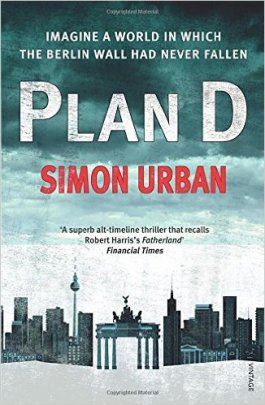
Simon Urban, Plan D, translated from German by Katy Derbyshire (Harvill Secker, 2013). It’s 2011 and the Berlin Wall is still standing. Welcome to the alternative world of Plan D, in which the reunification of Germany never happened, and fifty-six year-old East German Volkspolizei captain Martin Wegener is about to embark on the strangest investigation of his career. An admirably bonkers alternative history that will appeal to those with an interest in 20th-century Europe and the Cold War. Full review here. A handy GDR glossary is available too.

Ben H. Winters, The Last Policeman and Countdown City (Quirk Books 2012/13). The first and second of a trilogy set in an America of the near future. Asteroid Maia is on a collision course with earth, and with just six months to impact, society is beginning to disintegrate. Why, given that they’ll all be dead soon anyway, does Detective Henry Palace of the Concord Police Department bother to investigate a suspicious suicide? Because that’s the kind of dogged guy he is… Sharp, funny and brilliantly observed.

Daniel Woodrell, Winter’s Bone (Sceptre, 2007). When sixteen-year-old Ree Dolly’s father disappears, she needs to find him again quickly to prevent the loss of her family home. Set in the Orzark Mountains of Missouri during an unforgiving winter, in a closed community that has its own laws, this is a tough but beautifully-written novel. Ree is a memorable protagonist, who reminded me a little of Mattie Ross in Charles Portis’ True Grit.

Winter’s Bone was turned into an acclaimed film starring Jennifer Lawrence

GDR Glossary for Simon Urban’s Plan D

Here’s an East/West German glossary that might come in handy when reading Simon Urban’s alternative history Plan D. Just dip in as and when you fancy (no plot spoilers…).

This glossary is a companion to my review of Plan D, available here.

plan-d
*

The German Democratic Republic (die Deutsche Demokratische Republik) was a communist state, also known as East Germany, which existed for just over forty years between 1949 and 1990, and formed part of the Eastern Bloc during the Cold War. In Plan D, set in 2011, the GDR still exists. The novel presents us with an alternative history of the past two decades and shows us an East Germany that is now sixty-two years old.

Reunification (die Wiedervereinigung): the process by which East and West Germany became a single German state in 1990 following the collapse of the GDR in 1989. In Plan D, reunification never took place. Instead, the novel’s characters refer to ‘Wieder-belebung’ or ‘Revitalisation’, a moment of political rebirth around 1990 that set the GDR on a modernised course – the ‘Neuausrichtung’ or ‘New Direction’.

The Berlin Wall (die Berliner Mauer) was erected by East Germany in 1961 to stop its citizens, especially young skilled labourers, leaving for democratic, capitalist West Germany. It was termed an ‘antifaschistische Schutzmauer’ (anti-fascist protective wall) by the authorities to convince East Germans that the state was trying to stop fascists from getting in, rather than East Germans from getting out. In reality, the Berlin Wall fell on 9. November 1989, but in the 2011 of Plan D it still stands and is referred to as an ‘anti-capitalist protective wall’.

This cross-section shows that the Berlin Wall was eventually made up of a series of fortifications on the East German side. East Berlin is on the far right (1) and West Berlin is on the far left (13). Anyone trying to escape to the west ran a high risk of being caught in the ‘Todesstreifen’ (death strip) in the middle.

Republikflucht or ‘flight from the republic’ was made a criminal offence by the East German state in 1957 to halt the exodus of its citizens. Those caught were likely to receive a prison sentence and have limited future prospects in GDR society. Travel permits were tightly controlled.

Die Volkspolizei or ‘VoPo’ was the East German People’s Police, which had close links with the Stasi. In Plan D, Martin Wegener holds the rank of Hauptmann or captain in the Köpenick criminal police department (which appears to be a nod to the famous figure ‘der Hauptmann von Köpenick’ and his battles with kafkaesque bureaucracy; a production of Zuckmayer’s famous play recently ran at the National Theatre in London).

The Stasi (Ministerium für Staatssicherheit / Ministry for State Security) or state security service (Staatssicherheitsdienst) had its headquarters in Normannenstrasse in Berlin (now a museum). Established in 1950, the Stasi’s remit was to stamp out internal opposition to the state, and it specialised in forcing compliance through a range of psychological techniques. Alongside its own operatives, many ordinary citizens were pressurised/bribed/blackmailed into becoming so-called IMs (‘inoffizielle Mitarbeiter’ or ‘unoffical colleagues’), reporting on work colleagues, neighbours, family and friends. Today, around 111 kilometres of Stasi files are held in official archives, and can be accessed by the public. In Plan D, the activities of the ‘old’ Stasi were officially curbed as part of the reforms carried out during ‘Revitalisation’.

Wolf Biermann’s ballad ‘The Stasi is my Eckermann’ (‘Die Stasi ist mein Eckermann’). The songwriter Wolf Biermann, one of the GDR’s most famous political dissidents, was the subject of extensive Stasi surveillance and was stripped of his GDR citizenship in 1976 while on tour in West Germany. The ballad, written in 1974, is referred to by Martin in Plan D. Its first two verses translate as follows (listen to the original here):

biermann

Wolf Biermann in concert in 1976

I feel a common humanity / With the poor Stasi dogs / Required to sit through snow and downpours of rain / Tediously listening to me through the / Microphone they have installed / Which catches every sound / Songs, jokes and soft curses / Sitting on the toilet and in the kitchen. / Brothers from state security – you alone / Know all my troubles.

You alone can attest / How my whole human effort / Is committed with passionate tenderness / And zest to Our Great Cause. / Words which otherwise would be lost / Are captured firmly on your tapes / And – I’m sure of it – now and again / You sing my songs in bed. / I sing my gratitude to you / Stasi is my Ecker- / Stasi is my Ecker- / Stasi is my Eckermann.

[Johann Peter Eckermann was a poet whose self-appointed task was to record the words of the famous German author Johann Wolfgang Goethe for posterity].

The Invisible Cross-hairs (Das unsichtbare Visier), whose groovy theme tune features as a mobile ringtone in Plan D, was an East German TV series that ran from 1973 to 1979, produced in conjunction with the Ministry for State Security. The central protagonist is Werner Bredebusch, a Stasi agent operating abroad under the alias of Achim Detjen – East Germany’s own James Bond! Ironically, the actor playing Bredebusch, Armin Mueller-Stahl, got into hot water with the state when he spoke out in support of Wolf Biermann in 1976.

Socialist Unity Party (Sozialistische Einheitspartei or SED): the only political party that mattered in the GDR, which shaped all aspects of political and social policy according to communist principles … and the wishes of the Soviet Union. It is still the dominant political party in Plan D.

The Palace of the Republic (der Palast der Republik) was the seat of the East German Volkskammer or People’s Chamber – the heart of GDR government – and doubled as a cultural centre. It was built in the 1970s, on the site of the historic Stadtschloss or Berlin City Palace, which was badly damaged in the Second World War and was demolished by the East German authorities in 1950. Following the Palace of the Republic’s own demolition in 2008 due to high levels of asbestos, a reconstruction of the Berlin City Palace has begun (criticised by some as a deliberate attempt to erase the GDR past). In Plan D, the Palace of the Republic has survived and remains a potent symbol of the GDR state. The national emblem is visible in the picture below: a hammer and compass surrounded by a garland of rye (to represent the workers, intelligensia and farmers respectively).

The Trabant (‘Trabi’) and Wartburg were GDR makes of car (see foreground of image above), for which waiting lists of over a decade were not uncommon. They are still around in Plan D, along with a new model, the Phobus, which runs on rapeseed oil.

Walter Ulbricht was General Secretary of the SED from 1950 to 1971 and Chairman of the State Council (effectively GDR head of state) from 1960 to 1963.

Erich Honecker was General Secretary of the SED from 1971 to 1989 and Chairman of the State Council from 1976 to 1989. His wife Margot was also an influential political figure. In the German original of Plan D, the character of the former head of state is named Erich Honecker. In the English translation, the character of the former head of state is named Heinrich Stangier.

Honecker and top brass at the 1971 SED Party Conference. Marx, Engels and Lenin look moodily into the distance.

Egon Krenz was the last GDR head of state for three months in 1989. In the German original of Plan D, the character of the current head of state is named Egon Krenz. In the English translation, the character of the current head of state is named Hans-Walter Moss.

Erich Mielke was head of the Stasi between 1959 and 1989. Otto Schily was German Federal Minister of the Interior from 1998-2005. In the German original of Plan D, Erich Mielke’s role as head of the Stasi is taken over in 1989 by a character named Otto Schily. In the English translation, Erich Mielke’s role is taken over by a character named Uwe Speckmann.

Oskar Lafontaine was the West German Social Democratic Party (SPD) candidate for Chancellor in the historic German federal elections of 1990. His opponent, CDU politician Helmut Kohl, triumphed and became the first Chancellor of the reunited Germany. In Plan D, Oskar Lafontaine is the name of the left-leaning Chancellor of West Germany in 2011.

With exquisite humour, the novel is dedicated to Günter Schabowski, the SED spokes-man who inadvertantly triggered the ‘early’ fall of the Berlin Wall when answering a press conference question on 9 November 1989.

GDR brands mentioned in the novel include Florena Deodorant, KARO Cigarettes, Goldkrone Schnaps, Club Cola and Nautik soap. Delikat was a chain of state-owned ‘luxury’ shops for East Germans; Intershop was a chain of state-owned shops that targeted foreigners in order to encourage a flow of hard currency (primarily the West German Deutschmark) into East Germany.

Solyanka is a spicy-sour soup, originating from Russia, that was a staple of GDR cuisine. Pictures and recipe (in German) available here.

Aktuelle Kamera was the official East German TV news programme, which delivered the government’s worldview to GDR citizens every evening (watch a clip, with a *gripping* report of Honecker’s state visit to Finland at 2.18 minutes). Der Spiegel was a West German (now German) news magazine, known for its political and investigative journalism.    

Further reading

Mary Fulbrook, History of Germany 1918-2000: The Divided Nation, 3rd edition (Blackwell, 2008). Fulbrook is a highly respected historian who has written a number of excellent books on twentieth-century Germany.

Mary Fulbrook, The People’s State: East German Society from Hitler to Honecker (Yale University Press, 2008)

Frederick Taylor, The Berlin Wall: 13. August 1961 – 9. November 1989 (Bloomsbury 2009). Political, historical and social history of the Berlin Wall and the divided Berlin.

Anna Funder, Stasiland: Stories from Behind the Berlin Wall (Granta 2011 [2003]). Gripping exploration of the role of the Stasi in the GDR and the impact of its activities on ordinary people.    

Jana Hensel, After the Wall: Confessions from an East German Childhood (Public Affairs 2008). A thoughtful memoir of childhood and adolescence; original German title Zonenkinder (Rowohlt 2002).

#38 / Simon Urban, Plan D

Simon Urban, Plan D (German original published by Schoeffling, 2011; English translation by Katy Derbyshire for Harvill Secker, 2013)  4 stars

plan-d

Opening line: Wegener undid the flies of his cords, pulled out his p*nis with two fingers and relaxed.

It’s 2011 and the Berlin Wall is still standing. Welcome to the alternative world of Plan D, by German writer Simon Urban, in which the 1990 reunification of Germany never took place, East and West Germany remain uneasy neighbours, and fifty-six year-old East German Volkspolizei (People’s Police) captain Martin Wegener is about to embark on the strangest investigation of his career.

Called to a crime scene on the outskirts of East Berlin, Wegener finds an elderly man hanging from a pipeline that exports gas from Russia across the German-German border. It looks like a murder with political dimensions, making the case ultra-sensitive for all concerned, and to top it all, suave West German police detective Richard Brendel is attached to the investigative team, to help resolve the case ahead of some important East-West talks. That’s when the fun really begins.

The first duty of any alternative history is to feel credible, and Plan D very successfully evokes a jaded East Germany that is now over six decades old and teetering on the edge of bankruptcy. The novel shows how the East German dictatorship and its relationship with West Germany might plausibly have evolved in modern political contexts, and also stresses the bleakness of everyday East German life, with the activities of the Stasi (the East German security police) continuing to cast a lengthy shadow. In this dystopian world, there’s room neither for Ostalgie – the nostalgia for life in East Germany that arguably marks films such as Goodbye Lenin! (2003) and Sonnenallee (1999)nor for the soft-hearted Stasi operative of Das Leben der Anderen (The Lives of Others, 2006). Instead, we’re shown the stifling confinement of the dictatorship and the impossibility of total trust between individuals, with Wegener taking on the role of the ‘distrustful detective’ forced to embark on a journey into the heart of darkness. More broadly, the novel draws on historican Eric Hobsbawn’s vision of the 20th century as an age of ideological extremes, with the former Nazi Reichsbank now housing the state’s SED Central Committee (which it really did), and the depiction of Wegener’s former colleague Früchtl as a former-Nazi-turned-Communist-policeman who disappeared in shady circumstances in 2010.

The striking design of Plan D’s German cover

The novel combines hard-boiled, noir humour (shades of Philip Kerr’s detective Bernie Gunther) and an exuberant, satirical writing style with elements of the grotesque (a nod to German writers such as Günter Grass and Edgar Hilsenrath). Hats off to translator Katy Derbyshire for communicating the original style with such flair. Urban also acknowledges the American writer Michael Chabon at the end of the book, and I’m guessing that The Yiddish Policeman’s Union was a particular influence, as its crime narrative is also set in an alternative post-war era. Surprisingly, however, there’s no mention of Robert Harris’s 1992 Fatherland, the gold-standard alternative history in which Hitler’s Germany is shown to have won the Second World War. In common with Fatherland, Plan D opens with the murder of an elderly man with a political past, prompting the investigator to search for a deeper truth, which in turn leads to major revelations about the state. For me, the influence of the former is very clear – and is a welcome one. (For info, an article in which I examine Fatherland in detail has just been published in the journal Comparative Literature Studies – more on that soon.)

There was only one aspect of Plan D that left me feeling uncomfortable, and that was the highly s*xualised depiction of the character Karolina. I’ve come to the conclusion that this is meant to be understood symbolically, but the jury’s still out a little for me. The novel is also extremely long. I’m not sure whether this is actually a drawback: while the manuscript might have benefited from a little trim, for this reader the 500 plus pages whizzed by.

Overall, I loved Plan D. For me, a significant portion of reading pleasure came from my prior knowledge of East Germany, which helped me to understand the novel’s in-jokes and biting satire in a way that those unfamiliar with the history of East and West Germany might not. So that everyone can join in the fun and appreciate the genuine wit and clever-ness of the novel, I’m taking the unusual step of publishing a companion post – a GDR glossary for Plan D. The theme tune to the ‘East German James Bond’ TV series is particularly worth a listen. Viel Spass! Enjoy!

My thanks to Harvill Secker for providing a review copy. The novel is published in all formats on 20th June.

Mrs. Peabody awards Plan D an ambitious, absorbing and entertaining 4 stars.

Creative Commons License

.

In praise of John le Carré

Today, 25th April, sees the publication of John le Carré’s new espionage novel, A Delicate Truth, which has already garnered excellent reviews (see for example Mark Lawson in The Guardian). Set in 2008 and 2011, it explores shady Whitehall operations against the background of the Bush-Blair era and the ‘war on terror’, and is being viewed as a stunning return to form.

del

In the run-up to publication, le Carré has also been marking the 50th anniversary of The Spy Who Came in from the Cold (1963). In a piece for The Guardian on 13. April, he explores the personal and historical contexts in which this ground-breaking novel was written, and the frustration he experienced at being ‘branded as the spy turned writer’; the author of ‘anti-Bond’ novels that critics erroneously insisted on regarding as spying handbooks.

Given all the above, it seems like an apt moment to try to sum up what makes le Carré such a wonderful and important writer. Here is my personal appreciation, in random top 10 form:

One of the many covers for The Spy – showing the barbed wire that divided East and West in front of the Brandenburg Gate in Berlin

I love John le Carré’s works because…

1. …the author and his creation George Smiley are linguists.                                   Le Carré studied German literature for a year at the University of Bern, and graduated with first-class honours in modern languages from Oxford. Most of his spies are linguists, and the most famous of them all, George Smiley, studied Baroque German literature and was destined for academia until the British Secret Service came knocking (in the shape of the brilliantly named ‘Overseas Committee for Academic Research’). The profession of intelligence officer offers Smiley ‘what he had once loved best in life: academic excursions into the mystery of human behaviour, disciplined by the practical application of his own deductions’ (Call for the Dead, Penguin 2010, p. 2). And languages still really matter. Smiley’s ability to speak fluent German plays a vital role in Smiley’s People when he gathers intelligence in Hamburg, the city where he spent part of his boyhood, as well as a number of years ‘in the lonely terror of the spy’ during the Second World War. Le Carré says of him that ‘Germany was his second nature, even his second soul […] He could put on her language like a uniform and speak with its boldness’ (Sceptre 2011, pp. 252-3). This author’s world, then, is overwhelmingly multilingual, multicultural and international. Monoglot Brits need not apply…

2. …they so effectively evoke Germany during the Cold War. The frequent use of a German setting was practically inevitable given le Carré’s education, his membership of the British Foreign Service in West Germany (as Second Secretary in the British Embassy in Bonn and Political Consul in Hamburg, which provided cover for his MI6 activities), and the timing of his stay between 1959 and 1964 at the height of the Cold War. Berlin was the frontline of the ideological battle between the Eastern and Western blocs, and le Carré says in an afterword to The Spy Who Came in from the Cold that ‘it was the Berlin Wall that got me going, of course’ (Penguin 2010, p. 255). Le Carré’s first novel, Call for the Dead, was published in 1961, the year the Wall went up, and, along with a number of his other novels, is partially set in East/West Germany (see list below). The most memorable for me are The Spy Who Came in from the Cold (1963) and Smiley’s People (1979), both of which feature dénouements involving Berlin border crossings and evoke the Cold War tensions of that time and place perfectly.

3. …as someone who teaches in this area, I appreciate le Carré’s sophisticated understanding of 20th-century German and European history. This is evident in his recent Guardian piece, where he references the complexities of Allied intelligence operations in Cold War West Berlin, including the pragmatic but unethical protection of former Nazis, because they were viewed as valuable in the fight against communism. The difficult legacy of National Socialism in post-war Germany is most closely examined in his 1968 novel A Small Town in Germany (and forms part of the corpus for my own research on crime that engages with the Nazi period).

4. …as someone who reads and researches lots of historical fiction, I admire le Carré’s ability to communicate complex histories to a mass readership in intelligent and entertaining espionage novels. This isn’t something that many authors can do well; le Carré is one of the best.

5. …their narratives reveal a deep engagement with moral questions. A fascination with the themes of loyalty and betrayal – in relation to both individuals and ideologies/states – is particularly visible in the Cold War ‘Karla Trilogy’ (Tinker Tailor Soldier Spy 1974; The Honourable Schoolboy 1977; Smiley’s People 1979), which in turn forms part of the eight-novel Smiley collection. What’s had the greatest impact on me as a reader, though, is the critique of how the intelligence services (on either side of the ideological divide) are willing to sacrifice the individual for the ‘greater good’, and the recognition of the immorality of this act. Le Carré’s third and fourth novels – The Spy Who Came in from the Cold (1963) and The Looking Glass War (1965) – are extremely powerful in this respect, as they recount the tragic tales of those who become pawns in larger political chess games. Incidentally, I’ll bet my maximum bet of 10p that the figure of Avery in the latter novel most accurately embodies the professional and moral disillusionment that led Carré to leave the Service. The central question for this author was and continues to be: ‘how far can we go in the rightful defence of our western values, without abandoning them on the way?’ (see Guardian piece).

6. …their characters are fantastically drawn. Aside from the masterpiece of Smiley, the dumpy, middle-aged, unassuming, sharp-as-a-tack intelligence genius, who could forget Control, Connie Sachs, Toby Esterhase, Peter Guillam, Ricky Tarr, Jerry Westerby, Bill Haydon and Jim Prideaux? All are so beautifully depicted that you feel they are living, breathing people.

Kathy Burke as Connie Sachs in Tinker Tailor Soldier Spy (2011)

7. …you won’t find more perceptive writing anywhere. In German one would say that le Carré is ‘wach’: he is awake. He really SEES the world around him and has a deep understanding of how its political and power structures work, and how individuals get tangled up in them.

8. …they have given us wonderful TV and film adaptations, featuring great actors such as Alec Guinness and Richard Burton (whose diaries happen to rest at my own institution, Swansea University). See here for my film review of the 2011 adaptation of Tinker Tailor Soldier Spy with Gary Oldman.

Alec Guinness as Smiley, retrieving a clue in Smiley’s People (1982)
The man sees everything….

9. …they are so often top-quality. One of my own later favourites is 2001’s The Constant Gardener – a brilliant exploration of pharmaceutical corruption for commercial gain in the developing world. And now, at the age of 81, it looks like he’s done it again with A Delicate Truth. Mark Lawson, in his review, writes that ‘le Carré has a strong claim to be the most influential living British writer’ and that he ‘is back at full power with a book that draws on a career’s worth of literary skill and international analysis’. ‘No other writer has charted – pitilessly for politicians but thrillingly for readers – the public and secret histories of his times, from the second world war to the ‘war on terror’.

10. Last but not least, le Carré is a true friend of languages, and has been extremely generous in using his influence to promote language learning in the UK – for which I as a German studies lecturer am deeply grateful. He was deservedly awarded the Goethe Medal in 2011 for ‘outstanding service for the German language and international cultural dialogue’.

All of which leads me to say how much I’m looking forward to reading A Delicate Truth. Further information about the novel is available at le Carré’s website (including an audio excerpt and the first chapter). The novel begins with a quote from Oscar Wilde: ‘If one tells the truth, one is sure, sooner or later, to be found out’. Something every spook needs to remember…

Le Carré novels that reference the German-speaking world/history

Call for the Dead (Smiley’s German links; Nazi past; East Germany)

The Spy Who Came in From the Cold (Nazi past; divided Berlin; East Germany)

The Looking Glass War (East and West Germany)

A Small Town in Germany (Nazi past; Bonn, West Germany)

Smiley’s People (Hamburg, West Germany; Bern, Switzerland; divided Berlin)

The Perfect Spy (German at Oxford; Vienna and Berlin)

The Secret Pilgrim (diverse, including East Berlin, Hamburg, Munich, Zurich)

Absolute Friends (West Germany, East Germany)

A Most Wanted Man (Hamburg, Germany)

Our Kind of Traitor (Switzerland).

Film of Jan Costin Wagner’s Silence on BBC4 tonight (Saturday 23 March)

The film adaptation of Jan Costin Wagner’s Silence (see here for Mrs P. book review) will be shown tonight on BBC4 at 9pm. It’s a German production, Das letzte Schweigen (the final silence), directed by Baran bo Odar, and transposes the Finnish action of the novel to small-town Germany (Costin Wagner is himself German, which may have prompted the switch).

The trailer on the TV/Radio Times website looks promising, although it should be noted the film’s subject matter is quite harrowing.

Here’s a portion of the TV/Radio Times review by Trevor Johnston (contains mild spoilers) :

>> Twenty three years after the unsolved murder of a schoolgirl in a wheat field, another young victim goes missing, in this German thriller that surveys the course of justice from various angles. The perpetrator of the first killing is identified in the very first scene, with the key dilemma revolving around his unwitting accomplice, who is so troubled by events that he disappears and keeps his silence over the decades. There’s certainly an involving moral complexity to Baran bo Odar’s film, though at times it does get bogged down trying to keep tabs on the killers, the investigators and the victims’ families across both time frames. Occasional lapses in credibility notwithstanding, it’s still tense and unsettling fare that treads delicately through difficult territory that involves the abuse of children.<< 

Baran bo Odar was listed by Variety Magazine as one of ’10 Directors to Watch’ in 2011. You can read Variety’s profile of him here – with some comment on the film as well.

Update: I’ve just finished watching the film and thought it was a truly excellent adaptation, faithful in almost every respect to the novel, and conveying its central themes of guilt and grief in an extremely effective way. Some terrific acting (especially from Katrin Sass, who also played a mother in Goodbye Lenin) and the cinematography was wonderful too. Top quality, intelligent (and highly unsettling) crime drama.

Jakob Arjouni 1964-2013

Some very sad news. German crime writer, playwright and author Jakob Arjouni has died of cancer at the age of 48.

Jakob Arjouni: Mit "Happy Birthday, Türke!" zum ganz großen Erfolg

Photo courtesy of Diogenes

Arjouni’s groundbreaking crime series featured the irrepressible Turkish-German P.I. Kemal Kayankaya. The first novel in the series, Happy Birthday, Türke (1986), was written when he was just nineteen. The third, Ein Mann, ein Mord / One Man, One Murder (1991), won the Deutscher Krimi Preis (German Crime Fiction Prize) in 1992. The fifth and final installment, Bruder Kemal / Brother Kemal, was published just last year.

Kayankaya was recently selected as one of Mark Lawson’s fifteen ‘literary detectives’ for the Radio 4 ‘Foreign Bodies’ series. Arjouni was interviewed in Berlin for the programme and spoke at length about his creation and the issues tackled in the books.

With thanks to Lauren for passing on this news.

Links:

‘Jakob Arjouni Dies’, Booktrade Info

Legendärer Krimi-Autor: Jakob Arjouni ist tot – Spiegel online (German)

‘Jakob Arjouni’s Turkish-German Kayankaya series’ – Mrs. Peabody post, Nov. 2012

The Kayankaya series in translation – No Exit Press

List of all Arjouni’s works – Diogenes Press (German)

What’s your first crime novel of 2013?

For some reason, I always take particular care when choosing my first crime novel of the new year. I like it to be a good one, and one that’s perhaps a little different to crime novels that I’ve read recently. This year I opted for a classic that I’ve been meaning to read for the longest time and was lucky enough to find under the Christmas tree: Patricia Highsmith’s The Talented Mr. Ripley. Originally published in 1955, it’s still brilliant and chilling in equal measure.

Just for fun, I asked some crime aficionados on Twitter for their first crime novel of the year. Please do feel free to add your own below in the comments. It’ll be interesting to see what kinds of patterns emerge, if any.

I’m off now for my annual adventure on the outdoor ice-rink at the Winter Wonderland. I’ll report back on my bumps and bruises a little later…

Mrs. Peabody’s 2012 review

It’s been a busy year for Mrs. Peabody Investigates, with reviews of international crime fiction from Denmark, Finland, Germany, Italy, Northern Ireland, South Africa, Sweden, Switzerland and the USA. There were also a number of lively discussions on subjects including autopsy scenes; violence and women; Jewish detective figures; national image; strong female protagonists, and the crime writer as social commentator. Many thanks to everyone who joined in with their expertise and views! Last but not least, interviewing crime writers at the Harrogate Crime Writing Festival and contributing to Mark Lawson’s ‘Foreign Bodies’ series on Radio 4 were definite highlights.

So to finish off the year, here’s a random round-up of the best – and worst – of Mrs Peabody’s 2012 (with thanks to apuffofjack for the idea).

Most Satisfying Read: Tom Franklin’s Crooked Letter, Crooked Letter (2010), a gripping examination of the repercussions of a murder, set in the American Deep South of the 1970s, 1980s, and the present day.

Most Disappointing Read: Jussi Adler-Olsen’s Disgrace.Wooden characterisation was the real villain of this crime novel, but I’m still hoping for better from the next in the Department Q series.

Best Historical Crime Novel: Tie between Malla Nunn’s A Beautiful Place to Die (2010), which provides a fascinating insight into apartheid South Africa in the 1950s, and Stuart Neville’s The Twelve (2010) – hard-hitting Belfast noir exploring the legacy of The Troubles.

Crime Novel that Lingered Longest in the Mind: Jim Thompson’s The Killer Inside Me (1952), which presents a chilling, but surprisingly nuanced portrait of murderer Lou Ford.

Best Female Detective: Tie between Edie Kiglatuk from M.J. McGrath’s White Heat (2011) and Emily Tempest from Adrian Hyland’s Diamond Dove (2006) (reviews pending). In many ways, these characters are twins: feisty, tough women who have complex insider / outsider roles in marginalised indiginous communities (the Inuit of the Arctic Circle and the Aboriginal people of the Australian outback).

Best Male Detective: Finnish-Jewish police inspector Ariel Kafka in Harri Nykänen’s Nights of Awe (2010): a highly original and witty investigator, whom I look forward to meeting again (albeit with a slightly less convoluted plot).  

Best Discovery: Leif G.W. Persson is well-known in his native country as a top criminologist and crime writer, but his razor-sharp dissections of Swedish society have only started to be translated relatively recently. I’ve just finished Another Time, Another Life (2012), which was a gem, and am keen to read more.

Last Policeman

Most Original Premise: Ben Winters’ The Last Policeman (2012) is a ‘pre-apocalypse police procedural’, in which Detective Hank Palace investigates a suspicious suicide six months before asteroid 2011GV1 is due to hit the earth. The first in a trilogy (review pending).

Best Re-read: Jakob Arjouni’s Turkish-German Kemal Kayankaya series (1985-2012). A ground-breaking detective who uses intelligence and wit to make his way in a largely racist society. The first in the series, Happy Birthday, Turk (1985), remains a cracker.

Best Use of Humour: Leif G.W. Persson uses satirical humour to great effect as he lifts the lid on the workings of Swedish society. Look out for the pathologist nicknamed ‘Esprit de Corpse’ in Another Time, Another Life.

Best crime TV series: The Killing III, in which Sarah Lund strode forth for the last time (still in denial that it’s over *sob*).

Best crime film: Tie between Romanzo Criminale (dir. Michele Placido, 2006), which traces the rise and fall of an Italian street gang, and Once Upon a Time in Anatolia (dir. Nuri Bilge Ceylan, 2011), which plays out over a dream-like night of a police investigation (reviews to follow).

Most Anticipated Reads for 2013: Stuart Neville’s Ratlines (2013), set in a 1960s Ireland whose government is keen to play down its links with former Nazis, and Y.A. Erskine’s The Brotherhood (2011), a much-praised depiction of police corruption and betrayal set in Tasmania.

All best wishes for a healthy and happy New Year, filled with lots of  wonderful crime fiction.

In Cold Blood: CultureCritic Guest Guide to Wintry Crime Fiction

The good people over at CultureCritic recently invited me to contribute a piece to their fabulous blog. The result is a guest guide to ‘wintry’ crime and the role of chilly settings in five of my favourite novels.

  • Jan Costin Wagner, The Winter of the Lions (German author; Finnish setting; 2011)
  • Leif G. W. Persson, Between Summer’s Longing and Winter’s End (Swedish author; Swedish setting; 2010)
  • A.D. Miller, Snowdrops (British author / Russian setting / 2011)
  • Julia Keller, A Killing in the Hills (US author / Appalachian mountain setting / 2012)
  • MJ McGrath, White Heat (UK author; Arctic Circle setting; 2011)

Many thanks to CultureCritic for the invitation; it was fun to do!

If you’re not yet familiar with the CultureCritic blog, do pop over: you’ll find all the latest on film, music, books, exhibitions, theatre, opera, dance and more…. It’s a regular smörgåsbord of cultural delights.

Depictions of violence and women in crime fiction (with list of STRONG WOMEN IN CRIME)

A few days ago an extremely interesting discussion kicked off in the ‘about’ section of this blog on depictions of violence and women in crime fiction. I’m taking the slightly unusual step of reproducing the thread here (in a lightly edited form), as it would other-wise remain largely invisible. It closes with a fabulously affirmative list of ‘strong women in crime’, sourced via Twitter and the blog.

With thanks to the participants in the discussion – Susan, Cassandra, Maxine and Bernadette – and to everyone who put forward their favourites for the list!

The discussion began with a comment about Sjöwall and Wahlöö’s Roseanna (1965).

Susan Wright: I recently discovered your blog thanks to Mark Lawson’s ‘Foreign Bodies’ series on Radio 4. I’m enjoying your reviews and I agree with many of your opinions, especially about the cliched representations of women in some crime fiction. Like you I thought Varesi’s River of Shadows was wonderfully atmospheric but marred by the sex scenes. I’m now reading the first Martin Beck novel; having been told it was a Marxist critique and had a left-wing perspective, I was surprised by the prurient description of the victim, particularly the interview of her boyfriend by the US cop which goes into graphic detail about her sex life. I know this was written before 70s feminism, but I was disappointed all the same. It seems cliches about women and female sexuality are not limited to Italian male crime authors.
Mrs P: What you’ve said about Roseanna, the first Martin Beck novel, has really got me thinking. It’s a little while since I read it, but I understood the role of those sexual details in a slightly different way. I saw them as providing the reader with a portrait of Roseanna as a very independent, sexually-liberated person, and instead of indulging in the stereotypes one might find in literature of the time (that her sexuality was what ‘got her into trouble’), the authors give her full victim status. Beck, for example, never wavers in his quest to bring her murderer to justice. So in that respect the novel is arguably groundbreaking.

But I take your point, and think I may need to read the novel again, so that I can see that interview with the American cop in the context of the whole narrative!

Susan Wright: I agree it is a groundbreaking novel and the authors wanted to show Roseanna (and themselves) as modern and sexually liberated, but I found some of their approach quite disturbing, almost voyeuristic, although I suppose all fiction is voyeurism to some extent! As well as the American cop scene, at one point Beck asks a colleague to write a detailed description of the corpse which I also found a little prurient. I cannot ever recall reading a crime novel which described a male victim in that way. I’m only half way through the book but it is striking how few women there are and how marginal they seem, though I suppose this reflects how different women’s roles were in the 60s – so far there are no female police. I like Beck’s compassion, not just for Roseanna but for the woman Karin who worked on the cruise boat and has fled a violent man.

Cassandra Clark (author): I am disturbed by what Susan Wright says as it resonates so closely with my own feelings about the kind of obsessively detailed descriptions of violence against women in some crime novels. I don’t think it’s good enough to say it takes place in the 1960s so it’s OK. The same prurience is rarely directed towards male murderees. Maybe we should ask ourselves why not? I suppose until it is (though heaven protect us against what that will mean for our humanity) there will be no equality between men and women. This is just a thought. I have to deal with this problem every time I write because my series is set in the fourteenth century when things were a bit rough – and women had even less say than now.

Mrs. P: Depictions of violence against women in crime fiction (especially sadistic sexual violence) have bothered me as long as I’ve been reading in the genre, and I would agree with you that this is a topic that should be acknowledged and properly discussed. Every now and then I consider writing a blog post on the subject and then get cold feet, because in many ways it’s such a minefield. In any case – a few thoughts in response to your comment:

Time of publication: I agree that misogyny should not be excused if it appears in a book written in the 1960s, but it does provide at least a partial explanation that helps us understand its presence.

Authorial intent: some authors like Val McDermid have been criticised for writing eye-watering depictions of violence against women (usually by serial killers). I’ve heard McDermid argue that her intent is to highlight the shocking realities of misogyny and violence against women in our society, which are often ignored. However, the risk that a reader might get some kind of perverse kick out of those depictions remains, as the author can never completely steer the interpretation of his or her writing. Her later books have apparently toned down this element.

The same problem could be said to exist in relation to David Peace’s ‘Red Riding’ quartet (1974, 1977, 1980 and 1983), which explore the Ripper killings in some detail, and which I greatly admire. (This is where things get complicated for me – why do I view some depictions of violence against women as justifiable and some not? I need to think about this in more detail, but think it has to do with the purpose of those depictions / what the inclusion of those depictions achieves in the larger context of the narrative.)

Misogyny sells? One really depressing thought for me is that publishers / film studios are actively on the lookout for explicit depictions of violence against women (whether in crime fiction or other genres such as horror), because they know that these will sell. What that says about us as a society is pretty bleak.

Equality: funnily enough, I happen to be reading An Uncertain Place by the French crime novelist Fred Vargas at the moment, which features an unbelievably brutal murder of a man, with some pretty prurient features! Still undoubtedly an exception to the rule, and I agree with you that this isn’t the kind of equality for which we should aim!

There was a bit of a media storm in 2009, when Jessica Mann, an author and critic, declared that she was no longer willing to review some books due to their misogynist content. (Her original statement can be accessed here). Val McDermid then wrote a response (she felt that female authors were being unfairly targeted for criticism).

I’d be very interested to hear in a little more detail how you deal with all of these complexities as a writer yourself…

Maxine (Petrona blog): I am allergic to crime novels depicting violence (torture, serial killer, mentally unstable kidnappers, etc.) against women, children and other victims and I am afraid that the genre seems to be increasingly popular. I have failed to finish several “raved about” books on these grounds, and failed even to start others, e.g. Stuart MacBride’s latest whose plot blurb is horribly off-putting.

That having been said, I do not think the criticism of Roseanna by Sjowall/Wahloo is fair. I think this is a serious book, not prurient, and I feel that Beck’s sympathy for the victim drives him on to solve a crime that others would long since have forgotten. I think the S/W novels are as far from some of the poorly written, sensationalist rubbish that is written these days as it is possible to be!

Mrs. P: I feel the same way about Roseanna, but to be fair this was an impression gained from a partial reading of the book (am keen to see what Susan thinks on completion!).

Thanks also for the link (via Friendfeed) to the blog-post you wrote on the Mann discussion. Some extra links there that might be of interest to others…

bernadetteinoz (Reactions to Reading blog): This is a perennial topic and one I suspect will be with us for several generations yet. I do my best to avoid books in which the violence against women feels particularly prurient but, like you Mrs P, I might not always appear consistent as I do tend to take intent into account and, of course, it is usual that I have to infer intent from things outside the book in question (e.g. the author’s previous work). Somewhat perversely I absolutely do not think that we should be censoring our publications based on the fact that some perverted sicko somewhere might get some enjoyment or, heaven forbid, some ideas, from what he (and it will almost definitely be a he) reads. That way madness (and totalitarian dictatorships lie).

I think I do disagree with one point made earlier in this discussion, well half-disagree anyway. I think the reason we don’t see nearly as many graphic descriptions of torture and sexually motivated violence occurring to men in crime fiction is that the genre is after all in some ways a reflection of real life and that kind of violence does not happen as much to men in real life as it does to women. However, the kind of violence that men are often subject to – being shot or dying in violent person-to-person fighting – is depicted quite a lot. George Pelecanos’ books are full of it as are the books of many other authors I’m sure – but I can’t name heaps of them because I tend to avoid them just as I do the books in which violence against women for the sake of it appears to be a central point to the book’s existence.

Mrs P: I absolutely agree with you about the censorship issue, although one thing I’m interested in is the ‘self-censorship’ angle, by which I mean authors who may change their approach to depicting violence in a series, due to audience reactions or because they feel that they went a step too far in their early work. I’ve heard David Peace say (at a reading in Belfast a couple of years ago) that he would have written parts of his ‘Red Riding’ quartet differently today, particularly the detailed depictions of what was done to the female child victims in the novel. He saw this shift as being partly due to his own development as a writer; he now felt elements of those depictions were gratuitous. I’d be very interested to hear if other authors have modified their depictions of violence as their writing careers progressed (in either direction, in relation to either gender, and if so why).

‘Gendered’ types of violence as a reflection of real life: this is a really good point, and I think what Val McDermid was arguing when defending depictions of violence against women in her own books (as I heard her do at a Harrogate panel in 2006). I was barely able to read portions of The Last Temptation , but I could at least see what she was trying to achieve. It did put me off reading her works for a while though. George Pelecanos: another author I greatly admire, whose novel The Big Blowdown is on my list of all-time crime greats. His depictions of violence seem to me to be carefully contextualised in larger narratives of ethnic and class tensions, and work for that reason in my view.

Maxine: Agree with you both on the censorship aspects, and Bernadette makes a good point about the “macho” violence which is more commonly the way it is done to males in crime fiction, than the type of nastiness done to the weak (women, children). Reminds me of the way some comedians on TV are said to target the disabled.

Val McDermid seems to have toned down her torture-style books over the past few years, so she herself may be an example. Probably to do with appealing to a wider, non-crime-reading audience.

It is nice to me that some of the very best-selling and top (my view!) crime authors don’t depict unnecessary violence while still being hard-hitting, e.g. M. Connelly, D. Meyer, I. Rankin, R. Rendell, L. Marklund. I also like authors like Peter Temple who address tough issues such as abuse of children (in care homes), young women, etc. – making the topics harrowing and not airbrushing, but still not dwelling on them in unnecessarily “revelling in it” ways. Connelly, Marklund etc. do quite a bit of this, too.

Mrs P: I very much agree with your last paragraph, Maxine: a huge amount depends on the quality of the writer, and the skill with which he or she situates depictions of violence in the context of larger issues. That’s when the crime novel reaches its full potential as a vehicle for critiquing society, and highlighting crimes and injustices perpetrated within it.

Cassandra Clark: I do agree that context is important, but when people say it’s ok if well written this is to put aesthetics above ethics. Something to discuss there, I feel. I also question one of the contributors’ remarks about violence being mostly done to women and therefore it’s a true picture of society. (Novelists are not journalists.) I haven’t checked the statistics but I would imagine most murders are a result of street violence between young men. It’s the criticism of unbalance, also levelled at crime novels set in Iceland or Sweden – more corpses than inhabitants! – leading one to imagine the crime rate in these places is ten times higher than that in Chicago, tipping the balance towards blatant untruth and undermining the argument that they provide a true picture of society. What gets me down is the constant dwelling on women as victims. Yes, we know about misogyny but what do we know about how to fight back? If detailed descriptions of the nasty things people can do to other people is considered necessary to tell a good story then I want to see a few winning women in this literary-engendered battle. In fact, come to think of it, that’s how I deal with it in my own writing. Hildegard fights back. I hope she always will.

bernadetteinoz: I’ll respond to this as I was the one who made the original claim and I do think it stands up. If women are going to be subject to violence it is most likely to be domestic violence or sexual assault by someone she knows (and by knows I mean everything from is ‘married to’ to ‘has met briefly’) – that’s what the health stats say anyway (which I know about from my day job) – I think crime fiction reflects this, though of course it takes things to extremes (often for no good reason, sometimes to make a perfectly valid point) – of course there is also a whole load of serial killer fiction in which mostly women are tortured and whatnot, but most of these are cashing in on a trope that I think had its origins in something far less flashy and probably a lot more realistic (e.g. the guy meets girl and when she says no he decides she meant yes and rapes her scenario). That certainly appears to be what the early books depicting quite graphic violence from authors like Patricia Cornwell were doing (I think Cornwell lost track of this early theme, but that’s another story).

That said I think there is a whole load of crime fiction that does not treat women as victims – there are loads of strong female characters who fight the good fight either due to some trauma in their own past or their viewing of the realities of what has happened to other people they know. Certainly most of the crime fiction I read these days does not cast women as the perennial victim. But I rarely read any of the mainstream crime/thriller/ slasher stuff in which people are making things out of human skin or collecting women’s body parts or any of that kind of nonsense.

Cassandra Clark: Yes, I think I was generalising about mainstream i.e. best-seller paperbacks. What about a list of strong women novels then?

Mrs. P: Great idea – and a lovely way to wrap up this discussion.

Update, 5 December: Margot Kinberg has written a very thoughtful blog post over at Confessions of a Mystery Novelist about some of the more difficult questions raised in this discussion (such as why graphic depictions of violence sell). It’s well worth a read.

Update, 9 February: Thanks to author J.J. Marsh for alerting me to her excellent discussion with author Frances di Plino entitled ‘Feminists and crime fiction – an odd couple?’.

STRONG WOMEN IN CRIME

  • Lena Adams (Karin Slaughter’s Grant County series, USA)
  • Adelia Aguilar (Ariana Franklin, ‘Mistress of the Art of Death’ series, UK)
  • Jo Beckett (Meg Gardiner’s Jo Beckett series, USA)
  • Annika Bengtzon (Liza Marklund’s Bengtzon series, Sweden)
  • Tempe Brennan (Kathy Reichs’ Tempe Brennan series, USA)
  • Siobhan Clarke (Ian Rankin’s Rebus novels, UK)
  • Jenny Cooper (M. R. Hall’s Jenny Cooper series, UK)
  • Dr. Anya Crichton (Kathryn Fox’s Anya Crichton series, Australia)
  • DCI Kate Daniels (Mari Hannah’s Kate Daniels series, UK)
  • Evan Delaney (Meg Gardiner’s Delaney series, USA)
  • Marie Donovan (Alex Walter’s Marie Donovan series, UK)
  • Detective Elinborg (Arnadur Indridason, Outrage, Iceland)
  • Bell Elkins (Julia Keller, A Killing in the Hills, USA)
  • Erica Falck (Camilla Läckberg’s Fjällbacka series, Sweden)
  • Amanda Fitton / Campion (Margery Allingham, Campion series, UK)
  • Charlie Fox (Zoë Sharp’s Charlie Fox series, UK)
  • Ruth Galloway (Elly Griffiths’ Ruth Galloway series, UK)
  • Bina Gelbfish (Michael Chabon, The Yiddish Policeman’s Union, USA)
  • Noria Ghozali (Dominique Manotti, Affairs of State, France)
  • Gunnhildur ‘Gunna’ Gísladóttir (Quentin Bates’ Gísladóttir series, UK; set in Iceland)
  • Thóra Gudmundsdóttir (Yrsa Sigurðardóttir’s Thóra series, Iceland)
  • Mumtaz Hakim (Barbara Nadel’s Hakim and Arnold series, UK
  • Dr. Clare Hart (Margie Orford’s Clare Hart series, South Africa)
  • Barbara Havers (Elizabeth George’s Inspector Lynley series, USA; set in UK)
  • Hildegard of Meaux (Cassandra Clark’s Hildegard of Meaux series, UK)
  • Irene Huss (Helene Tursten’s Huss series, Sweden)
  • Smilla Jaspersen (Peter Hoeg’s Miss Smilla’s Feeling for Snow, Denmark)
  • Lena Jones (Betty Webb’s Lena Jones series, USA)
  • Carol Jordan (Val McDermid’s Tony Hill series, UK).
  • Jayne Keeney (Angela Savage’s Keeney series, Australia)
  • Nhu ‘Ned’ Kelly (P.M. Newton, The Old School, Australia)
  • Detective Constable Maeve Kerrigan (Jane Casey’s Maeve Kerrigan series, UK)
  • Edie Kiglatuk (M.J. McGrath, White Heat, UK; set in the Arctic)
  • Sal Kilkenny (Cath Staincliffe’s Sal Kilkenny series, UK)
  • Simone Kirsch (Leigh Redhead’s Kirsch series, Australia)
  • Anni Koskinen (Barbara Fister’s Anni Koskinen series, USA)
  • Aimée Leduc (Cara Black’s Aimée Leduc series, USA; set in Paris)
  • DCI Janine Lewis (Blue Murder, UK; TV series created by Cath Staincliffe)
  • Karin Lietze (Pieke Biermann, Violetta, Germany)
  • Dr. Sara Linton (Karin Slaughter’s Grant County series, USA)
  • Sarah Lund (The Killing, Denmark; TV)
  • Rory Mackenzie (Meg Gardiner, Ransom River, USA)
  • Kathleen Mallory (Carol O’Connell’s Mallory series, USA)
  • Ella Marconi (Katherine Howell’s Marconi series, Australia)
  • Miss Marple (Agatha Christie’s Miss Marple series, UK)
  • Rebecka Martinsson (Åsa Larsson’s Martinsson series, Sweden)
  • Sharon McCone (Marcia Muller’s Sharon McCone series, USA)
  • Anna-Maria Mella (Åsa Larsson’s Martinsson series, Sweden)
  • Kinsey Millhone (Sue Grafton’s Kinsey Millhone series, USA)
  • Alex Morrow (Denise Mina’s Morrow series, UK)
  • DS Rachel Narey (Craig Robertson, Cold Grave, UK)
  • Saga Norén (The Bridge; Denmark and Sweden; TV)
  • Maureen O’Donnell (Denise Mina’s Garnethill trilogy, UK)
  • Anna Pigeon (Nevada Barr’s Anna Pigeon series, USA)
  • Stephanie Plum (Janet Evanovich’s Stephanie Plum series, USA)
  • Annie Raft (Kerstin Ekman, Blackwater, Sweden)
  • Agatha Raisin (M.C. Beaton’s Agatha Raisin series, UK)
  • Annie Raymond (Penny Grubb’s Annie Raymond series, UK)
  • Detective Inspector Louise Rick (Sara Blaedel’s Louise Rick series, Denmark)
  • Jane Rizzoli and Maura Isles (Tess Gerritsen’s Rizzoli and Isles series, USA)
  • Mattie Ross (Charles Portis, True Grit, USA)
  • DS Geraldine Steel (Leigh Russell’s Geraldine Steel series, UK)
  • Kay Scarpetta (Patricia Cornwell’s Scarpetta series, USA)
  • DC Janet Scott and DC Rachel Bailey (Scott and Bailey, UK; TV)
  • Lisbeth Salander (Stieg Larsson’s Millennium Trilogy, Sweden)
  • Jill Shadow (T. J. Cooke, Kiss and Tell, UK)
  • Vera Stanhope (Ann Cleeves’ Vera Stanhope series, UK)
  • Clarice Starling (Thomas Harris, The Silence of the Lambs, USA)
  • D.I. Roberta Steel (Stuart McBride’s Logan McRae series, UK)
  • Emily Tempest (Adrian Hyland’s Emily Tempest series, Australia)
  • Jane Tennison (Prime Suspect, UK; TV)
  • Elsie Thirkettle (L.C. Tyler’s Elsie and Ethelred series, UK)
  • Baroness Ida ‘Jack’ Troutbeck (Ruth Dudley Edwards’ Troutbeck series, UK)
  • Harriet Vane (Dorothy L. Sayers’ Lord Peter Wimsey and Harriet Vane series, UK)
  • V.I. Warshawski (Sara Paretsky’s Warshawski series, USA)
  • Merrily Watkins (Phil Rickman’s Merrily Watkins series, UK)
  • Hanne Wilhelmsen (Anne Holt’s Hanne Wilhelmsen series, Norway)