GoetheKrimi! A report on the Goethe-Institut/New Books in German crime event

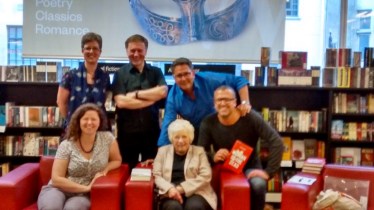
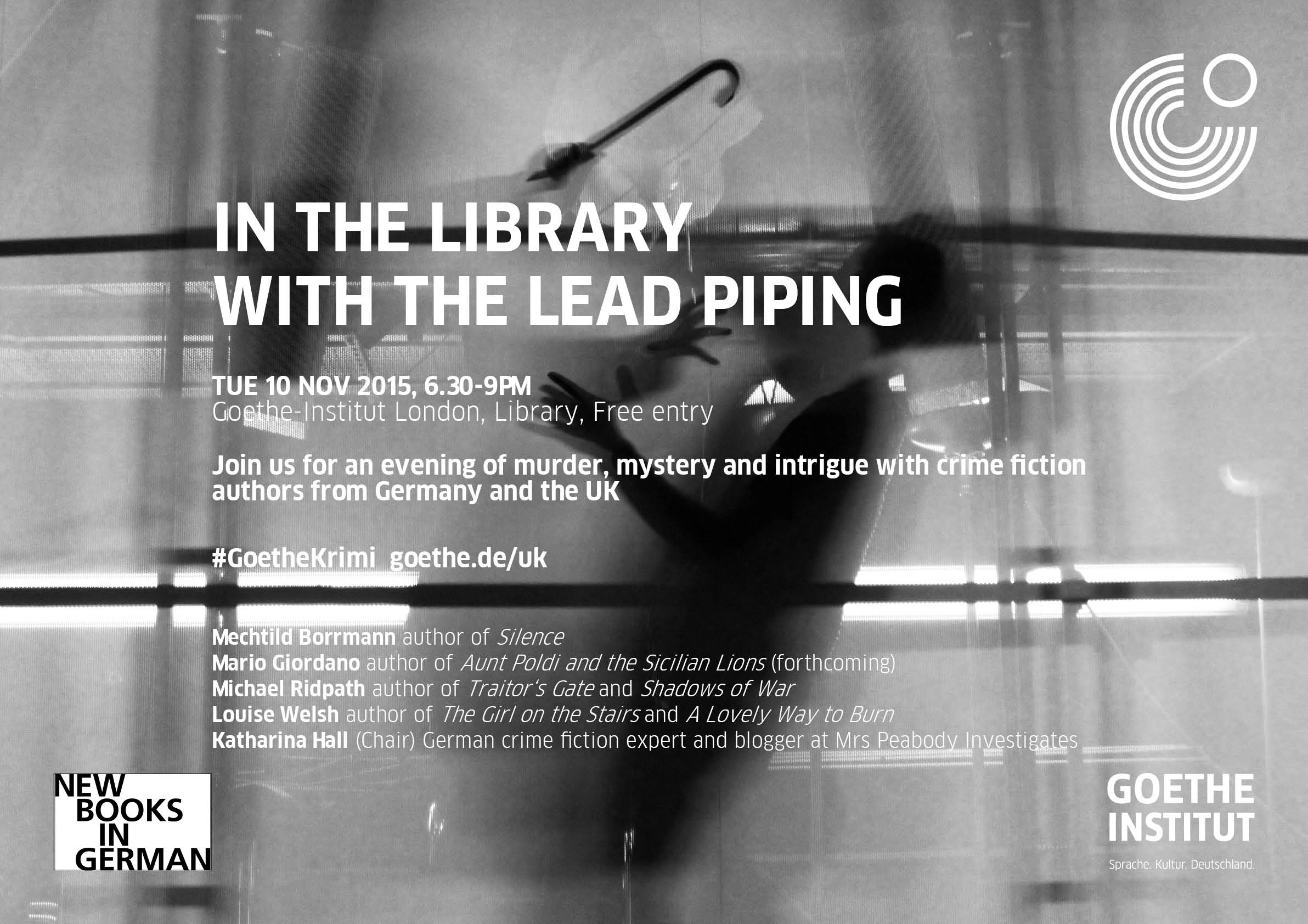
The Goethe Institut/New Books in German crime fiction evening – ‘In the Library with the Lead Piping’ – took place in London last week and was a rip-roaring success. We had an audience of around fifty, who gamely took part in our murder mystery and listened with rapt attention to authors Mechtild Borrmann, Mario Giordano, Michael Ridpath and Louise Welsh as they read from and discussed their work.
22475997513_e5f5d40f22_b

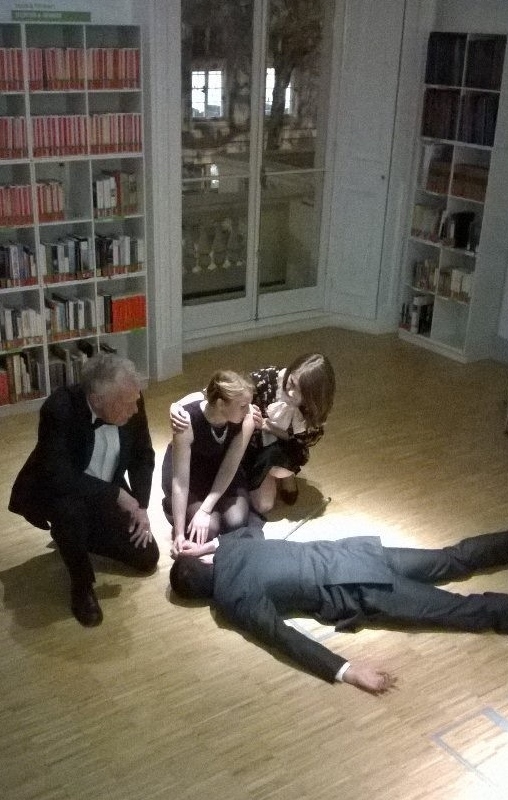
Who killed Macneath? The evening began with a murder in the library…

23071022116_8d3680d396_z

…before moving on to the readings and a discussion.

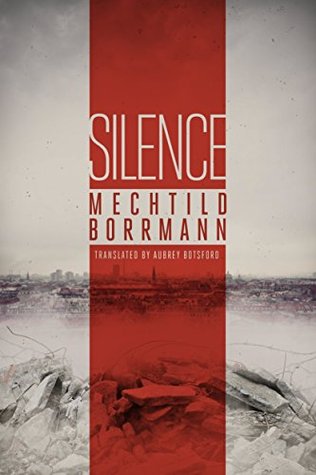
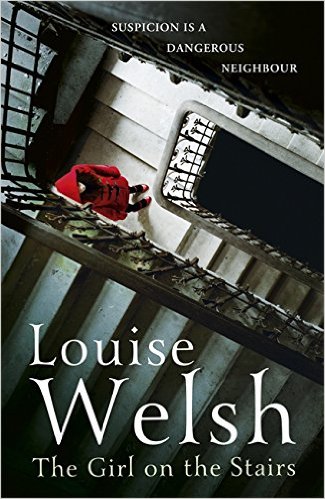
The panel discussion focused on Mechtild Borrmann’s ‘Kleve’ police procedurals and her historical novel Silence (Amazon Crossing); Michael Ridpath’s spy novel Traitor’s Gate and his Icelandic ‘Fire and Ice’ series; Mario Giordano’s screenwriting for the TV crime series Tatort (Crime Scene) and his comic crime novel Aunt Poldi and the Sicilian Lions (Bitter Lemon Press, 2016); and Louise Welsh’s psychological thrillers The Bullet Trick and The Girl on the Stairs.

As moderator, I thoroughly enjoyed putting some juicy questions to the authors about their works… 

We explored why British authors Michael and Louise chose to write novels set in Germany (Traitor’s GateThe Bullet Trick and The Girl on the Stairs); the authors’ use of settings (from urban Berlin and small-town Germany to the island of Sicily); German regional crime and the Soziokrimi or social crime novel (the ‘Kleve’ series and Tatort); the use of crime fiction to celebrate plural cultural identities (Aunt Poldi); the role of transgressive women in German film and crime (Pandora‘s Box, The Girl on the Stairs, Aunt Poldi); the challenges of writing about the Nazi past (Traitor’s Gate, Silence) and on contemporary Iceland (‘Fire and Ice’ series). We also discussed whether the former East Germany could be the next big thing in historical crime fiction or whether it was still too early to focus on this era (the authors had differing views on this point). The audience put some great questions too, asking to what extent the authors worked together with their translators, whether or not they wrote with their future readers in mind, and the nature of Ingrid Noll’s influence on contemporary German crime writing (huge).

22678870427_ce219d7386_z

Ernst the duck was the evening’s mascot – a potent reminder of the pitfalls of national stereotyping…

All in all, it was an excellent evening. Huge thanks to everyone who came along, and to Jens Boyer at the Goethe Institut London and Charlotte Ryland of New Books in German for organising such a fantastic event – Charlotte also did sterling work as a translator during the panel discussion!

We managed to interview each of the authors about their works ahead of the event – I’ll add some links to the podcasts here soon.

And here’s a good blog post by Alyson Coombes on one of Mechtild’s novels – The Other Half of Hope – which will hopefully be translated soon.

Goethe Krimi (10)

Left to right: Jens Boyer, Kat Hall, Charlotte Ryland, Louise Welsh, Mechtild Borrmann, Mario Giordano and Michael Ridpath. Photo by www.londonvideostories.com

Goethe-Insitut-50-LOGO-004      new-books-in-german

In other news, the final proofs of the Crime Fiction in German volume have just arrived from the University of Wales Press. All that remains to be done is the index, a job I enjoy as it always throws up entertaining entries. I’ll leave you to wonder how ‘Elvis Presley’, ‘Cagney and Lacey’ and ‘Dragnet‘ fit into the history of German-language crime writing!

German CF cover final

‘In the library with the lead piping’: German crime fiction event at the Goethe Institut London

Excitement is mounting, as ‘In the library with the lead piping’, a fabulous German crime fiction event at the Goethe Institut London, is now only a week away.

#GoetheKrimi

The event features two German authors – Mechtild Borrmann and Mario Giordano – and two British authors – Michael Ridpath and Louise Welsh (who’ve both written crime with a German twist). They will be reading from their works and taking part in a panel discussion (see this earlier post of mine for some author details).

.         Silence  Shadows of war  poldi  Girl Welsh

As chair for the event, I’ve spent the last couple of weeks happily reading my way through the authors’ novels. What’s struck me most, aside from the quality of the works, is their wonderful diversity. Police procedurals, spy novels, psychological thrillers, historical crime novels and comedy crime fiction are all represented, with German settings and themes used in a variety of innovative ways. It’s going to be a fascinating evening!

If you’re in London on Tuesday 10. November and would like to come along, all you need to do grab a ticket via Eventbrite. Entry is FREE.

Further details of the event are available on the Goethe Institut website.

Watch out for some teaser tweets on Twitter. Our hashtag is #GoetheKrimi.

Smörgåsbord: New BBC crime (River, Arne Dahl) & German Histo-Krimis

There are some tasty morsels on offer this week…

WARNING: Embargoed for publication until 04/08/2015 - Programme Name: River - TX: n/a - Episode: River - First Look (No. n/a) - Picture Shows: EMBARGOED UNTIL 00:01HRS, TUESDAY 4th AUGUST, 2015 John River (STELLAN SKARSGARD) - (C) Kudos - Photographer: Nick Briggs

John River (STELLAN SKARSGARD) – (C) Kudos – Photographer: Nick Briggs

Tonight (Tuesday 13 October, 9.00-10.00) sees the start of an intriguing new six-part crime drama on BBC One.

River is set in London, but stars well-known Swedish actor Stellan Skarsgård as police officer John River – just the latest evidence of the mark Scandinavia is making on our crime culture. The series is a police procedural with a twist, because it seems that River is able to commune with the dead, including his former colleague ‘Stevie’ Stevenson (played by Nicola Walker, who’s also the police lead in Unforgotten over on ITV at the moment). I’m very interested to see how the excellent Cardiff-born screenwriter Abi Morgan pulls this idea off, which we see surfacing in crime series every now and then – the 1969/70 TV series Randall and Hopkirk (Deceased) springs to mind, as do the historical crime novels of Maurizio de Giovanni, featuring Commissario Riccardi. The image of detectives haunted by the victims of cases they haven’t yet managed to solve is a very powerful one, and in the hands of these actors, could be very effective indeed.

There’s a nice interview with Stellan Skarsgård by Jake Kerridge in today’s The Telegraph.

UPDATE: I’ve just watched Episode 1 and am VERY excited. This is one of the best British crime dramas I’ve seen in a long time (probably since Happy Valley). It has a hugely original premise, which is flawlessly executed, and the writing and acting are both top-notch. The opening, which involves an ABBA reference, Tina Charles’ ‘I Love to Love’ and a gritty chase scene, had me completely gripped, and if anything, things just got better from there. Skarsgård is particularly good, projecting an almost tangible sense of grief following the loss of his colleague Stevie, but there are a number of other great characters too, from Stevie herself to River’s no-nonsense boss and new partner Ira (look out for a breathtakingly audacious quip after they are introduced). The cinematography and styling are also wonderful: London takes on a Bladerunner feel in places and there is a striking use of colour (reds, greens and blues in particular). Original – stylish – brilliantly written and acted: make sure you watch this SOON.

Arne-Dahl-Series-2-cast

The A-Unit team, series 2

Over on BBC Four, Beck is making way for Arne Dahl, which starts on Saturday, 17. October at 9.00. This is the second series about the Swedish A-Unit – an ensemble police drama with a number of quirky characters, including a new team-member I’m pleased to see is a languages expert. I have to confess that I never completely got into series 1, but know that plenty of viewers did. The first episode involves the murders of a number of Polish women and is in Swedish and Polish with subtitles. In it, we also see Kerstin Holm take up her new role as A-Unit leader.

bj

Lastly, historical crime fans may be interested in a piece that Marina Sofia and I have written about German Histo-Krimis over at ‘Crime Fiction Lover. Our flimsy cover was a celebration of the Oktoberfest (cue naff picture of Bier maidens), but what we really wanted to do was tell everyone about the MASSES of great historical crime fiction that’s been produced in Germany, Austria and Switzerland, especially since reunification. Some of the novels are already in translation, others are not (needless to say, we’re working hard on getting the latter published in English…).

Kriminally good: NBG Krimi issue, Goethe Institut Krimi panel and David Young’s The Stasi Child

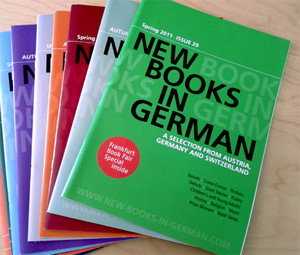
The autumn issue of New Books in German is out – a very special edition that celebrates the best of contemporary German-language crime fiction. In it you can read mouth-watering features, interviews and summaries of the hottest Krimis lining up to be translated into English.

21802651852_c2e309aee2_z

The contents are available online and include: 

A pair of features on British and German-language crime – Barry Forshaw’s ‘A New Golden Age? Contemporary British Crime Fiction’ and my own piece on ‘Quality, Diversity and Untapped Potential: the Contemporary Krimi’. Entertaining mugshots included…

A feature on ‘Killer Thrillers from Austria – an evening with Ursula Poznanski

Interviews with Daniela Rapp (editor at St. Martin’s Press in New York), Alison Hennessey (Senior Editor at Harvill Secker) and Imogen Rose Taylor (translator of Sascha Arango’s The Truth and Other Lies) on bringing international crime fiction to English-language audiences.

You can also browse individual Krimis (spoiler alert!) and take a comprehensive look at UK publishers of crime fiction and thrillers in translation, including Arcadia Books, Bitter Lemon Press, Harvill Secker, Hesperus Press, MacLehose Press, No Exit Press, Sinon & Schuster, Orion, World Noir/Europa Editions, Orenda and Vertigo Pushkin.

And as if all that goodness wasn’t enough, the Goethe-Institut London and New Books in German are hosting a Krimi evening on Tuesday 10th November. Snappily titled ‘In the Library with the Lead Piping’, the event will feature readings and a panel on German and British crime fiction with authors Mechtild Borrmann, Mario Giordano, Michael Ridpath and Louise Welsh.

Silence

Mechtild Borrmann is the German author of a number of novels, including the best-selling historical crime novel Wer das Schweigen bricht (Silence), which was the winner of the 2012 Deutscher Krimi Preis (German Crime Fiction Prize).

poldi

Mario Giordano is a German author and screenwriter, who has written for crime series such as Tatort (Crime Scene) and Schimanski. His crime novel Tante Poldi und die sizilianischen Löwen (Aunt Poldi and the Sicilian Lions) was published this year.

s_shadows_of_war_bookMichael Ridpath is the British author of financial thrillers, the Icelandic ‘Fire and Ice’ crime series, and two spy novels, Traitor’s Gate and Shadows of War, which are set in Europe at the beginning of the Second World War.

Girl Welsh

Louise Welsh is a Scottish writer who draws on crime fiction, psychological thrillers, apocalypse fiction and the Gothic. Two of her works, The Bullet Trick and The Girl on the Stairsare set in Berlin.

I have the good fortune to be the moderator for the event and am looking forward to it greatly. If you’re in London, do come along! Further details are available here. Entry is free, but booking is essential (simply email info@london.goethe.org).

StasiChild_firstlook_540

And finally… Over the past few days I’ve been reading a preview copy of David Young’s novel Stasi Child, which has the highly original setting of 1975 East Germany, and is proving to be a gripping and hugely absorbing read. It’s published on 1st October by twenty7 and has just been optioned for TV by Euston Films.

Here’s the cover blurb to whet your appetites:

>> When Oberleutnant Karin Müller is called to investigate a teenage girl’s body at the foot of the Wall, she imagines she’s seen it all before. But when she arrives she realises this is a death like no other: it seems the girl was trying to escape – but from the West.

Müller is a member of the People’s Police, but in East Germany her power only stretches so far. The Stasi want her to discover the identity of the girl, but assure her the case is otherwise closed – and strongly discourage her asking questions.

The evidence doesn’t add up, and Müller soon realises the crime scene has been staged. But this is not a regime that tolerates a curious mind, and Müller doesn’t realise that the trail she’s following will lead her dangerously close to home… <<

The novel is the first in a trilogy, and I’m already keen to meet Karin Müller and her team again. If you’re interested in how David came up with his ideas and wrote the novel, then check out his feature over on the twenty7 blog.

Marina Sofia has also just posted a great review of The Stasi Child over at findingtimetowrite.

Eva Dolan’s Long Way Home, the Kappe historical ‘Kettenroman’ (chain novel) and some other tasty bits

What do you do when your TBR pile is so vast it defies all hope of control? Answer: give up and read what you want.

long-way-home-pbk

In that spirit, I picked up Eva Dolan’s Long Way Home (Vintage, 2014). Lots of people had told me about this debut and as soon as I started reading, I could see that the praise for the novel was justified: it’s a beautifully written police procedural, which explores migrant experiences in the UK in a realistic and very sobering way. Its main investigative protagonists, Detectives Zigic and Ferreira of the Peterborough Hate Crimes Unit – with Serbian and Portuguese heritage respectively – are both extremely well drawn, and the story, which starts with the discovery of a body in a burned-out garden shed, is gripping and believable. It’s a hugely accomplished first novel, and I’m already looking forward to the second in the series, Tell No Tales.

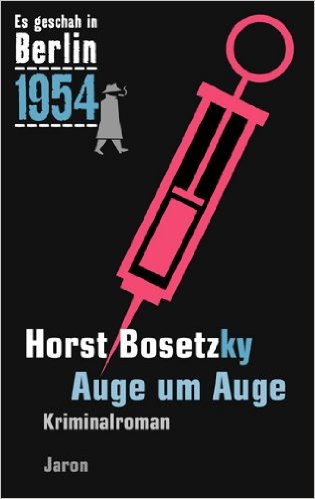
While researching my article on post-war justice in crime fiction this week, I came across the German crime novel Auge um Auge (Eye for an Eye), which explores how doctors involved in medical crimes under National Socialism often went unpunished.

kappe auge

Auge um Auge is part of a remarkable historical crime series called ‘Es geschah in Berlin’ (‘It happened in Berlin’), which uses the cases of policeman Hermann Kappe to trace German history from 1910, before the collapse of the German empire, through to the Cold War era. To date, there are 26 novels set at two-year intervals from 1910 to 1960 (nephew Otto Kappe takes over the investigative reins in 1956):

kappe collection jaron

The image above shows how the novels are packaged, with the series title and year highlighted on the cover, together with a striking abstract design. It also shows that the novels – rather unusually – are written by a collective of authors. Horst Bosetzky, a well known German crime author since the 1960s, conceived the series in 2007 with publishing house Jaron, and the other writers work under his overall guidance.

The series has also been called a Kettenroman or ‘chain novel’, which is a neat term. At the moment, ‘Es geschah in Berlin’ is the most ambitious use I’ve seen of a crime series to ‘investigate’ twentieth-century German history and I’ll definitely be checking out the other novels. Hopefully they’ll make their way into translation too.

In other news:

I’ve been flying the flag for German crime in the Times Literary Supplement, with a review of a fascinating volume called TATORT GERMANYThe Curious Case of German-Language Crime Fiction (Camden House), which is edited by Lynn M. Kutch and Todd Herzog. Unfortunately the review’s behind a paywall, but I bought a copy of the TLS yesterday, and was delighted to see a whole page dedicated to German literature.

tatort germany

Most interesting find of the week: a 2015 Penguin Special by Erich Schlosser called Gods of Metal, an essay exploring America’s nuclear capacity and the frightening ease with which a high-security weapons complex in Tennessee was breached in 2012. Schlosser meets members of the Plowshares movement, who break into nuclear facilities as a form of civil protest, and are subsequently branded as criminals by the state. Thought-provoking stuff, timed to coincide with the 70th anniversary of Hiroshima.

gods of metal

Calling the hive mind! Looking for crime novels that feature Nazi war-crimes trials

***If you have a spare minute, I’d be really grateful for your help***

I’m currently writing up a journal article on war crimes trials in Nazi-themed crime fiction. I’m interested in how crime novels since 1945 represent war crimes trials in relation to larger debates about their judicial, social and moral value, and to what extent they show legal justice as succeeding or failing.

Legal_scale-300x270

I’ve identified around 50 Nazi-themed novels that focus extensively on the theme of post-war justice, but only a much smaller number that depict or discuss war crimes trials. So the question is, can you help me find more? Here’s what I’ve got at the moment:

Crime novels (and films) containing depictions of Nazi war crimes trials:

  • William Brodrick, The Sixth Lamentation. London: Time Warner, 2004 [2003].
  • Gordon Ferris, Pilgrim Soul. London: Atlantic 2013.
  • David Thomas, Ostland. London: Quercus, 2013.
  • Joseph Kanon, The Good German. London: Time Warner, 2003 [2001].
  • Judgement at Nuremberg, dir. Stanley Kramer, 1961.
  • Music Box, dir. Constantin Costa-Gavras, 1989.
AAA ostland

This novel explores the case of Georg Heuser and his 1963 trial in West Germany

Others that feature discussion of Nazi war crimes trials include:

  • Frederick Forsyth, The Odessa File. London: Arrow, 2003 [1972].
  • Gerhard Harkenthal, Rendezvous mit dem Tod [A Date with Death]. Berlin: Buchverlag der Morgen, 1962.
  • Edgar Hilsenrath, Der Nazi & der Friseur [The Nazi and the Barber]. Munich: Piper, 2000 [1977].
  • Ira Levin. The Boys from Brazil. New York: Dell Publishing, 1976.
  • Brian Moore, The Statement. London: Flamingo, 1996 [1995].
  • Ian Rankin, The Hanging Garden. London: Orion, 1998.
  • Ferdinand von Schirach, Der Fall Collini [The Collini Case]. Munich: Piper, 2011.

Can you think of any others? They can be from anywhere in the world and don’t necessarily need to be in translation. Thanks in advance for your help 🙂

Deutschi Crime Night and the ‘Crime Fiction in German’ volume

The wonderful Deutschi Crime Night took place yesterday at Waterstones Piccadilly. The panelists were Austrian author Bernhard Aichner, German author Sascha Arango, the acclaimed translator Anthea Bell, New Books in German editor Charlotte Ryland and me, with Euro Noir expert Barry Forshaw in the chair – who did us proud.

Embedded image permalink

Photo by Charlotte Ryland

The discussion was wide-ranging and fascinating, and included the following: Sascha on his decision to set The Truth and Other Lies in a unidentifiable, universal space (like Nesser’s ‘van Veeteren’ series), in contrast to the regionally rooted writing he does for the Kiel episodes of the German TV crime drama Tatort (Crime Scene), and about the influence of Patricia Highsmith’s Ripley series on his writing; Bernhard on his creation of the ‘lovable serial killer’ Blum and the research he carried out for Woman of the Dead in a funeral home and at autopsies; Anthea on the process of translating the novel, which she really enjoyed, and on translating more generally, which she described as ‘finding the author’s voice’.

In addition, we took a canter through the crime fiction of Germany, Austria and Switzerland, discussing early German-language crime, crime greats from the Weimar period such as Fritz Lang’s M, Nazi crime fiction, Austrian crime fiction’s use of satire, Swiss writer Friedrich Dürrenmatt’s complex detective figures, and the boom in historical crime fiction since the fall of the Berlin Wall in 1989 (I drew on the forthcoming Crime Fiction in German volume when making my contribution to this portion of the discussion, of which more below). Charlotte filled us in on the work of New Books in German and some crime fiction coming our way soon, including the beguilingly entitled Der nasse Fisch (The Wet Fish) by Volker Kutscher and Melanie Raabe’s Die Falle (The Trap). She also helped us ponder the question of why German-language crime hasn’t quite had the breakthrough it deserves in the UK, with a publisher in the audience adding that she was confident it has the capacity to do so. A good boost would be provided by some German-language crime in the BBC4 Saturday crime slot…

Waterstones crime event

Anti-clockwise from front: Charlotte Ryland, Anthea Bell, Bernhard Aichner, Sascha Arango, Barry Forshaw, Mrs Pea (photo by Jennifer Kerslake)

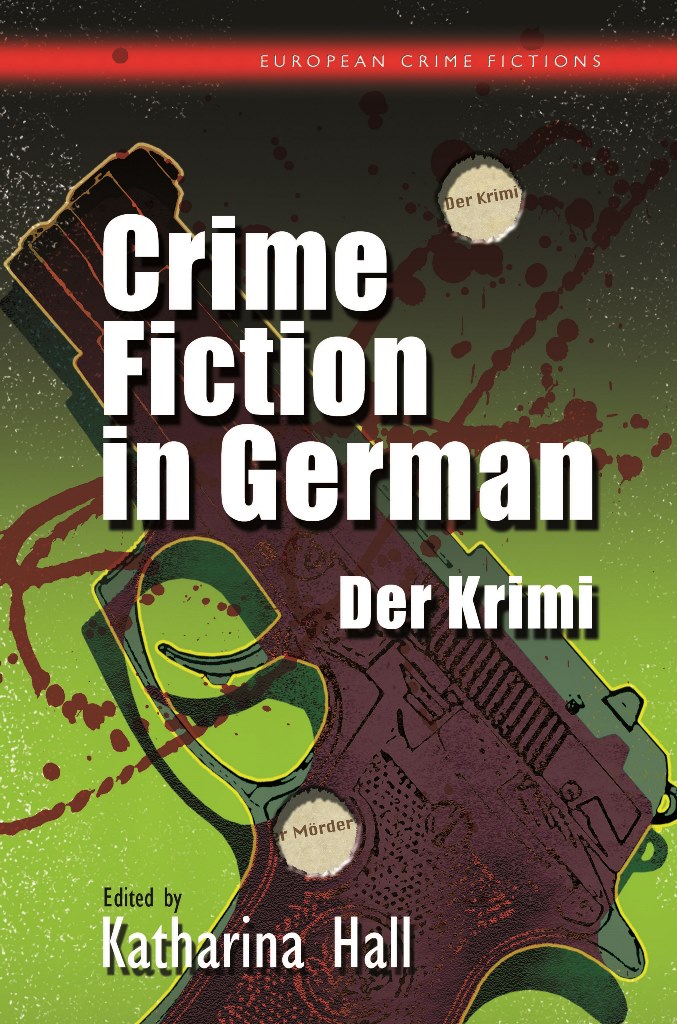
Barry also kindly gave me the opportunity to talk about the Crime Fiction in German volume, which is out in March 2016 and will provide the first comprehensive overview in English of German-language crime from its origins in the 1800s to the present day. I’ve set up a tab about the volume here, and you can see further details on the University of Wales Press website. The volume is part of the UWP ‘European Crime Fictions‘ series, which already contains volumes on French, Italian, Iberian and Scandi crime.

The cover for the Crime Fiction in German volume has just been finalised and looks gorgeous. I love the psychedelic green (Schwarzwald on speed?) and the lashings of blood. And just look at those clever little bullet holes.

German CF cover final

Finally, as a few people from our lovely audience were asking for reading recommendations after the event, here are some past ‘Mrs. Peabody Investigates’ posts about German-language crime:

Alles Gute und viel Spaß!

Krimi-tastic! Aichner’s Woman of the Dead and Arango’s The Truth & Other Lies

Not just one, but two seriously page-turning Krimis from the German-speaking world have crossed my path recently.

AichnerWoman of the Dead (Totenfrau, trans. Anthea Bell/Orion 2015), by Austrian writer Bernhard Aichner, features an unforgettable heroine/anti-heroine, the motorbike-riding undertaker Brünhilde Blum. She is a woman with a secret, who, when her beloved husband is killed, starts dealing with the case in a highly individual way. This fast-moving thriller is an extremely readable mash-up of Austrian and American crime. Its setting is recognizably Austrian (Innsbruck and the Tyrolean countryside), and its bleak assessment of Austrian society echoes other crime narratives such as Elfriede Jelinek’s Greed (Gier, 2000). At the same time, the book draws on Lindsay’s Dexter, Tarantino’s Kill Bill (‘the bride’) and Larsson’s The Girl with the Dragon Tattoo (Lisbeth Salander) – influences that might allow it to be viewed as ‘feminist noir’, the subject of this recent The Mary Sue post. I was gripped from start to finish, although I did find the novel’s moral framework and its call to empathize with a killer rather unsettling at times. I’ll be very interested to see where the next book in the ‘Blum trilogy’, House of the Dead, takes our highly unusual investigator. You can read an extract from Woman of the Dead here

The Truth and other lies

Sascha Arango’s The Truth and Other Lies (Die Wahrheit und andere Lügen, trans. Imogen Taylor/Simon and Schuster 2015) is equally compelling and features another off-the-wall protagonist, Henry Hayden – a famous novelist whose comfortable life begins to unravel after he makes a fatal error. Hayden is a darkly comic creation whose story involves a wife, a mistress and a floundering police team, and keeps the reader effortlessly engaged throughout. Intriguingly, even though Arango is a screenwriter for the German TV crime series Tatort, which has a strongly regional flavour, his novel has an international rather than a specifically German feel. The characters’ names sound English, American, German, Dutch, Swedish or eastern European and there are barely any discernible geographical markers. In literary terms, the obvious influence is Patricia Highsmith’s Tom Ripley, but I was also reminded of Ingrid Noll’s blackly humorous novel The Pharmacist (Die Apothekerin, 1994), whose protagonist carries out a series of crimes to smooth her way to a prosperous middle-class life. Like the latter, Arango’s Truth is a stylish, witty and entertaining read. You can listen to an audio extract here.

Both Bernhard Aichner and Sascha Arango will be appearing at the Deutschi Crime Night at Waterstones Piccadilly next Thursday, 11th June at 7.00pm, with Barry Forshaw (moderating), Anthea Bell the translator, Charlotte Ryland from ‘New Books in German’ and yours truly. The event is FREE and all you need to do if you’d like to come along is RSVP piccadilly@waterstones.com. You can find out more info here. Should be lots of fun!

New Bitter Lemon signings, The Edgars and CrimeFest

Here’s a round up of some interesting crime fiction news and events.

Joshua Farrington of The Bookseller reports that >>Bitter Lemon Press has signed a series of deals for female crime writers from around the world, with the books set to lead the publisher’s schedule in the second half of the year.

Publisher and co-founder Laurence Colchester has acquired titles from Brazil’s Patrica Melo, Turkey’s Esmahan Aykol and Argentina’s Claudia Piñeiro.

Melo’s The Body Snatcher is the story of a drug deal gone wrong, with police corruption and blackmail. Melo’s previous novels Lost World, The Killer, In Praise of Lies and Inferno were published in English by Bloomsbury. The Body Snatchers, which will be published in July, is translated by Clifford E. Landers.

Divorce Turkish Style by Esmahan Aykol will be published in September. It is the third in a murder mystery series featuring crime bookshop owner and accidental investigator Kati Hirschel. The previous two books, Hotel Bosphorous and Baksheesh were also published by Bitter Lemon Press, translated by Ruth Whitehouse.

Piñeiro’s Betty Boo is set in Buenos Aires, and sees a sensitive woman trying to save her career and personal life while caught up in a criminal conspiracy. Piñeiro’s previous titles, translated by Miranda France, were also published by Bitter Lemon Press. Betty Boo will be published in January 2016.

Colchester said: “We are very proud to bring these three women crime writers from Brazil, Turkey and Argentina to English speaking readers. It is part of our mission as an independent press to introduce new voices from abroad and here, in the autumn season of 2015, are three of the most successful women writing in the crime genre today.”<<

Over in the States, the annual Edgar Awards have taken place. A full list of the nominees and winners is available here. The focus is on English-language crime, and a number of titles have already migrated to my groaning TBR pile, such as Ben Winter’s World of Trouble, which is the final installment in The Last Policeman series (see my discussion of his earlier work here).

The winner in the best novel category was Stephen King’s Mr. Mercedes, which I’m currently half way through and enjoying very much (although I will never look at a hamburger in the same way again).

Last but not least, the international crime fiction convention CrimeFest takes place in Bristol next week, with a sterling programme you can see in full here. I’m very much looking forward to attending, not least because this year’s special guest is Swedish crime writer Maj Sjöwall, co-author of the seminal Martin Beck series, and she will be helping us to present the 2015 Petrona Award for Best Scandinavian Crime Novel of the Year.

I have been enjoying all the online speculation about the Petrona shortlist. The judges have now made their choice…! But will you agree?!

Stieg Larsson sequel, crime versus thrillers, Easter bunnies

Big news this week: the sequel to Stieg Larsson’s acclaimed ‘Millennium Trilogy’ is well on its way. The cover and English title – The Girl in the Spider’s Web – were revealed by MacLehose Press on Monday, although its contents will remain firmly under wraps until publication on 27 August. Here’s what we know: the sequel is ‘based on Larsson’s universe and characters’, is written by Swedish writer David Lagercrantz; will be published in Sweden by Norstedts; is titled Det som inte dödar oss  (That Which Doesn’t Kill Us) and is currently being translated into 38 languages.


Like many, I have rather mixed feelings about the publication of the new novel. On the one hand, I thought the trilogy had a pretty perfect resolution and am not sure it could be bettered. On the other, I loved Lisbeth Salander and am keen to see how her story develops. I don’t envy Lagercranz the task of taking on such a weighty literary legacy – it must be hugely difficult to find a voice and narrative that are faithful to the original, but more than pure mimicry. I’m keeping my fingers crossed that he’s found a way through. For more information, see this Guardian article by Alison Flood.

There was another interesting article in The Guardian yesterday by Val McDermid, entitled ‘Why crime fiction is left-wing and thrillers are right-wing’ (thanks to Vicky Newham for flagging this up on Facebook).

In it McDermid argues (with help from Ian Rankin) that ‘the current preoccupations of the crime novel, the roman noir, the Krimi lean to the left. It’s critical of the status quo, sometimes overtly, sometimes more subtly. It often gives a voice to characters who are not comfortably established in the world – immigrants, sex workers, the poor, the old. The dispossessed and the people who don’t vote. The thriller, on the other hand, tends towards the conservative, probably because the threat implicit in the thriller is the world turned upside down, the idea of being stripped of what matters to you. And as Bob Dylan reminds us, “When you ain’t got nothing, you got nothing to lose.”’

That got me thinking hard about whether these political distinctions hold up more widely. While I can think of plenty of examples to support McDermid’s argument – especially in the context of European crime – I can also think of a number of exceptions. Golden Age crime fiction is often thought of as being ‘conservative in style, setting, characterisation, subject matter and socio-political views’, with a dubious social order in relation to class, gender and race being restored at the end of the narrative (quote from Lee Horsley’s excellent chapter on ‘Classic Detective Fiction’ in Twentieth Century Crime Fiction, OUP, pp. 12-65, p. 39). Hard-boiled crime fiction features private investigators not known for their tolerance or diplomatic skills. They may well be critical of the status quo, but are often shown delivering violent, eye-for-an-eye justice rather than handing criminals over to the law so they can be properly put on trial. There’s an interesting discussion on these points in an article by Arlene Teraoka, which explores the lack of a private eye tradition in German crime fiction – arguably due to the P.I.’s fascistic tendencies – and the post-war preference for paternalistic police inspectors who guarantee a democratic social order (who also have their conservative sides…).

Equally, two exceptions in relation to thrillers spring to mind. John le Carré’s works are highly critical of the power wielded by governments and shady secret services, and repeatedly highlight the price vulnerable individuals pay in these larger political games (e.g. The Spy who Came in from the Cold, The Looking Glass War, A Most Wanted Man). I also read a very good Swedish thriller in the course of my Petrona judging duties that raises big moral questions about the conduct of national intelligence agencies in wartime – Joakim Zander’s The Swimmer.

In sum, different crime genres/subgenres are flexible enough to be employed for liberal or conservative political ends, and elements of both can even co-exist alongside one another in individual texts. But I’ll be bearing McDermid’s assertions in mind as I read on, to see if her distinctions hold up as current trends.

Update: Over on findingtimetowrite, Marina Sofia also muses on Val McDermid’s article and gives a wonderful overview of the Quais du Polar, at which Val’s comments were originally made. The post gives a summary of various crime writers’ views about writing on politics from the event; these provide a very nice counterpoint to this post – showing how crime fiction is used by many writers as a progressive means of critiquing and exploring the power structures of their societies.

Wishing you all a very happy Easter break filled with fluffy bunnies, chocolate and lots of crime fiction!