The 2016 Petrona Award shortlist is revealed!

It’s time for a very special announcement…
16708355988_c8f8eb3944_o

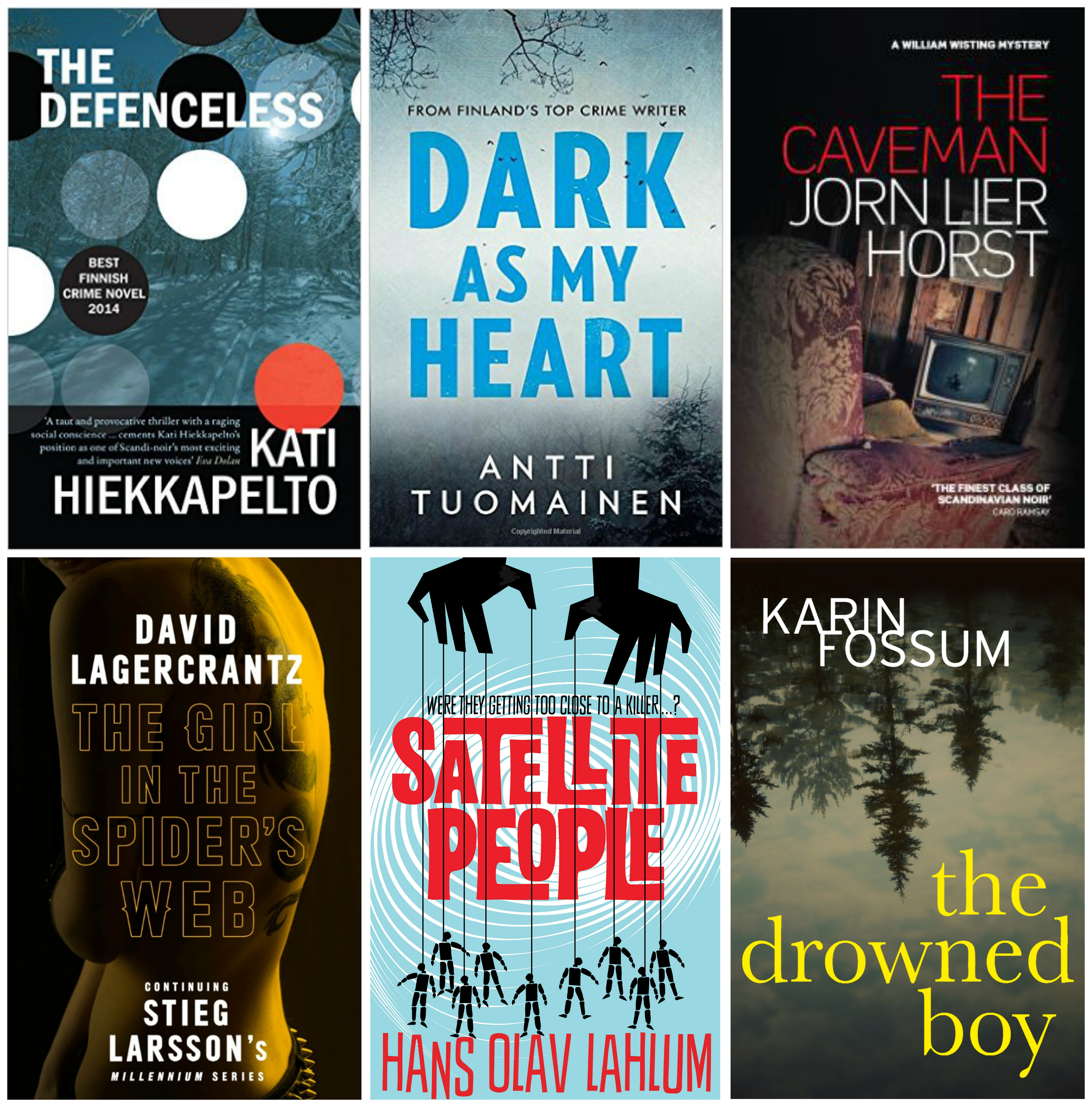
Crime novels from Finland, Norway and Sweden have been shortlisted for the 2016 Petrona Award for the Best Scandinavian Crime Novel of the Year. They are:

  • The Drowned Boy by Karin Fossum tr. Kari Dickson (Harvill Secker; Norway)
  • The Defenceless by Kati Hiekkapelto tr. David Hackston (Orenda Books; Finland)
  • The Caveman by Jorn Lier Horst tr. Anne Bruce (Sandstone Press; Norway)
  • The Girl in the Spider’s Web by David Lagercrantz tr. George Goulding (MacLehose Press; Sweden)
  • Satellite People by Hans Olav Lahlum tr. Kari Dickson (Mantle/Pan Macmillan; Norway)
  • Dark as My Heart by Antti Tuomainen tr. Lola Rogers (Harvill Secker; Finland)

The award is open to crime fiction in translation, either written by a Scandinavian author or set in Scandinavia and published in the UK in the previous calendar year. The winner will be announced at CrimeFest in Bristol on Saturday 21 May.
Petrona PicMonkey Collage

Here are the Petrona judges’ comments on the shortlist:

THE DROWNED BOY by Karin Fossum tr. Kari Dickson (Harvill Secker; Norway). Fossum’s spare prose and straightforward narrative belie the complexity at the heart of this novel. After the drowning of a young child with Down’s Syndrome, Chief Inspector Sejer must ask himself if one of the parents could have been involved. The nature of grief is explored, along with the experience of parenting children with learning difficulties. There’s a timeless feel to the writing and a sense of justice slowly coming to pass.

THE DEFENCELESS by Kati Hiekkapelto tr. David Hackston (Orenda Books; Finland). The second in Hiekkapelto’s ‘Anna Fekete’ series is an assured police procedural rooted in the tradition of the Nordic social crime novel. Its exploration of immigrant experiences is nuanced and timely, and is woven into an absorbing mystery involving an elderly man’s death and the escalating activities of an international gang.  A mature work by a writer who is unafraid to take on challenging  topics.

THE CAVEMAN by Jorn Lier Horst tr. Anne Bruce (Sandstone Press; Norway). Horst’s The Caveman begins with the discovery of a four-month-old corpse just down the road from William Wisting’s home. Troubled by his neighbour’s lonely death in an apparently uncaring society, the Chief Inspector embarks on one of the most disturbing cases of his career. Beautifully written, this crime novel is a gripping read that draws on the author’s own experiences to provide genuine insights into police procedure and investigation.

IMG_0019

Snowy Scandinavian landscape. Credit: sk-photographed.blogspot.co.uk

THE GIRL IN THE SPIDER’S WEB by David Lagercrantz tr. George Goulding (MacLehose Press; Sweden). The late Stieg Larsson created the groundbreaking, two-fingers-to-society, bisexual anti-heroine Lisbeth Salander. When Larsson’s publishers commissioned a fourth book, they turned to David Lagercrantz, whose The Girl in the Spider’s Web often reads uncannily like Larsson’s own text. His real achievement is the subtle development of Salander’s character; she remains (in Lagercrantz’s hands) the most enigmatic and fascinating anti-heroine in fiction.

SATELLITE PEOPLE by Hans Olav Lahlum tr. Kari Dickson (Mantle/Pan Macmillan; Norway). An accomplished homage to Agatha Christie, Satellite People adds a Nordic twist to classic crime fiction tropes. References to Christie novels abound, but Lahlum uses a Golden Age narrative structure to explore Norway’s wartime past, as Inspector Kristiansen and Patricia investigate a former Resistance fighter’s death. Excellent characterisation, a tight plot and a growing sense of menace keep the reader guessing until the denouement.

DARK AS MY HEART by Antti Tuomainen tr. Lola Rogers (Harvill Secker; Finland). Tuomainen’s powerful and involving literary crime novel has a mesmerising central concept: thirty-year-old Aleksi is sure he knows who was behind his mother’s disappearance two decades ago, but can he prove it? And to what extent does his quest for justice mask an increasingly unhealthy obsession with the past? Rarely has atmosphere in a Nordic Noir novel been conjured so evocatively.

With grateful thanks to each of the translators for their skill and expertise in bringing us these outstanding examples of Scandinavian crime fiction.

16708355988_c8f8eb3944_o

The Petrona Award judges are:

Barry Forshaw – Writer and journalist specialising in crime fiction and film; author of four books covering Scandinavian crime fiction: NORDIC NOIR, DEATH IN A COLD CLIMATE, EURO NOIR and the first biography of Stieg Larsson.

Kat Hall – Associate Professor of German at Swansea University; editor of CRIME FICTION IN GERMAN: DER KRIMI for University of Wales Press; international crime fiction reviewer/blogger at MRS. PEABODY INVESTIGATES.

Sarah Ward – Crime novelist, author of IN BITTER CHILL (Faber and Faber), and crime fiction blogger at CRIMEPIECES.

The award is administered by the marvellous Karen Meek of EURO CRIME.

See also the Petrona Award website.

Holiday reading and the 2015 Betty Trask Award: The Spring of Kasper Meier

The Crime Fiction in German volume has had its final polish and been delivered into the tender care of the University of Wales Press. Time for a little break, then – a tour of west Wales in our trusty VW camper, with plenty of downtime for reading in various seaside cafes.

I’ve been eyeing up my real and virtual bookshelves to see what I fancy taking along. So far I have the following modest pile, which will no doubt expand a bit by tomorrow morning.

 Behind God's Back

Finnish author Harri Nykänen’s Behind God’s Back (trans. Kristian London, Bitter Lemon Press, 2015) is the second in the Ariel Kafka series – I enjoyed the first, Nights of Awe, very much. Here’s the publisher description:

>> There are two Jewish cops in all of Helsinki. One of them, Ariel Kafka, a lieutenant in the Violent Crime Unit, identifies himself as a policeman first, then a Finn, and lastly a Jew. Kafka is a religiously non-observant 40-something bachelor who is such a stubborn, dedicated policeman that he’s willing to risk his career to get an answer. Murky circumstances surround his investigation of a Jewish businessman’s murder. Neo-Nazi violence, intergenerational intrigue, shady loans – predictable lines of investigation lead to unpredictable culprits. But a second killing strikes closer to home, and the Finnish Security Police come knocking. The tentacles of Israeli politics and Mossad reach surprisingly far, once again wrapping Kafka in their sticky embrace. << 

Emily St. John Mandel, The Lola Quartet (Picador 2015). I’ve heard lots of good things about this Canadian/British Columbia writer, who often uses crime conventions in her literary works (have heard comparisons to David Mitchell of Cloud Atlas fame):

Emily’s website describes Lola as ‘literary noir’, with the following overview >> Gavin Sasaki is a promising young journalist in New York City, until he’s fired in disgrace following a series of unforgivable lapses in his work. The last thing Gavin wants is to return to his hometown of Sebastian, Florida, but he’s drifting toward bankruptcy and is in no position to refuse when he’s offered a job by his sister, Eilo, a real estate broker who deals in foreclosed homes.

Eilo recently paid a visit to a home that had a ten-year-old child in it, a girl who bears a strong resemblence to Gavin and who has the same last name as Gavin’s high school girlfriend Anna, whom Gavin last saw a decade ago. Gavin — a former jazz musician, a reluctant broker of foreclosed homes, obsessed with film noir and private detectives — begins his own private investigation in an effort to track down Anna and their apparent daughter.<<

And then today saw the announcement of the 2015 Betty Trask Award, a £10,000 prize for debut writers under 35. The winner is Ben Fergusson’s The Spring of Kasper Meier (Little, Brown, 2014), which is set in the ruins of Berlin after 1945 and looks mighty like a crime novel to me. So that’s coming along too.

Here’s the blurb from Ben’s website >> Set in Berlin in 1946, The Spring of Kasper Meier follows the friendship that develops between Kasper Meier, a black-market trader, and Eva Hirsch, the young woman who is blackmailing him. As soldiers in Berlin begin to be killed in mysterious circumstances, both Kasper and Eva’s troubled pasts threaten to reveal themselves, and their fragile lives begin to spiral out of control. <<

The novel has also featured on the Radio 2 bookclub (you can access a free extract via its website here).

What holiday reading do you have lined up? All recommendations gratefully received!

The 2015 Petrona Award shortlist is revealed!

Six high-quality crime novels from Finland, Iceland, Norway and Sweden have made the shortlist of the 2015 Petrona Award for the Best Scandinavian Crime Novel of the Year, which is announced today.

  • THE HUMMINGBIRD by Kati Hiekkapelto tr. David Hackston                         (Arcadia Books; Finland)
  • THE HUNTING DOGS by Jørn Lier Horst tr. Anne Bruce                              (Sandstone Press; Norway)
  • REYKJAVIK NIGHTS by Arnaldur Indriðason tr. Victoria Cribb                        (Harvill Secker; Iceland)
  • THE HUMAN FLIES by Hans Olav Lahlum tr. Kari Dickson                               (Mantle; Norway)
  • FALLING FREELY, AS IF IN A DREAM by Leif G W Persson tr. Paul Norlen (Doubleday; Sweden)
  • THE SILENCE OF THE SEA by Yrsa Sigurðardóttir tr. Victoria Cribb             (Hodder & Stoughton; Iceland)

The winning title will be announced at CrimeFest, held in Bristol 14-17 May 2015. The award will be presented by – and we are so very excited about this! – the Godmother of modern Scandinavian crime fiction, Maj Sjöwall, co-author with Per Wahlöö of the influential ‘Martin Beck’ series.

Maj Sjöwall 01.jpg

The wonderful Maj Sjöwall. Photo by Dr. Jost Hindersmann via Wikimedia Commons

Here are the judges’ comments on the shortlist:

THE HUMMINGBIRD: Kati Hiekkapelto’s accomplished debut introduces young police investigator Anna Fekete, whose family fled to Finland during the Yugoslavian wars. Paired with an intolerant colleague, she must solve a complex set of murders and the suspicious disappearance of a young Kurdish girl. Engrossing and confidently written, THE HUMMINGBIRD is a police procedural that explores contemporary themes in a nuanced and thought-provoking way.

THE HUNTING DOGS: The third of the William Wisting series to appear in English sees Chief Inspector Wisting suspended from duty when evidence from an old murder case is found to have been falsified. Hounded by the media, Wisting must now work under cover to solve the case and clear his name, with the help of journalist daughter Line. Expertly constructed and beautifully written, this police procedural showcases the talents of one of the most accomplished authors of contemporary Nordic Noir.

The Hunting Dogs by Jorn Lier Horst

REYKJAVIK NIGHTS: A prequel to the series featuring detective Erlendur Sveinsson, REYKJAVIK NIGHTS gives a snapshot of 1970s Iceland, with traditional culture making way for American influences. Young police officer Erlendur takes on the ‘cold’ case of a dead vagrant, identifying with a man’s traumatic past. Indriðason’s legions of fans will be delighted to see the gestation of the mature Erlendur; the novel is also the perfect starting point for new readers of the series.

THE HUMAN FLIES: Hans Olav Lahlum successfully uses elements from Golden Age detective stories to provide a 1960s locked-room mystery that avoids feeling like a pastiche of the genre. The writing is crisp and the story intricately plotted. With a small cast of suspects, the reader delights in following the investigations of Lahlum’s ambitious detective Kolbjørn Kristiansen, who relies on the intellectual rigour of infirm teenager Patricia Borchmann.

The Human Flies

FALLING FREELY, AS IF IN A DREAM: It’s 2007 and the chair of the National Bureau of Criminal Investigation, Lars Martin Johansson, has reopened the investigation into the murder of Swedish Prime Minister Olaf Palme. But can he and his dedicated team really solve this baffling case? The final part of  Persson’s ‘The Story of a Crime’ trilogy presents the broadest national perspective using a variety of different techniques – from detailed, gritty police narrative to cool documentary perspective – to create a novel that is both idiosyncratic and highly compelling.

Falling Freely, As If In A Dream: (The Story of a Crime 3), Leif G W Persson

THE SILENCE OF THE SEA: Yrsa Sigurðardóttir has said ‘I really love making people’s flesh creep!’, and she is the supreme practitioner when it comes to drawing on the heritage of Icelandic literature, and channelling ancient folk tales and ghost stories into a vision of modern Icelandic society. In SILENCE OF THE SEA, an empty yacht crashes into Reykjavik’s harbour wall: its Icelandic crew and passengers have vanished. Thóra Gudmundsdóttir investigates this puzzling and deeply unsettling case, in a narrative that skilfully orchestrates fear and tension in the reader.

As was the case last year, the standard of submissions was extremely high, with plenty of top-quality crime novels jostling for the shortlist. That the quality of the novels shone through in English is of course due in large measure to the skills of the six translators. They are often the forgotten heroes of international crime, without whom we would not have access to these marvellous texts.

Thanks to fellow judges Barry Forshaw and Sarah Ward for a thoroughly enjoyable shortlisting, and of course to Karen Meek – none of it would have happened without her hard work behind the scenes.

So did we get it right? Are there others that you’d like to have seen on the shortlist? And who do you think the winner will be? 

2015 Petrona Award judges

A happy Petrona team after the shortlisting. Clockwise from back row left: Sarah Ward, Barry Forshaw, Karen Meek and Mrs Peabody/Kat Hall

Further information can be found on the Petrona Award website

An album of Petrona pictures is also available at the Swansea University Flickr page.

Iceland Noir 2014: volcanoes, glaciers and crime

Having been extremely jealous of everyone at Iceland Noir last year, it was brilliant to make it this November, not least because Reykjavik has been on my wishlist of places to visit for a long, long time. The event was held at Nordic House, and was expertly organised by author Quentin Bates and the rest of the Icelandic Noir team, who put together a great programme over two days. Quite a few bloggers have already posted reports (see list below), so I’m going to focus on the panels/discussions that particularly interested me and say a little about my first impressions of Iceland … with plenty of photos!

IMG_4654

Nordic Perspectives panel – and yes, it was early in the morning…

Nordic Perspectives. This panel featured David Hewson (UK), Hans Olav Lahlum (Norway), Lilja Sigurðardóttir (Iceland) and Michael Ridpath (UK), with Jake Kerridge moderating. It was interesting to see how these authors positioned themselves or their countries’ crime output in relation to ‘nordic crime’. Sigurðardóttir felt that Icelandic crime had affinities to Scandinavian crime through its focus on the complexity of the criminal (citing the work of Norwegian author Karin Fossum as an example). However Lahlum saw himself as a historical crime writer rather than a Nordic crime writer, while Ridpath’s Icelandic-American investigator is an insider-outsider figure who negotiates different cultural traditions.

This panel also included discussion of historical crime fiction and adaptation. Lahlum told us that Norwegian crime fiction often engages with historical events, especially the Second World War (as evidenced in his novel The Human Flies). Hewson discussed his adaptation of the Danish TV crime drama The Killing, which involved adding contextualising historical detail. For example, the beginning and end of The Killing II are set in Ryvangen Memorial Park, which was the site of partisan executions by the Nazis and points to the core theme of the series – the long-term impact of war on society. Hewson provided extra information about the memorial, as British readers would not be aware of its significance (interesting; now on my TBR pile).

IMG_4658 2

‘Translating crime across cultures’ panel

The ‘translating crime fiction across cultures’ panel featured Viktor Arnar Ingólfsson (Iceland), Mari Hannah (UK), Bogdan Hrib (Romania) and Vidar Sundstøl (Norway), with academic Jacky Collins moderating. I left this panel wanting to read Sundstøl’s Minnesota Trilogy: the first installment, The Land of Dreams, won the prestigious Riverton Prize in 2008, and its exploration of Norwegian-American history and culture sounds right up my street. It was also interesting to hear Hrib discussing Romanian crime novels and his ongoing mission to see them more widely translated into English: there are currently just three, published by Profusion Press, which I’m now curious to read. Mari Hannah tantalised us by revealing that she’s written a novel partly set in Norway (a break from the Kate Daniels series, which we were reassured is also continuing). Icelandic author Ingólfsson currently has one novel translated into English – The Flatley Enigmawith others translated into German, which appears to be quite a common route for Icelandic writers (those Germans do love their nordic Krimis!).

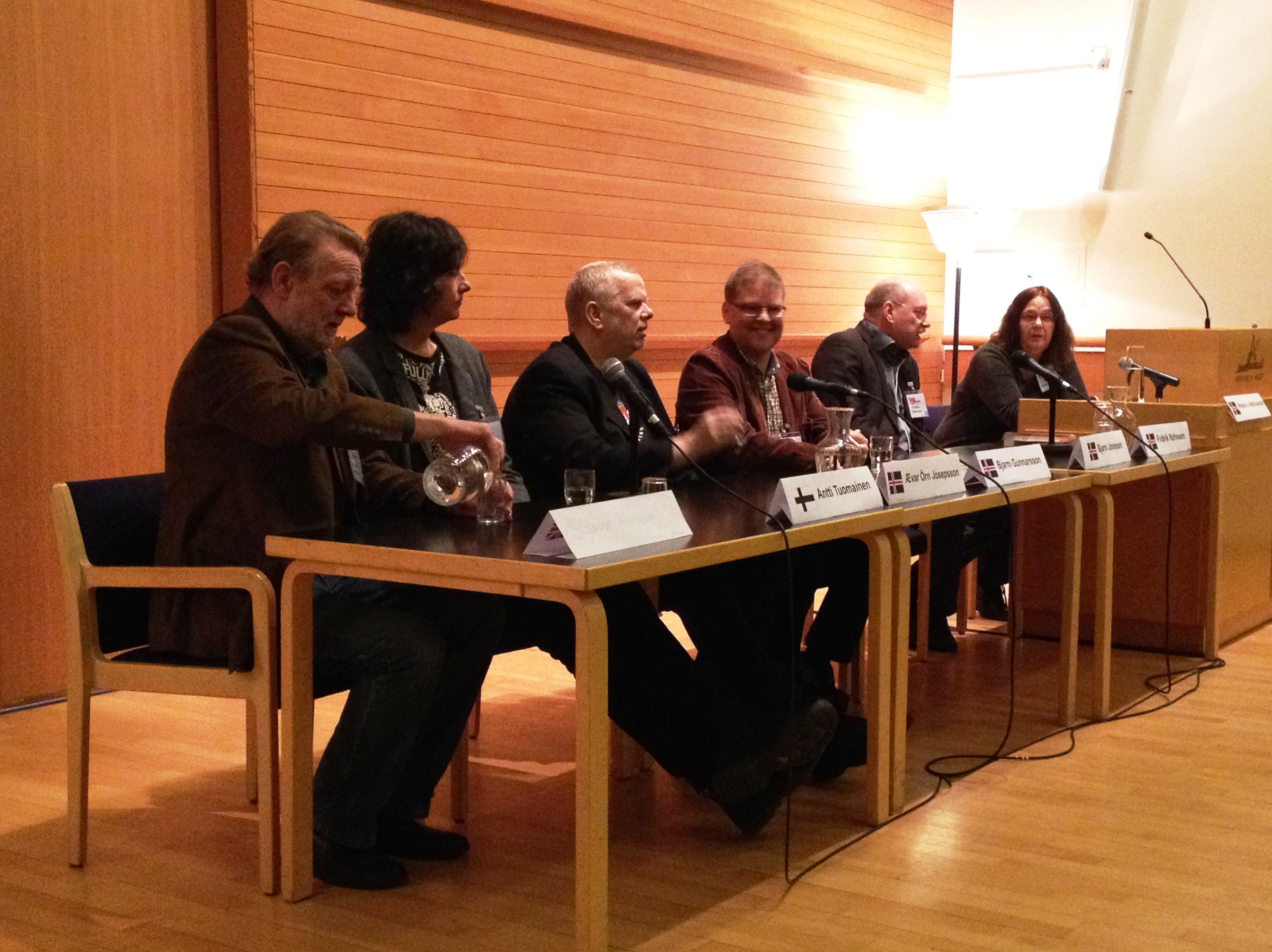
A companion panel on the Saturday celebrated the inaugural Icepick Award for best crime novel translated into Icelandic, with Antii Tuomainen (Finnish author of The Healer) and Icelandic translators Ævar Örn Jósepsson, Bjarni Gunnarsson, Bjarni Jónsson and Sigadur Karlsson (Magnea Matthiasdóttir moderating).

IMG_4733

Icepick Award panel – a sea of translators!

The panel gave a fascinating insight into the dialogue between writers and translators about linguistic and cultural issues during the process of translation, although Gunnarsson also illustrated the important role of technology today: when translating Nesbo, he used Google Earth to take a closer look at Oslo, a city he’s never visited but now feels he knows well. Tuomainnen made lifelong friends in the translation community with his heartfelt appreciation for the work of the translator; he also specifically thanked Sigurdur Karlsson for translating his work and for bringing it to the attention of Icelandic publishers in the first place, thereby highlighting the influential role translators play in identifying promising new work. The Icepick was awarded on the Saturday evening at the Iceland Noir dinner (for further details, see my previous post).

IMG_4686 2

The ‘settings’ panel

Tuomainnen popped up again on the settings panel with Ragnar Jónasson (Iceland), Johan Theorin (Sweden) and Vidar Sundstøl (Norway), moderated by Jacky Collins. The settings discussed included urban Finland, a village in northern Iceland, an isolated Swedish island and the American Midwest. In each case, the novel’s location plays a crucial role – sometimes even becoming a character in its own right – and is used to create unease or suspense (Theorin’s Öland novels), a sense of remoteness and isolation (Jonasson’s Dark Iceland series), or to explore themes such as migration (Sundstol’s Minnesota Trilogy) and climate change (Tuomainen’s The Healer).

IMG_4735 2

The ‘supernatural in crime fiction’ panel – a suitably shaky shot from the back…

One of my favourite panels was on supernatural crime, featuring James Oswald (Scotland), Johan Theorin (Sweden), Alexandra Sokoloff (US) and Michael Sears (South Africa) in discussion with Jake Kerridge. It was fascinating to hear the varying reasons why crime authors use supernatural elements in their work: as a means of exploring the clash between the rational and irrational (Oswald), illustrating evil (Sokoloff), exploring cultural beliefs (Sears) or taking genre in new direction (Theorin). Hearing the panelists talk about the extra dimensions the supernatural can add to a crime narrative reminded me why I like hybrid crime fiction so much: there’s a creativity at work here that pushes the boundaries of the genre and – when it works – can produce fantastic results. Sokoloff rather intriguingly described a magpie approach when writing – she has blended Jewish lore and witch-y elements into her novels to create particular effects. And it struck me that at least two other writers at the conference – Tuomainen and Icelandic author Yrsa Sigurðardóttir – also write hybrid crime fiction (drawing on traditions of apocalyptic literature and horror). The days when crime publishers were reluctant to publish this type of fusion fiction thankfully appear to be over.

Other blog posts, articles and tweetery on Iceland Noir 2014:

  • Crime Fiction Lover – lots of coverage including the debut authors’ panel, featuring blogger and Petrona judge Sarah Ward, whose novel In Bitter Chill (Faber and Faber 2015) I’m greatly looking forward to reading
  • Crimepieces – Sarah Ward with three posts
  • The Reykjavik Grapevine on the author reading held at Solon on Thursday evening
  • Miriam Owen live-tweeted Iceland Noir via @NordicNoirBuzz

Do also check out the site for next year’s rather wonderful-looking Shetland Noir (Iceland Noir will be back in 2016).

I’m going to finish up with a few Reykjavik/Iceland photos to show those of you who haven’t yet visited what a great place this is!

1. An Eymundsson bookshop in Reyjkavik. This capital, which is around the size of my hometown Swansea, with a population of around 200,000, has at least five massive bookshops. Iceland is a nation of book lovers with a deep appreciation of culture (probably instilled by long winter nights and the reading aloud of Icelandic sagas). Fittingly, Reykjavik is a UNESCO City of Literature.

IMG_4852

Booktastic Reykjavik

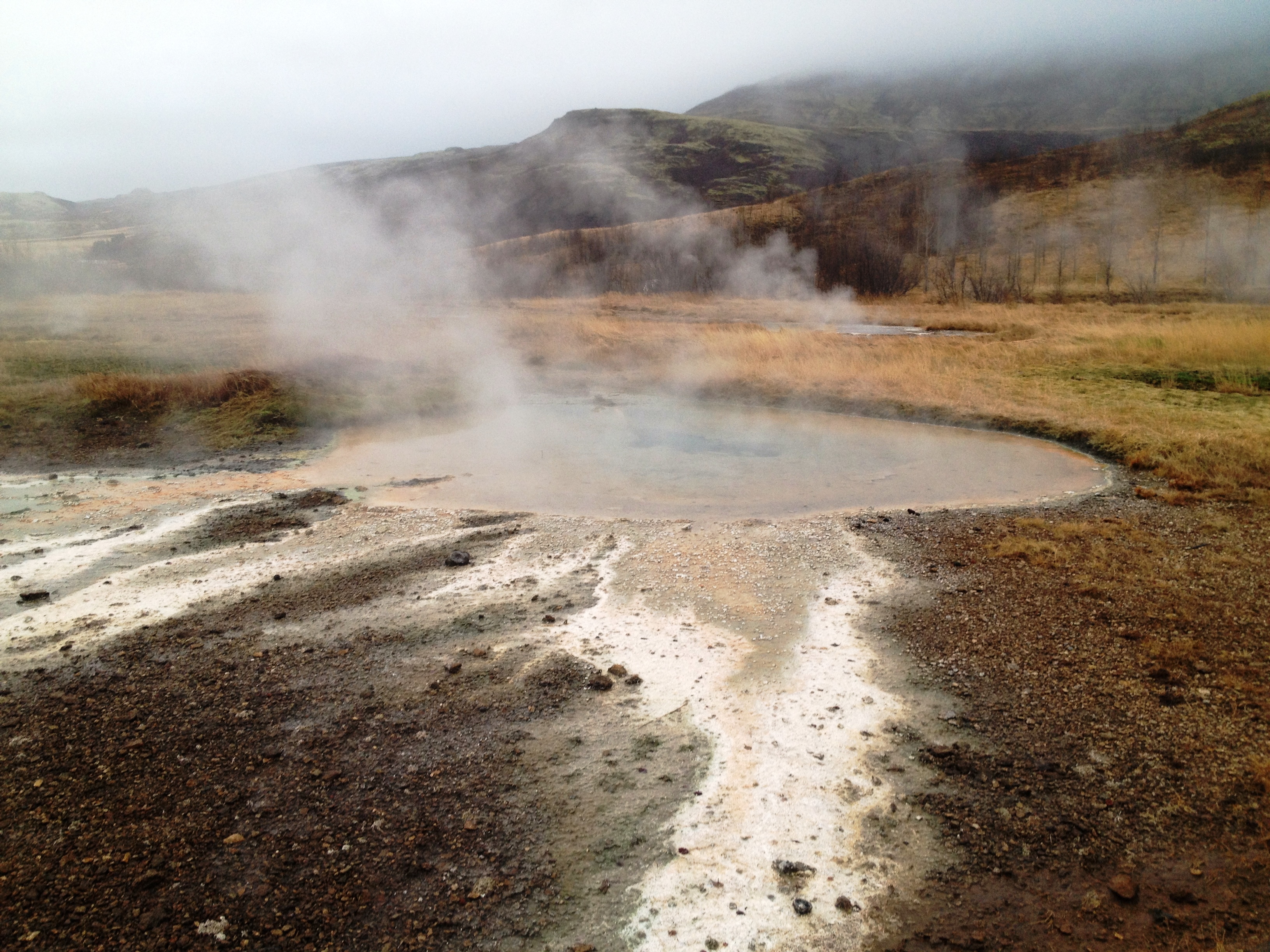
2. The bubbling, steaming landscape of Haukadalur. Wandering around on a crust of earth just above plentiful geothermal activity, with geysers going off at regular intervals, instils an added appreciation of our volatile, ever-changing planet. In a land not heavy on natural resources, Icelanders have made the most of their free geothermal energy to heat their homes, create outdoor thermal pools, grow tomatoes, process aluminium, keep their streets de-iced, and so on… Ingenious and admirable.

IMG_4787

The land of fire and ice – a geothermal landscape here, but glaciers are not far away

3. Reykjavik is charming. Here are a few random photos.

IMG_4887

Hallgrímskirkja, which looks a lot like a space rocket, guarded by the statue of Leifur Eiriksson

IMG_4907

View over Reykjavik from the top of the Hallgrímskirkja – on the day the sun came out

IMG_4921

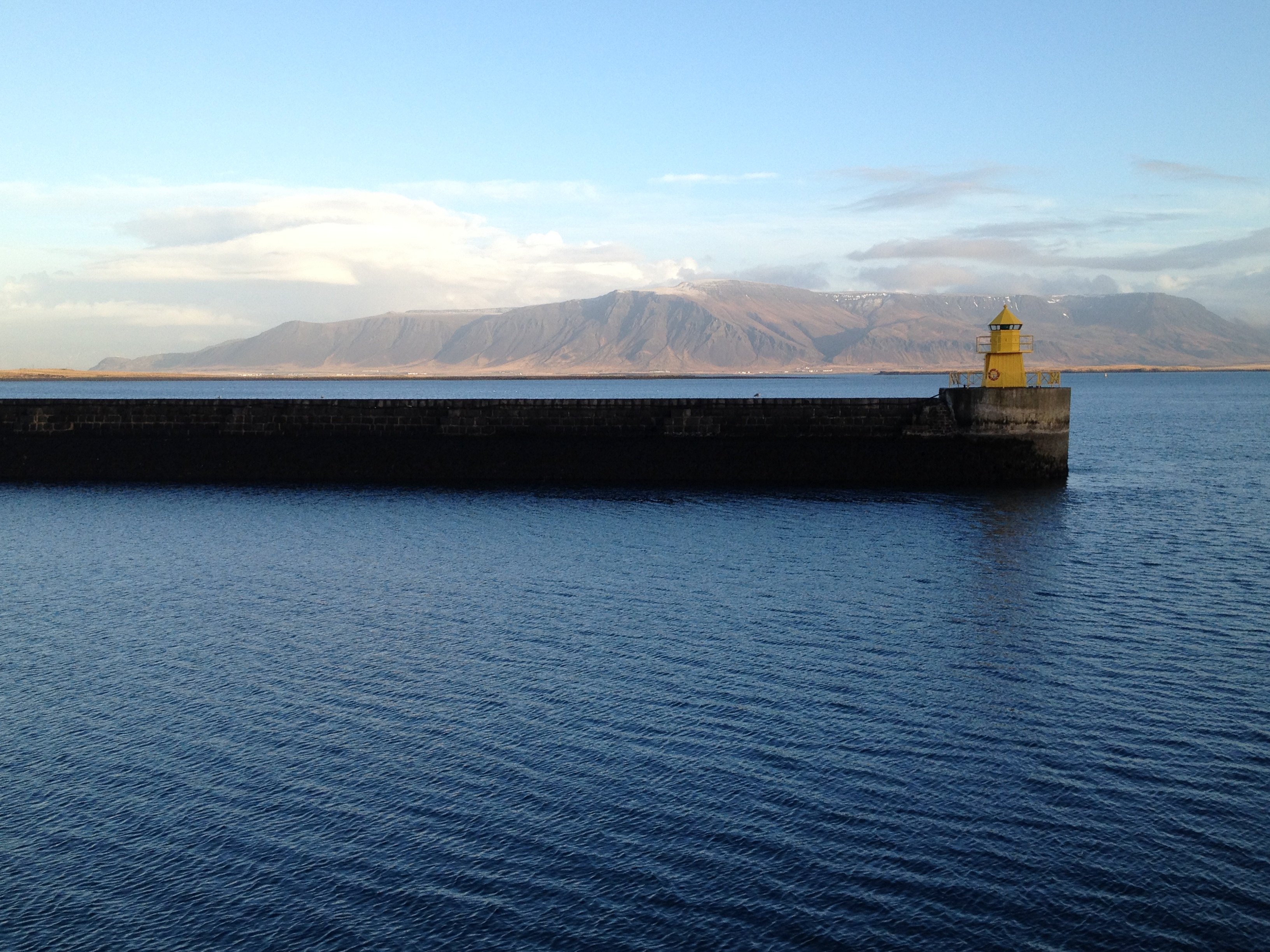
Reykjavik Harbour, looking out to Faxafloi Bay and the mountains beyond

4. There’s a lot of Icelandic wool. Which gets turned into gorgeous mittens to feed my newly discovered mitten addiction.

IMG_5031

Takk fyrir Icelandic sheep!

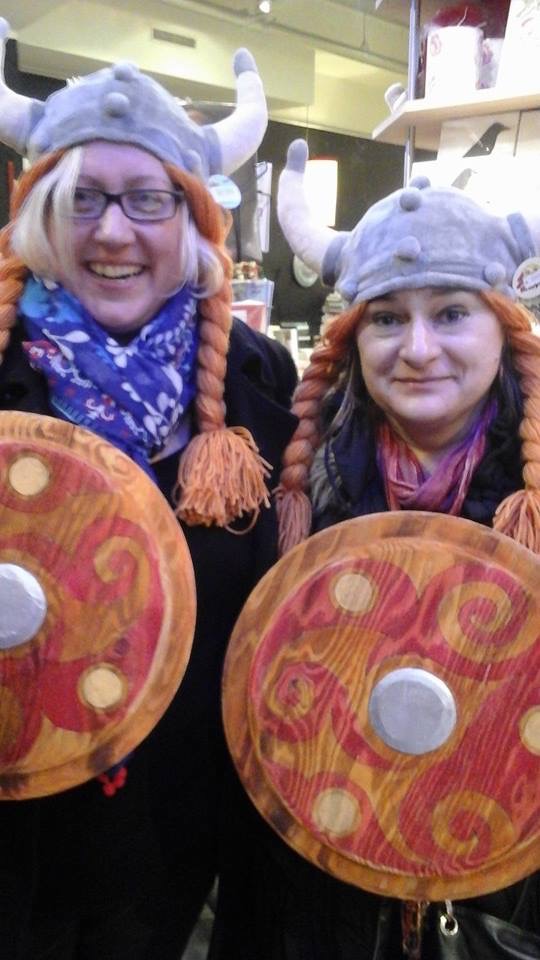
5. Friendly Vikings. I think this is my favourite Iceland Noir photo.

IMG_4946

Miriam and Ewa – awesomely stylish Vikings

Huge thanks to the Iceland Noir organisers for making the event such a wonderful success!

Iceland Noir: Winner of first Icepick Award announced!

Hot off the presses from Iceland Noir! The winner of the inaugural Icepick Award, given to the best crime novel translated into Icelandic in 2014, is…

 IcepickSmall

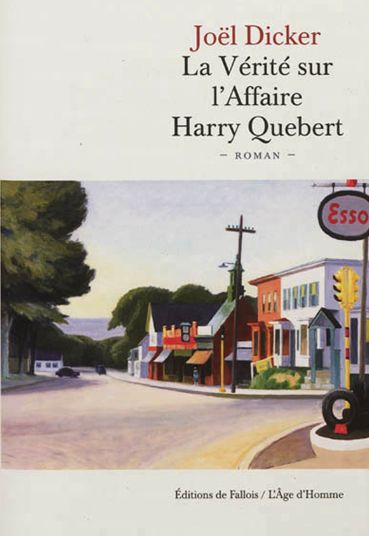
… Swiss author Joël Dicker’s La Vérité sur l’affaire Harry Quebert [The Truth About the Harry Quebert Affair], translated from the French by Friðrik Rafnsson.

harry_quebert

This novel is a publishing phenomenon – here’s the blurb from Penguin, which has certainly made me want to read the book:

>> The Truth About the Harry Quebert Affair is a fast-paced, tightly plotted, cinematic literary thriller, and an ingenious book within a book, by a dazzling young writer.

August 30, 1975: the day fifteen-year-old Nola Kellergan is glimpsed fleeing through the woods, never to be heard from again; the day Somerset, New Hampshire, lost its innocence. Thirty-three years later, Marcus Goldman, a successful young novelist, visits Somerset to see his mentor, Harry Quebert, one of the country’s most respected writers, and to find a cure for his writer’s block as his publisher’s deadline looms. But Marcus’s plans are violently upended when Harry is suddenly and sensationally implicated in the cold-case murder of Nola Kellergan—with whom he admits he had an affair. As the national media convicts Harry, Marcus launches his own investigation, following a trail of clues through his mentor’s books, the backwoods and isolated beaches of New Hampshire, and the hidden history of Somerset’s citizens and the man they hold most dear. To save Harry, his own writing career, and eventually even himself, Marcus must answer three questions, all of which are mysteriously connected: Who killed Nola Kellergan? What happened one misty morning in Somerset in the summer of 1975? And how do you write a book to save someone’s life?<<

The Icepick Award is judged both on the quality of the original work and its translation, acknowledging the vital role of the translator in allowing crime fiction to travel beyond national and linguistic boundaries to the ever grateful reader. The process of translating (which of course involves not just linguistic but detailed cultural knowledge) is often invisible, so it’s very welcome to see it being celebrated by the award.

The shortlist for the 2014 Icepick Award, with novels from America, Finland, Norway, Switzerland and Sweden, was as follows:

Joël Dicker, La Vérité sur l’affaire Harry Quebert [The Truth About the Harry Quebert Affair] – Icelandic translation from French: Friðrik Rafnsson

Gillian Flynn, Gone Girl – Icelandic translation from English: Bjarni Jónsson

Jo Nesbø, Panserhjerte [The Leopard] – Icelandic translation from Norwegian: Bjarni Gunnarsson

Håkan NesserMänniska utan hund [Man Without Dog] – Icelandic translation from Swedish: Ævar Örn Jósepsson Antti Tuomainen, Veljeni vartija [My Brother’s Keeper] – Icelandic translation from Finnish: Sigurður Karlsson The award is founded by the Reykjavik Crime Festival Iceland Noir, The Icelandic Association of Translators and Interpreters and The Icelandic Crime Writing Association. 

Apocalyptic crime fiction from America and Finland

I’ve just finished reading Finnish crime author Antti Tuomainen’s The Healer, which was a gripping and quietly powerful read.

Set in an unspecified future where climate change is causing profound damage and mass migration to the safe haven of the north, the narrative follows the search of poet Tapani Lehtinen for his journalist wife Johanna. She has vanished, apparently without trace, while reporting on a series of murders by the self-styled ‘Healer’, an activist targeting those he deems responsible for the environmental catastrophe. Part crime, part love-story and part dystopian fiction, this is an unusual novel that will hopefully be followed by a sequel. I particularly enjoyed its measured pacing and stylistic precision, which in keeping with its narrator has a distinctly poetic feel – beautifully translated by Lola Rogers. It won the Clue Award for Best Finnish Crime Novel in 2011, and has just been published in paperback by Vintage. It’s also one of the submissions for the 2014 Petrona Award.  

Along with other reviewers such as Bernadette and Sarah, The Healer reminded me of Ben Winters’ excellent pre-apocalyptic crime novels, The Last Policeman and Countdown City, which are set in the States prior to an asteroid strike. The three novels explore similar, fascinating questions. What happens to social structures, but particularly to law and order when society begins to collapse? Why bother to investigate crimes or fight for justice (or write poetry) when everyone’s going to die anyway? And how do individuals respond when making moral choices in extreme circumstances? While all of this sounds pretty depressing, there is also a hopefulness to these narratives, which as Bernadette notes in her review of The Healer, makes them curiously uplifting reads.

I have to confess that I’m getting quite fond of apocalyptic crime. Here are the ones I’ve read recently (all good) and another I found while nosing around on the web. There do seem to have been quite a few published in the last couple of years, which suggests that they could be the product of a global zeitgeist. Reading The Healer while extreme weather hit UK shores and the US experienced a severe cold snap certainly added to my appreciation of the climate change theme.

Ioanna Bourazopoulou, What Lot’s Wife Saw (Greece / Black and White Publishing, 2013)

Quinn Fleming, DMQZ (USA / ebook, 2013 – still to read)

Hugh Howey, Wool (USA / Century, 2013)

Antti Tuomainen, The Healer (Finland / Harvill and Secker, 2013)

Ben H. Winters, The Last Policeman (USA / Quirk, 2012)

Ben H. Winters, Countdown City (USA / Quirk, 2013)

Merry Christmas! Frohe Weihnachten!

So we’re about to head off on our seasonal travels. My brother is cooking the big Christmas dinner this year, while the rest of us chill out on the sofa. What a hero.

I’m packing a couple of novels to read over the Christmas break. The first is Jan Costin Wagner’s Light in a Dark House, the fourth in the German/Finnish Kimmo Joentaa series, and a submission for the 2014 Petrona Award (a list of all the eligible novels can be seen over at Euro Crime). The other is Argentinian writer Patricio Pron’s literary memoir, My Father’s Ghost is Climbing in the Rain, in which the author/detective investigates his family’s past. I’ve been saving both of these up, and look forward to reading them with a late-night glass of wine. How about you? What literary treats do you have lined up?

Wishing you all a very Merry Christmas and Happy Holidays!

Here are Gonzo, Rizzo the Rat, Kermit the Frog, Pepe the King Prawn, Miss Piggy and Fozzy Bear singing ‘It’s the Most Wonderful Time of the Year’. Enjoy! Viel Spaß!

Film of Jan Costin Wagner’s Silence on BBC4 tonight (Saturday 23 March)

The film adaptation of Jan Costin Wagner’s Silence (see here for Mrs P. book review) will be shown tonight on BBC4 at 9pm. It’s a German production, Das letzte Schweigen (the final silence), directed by Baran bo Odar, and transposes the Finnish action of the novel to small-town Germany (Costin Wagner is himself German, which may have prompted the switch).

The trailer on the TV/Radio Times website looks promising, although it should be noted the film’s subject matter is quite harrowing.

Here’s a portion of the TV/Radio Times review by Trevor Johnston (contains mild spoilers) :

>> Twenty three years after the unsolved murder of a schoolgirl in a wheat field, another young victim goes missing, in this German thriller that surveys the course of justice from various angles. The perpetrator of the first killing is identified in the very first scene, with the key dilemma revolving around his unwitting accomplice, who is so troubled by events that he disappears and keeps his silence over the decades. There’s certainly an involving moral complexity to Baran bo Odar’s film, though at times it does get bogged down trying to keep tabs on the killers, the investigators and the victims’ families across both time frames. Occasional lapses in credibility notwithstanding, it’s still tense and unsettling fare that treads delicately through difficult territory that involves the abuse of children.<< 

Baran bo Odar was listed by Variety Magazine as one of ’10 Directors to Watch’ in 2011. You can read Variety’s profile of him here – with some comment on the film as well.

Update: I’ve just finished watching the film and thought it was a truly excellent adaptation, faithful in almost every respect to the novel, and conveying its central themes of guilt and grief in an extremely effective way. Some terrific acting (especially from Katrin Sass, who also played a mother in Goodbye Lenin) and the cinematography was wonderful too. Top quality, intelligent (and highly unsettling) crime drama.

The Petrona award for best Scandinavian crime novel

The crime blogosphere has been abuzz with news of the freshly established Petrona Award for Best Scandinavian Crime Novel of the Year.

Set up in memory of Maxine Clarke, who blogged as Petrona and was an expert in Scandinavian crime fiction, the award will be presented for the first time at the UK CrimeFest convention this coming May.

The 2013 shortlist has been compiled on the basis of Maxine’s own reviews:

PIERCED by Thomas Enger, tr. Charlotte Barslund (Faber and Faber)
BLACK SKIES by Arnaldur Indridason, tr. Victoria Cribb (Harvill Secker)
LAST WILL by Liza Marklund, tr. Neil Smith (Corgi)
ANOTHER TIME, ANOTHER LIFE by Leif GW Persson tr. Paul Norlen (Doubleday)

enger428586_287692644633128_120240158045045_704808_1282709077_n517CY6O6qWL51Bigz1qx7L._BO2,204,203,200_PIsitb-sticker-arrow-click,TopRight,35,-76_AA300_SH20_OU02_

Submissions are also now being invited for the 2014 award, which will be judged by crime critic Barry Forshaw, Sarah Ward of Crimepieces, and your very own Mrs. P. It’s an honour to have been asked, and I look forward to some lively discussions with my fellow judges! Karen Meek from Eurocrime will be keeping us all in line.

The rules governing eligibility are available on the Petrona Remembered blog. You can also read Petrona’s excellent review of Indridason’s Voices there – fittingly, it’s the inaugural post on the site, and will be followed by more from a variety of contributors.

For a Bookseller piece on the award, see here.

Mrs. Peabody’s 2012 review

It’s been a busy year for Mrs. Peabody Investigates, with reviews of international crime fiction from Denmark, Finland, Germany, Italy, Northern Ireland, South Africa, Sweden, Switzerland and the USA. There were also a number of lively discussions on subjects including autopsy scenes; violence and women; Jewish detective figures; national image; strong female protagonists, and the crime writer as social commentator. Many thanks to everyone who joined in with their expertise and views! Last but not least, interviewing crime writers at the Harrogate Crime Writing Festival and contributing to Mark Lawson’s ‘Foreign Bodies’ series on Radio 4 were definite highlights.

So to finish off the year, here’s a random round-up of the best – and worst – of Mrs Peabody’s 2012 (with thanks to apuffofjack for the idea).

Most Satisfying Read: Tom Franklin’s Crooked Letter, Crooked Letter (2010), a gripping examination of the repercussions of a murder, set in the American Deep South of the 1970s, 1980s, and the present day.

Most Disappointing Read: Jussi Adler-Olsen’s Disgrace.Wooden characterisation was the real villain of this crime novel, but I’m still hoping for better from the next in the Department Q series.

Best Historical Crime Novel: Tie between Malla Nunn’s A Beautiful Place to Die (2010), which provides a fascinating insight into apartheid South Africa in the 1950s, and Stuart Neville’s The Twelve (2010) – hard-hitting Belfast noir exploring the legacy of The Troubles.

Crime Novel that Lingered Longest in the Mind: Jim Thompson’s The Killer Inside Me (1952), which presents a chilling, but surprisingly nuanced portrait of murderer Lou Ford.

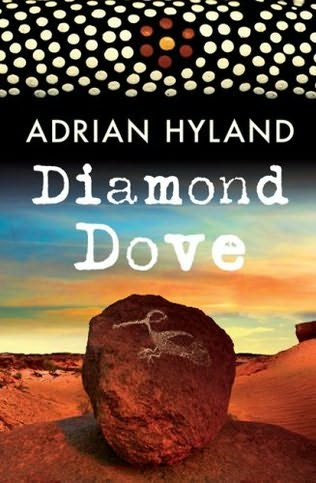
Best Female Detective: Tie between Edie Kiglatuk from M.J. McGrath’s White Heat (2011) and Emily Tempest from Adrian Hyland’s Diamond Dove (2006) (reviews pending). In many ways, these characters are twins: feisty, tough women who have complex insider / outsider roles in marginalised indiginous communities (the Inuit of the Arctic Circle and the Aboriginal people of the Australian outback).

Best Male Detective: Finnish-Jewish police inspector Ariel Kafka in Harri Nykänen’s Nights of Awe (2010): a highly original and witty investigator, whom I look forward to meeting again (albeit with a slightly less convoluted plot).  

Best Discovery: Leif G.W. Persson is well-known in his native country as a top criminologist and crime writer, but his razor-sharp dissections of Swedish society have only started to be translated relatively recently. I’ve just finished Another Time, Another Life (2012), which was a gem, and am keen to read more.

Last Policeman

Most Original Premise: Ben Winters’ The Last Policeman (2012) is a ‘pre-apocalypse police procedural’, in which Detective Hank Palace investigates a suspicious suicide six months before asteroid 2011GV1 is due to hit the earth. The first in a trilogy (review pending).

Best Re-read: Jakob Arjouni’s Turkish-German Kemal Kayankaya series (1985-2012). A ground-breaking detective who uses intelligence and wit to make his way in a largely racist society. The first in the series, Happy Birthday, Turk (1985), remains a cracker.

Best Use of Humour: Leif G.W. Persson uses satirical humour to great effect as he lifts the lid on the workings of Swedish society. Look out for the pathologist nicknamed ‘Esprit de Corpse’ in Another Time, Another Life.

Best crime TV series: The Killing III, in which Sarah Lund strode forth for the last time (still in denial that it’s over *sob*).

Best crime film: Tie between Romanzo Criminale (dir. Michele Placido, 2006), which traces the rise and fall of an Italian street gang, and Once Upon a Time in Anatolia (dir. Nuri Bilge Ceylan, 2011), which plays out over a dream-like night of a police investigation (reviews to follow).

Most Anticipated Reads for 2013: Stuart Neville’s Ratlines (2013), set in a 1960s Ireland whose government is keen to play down its links with former Nazis, and Y.A. Erskine’s The Brotherhood (2011), a much-praised depiction of police corruption and betrayal set in Tasmania.

All best wishes for a healthy and happy New Year, filled with lots of  wonderful crime fiction.