Jingle bells! Mrs. Peabody’s 2025 Christmas crime list

Mrs. Peabody’s 2025 Christmas list features the perfect gift for every crime lover in your life — including yourself!

Eight novels set in America, England, Norway, Scotland, Croatia and the former Yugoslavia, with a dash of China, Sweden and Ukraine. Please support indie publishers and local booksellers!
Red Water

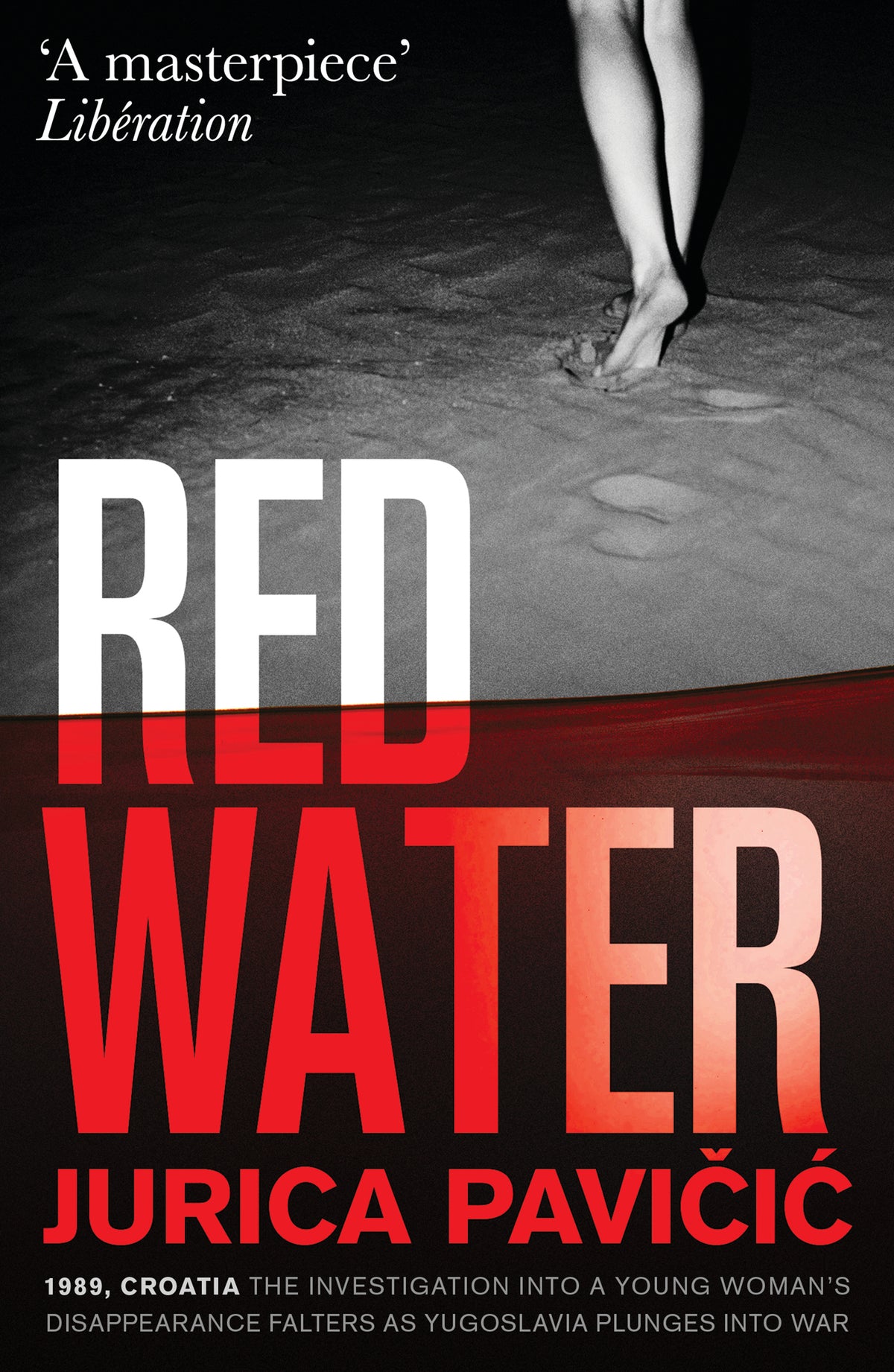
Jurica Pavičić, Red Water, translated by Matt Robinson, Bitter Lemon Press 2025

Red Water is for lovers of international and historical crime fiction. Set in Croatia, the novel explores the fallout from a teenager’s disappearance over three long decades. Silva vanishes in September 1989, leaving her family confounded, not least because the police investigation reveals some unexpected sides to the seventeen-year-old’s life. Then comes the fall of communism and the Yugoslav Wars that will tear communities apart. It’s only once the conflict ends that the family has any chance of getting the answers they need.

This gripping and emotionally intelligent mystery shows the toll on the loved ones of those who disappear, while offering a nuanced history of Yugoslavia’s collapse and the remaking of Croatia. First-class stuff.

Laila Lalami, The Dream Hotel, Bloomsbury 2025

Set in a future not far from now, The Dream Hotel is a speculative mystery that highlights the dangers of the technologies that supposedly serve us. Dr Sara Hussein is returning from a conference when she’s detained at Customs and Immigration, because she’s been deemed at risk of committing murder following data analysis of her dreams. Little did she know, when blithely agreeing to the terms of a sleep-saving device after the birth of her twins, that her dreams would be harvested and used against her. Now she’s being held at a SAFE-X facility that turns a profit from its detainees’ labour and is loath to let them go. It’s been 291 days — will Sara ever make it back to her family?

The Dream Hotel will make you think twice about ticking those innocent-looking ‘terms and conditions’ boxes, and illuminates the intersections of law enforcement and capitalism in uncompromising ways. The subject is highly relevant given the current situation in the States, where ICE is busy outsourcing raids on immigrant communities. A fantastic read from an author at the top of her game.

Elly Griffiths, The Postscript Murders and The Last Word, Quercus 2020 and 2024 

Time for some cosy crime! I absolutely loved this duo of bookish crime novels by Elly Griffiths. In The Postscript Murders, DS Harbinder Kaur sees no reason to suspect foul play when 90-year-old Peggy Smith is found dead at home. But Peggy’s carer Natalka isn’t so sure: Peggy thought she was being followed and did she really have the heart condition that apparently killed her? Together with Edwin, Peggy’s elderly neighbour, and Benedict, a former monk who serves coffee on the Shoreham seafront, Natalka sets about solving the mystery of Peggy’s death. And it turns out that their friend had a rather special skill. Then, in The Last Word, the trio investigate the demise of local romance author Melody Chambers.

Both novels are great reads — witty and entertaining, but with plenty of emotional depth. The three investigative characters bounce off one another nicely, and Natalka’s Ukrainian dynamism complements Edwin and Benny’s more cautious British approach. Crime fiction with lots of heart.

Jørn Lier Horst, The Lake, translated by Anne Bruce, Penguin 2025 

The latest William Wisting police procedural is a brilliant addition to the series. It’s high summer and Lake Farris is drying out for the first time in years. As the waters recede on opposite sides of the lake, there are disturbing discoveries relating to two cold cases: the remains of a young motorcyclist who went missing eight years ago, and the belongings of a girl who disappeared four years later. Wisting and his team, with fresh input from a Swedish detective, begin to reinvestigate.

This crime novel goes to some quite dark places, but is never salacious or gratuitous in tone. Wisting represents the very best of policing: he is methodical, dogged, and dedicated to securing justice for his victims. His methods have also moved with the times, so we’re given fascinating insights into the latest technologies used to secure vital breakthroughs.

R. F. Kuang, Yellowface, HarperCollins 2024

Rebecca Kuang is an incredibly exciting writer, with the talent and courage to pull off ideas that many other authors could not. In Yellowface, obscure writer June Hayward witnesses the death of her friend and rival Athena Liu in a freak accident. In the interval between dialling 911 and the arrival of the emergency services, June steals the book manuscript lying on the dead woman’s desk, and later revises and passes it off as her own. Finally, ‘June Song’ has the fame and critical adulation she’s always dreamed of and seems to have no problem justifying her actions to herself. But someone may be about to expose her. How can June save herself from being cancelled and losing her precious career?

Yellowface is a razor-sharp dissection of the publishing industry and the crazily competitive world that aspiring writers have to navigate. Just how far are they (or any of us) willing to go to make it? Clever and witty, and a genuinely insightful look at the publishing process.
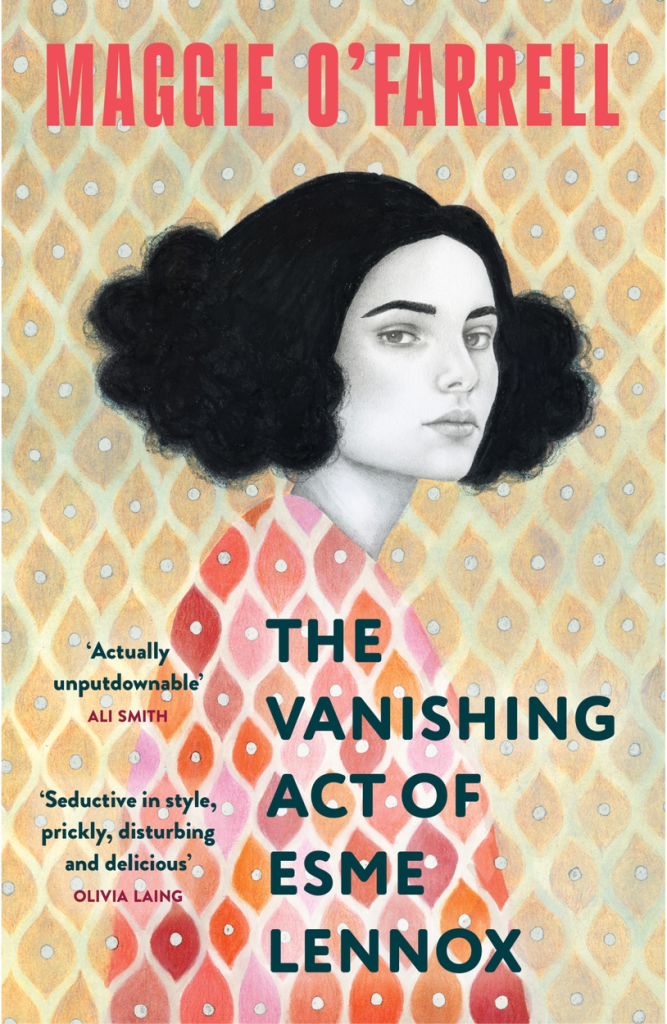
Maggie O’Farrell, The Vanishing Act of Esme Lennox, Hachette 2009

Top-notch literary crime. Iris Lockhart gets a letter telling her that her great-aunt Esme Lennox is about to be released from an Edinburgh psychiatric unit. Iris has never heard of Esme, and her grandmother Kitty, who is slipping into dementia, seems unable or unwilling to help. But what could Esme have done to deserve a lifetime in an institution? And why the complete silence about her within the family?

This is by far the oldest novel on my list, but I read it this year and was simply blown away. I counted at least four major crimes within its pages, and the astonishing thing is that none of them — even in combination — could be said to be remotely unique. On finishing it I felt quite shaken, because it really isn’t that long since ‘transgressive’ women could be so easily ‘put away’. Sobering and sad, but incredibly good — and Esme herself is unforgettable. O’Farrell is a truly fantastic writer.

Jess Kidd, Murder at Gulls Nest, Faber 2025

Murder at Gulls Nest is the first in Jess Kidd’s ‘Nora Breen Investigates’ series and is set in the 1950s seaside town of Gore-on-Sea, a place of boarding houses, terrible food, and recuperation after long years of war. Nora was once Sister Agnes of Christ at the High Dallow Carmelite Monastery, but when former nun Frieda goes missing, Nora feels compelled to find her and takes a room at the Gulls Nest boarding house where the woman last lived. Here, Nora meets the ragtag assortment of Frieda’s fellow lodgers, and starts using her curiosity and sharp intelligence to get to the bottom of the mystery. When one of the lodgers is found dead, Nora knows that something is seriously amiss. Kidd’s use of language is sublime, and the loyal and resourceful Nora Breen is a delight. Cosy, but with an uncompromising edge.

Wishing you all a lovely, relaxing and bookish Christmas!

Spring smörgåsbord! Swiss, Korean, British, Spanish & American crime fiction

Spring is springing here in Wales, with pink blossom, white garlic, and bluebells emerging into the warmth. It does the soul good to be out in the garden and parks, or down on the beach.

I’ve been enjoying an eclectic range of crime fiction recently, including some longer, more ambitious reads.

Hunkeler's Secret

Hansjörg Schneider, Hunkeler’s Secret (Switzerland), tr. by Astrid Freuler, Bitter Lemon Press 2025

First line: Peter Hunkeler, former inspector with the Basel City criminal investigation department, now retired, woke up and didn’t know where he was.

I reckon Hunkeler’s Secret, the latest in the ‘Inspector Hunkeler’ series, is my favourite thus far. While in hospital recovering from an operation, Hunkeler finds himself sharing a room with Stephan Fankhauser, the gravely ill former head of the Basel Volksbank. One morning, Hunkeler wakes to the news that Fankhauser died in the night. But was it a natural death? Or did a groggy Hunkeler witness something untoward being done to his fellow patient in the wee small hours? After his discharge from hospital, the retired police inspector starts to investigate in his dogged, somewhat grumpy way. There’s also a new family relationship to explore, a wayward goat, and lots of good food.

One aspect of the ‘Hunkeler’ series I particularly like is its geographical setting. There’s the Swiss city of Basel on the one hand, where Hunkeler spent his working life and has a flat, and rural Alsace on the other, where he owns a little house. You get a real sense of the proximity of Switzerland, France and Germany to one another, with characters continually criss-crossing borders and speaking Swiss-German, Alsatian (an Alemannic dialect) and French. I love that Astrid Freuler integrates nuggets of the original languages into her excellent English translation, which gives readers an enhanced sense of the multiculturalism of the area. The region also has a complex territorial history, which plays a role in the resolution of this knotty Hunkeler case.

Jess Kidd, Murder at Gulls Nest (1950s England), Faber 2025

First line: The woman climbs the hill, a favourable wind behind her.

Murder at Gulls Nest is the first in Jess Kidd’s new ‘Nora Breen Investigates’ series, and is set in the 1950s seaside town of Gore-on-Sea, a place of boarding houses, terrible food, and recalibration after long years of war.

For thirty years, Nora was Sister Agnes of Christ, a dutiful nun at the High Dallow Carmelite Monastery. But when former nun Frieda goes missing, Nora feels compelled to find her, and takes a room at the Gulls Nest boarding house, where the young woman was last based. Here, Nora meets the ragtag assortment of Frieda’s fellow lodgers, and starts using her curiosity and sharp intelligence to get to the bottom of the mystery. When one of the lodgers is found dead, Nora knows that something is seriously amiss.

Readers of this blog will know that I’m a big fan of Jess Kidd’s work, especially her brilliant novel HimselfMurder at Gulls Nest is written in a slightly softer, slightly cosier style, but retains plenty of bite. As ever, Kidd’s use of language is sublime, and I’m looking forward to meeting the resourceful, irrepressible Nora Breen again in future.

Mirinae Lee, 8 Lives of a Century-Old Trickster (North Korea and South Korea), Virago 2023

First line: The idea came to me while I was going through my divorce.

When Grandma Mook tells the obituarist at the Golden Sunset retirement home the story of her life — which spans a century of Korea’s history — there’s a suspicion that the old lady is just a fantasist. But: what if Mook Miran is telling the truth and she’s a trickster of the highest order? What if she genuinely was a murderer, terrorist, identity thief and spy?

A major theme of this novel is survival. Mook Miran’s eight lives, which we’re told in non-chronological order, illuminate the terrible hardships women faced in Japanese-ruled Korea (1910-1945) and later in North Korea, and pose the question of what it takes to survive such incredibly adverse circumstances. Part of the answer lies in the figure of the trickster, who survives and advances through nimble thinking and resolute action — even if the latter is viewed as a crime and comes at a price. Sparky, resilient and whip-smart, Mook Miran is a character you won’t easily forget, and the portrait she paints of Korea’s history is disturbing and fascinating in equal measure.

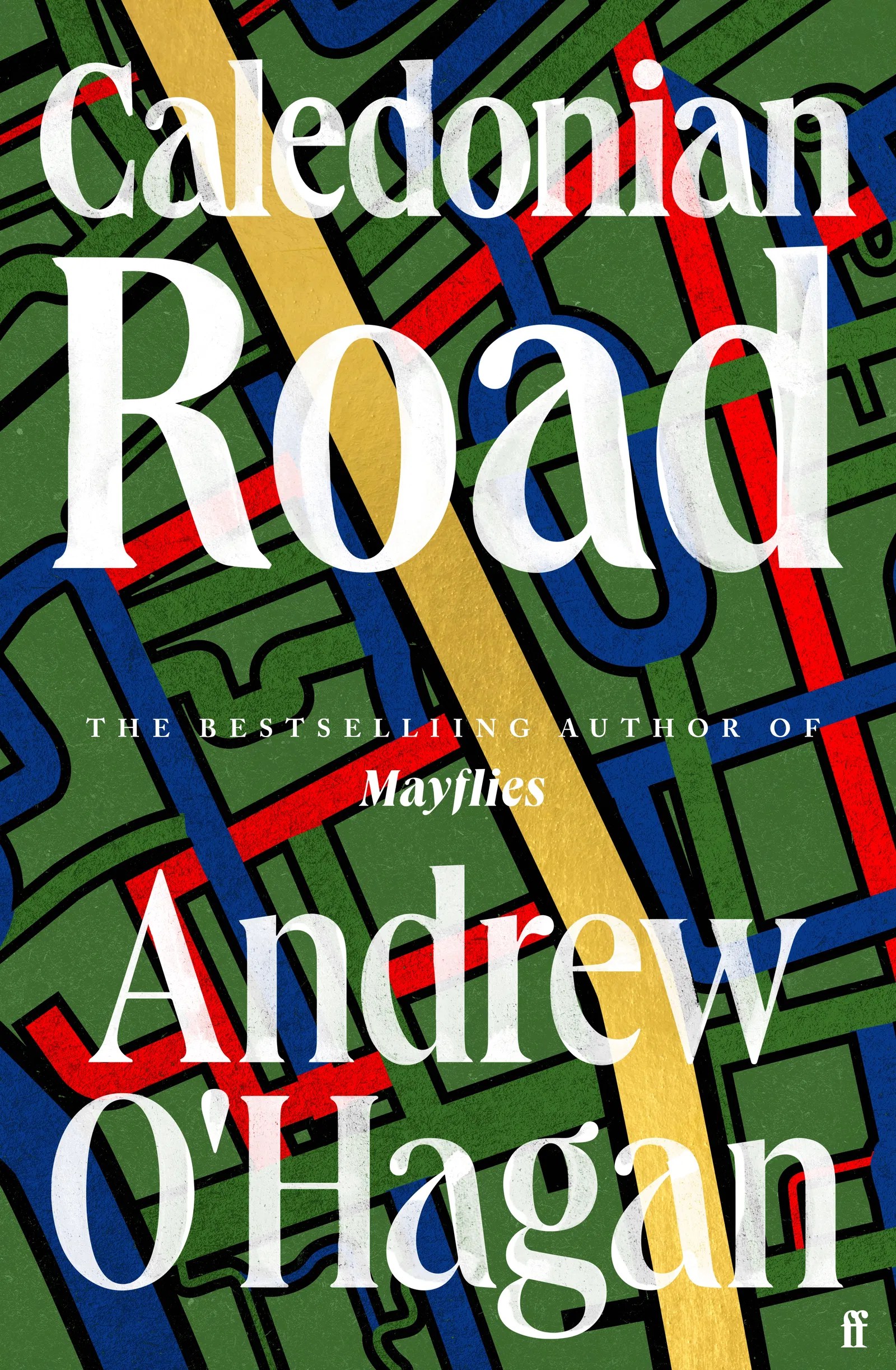
Andrew O’Hagan, Caledonian Road, Faber 2024

First line: Tall and sharp at fifty-two, Campbell Flynn was a tinderbox in a Savile Row suit, a man who believed his childhood was so far behind him that all its threats had vanished.

Caledonian Road, or ‘the Cally’, runs for a mile and a half through the London Borough of Islington. Like many roads in London, it takes you from economically deprived areas to obscenely wealthy ones in what feels like the blink of an eye.

Andrew O’Hagan harnesses the reality of this social divide in his powerful state-of-the-nation novel by creating an illuminating chain of connections: from Milo Mangasha, a tech-savvy student from a Cally council estate, and his uni professor Campbell Flynn, who lives in a posh townhouse with his aristo-therapist wife further up the road, to Sir William Byre, Flynn’s public school pal who’s up to his neck in dodgy deals, and Russian oligarch Aleksandr Bykov and son Yuri, who runs a very modern criminal enterprise and socialises with Campbell’s children. And that’s just a fraction of the cast!

Strap in for 600 pages of brilliant storytelling featuring utterly believable characters and razor-sharp social dissection. In particular, the novel holds up a mirror to the hypocrisies of well-heeled Londoners, and the establishment’s willingness to turn a blind eye to corruption and outright criminality. But it’s not without sympathy for its beleaguered central character, Flynn, whose spectacular mid-life crisis may offer a redemption of sorts, and has much to tell us about the perils of becoming alienated from your true self.

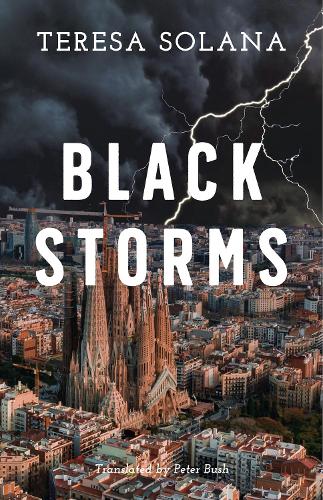
Teresa Solana, Black Storms (Spain), tr. by Peter Bush, Corylus Press 2024

First line: The man who was about to commit murder left home at six thirty, after telling his girlfriend Mary he’d business to see to and checking his car keys were in his pocket.

Whenever I read Teresa Solana’s work, I always come away with an appreciation of her highly distinctive voice, which blends a wry humour with steely social satire. Above all, there’s a wonderful energy to her writing, which seems to feed off the verve of Barcelona, the city where many of her crime stories are set. Her long-time translator, Peter Bush, captures all of these elements with aplomb in his English translations.

Black Storms introduces us to Norma Forester, Deputy Inspector of the Catalan police, who is tasked with solving the murder of an elderly professor at the University of Barcelona. No one can quite understand why a terminally ill man should be targeted in this way, but Norma’s experience and expertise gradually uncover the truth.

Equal attention is paid to Norma’s eccentric family, and they are great fun to hang out with. Norma is the granddaughter of an English member of the National Brigades, and the women of the family, all named after opera heroines, are a force of nature. I particularly like the way Solana shows Norma’s efforts to balance her family life and work, which the latter does in a messy, imperfect, but loving way.

The Residence, Shondaland / Netflix 2025

Last but not least, a very fun Netflix crime series: The Residence, which stars Uzo Aduba as Cordelia Cupp, a consultant with the Metropolitan Police Department of the District of Columbia, and Randall Park as Edwin Park, an FBI Special Agent. They are called to the White House after a murder is committed during a state dinner for the Australian prime minister, and tasked with figuring out which of the 157 suspects is the murderer — including the fictional president and his husband.

Aduba is excellent as the bird-watching, unerringly brilliant sleuth. It’s really her show, backed by a superb ensemble cast, and the whole thing has a Sherlock-Holmes-by-way-of-Wes-Anderson vibe. It also throws a light on the lives of the permanent staff at the White House, who of course stay in place while presidents come and go. Very sharp, very witty and very entertaining.

C.J. Sansom’s Tombland (1549 England), Suki Kim’s The Interpreter (South Korea/USA), Marcie R. Rendon’s Girl Gone Missing (1970s America)

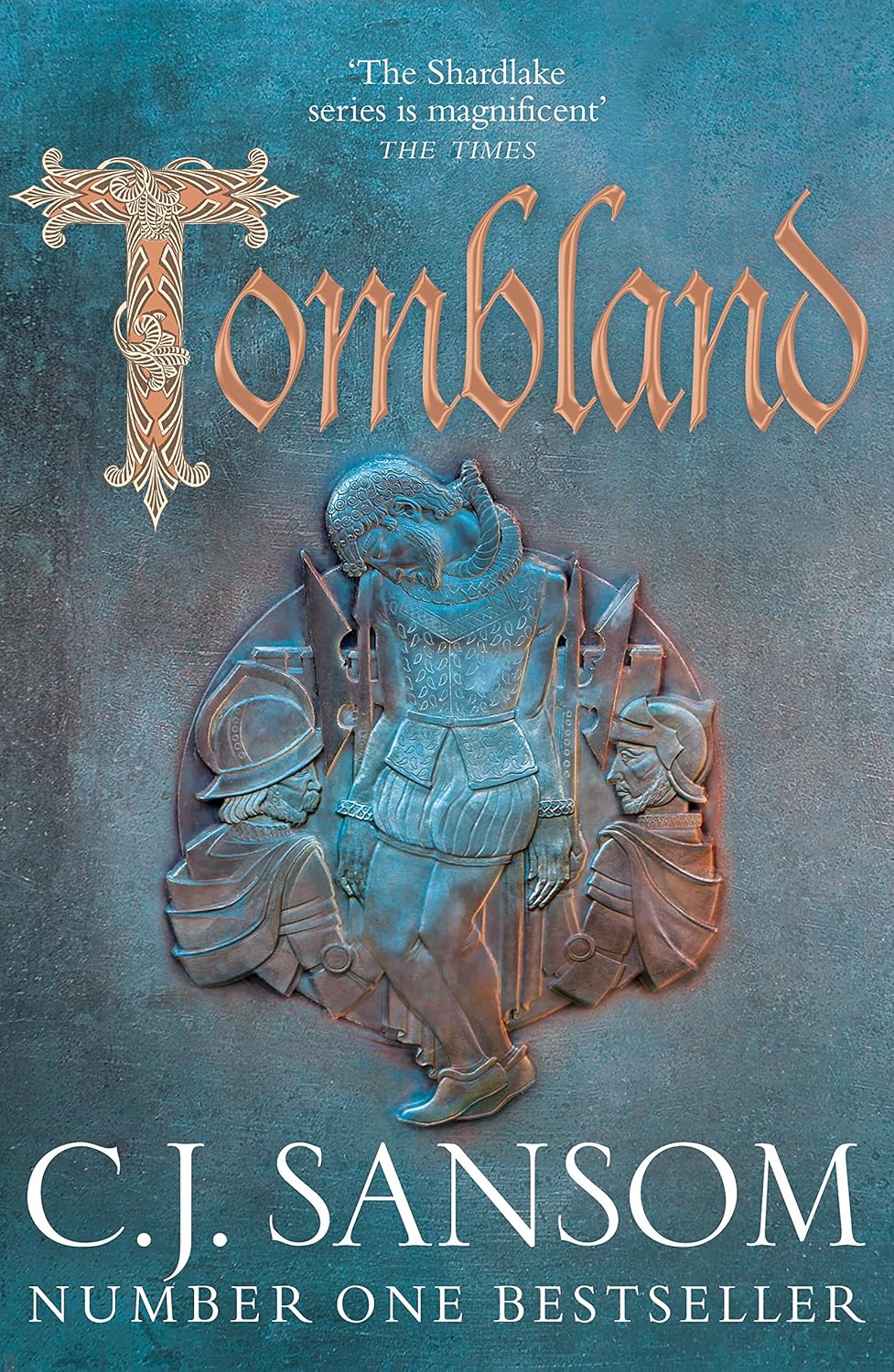
C.J. Sansom, Tombland, Mantle 2018

First lines: I had been in my chambers at Lincoln’s Inn when the messenger came from Master Parry, asking me to attend him urgently. I wondered what might be afoot.

I was extremely sad to hear that historical crime writer C.J. Sansom had passed away.

Sansom is, of course, best known for his ‘Matthew Shardlake’ series, featuring the eponymous lawyer-sleuth during the turbulent reigns of Henry VIII and Edward VI. The final novel in the series, Tombland, takes Shardlake to Norwich in Norfolk, which was England’s prosperous second city at the time. Sent to investigate the murder of Edith Boleyn, a distant relative of the young Princess Elizabeth, Shardlake finds himself caught up in Kett’s Rebellion, a large-scale uprising against wealthy landowners who were appropriating and enclosing ‘common land’, leading to a marked rise in hunger and poverty.

At 880 pages, Tombland is an ambitious and highly absorbing crime novel. If you’ve ever visited Norwich, you’ll immediately recognise many of its locations, such as the 900-year-old Market Square on Gentleman’s Walk and the equally historic Norwich Cathedral. My good friend Harriet informs me that there are now Tombland tours of the city, which sound very appealing indeed.

In addition to a wonderful sense of place, the novel offers a fascinating depiction of Kett’s Rebellion of 1549, which, as Sansom notes in an illuminating afterword, is often overlooked by historians. I found many of the issues he highlights via the uprising — such as the yawning gap between rich and poor, and the devastating effects of a cost-of-living crisis — to be very relevant today. A key difference now, of course, is that ordinary people have the right to vote out governments they don’t like. In fact, the novel could easily be read as an extended argument for the benefits of democracy, which, when working smoothly, enables a transfer of power without the need for brutal conflicts like the Battle of Dussindale.

Here in the UK, you just need to make sure that you are registered to vote (deadline 18 June) and have a valid photo ID when casting your vote in the up-coming election on 4 July 🙂

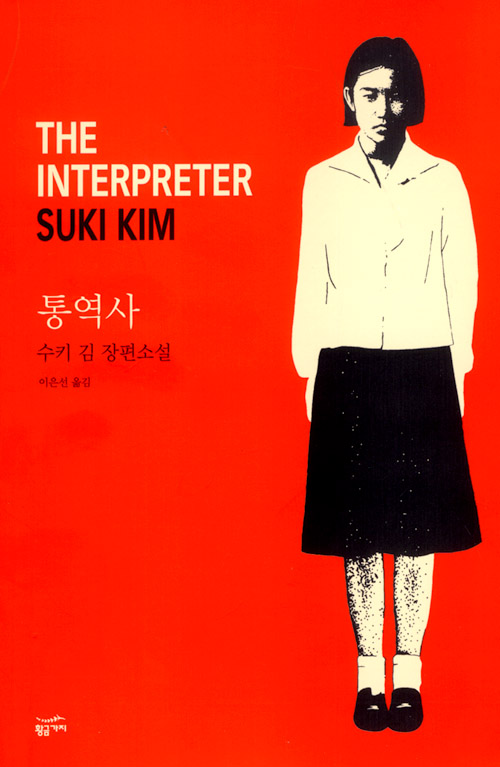
Suki Kim, The Interpreter, Picador 2003

First line: Cigarette at 9 a.m. is a sure sign of desperation.

Author Suki Kim moved with her family from South Korea to America at the age of thirteen. What it means to navigate this kind of dual heritage forms the starting point for The Interpreter, which can be classified as off-kilter literary crime novel. It depicts an immigrant story that’s a long, long way from the American Dream.

The interpreter in question is 29-year-old Suzy Park, who seems to be leading a largely invisible and emotionally shuttered life in New York. We soon learn that her parents were murdered at their store five years earlier and that the case has never been solved.

While acting as an interpreter in a legal case, Suzy realises that the Korean store owner being questioned on suspicion of breaching employment laws once worked for her parents. Exploiting Mr Lee’s lack of English and the Assistant DA’s lack of Korean, she starts asking questions about her parents’ murder and receives some disquieting answers in return. These set her on the path to uncovering not just the circumstances of the crime, but all kinds of buried truths about her family, and especially her elusive sister Grace.

The Interpreter is a highly interesting novel — an unsparing exploration of Korean-American experiences as well as the impact of generational and culture gaps. The latter are effectively shown in an early scene, when Suzy explains how she translates answers given by first-generation immigrants who use radically different cultural codes from the American lawyers questioning them:

What she possesses is an ability to be in two places at once. She can hear a word and separate its literal meaning from its connotation. […] Languages are not logical. Thus an interpreter must translate word for word and yet somehow manipulate the breadth of language to bridge the gap.

Although Suzy’s identity as an interpreter is central to the text, by the end we are left wondering whether The Interpreter of the title might be someone else entirely. A very clever and well-constructed novel by a fascinating author. You can read more about Suki Kim’s work as a writer and investigative journalist here.

Marcie R. Rendon, Girl Gone Missing, Soho Press 2021 (2019)

First line: Cash pulled herself up and out of her bedroom window.

Girl Gone Missing, the second crime novel featuring Renee ‘Cash’ Blackbear, is set on the Minnesota-North Dakota border in the early 1970s. Cash is just 19, toughened and traumatized by a childhood in foster care after being taken from her Ojibwe family at the age of three. Now navigating the alien but intellectually unchallenging world of college, she continues to drive harvest trucks for farmers and play pool for money, a solitary and safe existence that’s unexpectedly interrupted by the arrival of a long-lost brother. Then, when her writing talents take her to the city for the first time, strange recurring dreams and the odd disappearance of a college girl converge in a way that threaten her directly.

I have a great deal of time for the ‘Cash Blackbear’ series, not least due to the sympathetic yet unsentimental depiction of its lead character. The author tempers an unflinching look at the realities of 1970s Native American experiences — particularly in relation to the trauma of young adults emerging from the foster care system — with the hope of a more positive future. Cash’s resilience, courage and willingness to take decisive action are amply showcased in this novel, and I’m already looking forward to seeing where life takes her in Sinister Graves, the next in the series. If you’re new to the series, then Murder on the Red River is the place to start.

Wishing you all happy summer reading! 

Lawrence Osborne’s On Java Road (Hong Kong) & Mr Bates vs The Post Office (UK)

Why, hello! I hope you’re doing well, wherever you may be, and that you’ve got lots of lovely books on the go, crime or otherwise. Wishing you a happy Spring Bank Holiday if you’re in the UK.

Here are a couple of recent picks after quite a long hiatus. I’m hoping to get into a rhythm of posting more now: the aim is short and sweet, but a bit more often 🙂

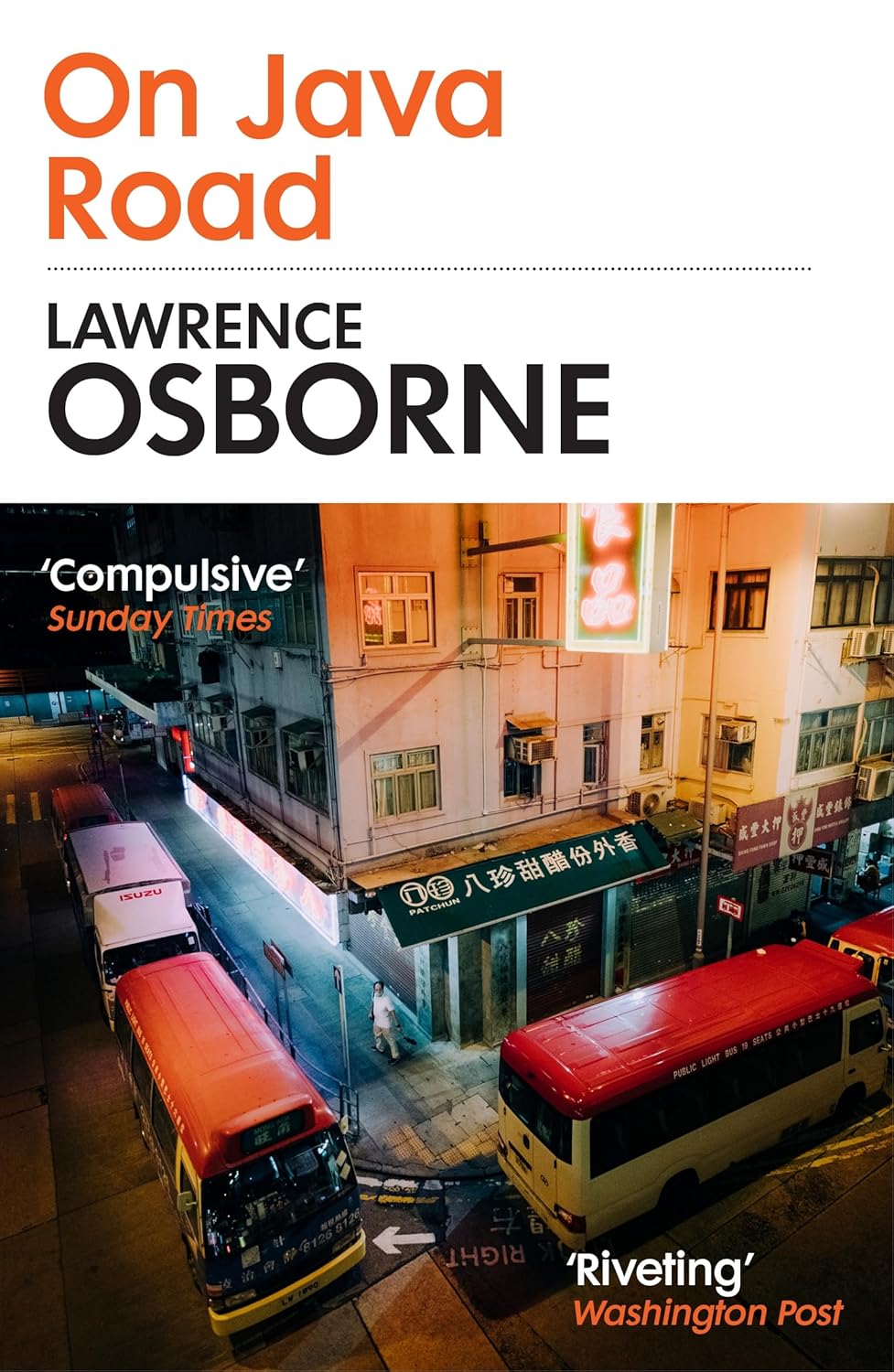
Lawrence Osborne, On Java Road (Vintage 2023)

First line: I thought, in those desperate and forgotten days, of that passage in a novel I had read in school, where the narrator insists that he prefers to be known as a reporter rather than as a journalist, the humbler word better denoting what he does, namely transcribing what he sees.

I found myself in Daunt Books on Marylebone High Street the other week — heaven for anyone who loves travel and international fiction — and emerged with On Java Road, which I’d been eyeing up for a while.

Set in Hong Kong during the pro-democracy protests of 2019-2020, On Java Road is narrated by Adrian Gyle, a struggling ex-pat reporter who has spent twenty years in the territory. Adrian has one social ace: his old university friend Jimmy Tang, a member of one of Hong Kong’s richest families, who gives him access to high society. But things get tricky when Jimmy begins an extramarital affair with Rebecca, a young woman from another wealthy Hong Kong family, and even more problematically, a pro-democracy demonstrator. When Rebecca disappears and Jimmy refuses to return his calls, Adrian feels compelled to investigate.

On Java Road inevitably brings to mind the work of Graham Greene: Adrian could be viewed as a modern version of Greene’s ex-pat narrators, trying to fathom complex events in places that are both home and utterly alien. Adrian has lived in Hong Kong since just after the British handover of the former colony to China (1997), and what he observes reveals the laughable naivety of thinking nothing would change as a result. By 2019, China is tightening its grip via its proposed extradition bill, and money is no protection against the tricky political choices that now need to be made. An important dissection of a troubled Hong Kong, On Java Road is an elegantly written and highly evocative novel.

This week, I’ve been watching the livestream of the Post Office Horizon Inquiry. Former Post Office CEO Paula Vennells was (finally) questioned over the course of three days, and it has been absolutely fascinating to see top KC (King’s Counsel) Jason Beer holding her to account.

In case you’re not familiar with the Post Office scandal, it’s one of the biggest miscarriages of justice in the UK. Over 900 sub-postmasters were prosecuted for crimes such as theft and false accounting over 15 years, when in fact the Post Office’s own Horizon computer system, designed by Fujitsu, was responsible for the shortfalls at individual post offices. Instead of admitting that the Horizon system was flawed, Fujitsu and the Post Office repeatedly denied, misled and withheld information. The Post Office continued to prosecute sub-postmasters aggressively when it was known internally that the evidence given by witnesses in court was ‘unsafe’, and Post Office investigators were offered bonuses for successful prosecutions, which incentivised them to push cases to court. It was a Kafkaesque nightmare for the blameless sub-postmasters involved, which led to years of financial, emotional and reputational damage, and at least four suicides. It is estimated that providing compensation will cost the British taxpayer over a billion pounds.

Back to Paula Vennells and Jason Beer KC. Vennells is a fascinating example of a CEO who prides herself on acting ethically in the corporate world — she’s an ordained priest, no less — but missed a staggering number of chances to address the Horizon scandal. Beer’s job was to illustrate this through a combination of skilful questioning and carefully selected documentary evidence. The most powerful moments came when he confronted her idealised vision of herself with the reality of her past actions. For example, when Vennells claimed she would never have backed off from reviewing past cases to avoid bad publicity, Beer calmly produced an email from 2013 showing that this was exactly what she had done. It seems that being an expert in the workings of human psychology is an invaluable asset for barristers as they build their narrative and case.

The 2024 ITV drama Mr Bates vs The Post Office, written by Gwyneth Hughes and directed by James Strong, is the acclaimed four-part dramatization of the Horizon scandal, and shows the incredible power of storytelling to illuminate major injustices and kickstart political action (fast-tracked exoneration and compensation processes). While the drama is an amazing tale of grit and collective action on the part of Alan Bates and the other victims, it’s heart-breaking to think how much they could have been spared if the Post Office had admitted its failings sooner. A corporate crime indeed.

Mr Bates vs The Post Office is still available to view on ITV and ITVX.

Summer smörgåsbord of crime

The big work deadlines have been met, so it’s time to wind down with some summer crime…

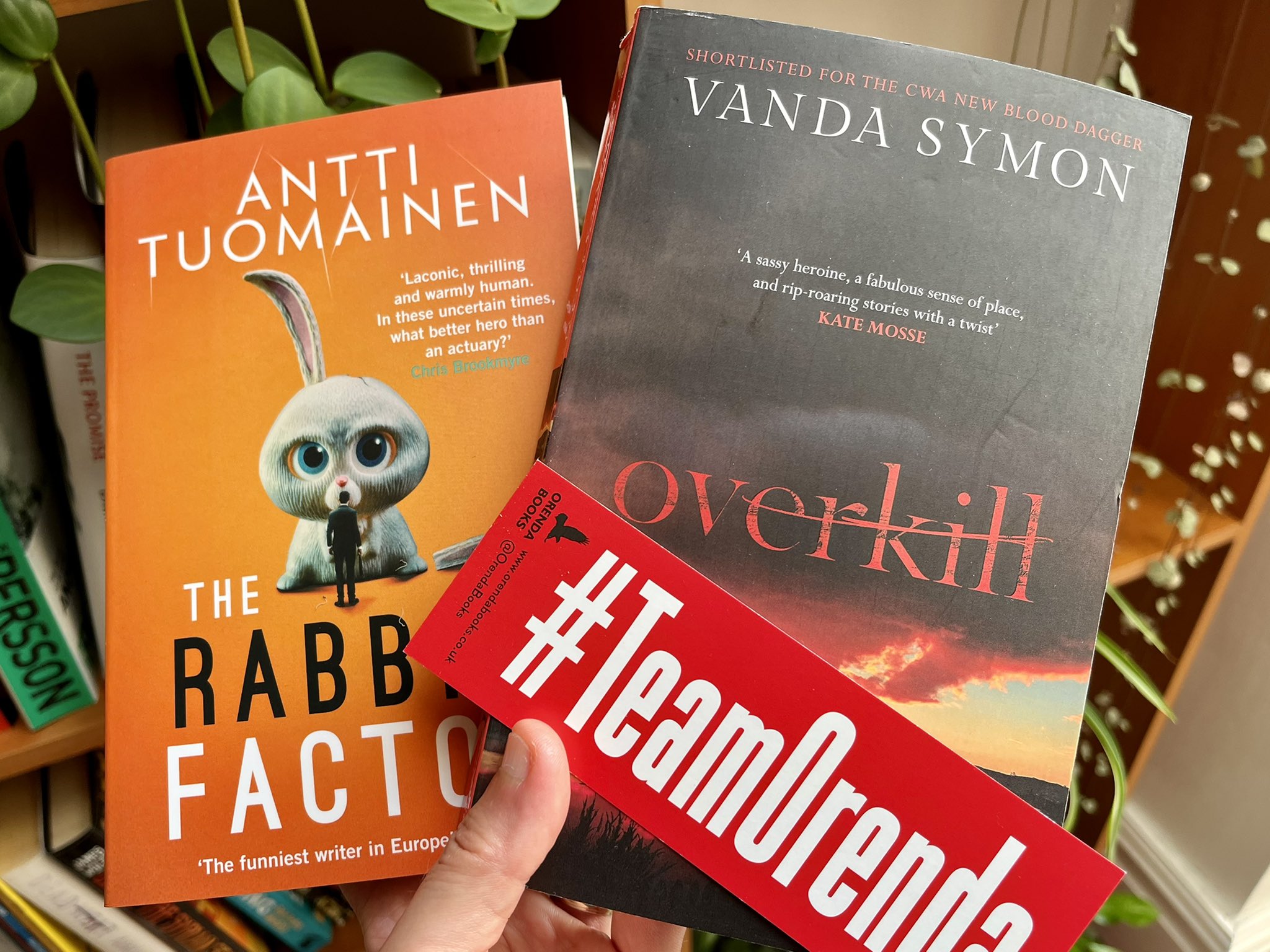
I recently treated myself to two crime novels from the wonderful selection at Orenda Books: Vanda Symon’s Overkill and Antti Tuomainen’s The Rabbit Factor (translated from the Finnish by David Hackston).

So far I’ve read the excellent Overkill, the first in Symon’s ‘Sam Shephard’ series, which is set in rural New Zealand. When young mother Gaby Knowes goes missing in odd circumstances, Sam, the police constable with sole responsibility for the small town of Mataura, is called in to investigate. After Gaby is found washed up dead on the river bank, things get very complicated, not least because Gaby’s husband is Sam’s ex. Now, as well as having to untangle what happened to Gaby, Sam has to prove that she had no involvement in events herself.

Sam is a really great character: down-to-earth, self-deprecating and smart as a whip (as is her long-suffering flatmate Maggie). I hugely enjoyed the novel’s depiction of small-town New Zealand life and its nature, and the resolution to the mystery was very satisfying as well.

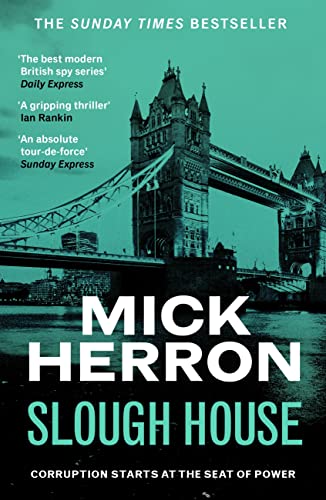
Mick Herron has just won the 2022 Theakston Old Peculier Crime Novel of the Year Award for his thriller Slough House, the seventh in the ‘Slough House / Slow Horses’ series. It was actually Mick’s fifth shortlisting for the award in six years, so this must have been a particularly satisfying win, and was possibly helped along by the new TV adaptation featuring Gary Oldman as Jackson Lamb. I’m a big fan of the series, which I always think of as an off-beat successor to John le Carre’s ‘Smiley’ novels. How funny that Gary Oldman has now played both Smiley and Lamb!

As it happens, I’ve just read Herron’s Dolphin Junction (Baskerville 2021), a wonderful set of stories starring both Jackson Lamb and the investigative duo Joe Silverman / Zoë Boehm. Highly enjoyable and perfect for lounging in the park on a warm summer’s day.

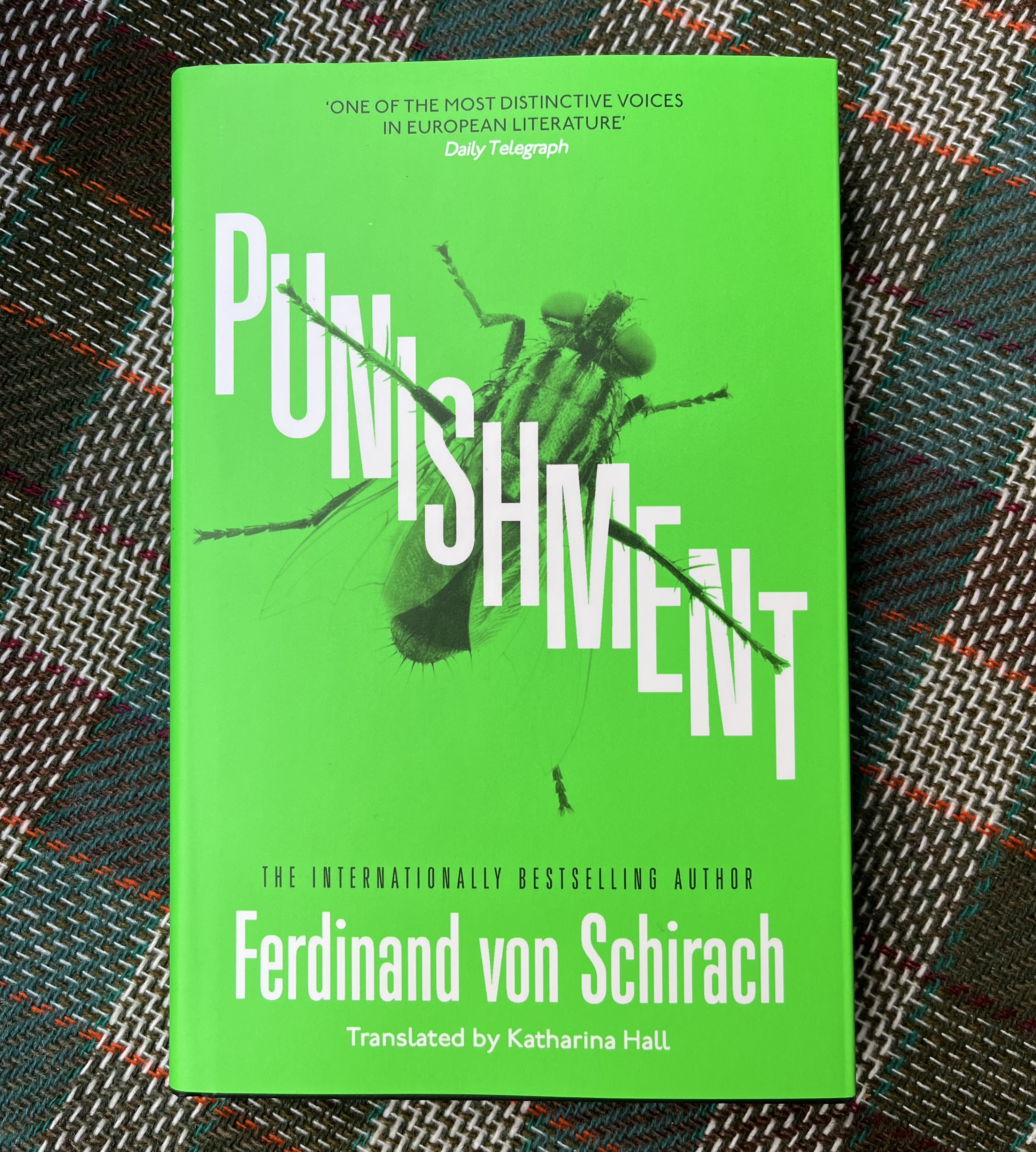
There’s another set of short stories out on 18 August from Baskerville: Punishment by German defence-lawyer-turned-writer Ferdinand von Schirach. The translator is my good self (as readers of this blog may know, I left academia in 2016, and have worked as a professional translator and editor since then). I can’t wait for Punishment to be out in the big wide world, and will tell you lots more about this unforgettable book on publication day. In the meantime, you can find out more here.

Wishing you all lovely summer days and happy reading!

From Napoli to Nottinghamshire: Italian crime novel The Bastards of Pizzofalcone & BBC crime drama Sherwood

Maurizio de Giovanni, The Bastards of Pizzofalcone, tr. from the Italian by Antony Shugaar (Europa Editions 2015) 

First line: Giuseppe Lojacono was sitting in the squad car, in the passenger seat, back straight, hands motionless on his thighs.

It’s been a while since I read some Italian crime fiction, so Maurizio de Giovanni’s The Bastards of Pizzofalcone was a perfect fit: the first in a series about a ragtag group of police officers who are thrown together after being transferred to the troubled Pizzofalcone police precinct in Naples.

The precinct’s former, corrupt officers have been packed off in disgrace, so it’s up to the new guys to rescue its reputation. There’s Giuseppe Lojacono, a Sicilian with fine investigative instincts and a chequered past; Marco Aragona, a suntanned rich kid who acts like he’s a film star; Ottavia Calabrese, a computer genius with an oppressive home life, Francesco Romano, a terse chap with anger management issues; Giorgio Pisanelli, an old-timer obsessed with a set of suicides he thinks are murders; Allesandra Di Nardo, a firearms whizz stifled by her family’s conformity, and the ever steady Commissario Luigi Palma, better known as Gigi. Together, they are the Bastards of Pizzofalcone.

The novel is billed as ‘noir’, but I’m not sure that’s totally accurate. The emphasis is very much on character and on the mechanics of investigating various cases: the murder of a wealthy notary’s wife, a suspected kidnapping, the alleged suicides. The acknowledgements reveal that the author is a fan of Ed McBain, and I think that offers us a great way to see this novel – as the first in a modern, Neapolitan ’87th Precinct’ series. There’s also a TV adaptation – here’s a nice introductory snippet with subtitles…

Chain of evidence: from Napoli to Nottinghamshire

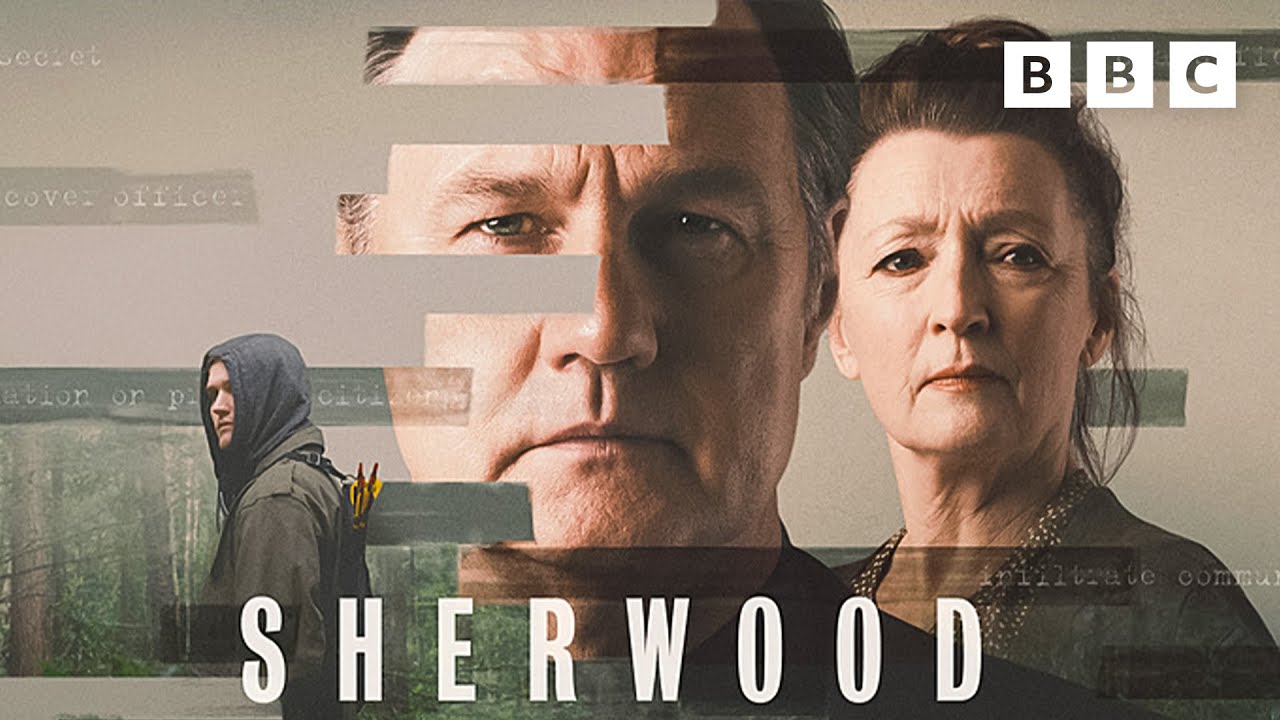
Reading The Bastards of Pizzofalcone made me think about other Italian crime novels I’ve loved. This led me to my earlier post on Roberto Costantini’s The Deliverance of Evil (Quercus), which is the first in a trilogy. The post contains an extensive list of crime trilogies and quartets, such as David Peace’s astonishing ‘Red Riding Quartet’ (Serpent’s Tail), set in Yorkshire. Peace also wrote a novel called GB84 about the 1984 miners’ strikes. And that brings us to the BBC crime drama Sherwood, set in Nottinghamshire around 2014, in a community fractured by the strikes thirty years before…

This six-part series has just concluded, and I can highly recommend it for its wonderfully rich storylines, its historical and social insights, and its absolutely stellar cast, including David Morrissey, Robert Glenister and Lesley Manville. Writer James Graham grew up in the area, and fuses a genuine case (the murder of a man with a crossbow) with the history of the miners’ strikes and the ‘spycops’ scandals (an early example of how seeding discord into a community can ‘divide and conquer’ it for decades). It’s fast-paced, hard-hitting, twisty, and genuinely moving at times. Loved it.

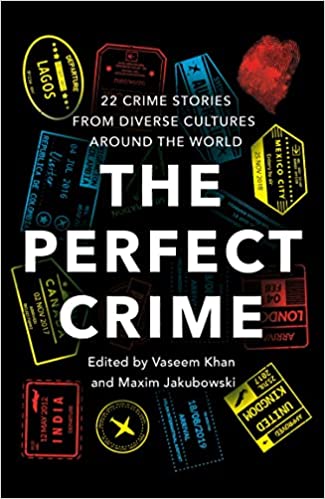
The Perfect Crime: Around the World in 22 Murders

The Perfect Crime: Around the World in 22 Murders, ed. by Vaseem Khan & Maxim Jakubowski, HarperCollins 2022

This hefty volume of crime stories is an absolute treat for all crime fans, but especially for fans of international crime. With twenty-two gripping tales that range from cosy to chilling to historical to noir, it takes us on a journey through a number of diverse cultures and satisfyingly murderous scenarios.

The volume is ground-breaking in one extremely important respect. As Maxim Jakubowski points out in the introduction, it gathers ‘for the very first time […] authors from a variety of cultural and ethnic backgrounds, including African-American, Asian, First Nation, Aboriginal, Latinx, Chinese-American, Singaporean and Nigerian’. And as Vaseem Khan rightly asserts: ‘The case for diversity is overwhelming […] Fiction — especially crime fiction — provides a lens onto society […and] when we underrepresent minority backgrounds, we run the risk of aiding divisiveness rather than helping to correct it’.

Khan also highlights the important role readers play in terms of ‘being willing to take a chance on books featuring diverse characters’. Well, this reader is very enthusiastically raising her hand, and I know many others will be too (not least anyone who’s enjoyed Bridgerton, which has done more to break down racial barriers via another popular genre — historical romance — than many a more earnest endeavour. Seriously, it’s genius).

And of course the volume is a great resource: in addition to featuring stories by well-known names such as Walter Mosley, Abir Mukherjee and Oyinkan Braithwaite, it gives tasters of other authors you might not yet know, but will definitely be keen to check out. The biographical notes at the back provide very helpful overviews of the authors’ profiles and works – such as David Heska Wanbli Weiden’s debut novel Winter Counts, which had a wonderful reception last year and is now firmly on my TBR list. Riches indeed!

The authors showcased are: Oyinkan Braithwaite, Abir Mukherjee, S.A. Cosby, Silvia Moreno-Garcia, J.P. Pomare, Sheena Kamal, Vaseem Khan, Sulari Gentill, Nelson George, Rachel Howzell Hall, John Vercher, Sanjida Kay, Amer Anwar, Henry Chang, Nadine Matheson, Mike Phillips, Ausma Zehanat Khan, Felicia Yap, Thomas King, Imran Mahmood, David Heska Wanbli Weiden and Walter Mosley.

Many thanks to Vaseem Khan and HarperCollins for sending me a review copy of the very handsome hardback (which incidentally would make a really fabulous gift…)

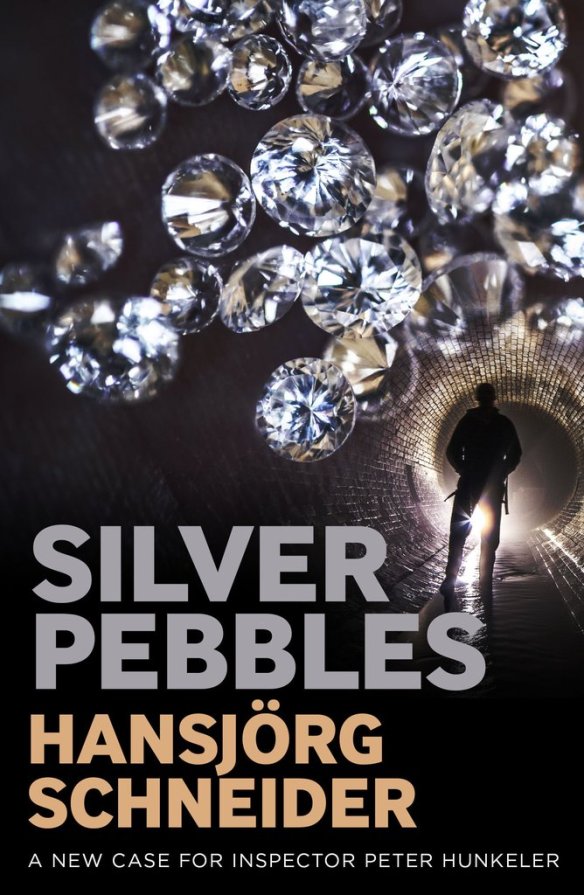
A Swiss gem: Hansjörg Schneider’s Silver Pebbles, tr. Mike Mitchell (Switzerland)

Hansjörg Schneider, Silver Pebbles, tr. from the German by Mike Mitchell, Bitter Lemon Press 2022 [1993]

First lines: The Frankfurt-Basel Intercity – a sleek, streamlined train – was crossing the Upper-Rhine plain. It was the middle of February, and there were fingers of snow along the bare branches of the vines going up the slope to the east.

I read Silver Pebbles at the end of last year, thanks to an advance copy from Bitter Lemon Press, and enthusiastically included it in my best-of-year round up. But I want to give the novel a bit more breathing space here in a post of its own, as it’s just out in the UK now and will be out in the US in February.

Although the Bitter Lemon website describes the novel as the second in the acclaimed ‘Inspector Peter Hunkeler’ series, it was actually the first of the novels to be published in the German-speaking world back in 1993. This makes it an especially good place to start if you’ve not yet read The Basel Killings, which came out last year.

Silver Pebbles introduces us to jaded Basel police inspector Peter Hunkeler, who’s nearing retirement, and treats us to a wonderfully absorbing case.

When elegantly attired Lebanese smuggler Guy Kayat flushes some diamonds down a station toilet to evade the police, he sets off a chain of bizarre events. The diamonds are found by Erdogan Civil, a sewage worker called in to clear a blockage, who immediately thinks his dream of opening a hotel back in Turkey is about to come true. But of course, life is infinitely more complicated than that, as Erdogan’s supermarket-cashier girlfriend Erika Waldis realises straight away…

This is a very human tale, told in a way that reminded me a bit of Sjöwall and Wahlöö’s ‘Martin Beck’ series – the novel has a matter-of-fact style leavened with genuine warmth and a dry sense of humour, not to mention the odd Keystone Cops moment when the police tie themselves up in knots. But it’s Erika who is the slow-burning star of the show, with a perceptiveness and intellect to match the police inspector’s own.

Silver Pebbles still feels remarkably fresh today, probably because it has some universal truths to share with (middle-aged) readers. It’s no surprise to find that Schneider is a famous playwright and essayist back in Switzerland, or that his 10-novel crime series has won major awards such as the Friedrich Glauser Prize. And translator Mike Mitchell does a particularly lovely job of capturing the novel’s humour and Inspector Hunkeler’s grumpiness.

And speaking of Swiss crime fiction… if you haven’t yet read Friedrich Dürrenmatt’s The Pledge (1958), then you’re in for a treat. It remains one of my all-time favourite crime novels, and has to be one of the cleverest Krimis ever written, especially in terms of subverting genre conventions. You can read my (updated) post on it here…

And finally, a topical crime oddity…

Many of you will know the British TV police series Line of Duty, which features the iconic AC-12 unit carrying out internal investigations into potentially corrupt members of the police.

Yesterday, the satirical campaign group Led by Donkeys released a spoof video that features AC-12 (Ted Hastings, Kate Fleming and Steve Arnott) interrogating Prime Minister Boris Johnson about the political scandal dubbed #PartyGate – as part of ‘Operation BYOB’!

Now, I’m a keen crime drama and politics watcher, but I’ve never seen anything like this before: a cult TV series that pulled in 12.8 million viewers for its last season finale being used to intervene directly in a political situation, and instrumentalising crime fiction conventions (in this case the classic ‘police interrogation scene’) in order to expose a politician’s ‘crimes’.

Leaving the politics of the matter aside, can anyone think of a similar kind of intervention in the past? A political statement made using a TV drama in ‘real time’, as opposed to being incorporated into an episode after the fact?

The video was posted yesterday and has had 7.2 million views on Twitter to date… You can read all about it here.

Let it snow! Mrs. Peabody’s 2021 Xmas crime recommendations

Here are Mrs. Peabody’s 2021 Christmas crime recommendations! 

Treat others! Treat yourself!

Please support local booksellers while keeping yourself and others safe.

Belinda Bauer, Exit (Black Swan, 2021 – UK)

First line: The key was under the mat.

I adore pretty much everything Belinda Bauer has written – she seems capable of turning her hand to almost any kind of crime – and Exit is no exception. Mild-mannered pensioner Felix Pink is an ‘Exiteer’, one of a group of volunteers who keep the ill and infirm company when they decide they’ve had enough of life. But one day an assignment goes horribly wrong, and Felix finds himself needing to stay one step ahead of the police while frantically trying to work out what is going on. Exit tackles weighty issues of life and death with humanity, compassion and a lot of laughs. I’m not sure how Bauer pulls it off, but she emphatically does, and I don’t know anyone who hasn’t loved this impeccably constructed crime novel (including those who claim not to like crime).

Jane Harper, The Survivors (Little, Brown, 2020 – Tasmania)

First line: Kieran hoped the numbness would set in soon.

Two things drew me to this crime novel: its top-notch author and its setting – a little town on Tasmania’s wild coastline. Kieran Elliott is on a rare visit to Evelyn Bay where he grew up. His mother Verity is struggling to look after his father, who has dementia, and the absence of his dead brother Finn looms large both within the family and his wider circle of friends. When Bronte, a young artist working at a cafe, is found dead on the beach, unresolved questions from the past resurface, not least the disappearance of schoolgirl Gabby during the same big storm that claimed Finn’s life. The Survivors is a crime novel that delivers on a number of levels: superb characterization, an absorbing and gripping plot, and a sensitive examination of grief.

Jess Kidd, Things in Jars (Canongate, 2019 – England/Ireland)

First line: The raven levels off into a glide, flight feathers fanned.

Jess Kidd is one of the most original crime authors writing today, both in terms of her subject matter and her rich writing style. Things in Jars is her first ‘proper’ historical crime novel, set in and near London between 1841 and 1863. It features a number of formidable women, chief among them Bridie Devine, ‘the finest female detective of her age’, who begins investigating the kidnapping of a highly unusual child. Oh, and she can see ghosts – specifically, a heavily tattooed boxer (a ‘circus to the eye’) called Ruby Doyle, who claims to have known Bridie in life, and keeps her company through the ups and downs of the case. Filled to the brim with the eccentric, the otherworldly and the gothic, Things in Jars explores female oppression, survival, and how, with the help of allies, women can carve out a space for themselves in a hostile world.

John le Carré, Silverview (Penguin, 2021 – UK)

First line: At ten o’clock of a rainswept morning in London’s West End, a young woman in a baggy anorak, a woollen scarf pulled around her head, strode resolutely into the storm that was roaring down South Audley Street.

For le Carré fans, this is a poignant read – a final novel from the master of the spy genre. In many ways, this is a classic le Carré tale – a forensic deconstruction of one story among the many making up the intelligence world, and a scathing examination of the moral vacuum at the heart of foreign policy. We see events through the eyes of Julian Lawndsley, who has moved to a small seaside town in East Anglia to run a bookshop, and Stewart Proctor, senior intelligence troubleshooter, who gets word of a security breach in the very same spot. At the heart of it all: a mysterious Polish émigré living in ‘Silverview’, a grand manor house. It was a pleasure to be back in le Carré’s world and to spend time with his richly drawn characters. Happily, as with Agent Running in the Field, there are redemptive elements that temper the bleaker aspects of the novel.

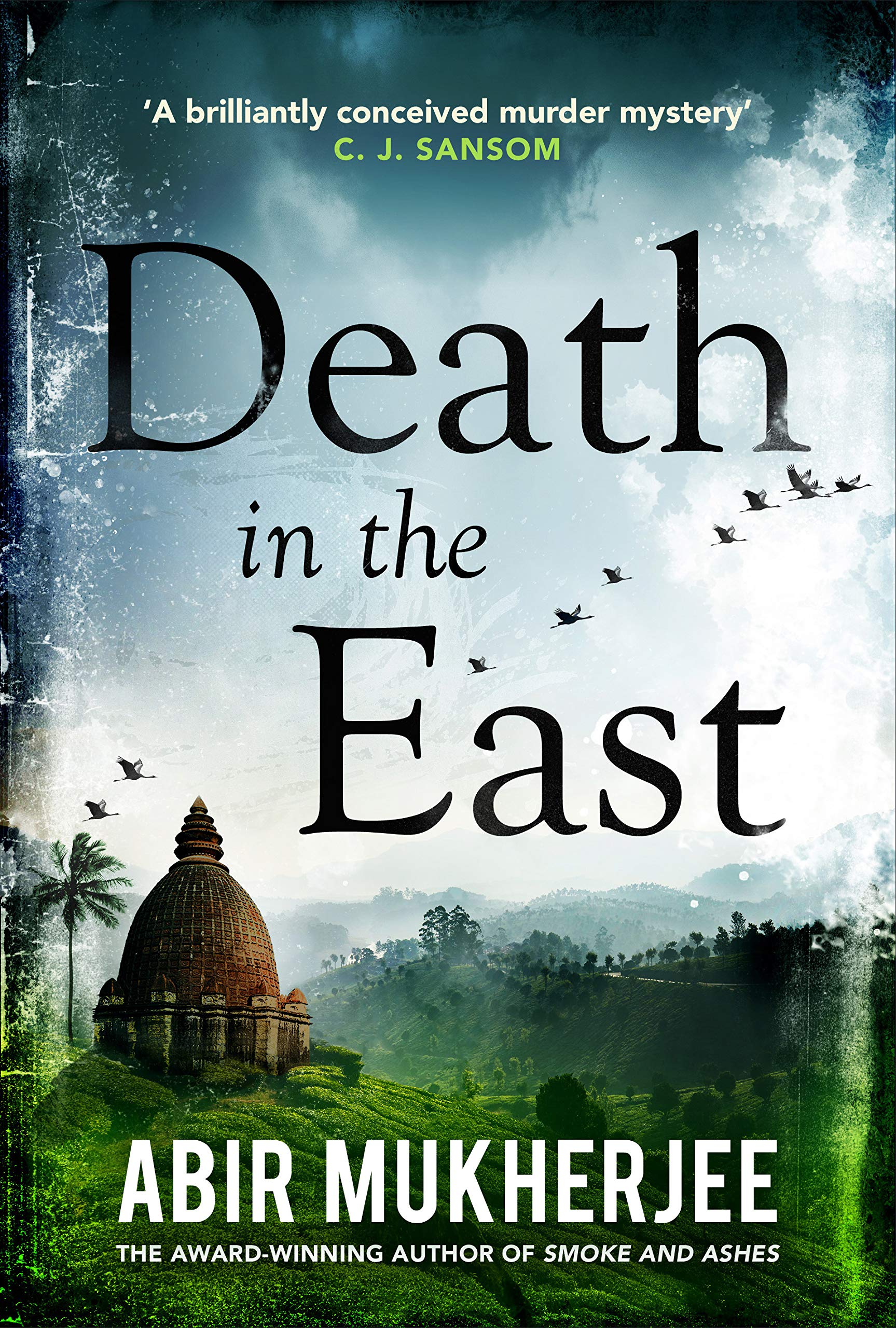
Abir Mukherjee, Death in the East (Harvill Secker, 2020 – UK/India)

First line: I’d left Calcutta with a grim resolve, a suitcase full of kerdu gourd, and, in case of emergencies, a bullet-sized ball of opium resin hidden between the folds of my clothes. 

This is the fourth in Mukherjee’s ‘Wyndham and Banerjee’ series, and I think it’s my favourite so far: a rich historical crime novel that offers not just one, but several discrete murder mysteries, including two intriguing locked-room cases. The novel switches between 1922 Assam, where Captain Sam Wyndham is trying to conquer his opium addiction, and 1905 London, during the early days of his policing career. The link: a villain whose reappearance in Assam threatens Wyndham’s life. This is a beautifully plotted crime novel that offers atmospheric depictions of Assam on the one hand and London’s Jewish East End on the other. Gripping, entertaining, and with a nice line in Chandleresque humour, it also shows us the changing face of India – Sergeant Banerjee’s welcome appearance near the end of the novel marks an important shift in the relations between the two.

Hansjörg Schneider, Silver Pebbles, tr. from the German by Mike Mitchell (Bitter Lemon Press, January 2022 – Switzerland)

First line: The Frankfurt-Basel Intercity — a sleek, streamlined train — was crossing the Upper-Rhine plain.

Schneider’s Silver Pebbles was originally published in 1993, but feels remarkably fresh today. The first in the acclaimed ‘Inspector Peter Hunkeler’ series, it introduces us to the jaded Basel police detective and treats us to a wonderfully absorbing case. When Lebanese smuggler Guy Kayat flushes some diamonds down a station toilet to evade the police, he sets off a chain of bizarre events. The diamonds are found by Erdogan, a sewage worker called to clear a blockage, who thinks his dream of opening a hotel back in Turkey is about to come true. But of course, things get complicated… A very human tale, told in a way that reminded me of Sjöwall and Wahlöö’s ‘Martin Beck’ series – a matter-of-fact style leavened with genuine warmth and a dry sense of humour. Erika Waldis, Erdogan’s long-suffering girlfriend, is the slow-burning star of the show.

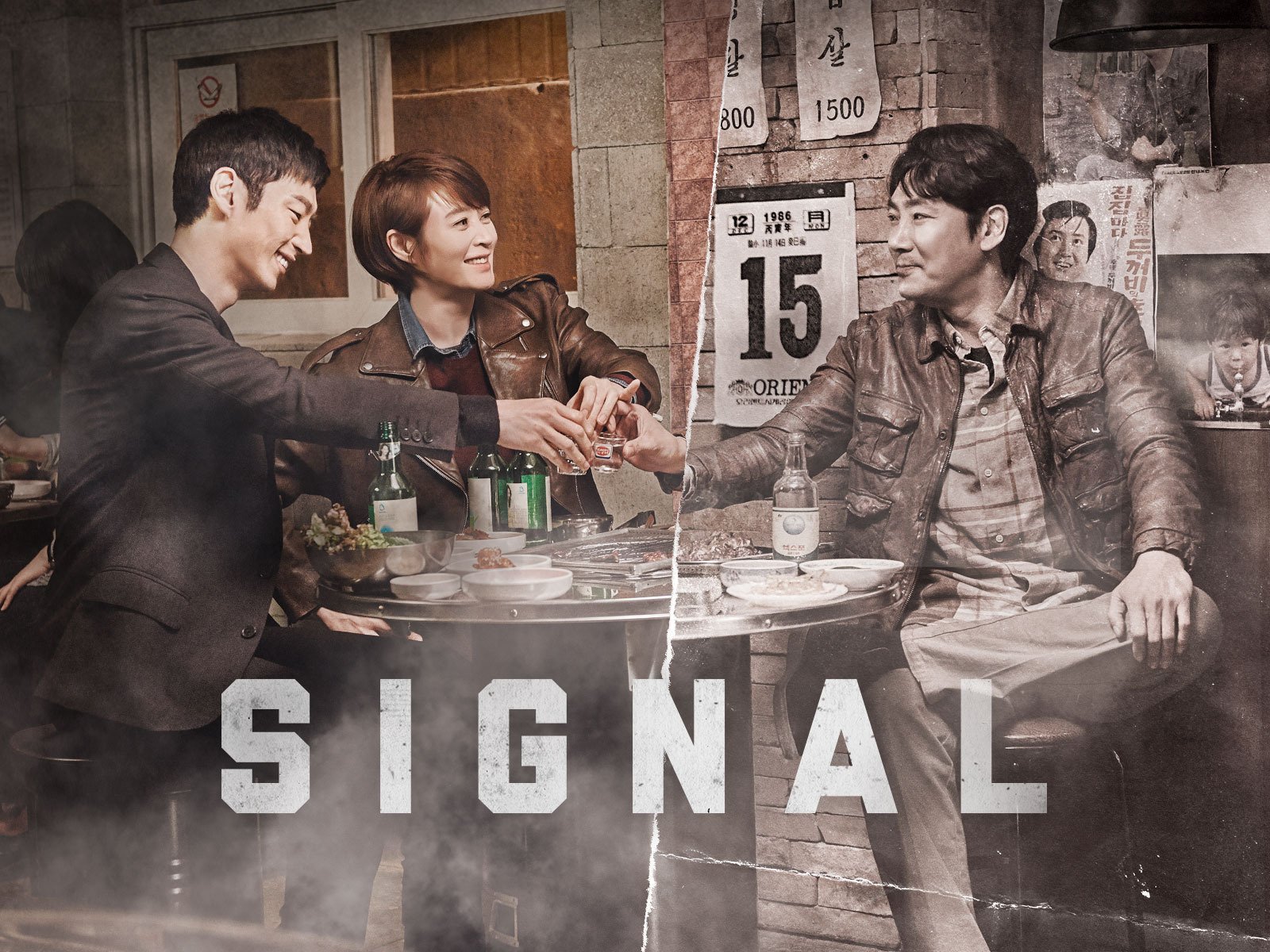
Signal, by Kim Eun-hee, dir. by Kim Won-seok (Netflix – South Korea)

This 2016 South Korean crime drama – with shades of Life on Mars – has stolen my heart. I’m about half way through and love the way it’s developing the ambitious idea of a criminal profiler in 2015 who’s able to talk to a police detective in 1989 via a chunky old walkie-talkie. As well as working on cold cases together, the mystery of the police detective’s own disappearance in 2000 increasingly moves centre stage. Unbeknownst to profiler Park Hae-young, his boss Detective Cha Soo-hyun is also searching for Detective Lee Jae-han – he was her mentor when she was a rookie back in 1989. Along with the police-procedural elements and occasional slapstick humour, it’s Signal‘s wonderfully human characterization that stands out for me.

And here’s a trio on my own Christmas wishlist.

Mick Herron’s Dolphin Junction, a collection of short stories featuring, among others, Jackson Lamb, and Zoë Boehm & Joe Silvermann (the stars of his ‘Slough House’ and ‘Oxford’ series respectively). Expect brilliant storytelling and acerbic wit.

Katie Kitamura’s Intimacies, about an interpreter whose duties involve interpreting for a potential war criminal at the International Court in Hague.

David Heska Wanbli Weiden’s Winter Counts, a much-lauded debut that takes a hard-hitting, nuanced look at life on South Dakota’s Rosebud Indian Reservation.

********

There are some big changes coming to Mrs. Peabody Investigates in 2022: keep your eyes peeled for those!

Until then, wishing you all a very Merry Christmas!
Crime Fiction: 7 Kinds of Respite Reading

I hope you’re all safe and well in this strange and worrying time. For many of us (including me), reading has taken a back seat while we process the situation, and deal with its fallout for our families, working lives and communities.

Aside from the practical challenges we’re facing, many of us are feeling too stressed to read, or can’t find the ‘right book’ to settle down with.

If this is you, then here are some suggestions and strategies for Respite Reading.

Even if you manage just a chapter a day, you’ll hopefully feel the benefit. Reading has an amazing ability to ground us, distract us and provide solace – in short, to provide us with respite in these very tough times. A study by the University of Sussex found that a mere 6 minutes of reading can reduce stress levels by 68%! Sounds good to me.

7 kinds of Respite Reading: find the one that works for you!

1.   An old favourite. There’s no rule that says you have to read something new. Perhaps a novel you know and love is already on your bookshelf, waiting to wrap itself around you like a comforting blanket. For me, that’s John le Carré’s Tinker Tailor Soldier Spy. Or Paul Scott’s The Jewel in the Crown, a novel I first read in 1988, which explores the fallout of a crime in The British Raj. Or your favourite Agatha Christie – hard to choose, I know… For me it’s a toss up between The Murder of Roger Ackroyd and Murder on the Orient Express.

2.   Travel to another time or place. If the present is too much for you right now, then take a break in another era with some historical crime and/or crime set in another country – like Abir Mukherjee’s A Rising Man (1919 India), Riku Onda’s The Aosawa Murders (1970s Japan), Umberto Eco’s The Name of the Rose (1327 Italy) or Eduardo Sacheri’s The Secret in Their Eyes (1970s and 1980s Argentina).

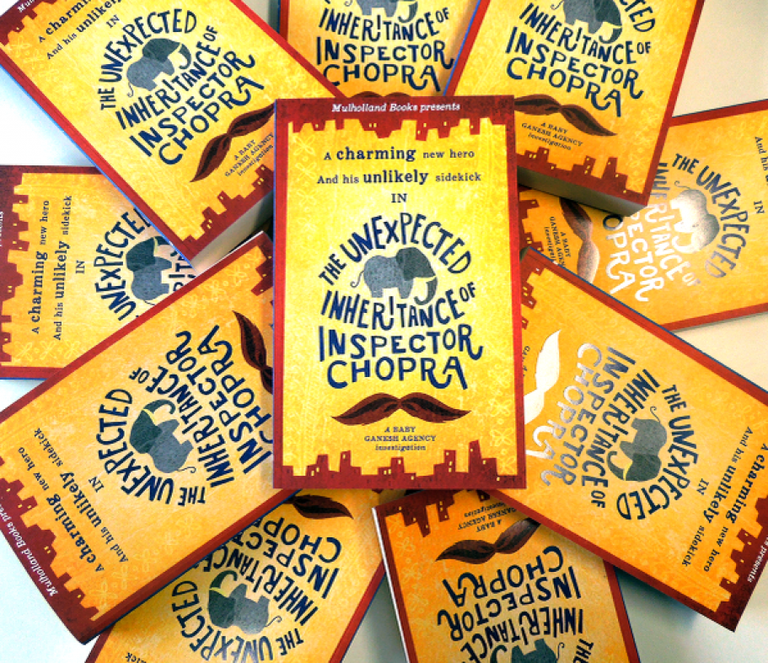
3.    Cosy, comforting crime. If you’re finding the gritty end of the crime fiction spectrum a bit much right now, then perhaps you’re in need of a cute baby elephant: yes, we’re talking Vaseem Khan’s The Unexpected Inheritance of Inspector ChopraOr try out Peter Bartram’s comic ‘Crampton of the Chronicle’ series, which follows the adventures of a young journalist in 1960s Brighton. Or how about Ellis Peter’s classic ‘Brother Cadfael’ series, set in medieval times? Another personal favourite: Harry Kemelman’s ‘Rabbi Small’ series, which offers an affectionate portrait of 1960s small-town America, along with some pearls of wisdom.

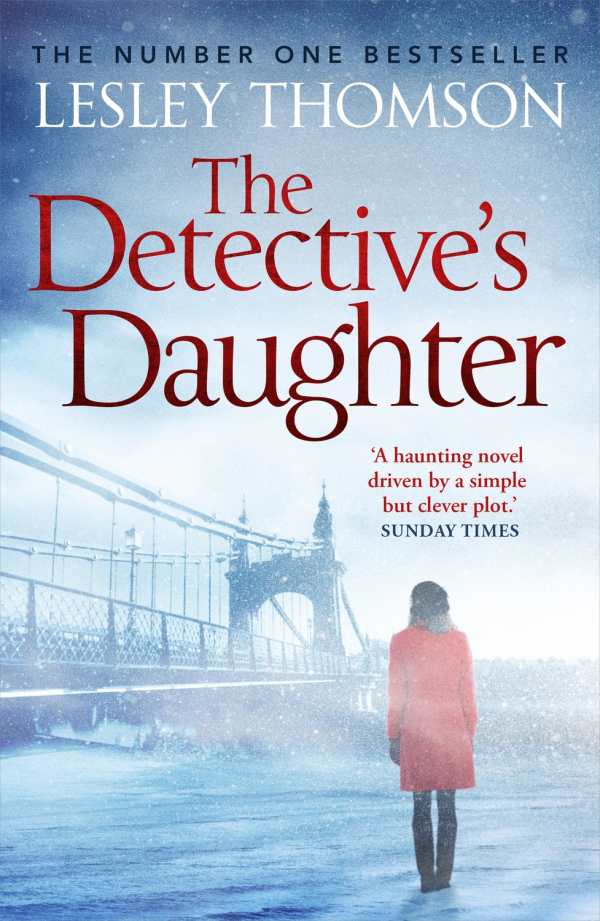
4.   Crime with heart, whose characters you’ll love to spend time with – try Elly Griffiths’s ‘Ruth Galloway’ series (forensics in Norfolk) or Lesley Thomson’s ‘Detective’s Daughter’ series – both are marvellous. And if you’ve not yet met octogenarian Sheldon Horowitz, then it’s definitely time for Derek B. Miller’s Norwegian by Night. It’s still one of my top favourites.

5.   Criminally black humour. If your way of getting through involves grim laughter, then Mick Herron’s ‘Slough House’ spy novels are a wonderful read – start with Slow Horses. Or get to know Jo Ide’s IQ, the Long Beach Sherlock – a thoroughly engaging and original detective. And Leif GW Persson’s novels are always up there for me – Linda, as in the Linda Murder is a good opener, with moments that are wonderfully wry.

6.   Hair ‘o’ the dog apocalypse crime. Because one way to deal with our fears is to read about stuff that’s just that little bit worse. Louise Welsh’s A Lovely Way to Burn is excellent, and check out my earlier blog post on ‘Apocalyptic Crime Fiction from America and Finland’ for a few other suggestions. My top non-crime recommendation is Emily St. John Mandel’s Station Eleven. Bleak, but strangely uplifting and hopeful.

7.   Still not sure… Just give me top-quality crime! No worries – have a browse through my Xmas recommendations over the years. These are effectively my annual best-of-the-best lists, so hopefully you’ll find something there that’ll hit the spot…

2014   2015   2016   2017   2018   2019

There’s also a list of trilogies here should you fancy a more ambitious reading project.

And if you’re looking for further ideas or inspiration, then I can heartily recommend the following indie publishers. They could all do with some love and support right now!

Bitter Lemon Press   No Exit Press   Orenda Books   Europa Editions

OK everyone – stay home – stay safe – save lives!

Please do add your own thoughts and recommendations below, or just drop by for a chat. It would be lovely to hear from you! Hugs and kisses xxx