Bad case of Weltschmerz? Try Indian elephants, Icelandic chills and Series 2 of The Code

Tearing your hair out over Brexit? Anxious about the US election results? Worried about the bees and climate change? If so, you may be suffering from a German malady called Weltschmerz – a sense of frustration, pain and despair at the state of the world (Welt = world; Schmerz = pain, ache, sorrow).

When Weltschmerz strikes crime fans, certain reading difficulties may arise. You may not feel in quite the right mood to tackle a social crime novel revealing further grim realities about the world, or noir crime devoid of the faintest glimmer of happiness or hope. You may instead find yourself drawn to crime that provides a refreshing antidote or escape, also known as Respite Crime.

Option 1. Comedy crime involving baby elephants
chopra-book-pile

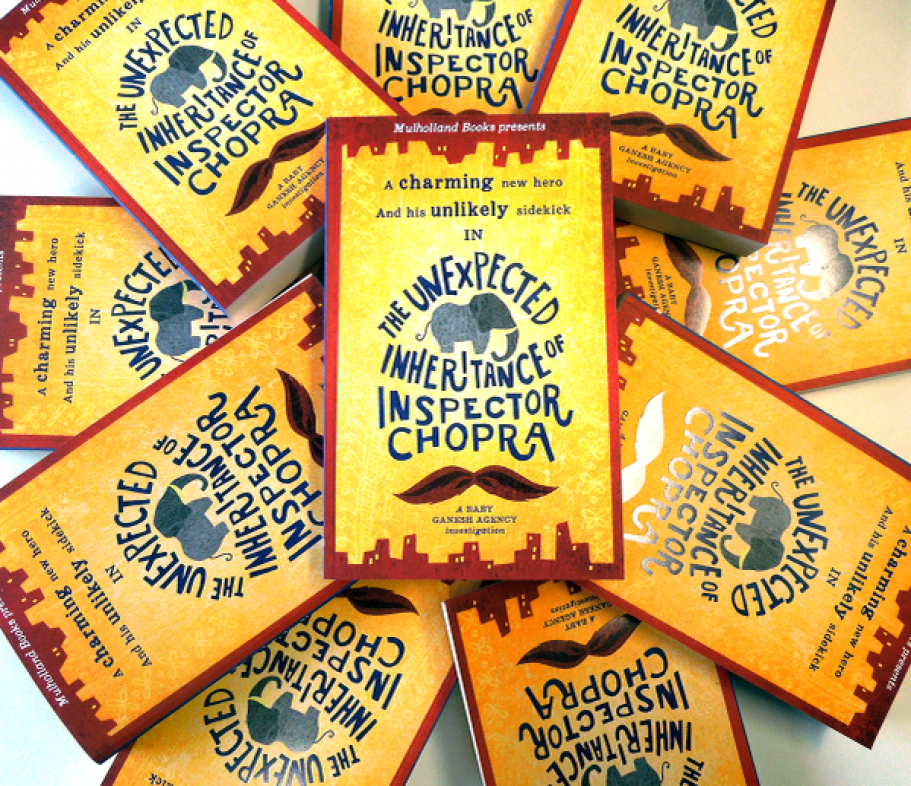
Vaseem Khan, The Unexpected Inheritance of Inspector Chopra. A Baby Ganesh Agency Investigation (Mulholland Books/Hodder, 2015)

Any crime novel that’s been called ‘utterly charming’ (The Guardian) or ‘endearing’ (The Sunday Times), would normally make me run for the hills. The same goes for crime series that use excessive whimsy (‘No. 1 Ladies’ Detective Agency’, I’m looking at you). While The Unexpected Inheritance of Inspector Chopra strays into such territory occasionally, there’s enough grit about modern-day Indian life in Mumbai to give this novel plenty of interest and depth.

The opening shows Inspector Ashwin Chopra, who’s about to retire from the police, discovering that he’s inherited an Indian elephant from his uncle Bansi. A cute, baby elephant. When Chopra investigates one last case – the suspicious death of a young man found on some waste ground – policeman and elephant form an unlikely investigative team. It’s a well-written, entertaining and satisfying read, and a funny, life-affirming antidote to Weltschmerz.

Did I mention the baby elephant? He’s really cute.

Option 2. Scare yourself witless with terrifying Icelandic crime
yrsa-s-why-did-you-lie

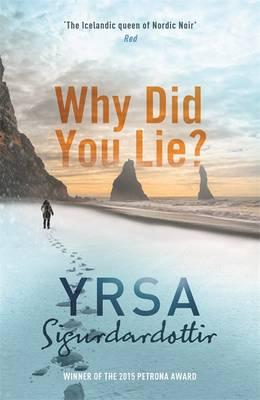
Yrsa Sigurðardóttir, Why Did You Lie?, trans by Victoria Cribb (Hodder and Stoughton, 2016 [2013]; a 2017 Petrona Award submission).

Or you could go completely the other way and immerse yourself in a chilling world where hapless individuals are being killed off one by one for telling lies. Yrsa Sigurðardóttir’s Why Did You Lie? skilfully interweaves three narratives: that of a young policewoman whose journalist husband has recently committed suicide, a work group stranded on the Þrídrangar lighthouse as hostile Icelandic weather closes in, and a family who return after a house-swap to find their American guests are missing. The author has an impressively fertile imagination and expertly ratchets up the suspense. It’s perhaps not one to read too late at night, but is brilliant at keeping Weltschmerz at bay. You’ll simply be too terrified to think about anything else.
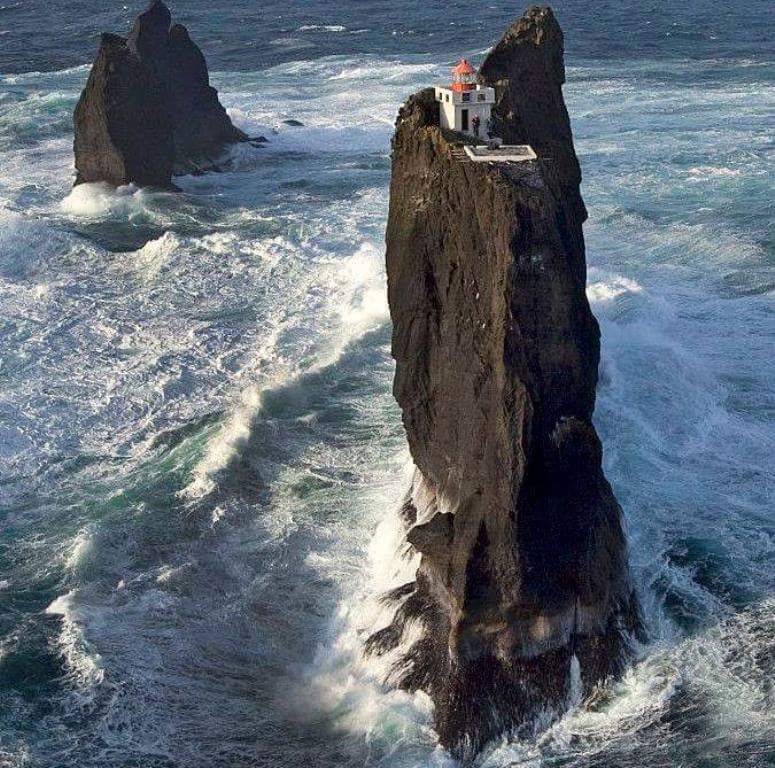
Þrídrangar

The Þrídrangar lighthouse

Option 3. Lose yourself in some top-quality crime drama set on the other side of the world

By happy coincidence, the second series of outstanding Australian political thriller The Code starts on BBC4 this Saturday 22 October at 9.00pm. Series 1 aired back in 2014 – you can read my post on it here.

code

Opening episode: After the events of series 1, journalist Ned Banks and his computer hacker brother Jesse face the prospect of being extradited to the US to face criminal charges. Fortunately for them, Australian National Security has an explosive case it can’t crack, and Jesse may be the man to do it. The brothers also encounter black-market king Jan Roth, and risk being drawn into his shady world. 

If those options fail, treat yourself to this lovely clip of Mike, aka the ‘Hamster of Serenity’. Here he is eating a carrot. If you turn the volume up you can hear him munching.

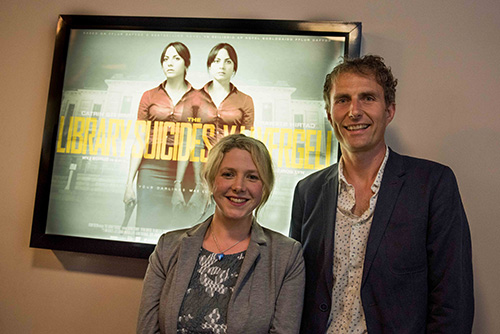
The Library Suicides (Wales) & 2016 CWA Dagger Awards

One great plus of this decade’s Scandi crime-drama boom has been getting Brits into subtitled international crime drama from Europe and beyond. In recent years, this trend has also fuelled the success of Welsh-language crime drama Y Gwyll (Hinterland), which has been deftly exported back to a number of European countries.

Welsh-language thriller The Library Suicides (Soda Pictures, 2016) is enjoying similar success. Adapted from Fflur Dafydd’s bestselling novel Y Llyfrgell (The Library) and directed by Euros Lyn (Doctor Who, Sherlock, Broadchurch, Happy Valley), it received the prize for ‘Best Performance’ at the Edinburgh International Film Festival and was nominated in the ‘Best Film’ category at the Oldenburg International Film Festival in Germany. I watched it on the big screen at Swansea’s The Taliesin this week and loved it. 

library-suicides

The Library Suicides stars Catrin Stewart (Jenny in Doctor Who) as twin sister librarians Nan and Ana. Following the apparent suicide of their mother, famous author Elena Wdig, they become convinced that she was murdered by her biographer Eben. The film plays out over a long and bloody night in the National Library of Wales as they seek their revenge.

This stylish, clever thriller had me gripped from the outset. The twins are superbly played by Catrin Stewart, with a fantastic supporting cast – especially spliff-smoking night porter Dan (Dyfan Dwyfor). The film’s tone moves seamlessly from high tension, as the twins track Eben through dark corridors, to laugh-out-loud black comedy, and makes ingenious use of the library’s secret spaces as a setting. As well as exploring the effects of grief and loss, the film examines the ways in which we remember, create and tell stories about ourselves, and the effects these stories can have on others.

Click here to see a clip.

After the film, there was an illuminating Q&A with writer Fflur Dafydd, who is also a lecturer in creative writing at Swansea University. She talked about the six-year process of getting the adaptation made with various partners including BBC Films, and the kinds of compromises that are required of the writer along the way. For example, while the film is clearly based on the book, some core elements were changed (the film is set in the present rather than the future), and the experience of the director and production team sometimes guided decisions – such as cutting certain scenes in order to maintain the pace of the film.

fd-and-el

Writer Fflur Dafydd and director Euros Lyn

Fflur also spoke about the reception of the film in different places. In Edinburgh, audiences had viewed it primarily as a thriller rather than as a Welsh-language film, while in Germany, there was a positive response to hearing Welsh for what was probably the first time. The English title was extended in translation from The Library to The Library Suicides for commercial reasons – and as a nod to the novel The Virgin Suicides.

The Library Suicides is available to pre-order on DVD (in Welsh with English subtitles)

*******

The CWA (Crime Writers’ Association) Dagger Awards were held last night at a swanky gala dinner in London. Here are the winners – many congratulations to them all!

cwa-logo

Goldsboro Gold Dagger for the best crime novel of the year – Bill Beverly, Dodgers (USA, No Exit Press). The story of a young LA gang member named East, who is sent by his uncle, along with some other teenage boys, to kill a key witness hiding out in Wisconsin.

cwa-logo

Ian Fleming Steel Dagger for the best crime thriller of the year – Don Winslow, The Cartel (USA, William Heinemann). A powerful account of the drug wars in early 2000s Mexico. 

cwa-logo

John Creasey New Blood Dagger for the best debut crime novel – Bill Beverly, Dodgers (USA, No Exit Press). A double winner! See above.

cwa-logo

International Dagger for crime fiction translated and published in the UK – Pierre Lemaître, The Great Swindle, trans by Frank Wynne (France, MacLehose Press). This novel opens with murder in the last days of the Great War and continues in peace-time with profiteering, criminal negligence, cooked books and a spectacular fraud.

cwa-logo

Non-Fiction Dagger – Andrew Hankinson, You Could Do Something Amazing With Your Life (You Are Raoul Moat) (Scribe)

cwa-logo

Dagger in the Library to the author of the most enjoyed collection of work in libraries – Elly Griffiths, author of the ‘Dr Ruth Galloway’ series of forensic archaeology mysteries and the ‘Stephens & Mephisto’ series. (Quercus)

elly-griffiths

Author Elly Griffiths

Short Story Dagger for a short crime story published in the UK – John Connolly, On the Anatomization of an Unknown Man (1637) by Frans Mier from Nocturnes 2: Night Music (Hodder and Stoughton)

cwa-logo

Debut Dagger for unpublished writers – Mark Brandi, Wimmera (Australia). Fab is haunted by a terrible secret. A chance discovery threatens to uncover his past, and expose the dark underbelly of Australian rural life.

cwa-logo

Endeavour Historical Dagger for the best historical crime novel – David Young, Stasi Child (Twenty7Books), which is set in East Germany in the 1970s. Oberleutnant Karin Müller is summoned to the Berlin Wall to investigate the death of a girl who has apparently been shot trying to cross the wall… from the West.

cwa-logo

Diamond Dagger for outstanding achievement – Peter James, the author of the much loved ‘Roy Grace’ series.

Further information about the shortlisted books and winners is available at the CWA website.

Extensive re-run of BBC Radio 4’s ‘Foreign Bodies’ crime fiction series on now!

Thanks to Andy Lawrence for spotting that BBC Radio 4 is re-running episodes from Mark Lawson’s excellent ‘Foreign Bodies’ crime fiction series on BBC Radio Four extra and BBC iPlayer Radio. Most episodes will be available online for a month following broadcast, and offer 15-minute opportunities to delve into the work of key crime writers and traditions from around the world.

foreign-bodies

The ‘Foreign Bodies’ series are close to my heart for their celebration of international crime fiction, their focus on some of our most interesting detective figures, and their analysis of how crime fiction is used to explore important political and social issues. I was also lucky enough to contribute to two episodes in Series 1 – on the works of Friedrich Dürrenmatt and Jakob Arjouni respectively.

Here’s a list of the ‘Foreign Bodies’ programmes you can listen to via BBC Radio iPlayer, either now or in the coming days. If you’re looking for some gems to add to your reading list, then these programmes are definitely for you.

Series 1, Episode 1  Belgium: Hercule Poirot and Jules Maigret (Agatha Christie and Georges Simenon)

Series 1, Episode 2  Switzerland/Germany: Inspector Bärlach (Friedrich Dürrenmatt… with a contribution from Mrs Peabody)

foreign-bodies-barlach

Series 1, Episode 3  Czechoslovakia: Lieutenant Boruvka (Josef Skvorecky)

Series 1, Episode 4  The Netherlands: Commissaris Van Der Valk (Nicolas Freeling)

Series 1, Episode 5  Sweden: Inspector Martin Beck (Maj Sjöwall and Per Wahlöö)

Series 1, Episode 6  UK: Commander Dalgliesh/Chief Inspector Wexford (P.D. James and Ruth Rendell)

Series 1, Episode 7  Sicily: Inspector Rogas (Leonardo Sciascia)

Series 1, Episode 8  Spain: PI Pepe Carvalho (Manuel Vázquez Montalbán)

Series 1, Episode 9  UK: DCI Jane Tennison (Linda La Plante)

Episodes 10 to 15 are not yet listed as available, but they may well be soon – I’ll update if so (these include Montalbano/Italy, Kayankaya/Germany, Rebus/Scotland, Wallander and Salander/Sweden, Harry Hole/Norway and Fandorin/Russia).

foreign-bodies-spain

Series 3, Episode 1  Cuba: an exploration of fictional investigations of Cuba after the Castro revolution with Leonardo Padura, author of The Havana Quartet, and Caroline Garcia-Aquilera, a Cuban-American writing from exile in Miami.

Series 3, Episode 2  USA: Laura Lippman and Walter Mosley, the creators of private eyes Tess Monaghan and Easy Rawlins, discuss how they introduced the experience of women and black Americans into crime fiction dominated by men and a McCarthyite fear of outsiders.

Series 3, Episode 3  Poland: Zygmunt Miloszewski and Joanna Jodelka reflect on how Polish crime fiction depicts the country’s occupation by Nazis and Communists, the transition to democracy through the Solidarity movement and lingering accusations of racism and anti-Semitism.

Series 3 Episode 4  Australia: Australia’s leading crime novelist, South African-born Peter Temple, discusses depicting a society shaped by both British colonialism and American power, and why Australian crime fiction should contain as few words as possible.

Series 3 Episode 5  Nigeria: Writers Helon Habila and C.M. Okonkwo discuss how a flourishing new tradition of Nigerian crime fiction explores British legacy, tribal tradition and the new “corporate colonialism” as global companies exploit the country’s mineral reserves.

******

Mark Lawson’s article on the first ‘Foreign Bodies’ series is also available via The Guardian: ‘Crime’s Grand Tour: European Detective Fiction’.

Mother knows best? Gillian Flynn’s Sharp Objects (USA) and Dolores Redondo’s The Invisible Guardian (Spain)

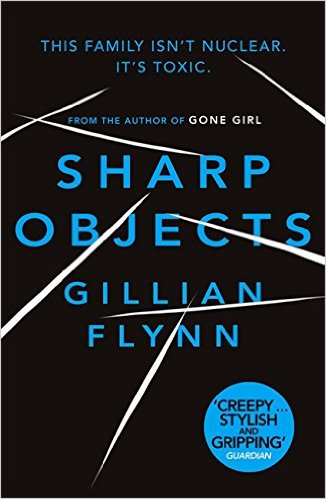
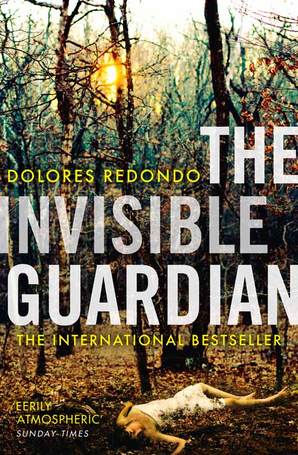
Gillian Flynn’s Sharp Objects (2006) and Dolores Redondo’s The Invisible Guardian (tr. Isabelle Kaufeler, 2013) are quite different in style, but have a number of features in common, not least their challenging depictions of mother-daughter relationships.

gillian-flynn

Both crime novels begin with the murders of a series of young girls or teenagers. The killings take place in or around a small town or village, and are investigated by a young woman who grew up there, but who left as soon as she could. In Sharp Objects, Camille Preaker is a Chicago journalist whose mother, stepfather and half-sister live in the town of Wind Gap, Missouri. She returns there for the first time in eight years when her editor sends her to report on the killings of two young girls. In The Invisible GuardianInspector Amaia Salazar is ordered to lead the investigation into the murders of two teenagers, and returns from Pamplona to the village of Elizondo in the Basque country, where her mother and sisters are still based.

redondo

In the course of their journalistic and criminal investigations, Camille and Amaia are forced into close proximity with their families and to confront repressed childhood traumas. In particular, the novels portray abusive mother-daughter relationships in ways that are both unflinching and disturbing. In one, we are shown how abusive mothering is transmitted from one generation to the next. In the other, no rational reason for the abuse is ever shown, which is perhaps even more unsettling. In both novels, the daughters have to accept and somehow deal with the corrosive effects of their mothers’ extreme behaviour.

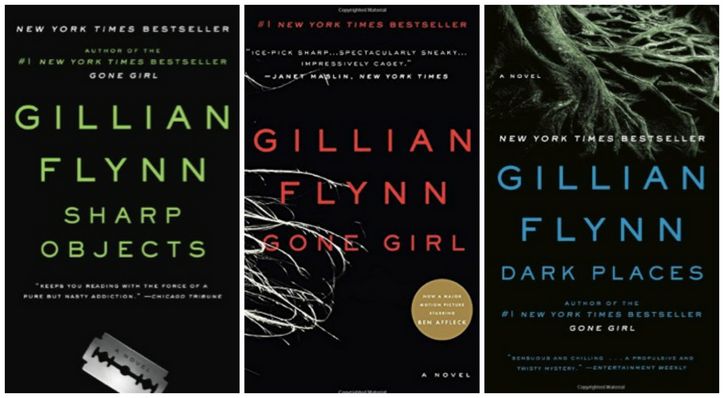
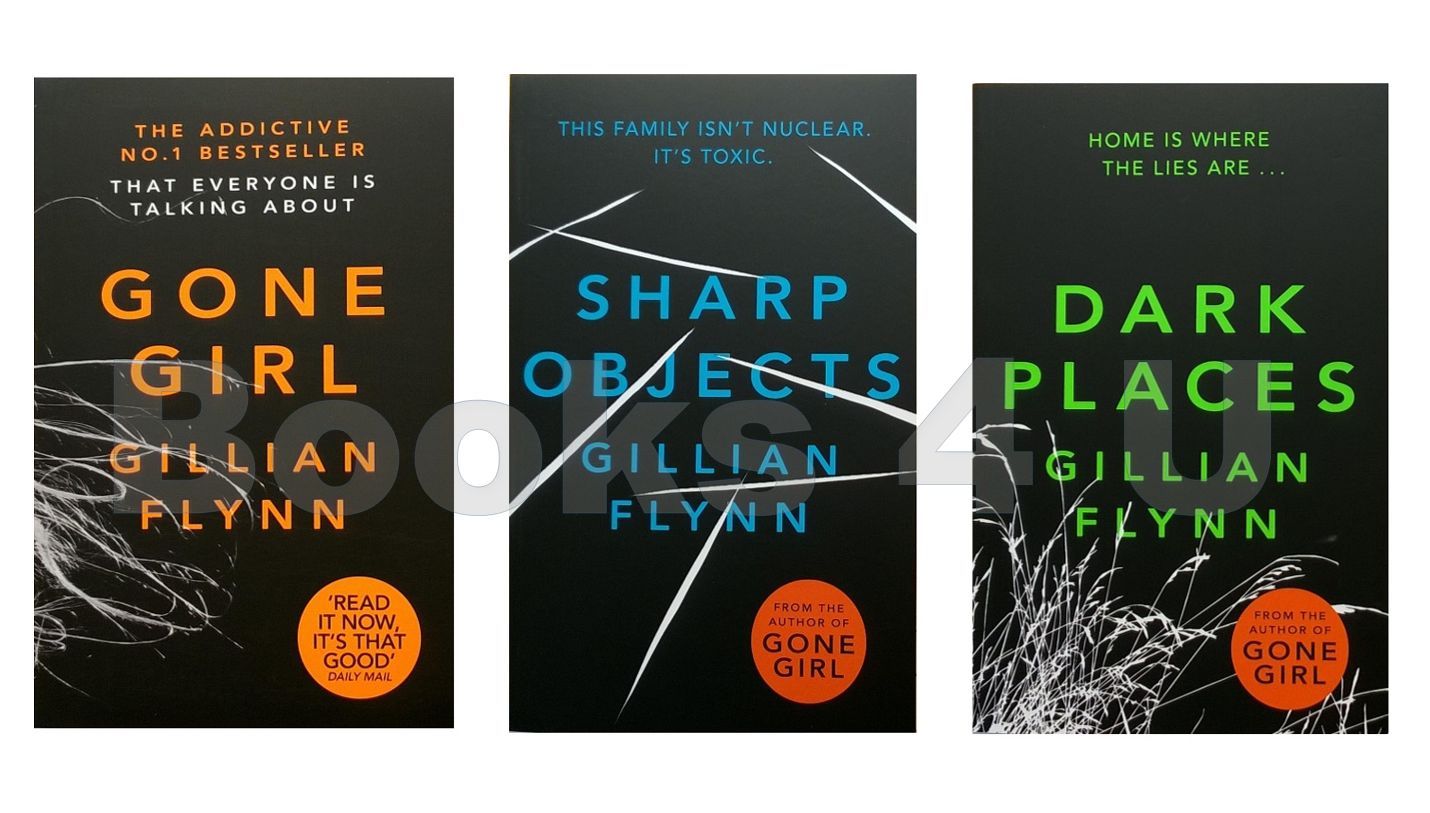
While both of these crime novels are excellent, they won’t be to the taste of all readers. Gillian Flynn, as I’ve noted in previous posts, is one of our most daring contemporary crime writers, who repeatedly takes on uncomfortable or taboo subjects such as self-harm. She often writes in the first person – as we see with Camille in Sharp Objects – and her protagonists are prickly and unconventional, or even downright unlikable. In this novel, Flynn creates an atmosphere dripping with Gothic menace, and piles on vivid physical detail to unsettle her readers. In the process, she dissects the suffocating, conservative nature of Wind Gap’s small-town life and shows how girls are pressurized to conform to gender norms in order to be accepted by society. Her other crime novels, Dark Places and Gone Girlare equally challenging and rewarding reads.

gillian-flynn-trio

Redondo’s The Invisible Guardian can be categorised more straightforwardly as a police procedural and is written in the third-person. It creates a different kind of atmosphere, using the mists and forests of the Basque region along with the mythical figure of the basajaun to suggest that other-worldly forces are at work. (In this respect, the novel reminds me a little of Fred Vargas’ ‘Inspector Adamsberg’ crime novels, albeit without the quirky eccentricity that marks her narratives.) Like Sharp Objects, The Invisible Guardian is a hard-hitting novel whose depictions of gender and power relations will stay with you long after the story ends. It’s also the opening novel in the acclaimed Baztan Trilogy – the second novel, The Legacy of the Bones, is out now, and the Offering to the Storm is hopefully on its way.