35 European crime novels

Here’s a random list of 35 European crime novels I love.

There are gaps (not all European countries are represented), but these are the ones particularly close to my heart because they’ve opened my mind and brought me joy.

Euro 4

Jakob Arjouni, Happy Birthday, Turk! (trans. from German by Anselm Hollo, Melville House, 2011 [1987])

Pieke Biermann, Violetta (trans. from German by Ines Rieder and Jill Hannum, Serpent’s Tail, 1996 [1991])

Ioanna Bourazopoulou, What Lot’s Wife Saw (trans. from Greek by Yiannis Panas, Black & White Publishing, 2013 [2007])

Roberto Costantini, The Deliverance of Evil (trans. from Italian by N.S. Thompson, Quercus, 2013 [2011])

Jan Costin Wagner, Silence (set in Finland; trans. from German by Anthea Bell, Harvill Secker, 2010 [2007])

Didier Daeninckx, Murder in Memoriam (trans. from French by Liz Heron, Serpent’s Tail, 1991 [1984]; republished by Melville House in 2012)

Euro 2

Friedrich Dürrenmatt, The Pledge (Swiss crime novel; trans. from German by Joel Agee, University of Chicago Press, 2006 [1958])

Umberto Eco, The Name of the Rose (trans. from Italian by William Weaver, Vintage, 2004 [1980])

Hans Fallada, Alone in Berlin (trans. from German by Michael Hofmann, Penguin, 2009 [1947])

Eugenio Fuentes, At Close Quarters (trans. from Spanish by Martin Schifino, Arcadia, 2009 [2007])

Friedrich Glauser, In Matto’s Realm (Swiss crime novel; trans. from German by Mike Mitchell, Bitter Lemon Press, 2006 [1936])
Euro 6

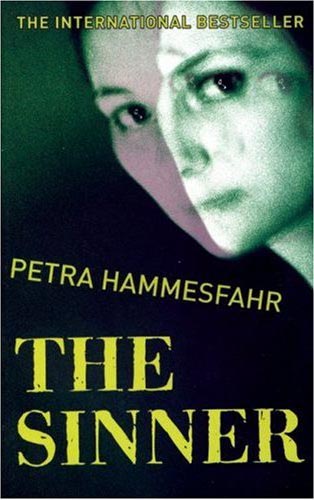
Petra Hammesfahr, The Sinner (trans. from German by John Brownjohn, Bitter Lemon Press, 2007 [1999])

Kati Hiekkapelto, The Defenceless (trans. from Finnish by David Hackston, Orenda Books, 2015 [2014])

Paulus Hochgatterer, The Sweetness of Life (Austrian crime novel; trans. from German by Jamie Bulloch, MacLehose, 2012 [2006])

Peter Høeg, Miss Smilla’s Feeling for Snow (trans. from Danish by Felicity David, Vintage, 2014 [1992])

Jean-Claude Izzo, Total Chaos (trans. from French by Howard Curtis, Europa Editions, 2005 [1995])

Euro 1

Hans Hellmut Kirst, The Night of the Generals (trans. from German by J. Maxwell Brownjohn, Cassell, 2002 [1962])

Stieg Larsson, The Girl with the Dragon Tattoo (trans. from Swedish by Reg Keeland, MacLehose Press, 2008 [2005])

Carlo Lucarelli, Carte Blanche (trans. from Italian by Michael Reynolds, Europa Editions, 2006 [1990])

Henning Mankell, The Dogs of Riga (trans. from Swedish by Laurie Taylor, Vintage, 2012 [1992])

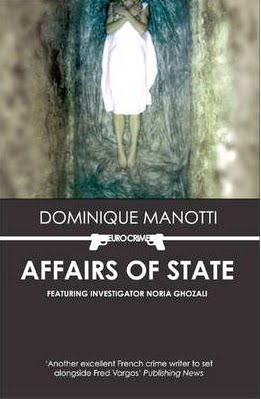
Dominique Manotti, Affairs of State (trans. from French by Ros Schwarz and Amanda Hopkinson, Arcadia Books, 2009 [2001])
Euro 5

Petros Markaris, Che Committed Suicide (trans. from Greek by David Connolly, Arcadia Books, 2009)

Manuel Vázquez Montalbán, Buenos Aires Quintet (trans. from Spanish by Nick Calstor, Serpent’s Tail, 2005)

Harry Mulisch, The Assault (trans. from Dutch by Clare Nicolas White, Random House, 1985 [1982])

Håkan Nesser, Bjorkman’s Point (trans. from Swedish by Laurie Thompson, Pan, 2007 [1994])
Europe 7

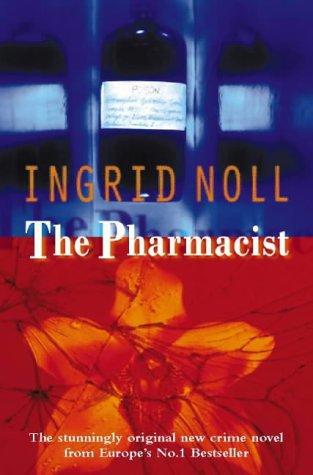
Ingrid Noll, The Pharmacist (trans. from German by Ian Mitchell, HarperCollins, 1999 [1994])

Lief G.W. Persson, Linda, as in the Linda Murder (trans. from Swedish by Neil Smith, Vintage, 2013)

Dolores Redondo, The Invisible Guardian (trans. from Spanish by Isabelle Kaufeler, HarperCollins, 2015 [2013])

Georges Simenon, Pietr the Latvian (Belgian crime novel, trans from French by David Bellos, Penguin, 2013 [1930])

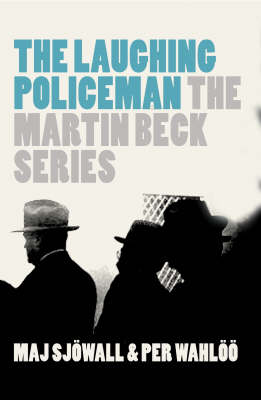
Maj Sjöwall and Per Wahlöö, The Laughing Policeman (trans. from Swedish by Alan Blair, Harper Perennial, 2007 [1968])
Euro 3

Josef Skvorecky, The Mournful Demeanour of Lieutenant Boruvka (trans. from Czech by Rosemary Kavan, Kaca Polackova and George Theiner, Norton, 1991 [1966])

Olivier Truc, Forty Days without Shadow (set in Lapland; trans. from French by Louise Rogers LaLaurie, Trapdoor, 2014)

Antti Tuomainen, The Healer (trans. from Finnish by Lola Rogers, Harvill Secker, 2013 [2010])

Simon Urban, Plan D (trans. from German by Katy Derbyshire, Harvill Secker, 2013 [2011])

Fred Vargas, Have Mercy on us All (trans. from French by David Bellos, Vintage, 2004 [2001])

****************************

As many of you will know, the UK voted to leave the European Union via a national referendum on 23rd June, with 52% voting ‘leave’ and 48% ‘remain’ (overall turnout of 72%). This isn’t a political blog, but given the seismic nature of what’s happened, here’s a brief personal comment.

I was one of the 48% who voted to remain and, as a British European and languages lecturer, I’m heartbroken at the result. As a nation, we’ve probably caused ourselves irreparable economic and political damage. We’ve also become a more divided and less tolerant place. Every aspect of our future is now uncertain, and the younger generation, who voted overwhelmingly to remain, will have to bear the consequences of the ‘Brexit’ for decades to come. It’s a monumental, catastrophic mistake that could well lead to the break up of the UK and destabilize Europe.

Those of you in Europe looking on in disbelief, please know that 48% of us did not wish to leave the EU. Many of us regard ourselves as European and are horrified by what’s happened. We don’t yet know how, but we will try to find our way back to you. And if you’re a European living in the UK, please know that millions of us appreciate you for your contribution to British society and the cultural enrichment you bring.

Brexit

Surreal: some UK papers on my kitchen table this morning


Summer musings on Walters (UK), Hykänen (Finland), and the visibility of women in crime fiction awards

After a busy few months, I’m looking forward to 1. writing up reviews of some excellent crime novels and 2. getting down to some quality summer reading.

A fairly random start: two very different novels I’ve recently enjoyed, and some musings on the visibility of women on crime fiction award longlists/shortlists.

Minette Walters

Minette Walters, Disordered Minds (Pan Macmillan 2003). I picked up this plump psychological crime novel at Oxfam Books, and it turned out to be a perfect summer read. Two amateur detectives – Jonathan Hughes, a social anthropologist with a chip on his shoulder, and George Gardener, a middle-aged local councillor, find themselves drawn into investigating a contested old case, the murder of Grace Jeffries in 1970. Her grandson Harold was convicted of the crime, but new evidence suggests that the original investigation may have been botched.

I’ve not read anything by Walters before – a bit of an omission on my part – and am now keen to read more. Her approach to dissecting criminality reminded me of PD James and Ruth Rendell, particularly in its focus on British attitudes to race and class. A satisfying read with some lovely characterisation and interesting socio-political commentary (it’s set against the backdrop of the Iraq war in 2003), but with a slightly over-convoluted ending.

Nykanen

Harri Nykänen, Behind God’s Back, trans. from Finnish by Kristian London (Bitter Lemon Press, 2015 [2009]). This novel is the second in the ‘Ariel Kafka’ series (I reviewed the first here back in 2012). Aside from its Finnish setting, the most distinctive aspect of this series is its lead investigator, who is one of only two Jewish policemen in Helsinki. He views the world with a typically wry Jewish humour and allows readers to gain an insight into Helsinki’s small Jewish community, with which he has a slightly strained relationship as he’s not exactly a ‘model Jewish citizen’ – non-observant and stubbornly single.

The novel opens with the murder of a Jewish businessman. Kafka is tasked with figuring out whether the murder is racially motivated, a business deal gone wrong, or something altogether more complex… As was the case with the first novel, the plot got a bit complicated towards the end, but I thoroughly enjoyed Kafka’s irreverent, blokey company, and was very happy to go along for the ride. A superior police procedural.

And so to the subject of crime fiction longlists and shortlists.

Gold

My last post included the CWA International Dagger longlist, which I was disappointed to see included no works by women authors. Here it is again:

Title Author Translated by Publisher
The Truth and Other Lies Sascha Arango Imogen Taylor Simon & Schuster
The Great Swindle Pierre Lemaître Frank Wynne MacLehose Press
Icarus Deon Meyer K L Seegers Hodder & Stoughton
The Sword of Justice Leif G.W. Persson Neil Smith Doubleday
The Murderer in Ruins Cay Rademacher Peter Millar Arcadia
The Father Anton Svensson Elizabeth Clark Wessel Sphere
The Voices Beyond Johan Theorin Marlaine Delargy Transworld
Six Four Hideo Yokoyama Jonathan Lloyd-Davis Quercus

I started thinking about how this all-male longlist might have come about. Here are some possibilities, some of which are valid, some not. The answer probably comprises a few of these factors in combination.

  • No works by women authors were submitted for the award. Not the case: the list of novels submitted for this year’s International Dagger is available at http://cwadaggers.co.uk/cwa-international-dagger/. It shows that there were 45 works submitted, of which 13 were authored or co-authored by a woman. If my maths is right, that’s nearly 30%.
  • Fewer works by women were submitted, so the chances of these reaching the longlist were accordingly smaller. That’s definitely the case, given the 70% (male), 30% (female) split. And this kind of ratio seems to be typical. Translator Katy Derbyshire, writing in The Guardian, recently identified a twofold negative trend in relation to international fiction. Firstly, fewer women authors are published in their home markets; secondly, fewer still are selected by English-language publishers for translation. This means that works by international women authors in English are ‘a minority in a minority’. Their chances of winning prestigious literary prizes are thus pretty low.
  • However, even given those factors, the law of averages would still suggest 2 or 3 works by women could have made the International Dagger longlist. There were certainly some strong contenders on the submission list, such as Karin Fossum’s The Drowned Boy (Harvill Secker), Kati Hiekkapelto’s The Defenceless (Orenda) and Claudia Pinero’s Betty Boo (Bitter Lemon Press). Why didn’t they make the cut?
  • At this point we have to acknowledge that judging is a subjective process involving a number of factors and evaluations. So it may simply be coincidence that the longlist ended up being male-dominated (their novels happened to be the best this time round). Equally, however, there may be unconscious biases that drew the judges towards that particular set of novels. These *may* include a gender bias, but could also include others, such as a preference for a particular type of crime fiction (psychological, police procedural, thriller, whatever), or for crime set in a particular country (Sweden, Japan, South Africa)…

A swift look at some other recent longlists/shortlists shows the following: 

  • The 2016 CWA Goldsboro Gold Dagger features three women authors on its longlist of eight (37%).
  • The 2016 Ngaio Marsh Award for Best Crime Novel (announced today!) features three women authors on its longlist of nine (33%).
  • The 2016 Petrona Award (for which I’m a judge) featured two women authors on its shortlist of six (33%). Our submission list had a worse male/female ratio to the International Dagger this year – 8 works by women authors on a submission list of 42 (19%).
  • The 2016 Man Booker International featured two female authors on its shortlist of six (33%). It was won by Han Kang – a woman author – for The Vegetarian.
  • A significant exception is the 2016 Theakstons Old Peculier Crime Novel of the Year, which features eleven women authors on its longlist of eighteen (61%). This award has also been won by women for the last four years (Denise Mina twice, Belinda Bauer and Sarah Hilary).

Makes you think, doesn’t it?

All the above has made me scrutinise my own reading practices and biases (not always a comfortable process). I’m keeping a list to check my own reading/gender ratio, which I know some other bloggers do as well. It’ll be interesting to compare notes.

Some thought-provoking articles on and around the subject

Katy Derbyshire, ‘Translated fiction by women must stop being a minority in a minority’The Guardian, 10 March 2016

Hannah Ellis Peterson, ‘Male writers continue to dominate literary criticism, Vida study finds’, The Guardian, 7 April 2015 (particularly interesting contribution by Rob Spillman on tackling systemic problems)

VIDA, ‘The 2015 VIDA Count’, 30 March 2016. VIDA (Women in Literary Arts) is a US-based organisation that scrutinizes the representation of women in the sector (looking at interesting stats like the proportion of women reviewers on magazines).

the-reader-young-woman-reading-a-book-1876.jpg!Large

Renoir’s The Reader