CrimeFest 2016 highlights: Holt, Piñeiro, le Carré, Krimis and The Petrona Award

CrimeFest 2016 took place last week in Bristol, UK. It featured a succession of fabulous panels and, as ever, provided a wonderful opportunity to catch up with other criminally minded readers, as well as the great and the good of the publishing world. Here are my highlights.CFhighreslogo-2016

Anne Holt is one of Norway’s best-known crime writers and the creator of the Hanne Wilhelmsen series. She very rarely appears at crime conventions, so it was something of a coup to have lured her to Bristol as a featured guest author.
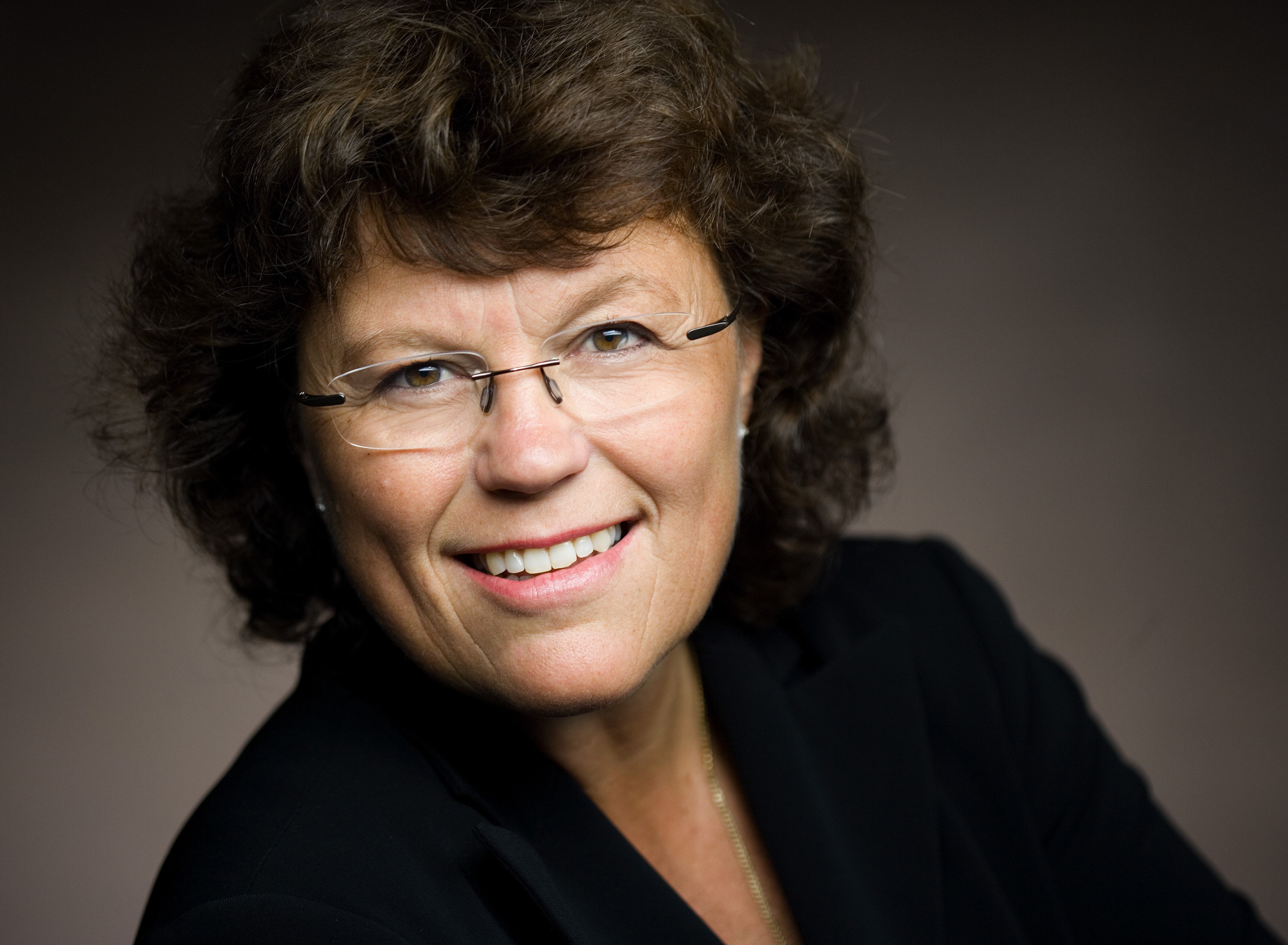
Holt-Anne-credit-Jo-Michael

Norwegian author Anne Holt

Barry Forshaw’s interview with Holt on Sunday was fascinating and wide-ranging.

  • Holt worked in journalism, as a news anchor, as a lawyer, and briefly as Minister of Justice for Norway. Then, at the age of 40, she moved away from a workaholic lifestyle and started to write. Her first novel was Blind Goddess (1993) and she’s never looked back.
  • Hanne Wilhelmsen was the first lesbian investigative lead in Norwegian crime fiction. Hanne is a complex figure. Due to her upbringing and family background, she’s very private and prefers not to reveal herself to others. In this respect, she’s very different to Holt – a conscious decision in order to make the character more challenging to write.
  • Holt has deep love of British crime, especially Agatha Christie. Her novels are still recruiting readers, for which we should be thankful. The eighth Wilhelmsen novel, 1222, is a homage to the golden age of crime (critics in Norway panned it – she’s not sure why- but it did well in other countries).
  • Holt is friends with Jo Nesbo and has discussed the subject of violence with him. She feels that violence should not be directly described in crime novels unless necessary. She rarely does so (one exception), preferring to focus on the effects of violence instead.
  • Holt says how crime novels do in Germany is a barometer for publishers in relation to British & European markets.
  • Holt on the EU referendum: the EU is an instrument for peace and trade, and it would be a tragedy if Britain were to leave. It could be the beginning of end for the EU.
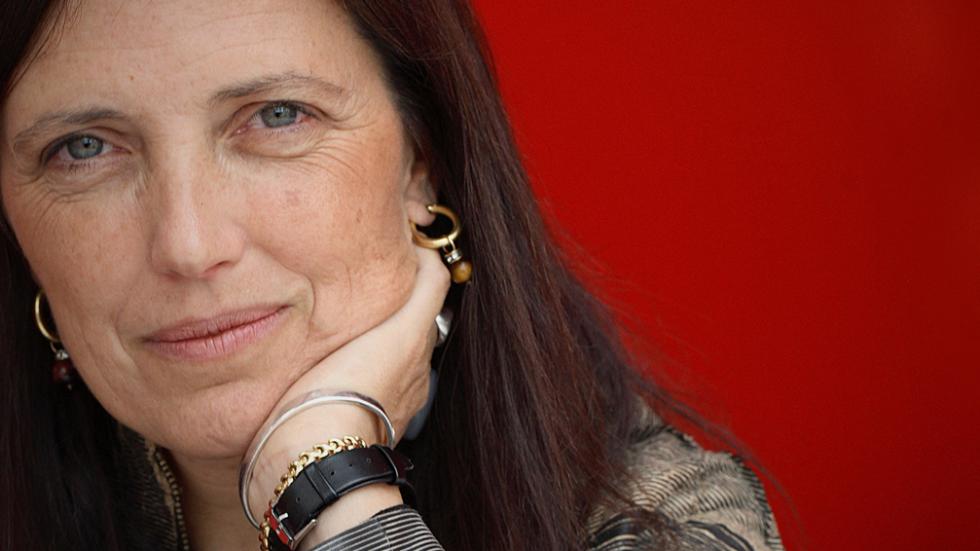
claudia_pineiro_1

Argentinian author Claudia Piñeiro

I was also very excited to see Claudia Piñeiro at CrimeFest (and indeed in the UK) for the first time. Piñeiro is an Argentine crime-writing superstar whose work has been translated into numerous languages, but she’s not known here nearly as well as she should be. Bitter Lemon Press has published four of her novels in translation so far, including Betty Boo, which is set in a gated community in Buenos Aires and explores the nature of modern journalism (review pending). Piñeiro is an incredibly versatile writer, whose depictions of Argentine society are astute, insightful and sardonic – I really hope to see more of her work in English in the future.

le-carre-bio

Adam Sisman, John le Carré’s official biographer, was also at CrimeFest, in a packed session with broadcaster and writer James Naughtie. Sisman spoke very eloquently about the benefits and challenges of writing on a ‘living subject’. For example, one of le Carré’s conditions was that he should be the first to see the manuscript, and he promptly emailed Sisman 22 pages of notes. At one point he told Sisman ‘it’s very strange to have you here poking around my mind’.

  • Sisman rightly emphasised le Carré’s position at the top of the writing game from the early 60s to the present day.
  • He also noted that le Carré’s political arc was unusual – from establishment to left-wing anger. While studying at Oxford University in the 1950s he spied on other students for MI5, something that troubles him now.
  • The spying terms le Carré uses in his novels are often made up, but have been adopted by spying agencies. One CIA agent told Sisman that le Carré is ‘part of our DNA’.
  • The author has a wonderful ear for dialogue/mimicry, and often rehearses characters’ conversations out loud when on walks.
  • He’s always enthusiastic about the future, about new projects such as The Night Manager, and does not live in the past.

Mrs Pea was also in action, presenting the Crime Fiction in German volume to a delightful audience in one of the ‘In the Spotlight’ sessions. David Young, author of Stasi Child, kindly acted as Draw Meister. Rather impressively, we managed to give away twelve Krimis and two copies of the volume in twenty minutes. Thanks again to the Goethe Institut, Swansea University, the University of Wales Press, Bitter Lemon Press, Penguin, Michael Joseph and Vintage for their support.

Krimi Spotlight collage

Clockwise from top left: David Young (Draw Meister) with Mrs Peabody; a beautifully attentive audience; the Krimi Giveaway winners; the last copy of the volume in the bookshop…

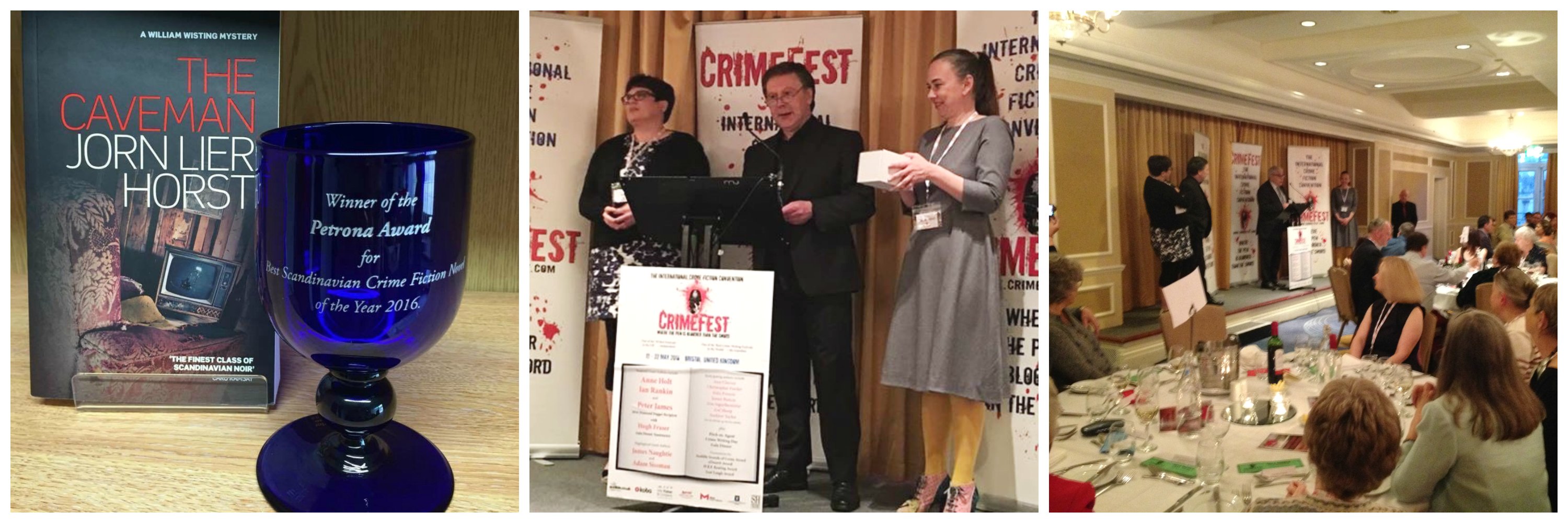
And on Saturday night, the winner of the 2016 Petrona Award was announced: Norwegian writer Jørn Lier Horst for his novel The Caveman (see my interview with the author here). Bob Davidson of Sandstone Press accepted the award on Jørn’s behalf from Yrsa Sigurðardóttir, the 2015 Petrona winner. You can see the transcript of Jørn’s acceptance speech (which was rather lovely) on the Petrona website, along with details of the shortlisted titles. As ever, I’m very proud to be a judge for this excellent award, set up in memory of Maxine Clarke.
Petrona collage

From left: the winning novel and the Petrona trophy (photo Sandstone Press); Sarah Ward and Barry Forshaw announcing the award with Yrsa Sigurðardóttir (photo by Ali Karim); Bob Davidson accepting the award on Jørn’s behalf.

photo-by-andy_26585418893_o

The Petrona Award judges with Anne Holt (photo by Andy Lawrence)

I feel like I’ve only scratched the surface of CrimeFest16 in this post. For example, Ian Rankin, another one of the featured guest authors, gave a wonderful interview and treated the audience to an extract of his next Rebus book. Hopefully other bloggers will cover some different events/panels.

And…the CWA International Dagger longlist was also announced. I’ll leave you with the list of nominees below. Please note that two German novels have made the cut (Arango and Rademacher). I’ve also got my eye on Six Four, a Japanese crime novel highly praised by David Peace. Disappointed by the lack of women authors, though.

Title Author Translated by Publisher
The Truth and Other Lies Sascha Arango Imogen Taylor Simon & Schuster
The Great Swindle Pierre Lemaître Frank Wynne MacLehose Press
Icarus Deon Meyer K L Seegers Hodder & Stoughton
The Sword of Justice Leif G.W. Persson Neil Smith Doubleday
The Murderer in Ruins Cay Rademacher Peter Millar Arcadia
The Father Anton Svensson Elizabeth Clark Wessel Sphere
The Voices Beyond Johan Theorin Marlaine Delargy Transworld
Six Four Hideo Yokoyama Jonathan Lloyd-Davis Quercus

Many thanks to the CrimeFest16 organisers for a wonderful four days!
European Literature Festival – Kutscher & Raabe – CrimeFest is on its way!

There’s lots of highly criminal activity in the UK over the next couple of weeks.

Here are a few highlights.

ELF-promotional-image

The European Literature Festival is currently under way, with a packed programme including a very special evening at the British Library on Friday 13 May – tomorrow! ‘Criminal Worlds: Detective Fiction in Europe‘ features three wonderful crime writers – Peter James (UK), Kati Hiekkapelto (Finland; shortlisted for the Petrona Award) and Volker Kutscher (Germany), and is chaired by the marvellous Barry Forshaw. They will be ‘casting their forensic eye on the celebrated and lesser-known investigators of European fiction’. 

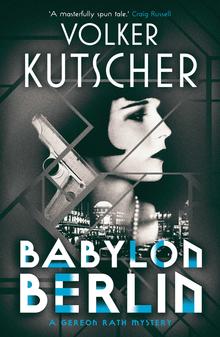
Babylon Berlin

Volker Kutscher pops up again at the Goethe Institut London on Monday 16 May to talk about Babylon Berlin, the first in his ‘Gereon Rath’ series, which is published in English by Sandstone Press on 19 May. This bestselling series has sold over a million copies worldwide to date. Its five novels follow the fortunes of Berlin Detective Inspector Rath as he navigates the turbulent political waters of Weimar Berlin, and are both gripping and rich in historical detail. Together with translator Niall Sellar and Robert Davidson of Sandstone Press, Volker will discuss his books, the translation process, and the reception of German crime fiction in Great Britain (further info available here).

AND you can hear Volker talking about Babylon Berlin tonight at 10.00pm on BBC Radio 3’s ‘Free Thinking’ programme, together with the celebrated director Tom Tykwer (of Lola Rennt fame), who is adapting the crime series for television. As this Variety article explains, two eight-episode seasons are in the pipeline, scheduled for international release in 2017.

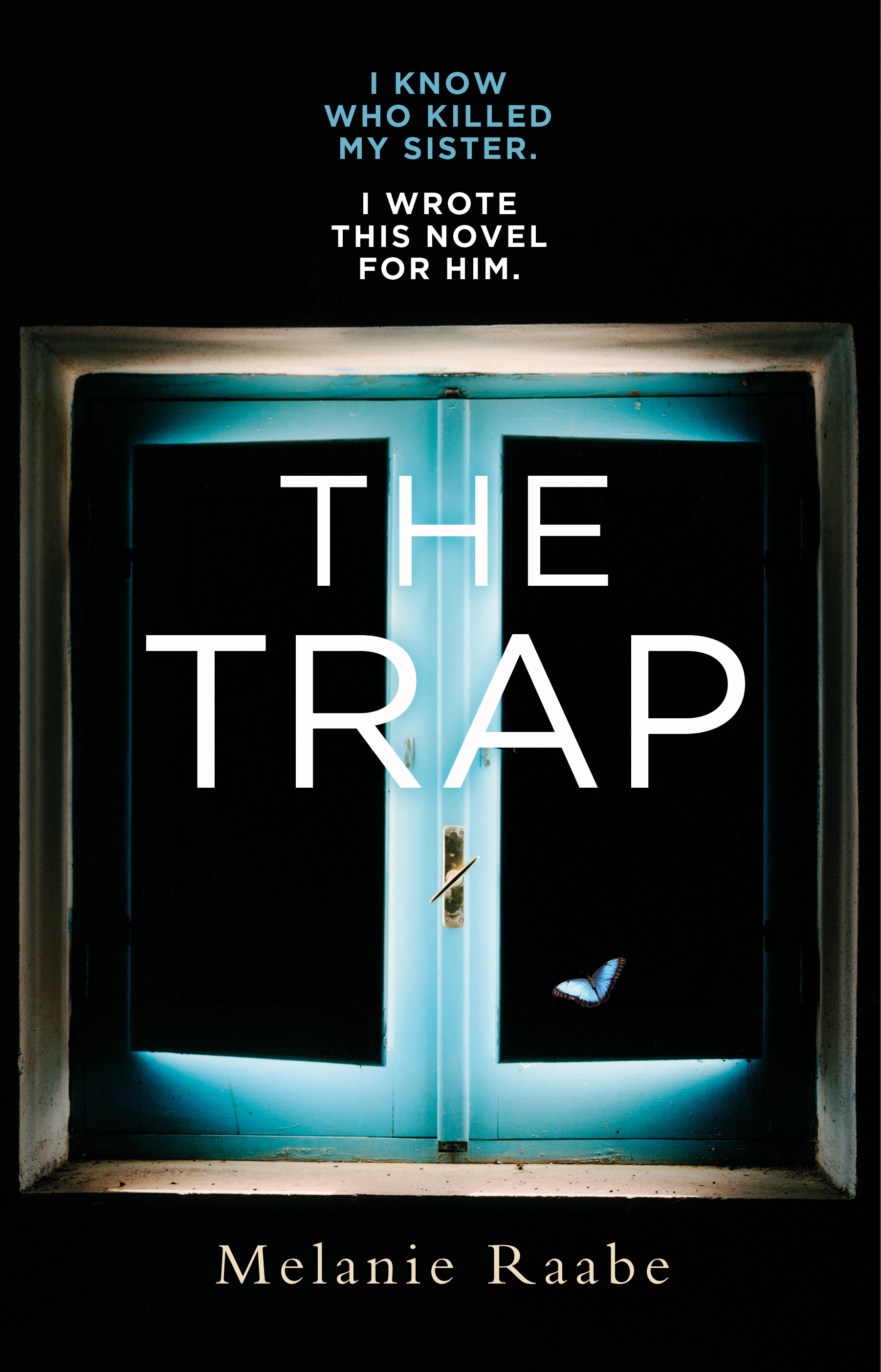
Trap

Another interesting German author is published in English for the first time next week. Melanie Raabe grew up in the former East Germany and has worked as a journalist, magazine editor and playwright. The Trap, published by Mantle/Pan Macmillan, is her first novel and won the Stuttgarter Krimipreis (Stuttgart Crime Prize) for best crime debut. It has a wonderfully intriguing premise: reclusive best-selling writer Linda Conrads is convinced that a journalist she sees on TV is her sister Anna’s killer. She decides to set a trap: after writing a novel about the murder of a woman whose killer is never caught, she offers the journalist an exclusive interview… I’ve read the first couple of chapters and am already hooked.

CFhighreslogo-2016

CrimeFest takes place next week *excited face*. I’m hugely looking forward to attending and seeing a host of wonderful authors in action, including Anne Holt (Norway), Ian Rankin (Scotland), Claudia Piñeiro (Argentina) and Adam Sisman (biographer of John le Carre). And of course the Petrona Award winner will be announced at the gala dinner on Saturday evening :-).

The full CrimeFest programme is available here.

CFIG launch book collage

Mrs. Peabody will also be in action at CrimeFest, with an ‘In the Spotlight’ session on all things Krimi (Friday 20 May at 11.20). There will be a giveaway of ten German-language crime novels, courtesy of the Goethe Institut London, Bitter Lemon Press, Penguin, Michael Joseph and Vintage. Two copies of the Crime Fiction in German volume will also be up for grabs thanks to the Goethe Institut and the University of Wales Press.

And a little reminder: you can download a completely FREE chapter from Crime Fiction in German here!

25352091871_34555eb9c9_o

Yes! Erich the Bavarian duck will be at CrimeFest!

Author interview with Abir Mukherjee about Calcutta crime novel A Rising Man

Wishing a very happy publication day to Abir Mukherjee! Abir is the winner of the 2014 ‘Telegraph Harvill Secker Crime Writing’ competition. A Rising Man, his highly accomplished debut crime novel, is set in Calcutta in 1919 and marks the start of the ‘Captain Wyndham’ series. He joins me below for a fascinating interview about the novel, his historical research, and the writers who inspire him.

A RISING MAN

Opening lines: ‘At least he was well dressed. Black tie, tux, the works. If you’re going to get yourself killed, you may as well look your best.’

Cover text: Captain Sam Wyndham, former Scotland Yard Detective, is a new arrival to Calcutta. Desperately seeking a fresh start after his experiences during the Great War, Wyndham has been recruited to head up a new post in the police force. But with barely a moment to acclimatise to his new life, Wyndham is caught up in a murder investigation that will take him into the dark underbelly of the British Raj.

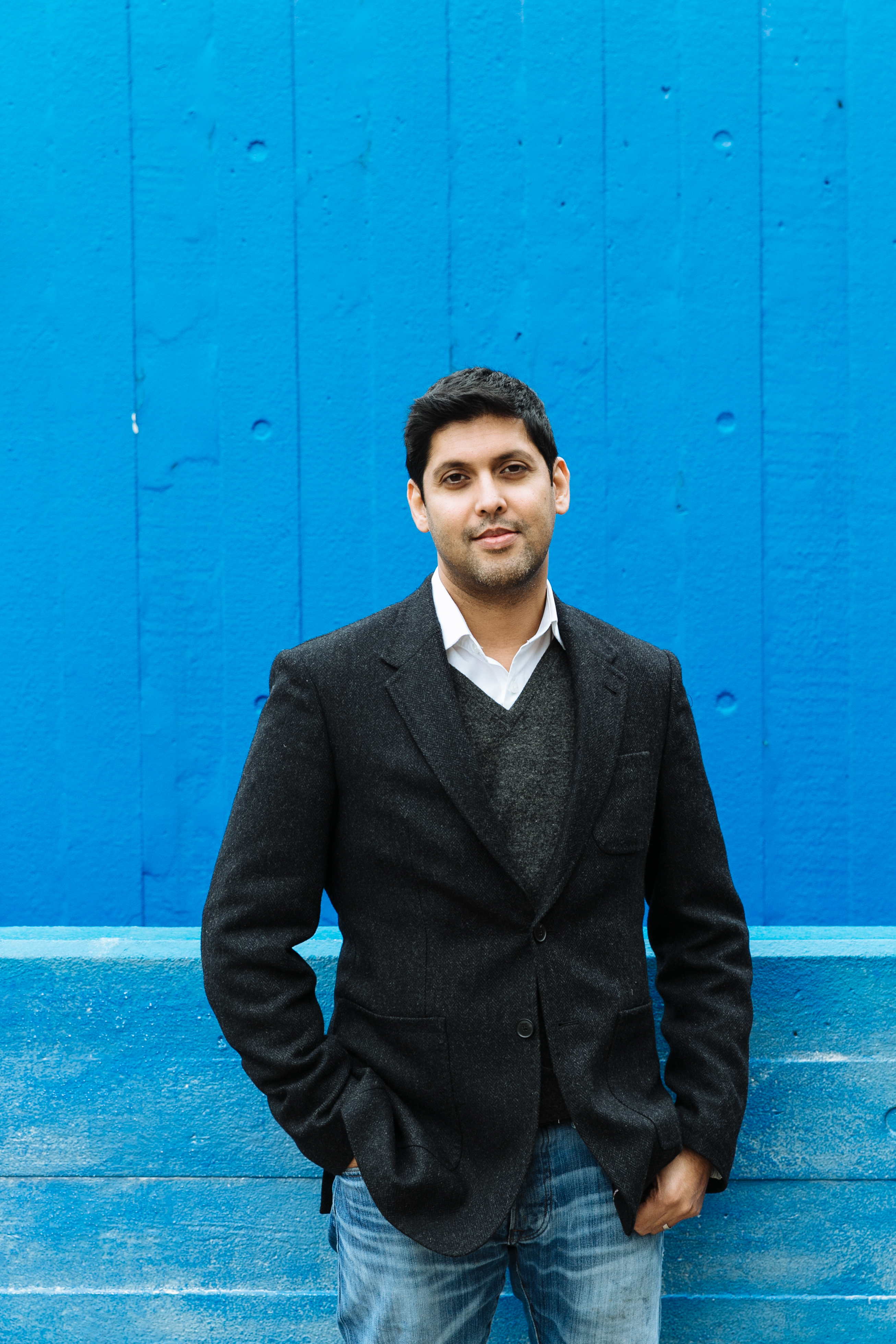
Abir Mukherjee c. Nick Tucker MAIN PHOTO

Abir Mukherjee (photo by Nick Tucker)

Mrs. Peabody: Abir, thanks very much for joining me. A Rising Man is set in the India of 1919, just after the end of the First World War. Why did you choose that particular historical moment for the start of your series?

Abir: My parents came to Britain as immigrants from India in the sixties, and my life has always been shaped by both cultures. As such I’ve always been interested in the period of British Rule in India. I think that period in history has contributed so much to modern India and to modern Britain, but it’s a period that’s been largely forgotten or mischaracterised, either romanticised or brushed under the carpet.

I’ve always been rather surprised by this and wanted to look at it from the point of view of an outsider who’s new to it all. One of the things that’s always fascinated me is that, in an era when totalitarian regimes were rampant in Europe, regularly murdering anyone who showed any dissent, in India, this largely peaceful freedom struggle was playing out between Indians and their British overlords. At the time, there was no parallel to this anywhere in the world, and I think it says a lot about the people of both nations that such a struggle could be played out in an comparatively civilised way.

Huntley and Palmer Raj

A thoroughly British depiction of the Indian Raj

Abir: I also wanted to explore the effect of empire on both the rulers and the ruled. In particular I wanted to understand what happens when a democratic nation subjugates another, both in terms of the impact on the subjugated peoples, but just as importantly, on the psyche of the people doing the oppressing. I think the moral and psychological pressures placed on those tasked with administering the colonial system were immense and in something that’s been relatively unexamined.

I wanted to write a series exploring the relationships between these two different, but in many ways very similar cultures, but from the viewpoint of someone new to it all and 1919 just felt like the right place to start. To me, it was the start of the modern age. The Great War had just ended, it had destroyed a lot of the old certainties and left a lot of people disillusioned and no longer willing to simply accept what they were told by their betters. Sam, the protagonist, is a product of that time and I think he is one of the first modern men.

Calcutta map

Kolkata/Calcutta lies in the east of India on the Bay of Bengal

Mrs. Peabody: How did you go about recreating the Calcutta of the time? What kind of research did you carry out?

Abir: In the period that the book is set, Calcutta was still the premier city in Asia and was as glamorous and exotic a location as anywhere in the world. At the same time, it was a city undergoing immense change and was the centre of the freedom movement, a hotbed of agitation against British rule. It seemed the natural choice for the series I wanted to write. Of course, it helped that my parents are both from Calcutta and I’d spent a quite a bit of time there over the years. I even speak the language, though with a Scottish accent.

In terms of recreating the Calcutta of the period, it’s amazing how much of that history is still around in the Calcutta (or Kolkata) of today. Calcuttans have a great sense of the history of their city, possibly because the city was at its zenith during that period, and so many people were more than willing to answer the many questions I had.

During one visit, I was lucky enough to be granted access to the Calcutta Police Museum where a lot of the police documents from the period are on exhibit. That was fascinating as the Kolkata Police today has a rather ambivalent view of its own history during that time. In terms of research though, most of that was done sitting at home in front of the computer and trawling the internet.

Mrs. Peabody: Tell us a bit about your leading investigator, Captain Sam Wyndham, and the perspective he offers us of India.

Abir: Sam’s a rather strange fish. He’s an ex-Scotland Yard detective who’s basically spent his whole life struggling against the tide. Life’s not exactly been kind to him. He gets packed off to boarding school at a young age and some of his best years were spent sitting in a trench in France getting shot at by Germans. He survives the war, though only to find that his wife has died in the influenza epidemic of 1918. Scarred by his wartime experiences and burdened by survivor’s guilt, he comes to India mainly because he has no better alternative.

At the point in his life where he arrives in Calcutta, he’s a pretty jaded soul with a bit of an alcohol and chemical dependency, though he’d tell you he used them for medicinal purposes. He’s been disillusioned by the war and I think he’s more open to seeing India with his own eyes than swallowing everything he’s told. He’s happy to point out hypocrisy where he sees it, whether it be from the whites or the natives.

Mrs Peabody: The novel does a wonderful job of dissecting the political, racial and social tensions of life under the British Raj. Do you think that crime fiction offers particular opportunities in this respect?

Abir: Definitely. I think most authors have something to say beyond the telling of a good story and I think crime fiction is a wonderful vehicle for exploring deeper societal issues, because it allows you to look at all of society from the top to the bottom.

As Ian Rankin said in an interview earlier this year, “the crime novel is a good way of raising this stuff because … a detective has an access all areas pass to the entire city, to its riches and deprivations.”

In terms of India in 1919, as a white policeman, Sam has is exposed to all sections of Calcutta society, from the politicians and businessmen right down to the rickshaw-wallahs and brothel keepers. He’s part of the whole fabric, but at the same time separate from it and able to see it objectively.

Kolkata flower market

Kolkata flower market. Image Courtesy of Parasarathi Mukherjee, Walks in Kolkata

Mrs Peabody: Which authors/works have inspired you as a writer?

Abir: There are so many.

There are the books which have left the greatest impression on me and which I’ve read quite a few times. At the top of that list would come George Orwell’s Nineteen Eighty-Four. I’ve always been drawn to dystopian views of the future and this is, in my opinion, the finest dystopian novel. I’ve read this book more times than I can remember and it’s a joy every time. The characterization of Winston and Julia’s relationship, set against the backdrop of this all-powerful totalitarian society is just fantastic.

Lahiri

Abir: Other works that have left an impression include Jhumpa Lahiri’s The Namesake, a story about the travails of a Bengali couple who immigrate from Calcutta to Boston and raise a family. My wife first introduced me to this book and I was just bowled over by it. The writing is sublime and I could relate to it in a way I haven’t to many other books.

Then there are others which are pretty special, like Vikram Seth’s An Equal Music, a tale of love lost set in the world of string quartets, Kafka’s The Trial – the only book I’ve read that made me feel claustrophobic, and Hemingway’s For Whom the Bell Tolls with its amazing use of language.

In terms of crime and thrillers, there are a number of authors whose work I look out for and will buy as soon as it hits the shelf. Top of this list has to be Ian Rankin – I’m a huge Rebus fan, but also love the standalone novels too. Then there’s Philip Kerr, Martin Cruz Smith and Robert Harris, all three of whom produce novels shot through with wit and an intelligence, something which I love.

Finally, and in a special category, there’s William McIlvanney, whose Glasgow Detective, Laidlaw is a fantastic creation. I think McIlvanney was a true genius. I wish I’d had the chance to meet him.

Mrs P: Many thanks, Abir!

A Rising Man is published by Harvill Secker on 5 May 2016 (priced £12.99)