#31 / Gillian Flynn, Gone Girl

Gillian Flynn, Gone Girl (London: Phoenix, 2012). A wickedly entertaining portrait of a marriage gone horribly wrong  4.5 stars

Opening line: When I think of my wife, I always think of her head.

I’d heard from lots of people that this off-beat American crime novel was good, but no one warned me how ridiculously fun it would be. From start to finish, Gone Girl was an absolute, wicked joy, and had me applauding its bravura characterisation and plot.

On the morning of their fifth wedding anniversary, Amy Elliott Dunne goes missing in North Carthage, Missouri, leaving the police sniffing suspiciously around husband Nick. The events up leading up to and including that day are narrated by husband and wife in alternating chapters, and provide the reader with two highly distinctive perspectives. Soon we’re having to ask ourselves a series of bracing questions: What exactly is the nature of the crime that’s been committed? Who, if anyone, is the perpetrator? Who, if anyone, is the victim? Who is trustworthy? Who is not? And trying to work out the answers makes for a hugely enjoyable and addictive read.

In addition, the novel provides us with a wonderfully dark portrait of a marriage gone sour; a meditation on the way couples act out idealised identities, and a dissection of the stories they tell to fashion reality for their own ends. This is fundamentally a novel about gender and power, and it doesn’t pull any punches (some great fodder for discussion here). There’s also a wonderfully scathing critique of the media’s relentless pursuit of a story, regardless of the truth or judicial process.

All of this might have ended up a bleak, rather depressing read, were it not for the seam of wickedly dark humour that runs throughout the book. Think Danny DeVito’s 1989 The War of the Roses, crossed with Fay Weldon’s 1984 The Life and Loves of a She Devil, with a dash of Patricia Highsmith’s 1955 The Talented Mr. Ripley thrown in. And as for plotting, no one’s done a mid-narrative twist better since Sarah Walters’ 2002 The Fingersmith

20th Century Fox have acquired the property rights to the novel, with Reece Witherspoon set to produce, and David ‘The Girl with the Dragon Tattoo’ Fincher reportedly in talks to direct the film adaptation. It could be very, very good.

Mrs. Peabody awards Gone Girl a deliciously clever and satisfying 4.5 stars.

UPDATE 3 October 2014: The film of Gone Girl, directed by David Fincher and starring Rosamund Pike and Ben Affleck is out now. Guardian film supremo Peter Bradshaw has given it 4 stars: read his review here.

Creative Commons License

.

Jakob Arjouni 1964-2013

Some very sad news. German crime writer, playwright and author Jakob Arjouni has died of cancer at the age of 48.

Jakob Arjouni: Mit "Happy Birthday, Türke!" zum ganz großen Erfolg

Photo courtesy of Diogenes

Arjouni’s groundbreaking crime series featured the irrepressible Turkish-German P.I. Kemal Kayankaya. The first novel in the series, Happy Birthday, Türke (1986), was written when he was just nineteen. The third, Ein Mann, ein Mord / One Man, One Murder (1991), won the Deutscher Krimi Preis (German Crime Fiction Prize) in 1992. The fifth and final installment, Bruder Kemal / Brother Kemal, was published just last year.

Kayankaya was recently selected as one of Mark Lawson’s fifteen ‘literary detectives’ for the Radio 4 ‘Foreign Bodies’ series. Arjouni was interviewed in Berlin for the programme and spoke at length about his creation and the issues tackled in the books.

With thanks to Lauren for passing on this news.

Links:

‘Jakob Arjouni Dies’, Booktrade Info

Legendärer Krimi-Autor: Jakob Arjouni ist tot – Spiegel online (German)

‘Jakob Arjouni’s Turkish-German Kayankaya series’ – Mrs. Peabody post, Nov. 2012

The Kayankaya series in translation – No Exit Press

List of all Arjouni’s works – Diogenes Press (German)

‘Murder in the Library’: New crime fiction exhibition!

If you’re a crime fan within reach of London over the next few weeks, then you have a number of treats in store.

On 18 January, a new exhibition entitled ‘Murder in the Library: An A-Z of Crime Fiction’, opens in the Folio Society Gallery of the British Library. Entry is *free* and it runs until 12 May.

The exhibition is described thus on the British Library webpages: ‘Crime fiction, which currently accounts for over a third of all fiction published in English, holds millions of people enthralled. ‘Murder in the Library’ will take you on a fascinating journey through the development of crime and detective fiction, from its origins in the early 19th century through to contemporary Nordic Noir, taking in the adventures of Sherlock Holmes, the first appearance of Miss Marple and the fiendish plots of Dr Fu Manchu along the way’.

Complementing the exhibition are a series of British Library events on crime:

‘Real Crime, Real Fiction’ Monday 21 January 2013, 18.30-20.00, at the Conference Centre, British Library: roundtable discussion with Barry Forshaw, authors Laura Wilson, Robert Ryan and Mark Billingham, and Carla Connolly, curator at St Bartholomew’s Pathology Museum. Questions considered include: ‘Does the consumption of crime novels influence the way we read about real crime? Where does ‘true crime’, which takes its inspiration from actual events rather than mere imagination, fit in?  What is the impact of real-life crimes on the writing and production of crime fiction, both on television and in print?’

‘The Story of Crime Fiction’, Friday 8 February 2013, 18.30-20.00, at the Conference Centre, British Library: ‘Mark Lawson, who recently wrote and presented BBC Radio 4 series Foreign Bodies: A History of Modern Europe Through Literary Detectives, is joined by crime fiction writers, P D James, Henry Sutton and Jason Webster to discuss the history of the genre, their favourite classics and their own work’.

‘The Female Detective’, Friday 8 March 2013, 18.30-20.00, at the Conference Centre, British Library: ‘Britain’s first-ever lady detective Miss Gladden appeared in The Female Detective published in 1864, where she exposed killers while concealing her own identity. Since then the female sleuth, from Agatha Christie’s Miss Marple to Alexander McCall Smith’s Mma Ramotswe, has captivated readers of crime fiction. But what is is about the female detective that makes her an icon of the genre? Join an esteemed panel of writers for an entertaining debate’.

Tickets are £7.50 (£5 concession) and can be booked via the British Library website.

#30 / Stuart Neville, Ratlines

Stuart Neville, Ratlines (New York and London: Soho Press, 2013). A tense thriller, which examines a dark and fascinating corner of 1960s Irish history  4 stars

Opening line: You don’t look like a Jew,” Helmut Krauss said to the man reflected in the window pane.

Stuart Neville should receive a little prize for featuring in both my last review of 2012 and my first of 2013. My reading plan originally looked somewhat different, but in the end I couldn’t resist picking up Ratlines, as there was so much buzz about it online.

Neville is one of those authors who wades into controversial waters on a regular basis. His first novel, The Twelve, explored the legacy of The Troubles from the perspective of a former paramilitary hitman, while his fourth, Ratlines, highlights Ireland’s inglorious role in offering asylum to over a hundred former National Socialists and collaborators following the Second World War, including senior SS-member Otto Skorzeny and Breton nationalist leader Célestin Lainé. With supreme irony, the novel shows Justice Minister Charles Haughey hobnobbing with Skorzeny, who helps other former Nazis evade justice via ‘ratlines’ – routes of escape to safe territory – at around the same historical moment that war criminals such as Eichmann are on trial (Israel, 1961) and West Germany is confronting the Nazi past via the Auschwitz trials (Frankfurt, 1963-65).

When Neville kindly talked to me about the novel at the Harrogate Crime Writing festival, he explained that he was prompted to write on the subject by Cathal O’Shannon’s 2007 documentary Ireland’s Nazis, and elaborated as follows: ‘The more I dug into it, the more fascinating it became – the machinations of how those people got there, and why they were allowed to be there; and then the conflicts within the government itself, because the Department of Justice was notoriously anti-Semitic, but the Department of External Affairs was a lot more liberal, and there was a constant battle between these two parts of government about whether these people should be in Ireland or not’.

I loved the initial scenario presented in the novel. Former Nazis living in Ireland are being bumped off, and the government wants to stop the killings in order to avoid a scandal ahead of President Kennedy’s state visit in 1963. Lieutenant Albert Ryan, a member of the elite G2 (Directorate of Intelligence), is charged with tracking down the killer, but feels conflicted, as he fought with the British against the Nazis during the war, and is uneasy about the support he sees being given to his former enemies by the state. Ryan’s position allows Neville to outline a complex set of historical, political and moral dynamics: Ireland’s decision to remain neutral during the war (dubbed ‘The Emergency’); the postwar suspicion of the Irish who opted to fight ‘for’ the hated British colonisers; and the ways in which nationalism created a bridge between the Nazis and groups such as the IRA. I knew very little about these aspects of Irish history before reading the novel, and thoroughly appreciated the way in which they were illuminated – with an admirably light touch – in the first half of the narrative.

I was slightly less enamoured by the way the plot played out in the second half. To be fair, I think this has more to do with my own reading experiences than the book. ‘Nazi-themed’ crime novels are a key focus of my research as an academic, and I’ve read over 150 of them in the last five years (yes, really – see this list). There’s therefore very little that an author writing on this subject-matter could do to surprise me in terms of plot twists. Rest assured that there are plenty to be had as the novel develops … as well as some eye-watering violence in line with Neville’s earlier Belfast noir.

You can hear Stuart Neville chatting to Mark Lawson about Ratlines on Radio 4’s Front Row from 3rd January 2013.

There’s another, little-known crime novel by John Kelly, written in the 1968 but only published in 1993, which also touches on the subject of collaborators hiding in Ireland – The Polling of the Dead (Moytura Press). Kelly was a lawyer and politician, which may account for the posthmumous publication of the novel, and he casts a cool satirical eye over the post-war political landscape of late 1960s Dublin.

Probably the most famous novel about the postwar ‘ratlines’ is Frederick Forsyth’s 1972 The ODESSA File, which was adapted for film in 1974 with John Voight and Maximilian Schell in the leading roles. Along with Ira Levin’s The Boys from Brazil (1976), this hugely successful crime novel/thriller used its narrative to communicate extensive historical information about National Socialism and the Holocaust to a mass readership.    

With thanks to Soho Press for providing me with a review copy of the novel.

Mrs. Peabody awards Ratlines a taut and intriguing 4 stars.

Creative Commons License

.

What’s your first crime novel of 2013?

For some reason, I always take particular care when choosing my first crime novel of the new year. I like it to be a good one, and one that’s perhaps a little different to crime novels that I’ve read recently. This year I opted for a classic that I’ve been meaning to read for the longest time and was lucky enough to find under the Christmas tree: Patricia Highsmith’s The Talented Mr. Ripley. Originally published in 1955, it’s still brilliant and chilling in equal measure.

Just for fun, I asked some crime aficionados on Twitter for their first crime novel of the year. Please do feel free to add your own below in the comments. It’ll be interesting to see what kinds of patterns emerge, if any.

I’m off now for my annual adventure on the outdoor ice-rink at the Winter Wonderland. I’ll report back on my bumps and bruises a little later…

Mrs. Peabody’s 2012 review

It’s been a busy year for Mrs. Peabody Investigates, with reviews of international crime fiction from Denmark, Finland, Germany, Italy, Northern Ireland, South Africa, Sweden, Switzerland and the USA. There were also a number of lively discussions on subjects including autopsy scenes; violence and women; Jewish detective figures; national image; strong female protagonists, and the crime writer as social commentator. Many thanks to everyone who joined in with their expertise and views! Last but not least, interviewing crime writers at the Harrogate Crime Writing Festival and contributing to Mark Lawson’s ‘Foreign Bodies’ series on Radio 4 were definite highlights.

So to finish off the year, here’s a random round-up of the best – and worst – of Mrs Peabody’s 2012 (with thanks to apuffofjack for the idea).

Most Satisfying Read: Tom Franklin’s Crooked Letter, Crooked Letter (2010), a gripping examination of the repercussions of a murder, set in the American Deep South of the 1970s, 1980s, and the present day.

Most Disappointing Read: Jussi Adler-Olsen’s Disgrace.Wooden characterisation was the real villain of this crime novel, but I’m still hoping for better from the next in the Department Q series.

Best Historical Crime Novel: Tie between Malla Nunn’s A Beautiful Place to Die (2010), which provides a fascinating insight into apartheid South Africa in the 1950s, and Stuart Neville’s The Twelve (2010) – hard-hitting Belfast noir exploring the legacy of The Troubles.

Crime Novel that Lingered Longest in the Mind: Jim Thompson’s The Killer Inside Me (1952), which presents a chilling, but surprisingly nuanced portrait of murderer Lou Ford.

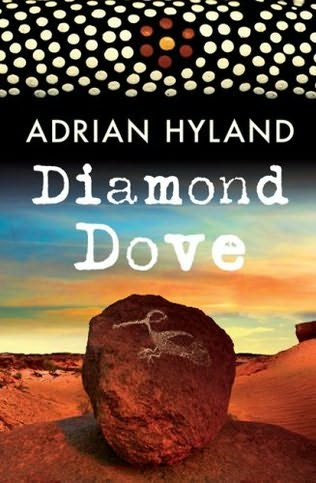
Best Female Detective: Tie between Edie Kiglatuk from M.J. McGrath’s White Heat (2011) and Emily Tempest from Adrian Hyland’s Diamond Dove (2006) (reviews pending). In many ways, these characters are twins: feisty, tough women who have complex insider / outsider roles in marginalised indiginous communities (the Inuit of the Arctic Circle and the Aboriginal people of the Australian outback).

Best Male Detective: Finnish-Jewish police inspector Ariel Kafka in Harri Nykänen’s Nights of Awe (2010): a highly original and witty investigator, whom I look forward to meeting again (albeit with a slightly less convoluted plot).  

Best Discovery: Leif G.W. Persson is well-known in his native country as a top criminologist and crime writer, but his razor-sharp dissections of Swedish society have only started to be translated relatively recently. I’ve just finished Another Time, Another Life (2012), which was a gem, and am keen to read more.

Last Policeman

Most Original Premise: Ben Winters’ The Last Policeman (2012) is a ‘pre-apocalypse police procedural’, in which Detective Hank Palace investigates a suspicious suicide six months before asteroid 2011GV1 is due to hit the earth. The first in a trilogy (review pending).

Best Re-read: Jakob Arjouni’s Turkish-German Kemal Kayankaya series (1985-2012). A ground-breaking detective who uses intelligence and wit to make his way in a largely racist society. The first in the series, Happy Birthday, Turk (1985), remains a cracker.

Best Use of Humour: Leif G.W. Persson uses satirical humour to great effect as he lifts the lid on the workings of Swedish society. Look out for the pathologist nicknamed ‘Esprit de Corpse’ in Another Time, Another Life.

Best crime TV series: The Killing III, in which Sarah Lund strode forth for the last time (still in denial that it’s over *sob*).

Best crime film: Tie between Romanzo Criminale (dir. Michele Placido, 2006), which traces the rise and fall of an Italian street gang, and Once Upon a Time in Anatolia (dir. Nuri Bilge Ceylan, 2011), which plays out over a dream-like night of a police investigation (reviews to follow).

Most Anticipated Reads for 2013: Stuart Neville’s Ratlines (2013), set in a 1960s Ireland whose government is keen to play down its links with former Nazis, and Y.A. Erskine’s The Brotherhood (2011), a much-praised depiction of police corruption and betrayal set in Tasmania.

All best wishes for a healthy and happy New Year, filled with lots of  wonderful crime fiction.

Merry Christmas! Nadolig Llawen!

Wishing you a very Merry Christmas, or, as we say here in Wales, Nadolig Llawen.

To add to your festive cheer, here are some peerless Muppet chickens singing ‘Joy to the World’. Their impressive harmonies are guaranteed to raise a smile.

Here’s to family and friends – present and absent, near and far…

All best wishes, Mrs. P.

In Cold Blood: CultureCritic Guest Guide to Wintry Crime Fiction

The good people over at CultureCritic recently invited me to contribute a piece to their fabulous blog. The result is a guest guide to ‘wintry’ crime and the role of chilly settings in five of my favourite novels.

  • Jan Costin Wagner, The Winter of the Lions (German author; Finnish setting; 2011)
  • Leif G. W. Persson, Between Summer’s Longing and Winter’s End (Swedish author; Swedish setting; 2010)
  • A.D. Miller, Snowdrops (British author / Russian setting / 2011)
  • Julia Keller, A Killing in the Hills (US author / Appalachian mountain setting / 2012)
  • MJ McGrath, White Heat (UK author; Arctic Circle setting; 2011)

Many thanks to CultureCritic for the invitation; it was fun to do!

If you’re not yet familiar with the CultureCritic blog, do pop over: you’ll find all the latest on film, music, books, exhibitions, theatre, opera, dance and more…. It’s a regular smörgåsbord of cultural delights.

Tribute to Maxine Clarke / Petrona

This morning I heard the very sad news that Maxine Clarke, who blogged as Petrona, has passed away.

Rhian Davies and Margot Kinberg have both written wonderful tributes to Maxine, and I’d like to add a few words of my own.

Maxine was a prolific crime fiction reviewer, and one of the very, very best, setting a gold-standard in crime blogging. Her posts were knowledgeable, perceptive and thoughtful, and, more often than not, made you want to rush out and buy a book. Her blog, Petrona, is one of the ‘core’ crime blogs I always recommend to others. It’s descriptive subtitle is pure Maxine: ‘Mainly about reading with an accent on intelligent crime fiction from around the world’.

As well as holding Maxine in extremely high regard as a blogger, I valued and admired the contribution she made through her encouragement and support of others. I am struck, when reading tributes and comments on Twitter, by how many rookie bloggers Maxine welcomed into the crime-blogging community and quietly nurtured: I am one of those who will always be grateful for the kindness and encouragement that she showed me in my early blogging days. No review ever went by without a comment from Maxine (often within minutes of it being posted!), and those comments were generous, thoughtful ones that helped you to reflect further on the book in question. In short, Maxine was a great teacher, the kind that you always wanted to do your best for and who made you glow when you received her praise.

I never met Maxine in person, but will miss her friendship enormously. My thoughts are with her family and friends at this very sad time.

Tak for minderne, Sarah Lund*

I’ve been in denial about the end of Forbrydelsen/The Killing, the ground-breaking Danish crime drama that’s enthralled millions of Brits over the course of three series (and got impressively large numbers of us over our foreign-language/subtitling phobias).

But now it’s over: the last ever episodes have aired and Sarah Lund has made her final foray into those those dark, subterranean places with just her trusty torch and woolly jumper for back-up. I will greatly miss her brave, tenacious presence on our screens, not to mention the human flaws that have made her so very interesting and real.

As ever, there will be no spoilers about the denouement here – but I will say the following:

  • I thought the final two episodes absolutely made this series.
  • In particular, they brought its central themes beautifully to fruition:                                   – the limitations of Old Testament-style justice on the one hand, and of the police      and judicial system on the other                                                                                                    – the corrosive influence of money and power                                                                             – the ways in which parents and society repeatedly fail their children
  • The ending is incredibly rich and powerful, and felt surprising in some ways and very fitting in others.

Series 1 of The Killing remains the gold-standard in crime drama for me. This 20-episode investigation, which movingly explored the impact of a single murder on an ordinary family, set a benchmark for excellence that’s very hard to beat. But series 3 has come close, because it allows us to see all three series as one entity, and to recognise that above all, it is Lund’s story that they tell. I will think of them as the ‘Lund trilogy’ from now on.

Vicky Frost’s excellent Guardian blog remains the place to go for an in-depth discussion of the plot (with LOTS of spoilers). There are also new interviews with Sofie Gråbøl in The Telegraph about her feelings on leaving the show and with Søren Sveistrup in Scotland’s Sunday Mail about why it had to end when it did. For all Mrs. Peabody posts on The Killingclick here or on link in the menu above.

*Thanks for the memories, Sarah Lund.

PLEASE REMEMBER IF YOU COMMENT BELOW NOT TO REVEAL ANY SPOILERS!