‘Crime Fiction in German’ book launch and giant Krimi giveaway

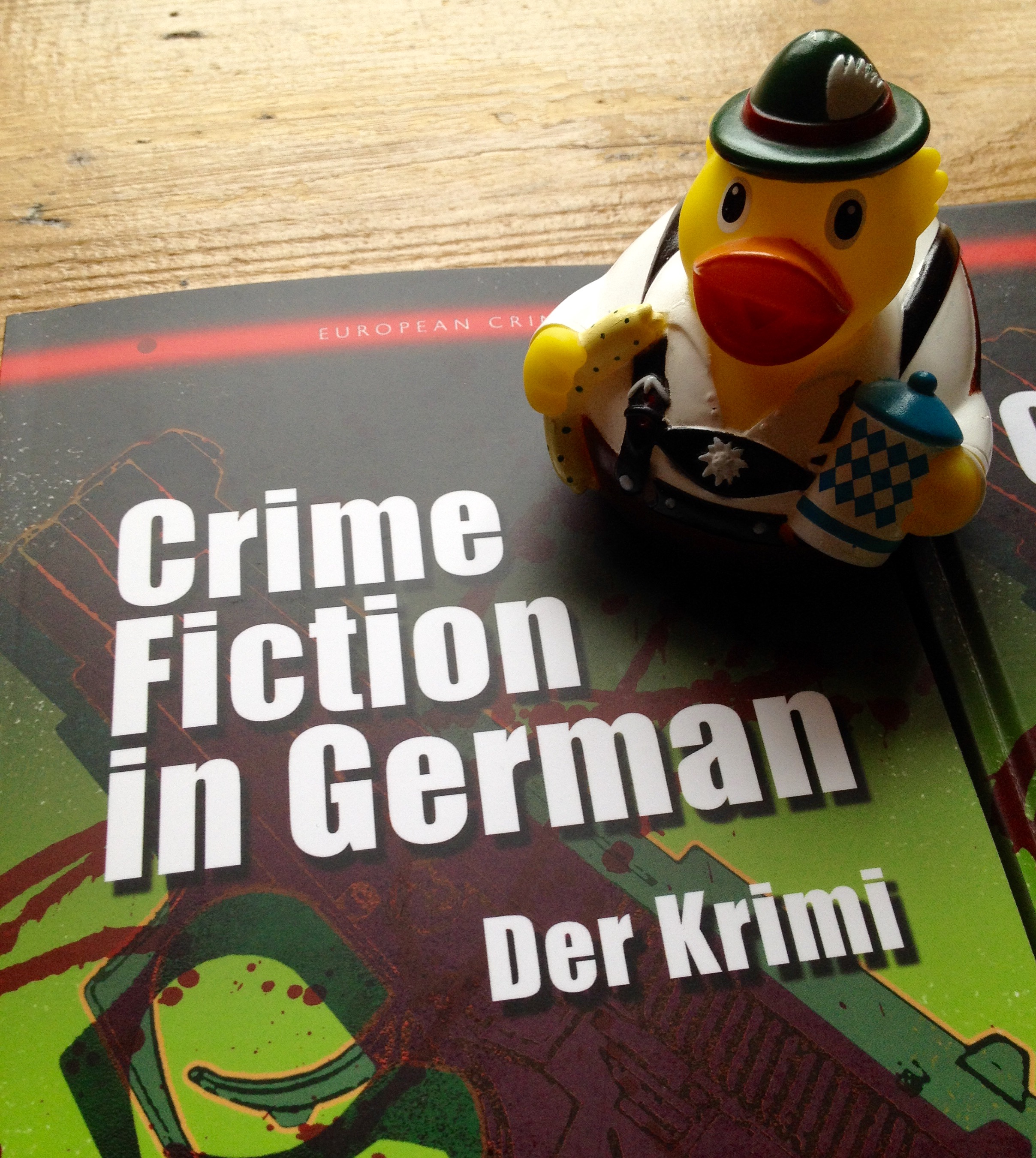
The book launch for Crime Fiction in German takes place on Thursday 14th April in Swansea, Wales. To celebrate this event, we’re having a giant Krimi giveaway.

25077429349_dcccfbfa56_o

Erich is very excited about the book launch

The giveaway includes two copies of Crime Fiction in German (University of Wales Press, 2016), which is the first volume in English to provide a comprehensive overview of German-language crime fiction from its origins in the early 19th century to the present day. *You can download a free chapter from the volume here*

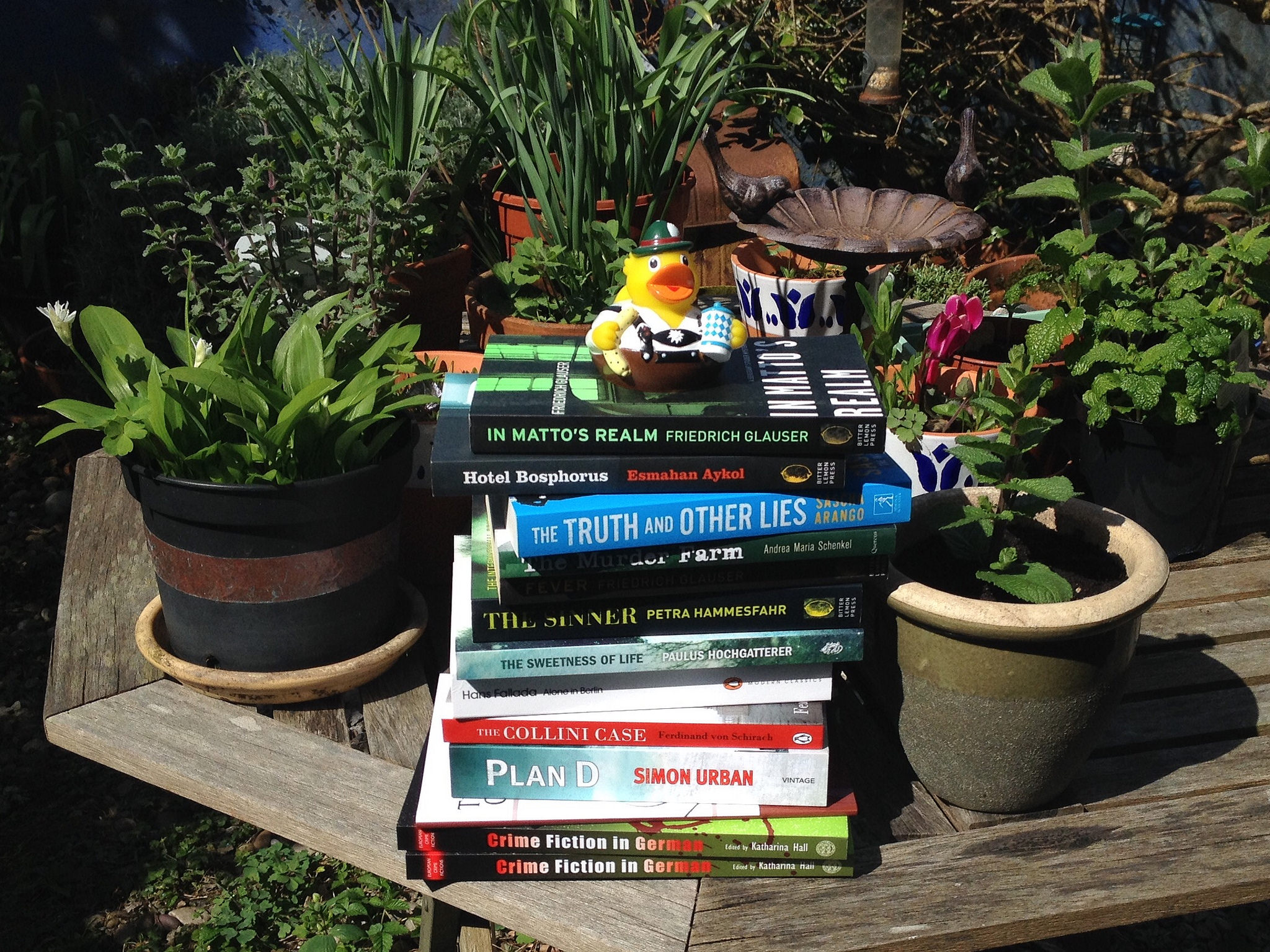
We’re also giving away a wonderful selection of the Krimis featured in the volume, thereby showcasing the best of German-language crime in translation:

CFIG launch book collage

A selection from the giant Krimi giveaway

Sascha Arango, The Truth and Other Lies (Simon and Schuster, trans Imogen Taylor). A darkly humorous tale following the fortunes of the outrageous Henry Hayden. A modern-day homage to Patricia Highsmith by one of the screenwriters for the renowned TV crime series Tatort (Crime Scene).

Friedrich Glauser, In Matto’s Realm (Bitter Lemon Press, trans Mike Mitchell). Originally published in 1936, In Matto’s Realm is the second in the groundbreaking ‘Sergeant Studer’ series. Studer is shown investigating the escape of a murderer from a psychiatric institution, a setting that holds a dark mirror up to Swiss society.

Hans Fallada, Alone in Berlin (Penguin, trans Michael Hofman). An extraordinary literary crime novel written in 1946, based on the genuine case of Elise and Otto Hampel, who were executed on charges of treason during the Nazi regime. Recently made into a film starring Emma Thompson, Brendan Gleeson and Daniel Brühl.

Auguste Groner, The Case of the Golden Bullet (Amazon, unknown trans). Groner was a pioneer of Austrian and women’s crime fiction, and created the first German-language police detective series. Joseph Müller investigates in this opening novella, originally published in 1892.

Petra Hammesfahr, The Sinner (Bitter Lemon Press, trans John Brownjohn). A gripping psychological thriller and Frauenkrimi, which excavates the reasons for an explosion of violence by young mother Cora Bender one sunny summer afternoon.

Paulus Hochgatterer, The Sweetness of Life (MacLehose, trans Jamie Bulloch). In this Austrian crime novel, Detective Ludwig Kovacs and psychiatrist Raffael Horn work on a murder case in which the only witness is a girl too traumatised to speak. Winner of the 2009 European Literature Prize.

Andrea Maria Schenkel, The Murder Farm (Quercus, trans Anthea Bell). A former resident returns to a village following a family massacre, and begins to piece together events via interviews with assorted villagers. A spare, chilling tale set in rural 1950s Germany. Winner of the German Crime Prize.

Ferdinand von Schirach, The Collini Case (Michael Joseph/Penguin, trans Anthea Bell). Barrister Caspar Leinen takes on a seemingly impossible case: his client, Fabrizio Collini, admits the murder of a rich German industrialist, but refuses to say why he committed the crime. A gripping courtroom drama that interrogates notions of justice.

Simon Urban, Plan D (Vintage, trans Katy Derbyshire). An ambitious novel that blends police procedural, detective novel and alternative history genres. Set in a 2011 in which the Berlin Wall still stands, it explores East-West tensions as the GDR teeters on brink of bankruptcy. A biting social satire.

25352091871_34555eb9c9_o

TO ENTER the giveaway and win one of the books above, write your name in the comment section along with the answer to this question –> What is the popular term for ‘crime novel’ in German?

A. Schwarzwaldkuchen

B. Krimi

C. Bratwurst

You can be anywhere in the world to enter – from Tenby or Tokyo to Tasmania. The closing date for entries is Sunday 17th April. THIS GIVEAWAY IS NOW CLOSED! See below for the winners!

26547055201_8d7ed5b9e1_k

There was a fantastic response the Great Krimi Giveaway, with nearly 100 entries from all over the world – and amazingly everyone got the answer right ;-). Thanks to everyone who took part. The twelve lucky winners are listed below. Congratulations!

Winners – please email me your postal address and I will send your book out to you (mrspeabody68 at yahoo.co.uk). 

THE WINNERS ARE……..:

  • John Grant (realthog) – Arango’s The Truth and Other Lies
  • Roberta Marshall – Aykol’s Hotel Bosphorus
  • Bill Selnes – Glauser’s In Matto’s Realm
  • Lucy Dalton – Glauser’s Fever
  • Annegret Harms – Fallada’s Alone in Berlin
  • Sebastian Raggio – Groner’s The Case of the Golden Bullet and Schenkel’s The Murder Farm (two for one because the Groner is short!)
  • Robert J (Robie) – Hammesfahr’s The Sinner
  • Bett Mac – Hochgatterer’s The Sweetness of Life
  • Beatriz Simonetti – von Schirach’s The Collini Case
  • Ankush Saikia – Urban’s Plan D
  • Georgie Kelley – Crime Fiction in German volume
  • Sarah Pybus – Crime Fiction in German volume
26519944262_ed91b23fb2_k

The faithful Krimi bag, from which the draw was made, with the pile of freshly won prizes

Mrs. Peabody gratefully acknowledges the generous support of the sponsors below, who have made this Krimi giveaway possible.

CFIG sponsors 1

CFIG sponsors 2

RIAH title high res

#48 Mette Ivie Harrison, The Bishop’s Wife (USA)

Mette Ivie Harrison, The Bishop’s Wife (Soho Crime, 2014). Set in Utah, this crime novel provides a fascinating insight into Mormon everyday life and its religious beliefs. 4 starsHarrison

Opening line: Mormon bishop’s wife isn’t an official calling.

Some happy book browsing in Foyles led me to a rather unusual American crime novel a few months back. Mette Ivie Harrison’s 2014 novel The Bishop’s Wife is set in present-day Utah, whose capital Salt Lake City is also the centre of Mormonism (The Church of Jesus Christ of Latter Day Saints). The novel’s primary investigator, as the title indicates, is the wife of a Mormon bishop: Linda Wallheim lives in the city of Draper, and leads a busy life looking after her family and supporting parishioners. When neighbour Jared Helm arrives at the bishop’s house in a distressed state early one morning, claiming that his wife Carrie has left him, Linda is drawn into a complex case that she suspects may involve domestic abuse…or even murder.

Undoubtedly, one of the most satisfying aspects of this novel is the insider view it offers of everyday life in a Mormon community. The novel explores key Mormon beliefs (such as the importance of family members being ‘sealed’ to one another so that they can be united for eternity), the way Mormon children are raised and educated, and the importance of community service. At the same time, the novel acknowledges that aspects of the church are open to criticism, such the obstacles it places in the path of those who wish to leave. It’s also very open in its consideration of the highly gendered roles Mormonism assigns to men and women, and the possible abuses of power that its traditional patriarchal structures invite.

family_ring_around_the_rosie

Statue celebrating the role of the mother in front of the Salt Lake Mormon Temple in Salt Lake City

Linda herself is a very appealing figure. She is a strong, devout woman, who thinks critically about the Mormon community and her place in it as a wife, mother and individual, rather than simply accepting the status quo. She falls into the role of amateur detective by chance, and, while guilty of some misjudgments and mistakes, has a moral compass that’s true. She reminds me a bit of Faye Kellerman’s feisty investigator Rina Decker, whose cases are typically linked to the life of her Jewish community and allow their author to explore modern Jewish life.

The Bishop’s Wife is the first in a series of mysteries featuring Linda Wallheim, and I’m keen to read more (the second, His Right Hand, has just appeared).  If you like fast-paced crime novels, then this kind of novel is probably not for you, but if you prefer crime fiction that makes space to explore complex religious, social and moral issues, then The Bishop’s Wife is an absorbing and fascinating read.

Author Mette Ivie Harrison is a member of the Mormon church and lives with her husband and five children in Utah. She also blogs for the Huffington Post on religious issues and has written a number of interesting posts (for example about the accusation that the LDS church is a cult). She holds a PhD in German literature from Princeton (ausgezeichnet!).

THIN ICE extract & Quentin Bates interview: Gunna, Iceland and Trapped

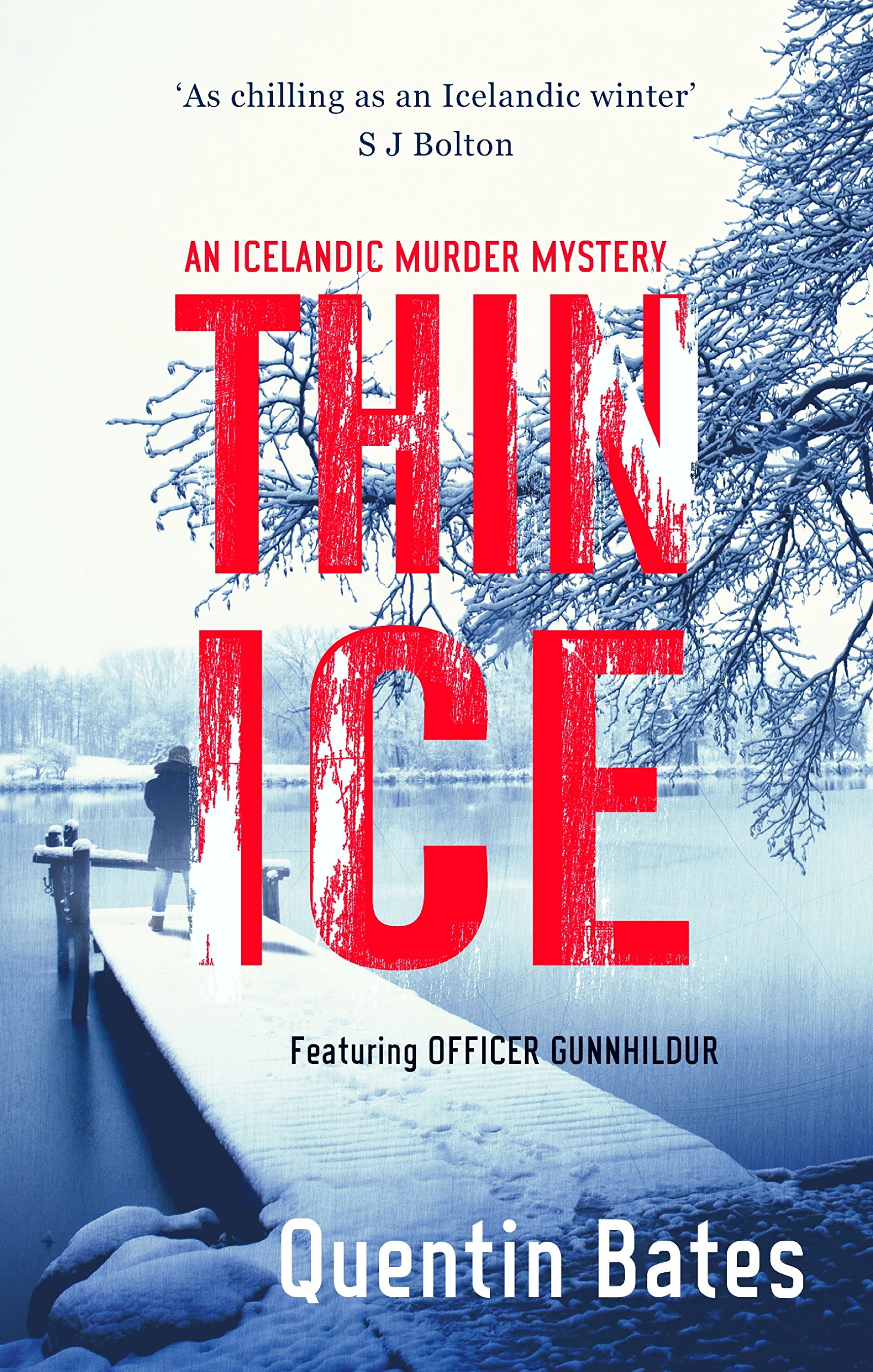
I’m delighted to welcome crime author Quentin Bates to the blog. Thin Ice, his latest novel, has just been published by Constable and features one of my all-time favourite investigators, Icelandic police officer Gunnhildur ‘Gunna’ Gísladóttir. Below, Quentin answers questions about writing the character of Gunna, the kind of Iceland he tries to depict, and the recent Icelandic crime drama Trapped. But first, here’s an exclusive extract from Thin Ice

Thin Ice

The little boy’s eyes were wide with a mixture of excitement and trepidation. He swung his legs under the chair that was too high for him while his mother fussed making coffee.

‘Tell the lady what you saw, Nonni,’ she said. ‘It’s all right. You’re not in trouble.’

‘Are you really a policeman?’ he asked and corrected himself. ‘A police lady, I mean?’

‘I am,’ Gunna assured him. ‘I’m a real-life detective.’ 
‘Who solves crimes and catches bad people?’ 
‘Sort of. That’s only part of what I have to do, and most of it isn’t all that exciting.’ 
‘Do you have a gun?’ Nonni asked, eyes wide. 
‘No, we don’t carry guns,’ Gunna said, and his disappointment was immediately visible.
 ‘So what do you do if you meet someone bad who has a gun?’ 
‘I don’t know. It hasn’t happened yet. So I don’t know what I’d do,’ Gunna said and picked up the mug of coffee that had appeared in front of her, while Nonni got a glass of squash and a slice of cake, which he bit into.

‘What would you have done if you had seen the man I saw today?’ he asked in a serious voice. ‘He had a gun and I saw him shoot it. Would you have been frightened?’

‘I expect so,’ Gunna said. ‘Guns are very dangerous things. Were you frightened, Nonni?’

He thought as he chewed his cake and washed it down with squash.

‘I wasn’t at the time, but I was afterwards,’ he decided. ‘But he didn’t see us, so we were all right.’

Snowflake

Mrs P: Quentin, you’re in the unusual position as a British author of having lived in Iceland for many years. How has that experience – together with your ongoing links to the country – shaped your ‘Icelandic Murder Mystery’ series and Thin Ice?

Quentin: To begin with I shied away from the idea of using Iceland as a backdrop when I started toying with the idea of fiction. There were a few false starts, until it dawned on me that it would be plain daft not to use all that knowledge, insight and experience, so that’s when Frozen Out started to take shape. Being familiar with the language gives you a huge advantage in being able to understand the intricacies of Iceland’s internecine politics and much of the subtext to what goes on that an outsider simply wouldn’t be aware of, as well as being able to laugh at all the otherwise incomprehensible jokes.

Nightblind 2

Author Quentin Bates aka Graskeggur (grey beard)

Quentin: I was in Iceland a lot in 2008. First in January and it was business as usual, then two visits in the spring and summer when it was becoming clear that something was up. Nobody wanted to say much out loud, but everyone knew something was seriously wrong. It was common knowledge that the banks’ coffers were empty, but this wasn’t reported anywhere. Everyone knew something momentous was about to happen, but nobody had a real idea of when or how hard it would hit. Then I was there in that week in the autumn when the first of the three banks went belly-up. It was painful and fascinating. People were genuinely frightened, and also deeply confused with no idea what was going to happen to their jobs, homes, etc. The aftermath hurt and it was painful to see friends and relatives lose jobs and homes.

I couldn’t not use it. I was working on Frozen Out at the time and re-wrote a lot of it so it coincided with that truly unnerving couple of weeks when all the cards had been thrown in the air and nobody knew anything.

Icelandic bank crisis

One of the three Icelandic banks that collapsed in 2008

Mrs P: Which particular aspects of Icelandic society have you been keen to share with English-language readers via your crime writing?

Quentin: Let’s say I prefer to avoid the clichés, the stuff the tourists see. Very little of my stuff seems to be set in Reykjavík 101, the central district where all the hotels, bars and whatnot are, which is hipster central these days, lots of manbuns and frothy coffee. I’m happier with the outlying parts of the city and the surrounding towns that are so different to what many visitors see. I can’t avoid mentioning some of the bizarre foodstuffs… all of which I prefer to keep well clear of.
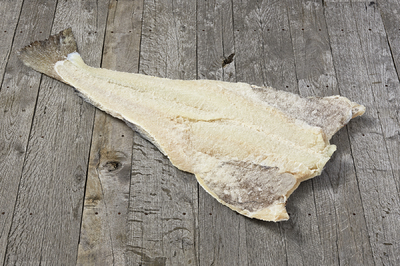
Salted fish

Salted fish (we have chosen not to show fermented shark or sheep’s head on this occasion)

Quentin: What I really like to try and work in there is the quiet, subtle humour of the older generation of Icelanders that has its roots in a time when Iceland was a very different place. It’s a humour so bone-dry that it’s easy to miss it, and it can fly right over your head if you’re not watching out for it.

Mrs P: Icelandic police series by authors such as Arnaldur Indriðason and Ragnar Jónasson feature male detectives. What made you decide to create a female police investigator?

Quentin: I didn’t set out to create a female investigator. She just appeared. Originally Gunnhildur was the sidekick to a fairly dull male main character who just didn’t click. He was so forgettable that I can’t even remember what name I gave that ill-thought out character back in that very first draft of Frozen Out. He was quite quickly jettisoned once it had occurred to me that the sidekick was the more interesting character, and she did demand attention.

To my surprise, I didn’t find it especially difficult to write a female character. People seem to like her and say she’s realistic, but I think I’m too close to her to be able to judge. I’m sure it would have been much harder to get to grips with a much younger prominent character of either sex – I feel the gender gap was easier to bridge than a significant age gap would have been.

Hinrika by redscharlach

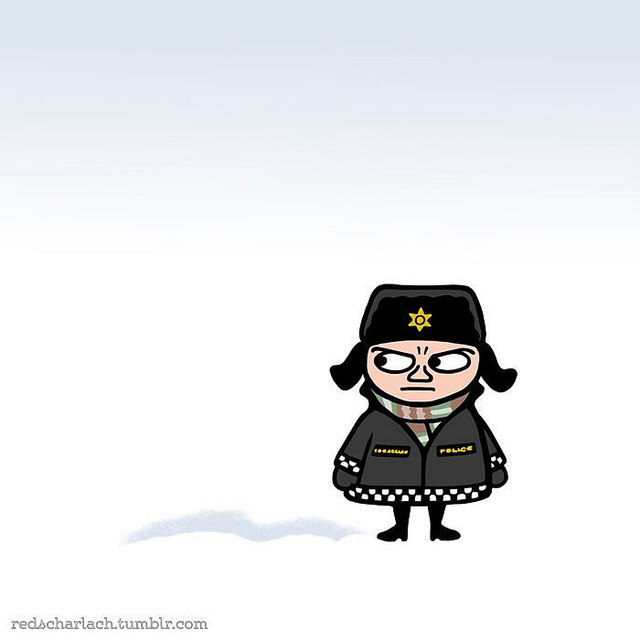
This wonderful drawing by @redscharlach is of Hinrika in Trapped, but she really reminds Mrs P of Gunna as well

Mrs P: Tell us a little about the way you depict Officer Gunnhildur in the series.

Quentin: Initially she was supposed to be older, in her mid-forties in Frozen Out and about five years older than that today. But the publisher wasn’t happy and wanted a character with a career ahead of her rather than someone with an eye on retirement – preferably much younger. Eventually we compromised and she was transformed into a more youthful but still mature character, which meant reorganising her family circumstances, making her children younger etc. – essentially re-working the entire back story.

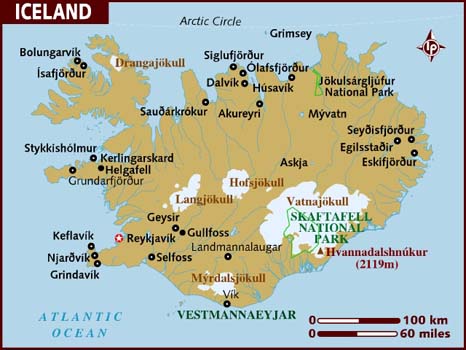
Gunnhildur is a character who is definitely not from Reykjavík, and she was deliberately given roots in a coastal region in the west so she can have something of an outsider’s point of view. That’s why she and Helgi connect so well, as he’s also from a rural background in the north and they share a similar background as immigrants to Reykjavík, while Eiríkur is a city boy with little in common with his two middle-aged (or ancient, as he would see them) colleagues.

Gunnhildur’s boyfriend (if I can call him that) was a late addition. It was made clear with the original draft of Frozen Out that a little love interest would be desirable, so I introduced Steini, not expecting him to stay for long. But he’s still there and has become a surprisingly important character, even though he doesn’t appear all that frequently. Maybe it’s time to involve him in some nefarious crime…
Iceland map

Gunna hails from the west of Iceland

Mrs P: Have your crime novels appeared in Iceland (either in Icelandic or in English)? If yes, what kind of reception did they have?

Quentin: The books have been for sale in English in bookshops in Iceland, although I don’t know how many have been sold there and I’m not aware of any feedback from Iceland. They haven’t been translated into Icelandic and I don’t seriously expect they will be.

The problem is that so many Icelanders speak English that they tend to snap up stuff in English. I know of several big sellers in English whose Icelandic publishers gave up on them for just that reason – people wouldn’t wait six months for an translation to appear. It’s almost the opposite of the situation 20-30 years ago when Nordic languages were more prevalent. In that distant age before cable TV and the internet, fewer people spoke English readily and there were more books translated from English and fewer from Nordic languages, presumably because more people would read those in the original. Now only guaranteed top-sellers make it into translation from English and there seem to be more Danish, Swedish and Norwegian books translated into Icelandic.

What I’d really like to see is one of the Gunna novels filmed in an Icelandic production, but that’s an even longer shot than getting a translation.

IMG_4852

Reykjavik is packed with funky bookshops

Mrs P: You’re the translator of Ragnar Jónasson’s crime series (Orenda Books). Has the process of translating his works had any impact – positive or negative – on your own crime writing or the way that you approach writing your own novels?

Quentin: Ragnar’s stuff is very different from mine, so I’m not aware of any particular influence there. One of the keys to being able to translate competently is familiarity with the culture and background as much as the language itself, so I guess that having written my own crime fiction also means that I have something of a criminal vocabulary ready to use. But writing and translation are very different. Translation calls for some of the same skills as writing fiction – a different set of tools from the same toolbox – as well as the discipline not to be tempted to tinker with the original, albeit within some rather elastic limits.

The negative impact is that I’m so busy now with translation, with three of Ragnar’s books to deliver this year, that I’m struggling to find time for Gunnhildur and the other things at the back of my mind that I’m itching to get to grips with but daren’t start.
Trapped

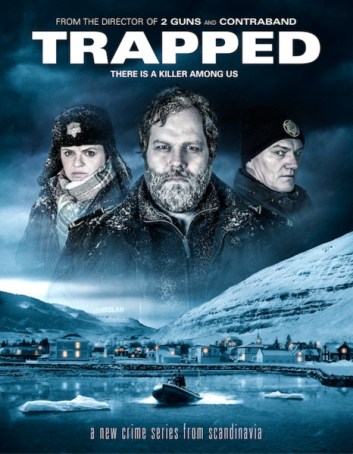
Mrs P: Trapped, a gripping Icelandic crime drama, has just finished airing in the prestigious BBC4 Saturday-night crime slot. Do you think it will significantly help to raise the profile of crime fiction set in Iceland? And how was it received in Iceland itself?

Quentin: I would imagine that Trapped should lift the profile of Icelandic crime fiction tremendously and can only hope it does for Iceland what The Killing and The Bridge have done for Sweden and Denmark – not just raising the profile of crime fiction but awareness about those countries and their cultures in a more general way. It’s something that ought to give us all a boost.

I’m not entirely sure how Trapped was received in Iceland, as I’ve been getting some mixed messages. On the other hand, it got good viewing figures with something like 60% of households watching it (also good ratings in France and Norway) and I’d hazard a guess that a lot of people who said they weren’t all that bothered about it actually spent those evenings glued to the box.

There have been a few disparaging comments about it being unrealistic. But come on – this is a crime drama. Of course it’s never going to be entirely realistic and there’s no getting away from a certain suspension of belief that has to take place to make the story work.
 But the snow scenes were very reminiscent of the winters I spent in the north of Iceland, not all that far from where some of Trapped was filmed. My feeling is that Trapped is a far more accurate representation of coastal Iceland than Midsomer Murders is of rural Hampshire, but I get the feeling that Icelanders watched it in much the same way that we watch Inspector Barnaby at work.

Iceland Noir

Mrs. Peabody attended Iceland Noir in 2014 and can thoroughly recommend

Mrs P: You’re one of the founder members of Iceland Noir. How has the convention developed since it started in 2013? And are there new directions that you’d like to take it in future?

Quentin: Iceland Noir started in 2013 on a wing and a prayer as a one-day free event as we pulled in favours here and there to get it off the ground. That was fine for a one-off, but we quickly realised we couldn’t keep it free, so now we charge the lowest festival pass fee that we can.

The second Iceland Noir was bigger and better, and stretched to two days. The third one is planned to be two and a half days, mostly because of the level of interest in it, but that also means more organisation. So the original trio has been added to, with Lilja Sigurðardóttir joining us in ’14 and Grant Nicol this year. So now we have five pairs of hands instead of just three.

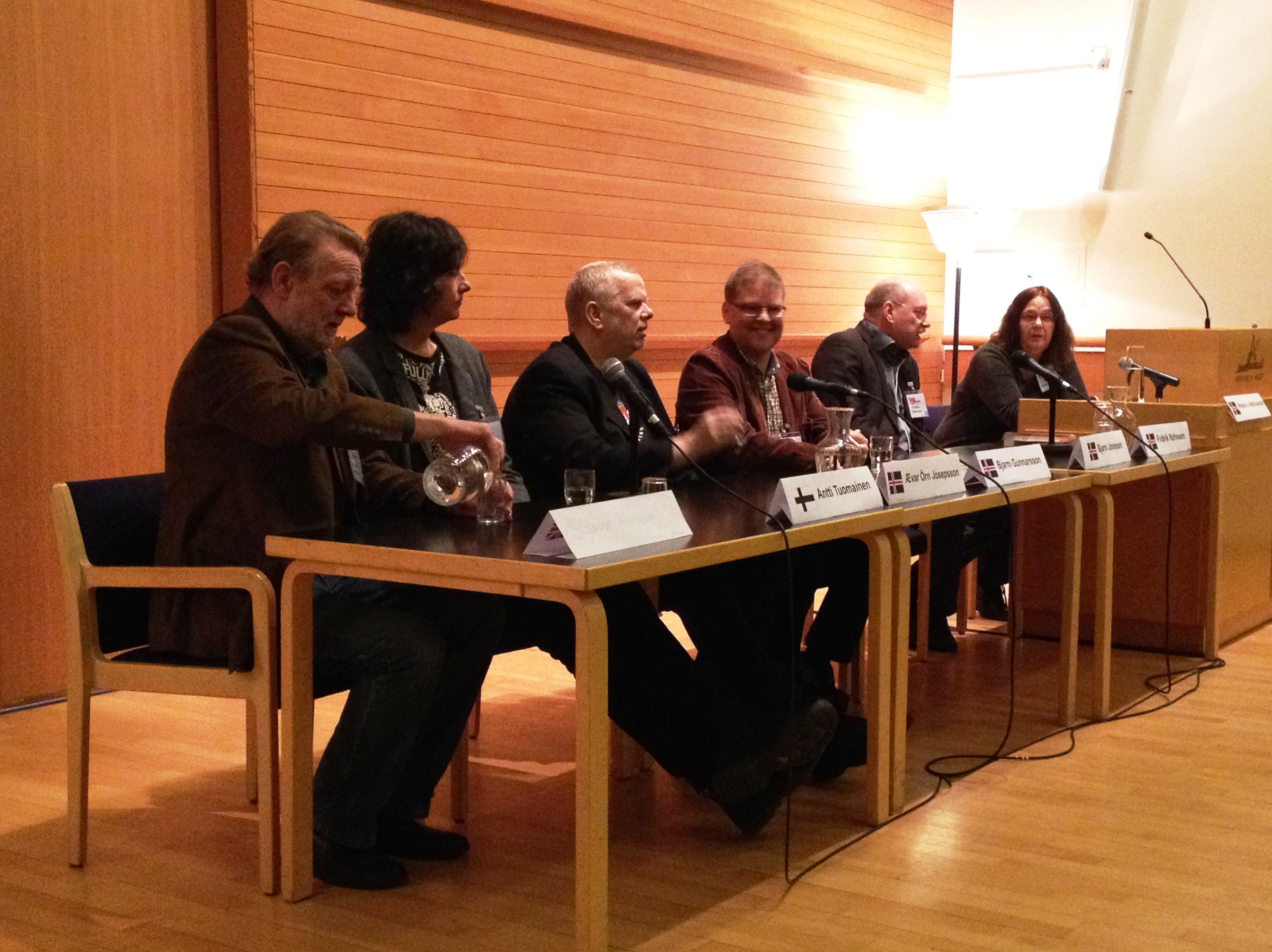
IMG_4733

A panel from Iceland Noir 2014

My feeling is that we should keep it at two to three days. Any longer than that is likely to be too much of a good thing. I’m also very much in favour of keeping it as a fairly informal, low-cost, non-profit enterprise. So far we’ve been satisfied if we’ve all had a good time with a bunch of criminally-minded people and not lost any money, so I’ll be happy if it stays that way. But the amount of time and effort involved means that holding it every year is possibly going to be too much, so like last year (when we lent the November date to Shetland for their excellent festival), we’d like to continue with Iceland Noir every second year and to lend the slot to some other suitable location in the off years. Shetland was 2015, and it looks very much like Hull will be 2017, as that’s a European City of Culture that year, and that will fit nicely for us to be back in Reykjavík in 2018.

This year we have an outstanding line-up of female crime writers as headliners. But I’d really like Iceland Noir to be the place where you can also see tomorrow’s interesting and exciting talent, not least because it’s so damn hard as a debut novelist to get any attention and there’s so much good stuff that deserves it. This year we have some truly excellent new writers taking part. Reykjavík was where you saw them first and that’s something I’d like to continue.

Many thanks, Quentin! 

Catch some other stops on the Thin Ice blog tour here:
Thinice

‘Crime Fiction in German’ publication day! With a FREE CHAPTER!

Today sees the publication of Crime Fiction in German by the University of Wales Press. For all us involved in writing and producing the book, this is a hugely exciting moment, not least because Crime Fiction in German is a genuine first: the first volume in English to give a comprehensive overview of German-language crime fiction from its origins in the early nineteenth century to the present day. And it’s World Book Day here in the UK as well – what could be finer?

To celebrate there’s a FREE introductory chapter available to all readers!

CFIG

About the book

  • Crime Fiction in German explores crime fiction from Germany, Austria, Switzerland and the former East and West German states.
  • It investigates National Socialist crime fiction, Jewish-German crime fiction, Turkish-German crime fiction and the Afrika-Krimi (crime set predominantly in post-colonial Africa), expanding the notion of a German crime-writing tradition along the way.
  • It examines key areas such as the West German Soziokrimi (social crime novel), the Frauenkrimi (women’s crime writing), the Regionalkrimi (regional crime fiction), historical crime fiction and the Fernsehkrimi (TV crime drama). In the process, it highlights the genre’s distinctive features in German-language contexts. And yes, humour is one of them 🙂
  • It includes a map of German-speaking Europe, a chronology of crime publishing milestones, extracts from primary texts, and an annotated bibliography of print and online resources in English and German.
  • All quotes are given in English and German. No knowledge of German is required!
  • The contributors – Julia Augart (University of Namibia), Marieke Krajenbrink (University of Limerick), Katharina Hall (Swansea University), Martin Rosenstock (Gulf University, Kuwait), Faye Stewart (Georgia State University), Mary Tannert (editor and translator of Early German and Austrian Detective Fiction) – are all experts in the field of crime fiction studies.

Further details, including a table of contents, are available at the University of Wales Press website. The paperback is available from Amazon here.

Now read on for details of the FREE chapter!

25352091871_34555eb9c9_o

The Free Chapter

While Crime Fiction in German is an academic volume that hopes to be useful to scholars in the field, a key aim has been to make the book accessible to ALL readers with an interest in crime fiction. We’re aware that not everyone may be able to buy the volume (academic texts have smaller print runs and are mainly bought by university libraries, and therefore have a different pricing structure to mass-produced books). If not, one option is to ask the local library to order a copy. Another is to read on for a very special treat…

Anyone, anywhere in the world, can download Chapter One of Crime Fiction in German for FREE.

The chapter gives an overview of the volume and of the history of German-language crime fiction. It’s PACKED with criminal goodness, and thanks to the generous financial support of Swansea University, you can download from the university’s Cronfa research repository. And did I mention that it’s FREE?

❤ In return, we ask two tiny favours ❤

  • If you like the chapter and want to tell other people, please send them the link below rather than the actual PDF. Why? Because then we can track how many times the chapter has been downloaded. If there’s lots of activity, more ‘open access’ projects like this one may be funded in the future.
  • Secondly, if you download the chapter and have a moment, could you leave a comment below saying where you’re from? This will help us see how far the chapter has travelled. It could be rather fun – I’m looking forward to seeing if we can get ‘Leipzig, Germany’, ‘Moose Jaw, Canada’, and ‘Beijing, China’ all in a row.

Right, here we go! The link to the Crime Fiction in German Chapter One is

https://cronfa.swan.ac.uk/Record/cronfa25191

Enjoy and please spread the word!

Map of World

A salute to Harper Lee and Umberto Eco

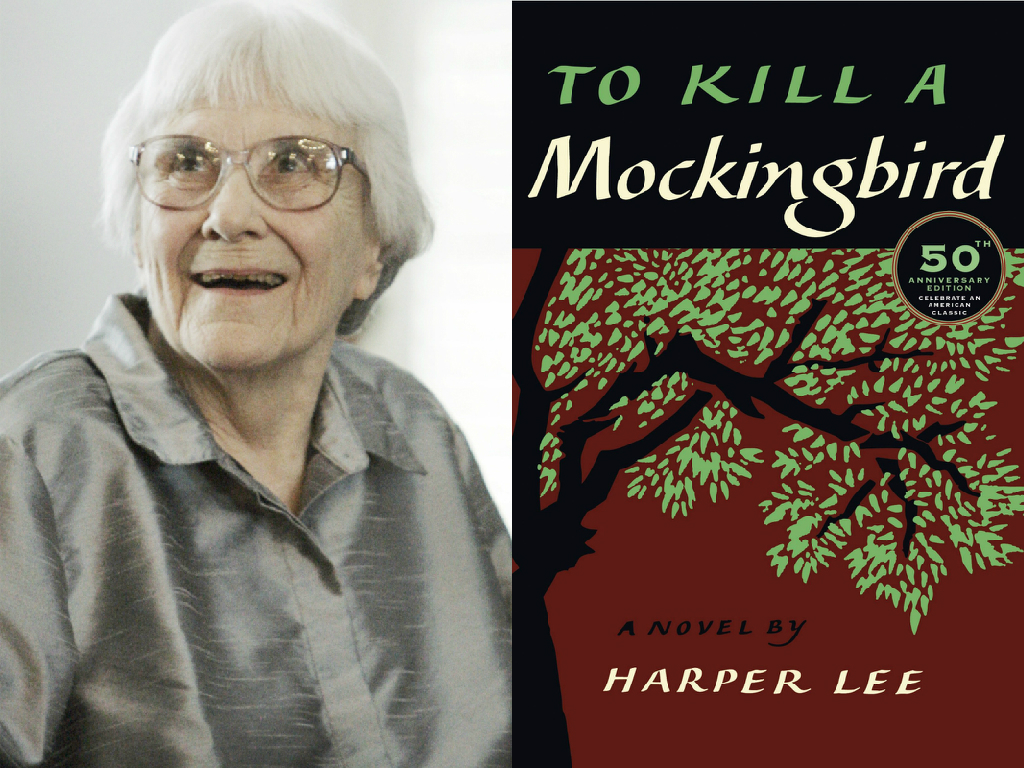
We’ve lost two cultural giants this week: American author Harper Lee (1926-2016), and the Italian philosopher, cultural theorist and writer Umberto Eco (1932-2016). Here’s a salute to each with some links to further reading.

Harper Lee

“The one thing that doesn’t abide by majority rule is a person’s conscience”

Harper Lee’s literary reputation rests almost completely on one novel, To Kill a Mockingbird, which was published in 1960 and won the Pulitzer Prize in 1961. Set in mid-1930s Alabama, it uses a court case to illuminate the ingrained racism of the Deep South: black field-hand Tom Robinson is falsely accused of raping a white woman and is defended at trial by attorney Atticus Finch, the father of precocious child-narrator Scout. The novel can be viewed both as a coming-of-age story and a historical novel about the Great Depression, and explores the themes of crime, racism, morality and justice in a way that still feels challenging today. The 1962 film adaptation starring Gregory Peck is a classic.      

Lee was the daughter of a lawyer (on whom the character of Atticus was based), studied law herself, and had an interesting link to the world of crime writing. One of her childhood friends was Truman Capote, and she worked with him in conducting interviews and gathering materials for In Cold Blood (1966), his ground-breaking ‘true crime’ examination of the Clutter family murder case in Kansas.

Further reading:

Italian writer Umberto Eco listens to a question during the presentation of his latest novel "The Cemetery of Prague" in Madrid December 13, 2010. REUTERS/Andrea Comas

Umberto Eco in December 2010 (REUTERS/Andrea Comas)

“Books are not made to be believed, but to be subjected to inquiry”

In the world of crime fiction, Umberto Eco was most famous for his first novel, The Name of the Rose (1980), which is accurately described on the author’s website as ‘an intellectual mystery combining semiotics, biblical analysis, medieval studies and literary theory’. The novel’s 500 pages provide readers with a riveting murder mystery, a wonderful detective (Brother William of Baskerville), a rich portrait of 14th-century monastic life and medieval intellectual/religious conflict. The fiendishly clever solution remains one of the best in the crime fiction.

I love the possibly apocryphal stories that Eco wrote The Name of the Rose in response to a dare, or because “I felt like poisoning a monk”. It may therefore have been something of a surprise to him that the novel sold 10 million copies in over 30 languages.

Eco regarded himself primarily as an academic who wrote fiction on the side. His key areas of inquiry were philosophy and semiotics (the study of signs), and he wrote influential articles on literary theory and popular culture. His essay collection The Role of the Reader: Explorations in the Semiotics of Texts (1979) has been useful in my own academic work on crime fiction, particularly the distinction he makes between ‘closed’ and ‘open’ texts (the latter offer the reader greater interpretive agency, rather than steering readers towards a predetermined narrative closure). Grazie, Professore.

Further reading:

Eco 2

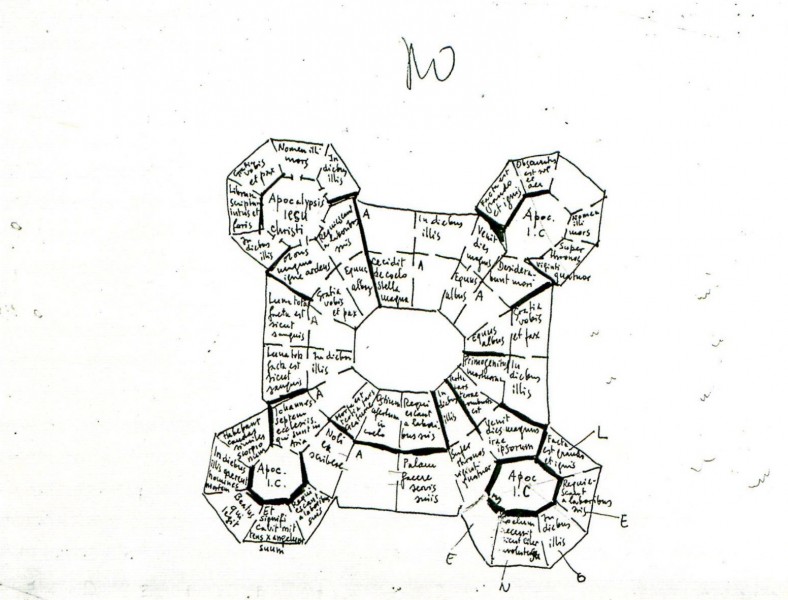
Eco’s original sketch for the labyrinthine abbey library in The Name of the Rose

Deutschland 83 series review: my take as a Germanist and fan

For the past seven weeks, Channel 4/Walter Presents viewers have been gripped by the German Cold War spy drama Deutschland 83, created by Anna and Jörg Winger, a talented German/American husband and wife team. Following tonight’s feature-length finale, here are my thoughts on the show as a Germanist who teaches/writes on German history and as a fan. The post contains spoilers, so if you haven’t seen the series, DON’T read on…watch the series instead!

D83 13

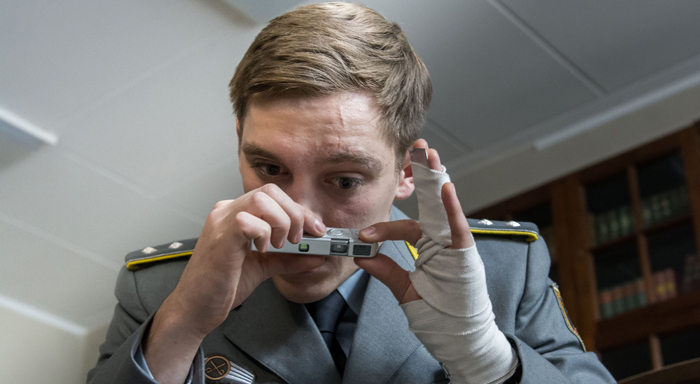
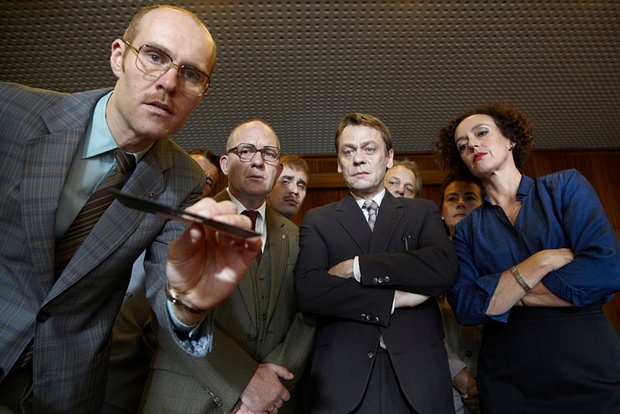
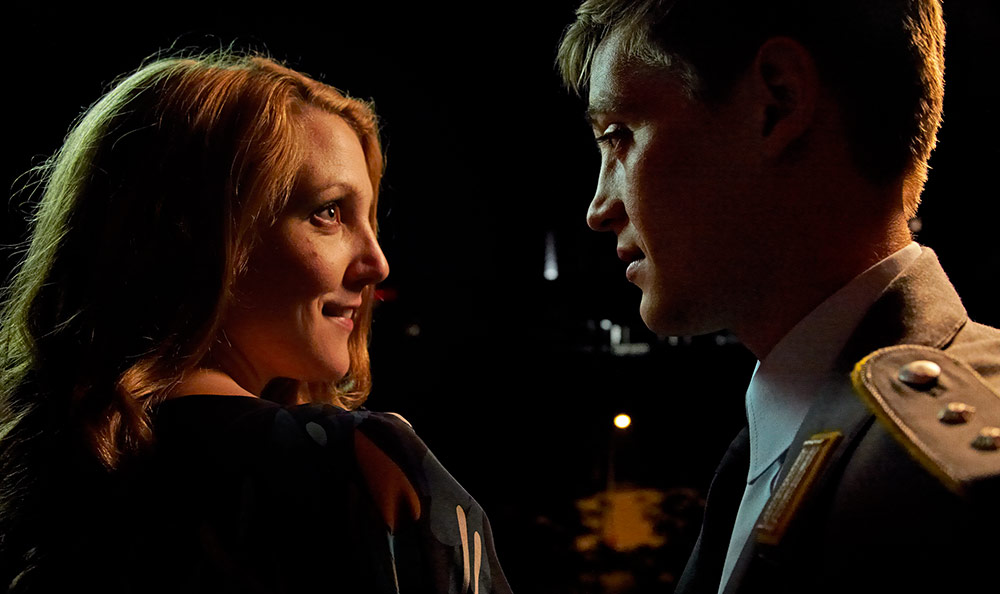
I watched the first episode of Deutschland 83 with slight trepidation. As a Germanist trying to persuade Brits of the merits of German culture, I wanted it to be good and to overturn some of the persistent UK tabloid stereotypes about Germans (earnest, humourless, Nazi). It was and it did. We were introduced to a host of intriguing characters and saw 24-year-old East German border guard Martin Rauch (Jonas Nay) bundled off to West Germany as secret agent Kolibri. Posing as Moritz Stamm, an aide to General Wolfgang Edel, he begins to gather classified military secrets in Bonn and to pass them back to the GDR, as Cold War tensions between East and West rise.

D83 17

Getting into the swing of this spying thing

One big question the first episode raised was that of historical veracity. A friend of mine, an academic expert on East Germany, described the depiction of Martin’s recruitment by the Stasi (the East German secret police) as ‘baloney’. I totally understood this reaction, as I’ve had similar responses to dramas set in Nazi Germany (e.g. one where a Jewish-German protagonist calls out a cheery ‘Shalom!’ to his friends on a busy Nazi-era street). But allowances should be made: writers of historical dramas need to communicate complex information to viewers very quickly, which sometimes means taking what I think of as ‘symbolic shortcuts’. In this case, the use of the spy thriller genre also demanded exciting action and a brisk narrative pace: we obviously couldn’t spend six episodes with Martin while he was being methodically trained in spycraft, so some suspension of disbelief was required.
On the other hand, the first episode managed to convey some fundamental truths: the Stasi‘s ruthless use of people’s personal circumstances to secure cooperation; the politicised nature of everyday East German life; the ideological hypocrisy of Western coffee and perfume making their way East via a border guard or a highly placed Stasi official; the very real military tensions of the time. And it was stylish. Beautifully shot, with a classy 80s soundtrack, its nuanced direction was serious or light as the action required. By the end of the episode I was hooked: how was young Martin/Moritz going to negotiate the tricky double identity that is the basis of a spy’s existence?

D83 19

Here are just some of the things I loved about Deutschland 83:

  • The episode titles originate from NATO military exercises. Quantum Jump, Brave Guy, Atlantic Lion, Northern Wedding, Cold Fire, Brandy Station, Bold Guard and Able Archer all took place in 1983. The latter is of particular significance throughout the series.
  • Tremendous historical and cultural breadth. The series successfully shows viewers the global scale of the Cold War in 1983 (from President Reagan’s ‘Evil Empire’ speech to the Russian downing of Korean Air Lines Flight 007); the profound legacy of the student/68 movement (from Alex’s interest in the Green Party and Yvonne’s life in a Rajneesh commune to Tischbier’s faux political activism at the University of Bonn); and the devastating rise of AIDS.
  • The ‘coming-of-age’ theme. We see a number of characters having to grow up very quickly in the course of the series, such as Martin, Alex, Yvonne and Annett. The moral challenges they face in the process are effectively drawn, particularly in Martin’s case.
  • Politically subversive libraries. Martin’s mother Ingrid may be the sister of a Stasi apparatchik and gratefully receive bottles of Chanel/privileged medical attention, but she also has a stash of illicit literature such as George Orwell’s 1984 in a secret room in her basement. She’s in cahoots with Thomas, helping him to distribute banned books from the boot of her car (a subversive mobile library!). The scenes in which Martin’s girlfriend Annett discovers Ingrid’s library and then denounces Thomas to the Stasi made me incredibly thankful to live in a society that values free speech.
D83 2

What have we here…?

  • Ursula Edel and the fish (episode 5). One of the many darkly humorous moments from the series.
  • The soundtrack is a delight, featuring 80s hits from East and West Germany, and the English-speaking world. There’s a full Spotify playlist here. My favourites include the German version of Peter Schilling’s theme tune ‘Major Tom (völlig losgelöst)’, Nena’s ’99 Luftballons’ and David Bowie’s ‘Modern Love’.
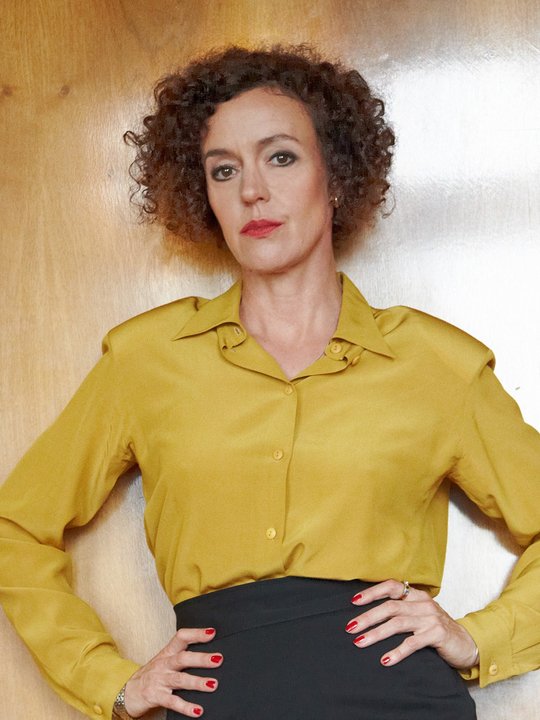
  • Last but not least…Lenora Rauch. Martin’s ruthless Stasi aunt, who forces her nephew into the life of a spy, is beautifully played by Maria Schrader (whom you may remember from the film Aimée & Jaguar). Her ideological conviction is tempered by a world-weary, I’ve-seen-it-all-before vibe: the collapse of an operation just elicits a sigh and an extra-long drag on her cigarette. Oh, and she’s also a total 80s style icon, complete with perm, killer silk shirts and red lippy/nails.
D83 8

Things are about to go pear-shaped…again

p11710911_n74960_cc_v9_aa

D83 9

Cutting edge technology: the floppy disk

There may have been times where things threatened to get a bit silly, such as Episode 2’s entertaining but implausible attack on Martin/Moritz by the ninja-assassin-waitress. But the series always managed to pull itself back from the brink of parody and delivered some truly powerful moments.

  • Linda Seiler’s death halfway through the series in episode 4 was a game-changer. When Martin fails to shake the NATO secretary’s loyalty to the West, she is run over and killed by Tischbier in a truly traumatic scene. This event shows us that Martin’s spying assignment is grown-up and deadly. Even though he resisted letting Linda drown in the lake earlier in the episode, he must still bear some responsibility for her death, which was necessary to protect his cover. It’s a le-Carré-style moral low in which innocent individuals are shown becoming pawns in much larger political games. To add insult to injury, brave Linda is left in an unmarked grave in the forest (a German fairytale gone badly wrong) and it’s suggested that she defected to the East.
D83 20

Alas, poor Linda!

  • Linda’s apparent betrayal has consequences. It leads her boss, moderate NATO analyst Henrik Mayer to commit suicide, which allows hawks in the East and West to escalate military tensions. A special mention in this respect must go to Stasi official Walter Schweppenstette, whose ideological adherence is particularly dangerous. Told by a Russian superior that a decoded report must fit Moscow’s view of a predatory US, he dutifully edits and distorts its findings. In a chilling scene at the end of episode 6, the Russian is shown receiving the doctored report and accepting its contents as genuine, thereby turning fiction into fact, and taking the two sides perilously close to nuclear war.
D83 16

Was it something I said?

  • Tonight’s finale… took the world to the brink of nuclear destruction and back again. A number of characters had their morality tested, none more so than Martin, whose decisive action made key figures such as General Edel and Lenora begin to doubt Schweppenstette’s wilful insistence that NATO forces were about to launch an attack. One sobering aspect of this storyline was its emphasis on how the actions of just a few individuals have the power to trigger catastrophic destruction or perhaps…in a thriller at least, to stop it, allowing nuclear rockets to reverse back into their firing systems before our eyes. Phew.
  • Alex and Martin are revealed to have been ‘twins’ all along, both the sons of powerful fathers on the opposite sides of the Berlin Wall. The knowledge of that fact will definitely enrich a second viewing of the series.
  • Never has a border crossing – from WEST to EAST – been more thrilling. Didn’t the little fairy godmother in the car do well?
  • Comic highlight: Schweppenstette’s inept dad-dancing to Udo Lindenberg.
  • The series left a number of questions deliberately open. What of Martin and Annett’s future? If Martin passed his moral test, Annett failed hers spectacularly. Where will Lenora’s big adventure take her? And what of the Edels? Both father and son cut quite tragic figures at the end. Thomas is saved by Ingrid’s actions, but what awaits him in the West? To be continued….?

One of the best things about Deutschland 83 is that it’s made Germany and the German language cool. I’ve been made inordinately happy by tweets such as these: @jazzywoop ‘#Deutschland83 writing, directing, production, casting, acting, location, music and design is magic. Elevated further by being in German’; @Yasmin_Gooner ‘German is the sexiest language in the whole world. #Deutschland83’; @julzenthe1st ‘German students & graduates are giving each other high fives all over Britain’. Thank you Mr. and Mrs. Winger, thanks Walter!

Further reading: 

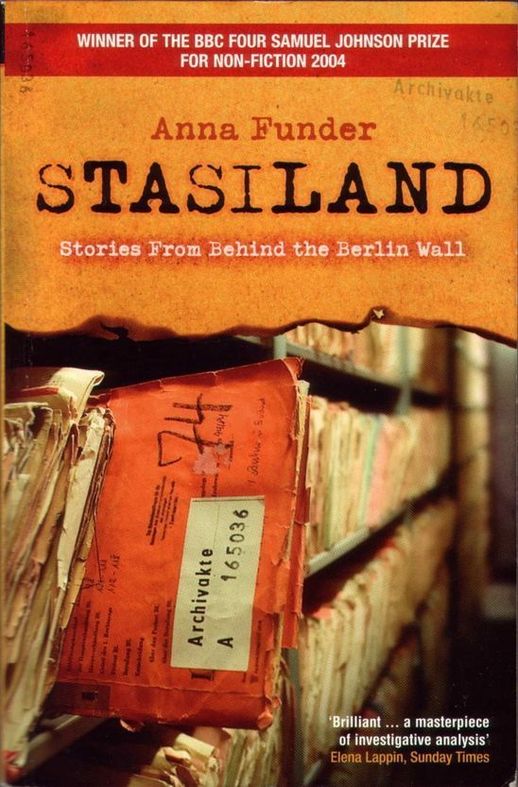
stasiland (1)

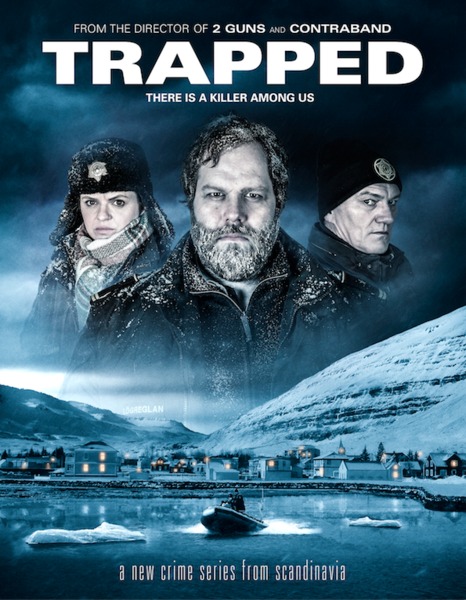
Trapped: New Icelandic crime drama airs Saturday 13 February on BBC4 (Series 1)

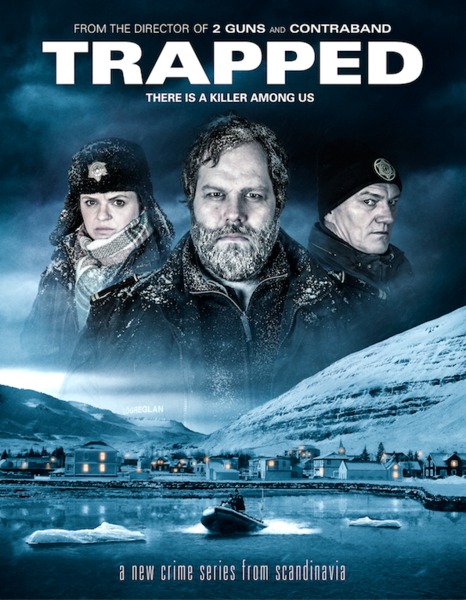
BBC4’s weekend crime slot moves from Montalbano’s sunny Sicily to a chilly northern Iceland on Saturday 13 February. Trapped, the channel’s first Icelandic crime drama, begins with two back-to-back episodes at 9.00pm (there are 10 episodes in total). This RVK Studios series will give many British viewers their first taste of the Icelandic language (subtitles also at the ready, of course).

Trapped

Trapped seems to be set in the east-coast port of Seyðisfjörður (although some of it was filmed in the northern port of Siglufjörður, which features in Ragnar Jónasson’s ‘Dark Iceland’ crime series). The opening episodes show three events happening almost simultaneously: a ferry with three hundred passengers arriving from Denmark, the discovery of a corpse in the water, and the onset of a violent snowstorm. The storm prevents the ferry from leaving and blocks roads in and out of town, trapping the passengers and townsfolk with the killer. Step forward Police Inspector Andri, who is tasked with investigating this high pressure case…

Here’s a trailer, which looks quite brooding and scary (may need to hide behind the sofa for bits of this one):

The BBC’s Sue Deeks had this to say about Trapped following its acquisition for BBC4: “A truly gripping storyline, stunning Icelandic setting and renowned feature film director Baltasar Kormákur (Everest) was a combination impossible to resist. Trapped will be our first Icelandic drama series and I am certain that BBC Four viewers are in for an absolute treat.”

Trapped stars Ólafur Darri Ólafsson (The Secret Life Of Walter Mitty, True Detective) in the lead role and is joined by Bjarne Henriksen (Borgen, The Killing), Ingvar E Sigurðsson (Everest, K19 The Widowmaker), Ilmur Kristjánsdóttir (Virgin Mountain, White Night Wedding), Nína Dögg Filippusdóttir (The Sea) and Björn Hlynur Haraldsson (Borgias, Fortitude). The series is written by Sigurjón Kjartansson and Clive Bradley, and is produced by Baltasar Kormákur and Magnus Vidar Sigurdsson.

UPDATE – SPOILER FREE REVIEW OF EPISODES 1 AND 2

Well, that was a brilliant start. This is a high quality crime drama that has the potential to develop into a really great series. The first episode set up the different strands of the narrative very nicely: a mysterious fire, the ferry’s arrival, the discovery of the body and the complex personal life of police chief Andri. The actors are great, the writing is crisp with occasional wry humour, and the cinematography is excellent, making the most of the dramatic Icelandic landscape and weather. Wrap up warm when watching, because it’s almost impossible not to feel chilly with that blizzard swirling around.

ofaerd

Andri and his police team

It was lovely to hear Icelandic, mingled in with some English and Danish (the captain of the Danish ferry will be immediately recognizable to fans of The Killing I and Borgen). I liked Andri and his down-to-earth female police colleague Hinrike very much, and was amused to see the Reykjavik police investigators depicted as arrogant city slickers (there’s some friction here that will hopefully be explored in later episodes).

Update: Just watched episodes 7 and 8, which were both excellent. The plot continues to thicken, and the quality of the screenwriting and acting remains extremely high. Andri and Hinrike make a brilliant team. Can’t wait for the finale next week.

One last tidbit: the Icelandic title of the series is Ófærð, which means ‘impassable’ – the word on the sign signalling road closure due to bad weather. Looking forward to more immensely.

*********

In other TV news, Sunday 14 February brings us the feature-length finale of Deutschland 83. This East/West German spy thriller has been an absolute gem, and has elicited an incredibly enthusiastic response from British viewers. I’ll blog my thoughts on the series as a Germanist and fan once the roller-coaster ride is complete!

D83 13

Happy Valley Series 2, Arctic thrills (Nesbo & McGrath)…and going green

My day is made: I’ve just heard the news that the second series of Happy Valley begins on BBC 1 next Tuesday, 9 February at 9pm.

Happy Valley 1

The first series of Happy Valley was one of the best TV crime dramas I’ve ever seen, with a wonderful lead, Police Sergeant Catherine Cawood (Sarah Lancashire), and a storyline that was gripping and moving in equal measure. The script by acclaimed screenwriter Sally Wainwright was top-notch, celebrating female strength and endurance while exploring tough themes such as grief, gender and power, and the consequences of greed.

Series 2 picks up the story eighteen months after the end of series 1. Tommy Lee Royce is still safely locked up in prison, but continues to cast a shadow over Cawood’s life as she attempts to get on with raising her grandson and doing her job. Episode 1 starts off with a mild case of West Yorkshire sheep rustling, but things soon take a more serious turn… There are six episodes in total.

Here’s the trailer to whet your appetite and a great Guardian piece on the show (‘What makes Happy Valley TV’s most realistic police drama?’):

Other TV dramas I’m enjoying at the moment include Channel 4’s Deutschland 83 (which I’ll blog on more fully at the end of the series) and Vera, which has just started over on ITV. I’ve had to consciously pull myself back to some reading, not least as the Petrona Award judges will be meeting soon to shortlist for this year’s prize.

Midnight Sun

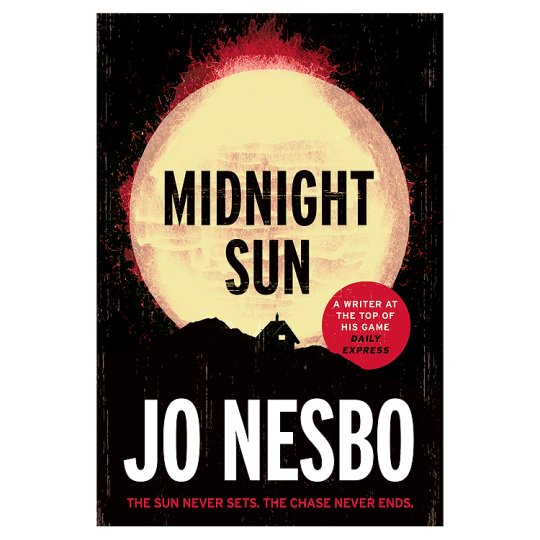
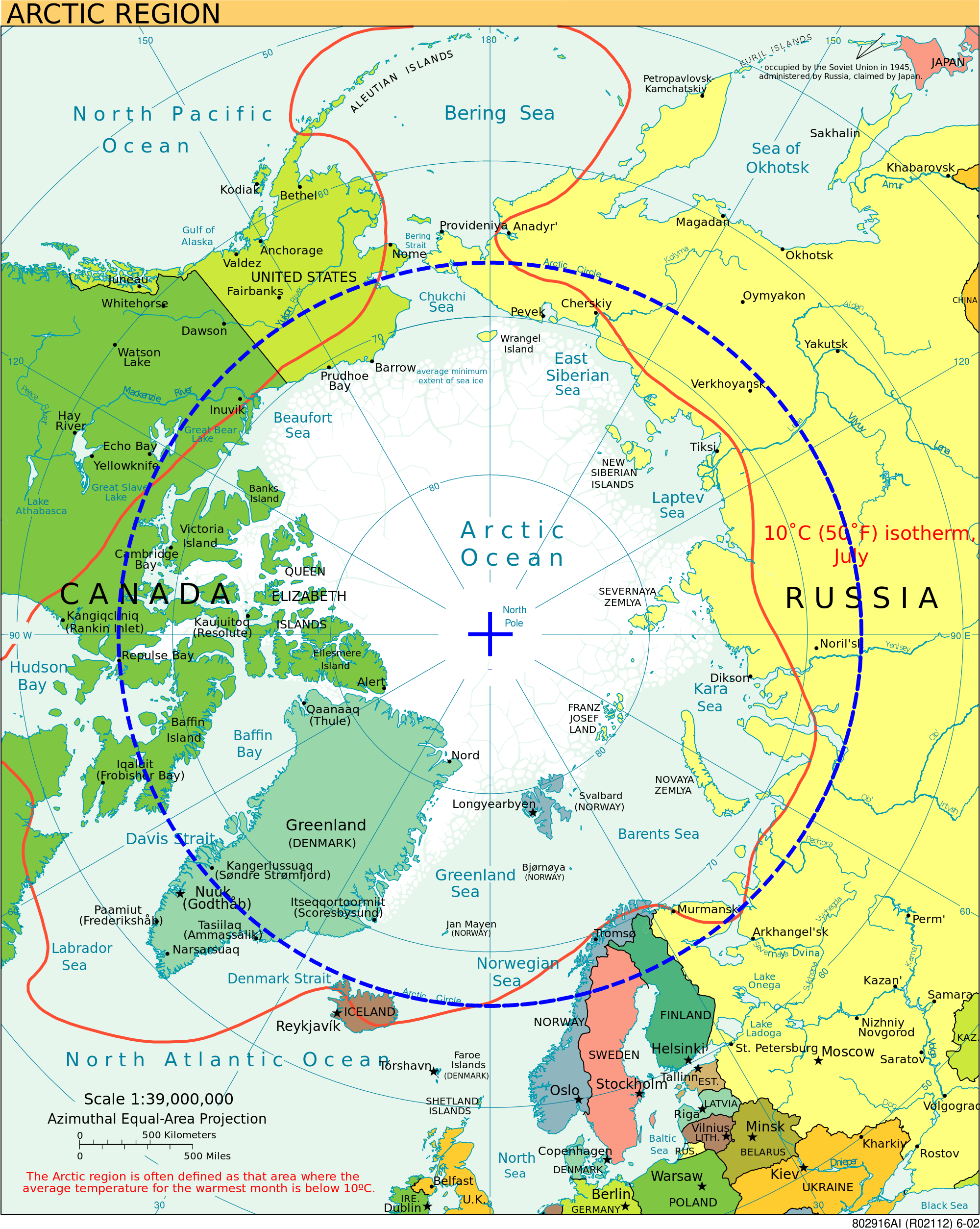
One of the submissions is Jo Nesbø’s Midnight Sun, expertly translated from the Norwegian by Neil Smith (Harvill Secker, 2015). I confess that I’ve sometimes struggled with Nesbø’s novels. While I like some of the ‘Harry Hole’ series, such The Redbreast (2006), and always initially enjoy the writing, I’ve put more than one of the novels aside when the violence becomes too eye-watering. Midnight Sun stayed within acceptable boundaries for me on that score, and as a result, I really enjoyed this tale of a young man on the run from Oslo’s nastiest underworld boss. Jon’s escape route leads him to Kåsund, a small (possibly fictitious) settlement near Alta in the Finnmark region of northern Norway, which lies in the Arctic Circle (close to Tromsø on the map below). Here, this city dweller has to deal with northerly solitude, the disorientating midnight sun, his Sami and Laestadian neighbours, and the threat of being found. The novel’s characterisation is rich, the geographical and cultural settings are intriguing, and the plot unfolds in a leisurely fashion, allowing Jon’s relationship with a young woman and her son from the nearby Laestadian religious community to grow at a natural pace. The novel also features the most original fugitive hiding place I’ve seen in a long time.

Another novel with a similar setting, which features the Norwegian Reindeer Police, is Olivier Truc’s Forty Days without Shadow see my earlier review here.

Arctic Circle

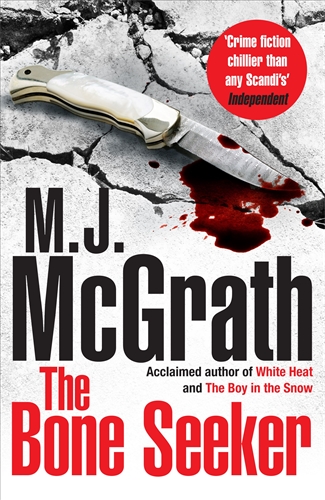
I’ve also just started M.J. McGrath’s third ‘Edie Kiglatuk’ novel, The Bone Seeker (Pan, 2015). I’m delighted to be back in Edie’s world as I love her company, and one of the series’ big strengths is the detail it gives about Inuit life on Umingmak Nuna (Ellesmere Island, in green on the left of the map) up in the High Arctic. The history, geography and culture of the region all fascinate me, bearing out Karen’s comments in the previous post about enriching the reading experiences of far-away audiences.

The novel opens with the disappearance of young Inuit Martha Salliaq, one of the students Edie has been teaching at a school in Kuujuaq. When a body is discovered in a polluted lake near a decommissioned radar station, a complex investigation begins… Like Nesbo’s novel, The Bone Seeker is set during the arctic summer in seemingly eternal daylight, and I’m very much looking forward to reading more. It’s beautifully written and a genuine crime fiction treat.

Bone Seeker

Finally, some of you may have noticed that this blog has turned a little green. The new design and colour scheme celebrate the fact that Crime Fiction in German has gone to press! The blog banner is taken from the marvellous cover by the University of Wales Press. Watch this space for further news about the publication date and launch.

🙂

CFIG

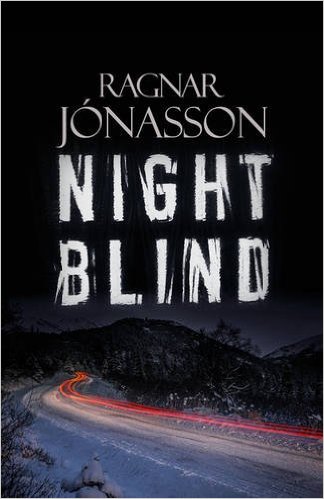
Ragnar Jónasson’s Nightblind: 360° translation special

Nightblind

Nightblind is the second novel in the ‘Dark Iceland’ series to be translated into English by Orenda Books. Set in the fishing village of Siglufjörður high in the north of Iceland, it traces Ari Thór Arason’s investigation into the shooting of a fellow policeman outside a deserted house late one night. A gripping police procedural with excellent characterisation and a vivid sense of place, it’s a truly absorbing read (I sat down intending to sample the first three chapters and was rooted to the sofa for hours). Like all of Orenda’s novels, it’s beautifully produced, and includes a couple of maps, which is always a bonus.

Translating Ragnar Jónasson’s ‘Dark Iceland’ series

Today, as part of Nightblind’s Orenda blog tour, Mrs. Peabody is delighted to bring you a 360° translation special, which provides some fascinating (and hilarious) insights into Dark Iceland‘s journey from Icelandic to English.

Three individuals play a vital role: author Ragnar (who has himself translated a number of Agatha Christie novels into Icelandic), translator Quentin Bates (also the author of the ‘Gunnhildur‘ Icelandic crime series), and Orenda Books publisher Karen Sullivan, armed with her mighty red pen. Without their dedication, energy and hard work, we wouldn’t have the pleasure of reading this series in English. Here, in their own words, is what the process involves…

Jokes, idioms and swearing (Quentin)

Nightblind 2

Translator Quentin Bates

It was something of a jump to translating crime fiction after the stuff I had been used to. News and technical material doesn’t leave a great deal of elbow room for interpretation; what’s required is precision, not anything fancy. Fiction is very different, not least because it’s a long text to work on rather than a handful of pages, so a book means you can become absorbed in it long before reaching the end.

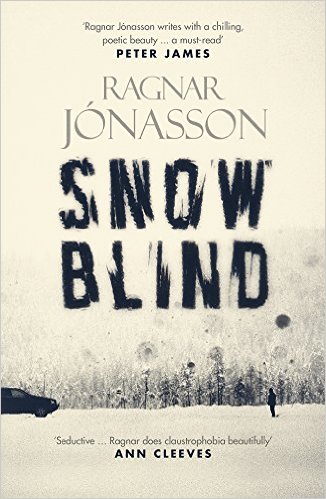
The fun, challenging part of the shift to translating fiction, working on Snowblind, Nightblind and now Blackout, is precisely the stuff that doesn’t occur in bare-bones technical material. It’s the idioms and jokes, as these are the things that are often untranslatable, plus there are odd words in every language that don’t have a direct equivalent in English, or maybe not even in any other language. Oh, and there’s the swearing as well.

Frequently things can’t be translated faithfully. Especially with jokes, this leaves the translator with the dilemma of translating the jokes exactly and remaining faithful to the original text, or departing from it to go out on a limb with something different and retaining the author’s meaning rather than the author’s words.

Sometimes that’s not an option. In Snowblind there’s a nursery rhyme that contains an element of a play on words, playing on the name of one of the characters. That time I had to go down the faithful route, as there’s no comparable rhyme in English and in any case, trying to link it to that character’s name would have been stretching things too far for comfort. A more or less direct translation of Ugla sat á kvisti seemed to be the best way.

Nightblind 7

Then there’s the swearing… Icelandic and English cursing are so different that you have to go back to bare metal. Everyday Icelandic swearing is largely blasphemous, while in English it tends to be biological. Icelandic has no real equivalent of the F-word or the C-word in English, nothing that carries the same one-syllable punch. That’s not to say you can’t be properly offensive in Icelandic, because you can, but it’s more of a roundabout route and not something that’s dropped with such careless abandon as we do in Britain.

If you were to translate an Icelandic curse directly into English, it would sound ridiculous, just as if some English epithets were to be translated directly into Icelandic. It just doesn’t work. Instead, go back to the character. Ask yourself what word would a vicious thug in his thirties choose in English – that means the F-word, no question, while a senior police officer in late middle age would go for something milder.

Old Icelandic

10 points for spotting the Old Icelandic for ‘murder’… (http://www.ling.upenn.edu/~kurisuto/germanic/oi_zoega_about.html)

Also there’s punctuation that’s surprisingly different. Icelandic fiction tends to use short sentences that don’t render well into English. The result can be staccato, almost childish sometimes, so sentences often need to be rolled together. A full stop in English is just that, while an Icelandic full stop is a more elastic beast and it’s up to the translator to keep the full stops and sharp-ended sentences where they work with the story, or decide if that particular full stop should become a comma or a rare semi-colon.

All the same, a translator shouldn’t give in to the temptation to improve the author’s work – that’s an editor’s job. Once the translator has finished, the editor can get to work with a hammer and chisel if he or she feels so inclined.

All this is a delicate task, and a good translation should do justice to a good book. An inspired translation (and I can think of a few) can make a good book into something special, just as a poor or hurried translation can ruin a decent book. All this has to be done without crossing a line into editor territory, and the line shifts and changes all the time.

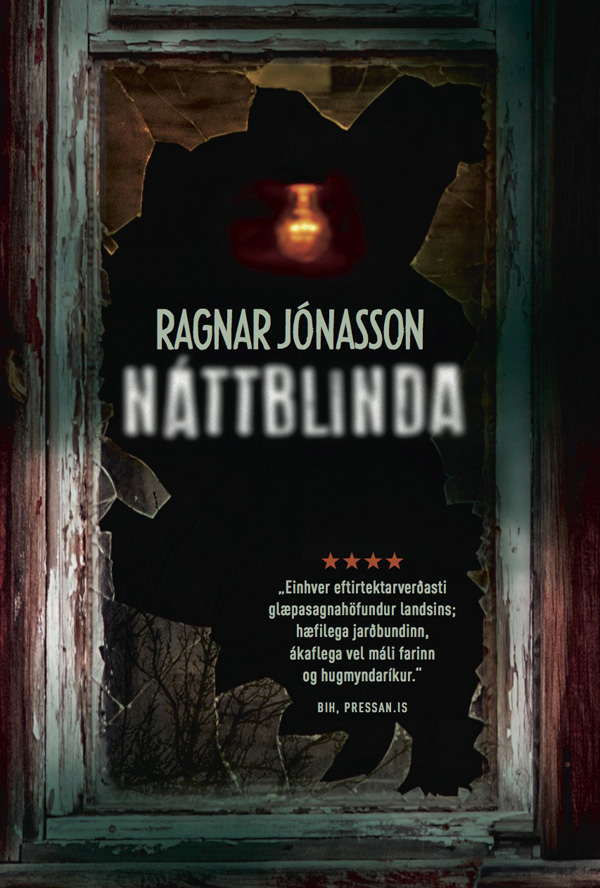
nattblinda_kapa_01

The original Icelandic cover of Nightblind

There’s a play on words in Ragnar’s next book, Blackout. A translator into another language simply left that particular slab of dialogue out, so I know he’s interested to see how I’m going to deal with it. I’m not going to reveal it here, but it needed a bit of thought before the solution popped up. Like the best ideas, it came to me while I was doing something completely different.

Translation isn’t a process that takes place only when your fingers are hovering over the keyboard. It’s great exercise for the grey matter, sometimes as good as the most fiendish crossword.

Letting go… (Ragnar)

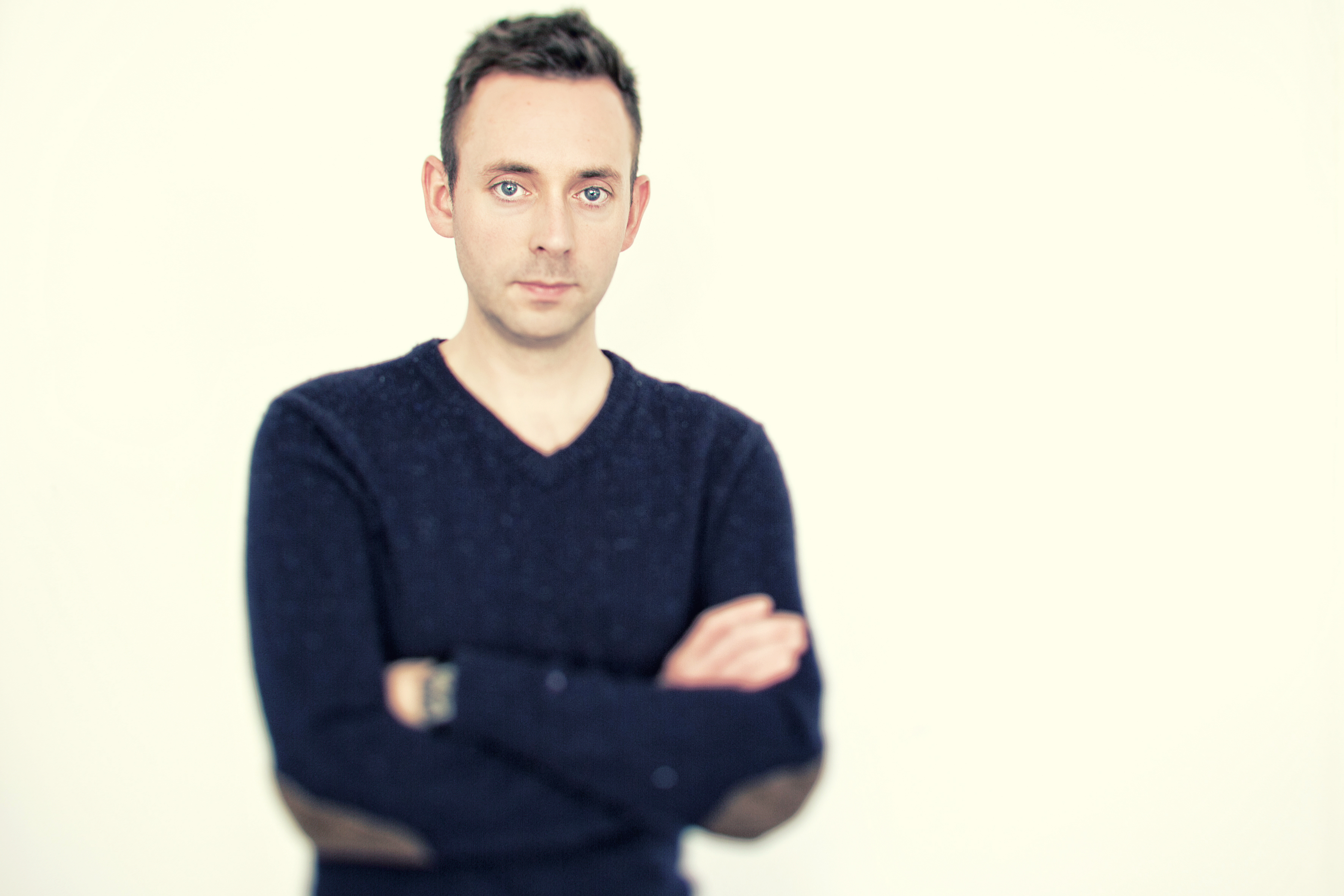
Author Ragnar Jónasson

I had the great opportunity to translate fourteen Agatha Christie books into Icelandic during my student years, and into my early law career, before embarking on a writing career. As a fan of Christie, this was something I thoroughly enjoyed doing, although there were of course challenges along the way. My approach to translating Christie was to use a fairly ‘ancient’ vocabulary, some words that would have been used by my grandparents rather than by my generation, to give the books the classic mystery feel of something set in a bygone era. In some cases there were of course also difficulties relating to the English language, especially when Christie had hidden a clue in a word, so to speak. One book that I really wanted to translate was Lord Edgware Dies, but without giving anything away, that particular book contains a clue that is very hard, or almost impossible, to translate into another language. It took me years to gather the courage to tackle it, having tried to obtain copies of the book in other languages to compare how, for example, Scandinavian translators had solved the problem. In the end I did translate the book, even though the clue didn’t have quite the same impact in the translated version.

Snowflake

Having had this experience of translating, I have to admit that I may have been slightly too eager to help Quentin along the way with the translation of Snowblind! When he sent me the first chapters for review, I sat down very conscientiously and compared it almost word for word with the Icelandic version and sent him a very red mark-up, telling him that he missed a ‘snowflake’ here, or a ‘tree’ there … After that I didn’t hear from him in a couple of weeks, so I sort of realised that I had to give him much more leeway in terms of finding the right words in English, even though in some cases the translation would not be word for word perfect.  In other words, I had to let go of the book and give Quentin a chance to adapt it to the English language, with his unique skills – and since then I haven’t looked back!

Enter the red pen! (Karen)

Nightblind 5

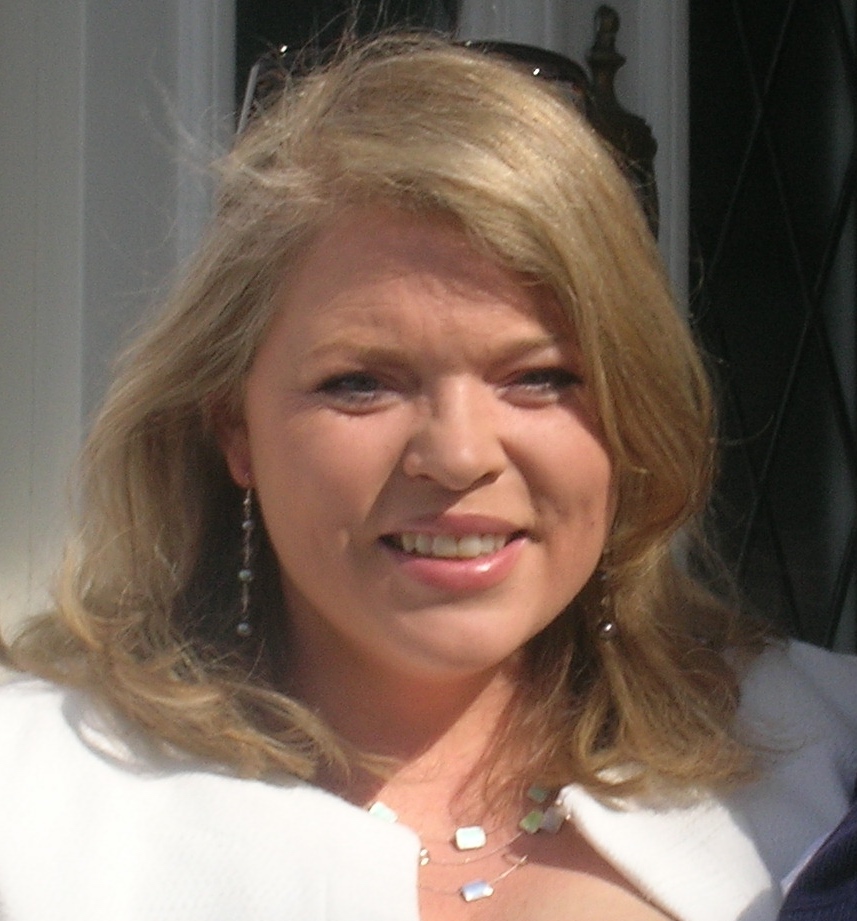
Publisher Karen Sullivan

I have massive respect for translators, and try not get involved in the actual process. The last thing they need is an editor peering over their shoulder and making suggestions. For some of my international books, we get early samples to create ‘samplers’ for booksellers and the press, and to tempt readers. I edit these as standalones, and if there are bits that concern me about the tone/voice or the vocabulary chosen, I keep it to myself. All translators get to the end and then go back and hone, polish, rethink. I like to see that final product, and that’s when I get my pen out!

To my mind, even the most successful books can use some editing, and all of my authors have been completely brilliant about revisiting books that they have usually written years ago. I’m aware that readers of international fiction often appreciate being transported to another country, to get a taste of the people, the geography, the culture, the subtle nuances that make a place and its inhabitants unique. So for that reason, I often ask authors to add more. Describe the snow, describe the sea, describe how one character dresses for the cold. What are they eating when they sit down for lunch? Put yourself in the position of a reader who has never been to your country, and give them atmosphere. Obviously authors write first for their own market, and it would not occur to them to include this type of details, nor would it be necessary. I think, however, that it brings a book alive in a way that might not otherwise be possible.

2416827726_2be78f3702_z

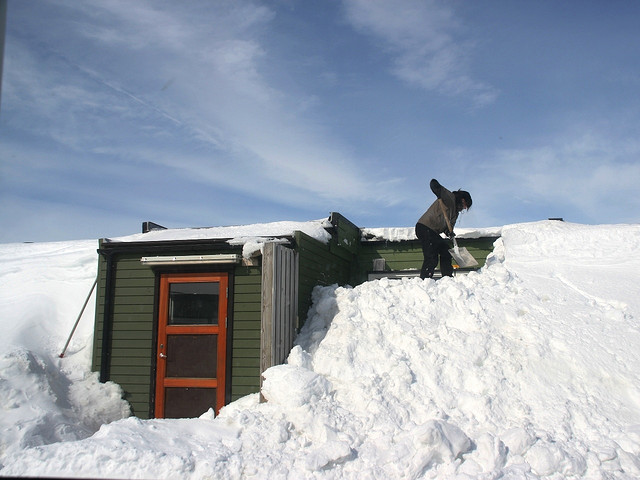
Some Icelandic snow. Image courtesy of Málfríður Guðmundsdóttir via Flickr/Creative Commons.

Even the structure can be toyed with. In Nightblind, the letter that peppers the book, building tension and adding another strand to the plot, was originally at the end. All very Agatha Christie and pat, but breaking it up and moving it around was, I think, better for the overall structure of the book, and a good way to create another set of ‘clues’ to keep the reader guessing. We made some tweaks to the ending, too, and built up the characterisation in places. In Snowblind, we added more depth to the relationship between Kirsten and Ari Thor. The goal is to create a ‘perfect’ book, and with wonderful, willing translator and author on board, it’s absolutely possible.

I generally send back an edited document, with hundreds of queries and tweaks. I too ponder whether a character would use a particular phrase, and by the end of Snowblind I was desperately frustrated that the English language had so few words for snow. Snow, snow, snow! I got creative and made lots descriptive changes to prevent readers from glazing over! The edits go to Quentin first, as he can often answer the majority of queries, and then it hits Ragnar, who gets the first chance to read his book in English. He will add additional material, where required (as he says, Karen, you have an unhealthy interest in Icelandic weather!), adjust anything that does seem right to him (Ragnar’s English is great, so he has no trouble here), and make suggestions of his own. It’s one great big fantastic conversation, with input from everyone, that leads to the final product. It’s a process that I love, and the honour of publishing a fantastic international book, introducing a new author from another country to English readers, is just magnificent!

Thank you to Quentin, Ragnar and Karen!

Nightblind Blog tour

Smörgåsbord: Bartram’s Headline Murder, Lauppe-Dunbar’s Dark Mermaids and Ellin’s Speciality of the House

My reading since New Year has been very eclectic. As a result, there’s no neat way for me to link the following novels: they’re a tasty smörgåsbord of different crime writing styles, subjects and approaches.

Bartram

First up is Peter Bartram’s delightful Brighton cosy Headline Murder (Roundfire Books, 2015). Set in 1962, it follows journalist-sleuth Colin Crampton as he investigates the sudden disappearance of Krazy Kat miniature-golf-course owner Arnold Trumper. As one would expect from this pre-internet setting, the investigation involves lots of hands-on detective work, which simultaneously provides an intriguing insight into a 1960s journalist’s life (complete with amusing rivalry between the Brighton Evening Chronicle and the Brighton Evening Argus). While it took a couple of chapters to get into its stride, I found the novel a highly enjoyable and well-crafted read, with a host of engaging characters. It’s a very good choice if you need a break from the darker recesses of noir or the modern world. Favourite line: ‘Ten minutes later I was in the Evening Chronicle‘s morgue with a large bag of jam doughnuts’.

The novel is the first in the ‘Crampton of the Chronicle’ series, and there are some free short stories available too. ‘Colin’ has a nice website that’s worth a visit (and hats off to author Peter Bartram – who has a background in journalism – for this very neat bit of marketing).Laupe Dunbar

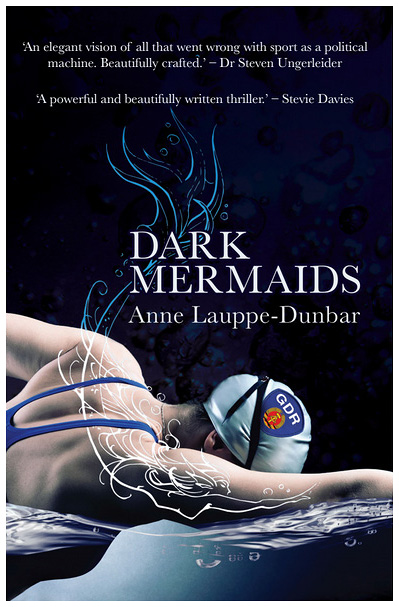
Anne Lauppe-Dunbar’s Dark Mermaids (Seren, 2015) is an absorbing debut that’s tricky to categorise: a literary-historical crime novel, perhaps. Set at an intriguing moment in German history – 1990, just a year after the fall of the Berlin Wall – it shows national and individual identities in flux, and the full extent of Stasi (East German secret police) activity beginning to emerge. However, its central focus is the GDR’s shameful use of steroids on young swimmers and the after-effects of that state-sanctioned abuse (here’s a BBC article with a good overview of the scandal). I very much liked the novel’s sensitive depiction of emotionally damaged police officer Sophia Künstler, and how it explores the political complexities of East German everyday life.

Anne is a lecturer in creative writing at Swansea University, and was partly inspired to write the novel by her German family roots.

Ellin

Stanley Ellin’s The Speciality of the House (Orion, 2002), is part of Orion’s wonderful ‘crime masterworks’ series. A collection of the renowned New York author’s mystery tales from 1948 to 1978, it presents a deliciously dark vision of society. I’m not always a fan of the short story form, but Ellin is a brilliant writer with a gift for criminal invention. His murderers are often outwardly respectable citizens trying to solve financial problems or to climb the social ladder, and there’s a wicked sense of humour at play.

The subject of marriage also gets wry treatment, as this wonderful opening from ‘The Orderly World of Mr Appleby’ (1950) demonstrates: ‘Mr Appleby was a small prim man who wore rimless spectacles, parted his graying hair in the middle, and took sober pleasure in pointing out that there was no room in the properly organized life for the operations of Chance. Consequently, when he decided that the time had come to investigate the most efficient methods for disposing of his wife, he knew where to look’.

I found Speciality by chance while browsing in Swansea’s Oxfam Books – testimony to the pleasures of browsing and finding something completely unexpected, as opposed to being steered towards a predictable set of books by an online retailer’s algorithm…