Spring smörgåsbord! Swiss, Korean, British, Spanish & American crime fiction

Spring is springing here in Wales, with pink blossom, white garlic, and bluebells emerging into the warmth. It does the soul good to be out in the garden and parks, or down on the beach.

I’ve been enjoying an eclectic range of crime fiction recently, including some longer, more ambitious reads.

Hunkeler's Secret

Hansjörg Schneider, Hunkeler’s Secret (Switzerland), tr. by Astrid Freuler, Bitter Lemon Press 2025

First line: Peter Hunkeler, former inspector with the Basel City criminal investigation department, now retired, woke up and didn’t know where he was.

I reckon Hunkeler’s Secret, the latest in the ‘Inspector Hunkeler’ series, is my favourite thus far. While in hospital recovering from an operation, Hunkeler finds himself sharing a room with Stephan Fankhauser, the gravely ill former head of the Basel Volksbank. One morning, Hunkeler wakes to the news that Fankhauser died in the night. But was it a natural death? Or did a groggy Hunkeler witness something untoward being done to his fellow patient in the wee small hours? After his discharge from hospital, the retired police inspector starts to investigate in his dogged, somewhat grumpy way. There’s also a new family relationship to explore, a wayward goat, and lots of good food.

One aspect of the ‘Hunkeler’ series I particularly like is its geographical setting. There’s the Swiss city of Basel on the one hand, where Hunkeler spent his working life and has a flat, and rural Alsace on the other, where he owns a little house. You get a real sense of the proximity of Switzerland, France and Germany to one another, with characters continually criss-crossing borders and speaking Swiss-German, Alsatian (an Alemannic dialect) and French. I love that Astrid Freuler integrates nuggets of the original languages into her excellent English translation, which gives readers an enhanced sense of the multiculturalism of the area. The region also has a complex territorial history, which plays a role in the resolution of this knotty Hunkeler case.

Jess Kidd, Murder at Gulls Nest (1950s England), Faber 2025

First line: The woman climbs the hill, a favourable wind behind her.

Murder at Gulls Nest is the first in Jess Kidd’s new ‘Nora Breen Investigates’ series, and is set in the 1950s seaside town of Gore-on-Sea, a place of boarding houses, terrible food, and recalibration after long years of war.

For thirty years, Nora was Sister Agnes of Christ, a dutiful nun at the High Dallow Carmelite Monastery. But when former nun Frieda goes missing, Nora feels compelled to find her, and takes a room at the Gulls Nest boarding house, where the young woman was last based. Here, Nora meets the ragtag assortment of Frieda’s fellow lodgers, and starts using her curiosity and sharp intelligence to get to the bottom of the mystery. When one of the lodgers is found dead, Nora knows that something is seriously amiss.

Readers of this blog will know that I’m a big fan of Jess Kidd’s work, especially her brilliant novel HimselfMurder at Gulls Nest is written in a slightly softer, slightly cosier style, but retains plenty of bite. As ever, Kidd’s use of language is sublime, and I’m looking forward to meeting the resourceful, irrepressible Nora Breen again in future.

Mirinae Lee, 8 Lives of a Century-Old Trickster (North Korea and South Korea), Virago 2023

First line: The idea came to me while I was going through my divorce.

When Grandma Mook tells the obituarist at the Golden Sunset retirement home the story of her life — which spans a century of Korea’s history — there’s a suspicion that the old lady is just a fantasist. But: what if Mook Miran is telling the truth and she’s a trickster of the highest order? What if she genuinely was a murderer, terrorist, identity thief and spy?

A major theme of this novel is survival. Mook Miran’s eight lives, which we’re told in non-chronological order, illuminate the terrible hardships women faced in Japanese-ruled Korea (1910-1945) and later in North Korea, and pose the question of what it takes to survive such incredibly adverse circumstances. Part of the answer lies in the figure of the trickster, who survives and advances through nimble thinking and resolute action — even if the latter is viewed as a crime and comes at a price. Sparky, resilient and whip-smart, Mook Miran is a character you won’t easily forget, and the portrait she paints of Korea’s history is disturbing and fascinating in equal measure.
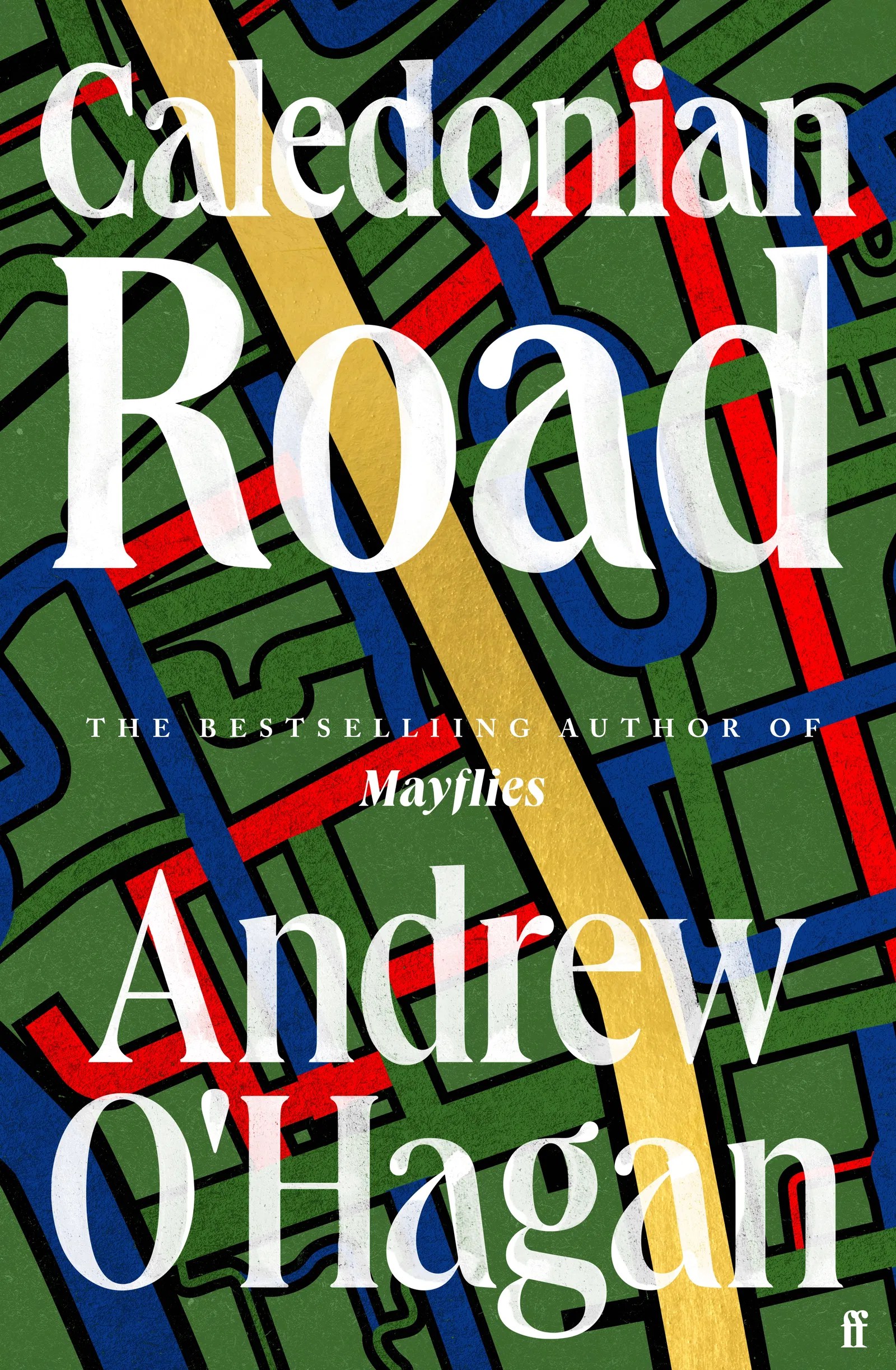
Andrew O’Hagan, Caledonian Road, Faber 2024

First line: Tall and sharp at fifty-two, Campbell Flynn was a tinderbox in a Savile Row suit, a man who believed his childhood was so far behind him that all its threats had vanished.

Caledonian Road, or ‘the Cally’, runs for a mile and a half through the London Borough of Islington. Like many roads in London, it takes you from economically deprived areas to obscenely wealthy ones in what feels like the blink of an eye.

Andrew O’Hagan harnesses the reality of this social divide in his powerful state-of-the-nation novel by creating an illuminating chain of connections: from Milo Mangasha, a tech-savvy student from a Cally council estate, and his uni professor Campbell Flynn, who lives in a posh townhouse with his aristo-therapist wife further up the road, to Sir William Byre, Flynn’s public school pal who’s up to his neck in dodgy deals, and Russian oligarch Aleksandr Bykov and son Yuri, who runs a very modern criminal enterprise and socialises with Campbell’s children. And that’s just a fraction of the cast!

Strap in for 600 pages of brilliant storytelling featuring utterly believable characters and razor-sharp social dissection. In particular, the novel holds up a mirror to the hypocrisies of well-heeled Londoners, and the establishment’s willingness to turn a blind eye to corruption and outright criminality. But it’s not without sympathy for its beleaguered central character, Flynn, whose spectacular mid-life crisis may offer a redemption of sorts, and has much to tell us about the perils of becoming alienated from your true self.
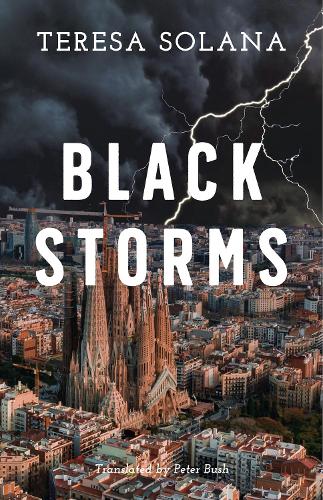
Teresa Solana, Black Storms (Spain), tr. by Peter Bush, Corylus Press 2024

First line: The man who was about to commit murder left home at six thirty, after telling his girlfriend Mary he’d business to see to and checking his car keys were in his pocket.

Whenever I read Teresa Solana’s work, I always come away with an appreciation of her highly distinctive voice, which blends a wry humour with steely social satire. Above all, there’s a wonderful energy to her writing, which seems to feed off the verve of Barcelona, the city where many of her crime stories are set. Her long-time translator, Peter Bush, captures all of these elements with aplomb in his English translations.

Black Storms introduces us to Norma Forester, Deputy Inspector of the Catalan police, who is tasked with solving the murder of an elderly professor at the University of Barcelona. No one can quite understand why a terminally ill man should be targeted in this way, but Norma’s experience and expertise gradually uncover the truth.

Equal attention is paid to Norma’s eccentric family, and they are great fun to hang out with. Norma is the granddaughter of an English member of the National Brigades, and the women of the family, all named after opera heroines, are a force of nature. I particularly like the way Solana shows Norma’s efforts to balance her family life and work, which the latter does in a messy, imperfect, but loving way.

The Residence, Shondaland / Netflix 2025

Last but not least, a very fun Netflix crime series: The Residence, which stars Uzo Aduba as Cordelia Cupp, a consultant with the Metropolitan Police Department of the District of Columbia, and Randall Park as Edwin Park, an FBI Special Agent. They are called to the White House after a murder is committed during a state dinner for the Australian prime minister, and tasked with figuring out which of the 157 suspects is the murderer — including the fictional president and his husband.

Aduba is excellent as the bird-watching, unerringly brilliant sleuth. It’s really her show, backed by a superb ensemble cast, and the whole thing has a Sherlock-Holmes-by-way-of-Wes-Anderson vibe. It also throws a light on the lives of the permanent staff at the White House, who of course stay in place while presidents come and go. Very sharp, very witty and very entertaining.

Disappearing into thin air: Sarah Ward’s The Vanishing Act (Wales) and Laura Lippman’s Lady in the Lake (USA)

Sarah Ward, The Vanishing Act, Canelo Crime 2024

First line: Elsa drove her car down the rutted road, the suspension on her ancient Fiesta groaning as it was thrown from grassy mound to pothole.

Sarah Ward’s The Vanishing Act is part of the ‘Mallory Dawson’ series set in Wales, where I happen to live, and I’ve very much enjoyed seeing places I know and love depicted in her gripping mysteries — Eldey (Caldey) Island, St Davids with its stunning Gothic cathedral, and now the ancient Brechfa (Glyn Cothi) forest in Carmarthenshire.

Sarah has a real gift for creating compelling crime scenarios. In The Vanishing Act, young Elsa goes to do her weekly clean of a holiday cottage deep in the forest, only to find it empty. But the kettle is still boiling on the Aga, half-made sandwiches are lying on the kitchen countertop and a chair is overturned. The family renting the cottage clearly left in a hurry, but why? Elsa phones Mallory to seek advice, who in turn contacts DI Harri Evans. He remembers being called out to a disturbing, supposedly supernatural event at the cottage many years earlier. Could there be a link? Mallory is tasked with digging into past events, and when the disappearance turns into possible murder, she finds herself back on the police team as a civilian investigator.

I thoroughly enjoyed The Vanishing Act. I love the characterization of the down-to-earth Mallory, who is rethinking her life after leaving the police and a divorce, and whose investigative skills and courage are an asset to every case. There’s also something of a Scandi feel about the isolated forest setting and its other-worldly vibe — a place where it pays to be wary of the darkness lurking in its depths. A gripping, satisfying read.

Interested in Welsh crime? Then the article ‘Ten killer crime novels set in Wales’ is for you!

Laura Lippman, Lady in the Lake, Faber & Faber 2019

First lines: I saw you once. I saw you and you noticed me because you caught me looking at you, seeing you.

I stumbled across this trailer yesterday for the new TV crime drama Lady in the Lake, starring Nathalie Portman as Maddie Schwarz. It looks like it could be an amazing adaptation of Laura Lippman’s 2019 novel.

I read Lady in the Lake last year and enjoyed it on a number of levels. Set in 1960s Baltimore, it’s a crime novel exploring the disappearances of Tessie, a Jewish girl, and Cleo, a Black woman, but is also a story of female emancipation. 37-year-old Maddie Schwarz ditches her comfortable but dull existence as an affluent Jewish wife, convinced that there has to be more to life. Her chance involvement in the discovery of a body sets her on a path to becoming an investigative journalist in the male-dominated newsrooms of the city.

Drawing on real cases and figures, Lady in the Lake is also an exploration of the social fabric of the city — of class and gender and ethnic tensions — and sets itself apart by giving space to multiple voices within the community, not least Cleo herself. It’s what I would describe as an ambitious social crime novel that is maybe slightly too ambitious at times. Ideal, then, for a long-form, seven-part TV adaptation that will allow the material to breathe.

The first two episodes of Lady in the Lake air on 19 July on Apple TV. 

Mrs Peabody is away for the next month or so, but has packed a goodly assortment of crime, ranging from Rebecca F. Kuang’s Yellowface and Zadie Smith’s The Fraud to Janet Evanovich’s Seven Up (I’m a big Stephanie Plum fan). What’s on your summer bookshelf?

Lawrence Osborne’s On Java Road (Hong Kong) & Mr Bates vs The Post Office (UK)

Why, hello! I hope you’re doing well, wherever you may be, and that you’ve got lots of lovely books on the go, crime or otherwise. Wishing you a happy Spring Bank Holiday if you’re in the UK.

Here are a couple of recent picks after quite a long hiatus. I’m hoping to get into a rhythm of posting more now: the aim is short and sweet, but a bit more often 🙂

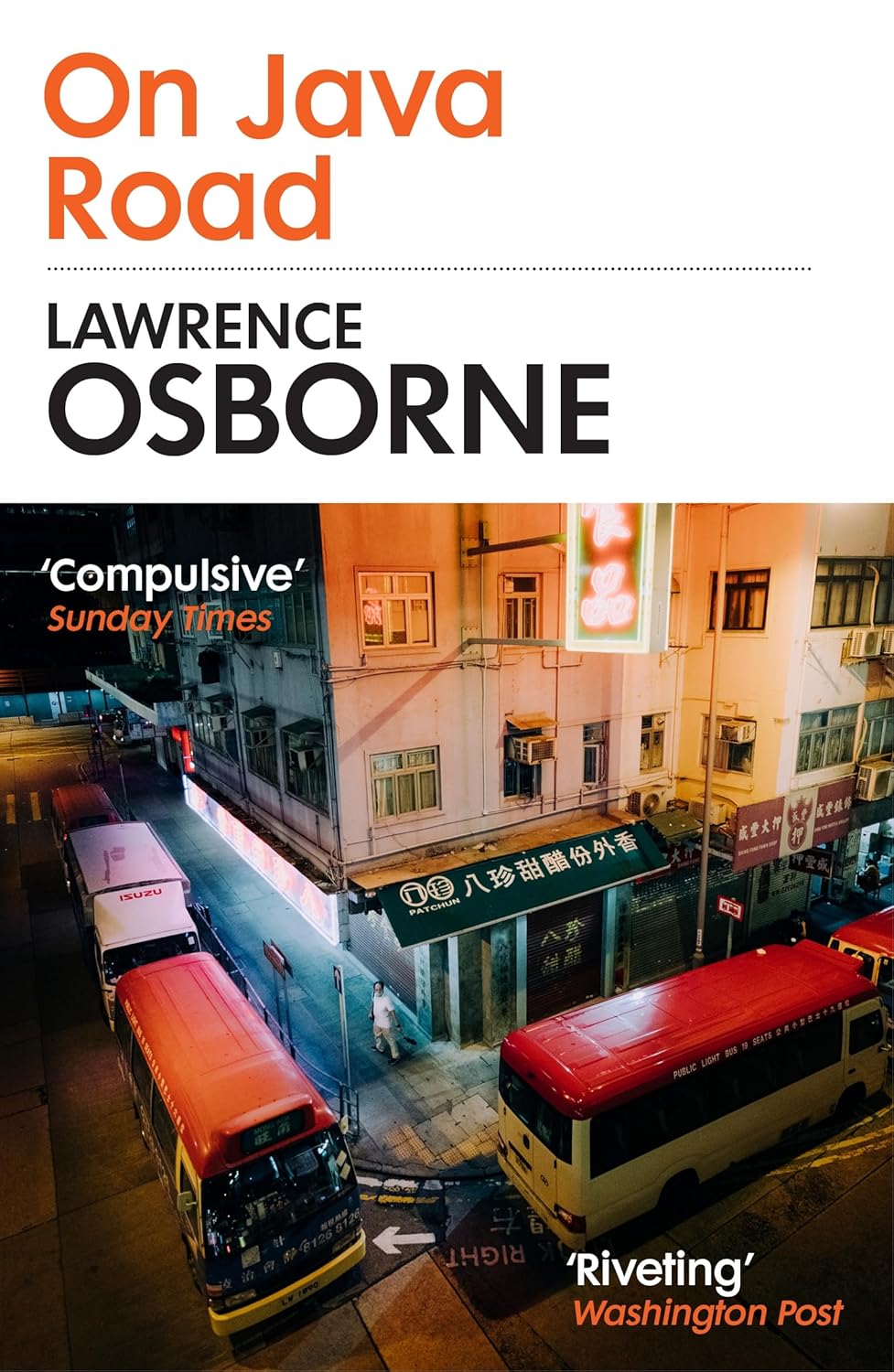
Lawrence Osborne, On Java Road (Vintage 2023)

First line: I thought, in those desperate and forgotten days, of that passage in a novel I had read in school, where the narrator insists that he prefers to be known as a reporter rather than as a journalist, the humbler word better denoting what he does, namely transcribing what he sees.

I found myself in Daunt Books on Marylebone High Street the other week — heaven for anyone who loves travel and international fiction — and emerged with On Java Road, which I’d been eyeing up for a while.

Set in Hong Kong during the pro-democracy protests of 2019-2020, On Java Road is narrated by Adrian Gyle, a struggling ex-pat reporter who has spent twenty years in the territory. Adrian has one social ace: his old university friend Jimmy Tang, a member of one of Hong Kong’s richest families, who gives him access to high society. But things get tricky when Jimmy begins an extramarital affair with Rebecca, a young woman from another wealthy Hong Kong family, and even more problematically, a pro-democracy demonstrator. When Rebecca disappears and Jimmy refuses to return his calls, Adrian feels compelled to investigate.

On Java Road inevitably brings to mind the work of Graham Greene: Adrian could be viewed as a modern version of Greene’s ex-pat narrators, trying to fathom complex events in places that are both home and utterly alien. Adrian has lived in Hong Kong since just after the British handover of the former colony to China (1997), and what he observes reveals the laughable naivety of thinking nothing would change as a result. By 2019, China is tightening its grip via its proposed extradition bill, and money is no protection against the tricky political choices that now need to be made. An important dissection of a troubled Hong Kong, On Java Road is an elegantly written and highly evocative novel.

This week, I’ve been watching the livestream of the Post Office Horizon Inquiry. Former Post Office CEO Paula Vennells was (finally) questioned over the course of three days, and it has been absolutely fascinating to see top KC (King’s Counsel) Jason Beer holding her to account.

In case you’re not familiar with the Post Office scandal, it’s one of the biggest miscarriages of justice in the UK. Over 900 sub-postmasters were prosecuted for crimes such as theft and false accounting over 15 years, when in fact the Post Office’s own Horizon computer system, designed by Fujitsu, was responsible for the shortfalls at individual post offices. Instead of admitting that the Horizon system was flawed, Fujitsu and the Post Office repeatedly denied, misled and withheld information. The Post Office continued to prosecute sub-postmasters aggressively when it was known internally that the evidence given by witnesses in court was ‘unsafe’, and Post Office investigators were offered bonuses for successful prosecutions, which incentivised them to push cases to court. It was a Kafkaesque nightmare for the blameless sub-postmasters involved, which led to years of financial, emotional and reputational damage, and at least four suicides. It is estimated that providing compensation will cost the British taxpayer over a billion pounds.

Back to Paula Vennells and Jason Beer KC. Vennells is a fascinating example of a CEO who prides herself on acting ethically in the corporate world — she’s an ordained priest, no less — but missed a staggering number of chances to address the Horizon scandal. Beer’s job was to illustrate this through a combination of skilful questioning and carefully selected documentary evidence. The most powerful moments came when he confronted her idealised vision of herself with the reality of her past actions. For example, when Vennells claimed she would never have backed off from reviewing past cases to avoid bad publicity, Beer calmly produced an email from 2013 showing that this was exactly what she had done. It seems that being an expert in the workings of human psychology is an invaluable asset for barristers as they build their narrative and case.

The 2024 ITV drama Mr Bates vs The Post Office, written by Gwyneth Hughes and directed by James Strong, is the acclaimed four-part dramatization of the Horizon scandal, and shows the incredible power of storytelling to illuminate major injustices and kickstart political action (fast-tracked exoneration and compensation processes). While the drama is an amazing tale of grit and collective action on the part of Alan Bates and the other victims, it’s heart-breaking to think how much they could have been spared if the Post Office had admitted its failings sooner. A corporate crime indeed.

Mr Bates vs The Post Office is still available to view on ITV and ITVX.

From Napoli to Nottinghamshire: Italian crime novel The Bastards of Pizzofalcone & BBC crime drama Sherwood

Maurizio de Giovanni, The Bastards of Pizzofalcone, tr. from the Italian by Antony Shugaar (Europa Editions 2015) 

First line: Giuseppe Lojacono was sitting in the squad car, in the passenger seat, back straight, hands motionless on his thighs.

It’s been a while since I read some Italian crime fiction, so Maurizio de Giovanni’s The Bastards of Pizzofalcone was a perfect fit: the first in a series about a ragtag group of police officers who are thrown together after being transferred to the troubled Pizzofalcone police precinct in Naples.

The precinct’s former, corrupt officers have been packed off in disgrace, so it’s up to the new guys to rescue its reputation. There’s Giuseppe Lojacono, a Sicilian with fine investigative instincts and a chequered past; Marco Aragona, a suntanned rich kid who acts like he’s a film star; Ottavia Calabrese, a computer genius with an oppressive home life, Francesco Romano, a terse chap with anger management issues; Giorgio Pisanelli, an old-timer obsessed with a set of suicides he thinks are murders; Allesandra Di Nardo, a firearms whizz stifled by her family’s conformity, and the ever steady Commissario Luigi Palma, better known as Gigi. Together, they are the Bastards of Pizzofalcone.

The novel is billed as ‘noir’, but I’m not sure that’s totally accurate. The emphasis is very much on character and on the mechanics of investigating various cases: the murder of a wealthy notary’s wife, a suspected kidnapping, the alleged suicides. The acknowledgements reveal that the author is a fan of Ed McBain, and I think that offers us a great way to see this novel – as the first in a modern, Neapolitan ’87th Precinct’ series. There’s also a TV adaptation – here’s a nice introductory snippet with subtitles…

Chain of evidence: from Napoli to Nottinghamshire

Reading The Bastards of Pizzofalcone made me think about other Italian crime novels I’ve loved. This led me to my earlier post on Roberto Costantini’s The Deliverance of Evil (Quercus), which is the first in a trilogy. The post contains an extensive list of crime trilogies and quartets, such as David Peace’s astonishing ‘Red Riding Quartet’ (Serpent’s Tail), set in Yorkshire. Peace also wrote a novel called GB84 about the 1984 miners’ strikes. And that brings us to the BBC crime drama Sherwood, set in Nottinghamshire around 2014, in a community fractured by the strikes thirty years before…

This six-part series has just concluded, and I can highly recommend it for its wonderfully rich storylines, its historical and social insights, and its absolutely stellar cast, including David Morrissey, Robert Glenister and Lesley Manville. Writer James Graham grew up in the area, and fuses a genuine case (the murder of a man with a crossbow) with the history of the miners’ strikes and the ‘spycops’ scandals (an early example of how seeding discord into a community can ‘divide and conquer’ it for decades). It’s fast-paced, hard-hitting, twisty, and genuinely moving at times. Loved it.