Part 1: In which Camilla Läckberg (CL) and Mrs. Peabody (MP) discuss reasons for writing crime fiction, the flexibility of the genre, secrets from the past, bad guys getting their comeuppance, fusing the domestic with the grisly, and favourite authors.
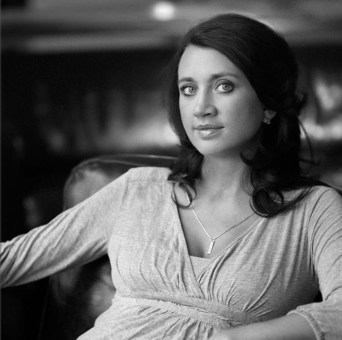
Camilla Läckberg (copyright of the author)
MP: So if it’s alright with you, I’ll start by asking some general questions. What was it that drew you to crime fiction in particular?
CL: I never even thought about writing anything else. I’ve always been in love with crime fiction ever since I was little, so if I was ever going to write, it was going to be crime fiction.
MP: So you had a history of reading crime fiction?
CL: Oh yes. It started when I was seven with finding Death on the Nile on my father’s bookshelf. I absolutely fell in love with the Agatha Christie books, so I read all those, and I continued on, reading both crime fiction for youth, like the Enid Blyton books, but also more adult crime fiction.
MP: And was it mainly British and American crime fiction?
CL: Mainly British; some American writers as well, but mainly British. I always loved the British school of crime writing … And I’m not only saying that because I’m here!
MP: No, no, understood! Do you think that the crime genre offers you particular opportunities as a writer? I mean I’m coming at the question in a slightly different way, but what is it about the genre that attracted you – not as a fan, but as a writer?
CL: Well, I’m going to steal a quote from a Swedish colleague of mine, Håkan Nesser [author of the Van Veeteran and the Barbarotti crime series]. He once said that a murder is such a wonderful hook to hang a story on – because you have this natural element of drama in the whodunit question, but then you can add everything else that there is in other kinds of literature: you can add love, and everyday life, and humour, and sex … You can add anything. So in my world, crime fiction has more, because you can add all that in as well, and have a very exciting drama going on.
MP: So it’s formula fiction, but you’re saying that there is a flexibility as well…
CL: Yes, that’s why we [authors] all have different styles; we approach the task of writing crime fiction in different ways. I mean, we’re not much alike in the way that we tell our stories.
MP: Yes, that’s true – there’s lots of variety. One thing I’ve noticed is that many of your novels unearth a long-hidden secret from the past. Was that always an important theme for you, or was that something that simply developed as the series went on? I think there are four or five of your novels where you see this…
CL: Yes, actually it’s in all the novels. I did it that way in the first story, and then I did it again in the second and the third, and by that time I started realising that ‘oh! there’s a pattern here’. I probably like to tell a story this way, and when I myself try to analyse why, I think it’s because to me, even if you look at real crime, it’s really difficult to understand it and to explain it just by looking at the present. You always have to go back, to look at the person who did it, and how his or her life was. How was the upbringing, how was the childhood, the parents? Maybe you have to go back to the grandparents or even further back to understand the sequence of events that led up to the moment where someone was capable of doing that. And that’s why I tell my stories this way, because I want to explain the motive and the murderer and what happens. And in doing that I have to go back in time. But it varies how far back I need to go.
MP: Yes, and sometimes you’re going back and then bringing in a historical element as well…
CL: Yes.
MP: … which is interesting. Is there a ‘return of the repressed’ idea in there as well? The idea that there might be a secret in the past that people have been silent about…
CL: I think secrets are more common than we think. Most people have secrets. They’re big or they’re small or they’re in-between, but most people have secrets. There are things we don’t tell our husbands or wives or parents or children or friends or that we don’t tell at work. We keep secrets. And sometimes that’s OK and works out, but sometimes that has consequences. A small secret can turn into a big one…

The first novel in the series
MP: And is justice another theme that you’re interested in? I mean the way that you’re describing it, you’re very, very interested in the ‘why’, in the motivation, in looking at the psychology that leads up to the crime. Is justice a concern as well – what happens afterwards?
CL: Yes, I don’t like it when the bad guy gets away. I think there should be a punishment. I’m a bit Greek that way with the whole revenge thing. I do like a happy ending, which in crime fiction is that the killer is caught and punished. I don’t like having endings where the killer gets away. That doesn’t sit well with me.
MP: So there needs to be a proper closure at the end of the novel?
CL: Yes. I can still get annoyed with real life cases when you know that the bad guy … like the OJ Simpson case. That really annoys me. It disturbs the hell out of me. I don’t like that in my books either.
MP: Can I ask you a little about your main protagonists Erica and Patrik? I think that’s such a clever pairing, because they give you so much flexibility – having Patrik as a formal police investigator alongside Erica, who has a connection to crime through her writing, but is a kind of amateur sleuth. Did she come first or did you plan the two of them together?
CL: No, the thing was that I didn’t want to write a police novel, because I thought there are so many crime books with police investigations, so I wanted to do something different. And then I thought, I want to have a woman as a heroine, and I thought about what kind of job she could have so she could go around investigating murders. And a lot of jobs were already taken or I didn’t know anything about them, so an author came as a natural idea; that’s how I created her. But when I started writing about her, I quickly discovered that it’s pretty darn hard to write about someone not connected to the police, to police investigations, so I thought, hmmm, I need to create some kind of police officer here. And then a love interest was the kind of obvious thing to think of. So from the beginning – I love it now – but from the beginning it was a little bit with regret that I … that I thought I have to include police officers as well. But I love it now. I love my police officers and I love Erica and Patrik, so I’m happy it turned out that way … but it wasn’t meant to be from the beginning.
MP: No, but you’ve created something unusual there…
CL: I’ve included so much of their everyday life, which was taking a risk, because I didn’t know if people would like to hear about the little things happening in their life, which are big things – getting married, having children – but it’s not unusual drama; it’s drama we all have.
MP: And that was actually my next question. They are depicted as a very ordinary couple; they have universal problems of how to deal with childcare, of how Erica can keep her career on track, and you tackle the difficult subject of postnatal depression.
CL: Which I had myself, so that’s why I wrote about it.
MP: So did you want to incorporate that to raise awareness?
CL: The funny thing is that, no, I never….. I wish I could say, oh, I want to write about this cause or want to change society or want to make people aware of something, but I really don’t – it’s a side-effect. I’m happy when it happens, but I can’t write my books with an agenda. I tell a story, and as a side-effect my own experiences, my own political views and things like that will absolutely appear in the books, but it’s not my agenda. My agenda is to tell a good story and to entertain the reader. Everything else comes as a side-effect, actually.
MP: But at the same time, I was very struck when I first read your work… Um, a lot of women, a lot of female readers will connect with that experience…
CL: And I love when that happens – I love that. I still have mothers coming up to me on the street and saying, thank God I read your book when I had my baby, because I thought I was the only one who felt like this. I love that, but it’s not my agenda. What I do is write about things that are important to me, and that I’ve experienced, that have really had an impact on me, and of course those will also be things that are meaningful to other people, since I’m not unique, whatever my mother tells me! And because I write so much better when I write about things that I’ve experienced, or that upset me or concern me … That’s why I don’t write about global terrorism or spies. Of course I think it’s horrible when there are terrorist acts, but what gets me going is husbands beating their wives, or children not being taken care of – that’s the thing that’s closest to my heart and that’s what I write about.
MP: I understand. One thing I found interesting as well when I first read your books was the strong presence of ‘the domestic’ on the one hand, through Erica and Patrik’s home life, but then, some very explicit descriptions of corpses on the other [laughter] – there is a contrast between those two elements in the books that’s quite striking. And I felt that you were doing something new there…
CL: I think that is the exact success factor of the books: the relationship between Erica and Patrik, and the fact that it’s a mix between the ordinary drama of everyday life and the extraordinary drama of a crime investigation. I think it’s that contrast. And it’s also the contrast between, on the one hand, a scene with a corpse or a very dark scene with a mother grieving her child, and then on the next page it’s Melberg being stupid, and you can laugh a little bit, so it’s all about throwing the reader between different emotions.
MP: And in some ways you might think there’s a risk in doing that as a writer, because those elements are so contrasting, but it really works…
CL: I didn’t sit down and plan to write this kind of crime fiction. I just started writing something the way I would have liked to read it. I write books for one reader and that’s me. I’m very selfish that way. I just write the kind of book I would have loved to read, according to my taste, and it so happens that there are other people who have the same taste. And it was something quite new … It had to do a little bit with the Elizabeth George books. I think I probably got a little inspired there, because I’ve always loved Elizabeth George books. She’s got great crime plots, but the reason why I kept reading them was to see what would happen to Lord Lynley and Lady Helen. So I wanted a strong story about people that you wanted to follow through the books.
MP: Are there any Swedish authors who’ve influenced you or have your main influences come from outside Scandinavia?
CL: It’s difficult for me to say who’s influenced me or not, because I’ve read so … I mean I was such a book nerd when I was growing up and I still am, and 80% of my reading is crime fiction, so I’ve just always read tons and tons and tons of crime fiction, and I’ve probably picked up little pieces here and there from everybody. So it’s hard for me to say specific authors that I’ve been inspired by.
MP: Or are there any that you particularly like at the moment?
CL: Well of the Swedish ones, yes, I’ve got a few favourites: Åsa Larsson for example [author of the Rebecka Martinsson series], and Mari Jungstedt [author of the Knutas / Berg series]. I like Håkan Nesser – he’s fantastic, especially the Barbarotti books. I’m not that keen on Mankell. I loved the first books but then I got a little bit tired of Wallander always being tired and depressed. But I think my number one favourite is probably Åsa Larsson. I think she’s a fantastic writer.
21 July 2012 in the Library, Old Swan Hotel, Harrogate.
Extra links:
Camilla Läckberg’s top 10 Swedish crime recommendations.
Camilla Läckberg’s website
Sarah at Crimepieces also had a very interesting interview with Camilla at Harrogate.

.


 Mrs. Peabody Investigates