Merry Christmas! Mrs Peabody’s festive round-up

I’m behind on my Christmas preparations this year, which means that this festive round-up is a little later than usual. On the plus side, it may help a few of you out of a last-minute present conundrum, or lead you to a nice, independent bookshop because it’s too late for online orders. You might also be moved to buy yourself a little gift. Go on, you deserve it.

The following are just some of my favourite crime novels of the year. All, in my view, would make a delightful escape from the mayhem of Christmas or family, especially when curled up on the sofa with a nice glass of wine.

Anne Holt and Berit Reiss-Anderson, The Lion’s Mouth (NORWAY: trans. by Anne Bruce, Corvus, 2014). Anne Holt is often described as the queen of Norwegian crime, and has drawn expertly on her own career in the police, law and government in the creation of the ‘Hanne Wilhelmsen’ police series (she was even Norwegian Minister of Justice for a while). This fourth installment in the series, originally published in 1997, explores the suspicious death of the Norwegian Prime Minister, who is found dead in her office just six months following election. A fusion of locked-room mystery, Borgen and police procedural, it’s a quietly satisfying read that’s held up well.

Arnaldur Indridason, Reykjavik Nights (ICELAND: trans. by Victoria Cribb, Harvill Secker, 2014). This prequel to the ‘Murder in Reykjavik’ series is a wonderfully absorbing read, which traces the start of Erlendur’s journey from young policeman to detective as he investigates the death of a homeless man and the disappearance of a woman. Set in 1974, the year Iceland celebrated 1100 years of settlement, we are also shown how a traumatic childhood event begins to shape Erlendur’s personal life and investigative career. The novel is a great read for those who are new to the series and for long-established Erlendur fans alike.

Hannah Kent, Burial Rites (AUSTRALIA/ICELAND: Picador, 2013). This impressive debut novel by a young Australian author is not for those looking for ‘cosy’ Christmas crime. Kent spent some time in Iceland as an exchange student and describes the book as her ‘dark love letter’ to the country: set in northern Iceland in 1829, it explores the case of Agnes Magnúsdóttir, the last Icelandic woman to be executed for murder. The figure of ‘the murderess’ tells us a lot about the gender, class and power relations of the time, and the picture the author paints of every-day, rural Icelandic life is fascinating. The story, setting and their links to the Icelandic sagas stayed with me long after reading it.
Lahlum

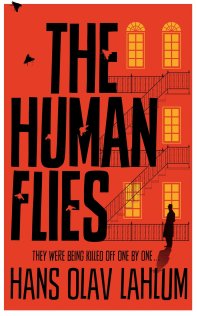
Hans Olav Lahlum’s The Human Flies (NORWAY: trans. by Kari Dickson, Mantle, 2014, [2010]) sounds like a horror film that’s best avoided after a large meal. However, it turns out to be something quite different: a well-constructed and witty homage to the classic crime fiction of Agatha Christie, set in 1968 Oslo, which has some interesting historical depth. Featuring ambitious young police detective Kolbjørn Kristiansen on his first big case – the murder of a former resistance fighter – readers are treated to an apartment building of intriguing suspects and a page-turning investigation, as well as the considerable intellect of Kristiansen’s wheelchair-bound partner Patricia.

Laura Lippman, After I’m Gone (USA: Faber and Faber, 2014). Ignore the rather daft cover. After I’m Gone is a literary crime novel that dissects a murder case by means of a rich narrative with some wonderful characterisation (the latter is one of Lippman’s great strengths). Told on a number of different time levels, it traces the stories of five women left behind when white-collar criminal Felix Brewer disappears in July 1976 – his wife Bambi Gottschalk, his three daughters, and his mistress Julie – as well as the investigation into Julie’s murder by detective Sandy Sanchez in the present. An engrossing, quality read.

Anya Lipska, Death Can’t take a Joke (UK/POLAND: The Friday Project, 2014). This is the second in the ‘Kiszka and Kershaw’ series, featuring Polish ‘fixer’ Janusz Kiszka and London police detective Natalie Kershaw. While I enjoyed Lipska’s first novel, Where the Devil Can’t Go, the second is where the series really gets into its stride: the duo’s investigation into two deaths, including one of Kiszka’s closest friends, is a tightly constructed page-turner with an engaging, blackly comic tone. The novel also features one of the best first chapters I’ve read this year… For a more in-depth exploration, head over to Margot Kinberg’s marvellous Confessions of a Mystery Novelist blog.

Marco Malvaldi, Game for Five and Three Card Monte. 1 and 2 of the ‘Bar Lume Trilogy’ (ITALY: Europa Editions/World Noir 2013/14). These light-hearted crime novels feature amateur detective Massimo Viviani, the maverick owner of Bar Lume, investigating mysterious deaths in Pineta in Northern Italy. Massimo is ably assisted in his work by four cantankerous, octogenarian barflies, including his own extremely opinionated grandfather. Witty, entertaining and stylishly packaged.

Eduardo Sacheri, The Secret in Their Eyes (ARGENTINA: trans. by John Cullen, Other Press, 2011 [2005]). I was given this novel last Christmas and it became one of my first and favourite reads of the year. Benjamin Miguel Chaparro, a newly retired Deputy Clerk in Buenos Aires, begins to write a novel about a case that has haunted him since 1968 – the murder of a young wife, Liliana Colotto, in her own home one summer’s morning. Oscillating between the past and the present, and spanning twenty-five years of Argentine history, the narrative tells the story of the murder and its repercussions for those left behind: husband Ricardo Morales, investigator Benjamin, and the murderer himself. The 2010 film adaptation was also a cracker. A full review is available here.

Olivier Truc, Forty Days without Shadow (FRANCE/LAPLAND: trans. by Louise Rogers LaLaurie, Trapdoor, 2014). This novel uses its criminal investigation as a means of exploring the history, culture and climate of Lapland. It also features the reindeer police! The novel opens with Sámi-Norwegian reindeer policeman Klemet Nango and partner Nina Nansen investigating the theft of a priceless Sámi drum from a museum. Shortly afterwards, Sámi herder Mattis is found dead, and ‘Patrol P9′ finds itself grappling with two crimes that could well be interlinked. A gripping novel that shines a spotlight on a fascinating part of the world. A full review is available here.

If the crime lover in your life is into TV drama, then my two top picks are as follows:

The Australian series The Code, which aired on BBC4 a few weeks ago and I reviewed enthusiastically here. This six-part political thriller opens with the mysterious death of Aboriginal teenager Sheyna Smith in Lindara, a remote New South Wales township. The circumstances of her death are hushed up, so when Ned Banks (a journalist for an internet newspaper) and his brother Jesse (an internet hacker on the autistic spectrum) start to investigate, you just know there’s going to be trouble. An utterly gripping, intelligent drama.

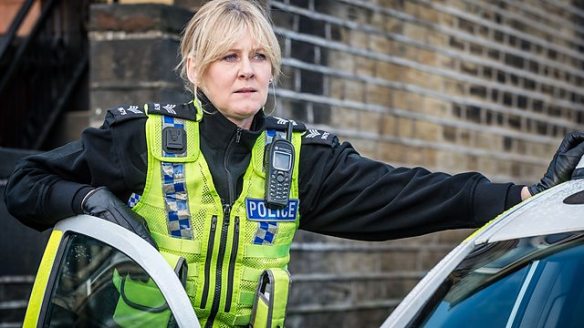
British police drama Happy Valley, a hard-hitting, six-part series that traces the fall-out from a kidnapping in the West Yorkshire valleys, while exploring its protagonists’ complex personal lives. Sarah Lancashire gives an absolutely outstanding performance as policewoman Catherine Cawood, together with an excellent supporting cast. Be warned that there is some very graphic (though in my view not gratuitous) violence. I think that 18 would be a more accurate rating than the 15 on the box. An addictive and top quality crime series.

And my own indulgence this Christmas? That would be the American drama True Detective, which I’m very much looking forward to watching. Have you indulged yourself as well? Do share if so!

Wishing all the readers of this blog a very happy and relaxing Christmas.

See you all in 2015!

German Zimtsternchen (little cinnamon star).    Quite addictive.

Iceland Noir 2014: volcanoes, glaciers and crime

Having been extremely jealous of everyone at Iceland Noir last year, it was brilliant to make it this November, not least because Reykjavik has been on my wishlist of places to visit for a long, long time. The event was held at Nordic House, and was expertly organised by author Quentin Bates and the rest of the Icelandic Noir team, who put together a great programme over two days. Quite a few bloggers have already posted reports (see list below), so I’m going to focus on the panels/discussions that particularly interested me and say a little about my first impressions of Iceland … with plenty of photos!

IMG_4654

Nordic Perspectives panel – and yes, it was early in the morning…

Nordic Perspectives. This panel featured David Hewson (UK), Hans Olav Lahlum (Norway), Lilja Sigurðardóttir (Iceland) and Michael Ridpath (UK), with Jake Kerridge moderating. It was interesting to see how these authors positioned themselves or their countries’ crime output in relation to ‘nordic crime’. Sigurðardóttir felt that Icelandic crime had affinities to Scandinavian crime through its focus on the complexity of the criminal (citing the work of Norwegian author Karin Fossum as an example). However Lahlum saw himself as a historical crime writer rather than a Nordic crime writer, while Ridpath’s Icelandic-American investigator is an insider-outsider figure who negotiates different cultural traditions.

This panel also included discussion of historical crime fiction and adaptation. Lahlum told us that Norwegian crime fiction often engages with historical events, especially the Second World War (as evidenced in his novel The Human Flies). Hewson discussed his adaptation of the Danish TV crime drama The Killing, which involved adding contextualising historical detail. For example, the beginning and end of The Killing II are set in Ryvangen Memorial Park, which was the site of partisan executions by the Nazis and points to the core theme of the series – the long-term impact of war on society. Hewson provided extra information about the memorial, as British readers would not be aware of its significance (interesting; now on my TBR pile).

IMG_4658 2

‘Translating crime across cultures’ panel

The ‘translating crime fiction across cultures’ panel featured Viktor Arnar Ingólfsson (Iceland), Mari Hannah (UK), Bogdan Hrib (Romania) and Vidar Sundstøl (Norway), with academic Jacky Collins moderating. I left this panel wanting to read Sundstøl’s Minnesota Trilogy: the first installment, The Land of Dreams, won the prestigious Riverton Prize in 2008, and its exploration of Norwegian-American history and culture sounds right up my street. It was also interesting to hear Hrib discussing Romanian crime novels and his ongoing mission to see them more widely translated into English: there are currently just three, published by Profusion Press, which I’m now curious to read. Mari Hannah tantalised us by revealing that she’s written a novel partly set in Norway (a break from the Kate Daniels series, which we were reassured is also continuing). Icelandic author Ingólfsson currently has one novel translated into English – The Flatley Enigma – with others translated into German, which appears to be quite a common route for Icelandic writers (those Germans do love their nordic Krimis!).

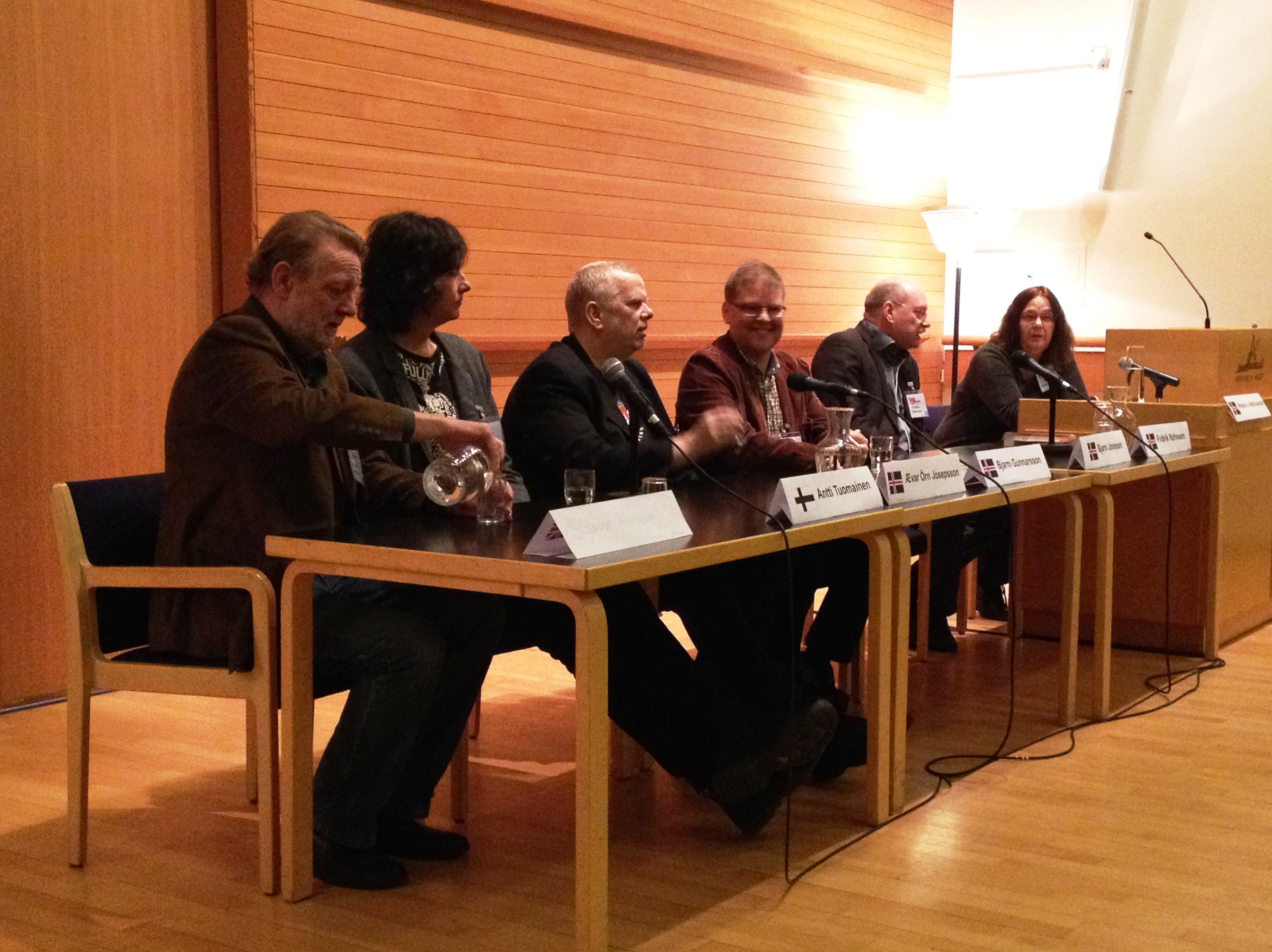
A companion panel on the Saturday celebrated the inaugural Icepick Award for best crime novel translated into Icelandic, with Antii Tuomainen (Finnish author of The Healer) and Icelandic translators Ævar Örn Jósepsson, Bjarni Gunnarsson, Bjarni Jónsson and Sigadur Karlsson (Magnea Matthiasdóttir moderating).

IMG_4733

Icepick Award panel – a sea of translators!

The panel gave a fascinating insight into the dialogue between writers and translators about linguistic and cultural issues during the process of translation, although Gunnarsson also illustrated the important role of technology today: when translating Nesbo, he used Google Earth to take a closer look at Oslo, a city he’s never visited but now feels he knows well. Tuomainnen made lifelong friends in the translation community with his heartfelt appreciation for the work of the translator; he also specifically thanked Sigurdur Karlsson for translating his work and for bringing it to the attention of Icelandic publishers in the first place, thereby highlighting the influential role translators play in identifying promising new work. The Icepick was awarded on the Saturday evening at the Iceland Noir dinner (for further details, see my previous post).

IMG_4686 2

The ‘settings’ panel

Tuomainnen popped up again on the settings panel with Ragnar Jónasson (Iceland), Johan Theorin (Sweden) and Vidar Sundstøl (Norway), moderated by Jacky Collins. The settings discussed included urban Finland, a village in northern Iceland, an isolated Swedish island and the American Midwest. In each case, the novel’s location plays a crucial role – sometimes even becoming a character in its own right – and is used to create unease or suspense (Theorin’s Öland novels), a sense of remoteness and isolation (Jonasson’s Dark Iceland series), or to explore themes such as migration (Sundstol’s Minnesota Trilogy) and climate change (Tuomainen’s The Healer).

IMG_4735 2

The ‘supernatural in crime fiction’ panel – a suitably shaky shot from the back…

One of my favourite panels was on supernatural crime, featuring James Oswald (Scotland), Johan Theorin (Sweden), Alexandra Sokoloff (US) and Michael Sears (South Africa) in discussion with Jake Kerridge. It was fascinating to hear the varying reasons why crime authors use supernatural elements in their work: as a means of exploring the clash between the rational and irrational (Oswald), illustrating evil (Sokoloff), exploring cultural beliefs (Sears) or taking genre in new direction (Theorin). Hearing the panelists talk about the extra dimensions the supernatural can add to a crime narrative reminded me why I like hybrid crime fiction so much: there’s a creativity at work here that pushes the boundaries of the genre and – when it works – can produce fantastic results. Sokoloff rather intriguingly described a magpie approach when writing – she has blended Jewish lore and witch-y elements into her novels to create particular effects. And it struck me that at least two other writers at the conference – Tuomainen and Icelandic author Yrsa Sigurðardóttir – also write hybrid crime fiction (drawing on traditions of apocalyptic literature and horror). The days when crime publishers were reluctant to publish this type of fusion fiction thankfully appear to be over.

Other blog posts, articles and tweetery on Iceland Noir 2014:

  • Crime Fiction Lover – lots of coverage including the debut authors’ panel, featuring blogger and Petrona judge Sarah Ward, whose novel In Bitter Chill (Faber and Faber 2015) I’m greatly looking forward to reading
  • Crimepieces – Sarah Ward with three posts
  • The Reykjavik Grapevine on the author reading held at Solon on Thursday evening
  • Miriam Owen live-tweeted Iceland Noir via @NordicNoirBuzz

Do also check out the site for next year’s rather wonderful-looking Shetland Noir (Iceland Noir will be back in 2016).

I’m going to finish up with a few Reykjavik/Iceland photos to show those of you who haven’t yet visited what a great place this is!

1. An Eymundsson bookshop in Reyjkavik. This capital, which is around the size of my hometown Swansea, with a population of around 200,000, has at least five massive bookshops. Iceland is a nation of book lovers with a deep appreciation of culture (probably instilled by long winter nights and the reading aloud of Icelandic sagas). Fittingly, Reykjavik is a UNESCO City of Literature.

IMG_4852

Booktastic Reykjavik

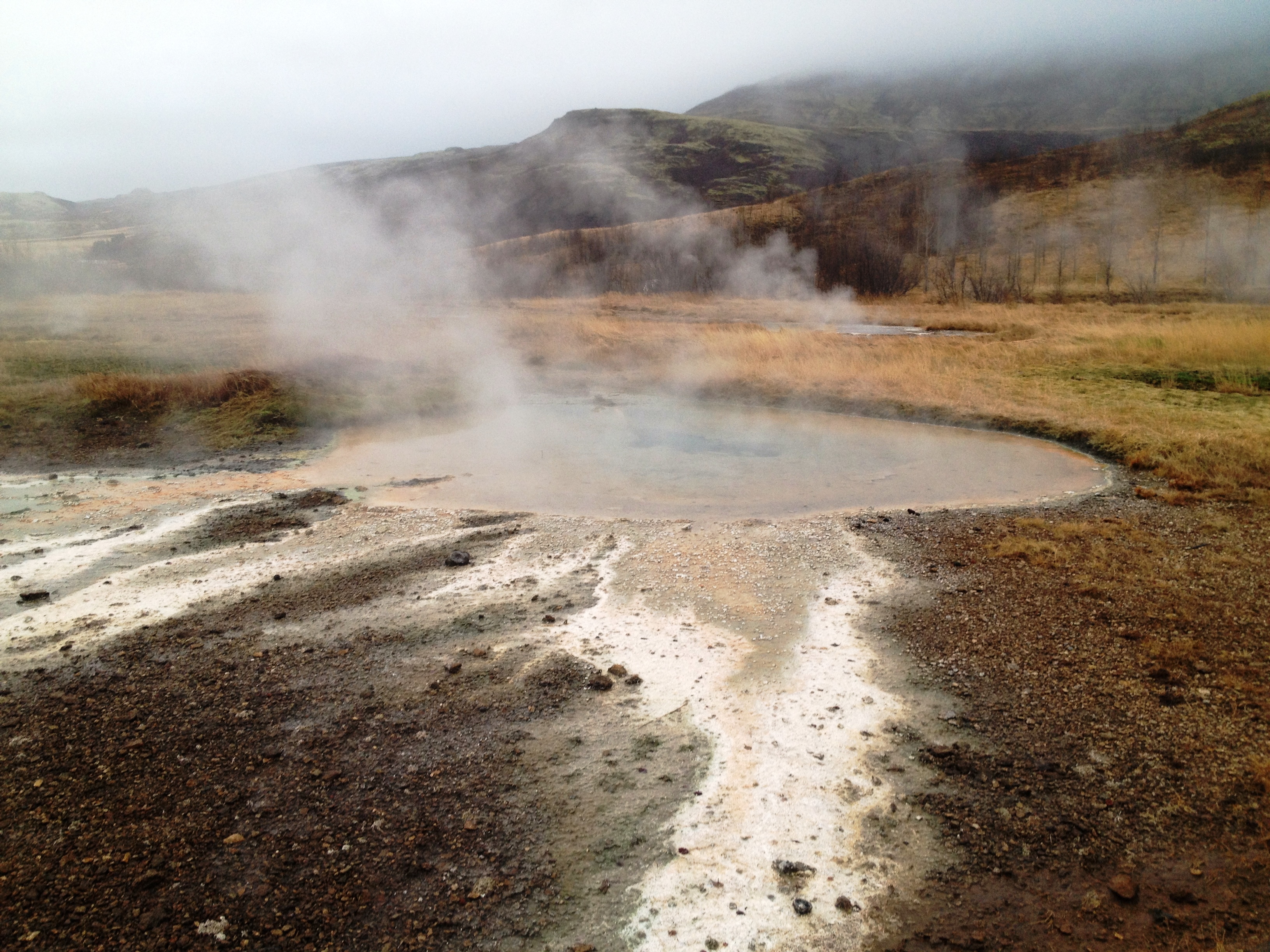
2. The bubbling, steaming landscape of Haukadalur. Wandering around on a crust of earth just above plentiful geothermal activity, with geysers going off at regular intervals, instils an added appreciation of our volatile, ever-changing planet. In a land not heavy on natural resources, Icelanders have made the most of their free geothermal energy to heat their homes, create outdoor thermal pools, grow tomatoes, process aluminium, keep their streets de-iced, and so on… Ingenious and admirable.

IMG_4787

The land of fire and ice – a geothermal landscape here, but glaciers are not far away

3. Reykjavik is charming. Here are a few random photos.

IMG_4887

Hallgrímskirkja, which looks a lot like a space rocket, guarded by the statue of Leifur Eiriksson

IMG_4907

View over Reykjavik from the top of the Hallgrímskirkja – on the day the sun came out

IMG_4921

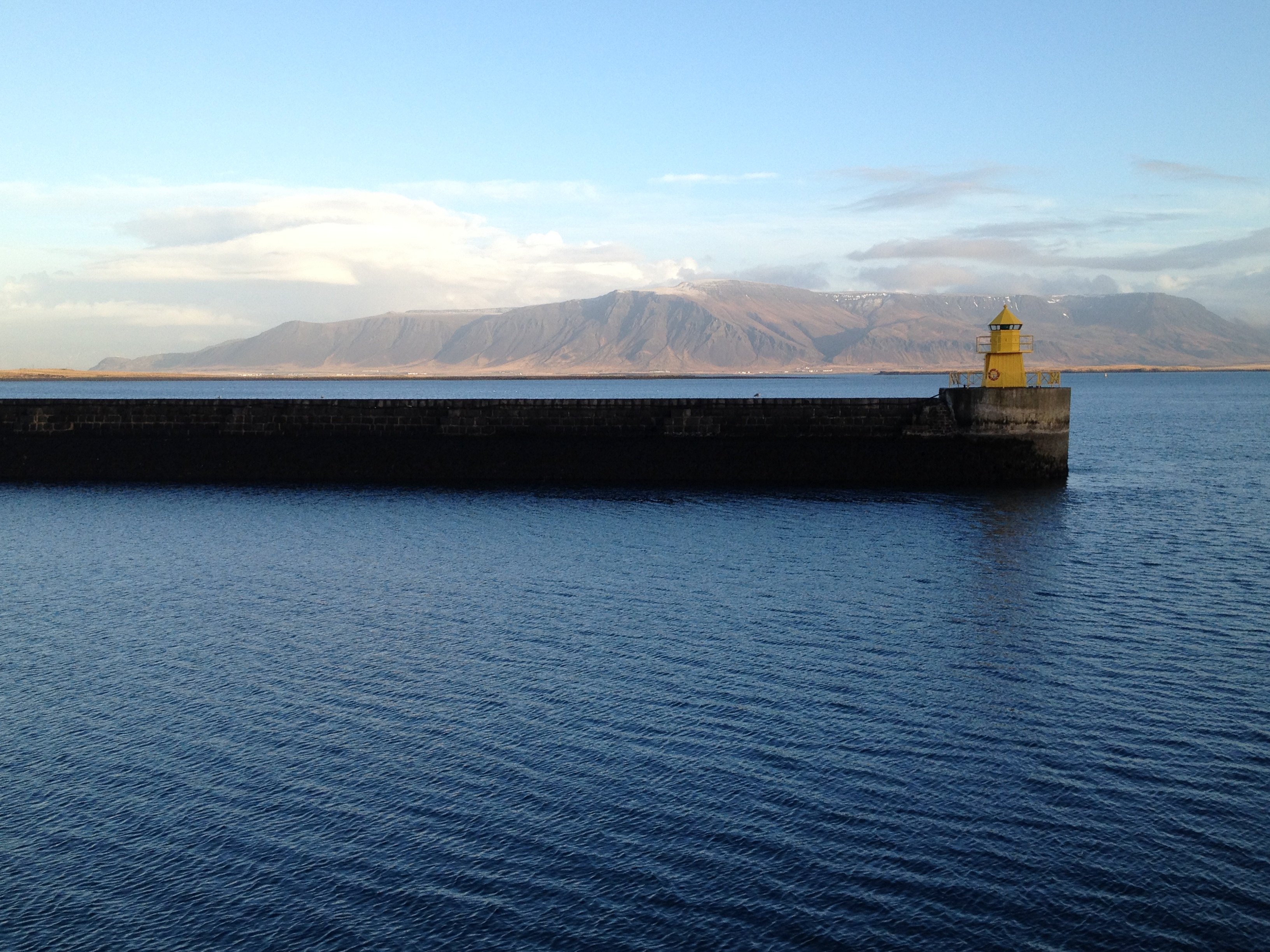
Reykjavik Harbour, looking out to Faxafloi Bay and the mountains beyond

4. There’s a lot of Icelandic wool. Which gets turned into gorgeous mittens to feed my newly discovered mitten addiction.

IMG_5031

Takk fyrir Icelandic sheep!

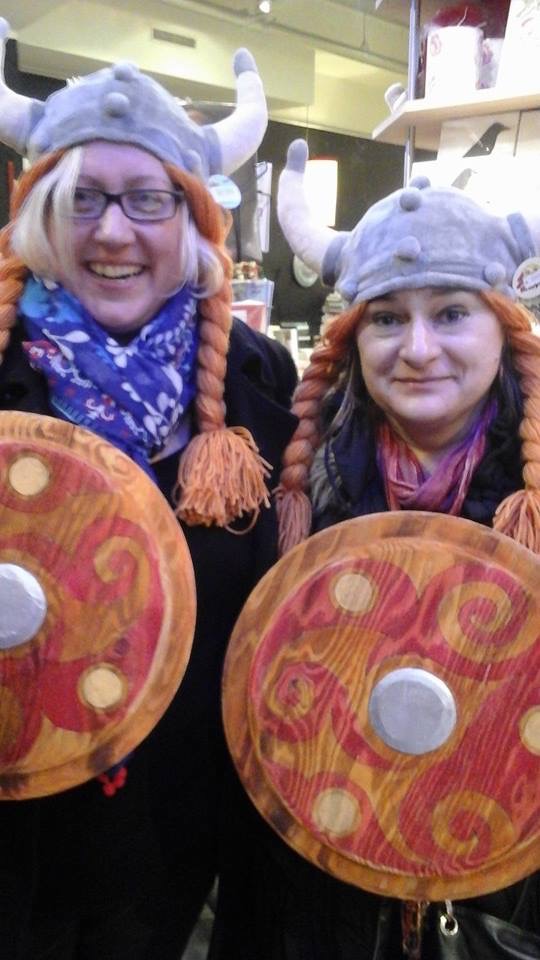
5. Friendly Vikings. I think this is my favourite Iceland Noir photo.

IMG_4946

Miriam and Ewa – awesomely stylish Vikings

Huge thanks to the Iceland Noir organisers for making the event such a wonderful success!

Happy Valley (UK 2014) and Top of the Lake (New Zealand 2013)

Given the international focus of this blog, it’s not often that I watch home-grown British crime drama. But having caught the first episode of BBC One’s Happy Valley, I’ve been completely gripped, and tonight’s hotly anticipated finale did not disappoint. This hard-hitting six-part series, which traces the fall-out from a kidnapping in the West Yorkshire valleys, is superbly written (by Sally Wainwright) and directed (by Wainwright, Euros Lyn and Tim Fywell). Lead actress Sarah Lancashire gives an *absolutely outstanding* performance as policewoman Catherine Cawood, with an excellent supporting cast.

Happy Valley series 1

I’m prepared to say that this is the best crime drama I’ve seen all year, with perhaps one exception … the New Zealand crime drama Top of the Lake, which I watched on DVD in March (aired on BBC Two in 2013). It’s equally well written (by Jane Campion of The Piano and Gerald Lee) and directed (by Campion and Garth Davies), with Elisabeth Moss of Mad Men in the lead role of Detective Robin Griffin. This time, the investigative focus is on the disappearance of a twelve-year-old schoolgirl, Tui Mitcham.

toplake-700x400

Aside from their quality, the dramas have a striking number of things in common:

  • Both feature wonderfully strong female investigators, who have each experienced the impact of crime in their own lives. These past traumas – and their identities as women and mothers – shape their responses to the crimes that they witness in the present.
  • There is a focus on gender and power, with both dramas showing women having to negotiate and survive extreme male violence. (There’s been media debate about whether Happy Valley is too violent, but in my view, it effectively illustrates the reality of certain types of crimes and isn’t gratuitous). In each case, older women step in to protect younger women when they can.
  • Both dramas are set in socially deprived areas, where criminality has become a way of life for many. But they also point a finger at the supposedly respectable middle classes, who are not as morally upstanding as they pretend to be (there’s a nice touch of Fargo in Happy Valley).
  • Each makes excellent use of landscape – the importance of which is indicated by the series’ titles. Top of the Lake uses haunting images of New Zealand’s South Island to suggest the isolation of its central characters. Happy Valley’s ironic title and the rolling Yorkshire countryside are used to highlight the disparity between the physical beauty of the setting and the violence within it. (Thanks are due to Elena, whose cracking post on True Detective and its use of landscapes got me thinking about this aspect of the dramas).
  • And I know I’m repeating myself, but …. fantastic actresses in complex, nuanced, gritty, challenging, leading, female investigator roles. More, more, more of these women please!

Elisabeth Moss as Det. Robin Griffin.

If you haven’t yet had a chance to see these dramas, then you have a treat of the highest order before you. Enjoy!

Good news: it looks like there could be a second series of Happy Valley according to this Radio Times interview with Sally Wainwright. Warning: Lots of spoilers!

And here’s a review of the finale by Mark Lawson for The Guardian.