Gallic charm: Sébastien Japrisot’s The Sleeping Car Murders, tr. Francis Price (France)

Sébastien Japrisot, The Sleeping Car Murders, tr. from the French by Francis Price, Gallic Books 2020 [1962]

First lines: This is the way it began. The train was coming in from Marseille.

If you need to tiptoe away from the world and its troubles, why not head to the Gare de Lyon in Paris on an October morning in the 1960s. There, a guard checking a newly arrived sleeper from the South of France has just discovered a corpse in Berth 222: a woman last seen alive that morning by those who shared her sleeping compartment, but who is now very definitely and mysteriously deceased.

Enter Inspector Antoine Pierre Grazziano — or Grazzi — from police HQ at the Quai des Orfèvres. He and his team begin to investigate Georgette Thomas’s murder by tracking down the occupants of the other six berths, but soon find themselves stretched to the limit as the body count starts to rise.

There really is a lot to like about this inventive police procedural. Grazzi, the rather weary, harassed lead detective, is a sympathetic and quietly tenacious figure. The characterization throughout the novel – from the train guard to the other passengers to the perpetrator – is a rich delight. The style is sparky and wry, and there are some cracking plot twists, particularly towards the end.

Author Sébastien Japrisot (1931–2003) is the pseudonym of Jean-Baptiste Rossi (spot the anagram), who was a prolific crime writer, screenwriter and director. In 1965, The Sleeping Car Murders was turned into the film Compartiment tueurs, starring Yves Montand and Simone Signoret; it was also the first film directed by Costa-Gavras. Here’s a brilliantly mad trailer.

I’m looking forward to reading more by this author – somewhere on the dial between Georges Simenon and Pascal Garnier?!

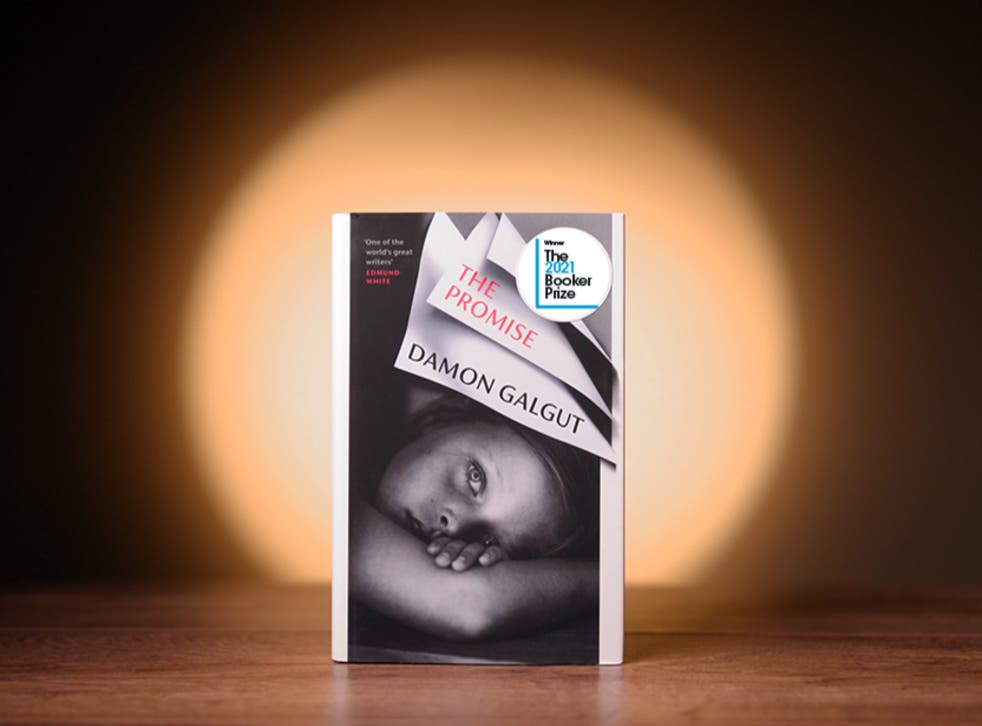
Sins of Omission: Damon Galgut’s The Promise (South Africa)

Damon Galgut’s The Promise, Chatto & Windus 2021

First line: The moment the metal box speaks her name, Amor knows it’s happened.

What’s this, you cry? A hefty Booker Prize winner infiltrating the pages of an international crime fiction blog? You betcha! Because even if The Promise is literary with a capital ‘L’ and requires a tiny bit of readerly patience at the start, it’s packed to the gills with crime and will soon have you hooked.

The novel opens in 1986 South Africa with a death and a promise. Just before dying of cancer at the family farm outside Pretoria, Rachel Swart makes her husband promise that Salome, the Black woman who has worked faithfully for the Swarts her entire life, will be gifted the house she lives in. Manie agrees, then conveniently ‘forgets’ he ever did such a thing. But youngest daughter Amor overheard the promise being made, and that act of witnessing sets off a chain of events down the years – in four novel parts spaced roughly a decade apart.

Set against the backdrop of South Africa’s transition from apartheid to democracy, the entire novel is laced with crime: the crime of apartheid itself and of those who collude in it, the crime of breaking a deathbed promise that might right some of its wrongs, and the criminality that springs up in societies riven with inequality. Oh yes, and there are two murders, which mirror one another in their terrible casualness.

And then there is the writing, sweeping and luminous, that takes us into the minds of the whole family and the complex community around them.

He did promise. I heard him.
He promised Ma he would give Salome her house.

Her little face is lit from within by its sureness.

Amor, he says gently.

What?

Salome can't own the house.
Even if Pa wanted to, he can't give it to her.

Why not? she says, puzzled.

Because, he says. It's against the law.

The law? Why?

You are not serious. 
But then he looks at her and sees how serious she is.
Oh, dear me, he says. 
Do you have no idea what country you're living in?

So run, don’t walk – get yourself a copy of this incredible novel. There’s further info and an audio extract from The Promise over at the Booker Prize website.

Crime leads: Walter Presents + V&Q books + 2022 crime fiction in translation

Introducing Mrs Peabody’s ‘crime leads’: an occasional feature rounding up the best of international crime fiction news.

I’m not sure how many crime fans realise that Walter Presents which made its name by bringing a curated selection of TV dramas to our screens — has forged a partnership with Pushkin Press. I certainly hadn’t…

At the moment there are four crime novels in the ‘Walter Presents’ series, by Flemish, French and Italian authors, and if they’re anything as good as the crime dramas dear Walter picks out (such as the superlative Deutschland ’83) then we’re in for a major treat. The one that’s particularly caught my eye is Roberto Perroni’s The Second Life of Inspector Canessa, with this lovely noir cover.

Here’s the blurb: “Annibale Canessa was a legend: the most notorious cop during Italy’s brutal Years of Lead, he hunted down terrorist suspects with unmatched ferocity. But then the fighting stopped, and suddenly Canessa was a soldier without a war.

30 years later and he’s settled into a life of calm by the sea – until some shattering news pulls him back in. His estranged brother has been found dead; lying beside him, the body of an ex-terrorist, a man Canessa himself caught.”

The Bookseller reports that V&Q Books — headed by translator-publisher Katy Derbyshire — has bought the rights to Sally McGrane’s thriller Odessa at Dawn. The book follows ex-CIA man Max Rushmore on a trip to Odessa that veers badly off course… His journey leads him to dubious businessmen, corrupt officials, catacomb dwellers, scientists, pastry-chefs, poets, archivists, cops – and killers. Described as a ‘surreal contemporary spin on the classic spy novel’ that pays tribute to past Odessa residents like Babel, Gogol, Pushkin and Chekhov, it’s also an ode to the city itself. Sounds mighty intriguing – and highly topical given the current situation in Ukraine.

As it happens, I’m just reading a comic novel/mystery caper from the eclectic V&Q list: Isabel Bogdan’s The Peacock, deftly translated from the German by Annie Rutherford. It’s set a long way from Odessa – in the Scottish Highlands no less – and features a hilarious ensemble cast including the eponymous, rather cross peacock. Think Monarch of the Glen sprinkled with P. G. Wodehouse and Hamish Macbeth – a wonderful balm if you’re feeling a bit frazzled with the world.

And finally, if you’re one of those crime buffs who likes to look ahead and possibly even compile spreadsheets of your reading for the year, then here are two very useful lists:

Fiction from Afar: ‘Unmissable Crime Fiction in Translation due in 2022’

Euro Crime: ‘Releases in 2022’

Because we obviously don’t have enough crime novels already 🙂

Love and Friendship: Eduardo Sacheri’s The Secret in Their Eyes, tr. John Cullen (Argentina)

Eduardo Sacheri, The Secret in Their Eyes, tr. from the Spanish by John Cullen,(Other Press, 2011 [2005])

First line: Benjamin Miguel Chaparro stops short and decides he’s not going.

I don’t often re-read crime novels. This is largely because crime is so plot-driven: once you know the ‘solution’, you’ve got less reason to return. But naturally there are exceptions – crime novels which tell their story in such a way that you’re drawn to them repeatedly, perhaps because you love the company of the characters or the setting, or because the book tells you something new each time you read it.

Eduardo Sacheri’s The Secret in Their Eyes is one such novel. I’ve read it three times now and I’m sure there’ll be a fourth. It’s been on my mind lately because it celebrates love and friendship in adversity, and so feels timely in spite of its setting – Argentina in the second half of the twentieth century.

Benjamin Chaparro is freshly retired from his position as Deputy Clerk of an investigative court in Buenos Aires. Now a man of leisure, he decides to write a book about a case that’s haunted him since 1968 – the murder of a young woman, Liliana Colotto, at home one summer’s day. Oscillating between the past and the present, and spanning twenty-five years, the narrative tells the story of the murder and its repercussions for those left behind: grieving husband Ricardo Morales, investigator Benjamin – and the murderer.

While undoubtedly crime fiction, The Secret in Their Eyes is also a historical novel, exploring the time before, during and after Argentina’s Guerra Sucia or Dirty War (1976-1983). This period saw a state-sponsored campaign of violence against ‘politically subversive’ citizens, resulting in the ‘disappearance’ of 10,000 to 30,000 Argentinians. Both of the novel’s strands – the criminal and the historical – focus on the nature of justice and on the impact of a justice that is delayed or denied.

But the novel is also a love story – that of a husband and wife (Ricardo and Liliana), and of long-time co-workers (Benjamin and his boss, Irene) – as well as the moving chronicle of a friendship (Benjamin and his colleague Sandoval). Beautifully written, with complex and often endearing characters, the novel is a rich, satisfying read – a multilayered narrative of genuine humanity and warmth.

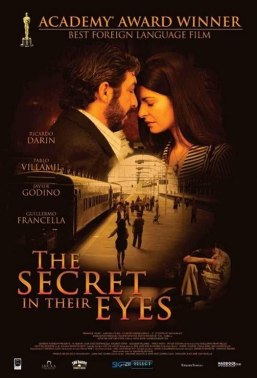
I first read The Secret in Their Eyes after seeing Juan José Campanella’s film adaptation, El secreto de sus ojos, which won the 2010 Oscar for Best Foreign Language Film. What a fabulous adaptation this is, especially in its use of the visual to bring out key themes: close-ups of eyes and gazes, for example, and the symbolism of the colour red – look out in particular for Irene’s roses. The acting is superb, and the wittiness of the script really captures the dynamics of Benjamin, Irene and Sandoval’s relationships.

But there are also some modifications to the plot: Irene is much more present in the film than in the novel (which I liked), and there were a couple of other changes towards the end designed to provide some extra drama (which I wasn’t so keen on). However, the latter certainly aren’t deal-breakers. It’s rare that a novel and film adaptation complement each other so well, and I hearily recommend both.

Don’t bother with the later Hollywood adaptation starring Julia Roberts et al. It got a 39% rating on Rotten Tomatoes – ’nuff said.