Meet the Gang: Anna North’s Outlawed (USA)

Anna North, Outlawed, Weidenfeld & Nicolson 2021 (USA)

First line: In the year of our Lord 1894, I became an outlaw.

Anna North’s Outlawed treats us to a beautifully realised alternative America of 1894, where seventeen-year-old Ada lives with her sisters and midwife mum, Evelyn, in the Dakota town of Fairchild.

The town’s name is a clue to the novel’s subject: around 60 years earlier, the Great Flu swept through the land, decimating the population and creating what is effectively a religious cult of the child. Grief, trauma and the need to reproduce has made fertility and child-bearing an obsessive social focus, and young wives are watched like hawks in their first year of marriage to see if they can successfully conceive. If they can’t, they risk being deemed ‘barren’, and possibly, if things go badly, being branded a witch — with deadly consequences.

When Ada finds herself in this tightest of spots, her mother is able to get her to safety. But one thing leads to another, and soon she’s on the run with the intriguing Hole in the Wall Gang, whose charismatic leader, the Kid, has a utopian dream that’s going to need the heist of all heists to finance it.

So what we have here is a feminist Western that’s a rollicking read (bombs made of horse dung!), but that also explores complex themes: the social fallout of a pandemic; how ignorance and fear leads to catastrophic scapegoating; the paths taken by individuals who are criminalised through no fault of their own; the alternative communities and alliances that such individuals forge; the resilience and collective action that may occasionally win the day.

The characters – from Ada and Evelyn to the Kid, Texas, Elzy, Lark and Amity the Dappled Grey Mare – are plucky, complicated and engaging, and the descriptions of the American Wild West – all searing red rock and herds of buffalo – are sumptuous.

But it’s Ada who is the standout star. Her intelligence and determination to follow her own path reminded me of other spirited female narrators undergoing rites of passage, such as Mattie in Charles Portis’ True Grit and Ree in Daniel Woodrell’s Winter’s Bone. There are, of course, also shades of Margaret Atwood’s dystopian Handmaid’s Tale (but things thankfully never get quite as grim as they do in Gilead). Outlawed is a splendidly enjoyable and thought-provoking read.

In other news: I’ve now set up a Pinterest HQ for Mrs. Peabody Investigates, where I’ll pin reviews as they go live. This will hopefully give you all another, more visual way of dipping into or returning to reviews over the year. We’ll see how it goes! Feedback very welcome 🙂

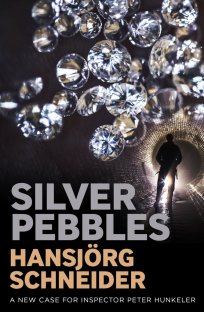
A Swiss gem: Hansjörg Schneider’s Silver Pebbles, tr. Mike Mitchell (Switzerland)

Hansjörg Schneider, Silver Pebbles, tr. from the German by Mike Mitchell, Bitter Lemon Press 2022 [1993]

First lines: The Frankfurt-Basel Intercity – a sleek, streamlined train – was crossing the Upper-Rhine plain. It was the middle of February, and there were fingers of snow along the bare branches of the vines going up the slope to the east.

I read Silver Pebbles at the end of last year, thanks to an advance copy from Bitter Lemon Press, and enthusiastically included it in my best-of-year round up. But I want to give the novel a bit more breathing space here in a post of its own, as it’s just out in the UK now and will be out in the US in February.

Although the Bitter Lemon website describes the novel as the second in the acclaimed ‘Inspector Peter Hunkeler’ series, it was actually the first of the novels to be published in the German-speaking world back in 1993. This makes it an especially good place to start if you’ve not yet read The Basel Killings, which came out last year.

Silver Pebbles introduces us to jaded Basel police inspector Peter Hunkeler, who’s nearing retirement, and treats us to a wonderfully absorbing case.

When elegantly attired Lebanese smuggler Guy Kayat flushes some diamonds down a station toilet to evade the police, he sets off a chain of bizarre events. The diamonds are found by Erdogan Civil, a sewage worker called in to clear a blockage, who immediately thinks his dream of opening a hotel back in Turkey is about to come true. But of course, life is infinitely more complicated than that, as Erdogan’s supermarket-cashier girlfriend Erika Waldis realises straight away…

This is a very human tale, told in a way that reminded me a bit of Sjöwall and Wahlöö’s ‘Martin Beck’ series – the novel has a matter-of-fact style leavened with genuine warmth and a dry sense of humour, not to mention the odd Keystone Cops moment when the police tie themselves up in knots. But it’s Erika who is the slow-burning star of the show, with a perceptiveness and intellect to match the police inspector’s own.

Silver Pebbles still feels remarkably fresh today, probably because it has some universal truths to share with (middle-aged) readers. It’s no surprise to find that Schneider is a famous playwright and essayist back in Switzerland, or that his 10-novel crime series has won major awards such as the Friedrich Glauser Prize. And translator Mike Mitchell does a particularly lovely job of capturing the novel’s humour and Inspector Hunkeler’s grumpiness.

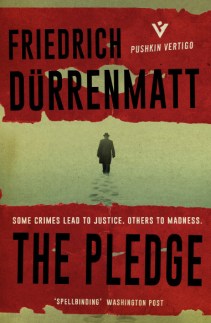
And speaking of Swiss crime fiction… if you haven’t yet read Friedrich Dürrenmatt’s The Pledge (1958), then you’re in for a treat. It remains one of my all-time favourite crime novels, and has to be one of the cleverest Krimis ever written, especially in terms of subverting genre conventions. You can read my (updated) post on it here…

And finally, a topical crime oddity…

Many of you will know the British TV police series Line of Duty, which features the iconic AC-12 unit carrying out internal investigations into potentially corrupt members of the police.

Yesterday, the satirical campaign group Led by Donkeys released a spoof video that features AC-12 (Ted Hastings, Kate Fleming and Steve Arnott) interrogating Prime Minister Boris Johnson about the political scandal dubbed #PartyGate – as part of ‘Operation BYOB’!

Now, I’m a keen crime drama and politics watcher, but I’ve never seen anything like this before: a cult TV series that pulled in 12.8 million viewers for its last season finale being used to intervene directly in a political situation, and instrumentalising crime fiction conventions (in this case the classic ‘police interrogation scene’) in order to expose a politician’s ‘crimes’.

Leaving the politics of the matter aside, can anyone think of a similar kind of intervention in the past? A political statement made using a TV drama in ‘real time’, as opposed to being incorporated into an episode after the fact?

The video was posted yesterday and has had 7.2 million views on Twitter to date… You can read all about it here.

Homage to Sidney Poitier: In the Heat of the Night (1967)

The actor Sidney Poitier, who appeared in a number of groundbreaking films in the course of his long and illustrious career, has died at the age of 94.

The news made me revisit Norman Jewison’s 1967 crime drama In the Heat of the Night – both to watch the great man in action and to marvel that a film dealing so overtly with racism could have been made in 1967, let alone received the Oscar for Best Picture that year. It’s an extraordinary and enduring achievement, and feels freshly relevant in the context of America’s current divisions.

Do avoid watching the dreadful MGM trailer, which fuses all the shouty bits together in rather a crass way. The film is capable of significantly more nuance, as the outstanding scene below shows…

Here we see Virgil Tibbs (Poitier) – guilty of nothing more than waiting for a train to Philadelphia – being brought to the sheriff’s office in the town of Sparta, Mississippi on suspicion of having killed a businessman. Why? Because he’s black and has money in his wallet, which strikes the white arresting officer as a category error. The push-and-pull of Tibbs’ relationship with racist Chief Gillespie (Rod Steiger), who quickly realises he’ll need the black man’s expertise to solve the murder, is immediately on display. The two deliver a masterclass in acting to the fortunate audience.

The film is an adaptation of John Dudley Ball’s 1965 crime novel In the Heat of the Night, which won the 1966 Edgar Award for best debut by an American author and was the first in a series featuring homicide detective Virgil Tibbs. Ball worked for a while as a deputy in the Los Angeles County Sheriff’s Office and clearly drew on this experience when writing the novel, which rings true both in terms of police procedure and law enforcement working culture.

The plot of the novel differs from the film in some respects: Tibbs is from California rather than Philadelphia, the murder victim is an Italian-American conductor organising a music festival in the town, and there’s a storyline involving policeman Sam Wood which doesn’t completely make it into the film. But lots of the film dialogue is taken directly from the novel, such as bits of the exchange between Tibbs and Gillespie in the scene above, and the iconic line ‘They call me Mr. Tibbs’.

The novel also does something extremely valuable: it gives us access to the minds of Gillespie, Wood and the other townsfolk, so that we can observe the workings of racist thought processes up close – along with the strategies Tibbs employs to overcome the many obstacles placed in his path.

In the Heat of the Night does fall down in one key respect: its depictions of gender and class are often stereotyped. But the novel is still very much worth reading and is widely available, most recently in the handsome 50th anniversary Penguin Modern Classics edition.

I’ll leave you with Ray Charles singing the soulful, gospel-inflected ‘In the Heat of the Night’ (Quincy Jones/Marilyn & Alan Bergman), which plays during the opening credits of the film. Thank you, Mr. Poitier.

Sound of the 70s: Silvia Moreno-Garcia’s Velvet was the Night (Mexico)

Silvia Moreno-Garcia, Velvet was the Night, Jo Fletcher Books 2021

First line: He didn’t like beating people.

Mexican-Canadian writer Silvia Moreno-Garcia is one of those ridiculously talented authors who can turn her hand to any genre. She’s probably best known for her novel Mexican Gothic (it does what it says on the tin), but describes her latest novel as ‘noir/pulp fiction’, albeit with an unusual historical twist.

Velvet was the Night is set in 1970s Mexico during the ‘Guerra sucia’ or Dirty War, which saw the right-wing government abduct, imprison and often murder those viewed as a threat to its ideology and power – especially left-wing students and working-class activists. Audaciously, one of the novel’s main characters is a member of Los Halcones – the Hawks – a shadowy group of heavies trained by the government (with the covert backing of the CIA) to disrupt student demos and worse. The codename of the young man in question is El Elvis, after his musical idol, and it is through his eyes that we observe both the internal workings of the group and the psychology of an individual who’s got himself into a serious fix.

Velvet‘s other key figure is Maite Jaramillo, a secretary terrified of spinsterhood, who escapes the everyday grind and turbulent politics around her through a love of music and Secret Romance magazines. She also harbours a grubby secret of her own: she likes to steal small items from her neighbours’ apartments while pet-sitting for them. It’s when beautiful, bohemian student Leonora disappears –  and thus fails to reclaim her cat – that Maite’s humdrum world gets turned upside down.

Along with the characterisation, a key strength of Velvet was the Night is its tightly plotted narrative. Its ending feels satisfying and complete, but could also serve as an intriguing beginning to a whole other story. Another very nice touch is the playlist at the back of the novel, which showcases the songs woven into the text – a clever nod to the subversive status of certain kinds of music in 1970s Mexico. You can find it on Spotify here.

True crime tidbit: many who work in the world of publishing, like my good self, have been following a bizarre, long-running case involving fake identities and a phishing scam whose aim was getting hold of valuable manuscripts prior to publication. News comes this morning that the FBI has made an arrest… Innocent until proven guilty, of course, but it’s quite a breakthrough in what’s an absolutely fascinating case for bookish types – not least in relation to the question of motivation. It’ll make a great podcast.

Sisterly devotion: Kwon Yeo-sun’s Lemon, tr. Janet Hong (South Korea)

Kwon Yeo-sun, Lemon, tr. Janet Hong, Head of Zeus 2021 [2019]

First line: I imagine what happened inside one police interrogation room so many years ago.

This opening line is narrated by a young woman called Da-on, as she reflects on her beautiful older sister’s murder in Seoul on 1 July 2002.

There are two prime suspects, both of whom attended the same high school as victim Hae-on: Shin Jeongjun, the privileged son of wealthy parents, and Han Manu, the son of an impoverished single mum. But while the mystery of what happened to the nineteen-year-old girl is a powerful component in the narrative, its main focus is the impact of Hae-on’s death on those closest to her – her sister, her mother, her classmate. We are shown events unfolding largely through female eyes, in eight pithily titled chapters spanning from 2002 (‘Shorts’) to 2019 (‘Dusk’).

Here’s Da-on, for example, on the early trauma of her sister’s death:

Since both Mother and I were falling at a very slow speed,
I didn't realise we were falling at first.

The women’s grief and their struggle to fill the gap left by the dead girl are very finely drawn. Da-on embarks on two highly original strategies in this respect, each of which ultimately comes with a price – both to her and others – in the seventeen long years following Hae-on’s death.

Interwoven with all this is the theme of class, which is front and centre in other recent examples of crime-inflected South Korean culture, from the Oscar-winning film Parasite to Netflix hits Squid Game and Signal. We’re shown a justice system that’s stacked against those from less well-off backgrounds, and how the rich have more options due to their connections and wealth.

Lemon is a beguiling, unsettling, worthwhile read, which also offers some fascinating glimpses into South Korean culture thanks to Janet Hong’s sensitive and attentive translation.

If you’re interested in finding out more about Kwon Yeo-sun’s work, there’s an interesting interview with her over at Korean Literature Now.

What next for Mrs. Peabody Investigates?

Happy New Year to you all! I hope you had a relaxing break and managed to squirrel yourself away for some of it with a good crime novel or two.

As is customary at this time of year, I’ve been doing a bit of a stocktake, particularly in relation to this blog. It’s been a sobering experience:

  1. It turns out I wrote a paltry five blog posts in 2021. FIVE! These consisted of one literary obituary, two Petrona Award posts, one set of summer reviews, and Mrs P’s Christmas recommendations. Spot what was missing: any semblance of regular crime reviewing. Hmmm.
  2. I managed to miss the 10th anniversary of Mrs. Peabody Investigates!!! I started blogging in January 2011, but that wonderful milestone just passed me by…

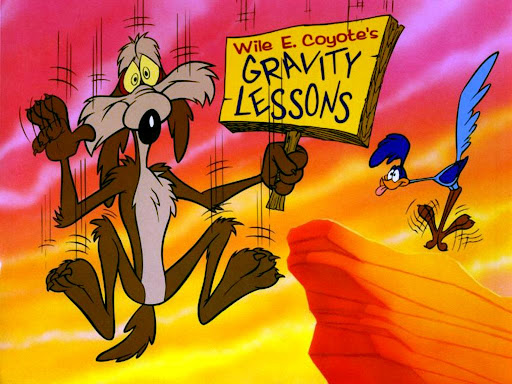
All of which tells me I can’t outrun the laws of time and space.

I won’t bore you with the details – just imagine a classic pandemic brew of extra work and family pressures. However, one thing is clear: something needs to change.

Option 1 is to say ‘it’s been a good run’ and let Mrs. Peabody bow out gracefully.

Option 2 is to say ‘must do better this year’, knowing that the end result is likely to be much the same.

Option 3 is to try a little experiment… And that’s what I’ve decided to do.

You’ll see there’s a jazzy new ‘donate’ button on the main menu bar at the top of the blog.

The idea is this: for those blog readers who can and wish to, there’s the option of donating a little something to help ‘power’ the blog. What this means in practice is that any donations will go towards buying me time to write reviews. Or to put it another way: as a freelancer with finite resources, they’ll allow me to liberate some precious hours to review and post more regularly.

BUT – and this is very important – there will never be any expectation on my part that readers should donate. The blog will always remain accessible and ‘free at the point of delivery’. No paywall for Mrs P! And you have my word that I’ll remain independent. ‘Mrs. Peabody Investigates’ will always review the best international crime fiction, TV and film without fear or favour.

As I say, all of this is an experiment and I’m very relaxed about the outcome. We’ll just see how things go…

So onwards and upwards, starting tomorrow with a review of Kwon Yeo-sun’s Korean crime novel Lemon!