A week today, I’ll be chairing two wonderful German-themed panels at Newcastle Noir. If you’re anywhere near Newcastle, please do come along. The events are truly excellent value (£5!) and offer a brilliant opportunity to see six outstanding British, Irish and German crime writers in action.
Panel 4 on ‘German Historical Fiction’, Sat 29 April, 3 – 4pm at the Lit and Phil.
The ‘German Historical Fiction’ panel features Luke McCallin, William Ryan and David Young, three English-language authors who write historical crime novels and thrillers featuring German protagonists and/or German settings. We’ll be exploring each of these authors’ works and the challenges of writing on morally complex historical subjects.
Luke McCallin’s work with the UN inspired him to write the ‘Gregor Reinhardt’ historical crime series, which follows a German intelligence officer in Sarajevo during the Second World War (No Exit Press). His latest novel, The Ashes of Berlin, sees Reinhardt return to Berlin, now under Allied occupation, in 1947.
William Ryan’s ‘Captain Korolev’ series, set in 1930s Stalinist Russia, has established him as a top historical crime writer. His latest novel, The Constant Soldier (Mantle), is a historical thriller set in German-occupied Silesia in 1944, and was inspired by genuine photos showing SS personnel on leave at a ‘rest-hut’ near Auschwitz.
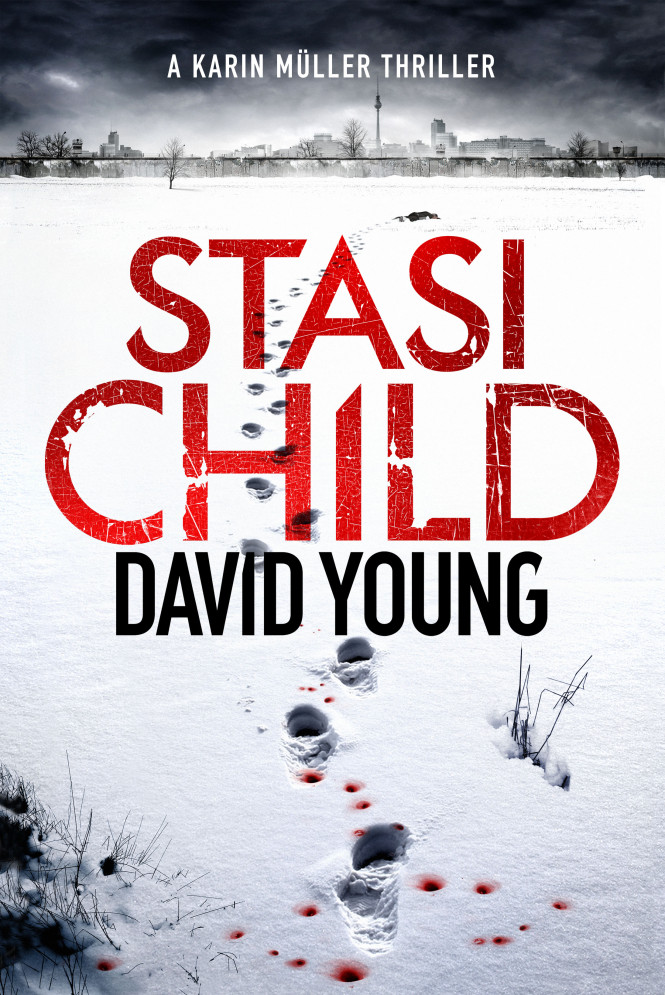
David Young was a journalist before becoming a full-time author. His debut novel Stasi Child, set in 1970s East Germany, won the 2016 CWA Endeavour Historical Dagger. The second in the ‘Karin Müller’ series, Stasi Wolf, was published earlier this year (Bonnier Zaffre).
Panel 6 on ‘German Noir’, Sat 29 April, 6.30-7.30pm at the Lit and Phil.
The ‘German Noir’ panel features three of German crime fiction’s brightest talents – Sascha Arango, Cay Rademacher and Wulf Dorn. They’ll be talking about their works, ranging from historical crime to psychological thrillers, and the vibrant German Krimi scene.
Sascha Arango is one of Germany’s most prominent screenplay writers and a two-time winner of the Grimme Prize for his work on the iconic TV-crime series Tatort. His 2015 novel The Truth and Other Lies (trans. Imogen Taylor; Simon & Schuster), features an outrageous Ripley-esque protagonist and was a Radio 2 Bookclub choice.
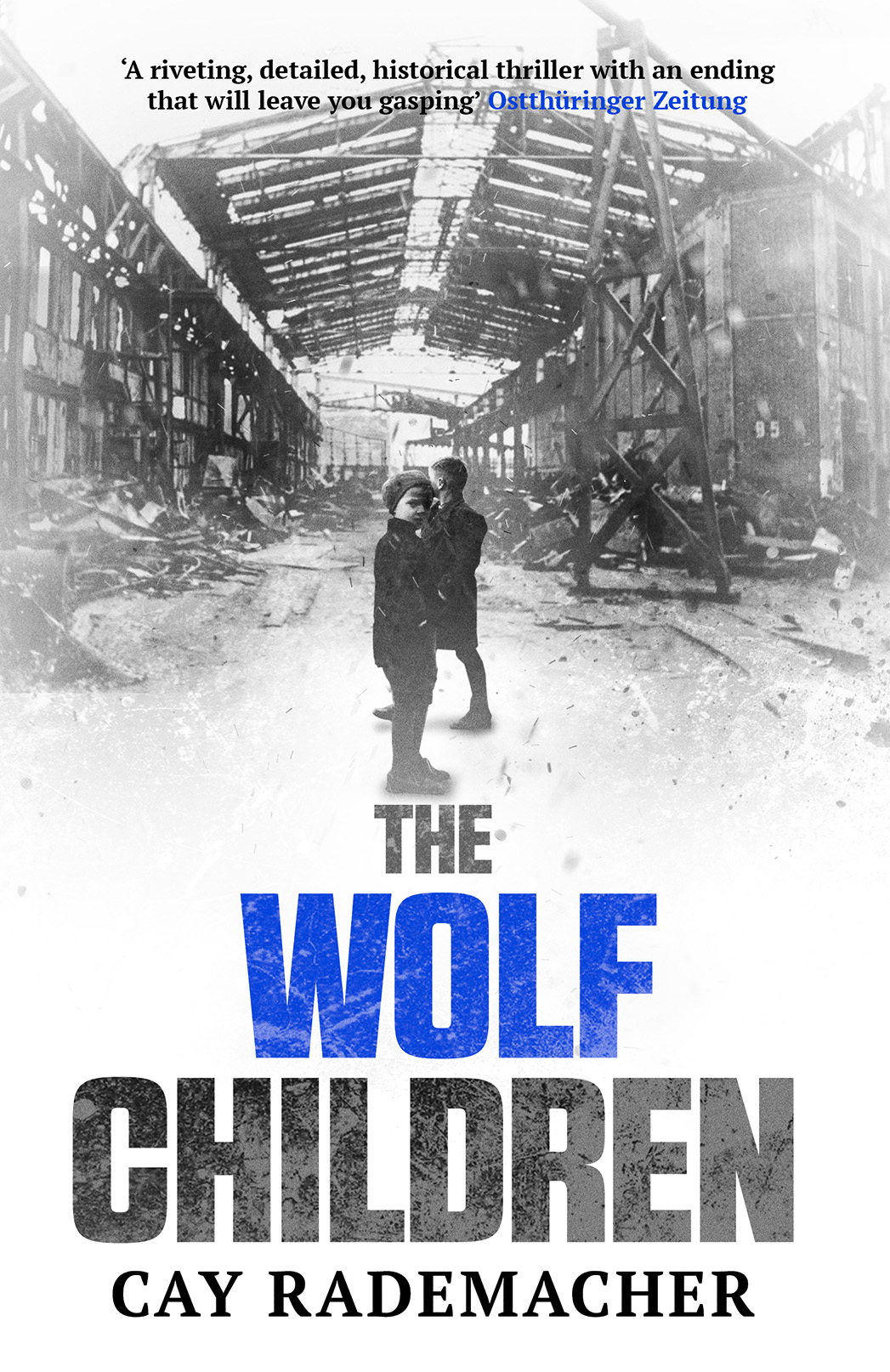
Cay Rademacher is the author of the ‘Stave’ trilogy (trans. Peter Millar; Arcadia), which shows Chief Inspector Frank Stave fighting crime in the ruins of 1947 British-occupied Hamburg. Cay is also the author of a series set in the Provence – the first, Murderous Mistral, will be available in English in September 2017 (St Martin’s Press).
Wulf Dorn’s first novel Trigger was an international bestseller. Since then he has published six more psychological thrillers, which have been translated into ten languages. He has won numerous awards, including the French Prix Polar for Best International Author.
AND if you’re around on Thursday 27th April… David Young, author of Stasi Child and Stasi Wolf, offers an illustrated talk about the real-life stories behind his novels at the Newcastle Noir fringe. This includes world exclusive photos of a mid-1970s escape with a twist which inspired a key plot point in Stasi Child. Dare you take part in a Communist v Capitalist tasting test of hazelnut chocolate spread? I’ll be helping out… Yum!
Leonardo Padura, one of Cuba’s foremost authors, was in London last week for the launch of his new novel, Heretics, with Bitter Lemon Press at Daunt Books. And while he was here, he kindly gave ‘Mrs. Peabody Investigates’ an exclusive interview.
If you haven’t heard of Padura or read any of his crime novels, now is the time… Padura is a master of the genre, “whose prize-winning series of novels about Cuban detective Inspector Mario Conde has changed the face of Latin American crime writing, taking a conventional formula into the category of dark and serious literary fiction” (Jane Jakeman, The Independent).
The first four Mario Conde novels, known as The Havana Quartet, were published in Cuba in the 1990s, and a few years later in the UK by Bitter Lemon Press, which has consistently championed Padura’s work. The quartet comprises Havana Blue, Havana Gold, Havana Red and Havana Black – all translated by Peter Bush – and track four of Conde’s investigations in winter, spring, summer and autumn.
Padura has recently been involved in the quartet’s TV adaptation for American Netflix – entitled Four Seasons in Havana– which I very much hope we will see in the UK soon. Here’s the trailer, which gives a really good flavour of the crime novels and the starring role Havana plays in them (some explicit content):
The highly acclaimed fifth novel, Havana Fever (trans. Peter Bush), rejoins Conde in 2003. Now working as an antiquarian bookseller, he is pulled into investigating the disappearance of 1950s bolero singer Violeta del Rio.
And so we come to Heretics, the latest Conde novel, translated by Anna Kushner. It has to be regarded as something of a departure for Padura, as it’s nearly twice as long as any other novel in the series and moves far beyond the author’s usual Havana setting. I’ve read about a quarter of it so far, and am dazzled by its ambition and heart. In my view, it could be read either as a new instalment in the series or as a standalone in its own right.
Here’s the book jacket description –
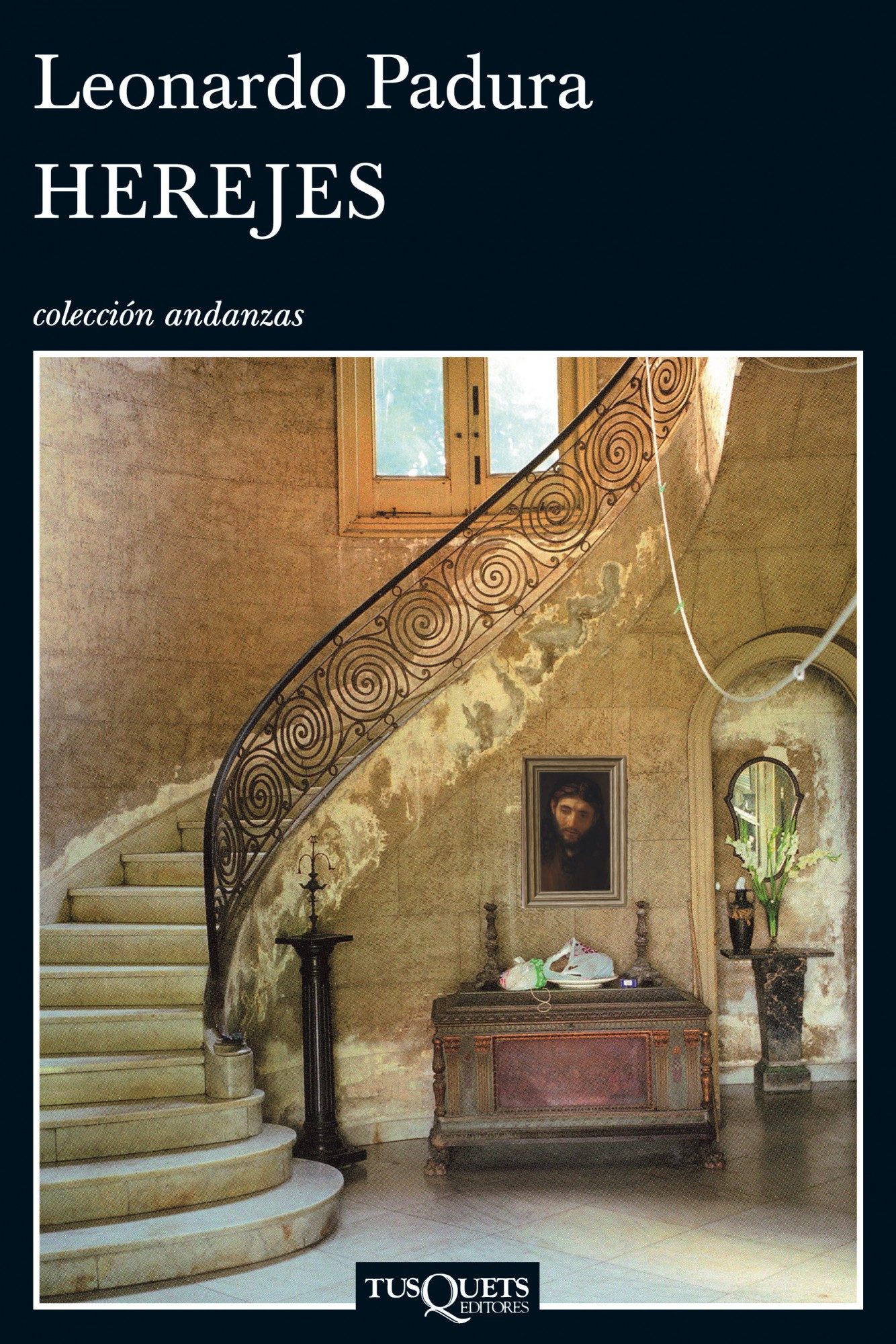
“In 1939, the Saint Louis sails from Hamburg into Havana’s port with hundreds of Jewish refugees seeking asylum from the Nazi regime. From the docks, nine-year-old Daniel Kaminsky watches as the passengers, including his parents, become embroiled in a fiasco of Cuban corruption. But the Kaminskys have a treasure they hope will save them: a Rembrandt portrait of Christ. Yet six days later the vessel is forced to leave the harbour with the family, bound for the horrors of Europe. The Kaminskys, along with their priceless heirloom, disappear.
Nearly seven decades later, the Rembrandt reappears in an auction house in London, prompting Daniel’s son to travel to Cuba to track down the story of the lost masterpiece. He hires Mario Conde, and together they navigate a web of deception and violence in the morally complex city of Havana.
In Heretics, Leonardo Padura takes us from the tenements and beaches of Cuba to Rembrandt’s gloomy studio in seventeenth-century Amsterdam, telling the story of people forced to choose between the tenets of their faith and the realities of the world, between their personal desires and the demands of their times.
A grand detective story and a moving historical drama, Padura’s novel is as compelling, mysterious, and enduring as the painting at its centre.”
The original cover of the novel, showing the painting at the heart of the narrative.
Now it’s time for that interview!
Leonardo gave his interview answers in Spanish, and I’m very grateful to Peter Bush for providing us with this excellent translation.
Mrs. Peabody: Leonardo, a very warm welcome to the blog. Heretics, your latest Mario Conde novel, is over 500 pages long and thus significantly longer than the others in the series. Can you tell us why the story Heretics tells needed more space than those featured in the other novels?
Leonardo Padura: Novels are realms of freedom, and what that allows is the potential to exceed yourself as much as you need, to say whatever you need, always with one aim in mind: to communicate whatever you need. Moreover, this isn’t simply another novel in the Mario Conde series, but an experiment in the fusing of the historical novel and police procedural, in having more than one hero and more than one story, in mixing everything up and breaking all limits…even the number of pages.
Mrs Peabody: Heretics has incredible historical breadth. Portions of the novel are set in Poland in the 1600s, Havana and Europe in the 1930s, Havana in the 1950s, America in the 1980s, as well as more modern-day Havana. How did you go about researching the historical events you portray? And was it difficult to integrate so much history into one literary narrative? Was there a danger that the history would overwhelm the novel?
Leonardo Padura: The research behind this novel was complex because, as you say, it involves different eras and locations. I had to study in depth Jewish culture and religion, the art of Rembrandt, Cuba in the 1940s and 50s… in order to focus on the issue of our right as individuals to exercise our freedom. I wanted it to be a reflection that went beyond a perspective locked into a single context and became as universal as the issues of freedom, free will and heresy are… And if you are a novelist you must recognise your limits and aims and try to write a novel rather than a historical essay. There is a frontier between history and fiction and you must never let it out of your sight.
Map of Cuba
Mrs Peabody: Was there a particular historical incident that inspired the novel, such as the shameful story of the Saint Louisin 1939?
Leonardo Padura: The story of the SaintLouis is the origin of everything, but that’s all: I used it as a highly dramatic and horrific historical pretext to go in search of other stories relating to individuals who suffer the weight of history, who are condemned though they have never committed a crime, who only suffer because they are what they are or want to be. That’s why the novel is what it is.
Mrs Peabody: What is the significance of the novel’s title, Heretics?
Leonardo Padura: There are various heretics in my novel, in different historical periods and places. They are individuals who decide to exercise their free will and then pay the price. Society doesn’t ordinarily accept people who refuse to toe the line, non-conformists, rebels, people who are different, and generally considered to be “heretics”… However, the world would never have progressed or changed without “heretics”. In a way, even if they don’t take up arms, they are the revolutionaries…
Mrs Peabody: How would you categorise Heretics – as a crime novel, historical crime novel or historical epic?
Leonardo Padura: I don’t know. It is a “heretical” novel in the sense that it can be read as combining all those perspectives, and even a philosophical one. And that was what I intended. A novel that was simultaneously many different novels, in its plot, possible interpretations and structure and language.
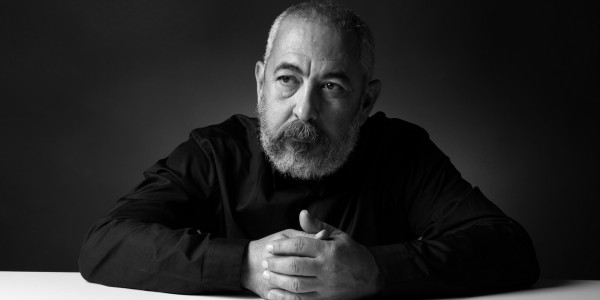
Leonardo Padura
Mrs Peabody: Was Heretics designed to be read as a warning from history?
Leonardo Padura: To a degree, it was. History is something that you live and when you look back, it becomes History with a capital H. While you are living it, you are often unaware that such an act, whether individual or social, may be crucial, but History relentlessly pursues us, stays with us, influences our lives and… requires careful handling!
Mrs Peabody: You describe your detective, Mario Conde, as a ‘paradigmatic member … of the most disappointed and f*cked up generation within the new country that was taking shape’ (Heretics, 10). Can you explain to readers unfamiliar with recent Cuban history why Mario’s generation feels this way?
Leonardo Padura: Mario Conde’s, my generation, grew up with and participated in the [Cuban] Revolution, with greater or lesser faith, but nevertheless participated. And we thought we would have a future that we had earned through our own efforts as students, professionals or workers… That future had a different face, it wasn’t lavish, but it existed and… then suddenly everything fell apart, because it was a dream based on another dream that turned into a nightmare. The disappearance of the USSR and, with it, the aid that sustained Cuba economically, reduced us to a state of poverty and meant we really had to struggle to survive, now without the possibility of imagining a future. We could only struggle … in Cuba or in the diaspora. Over the last few years some things have changed in Cuba and with these changes my generation has been displaced. Too young to die, too old to recycle itself and… and many people have simply felt a huge sense of failure and loss… Beginning with the dreams we once had.
Mrs Peabody: The city of Havana plays a major role in the Conde series. Did you always intend to use the series as a way of chronicling the changes taking place there, or did that happen naturally as the series unfolded?
Leonardo Padura: I write intending to write the best novel possible, and reflect the trials and tribulations of the human condition and, at the same time, to leave a chronicle that closely follows the nature of life in Cuba over recent decades. That’s why time and space are so important. My time, my country and, of course, my city, because I am, above all a writer who is from Havana – unhabanero -, who writes in the language of Havana and sets his stories in Havana… and when I wander far off in time or history, I always return to Cuba, to Havana. A Cuba and a Havana that, for sure, sometimes seem both enigmatic and alien to a character like Mario Conde.
Mrs. Peabody: Many thanks for visiting the blog, Leonardo, and for taking the time to answer those questions. It’s much appreciated!
Julia Heaberlin, Black-Eyed Susans (Penguin, 2016)
First line: Thirty-two hours of my life are missing.
Seventeen years ago, Tessa Cartwright survived a horrific attack by a serial killer, who left her for dead with his other victims in a Texan field of black-eyed Susans. After testifying in court and seeing her ‘monster’ jailed, she has built a new life with her daughter Charlie. However, when new evidence suggests that the convicted man is innocent, she realises she’ll have to revisit the past.
This psychological thriller contains a number of hard-hitting elements, not least the traumatic events Tessa endures as a teenager and her subsequent treatment by the media. Heaberlin approaches this material with sensitivity and intelligence, depicting Tessa both as a victim who is physically and psychologically scarred by her experiences, and as a resourceful and resilient survivor who has found meaning in motherhood and her artistic work. She reminded me a bit of Gillian Flynn’s Libby Day in Dark Places – and hats off to both authors for choosing to depict their traumatised female protagonists in such a complex way, without sentimentality or salaciousness.
As readers, we are taken through events via a split narrative that traces present-day developments and a younger Tessie’s experiences in the months right after the attack. A particularly fascinating strand of the present-day narrative explores the work of forensic scientists and the emerging area of isotope analysis, which can help to identify victims by matching bone samples with chemical markers from specific geographical areas. The novel also takes a sober and critical look at death penalty debates.
I found Black-Eyed Susans so gripping that I read it in more or less one sitting (I discovered afterwards that it’s part of the so-called ‘Grip Lit’ phenomenon). The final section is marked by plenty of twists and turns – some a little far-fetched – but overall, this is a very satisfying novel that’s guaranteed to keep you hooked to the very last page.










 Mrs. Peabody Investigates