Eva Dolan’s After You Die (UK), Val McDermid’s Out of Bounds (UK) and Iceland Noir 2016

My reading mojo has been largely restored courtesy of two fine British authors, Eva Dolan and Val McDermid.
dolan-after-you-die

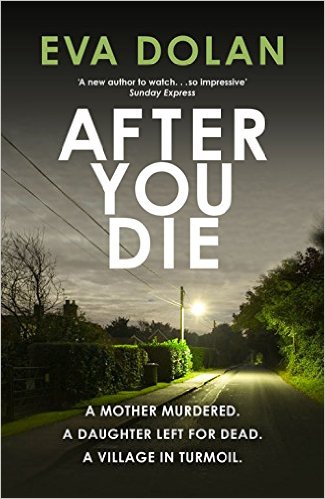
Eva Dolan After You Die (Vintage 2016)

After You Die is the third novel in Dolan’s ‘DI Zigic and DS Ferreira’ series. Like its predecessors, it’s a skilfully crafted police procedural set in Peterborough, and features a hard-hitting crime: the murder of a woman, Dawn Prentice, and the possible murder of her severely disabled daughter, Holly. Dolan uses the investigation to explore a number of weighty issues, such as hate crimes, internet abuse and right-to-die debates, but does so with a deft touch, so that readers never feel like they’re being lectured. The characterisation of the Hate Crimes team and its suspects is also excellent – there’s lots of beautifully observed, authentic detail that grounds these figures in a recognisable reality. The development of DS Ferreira’s character after the events of the previous novel, Tell No Tales, is particularly good.

If you’re new to this series, you might like to start with the opening novel, Long Way Home, which is a very accomplished debut.

mcdermid-out-of-bounds

Val McDermid, Out of Bounds (Little Brown, 2016; Whole Story audiobook narrated by Cathleen McCarron)

Out of Bounds is the fourth book in the ‘DCI Karen Pirie’ series, set in Edinburgh and Fife. I haven’t read the others yet, having dived in to this one by chance, but am now very keen to do so (the first is The Distant Echo).

Detective Chief Inspector Pirie, who heads up Police Scotland’s Historic Crimes Unit, is tenacious, resourceful and prepared to bend the rules in the service of justice. Her job is to review cold cases when new evidence comes to light – such as when a teenage joyrider’s DNA profile links to DNA from a young hairdresser’s murder two decades earlier. In a parallel investigation, an odd-looking suicide leads Karen to examine an old murder that was presumed – possibly erroneously – to have been caused by an IRA bomb.

There were two aspects of this novel that I particularly enjoyed. The first was the depiction of a strong Scottish policewoman leading multiple investigations with aplomb – a nice counterpoint to Ian Rankin’s Rebus. While facing plenty of personal and professional challenges, Karen is kept going by a combination of her own determination and the support of close friends. (The emphasis on the importance of friendship reminded me a little of Claudia Piñeiro’s Argentinian crime novel Betty Boo). The second was the plotting masterclass McDermid provided as she moved effortlessly between the developments in the individual cases while maintaining a clear, unified narrative. I remember hearing the author argue, in a debate on crime fiction vs ‘high literature’, that plotting is a skill that is often underestimated and overlooked, and think her point is beautifully made in this novel.

One extra thought: I listened to the audiobook version, expertly narrated by Cathleen McCarron. I think that this added to my enjoyment of the book, because it allowed me to hear and appreciate the novel’s Scottish inflections and turns of phrase.

iceland-noir-2016-33

As it happens, Val McDermid is one of the headliners at Iceland Noir 2016, which is taking place right now in Reykjavík (hope you’re all having a great time!). Val gave the convention’s opening address on Thursday evening – as reported here by CrimeFictionLover – in which she rightly asserted that ‘there ain’t no cure for loving crime fiction’. 

You can check out Iceland Noir’s programme here and its featured authors here. It’s a great convention and I would thoroughly recommend going. Hope to make it in 2018!

If you’re new to Icelandic crime, here are some earlier Mrs Peabody posts on the subject:

Indriđason’s The Draining Lake

Sigurðardóttir’s Why Did You Lie?

Icelandic TV drama Trapped

Quentin Bates interview about his ‘Gunnhildur (Gunna) Gísladóttir’ series

Ragnar Jónasson’s ‘Dark Iceland’ series – translation special

img_4922

Heading out to sea from Reykjavík harbour, 2014
American Pie

I met a girl who sang the blues
And I asked her for some happy news
But she just smiled and turned away

Don McLean, American Pie

american-pie

I haven’t read any crime fiction for the last two weeks, mainly because I’ve been mesmerised by the slow-mo car crash of the 2016 US election. So this post is mostly about that seismic political event, with some crime fiction stuff mixed in. Normal service will be resumed shortly, promise.

Quite a few of us in the UK stayed up for the results, and saw almost exactly the same story unfold as for the EU Referendum back in June: the polls were unreliable, the results started going in the wrong direction almost immediately, and as the hours passed, an awful sinking feeling set in. My heart went out to my American friends, because like many of us here I could understand (at least to some extent) what you were feeling during that long, dark night: the total and utter dismay of witnessing a ‘black swan’ phenomenon that will fundamentally alter your political landscape, unleash destructive forces of xenophobia, and have potentially catastrophic long-term effects.

I’ve largely steered clear of the papers since then – the headlines read like some really bad dystopian alt-history novel – but have dipped into a few online pieces. There is some solace to be had there, such as the fact that HRC appears to have won the popular vote, and that people/organisations are already rolling up their sleeves for the work ahead (see this HuffPost piece: ‘If you’re overwhelmed by the election, here’s what you can do now’).

One thing we’ve realised here in post-Brexit UK is the importance of speaking up for our core democratic values (I explain why in the final comment below), and I’ve been struck by how vocal writers/actors such as Stephen King, George Takei and J.K. Rowling have been about the US election online. Their willingness to speak up is no small thing given the often hostile response they receive in return. This wonderful tweet from Rowling (after the results) ended up being shared over 40k times: “We stand together. We stick up for the vulnerable. We challenge bigots. We don’t let hate speech become normalised. We hold the line“. King and Rowling are part of our crime-writing community too, of course, so I’m particularly proud of them.

Two thoughts on all of this and crime fiction. Firstly, Ben Winter’s ‘Last Policeman’ trilogy has been on my mind a great deal. These novels play out in an America threatened by an asteroid strike (!!!), but I’m drawn to them at the moment because they depict individuals reacting to hostile situations with integrity and resilience (for more on the trilogy, see my post here). Secondly, crime writer Eva Dolan and I had a brief Twitter chat yesterday about how crime fiction might respond to the political events of 2016. Two trends are likely: the gritty, hard-hitting crime novel that addresses these events directly, and ‘cozy’ crime fiction that offers an escape from it all. I think both have an important role to play. We obviously need crime fiction (all fiction) to illuminate serious political, social and ethical issues, but also need to look after ourselves, which may mean seeking solace in ‘respite crime’ when required. I suspect I’ll be mixing them up liberally according to mood.

Anyhow – hands across the pond, lots of love, and on we go…

The Missing (series 2), Stephen King’s 11.22.63, and the virtues of voting wisely

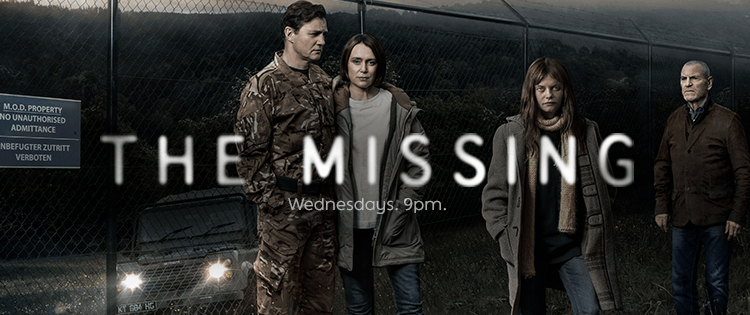
I’ve been catching up with lots of TV lately – Australian political thriller The Code (very good) and the new series of The Missing (BBC1), which also has me completely gripped.

the-missing-2

Series 1 of The Missing involved the disappearance of a young boy, Oliver Hughes, on a family holiday in France. The new series cleverly flips that ‘missing child’ scenario by opening with the unexpected reappearance of Alice Webster, a young woman abducted as a schoolgirl over a decade before. The main connection to series 1 is Julien Baptiste (Tchéky Karyo), the retired French police detective who investigated Oliver’s case, and who is now drawn to Alice by her possible link to a second abducted girl, Sophie Giroux. Aside from him, there’s a new set of characters featuring wonderful British actors such as Keeley Hawes, David Morrissey and Roger Allam. Hawes stands out for me in particular as Alice’s mother Gemma.

There were mutterings from some viewers after episode 1 about the difficulties of keeping track of three timelines (2003 when Alice was abducted, 2014 when she returns home, and the present day), but it’s very much worth persevering as those temporal layers create a wonderfully rich story. And while the drama feels very British in tone, its international settings and characters give it added depth: the Webster family live on a fictional military base in Eckhausen in Germany; we see British military police working together with German police and (with some reluctance) the French detective; the latter’s investigations even take him to Iraq for a while. And every single episode has had a twist that will make you drop your knitting – especially episode 4! I’m looking forward to the rest immensely.

king-22-11-63

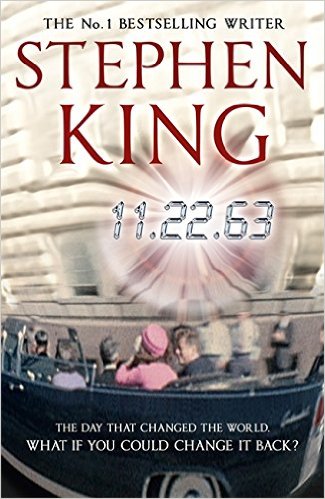
I’m a little late to this party – Stephen King’s 2011 time-travel epic 22.11.63, which sees English teacher Jake Epping step back into a 1958 America, five years before President Kennedy’s assassination in 1963. The big question at the heart of the narrative – ‘would you change history if you had the chance?’ – is explored in an inventive and nuanced fashion.

Like some of King’s other novels, such as Dolores Claiborne (a favourite of mine), 22.11.63 draws on elements of the crime and thriller genres. Alongside the infamous murder of Kennedy, there’s a second murder case that takes up a significant part of the narrative. Both of these place Jake in the role of a detective tracking suspects, and in the role of a potential murderer, as he *could* stop the perpetrators from committing their crimes by killing them. But taking such action would obviously raise serious ethical questions, leaving Jake with some tough choices to make…

King does a brilliant job of depicting Jake’s incredible journey back to ‘the Land of Ago’, and recreates the America of the late 1950s and early 1960s in meticulous, loving detail. The mechanics of time travel are given interesting new twists, and the ending is extremely satisfying. Two minor reservations include the sheer length of the novel (I listened to the 30-HOUR audiobook version) and the odd bit of excessive sentimentality (but that could just be me). Hats off to audiobook narrator Craig Wasson, who does a wonderful job of bringing the characters to life, and I must admit that I’m now curious to see the 2016 TV adaptation with James Franco.

Stephen King, 11.22.63 (Hodder and Stoughton, 2011).

a-better-life

Time to liberate this little chap!

All this talk of American presidents reminds me that there’s a certain US election next week. We’ll be watching the results with baited breath on this side of the pond, and hope that our American friends can learn from the Brexit Omnishambles here in the UK.

The EU Referendum taught us that:

  • not voting is not an option. VOTE!
  • protest votes are a luxury you can’t afford. VOTE WISELY!
  • talking to swing voters can make a difference. EVERY VOTE COUNTS!
  • and that there’s NO ROOM FOR COMPLACENCY (polls are fickle, so pretend your candidate’s 12 points down).

Good luck! And for anyone still undecided, I’ll just leave this here: The New York Times endorsement of Hillary Clinton. You might also want to check out this utterly inspiring and hopeful website: I’ve waited 96 years. It’s simply wonderful.