
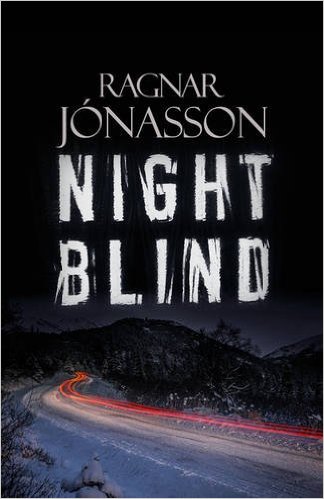
Nightblind is the second novel in the ‘Dark Iceland’ series to be translated into English by Orenda Books. Set in the fishing village of Siglufjörður high in the north of Iceland, it traces Ari Thór Arason’s investigation into the shooting of a fellow policeman outside a deserted house late one night. A gripping police procedural with excellent characterisation and a vivid sense of place, it’s a truly absorbing read (I sat down intending to sample the first three chapters and was rooted to the sofa for hours). Like all of Orenda’s novels, it’s beautifully produced, and includes a couple of maps, which is always a bonus.

Map of Iceland courtesy of http://www.theherringhouse.com/location.html
Translating Ragnar Jónasson’s ‘Dark Iceland’ series
Today, as part of Nightblind’s Orenda blog tour, Mrs. Peabody is delighted to bring you a 360° translation special, which provides some fascinating (and hilarious) insights into Dark Iceland‘s journey from Icelandic to English.
Three individuals play a vital role: author Ragnar (who has himself translated a number of Agatha Christie novels into Icelandic), translator Quentin Bates (also the author of the ‘Gunnhildur‘ Icelandic crime series), and Orenda Books publisher Karen Sullivan, armed with her mighty red pen. Without their dedication, energy and hard work, we wouldn’t have the pleasure of reading this series in English. Here, in their own words, is what the process involves…
Jokes, idioms and swearing (Quentin)

Translator Quentin Bates
It was something of a jump to translating crime fiction after the stuff I had been used to. News and technical material doesn’t leave a great deal of elbow room for interpretation; what’s required is precision, not anything fancy. Fiction is very different, not least because it’s a long text to work on rather than a handful of pages, so a book means you can become absorbed in it long before reaching the end.
The fun, challenging part of the shift to translating fiction, working on Snowblind, Nightblind and now Blackout, is precisely the stuff that doesn’t occur in bare-bones technical material. It’s the idioms and jokes, as these are the things that are often untranslatable, plus there are odd words in every language that don’t have a direct equivalent in English, or maybe not even in any other language. Oh, and there’s the swearing as well.
Frequently things can’t be translated faithfully. Especially with jokes, this leaves the translator with the dilemma of translating the jokes exactly and remaining faithful to the original text, or departing from it to go out on a limb with something different and retaining the author’s meaning rather than the author’s words.
Sometimes that’s not an option. In Snowblind there’s a nursery rhyme that contains an element of a play on words, playing on the name of one of the characters. That time I had to go down the faithful route, as there’s no comparable rhyme in English and in any case, trying to link it to that character’s name would have been stretching things too far for comfort. A more or less direct translation of Ugla sat á kvisti seemed to be the best way.
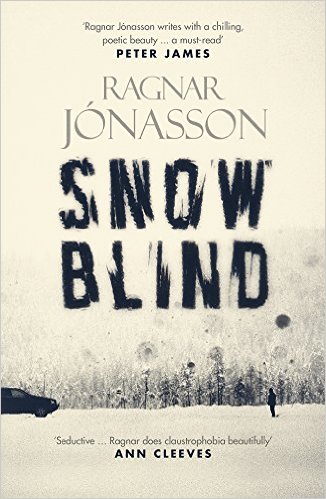
Then there’s the swearing… Icelandic and English cursing are so different that you have to go back to bare metal. Everyday Icelandic swearing is largely blasphemous, while in English it tends to be biological. Icelandic has no real equivalent of the F-word or the C-word in English, nothing that carries the same one-syllable punch. That’s not to say you can’t be properly offensive in Icelandic, because you can, but it’s more of a roundabout route and not something that’s dropped with such careless abandon as we do in Britain.
If you were to translate an Icelandic curse directly into English, it would sound ridiculous, just as if some English epithets were to be translated directly into Icelandic. It just doesn’t work. Instead, go back to the character. Ask yourself what word would a vicious thug in his thirties choose in English – that means the F-word, no question, while a senior police officer in late middle age would go for something milder.
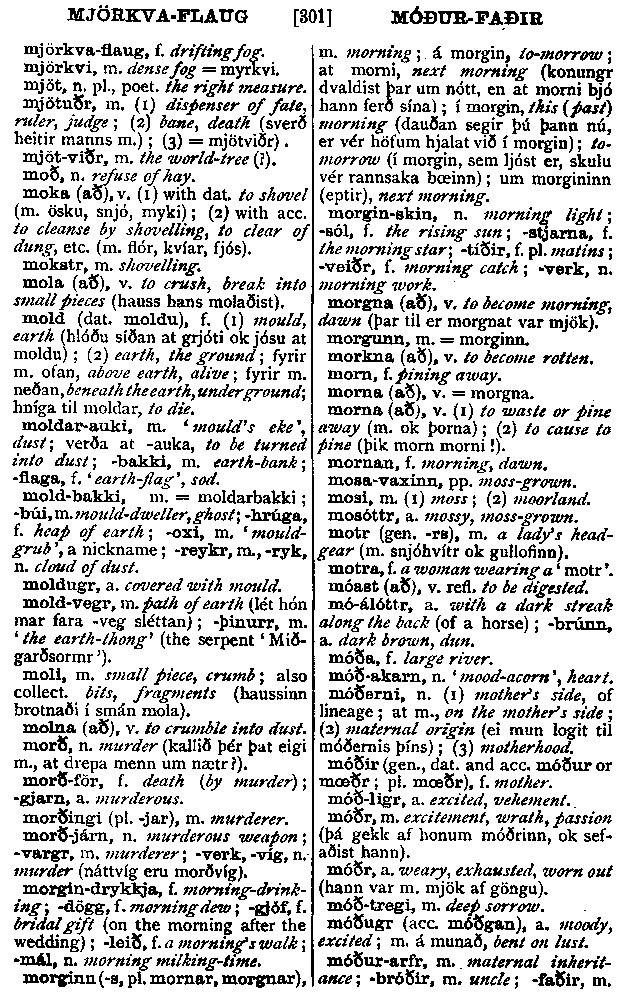
10 points for spotting the Old Icelandic for ‘murder’… (http://www.ling.upenn.edu/~kurisuto/germanic/oi_zoega_about.html)
Also there’s punctuation that’s surprisingly different. Icelandic fiction tends to use short sentences that don’t render well into English. The result can be staccato, almost childish sometimes, so sentences often need to be rolled together. A full stop in English is just that, while an Icelandic full stop is a more elastic beast and it’s up to the translator to keep the full stops and sharp-ended sentences where they work with the story, or decide if that particular full stop should become a comma or a rare semi-colon.
All the same, a translator shouldn’t give in to the temptation to improve the author’s work – that’s an editor’s job. Once the translator has finished, the editor can get to work with a hammer and chisel if he or she feels so inclined.
All this is a delicate task, and a good translation should do justice to a good book. An inspired translation (and I can think of a few) can make a good book into something special, just as a poor or hurried translation can ruin a decent book. All this has to be done without crossing a line into editor territory, and the line shifts and changes all the time.
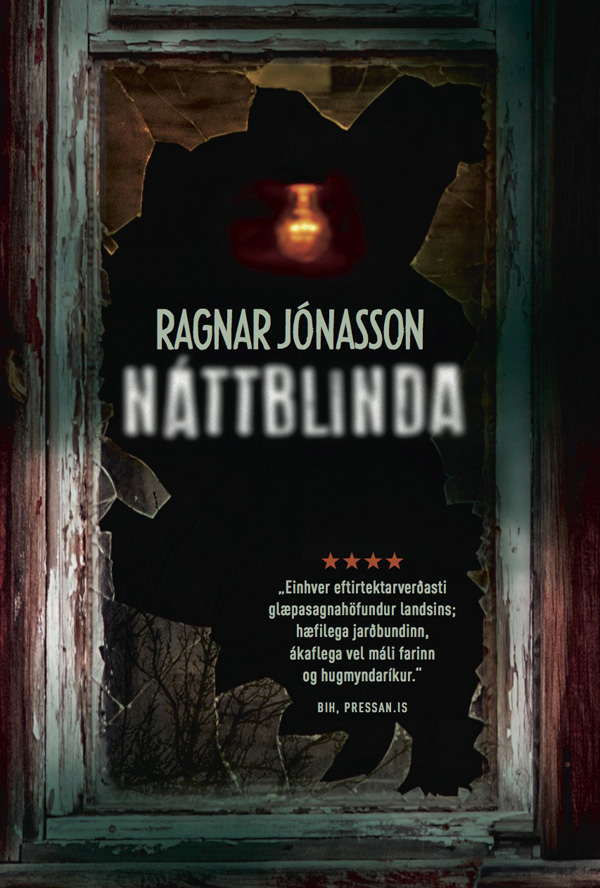
The original Icelandic cover of Nightblind
There’s a play on words in Ragnar’s next book, Blackout. A translator into another language simply left that particular slab of dialogue out, so I know he’s interested to see how I’m going to deal with it. I’m not going to reveal it here, but it needed a bit of thought before the solution popped up. Like the best ideas, it came to me while I was doing something completely different.
Translation isn’t a process that takes place only when your fingers are hovering over the keyboard. It’s great exercise for the grey matter, sometimes as good as the most fiendish crossword.
Letting go… (Ragnar)
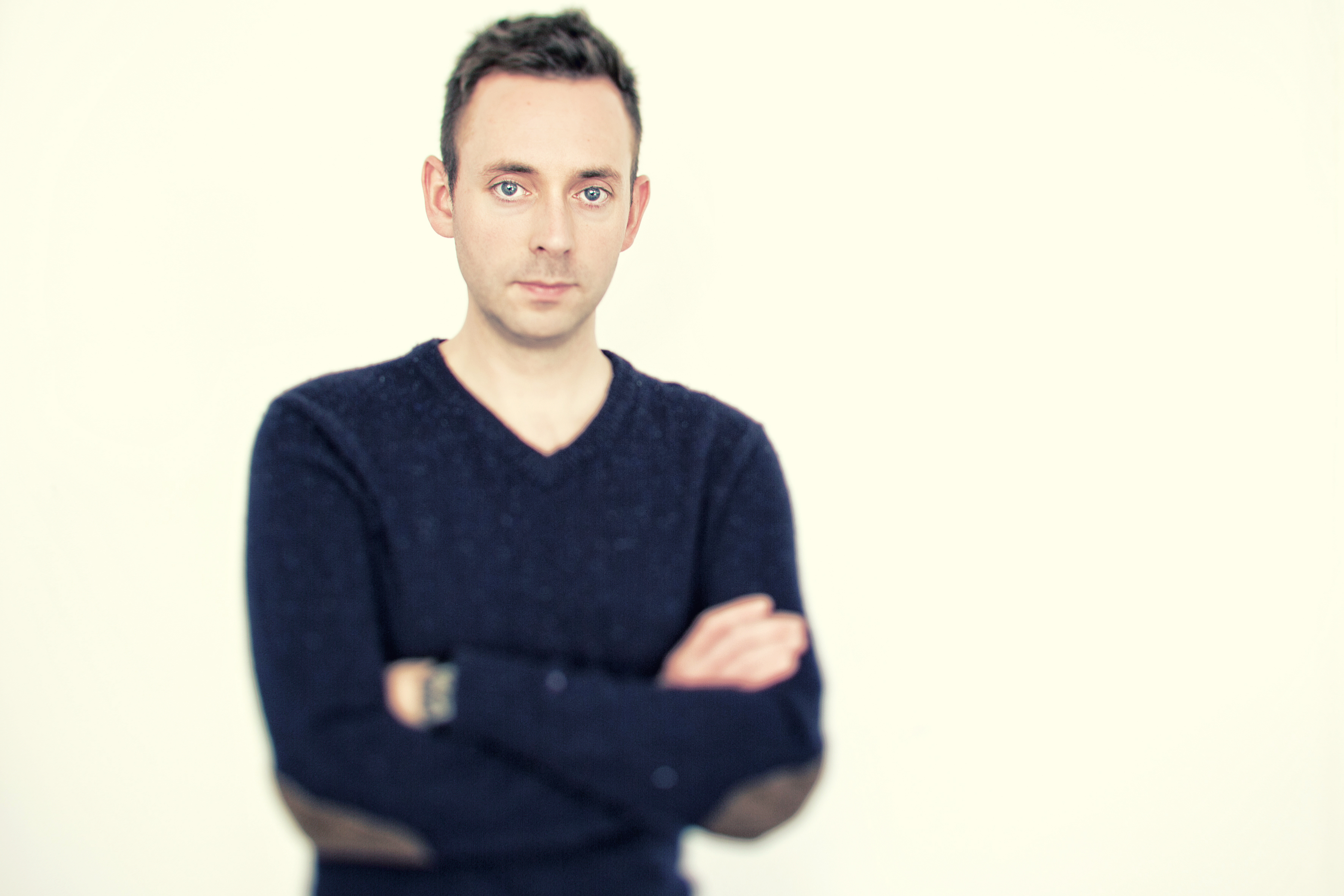
Author Ragnar Jónasson
I had the great opportunity to translate fourteen Agatha Christie books into Icelandic during my student years, and into my early law career, before embarking on a writing career. As a fan of Christie, this was something I thoroughly enjoyed doing, although there were of course challenges along the way. My approach to translating Christie was to use a fairly ‘ancient’ vocabulary, some words that would have been used by my grandparents rather than by my generation, to give the books the classic mystery feel of something set in a bygone era. In some cases there were of course also difficulties relating to the English language, especially when Christie had hidden a clue in a word, so to speak. One book that I really wanted to translate was Lord Edgware Dies, but without giving anything away, that particular book contains a clue that is very hard, or almost impossible, to translate into another language. It took me years to gather the courage to tackle it, having tried to obtain copies of the book in other languages to compare how, for example, Scandinavian translators had solved the problem. In the end I did translate the book, even though the clue didn’t have quite the same impact in the translated version.

Having had this experience of translating, I have to admit that I may have been slightly too eager to help Quentin along the way with the translation of Snowblind! When he sent me the first chapters for review, I sat down very conscientiously and compared it almost word for word with the Icelandic version and sent him a very red mark-up, telling him that he missed a ‘snowflake’ here, or a ‘tree’ there … After that I didn’t hear from him in a couple of weeks, so I sort of realised that I had to give him much more leeway in terms of finding the right words in English, even though in some cases the translation would not be word for word perfect. In other words, I had to let go of the book and give Quentin a chance to adapt it to the English language, with his unique skills – and since then I haven’t looked back!
Enter the red pen! (Karen)
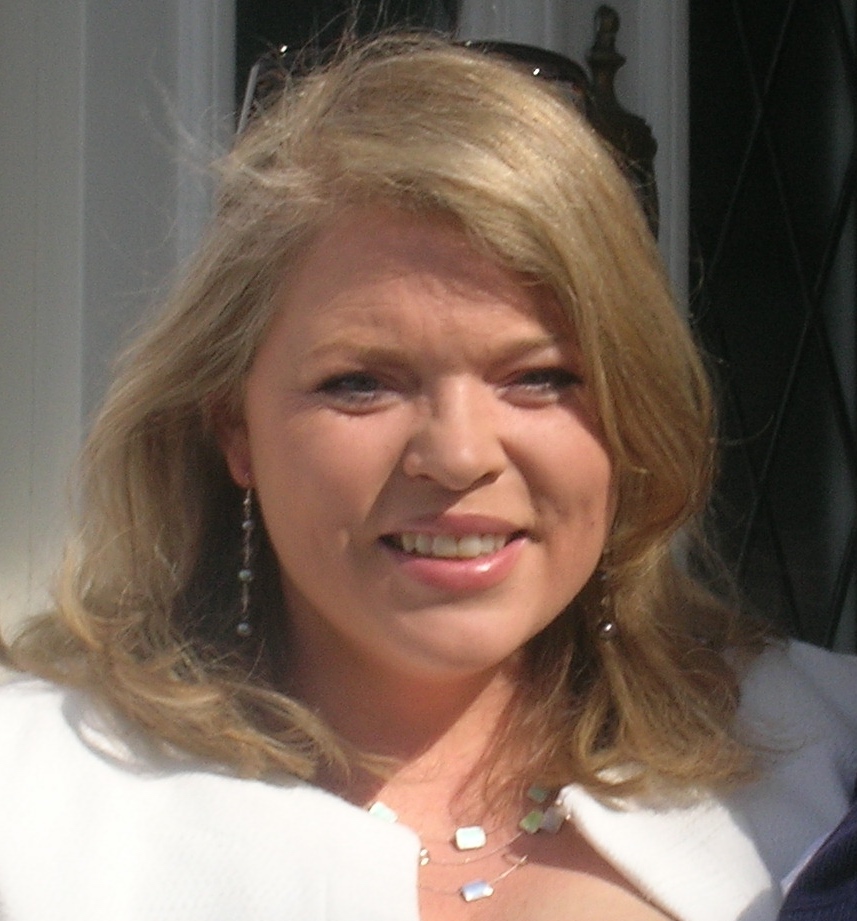
Publisher Karen Sullivan
I have massive respect for translators, and try not get involved in the actual process. The last thing they need is an editor peering over their shoulder and making suggestions. For some of my international books, we get early samples to create ‘samplers’ for booksellers and the press, and to tempt readers. I edit these as standalones, and if there are bits that concern me about the tone/voice or the vocabulary chosen, I keep it to myself. All translators get to the end and then go back and hone, polish, rethink. I like to see that final product, and that’s when I get my pen out!
To my mind, even the most successful books can use some editing, and all of my authors have been completely brilliant about revisiting books that they have usually written years ago. I’m aware that readers of international fiction often appreciate being transported to another country, to get a taste of the people, the geography, the culture, the subtle nuances that make a place and its inhabitants unique. So for that reason, I often ask authors to add more. Describe the snow, describe the sea, describe how one character dresses for the cold. What are they eating when they sit down for lunch? Put yourself in the position of a reader who has never been to your country, and give them atmosphere. Obviously authors write first for their own market, and it would not occur to them to include this type of details, nor would it be necessary. I think, however, that it brings a book alive in a way that might not otherwise be possible.
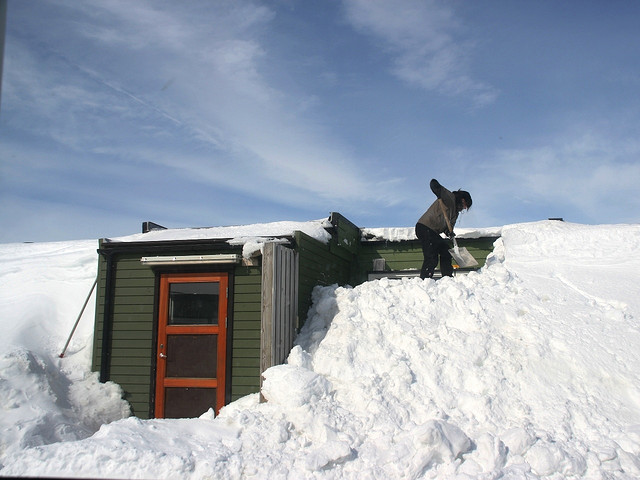
Some Icelandic snow. Image courtesy of Málfríður Guðmundsdóttir via Flickr/Creative Commons.
Even the structure can be toyed with. In Nightblind, the letter that peppers the book, building tension and adding another strand to the plot, was originally at the end. All very Agatha Christie and pat, but breaking it up and moving it around was, I think, better for the overall structure of the book, and a good way to create another set of ‘clues’ to keep the reader guessing. We made some tweaks to the ending, too, and built up the characterisation in places. In Snowblind, we added more depth to the relationship between Kirsten and Ari Thor. The goal is to create a ‘perfect’ book, and with wonderful, willing translator and author on board, it’s absolutely possible.
I generally send back an edited document, with hundreds of queries and tweaks. I too ponder whether a character would use a particular phrase, and by the end of Snowblind I was desperately frustrated that the English language had so few words for snow. Snow, snow, snow! I got creative and made lots descriptive changes to prevent readers from glazing over! The edits go to Quentin first, as he can often answer the majority of queries, and then it hits Ragnar, who gets the first chance to read his book in English. He will add additional material, where required (as he says, Karen, you have an unhealthy interest in Icelandic weather!), adjust anything that does seem right to him (Ragnar’s English is great, so he has no trouble here), and make suggestions of his own. It’s one great big fantastic conversation, with input from everyone, that leads to the final product. It’s a process that I love, and the honour of publishing a fantastic international book, introducing a new author from another country to English readers, is just magnificent!
Thank you to Quentin, Ragnar and Karen!




 Mrs. Peabody Investigates