#10 Dominique Manotti / Affairs of State

Dominique Manotti, Affairs of State, translated from the French by Ros Schwarz and Amanda Hopkinson (London: EuroCrime 2009 [2001]). A breathtaking exposé of political power games and corruption in 1980s Paris  4 stars


Opening sentence: Outside, it’s sunny, summer’s round the corner, but the offices of the RGPP, the Paris police intelligence service, are dark and gloomy with their beige walls, grey lino, metallic furniture and tiny north-facing windows overlooking an interior courtyard.

In one way, Affairs of State is less a crime novel than a tale of power and corruption, in which murders are inevitable as the stakes for political survival rise. In another, though, this is a crime novel through and through, in the sense that it dissects a bewildering range of criminal behaviour and leaves the reader looking at the world of politics through somewhat jaundiced eyes.

The spider at the centre of the web is François Bornand, a special advisor to the French President, who is guilty of all manner of corruption and decadence in the mid-1980s: the sinking of the Greenpeace ship Rainbow Warrior, lucrative arms deals with Iran, and a never-ending consumption of high-class call girls.

Bornand is the ultimate survivor, and when information about his illicit activities threatens to reach the press, he uses a maverick security unit based at the Elysée, the very heart of the French political establishment, to protect his empire. As the bodies pile up, the novel focuses less on the puzzle of who commits each crime (readers are privy to the identities of all the murderers), than on the investigative efforts of the police and intelligence service, who would like nothing more than to bring Bornand down. In the process, we are shown the fascinating journey of rookie policewoman Noria Ghozali, who starts out at the periphery of the investigation, but makes the crucial shift into intelligence work by the end of the novel. Like one of the murder victims, Ghozali is of Arab extraction, and her battle for acceptance within the police force and wider society allows Manotti to examine French attitudes to gender and race in an uncompromising and very effective way.

What’s particularly fascinating about the novel is how closely it dares to reference the reality of French politics in the 1980s. The original title of the novel is Nos fantastique années fric, or ‘our fantastic years of dosh’, and Manotti sets out to critique what she describes in her afterword as ‘this decade in which money came to represent, for an entire political class, an end and a value in itself’. Particular venom is reserved for the Socialists who came to power with Mitterrand and who ‘assumed and practiced their new religion with the zeal of neophytes’.  A professor of economic history in Paris, Manotti demonstrates an acute understanding of the corrupting influence of money in political life – and this is really the novel’s central theme. Bornand appears to be a composite of several politicians of the time, outwardly respectable but tainted by a Vichy past, and bears a particularly marked resemblance to one individual (as I learned from Véronique Desnain’s paper at the Belfast ‘States of Crime’ conference). Manotti sails remarkably close to the wind here, and I salute her bravery in doing so.

That having been said, there are elements of the narrative that are overly melodramatic, especially towards the end of the novel. But I suspect these are designed as symbolic indicators of corruption more than anything else – and they didn’t overly detract from the power of the narrative.

One lovely extra detail: it’s noted on the inside front cover that ‘this book is supported by the French Ministry of Foreign Affairs’!

 A film of the novel, entitled Une affaire d’État, was released in 2009.

Mrs. Peabody awards State of Affairs an intrigue-filled 4 stars.

A bit of a treat: Belfast ‘States of Crime’ conference

Tomorrow I’m heading off to Belfast for a few days, and will pop my head round the door of the ‘States of Crime’ conference being held at Queen’s on Friday and Saturday. As its title suggests, the conference will be looking at representations of the state in crime fiction, and how it is shown negotiating issues such as criminality, policing, justice and civil rights. 

I’ve had a peek at the programme, and it’s stuffed with talks on international crime (Italian, French, German, Austrian, Swiss, Russian, Finnish, Swedish, African, Spanish, British, Irish, American). Heaven! 

The icing on the cake is a round table with David Peace and Eoin McNamee. Peace is a bit of a literary god in my eyes: I think his Red Riding Quartet is one of the best things ever written – irrespective of genre – and I’m really looking forward to seeing him in discussion at the No Alibis Bookstore on Friday evening. 

#9 Jan Costin Wagner / Silence

Jan Costin Wagner, Silence, translated from the German by Anthea Bell (London: Vintage 2011 [2007]). The second novel in the Kimmo Joentaa series. An absorbing police procedural and a sensitive portrayal of grief  5 stars


Opening sentence: The time came when they got into the little red car and drove away.

I wrote a short but enthusiastic post on Jan Costin Wagner’s Ice Moon back in March. While German by nationality (and writing in German), Costin Wagner is an honorary Finn by marriage, and appears to have acquired the stylistic DNA of nordic crime in the process. His police detective Kimmo Joentaa convincingly goes about his business in and around the Finnish city of Turku, and little within the narrative hints at the fact that its author was actually born and brought up in Frankfurt, nearly 1500 kilometers to the south-west.

Silence is the second in the Kimmo Joentaa series. The first, Ice Moon, depicted the harrowing weeks following the death of Kimmo’s young wife Sanna, and his desperate attempts to manage his grief by throwing himself into police-work. Silence is set a year or so later, and continues the sensitive exploration of Kimmo’s grief, as well as other kinds of grief felt by those around him, such as the parents of those who have disappeared or been murdered, or the former work colleague trying to communicate with his gravely troubled child.

When I’ve read an outstanding first novel, I’m often a bit wary of reading the second in the series, in case it doesn’t live up to the high standards of its predecessor. But Silence does a fantastic job of picking up the threads of Ice Moon, while developing the characterisation of the investigative team and providing the reader with an aborbing new crime narrative. In particular, the developing relationship between Joentaa and his recently retired and rather curmudgeonly boss, Ketola, is very nicely handled.

The novel’s investigation centres on the sudden disappearance of a teenager on her way to volleyball practice. The girl’s bicycle is found in exactly the same spot where another girl was attacked and murdered thirty-three years earlier, raising the possibility of a belated copy-cat killing. The cold case, in particular, has haunted Ketola, who was involved in the original investigation at the beginning of his career, and who now employs some rather unorthodox methods in his attempts to uncover the truth. In common with Ice Moon, the narrative also shows events from the perspective of the perpetrator, allowing readers to gain insights into the circumstances of the crime that are denied even Joentaa and Ketola. By employing this dual narrative structure, the novel succeeds in both satisfying the reader and in providing a thoughtful, nuanced, and rather disturbing conclusion to the case.

The third novel in the series, The Winter of the Lions, has just been published in translation by Vintage.

Mrs. Peabody awards Silence a classy 5 stars.

#8 Karin Alvtegen / Shadow

Karin Alvtegen, Shadow, translated from the Swedish by McKinley Burnett (London: Canongate 2009 [2007]). A gripping psychological thriller, but one which tips over into melodrama at times  4 stars

Opening sentence: The key to the flat had arrived in a padded envelope from the police.

Karin Alvtegen’s Shadow immediately caught my eye with its rather intriguing opening. When 92-year-old Gerda Persson dies alone, estate administrator Marianne Folkesson visits her flat to glean the details of her life, and finds the freezer packed with signed copies of books by prize-winning author Axel Ragnerfeld. What on earth could have led Gerda to put them there? And what connection might they have to a young boy who was abandoned in an amusement park back in 1975?

So far so good: a literary puzzle that leads the reader into the dark heart of a family’s story – as well as that of a traumatised Holocaust survivor – and expertly keeps us wanting to know more. Well-written and gripping, and with a multi-layered, uncompromising ending, Shadow is in many respects a highly enjoyable read. In particular, I found many of the novel’s characters sensitively drawn, and their relationships described with a keen eye for psychological detail. Alvtegen is particularly good at exploring human weaknesses, and the kind of personal prisons individuals create for themselves without even realising what they are doing. Tracing the consequences of these weaknesses, and of the criminal decisions or actions they generate, are the novel’s great strength.

However … there was one element of Alvtegen’s story-telling that grated, namely a tendency to melodrama in the final third of the novel. There came a point where so many dramatic events were piled on top of one another that the narrative threatened to tip over into ridiculousness, and to undo the finely observed psychological detail of the rest of the novel.  This tendency also weakened the depiction of a couple of characters, whose actions at certain moments just didn’t ring true.

In spite of these reservations, I did enjoy the novel, and found that the questions it raised about life choices, trauma and morality lingered on. In particular, the ‘one last question’ on the final page of the book stayed with me for a number of days after closing its covers.

Mrs. Peabody awards Shadow a thoughtful 4 stars.

Trivia special, courtesy of @Petrona: Karin Alvtegen is the great-niece of Pippi Long-stocking author Astrid Lindgren. Petrona’s own excellent review of Shadow can be read on the Euro Crime blog (and contains a more detailed description of some elements of the plot).

.

BBC4 Spiral Season 3: Was I wrong to stop watching?!

In an earlier post I gave my reaction to the first two episodes of the French police procedural series Spiral (Engrenage).

It was a bit mixed: while I enjoyed the charactisation of Laure Berthaud and the urban noir feel, I was somewhat put off by the grisly autopsy scenes.

And although I said at the end of the post I would probably continue watching, I didn’t return the following Saturday (something came up, the hamster needed cleaning out, you know how it is…). And that was that – I never quite managed to catch up.

Now that the series has finished, my question to Spiral-watchers is:

  • Have I make a grave mistake (pardonnez the pun)?
  • Should I give Spiral another go?
  • If you think I should have kept watching, should I start at series 1 and work my way through in order, or just dive in with series 3?

Answers on a postcard please…or by comment below.

Merci!

BBC4 Spiral Season 3: The Butcher of La Villette

Tonight I caught the first two episodes of the French police procedural series Spiral (Engrenage in the original; literal translation ‘gears’).

My primary reason for watching Spiral was to fill the two-hour viewing gap left by The Killing, but I was also curious about the French series, having heard praise for seasons 1 and 2.  It was a interesting start tonight, and could easily become compelling viewing for me, as this crime drama features yet another strong female investigator, Laure Berthaud (Caroline Proust). As in The Killing, the first two episodes also set up a number of complex characters, plotlines and intrigues, and redefine our image of the cities in question by focusing on the gritty underbellies of Copenhagen and Paris (the Little Mermaid and Eiffel Tower are conspicuous by their absence).

I wasn’t as gripped by the opening episodes of Spiral as those of The Killing, but then again, this might be an unfair expectation, especially as I’m coming in cold to season 3, and don’t have the in-depth knowledge of the investigative team that has been built up over previous two seasons.

One aspect I really didn’t like, however, was the graphic nature of the autopsy scenes. While a key focus of the series is forensic policework, I’m not convinced it was necessary to provide so much stomach-churning visual detail. And a side-effect of covering my eyes during those scenes was that I was unable to read the subtitles, thus no doubt missing vital clues!

So a slightly mixed experience for this viewer. But I reckon I’ll be back for another two episodes next week. Those who are intending to watch the whole series (10 parts) will be interested to know that The Guardian is blogging Spiral 3 episode by episode. A splendid public service. Merci!

The end of BBC4’s The Killing: crime drama at its very best

Mrs Peabody’s review of the first two episodes is available here.

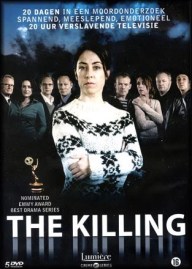
So BBC4’s The Killing has finished. Twenty hours of superb crime drama, which had 500,000 of us gripped for two hours every single week, aired its last two episodes last night.

The Killing maintained its suspense and quality in a quite remarkable fashion over each of its 20 episodes. In Sarah Lund, it gave us a gritty, obsessive and sometimes flawed investigator, who won our hearts with her single-minded determination and her jumpers. And last night, it delivered a nail-biting and utterly gripping denouement that was Shakespearian in its tragedy and pathos. We ended, with perfect circularity, in the woods where we started Nanna’s story – one last, lovely touch. 

In line with the policy of Mrs. Peabody Investigates, no spoilers are given here. But if you would like to know whodunnit and to read some cogent analysis of the last two epiosodes, the place to go is Vicky Frost’s excellent blog at The Guardian. I might add that my guess at the murderer was completely wrong (and many others on Twitter had smugly got it right). At some point, I’ll be watching the whole 20 episodes again in the knowledge of who committed the murder – which I’m sure will be an equally rewarding viewing experience.

Lund and Meyer, we’ll miss you more than you’ll ever know. Already looking forward to Series 2 later this year.

31 March: Lund makes the cover of G2! Full article available here.

The last Wallander: UK publication of Henning Mankell’s The Troubled Man

Today sees the UK publication of Henning Mankell’s tenth – and final – Kurt Wallander novel, The Troubled Man.

Here’s the Vintage synopsis:

>> The first new Wallander novel for a decade, the culmination of the bestselling series from the godfather of Swedish crime.

Every morning Håkan von Enke takes a walk in the forest near his apartment in Stockholm. However, one winter’s day he fails to come home. It seems that the retired naval officer has vanished without trace.

Detective Kurt Wallander is not officially involved in the investigation but he has personal reasons for his interest in the case as Håkan’s son is engaged to his daughter Linda. A few months earlier, at Håkan’s 75th birthday party, Kurt noticed that the old man appeared uneasy and seemed eager to talk about a controversial incident from his past career that remained shrouded in mystery. Could this be connected to his disappearance? When Håkan’s wife Louise also goes missing, Wallander is determined to uncover the truth.

His search leads him down dark and unexpected avenues involving espionage, betrayal and new information about events during the Cold War that threatens to cause a political scandal on a scale unprecedented in Swedish history. The investigation also forces Kurt to look back over his own past and consider his hopes and regrets, as he comes to the unsettling realisation that even those we love the most can remain strangers to us. <<

The Daily Telegraph carries an exclusive extract – available here.

There’s also a nice piece in The Guardian, in which Jon Henley talks to Henning Mankell about The Troubled Man, the Wallander series, and looking back over life at 60.

Can’t wait to get my hands on it.

#3 Davidsen / The Woman from Bratislava

Leif Davidsen, The Woman from Bratislava, trans. from the Danish by Barbara J. Haveland (London: Arcadia Books 2010 [2001]). An ambitious thriller that explores the legacy of the Second World War, but doesn’t quite live up to its early promise. 3 stars

The Woman from Bratislava (Eurocrime)

 Opening sentence: It was a story often used by security-cleared lecturers in the civilian branch of FET, by serving officers of a certain rank and other trusted members of PET when briefing new volunteers on the special conditions under which the secret services had to operate in a post-communist world.

As I’ve noted in a previous post, Davidsen has been described as ‘one of Denmark’s top crime writers’ (The Sunday Times). As a former journalist specializing in Russian and Eastern European affairs, he tends to use the crime/thriller format to explore larger political and historical issues – in the case of The Woman from Bratislava, the legacy of the Second World War, set against the backdrop of the Bosnian War and the collapse of communism in the 1990s.

More specifically, the novel uses the story of a rather unusual family as a means of approaching the complex history of Danish involvement in the Second World War. In the post-communist Bratislava of 1999, middle-aged Danish lecturer Teddy Pedersen is approached by Mira, an Eastern European woman who claims to be his half-sister. She reveals that their Danish father, a former Waffen-SS officer, had not died in 1952 as Teddy had been led to believe, but had gone on to lead a secret second life in Yugoslavia. Shortly afterwards, Teddy’s Danish sister Irma is arrested on suspicion of being a former Stasi (East German) agent, one who has possible links to ‘the woman from Bratislava’. The novel explores the father’s influence on the political development of both sisters – and via them the lingering legacy of fascism in post-war Europe. If you haven’t spotted it already, Irma and Mira are anagrams of one another, which I *think* is supposed to indicate how inextricably intertwined their fates are. Or something profound, at any rate.

This is a very ambitious novel, but one that I felt over-reached itself in places. Davidsen chooses to focus on an extremely controversial bit of Denmark’s wartime past, namely the role of thousands of Danes who fought for the Nazis as members of the Danish Legion and Waffen-SS. The author attempts to provide a 360-degree examination of this historical moment, highlighting on the one hand the war-crimes committed by these young Danes in the service of Nazi ideology, and on the other, the hypocrisy of the Danish government, who in 1941 ‘blessed’ their departure for war, only to treat them as ‘pariahs and outcasts’ when Germany was defeated in 1945 (p.100). (Denmark is shown white-washing its wartime history, recasting its years of occupation by the Germans as a period of heroic resistance, and developing a strategic amnesia to cover the less savory aspects of that past).

In some respects, I admire Davidsen’s bravery in taking on such a controversial subject, and in trying to provide a rounded discussion of how these ‘Nazi Danes’ should be viewed. But at times, I felt that the exploration of their actions needed to be more nuanced, and I wasn’t able to follow the reasons why certain individuals felt moved to defend the Waffen-SS father, or to consider his post-war treatment unjust. It’s possible that Davidsen is trying to critique these characters’ blindness to the father’s criminal wartime activities (a form of misguided love or loyalty), but I’m not entirely convinced that this is the case. At certain points, there’s also a casual, problematic elision of fascism and communism, which rather confusingly leads communist characters to exhibit fascist sympathies and/or sympathy for fascists.

As if all of this were not enough, there’s an overarching thriller/espionage plotline involving the downing of a NATO fighter plane over Yugoslavia, which ends in a (for me largely incomprehensible) twist. It was all a bit too much for this simple reader.

Summary: There’s much to admire about the ambition and scope of this thriller, but its constituent parts do not add up to a satisfactory whole. It may be best suited for readers with an interest in the legacy of the Second World War and the Cold War.

Mrs. Peabody awards The Woman from Bratislavia a rather wobbly 3 stars.

Danish crime: The Woman from Bratislava

One of the crime novels waiting for me under the Christmas tree was Leif Davidsen’s The Woman from Bratislava (2001). I’d been eyeing this one up for a while, and was very pleased that Santa had been clever enough to bring it along.

The Woman from Bratislava (Eurocrime)

I’ve not read any Danish crime fiction since Peter Hoeg’s Miss Smilla’s Feeling for Snow (1992), but Davidsen, described by The Sunday Times as ‘one of Denmark’s top crime writers’, seems like a good author to try out. He’s a former journalist who specialised in Russian and Eastern European affairs, and has a particular interest in the legacy of the Second World War and the Bosnian conflict. He tends to use the crime/thriller format to explore larger political and historical issues, which immediately draws me to his work. In The Woman from Bratislava, a middle-aged Danish lecturer receives a visit from an Eastern European woman who says she’s his half-sister. Their father, a former SS officer, had been declared dead in 1952, but in fact went on to live a second, secret life. Oh, and his other sister is a possible Stasi agent… 

All this before the first murder takes place :O

So far I’ve only read the prologue, but was gripped by its fusion of European history, secret service intrigue and dry humour. I’m hoping that the rest of the novel lives up to this early promise and will report in due course.

The Woman from Bratislava is published by EuroCrime, an imprint of Arcadia. Their website is one of my favourite places to browse for new crime fiction in translation (when I looked in today there were Norwegian, Swiss, French, Spanish and Greek novels on offer – and that was just the first page).

See later post for a full review of The Woman from Bratislava