A hard rain’s a-gonna fall… Reading as empowerment & solace

This isn’t a normal kind of post, because this isn’t a normal kind of day.

The inauguration of the new U.S. president will affect everyone to some degree in the coming months and years. Understandably, it’s making many of us feel extremely anxious, either because we live in America, because we have family and friends in America, or because we know our history and see right-wing forces on the rise around the world. Seeing those billionaire tech bros scrambling to get on board, positively encouraging the spread of disinformation, isn’t helping either. It all feels quite grim.

So here’s a small contribution: a two-part reading list whose aim is to empower or provide solace — whatever your need. In troubled times, books can be a lifeline.

EMPOWERMENT
There’s a reason why certain novels get banned by repressive regimes. Words and stories are powerful. They give us knowledge, courage and hope. They show us that other futures are possible. They provide us with a moral compass. They illuminate the methods repressive regimes use to control others. They give us concrete strategies for navigating tough times. They are survival manuals. They facilitate resistance.

Many also explore the theme of criminality, because when repressive regimes take power, they tend to redefine notions of crime. Things that are accepted by a true democracy — such as being a member of an opposition party or organization, working as a union official, voicing criticism of the government, identifying as LGBTI, belonging a particular ethnicity or religion, or (for women) simply choosing what clothes to wear — can quickly become criminalized. Once that happens, the state can start punishing citizens in the courts for ‘crimes’ ranging from ‘treason’ to ‘undermining state order’ to being ‘immodestly dressed’. And because the state is weaponizing the law to enforce its own power rather than upholding the law in good faith, the state itself becomes criminal. It commits crimes against the people it is supposed to serve.
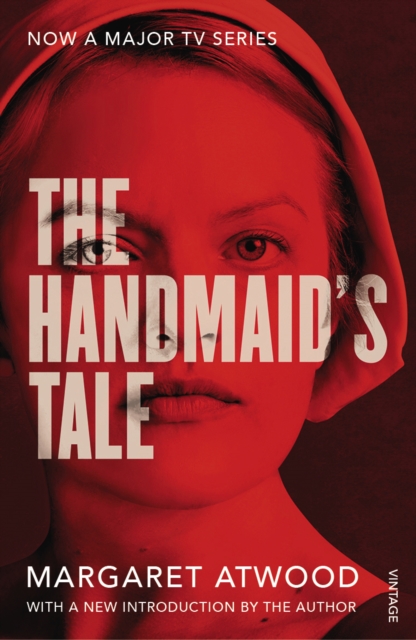
Margaret Atwood, The Testaments (Penguin 2019) and The Handmaid’s Tale (Vintage 2017 [1985])

Where else to start than Margaret Atwood’s iconic dystopian novels about the theocratic Republic of Gilead, formerly the United States, which draw on elements from repressive regimes throughout history. These novels show how quickly a democracy can fall and be replaced by a totalitarian regime; how individuals are given terrible choices to co-opt them into policing others on the regime’s behalf; how things as universal as reading or loving can swiftly become criminalized; how acts of resistance are always possible, but require incredible courage and determination; and how even the most repressive of regimes can fall. The TV adaptation with Elisabeth Moss is stunning. Note: The Handmaid’s Tale is one of the most frequently banned books in America.

Hilary Mantel’s Wolf Hall Trilogy (Fourth Estate 2009, 2012, 2020)

Hilary Mantel’s extraordinary novels explore the rise and fall of Thomas Cromwell (1485-1540), fixer extraordinaire to King Henry VIII. We’re given an intimate view of what it’s like to spend years in the inner circle of a mercurial, murderous, absolute monarch, and the impossibility of remaining untouched by the crimes you commit in his name. A cautionary tale that demonstrates how serving morally bankrupt people tends to come at a high price. They will dump you the minute you outlast your usefulness.

C. J. Sansom’s absorbing ‘Shardlake’ crime series is set in the same historical period, and sees London lawyer Matthew Shardlake cross paths with Cromwell in the first two books, Dissolution and Dark Fire. The Tudor period was a truly terrifying time to live, not least because of the brutality of its criminal justice system.
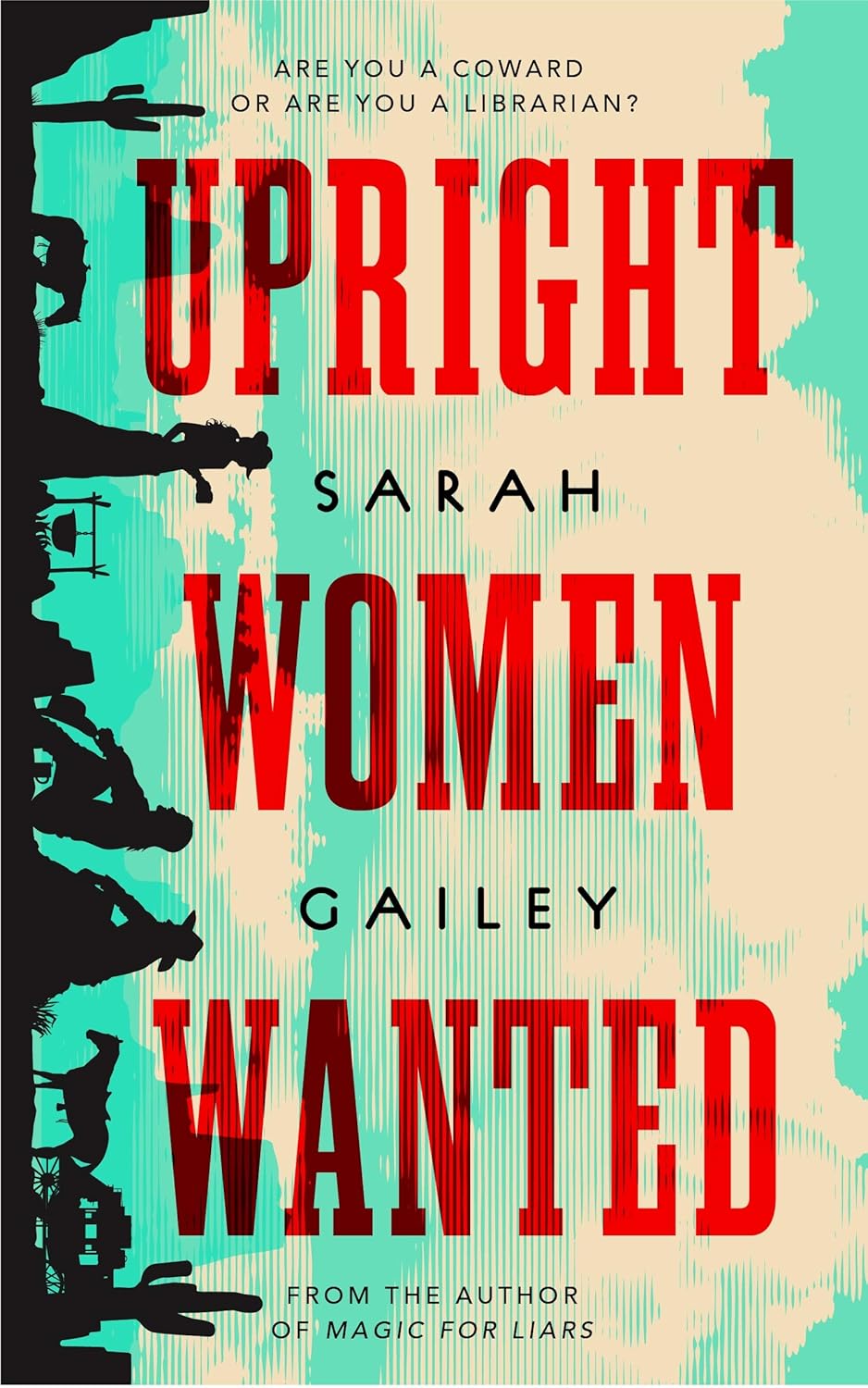
Sarah Gailey, Upright Women Wanted (tor.com 2020)

From the past to the future: Sarah Gailey’s Upright Women Wanted takes place in an American Southwest that’s a few years into a totalitarian regime. Young Esther stows away in a travelling Librarians’ book wagon to escape marriage to a man once betrothed to Beatriz, her best friend. Beatriz also happens to have been her secret lover and has just been executed for possessing resistance materials. This is a hard-hitting but hopeful tale of courage and resistance, which features some truly impressive and subversive librarians. As we all know, librarians rock.
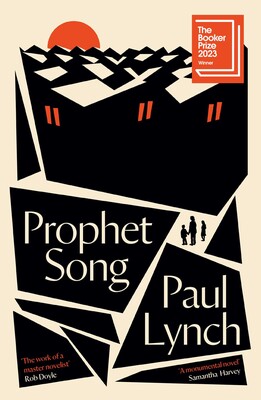
Paul Lynch, Prophet Song (Oneworld 2023) 

In this speculative novel, which won the 2023 Booker Prize, Ireland has recently been taken over by a totalitarian regime. At the start of the book, Larry Stack, a trade unionist and deputy head teacher, is disappeared by the secret police while attending a protest rally: his professional activities and actions are now deemed criminal by the state. His wife Eilish is left to hold the family together in increasingly fraught circumstances. The lesson here is how quickly things can unravel and how costly hesitation can be. Eilish is in shock and torn by conflicting needs — to help her husband, to care for her kids and elderly dad — but staying on rather than getting some of the family out while she has the chance may prove a mistake. Always be prepared; always have a plan.

KAOS, Netflix 2024

A wild reimagining of Greek mythology, whose stellar cast includes Jeff Goldblum, KAOS has a lot to teach us about how repressive regimes tick. The gods rule the world with an iron hand from Mount Olympus, not just because they’re powerful, but because they’ve duped humans into believing that obedience will secure them a glorious afterlife. But what if that deal is an elaborate swindle? A ragtag band of individuals, including recently deceased Riddy (Eurydice), are about to find out. Once again, resistance is shown to require huge amounts of courage and sacrifice. On the flip side: no power is monolithic, any regime can be toppled, every charlatan is unmasked in the end.

SOLACE

British commentator Ian Dunt has some wise words about retaining our sanity over the next four years:

You can adopt a system of largely ignoring the chaff and focusing on the pertinent actions. You can make sure that you have time away from the news, so it does not consume you. You can focus your efforts on what you can change, rather than what you cannot.

I think this is really good advice. Don’t ‘live inside the news’, as Oliver Burkeman puts it, do set aside time to enjoy reading or knitting or hiking or playing the banjo or whatever your thing is, and do take regular small actions that make a concrete difference. These might include writing to your MP or a newspaper, making a donation to a progressive cause, or getting involved in your local community. Above all, don’t get sucked into social media spats designed to rob you of your time and energy and peace. Focus on self-care and positive action instead.

I’m doing a lot of what I call ‘respite reading’, because sometimes you really do need to give your head a break. This tends to involve crime novels that contain plenty of wisdom and humour and heart, and I’m incredibly grateful that they exist.

What do you read to get away from it all?
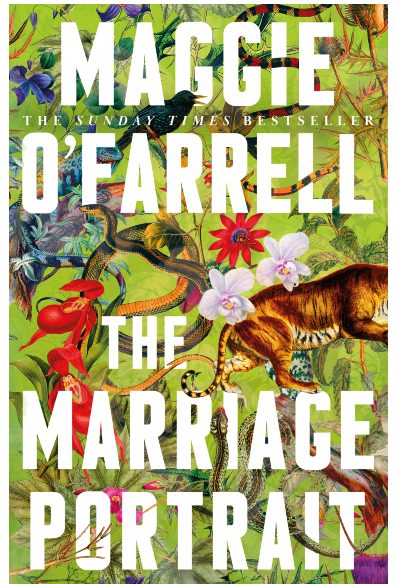
‘Til death do us part’: Maggie O’Farrell’s The Marriage Portrait (Medici Italy), Justine Triet’s Anatomy of a Fall (France), Only Murders in the Building (USA)

Maggie O’Farrell, The Marriage Portrait (Tinder Press 2022)

First line: Lucrezia is taking her seat at the long dining table, which is polished to a watery gleam and spread with dishes, inverted cups, a woven circlet of fir.

Maggie O’Farrell’s The Marriage Portrait is one of the most satisfying novels I’ve ever read. O’Farrell takes her inspiration from a snippet from history — the mysteriously brief life of Lucrezia di Cosimo de’ Medici (1545-1561) — and Robert Browning’s 1842 poem ‘My Last Duchess’, which suggests that Lucrezia was murdered by her husband, the Duke of Ferrara. The resulting novel is an outstanding example of literary crime.

Figuring out whether or not Lucrezia was murdered involves a deep dive into the sixteenth-century court life of Medici Florence and the paradoxical status of aristocratic girls like Lucrezia. In many ways ultra-privileged, they also led incredibly constrained lives, their primary role being to boost the status of their families through advantageous matches and the production of heirs. Pawns in the power plays of their fathers and husbands, they had very little say in their own destinies. Lucrezia finds solace in her love of drawing and painting — just one of the ways O’Farrell brings this unusual, spirited young woman to life as she seeks to survive her highly dangerous marriage.

The Marriage Portrait is one of my books of the year thus far — I loved its ingenuity, its clever construction and its heart. Highly recommended.

Justine Triet (dir.), Anatomy of a Fall (2023)

Many thanks to blog reader Vicky, who recommended this Palme d’Or winner to me. As it happens, Anatomy of a Fall complements The Marriage Portrait perfectly, for it also explores a marriage, albeit one with a very different power dynamic. Here, wife Sandra Voyter appears to have the upper hand: she’s a hugely successful author, while her husband, Samuel Maleski, struggles to write and is the primary carer for their visually impaired son Daniel. When Samuel is found dead outside their isolated Grenoble chalet, the police suspect Sandra of having been involved. Did Samuel fall from the window of the attic room he was renovating? Or was he pushed? And just how reliable a witness is Sandra, the consummate and highly inventive storyteller?

The film soon turns into a gripping legal drama, and I found myself fascinated by the depiction of French court procedure, which enables the defendant to be questioned alongside witnesses (an approach that creates illuminating ‘dialogue’ between different witness statements). There’s top-notch acting here from Sandra Hüller (Sandra) and Milo Machado Graner (Daniel). Border collie Messi, who plays family pet Snoop, is also a genuine star, and left Cannes with the coveted Palme Dog 🙂

I’ve featured the German film poster above. I especially like the German title Anatomie eines Falls because the noun ‘der Fall’ can variously mean ‘fall’, ‘event’ or investigative ‘case’. The original French title is Anatomie d’une chute. ‘Chute’ also has a range of evocative meanings, such as ‘fall’, ‘downfall’ and ‘collapse’.

Only Murders in the Building, Season 1 (Disney+ 2021)

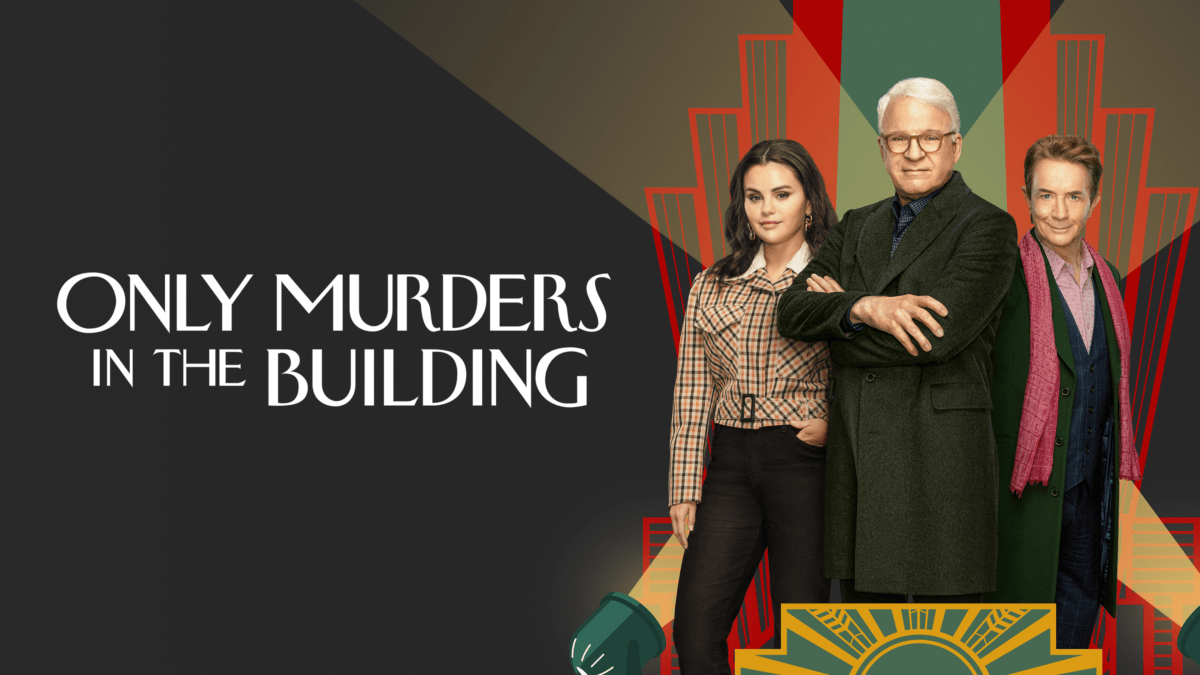
I’m late to the party, but am enjoying the antics of amateur sleuths Charles, Oliver and Mabel as they look into the murder of one of their neighbours in the affluent Arconia Building on New York’s Upper West Side. The characterization of the three leads — played by Selena Gomez, Steve Martin, and Martin Short respectively — is sparky and wry. So is the production, which gleefully harnesses podcast conventions: for what else would a fading actor, washed-up theatre director and aspiring interior designer do these days other than create a podcast called Only Murders in the Building? It’s all very meta, and despite a few goofy moments that stretch credulity, is an entertaining way to unwind at the end of a long day. There are cameos from the likes of Sting, Tina Fey and Jane Lynch, and the latest season features Meryl Streep. Great fun.

Autumn crime picks: Marple (UK), Sally McGrane’s Odesa at Dawn (Ukraine) & Kevin Chen’s Ghost Town, tr. Darryl Sterk (Taiwan)

Yes, it’s been a while. I’ve been laid low with Covid (now better), which knocked all sorts of things off course (alas). So here’s a very random selection of crime-related goodies, starting with the excellent new short story collection Marple…

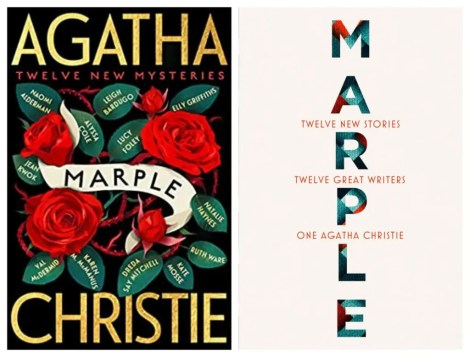
Marple, Harper Collins 2022
First line: ‘I wonder, sometimes, if there isn’t a concentration of evil in small places’

I loved this collection of twelve brand-new Miss Marple stories, written by a talented group of crime writers from all around the world: Naomi Alderman, Leigh Bardugo, Alyssa Cole, Lucy Foley, Elly Griffiths, Natalie Haynes, Jean Kwok, Val McDermid, Karen M. McManus, Dreda Say Mitchell, Kate Mosse, and Ruth Ware.

According to a Guardian piece on Marple, the authors were given some ground rules before they started writing: “Firstly, the stories had to be set within the period covered by Agatha Christie’s own Miss Marple fiction. They could draw on characters and situations that occurred in any of the Marple novels and short stories, but weren’t allowed to incorporate characters or events from any of Christie’s non-Marple books, nor to invent any backstory upon which Christie herself had not touched.”

That said, there was still plenty of scope for the authors to have fun, with Miss Marple solving crimes everywhere from a friend’s front garden to Italy, Manhattan and Singapore. Each of the stories captures the essence of Miss Marple’s keen intellect and sharp eye, and finds a balance between paying homage to Christie’s crime icon and taking her to new places.

After finishing Marple, I couldn’t resist re-reading Agatha Christie’s 13 Problems, first published in 1932, which introduces Miss Marple to readers in thirteen interlocking stories. We join a group of friends, each of whom offers up a knotty mystery for the rest of the group to solve – and of course it’s the unassuming Victorian spinster in their midst who gets to the heart of the matter every time. The collection is still an absolute delight, showcasing Christie’s lively plotting, characterisation and humour.

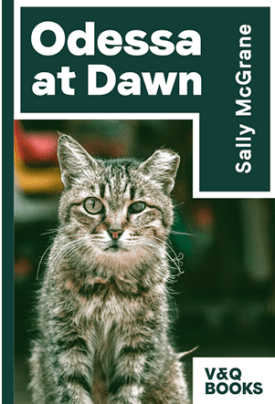
Sally McGrane, Odesa at Dawn (V&Q Books 2022)
First line: ‘
Mr Smiley was a fat, dirty cat, with ragged mouse-coloured fur, mottled with a darker shade of rat’

Sally McGrane is a freelance writer and journalist based in Berlin, who wrote her thriller on site, in the Black Sea port of Odesa, where she had previously worked. The whole thing reads like an wonderful, off-kilter love letter to the Ukrainian city, whose mercurial nature is reflected in its complex history, unique inhabitants and catacomb-riddled foundations.

Odesa at Dawn is set in an earlier, more peaceful time, before the current Russian invasion, but with Ukrainian-Russian tensions bubbling beneath the surface. It opens with Mr Smiley rescuing his favourite human Sima from a bombing, and I’m hopeful that this moggy’s name pays homage to John le Carré’s most famous creation. Engaging ex-CIA agent Max Rushmore plays a central role in the proceedings: he is back in the city to investigate something murky, and gets pulled into something even murkier, including a convoluted crime-family saga.

I particularly loved McGrane’s sparky, wry, highly observant writing style, which is freewheeling in all the best ways. Here’s a short extract that showcases its capacity for humour and absurd, oddly moving details:

“I don’t know if you’ve ever seen footage of Gagarin’s life,’ said Albu, after he’d half sunk, half fallen into his faux-leather seat. ‘He grew up in a hut, literally a wooden hut. I think perhaps they had a goat.’ The Romanian paused, shifted his large black shoes. ‘Only a deep capacity for mystical belief could have taken that village boy and sent him to the heavens in a spaceship.

The curvy, earnest girl reappeared carrying a tray. She set three thin white cups on a glass table. The tea was transparent, with a high sour taste, garnished with the East’s eternal, heartbreakingly pale slice of lemon.”

Kevin Chen, Ghost Town, tr. Darryl Sterk, Europa Editions (Taiwan)
First line: “Where are you from?”

Ghost Town is a story of a young Taiwanese man and his family, but is also packed to the rafters with crime. The young man in question, Keith Chen, the second son of a family of seven, returns home after serving a prison sentence in Berlin for killing his boyfriend. The truth of that story emerges in the course of the novel, alongside the stories of his parents and siblings, who struggle to find their identities or happiness in the village of Yongjing (which ironically means ‘eternal peace’) as it starts to modernise.

This is the first Taiwanese novel I’ve ever read, and it paints a fascinating portrait of a small community in transition, and of the nature and climate of rural Taiwan. There’s also clever use of the Ghost Festival to explore the titular ghost town of Yongjing, and how individuals who have lost their way can feel ‘ghostly’ in their own lives. Like Odesa at Dawn, this is a highly original, lively and imaginative novel that’s a feast for the curious reader. Hats off to translator Darryl Sterk, who finds ways to weave Taiwanese and Mandarin terms into the narrative, thereby illuminating key phrases and cultural details.

What next for Mrs. Peabody Investigates?

Happy New Year to you all! I hope you had a relaxing break and managed to squirrel yourself away for some of it with a good crime novel or two.

As is customary at this time of year, I’ve been doing a bit of a stocktake, particularly in relation to this blog. It’s been a sobering experience:

  1. It turns out I wrote a paltry five blog posts in 2021. FIVE! These consisted of one literary obituary, two Petrona Award posts, one set of summer reviews, and Mrs P’s Christmas recommendations. Spot what was missing: any semblance of regular crime reviewing. Hmmm.
  2. I managed to miss the 10th anniversary of Mrs. Peabody Investigates!!! I started blogging in January 2011, but that wonderful milestone just passed me by…

All of which tells me I can’t outrun the laws of time and space.

I won’t bore you with the details – just imagine a classic pandemic brew of extra work and family pressures. However, one thing is clear: something needs to change.

Option 1 is to say ‘it’s been a good run’ and let Mrs. Peabody bow out gracefully.

Option 2 is to say ‘must do better this year’, knowing that the end result is likely to be much the same.

Option 3 is to try a little experiment… And that’s what I’ve decided to do.

You’ll see there’s a jazzy new ‘donate’ button on the main menu bar at the top of the blog.

The idea is this: for those blog readers who can and wish to, there’s the option of donating a little something to help ‘power’ the blog. What this means in practice is that any donations will go towards buying me time to write reviews. Or to put it another way: as a freelancer with finite resources, they’ll allow me to liberate some precious hours to review and post more regularly.

BUT – and this is very important – there will never be any expectation on my part that readers should donate. The blog will always remain accessible and ‘free at the point of delivery’. No paywall for Mrs P! And you have my word that I’ll remain independent. ‘Mrs. Peabody Investigates’ will always review the best international crime fiction, TV and film without fear or favour.

As I say, all of this is an experiment and I’m very relaxed about the outcome. We’ll just see how things go…

So onwards and upwards, starting tomorrow with a review of Kwon Yeo-sun’s Korean crime novel Lemon!

The 2021 Petrona Award Winner!

We’re delighted to announce the winner of the 2021 Petrona Award for the Best Scandinavian Crime Novel of the Year

The winner is….*drumroll*

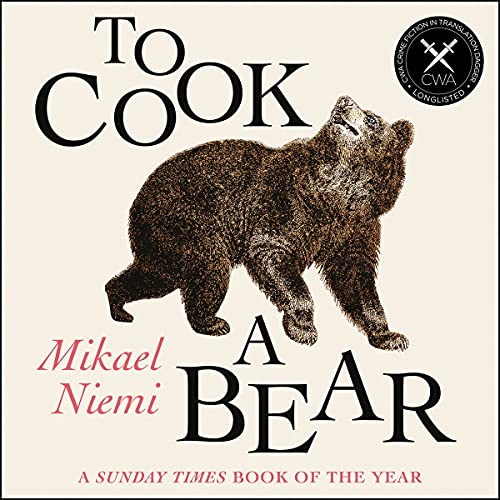
TO COOK A BEAR by Mikael Niemi, translated from the Swedish by Deborah Bragan-Turner and published by MacLehose Press.

It is the first historical crime novel to win the Petrona Award.

Here’s what the judges had to say: The judges adored TO COOK A BEAR, a historical crime novel set in northernmost Sweden in 1852, and were unanimous in our decision to select it as the Petrona Award winner for 2021. We were particularly impressed with the novel’s use of historical detail, its fascinating reimagining of a figure from history, the sense of location and atmosphere, the rumination on religion versus the natural world, and the depiction of early forensics. TO COOK A BEAR’s superb characterisation of the main protagonists Læstadius and Jussi, which is tinged with sadness yet hope, also allows the author to explore the issues of literacy and class with sensitivity and compassion. The beautiful translation by Deborah Bragan-Turner lets the novel shine for English-language readers around the world.

And here are reactions from the winning author, translator and publisher: Mikael Niemi: I am very proud and happy to have received the Petrona Award and would like to thank my editor, Katharina Bielenberg, my translator Deborah Bragan-Turner, and my agency, Hedlund Literary Agency, who have made it possible for this novel to reach British readers. This happy news has brightened the growing winter darkness here in the very north of Scandinavia. I am sending my warmest thanks to all my British readers. Deborah Bragan-TurnerI am absolutely thrilled and very honoured to receive the Petrona Award. It’s a great privilege to be in the company of such accomplished authors and translators on the shortlist. Many congratulations to you all. Thank you to MacLehose Press for your support and editorial advice, and to the panel of judges for your championing of and enthusiasm for Scandinavian fiction in translation. And of course thank you most of all, Mikael Niemi, for bringing the story of Jussi and the pastor to us in TO COOK A BEAR, an inspired novel and a joy to translate. MacLehose Press: We are delighted that Mikael Niemi’s novel has been recognised with the Petrona Award. TO COOK A BEAR is immersive and transporting, historical crime fiction at its best, and it has been thrilling to watch it find its readers in English. Powerfully vivid and lush in its descriptions of Sweden’s very far north, and brilliant on literacy and the power of language, it has been beautifully and imaginatively rendered in Deborah Bragan-Turner’s translation. Congratulations to them both! Huge congratulations to everyone! And heartfelt thanks to our sponsor, David Hicks, for his generous support of the 2021 Petrona Award.

And for all things Petrona, see http://www.petronaaward.co.uk/

The 2021 Petrona shortlist is available here.

CrimeFest 2019: Crime Cymru, Nordic Noir & The Petrona Award winner!

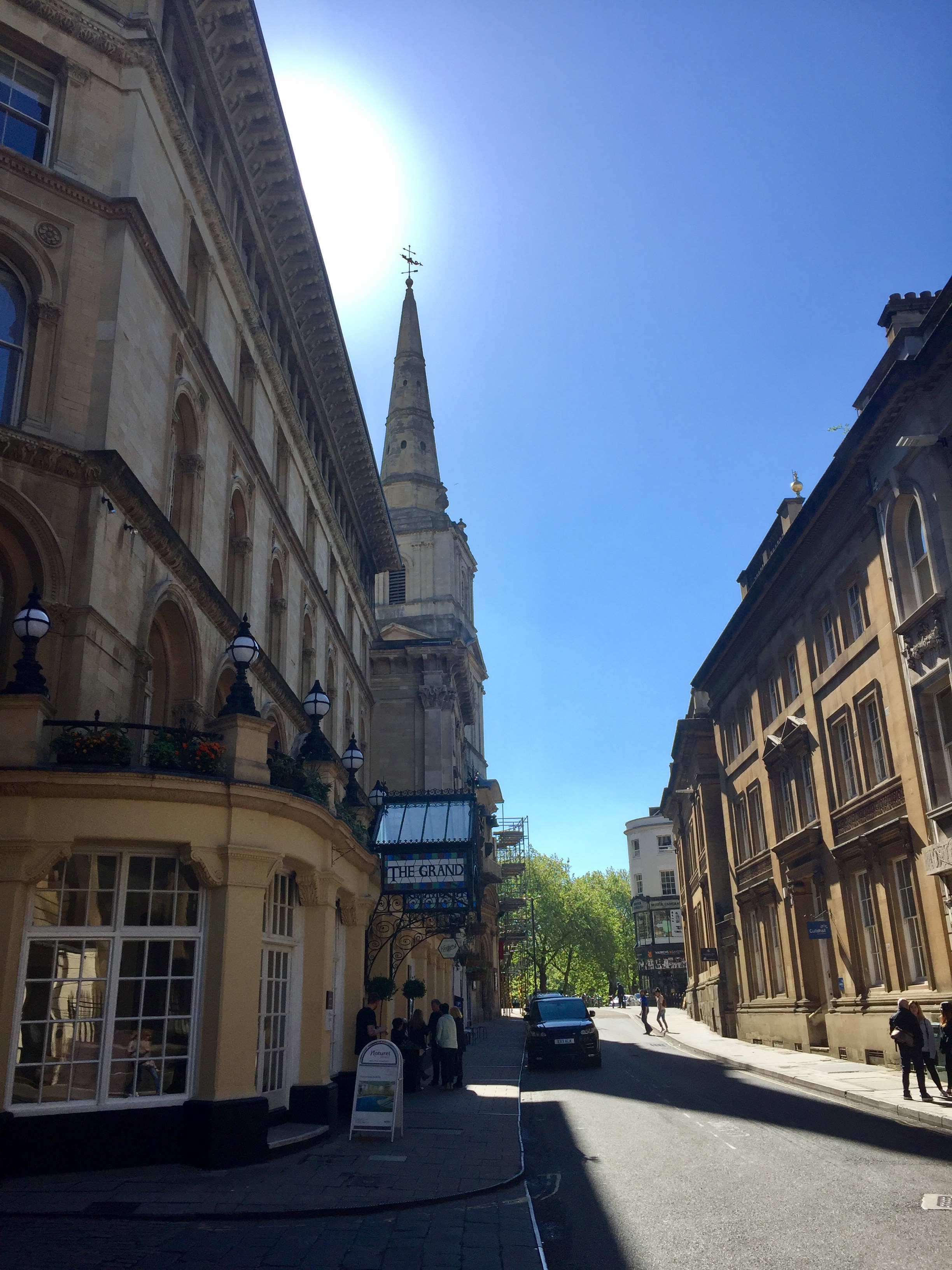
The sun shone for almost all of CrimeFest this year, helping to smooth our transition to the convention’s new home at The Grand in Broad Street, Bristol.

As ever, the entire festival was wonderful – thank you Adrian and Donna! Here are a few of my highlights.

The Crime Cymru panel: ‘It’s not all Rugby, Sheep and Singing’

This was such a special panel – the very first dedicated to Welsh crime writing at CrimeFest. Authors Cathy Ace, Rosie Claverton, Alis Hawkins and John Lincoln were in discussion with G.B. Williams, and explored everything from how the Crime Cymru collective came about, to the richness of Welsh settings (gritty urban Cardiff; the rural Teifi Valley), and the Welsh concept of ‘hiraeth’ or ‘longing for home’ – which Swansea-born Cathy particularly relates to as a Crime Cymru writer based in Canada. The panellists have produced an impressively varied body of crime fiction between them – offbeat P.I. novels, cosy crime, historical crime, true crime, cold case investigations – demonstrating that Welsh crime fiction is in rude health.

The ‘Scandi is Dandy’ panel took the ‘dandy’ bit to heart – especially Jørn Lier Horst, who turned up in a truly arresting Norwegian jacket. He’s pictured here on the right, if you hadn’t guessed, with Finnish fellow panellist Antii Tuomainen (bedecked in paisley), and the more soberly attired Norwegian crime writer Gunnar Staalesen sandwiched in the middle (who like Jørn was shortlisted for the 2019 Petrona Award).

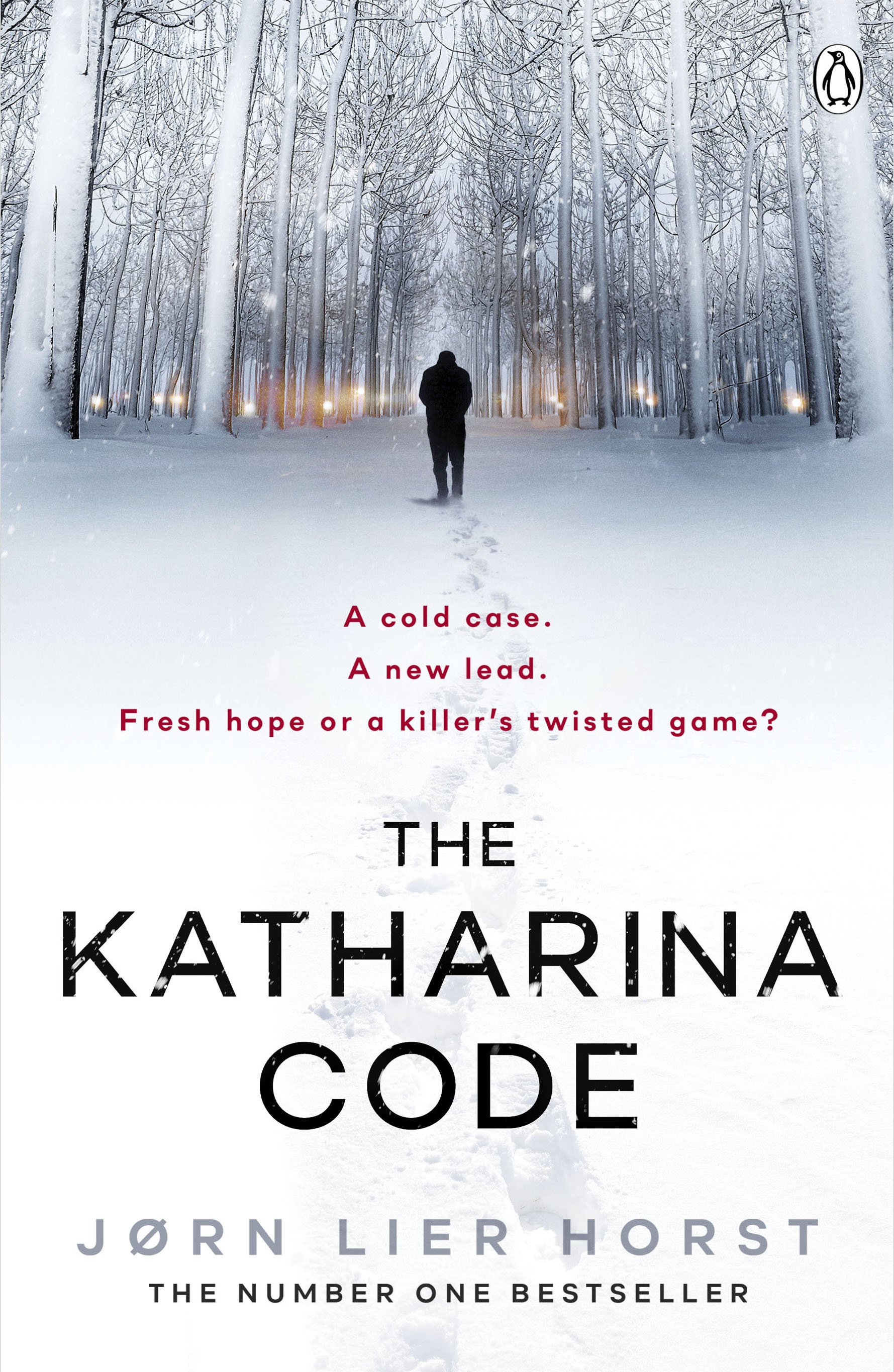
The ‘Nordic’ panels are always great, and moderator Kevin Wignall helped to bring out plenty of light and shade in the course of the discussion. Jørn revealed that the starting points for The Katharina Code were a cold case he’d worked on and the question ‘what’s it like to be a murderer trying to lead an ordinary life?’ Yrsa Sigurðardóttir and Antii discussed how a desire to push themselves as writers had led to a change of series and subgenre respectively. They all had high praise for the talented translators who made it possible for their works to be read in the English-speaking world: Anne Bruce (Jørn), Vicky Cribb (Yrsa) and David Hackston, whose musicality Antii felt helped hone his deft translations.

As a Petrona judge, a clear highlight for me was the announcement of the seventh Petrona Award winner at the Gala Dinner – Jørn Lier Horst for The Katharina Code, translated by Anne Bruce (Michael Joseph). Jørn is the first writer to have won the award twice (+ The Caveman in 2016).

Here’s what we judges had to say about the winning novel: 

THE KATHARINA CODE is a twenty-year-old mystery and failure of justice that haunts its investigator. From the code’s intriguing introduction in the novel’s opening pages to the duel of wits at its end, Jørn Lier Horst has crafted an outstanding and thrilling police procedural. The judges were particularly impressed with how the author takes established tropes – the ‘cold case’, the longstanding suspect, the dogged nature of police work – and combines them in ways that are innovative and fresh. THE KATHARINA CODE is the seventh novel in Horst’s ‘William Wisting’ series to be superbly translated by Anne Bruce from Norwegian into English, and is a highly worthy winner of the 2019 Petrona Award.

You can read more over at the Petrona website – and see the entire shortlist of six novels from Norway, Denmark and Iceland: http://www.petronaaward.co.uk/

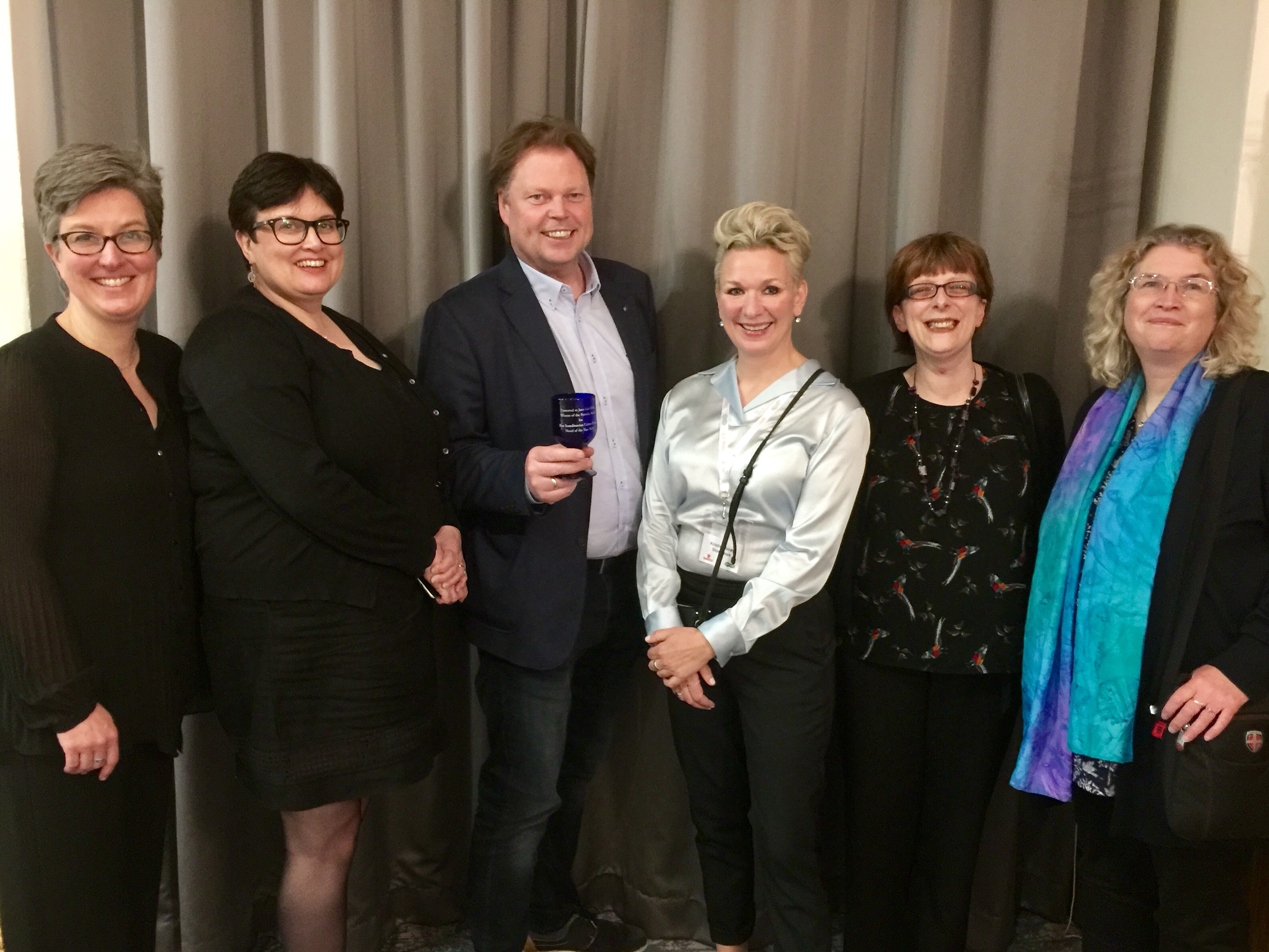
Jorn with the Petrona Award team and Kristin from the Norwegian Embassy.

*******************

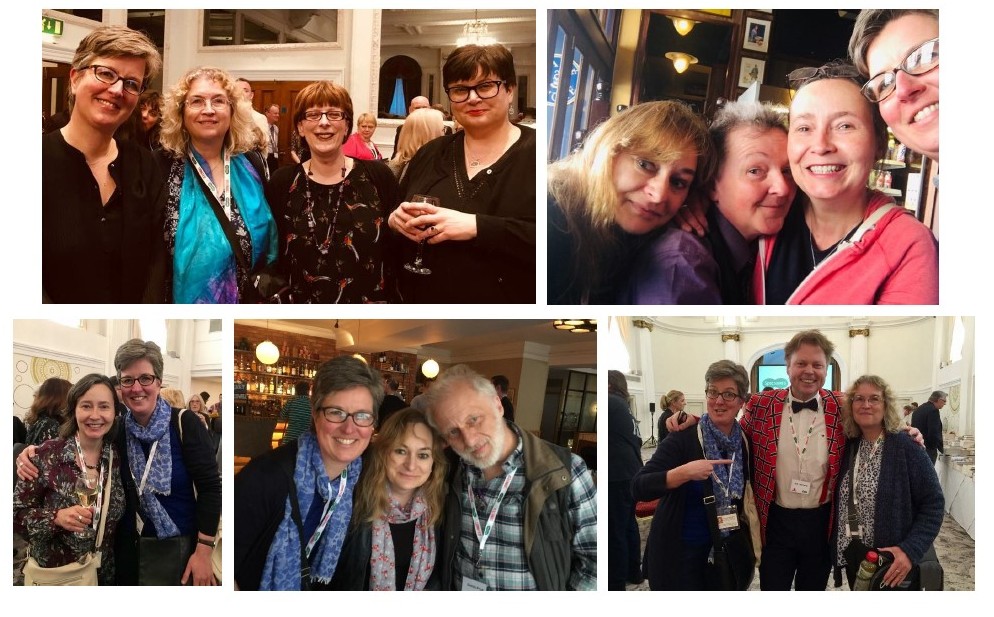
I have to confess that I attended less panels this year than I normally do. This was partly because I only managed to get to CrimeFest on Friday afternoon, and partly because I really wanted to catch up with people I hadn’t seen in ages. So often you cross paths with someone as you’re going in or out of a panel and say, ‘let’s meet up later’… and then somehow it doesn’t happen. This year I caught up properly with some dear crime buddies including Anya Lipska, Quentin Bates, Louise Mangos, Marina Sofia, Jackie Collins, Ewa Sherman, Tana Collins, Ayo Onatade, Ali Karim, Sarah Ward, Karen Meek, Raven (that G&T was *really* good), and someone I hadn’t seen in over 30 years – it’s a small world Mick Finlay!

Criminally good friendships – what more could we want?

Eurotour Stop 1. Hamburg, Germany: “Nowhere does the summer fade more splendidly”

Guten Tag from Hamburg! Our first extract comes from…

John le Carré, Smiley’s People (Sceptre, 2011 [1979], pp. 29-30). 

The extract is set at the height of the Cold War.

The second of the two events that brought George Smiley from his retirement occurred a few weeks after the first, in the early autumn of the same year: not in Paris at all, but in the once ancient, free, and Hanseatic city of Hamburg, now almost pounded to death by the thunder of its own prosperity; yet it remains true that nowhere does the summer fade more splendidly than along the gold and orange banks of the Alster, which nobody has yet drained or filled with concrete. George Smiley, needless to say, had seen nothing of its languorous autumn splendour. Smiley, on the day in question, was toiling obliviously, with whatever conviction he could muster, at his habitual desk in the London Library in St. James’s Square, with two spindly trees to look at through the sash-window of the reading room. The only link to Hamburg he might have pleaded – if he had afterwards attempted the connection, which he did not – was in the Parnassian field of German baroque poetry, for at the time he was composing a monograph on the bard Opitz, and trying loyally to distinguish true passion from the tiresome literary convention of the period.

The time in Hamburg was a few moments after eleven in the morning, and the footpath leading to the jetty was speckled with sunlight and dead leaves. A candescent haze hung over the flat water of the Aussenalster, and through it the spires of the Eastern bank were like green stains dabbed on the wet horizon. Along the shore, red squirrels scurried, foraging for the winter. But the slight and somewhat anarchistic-looking man standing on the jetty wearing a tracksuit and running shoes had neither eyes nor mind for them. His red-rimmed gaze was locked tensely upon the approaching steamer, his hollow face darkened by a two-day stubble. He carried a Hamburg newspaper under his left arm, and an eye as perceptive as George Smiley’s would have noticed at once that it was yesterday’s edition, not today’s.

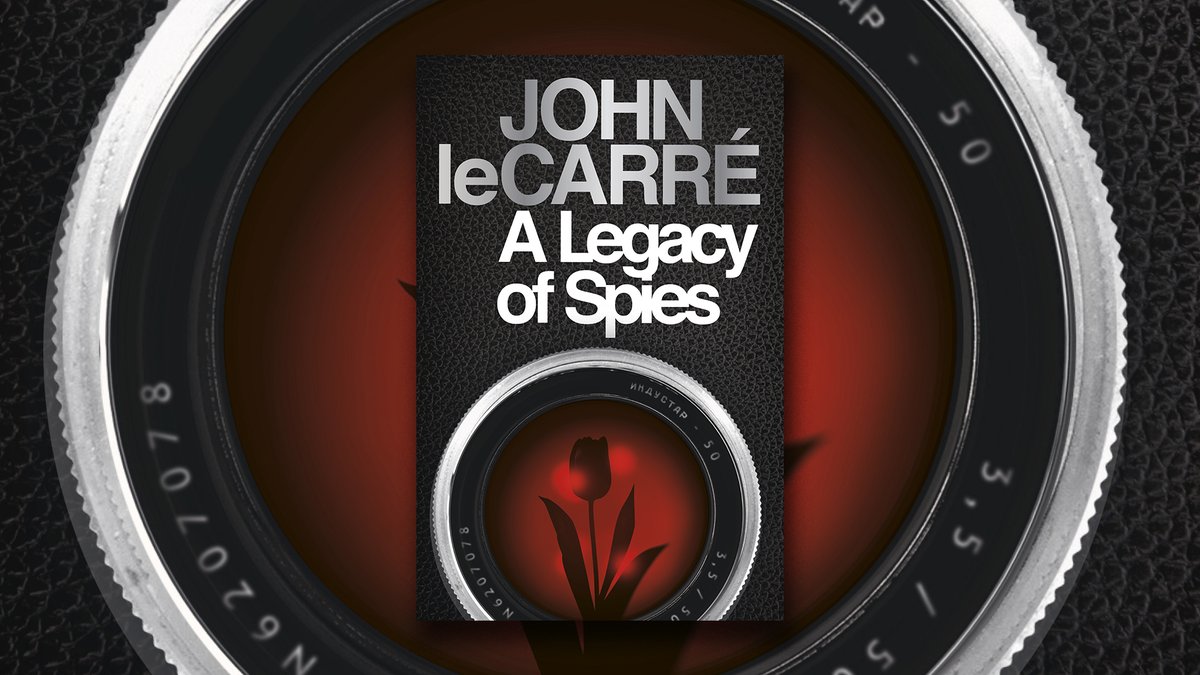
Klaxon! le Carré’s new novel, A Legacy of Spies is out on 7 September. After 25 years, George Smiley is back! 

Hamburg Gallery

We’ve had a wonderful couple of days in Hamburg, seeing family, friends and lots of sights. It really is a most beautiful place. A few highlights below…

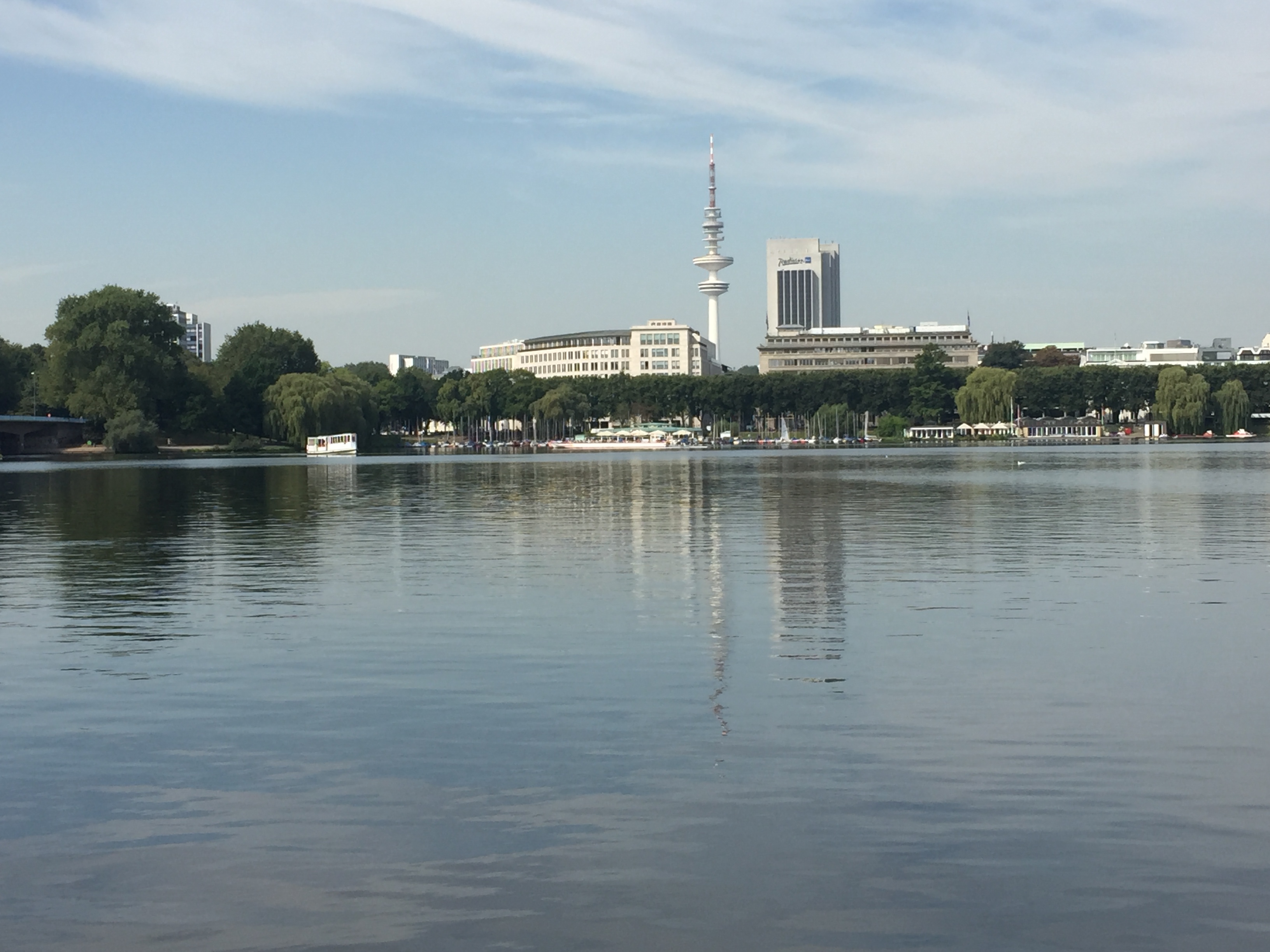
View across the Aussenalster (Outer Alster), which is mentioned in the passage above and lies right in the middle of the city:

Here’s the kind of boat our young man was waiting for – these chug around the Alster like genteel water-taxis:

Here’s the front of the Rathaus or City Hall. We noticed that it was flying the Hamburg flag and the European flag, but not a German one. The city’s Hanseatic Free City status is one it is very proud of and likes to stress:

Here’s the back of the Rathaus. Rather splendid:

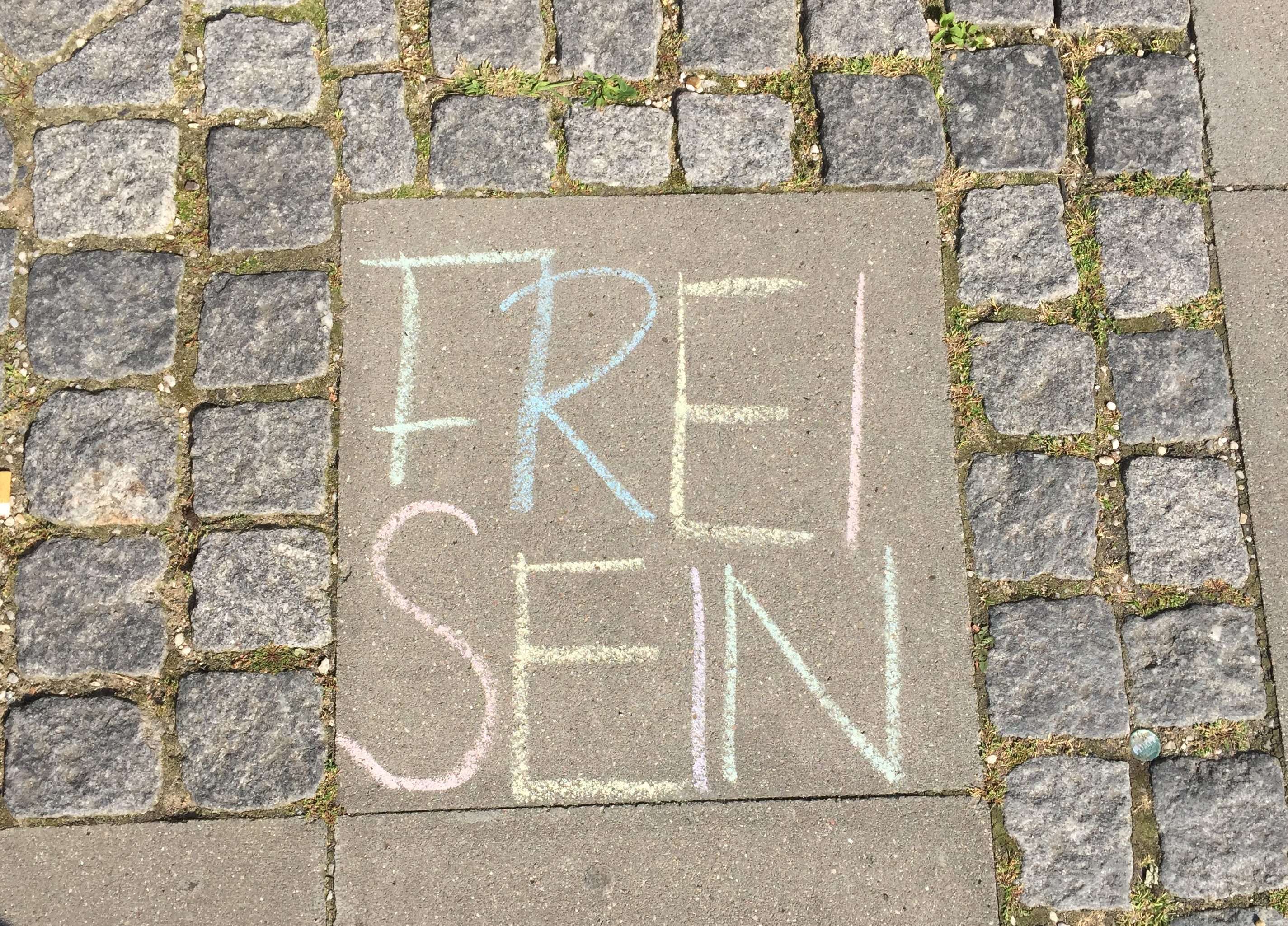
Pavement graffiti – ‘be free’:

A local delicacy from this seafaring city – matjes (herring) with Bratkartoffel (fried potatoes). Delicious!

The German election is coming up later in September, so election posters are everywhere. Behind to the left, the offices of Die Zeit, the influential weekly broadsheet.

The Elbphilharmonie, a swish new concert hall and architectural wonder, has just opened. This is the way in (*hums stairway to heaven*). Hamburg locals have already nicknamed the building ‘Elphie’:

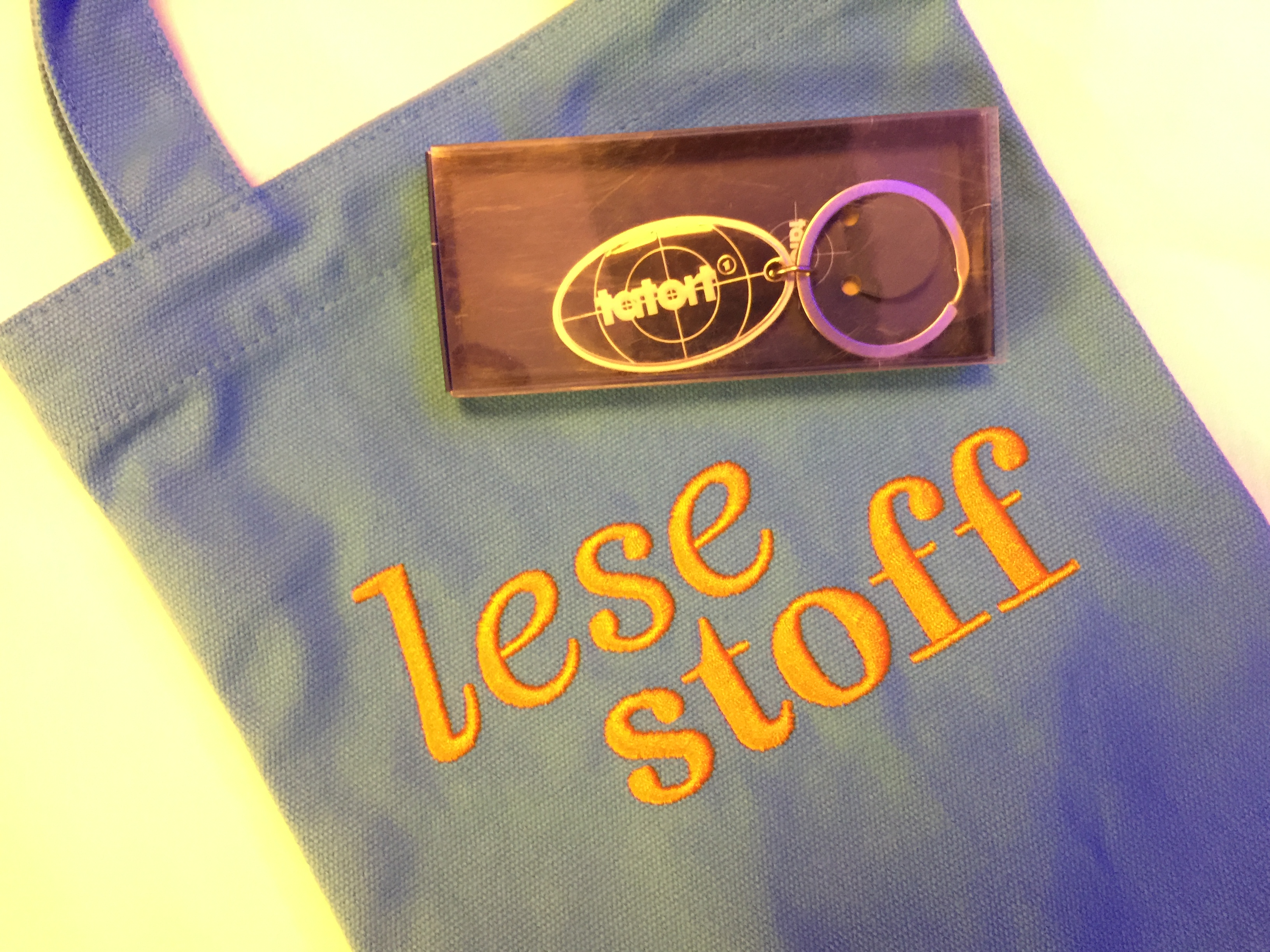
Lastly, the best souvenirs ever: an iconic Tatort key-ring and a book-bag (Lesestoff = reading matter).

Click here for an overview of Mrs. Peabody’s Eurotour


Crime fiction prologues – love them or hate them?

Sometimes when you read lots of crime novels in quick succession, particular trends start to emerge. For me recently, it’s been the increasing use of prologues that are action-dominated and gruesomely violent. Perhaps I’ve had a bad run, but in the space of ten books I’ve encountered the following ‘gritty prologues’ (from male and female authors of different nationalities):

  • A man wakes to find himself bound to a table. He is tortured to death. Told from the victim’s point of view.
  • A woman arrives home in the dark, is attacked from behind and almost strangled to death. Told from the victim’s point of view.
  • A father drops his son off at a friend’s house, only to discover that the family has been brutally murdered. Told from the father’s point of view.
  • A father tries and fails to stop his daughter seeing a grisly corpse he has just uncovered in a peat bog. Told from the daughter’s point of view.
  • A stray dog scavenging for food finds three fresh corpses that will make a nice supper. Told from the dog’s point of view (!).
  • A woman is suffocated in her bed with a pillow. Told from the murderer’s point of view.

Truly. I kid you not.

A number of questions arise:

  1. What’s the aim of this kind of prologue? To grab the reader’s attention in a competitive market place? To demonstrate the crime writer’s ‘chops’ when describing extreme violence? To sell more books?
  2. Why does the violence have to be dialled up to 11, described in minute detail, and told from the victim/murderer POV? Is there some kind of grim inflation going on, with authors competing to describe ever more violent/sadistic acts? And is this really what authors/editors/publishers think readers want?
  3. Are these kinds of prologues new? A quick scout of my bookshelves tells me they’re not. Henning Mankell uses prologues in Sidetracked (1995), The Fifth Woman (2000) and other Wallander novels. So does Hakan Nesser in Borkmann’s Point (1994), George Pelecanos in The Big Blowdown (1996) and Jan Costin Wagner in Silence (2007).
  4. Do prologues feature regularly in crime before the 1990s? I’m not sure. I couldn’t find any, but haven’t done an exhaustive search by any means. It would be interesting to know when crime fiction prologues became an established feature.
  5. Has the nature of the crime fiction prologue changed? On the basis of an admittedly tiny sample, it seems to me that they have. The older prologues listed under 3. include the story of a family in the Dominican Republic, a woman reading a letter informing her of her mother’s death, and an encounter between two friends in an ambulance en route to hospital. Rather than depicting acts of violence, they give information that helps readers to make sense of acts of violence later in the narrative. The other two do portray graphic violence, but the first is leavened with black humour, and the second is vital to understanding the psychology and roles of two characters in relation to the crime. Neither are told from the POV of the victim or murderer. By contrast, the more recent prologues feel much more gratuitous, and could easily be left out without disturbing the narrative.
  6. Does a terrible prologue = a terrible crime novel? Not necessarily. In fact, there’s sometimes an odd shift in tone between the prologue and the main narrative, which suggests that the prologue could have been tacked on.
  7. Whose idea are these prologues? Do authors come under pressure to add gritty prologues from their editors or publishers or readers? Is the driving force a commercial one, and if so, is there actual proof that such prologues ‘work’ in terms of getting readers to buy books?

The Tempest, Act II, Scene I

But all is not lost. Just this morning I picked up a new crime novel by a certain Norwegian author. Its prologue shows a policeman receiving a letter that will help him to solve an open case from 33 years ago. Hooray!

What’s your view as a reader? Take part in the mini-polls below if you fancy, and let me know your thoughts in the comments below. If any authors, editors, publishers or translators would like to add to the discussion they’d be most welcome 🙂 ***The polls are now closed*** 

Thanks to everyone who took part in the prologue polls. The results are now visible below.

Some thoughts on the results: In each poll, the highest-scoring response (between 47% and 53% of respondents) was a neutral one. So around half of those who took the polls didn’t have strong views about prologues or their usefulness, and didn’t feel that their buying decisions were influenced by them one way or the other. Notably, however, the second-highest response in each poll was negative. In the first poll, 29% said they disliked prologues, in the second poll, 29% felt that they were largely unnecessary, and in the third, 24.5% said that a prologue had put them off buying a book. So at least a quarter of readers don’t seem to like prologues very much or consider them largely necessary. The third-highest responses in the first two polls were more positive: 10% said they liked prologues in poll one, and 17% felt that prologues often had a useful function in poll two. In the third poll, which looked at buying decisions, almost 18% said that the prologue had influenced them in both directions (to buy and not to buy). Only 5% said that a prologue had led them to buy a book. That last finding might surprise some editors and publishers (though the percentage would go up a bit if one added more points from the ‘both’ response).

Obviously, the sample size here is small, but the results are thought-provoking nonetheless.

Treats galore: Crime Time’s Top 100 Books of 2016

Using a fiendish algorithm, the good people at Crime Time have converted nominations from a selection of criminal experts into a wonderfully rich list of the year’s top 100 crime novels.

So if you’re lying beached on the sofa after Christmas dinner, or need a tiny break from your loved ones over the festive season, you could dip in here:

xmasstamps

The Crime Time Top 100 Books Of 2016: Day 1 – #100 To 51

The Crime Time Top 100 Books Of 2016: Part Deux – #50 To #21

The Crime Time Top 100 Books Of 2016: It doesn’t get any bigger than this! – #20 To Numero Uno

I haven’t yet checked how the list breaks down by sub-genre/gender/nation, but am looking forward to taking a closer look, as well as adding some more crime to my TBR pile. Laura Lippman’s Wilde Lake has already found its way onto my bookshelf.

The panel: Barry Forshaw (Financial Times), Andre Paine (Crime Scene), Marcel Berlins (The Times), Steph Broadribb (Crime Thriller Girl), Jon Coates (Daily Express), Jake Kerridge (The Telegraph), Sarah Ward (Crime Pieces), Karen Robinson (The Sunday Times), Maxim Jakubowski (Lovereading), Kat Hall (Mrs. Peabody Investigates), Russell Mclean (russeldmcleanbooks.com), Doug Johnstone (dougjohnstone.com) and Woody Haut (woodyhaut.blogspot.co.uk)

chirstmas

Merry Christmas / Happy Hanukkah / Happy Holidays to you all!

Holiday reading and Price’s Other Paths to Glory

One advantage of an enormous TBR pile is that it provides you with plenty of fodder for holiday reading. We’re off in the VW shortly, and I’m in the process of creating a miniature crime library to take on the road.

DSC_0208

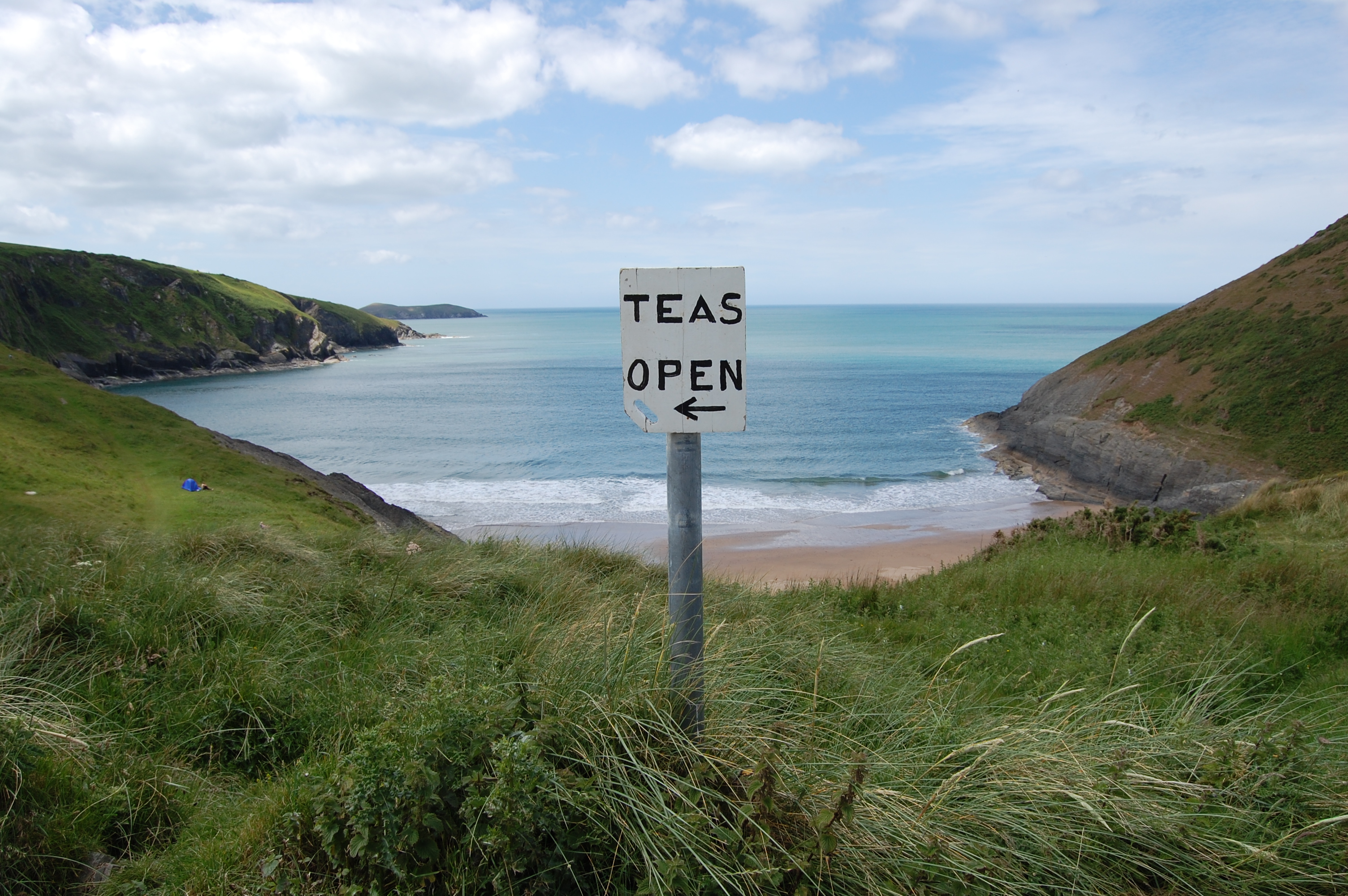
Mwnt in Wales – one of our stops in the VW last year. A very nice spot for a cuppa and a good book.

The following have already made the cut:

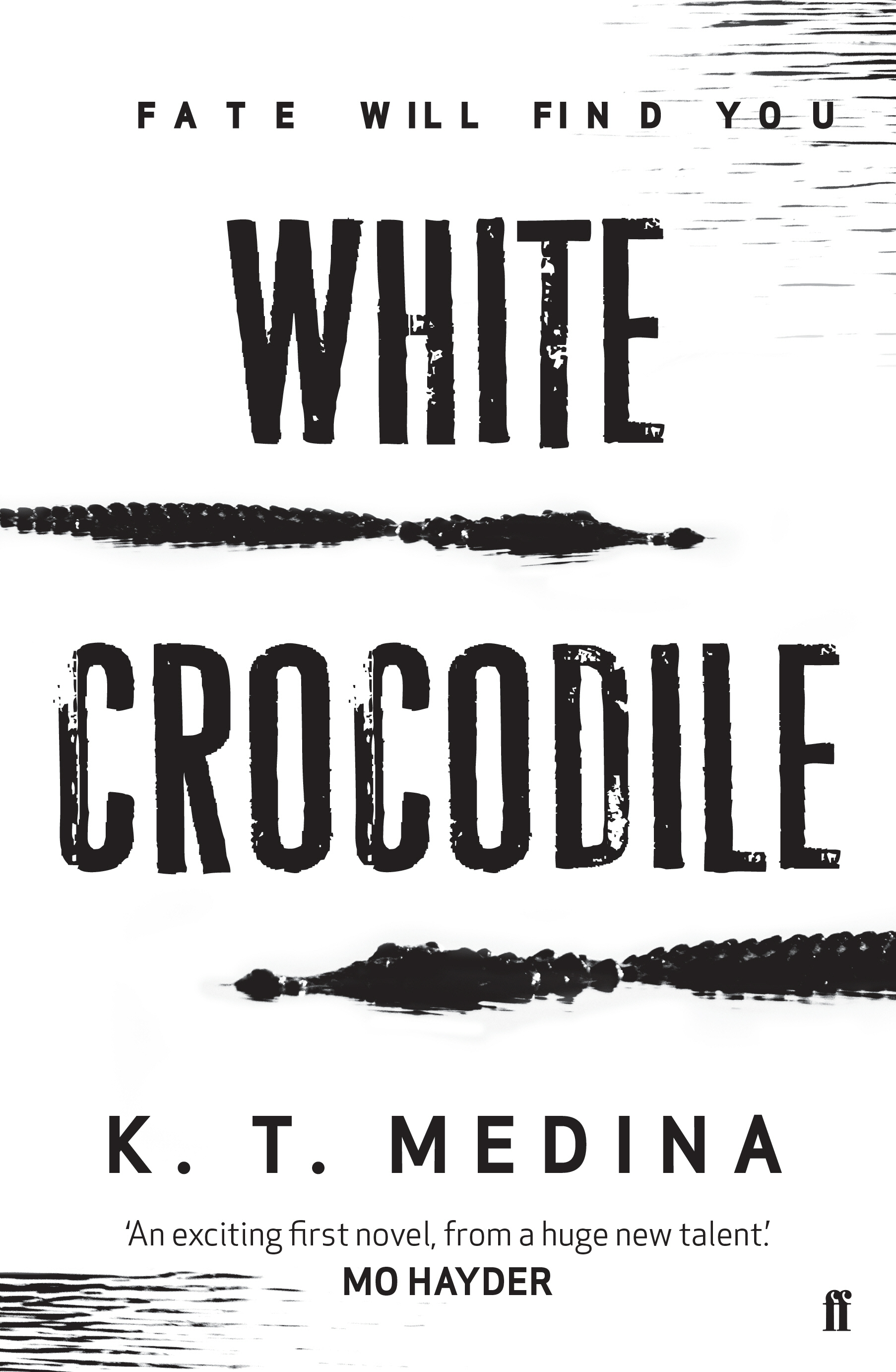
K.T. Medina’s White Crocodile (Faber & Faber, 2014). Cover text: ‘When emotionally damaged mine-clearer Tess Hardy arrives in Cambodia to investigate the truth behind her ex-husband’s death, she finds that local girls are going missing. Caught in a web of lies that stretches from Cambodia to England, Tess must unravel the truth, and quickly – before she becomes the next victim’. The novel has received some really glowing reviews and has been on my list to read for ages.

white-crocodile-jacket

Roberto Costantini’s The Root of All Evil (translated from Italian by N.S. Thompson, Quercus, 2014 [2012]). This is the second novel in the ‘Commissario Balistreri’ trilogy, which moves back in time from Italy of the 1980s/modern day to Libya in the late 1960s. I loved Deliverance of Evil (review here), and am looking forward entering this author’s complex world again. At 676 pages, The Root of All Evil is also handy insurance against rainy days when holidaying in the north of England.

Costantini

Eva Dolan’s Tell No Tales (Vintage, 2015). I expect the second in Dolan’s ‘DI Zigic and DS Ferreira’ series to be a particularly resonant and disturbing post-Brexit read. Cover text: ‘Two men are kicked to death in brutal attacks. Caught on CCTV, the murderer hides his face – but raises a Nazi salute. In a town riddled with racial tension, Detectives Zigic and Ferreira from the Hate Crimes Unit are under pressure to find the killer. Riots break out, the leader of right-wing party steps into the spotlight, and Zigic and Ferreira must act fast before more violence erupts’. I reviewed Long Way Home, the first in the series, here.

Dolan

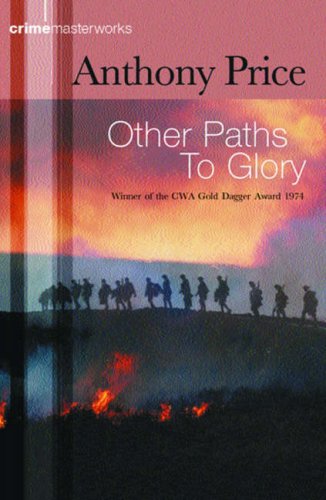
When catching up with the lovely Ms Adler in Cardiff last week, I picked up Anthony Price’s Other Paths to Glory in Oxfam Books. Because it was part of the ‘crime masterworks’ series – one of my favourites – I didn’t even bother to read the back cover, but soon realised it was going to be very topical given the 100th anniversary of the Battle of the Somme on 1 July.

The novel was the winner of the CWA Gold Dagger Award in 1974, and shows World War One historian Paul Mitchell being pulled into undercover work for the MoD following the murder of a colleague. A map fragment from the Battle of Hameau Ridge on the Somme in 1916 appears to be the cause, but why?

Other Paths to Glory was an absorbing read that provided sobering insights into the history of World War One and the experiences of ordinary soldiers, many of whom died senseless deaths at a tragically young age. Part of the plot explores the mystery of regiments that simply disappeared from the battlefield, and the novel offers an ingenious and plausible solution to that enigma.

There’s a lovely review of Price’s The Labyrinth Makers over at CrimeFictionLover, which also gives some background on this very interesting author and his works.

Anthony Price

Somme

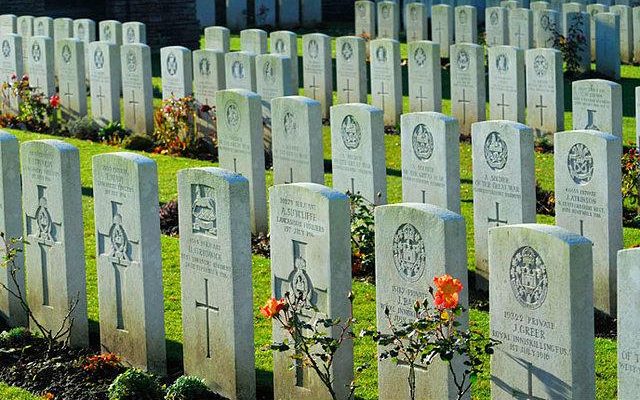
Graves at the Somme