Jingle bells! Mrs. Peabody’s 2025 Christmas crime list

Mrs. Peabody’s 2025 Christmas list features the perfect gift for every crime lover in your life — including yourself!

Eight novels set in America, England, Norway, Scotland, Croatia and the former Yugoslavia, with a dash of China, Sweden and Ukraine. Please support indie publishers and local booksellers!
Red Water

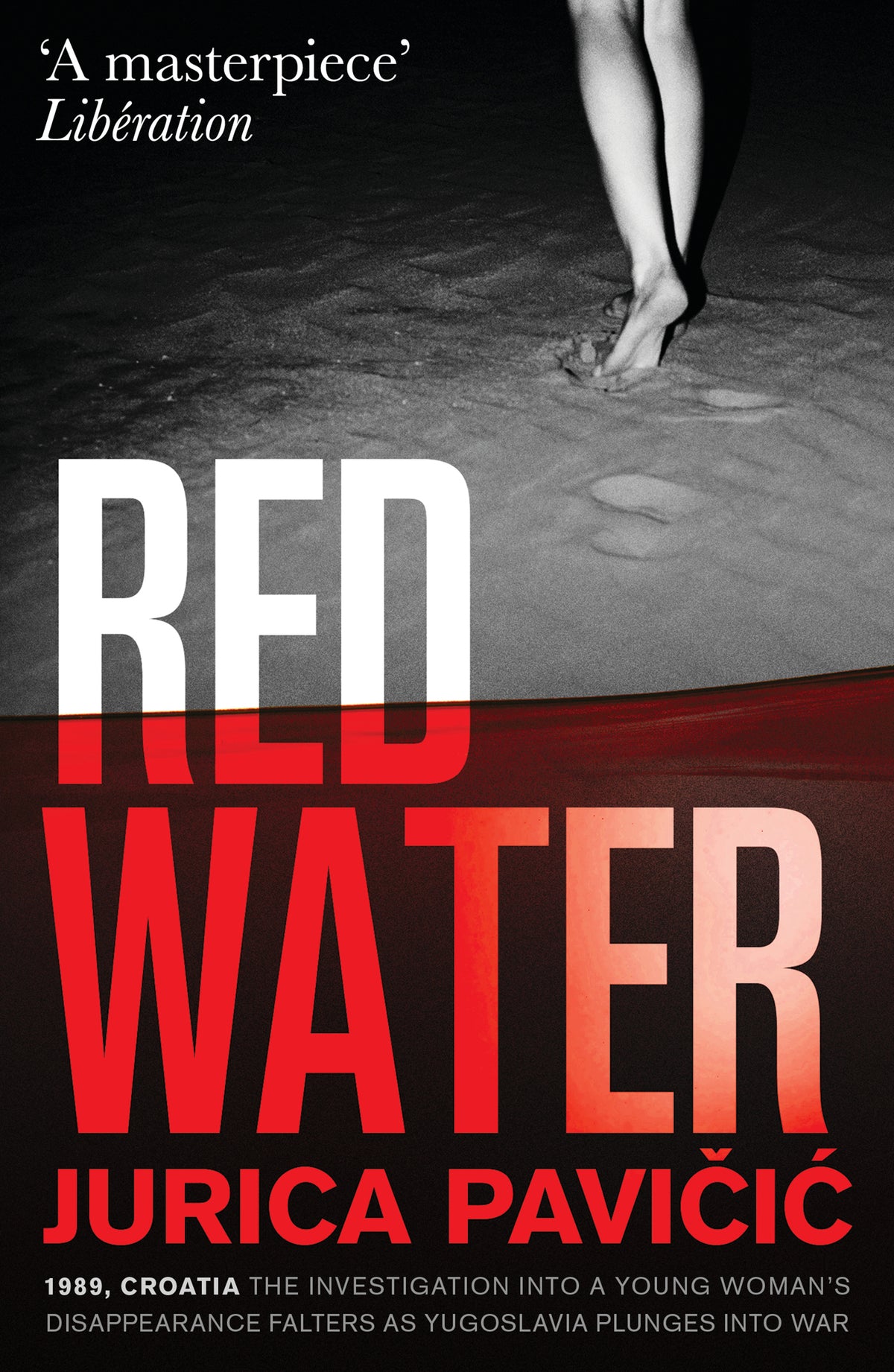
Jurica Pavičić, Red Water, translated by Matt Robinson, Bitter Lemon Press 2025

Red Water is for lovers of international and historical crime fiction. Set in Croatia, the novel explores the fallout from a teenager’s disappearance over three long decades. Silva vanishes in September 1989, leaving her family confounded, not least because the police investigation reveals some unexpected sides to the seventeen-year-old’s life. Then comes the fall of communism and the Yugoslav Wars that will tear communities apart. It’s only once the conflict ends that the family has any chance of getting the answers they need.

This gripping and emotionally intelligent mystery shows the toll on the loved ones of those who disappear, while offering a nuanced history of Yugoslavia’s collapse and the remaking of Croatia. First-class stuff.

Laila Lalami, The Dream Hotel, Bloomsbury 2025

Set in a future not far from now, The Dream Hotel is a speculative mystery that highlights the dangers of the technologies that supposedly serve us. Dr Sara Hussein is returning from a conference when she’s detained at Customs and Immigration, because she’s been deemed at risk of committing murder following data analysis of her dreams. Little did she know, when blithely agreeing to the terms of a sleep-saving device after the birth of her twins, that her dreams would be harvested and used against her. Now she’s being held at a SAFE-X facility that turns a profit from its detainees’ labour and is loath to let them go. It’s been 291 days — will Sara ever make it back to her family?

The Dream Hotel will make you think twice about ticking those innocent-looking ‘terms and conditions’ boxes, and illuminates the intersections of law enforcement and capitalism in uncompromising ways. The subject is highly relevant given the current situation in the States, where ICE is busy outsourcing raids on immigrant communities. A fantastic read from an author at the top of her game.

Elly Griffiths, The Postscript Murders and The Last Word, Quercus 2020 and 2024 

Time for some cosy crime! I absolutely loved this duo of bookish crime novels by Elly Griffiths. In The Postscript Murders, DS Harbinder Kaur sees no reason to suspect foul play when 90-year-old Peggy Smith is found dead at home. But Peggy’s carer Natalka isn’t so sure: Peggy thought she was being followed and did she really have the heart condition that apparently killed her? Together with Edwin, Peggy’s elderly neighbour, and Benedict, a former monk who serves coffee on the Shoreham seafront, Natalka sets about solving the mystery of Peggy’s death. And it turns out that their friend had a rather special skill. Then, in The Last Word, the trio investigate the demise of local romance author Melody Chambers.

Both novels are great reads — witty and entertaining, but with plenty of emotional depth. The three investigative characters bounce off one another nicely, and Natalka’s Ukrainian dynamism complements Edwin and Benny’s more cautious British approach. Crime fiction with lots of heart.

Jørn Lier Horst, The Lake, translated by Anne Bruce, Penguin 2025 

The latest William Wisting police procedural is a brilliant addition to the series. It’s high summer and Lake Farris is drying out for the first time in years. As the waters recede on opposite sides of the lake, there are disturbing discoveries relating to two cold cases: the remains of a young motorcyclist who went missing eight years ago, and the belongings of a girl who disappeared four years later. Wisting and his team, with fresh input from a Swedish detective, begin to reinvestigate.

This crime novel goes to some quite dark places, but is never salacious or gratuitous in tone. Wisting represents the very best of policing: he is methodical, dogged, and dedicated to securing justice for his victims. His methods have also moved with the times, so we’re given fascinating insights into the latest technologies used to secure vital breakthroughs.

R. F. Kuang, Yellowface, HarperCollins 2024

Rebecca Kuang is an incredibly exciting writer, with the talent and courage to pull off ideas that many other authors could not. In Yellowface, obscure writer June Hayward witnesses the death of her friend and rival Athena Liu in a freak accident. In the interval between dialling 911 and the arrival of the emergency services, June steals the book manuscript lying on the dead woman’s desk, and later revises and passes it off as her own. Finally, ‘June Song’ has the fame and critical adulation she’s always dreamed of and seems to have no problem justifying her actions to herself. But someone may be about to expose her. How can June save herself from being cancelled and losing her precious career?

Yellowface is a razor-sharp dissection of the publishing industry and the crazily competitive world that aspiring writers have to navigate. Just how far are they (or any of us) willing to go to make it? Clever and witty, and a genuinely insightful look at the publishing process.
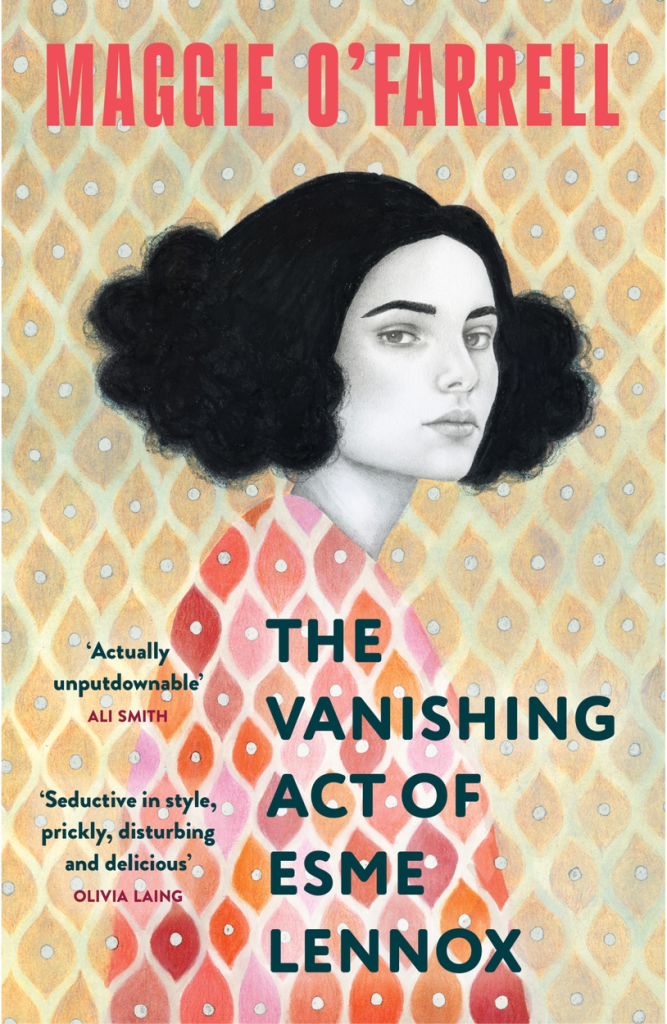
Maggie O’Farrell, The Vanishing Act of Esme Lennox, Hachette 2009

Top-notch literary crime. Iris Lockhart gets a letter telling her that her great-aunt Esme Lennox is about to be released from an Edinburgh psychiatric unit. Iris has never heard of Esme, and her grandmother Kitty, who is slipping into dementia, seems unable or unwilling to help. But what could Esme have done to deserve a lifetime in an institution? And why the complete silence about her within the family?

This is by far the oldest novel on my list, but I read it this year and was simply blown away. I counted at least four major crimes within its pages, and the astonishing thing is that none of them — even in combination — could be said to be remotely unique. On finishing it I felt quite shaken, because it really isn’t that long since ‘transgressive’ women could be so easily ‘put away’. Sobering and sad, but incredibly good — and Esme herself is unforgettable. O’Farrell is a truly fantastic writer.

Jess Kidd, Murder at Gulls Nest, Faber 2025

Murder at Gulls Nest is the first in Jess Kidd’s ‘Nora Breen Investigates’ series and is set in the 1950s seaside town of Gore-on-Sea, a place of boarding houses, terrible food, and recuperation after long years of war. Nora was once Sister Agnes of Christ at the High Dallow Carmelite Monastery, but when former nun Frieda goes missing, Nora feels compelled to find her and takes a room at the Gulls Nest boarding house where the woman last lived. Here, Nora meets the ragtag assortment of Frieda’s fellow lodgers, and starts using her curiosity and sharp intelligence to get to the bottom of the mystery. When one of the lodgers is found dead, Nora knows that something is seriously amiss. Kidd’s use of language is sublime, and the loyal and resourceful Nora Breen is a delight. Cosy, but with an uncompromising edge.

Wishing you all a lovely, relaxing and bookish Christmas!

Spring smörgåsbord! Swiss, Korean, British, Spanish & American crime fiction

Spring is springing here in Wales, with pink blossom, white garlic, and bluebells emerging into the warmth. It does the soul good to be out in the garden and parks, or down on the beach.

I’ve been enjoying an eclectic range of crime fiction recently, including some longer, more ambitious reads.

Hunkeler's Secret

Hansjörg Schneider, Hunkeler’s Secret (Switzerland), tr. by Astrid Freuler, Bitter Lemon Press 2025

First line: Peter Hunkeler, former inspector with the Basel City criminal investigation department, now retired, woke up and didn’t know where he was.

I reckon Hunkeler’s Secret, the latest in the ‘Inspector Hunkeler’ series, is my favourite thus far. While in hospital recovering from an operation, Hunkeler finds himself sharing a room with Stephan Fankhauser, the gravely ill former head of the Basel Volksbank. One morning, Hunkeler wakes to the news that Fankhauser died in the night. But was it a natural death? Or did a groggy Hunkeler witness something untoward being done to his fellow patient in the wee small hours? After his discharge from hospital, the retired police inspector starts to investigate in his dogged, somewhat grumpy way. There’s also a new family relationship to explore, a wayward goat, and lots of good food.

One aspect of the ‘Hunkeler’ series I particularly like is its geographical setting. There’s the Swiss city of Basel on the one hand, where Hunkeler spent his working life and has a flat, and rural Alsace on the other, where he owns a little house. You get a real sense of the proximity of Switzerland, France and Germany to one another, with characters continually criss-crossing borders and speaking Swiss-German, Alsatian (an Alemannic dialect) and French. I love that Astrid Freuler integrates nuggets of the original languages into her excellent English translation, which gives readers an enhanced sense of the multiculturalism of the area. The region also has a complex territorial history, which plays a role in the resolution of this knotty Hunkeler case.

Jess Kidd, Murder at Gulls Nest (1950s England), Faber 2025

First line: The woman climbs the hill, a favourable wind behind her.

Murder at Gulls Nest is the first in Jess Kidd’s new ‘Nora Breen Investigates’ series, and is set in the 1950s seaside town of Gore-on-Sea, a place of boarding houses, terrible food, and recalibration after long years of war.

For thirty years, Nora was Sister Agnes of Christ, a dutiful nun at the High Dallow Carmelite Monastery. But when former nun Frieda goes missing, Nora feels compelled to find her, and takes a room at the Gulls Nest boarding house, where the young woman was last based. Here, Nora meets the ragtag assortment of Frieda’s fellow lodgers, and starts using her curiosity and sharp intelligence to get to the bottom of the mystery. When one of the lodgers is found dead, Nora knows that something is seriously amiss.

Readers of this blog will know that I’m a big fan of Jess Kidd’s work, especially her brilliant novel HimselfMurder at Gulls Nest is written in a slightly softer, slightly cosier style, but retains plenty of bite. As ever, Kidd’s use of language is sublime, and I’m looking forward to meeting the resourceful, irrepressible Nora Breen again in future.

Mirinae Lee, 8 Lives of a Century-Old Trickster (North Korea and South Korea), Virago 2023

First line: The idea came to me while I was going through my divorce.

When Grandma Mook tells the obituarist at the Golden Sunset retirement home the story of her life — which spans a century of Korea’s history — there’s a suspicion that the old lady is just a fantasist. But: what if Mook Miran is telling the truth and she’s a trickster of the highest order? What if she genuinely was a murderer, terrorist, identity thief and spy?

A major theme of this novel is survival. Mook Miran’s eight lives, which we’re told in non-chronological order, illuminate the terrible hardships women faced in Japanese-ruled Korea (1910-1945) and later in North Korea, and pose the question of what it takes to survive such incredibly adverse circumstances. Part of the answer lies in the figure of the trickster, who survives and advances through nimble thinking and resolute action — even if the latter is viewed as a crime and comes at a price. Sparky, resilient and whip-smart, Mook Miran is a character you won’t easily forget, and the portrait she paints of Korea’s history is disturbing and fascinating in equal measure.

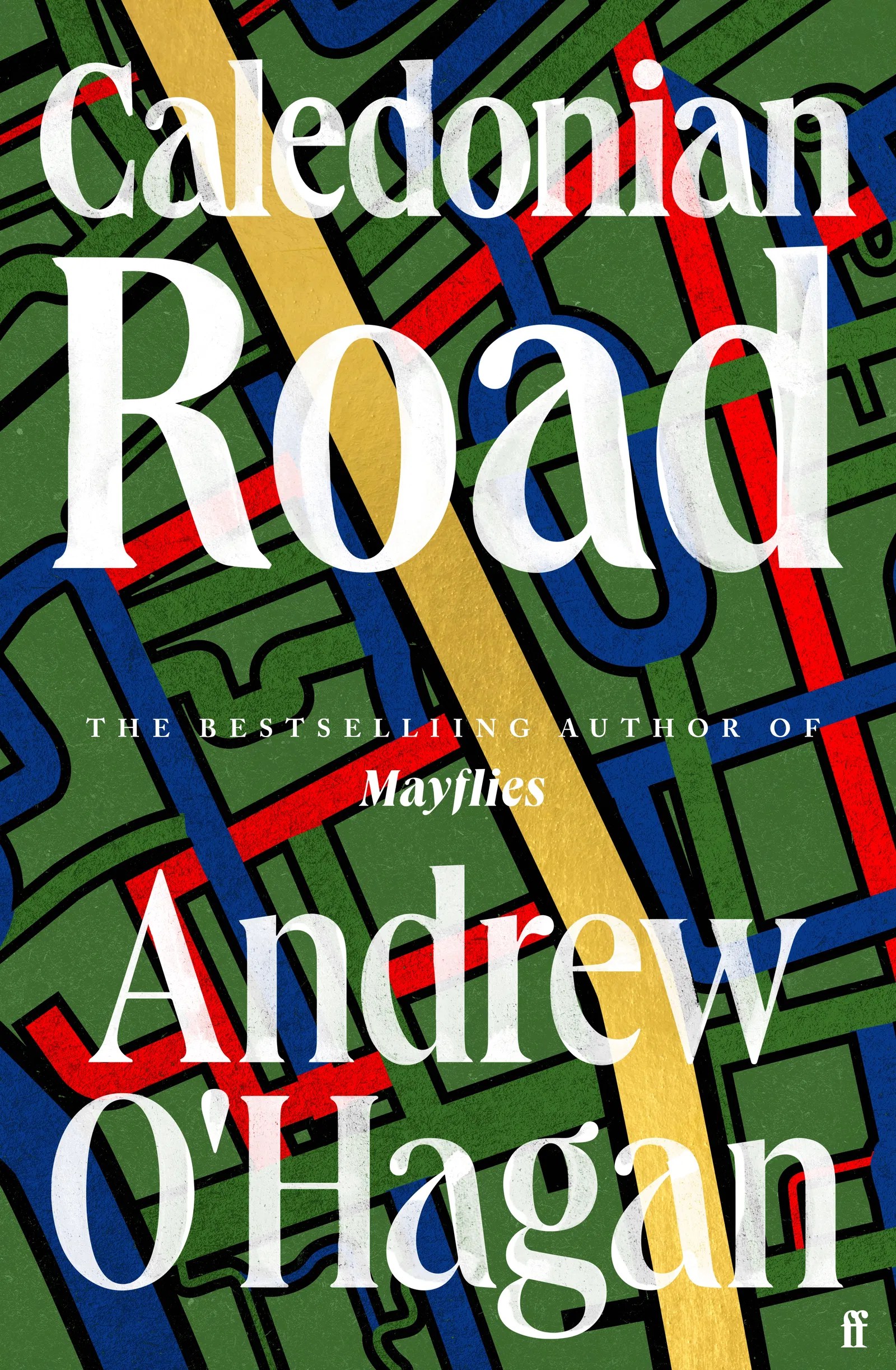
Andrew O’Hagan, Caledonian Road, Faber 2024

First line: Tall and sharp at fifty-two, Campbell Flynn was a tinderbox in a Savile Row suit, a man who believed his childhood was so far behind him that all its threats had vanished.

Caledonian Road, or ‘the Cally’, runs for a mile and a half through the London Borough of Islington. Like many roads in London, it takes you from economically deprived areas to obscenely wealthy ones in what feels like the blink of an eye.

Andrew O’Hagan harnesses the reality of this social divide in his powerful state-of-the-nation novel by creating an illuminating chain of connections: from Milo Mangasha, a tech-savvy student from a Cally council estate, and his uni professor Campbell Flynn, who lives in a posh townhouse with his aristo-therapist wife further up the road, to Sir William Byre, Flynn’s public school pal who’s up to his neck in dodgy deals, and Russian oligarch Aleksandr Bykov and son Yuri, who runs a very modern criminal enterprise and socialises with Campbell’s children. And that’s just a fraction of the cast!

Strap in for 600 pages of brilliant storytelling featuring utterly believable characters and razor-sharp social dissection. In particular, the novel holds up a mirror to the hypocrisies of well-heeled Londoners, and the establishment’s willingness to turn a blind eye to corruption and outright criminality. But it’s not without sympathy for its beleaguered central character, Flynn, whose spectacular mid-life crisis may offer a redemption of sorts, and has much to tell us about the perils of becoming alienated from your true self.

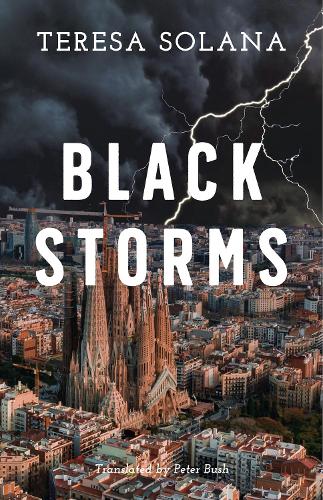
Teresa Solana, Black Storms (Spain), tr. by Peter Bush, Corylus Press 2024

First line: The man who was about to commit murder left home at six thirty, after telling his girlfriend Mary he’d business to see to and checking his car keys were in his pocket.

Whenever I read Teresa Solana’s work, I always come away with an appreciation of her highly distinctive voice, which blends a wry humour with steely social satire. Above all, there’s a wonderful energy to her writing, which seems to feed off the verve of Barcelona, the city where many of her crime stories are set. Her long-time translator, Peter Bush, captures all of these elements with aplomb in his English translations.

Black Storms introduces us to Norma Forester, Deputy Inspector of the Catalan police, who is tasked with solving the murder of an elderly professor at the University of Barcelona. No one can quite understand why a terminally ill man should be targeted in this way, but Norma’s experience and expertise gradually uncover the truth.

Equal attention is paid to Norma’s eccentric family, and they are great fun to hang out with. Norma is the granddaughter of an English member of the National Brigades, and the women of the family, all named after opera heroines, are a force of nature. I particularly like the way Solana shows Norma’s efforts to balance her family life and work, which the latter does in a messy, imperfect, but loving way.

The Residence, Shondaland / Netflix 2025

Last but not least, a very fun Netflix crime series: The Residence, which stars Uzo Aduba as Cordelia Cupp, a consultant with the Metropolitan Police Department of the District of Columbia, and Randall Park as Edwin Park, an FBI Special Agent. They are called to the White House after a murder is committed during a state dinner for the Australian prime minister, and tasked with figuring out which of the 157 suspects is the murderer — including the fictional president and his husband.

Aduba is excellent as the bird-watching, unerringly brilliant sleuth. It’s really her show, backed by a superb ensemble cast, and the whole thing has a Sherlock-Holmes-by-way-of-Wes-Anderson vibe. It also throws a light on the lives of the permanent staff at the White House, who of course stay in place while presidents come and go. Very sharp, very witty and very entertaining.

Up to snow good! Mrs. Peabody’s top crime of 2024

Here is Mrs. Peabody’s top crime list for 2024 — featuring some of my very best reads from the last 12 months (though not necessarily published this year). The books are set in America, Australia, Finland, France, Italy, Japan, Malaysia, Norway, and Spain. 

Perfect gifts for the festive season! Treat others! Treat yourself! Support indie publishers and local booksellers!

Antti Tuomainen, The Burning Stones, tr. from the Finnish by David Hackston (Orenda Books 2024, 271 pp.)

Setting: Rural Finland

First lines: Aaaaahhhhhhh. The steam spread over his skin like a hot, damp blanket, and flowed evenly and satisfyingly across his whole body.

Set in Puhtijärvi, a Finnish village nestled between a forest and a lake, The Burning Stones pays homage to the key role of the sauna in the nation’s wellbeing… whilst also cheerfully turning it into a crime scene.

When Ilmo Räty is found dead in the ashes of his sauna, the rest of his colleagues at Steam Devil, a leading sauna stove manufacturer, fall under suspicion. This is especially problematic for top saleswoman Anni Korpinen, as one of the police investigators holds an elk-related grudge against her family and the murderer seems to be doing their best to frame her. So: not only must Anni deal with her own mid-life crisis, she must also turn detective and ID the murderer before it’s too late. Hilarious and heart-warming in equal measure, The Burning Stones illuminates the rituals of the sauna and the delights of rural Finland. As ever, translator David Hackston does a fantastic job of conveying Antti Tuomainen’s distinctive dark humour and his eye for the idiosyncratic detail of everyday life. A delight. 

Tan Twan Eng, The House of Doors, Canongate 2023

Setting: Penang and Kuala Lumpur, 1910 (now modern-day Malaysia)

First lines: A story, like a bird of the mountain, can carry a name beyond the clouds, beyond even time itself. Willie Maugham said that to me, many years ago.

Tan Twan Eng’s The House of Doors is a wonderfully absorbing and multi-layered historical novel. It imagines how the final tale of W. Somerset Maugham’s 1926 Casuarina Tree — ‘The Letter’, based on the real Ethel Proudlock murder case — might have come about, while the author visits his old friend Robert Hamlyn. Told from the perspectives of Willie and Lesley, Robert’s wife, the novel brilliantly evokes Penang and Kuala Lumpur in the 1910s and 1920s.  See the full review here.

Antoine Laurain, French Windows, tr. from the French by Louise Rogers Lalaurie (Gallic Books 2024, 174 pp.)

Setting: Paris, France.

First lines: In the middle of the unevenly cobbled courtyard stands a tall tree. No one has ever quite determined its species; some people in the building see a wild cherry, others see an oak, though it has never produced an acorn.

Analyst Doctor Faber has a new patient with an unusual problem. Nathalia Guitry is a photographer who finds herself unable to take photos. The reason, we soon discover, is that she accidentally photographed a murder, leaving her understandably traumatised. As a way into therapy, Doctor Faber suggests Nathalia writes about the people she observes from her apartment window. Going up floor by floor, she pens detailed portraits of her neighbours, all of whom are intriguing in their own right. But how much of what she writes is true? And what will the story of the fifth floor reveal?

A Parisian Rear Window that offers insights into therapy, along with lashings of acerbic humour and Gallic charm, French Windows is the perfect stocking filler. Hats off to Louise Rogers Lalaurie for gifting us such a sparkling translation of this novel.

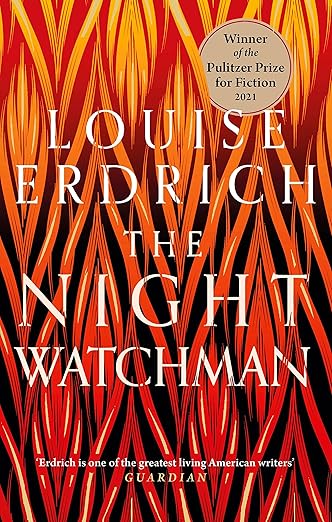
Louise Erdrich, The Night Watchman, Corsair 2021, 464 pp.

Setting: Turtle Mountain Reservation, North Dakota, 1953

First lines: Thomas Wazhashk removed his thermos from his armpit and set it on the steel desk alongside his scuffed briefcase. His work jacket went on the chair, his lunch box on the cold windowsill.

Louise Erdrich, one of my favourite writers, brings the 1950s community of the Turtle Mountain Reservation to life in this highly absorbing, polyphonic novel.

The Night Watchman‘s two main strands each have a criminal dimension. Patrice ‘Pixie’ Paranteau is a young woman whose work at the reservation’s factory allows her to provide for her mother and siblings. But her sister Vera recently vanished after moving to Minnesota, and Pixie now urgently needs to find her and her baby. At the same time, factory night watchman and Chippewa Council member Thomas Wazhashk is becoming seriously concerned about Resolution 108, which is due to go before Congress before too long. Styled as an ’emancipation’ bill, 108 threatens to abolish the official status of tribes as a means of appropriating yet more Native American land and rights — a wave of state-sanctioned violence that Thomas must somehow try to counter. 

The Night Watchman is at times very hard-hitting, but portrays the Turtle Mountain community with humour and warmth. While never sentimental, it shows the power of determination and grass-roots organisation (the character of Thomas is based on the author’s own grandfather), and the resilience and resourcefulness of women like Pixie. The novel won the 2021 Pulitzer Prize for Fiction. Highly recommended!

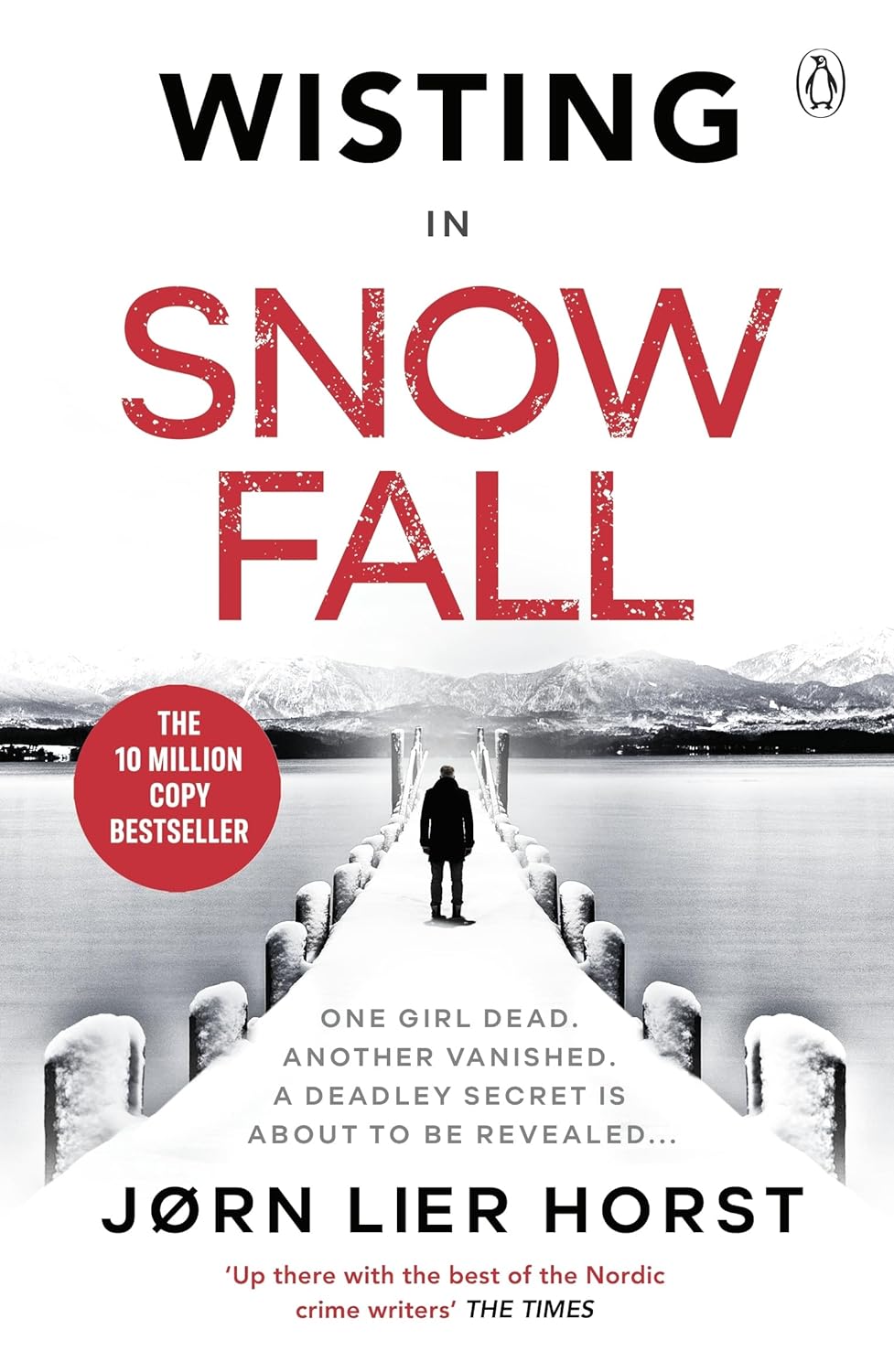
Jørn Lier Horst, Snow Fall, tr. from the Norwegian by Anne Bruce (Penguin 2024, 432 pp.)

Setting: Norway and Spain

First line: The email appeared on his screen at 15.37 on Friday 8 December.

As regular readers of this blog will know, I’m a huge fan of Jørn Lier Horst’s ‘William Wisting’ novels — consistently thoughtful and intelligent police procedurals that use their crime narratives to illuminate various facets of modern society.

Snow Fall sees Wisting being asked to investigate the disappearance of Norwegian woman Astri Arctander — a member of an online crime forum looking into the recent murder of backpacker Ruby Thompson in the town of Palamós in Catalonia. Wisting’s investigation takes him from Norway to Spain, and includes navigating a relationship between himself as a police representative and the modern-day online detectives, whose information is gathered outside of the law but may nevertheless be useful. By the way, the handle of one of the online sleuths is intriguing: a certain ‘Mrs Peabody’ who seems to know her crime fiction! The author has not yet confirmed or denied the inspiration for this character…

Snow Fall is an absorbing police procedural by a writer at the height of his powers, brought to us in style by Lier Horst’s long-standing translator, Anne Bruce. Quality holiday reading!

Maggie O’Farrell, The Marriage Portrait, Tinder Press 2022, 438 pp.

Setting: Sixteenth-century Italy

First line: Lucrezia is taking her seat at the long dining table, which is polished to a watery gleam and spread with dishes, inverted cups, a woven circlet of fir.

Maggie O’Farrell’s The Marriage Portrait was one of my star reads of the year. The author takes her inspiration from a snippet from history — the mysteriously brief life of Lucrezia di Cosimo de’ Medici (1545-1561) — and Robert Browning’s 1842 poem ‘My Last Duchess’, which suggests that Lucrezia was murdered by her husband, the Duke of Ferrara. The resulting novel is an outstanding example of literary crime — ingenious but with plenty of heart. Read my full review here.

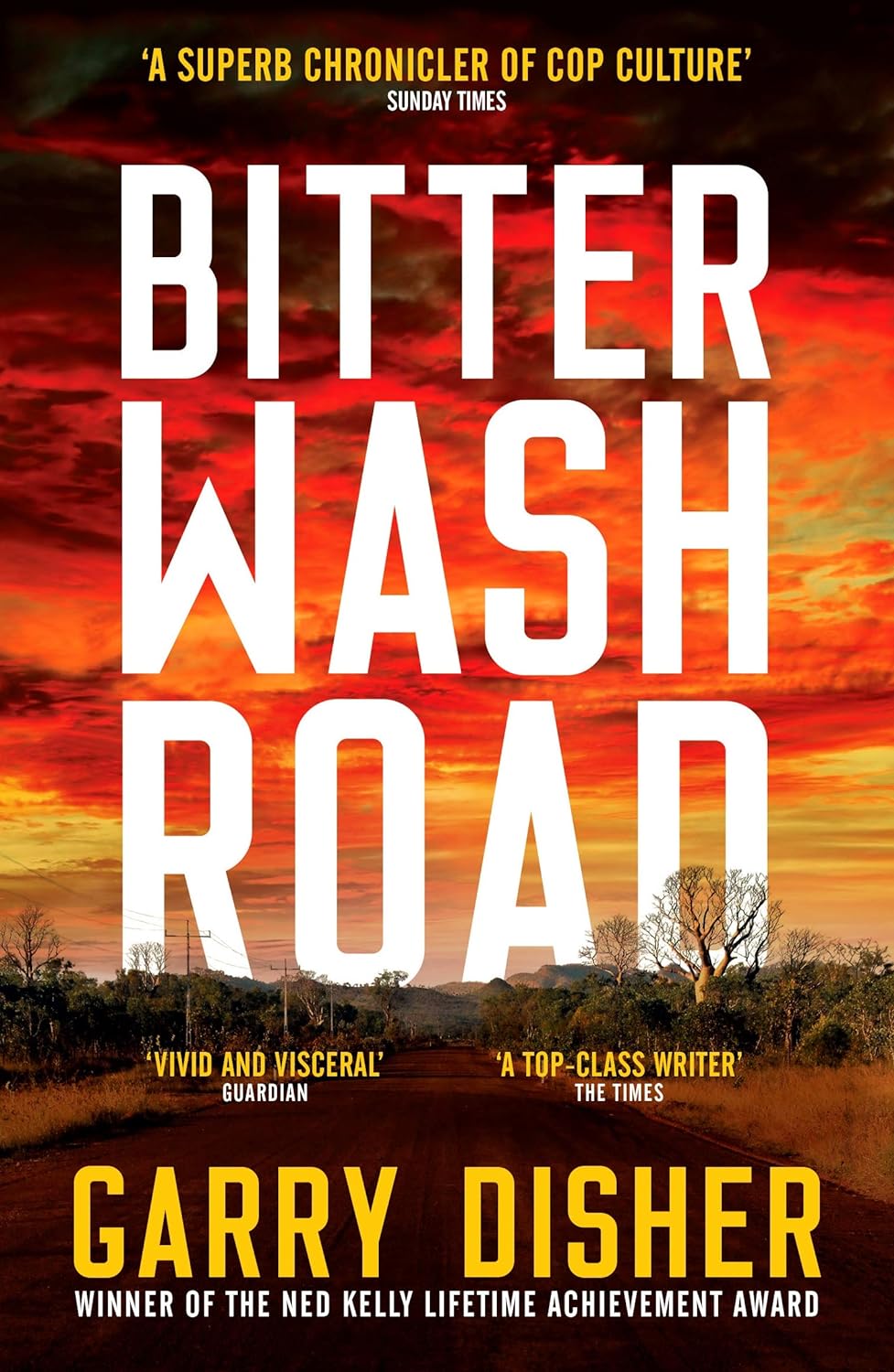
Garry Disher, Bitter Wash Road, Viper 2020, 416 pp.

Setting: Rural South Australia

First line: On a Monday morning in September, three weeks into the job, the new cop at Tiverton took a call from his sergeant: shots fired on Bitter Wash Road.

Bitter Wash Road is the first in Garry Disher’s ‘Constable Hirsch’ series. Paul ‘Hirsch’ Hirschhausen has recently found himself exiled from the city to a one-man cop shop in ‘wheat and wool country, three hours north of Adelaide’ — punishment for having dared to be a whistle-blower during a previous case. In Tiverton, the metropolitan cop must quickly adapt to rural policing — which is not always as quiet as one might think — and deal with the hostility of his new boss, the distinctly unenlightened Sergeant Kropp. Oh, and there’s likely to be a whole lot of extra fallout from Hirsch’s past too. 

This is an outstanding novel with great characterisation and a thrilling plot from the three-time winner of the prestigious Ned Kelly Award for Best Novel. I have the next in the series, Peace, lined up as one of my holiday reads.  

Hideo Yokoyama, The North Light, tr. from the Japanese by Louise Heal Kawai (RiverRun 2023, 408 pp.)  

Setting: Tokyo, Osaka and around Mount Asama, Japan

First line: In Osaka it had been raining since early morning.

The North Light is probably best described as a mystery and a meditation on middle age. Minoru Aose is a divorced architect who fell on hard times after Japan’s economic bubble burst in the 1990s. Although he now works for a small, reputable architectural firm, he seems to be largely out of touch with his feelings and unclear about what he wants from life.

Aose’s biggest achievement to date is the Yoshino house, a prizewinning residence near Mount Asama. His brief was to design a house that he himself would want to live in, and it is built to showcase the north light he loves. The chance discovery that the house is empty and the Yoshino family has vanished unsettles him greatly: he is both worried for the family and fearful that they hated the house. We accompany Aose as he unravels this mystery, a journey that reveals facets of his unusual childhood; the work of (real) German architect Bruno Taut, who fled Germany for Japan during the Nazi era; Japanese work culture; and the interplay of Japanese nature and architecture. Quietly gripping and beautifully translated by Louise Heal Kawai, this novel subverts the crime genre in extremely interesting ways.

Wishing you all a very Merry Christmas / Hanukkah / Happy Holidays!

In an unusually glamorous fashion, I’m just about to hop on a plane, so will catch up with your comments in a couple of days 🙂

Disappearing into thin air: Sarah Ward’s The Vanishing Act (Wales) and Laura Lippman’s Lady in the Lake (USA)

Sarah Ward, The Vanishing Act, Canelo Crime 2024

First line: Elsa drove her car down the rutted road, the suspension on her ancient Fiesta groaning as it was thrown from grassy mound to pothole.

Sarah Ward’s The Vanishing Act is part of the ‘Mallory Dawson’ series set in Wales, where I happen to live, and I’ve very much enjoyed seeing places I know and love depicted in her gripping mysteries — Eldey (Caldey) Island, St Davids with its stunning Gothic cathedral, and now the ancient Brechfa (Glyn Cothi) forest in Carmarthenshire.

Sarah has a real gift for creating compelling crime scenarios. In The Vanishing Act, young Elsa goes to do her weekly clean of a holiday cottage deep in the forest, only to find it empty. But the kettle is still boiling on the Aga, half-made sandwiches are lying on the kitchen countertop and a chair is overturned. The family renting the cottage clearly left in a hurry, but why? Elsa phones Mallory to seek advice, who in turn contacts DI Harri Evans. He remembers being called out to a disturbing, supposedly supernatural event at the cottage many years earlier. Could there be a link? Mallory is tasked with digging into past events, and when the disappearance turns into possible murder, she finds herself back on the police team as a civilian investigator.

I thoroughly enjoyed The Vanishing Act. I love the characterization of the down-to-earth Mallory, who is rethinking her life after leaving the police and a divorce, and whose investigative skills and courage are an asset to every case. There’s also something of a Scandi feel about the isolated forest setting and its other-worldly vibe — a place where it pays to be wary of the darkness lurking in its depths. A gripping, satisfying read.

Interested in Welsh crime? Then the article ‘Ten killer crime novels set in Wales’ is for you!

Laura Lippman, Lady in the Lake, Faber & Faber 2019

First lines: I saw you once. I saw you and you noticed me because you caught me looking at you, seeing you.

I stumbled across this trailer yesterday for the new TV crime drama Lady in the Lake, starring Nathalie Portman as Maddie Schwarz. It looks like it could be an amazing adaptation of Laura Lippman’s 2019 novel.

I read Lady in the Lake last year and enjoyed it on a number of levels. Set in 1960s Baltimore, it’s a crime novel exploring the disappearances of Tessie, a Jewish girl, and Cleo, a Black woman, but is also a story of female emancipation. 37-year-old Maddie Schwarz ditches her comfortable but dull existence as an affluent Jewish wife, convinced that there has to be more to life. Her chance involvement in the discovery of a body sets her on a path to becoming an investigative journalist in the male-dominated newsrooms of the city.

Drawing on real cases and figures, Lady in the Lake is also an exploration of the social fabric of the city — of class and gender and ethnic tensions — and sets itself apart by giving space to multiple voices within the community, not least Cleo herself. It’s what I would describe as an ambitious social crime novel that is maybe slightly too ambitious at times. Ideal, then, for a long-form, seven-part TV adaptation that will allow the material to breathe.

The first two episodes of Lady in the Lake air on 19 July on Apple TV. 

Mrs Peabody is away for the next month or so, but has packed a goodly assortment of crime, ranging from Rebecca F. Kuang’s Yellowface and Zadie Smith’s The Fraud to Janet Evanovich’s Seven Up (I’m a big Stephanie Plum fan). What’s on your summer bookshelf?

Tan Twan Eng’s The House of Doors (Penang & Kuala Lumpur)

This week: an absorbing historical novel generously leavened with crime.

Tan Twan Eng, The House of Doors, Canongate 2023

First lines: A story, like a bird of the mountain, can carry a name beyond the clouds, beyond even time itself. Willie Maugham said that to me, many years ago.

Tan Twan Eng’s The House of Doors is a wonderfully satisfying and multi-layered historical novel. It transmutes the final tale from W. Somerset Maugham’s 1926 Casuarina Tree — ‘The Letter’, based on the Ethel Proudlock murder case — into gleaming literary gold.

It’s 1921. English writer Willie Somerset Maugham is staying at his old friend Robert Hamlyn’s home, the beautiful Cassowary House in Penang. Robert warns his wife Lesley that Willie is notorious for mining everyone he meets for his writing, often depicting them in scandalous detail in his books. But we soon learn that Willie is hiding a secret of his own: his marriage is in disarray, and his secretary and travel companion Gerald Haxton has long been his lover, at a time when homosexuality is still deemed a crime.

Told from the perspectives of Willie and Lesley, the novel focuses extensively on the Hamlyns’ lives in 1910 and 1921, and paints a vivid portrait of Penang, whose unique culture is shaped by Malay, Indian, Chinese, Siamese and European influences.

Two 1910 events particularly pique Willie’s authorial interest: Chinese revolutionary Sun Yat Sen’s visit to Penang to raise funds for his cause, and the Kuala Lumpur trial of Mrs. Ethel Proudlock for the murder of a man rumoured to have been her lover. Lesley had personal connections to both, and she and Robert also have secrets she’s guarded in the intervening eleven years. So just how wise is it to confide in Willie, rumoured to have honed his information-gathering skills as a spy in the First World War?

I absolutely loved this novel’s depiction of the writer’s sometimes nefarious art; how complex relationships evolve over time; and the ways individuals seek to survive and/or liberate themselves from repressive social norms. The House of Doors also offers an intriguing new take on the Proudlock case, adding a significant element to Maugham’s Casuarina Tree story.

The House of Doors was longlisted for the Booker Prize 2023.

C.J. Sansom’s Tombland (1549 England), Suki Kim’s The Interpreter (South Korea/USA), Marcie R. Rendon’s Girl Gone Missing (1970s America)

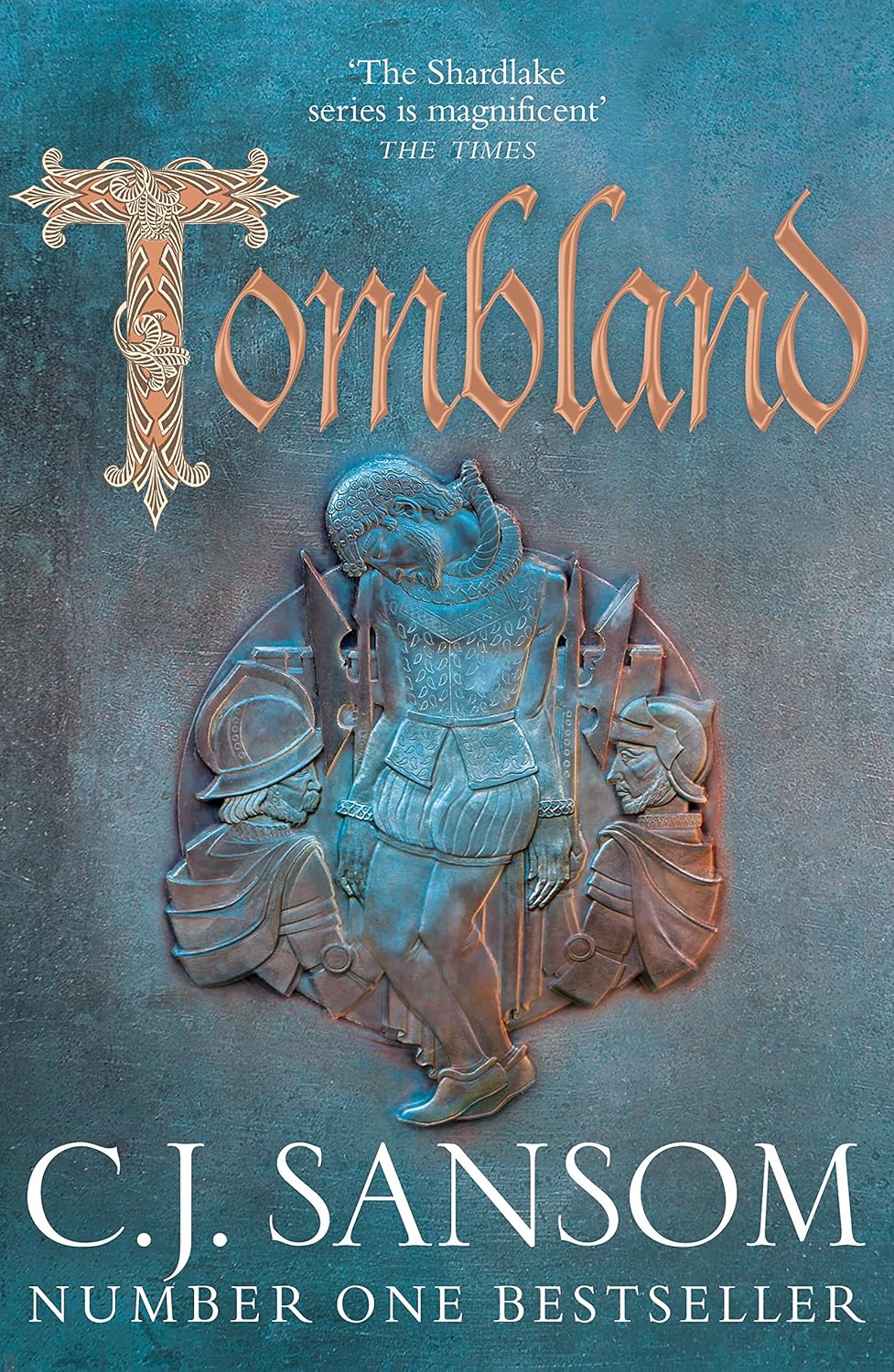
C.J. Sansom, Tombland, Mantle 2018

First lines: I had been in my chambers at Lincoln’s Inn when the messenger came from Master Parry, asking me to attend him urgently. I wondered what might be afoot.

I was extremely sad to hear that historical crime writer C.J. Sansom had passed away.

Sansom is, of course, best known for his ‘Matthew Shardlake’ series, featuring the eponymous lawyer-sleuth during the turbulent reigns of Henry VIII and Edward VI. The final novel in the series, Tombland, takes Shardlake to Norwich in Norfolk, which was England’s prosperous second city at the time. Sent to investigate the murder of Edith Boleyn, a distant relative of the young Princess Elizabeth, Shardlake finds himself caught up in Kett’s Rebellion, a large-scale uprising against wealthy landowners who were appropriating and enclosing ‘common land’, leading to a marked rise in hunger and poverty.

At 880 pages, Tombland is an ambitious and highly absorbing crime novel. If you’ve ever visited Norwich, you’ll immediately recognise many of its locations, such as the 900-year-old Market Square on Gentleman’s Walk and the equally historic Norwich Cathedral. My good friend Harriet informs me that there are now Tombland tours of the city, which sound very appealing indeed.

In addition to a wonderful sense of place, the novel offers a fascinating depiction of Kett’s Rebellion of 1549, which, as Sansom notes in an illuminating afterword, is often overlooked by historians. I found many of the issues he highlights via the uprising — such as the yawning gap between rich and poor, and the devastating effects of a cost-of-living crisis — to be very relevant today. A key difference now, of course, is that ordinary people have the right to vote out governments they don’t like. In fact, the novel could easily be read as an extended argument for the benefits of democracy, which, when working smoothly, enables a transfer of power without the need for brutal conflicts like the Battle of Dussindale.

Here in the UK, you just need to make sure that you are registered to vote (deadline 18 June) and have a valid photo ID when casting your vote in the up-coming election on 4 July 🙂

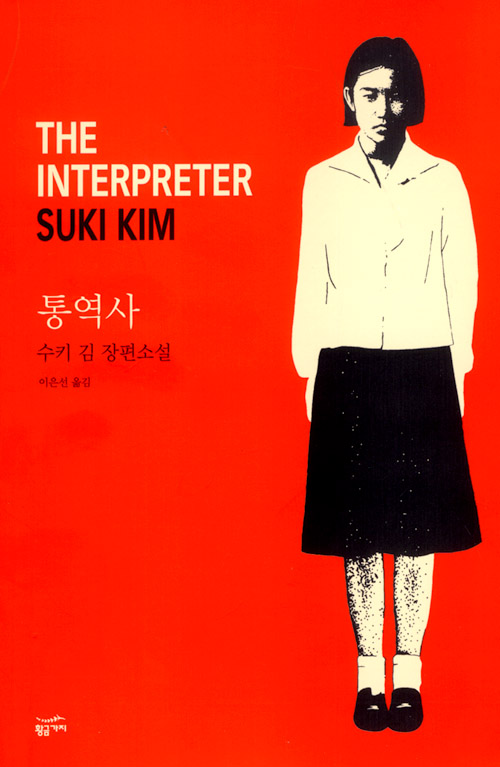
Suki Kim, The Interpreter, Picador 2003

First line: Cigarette at 9 a.m. is a sure sign of desperation.

Author Suki Kim moved with her family from South Korea to America at the age of thirteen. What it means to navigate this kind of dual heritage forms the starting point for The Interpreter, which can be classified as off-kilter literary crime novel. It depicts an immigrant story that’s a long, long way from the American Dream.

The interpreter in question is 29-year-old Suzy Park, who seems to be leading a largely invisible and emotionally shuttered life in New York. We soon learn that her parents were murdered at their store five years earlier and that the case has never been solved.

While acting as an interpreter in a legal case, Suzy realises that the Korean store owner being questioned on suspicion of breaching employment laws once worked for her parents. Exploiting Mr Lee’s lack of English and the Assistant DA’s lack of Korean, she starts asking questions about her parents’ murder and receives some disquieting answers in return. These set her on the path to uncovering not just the circumstances of the crime, but all kinds of buried truths about her family, and especially her elusive sister Grace.

The Interpreter is a highly interesting novel — an unsparing exploration of Korean-American experiences as well as the impact of generational and culture gaps. The latter are effectively shown in an early scene, when Suzy explains how she translates answers given by first-generation immigrants who use radically different cultural codes from the American lawyers questioning them:

What she possesses is an ability to be in two places at once. She can hear a word and separate its literal meaning from its connotation. […] Languages are not logical. Thus an interpreter must translate word for word and yet somehow manipulate the breadth of language to bridge the gap.

Although Suzy’s identity as an interpreter is central to the text, by the end we are left wondering whether The Interpreter of the title might be someone else entirely. A very clever and well-constructed novel by a fascinating author. You can read more about Suki Kim’s work as a writer and investigative journalist here.

Marcie R. Rendon, Girl Gone Missing, Soho Press 2021 (2019)

First line: Cash pulled herself up and out of her bedroom window.

Girl Gone Missing, the second crime novel featuring Renee ‘Cash’ Blackbear, is set on the Minnesota-North Dakota border in the early 1970s. Cash is just 19, toughened and traumatized by a childhood in foster care after being taken from her Ojibwe family at the age of three. Now navigating the alien but intellectually unchallenging world of college, she continues to drive harvest trucks for farmers and play pool for money, a solitary and safe existence that’s unexpectedly interrupted by the arrival of a long-lost brother. Then, when her writing talents take her to the city for the first time, strange recurring dreams and the odd disappearance of a college girl converge in a way that threaten her directly.

I have a great deal of time for the ‘Cash Blackbear’ series, not least due to the sympathetic yet unsentimental depiction of its lead character. The author tempers an unflinching look at the realities of 1970s Native American experiences — particularly in relation to the trauma of young adults emerging from the foster care system — with the hope of a more positive future. Cash’s resilience, courage and willingness to take decisive action are amply showcased in this novel, and I’m already looking forward to seeing where life takes her in Sinister Graves, the next in the series. If you’re new to the series, then Murder on the Red River is the place to start.

Wishing you all happy summer reading! 

All I want for Christmas is you! Mrs. Peabody’s 2023 top crime picks

Here’s Mrs. Peabody’s 2023 Christmas crime list — featuring some of my top reads of the last twelve months (though not necessarily from this year). The books are set in America, Argentina, Australia, Finnish Lapland, Ireland, Japan, Lebanon, Russia and the UK. 

Treat others! Treat yourself! Support local booksellers!

María Angélica Bosco, Death Going Down, tr. from the Spanish by Lucy Greaves (Pushkin Vertigo 2017; first published 1954)

Setting: 1950s Buenos Aires, Argentina

First line: The car pulled up in front of an apartment building on one of the first blocks of Calle Santa Fe, where the street opens out to a view across the wide Plaza San Martín.

María Angélica Bosco (1917-2006) is often styled as the Argentinian Agatha Christie, and this tightly plotted crime novel amply illustrates why. When glamorous Frida Eidinger is found dead in the lift of a luxury Buenos Aires apartment block, its residents — all of whom are hiding secrets beneath their respectable bourgeois exteriors — find themselves the main suspects in the case. While the police inspectors are no match for Christie’s Poirot, their investigation reveals the fascinating diversity of post-1945 Argentinian society. Those questioned include Germans and Bulgarians, many of whom are fleeing the complexities of a war-ravaged Old Europe. Or so they think. And as the novel’s first line shows, Bosco also paints an evocative picture of a unique South American city. A classic crime novel with a difference, deftly translated by Lucy Greaves

Jane Harper, Exiles (Pan Macmillan 2023)

Setting: present-day South Australia, wine country

First line: Think back. The signs were there. What were they?

How I love Jane Harper’s absorbing, intelligent crime fiction, which so elegantly plumbs the emotional depths of families and small communities. Exiles opens a year after the strange disappearance of Kim Gillespie, who was spotted multiple times at the Marralee Valley Food and Wine Festival before seemingly vanishing into thin air, leaving her baby tucked up in a pram for the festival organisers to find at the end of the night. Except no one can quite believe that Kim would have done this, and some of her family — especially her teenage daughter Zara — are convinced that something terrible has happened to her. What unfolds is a complex, multi-layered story that’s wholly convincing, with a cast of wonderfully realised characters. Exiles is the third in the ‘Aaron Falk’ trilogy, but can absolutely be read as a standalone (nothing from the previous books is given away). A top-notch read.

Jesse Sutanto, Vera Wong’s Unsolicited Advice for Murderers (HarperCollins 2023)

Setting: Chinatown, San Francisco, USA

First lines: Vera Wong Zhuzhu, age sixty, is a pig, but she really should have been born a rooster. We are, of course, referring to Chinese horoscopes. 

I’ve become fond of cosy crime novels over the last few years — a welcome antidote to the world’s rougher edges — but only if they have a bit of depth. Vera Wong’s Unsolicited Advice for Murderers, by Jesse Sutanto, is a great example of how a cosy can leave you feeling warm and uplifted while also engaging with serious issues, such as the damaging social loneliness that older people often experience. At first glance, Vera Wong is a ‘typical’ overbearing first-generation mother: opinionated, meddling and chronically attached to the ‘old ways’. Her traditional Chinese teahouse, which she built up and ran with her late husband, is now shabby and largely deserted, and she’s on the brink of a serious depression. Until, that is, she finds a body sprawled on the floor of her teahouse, and decides to investigate the murder in her own unique way… I listened to the audiobook, which was fabulously narrated by Eunice Wong and made me laugh out loud. Lovers of Chinese cuisine will delight in the mouth-watering descriptions of various Chinese teas and dishes. A skilfully written cosy with heart.

Ben Macintyre, A Spy Among Friends (Bloomsbury 2015)

Setting: 20th-century England, Russia, Lebanon

First line: Two middle-aged spies are sitting in an apartment in the Christian Quarter, sipping tea and lying courteously to one another, as evening approaches.

Back in January, I watched the ITV adaptation of A Spy Among Friends, featuring two excellent performances by Guy Pearce and Damian Lewis. That made me seek out Ben Macintyre’s jaw-dropping book, which tells the true story of Kim Philby, possibly the most notorious of all double agents, who spent decades spying for Russia while working at the very heart of the British intelligence. Betraying one’s country should be the worst of the crimes the book explores, but  Philby’s extraordinary exploitation and betrayal of deep friendships comes a close second. A brilliantly researched piece of espionage history, this is non-fiction that reads like an incredibly exciting thriller. If you’re a John le Carré fan, this real-life Tinker Tailor Soldier Spy is most definitely for you.

Pair it with Macintyre’s The Spy and the Traitor (Penguin 2019), which tells the equally gripping story of Oleg Gordievsky, the Soviet double-agent who arguably helped to bring about the end of the Cold War, and Rosamund Pike’s podcast Mother, Neighbour, Russian Spy, which examines the more recent, astonishing case of ‘Cindy Murphy’, aka Lydia Guryev, a Russian spy who lived in deep cover in the United States for a number of years — a fact kept from her two American-born children.

Louise Erdrich, The Round House (Corsair 2013 [2012])

Setting: 1980s North Dakota, USA

First line: Small trees had attacked my parents’ house at the foundation.

2023 was the year I discovered Louise Erdrich, and my Christmas list would be incomplete without her novel The Round Housea stunning dissection of a crime and its consequences. At the heart of the story are the Coutts family, who live on an Ojibwe reservation in North Dakota. When Joe’s mother Geraldine is raped and falls into a deep depression that threatens to destroy her, Joe and his father Bazil, a tribal judge, seek justice for her in different ways. This individual case also allows past crimes committed by the state against the Ojibwe, and especially Ojibwe women, to be illuminated. It’s an intricate, expertly told tale, and there’s a warmth and complexity to the main characters that’s hugely compelling. See my full review here.

Jess Kidd, Himself (Canongate, 2020)

Setting: rural 1970s Ireland

First line: Mahony shoulders his rucksack, steps off the bus and stands in the dead centre of the village of Mulderrig.

I recently re-read Jess Kidd’s Himself (for perhaps the third or fourth time), and fell in love with it all over again. As it’s not featured on one of my Christmas lists before, I’m going to sneak in this finely crafted gem here… It’s Ireland, 1976: Mahony, a charming young man brought up by nuns in a Dublin orphanage, returns to Mulderrig, a tiny village he recently found out was his birthplace. He’s the son of Orla Sweeney, who scandalised the village with her behaviour and supposedly disappeared in 1950. With the help of the eccentric Mrs. Cauley and a host of benign spirits who waft through walls, he starts uncovering the hypocrisies, secrets and malign power dynamics of the village. Utterly original, beautifully written and often wickedly funny, this is a crime novel to savour.

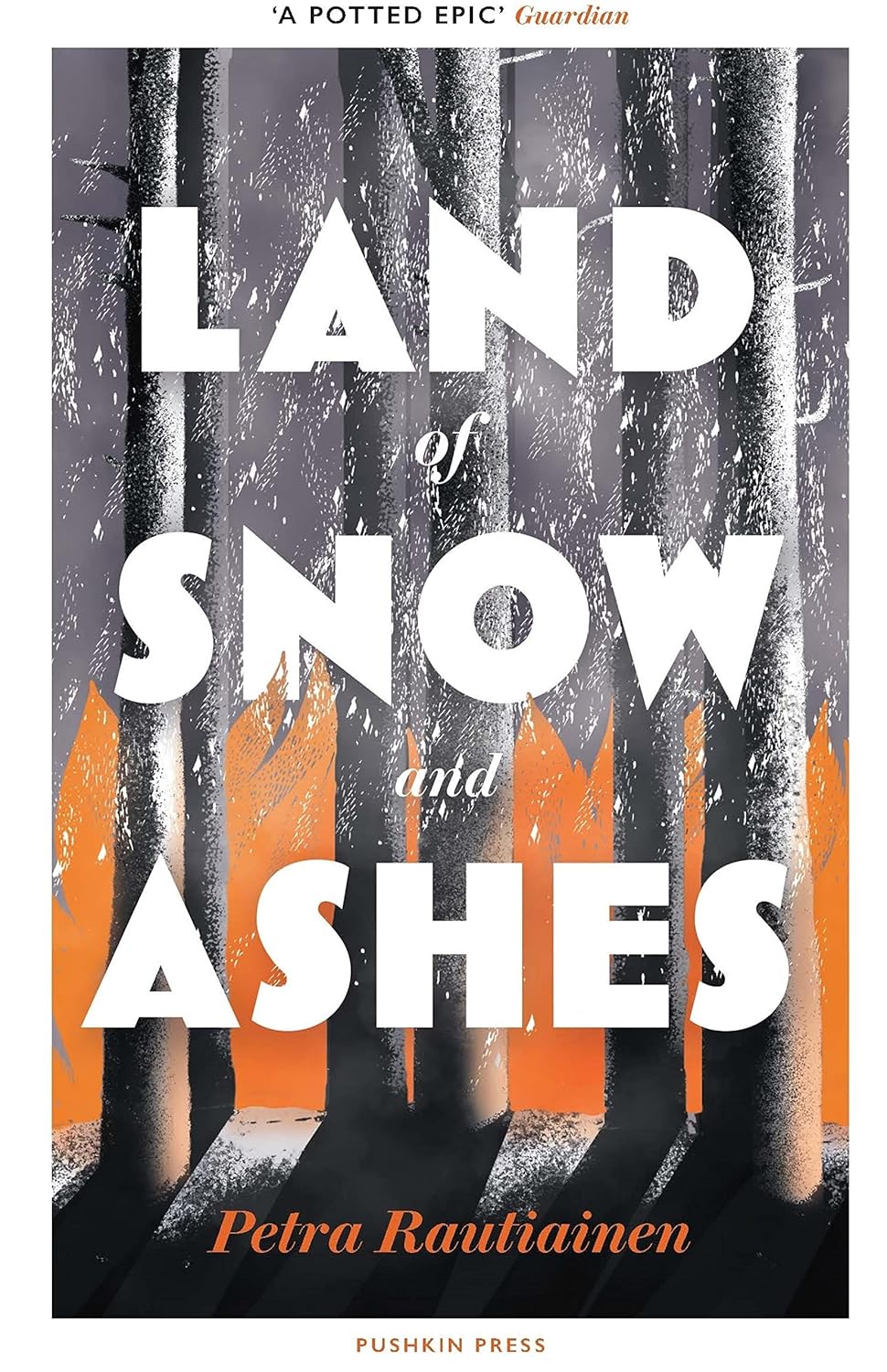
Petra Rautiainen, Land of Snow and Ashes, tr. from the Finnish by David Hackston (Pushkin Press 2022)

Setting: 1940s and 1950s Finnish Lapland

First line: I arrived in Inari yesterday, transferred from the penal colony at Hyljelahti. This new camp isn’t marked on Finnish maps.

Petra Rautiainen’s Land of Snow and Ashes is a historical crime novel that explores a lesser-known aspect of the Second World War: Finland’s brief alliance with Nazi Germany following its occupation of Finland, which included the establishment of a network of camps in Western Lapland. The novel initially unfolds along two timelines — 1944 and 1947 — which seem to lie very close together but are actually worlds apart. In 1944 the Nazi occupation and camps are still in place, while 1947 falls after the Nazi retreat that razed everything it could to the ground, including entire towns like Rovaniemi. We see events through the eyes of two very different narrators: young Finnish soldier Väinö Remes, an interpreter at the Inari camp, and photo-journalist Inkeri Lindquist, who is searching for her missing husband Kaarlo. Thoughtful consideration is also given to the impact on traditional Sámi ways of life by the war and Finnish attempts to ‘educate’ Sámi children in boarding schools in the post-war era. A hard-hitting but rewarding read, skilfully translated by David Hackston, and shortlisted for the Petrona Award.

Seichō Matsumoto, Point Zero, tr. from the Japanese by Louise Heal Kawai (Bitter Lemon Press 2024, [1958])

Setting: 1950s Tokyo and Kanazawa, Japan

If you’re given a book token for Christmas, then allow me to recommend Point Zero, out in February 2024 from Bitter Lemon Press — it’s just the thing to get your international crime reading off to a cracking start in the new year. I’ve long been a fan of Matsumoto’s work, but am particularly taken with this novel as it features a female investigative lead, which was surely ground-breaking for the time. Set in 1958, Point Zero tells the story of a young woman, Teiko Uhara, whose husband Kenichi vanishes shortly after their honeymoon. Deeply unsettled by his disappearance, Teiko visits the remote coastal city of Kanazawa, where Kenichi was last seen, to piece together what happened. As well as being an absorbing mystery, Point Zero is an accomplished social crime novel. Set less than fifteen years after the end of the Second World War, it skilfully depicts the tensions between traditional and modern Japan in the aftermath of the country’s military defeat, especially for a certain generation of Japanese women. Beautifully translated by Louise Heal Kawai, Point Zero is a reminder of the important role translations can play in illuminating other cultures and eras.

Wishing you all a very Merry Christmas and a Happy New Year!

Jingle all the way! Mrs. Peabody’s 2022 Xmas Crime List

Here’s Mrs. Peabody’s 2022 Christmas crime list — featuring crime set in America, Argentina, Australia, Canada, China, Japan and space! 

Treat others! Treat yourself! Support local booksellers!

Marcie R. Rendon, Murder on the Red River (Soho Press 2022 [2017])

Setting: 1970s Midwest America

Murder on the Red River is the first in a crime trilogy featuring Renee ‘Cash’ Blackbear. She’s just 19, both toughened and traumatized by a childhood in foster care after being taken from her Ojibwe family at the age of three. When not driving harvest trucks for local Midwest farmers or playing pool, Cash occasionally helps out Sheriff Wheaton — a lifelong ally. Following the murder of a Native American man, she gains access the victim’s community and progresses the investigation using cues from a series of visions. Cash is a wonderful, multifaceted character who will soon have you willing her on. The novel also shows her embarking on a personal journey against the backdrop of the Minnesota American Indian Movement (AIM), which is starting to make the historical crimes committed by European settlers visible. 

Seicho Matsumoto, Tokyo Express, tr. from the Japanese by Jesse Kirkwood (Penguin Modern Classics 2022; first published 1958)

Setting: 1950s Tokyo and Hakata Bay, Japan 

This beautifully translated Japanese crime novel is a classic by a master of the genre — a police procedural that shows how vital investigative doggedness is to closing out a case. The case in question is both simple and not so simple. A pair of young lovers from Tokyo are discovered lying on the beach of Hakata Bay in what looks to be a double-suicide. But an old hand in the local police force and a younger Tokyo inspector both suspect something is wrong. In tandem, they work out the true story of what took place. The pace of Tokyo Express is slow and quietly gripping, with lots of old-fashioned sleuthing that offers the reader lovely diagrams of station platforms and timetables to puzzle over. An elegant pleasure. 

Eva Jurczyk, The Department of Rare Books and Special Collections (Poisoned Pen Press 2022)

Setting: Canadian university library

Given the cover, you would be forgiven for expecting a light read, but The Department of Rare Books delivers something altogether more complex and rewarding. Liesl Weiss, the sixty-plus assistant director of the department in question, is recalled from her sabbatical after boss Christopher Wolfe is felled by a stroke. Tasked by the Chancellor with keeping donors happy and the show on the road, she immediately faces two crises: the disappearance of the newly acquired Plantin Polyglot Bible and a member of staff. Part literary mystery, part exploration of four decades in the lives of a close-knit but prickly group of librarians, and part coming-of-age story (it’s never too late!), this is an absorbing and surprisingly gritty crime novel. I will never look at a university librarian in the same way again.

Shelley Burr, Wake (Hodder & Stoughton 2022)

Setting: New South Wales, Australia

Burr’s hugely accomplished debut novel is set in and around the small, outback town of Nannine. Twenty years ago, Mina McCreerey’s nine-year-old twin sister Evelyn vanished from the remote family sheep farm in the middle of the night. The case remains unsolved, leaving Mina and her father in a terrible limbo — and prey for gossipy online forums that like to implicate them in the crime. When Mina is approached by Lane Holland, a maverick private investigator, she is initially wary. But Lane’s success in other cases gradually convinces her to give him a go — though she is unaware that he carries secrets of his own. Wake is both a sensitive portrayal of the long-term effects of trauma and a riveting, tightly plotted cold-case noir. 

Charlotte Carter, Rhode Island Red (Baskerville 2022)

Setting: 1990s New York 

Charlotte Carter’s off-beat 1990s crime trilogy was reissued this year with a splendid new set of covers. Our heroine is Nanette Hayes, wise-cracking saxophonist, French translator and amateur sleuth. One afternoon after a street gig, she agrees to put up a charming fellow musician for the night, only to find him sprawled out murdered the following morning. Worse still, he turns out to have been an undercover cop, which brings lots of unwelcome attention to her door. Set in New York and steeped in the jazz of greats like Charlie Parker and Thelonious Monk, Rhode Island Red is a sparky, original take on the private eye novel, and explores a Black woman’s experiences in the Big Apple of the 1990s in a lively and nuanced way. 

Eloísa Díaz, Repentance (Weidenfeld & Nicolson 2022)

Setting: Argentina in 1981 and 2001

Spanish author Eloísa Díaz drew on her Argentine family roots when writing this powerful historical crime novel. Repentance explores one ‘small story’, that of Buenos Aires police inspector Joaquin Alzada and his teacher brother Jorge, at two key historical junctures: 1981, when Argentina is in the grip of a military dictatorship that is disappearing young activists (The Dirty War) and 2001, when economic turmoil is bringing exasperated citizens out on the streets to protest. It’s at this point that Alzada, long since demoted to a desk job, gets to investigate a murder due to staff shortages — and then faces the eternal dilemma: whether to turn a blind eye to the injustices perpetrated by those in power or to do what he knows is right. There is, of course, no easy answer. Alzada is as complex as the history he’s caught up in — and his biting humour and love of family infuse the novel with warmth.

Kirstin Chen, Counterfeit (The Borough Press 2022)

Setting: America, Hong Kong, China

Counterfeit begins with Ava — a Chinese-American lawyer struggling with the demands of motherhood — telling Detective Murphy how she got entangled in the criminal activities of Chinese former college roommate Winnie. The latter had reinvented herself as a sleek and glamorous businesswoman, and was running an ingenious designer goods scam. But is Ava telling the whole truth or did things unfold a little differently? Behind this hugely entertaining tale lie some serious questions — first and foremost, what price freedom? The novel provides fascinating insights into modern Chinese society, the interplay of Chinese state capitalism and American consumerism, and the struggles of women to gain full control over their lives. Bonus: you’ll be immune to the lure of designer handbags once you’ve read this book.   

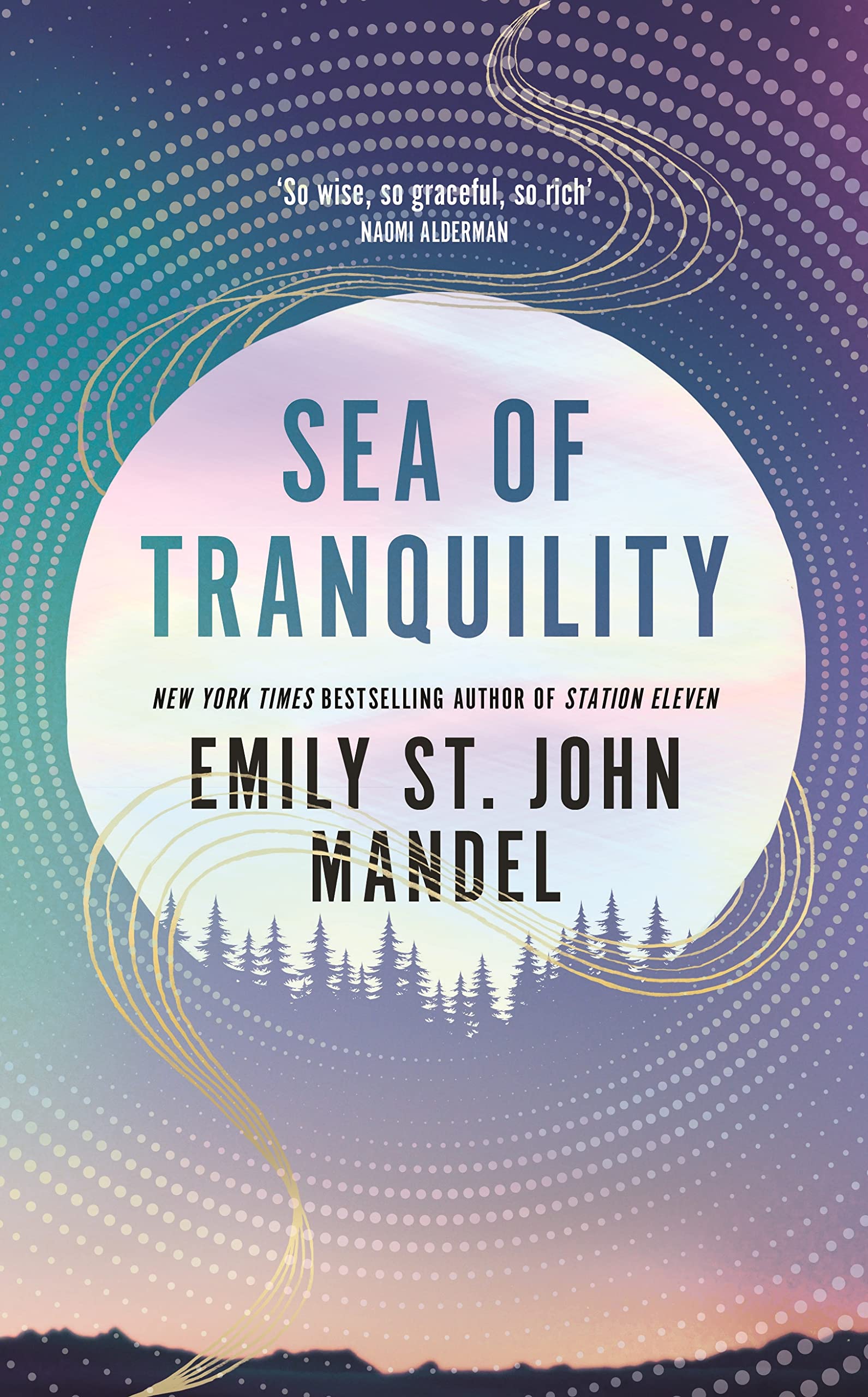
Emily St. John Mandel, Sea of Tranquility (Picador 2022)

Setting: Canada, the future, space

Get ready for a wild ride. In 1912, disgraced aristocrat Edwin St. Andrew experiences what he thinks is a hallucination. For a split second, in a remote forest on Vancouver Island, he senses a cavernous space and the sound of a violin. In 2203, a novel by Moon Colony Two dweller Olive Llewellyn contains a passage in which a man plays the violin in an airship terminal while trees rise around him. And in 2401, an era when time travel is a crime, Gaspery-Jacques Roberts is sent to investigate a space-time anomaly caught on film in 1994 — which features notes from a violin. It’s the start of Roberts’ sleuthing at various moments in time… Sea of Tranquility remains one of my all-time favourites this year: a genre-bending fusion of crime and science fiction. 

And if you’re looking for more top-quality international crime fiction, I’d thoroughly recommend Bitter Lemon Press and Orenda Books

Wishing you all a very Merry Christmas and a Happy New Year!

Courage & resilience: Naomi Hirahara’s Clark and Division (USA/Japan)

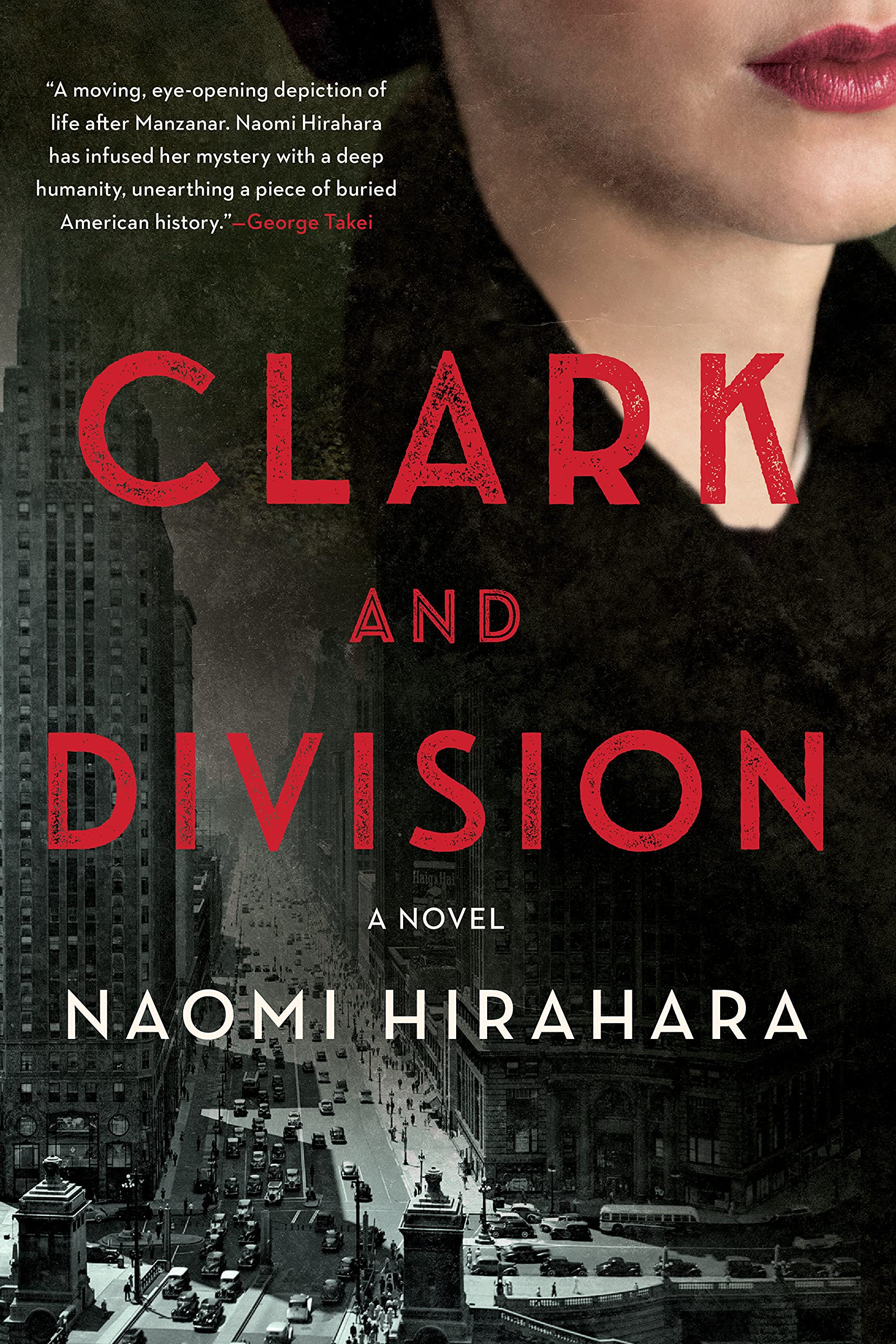
Naomi Hirahara, Clark and Division, Soho Crime 2021

First line: Rose was always there, even when I was being born.

I’ve had my eye on this crime novel for a while, because it uses the mystery genre to explore an under-represented part of American history: the internment of over 100,000 Japanese Americans after the 1941 bombing of Pearl Harbour, and the long-lasting impact this had on their communities and lives.

The novel is narrated by Aki Ito, born in the States to Japanese first-generation immigrants — the ‘Issei’. She and her charismatic sister Rose are of the ‘Nisei’, the ‘second generation’, and are raised in reasonably stable and prosperous circumstances in California. Until Pearl Harbour, that is, when they are interned in the Manzanar camp and then relocated to Chicago, where they settle in the Japanese district.

Rose was allowed to move to the city before the rest of the family, and when Aki and her parents arrive they’re given terrible news: Rose has been killed by a train at the Clark & Division subway station. The family’s grief takes different forms – in Aki’s case, it means talking to those who knew Rose best in order to figure out what actually happened – was it suicide, an accident, or murder?

Clark and Division is a well-crafted and absorbing standalone with a great sense of place, and I really liked the insights it gave into Japanese culture and the lives of Japanese-Americans at a turbulent moment in history. The author, Naomi Hirahara, has written non-fiction books on the subject, so she really knows her stuff — and for the most part manages to integrate it well. The novel is also a life-affirming coming-of-age story, as we follow Aki from childhood through to adulthood, learning to shoulder extra responsibilities in the wake of her sister’s death, but also to find her own path.

Separator

I hope you’re all as OK as you can be given the current political situation. Reading can be a real boon in times like these, so here’s a link to my earlier post on ‘Respite Crime’. Look after yourselves!

Crime Fiction: 7 Kinds of Respite Reading

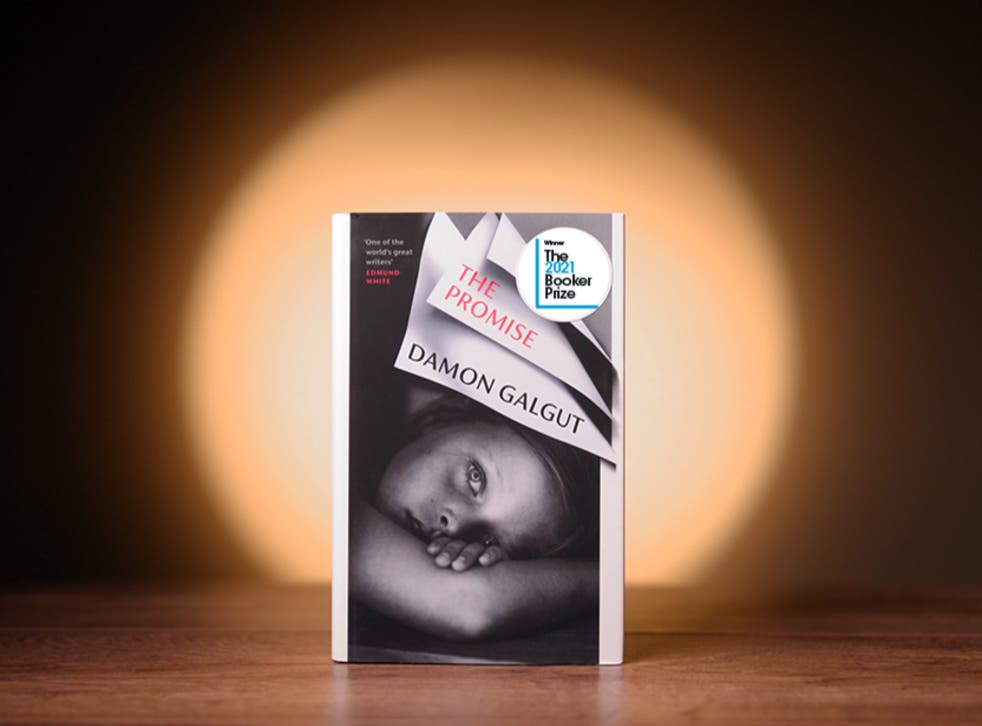
Sins of Omission: Damon Galgut’s The Promise (South Africa)

Damon Galgut’s The Promise, Chatto & Windus 2021

First line: The moment the metal box speaks her name, Amor knows it’s happened.

What’s this, you cry? A hefty Booker Prize winner infiltrating the pages of an international crime fiction blog? You betcha! Because even if The Promise is literary with a capital ‘L’ and requires a tiny bit of readerly patience at the start, it’s packed to the gills with crime and will soon have you hooked.

The novel opens in 1986 South Africa with a death and a promise. Just before dying of cancer at the family farm outside Pretoria, Rachel Swart makes her husband promise that Salome, the Black woman who has worked faithfully for the Swarts her entire life, will be gifted the house she lives in. Manie agrees, then conveniently ‘forgets’ he ever did such a thing. But youngest daughter Amor overheard the promise being made, and that act of witnessing sets off a chain of events down the years – in four novel parts spaced roughly a decade apart.

Set against the backdrop of South Africa’s transition from apartheid to democracy, the entire novel is laced with crime: the crime of apartheid itself and of those who collude in it, the crime of breaking a deathbed promise that might right some of its wrongs, and the criminality that springs up in societies riven with inequality. Oh yes, and there are two murders, which mirror one another in their terrible casualness.

And then there is the writing, sweeping and luminous, that takes us into the minds of the whole family and the complex community around them.

He did promise. I heard him.
He promised Ma he would give Salome her house.

Her little face is lit from within by its sureness.

Amor, he says gently.

What?

Salome can't own the house.
Even if Pa wanted to, he can't give it to her.

Why not? she says, puzzled.

Because, he says. It's against the law.

The law? Why?

You are not serious. 
But then he looks at her and sees how serious she is.
Oh, dear me, he says. 
Do you have no idea what country you're living in?

So run, don’t walk – get yourself a copy of this incredible novel. There’s further info and an audio extract from The Promise over at the Booker Prize website.