Please do not adjust your sets

In a change to my normal academic routine, I’m embarking on research leave for a whole, glorious semester. The chance for this kind of leave comes around every three to four years, and is really invaluable, as it provides time to build up some proper momentum – in my case for writing up research on German and international crime fiction.

I’ll be focusing on two key projects. The first is a book, Detecting the Past: Representations of National Socialism and its Legacy in Transnational Crime Fiction. As the title suggests, it will explore how crime writers have depicted the Nazi period and its post-war legacy since 1945, exploring themes such as criminality, morality, justice, memory and guilt in larger historical, political and social contexts. One key area of interest is how ‘Nazi-themed crime fiction’ reflects the work of historians on the period. A recent example is David Thomas’ Ostland (Quercus, 2013), which draws on perpetrator studies by historians such as Christopher R. Browning to create a portrait of an ‘ordinary man’, police detective Georg Heuser, who comes to play an active part in the Holocaust. A compelling ‘psychological thriller’, the novel is also a sobering depiction of the mechanics of the Holocaust, and of the attempts to bring perpetrators to justice in the 1960s. It’s an excellent example of how history and the findings of historians can be made accessible to a wider public by harnessing the conventions and popularity of the crime genre. Incidentally, details of the 150 primary texts I’m working on can be found here – a number of which have been discussed on this blog over the past two years.

European Crime Fictions: Scandinavian Crime Fiction

My second project is to finish editing Crime Fiction in German, a volume of essays for the University of Wales Press, which will act as an introduction to the subject for an English-language audience. As well as exploring the development of crime fiction in Germany, Austria and Switzerland from the nineteenth century onwards, the volume examines German-language crime from a number of different angles: the crime fiction of the former GDR; regional crime fiction; women’s crime fiction, historical crime fiction; Turkish-German crime fiction; and the enduring popularity of TV series such as Tatort (Crime Scene). It’s the first time this kind of comprehensive overview will have been published in English, which is very exciting. The volume will join others in UWP’s European Crime Fiction series, such as French Crime Fiction (2009), Scandinavian Crime Fiction (2011) and Italian Crime Fiction (2011).

Focusing my energies on academic writing means that I’ll be blogging a little less than I usually do over the next few months. But I’ll still be popping up with recommendations now and then, so please do not adjust your sets! And normal service will most definitely be resumed…

Crime Scene: European crime fiction guides

I was having a stroll around the Crime Time website the other day, and ended up in an excellent section called Crime Scene, which profiles crime fiction on a country by country basis.

At the moment there are four Crime Scene guides – for France, Italy, The Netherlands and Switzerland (the latter includes info on Germany too) – and more will be added in future. They can be viewed online or downloaded as a PDF, and provide a really useful overview of the respective countries’ crime scenes.

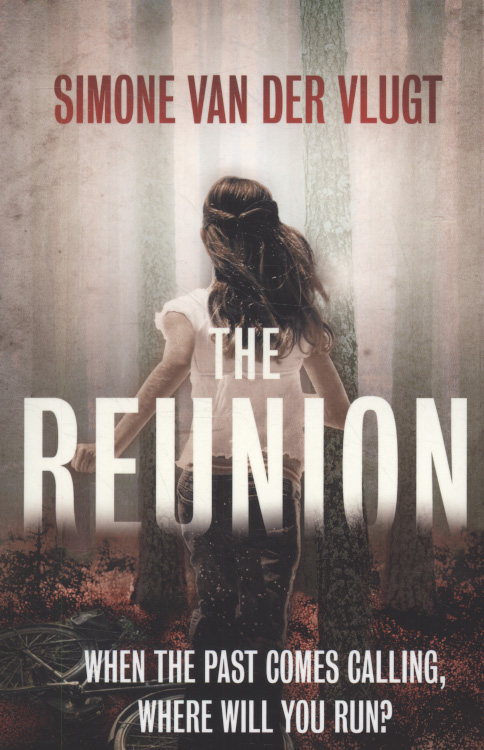
Simone van der Vlugt is one of the writers featured in The Netherlands guide

Each is written by an expert on the crime of the country in question, but all look at similar areas, under the guidance of series editor Bob Cornwell:

– a history of the country’s crime fiction

– recent publishing trends

– notable writers (often by category, e.g. police procedural, historical crime fiction)

– major crime prizes

– key publishers

– key suppliers, festivals and websites

– key reference works

I’m extremely impressed with these guides, which pack a lot of information into a relatively small space. Produced in conjunction with the International Association of Crime Writers, they provide a great resource for beginners and more advanced crime readers alike, and I look forward to seeing more in due course.

BBC Radio 4’s ‘Foreign Bodies’ episode guide…with a bit of Mrs. Peabody in #2!

Mark Lawson’s ‘Foreign Bodies’ series kicked off yesterday with an exploration of two seminal detectives from Belgium –  Hercule Poirot and Jules Maigret. Val McDermid, Andrea Camilleri, P.D. James, Jakob Arjouni and Camilla Lackberg all joined Mark for a fascinating discussion about these two key investigative figures.

Today it was the turn of Friedrich Dürrenmatt’s Swiss detective Inspector Bärlach, featuring a contribution from your very own Mrs. P… Our discussion took in Dürrenmatt’s links to earlier Swiss crime writer Friedrich Glauser, Dürrenmatt’s exploration of the moral crisis facing Europe following the Holocaust, and his subversion of the detective genre to question the possibility of justice. The crime novels discussed included The Judge and his Hangman (Der Richter und sein Henker, 1950), Suspicion (Der Verdacht, 1951) and The Pledge (Das Verprechen, 1958).

Listings for the first 7 episodes are now up on the ‘Foreign Bodies’ website. They air Monday to Friday on Radio 4 at 13.45, and are then available online. For good measure, there’s an omnibus edition on Friday at 21.00.

Episode 1  Belgium: Hercule Poirot and Jules Maigret (Agatha Christie and Georges Simenon)

Episode 2  Switzerland / Germany: Inspector Bärlach (Friedrich Dürrenmatt)

Image for Inspector Barlach

Episode 3  Czechoslovakia: Lieutenant Boruvka (Josef Skvorecky)

Episode 4  The Netherlands: Commissaris Van Der Valk (Nicolas Freeling)

Episode 5  Sweden: Inspector Martin Beck (Maj Sjöwall and Per Wahlöö)

Episode 6  UK: Commander Dalgliesh / Chief Inspector Wexford (P.D. James and Ruth Rendell)

Episode 7  Sicily: Inspector Rogas (Leonardo Sciascia)

You can also hear Bernard Hepton (who played Toby Esterhase in the BBC adaptation of Tinker Tailor Soldier Spy) begin his sublime Radio 4 reading of Dürrenmatt’s novella The Judge and his Hangman (available until 29 October).

Roseanna, the first of the Martin Beck dramatisations – will air on Radio 4 on Saturday 27 October at 14.30, but if you can’t wait, help yourself to this sneak preview.

Mrs. P’s review of Friedrich Dürrenmatt’s The Pledge is available here.

UPDATE 28 October: Mark Lawson has written an overview article about the ‘Foreign Bodies’ series for The Guardian entitled ‘Crime’s Grand Tour: European Detective Fiction’.

Friedrich Dürrenmatt’s The Pledge (first review of Swiss crime!)

Friedrich Dürrenmatt, The Pledge (Das Verbrechen), tr. from the German by Joel Agee, Pushkin Press 2017 [1958].

 First line: Last March I had to give a lecture in Chur on the art of writing detective stories.

There are very few crime novels that I keep coming back to, but The Pledge is one of them. Written over half a century ago in 1958, it’s one of three crime novels by the renowned Swiss dramatist and writer Friedrich Dürrenmatt (the others are The Judge and his Hangman (1950) and Suspicion (1951)). The Pledge is my favourite of the three, for its fine writing and penetrating critique of the crime genre. Its tantalising subtitle is Requiem auf den Kriminalroman or ‘Requiem for the Crime Novel’.

The Pledge tells the story of Swiss police inspector Matthäi, who just is clearing his desk prior to a secondment in Jordan when a young girl’s murder is called in. After breaking the news to the girl’s parents, Matthäi is asked by the mother to promise ‘on his eternal salvation’ that he will find the murderer, and this, after a brief hesitation, he does: the pledge of the title. Thus begins a long investigation, which eventually tips over into a personal obsession that will threaten Matthäi’s sanity (making him one of the most  sympathetic investigative figures in the genre).

Matthäi’s tale is told to the figure of ‘the author’ by Dr. H, a former chief of police in Zurich, who was also once Matthäi’s boss. Dr. H is prompted to recount the story after attending the author’s talk on writing detective fiction, as a means of highlighting the ‘lies’ peddled by his work:

“What really bothers me about your novels is the storyline, the plot. There the lying just takes over, it’s shameless. You set up your stories logically, like a chess game: here’s the criminal, there’s the victim, here’s an accomplice, there’s a beneficiary. And all the detective needs to know is the rules: he replays the moves of the game, and checkmate, the criminal is caught and justice has triumphed. This fantasy drives me crazy. You can’t come to grips with reality by logic alone. Granted, we police are forced to proceed logically, scientifically; but there is so much interference, so many factors mess up our schemes that success very often amounts to no more than professional luck and pure chance working in our favour. […] But you fellows in the writing game don’t care about that. You don’t try to grapple with a reality that keeps eluding us, you just set up a manageable world. That world may be perfect, but it’s a lie.”

So it’s the disjunction between the controlled fictions produced by ‘the author’ and the frustrating ‘reality’ of Matthäi’s troubled investigation that’s the catalyst for Dr. H’s narrative – a wonderful ‘frame story’ that cheekily critiques the very genre the novel employs and implicitly wags a finger at all crime fiction fans for buying into its fantasy world.

As if all of this wasn’t clever enough, Dürrenmatt manages to have his cake and eat it too, by relating a story that thematises the impossibility of absolute closure and justice, but also provides the reader with a satisfying resolution in line with the expectations of the genre. Although of course, that could just be ‘the author’ meddling with the tale Dr. H told him…

The novel was adapted for film in 2001, directed by Sean Penn and with Jack Nicholson in the lead role.