
Spring is springing here in Wales, with pink blossom, white garlic, and bluebells emerging into the warmth. It does the soul good to be out in the garden and parks, or down on the beach.
I’ve been enjoying an eclectic range of crime fiction recently, including some longer, more ambitious reads.

Hansjörg Schneider, Hunkeler’s Secret (Switzerland), tr. by Astrid Freuler, Bitter Lemon Press 2025
First line: Peter Hunkeler, former inspector with the Basel City criminal investigation department, now retired, woke up and didn’t know where he was.
I reckon Hunkeler’s Secret, the latest in the ‘Inspector Hunkeler’ series, is my favourite thus far. While in hospital recovering from an operation, Hunkeler finds himself sharing a room with Stephan Fankhauser, the gravely ill former head of the Basel Volksbank. One morning, Hunkeler wakes to the news that Fankhauser died in the night. But was it a natural death? Or did a groggy Hunkeler witness something untoward being done to his fellow patient in the wee small hours? After his discharge from hospital, the retired police inspector starts to investigate in his dogged, somewhat grumpy way. There’s also a new family relationship to explore, a wayward goat, and lots of good food.
One aspect of the ‘Hunkeler’ series I particularly like is its geographical setting. There’s the Swiss city of Basel on the one hand, where Hunkeler spent his working life and has a flat, and rural Alsace on the other, where he owns a little house. You get a real sense of the proximity of Switzerland, France and Germany to one another, with characters continually criss-crossing borders and speaking Swiss-German, Alsatian (an Alemannic dialect) and French. I love that Astrid Freuler integrates nuggets of the original languages into her excellent English translation, which gives readers an enhanced sense of the multiculturalism of the area. The region also has a complex territorial history, which plays a role in the resolution of this knotty Hunkeler case.

Jess Kidd, Murder at Gulls Nest (1950s England), Faber 2025
First line: The woman climbs the hill, a favourable wind behind her.
Murder at Gulls Nest is the first in Jess Kidd’s new ‘Nora Breen Investigates’ series, and is set in the 1950s seaside town of Gore-on-Sea, a place of boarding houses, terrible food, and recalibration after long years of war.
For thirty years, Nora was Sister Agnes of Christ, a dutiful nun at the High Dallow Carmelite Monastery. But when former nun Frieda goes missing, Nora feels compelled to find her, and takes a room at the Gulls Nest boarding house, where the young woman was last based. Here, Nora meets the ragtag assortment of Frieda’s fellow lodgers, and starts using her curiosity and sharp intelligence to get to the bottom of the mystery. When one of the lodgers is found dead, Nora knows that something is seriously amiss.
Readers of this blog will know that I’m a big fan of Jess Kidd’s work, especially her brilliant novel Himself. Murder at Gulls Nest is written in a slightly softer, slightly cosier style, but retains plenty of bite. As ever, Kidd’s use of language is sublime, and I’m looking forward to meeting the resourceful, irrepressible Nora Breen again in future.

Mirinae Lee, 8 Lives of a Century-Old Trickster (North Korea and South Korea), Virago 2023
First line: The idea came to me while I was going through my divorce.
When Grandma Mook tells the obituarist at the Golden Sunset retirement home the story of her life — which spans a century of Korea’s history — there’s a suspicion that the old lady is just a fantasist. But: what if Mook Miran is telling the truth and she’s a trickster of the highest order? What if she genuinely was a murderer, terrorist, identity thief and spy?
A major theme of this novel is survival. Mook Miran’s eight lives, which we’re told in non-chronological order, illuminate the terrible hardships women faced in Japanese-ruled Korea (1910-1945) and later in North Korea, and pose the question of what it takes to survive such incredibly adverse circumstances. Part of the answer lies in the figure of the trickster, who survives and advances through nimble thinking and resolute action — even if the latter is viewed as a crime and comes at a price. Sparky, resilient and whip-smart, Mook Miran is a character you won’t easily forget, and the portrait she paints of Korea’s history is disturbing and fascinating in equal measure.
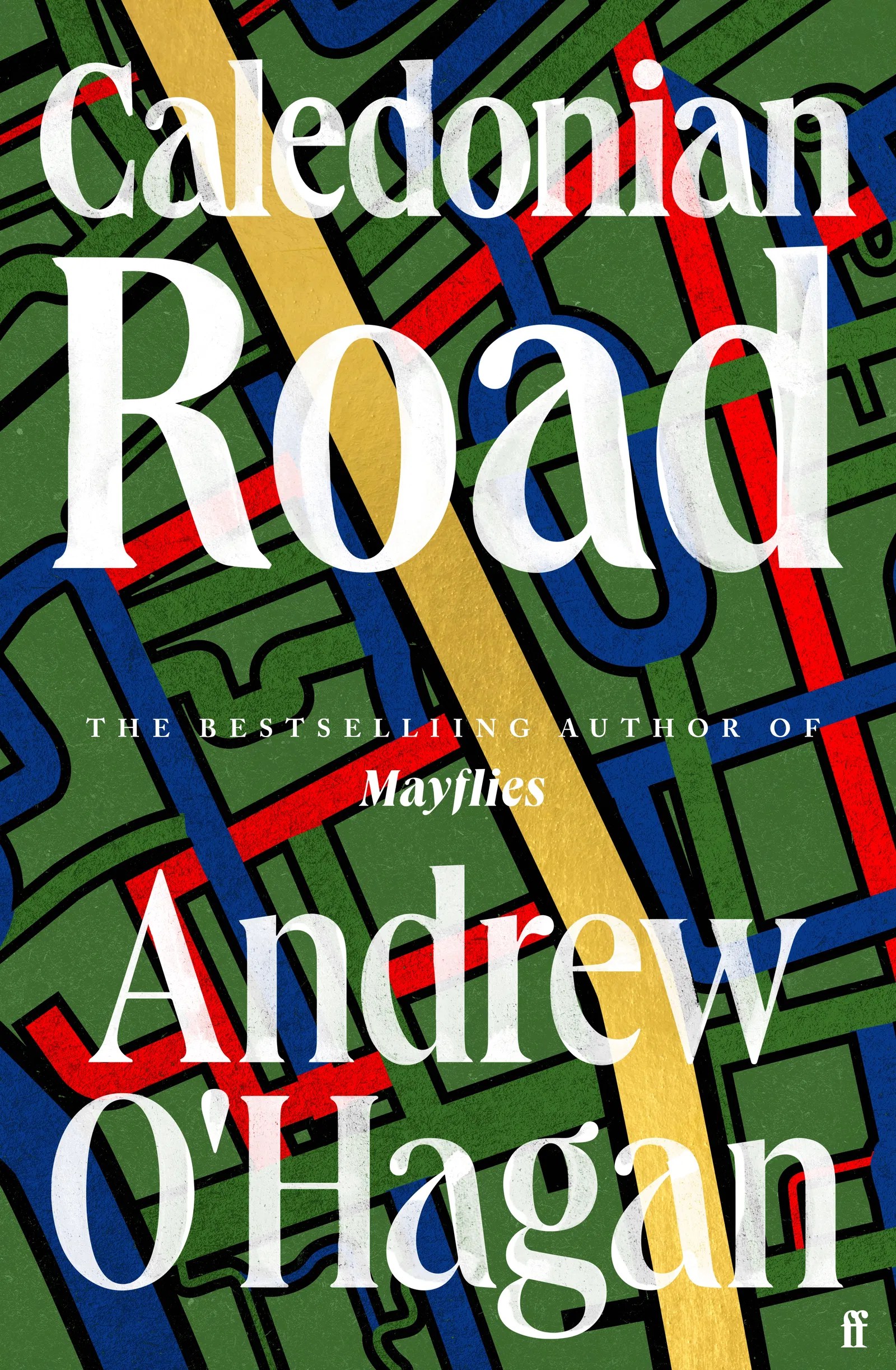
Andrew O’Hagan, Caledonian Road, Faber 2024
First line: Tall and sharp at fifty-two, Campbell Flynn was a tinderbox in a Savile Row suit, a man who believed his childhood was so far behind him that all its threats had vanished.
Caledonian Road, or ‘the Cally’, runs for a mile and a half through the London Borough of Islington. Like many roads in London, it takes you from economically deprived areas to obscenely wealthy ones in what feels like the blink of an eye.
Andrew O’Hagan harnesses the reality of this social divide in his powerful state-of-the-nation novel by creating an illuminating chain of connections: from Milo Mangasha, a tech-savvy student from a Cally council estate, and his uni professor Campbell Flynn, who lives in a posh townhouse with his aristo-therapist wife further up the road, to Sir William Byre, Flynn’s public school pal who’s up to his neck in dodgy deals, and Russian oligarch Aleksandr Bykov and son Yuri, who runs a very modern criminal enterprise and socialises with Campbell’s children. And that’s just a fraction of the cast!
Strap in for 600 pages of brilliant storytelling featuring utterly believable characters and razor-sharp social dissection. In particular, the novel holds up a mirror to the hypocrisies of well-heeled Londoners, and the establishment’s willingness to turn a blind eye to corruption and outright criminality. But it’s not without sympathy for its beleaguered central character, Flynn, whose spectacular mid-life crisis may offer a redemption of sorts, and has much to tell us about the perils of becoming alienated from your true self.
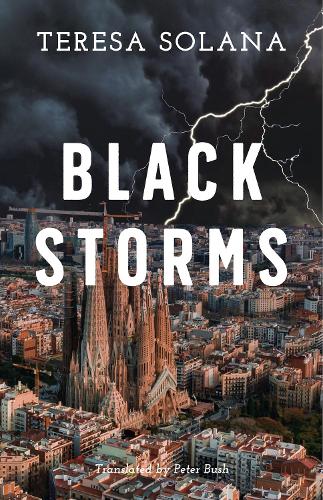
Teresa Solana, Black Storms (Spain), tr. by Peter Bush, Corylus Press 2024
First line: The man who was about to commit murder left home at six thirty, after telling his girlfriend Mary he’d business to see to and checking his car keys were in his pocket.
Whenever I read Teresa Solana’s work, I always come away with an appreciation of her highly distinctive voice, which blends a wry humour with steely social satire. Above all, there’s a wonderful energy to her writing, which seems to feed off the verve of Barcelona, the city where many of her crime stories are set. Her long-time translator, Peter Bush, captures all of these elements with aplomb in his English translations.
Black Storms introduces us to Norma Forester, Deputy Inspector of the Catalan police, who is tasked with solving the murder of an elderly professor at the University of Barcelona. No one can quite understand why a terminally ill man should be targeted in this way, but Norma’s experience and expertise gradually uncover the truth.
Equal attention is paid to Norma’s eccentric family, and they are great fun to hang out with. Norma is the granddaughter of an English member of the National Brigades, and the women of the family, all named after opera heroines, are a force of nature. I particularly like the way Solana shows Norma’s efforts to balance her family life and work, which the latter does in a messy, imperfect, but loving way.

The Residence, Shondaland / Netflix 2025
Last but not least, a very fun Netflix crime series: The Residence, which stars Uzo Aduba as Cordelia Cupp, a consultant with the Metropolitan Police Department of the District of Columbia, and Randall Park as Edwin Park, an FBI Special Agent. They are called to the White House after a murder is committed during a state dinner for the Australian prime minister, and tasked with figuring out which of the 157 suspects is the murderer — including the fictional president and his husband.
Aduba is excellent as the bird-watching, unerringly brilliant sleuth. It’s really her show, backed by a superb ensemble cast, and the whole thing has a Sherlock-Holmes-by-way-of-Wes-Anderson vibe. It also throws a light on the lives of the permanent staff at the White House, who of course stay in place while presidents come and go. Very sharp, very witty and very entertaining.

 Mrs. Peabody Investigates