Lawrence Osborne’s On Java Road (Hong Kong) & Mr Bates vs The Post Office (UK)

Why, hello! I hope you’re doing well, wherever you may be, and that you’ve got lots of lovely books on the go, crime or otherwise. Wishing you a happy Spring Bank Holiday if you’re in the UK.

Here are a couple of recent picks after quite a long hiatus. I’m hoping to get into a rhythm of posting more now: the aim is short and sweet, but a bit more often 🙂
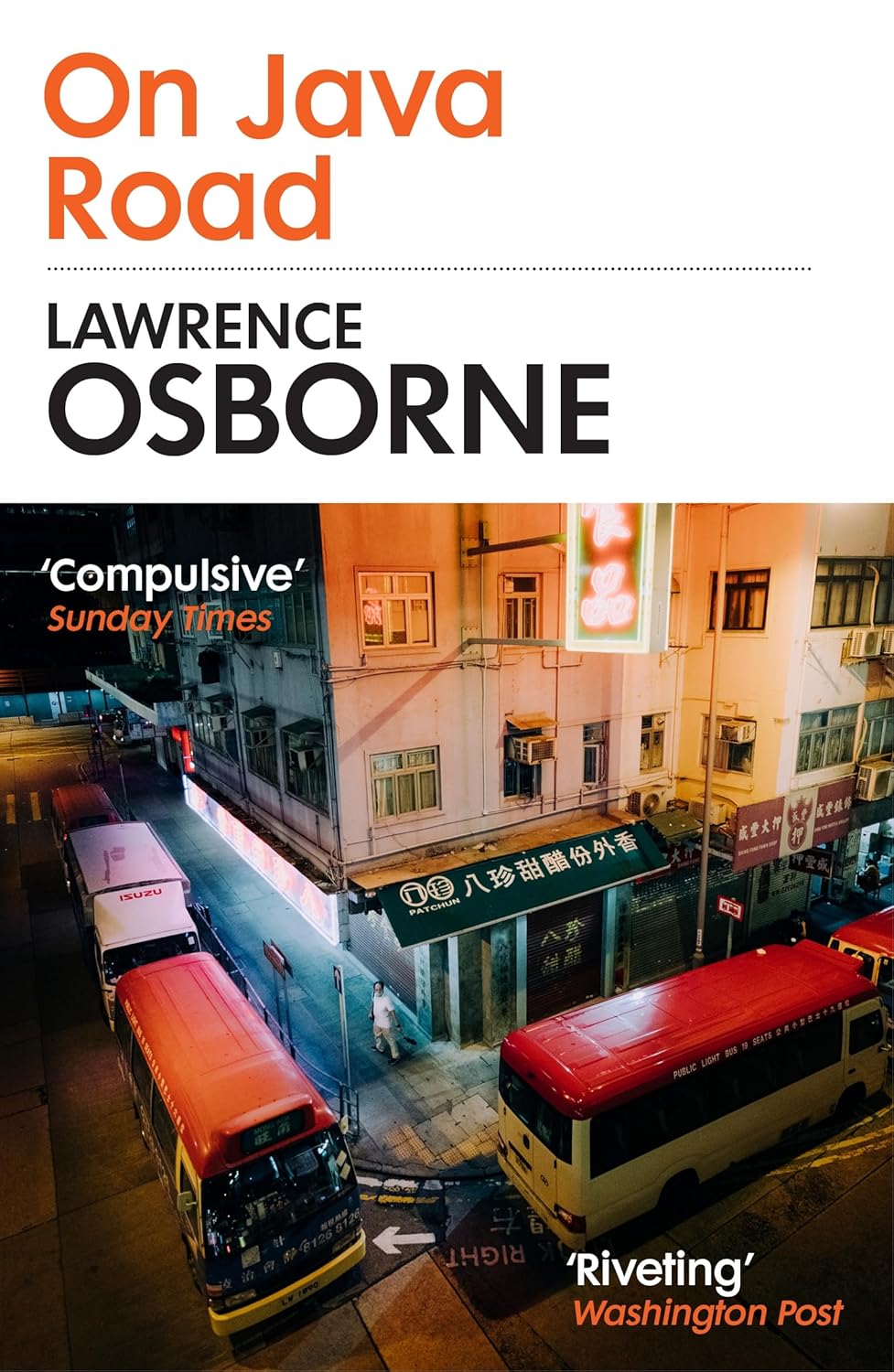
Lawrence Osborne, On Java Road (Vintage 2023)

First line: I thought, in those desperate and forgotten days, of that passage in a novel I had read in school, where the narrator insists that he prefers to be known as a reporter rather than as a journalist, the humbler word better denoting what he does, namely transcribing what he sees.

I found myself in Daunt Books on Marylebone High Street the other week — heaven for anyone who loves travel and international fiction — and emerged with On Java Road, which I’d been eyeing up for a while.

Set in Hong Kong during the pro-democracy protests of 2019-2020, On Java Road is narrated by Adrian Gyle, a struggling ex-pat reporter who has spent twenty years in the territory. Adrian has one social ace: his old university friend Jimmy Tang, a member of one of Hong Kong’s richest families, who gives him access to high society. But things get tricky when Jimmy begins an extramarital affair with Rebecca, a young woman from another wealthy Hong Kong family, and even more problematically, a pro-democracy demonstrator. When Rebecca disappears and Jimmy refuses to return his calls, Adrian feels compelled to investigate.

On Java Road inevitably brings to mind the work of Graham Greene: Adrian could be viewed as a modern version of Greene’s ex-pat narrators, trying to fathom complex events in places that are both home and utterly alien. Adrian has lived in Hong Kong since just after the British handover of the former colony to China (1997), and what he observes reveals the laughable naivety of thinking nothing would change as a result. By 2019, China is tightening its grip via its proposed extradition bill, and money is no protection against the tricky political choices that now need to be made. An important dissection of a troubled Hong Kong, On Java Road is an elegantly written and highly evocative novel.

This week, I’ve been watching the livestream of the Post Office Horizon Inquiry. Former Post Office CEO Paula Vennells was (finally) questioned over the course of three days, and it has been absolutely fascinating to see top KC (King’s Counsel) Jason Beer holding her to account.

In case you’re not familiar with the Post Office scandal, it’s one of the biggest miscarriages of justice in the UK. Over 900 sub-postmasters were prosecuted for crimes such as theft and false accounting over 15 years, when in fact the Post Office’s own Horizon computer system, designed by Fujitsu, was responsible for the shortfalls at individual post offices. Instead of admitting that the Horizon system was flawed, Fujitsu and the Post Office repeatedly denied, misled and withheld information. The Post Office continued to prosecute sub-postmasters aggressively when it was known internally that the evidence given by witnesses in court was ‘unsafe’, and Post Office investigators were offered bonuses for successful prosecutions, which incentivised them to push cases to court. It was a Kafkaesque nightmare for the blameless sub-postmasters involved, which led to years of financial, emotional and reputational damage, and at least four suicides. It is estimated that providing compensation will cost the British taxpayer over a billion pounds.

Back to Paula Vennells and Jason Beer KC. Vennells is a fascinating example of a CEO who prides herself on acting ethically in the corporate world — she’s an ordained priest, no less — but missed a staggering number of chances to address the Horizon scandal. Beer’s job was to illustrate this through a combination of skilful questioning and carefully selected documentary evidence. The most powerful moments came when he confronted her idealised vision of herself with the reality of her past actions. For example, when Vennells claimed she would never have backed off from reviewing past cases to avoid bad publicity, Beer calmly produced an email from 2013 showing that this was exactly what she had done. It seems that being an expert in the workings of human psychology is an invaluable asset for barristers as they build their narrative and case.

The 2024 ITV drama Mr Bates vs The Post Office, written by Gwyneth Hughes and directed by James Strong, is the acclaimed four-part dramatization of the Horizon scandal, and shows the incredible power of storytelling to illuminate major injustices and kickstart political action (fast-tracked exoneration and compensation processes). While the drama is an amazing tale of grit and collective action on the part of Alan Bates and the other victims, it’s heart-breaking to think how much they could have been spared if the Post Office had admitted its failings sooner. A corporate crime indeed.

Mr Bates vs The Post Office is still available to view on ITV and ITVX.

All I want for Christmas is you! Mrs. Peabody’s 2023 top crime picks

Here’s Mrs. Peabody’s 2023 Christmas crime list — featuring some of my top reads of the last twelve months (though not necessarily from this year). The books are set in America, Argentina, Australia, Finnish Lapland, Ireland, Japan, Lebanon, Russia and the UK. 

Treat others! Treat yourself! Support local booksellers!

María Angélica Bosco, Death Going Down, tr. from the Spanish by Lucy Greaves (Pushkin Vertigo 2017; first published 1954)

Setting: 1950s Buenos Aires, Argentina

First line: The car pulled up in front of an apartment building on one of the first blocks of Calle Santa Fe, where the street opens out to a view across the wide Plaza San MartĂ­n.

MarĂ­a AngĂ©lica Bosco (1917-2006) is often styled as the Argentinian Agatha Christie, and this tightly plotted crime novel amply illustrates why. When glamorous Frida Eidinger is found dead in the lift of a luxury Buenos Aires apartment block, its residents — all of whom are hiding secrets beneath their respectable bourgeois exteriors — find themselves the main suspects in the case. While the police inspectors are no match for Christie’s Poirot, their investigation reveals the fascinating diversity of post-1945 Argentinian society. Those questioned include Germans and Bulgarians, many of whom are fleeing the complexities of a war-ravaged Old Europe. Or so they think. And as the novel’s first line shows, Bosco also paints an evocative picture of a unique South American city. A classic crime novel with a difference, deftly translated by Lucy Greaves. 

Jane Harper, Exiles (Pan Macmillan 2023)

Setting: present-day South Australia, wine country

First line: Think back. The signs were there. What were they?

How I love Jane Harper’s absorbing, intelligent crime fiction, which so elegantly plumbs the emotional depths of families and small communities. Exiles opens a year after the strange disappearance of Kim Gillespie, who was spotted multiple times at the Marralee Valley Food and Wine Festival before seemingly vanishing into thin air, leaving her baby tucked up in a pram for the festival organisers to find at the end of the night. Except no one can quite believe that Kim would have done this, and some of her family — especially her teenage daughter Zara — are convinced that something terrible has happened to her. What unfolds is a complex, multi-layered story that’s wholly convincing, with a cast of wonderfully realised characters. Exiles is the third in the ‘Aaron Falk’ trilogy, but can absolutely be read as a standalone (nothing from the previous books is given away). A top-notch read.

Jesse Sutanto, Vera Wong’s Unsolicited Advice for Murderers (HarperCollins 2023)

Setting: Chinatown, San Francisco, USA

First lines: Vera Wong Zhuzhu, age sixty, is a pig, but she really should have been born a rooster. We are, of course, referring to Chinese horoscopes. 

I’ve become fond of cosy crime novels over the last few years — a welcome antidote to the world’s rougher edges — but only if they have a bit of depth. Vera Wong’s Unsolicited Advice for Murderers, by Jesse Sutanto, is a great example of how a cosy can leave you feeling warm and uplifted while also engaging with serious issues, such as the damaging social loneliness that older people often experience. At first glance, Vera Wong is a ‘typical’ overbearing first-generation mother: opinionated, meddling and chronically attached to the ‘old ways’. Her traditional Chinese teahouse, which she built up and ran with her late husband, is now shabby and largely deserted, and she’s on the brink of a serious depression. Until, that is, she finds a body sprawled on the floor of her teahouse, and decides to investigate the murder in her own unique way… I listened to the audiobook, which was fabulously narrated by Eunice Wong and made me laugh out loud. Lovers of Chinese cuisine will delight in the mouth-watering descriptions of various Chinese teas and dishes. A skilfully written cosy with heart.

Ben Macintyre, A Spy Among Friends (Bloomsbury 2015)

Setting: 20th-century England, Russia, Lebanon

First line: Two middle-aged spies are sitting in an apartment in the Christian Quarter, sipping tea and lying courteously to one another, as evening approaches.

Back in January, I watched the ITV adaptation of A Spy Among Friends, featuring two excellent performances by Guy Pearce and Damian Lewis. That made me seek out Ben Macintyre’s jaw-dropping book, which tells the true story of Kim Philby, possibly the most notorious of all double agents, who spent decades spying for Russia while working at the very heart of the British intelligence. Betraying one’s country should be the worst of the crimes the book explores, but  Philby’s extraordinary exploitation and betrayal of deep friendships comes a close second. A brilliantly researched piece of espionage history, this is non-fiction that reads like an incredibly exciting thriller. If you’re a John le CarrĂ© fan, this real-life Tinker Tailor Soldier Spy is most definitely for you.

Pair it with Macintyre’s The Spy and the Traitor (Penguin 2019), which tells the equally gripping story of Oleg Gordievsky, the Soviet double-agent who arguably helped to bring about the end of the Cold War, and Rosamund Pike’s podcast Mother, Neighbour, Russian Spy, which examines the more recent, astonishing case of ‘Cindy Murphy’, aka Lydia Guryev, a Russian spy who lived in deep cover in the United States for a number of years — a fact kept from her two American-born children.

Louise Erdrich, The Round House (Corsair 2013 [2012])

Setting: 1980s North Dakota, USA

First line: Small trees had attacked my parents’ house at the foundation.

2023 was the year I discovered Louise Erdrich, and my Christmas list would be incomplete without her novel The Round Housea stunning dissection of a crime and its consequences. At the heart of the story are the Coutts family, who live on an Ojibwe reservation in North Dakota. When Joe’s mother Geraldine is raped and falls into a deep depression that threatens to destroy her, Joe and his father Bazil, a tribal judge, seek justice for her in different ways. This individual case also allows past crimes committed by the state against the Ojibwe, and especially Ojibwe women, to be illuminated. It’s an intricate, expertly told tale, and there’s a warmth and complexity to the main characters that’s hugely compelling. See my full review here.

Jess Kidd, Himself (Canongate, 2020)

Setting: rural 1970s Ireland

First line: Mahony shoulders his rucksack, steps off the bus and stands in the dead centre of the village of Mulderrig.

I recently re-read Jess Kidd’s Himself (for perhaps the third or fourth time), and fell in love with it all over again. As it’s not featured on one of my Christmas lists before, I’m going to sneak in this finely crafted gem here… It’s Ireland, 1976: Mahony, a charming young man brought up by nuns in a Dublin orphanage, returns to Mulderrig, a tiny village he recently found out was his birthplace. He’s the son of Orla Sweeney, who scandalised the village with her behaviour and supposedly disappeared in 1950. With the help of the eccentric Mrs. Cauley and a host of benign spirits who waft through walls, he starts uncovering the hypocrisies, secrets and malign power dynamics of the village. Utterly original, beautifully written and often wickedly funny, this is a crime novel to savour.

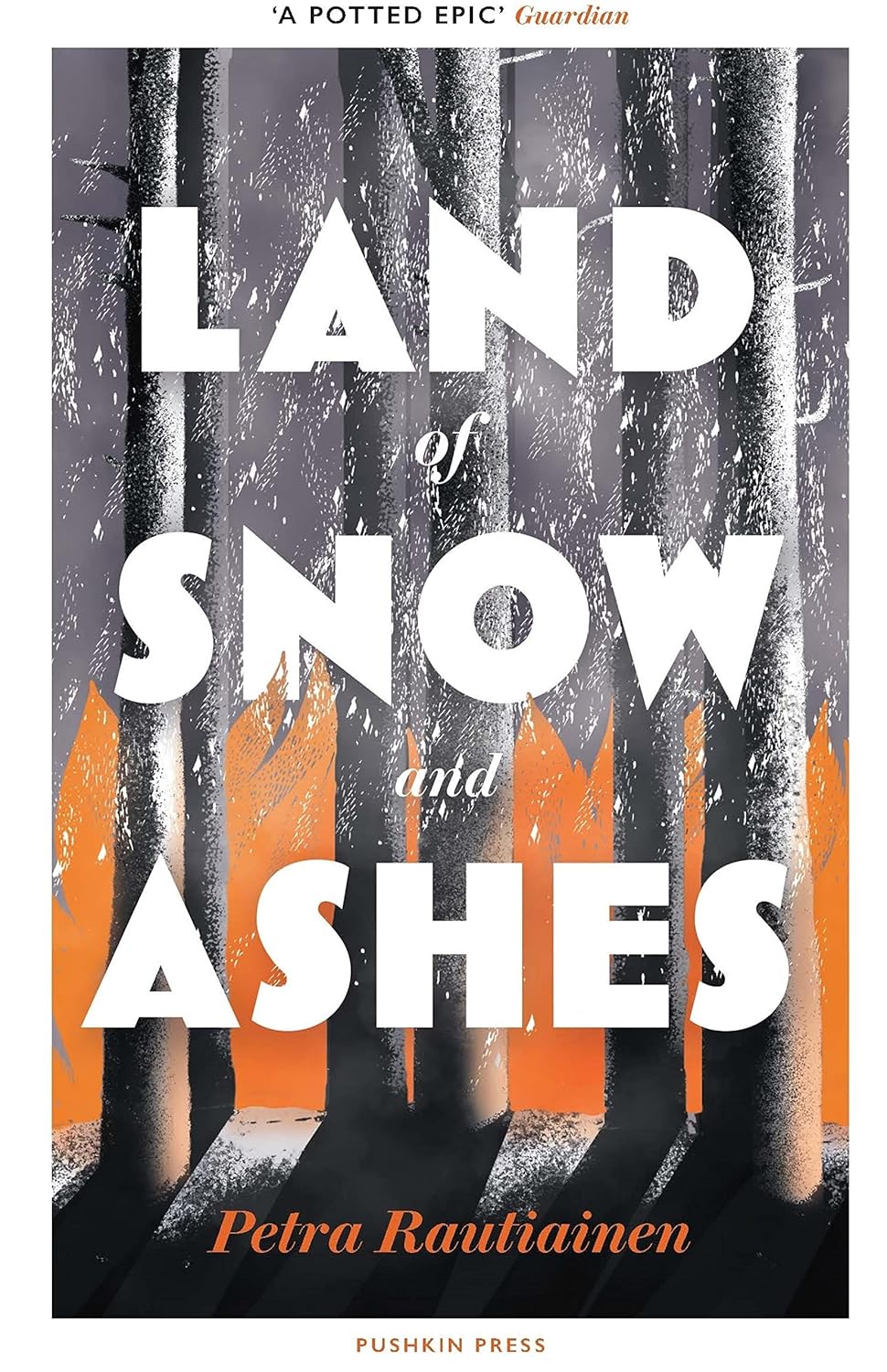
Petra Rautiainen, Land of Snow and Ashes, tr. from the Finnish by David Hackston (Pushkin Press 2022)

Setting: 1940s and 1950s Finnish Lapland

First line: I arrived in Inari yesterday, transferred from the penal colony at Hyljelahti. This new camp isn’t marked on Finnish maps.

Petra Rautiainen’s Land of Snow and Ashes is a historical crime novel that explores a lesser-known aspect of the Second World War: Finland’s brief alliance with Nazi Germany following its occupation of Finland, which included the establishment of a network of camps in Western Lapland. The novel initially unfolds along two timelines — 1944 and 1947 — which seem to lie very close together but are actually worlds apart. In 1944 the Nazi occupation and camps are still in place, while 1947 falls after the Nazi retreat that razed everything it could to the ground, including entire towns like Rovaniemi. We see events through the eyes of two very different narrators: young Finnish soldier Väinö Remes, an interpreter at the Inari camp, and photo-journalist Inkeri Lindquist, who is searching for her missing husband Kaarlo. Thoughtful consideration is also given to the impact on traditional Sámi ways of life by the war and Finnish attempts to ‘educate’ Sámi children in boarding schools in the post-war era. A hard-hitting but rewarding read, skilfully translated by David Hackston, and shortlisted for the Petrona Award.

Seichō Matsumoto, Point Zero, tr. from the Japanese by Louise Heal Kawai (Bitter Lemon Press 2024, [1958])

Setting: 1950s Tokyo and Kanazawa, Japan

If you’re given a book token for Christmas, then allow me to recommend Point Zero, out in February 2024 from Bitter Lemon Press — it’s just the thing to get your international crime reading off to a cracking start in the new year. I’ve long been a fan of Matsumoto’s work, but am particularly taken with this novel as it features a female investigative lead, which was surely ground-breaking for the time. Set in 1958, Point Zero tells the story of a young woman, Teiko Uhara, whose husband Kenichi vanishes shortly after their honeymoon. Deeply unsettled by his disappearance, Teiko visits the remote coastal city of Kanazawa, where Kenichi was last seen, to piece together what happened. As well as being an absorbing mystery, Point Zero is an accomplished social crime novel. Set less than fifteen years after the end of the Second World War, it skilfully depicts the tensions between traditional and modern Japan in the aftermath of the country’s military defeat, especially for a certain generation of Japanese women. Beautifully translated by Louise Heal Kawai, Point Zero is a reminder of the important role translations can play in illuminating other cultures and eras.

Wishing you all a very Merry Christmas and a Happy New Year!

Jingle all the way! Mrs. Peabody’s 2022 Xmas Crime List

Here’s Mrs. Peabody’s 2022 Christmas crime list — featuring crime set in America, Argentina, Australia, Canada, China, Japan and space! 

Treat others! Treat yourself! Support local booksellers!

Marcie R. Rendon, Murder on the Red River (Soho Press 2022 [2017])

Setting: 1970s Midwest America

Murder on the Red River is the first in a crime trilogy featuring Renee ‘Cash’ Blackbear. She’s just 19, both toughened and traumatized by a childhood in foster care after being taken from her Ojibwe family at the age of three. When not driving harvest trucks for local Midwest farmers or playing pool, Cash occasionally helps out Sheriff Wheaton — a lifelong ally. Following the murder of a Native American man, she gains access the victim’s community and progresses the investigation using cues from a series of visions. Cash is a wonderful, multifaceted character who will soon have you willing her on. The novel also shows her embarking on a personal journey against the backdrop of the Minnesota American Indian Movement (AIM), which is starting to make the historical crimes committed by European settlers visible. 

Seicho Matsumoto, Tokyo Express, tr. from the Japanese by Jesse Kirkwood (Penguin Modern Classics 2022; first published 1958)

Setting: 1950s Tokyo and Hakata Bay, Japan 

This beautifully translated Japanese crime novel is a classic by a master of the genre — a police procedural that shows how vital investigative doggedness is to closing out a case. The case in question is both simple and not so simple. A pair of young lovers from Tokyo are discovered lying on the beach of Hakata Bay in what looks to be a double-suicide. But an old hand in the local police force and a younger Tokyo inspector both suspect something is wrong. In tandem, they work out the true story of what took place. The pace of Tokyo Express is slow and quietly gripping, with lots of old-fashioned sleuthing that offers the reader lovely diagrams of station platforms and timetables to puzzle over. An elegant pleasure. 

Eva Jurczyk, The Department of Rare Books and Special Collections (Poisoned Pen Press 2022)

Setting: Canadian university library

Given the cover, you would be forgiven for expecting a light read, but The Department of Rare Books delivers something altogether more complex and rewarding. Liesl Weiss, the sixty-plus assistant director of the department in question, is recalled from her sabbatical after boss Christopher Wolfe is felled by a stroke. Tasked by the Chancellor with keeping donors happy and the show on the road, she immediately faces two crises: the disappearance of the newly acquired Plantin Polyglot Bible and a member of staff. Part literary mystery, part exploration of four decades in the lives of a close-knit but prickly group of librarians, and part coming-of-age story (it’s never too late!), this is an absorbing and surprisingly gritty crime novel. I will never look at a university librarian in the same way again.

Shelley Burr, Wake (Hodder & Stoughton 2022)

Setting: New South Wales, Australia

Burr’s hugely accomplished debut novel is set in and around the small, outback town of Nannine. Twenty years ago, Mina McCreerey’s nine-year-old twin sister Evelyn vanished from the remote family sheep farm in the middle of the night. The case remains unsolved, leaving Mina and her father in a terrible limbo — and prey for gossipy online forums that like to implicate them in the crime. When Mina is approached by Lane Holland, a maverick private investigator, she is initially wary. But Lane’s success in other cases gradually convinces her to give him a go — though she is unaware that he carries secrets of his own. Wake is both a sensitive portrayal of the long-term effects of trauma and a riveting, tightly plotted cold-case noir. 

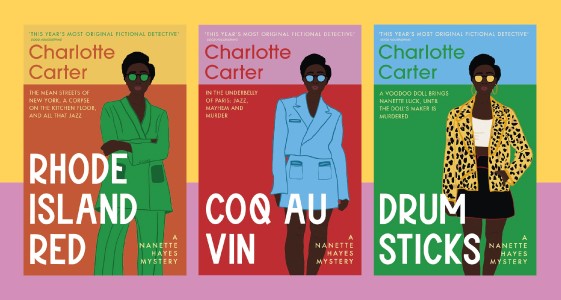
Charlotte Carter, Rhode Island Red (Baskerville 2022)

Setting: 1990s New York 

Charlotte Carter’s off-beat 1990s crime trilogy was reissued this year with a splendid new set of covers. Our heroine is Nanette Hayes, wise-cracking saxophonist, French translator and amateur sleuth. One afternoon after a street gig, she agrees to put up a charming fellow musician for the night, only to find him sprawled out murdered the following morning. Worse still, he turns out to have been an undercover cop, which brings lots of unwelcome attention to her door. Set in New York and steeped in the jazz of greats like Charlie Parker and Thelonious Monk, Rhode Island Red is a sparky, original take on the private eye novel, and explores a Black woman’s experiences in the Big Apple of the 1990s in a lively and nuanced way. 

Eloísa Díaz, Repentance (Weidenfeld & Nicolson 2022)

Setting: Argentina in 1981 and 2001

Spanish author EloĂ­sa DĂ­az drew on her Argentine family roots when writing this powerful historical crime novel. Repentance explores one ‘small story’, that of Buenos Aires police inspector Joaquin Alzada and his teacher brother Jorge, at two key historical junctures: 1981, when Argentina is in the grip of a military dictatorship that is disappearing young activists (The Dirty War) and 2001, when economic turmoil is bringing exasperated citizens out on the streets to protest. It’s at this point that Alzada, long since demoted to a desk job, gets to investigate a murder due to staff shortages — and then faces the eternal dilemma: whether to turn a blind eye to the injustices perpetrated by those in power or to do what he knows is right. There is, of course, no easy answer. Alzada is as complex as the history he’s caught up in — and his biting humour and love of family infuse the novel with warmth.

Kirstin Chen, Counterfeit (The Borough Press 2022)

Setting: America, Hong Kong, China

Counterfeit begins with Ava — a Chinese-American lawyer struggling with the demands of motherhood — telling Detective Murphy how she got entangled in the criminal activities of Chinese former college roommate Winnie. The latter had reinvented herself as a sleek and glamorous businesswoman, and was running an ingenious designer goods scam. But is Ava telling the whole truth or did things unfold a little differently? Behind this hugely entertaining tale lie some serious questions — first and foremost, what price freedom? The novel provides fascinating insights into modern Chinese society, the interplay of Chinese state capitalism and American consumerism, and the struggles of women to gain full control over their lives. Bonus: you’ll be immune to the lure of designer handbags once you’ve read this book.   

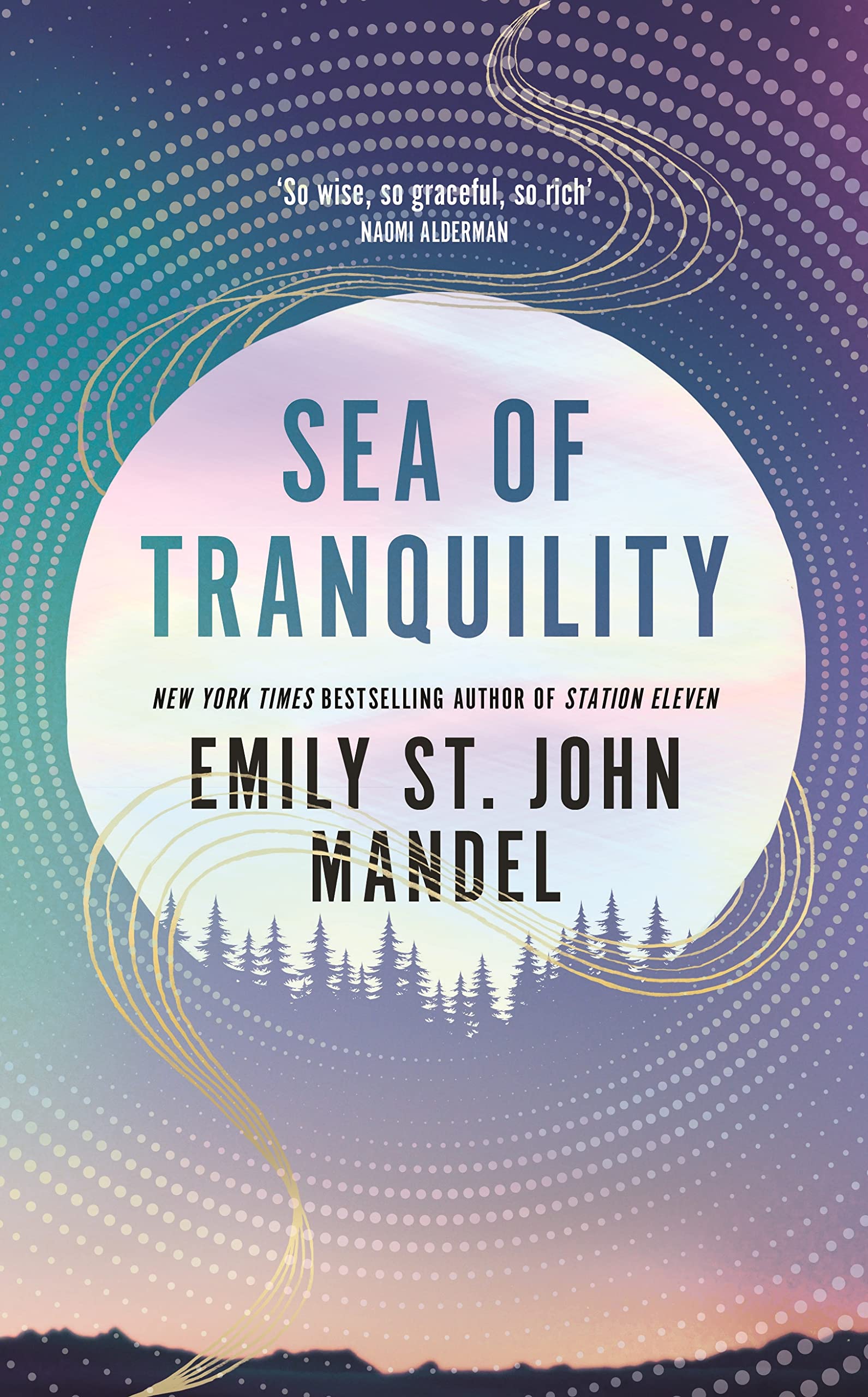
Emily St. John Mandel, Sea of Tranquility (Picador 2022)

Setting: Canada, the future, space

Get ready for a wild ride. In 1912, disgraced aristocrat Edwin St. Andrew experiences what he thinks is a hallucination. For a split second, in a remote forest on Vancouver Island, he senses a cavernous space and the sound of a violin. In 2203, a novel by Moon Colony Two dweller Olive Llewellyn contains a passage in which a man plays the violin in an airship terminal while trees rise around him. And in 2401, an era when time travel is a crime, Gaspery-Jacques Roberts is sent to investigate a space-time anomaly caught on film in 1994 — which features notes from a violin. It’s the start of Roberts’ sleuthing at various moments in time… Sea of Tranquility remains one of my all-time favourites this year: a genre-bending fusion of crime and science fiction. 

And if you’re looking for more top-quality international crime fiction, I’d thoroughly recommend Bitter Lemon Press and Orenda Books. 

Wishing you all a very Merry Christmas and a Happy New Year!