All I want for Christmas is you! Mrs. Peabody’s 2023 top crime picks

Here’s Mrs. Peabody’s 2023 Christmas crime list — featuring some of my top reads of the last twelve months (though not necessarily from this year). The books are set in America, Argentina, Australia, Finnish Lapland, Ireland, Japan, Lebanon, Russia and the UK. 

Treat others! Treat yourself! Support local booksellers!

María Angélica Bosco, Death Going Down, tr. from the Spanish by Lucy Greaves (Pushkin Vertigo 2017; first published 1954)

Setting: 1950s Buenos Aires, Argentina

First line: The car pulled up in front of an apartment building on one of the first blocks of Calle Santa Fe, where the street opens out to a view across the wide Plaza San Martín.

María Angélica Bosco (1917-2006) is often styled as the Argentinian Agatha Christie, and this tightly plotted crime novel amply illustrates why. When glamorous Frida Eidinger is found dead in the lift of a luxury Buenos Aires apartment block, its residents — all of whom are hiding secrets beneath their respectable bourgeois exteriors — find themselves the main suspects in the case. While the police inspectors are no match for Christie’s Poirot, their investigation reveals the fascinating diversity of post-1945 Argentinian society. Those questioned include Germans and Bulgarians, many of whom are fleeing the complexities of a war-ravaged Old Europe. Or so they think. And as the novel’s first line shows, Bosco also paints an evocative picture of a unique South American city. A classic crime novel with a difference, deftly translated by Lucy Greaves

Jane Harper, Exiles (Pan Macmillan 2023)

Setting: present-day South Australia, wine country

First line: Think back. The signs were there. What were they?

How I love Jane Harper’s absorbing, intelligent crime fiction, which so elegantly plumbs the emotional depths of families and small communities. Exiles opens a year after the strange disappearance of Kim Gillespie, who was spotted multiple times at the Marralee Valley Food and Wine Festival before seemingly vanishing into thin air, leaving her baby tucked up in a pram for the festival organisers to find at the end of the night. Except no one can quite believe that Kim would have done this, and some of her family — especially her teenage daughter Zara — are convinced that something terrible has happened to her. What unfolds is a complex, multi-layered story that’s wholly convincing, with a cast of wonderfully realised characters. Exiles is the third in the ‘Aaron Falk’ trilogy, but can absolutely be read as a standalone (nothing from the previous books is given away). A top-notch read.

Jesse Sutanto, Vera Wong’s Unsolicited Advice for Murderers (HarperCollins 2023)

Setting: Chinatown, San Francisco, USA

First lines: Vera Wong Zhuzhu, age sixty, is a pig, but she really should have been born a rooster. We are, of course, referring to Chinese horoscopes. 

I’ve become fond of cosy crime novels over the last few years — a welcome antidote to the world’s rougher edges — but only if they have a bit of depth. Vera Wong’s Unsolicited Advice for Murderers, by Jesse Sutanto, is a great example of how a cosy can leave you feeling warm and uplifted while also engaging with serious issues, such as the damaging social loneliness that older people often experience. At first glance, Vera Wong is a ‘typical’ overbearing first-generation mother: opinionated, meddling and chronically attached to the ‘old ways’. Her traditional Chinese teahouse, which she built up and ran with her late husband, is now shabby and largely deserted, and she’s on the brink of a serious depression. Until, that is, she finds a body sprawled on the floor of her teahouse, and decides to investigate the murder in her own unique way… I listened to the audiobook, which was fabulously narrated by Eunice Wong and made me laugh out loud. Lovers of Chinese cuisine will delight in the mouth-watering descriptions of various Chinese teas and dishes. A skilfully written cosy with heart.

Ben Macintyre, A Spy Among Friends (Bloomsbury 2015)

Setting: 20th-century England, Russia, Lebanon

First line: Two middle-aged spies are sitting in an apartment in the Christian Quarter, sipping tea and lying courteously to one another, as evening approaches.

Back in January, I watched the ITV adaptation of A Spy Among Friends, featuring two excellent performances by Guy Pearce and Damian Lewis. That made me seek out Ben Macintyre’s jaw-dropping book, which tells the true story of Kim Philby, possibly the most notorious of all double agents, who spent decades spying for Russia while working at the very heart of the British intelligence. Betraying one’s country should be the worst of the crimes the book explores, but  Philby’s extraordinary exploitation and betrayal of deep friendships comes a close second. A brilliantly researched piece of espionage history, this is non-fiction that reads like an incredibly exciting thriller. If you’re a John le Carré fan, this real-life Tinker Tailor Soldier Spy is most definitely for you.

Pair it with Macintyre’s The Spy and the Traitor (Penguin 2019), which tells the equally gripping story of Oleg Gordievsky, the Soviet double-agent who arguably helped to bring about the end of the Cold War, and Rosamund Pike’s podcast Mother, Neighbour, Russian Spy, which examines the more recent, astonishing case of ‘Cindy Murphy’, aka Lydia Guryev, a Russian spy who lived in deep cover in the United States for a number of years — a fact kept from her two American-born children.
Louise Erdrich, The Round House (Corsair 2013 [2012])

Setting: 1980s North Dakota, USA

First line: Small trees had attacked my parents’ house at the foundation.

2023 was the year I discovered Louise Erdrich, and my Christmas list would be incomplete without her novel The Round Housea stunning dissection of a crime and its consequences. At the heart of the story are the Coutts family, who live on an Ojibwe reservation in North Dakota. When Joe’s mother Geraldine is raped and falls into a deep depression that threatens to destroy her, Joe and his father Bazil, a tribal judge, seek justice for her in different ways. This individual case also allows past crimes committed by the state against the Ojibwe, and especially Ojibwe women, to be illuminated. It’s an intricate, expertly told tale, and there’s a warmth and complexity to the main characters that’s hugely compelling. See my full review here.

Jess Kidd, Himself (Canongate, 2020)

Setting: rural 1970s Ireland

First line: Mahony shoulders his rucksack, steps off the bus and stands in the dead centre of the village of Mulderrig.

I recently re-read Jess Kidd’s Himself (for perhaps the third or fourth time), and fell in love with it all over again. As it’s not featured on one of my Christmas lists before, I’m going to sneak in this finely crafted gem here… It’s Ireland, 1976: Mahony, a charming young man brought up by nuns in a Dublin orphanage, returns to Mulderrig, a tiny village he recently found out was his birthplace. He’s the son of Orla Sweeney, who scandalised the village with her behaviour and supposedly disappeared in 1950. With the help of the eccentric Mrs. Cauley and a host of benign spirits who waft through walls, he starts uncovering the hypocrisies, secrets and malign power dynamics of the village. Utterly original, beautifully written and often wickedly funny, this is a crime novel to savour.
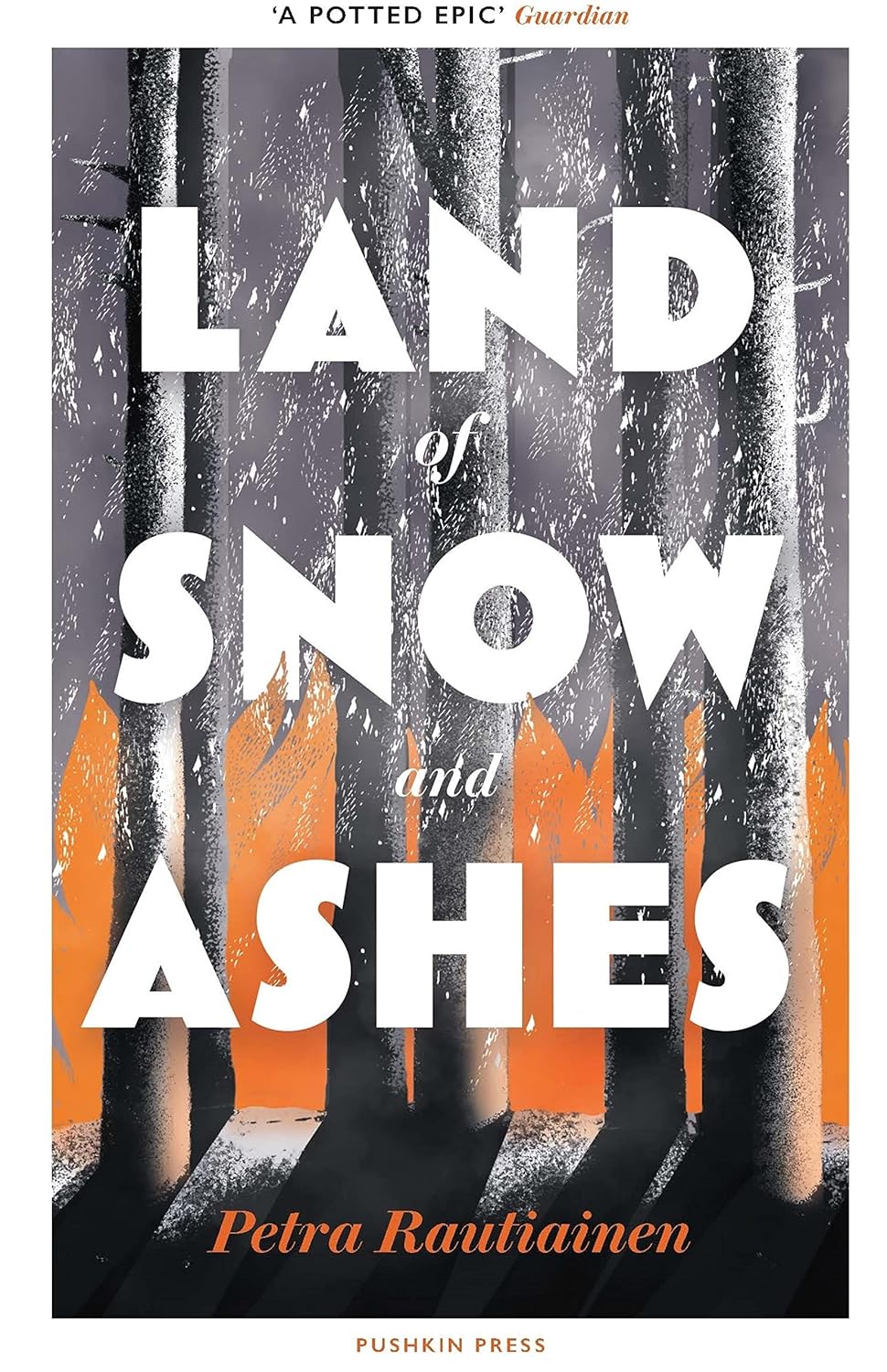
Petra Rautiainen, Land of Snow and Ashes, tr. from the Finnish by David Hackston (Pushkin Press 2022)

Setting: 1940s and 1950s Finnish Lapland

First line: I arrived in Inari yesterday, transferred from the penal colony at Hyljelahti. This new camp isn’t marked on Finnish maps.

Petra Rautiainen’s Land of Snow and Ashes is a historical crime novel that explores a lesser-known aspect of the Second World War: Finland’s brief alliance with Nazi Germany following its occupation of Finland, which included the establishment of a network of camps in Western Lapland. The novel initially unfolds along two timelines — 1944 and 1947 — which seem to lie very close together but are actually worlds apart. In 1944 the Nazi occupation and camps are still in place, while 1947 falls after the Nazi retreat that razed everything it could to the ground, including entire towns like Rovaniemi. We see events through the eyes of two very different narrators: young Finnish soldier Väinö Remes, an interpreter at the Inari camp, and photo-journalist Inkeri Lindquist, who is searching for her missing husband Kaarlo. Thoughtful consideration is also given to the impact on traditional Sámi ways of life by the war and Finnish attempts to ‘educate’ Sámi children in boarding schools in the post-war era. A hard-hitting but rewarding read, skilfully translated by David Hackston, and shortlisted for the Petrona Award.

Seichō Matsumoto, Point Zero, tr. from the Japanese by Louise Heal Kawai (Bitter Lemon Press 2024, [1958])

Setting: 1950s Tokyo and Kanazawa, Japan

If you’re given a book token for Christmas, then allow me to recommend Point Zero, out in February 2024 from Bitter Lemon Press — it’s just the thing to get your international crime reading off to a cracking start in the new year. I’ve long been a fan of Matsumoto’s work, but am particularly taken with this novel as it features a female investigative lead, which was surely ground-breaking for the time. Set in 1958, Point Zero tells the story of a young woman, Teiko Uhara, whose husband Kenichi vanishes shortly after their honeymoon. Deeply unsettled by his disappearance, Teiko visits the remote coastal city of Kanazawa, where Kenichi was last seen, to piece together what happened. As well as being an absorbing mystery, Point Zero is an accomplished social crime novel. Set less than fifteen years after the end of the Second World War, it skilfully depicts the tensions between traditional and modern Japan in the aftermath of the country’s military defeat, especially for a certain generation of Japanese women. Beautifully translated by Louise Heal Kawai, Point Zero is a reminder of the important role translations can play in illuminating other cultures and eras.

Wishing you all a very Merry Christmas and a Happy New Year!

Jingle all the way! Mrs. Peabody’s 2022 Xmas Crime List

Here’s Mrs. Peabody’s 2022 Christmas crime list — featuring crime set in America, Argentina, Australia, Canada, China, Japan and space! 

Treat others! Treat yourself! Support local booksellers!

Marcie R. Rendon, Murder on the Red River (Soho Press 2022 [2017])

Setting: 1970s Midwest America

Murder on the Red River is the first in a crime trilogy featuring Renee ‘Cash’ Blackbear. She’s just 19, both toughened and traumatized by a childhood in foster care after being taken from her Ojibwe family at the age of three. When not driving harvest trucks for local Midwest farmers or playing pool, Cash occasionally helps out Sheriff Wheaton — a lifelong ally. Following the murder of a Native American man, she gains access the victim’s community and progresses the investigation using cues from a series of visions. Cash is a wonderful, multifaceted character who will soon have you willing her on. The novel also shows her embarking on a personal journey against the backdrop of the Minnesota American Indian Movement (AIM), which is starting to make the historical crimes committed by European settlers visible. 

Seicho Matsumoto, Tokyo Express, tr. from the Japanese by Jesse Kirkwood (Penguin Modern Classics 2022; first published 1958)

Setting: 1950s Tokyo and Hakata Bay, Japan 

This beautifully translated Japanese crime novel is a classic by a master of the genre — a police procedural that shows how vital investigative doggedness is to closing out a case. The case in question is both simple and not so simple. A pair of young lovers from Tokyo are discovered lying on the beach of Hakata Bay in what looks to be a double-suicide. But an old hand in the local police force and a younger Tokyo inspector both suspect something is wrong. In tandem, they work out the true story of what took place. The pace of Tokyo Express is slow and quietly gripping, with lots of old-fashioned sleuthing that offers the reader lovely diagrams of station platforms and timetables to puzzle over. An elegant pleasure. 

Eva Jurczyk, The Department of Rare Books and Special Collections (Poisoned Pen Press 2022)

Setting: Canadian university library

Given the cover, you would be forgiven for expecting a light read, but The Department of Rare Books delivers something altogether more complex and rewarding. Liesl Weiss, the sixty-plus assistant director of the department in question, is recalled from her sabbatical after boss Christopher Wolfe is felled by a stroke. Tasked by the Chancellor with keeping donors happy and the show on the road, she immediately faces two crises: the disappearance of the newly acquired Plantin Polyglot Bible and a member of staff. Part literary mystery, part exploration of four decades in the lives of a close-knit but prickly group of librarians, and part coming-of-age story (it’s never too late!), this is an absorbing and surprisingly gritty crime novel. I will never look at a university librarian in the same way again.

Shelley Burr, Wake (Hodder & Stoughton 2022)

Setting: New South Wales, Australia

Burr’s hugely accomplished debut novel is set in and around the small, outback town of Nannine. Twenty years ago, Mina McCreerey’s nine-year-old twin sister Evelyn vanished from the remote family sheep farm in the middle of the night. The case remains unsolved, leaving Mina and her father in a terrible limbo — and prey for gossipy online forums that like to implicate them in the crime. When Mina is approached by Lane Holland, a maverick private investigator, she is initially wary. But Lane’s success in other cases gradually convinces her to give him a go — though she is unaware that he carries secrets of his own. Wake is both a sensitive portrayal of the long-term effects of trauma and a riveting, tightly plotted cold-case noir. 

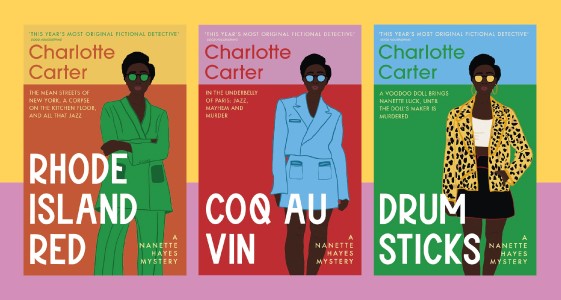
Charlotte Carter, Rhode Island Red (Baskerville 2022)

Setting: 1990s New York 

Charlotte Carter’s off-beat 1990s crime trilogy was reissued this year with a splendid new set of covers. Our heroine is Nanette Hayes, wise-cracking saxophonist, French translator and amateur sleuth. One afternoon after a street gig, she agrees to put up a charming fellow musician for the night, only to find him sprawled out murdered the following morning. Worse still, he turns out to have been an undercover cop, which brings lots of unwelcome attention to her door. Set in New York and steeped in the jazz of greats like Charlie Parker and Thelonious Monk, Rhode Island Red is a sparky, original take on the private eye novel, and explores a Black woman’s experiences in the Big Apple of the 1990s in a lively and nuanced way. 

Eloísa Díaz, Repentance (Weidenfeld & Nicolson 2022)

Setting: Argentina in 1981 and 2001

Spanish author Eloísa Díaz drew on her Argentine family roots when writing this powerful historical crime novel. Repentance explores one ‘small story’, that of Buenos Aires police inspector Joaquin Alzada and his teacher brother Jorge, at two key historical junctures: 1981, when Argentina is in the grip of a military dictatorship that is disappearing young activists (The Dirty War) and 2001, when economic turmoil is bringing exasperated citizens out on the streets to protest. It’s at this point that Alzada, long since demoted to a desk job, gets to investigate a murder due to staff shortages — and then faces the eternal dilemma: whether to turn a blind eye to the injustices perpetrated by those in power or to do what he knows is right. There is, of course, no easy answer. Alzada is as complex as the history he’s caught up in — and his biting humour and love of family infuse the novel with warmth.

Kirstin Chen, Counterfeit (The Borough Press 2022)

Setting: America, Hong Kong, China

Counterfeit begins with Ava — a Chinese-American lawyer struggling with the demands of motherhood — telling Detective Murphy how she got entangled in the criminal activities of Chinese former college roommate Winnie. The latter had reinvented herself as a sleek and glamorous businesswoman, and was running an ingenious designer goods scam. But is Ava telling the whole truth or did things unfold a little differently? Behind this hugely entertaining tale lie some serious questions — first and foremost, what price freedom? The novel provides fascinating insights into modern Chinese society, the interplay of Chinese state capitalism and American consumerism, and the struggles of women to gain full control over their lives. Bonus: you’ll be immune to the lure of designer handbags once you’ve read this book.   

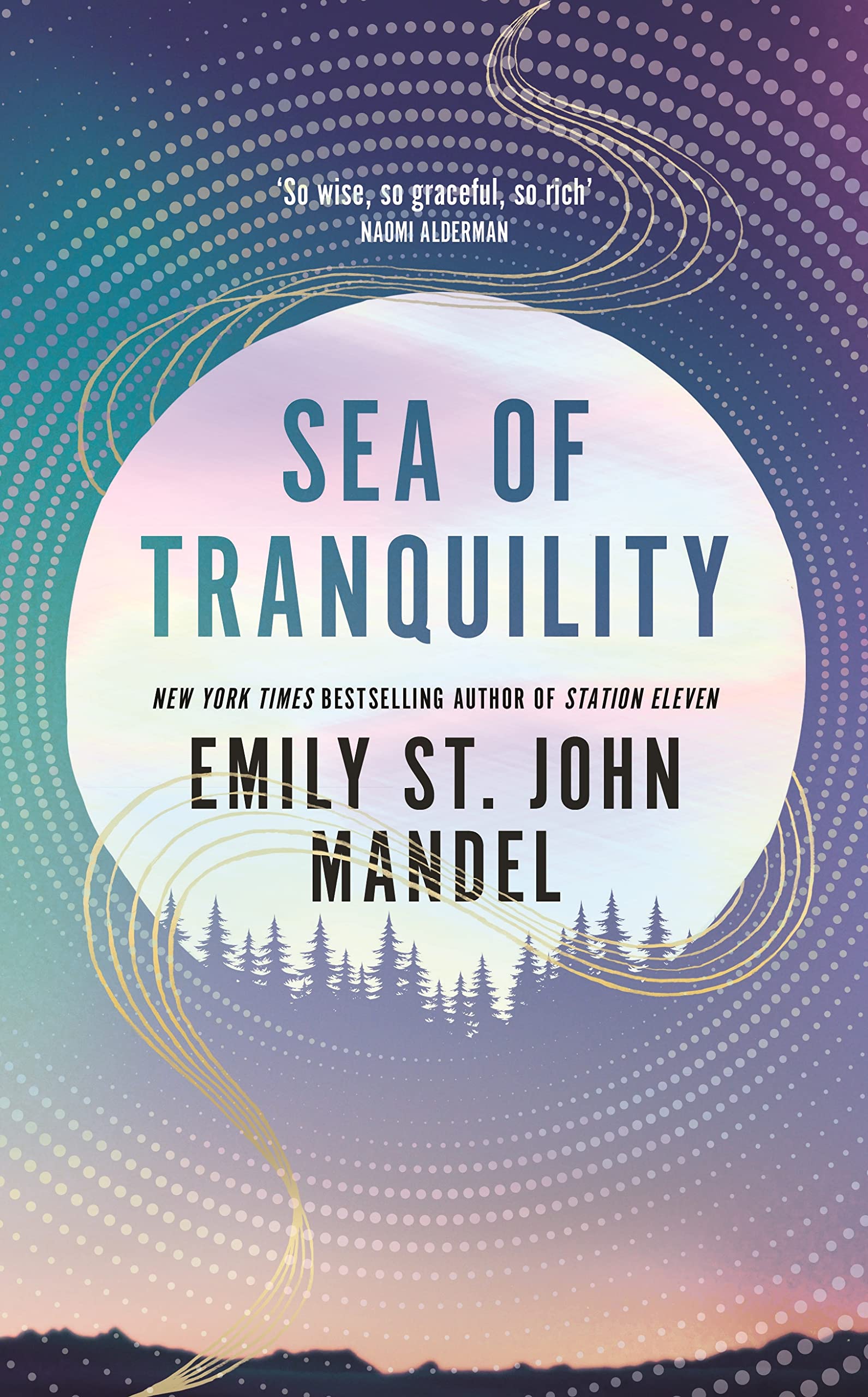
Emily St. John Mandel, Sea of Tranquility (Picador 2022)

Setting: Canada, the future, space

Get ready for a wild ride. In 1912, disgraced aristocrat Edwin St. Andrew experiences what he thinks is a hallucination. For a split second, in a remote forest on Vancouver Island, he senses a cavernous space and the sound of a violin. In 2203, a novel by Moon Colony Two dweller Olive Llewellyn contains a passage in which a man plays the violin in an airship terminal while trees rise around him. And in 2401, an era when time travel is a crime, Gaspery-Jacques Roberts is sent to investigate a space-time anomaly caught on film in 1994 — which features notes from a violin. It’s the start of Roberts’ sleuthing at various moments in time… Sea of Tranquility remains one of my all-time favourites this year: a genre-bending fusion of crime and science fiction. 

And if you’re looking for more top-quality international crime fiction, I’d thoroughly recommend Bitter Lemon Press and Orenda Books

Wishing you all a very Merry Christmas and a Happy New Year!

The Long Con: Emily St. John Mandel’s The Glass Hotel (Canada) and the Liar Liar podcast (Australia). Plus: our Punishment Giveaway winners!

Sometimes random themes emerge across books and podcasts, and before you know it, you’ve fallen down a fascinating rabbit hole — in this case the world of financial crime.

After my fellow crime aficionado Susie G. mentioned that characters from Emily St. John Mandel’s Sea of Tranquility had featured in her previous novel The Glass Hotel, I decided to take a look. And indeed, here is the much fuller story of brother and sister Paul and Vincent, the former a troubled young composer, the latter a rootless young woman catapulted into the world of the ultra-rich after marrying the owner of the hotel where she was a bartender. Alas, things soon go awry: it’s not too long before she’s catapulted back out again when a giant Ponzi scheme implodes in New York…

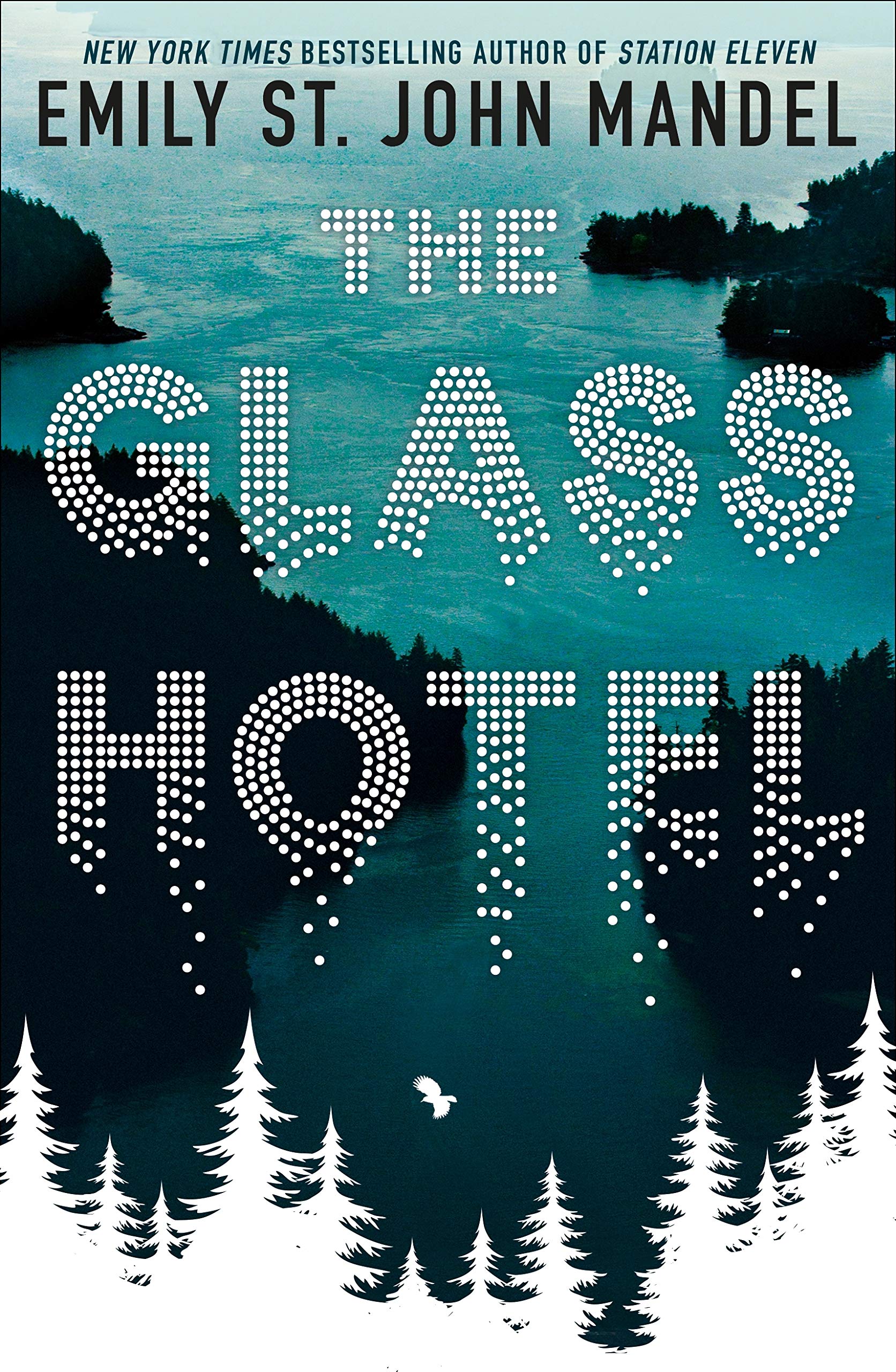
Emily St. John Mandel’s The Glass Hotel (Picador 2020)
First line: Begin at the end.

This is a novel about all sorts of things vanishing — money, people, relationships, futures. It painstakingly explores how people kid themselves about what they do or don’t know, or allow themselves to be pulled into something dodgy or shady or too good to be true. As always, St. John Mandel weaves together the messy, fascinating stories of people’s lives with great empathy, but is also unsparing about people’s weaknesses and the heavy price of fraud, whether paid by those who perpetrate it or by their highly unfortunate victims. The Ponzi scheme at the heart of the novel draws on New York financier Bernie Madoff’s infamous swindle, which lasted decades and involved an eye-watering $50 billion.

Then I tumbled into the Liar Liar podcast, hosted by journalists Kate McClymont and Tom Steinfort. In the course of ten episodes, they examine the staggering case of Melissa Caddick, an outwardly successful Sydney businesswoman who spent years defrauding investors — mainly family and friends — with an elaborate Ponzi scheme of her own.

At the heart of this story lie the following questions: what kind of person systematically defrauds (among many others) her own parents and the best friend she has known since childhood? What kind of person takes $23 million of other people’s retirement savings and blows them on a lavish house, cars, jewellery, shoes, ski trips to Aspen, while still cheerily attending their birthday parties? What happens when lies infuse every aspect of a person’s professional and personal life so completely that nothing else really remains?

The core strength of Liar Liar is its granular examination of Caddick’s evolution as a con artist and the specific techniques she used (sadly, preying on those closest to you is a hallmark of fraudsters, because it’s easier for them to exploit the existing bonds and trust between you). It also deliberately and rightly makes space for Caddick’s victims to relate the horrendous personal consequences of her crimes: the devastation of retirement savings being wiped out, the bleak financial futures many now face, together with the emotional fallout of having had one’s trust so comprehensively betrayed. A sad and cautionary tale.

Last but not least, I can announce the three winners of Mrs Peabody’s Punishment Giveaway competition. Congratulations to Lisa D., Iain M., and Sarah Q! Copies of the book will be winging their way to you shortly 🙂

About time: Emily St. John Mandel’s Sea of Tranquility (Canada / the future / space)

Emily St. John Mandel, Sea of Tranquility, Picador 2022

First line: Edwin St. John St. Andrew, eighteen years old, hauling the weight of his double-sainted name across the Atlantic by steamship, eyes narrowed against the wind on the upper deck: he holds the railing with gloved hands, impatient for a glimpse of the unknown, trying to discern something — anything! — beyond sea and sky, but all he sees are shades of endless grey.

I was going to wait for Sea of Tranquility to come out in paperback, but cracked just ahead of the ‘Platy Jubes’ weekend. By the time the Queen had given her final wave from the Buckingham Palace balcony, I’d read it twice: the first time romping through, the second time savouring the writing, story and sheer inventiveness of it all.

In 1912, disgraced minor aristocrat Edwin St. Andrew experiences what he thinks is a hallucination. For a split second, in a remote forest on Vancouver Island, he’s plunged into darkness, then senses a cavernous space and the sound of a violin. In 2203, a novel by Moon Colony Two dweller Olive Llewellyn includes a passage in which a man plays the violin in an airship terminal while trees rise around him. And in 2401, an era when time travel is a crime, Gaspery-Jacques Roberts is sent to investigate a space-time anomaly caught on film in 1994 — which features notes from a violin. It’s the start of his sleuthing at various moments in time…

This genre-bending fusion of crime and science fiction — cri-sci-fi? — is pulled off with tremendous style. The first scene-setting chapters build steadily, and around a third of the way through the novel really catches fire. The resolution to the mystery is like a finely crafted Chinese puzzle and well worth the wait.

And because this is Emily St. John Mandel, author of the highly acclaimed Station Eleven, there’s much more besides: very human, likeable characters; visions of a future world and what it means to survive a pandemic; questions about the nature of reality and what truly matters in life; and an exploration of institutional power and the price of taking it on. But there’s also plenty of wry humour, including a laugh-out-loud bit  featuring Marvin the cat.

If you too have a weakness for cri-sci-fi, then put Sea of Tranquility on your reading list right away. And if you’re looking for other science fiction novels with strong elements of crime, check out my past reviews below:

Welcome to the silo: Hugh Howey’s Wool

Dazzlingly original: Adam Roberts’ The Real-Town Murders

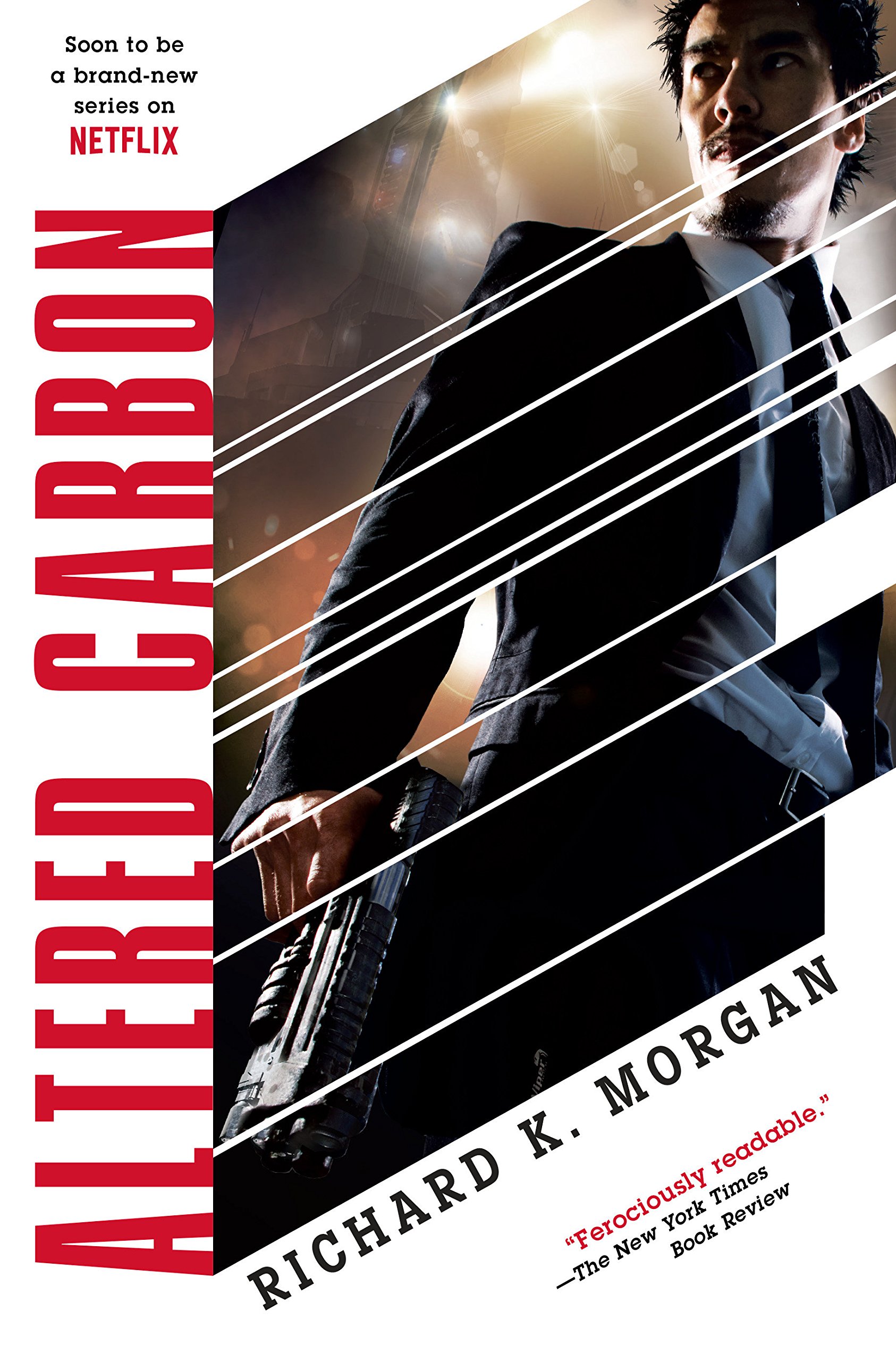
Smörgåsbord: Richard K. Morgan’s Altered Carbon

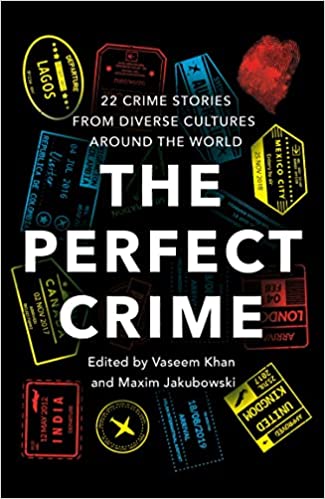
The Perfect Crime: Around the World in 22 Murders

The Perfect Crime: Around the World in 22 Murders, ed. by Vaseem Khan & Maxim Jakubowski, HarperCollins 2022

This hefty volume of crime stories is an absolute treat for all crime fans, but especially for fans of international crime. With twenty-two gripping tales that range from cosy to chilling to historical to noir, it takes us on a journey through a number of diverse cultures and satisfyingly murderous scenarios.

The volume is ground-breaking in one extremely important respect. As Maxim Jakubowski points out in the introduction, it gathers ‘for the very first time […] authors from a variety of cultural and ethnic backgrounds, including African-American, Asian, First Nation, Aboriginal, Latinx, Chinese-American, Singaporean and Nigerian’. And as Vaseem Khan rightly asserts: ‘The case for diversity is overwhelming […] Fiction — especially crime fiction — provides a lens onto society […and] when we underrepresent minority backgrounds, we run the risk of aiding divisiveness rather than helping to correct it’.

Khan also highlights the important role readers play in terms of ‘being willing to take a chance on books featuring diverse characters’. Well, this reader is very enthusiastically raising her hand, and I know many others will be too (not least anyone who’s enjoyed Bridgerton, which has done more to break down racial barriers via another popular genre — historical romance — than many a more earnest endeavour. Seriously, it’s genius).

And of course the volume is a great resource: in addition to featuring stories by well-known names such as Walter Mosley, Abir Mukherjee and Oyinkan Braithwaite, it gives tasters of other authors you might not yet know, but will definitely be keen to check out. The biographical notes at the back provide very helpful overviews of the authors’ profiles and works – such as David Heska Wanbli Weiden’s debut novel Winter Counts, which had a wonderful reception last year and is now firmly on my TBR list. Riches indeed!

The authors showcased are: Oyinkan Braithwaite, Abir Mukherjee, S.A. Cosby, Silvia Moreno-Garcia, J.P. Pomare, Sheena Kamal, Vaseem Khan, Sulari Gentill, Nelson George, Rachel Howzell Hall, John Vercher, Sanjida Kay, Amer Anwar, Henry Chang, Nadine Matheson, Mike Phillips, Ausma Zehanat Khan, Felicia Yap, Thomas King, Imran Mahmood, David Heska Wanbli Weiden and Walter Mosley.

Many thanks to Vaseem Khan and HarperCollins for sending me a review copy of the very handsome hardback (which incidentally would make a really fabulous gift…)

Sound of the 70s: Silvia Moreno-Garcia’s Velvet was the Night (Mexico)

Silvia Moreno-Garcia, Velvet was the Night, Jo Fletcher Books 2021

First line: He didn’t like beating people.

Mexican-Canadian writer Silvia Moreno-Garcia is one of those ridiculously talented authors who can turn her hand to any genre. She’s probably best known for her novel Mexican Gothic (it does what it says on the tin), but describes her latest novel as ‘noir/pulp fiction’, albeit with an unusual historical twist.

Velvet was the Night is set in 1970s Mexico during the ‘Guerra sucia’ or Dirty War, which saw the right-wing government abduct, imprison and often murder those viewed as a threat to its ideology and power – especially left-wing students and working-class activists. Audaciously, one of the novel’s main characters is a member of Los Halcones – the Hawks – a shadowy group of heavies trained by the government (with the covert backing of the CIA) to disrupt student demos and worse. The codename of the young man in question is El Elvis, after his musical idol, and it is through his eyes that we observe both the internal workings of the group and the psychology of an individual who’s got himself into a serious fix.

Velvet‘s other key figure is Maite Jaramillo, a secretary terrified of spinsterhood, who escapes the everyday grind and turbulent politics around her through a love of music and Secret Romance magazines. She also harbours a grubby secret of her own: she likes to steal small items from her neighbours’ apartments while pet-sitting for them. It’s when beautiful, bohemian student Leonora disappears –  and thus fails to reclaim her cat – that Maite’s humdrum world gets turned upside down.

Along with the characterisation, a key strength of Velvet was the Night is its tightly plotted narrative. Its ending feels satisfying and complete, but could also serve as an intriguing beginning to a whole other story. Another very nice touch is the playlist at the back of the novel, which showcases the songs woven into the text – a clever nod to the subversive status of certain kinds of music in 1970s Mexico. You can find it on Spotify here.

True crime tidbit: many who work in the world of publishing, like my good self, have been following a bizarre, long-running case involving fake identities and a phishing scam whose aim was getting hold of valuable manuscripts prior to publication. News comes this morning that the FBI has made an arrest… Innocent until proven guilty, of course, but it’s quite a breakthrough in what’s an absolutely fascinating case for bookish types – not least in relation to the question of motivation. It’ll make a great podcast.

Riku Onda, The Aosawa Murders (Japan) & the 2019 Booker Prize

The minute I saw this ravishing book cover, I wanted a copy. And – oh happy day – it’s turned out to be one of my most satisfying crime reads of the year.

Riku Onda, The Aosawa Murders (trans. from Japanese by Alison Watts, Bitter Lemon Press, out Jan 2020)

Opening line: What do you remember?

The Aosawa Murders is an fascinating exploration of a crime: the poisoning of seventeen people at a big family birthday party in 1970s Japan. The case was supposedly solved by the police, but as the novel immediately shows, a number of people have doubts that the truth was properly established – including the lead investigator. In particular, the enigmatic figure of Hisako, the blind daughter and sole family member to survive, is the focus of much scrutiny and speculation.

I loved this novel’s originality, intelligence and verve. Readers are invited to glean new clues about the murders from interviews carried out by an anonymous individual – a kind of Rashomon homage that sifts the memories of those close to the crime, such as local kids who visited the family home, the housekeeper’s daughter, the prime suspect’s neighbour, and the detective in charge of the case. One of these interviewees is Makiko Saiga, who wrote a bestselling book on the crime eleven years after it happened, and who reports on the interviews she carried out back then, creating a kind of Chinese-box narrative on three different time levels (1970s,1980s, 2000s). As we move through the novel, more and more details about what people knew are revealed, along with the toll the crime has taken on them personally. Beautifully written and translated, with great characterization and sense of place, I was hooked from the first to the last page.

Many thanks to Bitter Lemon Press for the preview copy.

Booker Prize news. As you’ve probably heard, the Booker Prize jury staged a ‘joyful mutiny’ and awarded the 2019 prize to two authorsBernadine Evaristo for Girl, Woman, Other, and Margaret Atwood for The Testaments.

I’ve yet to read Girl, Woman, Other, but can thoroughly recommend The Testaments, especially to fans of the Handmaid’s Tale and the excellent TV adaptation. It’s a surprisingly difficult novel to review without giving spoilers away, so I’ll resist detailed descriptions. Suffice to say that it’s a searing exploration of state-sanctioned crimes against women, and features one of the most complex and fascinating characters from the TV series, whose perspective provides fresh insights into the origins and workings of Gilead. It’s a book I’ll be reading at least twice…

Noirwich 2019 & Ten Autumn Crime Reads

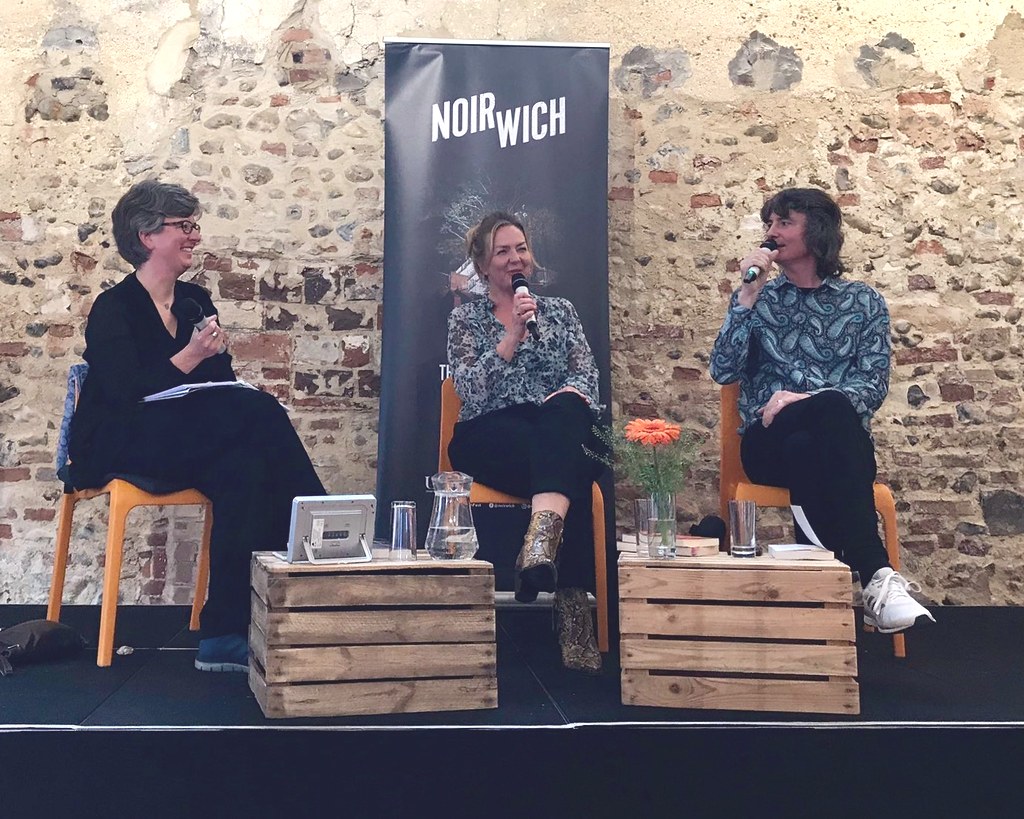
Well, Noirwich 2019 was a blast. It was my first time at this crime festival – now in its 6th year – and it has certainly hit its stride. I was there on the Saturday, as part of a range of panels at the incredible medieval Dragon Hall. It was quite a venue for our ‘Euro Noir’ panel.

Simone Buchholz and Antti Tuomainen were both on top form, and there was *plenty* of interesting discussion and laughter. Although their work shares a very strong noirish feel and humour, there are also some striking differences, which made for rich conversation. For example, Simone writes the ‘Chastity Riley’ series, while Antti focuses on standalones; Simone’s work is rooted in the ‘mean streets’ of Hamburg, while Antti’s novels wander around Finland, from the capital Helsinki to seaside towns and villages in the frozen east.

Both writers acknowledged the influence of Noir writers and filmmakers from Raymond Chandler to Jakob Arjouni and the Coen Brothers, but also felt that after a few books, these were subsumed into their own authorial voices – they had made them their own. And both felt that characters were at the heart of the story rather than the plot, and that placing characters in a quandary or difficult scenario gives narratives their oomph.

You can see how much fun we all had below… It was a very lively panel! And the bilingual readings in German-English and Finnish-English went down a storm.

You’d be forgiven for thinking Simone and Antti are doing a karaoke version of ‘Islands in the Stream’…

Mrs Peabody’s 10 Autumn Crime Reads

These are my most anticipated reads as the nights draw in. Some are recent, some not; some are pure crime, some are cross-genre… All look great!

  1. Laila Lalami, The Other Americans (US)
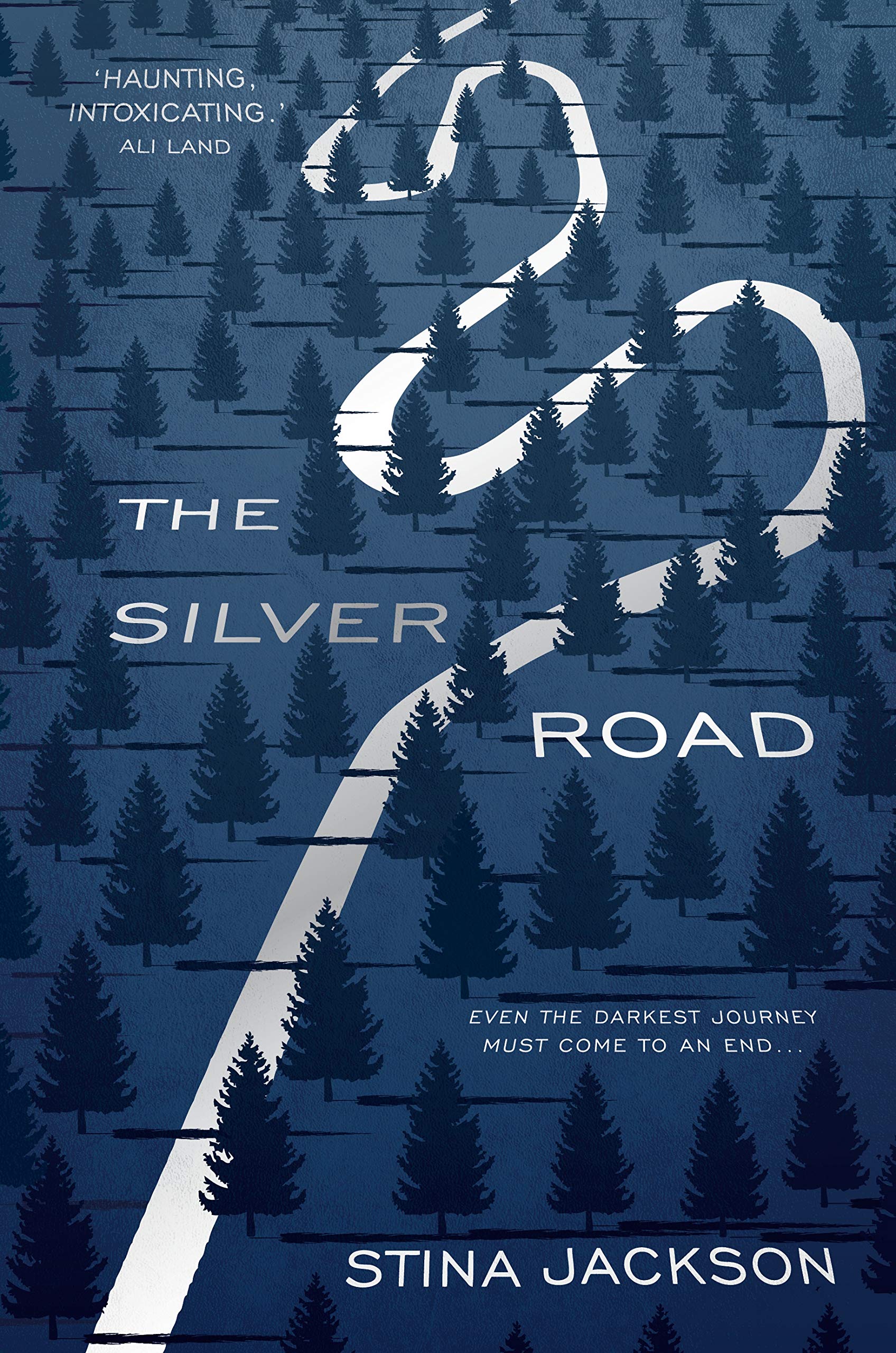
  2. Stina Jackson, The Silver Road, trans. Susan Beard (Sweden)
  3. Margaret Atwood, The Testaments (Canada)
  4. John le Carré, Agent Running in the Field (UK)
  5. George Pelecanos, The Man Who Came Uptown (US)
  6. Kevin Barry, Night Boat to Tangier (Ireland)
  7. Elif Shafak, 10 Minutes 38 Seconds in this Strange World (UK/Turkey)
  8. Janet Malcolm, The Journalist and the Murderer (US; non-fiction)
  9. Denise Mina, Conviction (Scotland; Denise was at Noirwich and her session made me want to grab this book.)
  10. Riku Onda, The Aosawa Murders, trans. Alison Watts (cheating; not out until Jan 2020, but hey).

The Silver Road is one of the submissions for the 2020 Petrona Award.

Variety is the spice of life… Nesser’s The Darkest Day (Sweden), Viskic’s Resurrection Bay (Australia), Tuomainen’s The Man Who Died (Finland), Alias Grace & The Sinner (Canada/Germany/US)

I’m going through a phase where I want lots of variety in my crime reading and viewing. This is when having scandalously large piles of unread crime fiction and a huge backlog of TV crime drama comes in rather handy…

Håkan Nesser, The Darkest Day, translated from Swedish by Sarah Death (Mantle, 2017).

First line: When Rosemary Wunderlich Hermansson awoke on Sunday 18 December, it was a few minutes to six and she had a very vivid image in her head.

Håkan Nesser is best known for his Inspector van Veeteren series, but his second series, featuring Inspector Gunnar Barbarotti, has also enjoyed significant success, selling over 4 million copies worldwide. The Darkest Day is the first of the five Barbarotti novels to be translated into English, a happy development for all lovers of Swedish crime fiction.

The Darkest Day is a long, satisfying read, the kind of crime novel that’s a slow-burner and rewards the unhurried reader. The first 185 pages feel a bit like a Scandinavian version of The Corrections: we’re introduced to the Hermansson family, who have come together for a double birthday celebration at Karl-Erik and Rosemary’s house in Kymlinge on the darkest day of the year, and through the eyes of family members from three generations, form a wry picture of the complex dynamics between them. By the end of the weekend, two of the family have disappeared without trace, and Inspector Barbarotti and his team have very little to help them figure out what’s been going on. The resolutions to both cases are original and, thanks to the skills of the author, remain on just the right side of melodrama.

The existentialist Inspector Barbarotti also proves to be an interesting character. The product of a fleeting Swedish-Italian union, he attempts to navigate his post-divorce mid-life crisis by opening a dialogue with God (who is invited to prove his existence in various ways to the disillusioned policeman). All of this is handled with humour and a light touch, and adds wit and depth to the novel.

Emma Viskic, Resurrection Bay (Pushkin Vertigo, 2017 [2015]).

First line: Caleb was still holding him when the paramedics arrived.

Jane Harper’s The Dry recently woke me up to the quality of crime writing in Australia. Like The Dry, Viskic’s Resurrection Bay has won a host of awards and (remarkably) is the author’s debut novel. It’s extremely accomplished, and features a highly unusual investigative figure, Caleb Zelic, who for much of his life has been profoundly deaf. The novel opens with the aftermath of a murder – Caleb’s childhood friend, policeman Gary Marsden, has just been found dead – and we are immediately shown some of the difficulties Caleb faces when communicating with others, as well as his extra powers of perception in relation to details like facial and body language. Caleb, who is a private investigator, starts to look into Gary’s death. Suspecting that it may be linked to an insurance case he was working on, he follows a trail that eventually leads him back to his childhood town of Resurrection Bay.

For me, one of the major strengths of this novel was its characterization. Aside from Caleb, we’re introduced to a number of other complex and well-drawn characters such as Frankie (his work partner), Kat (his ex-wife) and Anton (his brother), as well as contacts within the worlds of policing and crime in Melbourne. The dialogue feels gritty and authentic, and if there’s the odd touch of melodrama, this is a minor drawback. Overall, Resurrection Bay is an absorbing and thrilling read.

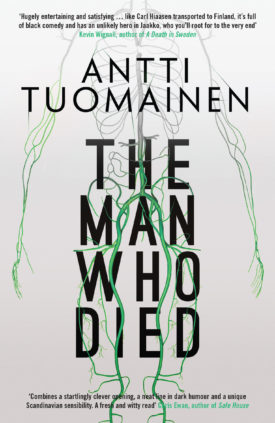
Antti Tuomainen, The Man Who Died, translated from Finnish by David Hackston (Orenda Books, 2017)

First line‘It’s a good job you provided a urine sample too’.

Antti Tuomainen is one of the most versatile crime writers around. I was first introduced to him via the novel The Healer – a dark, post-apocalyptic crime novel written in a beautifully poetic style. Since then he’s written a number of novels, each of which has a beguiling premise, but feels stylistically very different to the last. The Man Who Died is no exception: here we have a grimly brilliant starting point – a man whose doctor tells him he has been systematically poisoned, and that the end is a question of when rather than if – which is developed into black, comedic crime of the highest order. The man in question is Jaakko Kaunismaa, a 37-year-old entrepreneur from the small Finnish town of Hamina, who together with his wife Taina exports pine or matsutake mushrooms to the Japanese. He sets about investigating his own murder, and quickly discovers that there’s a worryingly long list of suspects.

The narrative is related in the first-person, which is always tricky to pull off, but Tuomainen does a great job. Jaakko is a great character: placed in a truly grave situation, he very quickly has to decide how to react. The easiest course of action would be to give up, but instead he decides to get to the bottom of the matter with admirable pluck, determination and resourcefulness. Comparisons have been made between the novel and Fargo, which is spot on – the heroes and anti-heroes are all engagingly imperfect and human, and there are a couple of set pieces that perfectly capture Fargo‘s cartoonish black humour. It feels like it was great fun to write, and I can’t wait for it to be made into a film.

I remember George Peleconos – scriptwriter for the HBO series The Wire – explaining to a Harrogate audience one year why crime writers like him were increasingly drawn to writing for TV rather than film. Aside from greater job security, the main lure was the chance to develop characters and story-lines with much greater nuance and detail than a film would allow.

I do think we’re living in a golden age of TV crime drama (e.g. Happy Valley, Top of the Lake, The Code). ‘Netflex Originals’ are also helping to lead the way, with superb adaptations of literary crime and psychological crime fiction by outstanding women authors.

Alias Grace, based on Margaret Atwood’s 1996 historical novel of the same name, tells the story of a young serving woman, Grace Marks, imprisoned for her role in two notorious 1843 murders, and a doctor, Simon Jordan, who is commissioned to write a psychological report on her, but finds himself becoming inappropriately drawn to her as well. The series provides a superb but also extremely sobering insight into the class and gender politics of the period, and Sarah Gadon is outstanding in the lead role.

The Sinner is adapted from German writer Petra Hammesfahr’s 1999 novel of the same name. I’ve seen the first four episodes and have been hugely impressed by the quality of the adaptation and its leading actors. The first (pretty harrowing) episode shows young housewife Cora Tannetti (Jessica Biel) stab a man to death while on a family outing to a lake. While it’s absolutely clear that she committed the deed, neither she nor anyone else has any inkling why. Rather than locking her up and throwing away the key, as would probably happen in real life, Detective Harry Ambrose (Bill Pullman) is determined to understand what motivated Cora’s actions, and starts to dig around in her shadowy early life. The characterization is outstanding, and the after-effects of the crime – particularly on Cora and her husband Mason (Christopher Abbott) – are explored in a way that’s reminiscent of the first series of The Killing.

The Sinner is a top-quality, stylish crime drama that brilliantly questions the extent to which Cora can be labelled a perpetrator. If you haven’t yet read the novel, then do grab a copy of The Sinner, translated by John Brownjohn, from Bitter Lemon Press – it’s still one of my all-time top German crime novels nearly 20 years on. Perhaps one of the best psychological thrillers ever written?

Thomson’s Ghost Girl (UK), Carrère’s The Adversary (France), The Handmaid’s Tale (Canada/US)

My TBR pile is well and truly out of control at the moment, so I’m going to have a reading blitz over the summer to reduce it as much as I can. My approach will be threefold: ruthlessly cull the books that don’t appeal to me (life is too short), read exactly the books I want to from the pile that is left, and write up a variety of short reviews for the blog. And, as is the case this week, I might add in the odd TV series or other random delight from time to time.

Lesley Thomson, Ghost Girl (Head of Zeus, 2014)

Opening line: ‘In the pale light the girl might be a ghost risen from one of the graves’.

I really liked the first in Thomson’s series, The Detective’s Daughter. It took me a little while to get into this second novel: slightly more signposting was needed at the beginning to help readers navigate the two timelines. However, I remained captivated by the character of Stella Darnell, the police detective’s daughter who picks up his unsolved cases after his death. Stella runs a cleaning agency and is more like her father than she would care to admit – her drive to restore order makes her a very tenacious and thorough investigator. In this case, a set of photos in her father’s cellar showing deserted London streets puts Stella on the trail of a murderer. Her investigative partner Jack Harmon is equally intriguing – a night-time tube driver whose life, in contrast to Stella’s, is governed by signs and intuition rather than rationality. Both are social misfits, but together they make a great team. Another strength of both books is Thomson’s depiction of the inner life of children and how they try to make sense of traumatic situations.

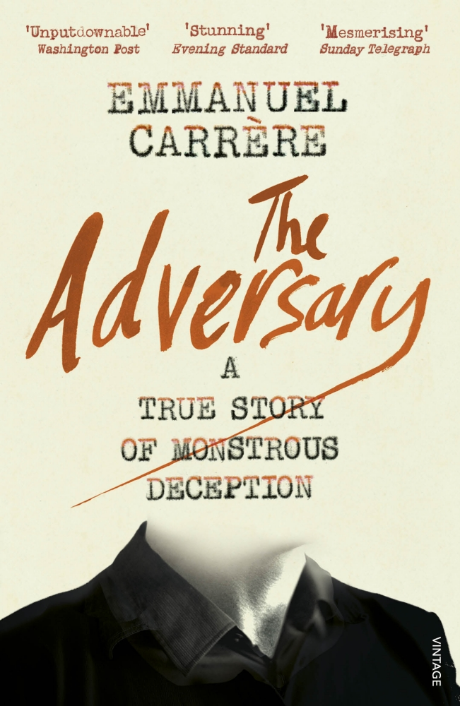
Emmanuel Carrère, The Adversary: A True Story of Monstrous Deception, translated from French by Linda Coverdale (Vintage, 7 July 2017 [2000]).

Opening line: ‘On the Saturday morning of January 9, 1993, while Jean-Claude Romand was killing his wife and children, I was with mine in a parent-teacher meeting at the school attended by Gabriel, our eldest son’.

Emmanuel Carrère is a well-known writer, who here dissects a highly disturbing true crime: Jean-Claude Romand’s murder of his wife, two children and elderly parents in 1993. The book is both an archaeological excavation of the events leading up to the murders and the multiple deceptions Romand wove over twenty years. While to his family and the outward world he appeared to be a respectable, well-to-do doctor working for the World Health Organisation, in reality he was nothing of the sort. Carrère effectively explores how Romand deceived and betrayed his family, and the ways in which his lies corroded his own identity, creating a terrifying void. Hard-hitting and thoughtful, but avoiding sensationalism, Carrère makes no excuses for the murderer’s mythomania and his attempts to escape the consequences of his crimes. A fascinating, but utterly chilling read.

The Handmaid’s Tale (Hulu/Channel 4), adapted from Margaret Atwood’s The Handmaid’s Tale (Vintage, 1996 [1985])

American viewers are ahead of us here in the UK, where the highly anticipated TV adaptation of The Handmaid’s Tale began to air last Sunday. The novel, of course, is not crime fiction, but ‘speculative’ fiction that portrays a theocratic America of the near future, and famously draws on a range of repressive historical examples (from seventeenth-century Puritan America to twentieth-century regimes such as Nazi Germany and Ceaușescu’s Romania). But the themes of crime and criminality are at the very heart of the novel: how totalitarian/ultra-religious states criminalise any form of dissent, and how in particular they police women’s behaviour, driving them out of the public sphere and back into a private space where their identity, sexuality and bodies are heavily controlled. In the process, of course, the state itself becomes criminal, because it is denying its citizens the most basic of rights. The novel has long been on my ‘most influential books of all time’ list, and the TV opener did a brilliant job of bringing its dystopian vision to life. Elisabeth Moss is outstanding as the narrator and central protagonist, Offred.

Here’s a wonderful recent essay on the novel by Margaret Atwood for the New York Times: ‘Margaret Atwood on What ‘The Handmaid’s Tale’ means in the Age of Trump’.