‘Til death do us part’: Maggie O’Farrell’s The Marriage Portrait (Medici Italy), Justine Triet’s Anatomy of a Fall (France), Only Murders in the Building (USA)

Maggie O’Farrell, The Marriage Portrait (Tinder Press 2022)

First line: Lucrezia is taking her seat at the long dining table, which is polished to a watery gleam and spread with dishes, inverted cups, a woven circlet of fir.

Maggie O’Farrell’s The Marriage Portrait is one of the most satisfying novels I’ve ever read. O’Farrell takes her inspiration from a snippet from history — the mysteriously brief life of Lucrezia di Cosimo de’ Medici (1545-1561) — and Robert Browning’s 1842 poem ‘My Last Duchess’, which suggests that Lucrezia was murdered by her husband, the Duke of Ferrara. The resulting novel is an outstanding example of literary crime.

Figuring out whether or not Lucrezia was murdered involves a deep dive into the sixteenth-century court life of Medici Florence and the paradoxical status of aristocratic girls like Lucrezia. In many ways ultra-privileged, they also led incredibly constrained lives, their primary role being to boost the status of their families through advantageous matches and the production of heirs. Pawns in the power plays of their fathers and husbands, they had very little say in their own destinies. Lucrezia finds solace in her love of drawing and painting — just one of the ways O’Farrell brings this unusual, spirited young woman to life as she seeks to survive her highly dangerous marriage.

The Marriage Portrait is one of my books of the year thus far — I loved its ingenuity, its clever construction and its heart. Highly recommended.

Justine Triet (dir.), Anatomy of a Fall (2023)

Many thanks to blog reader Vicky, who recommended this Palme d’Or winner to me. As it happens, Anatomy of a Fall complements The Marriage Portrait perfectly, for it also explores a marriage, albeit one with a very different power dynamic. Here, wife Sandra Voyter appears to have the upper hand: she’s a hugely successful author, while her husband, Samuel Maleski, struggles to write and is the primary carer for their visually impaired son Daniel. When Samuel is found dead outside their isolated Grenoble chalet, the police suspect Sandra of having been involved. Did Samuel fall from the window of the attic room he was renovating? Or was he pushed? And just how reliable a witness is Sandra, the consummate and highly inventive storyteller?

The film soon turns into a gripping legal drama, and I found myself fascinated by the depiction of French court procedure, which enables the defendant to be questioned alongside witnesses (an approach that creates illuminating ‘dialogue’ between different witness statements). There’s top-notch acting here from Sandra Hüller (Sandra) and Milo Machado Graner (Daniel). Border collie Messi, who plays family pet Snoop, is also a genuine star, and left Cannes with the coveted Palme Dog 🙂

I’ve featured the German film poster above. I especially like the German title Anatomie eines Falls because the noun ‘der Fall’ can variously mean ‘fall’, ‘event’ or investigative ‘case’. The original French title is Anatomie d’une chute. ‘Chute’ also has a range of evocative meanings, such as ‘fall’, ‘downfall’ and ‘collapse’.

Only Murders in the Building, Season 1 (Disney+ 2021)

I’m late to the party, but am enjoying the antics of amateur sleuths Charles, Oliver and Mabel as they look into the murder of one of their neighbours in the affluent Arconia Building on New York’s Upper West Side. The characterization of the three leads — played by Selena Gomez, Steve Martin, and Martin Short respectively — is sparky and wry. So is the production, which gleefully harnesses podcast conventions: for what else would a fading actor, washed-up theatre director and aspiring interior designer do these days other than create a podcast called Only Murders in the Building? It’s all very meta, and despite a few goofy moments that stretch credulity, is an entertaining way to unwind at the end of a long day. There are cameos from the likes of Sting, Tina Fey and Jane Lynch, and the latest season features Meryl Streep. Great fun.

Tan Twan Eng’s The House of Doors (Penang & Kuala Lumpur)

This week: an absorbing historical novel generously leavened with crime.

Tan Twan Eng, The House of Doors, Canongate 2023

First lines: A story, like a bird of the mountain, can carry a name beyond the clouds, beyond even time itself. Willie Maugham said that to me, many years ago.

Tan Twan Eng’s The House of Doors is a wonderfully satisfying and multi-layered historical novel. It transmutes the final tale from W. Somerset Maugham’s 1926 Casuarina Tree — ‘The Letter’, based on the Ethel Proudlock murder case — into gleaming literary gold.

It’s 1921. English writer Willie Somerset Maugham is staying at his old friend Robert Hamlyn’s home, the beautiful Cassowary House in Penang. Robert warns his wife Lesley that Willie is notorious for mining everyone he meets for his writing, often depicting them in scandalous detail in his books. But we soon learn that Willie is hiding a secret of his own: his marriage is in disarray, and his secretary and travel companion Gerald Haxton has long been his lover, at a time when homosexuality is still deemed a crime.

Told from the perspectives of Willie and Lesley, the novel focuses extensively on the Hamlyns’ lives in 1910 and 1921, and paints a vivid portrait of Penang, whose unique culture is shaped by Malay, Indian, Chinese, Siamese and European influences.

Two 1910 events particularly pique Willie’s authorial interest: Chinese revolutionary Sun Yat Sen’s visit to Penang to raise funds for his cause, and the Kuala Lumpur trial of Mrs. Ethel Proudlock for the murder of a man rumoured to have been her lover. Lesley had personal connections to both, and she and Robert also have secrets she’s guarded in the intervening eleven years. So just how wise is it to confide in Willie, rumoured to have honed his information-gathering skills as a spy in the First World War?

I absolutely loved this novel’s depiction of the writer’s sometimes nefarious art; how complex relationships evolve over time; and the ways individuals seek to survive and/or liberate themselves from repressive social norms. The House of Doors also offers an intriguing new take on the Proudlock case, adding a significant element to Maugham’s Casuarina Tree story.

The House of Doors was longlisted for the Booker Prize 2023.

C.J. Sansom’s Tombland (1549 England), Suki Kim’s The Interpreter (South Korea/USA), Marcie R. Rendon’s Girl Gone Missing (1970s America)

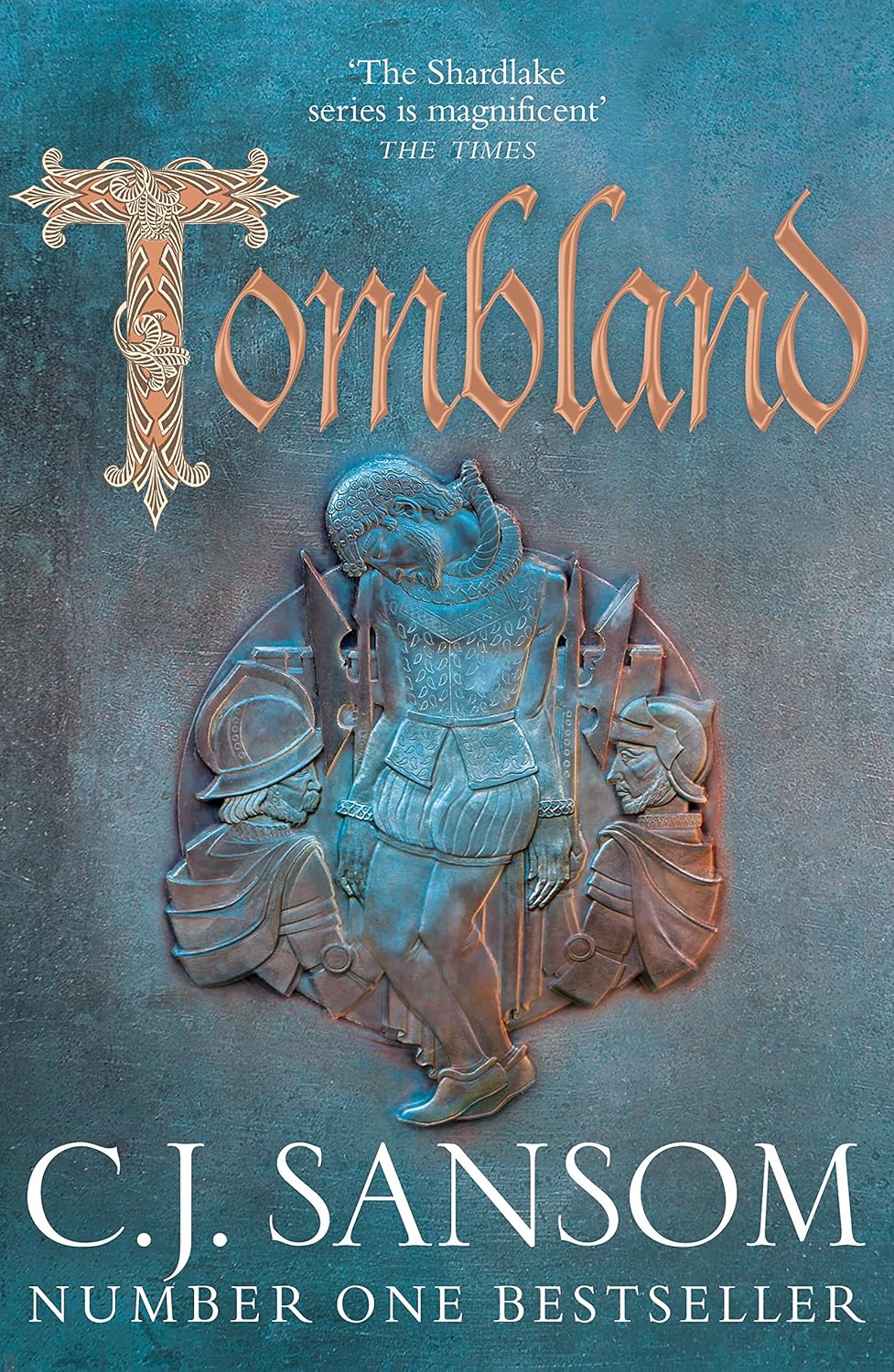
C.J. Sansom, Tombland, Mantle 2018

First lines: I had been in my chambers at Lincoln’s Inn when the messenger came from Master Parry, asking me to attend him urgently. I wondered what might be afoot.

I was extremely sad to hear that historical crime writer C.J. Sansom had passed away.

Sansom is, of course, best known for his ‘Matthew Shardlake’ series, featuring the eponymous lawyer-sleuth during the turbulent reigns of Henry VIII and Edward VI. The final novel in the series, Tombland, takes Shardlake to Norwich in Norfolk, which was England’s prosperous second city at the time. Sent to investigate the murder of Edith Boleyn, a distant relative of the young Princess Elizabeth, Shardlake finds himself caught up in Kett’s Rebellion, a large-scale uprising against wealthy landowners who were appropriating and enclosing ‘common land’, leading to a marked rise in hunger and poverty.

At 880 pages, Tombland is an ambitious and highly absorbing crime novel. If you’ve ever visited Norwich, you’ll immediately recognise many of its locations, such as the 900-year-old Market Square on Gentleman’s Walk and the equally historic Norwich Cathedral. My good friend Harriet informs me that there are now Tombland tours of the city, which sound very appealing indeed.

In addition to a wonderful sense of place, the novel offers a fascinating depiction of Kett’s Rebellion of 1549, which, as Sansom notes in an illuminating afterword, is often overlooked by historians. I found many of the issues he highlights via the uprising — such as the yawning gap between rich and poor, and the devastating effects of a cost-of-living crisis — to be very relevant today. A key difference now, of course, is that ordinary people have the right to vote out governments they don’t like. In fact, the novel could easily be read as an extended argument for the benefits of democracy, which, when working smoothly, enables a transfer of power without the need for brutal conflicts like the Battle of Dussindale.

Here in the UK, you just need to make sure that you are registered to vote (deadline 18 June) and have a valid photo ID when casting your vote in the up-coming election on 4 July 🙂

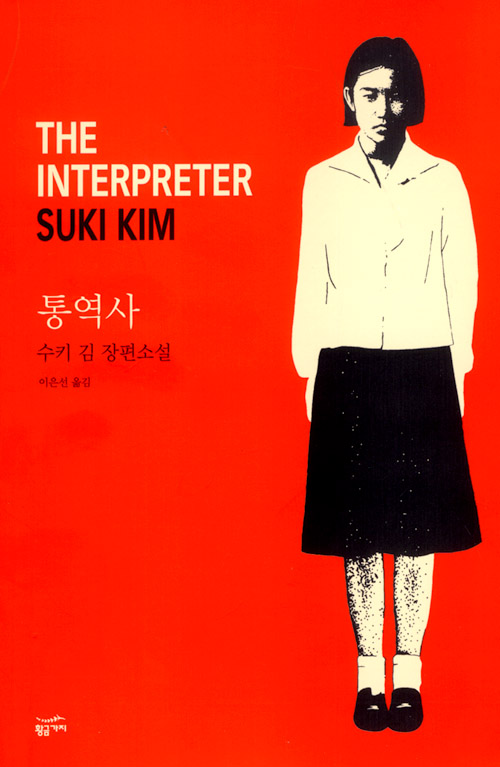
Suki Kim, The Interpreter, Picador 2003

First line: Cigarette at 9 a.m. is a sure sign of desperation.

Author Suki Kim moved with her family from South Korea to America at the age of thirteen. What it means to navigate this kind of dual heritage forms the starting point for The Interpreter, which can be classified as off-kilter literary crime novel. It depicts an immigrant story that’s a long, long way from the American Dream.

The interpreter in question is 29-year-old Suzy Park, who seems to be leading a largely invisible and emotionally shuttered life in New York. We soon learn that her parents were murdered at their store five years earlier and that the case has never been solved.

While acting as an interpreter in a legal case, Suzy realises that the Korean store owner being questioned on suspicion of breaching employment laws once worked for her parents. Exploiting Mr Lee’s lack of English and the Assistant DA’s lack of Korean, she starts asking questions about her parents’ murder and receives some disquieting answers in return. These set her on the path to uncovering not just the circumstances of the crime, but all kinds of buried truths about her family, and especially her elusive sister Grace.

The Interpreter is a highly interesting novel — an unsparing exploration of Korean-American experiences as well as the impact of generational and culture gaps. The latter are effectively shown in an early scene, when Suzy explains how she translates answers given by first-generation immigrants who use radically different cultural codes from the American lawyers questioning them:

What she possesses is an ability to be in two places at once. She can hear a word and separate its literal meaning from its connotation. […] Languages are not logical. Thus an interpreter must translate word for word and yet somehow manipulate the breadth of language to bridge the gap.

Although Suzy’s identity as an interpreter is central to the text, by the end we are left wondering whether The Interpreter of the title might be someone else entirely. A very clever and well-constructed novel by a fascinating author. You can read more about Suki Kim’s work as a writer and investigative journalist here.

Marcie R. Rendon, Girl Gone Missing, Soho Press 2021 (2019)

First line: Cash pulled herself up and out of her bedroom window.

Girl Gone Missing, the second crime novel featuring Renee ‘Cash’ Blackbear, is set on the Minnesota-North Dakota border in the early 1970s. Cash is just 19, toughened and traumatized by a childhood in foster care after being taken from her Ojibwe family at the age of three. Now navigating the alien but intellectually unchallenging world of college, she continues to drive harvest trucks for farmers and play pool for money, a solitary and safe existence that’s unexpectedly interrupted by the arrival of a long-lost brother. Then, when her writing talents take her to the city for the first time, strange recurring dreams and the odd disappearance of a college girl converge in a way that threaten her directly.

I have a great deal of time for the ‘Cash Blackbear’ series, not least due to the sympathetic yet unsentimental depiction of its lead character. The author tempers an unflinching look at the realities of 1970s Native American experiences — particularly in relation to the trauma of young adults emerging from the foster care system — with the hope of a more positive future. Cash’s resilience, courage and willingness to take decisive action are amply showcased in this novel, and I’m already looking forward to seeing where life takes her in Sinister Graves, the next in the series. If you’re new to the series, then Murder on the Red River is the place to start.

Wishing you all happy summer reading!