

Tana French, The Searcher, Penguin 2020
First line: When Cal comes out of the house, the rooks have got hold of something.
I loved this crime novel’s premise: a Chicago police detective takes early retirement after twenty-five years of service and a tricky divorce, and starts over in rural west Ireland. While fixing up his dilapidated house, he’s approached by a local teenager whose older brother has gone missing. Will he help?
Characterisation and location are at the heart of this novel, so everything unfolds at a leisurely pace. We come to know ex-cop Cal Hooper, teenager Trey and the inhabitants of Ardnaskelty, and get a feel for the dynamics of village life. While Cal really doesn’t want to get involved, Trey’s invisibility as the child of a poor family disliked by the community bothers him. Before he knows it, he’s started to investigate – and to stir things up.
Something about Cal reminded me of an old-fashioned sheriff in Westerns like High Noon. He has moral codes and a strong sense of right and wrong, but soon realises that things are more complex than he could ever have dreamed. Choices will have to be made, and the ground he walks on as an outsider is extremely boggy in parts – literally and metaphorically.
The Searcher is a thoughtful and satisfying crime novel with a particularly keen sense of place – conveyed both though its descriptions of nature and brilliant dialogue. Tourist Board Ireland this ain’t, but it’ll have a grip on you by the end.
Reading The Searcher reminded me of two other excellent (literary) crime novels.
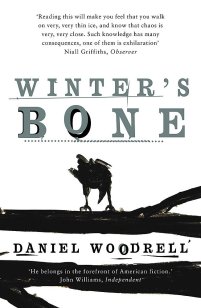
In Daniel Woodrell’s Winter’s Bone (2006), teenager Ree searches for her missing father amid the grinding rural poverty of the American Ozarks. Trey’s brittle toughness and determination put me in mind of Ree, and the novel’s sense of place and dialogue are equally evocative. Jennifer Lawrence starred in the much-lauded film.

And then we have Jess Kidd’s Himself (2016), which is one of my all-time favourite crime novels. Like The Searcher, it’s set in a remote Irish village with an eccentric cast of characters, and traces a young man’s search for Orla, his vanished mother. It’s a freewheeling, psychedelic, wholly original portrait of 1970s rural Ireland, and although it’s tonally quite different to The Searcher, it also explores the secrecy and darkness that outwardly respectable communities hide.

Wishing you all a wonderful Easter break filled with bunnies, chocolate and plenty of crime!
 Mrs. Peabody Investigates