The East Long Beach Sherlock: Joe Ide’s IQ (USA)

Joe Ide, IQ (Mulholland Books, 2016)

First lineIsaiah’s crib looked like every other house on the block except the lawn was cut even, the paint was fresh, and the entrance was a little unusual.

I’d heard lots of good things about Joe Ide’s IQthe first in the ‘Isaiah Quintabe’ series, and on finishing it, can say that this novel is easily one of my most enjoyable and satisfying reads of the year. It’s a remarkably polished debut that introduces us to a wonderfully original detective, tells an absorbing coming-of-age story, and treats us to a cracking crime investigation bristling with intriguing characters. Oh, and it’s also extremely funny.

The opening immediately had me hooked. It starts out with one of those depressingly familiar prologues in which a creepy guy in a pick-up truck is stalking a young girl with malevolent intent. As a seasoned crime reader you think, uh oh, I know exactly where this is going. And then it begins to go the way you thought it would…until all of a sudden it very much doesn’t, heading off in such a gloriously unexpected direction that you feel like cheering. And at that moment, you know you’re in for something very special.
Isaiah Quintabe – or IQ – is an unlicensed African-American private investigator who lives in Hurston, a deprived neighbourhood on the edge of East Long Beach in Los Angeles. He solves ‘local cases where the police could not or would not get involved’, and as he often takes payment in kind (sweet potato pie, a new tire or a live chicken), finances are tight. Which is a problem because there are hefty bills to pay. Isaiah’s cash-flow difficulties will force him to work with Juanell Dodson, a hustler and former housemate of IQ’s, with whom he shared a dark chapter of his adolescence. And Dodson will provide the key to learning about IQ’s past and its consequences, while also accompanying him into the world of rap to solve the central investigation.

Things I loved about this novel: it takes features we associate with iconic detectives – especially Sherlock Holmes and Easy Rawlins – and fuses them into a highly original PI whose intelligence sizzles off the page, but who also knows how to handle a Determinator HX Grenade Launcher. It effortlessly entwines IQ’s backstory with the present-day narrative and crime investigation. It creates three-dimensional characters who are often extremely flawed, but who also ring true, while leavening their depictions with an affectionate, sardonic humour. It’s gripping, authentic, beautifully written, and a lot of fun.

You can read an extract from the first chapter of IQ on Joe Ide’s author website.

The second in the series, Righteous, is already out, with the third, Wrecked, on its way this October.

The Handmaid’s Tale: a superlative dystopian crime drama for our time

I’ve been catching up on Series 2 of the astonishing, riveting Handmaid’s Tale

Yes, I know it’s a dystopian TV series based on Margaret Atwood’s literary vision of a totalitarian, theocratic future American state. But, given my own leanings towards crime, it won’t surprise you to hear that I’ve been looking at it through a particularly criminal lens. And once you start looking, it turns out the series has an awful lot to say about criminality, and in particular, crimes committed by the state and their terrible effects.

The Republic of Gilead is a criminal state masquerading as a godly utopia. Here’s a flavour of the ‘everyday’ crimes committed in Gilead’s name: state-sanctioned murder and mutilation; rape; forced pregnancy; separating children from their mothers and families; slavery; exposing individuals to toxic chemicals; denial of basic individual agency, autonomy and free movement.

As Atwood has famously noted, nothing in her 1985 novel is invented: “when I wrote it I was making sure I wasn’t putting anything into it that human beings had not already done somewhere at some time.” In particular, she draws on the repressive society of seventeenth-century Puritan America, and twentieth-century regimes such as Nazi Germany and Ceaușescu’s Romania.

What she, and now the TV series pull off so brilliantly is a feat of defamiliarization. We’re used to hearing about ‘stuff like this’ happening in countries far, far away, but seeing it enacted in a familiar universe – one where people get takeaway macchiatos and watch Friends just like us – is a jolt for the viewer. The series makes highly effective use of flashbacks from ‘before’ to keep reminding us how close pre-Gilead society is to our average western society today.

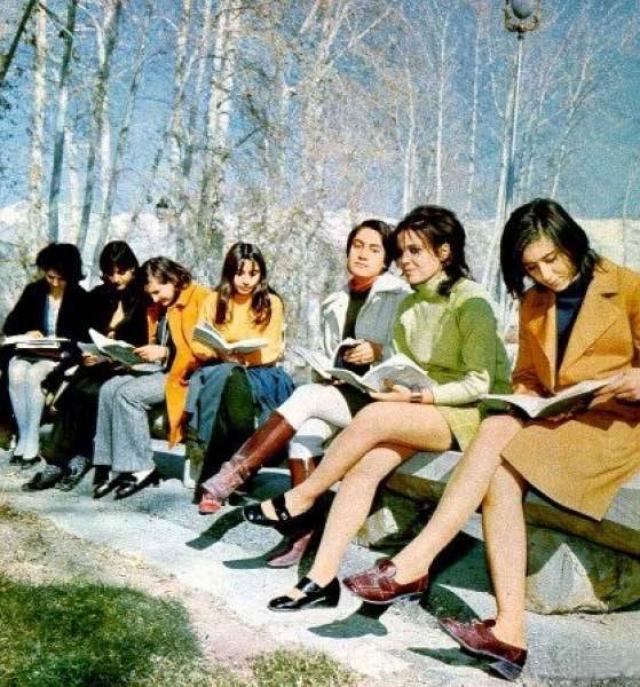
Those flashbacks, and their depictions of June’s once happy life, with all of its messy liberal freedoms, also call to mind a famous photo taken of some young female students hanging out in the late 1960s or early 1970s. Have a guess which country it’s from.

Answer: Iran, before the establishment of a repressive theocratic regime in 1979.

As is the case in all totalitarian states, women’s lives in Gilead are particularly controlled. Offred (meaning Of/Fred; belonging to Fred) is a ‘Handmaid’, a fertile woman assigned to Commander Fred Waterford and his wife Serena Joy for the purpose of bearing them a child in an increasingly underpopulated world. But Offred is also June Osborne, who once had a career in publishing, the mother of Hannah and the wife of Luke, neither of whom she has seen since the family’s attempt to cross the border went catastrophically wrong. She and the other Handmaids (often highly educated career women, like university professor Emily), have been pushed from the public into the private sphere, and have had their identity and all of their rights stolen from them.

Offred/June and the other Handmaids are our crime victims; the state and its representatives are our perpetrators. It’s what the series does with that basic configuration that makes it so outstanding.

The visuals in The Handmaid’s Tale are stunning. Photo by: George Kraychyk/Hulu

Here are a few of the things The Handmaid’s Tale does so well. It:

  • provides an in-depth examination of what it’s like to live in a state where your political and social outlook, or your sexuality are deemed to be criminal and could easily get you killed.
  • is brutally honest about the realities of resistance in a repressive state. On the upside, no state control is ever completely monolithic, and there are opportunities to resist and oppose the regime. The downside is the risk of heavy punishment, either to you or to others close to you (which is sometimes a thousand times worse). And resistance might involve doing things that are extremely unpleasant and/or morally compromising.
  • gives a daringly nuanced depiction of victims and perpetrators. The series does not shy away from showing how Gilead sometimes forces its victims to become part of the oppressive state machine (for example, by being made to mete out punishments to other citizens who are ‘criminal’). It also shows a spectrum of perpetrator motives and attitudes, from hardliners who sanction and commit crimes in the name of the state’s ideology and religion, to those who aren’t necessarily true believers, but serve the state for some other kind of gain – security, status, power – and who *may* sometimes help women to resist. Such figures (like Nick) exhibit behaviour that is ‘grey on grey’ (as the historian Detlev Peukert once wrote of the complex moral actions of citizens living under National Socialism).
  • shows the leading role that women (like Serena and Aunt Lydia) play in aggressively policing other women. Serena is particularly fascinating; one of the chief architects of Gilead now sidelined because of her gender. The penny is slowly dropping that the glorious society she has helped create is one in which she is almost completely disenfranchised herself (could get interesting).

Serena (Yvonne Strahovski, right), with the other commanders’ wives

  • It also shows the sheer grind of surviving in a highly restrictive and hostile criminal state. And this is where the second series really comes into its own. Unlike a film that lasts two hours, or a single series with a neat conclusion, the second series shows us characters who are in it for the long haul. We see yet more struggles, more resistance, more heartbreaking reversals and terrible fates. And it’s exhausting. As viewers, we are given the tiniest of glimpses into an oppressive reality that could quite easily last for years if not decades, leaving individuals hugely damaged and traumatized – if indeed they ever manage to escape.

It feels particularly fitting, for obvious reasons, that The Handmaid’s Tale is an American series (made by Hulu), and features a number of top American actors, such as the outstanding Elisabeth Moss. It’s impossible to watch it at the moment without reflecting on the preciousness of democracy, personal freedoms and civil rights. It also feels very much like watching a warning. A recent episode showed June looking at newspaper reports from before Gilead’s rise and saying wonderingly ‘it turns out it was there all along’.

So: aside from being superlative TV drama, The Handmaid’s Tale is a crime story for our time – the story of the rise of a criminal state and the multiple crimes it perpetrates against its citizens – and the story of a battered, grim, imperfect resistance. An absolute must-see.

Nolite te bastardes carborundorum…

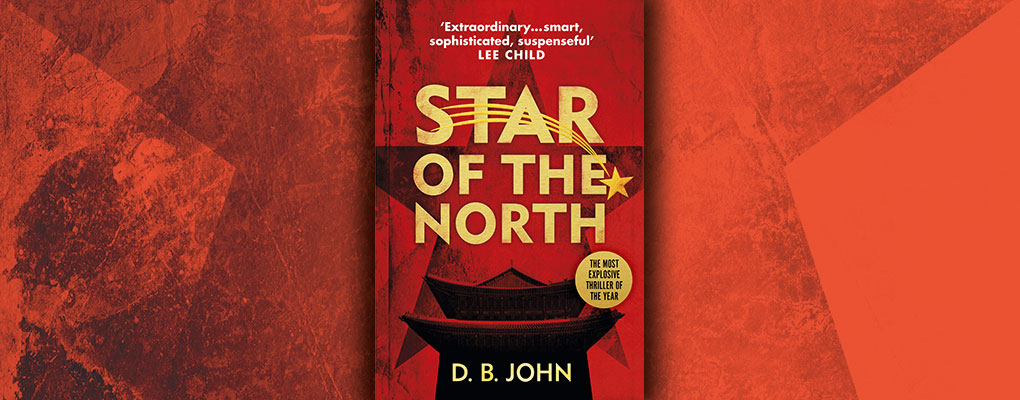
Hard truths: D. B. John’s Star of the North (USA & North Korea)

D. B. John, Star of the North, Harvill Secker, 2018

First line: The sea was calm the day Soo-min disappeared.

I was half-way through this excellent thriller when Donald Trump’s meeting with North Korean leader Kim Jong Un turned it into an especially potent read. Because what this novel offers is a meticulously researched depiction of one of the world’s most secretive societies – a dictatorship that has mind-boggling control over its citizens and is guilty of horrific, sustained human rights abuses. And which is now getting pally with the USA.

Star of the North weaves together the stories of three individuals caught up in the history and politics of North Korea – Jenna Williams, an American-Korean academic whose sister disappeared ten years previously from a beach in South Korea; Mrs. Moon, a sixty-year-old North Korean black-market trader from Ryanggang Province near the Chinese border; and Lieutenant Colonel Cho, a high-ranking North Korean diplomat based in the capital Pyongyang. Each, for different reasons, will put their lives on the line to subvert or resist the North Korean regime.

Cult of the leader: huge statues of the Kims at which North Korean citizens are made to pay their respects. See http://allthatsinteresting.com/north-korea-photographs#1

I found myself pulled into Star of the North’s fast-paced narrative straight away, thanks largely to the nuanced depiction of the three main characters and their very different points of view. John uses each of them to illuminate different aspects of North Korean society and its criminality, but does so in a way that never makes readers feel like they’re being lectured. And of course the kind of detail he can draw on as an author is grimly fascinating: the way that all aspects of citizens’ lives are governed by an extraordinary Cult of the Leader; the jaw-dropping, frankly crazy abductions programme; the criminal profits that allow North Korean leaders to live a life of unimaginable opulence while their citizens starve. And that’s just for starters…

A sobering read? Absolutely. But there are also moments of lightness and redemption and hope. And this is a skilfully constructed and very well-written thriller to boot – John really does pull off that very difficult trick of entertaining and enlightening his readers simultaneously. Highly recommended.

Read an extract from the novel here, courtesy of dead good books. And there’s a great Q&A with the author over at Sarah Ward’s Crimepieces blog.

D. B. John also co-wrote The Girl with Seven Names, a memoir by North Korean defector Hyeonseo Lee.

A depressing coda: today Donald Trump gave an interview to Fox News in which he said ‘Hey, he’s [Kim Jong Un] the head of a country, and I mean he’s the strong head. Don’t let anyone think anything different. He speaks and his people sit up at attention. I want my people to do the same’. It’s the strongest indication yet of Trump’s dictatorial leanings and should set alarm bells clanging everywhere.

A celebration of Welsh crime fiction & ‘Crime Cymru’ at Cardiff Libraries’ ‘Crime & Coffee Festival’

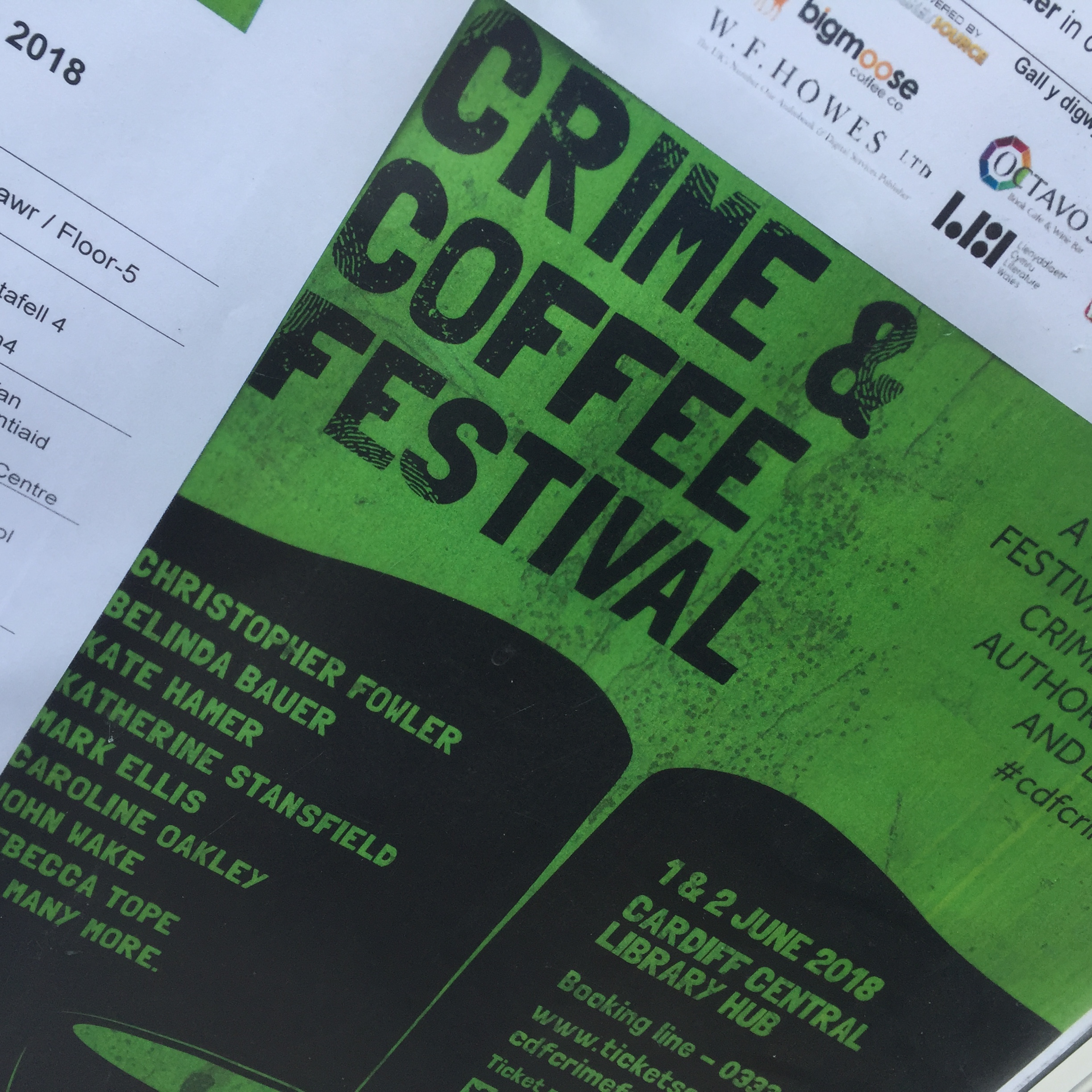
The inaugural ‘Crime & Coffee Festival’ was held in Cardiff on 1-2 June, organised by Cardiff Libraries (@cdflibraries), which provided a very lovely and hospitable setting for the event.

A number of the writers featured at the festival are members of Crime Cymru, a collective of Welsh crime writers who live in Wales, identify as Welsh, or set their books in Wales. ‘Cymru’, in case you’re wondering, is the Welsh word for Wales and is pronounced ‘kum-ri’. You can follow their activities on Facebook or Twitter (@CrimeCymru), or check out their website here: http://crime.cymru/.

The rather impressive line up for the ‘Crime & Coffee Festival’ included Belinda Bauer, Christopher Fowler, Katherine Stansfield, Kate Hamer, Mark Ellis, Rosie Claverton, Alis Hawkins and Matt Johnson, along with Welsh-language crime writers Gareth Williams, Geraint Evans and Jon Gower.

I managed to get along to some of the Saturday sessions, all of which featured lively discussions with panellists and attentive, engaged audiences.

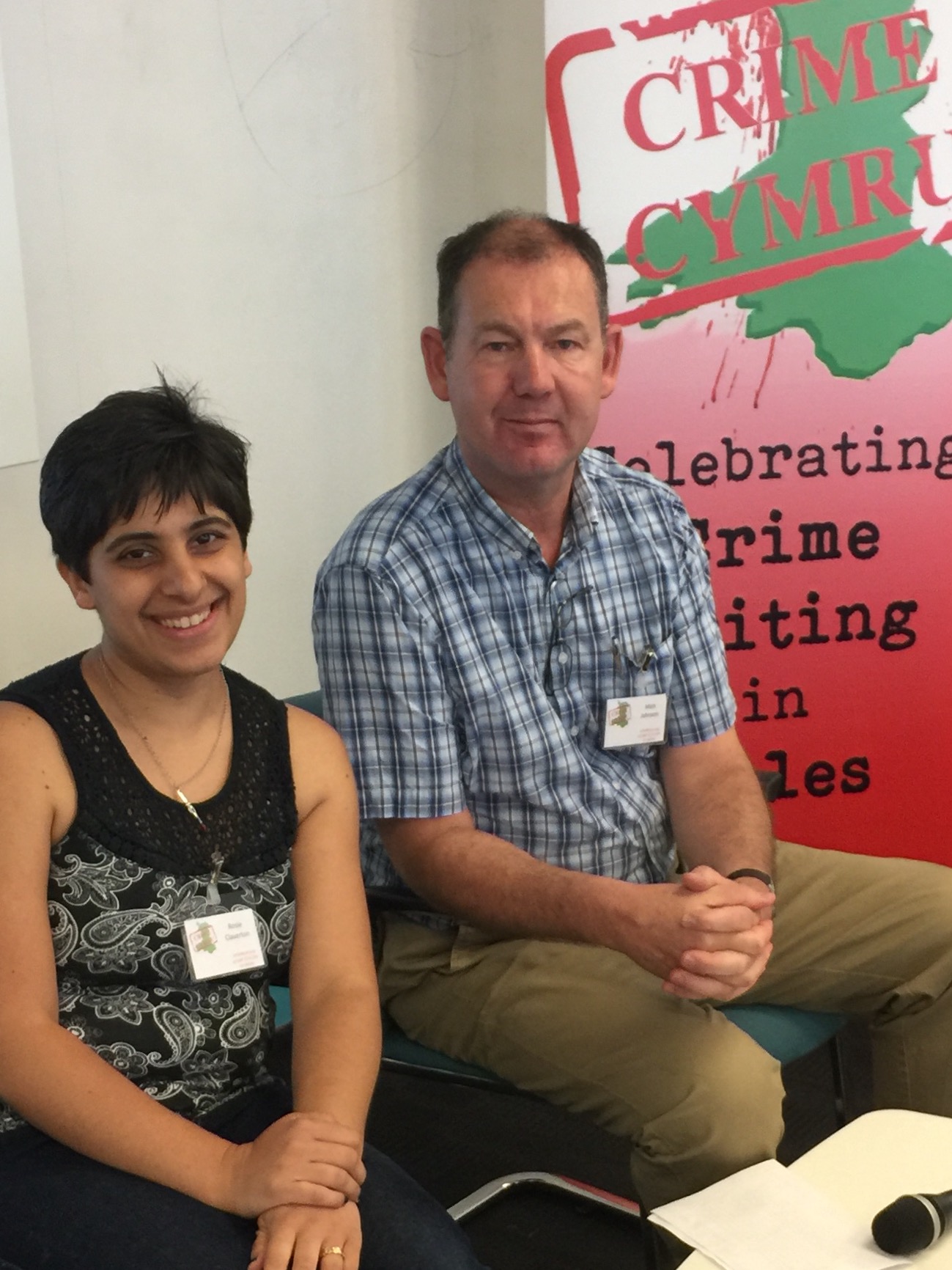
One stand-out session for me was ‘Beyond Psychopaths: Mental Health in Crime Fiction’, with Rosie Claverton and Matt Johnson. Rosie is a junior psychiatrist, whose ‘Amy Lane’ mysteries features an agoraphobic investigator suffering from anxiety. Matt is a former soldier and policeman who left the service with C-PTSD (complex post-traumatic stress disorder), and took up writing as a form of therapy. His ‘Wicked Game’ trilogy draws on his own experiences, and the first was shortlisted for the CWA John Creasy Dagger.

It was fascinating to hear Rosie and Matt, informed by very different professional and personal experiences, discussing the depiction of mental health conditions in crime fiction and film (such as One Flew Over the Cuckoo’s Nest and Gone Girl). Both emphasised the importance of researching mental health issues, and felt that writers had a responsibility to ‘find out and not simply imagine’. Reading will get you a long way, but MIND, the mental health charity, is apparently also able to put writers in touch with individuals willing to discuss their experiences, thus helping to minimise inaccurate depictions of mental health issues.

I picked up Binary Witness, the first in the ‘Amy Lane’ series, at the Octavo’s festival bookshop (after reading the first chapter I won’t be putting my bins out late any time soon).

Rosie Claverton and Matt Johnson

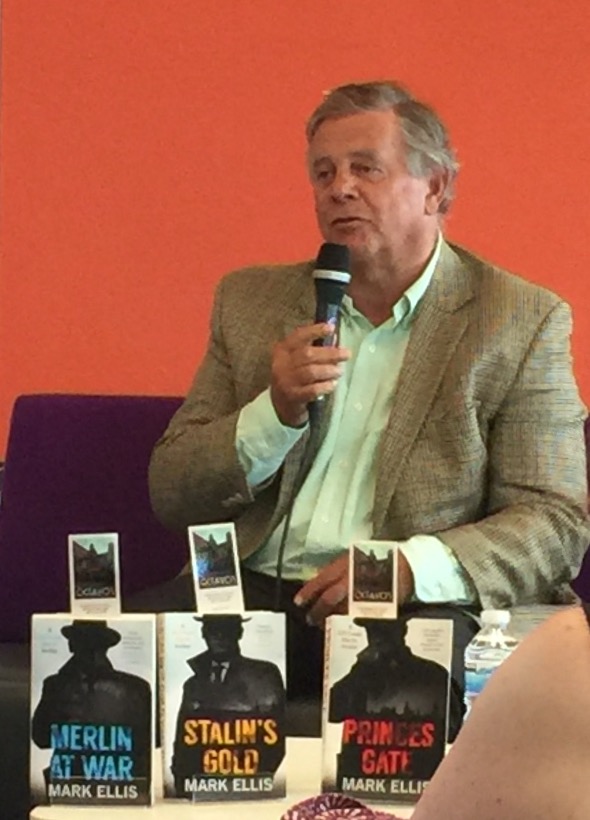
The afternoon featured an engaging discussion with Mark Ellis, author of the ‘DCI Frank Merlin’ series, set in World War Two London. Mark told us a bit about how he came to write the series (partly inspired by anecdotes his Welsh mum told him about the war), about Merlin’s Spanish heritage, and about the rich possibilities that wartime opened up for the criminal community in London – a bonanza for the unscrupulous. His discussion partner was his editor Hazel Cushion, who also runs the Octavo’s Book Cafe and Wine Bar in Cardiff Bay. On my list of places to visit shortly!

Mark Ellis

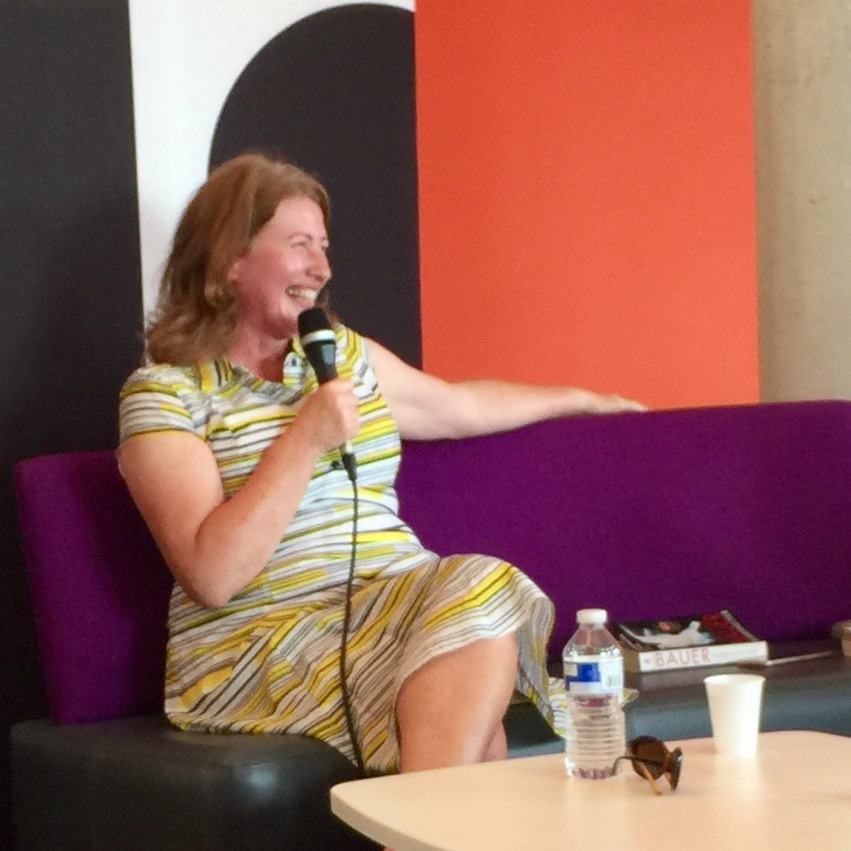
The evening brought us all a wonderful treat, in the shape of Belinda Bauer, who’s undoubtedly one of the UK’s most exciting and most versatile crime authors. Belinda has written a number of outstanding novels, including Blacklands and Rubbernecker (a particular favourite of mine), which have been garlanded with prizes such as the CWA Gold Dagger. Her eighth novel, Snap, has just been published by Penguin.

A slightly blurry shot of Belinda Bauer, but one that captures the fun we all had.

Belinda was in conversation with Kate Hamer, and in spite of the sometimes grim subject matter, there was a lot of laughter.

Belinda talked a little about Snap and read us an unsettling extract from the opening chapter, which depicts what happens when three children are left by their mum in a car after it breaks down. We also heard how – rather astonishingly – she now reads only non-fiction, because she’s too aware of the mechanics of fiction to enjoy it when writing herself, and feels it frees her up to write whatever she wants (she probably wouldn’t have written Rubbernecker if she had known that there were other novels featuring leading protagonists with Asperger’s Syndrome at the time).

The need for meticulous research was another key theme – especially the importance of going to places to experience, for example, how they would smell. Rubbernecker, which features an anatomy student, involved visits to the Wales Centre for Anatomical Education in Cardiff, which wasn’t easy as she is rather squeamish. But, as she also wisely noted: ‘research always pays off’.

Another intriguing revelation: Belinda lived in South Africa for ten years in her youth, and would like to set a novel there during the Apartheid era. I’m very much hoping she does…

If you haven’t yet read any of Belinda Bauer’s novels, then I recommend you do: they have wonderfully compelling premises, are dark but leavened with sardonic humour, and feature beautifully rounded, interesting characters.

Congratulations and thank you to everyone involved in organising the first Coffee & Crime Festival. It was a rip-roaring success!