The 2018 Petrona Award shortlist is announced!

Here we go!!!

Six outstanding crime novels from Denmark, Finland and Sweden have made the shortlist for the 2018 Petrona Award for the Best Scandinavian Crime Novel of the Year, which is announced today. They are… *drumroll*

  • WHAT MY BODY REMEMBERS by Agnete Friis, tr.  Lindy Falk van Rooyen (Soho Press; Denmark)
  • QUICKSAND by Malin Persson Giolito, tr. Rachel Willson-Broyles (Simon & Schuster; Sweden)
  • AFTER THE FIRE by Henning Mankell, tr. Marlaine Delargy (Vintage/Harvill Secker; Sweden)
  • THE DARKEST DAY by Håkan Nesser, tr. Sarah Death (Pan Macmillan/Mantle; Sweden)
  • THE WHITE CITY by Karolina Ramqvist, tr. Saskia Vogel (Atlantic Books/Grove Press; Sweden)
  • THE MAN WHO DIED by Antti Tuomainen, tr. David Hackston (Orenda Books; Finland)

WHAT MY BODY REMEMBERS by Agnete Friis, tr.  Lindy Falk van Rooyen (Soho Press; Denmark)

Her ‘Nina Borg’ novels, co-written with Lene Kaaberbøl, have a dedicated following, but this first solo outing by Danish author Agnete Friis is a singular achievement in every sense. Ella Nygaard was a child when her mother was killed by her father. Did the seven-year-old witness the crime? She can’t remember, but her body does, manifesting physical symptoms that may double as clues. Ella’s complex character is superbly realised – traumatised yet tough, she struggles to keep her son Alex out of care while dealing with the fallout from her past.

QUICKSAND by Malin Persson Giolito, tr. Rachel Willson-Broyles (Simon & Schuster; Sweden)

In this compelling and timely novel, eighteen-year-old Maja Norberg is on trial for her part in a school shooting which saw her boyfriend, best friend, teacher and other classmates killed. We follow the events leading up to the murders and the trial through Maja’s eyes, including her reaction to her legal team’s defence. Lawyer-turned-writer Malin Persson Giolito successfully pulls the reader into the story, but provides no easy answers to the motives behind the killings. Gripping and thought-provoking, the novel offers an insightful analysis of family and class dynamics.

AFTER THE FIRE by Henning Mankell, tr. Marlaine Delargy (Vintage/Harvill Secker; Sweden)

Henning Mankell’s final novel sees the return of Fredrik Welin from 2010’s Italian Shoes. Living in splendid isolation on an island in a Swedish archipelago, Welin wakes up one night to find his house on fire and soon finds himself suspected of arson by the authorities. While there’s a crime at the heart of this novel, the story also addresses universal themes of loss, fragile family ties, difficult friendships, ageing and mortality. The occasionally bleak outlook is tempered by an acceptance of the vulnerability of human relationships and by the natural beauty of the novel’s coastal setting.

THE DARKEST DAY by Håkan Nesser, tr. Sarah Death (Pan Macmillan/Mantle; Sweden)

Many readers are familiar with the ‘Van Veeteren’ detective stories of Håkan Nesser, but his second series, featuring Swedish-Italian Detective Inspector Gunnar Barbarotti, is only now beginning to be translated. An engaging figure who navigates his post-divorce mid-life crisis by opening a witty dialogue with God, Barbarotti is asked to investigate the disappearance of two members of the Hermansson family following a birthday celebration. The novel’s multiple narrative perspectives and unhurried exploration of family dynamics make for a highly satisfying read.

THE WHITE CITY by Karolina Ramqvist, tr. Saskia Vogel (Atlantic Books/Grove Press; Sweden)

Karolina Ramqvist’s novella focuses on an often marginalised figure: the wife left stranded by her gangster husband when things go wrong. Karin’s wealthy, high-flying life is over. All that’s left are a once grand house, financial difficulties, government agencies closing in, and a baby she never wanted to have. This raw and compelling portrait of a woman at rock bottom uses the sometimes brutal physical realities of motherhood to depict a life out of control, and persuasively communicates Karin’s despair and her faltering attempts to reclaim her life.

THE MAN WHO DIED by Antti Tuomainen, tr. David Hackston (Orenda Books; Finland)

The grim starting point of Antti Tuomainen’s novel – a man finding out that he has been systematically poisoned and his death is just a matter of time – develops into an assured crime caper brimming with wry black humour. Finnish mushroom exporter Jaakko Kaunismaa quickly discovers that there’s a worryingly long list of suspects, and sets about investigating his own murder with admirable pluck and determination. The novel’s heroes and anti-heroes are engagingly imperfect, and Jaakko’s first-person narration is stylishly pulled off..

Congratulations to all the authors, translators and publishers!

The Petrona judges – Barry Forshaw, Sarah Ward and myself – had the following to say about the shortlist: 

There were 61 entries for the 2018 Petrona Award from six countries (Denmark, Finland, France, Iceland, Norway, Sweden). The novels were translated by 33 translators and submitted by 31 publishers/imprints. There were 27 female and 33 male authors, and one brother-sister writing duo.

This year’s Petrona Award shortlist sees Sweden strongly represented with four novels; Denmark and Finland each have one. The crime genres represented include a police procedural, a courtroom drama, a comic crime novel and three crime novels/thrillers with a strong psychological dimension.

As ever, the Petrona Award judges faced a difficult but enjoyable decision-making process when they met to draw up the shortlist. The six novels selected by the judges stand out for the quality of their writing, their characterisation and their plotting. They are original and inventive, and shine a light on highly complex subjects such as Post-traumatic Stress Disorder, school shootings, and life on the margins of society. A key theme that emerged across all of the shortlisted works was that of family: the physical and psychological challenges of parenting; the pressures exerted by family traditions or expectations; sibling rivalries; intergenerational tensions and bonds; family loyalty… and betrayal.

We are extremely grateful to the translators whose expertise and skill allows readers to access these gems of Scandinavian crime fiction, and to the publishers who continue to champion and support translated fiction.

The Petrona Award is open to crime fiction in translation, either written by a Scandinavian author or set in Scandinavia and published in the UK in the previous calendar year. The winning title will be announced at the Gala Dinner on 19 May during CrimeFest, held in Bristol 17-20 May 2018.

The Petrona team would like to thank our sponsor, David Hicks, for his generous support of the 2018 Petrona Award. Enormous thanks too to Karen Meek (aka Euro Crime), for all of her excellent organisational work throughout the year!

For further information about the Petrona Award, see http://www.petronaaward.co.uk/

CrimeFest 2018 – Krimi panel with Oliver Bottini, Simone Buchholz, Dirk Kurbjuweit and Andreas Pflüger on Friday 18 May

It’s less than a month to CrimeFest 2018, which this year celebrates its 10th anniversary!

You may remember that CrimeFest hosted its very first Krimi panel last year, featuring German crime authors Mario Giordano, Merle Kröger, Volker Kutscher and Melanie Raabe.

Happily, we’re repeating the experience this year with another four top German authors – Oliver Bottini, Simone Buchholz, Dirk Kurbjuweit and Andreas Pflüger – thanks to the generous continued support of the Goethe-Institut LondonI once again have the pleasure of moderating, and can’t wait to get into discussion with the authors.

Our Krimi panel takes place on Friday 18 May at 13.40. If you’re at CrimeFest this year, please do come along!

We’ll be exploring a range of topics: the authors’ choice of genre (police procedural, urban noir, action thriller, psychological thriller); their settings (from the confines of a single house and the snowy landscapes of the Black Forest to the urban hustle and bustle of Hamburg and Berlin); key themes such as criminality, crises of identity, toxic masculinity, friendship, disability, and Bushido and Zen Buddhism; and the joys of working with the translators who bring their works to English-language audiences.

Photograph of Oliver Bottini © Hans Scherhaufe

Oliver Bottini is a prize-winning German author based in Berlin. Four of his novels, including Zen and the Art of Murder (Mord im Zeichen des Zens, part of the ‘Black Forest Investigations’ series) have been awarded the Deutscher Krimipreis, Germany’s most prestigious award for crime writing. His novels have also been awarded the Stuttgart Crime Prize and the Berlin Crime Prize.

Bottini’s Zen and the Art of Murder, translated by Jamie Bulloch (who will also be at CrimeFest), is published by MacLehose Press. An off-beat police procedural, it features talented chief investigator Louise Boni, who is struggling to deal with a number of personal and professional demons. Plenty of snow, a gripping investigation and a Zen monk are also in evidence. See Mrs. Peabody’s review of Zen here.

Photo of Simone Buchholz © Droemer Knaur Verlag

Simone Buchholz studied philosophy and literature, worked as a waitress and a columnist, and trained to be a journalist at the prestigious Henri-Nannen-School in Hamburg. In 2016, Simone Buchholz was awarded the Crime Cologne Award as well as a German Crime Fiction Prize for Blue Night (Blaue Nacht). The novel was number 1 on the KrimiZEIT Best of Crime List for a number of months. She lives in Sankt Pauli in the heart of Hamburg.

Blue Night is translated by Rachel Ward and published by Orenda Books. It’s part of the highly acclaimed ‘Chastity Riley’ series, which draws on private-eye conventions to create stylish, urban noir with a German twist. As well as celebrating the less glamorous bits of Hamburg, the novel is a moving meditation on the importance of friendship. You can read Mrs. Peabody’s interview with Simone here.

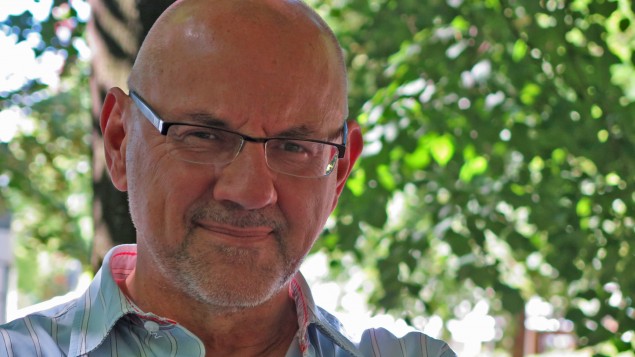
Photo of Dirk_Kurbjuweit by Julian Nitzsche

Dirk Kurbjuweit is deputy editor-in-chief of the German current affairs magazine Der Spiegel, and divides his time between Berlin and Hamburg. He’s received numerous awards for his writing, including the Egon Erwin Kisch Prize for journalism, and is the author of seven critically acclaimed novels, many of which have been adapted for film, TV and radio.

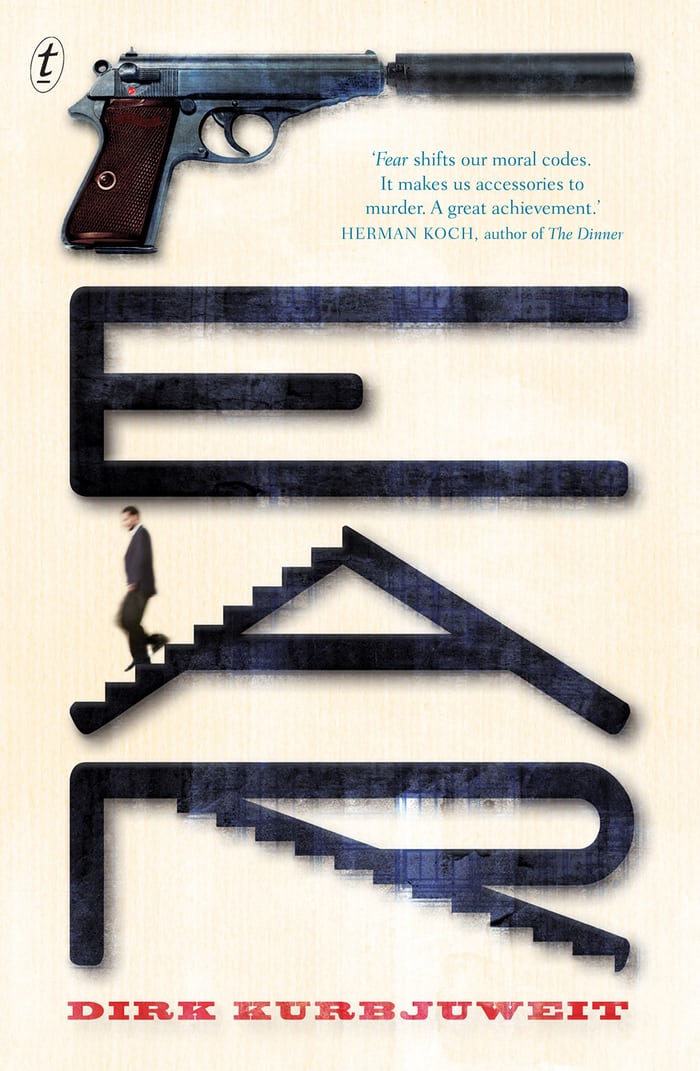
Kurbjuweit’s novel Fear, translated by Imogen Taylor and published by Orion, explores the psychological effects of stalking on a middle-class family after they move into a flat in a shared house. Based on Kurbjuweit’s own experiences, the novel is an unsettling exploration of how stalking turns people’s lives upside down and leads them into situations they never thought possible. The capacity of fear to erode civilised values is a key theme.

Photo of Andreas Pflüger by Andreas Buron

Andreas Pflüger has lived in Berlin for many years. He is the author of a number of novels and one of the most renowned scriptwriters working in Germany today. His award-winning works include The Ninth Day and Strajk, directed by Volker Schlöndorff, and over twenty episodes of the cult German crime series Tatort.

Pflüger’s In the Dark, translated by Shaun Whiteside and published by Head of Zeus, is the first in the ‘Jenny Aaron’ series. Aaron is an extraordinary lead protagonist – blinded after a police operation goes horribly wrong, she has to learn to ‘see’ in new ways and to confront her traumatic past when her old police unit asks her to help with a case. An action-packed thriller that’s underpinned by an extraordinary amount of research.

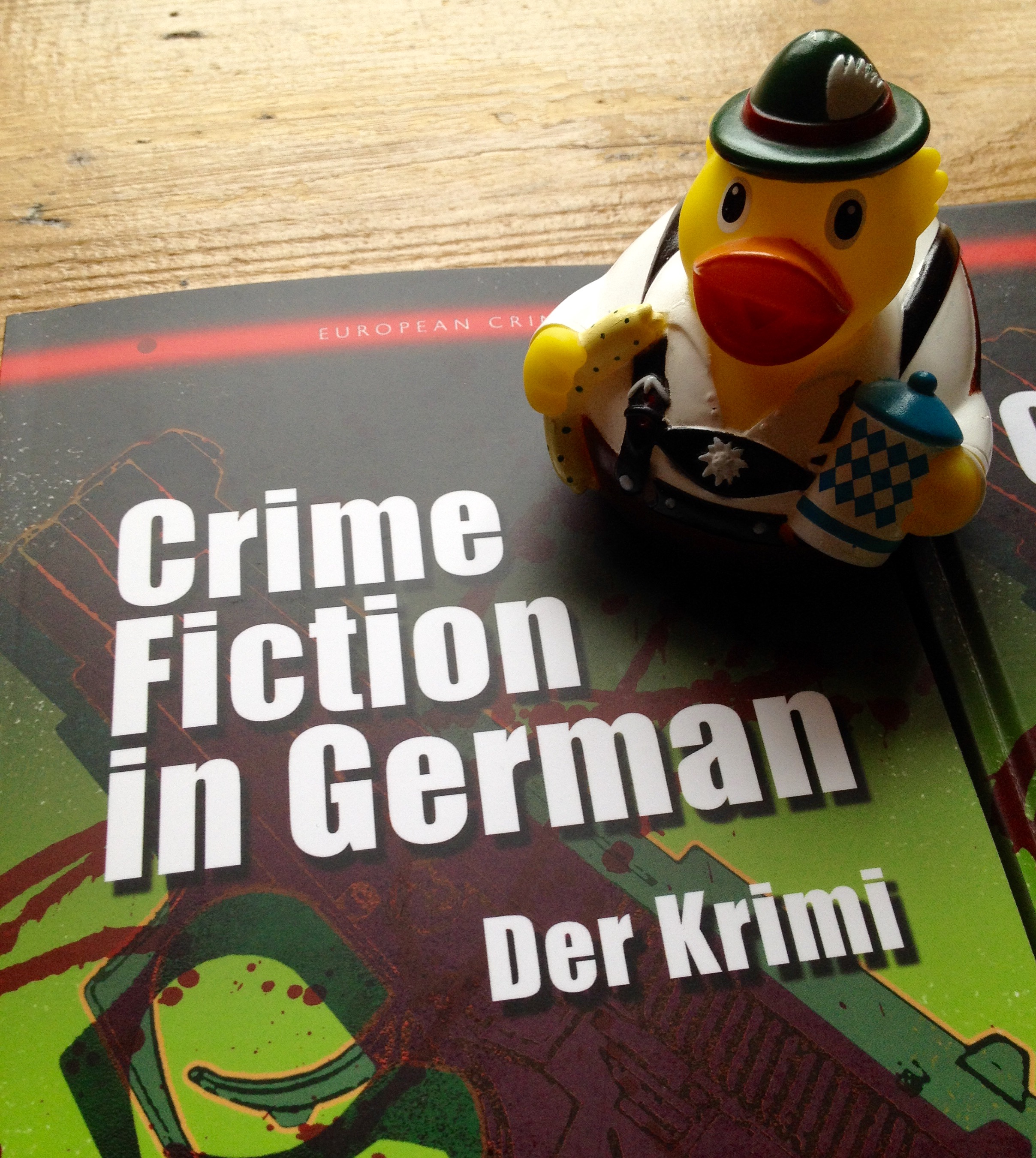
In case you’re wondering, Erich the Bavarian duck will also be in attendance at CrimeFest…

Warmest thanks to the Goethe-Institut London, whose support is enabling this event to take place place. Further details about this panel and other CrimeFest panels involving the four authors can be found on its website here.

Going south: Locke’s Bluebird Bluebird (USA), Bottini’s Zen and the Art of Murder (GER), Brynard’s Weeping Waters (South Africa)

Today I explore three interesting crime novels from different countries, which have a southern geographical setting in common — Texas in the American south, the Black Forest in south-west Germany, and a remote corner of South Africa.

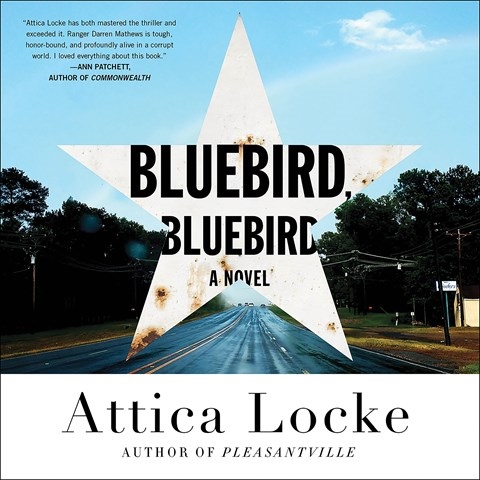
Attica Locke, Bluebird, Bluebird, Serpent’s Tail, 2017 

Opening line: Darren Mathews set his Stetson on the edge of the witness stand, brim down, like his uncles taught him.

I’d heard a number of good things about this novel set in East Texas, and found it a rich and absorbing read. Darren Mathews is a black Texas Ranger whose work takes him all across the state, often to isolated communities marked by racial tensions. After becoming too closely involved in a friend’s case, he’s sent to the small town of Lark, where the murders of a local white woman and a black man from Chicago are making waves. While his prestigious status as a Texas Ranger will offer him some protection from the racist forces in the town, he knows he’ll need to keep all his wits about him to stay in one piece.

Bluebird is a finely observed novel that shows us rural America from a range of black American perspectives. Mathews, our lead investigator, is particularly well drawn. Brought up in a highly educated middle-class family, he feels pulled between a safe career in law and his desire for a more hands-on law enforcement role. Deeply conflicted about Texas and the profound racism he encounters, he also has a deep love of the place and its people. His views are complemented by a range of other black voices, such as Geneva Sweet, the sixty-nine-year-old owner of Geneva Sweet’s Sweets, a cafe offering ‘the best fried pies in Shelby County’. Her family story is one that has probably played out hundreds of times in American history, and is deeply moving.

You can read an extract from the novel at the Serpent’s Tale website.

A brief extra observation: a recent discussion on Facebook explored the lack of black crime bloggers and readers at UK crime conventions and publishing events, and led to a wider discussion about black crime authors. There really aren’t that many big names (Walter Mosley most obviously springs to mind), and it is notable that recent crime novels exploring black American experience (such as Thomas Mullen’s excellent Darktown) are often written by white authors. All the more reason to be delighted that Attica Locke is such a crime writing success story.

Oliver Bottini, Zen and the Art of Murder, trans. from the German by Jamie Bulloch (MacLehose Press, 2018 [2004]) 

Opening lines: Louise Boni hated snow. Her brother had died in the snow, her husband had left her in the snow and she had killed a man in the snow.

Zen and the Art of Murder is the first in Oliver Bottini’s ‘Louise Boni’ series, and is set in the Black Forest region of south-west Germany. It opens with a rather unusual sight: a Japanese monk, dressed only in a robe and sandals, is wandering through the snow. He is injured, but doesn’t seem to want official help, accepting only a cheese roll before trudging on through the snowy landscape. When Boni and her local police contacts follow him to find out what’s going on, the mystery suddenly takes a frightening and serious turn.

On one level, Zen is a police procedural that shows us the inner workings of a police investigation and the sometimes fraught dynamics of a police team investigating a stressful case. But the figures of the Zen monk and chief inspector Louise Boni – who is dealing with personal demons, traumatic memories from a previous case and borderline alcoholism – give the narrative a fascinating off-kilter feel. Much of the novel is seen from Boni’s embattled perspective, as she struggles to piece things together with unshakeable determination and undoubted investigative talent. The result is a highly unusual and beguiling police procedural, whose complex lead protagonist will stay with you for a long time to come.

Oliver Bottini is appearing on a special Krimi panel at this year’s CrimeFest – of which more soon!

Karin Brynard, Weeping Waters, trans. from Afrikaans by Maya Fowler and Isobel Dixon

Opening lines: The call came through just after two. He was at his desk at the police station, having his lunch of vetkoek and mince. 

Like Zen’s Louise Boni, Inspector Albertus Beeslaar is a traumatised cop. Haunted by the consequences of a case gone wrong, he has fled the big city of Johannesburg for a small town on the edge of the Kalahari desert. Already dealing with a spate of stock thefts in farms around the area, he now receives a call telling him that a local artist, Frederika Swarts, has been found murdered on her family farm, along with the four-year-old child she was planning to adopt. He embarks on the investigation with rookie policemen Ghaap and Pyl, while fighting off ever more frequent panic attacks.

While I found some parts of Weeping Waters a little uneven, there also was much to like. The characterisation of Beeslaar and of Freddie’s estranged sister Sara are excellent, and the latter’s struggle with guilt and grief is particularly well drawn. The novel also has a fantastic sense of place: the incredible heat and vastness of the desert landscape are brought vividly to life, as is the claustrophobic nature of small-town life. There’s also a good attempt to explore on-going racial tensions in post-Apartheid South Africa – for example how the murders of white farmers are exploited for political gain by right-wing factions. I also very much appreciated the translators’ approach to rendering the Afrikaans dialogue – the syntax and vocabulary are kept close to the original in such a way that you can really hear the characters’ voices and appreciate their local culture.

The novel is the winner of the University of Johannesburg Debut Prize, and is the first in a series.